EP1970385A2 - Anti-CD20 et/ou anti-CD23 anticorps tétravalents - Google Patents
Anti-CD20 et/ou anti-CD23 anticorps tétravalents Download PDFInfo
- Publication number
- EP1970385A2 EP1970385A2 EP08104512A EP08104512A EP1970385A2 EP 1970385 A2 EP1970385 A2 EP 1970385A2 EP 08104512 A EP08104512 A EP 08104512A EP 08104512 A EP08104512 A EP 08104512A EP 1970385 A2 EP1970385 A2 EP 1970385A2
- Authority
- EP
- European Patent Office
- Prior art keywords
- antibody
- dimer
- homodimer
- igg
- cells
- Prior art date
- Legal status (The legal status is an assumption and is not a legal conclusion. Google has not performed a legal analysis and makes no representation as to the accuracy of the status listed.)
- Withdrawn
Links
Images









Classifications
-
- C—CHEMISTRY; METALLURGY
- C07—ORGANIC CHEMISTRY
- C07K—PEPTIDES
- C07K16/00—Immunoglobulins [IG], e.g. monoclonal or polyclonal antibodies
- C07K16/18—Immunoglobulins [IG], e.g. monoclonal or polyclonal antibodies against material from animals or humans
- C07K16/28—Immunoglobulins [IG], e.g. monoclonal or polyclonal antibodies against material from animals or humans against receptors, cell surface antigens or cell surface determinants
- C07K16/2887—Immunoglobulins [IG], e.g. monoclonal or polyclonal antibodies against material from animals or humans against receptors, cell surface antigens or cell surface determinants against CD20
-
- A—HUMAN NECESSITIES
- A61—MEDICAL OR VETERINARY SCIENCE; HYGIENE
- A61K—PREPARATIONS FOR MEDICAL, DENTAL OR TOILETRY PURPOSES
- A61K47/00—Medicinal preparations characterised by the non-active ingredients used, e.g. carriers or inert additives; Targeting or modifying agents chemically bound to the active ingredient
- A61K47/50—Medicinal preparations characterised by the non-active ingredients used, e.g. carriers or inert additives; Targeting or modifying agents chemically bound to the active ingredient the non-active ingredient being chemically bound to the active ingredient, e.g. polymer-drug conjugates
- A61K47/51—Medicinal preparations characterised by the non-active ingredients used, e.g. carriers or inert additives; Targeting or modifying agents chemically bound to the active ingredient the non-active ingredient being chemically bound to the active ingredient, e.g. polymer-drug conjugates the non-active ingredient being a modifying agent
- A61K47/68—Medicinal preparations characterised by the non-active ingredients used, e.g. carriers or inert additives; Targeting or modifying agents chemically bound to the active ingredient the non-active ingredient being chemically bound to the active ingredient, e.g. polymer-drug conjugates the non-active ingredient being a modifying agent the modifying agent being an antibody, an immunoglobulin or a fragment thereof, e.g. an Fc-fragment
- A61K47/6835—Medicinal preparations characterised by the non-active ingredients used, e.g. carriers or inert additives; Targeting or modifying agents chemically bound to the active ingredient the non-active ingredient being chemically bound to the active ingredient, e.g. polymer-drug conjugates the non-active ingredient being a modifying agent the modifying agent being an antibody, an immunoglobulin or a fragment thereof, e.g. an Fc-fragment the modifying agent being an antibody or an immunoglobulin bearing at least one antigen-binding site
-
- A—HUMAN NECESSITIES
- A61—MEDICAL OR VETERINARY SCIENCE; HYGIENE
- A61P—SPECIFIC THERAPEUTIC ACTIVITY OF CHEMICAL COMPOUNDS OR MEDICINAL PREPARATIONS
- A61P1/00—Drugs for disorders of the alimentary tract or the digestive system
-
- A—HUMAN NECESSITIES
- A61—MEDICAL OR VETERINARY SCIENCE; HYGIENE
- A61P—SPECIFIC THERAPEUTIC ACTIVITY OF CHEMICAL COMPOUNDS OR MEDICINAL PREPARATIONS
- A61P11/00—Drugs for disorders of the respiratory system
-
- A—HUMAN NECESSITIES
- A61—MEDICAL OR VETERINARY SCIENCE; HYGIENE
- A61P—SPECIFIC THERAPEUTIC ACTIVITY OF CHEMICAL COMPOUNDS OR MEDICINAL PREPARATIONS
- A61P11/00—Drugs for disorders of the respiratory system
- A61P11/02—Nasal agents, e.g. decongestants
-
- A—HUMAN NECESSITIES
- A61—MEDICAL OR VETERINARY SCIENCE; HYGIENE
- A61P—SPECIFIC THERAPEUTIC ACTIVITY OF CHEMICAL COMPOUNDS OR MEDICINAL PREPARATIONS
- A61P11/00—Drugs for disorders of the respiratory system
- A61P11/06—Antiasthmatics
-
- A—HUMAN NECESSITIES
- A61—MEDICAL OR VETERINARY SCIENCE; HYGIENE
- A61P—SPECIFIC THERAPEUTIC ACTIVITY OF CHEMICAL COMPOUNDS OR MEDICINAL PREPARATIONS
- A61P17/00—Drugs for dermatological disorders
-
- A—HUMAN NECESSITIES
- A61—MEDICAL OR VETERINARY SCIENCE; HYGIENE
- A61P—SPECIFIC THERAPEUTIC ACTIVITY OF CHEMICAL COMPOUNDS OR MEDICINAL PREPARATIONS
- A61P35/00—Antineoplastic agents
-
- A—HUMAN NECESSITIES
- A61—MEDICAL OR VETERINARY SCIENCE; HYGIENE
- A61P—SPECIFIC THERAPEUTIC ACTIVITY OF CHEMICAL COMPOUNDS OR MEDICINAL PREPARATIONS
- A61P35/00—Antineoplastic agents
- A61P35/02—Antineoplastic agents specific for leukemia
-
- A—HUMAN NECESSITIES
- A61—MEDICAL OR VETERINARY SCIENCE; HYGIENE
- A61P—SPECIFIC THERAPEUTIC ACTIVITY OF CHEMICAL COMPOUNDS OR MEDICINAL PREPARATIONS
- A61P37/00—Drugs for immunological or allergic disorders
-
- A—HUMAN NECESSITIES
- A61—MEDICAL OR VETERINARY SCIENCE; HYGIENE
- A61P—SPECIFIC THERAPEUTIC ACTIVITY OF CHEMICAL COMPOUNDS OR MEDICINAL PREPARATIONS
- A61P37/00—Drugs for immunological or allergic disorders
- A61P37/02—Immunomodulators
-
- A—HUMAN NECESSITIES
- A61—MEDICAL OR VETERINARY SCIENCE; HYGIENE
- A61P—SPECIFIC THERAPEUTIC ACTIVITY OF CHEMICAL COMPOUNDS OR MEDICINAL PREPARATIONS
- A61P37/00—Drugs for immunological or allergic disorders
- A61P37/08—Antiallergic agents
-
- C—CHEMISTRY; METALLURGY
- C07—ORGANIC CHEMISTRY
- C07K—PEPTIDES
- C07K16/00—Immunoglobulins [IG], e.g. monoclonal or polyclonal antibodies
- C07K16/18—Immunoglobulins [IG], e.g. monoclonal or polyclonal antibodies against material from animals or humans
- C07K16/28—Immunoglobulins [IG], e.g. monoclonal or polyclonal antibodies against material from animals or humans against receptors, cell surface antigens or cell surface determinants
- C07K16/2851—Immunoglobulins [IG], e.g. monoclonal or polyclonal antibodies against material from animals or humans against receptors, cell surface antigens or cell surface determinants against the lectin superfamily, e.g. CD23, CD72
-
- C—CHEMISTRY; METALLURGY
- C07—ORGANIC CHEMISTRY
- C07K—PEPTIDES
- C07K16/00—Immunoglobulins [IG], e.g. monoclonal or polyclonal antibodies
- C07K16/46—Hybrid immunoglobulins
- C07K16/468—Immunoglobulins having two or more different antigen binding sites, e.g. multifunctional antibodies
-
- A—HUMAN NECESSITIES
- A61—MEDICAL OR VETERINARY SCIENCE; HYGIENE
- A61K—PREPARATIONS FOR MEDICAL, DENTAL OR TOILETRY PURPOSES
- A61K39/00—Medicinal preparations containing antigens or antibodies
- A61K2039/505—Medicinal preparations containing antigens or antibodies comprising antibodies
-
- C—CHEMISTRY; METALLURGY
- C07—ORGANIC CHEMISTRY
- C07K—PEPTIDES
- C07K2317/00—Immunoglobulins specific features
- C07K2317/30—Immunoglobulins specific features characterized by aspects of specificity or valency
- C07K2317/31—Immunoglobulins specific features characterized by aspects of specificity or valency multispecific
-
- C—CHEMISTRY; METALLURGY
- C07—ORGANIC CHEMISTRY
- C07K—PEPTIDES
- C07K2317/00—Immunoglobulins specific features
- C07K2317/70—Immunoglobulins specific features characterized by effect upon binding to a cell or to an antigen
- C07K2317/73—Inducing cell death, e.g. apoptosis, necrosis or inhibition of cell proliferation
- C07K2317/734—Complement-dependent cytotoxicity [CDC]
Definitions
- the present invention generally relates to a novel process for the preparation of biologically active antibody dimers and a pharmaceutically acceptable compositions containing such dimers.
- These dimers can be composed of two antibody molecules having the same antigen binding specificity and linked through a reducible, disulfide, or a non-reducible thioether, bond (homodimers) or, alternatively, can be composed of two different antibody molecules having binding specificity for two distinct antigens (heterodimers).
- the subject antibody dimers are useful for inducing hyper-cross-linking of membrane antigens.
- the present invention further relates to the use of biologically active antibody dimers for the preferential killing or inhibition of selected cell populations in the treatment of diseases such as cancer and autoimmune disorders.
- Monoclonal antibodies were once thought to be an ideal way to target malignant tissues, by delivering a killing agent, while leaving healthy tissue intact.
- their clinical potential is limited due to the need to covalently couple the killing agent to the monoclonal antibody.
- bispecific antibodies were developed, which remain bivalent, but are specific for a target cell on one arm of the antibody and a killing agent on the other arm.
- the killing agent can be a toxin, a drug, a chelated radioisotope, or, more likely, a cytotoxic effector cell.
- Monoclonal antibodies can also show therapeutic activity against specific cells, e.g., malignant tissues based on the interaction of the Fc portion of the antibody heavy chain with other components of the immune system, such as the complement cascade or by binding to Fc ⁇ receptors or various cytotoxic effector cell types.
- Another means of effecting cell death comprises inducing the cross-linking of membrane antigens.
- antibody cross-linking of membrane B-cell markers e.g., surface IgM, Valentine et al., Eur. J Immunol. 22:3141 (1992 ); and MHC class II, Newell et al., PNAS 90:10459 (1993 )
- apoptosis e.g., programmed cell death
- the two antibodies When purified from unreacted linkers and mixed together, the two antibodies complex by formation of a thioether (non-reducible) bridge that links the two IgG molecules, and forming a 300 kDa, tetravalent antibody (C 2 H 2 ) 2g molecule.
- CD20 is a non-glycosylated 35 kDa B-cell membrane protein associated with intracellular signaling, B-cell differentiation and calcium channel mobilization ( Clark et al., Adv. Cancer Res. 52:81-149 (1989 ); Tedder et al., Immunol. Today 15:450-54 (1994 )).
- the antigen appears as an early marker of the human B-cell lineage, and is ubiquitously expressed at various antigen densities on both normal and malignant B cells. However, the antigen is absent on stem cells or pre B cell populations, as well as on the fully matured plasma cell, making it a good target for antibody mediated therapy.
- CD23 is the low affinity receptor for IgE. Antibodies to CD23 have been suggested to be useful for treating allergic and inflammatory responses. In fact, IDEC Pharmaceuticals, Inc., the assignee of this application, has an application pending relating to the use of an anti-CD23 antibody of the IgG 1 isotype for therapeutic usage. Of importance herein, CD23 is expressed on B-cells, and particularly by B-cell lymphoma cells.
- the anti-CD20 MAb, 1F5 was originally shown to activate resting (G 0 ) B-cells into (G 1 /S/G 2 ) proliferating populations ( Clark et al., PNAS, USA, 82:1766-70 (1985 )). Additionally, Holder et al. (Eur. J. Immunol. 25:3160-64 (1995 ) demonstrated that Mab 1F5 cross-linking of the CD20 surface antigen protected proliferating tonsular B cells from undergoing apoptosis (programmed cell death) in vitro.
- murine anti-CD20 MAb's e.g., 1F5, B1, B20 and 2H7
- had no effect on growth inhibition of proliferating human (CD20+) lymphoma cell lines in vitro but in vivo showed tumor growth inhibition using human lymphoma mouse xenograft models ( Press et al, Blood 69:584-591 (1987 ); Shan et al., Blood 91:1644-1653 (1998 ); Funakoshi et al., J. Immunol. 19:93-101 (1996 ); Hooijberg et al., Cancer Res.
- C2B8 The chimeric MAb used in the present invention (C2B8) was developed at IDEC Pharmaceuticals Corporation for treatment of human B cell lymphoma ( Reff et al., Blood 83:4350445 (1994 )).
- C2B8 originated from the murine antibody 2B8 and was cloned and expressed as a 150 kDa IgG monomer in Chinese Hamster Ovary cells.
- MAb C2B8 maintains the 2B8 murine variable region coupled to the human gamma 1 heavy chain and human ⁇ light chain constant regions.
- C2B8 was not growth inhibitory and does not induce apoptosis of human lymphoma cell lines in vitro , but does demonstrate anti-tumor activity when tested in vivo using murine xenograft animal models.
- Chimeric C2B8 efficiently binds human complement, has strong FcR binding, and can efficiently kill human lymphocytes in vitro via both complement dependent (CDC) and antibody dependent (ADCC) mechanisms ( Reff et al., Blood 83:435-445 (1994 )).
- C2B8 was also strongly depleting of B cells in human Phase I/II clinical trials, but was nevertheless shown to be safe and effective with most side effects infusion related ( Maloney et al., Blood 84:2457-2466 (1994 ) and Maloney et al., JCO 15(10):3266 (1997 )).
- the antibody showed an overall response rate of 48% in patients with low grade or follicular lymphoma (McLaughlin et al., JCO, in press). However, the response rate decreased dramatically (34%) in chemo-resistant patients who failed to respond to their last chemotherapy regime ( McLaughlin et al., Proc. Am. Soc. Clin. Oncol. 16:16a (Abstr. 55) (1997 )). Additionally, the antibody showed poor activity in patients with type A histology or with chronic lymphocytic leukemia (CLL). Therefore, the need to increase the effectiveness of antibody immunotherapy and, specifically, using C2B8 or CD23 antibody therapy remains a high priority in the treatment of human leukemia and lymphoma patients.
- the anti-CD23 antibody exemplified in the methods herein was also developed by IDEC and is a primatized anti-CD23 antibody of the IgG1 isotype.
- an object of the invention is to provide novel therapeutic agents, in particular antibody dimers for use in antibody therapies.
- the present invention generally relates to a process for the preparation of biologically active antibody dimers and pharmaceutical composition containing such antibody dimers.
- the present invention further relates to the use of biologically active antibody dimers for the preferential killing or inhibition of selected cell populations in the treatment of diseases such as cancer and autoimmune disorders.
- homodimers were chemically generated from naturally occurring monoclonal antibodies by using chemical cross-linkers to introduce a thioether bond between the two IgG antibodies ( Ghetie, PNAS 94:7509-7514 (1997 )). Because the dimers are formed using chemically functionalized antibodies, one cannot control where the thioether linkage occurs. As a result, the Ghetie method yielded a low amount of homodimers and resulted in a mixture of naturally occurring, disulfide linked homodimers and the chemically generated thioether linked homodimers.
- the present invention is distinguished from Ghetie by the use of monoclonal antibodies which have had a cysteine residue genetically engineered at a specific site on the F c arm of the antibody, thereby eliminating the need to chemically introduce a reactive thiol group.
- the method of the present invention increases yield ofhomodimer formation to 40-50% of the starting material, and is applicable for preparing either disulfide or thioether linked antibody homodimers, preferably IgG/IgG homodimers. Additionally, preparation of thioether linked homodimer was more efficient than the Ghetie method as determined by SDS-PAGE (reducing) gels. Because of the high yield and efficiency of thioether linked homodimers, this method, unlike the Ghetie method, can also be used for preparing antibody heterodimers (preferably IgG/IgG heterodimers), in which each antibody arm is directed against different antigens.
- antibody heterodimers preferably IgG/IgG heterodimers
- the C2B8 dimers using this present method were capable of initiating apoptosis in proliferating malignant B-cell populations. More importantly, these dimers were strongly growth inhibitory for lymphoma cells in culture, showing a 200-fold increase in potency over dimers prepared according to the method of Ghetie. Homodimers (disulfide linked) were also evaluated in animals and shown to have better therapeutic activity than the parent molecule C2B8.
- the monoclonal antibodies used for the present invention can be any monomeric antibody, and need not be limited to IgG. Furthermore, they may be from any mammalian host.
- cysteine was engineered at position 444 of the heavy chain, the location of the cysteine is not limited to this position, and the invention embraces incorporation of cysteine at other sites. In fact, other sites on the antibody may be better suited for cysteine placement. In this regard, the placement of cysteine at position 444 may not be preferred because the cysteine molecule (one on each arm) is close in proximity to the cysteine on the neighboring heavy chain such that an intrachain disulfide bond may form.
- cysteine at a different site, e.g., on the outside loop of a domain where the cysteine molecules would physically be further apart. Thereby, the potential for the formation of intrachain disulfide bonds would potentially be eliminated or minimized.
- Three specifically contemplated alternative positionings with the anti-CD20 antibody 2B8 could include replacing the serine residue at position 416, the glutamine residue at position 420, or the glycine residue at position 421. These sites have been selected cognizant of the fact that one desires to enhance dimer formation yet retain the antibody affinity and effector functions as much as possible. Also, it is anticipated that other sites may also provide for effective dimer formation.
- Various molecular biological techniques can be employed by one skilled in the art to insert the cysteine at the appropriate site with the resultant antibody molecule.
- site directed mutagenesis was used.
- Production of the recombinant antibody then, in general, includes introduction of a recombinant gene encoding an antibody heavy chain into any suitable host cell together with a recombinant gene encoding an appropriate antibody light chain.
- the transfected cells can either be grown in vitro or in vivo .
- reaction conditions can be modified.
- the reaction can be effected at lower temperatures or with other reducing agents, such as mercaptoamines or mercaptoethanol.
- reducing agents such as mercaptoamines or mercaptoethanol.
- these reaction conditions may require a higher molar excess, which may be readily determined using routine experimentation by one of skill in the art.
- these agents will reduce the most accessible cysteine first.
- the introduced cysteine must be positioned correctly on the heavy chain so as to not interfere with Fc ⁇ R binding or complement activation. This can be determined by trial and error experimentation.
- the methods of the present invention produce either dimers formed by disulfide bonds or dimers formed by thioether linkage.
- disulfide bonds the bonds form naturally between the thiol groups on the cysteine.
- a maleimido crosslinker (which is thiol reactive) is added to the antibodies which forms a bridge between the two antibody molecules.
- maleimido cross-linkers There are a variety commercially available of maleimido cross-linkers which can be used for the present invention. These cross-linkers bind on one side to a thiol group and on the other side to any of a variety of molecules (for example, lysine, a carboxyl group, etc.) which are naturally present on an antibody molecule.
- a dimer can be formed between an antibody which has been modified to contain a cysteine molecule at a specific position and another antibody which has not been modified.
- special conditions i.e. purifying the selectively reduced MAb by applying it to a PD-10 column and equilibrating with deoxygenated normal saline containing sodium citrate (10mM and EDTA (1mM)), which discourage the formation of homodimers via a disulfide bond, one can be assured that only dimers formed by a thioether linkage are produced.
- the method of the present invention produces very little if any naturally occurring dimers, and thus obtains a high yield of the desired dimer.
- the dimers produced by the present invention also, surprisingly, enhanced apoptotic activity of B cells from chronic lymphocytic leukemia (CLL) patients.
- CLL chronic lymphocytic leukemia
- B cell lymphoma cells expressed enough CD20 to elicit complement activation when antibody dimers were used.
- CLL B cells express low levels of CD20, and previous attempts to activate complement mediated killing of CLL B cells were unsuccessful. Therefore, it was surprising to discover that the dimers produced by the method of the present invention were capable of inducing apoptosis of B cells from CLL patients.
- the anti-CD23 antibodies produced by the subject invention can be used for treatment of conditions including the following:
- anti-CD23 antibodies include allergic rhinitis, atopic dermatitis; eczema; Job's syndrome, asthma; and allergic conditions; inflammatory diseases and conditions.
- the antibody molecules produced by the method of the present invention can be used in pharmaceutical compositions for any application wherein antibodies are therapeutically beneficial, e.g., the treatment of cancer and autoimmune disorders in mammals, especially humans.
- the genetically engineered antibodies of the present invention can be formulated according to known methods to prepare pharmaceutically useful compositions such as by admixture with a pharmaceutically acceptable carrier vehicle. Suitable vehicles and their formulation are described, for example, in Remington's Pharmaceutical Sciences (16th Ed., Osol, A. Ed., Mack Easton PA (1980 )).
- a pharmaceutically acceptable compositions suitable for effective administration such compositions will contain an effective amount of antibody, either alone, or with a suitable amount of carrier vehicle, e.g., a buffered saline solution.
- compositions of the invention will be administered to an individual in therapeutically effective amounts. That is, in an amount sufficient to treat a particular condition, e.g., a cancer or an autoimmune disorder.
- the effective amount will vary according to the weight, sex, age and medical history of the individual. Other factors include the severity of the patient's condition, the mode of administration, and the like.
- the compositions will be administered in dosages ranging from about 0.01 to about 2 picomoles/ml, more generally about 0.0001 to about 200 picomoles/ml.
- compositions may be provided to a patient by any means known in the art including oral, intranasal, subcutaneous, intramuscular, intravenous, intraarterial, parenteral, etc.
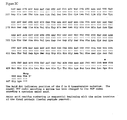
- Figure 1 shows the nucleotide and predicted amino acid sequence of the murine anti-human CD20 light chain variable domain fused to the human kappa light chain constant domain.
- Figure 2 shows the nucleotide and predicted amino acid sequence of the murine anti-human CD20 heavy chain variable domain fused to the human gamma 1 heavy chain constant domain.
- This expression construct ( Figure 3 ) was transfected into IDEC's CHO cell line designated 15C9 which was originally derived from CHO DG-44 ( Urlaub et al., Som. Cell Mol. Gen. 12(6):555-566, 1986 ). Following selection with G418, a high level immunoglobulin producing clone, termed 3F9, was isolated. 3F9 produces and secretes into the cell growth medium, roughly 3.4 pg/cell/day of immunoglobulin. The ELISA assay of immunoglobulin productivity measures L 2 H 2 immunoglobulin molecules irrespective of their monomeric, dimeric or oligomeric configuration. As evidenced by western blot analysis, the majority of the secreted immunoglobulin is monomeric (L 2 H 2 ). However, a small percentage is in the dimeric and larger oligomeric forms.
- the 3F9 cell line was then selected in 5 nM methotrexate. Growth in methotrexate can be used to artificially induce gene amplification ( Alt et al., J. Biol. Chem. 253:1357-1370 (1978 )) and expression of the plasmid encoded DHFR gene. Concomitantly, the linked immunoglobulin light and heavy chain genes will also be amplified resulting in increased immunoglobulin gene expression and higher immunoglobulin protein production. Through gene amplification, we were able to effectively induce an increase in total anti-CD20 production levels. Following selection, the clone designated 3F9-50B11 was identified. 3F9-50B11 produces roughly 6.3 pg/cell/day of anti-CD20 protein.
- C2B8/SH was purified from growth media (12L at 15 mg/L) using protein A (pA) column Chromatography. Sodium azide (0.01% final concentration) was added to the C2B8/SH antibody containing media and pH adjusted to 7.5 with 10N NaOH. The material was applied to a PBS washed pA affinity column (15 ml column, Bioprocess Ltd.) at approximately 3 ml/min. in a 4-8°C cold room, followed by washing with at least 5 column volumes PBS (100 ml). Antibody was eluted from the pA column with 100 ml Sodium Citrate (0.1 M, pH 3.5), and immediately neutralized to pH 7 with 1M Tris Base.
- pA protein A
- C2B8/SH (pA purified) was dialyzed against PBS (1000 ml x 4 changes over 3 days), concentrated to approx. 10 mg/ml under Nitrogen (50 psi) in an Amicon stirred cell concentrator (MWCO 30,000), and filter (0.2 ⁇ m) sterilized.
- C2B8/SH IgG (150 kDa) having a genetically engineered thiol group in the antibody heavy chain is able to form a 300 kDa IgG/IgG homodimer through intermolecular disulfide linkage.
- the amount of homodimer formed was determined using analytical HPLC and non-reducing SDS/PAGE.
- Analytical size-exclusion high performance liquid chromatography (SE-HPLC) was performed using a Beckman 126 HPLC system operating isocratically at a flow rate of 1.0 ml/min., with a mobile phase consisting of 100 mM sodium phosphate, 150 mM sodium chloride, pH 6.8.
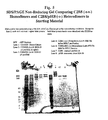
- Non-Reducing SDS/PAGE gels of CHO secreted C2B8/SH ( Figure 5 , Lane 1) showed a major protein band at 150kDa (IgG) and HPLC analysis of several preparation showed ⁇ 6% IgG/IgG homodimer (300kDa) in MAb containing growth medium. After pA purification and concentration, three major protein bands were observed ( Figure 5 , Lane 2). Molecular weight determination by HPLC showed the three protein peaks at 150 kDa (80.3%), 300 kDa (14.9%) and ⁇ 450 kDa (4.8%).
- DTT dithiothreitol
- This method used DTT to partially reduce either the intra or inter molecular disulfide bond and allow IgG/IgG dimers to reform more efficiently.
- 0.045 mg of Dithiothreitol (DTT Pierce Product #:20290) in calcium and magnesium free PBS, pH 7.4 (cmfPBS,) was added to 21.8 mg ofpA purified MAb C2B8/SH in cmfPBS containing 3.5 mM Na 2 -EDTA, to give a final ratio of 2.0 moles DTT per mole of MAb.
- the reaction was immediately degassed and incubated under nitrogen for three hours at 37°C.
- the MAb was purified from unreacted material using Sephadex G-25 column chromatography (PD-10 columns, Pharmacia Fine Chemicals) that was equilibrated with PBS.
- the MAb containing fraction was collected according to manufacturers instructions in a final volume of 3.0 ml equilibration buffer (PBS).
- PBS 3.0 ml equilibration buffer
- the selectively reduced C2B8/SH was further incubated for two hours at room temperature in air.
- the 300-kDa disulfide (-s-s-) linked homodimer was purified from monomer and higher molecular weight aggregates using preparative HPLC.
- Preparative SE-HPLC was performed using a Beckman 126 HPLC system operating isocratically at a flow rate of 4.0 ml/min. with a mobile phase consisting of 100 mM sodium phosphate, 150 mM sodium chloride, pH 6.8. The separation was performed at room temperature using a 21.5 x 75 mm TosoHaas TSK-Gel SW guard column attached to a 21.5 x 300 mm TosoHaas TSK-Gel G3000-SW column. Fractions were collected manually by monitoring the computer trace of Absorbence at 280 nm in real time. In general, homodimers were >95% pure after HPLC purification.
- the thiol concentration (SH content) estimated using Ellmans reagent was found to average approximately 2 moles of free thiol for each mole DTT-reduced C2B8/SH. Molecular integrity was confirmed with this method using SDS non-reducing PAGE.
- Bismaleimidohexane (BMH, Pierce Chemical Co. Product #:22319) was diluted to 10mM in DMF and added to the selectively reduced C2B8/SH to give a final molar ratio of 2.5 moles BMH per mole MAb. The mixture was rotated for 2.5 hours at room temperature in a N 2 atmosphere. The reaction was terminated by the addition of 0.1 ml Cysteine (100mM in PBS) and stored at 4°C (normal atmosphere) until analysis and purification using HPLC.
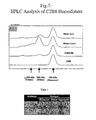
- the mixture was analyzed using the analytical HPLC method described in example 2.
- the fraction (300 kDa) containing the thioether linked (-s-) C2B8 homodimer represented 28% of the total protein collected ( Figure 7 and Table 1).
- Preparative HPLC (as described in example 2) was used to purify the (-s-) homodimer from the unpurified mixture with purity typically >95%, as determined by SDS-PAGE (non-reducing) gels and analytical HPLC (results not shown).
- MAb p5E8 (4.5x 10 -5 M in PB S) was functionalized by addition of a 6 fold molar excess of SMPB (10mM in DMF), and rotating the mixture for two hours at room temperature.
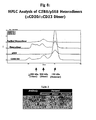
- Heterodimer (anti-CD20/anti-CD23) was prepared by mixing 1.5 mole equivalents of SMPB containing p5E8 (11.37 mg) with 1 mole equivalent freshly reduced C2B8/SH (8.0 mg) for one hour at room temperature in a N 2 atm. Heterodimer was analyzed and purified using HPLC, as described in example 2. Figure 8 and Table 2 show HPLC chromatograms of unpurified and purified heterodimer compared to starting material. Purity of the 300 kDa heterodimer was >95%, as determined by analytical HPLC (Table 2) and non-reducing and reducing SDS-PAGE gels Figure 6 . Reducing SDS/PAGE ( Figure 6 , lane 6) also showed three major protein bands after reduction, including a non-reducible 110 kDa band, consistent with the formation ofthioether linked H-H dimer.
- Binding of monomer and dimerized antibody to various cells was evaluated by indirect immunostaining using FITC anti-human IgG and analyzed using flow cytometry (indirect IF).
- Cells (2x10 6 viable cells in 0.1 ml cmfPBS/2% Fetal Calf Serum/0.1 % Sodium Azide, PBS/FCS buffer) were incubated for one hour on ice with 0.1 ml of 5 fold serially diluted antibody.
- Figure 9 compares the binding of MAbs: C2B8 (disulfide linked) homodimer, C2B8, and RF-2 on the CD20+/CD23+ positive cell lines, SKW and SB.
- RF-2 was used as an isotype matched non-binding antibody control. Similar binding curves for both the C2B8 monomer and dimer was obtained on both cell lines, suggesting similar binding activity for the CD20 antigen.
- the binding affinity of the C2B8 homodimer and monomer for the CD20 antigen was compared using a competitive binding assay ( Figure 10 ).
- SKW cells were first incubated for 30 minutes on ice with various amounts of 5-fold serially diluted murine (anti-CD20) MAb 2B8, and by 0.1 ml (at 1 ⁇ g/ml) of either C2B8 monomer or homodimer.
- Indirect IF as described for Figure 9 , evaluated the amount of C2B8 binding. Previous experiments had demonstrated no reactivity of the FITC anti-human IgG for the murine 2B8 antibody.
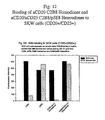
- SKW cells (1 x 10 6 cells PBS/FCS buffer) were first incubated with a saturating amount (10 ⁇ g/ml) of the murine (anti-CD20) MAb 2B8, followed by binding of either monomer or dimer antibody preparations ( Figure 12 ).
- Murine 2B8 completely inhibited binding of both monomer and dimerized C2B8 antibody, but did not effect the binding of either p5E8 or of the Heterodimer.
- the data suggests that the heterodimer also retained full functional binding activity for the CD23 antigen after dimerization with C2B8.
- MAb treatments were administered i.p. on various schedules indicated for each experiment.
- Antibody was diluted in PBS and administered i.p. as mg per mouse with 8 animals in each group.
- Control groups remained untreated.
- Data is reported as median tumor volume for control or treated animal groups.
- a complete regression was defined as a failure to detect tumor for at least two measurements (> 2 weeks).
- FIG. 13 compares anti-tumor activity of low-dose (200 ⁇ g/mouse) C2B8 homodimer (schedule: every 5 days x 3 injections, Q5dx3) to the activity of dose and schedule optimized C2B8 monomer (1 mg/mouse, Q5dx2).
- MAb treatment was initiated on established tumors, 50-150 mm 3 at start of treatment.
- the C2B8 homodimer showed tumor growth inhibition comparable to dose optimized C2B8.
- day 65 50% of the animals treated with 200 ug x3 doses of C2B8 homodimer showed complete tumor regression. Animals receiving 1 mg x 2 doses of C2B8 had 37.5% complete regressions.
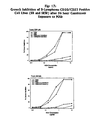
- Figure 14 compares the activity at matching schedules (Q5dx3) of 200 ⁇ g/mouse C2B8 monomer or homodimer on established tumors 150-250 mm 3 in size. Tumor growth of the C2B8 homodimer treated mice was inhibited to a greater extent than a comparable amount of the C2B8 monomer. At this dose (0.2 mg/mouse), 62.5% of the homodimer treated mice had completely regressed tumors, while 25% of monomer treated mice showed complete tumor regression.
- the ability of homodimers to induce apoptosis of CD20 + B cell lymphoma cells was determined by TUNEL assay.
- Disulfide linked homodimer was compared to C2B8 and RF2 on DHL-4 (CD20 + ), Ramos (CD20 + , CD23 + ) and SKW (CD20 + , CD23 + ) cells (1x10 6 cells/ml) at log-phase of growth.
- the cells were propagated in RPMI 1640 (Irvine Scientific) plus 5% Fetal Bovine Serum (FBS) with 2 mM L-Glutamine (Irvine Scientific) and 100 U/ml of Penicillin-Streptomycin (Irvine Scientific) at 37°C in 5% CO 2 ) incubator.
- cultures were incubated with either C2B8 monomer or a irrelevant isotype matched antibody control, RF2. After 72 hours of incubation, cells were harvested by centrifugation at 350 x g for 5 minutes and fixed with 70% (v/v) ethanol (ice-cold) for 30 minutes. Fixed cells were analyzed for apoptosis by a flow cytometry based TUNEL assay using APO-BRDU TM Kit as per manufacturer's instructions (Pharmingen). The treatment of DHL-4 and SKW cells by C2B8 homodimer showed evidence of apoptotic death of cells dependent on the dose of antibody used ( Figure 15 and Table III).
- PBMC peripheral blood mononuclear cells
- the cell pellet was re-suspended with 100 ⁇ l rabbit complement (ICN/Cappel Cat. #55866) at different dilutions and incubated for 60 minutes at 37°C. After incubation, 10 ⁇ l of anti-CD19-FITC antibody (Pharmingen) was added. Cells were incubated on ice for 30 minutes, followed by addition of 50 ⁇ l (20 ⁇ g/ml) of Propidium iodide (PI; Boehringer Mannheim). Fifteen minutes later, 400 ⁇ l of HBSS was added to all tubes and the cells were immediately analyzed by FACScan (Becton-Dickinson).
- the ability of homodimers and heterodimers to directly inhibit the growth ofB lymphoma cell lines SKW and SB was determined by a proliferation inhibition assay. Briefly, varying concentrations of C2B8, p5E8, C2B8 homodimer and C2B8-p5E8 were added to 5x10 5 in 96-well flat bottom plates in 200 ⁇ l of growth medium (5% FBSRPMI-1640 medium) and incubated for 96 hours at 37°C with 5% CO2. During the last 18 hours of incubation, 50 ⁇ l of redox dye alamar blue (Biosource International, Cat. DAL 1100) was added to each well. Following incubation, plates were cooled to room temperature for 10 minutes on a shaker and the intracellular reduction of the dye was determined and fluorescence was read using a 96-well fluorometer with excitation at 530nm and emission at 590nm.
- redox dye alamar blue Biosource International, Cat. DAL 1100
- FIG. 18 A representation of the data from the cell proliferation experiment is shown in Figure 18, which indicates that hyper cross-linking of C2B8 on the surface of B cell lymphoma using a secondary antibody showed a clear dose dependent inhibition of cell proliferation, which was not observed when CD20 + B cells were incubated with monomeric C2B8.
- Antibodies tested under similar conditions on CD20 HSB cells showed no effect, indicating that the observed effect was mediated via the CD20 molecule on the surface of B cell lymphomas.
- cross-linking of C2B8 by direct coating of culture wells without a secondary antibody prior to the addition of cells also resulted in inhibition of cell growth, further confirming above observation (data not shown).
- C2B8 homodimer to induce apoptosis using CD20 + B cells from human patients diagnosed with chronic lymphocytic leukemia (CLL) was also determined by TUNEL assay.
- Disulfide linked homodimer was compared to monomer for apoptosis induction on lymphocytes isolated from a donor diagnosed with CLL.
- the PBMC were cultured in RPMI 1640 medium supplemented with 2% donor plasma, plus 2mM L-Glutamine and 100 U/ml of Penicillin-Streptomycin. As controls, cultures were incubated with C2B8 monomer and the non-binding MAb RF2.
- Example 7 After 120 hours of incubation, cells were harvested and fixed with 70% (v/v) ethanol and analyzed for apoptosis by TUNEL assay, as descried earlier (Example 7).
- the treatment of leukemic cells by C2B8 homodimer resulted in approximately 20% increased cell death by apoptosis, compared to cells that were with the same concentrations of C2B8 monomer or the control antibody, RF2 (Table II).
- RF2 the control antibody
- Table II Induction of Apoptosis by C2B8 Homodimer of CD 19 + /CD20 + B Cells from a CLL Patient Clinical Sample Treatment Apoptosis a 10 ⁇ g/ml 2.5 ⁇ g/ml 0.625 ⁇ g/ml CSK#1 C2B8-C2B8 84% 83% 65% C2B8 64% 65% 63% RF2 62% 67% 60% a Apoptosis was determined by Tunel assay, as described under example 7. Degree of apoptosis was expressed as % apoptosis by sample divided by % apoptosis of controls.
- Flow cytometric analysis was performed on Becton-Dickinson FACScan using a FACScan Research Software package and the final data analysis was performed using the WinList Software package (Variety Software House). Percentage of cells positive for apoptosis was determined as the percentage of gated cells that were positive above the background, autofluorescence.
- embodiment E1 to embodiment E46 Further embodiments of the invention are described below and are referred to as embodiment E1 to embodiment E46.
Landscapes
- Health & Medical Sciences (AREA)
- Chemical & Material Sciences (AREA)
- Organic Chemistry (AREA)
- Immunology (AREA)
- General Health & Medical Sciences (AREA)
- Medicinal Chemistry (AREA)
- Life Sciences & Earth Sciences (AREA)
- Animal Behavior & Ethology (AREA)
- Veterinary Medicine (AREA)
- Public Health (AREA)
- Pharmacology & Pharmacy (AREA)
- Nuclear Medicine, Radiotherapy & Molecular Imaging (AREA)
- Bioinformatics & Cheminformatics (AREA)
- Chemical Kinetics & Catalysis (AREA)
- General Chemical & Material Sciences (AREA)
- Engineering & Computer Science (AREA)
- Biophysics (AREA)
- Proteomics, Peptides & Aminoacids (AREA)
- Biochemistry (AREA)
- Genetics & Genomics (AREA)
- Molecular Biology (AREA)
- Pulmonology (AREA)
- Epidemiology (AREA)
- Oncology (AREA)
- Otolaryngology (AREA)
- Hematology (AREA)
- Dermatology (AREA)
- Medicines Containing Antibodies Or Antigens For Use As Internal Diagnostic Agents (AREA)
- Peptides Or Proteins (AREA)
- Preparation Of Compounds By Using Micro-Organisms (AREA)
- Pharmaceuticals Containing Other Organic And Inorganic Compounds (AREA)
Applications Claiming Priority (2)
| Application Number | Priority Date | Filing Date | Title |
|---|---|---|---|
| US09/238,741 US6897044B1 (en) | 1999-01-28 | 1999-01-28 | Production of tetravalent antibodies |
| EP00913253A EP1157042B1 (fr) | 1999-01-28 | 2000-01-28 | Production d'anticorps tetravalents |
Related Parent Applications (1)
| Application Number | Title | Priority Date | Filing Date |
|---|---|---|---|
| EP00913253A Division EP1157042B1 (fr) | 1999-01-28 | 2000-01-28 | Production d'anticorps tetravalents |
Publications (1)
| Publication Number | Publication Date |
|---|---|
| EP1970385A2 true EP1970385A2 (fr) | 2008-09-17 |
Family
ID=22899128
Family Applications (2)
| Application Number | Title | Priority Date | Filing Date |
|---|---|---|---|
| EP00913253A Expired - Lifetime EP1157042B1 (fr) | 1999-01-28 | 2000-01-28 | Production d'anticorps tetravalents |
| EP08104512A Withdrawn EP1970385A2 (fr) | 1999-01-28 | 2000-01-28 | Anti-CD20 et/ou anti-CD23 anticorps tétravalents |
Family Applications Before (1)
| Application Number | Title | Priority Date | Filing Date |
|---|---|---|---|
| EP00913253A Expired - Lifetime EP1157042B1 (fr) | 1999-01-28 | 2000-01-28 | Production d'anticorps tetravalents |
Country Status (12)
| Country | Link |
|---|---|
| US (2) | US6897044B1 (fr) |
| EP (2) | EP1157042B1 (fr) |
| JP (1) | JP2002536969A (fr) |
| AT (1) | ATE403680T1 (fr) |
| AU (1) | AU775577B2 (fr) |
| CA (1) | CA2359994A1 (fr) |
| CY (1) | CY1108489T1 (fr) |
| DE (1) | DE60039752D1 (fr) |
| DK (1) | DK1157042T3 (fr) |
| ES (1) | ES2311452T3 (fr) |
| PT (1) | PT1157042E (fr) |
| WO (1) | WO2000044788A1 (fr) |
Families Citing this family (159)
| Publication number | Priority date | Publication date | Assignee | Title |
|---|---|---|---|---|
| US7129390B2 (en) * | 1997-10-16 | 2006-10-31 | Avigenics, Inc | Poultry Derived Glycosylated Interferon Alpha 2b |
| EP1645291A1 (fr) * | 1999-05-07 | 2006-04-12 | Genentech, Inc. | Traitement de maladies auto-immunes au moyen d'antagonistes se liant aux marqueurs de surface de lymphocytes B |
| WO2000067796A1 (fr) | 1999-05-07 | 2000-11-16 | Genentech, Inc. | Traitement de maladies auto-immunes au moyen d'antagonistes se liant aux marqueurs de surface de lymphocytes b |
| JP2004508420A (ja) * | 2000-09-18 | 2004-03-18 | アイデック ファーマスーティカルズ コーポレイション | B細胞枯渇抗体/免疫調節性抗体の組合せを用いて自己免疫疾患を治療するための併用療法 |
| US20030133939A1 (en) | 2001-01-17 | 2003-07-17 | Genecraft, Inc. | Binding domain-immunoglobulin fusion proteins |
| US7754208B2 (en) | 2001-01-17 | 2010-07-13 | Trubion Pharmaceuticals, Inc. | Binding domain-immunoglobulin fusion proteins |
| WO2002096948A2 (fr) * | 2001-01-29 | 2002-12-05 | Idec Pharmaceuticals Corporation | Anticorps tetravalents modifies et procedes d'utilisation |
| CN100574803C (zh) * | 2001-01-31 | 2009-12-30 | 拜奥根Idec公司 | 免疫调节抗体在治疗肿瘤性疾病中的用途 |
| KR20080087184A (ko) * | 2001-01-31 | 2008-09-30 | 바이오겐 아이덱 인크. | 종양질환 치료를 위한 cd23 길항제의 용도 |
| US20020159996A1 (en) * | 2001-01-31 | 2002-10-31 | Kandasamy Hariharan | Use of CD23 antagonists for the treatment of neoplastic disorders |
| US20060073141A1 (en) * | 2001-06-28 | 2006-04-06 | Domantis Limited | Compositions and methods for treating inflammatory disorders |
| US8287864B2 (en) * | 2002-02-14 | 2012-10-16 | Immunomedics, Inc. | Structural variants of antibodies for improved therapeutic characteristics |
| WO2003068821A2 (fr) * | 2002-02-14 | 2003-08-21 | Immunomedics, Inc. | Anticorps anti-cd20 et proteines hybrides desdits anticorps, et methodes d'utilisation |
| US20030195431A1 (en) * | 2002-04-10 | 2003-10-16 | Sukhatme Vikas P. | Observation of effects of body fluids on indicator cells for disease diagnosis |
| WO2003087163A1 (fr) | 2002-04-15 | 2003-10-23 | Chugai Seiyaku Kabushiki Kaisha | Procede d'elaboration d'une banque scdb |
| NZ561600A (en) * | 2002-11-19 | 2009-04-30 | Clluone Therapeutics As | Methods and kits for diagnosing and treating B-cell chronic lymphocytic leukemia (B-CLL) |
| TWI335821B (en) | 2002-12-16 | 2011-01-11 | Genentech Inc | Immunoglobulin variants and uses thereof |
| US8337841B2 (en) | 2003-01-21 | 2012-12-25 | Chugai Seiyaku Kabushiki Kaisha | Methods of screening for antibody light chains |
| EP1613350B1 (fr) | 2003-04-09 | 2009-03-18 | Genentech, Inc. | Traitement d'une maladie auto-immune chez un patient presentant une reponse inadequate a un inhibiteur de tnf-alpha |
| CN1802388B (zh) * | 2003-05-09 | 2011-01-05 | 杜克大学 | Cd20特异抗体及使用它们的方法 |
| JP2007526220A (ja) | 2003-06-05 | 2007-09-13 | ジェネンテック・インコーポレーテッド | B細胞疾患の併用療法 |
| JP4794301B2 (ja) | 2003-06-11 | 2011-10-19 | 中外製薬株式会社 | 抗体の製造方法 |
| EP1693386A4 (fr) * | 2003-11-04 | 2008-12-31 | Chugai Pharmaceutical Co Ltd | Procede de production d'anticorps |
| US20050214286A1 (en) * | 2004-01-27 | 2005-09-29 | University Of Southern California | Polymer-bound antibody cancer therapeutic agent |
| AU2005249566B2 (en) | 2004-06-04 | 2010-11-11 | Genentech, Inc. | Method for treating multiple sclerosis |
| BRPI0513100A (pt) * | 2004-07-22 | 2007-10-23 | Genentech Inc | métodos de tratamento da sìndrome de sjÍgren e artigos manufaturados |
| EP1789070B1 (fr) | 2004-08-03 | 2012-10-24 | Biogen Idec MA Inc. | Influence du taj sur les fonctions neuronales |
| AU2005274905B2 (en) | 2004-08-04 | 2010-12-23 | Mentrik Biotech, Llc | Variant Fc regions |
| BRPI0516297A (pt) * | 2004-10-05 | 2008-09-02 | Genentech Inc | métodos de tratamento de vasculite e artigos de fabricação |
| EP1699826B1 (fr) | 2005-01-05 | 2009-03-11 | f-star Biotechnologische Forschungs- und Entwicklungsges.m.b.H. | Domaines immunoglobuline synthetiques a proprietes de liaison elabores dans des regions de la molecule differentes des regions de determination de complementarite |
| US20090030187A1 (en) * | 2005-03-14 | 2009-01-29 | Tous Guillermo I | Macromolecules comprising a thioether cross-link |
| AU2006232287B2 (en) | 2005-03-31 | 2011-10-06 | Chugai Seiyaku Kabushiki Kaisha | Methods for producing polypeptides by regulating polypeptide association |
| JP5057967B2 (ja) | 2005-03-31 | 2012-10-24 | 中外製薬株式会社 | sc(Fv)2構造異性体 |
| US8349332B2 (en) | 2005-04-06 | 2013-01-08 | Ibc Pharmaceuticals, Inc. | Multiple signaling pathways induced by hexavalent, monospecific and bispecific antibodies for enhanced toxicity to B-cell lymphomas and other diseases |
| US8475794B2 (en) | 2005-04-06 | 2013-07-02 | Ibc Pharmaceuticals, Inc. | Combination therapy with anti-CD74 antibodies provides enhanced toxicity to malignancies, Autoimmune disease and other diseases |
| ZA200709956B (en) * | 2005-05-20 | 2009-02-25 | Genentech Inc | Pretreatment of a biological sample from an autoimmune disease subject |
| KR101367544B1 (ko) | 2005-06-10 | 2014-02-26 | 추가이 세이야쿠 가부시키가이샤 | 메글루민을 함유하는 단백질 제제의 안정화제, 및 그의이용 |
| CA2611726C (fr) | 2005-06-10 | 2017-07-11 | Chugai Seiyaku Kabushiki Kaisha | Composition pharmaceutique contenant sc(fv)2 |
| HRP20131066T1 (hr) | 2005-07-08 | 2013-12-06 | Biogen Idec Ma Inc. | Sp35 antitijela i njihova upotreba |
| RU2421242C2 (ru) | 2005-07-25 | 2011-06-20 | Трабьон Фармасьютикалз, Инк. | Применение однократной дозы cd20-специфических связывающих молекул |
| RU2423381C2 (ru) | 2005-07-25 | 2011-07-10 | Трабьон Фармасьютикалз, Инк. | Снижение количества в-клеток с использованием cd37-специфических и cd20-специфических связывающих молекул |
| US7422899B2 (en) | 2005-10-05 | 2008-09-09 | Biogen Idec Ma Inc. | Antibodies to the human prolactin receptor |
| WO2007044887A2 (fr) * | 2005-10-11 | 2007-04-19 | Transtarget, Inc. | Procede de production d'une population homogene d'anticorps bispecifiques tetravalents |
| MY149159A (en) | 2005-11-15 | 2013-07-31 | Hoffmann La Roche | Method for treating joint damage |
| ES2618543T3 (es) | 2005-11-23 | 2017-06-21 | Genentech, Inc. | Métodos y composiciones relacionados con ensayos de linfocitos B |
| EP2009101B1 (fr) | 2006-03-31 | 2017-10-25 | Chugai Seiyaku Kabushiki Kaisha | Procede de modification d'anticorps pour purifier un anticorps bispecifique |
| NZ573646A (en) | 2006-06-12 | 2012-04-27 | Wyeth Llc | Single-chain multivalent binding proteins with effector function |
| BRPI0806340B8 (pt) | 2007-01-09 | 2021-05-25 | Biogen Idec Inc | anticorpo isolado que se liga especificamente a sp35, seu uso e composição farmacêutica |
| US7919594B2 (en) | 2007-02-14 | 2011-04-05 | Vaccinex, Inc. | Human anti-CD100 antibodies |
| US7807168B2 (en) | 2007-04-10 | 2010-10-05 | Vaccinex, Inc. | Selection of human TNFα specific antibodies |
| KR102055873B1 (ko) | 2007-07-09 | 2019-12-13 | 제넨테크, 인크. | 폴리펩티드의 재조합 생산 동안의 디술피드 결합 환원의 방지 |
| WO2009043051A2 (fr) * | 2007-09-27 | 2009-04-02 | Biogen Idec Ma Inc. | Molécules se fixant au cd23 et leurs méthodes d'utilisation |
| HUE030134T2 (en) | 2007-10-16 | 2017-04-28 | Zymogenetics Inc | Combination of transmembrane activator and calcium modulator and cyclophilin ligand interactor (TACI) and anti-CD20 agents for the treatment of autoimmune diseases |
| US8536310B2 (en) | 2007-10-17 | 2013-09-17 | Arca Biopharma, Inc. | Antibodies to CLL-1 |
| US20090162359A1 (en) | 2007-12-21 | 2009-06-25 | Christian Klein | Bivalent, bispecific antibodies |
| US8227577B2 (en) * | 2007-12-21 | 2012-07-24 | Hoffman-La Roche Inc. | Bivalent, bispecific antibodies |
| US9266967B2 (en) | 2007-12-21 | 2016-02-23 | Hoffmann-La Roche, Inc. | Bivalent, bispecific antibodies |
| CA2710680C (fr) | 2007-12-26 | 2018-10-16 | Vaccinex, Inc. | Therapies de combinaison par anticorps anti-c35 et procedes |
| EP2077281A1 (fr) | 2008-01-02 | 2009-07-08 | Bergen Teknologioverforing AS | Anticorps anti-CD20 ou fragments correspondants pour le traitement de syndrome de fatigue chronique |
| US7914785B2 (en) | 2008-01-02 | 2011-03-29 | Bergen Teknologieverforing As | B-cell depleting agents, like anti-CD20 antibodies or fragments thereof for the treatment of chronic fatigue syndrome |
| RU2531754C2 (ru) | 2008-04-11 | 2014-10-27 | ЭМЕРДЖЕНТ ПРОДАКТ ДИВЕЛОПМЕНТ СИЭТЛ,ЭлЭлСи,US | Связывающееся с cd37 иммунотерапевтическое средство и его комбинация с бифункциональным химиотерапевтическим средством |
| CA2729961C (fr) | 2008-07-09 | 2018-05-01 | Biogen Idec Ma Inc. | Anticorps anti-lingo, li113, li62 variant co2 |
| CN102159243B (zh) * | 2008-07-21 | 2015-08-19 | 免疫医疗公司 | 用于改良的治疗特征的抗体的结构变体 |
| EP4071169A2 (fr) | 2008-08-25 | 2022-10-12 | Dana Farber Cancer Institute, Inc. | Épitope d'hémagglutinine de la grippe conservé et anticorps associés |
| AR073295A1 (es) | 2008-09-16 | 2010-10-28 | Genentech Inc | Metodos para tratar la esclerosis multiple progresiva. articulo de fabricacion. |
| US8268314B2 (en) | 2008-10-08 | 2012-09-18 | Hoffmann-La Roche Inc. | Bispecific anti-VEGF/anti-ANG-2 antibodies |
| CA2738243C (fr) | 2008-10-29 | 2020-09-29 | Wyeth Llc | Formulations de molecules de liaison d'antigene monodomaines |
| BRPI0919879A2 (pt) | 2008-10-29 | 2016-02-16 | Wyeth Llc | métodos para purificação de moléculas de ligação a antígeno de domínio único |
| WO2010075249A2 (fr) | 2008-12-22 | 2010-07-01 | Genentech, Inc. | Méthode de traitement de la polyarthrite rhumatoïde avec des antagonistes de cellules b |
| JP2012514458A (ja) | 2008-12-31 | 2012-06-28 | バイオジェン・アイデック・エムエイ・インコーポレイテッド | 抗リンホトキシン抗体 |
| WO2010096394A2 (fr) | 2009-02-17 | 2010-08-26 | Redwood Biosciences, Inc. | Véhicules de médicaments à base de protéine marqués par aldéhyde et procédés d'utilisation |
| CA2756244A1 (fr) * | 2009-04-02 | 2010-10-07 | Roche Glycart Ag | Anticorps multispecifiques renfermant des anticorps de longueur entiere et des fragments fab a chaine unique |
| WO2010112194A1 (fr) | 2009-04-02 | 2010-10-07 | F. Hoffmann-La Roche Ag | Polypeptides se liant à un antigène et anticorps multispécifiques les renfermant |
| SG175077A1 (en) | 2009-04-07 | 2011-11-28 | Roche Glycart Ag | Trivalent, bispecific antibodies |
| EP2417164A1 (fr) | 2009-04-07 | 2012-02-15 | Roche Glycart AG | Anticorps anti-erbb-2/anti-c-met bispécifiques |
| MX2011010166A (es) | 2009-04-07 | 2011-10-11 | Roche Glycart Ag | Anticuerpos biespecificos anti-erbb-3/anti-c-met. |
| WO2010129917A2 (fr) | 2009-05-08 | 2010-11-11 | Vaccinex, Inc. | Anticorps anti-cd100 et leurs méthodes d'utilisation |
| EP2435476A4 (fr) | 2009-05-27 | 2013-04-17 | Synageva Biopharma Corp | Anticorps d'origine aviaire |
| US9676845B2 (en) | 2009-06-16 | 2017-06-13 | Hoffmann-La Roche, Inc. | Bispecific antigen binding proteins |
| AU2010263272C1 (en) | 2009-06-24 | 2016-02-11 | The Feinstein Institute For Medical Research | Method for treating chronic lymphocytic leukemia |
| CN102471375A (zh) * | 2009-07-09 | 2012-05-23 | F-斯塔生物技术研究和发展有限公司 | 稳定的免疫球蛋白恒定结构域 |
| HRP20200768T4 (hr) | 2009-08-11 | 2025-03-28 | F. Hoffmann - La Roche Ag | Proizvodnja proteina u mediju za uzgoj stanica bez glutamina |
| EP2478013B1 (fr) | 2009-09-16 | 2018-10-24 | F.Hoffmann-La Roche Ag | Complexes protéiques contenant une super-hélice et/ou une attache et leurs utilisations |
| EP2483289B2 (fr) | 2009-10-02 | 2025-03-26 | Biogen MA Inc. | Procedes permettant de detruire et de reduire la formation de liaisons trisulfure |
| KR20130009760A (ko) | 2010-02-10 | 2013-01-23 | 이뮤노젠 아이엔씨 | Cd20 항체 및 이의 용도 |
| AR080794A1 (es) | 2010-03-26 | 2012-05-09 | Hoffmann La Roche | Anticuerpos bivalentes biespecificos anti- vegf/ anti-ang-2 |
| TW201138821A (en) | 2010-03-26 | 2011-11-16 | Roche Glycart Ag | Bispecific antibodies |
| WO2012009705A1 (fr) | 2010-07-15 | 2012-01-19 | Zyngenia, Inc. | Complexes liant ang-2 et leurs utilisations |
| CN103119062A (zh) | 2010-07-16 | 2013-05-22 | 埃博灵克斯股份有限公司 | 修饰的单结构域抗原结合分子及其应用 |
| CN103068846B9 (zh) | 2010-08-24 | 2016-09-28 | 弗·哈夫曼-拉罗切有限公司 | 包含二硫键稳定性Fv片段的双特异性抗体 |
| SG188285A1 (en) | 2010-09-02 | 2013-04-30 | Vaccinex Inc | Anti-cxcl13 antibodies and methods of using the same |
| CA2813411C (fr) * | 2010-11-05 | 2016-08-02 | Rinat Neuroscience Corporation | Conjugues de polypeptides obtenus par genie biologique, et procede de fabrication correspondants au moyen de transglutaminase |
| SG191153A1 (en) | 2010-12-23 | 2013-07-31 | Hoffmann La Roche | Polypeptide-polynucleotide-complex and its use in targeted effector moiety delivery |
| EP3604339B1 (fr) | 2011-01-14 | 2021-03-10 | The Regents Of The University Of California | Anticorps thérapeutiques contre la protéine ror-1 et leurs procédés d'utilisation |
| WO2012097333A2 (fr) | 2011-01-14 | 2012-07-19 | Redwood Bioscience, Inc. | Immunoglobulines polypeptidiques à marquage aldéhydique et leur méthode d'utilisation |
| MX342034B (es) | 2011-02-28 | 2016-09-12 | Hoffmann La Roche | Proteinas monovalentes que se unen a antigenos. |
| AR085404A1 (es) | 2011-02-28 | 2013-09-25 | Hoffmann La Roche | Proteinas de union a antigeno |
| MX361242B (es) | 2011-03-30 | 2018-11-30 | Ablynx Nv | Anticuerpos de dominio sencillo contra tnf-alfa y usos de los mismos. |
| WO2012158551A1 (fr) | 2011-05-13 | 2012-11-22 | Biogen Idec Ma Inc. | Procédés pour prévenir et éliminer des liaisons trisulfure |
| EP2714738B1 (fr) | 2011-05-24 | 2018-10-10 | Zyngenia, Inc. | Complexes plurispécifiques multivalents et monovalents, et leurs utilisations |
| US20130195851A1 (en) | 2011-12-23 | 2013-08-01 | Genentech, Inc. | Articles of manufacture and methods for co-administration of antibodies |
| CA2861124A1 (fr) | 2012-02-10 | 2013-08-15 | Genentech, Inc. | Anticorps et autres heteromultimeres monocatenaires |
| NZ629828A (en) | 2012-03-02 | 2017-05-26 | Vaccinex Inc | Methods for the treatment of b cell-mediated inflammatory diseases |
| WO2013150043A1 (fr) | 2012-04-05 | 2013-10-10 | F. Hoffmann-La Roche Ag | Anticorps bispécifiques dirigés contre tweak humain et l'il17 humaine, et leurs utilisations |
| RU2639287C2 (ru) | 2012-06-27 | 2017-12-20 | Ф. Хоффманн-Ля Рош Аг | Способ отбора и получения высокоселективных и мультиспецифичных нацеливающих групп с заданными свойствами, включающих по меньшей мере две различные связывающие группировки, и их применения |
| KR20150030744A (ko) | 2012-06-27 | 2015-03-20 | 에프. 호프만-라 로슈 아게 | 표적에 특이적으로 결합하는 하나 이상의 결합 단위를 포함하는 항체 Fc-영역 접합체의 제조 방법 및 그의 용도 |
| RU2684595C2 (ru) | 2012-07-04 | 2019-04-09 | Ф.Хоффманн-Ля Рош Аг | Ковалентно связанные конъюгаты антиген-антитело |
| DK2869837T3 (en) | 2012-07-04 | 2016-09-26 | Hoffmann La Roche | Anti-theophylline antibodies and methods of use |
| EP2870180B1 (fr) | 2012-07-04 | 2024-08-28 | F. Hoffmann-La Roche AG | Anticorps anti-biotine et procédés d'utilisation |
| SG11201408538PA (en) | 2012-07-13 | 2015-02-27 | Roche Glycart Ag | Bispecific anti-vegf/anti-ang-2 antibodies and their use in the treatment of ocular vascular diseases |
| US10132799B2 (en) | 2012-07-13 | 2018-11-20 | Innate Pharma | Screening of conjugated antibodies |
| ES2702315T3 (es) | 2012-08-24 | 2019-02-28 | Univ California | Anticuerpos y vacunas para su uso en tratar cánceres ROR1 e inhibir metástasis |
| EP2953976B1 (fr) | 2013-02-08 | 2021-03-24 | Novartis Ag | Sites spécifiques de modification d'anticorps pour fabriquer des immunoconjugués |
| JP6423804B2 (ja) | 2013-02-28 | 2018-11-14 | イミュノジェン・インコーポレーテッド | 細胞結合剤及び細胞毒性剤を含む複合体 |
| AU2013205589A1 (en) | 2013-03-08 | 2014-09-25 | Vaccinex, Inc. | Anti-CXCL13 antibodies and associated epitope sequences |
| US10150800B2 (en) | 2013-03-15 | 2018-12-11 | Zyngenia, Inc. | EGFR-binding modular recognition domains |
| CN104341504B (zh) | 2013-08-06 | 2017-10-24 | 百奥泰生物科技(广州)有限公司 | 双特异性抗体 |
| ES2881306T3 (es) | 2013-09-27 | 2021-11-29 | Chugai Pharmaceutical Co Ltd | Método para la producción de heteromultímeros de polipéptidos |
| BR112016006929A2 (pt) | 2013-10-11 | 2017-09-19 | Hoffmann La Roche | Anticorpo, ácido nucleico, vetor de expressão, célula hospedeira, métodos de preparação de anticorpo, de tratamento de pacientes e de geração de um anticorpo, composição farmacêutica e uso do anticorpo |
| AU2014368696A1 (en) | 2013-12-20 | 2016-06-02 | F. Hoffmann-La Roche Ag | Humanized anti-Tau(pS422) antibodies and methods of use |
| EP3089758B1 (fr) | 2014-01-03 | 2021-01-27 | F.Hoffmann-La Roche Ag | Conjugués d'anticorps helicar-anti-helicar liés par covalence et leurs utilisations |
| CN105899540B (zh) | 2014-01-03 | 2020-02-07 | 豪夫迈·罗氏有限公司 | 双特异性抗-半抗原/抗-血脑屏障受体的抗体、其复合物及它们作为血脑屏障穿梭物的应用 |
| BR112016014945A2 (pt) | 2014-01-03 | 2018-01-23 | F. Hoffmann-La Roche Ag | conjugado, formulação farmacêutica e uso |
| US11058768B2 (en) | 2014-04-16 | 2021-07-13 | Biocon Ltd. | Stable protein formulations comprising a molar excess of sorbitol |
| AR100978A1 (es) | 2014-06-26 | 2016-11-16 | Hoffmann La Roche | LANZADERAS CEREBRALES DE ANTICUERPO HUMANIZADO ANTI-Tau(pS422) Y USOS DE LAS MISMAS |
| US11033637B2 (en) | 2014-11-21 | 2021-06-15 | University Of Maryland, Baltimore | Targeted structure-specific particulate delivery systems |
| EP3227332B1 (fr) | 2014-12-03 | 2019-11-06 | F.Hoffmann-La Roche Ag | Anticorps multi-spécifiques |
| HRP20210096T1 (hr) | 2015-03-31 | 2021-03-05 | Medimmune Limited | Novi oblik il33, mutirani oblici il33, protutijela, testovi i postupci njegove upotrebe |
| EP3303373B1 (fr) | 2015-05-30 | 2020-04-08 | Molecular Templates, Inc. | Supports de sous-unité a de toxine de shiga, déimmunisés, et molécules de ciblage de cellule les comprenant |
| WO2016207245A1 (fr) | 2015-06-24 | 2016-12-29 | F. Hoffmann-La Roche Ag | Anticorps anti-tau(ps422) humanisés et leurs méthodes d'utilisation |
| HUE057952T2 (hu) | 2015-06-24 | 2022-06-28 | Hoffmann La Roche | Anti-transzferrin receptor antitestek testreszabott affinitással |
| WO2017053469A2 (fr) | 2015-09-21 | 2017-03-30 | Aptevo Research And Development Llc | Polypeptides de liaison à cd3 |
| AR106189A1 (es) | 2015-10-02 | 2017-12-20 | Hoffmann La Roche | ANTICUERPOS BIESPECÍFICOS CONTRA EL A-b HUMANO Y EL RECEPTOR DE TRANSFERRINA HUMANO Y MÉTODOS DE USO |
| TWI873952B (zh) | 2015-10-02 | 2025-02-21 | 瑞士商赫孚孟拉羅股份公司 | 雙特異性抗‐人類cd20/人類轉鐵蛋白受體抗體及使用方法 |
| EP3368092B9 (fr) | 2015-10-29 | 2020-07-29 | Novartis AG | Conjugués d'anticorps comprenant un agoniste du récepteur de type toll |
| AU2016381992B2 (en) | 2015-12-28 | 2024-01-04 | Chugai Seiyaku Kabushiki Kaisha | Method for promoting efficiency of purification of Fc region-containing polypeptide |
| GB201603291D0 (en) | 2016-02-25 | 2016-04-13 | Binding Site Group The Ltd | Antibodies |
| JP2019515677A (ja) | 2016-04-26 | 2019-06-13 | アール.ピー.シェーラー テクノロジーズ エルエルシー | 抗体複合体ならびにそれを作製および使用する方法 |
| KR20190077306A (ko) | 2016-08-05 | 2019-07-03 | 메디뮨 엘엘씨 | 항-o2 항체 및 이의 용도 |
| SG11201903063UA (en) | 2016-10-19 | 2019-05-30 | Medimmune Llc | Anti-o1 antibodies and uses thereof |
| CN110300599B (zh) | 2016-12-07 | 2024-07-02 | 艾吉纳斯公司 | 抗体和其使用方法 |
| GB201708262D0 (en) | 2017-05-23 | 2017-07-05 | Binding Site Group Ltd | Assay for plasma cell associated disease |
| AR112257A1 (es) | 2017-06-21 | 2019-10-09 | Gilead Sciences Inc | Anticuerpos multiespecíficos dirigidos al vih-1 gp120 y cd3 humana, composiciones que los comprende, ácido nucleico, vector y célula huésped relacionados, método para producirlos, método para detectar células que expresan gp120 y cd3, kit de anticuerpos, fragmentos de anticuerpo que se une a gp120 y método para producirlos |
| DK4257600T3 (da) | 2018-07-03 | 2025-05-26 | Gilead Sciences Inc | Antistoffer rettet mod hiv gp120 og fremgangsmåder til at bruge dem |
| MY195550A (en) | 2018-10-29 | 2023-01-31 | Hoffmann La Roche | Antibody Formulation |
| US20220242962A1 (en) | 2019-08-12 | 2022-08-04 | Aptevo Research And Development Llc | 4-1bb and ox40 binding proteins and related compositions and methods, antibodies against 4-1bb, antibodies against ox40 |
| GB202007047D0 (en) | 2020-05-13 | 2020-06-24 | Binding Site Group Ltd | Mass spectrometry controls |
| IL303328A (en) | 2020-12-01 | 2023-07-01 | Aptevo Res & Development Llc | Heterodimeric psma and cd3-binding bispecific antibodies |
| WO2022263357A1 (fr) | 2021-06-14 | 2022-12-22 | Argenx Iip Bv | Anticorps anti-il-9 et leurs procédés d'utilisation |
| KR20250173600A (ko) | 2023-03-17 | 2025-12-10 | 옥시토프 파마 비.브이. | 항-포스포콜린 항체 및 그 사용 방법 |
| WO2024194685A2 (fr) | 2023-03-17 | 2024-09-26 | Oxitope Pharma B.V. | Anticorps anti-phosphocholine et leurs procédés d'utilisation |
| US12319747B2 (en) | 2023-07-03 | 2025-06-03 | Medicovestor, Inc. | Methods of using anti-SP17 immunotherapeutics |
| US12364777B2 (en) * | 2023-10-20 | 2025-07-22 | Medicovestor, Inc. | Homodimeric antibodies for use in treating cancers and methods of use |
| WO2025129010A1 (fr) | 2023-12-14 | 2025-06-19 | Genentech, Inc. | Procédés de détermination de structure à l'aide d'anticorps |
| WO2025133707A1 (fr) | 2023-12-19 | 2025-06-26 | Vectory Therapeutics B.V. | Anticorps anti-tdp-43 et leurs utilisations |
| US12116410B1 (en) * | 2023-12-26 | 2024-10-15 | Medicovestor, Inc. | Methods of manufacturing dimeric antibodies |
| WO2025144914A1 (fr) * | 2023-12-26 | 2025-07-03 | Medicovestor, Inc. | Anticorps dimères et leurs procédés de fabrication |
| US12121587B1 (en) * | 2023-12-26 | 2024-10-22 | Medicovestor, Inc. | Dimeric antibodies |
| US12600795B2 (en) * | 2023-12-26 | 2026-04-14 | Medicovestor, Inc. | Oligomeric IgG for immunotherapeutics and diagnostics |
Citations (2)
| Publication number | Priority date | Publication date | Assignee | Title |
|---|---|---|---|---|
| WO1991019515A1 (fr) | 1990-06-21 | 1991-12-26 | The Board Of Trustees Of The Leland Stanford Junior University | Mutant du domaine constant d'immunoglobulines oligomeres presentant une activite cytolytique accrue a mediation de complement |
| US5830698A (en) | 1997-03-14 | 1998-11-03 | Idec Pharmaceuticals Corporation | Method for integrating genes at specific sites in mammalian cells via homologous recombination and vectors for accomplishing the same |
Family Cites Families (10)
| Publication number | Priority date | Publication date | Assignee | Title |
|---|---|---|---|---|
| US6121424A (en) * | 1991-11-25 | 2000-09-19 | Enzon, Inc. | Multivalent antigen-binding proteins |
| EP0394277B1 (fr) * | 1987-07-15 | 1998-01-14 | THE UNITED STATES OF AMERICA as represented by the Secretary United States Department of Commerce | Anticorps monoclonaux de seconde generation ayant une specificite de liaison sur tag-72 et des carcinomes humains, et procede d'utilisation de ces anticorps |
| US6051225A (en) * | 1988-10-19 | 2000-04-18 | The Dow Chemical Company | Family of high affinity, modified antibodies for cancer treatment |
| US5993813A (en) * | 1988-10-19 | 1999-11-30 | The Dow Chemical Company | Family of high affinity, modified antibodies for cancer treatment |
| GB9422383D0 (en) | 1994-11-05 | 1995-01-04 | Wellcome Found | Antibodies |
| US6121022A (en) * | 1995-04-14 | 2000-09-19 | Genentech, Inc. | Altered polypeptides with increased half-life |
| US6348581B1 (en) * | 1996-10-31 | 2002-02-19 | The Dow Chemical Company | High affinity humanized anti-TAG-72 monoclonalantibodies |
| US6011138A (en) * | 1997-02-20 | 2000-01-04 | Idec Pharmaceuticals Corporation | Gamma-1 anti-human CD23 monoclonal antibodies |
| US6368596B1 (en) * | 1997-07-08 | 2002-04-09 | Board Of Regents, The University Of Texas System | Compositions and methods for homoconjugates of antibodies which induce growth arrest or apoptosis of tumor cells |
| US7074405B1 (en) | 1998-06-22 | 2006-07-11 | Immunomedics, Inc. | Use of bi-specific antibodies for pre-targeting diagnosis and therapy |
-
1999
- 1999-01-28 US US09/238,741 patent/US6897044B1/en not_active Expired - Fee Related
-
2000
- 2000-01-28 ES ES00913253T patent/ES2311452T3/es not_active Expired - Lifetime
- 2000-01-28 CA CA002359994A patent/CA2359994A1/fr not_active Abandoned
- 2000-01-28 AT AT00913253T patent/ATE403680T1/de not_active IP Right Cessation
- 2000-01-28 PT PT00913253T patent/PT1157042E/pt unknown
- 2000-01-28 EP EP00913253A patent/EP1157042B1/fr not_active Expired - Lifetime
- 2000-01-28 AU AU34731/00A patent/AU775577B2/en not_active Ceased
- 2000-01-28 EP EP08104512A patent/EP1970385A2/fr not_active Withdrawn
- 2000-01-28 JP JP2000596044A patent/JP2002536969A/ja active Pending
- 2000-01-28 DK DK00913253T patent/DK1157042T3/da active
- 2000-01-28 DE DE60039752T patent/DE60039752D1/de not_active Expired - Lifetime
- 2000-01-28 WO PCT/US2000/001893 patent/WO2000044788A1/fr not_active Ceased
-
2004
- 2004-12-23 US US11/019,180 patent/US20050158828A1/en not_active Abandoned
-
2008
- 2008-11-06 CY CY20081101269T patent/CY1108489T1/el unknown
Patent Citations (2)
| Publication number | Priority date | Publication date | Assignee | Title |
|---|---|---|---|---|
| WO1991019515A1 (fr) | 1990-06-21 | 1991-12-26 | The Board Of Trustees Of The Leland Stanford Junior University | Mutant du domaine constant d'immunoglobulines oligomeres presentant une activite cytolytique accrue a mediation de complement |
| US5830698A (en) | 1997-03-14 | 1998-11-03 | Idec Pharmaceuticals Corporation | Method for integrating genes at specific sites in mammalian cells via homologous recombination and vectors for accomplishing the same |
Non-Patent Citations (35)
| Title |
|---|
| "Remington's Pharmaceutical Sciences", 1980 |
| ALT ET AL., J BIOL. CHEM., vol. 253, 1978, pages 1357 - 1370 |
| CARON ET AL., J. EXP. MED., vol. 176, 1992, pages 1191 - 95 |
| CHAOUCHI ET AL., J IMMUNOL., vol. 154, 1995, pages 3096 |
| CLARK ET AL., ADV. CANCER RES., vol. 52, 1989, pages 81 - 149 |
| CLARK ET AL., PNAS, USA, vol. 82, 1985, pages 1766 - 70 |
| ELLMAN ET AL., ANAL. BIOCHEM., vol. 94, 1979, pages 75 - 81 |
| FUNAKOSHI ET AL., J IMMUNOL., vol. 19, 1996, pages 93 - 101 |
| FUNAKOSHI ET AL., J. IMMUNOL., vol. 19, 1996, pages 93 - 101 |
| GHETIE ET AL., PNAS, USA, vol. 49, 1997, pages 7509 - 7514 |
| GHETIE ET AL., PNAS, vol. 94, 1997, pages 7509 - 7514 |
| GHETIE, PNAS, vol. 94, 1997, pages 7509 - 7514 |
| GOLDENBERG ET AL., BIOCONJ. CHEM., vol. 2, 1991, pages 275 - 280 |
| HOLDER ET AL., EUR. J IMMUNOL., vol. 25, 1995, pages 3160 - 64 |
| HOOIJBERG ET AL., CANCER RES., vol. 55, 1995, pages 840 - 846 |
| MALONEY ET AL., BLOOD, vol. 84, 1994, pages 2457 - 2466 |
| MALONEY ET AL., JCO, vol. 15, no. 10, 1997, pages 3266 |
| MCLAUGHLIN ET AL., JCO |
| MCLAUGHLIN ET AL., PROC. AM. SOC. CLIN. ONCOL., vol. 16, 1997, pages 16A |
| NEWELL ET AL., PNAS, vol. 90, 1993, pages 10459 |
| PRESS ET AL., BLOOD, vol. 69, 1987, pages 584 - 591 |
| REFF ET AL., BLOOD, vol. 83, 1994, pages 435 - 445 |
| REFF ET AL., BLOOD, vol. 83, 1994, pages 4350445 |
| REFF ET AL., IBID |
| SHAN ET AL., BLOOD, vol. 91, 1998, pages 1644 - 1653 |
| SHAN ET AL., BLOOD, vol. 91, pages 1644 - 1653 |
| SHOPES, J. IMMUNOL., vol. 148, no. 9, 1992, pages 2918 - 2922 |
| SIEGALL ET AL., BIOCONJ. CHEM., vol. 3, 1992, pages 302 - 307 |
| TEDDER ET AL., EUR. J IMMUNOL., vol. 16, 1986, pages 881 |
| TEDDER ET AL., IMMUNOL. TODAY, vol. 15, 1994, pages 450 |
| TEDDER ET AL., IMMUNOL. TODAY, vol. 15, 1994, pages 450 - 54 |
| URLAUB ET AL., SOM. CELL MOL. GEN., vol. 12, no. 6, 1986, pages 555 - 566 |
| VALENTINE ET AL., EUR. J IMMUNOL., vol. 22, 1992, pages 3141 |
| WILLNER ET AL., BIOCONJ. CHEM., vol. 4, 1993, pages 521 - 527 |
| WOLFF ET AL., CANCER RES., vol. 53, 1993, pages 2560 - 2565 |
Also Published As
| Publication number | Publication date |
|---|---|
| US20050158828A1 (en) | 2005-07-21 |
| ATE403680T1 (de) | 2008-08-15 |
| DK1157042T3 (da) | 2008-12-08 |
| AU3473100A (en) | 2000-08-18 |
| EP1157042A1 (fr) | 2001-11-28 |
| CY1108489T1 (el) | 2014-04-09 |
| EP1157042B1 (fr) | 2008-08-06 |
| CA2359994A1 (fr) | 2000-08-03 |
| DE60039752D1 (de) | 2008-09-18 |
| PT1157042E (pt) | 2008-11-18 |
| JP2002536969A (ja) | 2002-11-05 |
| WO2000044788A1 (fr) | 2000-08-03 |
| ES2311452T3 (es) | 2009-02-16 |
| AU775577B2 (en) | 2004-08-05 |
| US6897044B1 (en) | 2005-05-24 |
Similar Documents
| Publication | Publication Date | Title |
|---|---|---|
| EP1157042B1 (fr) | Production d'anticorps tetravalents | |
| RU2722451C1 (ru) | Pd-1 антитела и их применение. | |
| EP3377532B1 (fr) | Anticorps dirigés contre un récepteur du facteur de nécrose tumorale induit par glucocorticoïdes (gitr) et leurs utilisations | |
| CN101213297B (zh) | 程序性死亡-1(pd-1)的人单克隆抗体及单独使用或与其它免疫治疗剂联合使用抗pd-1抗体来治疗癌症的方法 | |
| JP2022046651A (ja) | 4-1bb結合分子 | |
| BR112020023746A2 (pt) | anticorpo, composição farmacêutica, método para tratar câncer, ácido nucleico isolado, vetor, célula hospedeira, processo para a produção de um anticorpo e reagente de diagnóstico | |
| NZ795790A (en) | Anti-BCMA heavy chain-only antibodies | |
| CN115838427A (zh) | 针对cd40的抗体 | |
| JP2020503860A (ja) | 免疫応答のコンディショナルアゴニスト | |
| BR112019023138A2 (pt) | anticorpo 4d anti-semaforina humano | |
| US20250346680A1 (en) | System and method for the development of cd30 bispecific antibodies for immunotherapy of cd30+ malignancies | |
| US20230330257A1 (en) | Development of drug therapeutic agent containing adaptor and use thereof | |
| JP2021167324A (ja) | がん治療のための集中インターフェロン免疫療法 | |
| JP7362614B2 (ja) | 癌治療のために免疫チェックポイントを調節する単一特異性および二重特異性タンパク質 | |
| KR20140138830A (ko) | B 세포-매개 염증 질환의 치료 방법 | |
| EP3498293A1 (fr) | Traitement de maladies monogéniques avec un anticorps anti-cd45rc | |
| JP2023504531A (ja) | 腫瘍治療のための二重特異性融合タンパク質と抗Her2抗体の組合せ | |
| US20220089741A1 (en) | Binder against programmed death-ligand and application thereof | |
| HK1122051A (en) | Tetravalent anti-cd20 and/or anti-cd23 antibodies | |
| US20240075160A1 (en) | Combination therapies for treatment of cancer | |
| JP2024527947A (ja) | 抗cd154抗体及びその用途 | |
| WO2024054418A1 (fr) | Optimisation de séquence d'un anticorps de blocage de pd1 | |
| KR20240141822A (ko) | Pd-1 x ctla-4 이중특이적 분자와 조합된 b7-h3 항체-약물 접합체의 사용 방법 | |
| WO2022148279A1 (fr) | Produit pharmaceutique et son utilisation | |
| EP4185388A1 (fr) | Combinaison d'anticorps anti-dr5 et d'un médicament à base d'imide immunomodulateur à utiliser dans le traitement du myélome multiple |
Legal Events
| Date | Code | Title | Description |
|---|---|---|---|
| PUAI | Public reference made under article 153(3) epc to a published international application that has entered the european phase |
Free format text: ORIGINAL CODE: 0009012 |
|
| AC | Divisional application: reference to earlier application |
Ref document number: 1157042 Country of ref document: EP Kind code of ref document: P |
|
| AK | Designated contracting states |
Kind code of ref document: A2 Designated state(s): AT BE CH CY DE DK ES FI FR GB GR IE IT LI LU MC NL PT SE |
|
| REG | Reference to a national code |
Ref country code: HK Ref legal event code: DE Ref document number: 1122051 Country of ref document: HK |
|
| STAA | Information on the status of an ep patent application or granted ep patent |
Free format text: STATUS: THE APPLICATION IS DEEMED TO BE WITHDRAWN |
|
| 18D | Application deemed to be withdrawn |
Effective date: 20110802 |
|
| REG | Reference to a national code |
Ref country code: HK Ref legal event code: WD Ref document number: 1122051 Country of ref document: HK |