EP1972437B1 - Filtre comprenant un materiau composite presentant une propriete anti-salissure - Google Patents
Filtre comprenant un materiau composite presentant une propriete anti-salissure Download PDFInfo
- Publication number
- EP1972437B1 EP1972437B1 EP06843602.1A EP06843602A EP1972437B1 EP 1972437 B1 EP1972437 B1 EP 1972437B1 EP 06843602 A EP06843602 A EP 06843602A EP 1972437 B1 EP1972437 B1 EP 1972437B1
- Authority
- EP
- European Patent Office
- Prior art keywords
- inorganic fine
- fine particles
- silane monomer
- substrate
- binder component
- Prior art date
- Legal status (The legal status is an assumption and is not a legal conclusion. Google has not performed a legal analysis and makes no representation as to the accuracy of the status listed.)
- Active
Links
Images



Classifications
-
- B—PERFORMING OPERATIONS; TRANSPORTING
- B32—LAYERED PRODUCTS
- B32B—LAYERED PRODUCTS, i.e. PRODUCTS BUILT-UP OF STRATA OF FLAT OR NON-FLAT, e.g. CELLULAR OR HONEYCOMB, FORM
- B32B27/00—Layered products comprising a layer of synthetic resin
- B32B27/18—Layered products comprising a layer of synthetic resin characterised by the use of special additives
- B32B27/20—Layered products comprising a layer of synthetic resin characterised by the use of special additives using fillers, pigments, thixotroping agents
-
- C—CHEMISTRY; METALLURGY
- C08—ORGANIC MACROMOLECULAR COMPOUNDS; THEIR PREPARATION OR CHEMICAL WORKING-UP; COMPOSITIONS BASED THEREON
- C08J—WORKING-UP; GENERAL PROCESSES OF COMPOUNDING; AFTER-TREATMENT NOT COVERED BY SUBCLASSES C08B, C08C, C08F, C08G or C08H
- C08J7/00—Chemical treatment or coating of shaped articles made of macromolecular substances
- C08J7/04—Coating
- C08J7/042—Coating with two or more layers, where at least one layer of a composition contains a polymer binder
- C08J7/0423—Coating with two or more layers, where at least one layer of a composition contains a polymer binder with at least one layer of inorganic material and at least one layer of a composition containing a polymer binder
-
- C—CHEMISTRY; METALLURGY
- C09—DYES; PAINTS; POLISHES; NATURAL RESINS; ADHESIVES; COMPOSITIONS NOT OTHERWISE PROVIDED FOR; APPLICATIONS OF MATERIALS NOT OTHERWISE PROVIDED FOR
- C09D—COATING COMPOSITIONS, e.g. PAINTS, VARNISHES OR LACQUERS; FILLING PASTES; CHEMICAL PAINT OR INK REMOVERS; INKS; CORRECTING FLUIDS; WOODSTAINS; PASTES OR SOLIDS FOR COLOURING OR PRINTING; USE OF MATERIALS THEREFOR
- C09D5/00—Coating compositions, e.g. paints, varnishes or lacquers, characterised by their physical nature or the effects produced; Filling pastes
- C09D5/16—Antifouling paints; Underwater paints
- C09D5/1606—Antifouling paints; Underwater paints characterised by the anti-fouling agent
- C09D5/1612—Non-macromolecular compounds
- C09D5/1618—Non-macromolecular compounds inorganic
-
- B—PERFORMING OPERATIONS; TRANSPORTING
- B32—LAYERED PRODUCTS
- B32B—LAYERED PRODUCTS, i.e. PRODUCTS BUILT-UP OF STRATA OF FLAT OR NON-FLAT, e.g. CELLULAR OR HONEYCOMB, FORM
- B32B27/00—Layered products comprising a layer of synthetic resin
- B32B27/14—Layered products comprising a layer of synthetic resin next to a particulate layer
-
- D—TEXTILES; PAPER
- D06—TREATMENT OF TEXTILES OR THE LIKE; LAUNDERING; FLEXIBLE MATERIALS NOT OTHERWISE PROVIDED FOR
- D06M—TREATMENT, NOT PROVIDED FOR ELSEWHERE IN CLASS D06, OF FIBRES, THREADS, YARNS, FABRICS, FEATHERS OR FIBROUS GOODS MADE FROM SUCH MATERIALS
- D06M13/00—Treating fibres, threads, yarns, fabrics or fibrous goods made from such materials, with non-macromolecular organic compounds; Such treatment combined with mechanical treatment
- D06M13/50—Treating fibres, threads, yarns, fabrics or fibrous goods made from such materials, with non-macromolecular organic compounds; Such treatment combined with mechanical treatment with organometallic compounds; with organic compounds containing boron, silicon, selenium or tellurium atoms
- D06M13/51—Compounds with at least one carbon-metal or carbon-boron, carbon-silicon, carbon-selenium, or carbon-tellurium bond
- D06M13/513—Compounds with at least one carbon-metal or carbon-boron, carbon-silicon, carbon-selenium, or carbon-tellurium bond with at least one carbon-silicon bond
- D06M13/5135—Unsaturated compounds containing silicon atoms
-
- D—TEXTILES; PAPER
- D06—TREATMENT OF TEXTILES OR THE LIKE; LAUNDERING; FLEXIBLE MATERIALS NOT OTHERWISE PROVIDED FOR
- D06M—TREATMENT, NOT PROVIDED FOR ELSEWHERE IN CLASS D06, OF FIBRES, THREADS, YARNS, FABRICS, FEATHERS OR FIBROUS GOODS MADE FROM SUCH MATERIALS
- D06M14/00—Graft polymerisation of monomers containing carbon-to-carbon unsaturated bonds on to fibres, threads, yarns, fabrics, or fibrous goods made from such materials
- D06M14/18—Graft polymerisation of monomers containing carbon-to-carbon unsaturated bonds on to fibres, threads, yarns, fabrics, or fibrous goods made from such materials using wave energy or particle radiation
- D06M14/26—Graft polymerisation of monomers containing carbon-to-carbon unsaturated bonds on to fibres, threads, yarns, fabrics, or fibrous goods made from such materials using wave energy or particle radiation on to materials of synthetic origin
- D06M14/30—Graft polymerisation of monomers containing carbon-to-carbon unsaturated bonds on to fibres, threads, yarns, fabrics, or fibrous goods made from such materials using wave energy or particle radiation on to materials of synthetic origin of macromolecular compounds obtained otherwise than by reactions only involving carbon-to-carbon unsaturated bonds
- D06M14/32—Polyesters
-
- D—TEXTILES; PAPER
- D06—TREATMENT OF TEXTILES OR THE LIKE; LAUNDERING; FLEXIBLE MATERIALS NOT OTHERWISE PROVIDED FOR
- D06M—TREATMENT, NOT PROVIDED FOR ELSEWHERE IN CLASS D06, OF FIBRES, THREADS, YARNS, FABRICS, FEATHERS OR FIBROUS GOODS MADE FROM SUCH MATERIALS
- D06M15/00—Treating fibres, threads, yarns, fabrics, or fibrous goods made from such materials, with macromolecular compounds; Such treatment combined with mechanical treatment
- D06M15/19—Treating fibres, threads, yarns, fabrics, or fibrous goods made from such materials, with macromolecular compounds; Such treatment combined with mechanical treatment with synthetic macromolecular compounds
- D06M15/21—Macromolecular compounds obtained by reactions only involving carbon-to-carbon unsaturated bonds
- D06M15/263—Macromolecular compounds obtained by reactions only involving carbon-to-carbon unsaturated bonds of unsaturated carboxylic acids; Salts or esters thereof
- D06M15/277—Macromolecular compounds obtained by reactions only involving carbon-to-carbon unsaturated bonds of unsaturated carboxylic acids; Salts or esters thereof containing fluorine
-
- B—PERFORMING OPERATIONS; TRANSPORTING
- B32—LAYERED PRODUCTS
- B32B—LAYERED PRODUCTS, i.e. PRODUCTS BUILT-UP OF STRATA OF FLAT OR NON-FLAT, e.g. CELLULAR OR HONEYCOMB, FORM
- B32B2255/00—Coating on the layer surface
- B32B2255/20—Inorganic coating
-
- B—PERFORMING OPERATIONS; TRANSPORTING
- B32—LAYERED PRODUCTS
- B32B—LAYERED PRODUCTS, i.e. PRODUCTS BUILT-UP OF STRATA OF FLAT OR NON-FLAT, e.g. CELLULAR OR HONEYCOMB, FORM
- B32B2307/00—Properties of the layers or laminate
- B32B2307/70—Other properties
- B32B2307/73—Hydrophobic
-
- C—CHEMISTRY; METALLURGY
- C08—ORGANIC MACROMOLECULAR COMPOUNDS; THEIR PREPARATION OR CHEMICAL WORKING-UP; COMPOSITIONS BASED THEREON
- C08K—Use of inorganic or non-macromolecular organic substances as compounding ingredients
- C08K3/00—Use of inorganic substances as compounding ingredients
- C08K3/18—Oxygen-containing compounds, e.g. metal carbonyls
- C08K3/20—Oxides; Hydroxides
- C08K3/22—Oxides; Hydroxides of metals
-
- C—CHEMISTRY; METALLURGY
- C08—ORGANIC MACROMOLECULAR COMPOUNDS; THEIR PREPARATION OR CHEMICAL WORKING-UP; COMPOSITIONS BASED THEREON
- C08K—Use of inorganic or non-macromolecular organic substances as compounding ingredients
- C08K9/00—Use of pretreated ingredients
- C08K9/04—Ingredients treated with organic substances
- C08K9/06—Ingredients treated with organic substances with silicon-containing compounds
-
- C—CHEMISTRY; METALLURGY
- C09—DYES; PAINTS; POLISHES; NATURAL RESINS; ADHESIVES; COMPOSITIONS NOT OTHERWISE PROVIDED FOR; APPLICATIONS OF MATERIALS NOT OTHERWISE PROVIDED FOR
- C09D—COATING COMPOSITIONS, e.g. PAINTS, VARNISHES OR LACQUERS; FILLING PASTES; CHEMICAL PAINT OR INK REMOVERS; INKS; CORRECTING FLUIDS; WOODSTAINS; PASTES OR SOLIDS FOR COLOURING OR PRINTING; USE OF MATERIALS THEREFOR
- C09D7/00—Features of coating compositions, not provided for in group C09D5/00; Processes for incorporating ingredients in coating compositions
- C09D7/40—Additives
- C09D7/60—Additives non-macromolecular
- C09D7/61—Additives non-macromolecular inorganic
- C09D7/62—Additives non-macromolecular inorganic modified by treatment with other compounds
-
- D—TEXTILES; PAPER
- D06—TREATMENT OF TEXTILES OR THE LIKE; LAUNDERING; FLEXIBLE MATERIALS NOT OTHERWISE PROVIDED FOR
- D06M—TREATMENT, NOT PROVIDED FOR ELSEWHERE IN CLASS D06, OF FIBRES, THREADS, YARNS, FABRICS, FEATHERS OR FIBROUS GOODS MADE FROM SUCH MATERIALS
- D06M23/00—Treatment of fibres, threads, yarns, fabrics or fibrous goods made from such materials, characterised by the process
- D06M23/08—Processes in which the treating agent is applied in powder or granular form
-
- D—TEXTILES; PAPER
- D06—TREATMENT OF TEXTILES OR THE LIKE; LAUNDERING; FLEXIBLE MATERIALS NOT OTHERWISE PROVIDED FOR
- D06M—TREATMENT, NOT PROVIDED FOR ELSEWHERE IN CLASS D06, OF FIBRES, THREADS, YARNS, FABRICS, FEATHERS OR FIBROUS GOODS MADE FROM SUCH MATERIALS
- D06M2400/00—Specific information on the treatment or the process itself not provided in D06M23/00-D06M23/18
- D06M2400/01—Creating covalent bondings between the treating agent and the fibre
-
- Y—GENERAL TAGGING OF NEW TECHNOLOGICAL DEVELOPMENTS; GENERAL TAGGING OF CROSS-SECTIONAL TECHNOLOGIES SPANNING OVER SEVERAL SECTIONS OF THE IPC; TECHNICAL SUBJECTS COVERED BY FORMER USPC CROSS-REFERENCE ART COLLECTIONS [XRACs] AND DIGESTS
- Y10—TECHNICAL SUBJECTS COVERED BY FORMER USPC
- Y10T—TECHNICAL SUBJECTS COVERED BY FORMER US CLASSIFICATION
- Y10T428/00—Stock material or miscellaneous articles
- Y10T428/25—Web or sheet containing structurally defined element or component and including a second component containing structurally defined particles
- Y10T428/254—Polymeric or resinous material
-
- Y—GENERAL TAGGING OF NEW TECHNOLOGICAL DEVELOPMENTS; GENERAL TAGGING OF CROSS-SECTIONAL TECHNOLOGIES SPANNING OVER SEVERAL SECTIONS OF THE IPC; TECHNICAL SUBJECTS COVERED BY FORMER USPC CROSS-REFERENCE ART COLLECTIONS [XRACs] AND DIGESTS
- Y10—TECHNICAL SUBJECTS COVERED BY FORMER USPC
- Y10T—TECHNICAL SUBJECTS COVERED BY FORMER US CLASSIFICATION
- Y10T428/00—Stock material or miscellaneous articles
- Y10T428/25—Web or sheet containing structurally defined element or component and including a second component containing structurally defined particles
- Y10T428/259—Silicic material
-
- Y—GENERAL TAGGING OF NEW TECHNOLOGICAL DEVELOPMENTS; GENERAL TAGGING OF CROSS-SECTIONAL TECHNOLOGIES SPANNING OVER SEVERAL SECTIONS OF THE IPC; TECHNICAL SUBJECTS COVERED BY FORMER USPC CROSS-REFERENCE ART COLLECTIONS [XRACs] AND DIGESTS
- Y10—TECHNICAL SUBJECTS COVERED BY FORMER USPC
- Y10T—TECHNICAL SUBJECTS COVERED BY FORMER US CLASSIFICATION
- Y10T428/00—Stock material or miscellaneous articles
- Y10T428/31504—Composite [nonstructural laminate]
- Y10T428/31652—Of asbestos
- Y10T428/31663—As siloxane, silicone or silane
-
- Y—GENERAL TAGGING OF NEW TECHNOLOGICAL DEVELOPMENTS; GENERAL TAGGING OF CROSS-SECTIONAL TECHNOLOGIES SPANNING OVER SEVERAL SECTIONS OF THE IPC; TECHNICAL SUBJECTS COVERED BY FORMER USPC CROSS-REFERENCE ART COLLECTIONS [XRACs] AND DIGESTS
- Y10—TECHNICAL SUBJECTS COVERED BY FORMER USPC
- Y10T—TECHNICAL SUBJECTS COVERED BY FORMER US CLASSIFICATION
- Y10T442/00—Fabric [woven, knitted, or nonwoven textile or cloth, etc.]
- Y10T442/20—Coated or impregnated woven, knit, or nonwoven fabric which is not [a] associated with another preformed layer or fiber layer or, [b] with respect to woven and knit, characterized, respectively, by a particular or differential weave or knit, wherein the coating or impregnation is neither a foamed material nor a free metal or alloy layer
- Y10T442/2164—Coating or impregnation specified as water repellent
- Y10T442/218—Organosilicon containing
-
- Y—GENERAL TAGGING OF NEW TECHNOLOGICAL DEVELOPMENTS; GENERAL TAGGING OF CROSS-SECTIONAL TECHNOLOGIES SPANNING OVER SEVERAL SECTIONS OF THE IPC; TECHNICAL SUBJECTS COVERED BY FORMER USPC CROSS-REFERENCE ART COLLECTIONS [XRACs] AND DIGESTS
- Y10—TECHNICAL SUBJECTS COVERED BY FORMER USPC
- Y10T—TECHNICAL SUBJECTS COVERED BY FORMER US CLASSIFICATION
- Y10T442/00—Fabric [woven, knitted, or nonwoven textile or cloth, etc.]
- Y10T442/20—Coated or impregnated woven, knit, or nonwoven fabric which is not [a] associated with another preformed layer or fiber layer or, [b] with respect to woven and knit, characterized, respectively, by a particular or differential weave or knit, wherein the coating or impregnation is neither a foamed material nor a free metal or alloy layer
- Y10T442/2279—Coating or impregnation improves soil repellency, soil release, or anti- soil redeposition qualities of fabric
- Y10T442/2287—Fluorocarbon containing
Definitions
- the present invention relates to a filter formed of an antifouling composite material on which suspended particulate matter composed of fine particles, such as soil dust, sand dust, or pollen, or a liquid substance, such as soy sauce, coffee, or juice, hardly deposits or from which suspended particulate matter or a liquid substance is easily removable even when the suspended particulate matter or the liquid substance deposits thereon.
- the suspended particulate matter tends to deposit on fibrous structures having a complicated structure of rough surface and voids. Furthermore, because cedar pollen has projections, cedar pollen deposits easily on fibrous structures. Thus, cedar pollen can easily enter a house. Filters of air conditioners and their cases, ventilating fans, or cleaners composed of molded-plastic members become charged by friction. Thus, the suspended particulate matter is well known to deposit on them and become a major cause of contamination and deterioration in product functions.
- a liquid substance such as soy sauce, coffee, or juice
- stains or generate molds which may in turn generate fungal spores.
- components contained in the liquid substance may be suspended in the air, thereby polluting an indoor environment.
- the fibers include textiles treated with a processing agent that contains a nonionic antistatic agent, silica sol containing colloidal silica modified with aluminosilicate, and an aqueous polyethylene emulsion (see, for example, Patent Document 1); cellulose-based fibers on which alumina fine particles having a size of 1.0 ⁇ m or less are deposited or cellulose-based fibers impregnated with the alumina fine particles (see, for example, Patent Document 2); and fibrous structures treated with colloidal silica and a processing liquid containing a glyoxal-based resin or a silicone resin compound (see, for example, Patent Document 3).
- a processing agent that contains a nonionic antistatic agent, silica sol containing colloidal silica modified with aluminosilicate, and an aqueous polyethylene emulsion
- Patent Document 1 cellulose-based fibers on which alumina fine particles having a size of 1.0 ⁇ m or less are deposited or cellulose-
- Treatment of clothes, wallpapers, or carpets with water-repellents is generally performed as an antifouling technique for preventing the deposition of "liquid stain” such as "soy sauce, coffee, juice, oil, dirty water, or blood” as well as “solid dirt” such as motes or dust.
- liquid stain such as "soy sauce, coffee, juice, oil, dirty water, or blood”
- solid dirt such as motes or dust.
- water-repellents examples include aqueous solutions that contain an acrylate or a methacrylate each having a fluoroalkyl group and an alkoxysilane coupling agent (see, for example, Patent Document 4); processing liquids that contain an alkoxysilane and an alkyl-modified silicone oil dispersed in an organic solvent (see, for example, Patent Document 5); and compositions that include a phosphorus acid compound having a perfluoroalkyl group and a thermoplastic resin or a thermosetting resin (see, for example, Patent Document 6). These compositions are applied to the surface of fibers, such as clothing or carpets, to provide antifouling characteristics.
- US Patent Application No. US2004/0026832 describes a method of producing a microstructured surface relief by applying to a substrate a coating composition which is thixotropic or which acquires thixotropic properties by pretreatment on the substrate, embossing the surface relief into the applied thixotropic coating composition with an embossing device, and cureing the coating composition following removal of the embossing device.
- Japanese Patent Application No. 2004142212 describes attaching a functional particle of at least a part of a substrate and retouching at least a part of a functional particle to the substrate through a coupling agent.
- Patent Document 3 Japanese Patent Application No. 2002157769 (referred to herein as Patent Document 3) describes a method of manufacturing a fabric structure to which colloidal silica is adhered to prevent pollen sticking to the fabric.
- Japanese Patent Application No. 19980187766 describes a composition containing a photocatalytic substance and a cationic photopolymerizable silicone coating film-forming composition which is further mixed with a photic as a generator.
- an antideposition function is imparted by a nonionic antistatic agent, that is, a detergent.
- a nonionic antistatic agent that is, a detergent.
- the detergent may be washed away by washing or rain.
- the antideposition effect on pollen is difficult to maintain for a long period of time.
- fiber products described in Patent Document 2 alumina fine particles are immobilized on cellulose-based fibers. This disadvantageously limits the type of fiber material.
- colloidal silica is immobilized on the fibers with a glyoxal-based resin binder. The fibrous structures may become charged easily because of some component in the resin binder. Suspended particulate matter can therefore easily deposit on the fibrous structures, and the deposited suspended particulate matter is difficult to remove.
- Patent Documents 4 and 5 because a water-repellent compound is washed away by washing or rain, the antifouling property is difficult to maintain for a long period of time.
- Patent Document 6 a binder of a thermoplastic resin or a thermosetting resin becomes charged easily. Hence, while the antifouling effect is achieved, the dustproof effect is not observed. Furthermore, deposited suspended particulate matter is difficult to remove.
- the present inventors perfected the present invention by discovering that silane monomer-coated inorganic fine particles immobilized on a substrate to prevent triboelectrification can provide an excellent antifouling composite material.
- the inorganic fine particles can prevent the deposition of suspended particulate matter or liquid substances. Even when suspended particulate matter or liquid substances deposit on the composite material, the suspended particulate matter or the liquid substances can easily be removed.
- a first aspect of the present invention provides a filter formed of an antifouling composite material that includes a substrate and an inorganic fine particle layer disposed on a surface of the substrate, the inorganic fine particle layer including inorganic fine particles and a binder component, the inorganic fine particles being coated with silane monomer each having an unsaturated bond, wherein the content of the binder component in the inorganic fine particle layer is in the range of 0.1 % by mass to 40% by mass to the content of the inorganic fine particles.
- a binder component enters gaps between the silane monomer-coated inorganic fine particles and combines silane monomer that do not participate in the bonding between the fine particles. This increases the strength of the bonding between the fine particles, thus providing an antifouling composite material having high strength and of much practical use.
- the binder component may contain a water-repellent substance or an oil-repellent substance.
- the water-repellent substance or the oil-repellent substance is oriented in gaps between the silane monomer-coated inorganic fine particles and on the surface of the inorganic fine particle layer at any intervals, thus efficiently exhibiting water repellency or oil repellency at low concentration.
- the presence of a very small volume of space through which electrons can pass makes triboelectrification difficult, thus preventing the deposition of suspended particulate matter, such as soil dust or pollen, or a liquid substance, such as soy sauce, coffee, or juice.
- the binder component may contain a fluorinated compound.
- the binder component composed of the fluorinated compound is regularly oriented on the surface of the fine particles at any intervals, thus efficiently exhibiting water repellency or oil repellency at low concentration.
- the presence of a very small volume of space through which electrons can pass makes triboelectrification difficult, thus preventing the deposition of suspended particulate matter, such as soil dust or pollen, or a liquid substance, such as soy sauce, coffee, or juice.
- the unsaturated bonds of the silane monomer disposed on the inorganic fine particles in the inorganic fine particle layer may form chemical bonds, thereby forming the inorganic fine particle layer, and the unsaturated bonds of the silane monomer disposed on the inorganic fine particles in the inorganic fine particle layer may be bound to the surface of the substrate through the chemical bonds, thereby fixing the inorganic fine particle layer onto the substrate.
- the chemical bonds may be formed by graft polymerization.
- the graft polymerization may be radiation graft polymerization.
- the substrate is formed of a resin.
- the substrate may have a fibrous structure.
- Fig. 1 is a fragmentary enlarged cross-sectional view of an antifouling composite material 100 according to an embodiment of the present invention.
- the antifouling composite material 100 according to the present embodiment consists of an inorganic fine particle layer 10 fixed on a substrate 1.
- the inorganic fine particle layer 10 includes inorganic fine particles 2 and a binder component 4.
- the inorganic fine particle layer 10 contains one type of fine particles
- the inorganic fine particle layer 10 may contain two or more types of fine particles.
- the inorganic fine particle layer 10 may include a fine particle monolayer or a fine particle multilayer.
- the surface of the inorganic fine particles 2 according to the present embodiment is bound to outwardly oriented silane monomer 3 having an unsaturated bond.
- the unsaturated bonds face outward from the surface of the inorganic fine particles 2.
- the surface of the inorganic fine particles 2 is coated by the silane monomer 3.
- a hydrophilic silanol terminal group of the silane monomer 3 at the one end is attracted to the hydrophilic surface of the inorganic fine particles 2.
- a hydrophobic unsaturated bond of the silane monomer 3 at the other end is located away from the surface of the inorganic fine particles 2.
- the silanol group of the silane monomer 3 is bound to the surface of the inorganic fine particles 2 by dehydration condensation.
- the silane monomer 3 is oriented with the unsaturated bond facing outward.
- the silane monomer 3 is added to a solution containing the inorganic fine particles 2 dispersed in an organic solvent and is pulverized into fine particles.
- the dispersion solution is subjected to solid-liquid separation to collect the inorganic fine particles 2.
- the inorganic fine particles 2 are heated at a temperature in the range of 100°C to 180°C to combine the silane monomer 3 with the inorganic fine particles 2.
- the silane monomer 3 is added to a solution containing the inorganic fine particles 2 dispersed in an organic solvent, and are pulverized into fine particles.
- the dispersion solution is then transferred into a flask equipped with a condenser tube and is heated in an oil bath to combine the silane monomer 3 to the surface of the inorganic fine particles 2.
- the amount of silane monomer 3 introduced onto the surface of the inorganic fine particles 2 by condensation reaction may be such that the silane monomer 3 covers 0.5% to 100% of the surface of the inorganic fine particles 2.
- the diameters of the inorganic fine particles and other fine particles in the materials described above are not limited, provided that these fine particles are formed by a method according to the present embodiment.
- the average particle size of the inorganic fine particles is preferably 300 nm or less to appropriately perform graft polymerization described below.
- stronger bonding between the inorganic fine particles and the substrate 1 can be achieved at an average particle size of 100 nm or less. Hence, this range is more preferred in terms of durability.
- the material of the substrate 1 for use in the antifouling composite material 100 according to the present embodiment. is a resin.
- the surface of the substrate 1 or the entire substrate 1 may be formed of a synthetic resin or a natural resin.
- the synthetic resin and the natural resin include thermoplastic resins, such as polyethylene resins, polypropylene resins, polystyrene resins, ABS resins, AS resins, EVA resins, polymethylpentene resins, polyvinyl chloride resins, polyvinylidene chloride resins, polymethyl acrylate resins, polyvinyl acetate resins, polyamide resins, polyimide resins, polycarbonate resins, polyethylene terephthalate resins, polybutylene terephthalate resins, polyacetal resins, polyacrylate resins, polysulfone resins, polyvinylidene fluoride resins, Vectran (registered trademark), and PTFE; biodegradable resins, such as polylactic acid resins, polyhydroxybutyrate resins, modified starch resins, polycaprolactone resins, polybutylene succinate resins, poly
- the resin forming the substrate 1 according to the present embodiment may have various shapes and sizes depending on the purpose of the usage and may be, but not limited to, a plate, a film, a fibrous structure formed of a fibrous material, including fabric, knit fabric, or nonwoven fabric, a roll, a web, or a honeycomb.
- the resin forming the substrate 1 may be colored with a pigment or a dye.
- the resin forming the substrate 1 may contain an inorganic material, such as silica, alumina, diatomaceous earth, or mica.
- the substrate 1 may be formed of synthetic resin fiber (synthetic fiber or chemical fiber).
- synthetic fiber synthetic fiber or chemical fiber.
- the synthetic fiber forming the substrate 1 include polyester fiber, polyamide fiber, polyvinyl alcohol fiber, acrylic fiber, polyvinyl chloride fiber, polyvinylidene chloride fiber, polyolefin fiber, polycarbonate fiber, fluorocarbon fiber, polyurea fiber, elastomer fiber, Vecry (registered trademark), and composite fiber of a material constituting these fibers and the resin material described above.
- the substrate 1 according to the present embodiment is formed of a resin
- the fiber when the material of the substrate 1 is fiber other than synthetic resins, the fiber may be coated with the resin by a coating method described above to form a thin film of the resin on the fiber.
- the material of the substrate 1 may be formed of natural fiber, such as cotton, hemp, or silk, or a Japanese paper made from natural fiber.
- the inorganic fine particles 2 for use in the antifouling composite material 100 according to the present embodiment may be composed of a nonmetal oxide, a metal oxide, or a complex metal oxide.
- the inorganic fine particles 2 may be crystal or amorphous.
- the nonmetal oxide include silicon oxide.
- the metal oxide include magnesium oxide, barium oxide, barium peroxide, aluminum oxide, tin oxide, titanium oxide, zinc oxide, titanium peroxide, zirconium oxide, iron oxide, iron hydroxide, tungsten oxide, bismuth oxide, and indium oxide.
- Examples of the complex metal oxide include barium titanium oxide, cobalt aluminum oxide, lead zirconate, lead niobate, TiO 2 -WO 3 , AlO 3 -SiO 2 , WO 3 -ZrO 2 , and WO 3 -SnO 2 .
- the surface of the inorganic fine particles 2 may have catalyst fine particles of a noble metal, such as Au, Pt, Pd, Rh, and/or Ru, or catalyst fine particles of oxide fine particles composed of Ni, Co, Mo, W, Mn, Cu, V, and/or Se.
- a noble metal such as Au, Pt, Pd, Rh, and/or Ru
- catalyst fine particles of oxide fine particles composed of Ni, Co, Mo, W, Mn, Cu, V, and/or Se.
- a fine particle layer formed of one type of inorganic fine particles 2 may be overlaid with another fine particle layer formed of one or more types of inorganic fine particles.
- the inorganic fine particles 2 may form a fine particle layer in combination with a photocatalytic material, an antimicrobial material, a negative ion-releasing material, a material emitting far-infrared rays, an antireflective material, or a material absorbing near-infrared rays.
- the hydrophilicity of the photocatalyst fine particles provides another effect of allowing deposited contaminants to be washed away easily, and photolysis of an organic substance by the photocatalyst fine particles provides still another effect of decomposing and eliminating deposited contaminants.
- Excellent dustproof and antifouling effects can therefore be achieved on not only suspended particulate matter, but also liquid, tarry, misty, fumy, or gaseous pollutants or adsorption substances.
- photocatalyst particle used herein means a particle that exhibits a photocatalytic function when irradiated with light having a wavelength corresponding to the energy of at least its band gap.
- the photocatalyst particle may be composed of a known metallic compound semiconductor, such as titanium oxide, zinc oxide, tungsten oxide, iron oxide, strontium titanate, cadmium sulfide, or cadmium selenide, alone or in combination.
- the photocatalyst particle is composed of titanium oxide because of its high transparency, high durability, and harmlessness.
- the crystal structure of titanium oxide may be rutile, anatase, brookite, or even amorphous.
- the photocatalyst particle may be composed of TiO 2 -XNX, in which part of oxygen atoms of titanium oxide is replaced with anionic nitrogen atoms, or TiO 2 -X, which lacks an oxygen atom and is significantly out of the stoichiometric ratio (X is 1.0 or less).
- the photocatalyst particle may contain a metal, such as vanadium, copper, nickel, cobalt, chromium, palladium, silver, platinum, or gold, or a metallic compound therein or thereon to enhance the photocatalytic function.
- a metal such as vanadium, copper, nickel, cobalt, chromium, palladium, silver, platinum, or gold, or a metallic compound therein or thereon to enhance the photocatalytic function.
- Antimicrobial inorganic fine particles 2 can reduce contaminants particularly resulting from the propagation of mold, bacteria, or microorganisms.
- Typical examples of inorganic antimicrobial material include silver, copper, zinc, tin, lead, and compounds thereof.
- at least one antimicrobial material selected from the group consisting of silver, copper, zinc, and compounds thereof is utilized in various applications because of its antimicrobial properties or no harmful effect on human body.
- the inorganic material examples include zeolite, such as high-silica zeolite, sodalite, mordenite, analcite, and erinite, and apatite such as hydroxyapatite. These inorganic materials have ion exchange properties.
- Other typical examples of the inorganic material include titanium dioxide, silicon dioxide, alumina oxide, magnesium oxide, calcium oxide, calcium carbonate, barium sulfate, zirconium oxide, barium titanate, and zirconium phosphate.
- antimicrobial fine particles for example, “Novaron” from Toagosei Co., Ltd., “Zeomic” from Sinanen Zeomic Co., Ltd., “Apatizer A” from Sangi Co., Ltd., “Daikiller” from Dainichiseika Color & Chemicals Mfg. Co., Ltd., "Amenitop” from Matsushita Electric Industrial Co., Ltd., “Atomy Ball” from Catalysts & Chemicals Industries Co., Ltd., and “Bactekiller” from Kanebo Chemical Industries LTD., may be used alone or in combination.
- the inorganic fine particle layer 10 containing the inorganic fine particles 2 is fixed on the substrate 1 with the silane monomer 3 having an unsaturated bond through the chemical bonds 5 (filled circles in Fig. 1 ).
- the unsaturated bond of the silane monomer 3 include a vinyl group, an epoxy group, a styryl group, a methacryl group, an acryloxy group, and an isocyanate group.
- the reactive silane monomer 3 combines the inorganic fine particles 2 together through chemical bonds generated by the dehydration condensation reaction of silanol groups of the silane monomer 3, and also combines the inorganic fine particles 2 with the substrate 1 through the chemical bonds 5 generated by the graft polymerization of the functional group of the silane monomer 3 to the resin surface of the substrate 1, as described below.
- silane monomer 3 for use in an antifouling composite material 100 examples include vinyltrimethoxysilane, vinyltriethoxysilane, vinyltriacetoxysilane, N- ⁇ -(N-vinylbenzylaminoethyl)- ⁇ -aminopropyltrimethoxysilane, N-(vinylbenzyl)-2-aminoethyl-3-aminopropyltrimethoxysilane hydrochloride, 2-(3,4epoxycyclohexyl)ethyltrimethoxysilane, 3-glycidoxypropyltrimethoxysilane, 3-glycidoxypropylmethyldiethoxysilane, 3-glycidoxypropyltriethoxysilane, p-styryltrimethoxysilane, 3-methacryloxypropylmethyldimethoxysilane, 3-methacryloxypropyltrimethoxysilane, 3-methacryloxy
- silane monomers 3 may be used alone or in combination.
- the silane monomer 3 is used as a solution containing a required amount of silane monomer 3 in an organic solvent, such as methanol, ethanol, acetone, toluene, or xylene.
- An organic solvent such as methanol, ethanol, acetone, toluene, or xylene.
- a mineral acid such as hydrochloric acid or nitric acid, may be added to the solution to improve the dispersibility.
- the solvent examples include lower alcohols, such as ethanol, methanol, propanol, and butanol; lower alkyl carboxylic acids, such as formic acid and propionic acid; aromatic compounds, such as toluene and xylene; esters, such as ethyl acetate and butyl acetate; and cellosolves, such as methyl cellosolve and ethyl cellosolve. These solvents may be used alone or in combination.
- lower alcohols such as ethanol, methanol, propanol, and butanol
- lower alkyl carboxylic acids such as formic acid and propionic acid
- aromatic compounds such as toluene and xylene
- esters such as ethyl acetate and butyl acetate
- cellosolves such as methyl cellosolve and ethyl cellosolve.
- the inorganic fine particles 2 for use in the antifouling composite material 100 according to the present embodiment are used for manufacture as a dispersion in the solution of the silane monomer 3.
- the inorganic fine particles 2 may be dispersed by agitation using a homomixer or a magnetic stirrer, by pulverization using a ball mill, a sand mill, a tumbling mill, or a jet mill, or by using an ultrasonic wave.
- the inorganic fine particles 2 may be used as a colloidal dispersion or as a dispersion liquid prepared by pulverizing the inorganic fine particles 2 into fine particles.
- the dispersion liquid of the inorganic fine particles 2 may be used as follows: the silane monomer 3 is added to a colloidal dispersion or to a dispersion liquid prepared by pulverization, and is heated under reflux to combine the silane monomer 3 with the inorganic fine particles 2 by a dehydration condensation reaction, thus coating the inorganic fine particles 2 with the silane monomer 3.
- the dispersion solution is subjected to solid-liquid separation, is heated at a temperature in the range of 100°C to 180°C to combine the silane monomer 3 with the inorganic fine particles 2 by a dehydration condensation reaction, and is redispersed by pulverization.
- the dispersion solution is subjected to solid-liquid separation, is heated at a temperature in the range of 100°C to 180°C to chemically combine the silane monomer 3 with the inorganic fine particles 2, when the coverage of the surface of the inorganic fine particles 2 with the silane monomer is in the range of 0.5% to 100%, the bond strength between the inorganic fine particles 2 and the substrate 1 having a resin surface is sufficient for practical applications.
- the inorganic fine particle layer 10 including the inorganic fine particles 2 When the inorganic fine particle layer 10 including the inorganic fine particles 2 has an increased thickness, the inorganic fine particle layer 10 may become deteriorated by cohesive failure depending on the stress of the inorganic fine particle layer 10 and the operating environment.
- the addition of the binder component 4 follows.
- the binder component 4 combines the inorganic fine particles 2 coated with the silane monomer 3 together and also combines the inorganic fine particles 2 with the substrate 1, thus preventing the detachment of the inorganic fine particle layer 10 caused by deterioration including cohesive failure.
- the binder component 4 preferably has an unsaturated group, such as a vinyl group, an epoxy group, a styryl group, a methacryl group, an acryloxy group, or an isocyanate group, or an alkoxy group as a reactive site that can be chemically bound to the reactive group of the silane monomer 3 disposed on the inorganic fine particles 2.
- an unsaturated group such as a vinyl group, an epoxy group, a styryl group, a methacryl group, an acryloxy group, or an isocyanate group, or an alkoxy group as a reactive site that can be chemically bound to the reactive group of the silane monomer 3 disposed on the inorganic fine particles 2.
- binder component 4 examples include monofunctional, bifunctional, and polyfunctional vinyl monomers having an unsaturated bond, such as acrylic acid, methylmethyl methacrylate, ethyl acrylate, n-butyl acrylate, 2-hydroxyethyl acrylate, methyl methacrylate, 2-hydroxyethyl acrylate, acrylamide, methacrylamide, acrylonitrile, vinyl acetate, styrene, itaconic acid, trimethylolpropane triacrylate, and pentaerythritol triacrylate.
- monofunctional, bifunctional, and polyfunctional vinyl monomers having an unsaturated bond such as acrylic acid, methylmethyl methacrylate, ethyl acrylate, n-butyl acrylate, 2-hydroxyethyl acrylate, methyl methacrylate, 2-hydroxyethyl acrylate, acrylamide, methacrylamide, acrylonitrile, vinyl acetate, styrene, itaconic acid,
- binder component 4 examples include silane monomers having an unsaturated bond, such as vinyltrimethoxysilane, vinyltriethoxysilane, vinyltriacetoxysilane, and N- ⁇ -(N-vinylbenzylaminoethyl)- ⁇ -aminopropyltrimethoxysilane.
- binder component 4 examples include alkoxysilane compounds represented by Si(OR 1 ) 4 (wherein R1 denotes an alkyl group having one to four carbon atoms), such as tetramethoxysilane and tetraethoxysilane, and alkoxysilane compounds represented by R 2n Si(OR 3 ) 4n (wherein R 2 denotes a hydrocarbon group having one to six carbon atoms, R 3 denotes an alkyl group having one to four carbon atoms, and n is an integer of 1, 2, or 3), such as methyltolylmethoxysilane, methyltriethoxysilane, dimethyldiethoxysilane, phenyltriethoxysilane, hexamethyldisilazane, and hexyltrimethoxysilane.
- binder component 4 examples include water-repellent substances and oil-repellent substances, such as stearic acid acrylate and reactive silicone oils.
- binder component 4 examples include water-repellent substances and oil-repellent substances, such as reactive silicone oligomers, for example, Brucella D from Matsushita Electric Industrial Co., Ltd.
- binder component 4 include water-repellent substances and oil-repellent substances, such as acryl monomers having a perfluoroalkyl group, for example, 2-(perfluoropropyl)ethyl acrylate, 2-(perfluorobutyl)ethyl acrylate, 2-(perfluoropentyl)ethyl acrylate, 2-(perfluorohexyl)ethyl acrylate, 2-(perfluoroheptyl)ethyl acrylate, 2-(perfluorooctyl)ethyl acrylate, 2-(perfluorononyl)ethyl acrylate, 2-(perfluorodecyl)ethyl acrylate, 3-perfluorohexyl-2-hydroxypropyl acrylate, perfluorooctylethyl methacrylate, 3-perfluorooctyl-2-hydroxypropyl acrylate, and 3-perfluoroohex
- binder component 4 include water-repellent substances and oil-repellent substances, such as other fluorine compounds, for example, 2-perfluorooctyl ethanol, 2-perfluorodecyl ethanol, 2-perfluoroalkyl ethanol, perfluoro(propyl vinyl ether), perfluoroalkyl iodide, perfluorooctyl ethylene, and 2-perfluorooctyl ethyl phosphonic acid.
- fluorine compounds for example, 2-perfluorooctyl ethanol, 2-perfluorodecyl ethanol, 2-perfluoroalkyl ethanol, perfluoro(propyl vinyl ether), perfluoroalkyl iodide, perfluorooctyl ethylene, and 2-perfluorooctyl ethyl phosphonic acid.
- binder component 4 include water-repellent substances and oil-repellent substances, such as silane coupling agents having a perfluoroalkyl group, for example, CF 3 (CH 2 ) 2 Si (OCH 3 ) 3 , CF 3 (CF 2 ) 5 (CH 2 ) 2 Si(OCH 3 ) 3 , CF 3 (CF 2 ) 7 (CH 2 ) 2 Si(OCH 3 ) 3 , CF 3 (CF 2 ) 11 (CH 2 ) 2 Si(OCH 3 ) 3 , CF 3 (CF 2 ) 15 (CH 2 ) 2 Si(OCH 3 ) 3 , CF 3 (CF 2 ) 7 (CH 2 ) 2 Si(OC 2 H 5 ) 3 , CF 3 (CH 2 ) 2 SiCH 3 (OCH 3 ) 2 , CF 3 (CF 2 ) 2 (CH 2 ) 2 SiCH 3 (OCH 3 ) 2 , CF 3 (CF 2 ) 5 (CH 2 ) 2 Si
- binder component 4 examples include unsaturated polyesters, unsaturated acryls, epoxy acrylates, urethane acrylates, polyester acrylates, polyether acrylates, polybutadiene acrylates, silicone acrylates, maleimide, oligomers and prepolymers, such as polyene/polythiol, and alkoxy oligomers.
- the binder component 4 may be used alone or in combination.
- the surface of the antifouling composite material 100 becomes water-repellent or oil-repellent and is resistant to triboelectrification. This prevents suspended particulate matter, such as soil dust or pollen, or a liquid substance, such as soy sauce, coffee, or juice, from depositing on the antifouling composite material 100.
- an antifouling composite material of much practical use can be provided.
- the binder component 4 is added such that the content of the binder component 4 in the inorganic fine particle layer 10 is at least 0.1% by mass to the content of the inorganic fine particles 2.
- An increase in the content of the binder component 4 may result in higher strength and higher durability of the inorganic fine particle layer 10.
- the content of the binder component 4, such as a vinyl monomer having an unsaturated bond, a silane monomer having an unsaturated bond, an acryl monomer having a perfluoroalkyl group, a silane coupling agent having a perfluoroalkyl group, an unsaturated polyester, an unsaturated acryl, an epoxy acrylate, an urethane acrylate, a polyester acrylate, a polyether acrylate, a polybutadiene acrylate, a silicone acrylate, maleimide, or an oligomer such as polyene/polythiol is more than 40% by mass to the content of the inorganic fine particles 2, an increase in the coverage of the inorganic fine particles 2 promotes the electrification of the surface.
- the electrification impairs the dustproof property and the detachability of deposited suspended particulate matter, and coagulates the inorganic fine particles 2.
- the coagulation of the inorganic fine particles 2 causes many defects such as pinholes in the inorganic fine particle layer 10.
- the content of the binder component 4 is less than 0.1% by mass to the content of the inorganic fine particles 2, the inorganic fine particle layer cannot be fixed firmly onto the substrate 1, resulting in insufficient durability.
- the content of the binder component 4 is in the range of 0.1% by mass to 40% by mass to the content of the inorganic fine particles 2 to improve the durability while the dustproof property and the detachability of motes are maintained.
- the present embodiment provides an antifouling composite material containing a water-repellent or oil-repellent fluorinated compound, as at least part of the binder component.
- the binder component composed of a fluorinated compound is randomly oriented on the surface of the fine particles, thus efficiently exhibiting water repellency or oil repellency at low concentration.
- the presence of a very small volume of space through which electrons can pass makes triboelectrification difficult, thus preventing the deposition of suspended particulate matter, such as soil dust or pollen, or a liquid substance, such as soy sauce, coffee, or juice.
- an antifouling composite material of much practical use can be provided.
- the binder component 4 is oriented at any intervals in a self-organized manner on the surface of the inorganic fine particles 2 coated with the silane monomer 3.
- the binder component 4 can efficiently exhibit water repellency or oil repellency.
- the chemical bond is preferably formed by graft polymerization.
- Examples of the graft polymerization in the antifouling composite material 100 according to the present embodiment include graft polymerization in the presence of a peroxide catalyst, graft polymerization utilizing thermal or light energy, and graft polymerization utilizing radiation (radiation graft polymerization).
- radiation graft polymerization is particularly suitable in terms of the simplicity of the polymerization process and the production rate.
- radiant rays for use in graft polymerization include alpha rays, beta rays, gamma rays, an electron beam, and ultraviolet rays.
- Gamma rays, an electron beam, and ultraviolet rays are particularly suitable in the present embodiment.
- the antifouling composite material 100 according to the present embodiment is appropriately produced by graft polymerization in the following way.
- a first preferred method in the present embodiment is described below. Firstly, the binder component 4 is added to a dispersion solution of the inorganic fine particles 2 chemically bound to the silane monomer 3. After the solution is stirred sufficiently, the solution is applied to an intended surface of the substrate 1 (resin surface). If necessary, a solvent is removed, for example, by heating.
- the surface of the substrate 1 to which the inorganic fine particles 2 chemically bound to the silane monomer 3 is applied is then irradiated with radiant rays, such as gamma rays, an electron beam, or ultraviolet rays, thus performing both graft polymerization of the silane monomer 3 to the surface of the substrate 1 and bonding between the inorganic fine particles 2, that is, simultaneous radiation graft polymerization.
- radiant rays such as gamma rays, an electron beam, or ultraviolet rays
- the surface of the substrate 1 is previously irradiated with radiant rays, such as gamma rays, an electron beam, or ultraviolet rays.
- the binder component 4 is added to a dispersion solution of the inorganic fine particles 2 chemically bound to the silane monomer 3.
- the sufficiently mixed solution is applied to the surface of the substrate 1 to perform both the reaction between the silane monomer 3 and the substrate 1 and bonding between the inorganic fine particles 2, that is, simultaneous preirradiation graft polymerization.
- an antifouling composite material is produced by adding the binder component 4 to a dispersion solution of the inorganic fine particles 2 and then applying the sufficiently mixed solution to the surface of the substrate 1.
- the dispersion liquid of the inorganic fine particles 2 may be applied by common spin coating, dip coating, spray coating, cast coating, bar coating, microgravure coating, or gravure coating.
- the dispersion liquid of the inorganic fine particles 2 may partly be applied by screen printing, pad printing, offset printing, dry offset printing, flexography, ink-jet printing, or any appropriate method.
- the surface of the substrate 1 may previously be subjected to hydrophilic treatment, such as corona discharge treatment, plasma discharge treatment, flame treatment, or chemical treatment with an aqueous solution of an oxidizing acid, such as chromic acid or perchloric acid, or an aqueous alkaline solution containing sodium hydroxide.
- hydrophilic treatment such as corona discharge treatment, plasma discharge treatment, flame treatment, or chemical treatment with an aqueous solution of an oxidizing acid, such as chromic acid or perchloric acid, or an aqueous alkaline solution containing sodium hydroxide.
- the antifouling composite material 100 includes the substrate 1 having a resin surface and the inorganic fine particle layer 10 fixed on the substrate 1.
- the inorganic fine particle layer 10 includes the binder component 4 and the inorganic fine particles 2 coated with the silane monomer 3 having an unsaturated bond.
- the content of the binder component 4 is in the range of 0.1% by mass to 40% by mass to the content of the inorganic fine particles 2.
- the binder component 4 is regularly oriented at any intervals on the surface of the fine particles 2 coated with the silane monomer 3.
- the antifouling composite material 100 according to the present embodiment can prevent suspended particulate matter, such as soil dust, sand dust, or pollen, or a liquid substance, such as soy sauce, coffee, juice, or salad oil, from depositing thereon. Even when the suspended particulate matter deposits thereon, the antifouling composite material 100 according to the present embodiment exhibits excellent detachability allowing the suspended particulate matter to be removed easily therefrom.
- suspended particulate matter such as soil dust, sand dust, or pollen
- a liquid substance such as soy sauce, coffee, juice, or salad oil
- the silane monomer 3 having an unsaturated bond reactive to the substrate 1 is chemically bound to the surface of the inorganic fine particles 2 by a dehydration condensation reaction.
- the inorganic fine particles 2 are fixed on the substrate 1 by combining unsaturated bonds bound to the surface of the inorganic fine particles 2 together or reacting unsaturated bonds bound to the surface of the inorganic fine particles 2 with the resin surface of the substrate 1.
- the binder component is also included.
- the antifouling composite material can easily have these functions without impairing the dustproof property, the detachability of motes, and the antifouling properties, such as water repellency and oil repellency.
- the inorganic fine particles 2 can firmly be fixed onto the substrate 1 through the chemical bonds 5.
- the inorganic fine particles 2 can be fixed onto the substrate 1 after the product form is given by spinning or in the process of production. Hence, the presence of the inorganic fine particles 2 having various functions does not impair the spinning.
- the inorganic fine particles 2 can be formed as a particle monolayer or a particle multilayer on a substrate formed of a film, a resin plate, fiber, or cloth.
- the inorganic fine particles 2 do not impair the texture of the substrate.
- the antifouling composite material according to the present embodiment can find use in a variety of applications.
- the substrate may have an appropriate form (shape, size, etc.), such as a film, fiber, cloth, mesh, or honeycomb.
- shape, size, etc. such as a film, fiber, cloth, mesh, or honeycomb.
- the filter according to present embodiment can be applied to various products: for example, filters for air cleaners, air conditioners, ventilating fans, vacuum cleaners, and fans.
- Fine particle composite materials according to Examples 1 to 8 were produced by electron beam graft polymerization with an electrocurtain electron beam irradiation apparatus CB250/15/180L manufactured by Iwasaki Electric Co., Ltd.
- inorganic fine particles Ten percent by mass of inorganic fine particles, commercially available titanium dioxide particles (Ishihara Sangyo Kaisha, Ltd., TTO-S-1), were dispersed in methanol. The pH of the dispersion solution was adjusted to 4.0 with hydrochloric acid. The titanium dioxide particles were pulverized in a bead mill. The pulverized particles had an average particle size of 15 nm. A silane monomer having an unsaturated bond, 3-methacryloxypropyltrimethoxysilane (Shin-Etsu Chemical Co., Ltd., KBM-503), in amounts of 3.0% by mass to the inorganic fine particles was added to the resulting dispersion solution.
- the dispersion solution was transferred into a flask equipped with a condenser tube and was heated under reflux in an oil bath for four hours.
- the silane monomer was chemically bound to the titanium dioxide fine particles by a dehydration condensation reaction.
- a binder component 4 (1) tetramethoxysilane (Shin-Etsu Chemical Co., Ltd., KBM-04), (2) hydroxyethyl acrylate (Kyoeisha Chemical Co., Ltd.), (3) pentaerythritol triacrylate (Kyoeisha Chemical Co., Ltd.), or (4) a binder containing silicone acrylate (GE Toshiba Silicones Co., Ltd., UVHC8558), in amounts of 15% by mass to the silane monomer-coated inorganic fine particles was added to the dispersion solution.
- the titanium dioxide particles was redispersed in a bead mill.
- the average particle size of the titanium dioxide fine particles in the dispersion solution was 14 nm.
- the term "average particle size" used herein refers to a volume-average particle size.
- the dispersion solution further containing a binder component was applied to 125 ⁇ m polyester film (Toray Industries, Inc., Lumirror) with a bar coater and was dried at 110°C for one minute.
- the polyester film to which the dispersion liquid containing the titanium dioxide fine particles was applied was irradiated with 5 Mrad of electron beam at an accelerating voltage of 200 kV.
- the titanium dioxide fine particles were bound to the polyester film by the graft polymerization of the silane monomer, thus producing a dustproof composite material.
- Example 2 is the same as Example 1 except that a water repellent substance, (1) stearyl acrylate (Kyoeisha Chemical Co., Ltd.) as an acryl monomer or (2) silicone oligomer (Matsushita Electric Industrial Co., Ltd., Frescera D), in amounts of 15% by mass to the silane monomer-coated inorganic fine particles was added as the binder component in the dispersion solution.
- a water repellent substance (1) stearyl acrylate (Kyoeisha Chemical Co., Ltd.) as an acryl monomer or (2) silicone oligomer (Matsushita Electric Industrial Co., Ltd., Frescera D), in amounts of 15% by mass to the silane monomer-coated inorganic fine particles was added as the binder component in the dispersion solution.
- Inorganic fine particles commercially available titanium dioxide fine particles (Tayca Corporation, MT-100HD), in amounts of 10.0% by mass of methanol and a silane monomer, 3-methacryloxypropyltrimethoxysilane (Shin-Etsu Chemical Co., Ltd., KBM-503), in amounts of 3.0% by mass to the fine particles was added. The pH of the resulting mixture was adjusted to 3.0 with hydrochloric acid.
- the titanium dioxide fine particles were pulverized in a bead mill. The pulverized particles had an average particle size of 18 nm.
- the dispersion solution was subjected to solid-liquid separation in a lyophilizer and was heated at 120°C to chemically combine the silane monomer with the titanium dioxide fine particles by a dehydration condensation reaction.
- Ten percent by mass of the resulting surface-treated titanium dioxide fine particles were added to methanol.
- a binder component, an oligomer having a perfluoroalkyl group and a silanol group (Shin-Etsu Chemical Co., Ltd., KP-801M), in amounts of (1) 1% by mass, (2) 5% by mass, or (3) 10% by mass to the silane monomer-coated inorganic fine particles was added to the methanol.
- Other procedures were the same as in Example 1.
- Example 4 is the same as Example 1 except that an inorganic fine particle layer was formed on an 80-mesh polyester used in place of the polyester film substrate.
- Example 5 is the same as Example 3 except that an inorganic fine particle layer was formed on an 80-mesh polyester used in place of the polyester film substrate.
- Example 6 is the same as Example 3 except that an inorganic fine particle layer was formed on a polyester nonwoven fabric having a mass per unit area of 70 g/m 2 (Asahi Kasei Corporation, Eltas E01070) used in place of the polyester film substrate.
- Example 7 is the same as Example 3 except that (1) 0.1% by mass or (2) 40% by mass of binder component is added to the dispersion solution.
- Example 8 is the same as Example 7 except that the polyester film was not irradiated with an electron beam, that is, a process of combining the titanium dioxide fine particles with the polyester film by graft polymerization of the silane monomer was omitted.
- Comparative Example 1 is the same as Example 3 except that (1) no or (2) 0.05% by mass of binder component was added to the dispersion solution.
- Comparative Example 2 is the same as Example 3 except that 50% by mass of binder component, pentaerythritol triacrylate (Kyoeisha Chemical Co., Ltd.), was added to the dispersion solution and that an 80-mesh polyester was used in place of the polyester film substrate.
- pentaerythritol triacrylate Kelyoeisha Chemical Co., Ltd.
- a commercially available water and oil repellent (Sumitomo 3M Ltd., SCOTCHGARD) was sprayed onto the 80-mesh polyester used in Example 5. After the 80-mesh polyester was placed at room temperature for two hours, the properties of the polyester were evaluated.
- Table 1 summarizes the conditions of Examples 1 to 8 and Comparative Examples 1 to 3.
- the binder content is expressed in % by mass.
- Table 1 Substrate Inorganic fine particle layer Chemical bond Inorganic fineparticl e Binder Binder content
- Example 1 (1) PET film Titanium dioxide Tetramethoxysilane 15 Graft polymerization (2) " " Hydroxyethyl acrylate “ “ (3) “ “ Pentaerythritol triacrylate " " (4) “ “ Silicone acrylate “ “ Example 2 (1) " “ “ “ Stearyl acrylate “ “ (2) “ “ Silicone oligomer “ “ Example 3 (1) " " " " " " " " " " " " Oligomer having perfluoroalkyl and silanol groups 1 " (2) " “ “ “ “ 5 " (3) “ “ “ 10 " Example 4 (1) PET mesh " Tetramethoxysilane 15 " (2) “ “ “ “ “ Hydroxyethyl acrylate “ “ (3) “ “ Pentaerythritol triacrylate “ “ (4)
- Dustproof property A sample was cut into a 10 cm x 10 cm test piece. KANTO loam, quartz sand, or mixed dust each in conformity with JIS Z 8901 was evenly sprinkled over the piece. The mass of the test piece was measured before and after the deposition of dust.
- Wettability is a measure of an antifouling property. Two microliters of distilled water was dropped onto a composite material. The contact angle of the droplet was measured with a solid-liquid interface analyzer DropMaster 300 manufactured by Kyowa Interface Science Co., Ltd. In general, a larger contact angle is indicative of a higher "antifouling property" against the liquid (repel the liquid or resist liquid stain).
- Electrostatic potential generated by friction A test piece (10 cm x 10 cm) was electrically charged by the friction with a feather duster. The electrostatic potential was measured with a static electricity meter (SV-73A) manufactured by Nippon Static Co., Ltd.
- Durability of dustproof property A test piece was washed by moving a commercial sponge back and forth 10 times under a load of 100 g. A change in dustproof property was determined as a measure of durability. For Comparative Examples 2, 3, 4, and 5, the durability test was not performed, because their initial dustproof properties were poor.
- Example 2 Dustproof property (mg/dm 2 ) Contact angle (°) Electrostatic potential generated by friction (kV) Durability (mg/dm 2 )
- Example 1 (1) 0 17.9 -0.4 0 (2) 0 16.3 -0.1 0 (3) 1 36.2 -0.6 0 (4) 0 37.6 -0.7 1
- Example 2 (1) 1 106.8 -0.6 0 (2) 0 100.9 -0.8 0
- Example 3 (1) 0 95.1 -0.1 0 (2) 0 126.4 -0.3 1 (3) 0 132.1 -1.0 0
- Example 4 (1) 0 80 > -0.1 0 (2) 1 80 > -0.1 0 (3) 1 80 > -0.5 1 (4) 1 80 > -0.5 1
- Example 5 (1) 0 105.3 -0.1 0 (2) 0 123.8 -0.4 1 (3) 1 132.2 -0.8 0
- Example 6 (1) 2 129.0 -0.1 1 (2) 4 136.3 -0.1 3 (3) 3 141.7 -0.3 3
- Example 7 (1) 0 78.
- Example 1 which contained the binder component 4, the mass of mixed dust deposited on the test piece was almost unchanged in the durability test, indicating that the dustproof property was maintained.
- Comparative Example 1 a large difference in the mass of mixed dust deposited on the test piece was observed, indicating deterioration in dustproof property. The results demonstrated that the durability was improved by the addition of the binder component 4.
- Comparative Example 2 in which 50% by mass of binder component 4 was included, neither the dustproof property nor the detachability of motes was exhibited because of triboelectrification.
- Examples 1 to 8 in which the content of the binder component 4 was in the range of 0.1% by mass to 40% by mass, had the dustproof property. The results show that when the content of the binder component 4 is in the range of 0.1% by mass to 40% by mass to the inorganic fine particles 2, the antifouling composite material 100 can have an excellent dustproof property, excellent detachability of motes, and sufficient durability for practical applications.
- Examples 2, 3, 5, 6, 7, and 8 include a water-repellent substance or an oil-repellent substance as the binder component 4. These Examples show that even when the content of the binder component 4 is as low as about 15%, the test piece has a water contact angle of 100° or more and thus exhibit high water repellency, suggesting that the test piece has an antifouling property preventing a liquid substance, such as juice or soy sauce, from depositing thereon. Furthermore, friction did not cause charges, indicating that the test piece had a dustproof property.
- PET nonwoven fabric of Comparative Example 4 and PTFE nonwoven fabric of Comparative Example 5 were water-repellent, but were electrically charged by friction. Furthermore, they did not have the dustproof property.
- Example 7 Furthermore, difference in durability between Example 7 and Example 8 demonstrated that fixation of inorganic fine particles by graft polymerization improves the durability.
- the binder component 4 has an unsaturated group, such as a vinyl group, an epoxy group, a styryl group, a methacryl group, an acryloxy group, or an isocyanate group, or an alkoxy group as a reactive site that can be chemically bound to the reactive group of the silane monomer 3 disposed on the inorganic fine particles 2, the composite material has an excellent dustproof property, excellent detachability of motes, and sufficient durability for practical applications.
- unsaturated group such as a vinyl group, an epoxy group, a styryl group, a methacryl group, an acryloxy group, or an isocyanate group, or an alkoxy group as a reactive site that can be chemically bound to the reactive group of the silane monomer 3 disposed on the inorganic fine particles 2
- the composite material has an excellent dustproof property, excellent detachability of motes, and sufficient durability for practical applications.
- a sieve for use in flour milling was treated according to the present invention.
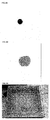
- Wheat flour was sifted through the sieve, as illustrated in Fig. 3A .
- a mesh woven from 62 ⁇ m nylon 66 warp yarn and 80 ⁇ m nylon 66 weft yarn (NBC Inc., NXX7) was treated as in Example 4 (1).
- the mesh was attached to a square frame having inside dimensions of 200 mm x 200 mm to make a sieve.
- the sieve was mounted in a vibrating screen machine. After 600 g of wheat flour was sifted, the sieve was removed and was tapped to remove wheat flour left on the sieve ( Fig. 3A ).
- For a sieve including an untreated mesh after 500 g of wheat flour was sifted, little wheat flour could pass the sieve. After the sieve was tapped, almost the front of the openings were blocked by wheat flour ( Fig. 3B ).
- a 50 mesh mosquito net weaved from 100 ⁇ m polyester fibers was treated as in Example 4 (4).
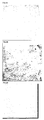
- Cotton linters were sprinkled over the mosquito net, as illustrated in Fig. 4A . After cotton linters were sprinkled over the horizontally placed mosquito net, the mosquito net was stood vertically and was tapped to remove cotton linters ( Fig. 4A ). For the untreated mosquito net, cotton linters were difficult to remove and remained caught in the net ( Fig. 4B ).
- Building materials such as metals, wood, ceramics, and resins, can be used as a single item.
- the surfaces of building materials are often painted, coated with a resin, or overlaid with a laminate such as a resin film.
- a fluorocarbon resin film having a thickness of 50 ⁇ m (Asahi Glass Co., Ltd., ETFE film, Aflex 50N) was treated as in Example 1 (3).
- Mixed dust was sprinkled over the film, as illustrated in Fig. 5A .
- the ETFE film was stood vertically and was tapped to remove mixed dust ( Fig. 5A ).
- For an untreated ETFE film mixed dust was difficult to remove and was left on the ETFE film ( Fig. 5B ).
- Example 1 As an example of an interior material, a commercial polyester curtain fabric was treated as in Example 1 (3). Mixed dust was sprinkled over the curtain fabric, as illustrated in Fig. 6A . After mixed dust conforming to JIS Z 8901 was sprinkled over the horizontally placed curtain fabric, the curtain fabric was picked up and was tapped to remove mixed dust ( Fig. 6A ). For an untreated curtain fabric, mixed dust was difficult to remove and was left on the curtain fabric ( Fig. 6B ).
- the substrate may have an appropriate form (shape, size, etc.), such as a film, fiber, cloth, mesh, or honeycomb. Products that include these substrates of various forms having a dustproof function are contemplated.
Landscapes
- Chemical & Material Sciences (AREA)
- Engineering & Computer Science (AREA)
- Organic Chemistry (AREA)
- Inorganic Chemistry (AREA)
- Chemical Kinetics & Catalysis (AREA)
- Textile Engineering (AREA)
- Health & Medical Sciences (AREA)
- Medicinal Chemistry (AREA)
- Life Sciences & Earth Sciences (AREA)
- Materials Engineering (AREA)
- Wood Science & Technology (AREA)
- Polymers & Plastics (AREA)
- Toxicology (AREA)
- Laminated Bodies (AREA)
- Paints Or Removers (AREA)
- Treatments For Attaching Organic Compounds To Fibrous Goods (AREA)
- Graft Or Block Polymers (AREA)
Claims (2)
- Filtre formé d'une matière composite antisalissure (100) comprenant :- un substrat (1) formé d'une résine ; et- une couche (10) de particules fines inorganiques disposée sur une surface du substrat (1), la couche de particules fines inorganiques comprenant des particules fines inorganiques (2) qui sont revêtues d'un monomère silane (3), chacune ayant une liaison insaturée, et un composant liant (4) comprenant un composé fluoré qui entre dans des espaces entre les particules fines inorganiques revêtues de monomère silane et se combine au monomère silane (3) qui ne participe pas à la liaison entre les particules fines,la teneur du composant liant (4) dans la couche (10) de particules fines inorganiques se situant dans la plage de 0,1 % en masse à 40 % en masse par rapport à la teneur en particules fines inorganiques (2) revêtues du monomère silane (3),
les liaisons insaturées du monomère silane (3) disposé sur les particules fines inorganiques (2) dans la couche (10) de particules fines inorganiques formant des liaisons chimiques (5), permettant ainsi de former la couche (10) de particules fines inorganiques, et
les liaisons insaturées du monomère silane (3) disposé sur les particules fines inorganiques (2) dans la couche (10) de particules fines inorganiques sont liées à la surface du substrat (1) par les liaisons chimiques (5), permettant ainsi de fixer la couche (10) de particules fines inorganiques sur le substrat (1). - Filtre selon la revendication 1, dans lequel le composant liant (4) comprenant un composé fluoré est un oligomère ayant des groupes perfluoroalkyle et silanol.
Applications Claiming Priority (2)
| Application Number | Priority Date | Filing Date | Title |
|---|---|---|---|
| JP2006006759 | 2006-01-13 | ||
| PCT/JP2006/326224 WO2007080804A1 (fr) | 2006-01-13 | 2006-12-28 | Materiau composite presentant une propriete anti-salissure |
Publications (3)
| Publication Number | Publication Date |
|---|---|
| EP1972437A1 EP1972437A1 (fr) | 2008-09-24 |
| EP1972437A4 EP1972437A4 (fr) | 2012-03-21 |
| EP1972437B1 true EP1972437B1 (fr) | 2016-05-11 |
Family
ID=38256214
Family Applications (1)
| Application Number | Title | Priority Date | Filing Date |
|---|---|---|---|
| EP06843602.1A Active EP1972437B1 (fr) | 2006-01-13 | 2006-12-28 | Filtre comprenant un materiau composite presentant une propriete anti-salissure |
Country Status (10)
| Country | Link |
|---|---|
| US (1) | US8349447B2 (fr) |
| EP (1) | EP1972437B1 (fr) |
| JP (1) | JP5171266B2 (fr) |
| KR (1) | KR101314287B1 (fr) |
| CN (1) | CN101341025B (fr) |
| AU (1) | AU2006335491B2 (fr) |
| BR (1) | BRPI0621186B1 (fr) |
| CA (1) | CA2631131C (fr) |
| RU (1) | RU2453441C2 (fr) |
| WO (1) | WO2007080804A1 (fr) |
Families Citing this family (51)
| Publication number | Priority date | Publication date | Assignee | Title |
|---|---|---|---|---|
| US8231970B2 (en) * | 2005-08-26 | 2012-07-31 | Ppg Industries Ohio, Inc | Coating compositions exhibiting corrosion resistance properties and related coated substrates |
| US7745010B2 (en) * | 2005-08-26 | 2010-06-29 | Prc Desoto International, Inc. | Coating compositions exhibiting corrosion resistance properties, related coated substrates, and methods |
| GB0612788D0 (en) * | 2006-06-28 | 2006-08-09 | Insectshield Ltd | Pest control materials |
| JP4993700B2 (ja) * | 2007-03-09 | 2012-08-08 | 国立大学法人 香川大学 | 保護膜およびその製造方法 |
| JP5200244B2 (ja) * | 2007-03-09 | 2013-06-05 | 国立大学法人 香川大学 | 微粒子膜およびその製造方法 |
| JP5326086B2 (ja) * | 2007-10-02 | 2013-10-30 | 国立大学法人 香川大学 | 太陽エネルギー利用装置及びその製造方法 |
| JP5775248B2 (ja) * | 2008-03-21 | 2015-09-09 | 国立大学法人 東京大学 | 光触媒材料、有機物分解方法、内装部材、空気清浄装置、酸化剤製造装置 |
| US8491668B2 (en) * | 2008-04-18 | 2013-07-23 | Cornell University | Conformal particle coatings on fibrous materials |
| UA100571C2 (uk) * | 2008-06-24 | 2013-01-10 | Энэрджи Корея Инк. | Композиція для нанесення покриття, яка містить фотокаталізатор, покритий апатитом, і система радіаційного нагрівання, яка містить зазначену композицію |
| JP5221237B2 (ja) * | 2008-08-06 | 2013-06-26 | 株式会社Nbcメッシュテック | 微粒子固定化無機材料及びその製造方法 |
| BRPI0917773B1 (pt) * | 2008-12-26 | 2019-02-05 | Nbc Meshtec Inc | estrutura fibrosa antiviral |
| JP2010188294A (ja) * | 2009-02-19 | 2010-09-02 | Nbc Meshtec Inc | 篩網及び篩 |
| AU2014200891B2 (en) * | 2009-04-23 | 2015-04-09 | Schlumberger Technology B.V. | Well tubular, coating system and method for oilfield applications |
| US20090200013A1 (en) * | 2009-04-23 | 2009-08-13 | Bernadette Craster | Well tubular, coating system and method for oilfield applications |
| KR100984537B1 (ko) * | 2009-04-27 | 2010-10-01 | 제일모직주식회사 | 여과막 및 그 제조방법 |
| RU2549065C2 (ru) * | 2009-09-30 | 2015-04-20 | ЭнБиСи МЕШТЕК, ИНК. | Маска |
| CA2974025C (fr) * | 2009-10-02 | 2019-08-20 | Nbc Meshtec, Inc. | Feuille d'inactivation virale |
| KR20120101516A (ko) * | 2009-12-04 | 2012-09-13 | 엔디에스유 리서치 파운데이션 | 양친매성 파울링 방출 코팅 |
| JP5471730B2 (ja) * | 2010-03-31 | 2014-04-16 | 大日本印刷株式会社 | 化粧シート |
| JP5471729B2 (ja) * | 2010-03-31 | 2014-04-16 | 大日本印刷株式会社 | 化粧シート |
| JP2012024739A (ja) * | 2010-07-27 | 2012-02-09 | Nbc Meshtec Inc | 食品粉体の篩分け方法 |
| PL219301B1 (pl) * | 2010-11-29 | 2015-04-30 | Inst Włókiennictwa | Sposób wytwarzania barierowych materiałów włókienniczych |
| JP5815263B2 (ja) * | 2011-03-31 | 2015-11-17 | 株式会社Nbcメッシュテック | アレルゲン吸着性物質とそれを含む繊維構造体 |
| CN103781945B (zh) * | 2011-09-07 | 2016-10-26 | 株式会社Nbc纱纲技术 | 抗病毒铝部件及其制造方法 |
| CN103160150B (zh) * | 2012-07-26 | 2015-07-15 | 北京仁创科技集团有限公司 | 一种硅砂复合材料作为疏水疏多元醇材料的用途 |
| IN2013MU02429A (fr) * | 2013-07-22 | 2015-06-19 | Reliance Ind Ltd | |
| IN2013MU02431A (fr) | 2013-07-22 | 2015-06-19 | Reliance Ind Ltd | |
| CN103640305A (zh) * | 2013-11-26 | 2014-03-19 | 大连创达技术交易市场有限公司 | 一种双层涂层的材料 |
| JP5776799B2 (ja) * | 2014-01-30 | 2015-09-09 | 大日本印刷株式会社 | 化粧シート |
| CN105064006A (zh) * | 2015-07-23 | 2015-11-18 | 合肥众月健康科技有限公司 | 一种掺杂改性锯末-蜂巢石微粉的聚乳酸-聚丙烯生物膜复合纤维载体材料及其制备方法 |
| CN105064003A (zh) * | 2015-07-23 | 2015-11-18 | 合肥众月健康科技有限公司 | 一种掺杂改性蜂巢石的高活性聚乳酸-聚丙烯生物膜复合纤维载体材料 |
| CN105064005A (zh) * | 2015-07-23 | 2015-11-18 | 合肥众月健康科技有限公司 | 一种掺杂改性蜂巢石-氧化石墨烯的高效聚乳酸-聚丙烯生物膜复合纤维载体材料及其制备方法 |
| CN104988717A (zh) * | 2015-07-23 | 2015-10-21 | 合肥众月健康科技有限公司 | 一种掺杂改性蜂巢石的生物活性聚乳酸-聚丙烯生物膜复合纤维载体材料及其制备方法 |
| KR102677610B1 (ko) | 2016-07-11 | 2024-06-20 | 삼성전자주식회사 | 피리디늄계 복합체, 및 이를 포함하는 성형품 |
| KR101935632B1 (ko) * | 2016-08-29 | 2019-01-04 | 롯데첨단소재(주) | 탄소 섬유 스테이플을 포함하는 방적사 및 이의 제조방법 |
| JP7021095B2 (ja) * | 2016-10-17 | 2022-02-16 | 株式会社Nbcメッシュテック | マスク |
| KR101993960B1 (ko) | 2016-10-31 | 2019-06-27 | 롯데첨단소재(주) | 탄소 섬유 강화 플라스틱용 직조물 및 이로부터 형성된 성형품 |
| US10836890B2 (en) | 2017-01-25 | 2020-11-17 | Nano And Advanced Materials Institute Limited | Mechanically reinforced, transparent, anti-biofouling thermoplastic resin composition and manufacturing method thereof |
| JP6712977B2 (ja) * | 2017-10-17 | 2020-06-24 | Tbカワシマ株式会社 | 防汚性繊維布帛およびその製造方法 |
| JP7167445B2 (ja) * | 2018-01-25 | 2022-11-09 | 富士フイルムビジネスイノベーション株式会社 | 酸化チタン膜の製造方法 |
| JP2021011530A (ja) * | 2019-07-05 | 2021-02-04 | 岩崎電気株式会社 | 無機材料の表面改質方法 |
| JP7467866B2 (ja) * | 2019-10-02 | 2024-04-16 | 住友ゴム工業株式会社 | 親水性基材及び親水性基材作製方法 |
| US12144903B2 (en) | 2020-04-27 | 2024-11-19 | Mechoshade Systems, Llc | Sanitizing window shade system |
| WO2022255158A1 (fr) * | 2021-05-31 | 2022-12-08 | 信越化学工業株式会社 | Élément hydrofuge et oléofuge ayant des propriétés antimicrobiennes, anti-moisissures et antivirales, procédé de production d'un élément hydrofuge et oléofuge, et article |
| JP2025513027A (ja) | 2022-04-08 | 2025-04-22 | マティヴ ルクセンブルク | 機械式及び静電式フィルター媒体 |
| AU2023250563B2 (en) * | 2022-04-08 | 2026-02-05 | LMS Technologies, Inc. | Systems and methods for retaining nanoparticles within fibrous material |
| EP4504379A4 (fr) | 2022-04-08 | 2026-04-08 | Mativ Luxembourg | Systèmes et procédés de préparation de matériaux fibreux |
| KR20250019616A (ko) | 2022-04-08 | 2025-02-10 | 마티브 룩셈부르크 | 나노입자를 혼입한 개구형성된 중합체 시트 |
| US12539479B2 (en) | 2022-04-08 | 2026-02-03 | Delstar Technologies, Inc. | Dual-layer gas filters and systems and methods for making the same |
| WO2024131999A2 (fr) * | 2024-03-22 | 2024-06-27 | 水木聚力接枝纺织新技术(深圳)有限公司 | Textile désodorisant antibactérien résistant au lavage à action prolongée et son procédé de préparation |
| KR102851707B1 (ko) * | 2024-09-27 | 2025-09-02 | 조남석 | 천연 첨가제가 포함된 도료 조성물 및 이의 제조방법 |
Family Cites Families (23)
| Publication number | Priority date | Publication date | Assignee | Title |
|---|---|---|---|---|
| JP3022192B2 (ja) * | 1994-09-01 | 2000-03-15 | 小松精練株式会社 | 消臭、抗菌および防汚機能を有する繊維布帛 |
| JP3344199B2 (ja) * | 1996-03-21 | 2002-11-11 | ソニー株式会社 | 防汚膜形成用組成物および反射防止フィルター |
| JP3761248B2 (ja) * | 1996-06-13 | 2006-03-29 | 小松精練株式会社 | 消臭、抗菌および防汚機能を有する繊維布帛 |
| DE19647369A1 (de) * | 1996-11-15 | 1998-05-20 | Inst Neue Mat Gemein Gmbh | Verbundwerkstoffe |
| JP2000017230A (ja) | 1998-07-02 | 2000-01-18 | Showa Denko Kk | 光触媒を含有するコーティング組成物及び塗膜形成方法 |
| DE19846660A1 (de) * | 1998-10-09 | 2000-04-13 | Inst Oberflaechenmodifizierung | Hochtemperaturbeständige polymerisierbare Metalloxidpartikel |
| EP1136527A4 (fr) * | 1998-10-19 | 2003-07-09 | Toto Ltd | Materiau resistant aux salissures, procede et dispositif de production et composition de revetement |
| DE10001135A1 (de) | 2000-01-13 | 2001-07-19 | Inst Neue Mat Gemein Gmbh | Verfahren zur Herstellung eines mikrostrukturierten Oberflächenreliefs durch Prägen thixotroper Schichten |
| FR2811316B1 (fr) * | 2000-07-06 | 2003-01-10 | Saint Gobain | Substrat texture transparent et procedes pour l'obtenir |
| JP2002157769A (ja) | 2000-11-10 | 2002-05-31 | Samsung Electro Mech Co Ltd | 情報記録再生装置 |
| EP1249470A3 (fr) * | 2001-03-30 | 2005-12-28 | Degussa AG | Composition fortement chargée en nano et/ou microcapsules hybrides à base de silice organique pâteuse pour des revêtements résistants aux rayures et à l'abrasion |
| JP2003096311A (ja) | 2001-09-26 | 2003-04-03 | Daikin Ind Ltd | 撥水撥油性樹脂組成物 |
| US6833186B2 (en) * | 2002-04-10 | 2004-12-21 | Ppg Industries Ohio, Inc. | Mineral-filled coatings having enhanced abrasion resistance and wear clarity and methods for using the same |
| JP3740437B2 (ja) * | 2002-05-30 | 2006-02-01 | 日清紡績株式会社 | 花粉の付着防止機能を有する繊維加工剤、加工方法及び繊維構造物 |
| JP3990951B2 (ja) * | 2002-07-19 | 2007-10-17 | 株式会社 シグナスエンタープライズ | 光触媒含有基材 |
| JP2004142212A (ja) | 2002-10-23 | 2004-05-20 | Fuji Photo Film Co Ltd | サーマルプリンタ及びその濃度補正方法 |
| EP1602407B1 (fr) | 2003-03-05 | 2016-05-18 | NBC Meshtec, Inc. | Materiau photocatalytique |
| JP4635217B2 (ja) | 2003-09-17 | 2011-02-23 | 学校法人慶應義塾 | 表面処理剤及び材料及び表面処理方法 |
| JP4428510B2 (ja) * | 2004-01-06 | 2010-03-10 | 住江織物株式会社 | 光触媒を担持した、消臭機能を有する繊維布帛。 |
| JP4566586B2 (ja) * | 2004-03-16 | 2010-10-20 | 株式会社Nbcメッシュテック | 光触媒体の製造方法 |
| JP4447354B2 (ja) * | 2004-03-16 | 2010-04-07 | 株式会社Nbcメッシュテック | 微粒子固定化体の製造方法 |
| US7351477B2 (en) * | 2004-04-07 | 2008-04-01 | Shin-Etsu Chemical Co., Ltd. | Antifouling coating compositions and coated articles |
| JP4534587B2 (ja) * | 2004-05-12 | 2010-09-01 | 三菱化学株式会社 | 機能性粒子添着素材及びその製造方法 |
-
2006
- 2006-12-28 EP EP06843602.1A patent/EP1972437B1/fr active Active
- 2006-12-28 CA CA 2631131 patent/CA2631131C/fr active Active
- 2006-12-28 JP JP2007553882A patent/JP5171266B2/ja active Active
- 2006-12-28 RU RU2008132469/05A patent/RU2453441C2/ru not_active Application Discontinuation
- 2006-12-28 CN CN2006800481857A patent/CN101341025B/zh active Active
- 2006-12-28 WO PCT/JP2006/326224 patent/WO2007080804A1/fr not_active Ceased
- 2006-12-28 BR BRPI0621186-0A patent/BRPI0621186B1/pt active IP Right Grant
- 2006-12-28 US US12/084,986 patent/US8349447B2/en active Active
- 2006-12-28 KR KR1020087011154A patent/KR101314287B1/ko active Active
- 2006-12-28 AU AU2006335491A patent/AU2006335491B2/en active Active
Non-Patent Citations (2)
| Title |
|---|
| ROBERT F BRADY ET AL: "Elastomeric fluorinated polyurethane coatings for nontoxic fouling control", BIOFOULING, vol. 19, no. sup1, 1 January 2003 (2003-01-01), pages 59 - 62, XP055180942, ISSN: 0892-7014, DOI: 10.1080/0892701031000061741 * |
| SLADE, P.E.: "Handbook of Fibre Finish Technology", 1998, MARCEL DEKKER, INC., New York, ISBN: 0-8247-0048-1, pages: 401 - 403 * |
Also Published As
| Publication number | Publication date |
|---|---|
| US20090094954A1 (en) | 2009-04-16 |
| CN101341025A (zh) | 2009-01-07 |
| BRPI0621186A2 (pt) | 2012-05-22 |
| JPWO2007080804A1 (ja) | 2009-06-11 |
| WO2007080804A1 (fr) | 2007-07-19 |
| HK1126449A1 (en) | 2009-09-04 |
| CA2631131C (fr) | 2013-10-29 |
| AU2006335491A1 (en) | 2007-07-19 |
| RU2453441C2 (ru) | 2012-06-20 |
| CA2631131A1 (fr) | 2007-07-19 |
| US8349447B2 (en) | 2013-01-08 |
| BRPI0621186B1 (pt) | 2019-04-09 |
| JP5171266B2 (ja) | 2013-03-27 |
| CN101341025B (zh) | 2012-05-30 |
| EP1972437A4 (fr) | 2012-03-21 |
| RU2008132469A (ru) | 2010-02-20 |
| AU2006335491B2 (en) | 2011-01-27 |
| KR20080083624A (ko) | 2008-09-18 |
| KR101314287B1 (ko) | 2013-10-02 |
| EP1972437A1 (fr) | 2008-09-24 |
Similar Documents
| Publication | Publication Date | Title |
|---|---|---|
| EP1972437B1 (fr) | Filtre comprenant un materiau composite presentant une propriete anti-salissure | |
| EP2374354B1 (fr) | Élément possédant des propriétés anti-virales | |
| JP4961284B2 (ja) | 抗アレルゲン性と防塵性を有する複合部材 | |
| US20090005234A1 (en) | Photocatalytic material | |
| JP4965628B2 (ja) | 抗菌性を有する部材の製造方法 | |
| JP4566586B2 (ja) | 光触媒体の製造方法 | |
| JP4585188B2 (ja) | 抗菌性を有する部材 | |
| JP5022561B2 (ja) | 環境浄化用部材 | |
| JP4524158B2 (ja) | 近赤外線遮断用部材 | |
| JP2006063160A (ja) | 親水性を有する複合部材 | |
| HK1126449B (en) | Composite material having antifouling property | |
| KR20080074194A (ko) | 기체의 보호 방법 | |
| JP2005264347A (ja) | 微粒子固定化体の製造方法 | |
| JP4585185B2 (ja) | 遠赤外線放射体 | |
| JP4965627B2 (ja) | 遠赤外線放射体の製造方法 | |
| HK1084066B (en) | Photocatalytic material |
Legal Events
| Date | Code | Title | Description |
|---|---|---|---|
| PUAI | Public reference made under article 153(3) epc to a published international application that has entered the european phase |
Free format text: ORIGINAL CODE: 0009012 |
|
| 17P | Request for examination filed |
Effective date: 20080418 |
|
| AK | Designated contracting states |
Kind code of ref document: A1 Designated state(s): DE FR GB IT |
|
| DAX | Request for extension of the european patent (deleted) | ||
| RBV | Designated contracting states (corrected) |
Designated state(s): DE FR GB IT |
|
| REG | Reference to a national code |
Ref country code: DE Ref legal event code: R079 Ref document number: 602006049087 Country of ref document: DE Free format text: PREVIOUS MAIN CLASS: B32B0027200000 Ipc: C08J0007040000 |
|
| A4 | Supplementary search report drawn up and despatched |
Effective date: 20120222 |
|
| RIC1 | Information provided on ipc code assigned before grant |
Ipc: C09D 7/12 20060101ALI20120216BHEP Ipc: C08J 7/04 20060101AFI20120216BHEP Ipc: D06M 23/08 20060101ALI20120216BHEP |
|
| 17Q | First examination report despatched |
Effective date: 20121004 |
|
| GRAP | Despatch of communication of intention to grant a patent |
Free format text: ORIGINAL CODE: EPIDOSNIGR1 |
|
| INTG | Intention to grant announced |
Effective date: 20151020 |
|
| GRAS | Grant fee paid |
Free format text: ORIGINAL CODE: EPIDOSNIGR3 |
|
| GRAA | (expected) grant |
Free format text: ORIGINAL CODE: 0009210 |
|
| RAP1 | Party data changed (applicant data changed or rights of an application transferred) |
Owner name: NBC MESHTEC, INC. |
|
| AK | Designated contracting states |
Kind code of ref document: B1 Designated state(s): DE FR GB IT |
|
| REG | Reference to a national code |
Ref country code: GB Ref legal event code: FG4D |
|
| REG | Reference to a national code |
Ref country code: DE Ref legal event code: R096 Ref document number: 602006049087 Country of ref document: DE |
|
| REG | Reference to a national code |
Ref country code: FR Ref legal event code: PLFP Year of fee payment: 11 |
|
| REG | Reference to a national code |
Ref country code: DE Ref legal event code: R097 Ref document number: 602006049087 Country of ref document: DE |
|
| PLBE | No opposition filed within time limit |
Free format text: ORIGINAL CODE: 0009261 |
|
| STAA | Information on the status of an ep patent application or granted ep patent |
Free format text: STATUS: NO OPPOSITION FILED WITHIN TIME LIMIT |
|
| 26N | No opposition filed |
Effective date: 20170214 |
|
| REG | Reference to a national code |
Ref country code: FR Ref legal event code: PLFP Year of fee payment: 12 |
|
| REG | Reference to a national code |
Ref country code: DE Ref legal event code: R082 Ref document number: 602006049087 Country of ref document: DE Representative=s name: KANDLBINDER, MARKUS, DIPL.-PHYS., DE |
|
| PGFP | Annual fee paid to national office [announced via postgrant information from national office to epo] |
Ref country code: DE Payment date: 20251104 Year of fee payment: 20 |
|
| PGFP | Annual fee paid to national office [announced via postgrant information from national office to epo] |
Ref country code: GB Payment date: 20251114 Year of fee payment: 20 |
|
| PGFP | Annual fee paid to national office [announced via postgrant information from national office to epo] |
Ref country code: IT Payment date: 20251121 Year of fee payment: 20 |
|
| PGFP | Annual fee paid to national office [announced via postgrant information from national office to epo] |
Ref country code: FR Payment date: 20251110 Year of fee payment: 20 |