EP1973162B1 - Organische lichtemittierende Anzeigetafel und Herstellungsverfahren dafür - Google Patents
Organische lichtemittierende Anzeigetafel und Herstellungsverfahren dafür Download PDFInfo
- Publication number
- EP1973162B1 EP1973162B1 EP08003998.5A EP08003998A EP1973162B1 EP 1973162 B1 EP1973162 B1 EP 1973162B1 EP 08003998 A EP08003998 A EP 08003998A EP 1973162 B1 EP1973162 B1 EP 1973162B1
- Authority
- EP
- European Patent Office
- Prior art keywords
- electrode
- gate
- power line
- forming
- organic light
- Prior art date
- Legal status (The legal status is an assumption and is not a legal conclusion. Google has not performed a legal analysis and makes no representation as to the accuracy of the status listed.)
- Ceased
Links
Images









Classifications
-
- H—ELECTRICITY
- H10—SEMICONDUCTOR DEVICES; ELECTRIC SOLID-STATE DEVICES NOT OTHERWISE PROVIDED FOR
- H10K—ORGANIC ELECTRIC SOLID-STATE DEVICES
- H10K59/00—Integrated devices, or assemblies of multiple devices, comprising at least one organic light-emitting element covered by group H10K50/00
- H10K59/10—OLED displays
- H10K59/12—Active-matrix OLED [AMOLED] displays
- H10K59/121—Active-matrix OLED [AMOLED] displays characterised by the geometry or disposition of pixel elements
- H10K59/1216—Active-matrix OLED [AMOLED] displays characterised by the geometry or disposition of pixel elements the pixel elements being capacitors
-
- H—ELECTRICITY
- H05—ELECTRIC TECHNIQUES NOT OTHERWISE PROVIDED FOR
- H05B—ELECTRIC HEATING; ELECTRIC LIGHT SOURCES NOT OTHERWISE PROVIDED FOR; CIRCUIT ARRANGEMENTS FOR ELECTRIC LIGHT SOURCES, IN GENERAL
- H05B33/00—Electroluminescent light sources
- H05B33/12—Light sources with substantially two-dimensional [2D] radiating surfaces
- H05B33/26—Light sources with substantially two-dimensional [2D] radiating surfaces characterised by the composition or arrangement of the conductive material used as an electrode
-
- H—ELECTRICITY
- H05—ELECTRIC TECHNIQUES NOT OTHERWISE PROVIDED FOR
- H05B—ELECTRIC HEATING; ELECTRIC LIGHT SOURCES NOT OTHERWISE PROVIDED FOR; CIRCUIT ARRANGEMENTS FOR ELECTRIC LIGHT SOURCES, IN GENERAL
- H05B33/00—Electroluminescent light sources
- H05B33/02—Details
-
- H—ELECTRICITY
- H10—SEMICONDUCTOR DEVICES; ELECTRIC SOLID-STATE DEVICES NOT OTHERWISE PROVIDED FOR
- H10K—ORGANIC ELECTRIC SOLID-STATE DEVICES
- H10K59/00—Integrated devices, or assemblies of multiple devices, comprising at least one organic light-emitting element covered by group H10K50/00
- H10K59/10—OLED displays
- H10K59/12—Active-matrix OLED [AMOLED] displays
- H10K59/131—Interconnections, e.g. wiring lines or terminals
Definitions
- the present invention relates to display panels and, more particularly, to an organic light-emitting display panel and a method of manufacturing the same which prevents formation of a defective storage capacitor.
- Organic light-emitting displays emit light generated when electrons and holes are paired after an electric charge is injected into the organic light-emitting layer.
- the organic light-emitting display is a next-generation device that can be driven with low voltage and has low power consumption.
- a switching transistor is turned on by a scan pulse supplied from a gate line and a data signal applied from a data line.
- the data signal from the switching transistor is charged to a storage capacitor that drives a driving transistor for one frame period. This allows an electric current from a power line to be supplied to the organic light-emitting diode.
- a storage electrode connected to a gate electrode of the driving transistor overlaps the power line, thus forming the storage capacitor.
- Misalignment of the mask used for forming the storage electrode may result in a defective storage capacitor. Shifting of the storage electrode to the top, bottom, left or right of the correct position will result in changing the capacity of the storage capacitor at a pixel, causing a brightness difference.
- the present invention provides an organic light-emitting display panel and a method of manufacturing the organic light-emitting display panel in which the overlapping area of a power line and a storage electrode is kept the same and thus the capacity of a storage capacitor provided at each pixel is the same as each other.
- an organic light-emitting display panel comprises: a gate line and a data line formed to cross each other on a substrate; an organic light-emitting diode formed in a pixel area defined by the intersection of the gate line and the data line; a power line formed parallel to the data line and supplying an electric current to the organic light-emitting diode; a switching transistor provided at the intersection of the gate line and the data line; a driving transistor connected to the switching transistor and the power line to control the current supplied from the power line; and a storage capacitor composed of a storage electrode overlapping the power line with a first gate-insulating layer disposed therebetween, wherein the storage capacitor includes a groove portion formed on a lateral side of the power line overlapping the storage electrode so that the overlapping area of the power line and the storage electrode is kept the same.
- the groove portion may be formed on a lateral side adjacent to the data line.
- the groove portion may have a length at least equal to or greater than a length between the top and bottom of the storage electrode.
- the storage electrode may have a width greater than that of an overlapping area of the storage electrode and the power line.
- the organic light-emitting display panel may further include an auxiliary storage electrode extending from the storage electrode to overlap the power line.
- the auxiliary storage electrode may have a width smaller or larger than that of the power line.
- the driving transistor may include: a first semiconductor pattern formed of polysilicon on the substrate; a first source electrode formed on the first semiconductor pattern and connected to the power line; a first drain electrode formed on the first semiconductor pattern to face the first source electrode and connected to the organic light-emitting diode; a second gate-insulating layer formed on the first source electrode and the first drain electrode; and a first gate electrode formed on the second gate-insulating layer to overlap the first semiconductor pattern.
- the first gate electrode may be electrically connected to the storage electrode.
- the switching transistor may include: a second gate electrode formed on the first gate-insulating layer; the second gate-insulating layer formed on the second gate electrode; a second semiconductor pattern formed of amorphous silicon on the substrate; and a second source electrode and a second drain electrode formed on the second semiconductor pattern to face each other.
- the organic light-emitting display panel may further include a bridge electrode connecting the first gate electrode to the second drain electrode.
- a method of manufacturing an organic light-emitting display panel including: forming a gate line and a data line on a substrate, the gate line and the data line crossing each other with a gate-insulating layer disposed therebetween; forming an organic light-emitting diode in a pixel area defined by the intersection of the gate line and the data line; forming a switching transistor at the intersection of the gate line and the data line; forming a driving transistor connected to the switching transistor; forming a power line parallel to the data line; and forming a storage electrode overlapping the power line with the gate-insulating layer disposed therebetween to form a storage capacitor and including a projecting portion with respect to a lateral side of the power line.
- the process of forming the power line parallel to the data line may further include forming a groove portion on a lateral side adjacent to the data line in an overlapping area of the storage electrode and the power line.
- the process of forming the groove may further include forming the groove portion to have a length at least equal to or greater than a length between the top and bottom of the storage electrode.
- the process of forming the storage electrode may further include forming an auxiliary storage electrode extending from the storage electrode to overlap the power line.
- the process of forming the auxiliary storage electrode may further include forming the auxiliary storage electrode to have a width smaller or larger than that of the power line.
- the process of forming the switching transistor and the driving transistor may include: forming a first semiconductor pattern with polysilicon on the substrate and a first gate-insulating layer; forming a source electrode on the first semiconductor pattern and connected to the power line, and a first drain electrode facing the first source electrode; forming a second gate-insulating layer on the first source electrode and the first drain electrode; forming a first gate electrode on the second gate-insulating layer to overlap the first semiconductor pattern, and a second gate electrode simultaneously with the first gate electrode; and forming a third gate-insulating layer, a second semiconductor pattern, a second source electrode, and a second drain electrode.
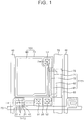
- FIG. 1 is a plan view of an organic light-emitting display panel in accordance with a first embodiment of the present invention
- FIG. 2 is a cross-sectional view taken along line I - I ' of FIG. 1 .
- the organic light-emitting display panel in accordance with the present invention includes a gate line 20, a data line 40, an organic light-emitting diode 100, and a power line 70.
- Each pixel area includes a switching transistor TFT2, a driving transistor TFT1, and a storage capacitor Cst.
- the gate line 20 supplies a scan pulse and is connected to a second gate electrode 21 of the switching transistor TFT2.
- the data line 40 supplies a data signal and is connected to a second source electrode 41 of the switching transistor TFT2.
- the power line 70 is formed parallel to the data line 40 and crosses the gate line 20 with a first gate-insulating layer 31 disposed therebetween.
- the power line 70 supplies an electric current to the organic light-emitting diode 100 and is connected to a first source electrode 71 of the driving transistor TFT1.
- the driving transistor TFT1 controls the electric current supplied from the power line 70 to the organic light-emitting diode 100 in response to the data signal applied to a first gate electrode 61 thereof, thus adjusting the light-emitting amount of the organic light-emitting diode 100.
- the driving transistor TFT1 includes the first gate electrode 61 connected a second drain electrode 42 of the switching transistor TFT2, the first source electrode 71 connected to the power line 70, a first drain electrode 72 facing the first source electrode 71 and connected to an anode electrode 73 of the organic light-emitting diode 100, and a first semiconductor pattern forming a channel portion between the first source electrode 71 and the first drain electrode 72.
- the first semiconductor pattern includes a first semiconductor layer 62 overlapping the first gate electrode 61 with a first gate-insulating layer 31 disposed therebetween, and a first ohmic contact layer 63 formed on the first semiconductor layer 62 except for the channel portion to form ohmic contact with the first source electrode 71 and the first drain electrode 72.
- the first semiconductor layer 62 may be formed of amorphous silicon or polysilicon.
- the first semiconductor layer 62 may be formed of polysilicon to ensure a longer lifespan in view of the characteristics of the driving transistor TFT1 in which an electric current flows continuously during the light emission period of the organic light-emitting diode 100. If the first semiconductor layer 62 is formed of polysilicon, the driving transistor TFT1 may have a top-gate structure in which the first gate electrode 61 is formed on the first semiconductor layer 62 as shown in FIG. 2 .
- the switching transistor TFT2 When the gate line 20 is supplied with the scan pulse, the switching transistor TFT2 is turned on and the data signal applied to the data line 40 is supplied to the storage capacitor Cst and the first gate electrode 61 of the driving transistor TFT1.
- the switching transistor TFT2 includes the second gate electrode 21 connected to the gate line 20, the second source electrode 41 connected to the data line 40, the second drain electrode 42 facing the second source electrode 41 and connected to the first gate electrode 61 of the driving transistor TFT1 and the storage capacitor Cst, and a second semiconductor pattern forming a channel portion between the second source electrode 41 and the second drain electrode 42.
- the second semiconductor pattern includes a second semiconductor layer 22 overlapping the second gate electrode 21 with the second gate-insulating layer 32 disposed therebetween, and a second ohmic contact layer 23 formed on the second semiconductor layer 22 except for the channel portion to form ohmic contact with the second source electrode 41 and the second drain electrode 42.
- the second semiconductor layer 22 may be formed of amorphous silicon or polysilicon.
- the second semiconductor layer 22 is formed of amorphous silicon which is advantageous to the on-off operation since the switching transistor TFT2 requires excellent on-off characteristics.
- the second drain electrode 42 and the first gate electrode 61 are connected to each other through a bridge electrode 55.
- the second drain electrode 42 is exposed by a first contact hole 51
- the first gate electrode 61 is exposed by a second contact hole 52. Accordingly, the second drain electrode 42 and the first gate electrode 61 are connected through the bridge electrode 55 passing through the first and second contact holes 51 and 52.
- the bridge electrode 55 may be formed of the same material as the anode electrode 73.
- a passivation layer 33 is formed on a substrate 10 on which the driving transistor TFT1, the switching transistor TFT2, and the storage capacitor Cst are formed.
- the passivation layer 33 may comprise an inorganic insulating layer such as silicon oxide (SiOx), silicon nitride (SiNx), or the like, which does not deteriorate the characteristics of the thin film transistor.
- the organic light-emitting diode 100 includes the anode electrode 73 formed of a transparent conductive material, a cathode electrode 80 formed of an opaque conductive material and facing the anode electrode 73, and an organic light-emitting layer 90 disposed therebetween.
- the organic light-emitting layer 90 emits light in accordance with the amount of the current applied to the anode electrode 73 and the light of the organic light-emitting layer 90 is transmitted toward the anode electrode 73.
- the organic light-emitting layer 90 may be formed of a low molecular or polymer organic light-emitting material.
- the organic light-emitting layer 90 may be formed of a low molecular material. In the present embodiment, the organic light-emitting layer 90 is formed independently at each pixel.
- the organic light-emitting layer 90 may be formed in a triple layer structure in which emissive layers displaying red (R), green (G) and blue (B) are sequentially stacked, in a double layer structure in which emissive layers having a complementary color relationship are stacked, or in a single layer structure composed of an emissive layer emitting white color.
- a hole transport layer, an electron transport layer, and an electron injection layer may be further provided on the top and bottom of the organic light-emitting layer 90 to improve the light-emitting efficiency and characteristics of the organic light-emitting layer 90.
- An organic planarization layer 34 may be further provided to compensate for a step height of the organic light-emitting layer 90.
- the organic planarization layer 34 includes the first contact hole 51 exposing a portion of the second drain electrode 42 of the switching transistor TFT2 and the second contact hole 52 exposing a portion of the first drain electrode 72 of the driving transistor TFT1.
- the first and second contact holes 51 and 52 are formed to penetrate the first and second gate-insulating layers 31 and 32, the passivation layer 33, and the organic planarization layer 34.
- a barrier layer 35 is formed on the organic planarization layer 34 to form the organic light-emitting layer 90.
- the barrier layer 35 is formed on the organic planarization layer 34 to expose the anode electrode 73.
- the barrier layer 35 brings the organic light-emitting layer 90 into contact with the anode electrode 73.
- the anode electrode 73 connected to the first drain electrode 72 of the driving transistor TFT1 receives a power signal and supplies holes.
- the anode electrode 73 may be formed of a transparent conductive material such as indium tin oxide (ITO), indium zinc oxide (IZO), and indium tin zinc oxide (ITZO) and connected to the first drain electrode 72 through a pixel contact hole 53.
- the cathode electrode 80 is formed on the organic light-emitting layer 90.
- the cathode electrode 80 supplies electrons and reflects light emitted from the organic light-emitting layer 90 toward the anode electrode 73. Accordingly, the cathode electrode 80 is formed of aluminum or aluminum alloy having excellent electron transport capability and reflection performance.
- the groove portion 75 is formed on a lateral side of the power line 70 and, preferably, on a lateral side adjacent to the data line 40. As shown in FIG. 1 , the groove portion 75 is recessed toward the inside of the power line 70. The groove portion 75 may be recessed at least 1 to 2 ⁇ m toward the inside of the power line 70. Accordingly, the width of an area of the power line 70 overlapping the storage electrode 65 is set to be smaller than that of the power line 70 not overlapping the storage electrode 65.
- FIG. 3 is a plan view showing an area where the storage capacitor in accordance with the first embodiment of the present invention
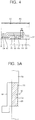
- FIG. 4 is a cross-sectional view taken along line II - II' of FIG. 3 .
- the storage capacitor Cst is formed by the power line 70 overlapping the storage electrode 65 with the first gate-insulating layer 31 disposed therebetween.
- the width of the storage electrode 65 is set to be greater than that of the power line 70 by the groove portion 75 formed on the power line 70 in the overlapping area of the storage electrode 65 and the power line 70.
- the storage capacitor Cst is formed with a predetermined width W between the right lateral side of the storage electrode 65 and the right lateral side of the power line 70 having the groove portion 75.
- the width W may be 1 to 2 ⁇ m. Accordingly, even if the storage electrode 65 is shifted to the left or right, the capacity of the storage capacitor Cst is the same as the previous state, not shifted. A more detailed description will be given with reference to FIGS. 5A and 5B .
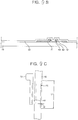
- FIG. 5A is a plan view illustrating an overlapping area of the storage electrode and the power line where the storage electrode is shifted to the left
- FIG. 5B is a plan view illustrating an overlapping area of the storage electrode and the power line where the storage electrode is shifted to the right.
- the storage electrode 65 formed to protrude more than the lateral side of the groove portion 75 overlaps the power line 70. Accordingly, the overlapping area of the storage electrode 65 and the power line 70 is the same as that where the storage electrode 65 is not shifted as shown in FIG. 3 .
- the storage electrode 65 is connected to the first gate electrode 61 of the driving transistor TFT1 of FIG. 1 . Accordingly, as shown in FIG. 5B , even if the storage electrode 65 is shifted to the right, the first gate electrode 61 overlaps the power line 70 and thus the overlapping area is the same as that where the storage electrode 65 is not shifted.
- FIG. 6 is a plan view of a storage capacitor of an organic light-emitting display panel in accordance with a second embodiment of the present invention.
- the storage capacitor Cst of FIG. 6 is the same as that of FIG. 3 , except that the length L1 of the groove portion 76 is greater than that of FIG. 3 .
- the groove portion 75 may be formed with a length L1 greater than a length L2 between the top and bottom sides of the storage electrode 65. Accordingly, even if the storage electrode 65 is shifted to the top or bottom due to a mask misalignment, the overlapping area of the storage electrode 65 and the power line 70 can be kept the same.
- FIG. 7A is a plan view illustrating an overlapping area of the storage electrode and the power line where the storage electrode is shifted to the top
- FIG. 7B is a plan view illustrating an overlapping area of the storage electrode and the power line where the storage electrode is shifted to the bottom.
- each of a plurality of storage capacitors formed on the organic light-emitting display panels manufactured at different times may have the same capacity.
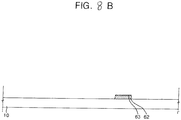
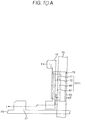
- a first semiconductor layer 62 of a driving transistor TFT1 and a first ohmic contact layer 63 are formed on a substrate 10.
- the first semiconductor layer 62 and the first ohmic contact layer 63 are formed of polysilicon in view of the characteristics of the driving transistor TFT1. The process of forming the first semiconductor layer 62 and the first ohmic contact layer 63 will be described in more detail below.
- amorphous silicon and impurity-doped amorphous silicon are deposited on the overall surface of the substrate 10 in a uniform thickness. Subsequently, the amorphous silicon is crystallized by laser irradiation or solid phase crystallization using heat and magnetic field. Next, the crystallized silicon layer is patterned by photolithography and etching processes to form the first semiconductor layer 62 and the first ohmic contact layer 63 shown in FIG. 8B .
- a first source electrode 71 and a first drain electrode 72 of the driving transistor TFT1 are formed.
- a conductive metal is deposited on the overall surface of the substrate 10 by a sputtering method and then patterned by photolithography and etching processes, thus forming the first source electrode 71 and the first drain electrode 72.
- the first ohmic contact layer 63 not covered but exposed by the first source electrode 71 and the first drain electrode 72 is removed by an etching process to form a channel formed of polysilicon only.
- a power line 70 is formed simultaneously with the formation of the first source electrode 71.
- a groove portion 75 is formed on an area of the power line 70 overlapping a storage electrode to be formed later.
- the groove portion 75 is formed on a lateral side of the power line 70. Especially, the groove portion 75 is formed on the lateral side of the power line 70 adjacent to a data line 40. Accordingly, it is possible to ensure a left and right margin required when the storage electrode is formed.
- the groove portion 75 has a length L1 greater than a length of the storage electrode. Accordingly, it is possible to ensure a misalignment margin by setting the length L1 of the groove portion 75 of the power line 70 greater than the length of the storage electrode such that the storage electrode has the same capacity, even if it is shifted to the top or bottom during the formation thereof.
- a first gate-insulating layer 31 is formed on the overall surface of the substrate 10.
- the first gate-insulating layer 31 is formed by depositing an inorganic insulating material such as silicon oxide (SiOx), silicon nitride (SiNx), or the like on the overall surface of the substrate 10 by a deposition method such as plasma enhanced chemical vapor deposition (PECVD).
- an inorganic insulating material such as silicon oxide (SiOx), silicon nitride (SiNx), or the like
- PECVD plasma enhanced chemical vapor deposition
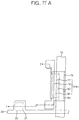
- a gate line 20, first and second gate electrodes 61 and 21, and the storage electrode 65 are formed on the first gate-insulating layer 31.
- a conductive metal is deposited on the overall surface of the substrate 10 by a sputtering method and then patterned by photolithography and etching processes, thus forming the gate line 20, the first and second gate electrodes 61 and 21 and the storage electrode 65.
- the second gate electrode 21 is connected to the gate line 20.
- the power line 70 overlaps the storage electrode 65 with the first gate-insulating layer 31 disposed therebetween to form a storage capacitor Cst.
- an auxiliary storage electrode 66 which extends from the storage electrode 65 to overlap the power line 70, may be further formed.
- the auxiliary storage electrode 66 is formed to overlap the power line 70.
- the width of the auxiliary storage electrode 66 is set to be smaller or greater than that of the power line 70.
- the auxiliary storage electrode 66 is formed symmetrically with respect to the center of the power line 70 to have a mask misalignment margin for the left and right direction.
- the auxiliary storage electrode 66 has a width W on both sides thereof the same as the width of the groove portion 75. Accordingly, even if the storage electrode 65 and the auxiliary storage electrode 66 are shifted to the left or right due to a mask misalignment, the area overlapping the power line 70 is kept the same. Moreover, even when the auxiliary storage electrode 66 has a width greater than that of the power line 70, the auxiliary storage electrode 66 may have a margin as wide as the width W of the groove portion 75.
- the width of the auxiliary storage electrode 66 is set to be smaller or larger than that of the power line 70 so that the width W between a lateral side of the auxiliary storage electrode 66 and a lateral side of the power line 70 may be 1 to 2 ⁇ m. Where the width of the auxiliary storage electrode 66 is set to be greater than that of the power line 70, the auxiliary storage electrode 66 may be formed to have a size that does not overlap an anode electrode 73 or the adjacent data line 40 to be formed later, even if the auxiliary storage electrode 66 is shifted to the left or right.
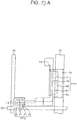
- a second gate-insulating layer 32 is deposited on the overall surface of the substrate 10 including the first and second gate electrodes 61 and 21. Since the second gate-insulating layer 32 is formed by the same method as the first gate-insulating layer 31, a description thereof will be omitted.
- a second semiconductor layer 22 and a second ohmic contact layer 23 are formed on the substrate 10 including the second gate-insulating layer 32.
- a second semiconductor pattern including the second semiconductor layer 22 and the second ohmic contact layer 23 is formed of amorphous silicon in view of the characteristics of a switching transistor TFT2. That is, amorphous silicon and impurity-doped amorphous silicon are sequentially deposited on the second insulating layer 32 and then patterned by photolithography and etching processes, not subjected to a crystallization process, thus forming the second semiconductor layer 22 and the second ohmic contact layer 23.
- a second source electrode 41 and a second drain electrode 42 are formed on the second semiconductor pattern.
- the data line 40 connected to the second source electrode 41 is formed. Since the process of forming the second source electrode 41, the second drain electrode 42 and the data line 40 is substantially the same as the process of forming the first and second gate electrodes 61 and 21, a description thereof will be omitted.
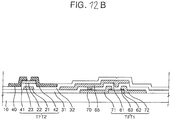
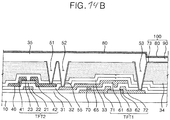
- a passivation layer 33, an organic planarization layer 34, a bridge electrode 55, and an anode electrode 73 are formed.
- the passivation layer 33 is formed by depositing an inorganic insulating layer such as silicon oxide (SiOx) or silicon nitride (SiNx) on the overall surface of the substrate 10. Then, the organic planarization layer 34 is formed on the passivation layer 33.
- the organic planarization layer 34 is formed by coating an organic material on the overall surface of the passivation layer 33 by a spin coating method, and curing the coated organic material. Subsequently, the organic planarization layer 34 is patterned to form first and second contact holes 51 and 52 and a pixel contact hole 53.
- the first contact hole 51 is formed to penetrate the organic planarization layer 34 and the passivation layer 33, thus exposing a portion of the second drain electrode 42.
- the second contact hole 52 is formed to penetrate the organic planarization layer 34, the passivation layer 33, and the second gate-insulating layer 32, thus exposing a portion of the first gate electrode 61.
- the pixel contact hole 53 is formed to penetrate the organic planarization layer 34, the passivation layer 33, and the first and second gate-insulating layers 31 and 32 sequentially, thus exposing a portion of the first drain electrode 72.
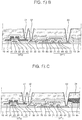
- a color filter 95 may be further formed during the formation of the organic planarization layer 34 as shown in FIG. 13C .
- any one of red, green, and color filters 95 is formed at each pixel area prior to the formation of the organic planarization layer 34 and then the organic planarization layer 34 is formed on the color filter 95.
- the color filter 95 may be formed of an organic material displaying color.
- the organic planarization layer 34 may comprise the color filter. That is, it is possible to form the organic planarization layer 34 at each pixel area as the color filter displaying color.
- the bridge electrode 55 and the anode electrode 73 are formed of a transparent conductive layer.
- the bridge electrode 55 and the anode electrode 73 are formed in such a manner that a transparent conductive material such as indium tin oxide (ITO), indium zinc oxide (IZO), and indium tin zinc oxide (ITZO) is deposited on the organic planarization layer 34, on which the first and second contact holes 51 and 52 and the pixel contact hole 53 are formed, by a sputtering method, and patterned by photolithography and etching processes.
- the bridge electrode 55 connects the first gate electrode 61 to the second drain electrode 42.
- the anode electrode 73 is connected to the first drain electrode 72 of the driving transistor TFT1.
- a barrier layer 35, an organic light-emitting layer 90, and a cathode electrode 80 are formed on the substrate 10 including the bridge electrode 55 and the anode electrode 73.
- At least one material of acrylic-based resin, benzocyclobutene (BCB), and polyimide is deposited on the overall surface on the substrate 10 including the bridge electrode 55 and the anode electrode 73. Subsequently, the anode electrode 73 is exposed by photolithography and etching processes. Accordingly, a step height is formed between an area where the anode electrode 73 is formed and the other area which is not etched. Next, the organic light-emitting layer 90 is formed on the anode electrode 73 in the barrier layer 35, and the cathode electrode 80 is formed on the barrier layer 35 and the organic light-emitting layer 90.
- BCB benzocyclobutene
- the power line and the storage electrode which form the storage capacitor are formed taking into account variations in processing. It is thus possible to form the storage capacitor at each pixel area of the organic light-emitting panel having the same capacity, even if mask misalignment should occur during the manufacturing process.
Landscapes
- Physics & Mathematics (AREA)
- Geometry (AREA)
- Engineering & Computer Science (AREA)
- Microelectronics & Electronic Packaging (AREA)
- Electroluminescent Light Sources (AREA)
- Devices For Indicating Variable Information By Combining Individual Elements (AREA)
Claims (9)
- Organische lichtemittierende Anzeigetafel, umfassend:eine Gateleitung (20) und eine Datenleitung (40), die derart ausgebildet sind, dass sie einander auf einem Substrat (10) kreuzen;eine organische lichtemittierende Diode (100), die in einem Pixelbereich ausgebildet ist, der durch den Schnittpunkt der Gateleitung (20) und der Datenleitung (40) definiert ist;eine Stromleitung (70), die parallel zu der Datenleitung (40) ausgebildet ist, um der organischen lichtemittierenden Diode (100) einen elektrischen Strom zuzuführen;einen Schalttransistor (TFT2), der an dem Schnittpunkt der Gateleitung (20) und der Datenleitung (40) bereitgestellt ist;einen Treibertransistor (TFT1), der mit dem Schalttransistor (TFT2) und der Stromleitung (70) verbunden ist, um den von der Stromleitung (70) zugeführten Strom zu steuern; undeinen Speicherkondensator (Cst), der aus einer Speicherelektrode (65) besteht, die die Stromleitung (70) überlappt, wobei eine erste Gate-Isolierschicht (31) dazwischen angeordnet ist,wobei der Speicherkondensator (Cst) einen Rillenabschnitt (75) beinhaltet, der an einer lateralen Seite der Stromleitung (70) in einem überlappenden Bereich der Stromleitung (70) und der Speicherelektrode (65) ausgebildet ist, wobei der Rillenabschnitt (75) in Richtung des Inneren der Stromleitung (70) zurückgesetzt ist,dadurch gekennzeichnet, dassdie Breite der Speicherelektrode (65) in dem überlappenden Bereich der Speicherelektrode (65) und der Stromleitung (70) um den Rillenabschnitt (75) größer ist als die der Stromleitung (70), und dadurch, dass der Rillenabschnitt (75) eine Länge aufweist, die in einer Richtung parallel zu der Datenleitung (40) mindestens gleich der oder größer als die Länge der Speicherelektrode (65) ist, sodass der überlappende Bereich zwischen der Stromleitung (70) und der Speicherelektrode (65) konstant gehalten wird.
- Organische lichtemittierende Anzeigetafel nach Anspruch 1, wobei der Rillenabschnitt (75) an einer lateralen Seite benachbart zu der Datenleitung (40) ausgebildet ist.
- Organische lichtemittierende Anzeigetafel nach Anspruch 1, wobei der Treibertransistor (TFT1) Folgendes umfasst:ein erstes Halbleitermuster (62, 63), das aus Polysilicium auf dem Substrat (10) ausgebildet ist;eine erste Source-Elektrode (71), die auf dem ersten Halbleitermuster (62, 63) ausgebildet ist und mit der Stromleitung (70) verbunden ist;eine erste Drain-Elektrode (72), die derart auf dem ersten Halbleitermuster (62, 63) ausgebildet ist, dass sie der Source-Elektrode (71) zugewandt ist, und mit der organischen lichtemittierenden Diode (100) verbunden ist;die erste Gate-Isolierschicht (31), die auf der ersten Source-Elektrode (71) und der ersten Drain-Elektrode (72) ausgebildet ist; undeine erste Gate-Elektrode (61), die derart auf der ersten Gate-Isolierschicht (31) ausgebildet ist, dass sie das erste Halbleitermuster (62, 63) überlappt.
- Organische lichtemittierende Anzeigetafel nach Anspruch 3, wobei die erste Gate-Elektrode (61) elektrisch mit der Speicherelektrode (65) verbunden ist.
- Organische lichtemittierende Anzeigetafel nach Anspruch 1, wobei der Schalttransistor (TFT2) Folgendes umfasst:eine zweite Gate-Elektrode (21), die auf der ersten Gate-Isolierschicht (31) ausgebildet ist;eine zweite Gate-Isolierschicht (32), die auf der zweiten Gate-Elektrode (21) ausgebildet ist;ein zweites Halbleitermuster (22, 23), das aus amorphem Silicium auf dem Substrat (10) ausgebildet ist; undeine zweite Source-Elektrode (41) und eine zweite Drain-Elektrode (42), die derart auf dem zweiten Halbleitermuster (22, 23) ausgebildet sind, dass sie einander zugewandt sind.
- Organische lichtemittierende Anzeigetafel nach Anspruch 5, ferner umfassend eine Brückenelektrode (55), die die erste Gate-Elektrode (61) mit der zweiten Drain-Elektrode (42) verbindet.
- Verfahren zum Herstellen einer organischen lichtemittierenden Anzeigetafel nach Anspruch 1, wobei das Verfahren Folgendes umfasst:Ausbilden einer Gateleitung (20) und einer Datenleitung (40) auf einem Substrat (10), wobei die Gateleitung (20) und die Datenleitung (40) einander kreuzen, wobei eine zweite Gate-Isolierschicht (32) dazwischen angeordnet ist;Ausbilden einer organischen lichtemittierenden Diode (100) in einem Pixelbereich, der durch den Schnittpunkt der Gateleitung (20) und der Datenleitung (40) definiert ist;Ausbilden eines Schalttransistors (TFT2) an dem Schnittpunkt der Gateleitung (20) und der Datenleitung (40);Ausbilden eines Treibertransistors (TFT1), der mit dem Schalttransistor (TFT2) verbunden ist; undAusbilden einer Stromleitung (70) parallel zu der Datenleitung (40);Ausbilden einer Speicherelektrode (65), die die Stromleitung (70) überlappt, wobei die erste Gate-Isolierschicht (31) dazwischen angeordnet ist, um einen Speicherkondensator (Cst) auszubilden, und einen hervorstehenden Abschnitt in Bezug auf eine laterale Seite der Stromleitung (70) beinhaltet,wobei das Ausbilden der Stromleitung (70) parallel zu der Datenleitung (40) ferner Ausbilden eines Rillenabschnitts (75) an einer lateralen Seite der Stromleitung (70) in einem überlappenden Bereich der Speicherelektrode (65) und der Stromleitung (70) beinhaltet, wobei der Rillenabschnitt (75) in Richtung des Inneren der Stromleitung (70) zurückgesetzt ist,gekennzeichnet durchAusbilden der Speicherelektrode (65) mit einer Breite, die in dem überlappenden Bereich der Speicherelektrode (65) und der Stromleitung (70) um den Rillenabschnitt (75) größer ist als die der Stromleitung (70), und Ausbilden des Rillenabschnitts (75) derart, dass er eine Länge aufweist, die in einer Richtung parallel zu der Datenleitung (40) mindestens gleich der oder größer als eine Länge der Speicherelektrode (65) ist, sodass der überlappende Bereich zwischen der Stromleitung (70) und der Speicherelektrode (65) konstant gehalten wird.
- Verfahren nach Anspruch 7, wobei das Ausbilden der Stromleitung (70) parallel zu der Datenleitung (40) ferner Ausbilden des Rillenabschnitts (75) an einer lateralen Seite benachbart zu der Datenleitung (40) umfasst.
- Verfahren nach Anspruch 8, wobei das Ausbilden des Schalttransistors (TFT2) und des Treibertransistors (TFT1) Folgendes umfasst:Ausbilden eines ersten Halbleitermusters (62, 63) mit Polysilicium auf dem Substrat (10) und einer ersten Gate-Isolierschicht;Ausbilden einer ersten Source-Elektrode (71) auf dem ersten Halbleitermuster (62, 63) und verbunden mit der Stromleitung (70) und einer ersten Drain-Elektrode (72), die der ersten Source-Elektrode (70) zugewandt ist;Ausbilden einer ersten Gate-Isolierschicht (31) auf der ersten Source-Elektrode (71) und der ersten Drain-Elektrode (72);Ausbilden einer ersten Gate-Elektrode (61) auf der ersten Gate-Isolierschicht (31) derart, dass sie das erste Halbleitermuster (62, 63) überlappt, und einer zweiten Gate-Elektrode (21) gleichzeitig mit der ersten Gate-Elektrode (61); undAusbilden einer zweiten Gate-Isolierschicht (32), eines zweiten Halbleitermusters (22, 23), einer zweiten Source-Elektrode (41) und einer zweiten Drain-Elektrode (42).
Applications Claiming Priority (1)
| Application Number | Priority Date | Filing Date | Title |
|---|---|---|---|
| KR1020070026889A KR101366162B1 (ko) | 2007-03-20 | 2007-03-20 | 유기 발광 표시 패널 및 이의 제조방법 |
Publications (3)
| Publication Number | Publication Date |
|---|---|
| EP1973162A2 EP1973162A2 (de) | 2008-09-24 |
| EP1973162A3 EP1973162A3 (de) | 2012-05-09 |
| EP1973162B1 true EP1973162B1 (de) | 2017-09-20 |
Family
ID=39545976
Family Applications (1)
| Application Number | Title | Priority Date | Filing Date |
|---|---|---|---|
| EP08003998.5A Ceased EP1973162B1 (de) | 2007-03-20 | 2008-03-04 | Organische lichtemittierende Anzeigetafel und Herstellungsverfahren dafür |
Country Status (4)
| Country | Link |
|---|---|
| US (1) | US7858974B2 (de) |
| EP (1) | EP1973162B1 (de) |
| KR (1) | KR101366162B1 (de) |
| CN (1) | CN101272644B (de) |
Families Citing this family (36)
| Publication number | Priority date | Publication date | Assignee | Title |
|---|---|---|---|---|
| US7786481B2 (en) * | 2008-08-26 | 2010-08-31 | Lg Display Co., Ltd. | Organic light emitting diode display and fabricating method thereof |
| KR101570399B1 (ko) | 2009-03-02 | 2015-11-30 | 삼성디스플레이 주식회사 | 박막 트랜지스터 기판 |
| US8461582B2 (en) | 2009-03-05 | 2013-06-11 | Semiconductor Energy Laboratory Co., Ltd. | Semiconductor device and method for manufacturing the same |
| TWI413441B (zh) * | 2009-12-29 | 2013-10-21 | Au Optronics Corp | 畫素結構及電致發光裝置 |
| WO2012042564A1 (ja) * | 2010-09-29 | 2012-04-05 | パナソニック株式会社 | 表示装置用薄膜半導体装置、表示装置用薄膜半導体装置の製造方法、el表示パネル及びel表示装置 |
| KR101415684B1 (ko) * | 2011-07-07 | 2014-08-07 | 엘지디스플레이 주식회사 | 유기전계 발광소자용 기판 및 그 제조 방법 |
| KR101970783B1 (ko) | 2012-05-07 | 2019-04-23 | 삼성디스플레이 주식회사 | 반도체 장치 |
| KR20130134100A (ko) * | 2012-05-30 | 2013-12-10 | 삼성디스플레이 주식회사 | 액티브 패턴 형성 방법, 이를 적용한 표시 기판 및 이의 제조 방법 |
| KR101971925B1 (ko) | 2012-09-19 | 2019-08-19 | 삼성디스플레이 주식회사 | 박막 트랜지스터 어레이 기판 및 유기 발광 표시 장치 |
| KR101959506B1 (ko) | 2012-10-26 | 2019-03-19 | 삼성디스플레이 주식회사 | 유기 발광 표시 장치 |
| KR102019191B1 (ko) * | 2013-02-28 | 2019-09-09 | 엘지디스플레이 주식회사 | 유기전계발광표시장치 및 그 제조방법 |
| CN104425543B (zh) * | 2013-08-26 | 2018-03-06 | 昆山国显光电有限公司 | 一种amoled显示装置及其制备方法 |
| CN103676382B (zh) * | 2013-12-26 | 2017-03-08 | 京东方科技集团股份有限公司 | 阵列基板及显示装置 |
| CN103700629B (zh) * | 2013-12-30 | 2016-10-12 | 京东方科技集团股份有限公司 | 一种阵列基板及其制备方法、显示装置 |
| US9941489B2 (en) | 2014-09-01 | 2018-04-10 | Samsung Display Co., Ltd. | Organic light emitting diode display device and manufacturing method thereof |
| KR101968666B1 (ko) | 2014-09-01 | 2019-04-15 | 삼성디스플레이 주식회사 | 유기 발광 표시 장치 및 그 제조 방법 |
| KR102345132B1 (ko) * | 2014-12-08 | 2021-12-29 | 엘지디스플레이 주식회사 | 브릿지 배선을 갖는 표시장치 및 그 제조방법 |
| KR102243954B1 (ko) * | 2014-12-26 | 2021-04-23 | 엘지디스플레이 주식회사 | 인셀 터치 방식 표시장치 및 이의 제조방법 |
| KR102381288B1 (ko) * | 2015-03-04 | 2022-03-31 | 삼성디스플레이 주식회사 | 유기 발광 표시 장치 |
| CN104730791B (zh) * | 2015-04-08 | 2018-09-21 | 京东方科技集团股份有限公司 | 一种阵列基板及其驱动方法、显示装置 |
| KR102453420B1 (ko) * | 2015-04-30 | 2022-10-13 | 삼성디스플레이 주식회사 | 투명 유기 발광 표시 장치 및 이의 제조방법 |
| KR102403194B1 (ko) | 2015-06-26 | 2022-05-27 | 삼성디스플레이 주식회사 | 표시 장치 |
| CN105931988B (zh) * | 2016-05-30 | 2019-12-24 | 深圳市华星光电技术有限公司 | Amoled像素驱动电路的制作方法 |
| KR102473223B1 (ko) * | 2016-06-30 | 2022-12-02 | 엘지디스플레이 주식회사 | 유기전계발광표시장치 |
| CN106298648A (zh) * | 2016-09-12 | 2017-01-04 | 京东方科技集团股份有限公司 | 一种阵列基板及其制作方法、显示装置 |
| KR102615687B1 (ko) * | 2016-11-15 | 2023-12-21 | 삼성디스플레이 주식회사 | 표시 장치 |
| CN111799319B (zh) * | 2016-12-05 | 2022-12-13 | 群创光电股份有限公司 | 显示装置 |
| CN107731881A (zh) * | 2017-11-06 | 2018-02-23 | 武汉华星光电半导体显示技术有限公司 | 柔性显示面板及其制造方法、柔性显示装置 |
| KR102467465B1 (ko) * | 2018-01-04 | 2022-11-16 | 삼성디스플레이 주식회사 | 수직 적층 트랜지스터, 이를 포함하는 표시 장치, 및 그 제조 방법 |
| KR102513333B1 (ko) | 2018-01-31 | 2023-03-23 | 삼성디스플레이 주식회사 | 표시 장치 |
| CN113196160B (zh) * | 2019-11-29 | 2023-12-01 | 京东方科技集团股份有限公司 | 阵列基板及其制作方法、显示装置以及显示基板 |
| CN111863862A (zh) * | 2020-07-31 | 2020-10-30 | 上海天马微电子有限公司 | 发光结构 |
| KR102913953B1 (ko) * | 2020-12-31 | 2026-01-15 | 엘지디스플레이 주식회사 | 표시 장치 |
| US20230138949A1 (en) * | 2021-01-29 | 2023-05-04 | Chengdu Boe Optoelectronics Technology Co., Ltd. | Array substrate and display apparatus |
| KR20220144457A (ko) * | 2021-04-19 | 2022-10-27 | 삼성디스플레이 주식회사 | 표시 장치 및 그 제조방법 |
| KR20230085519A (ko) * | 2021-12-07 | 2023-06-14 | 엘지디스플레이 주식회사 | 발광표시장치 및 이의 제조방법 |
Family Cites Families (20)
| Publication number | Priority date | Publication date | Assignee | Title |
|---|---|---|---|---|
| TW478014B (en) * | 1999-08-31 | 2002-03-01 | Semiconductor Energy Lab | Semiconductor device and method of manufacturing thereof |
| KR100797374B1 (ko) * | 2001-06-05 | 2008-01-22 | 엘지.필립스 엘시디 주식회사 | 액정표시장치 및 그의 제조방법 |
| JP2003008033A (ja) | 2001-06-22 | 2003-01-10 | Nanahoshi Kagaku Kenkyusho:Kk | 受光装置 |
| KR100834346B1 (ko) * | 2001-12-28 | 2008-06-02 | 엘지디스플레이 주식회사 | 능동행렬 유기전기발광소자 |
| KR100453634B1 (ko) * | 2001-12-29 | 2004-10-20 | 엘지.필립스 엘시디 주식회사 | 능동행렬 유기전기발광소자 |
| KR100484591B1 (ko) * | 2001-12-29 | 2005-04-20 | 엘지.필립스 엘시디 주식회사 | 능동행렬 유기전기발광소자 및 그의 제조 방법 |
| KR100453635B1 (ko) * | 2001-12-29 | 2004-10-20 | 엘지.필립스 엘시디 주식회사 | 능동행렬 유기전기발광소자 |
| KR100426031B1 (ko) * | 2001-12-29 | 2004-04-03 | 엘지.필립스 엘시디 주식회사 | 능동행렬 유기전기발광소자 및 그의 제조 방법 |
| US6835954B2 (en) * | 2001-12-29 | 2004-12-28 | Lg.Philips Lcd Co., Ltd. | Active matrix organic electroluminescent display device |
| US6909240B2 (en) * | 2002-01-18 | 2005-06-21 | Semiconductor Energy Laboratory Co., Ltd. | Light-emitting device |
| JP4117169B2 (ja) * | 2002-09-09 | 2008-07-16 | Nec液晶テクノロジー株式会社 | 液晶表示装置及びその製造方法 |
| KR100768972B1 (ko) * | 2002-11-25 | 2007-10-22 | 도시바 마쯔시따 디스플레이 테크놀로지 컴퍼니, 리미티드 | 유기 el 표시 패널 |
| KR100484092B1 (ko) * | 2002-12-26 | 2005-04-18 | 엘지.필립스 엘시디 주식회사 | 듀얼패널타입 유기전계발광 소자 및 그 제조방법 |
| KR100503129B1 (ko) * | 2002-12-28 | 2005-07-22 | 엘지.필립스 엘시디 주식회사 | 듀얼패널타입 유기전계발광 소자 및 그 제조방법 |
| US7132801B2 (en) * | 2003-12-15 | 2006-11-07 | Lg.Philips Lcd Co., Ltd. | Dual panel-type organic electroluminescent device and method for fabricating the same |
| KR100557730B1 (ko) * | 2003-12-26 | 2006-03-06 | 엘지.필립스 엘시디 주식회사 | 듀얼패널타입 유기전계발광 소자 및 그 제조방법 |
| KR20060047947A (ko) * | 2004-07-22 | 2006-05-18 | 삼성전자주식회사 | 유기 전기 발광 표시장치 |
| KR100700659B1 (ko) | 2005-03-29 | 2007-03-27 | 삼성에스디아이 주식회사 | 유기전계발광표시장치 및 그 제조방법 |
| KR20070000893A (ko) * | 2005-06-28 | 2007-01-03 | 엘지.필립스 엘시디 주식회사 | 수평 전계 인가형 액정 표시 장치 및 그 제조 방법 |
| KR20080010500A (ko) * | 2006-07-27 | 2008-01-31 | 삼성전자주식회사 | 표시 기판, 그 제조방법 및 이를 갖는 표시 장치 |
-
2007
- 2007-03-20 KR KR1020070026889A patent/KR101366162B1/ko not_active Expired - Fee Related
-
2008
- 2008-02-28 US US12/039,197 patent/US7858974B2/en active Active
- 2008-03-04 EP EP08003998.5A patent/EP1973162B1/de not_active Ceased
- 2008-03-11 CN CN2008100828806A patent/CN101272644B/zh not_active Expired - Fee Related
Non-Patent Citations (1)
| Title |
|---|
| None * |
Also Published As
| Publication number | Publication date |
|---|---|
| US20080230770A1 (en) | 2008-09-25 |
| CN101272644B (zh) | 2011-09-14 |
| CN101272644A (zh) | 2008-09-24 |
| US7858974B2 (en) | 2010-12-28 |
| KR101366162B1 (ko) | 2014-02-25 |
| EP1973162A2 (de) | 2008-09-24 |
| KR20080085411A (ko) | 2008-09-24 |
| EP1973162A3 (de) | 2012-05-09 |
Similar Documents
| Publication | Publication Date | Title |
|---|---|---|
| US7858974B2 (en) | Organic light-emitting display panel and method of manufacturing the same | |
| CN111384113B (zh) | 有机发光显示设备 | |
| US10431768B2 (en) | Organic light-emitting display device including auxiliary electrode | |
| US10651258B2 (en) | Organic light emitting display device with improved aperture ratio | |
| US9859345B2 (en) | Organic light emitting display device including a partition wall and method of manufacturing the same | |
| CN100355083C (zh) | 双面板型有机电致发光显示装置及其制造方法 | |
| JP4953166B2 (ja) | 表示パネルの製造方法 | |
| US20090066236A1 (en) | Organic light-emitting display device and method of manufacturing the same | |
| JP2005518557A (ja) | アクティブマトリックス型有機電界発光表示装置及びその製造方法 | |
| US20080230775A1 (en) | Organic light emitting display device and method for manufacturing the same | |
| KR20050052487A (ko) | 유기 일렉트로루미네선스 표시장치 및 그 제조방법 | |
| JP2004200167A (ja) | 有機電界発光素子及びその製造方法 | |
| KR101071712B1 (ko) | 유기전계발광 소자 및 그의 제조 방법 | |
| CN100463213C (zh) | 有机电致发光器件及其制造方法 | |
| CN111972043B (zh) | 显示装置及其制造方法 | |
| US7489072B2 (en) | Organic electroluminescence display device and method for fabricating the same | |
| KR20110004170A (ko) | 유기전계발광소자 및 그 제조방법 | |
| KR20090058283A (ko) | 유기 전계 발광 표시 장치 및 그 제조 방법 | |
| KR101469477B1 (ko) | 유기발광 표시장치 및 그 제조방법 | |
| KR100461634B1 (ko) | 유기전계 발광소자와 그 제조방법 | |
| KR101096719B1 (ko) | 유기 전계발광소자 및 그 제조방법 | |
| KR20080062308A (ko) | 유기 전계발광소자 및 그 제조방법 | |
| KR101212153B1 (ko) | 유기 전계발광소자 및 그 제조방법 | |
| JP2012069540A (ja) | 薄膜トランジスタ、薄膜トランジスタの製造方法及び発光装置 | |
| KR20040062166A (ko) | 유기전계 발광소자와 그 제조방법 |
Legal Events
| Date | Code | Title | Description |
|---|---|---|---|
| PUAI | Public reference made under article 153(3) epc to a published international application that has entered the european phase |
Free format text: ORIGINAL CODE: 0009012 |
|
| AK | Designated contracting states |
Kind code of ref document: A2 Designated state(s): AT BE BG CH CY CZ DE DK EE ES FI FR GB GR HR HU IE IS IT LI LT LU LV MC MT NL NO PL PT RO SE SI SK TR |
|
| AX | Request for extension of the european patent |
Extension state: AL BA MK RS |
|
| PUAL | Search report despatched |
Free format text: ORIGINAL CODE: 0009013 |
|
| AK | Designated contracting states |
Kind code of ref document: A3 Designated state(s): AT BE BG CH CY CZ DE DK EE ES FI FR GB GR HR HU IE IS IT LI LT LU LV MC MT NL NO PL PT RO SE SI SK TR |
|
| AX | Request for extension of the european patent |
Extension state: AL BA MK RS |
|
| RIC1 | Information provided on ipc code assigned before grant |
Ipc: H01L 27/32 20060101AFI20120330BHEP |
|
| RAP1 | Party data changed (applicant data changed or rights of an application transferred) |
Owner name: SAMSUNG ELECTRONICS CO., LTD. |
|
| RAP1 | Party data changed (applicant data changed or rights of an application transferred) |
Owner name: SAMSUNG DISPLAY CO., LTD. |
|
| 17P | Request for examination filed |
Effective date: 20121107 |
|
| AKX | Designation fees paid |
Designated state(s): DE FR GB |
|
| RAP1 | Party data changed (applicant data changed or rights of an application transferred) |
Owner name: SAMSUNG DISPLAY CO., LTD. |
|
| 17Q | First examination report despatched |
Effective date: 20161117 |
|
| GRAP | Despatch of communication of intention to grant a patent |
Free format text: ORIGINAL CODE: EPIDOSNIGR1 |
|
| INTG | Intention to grant announced |
Effective date: 20170329 |
|
| GRAJ | Information related to disapproval of communication of intention to grant by the applicant or resumption of examination proceedings by the epo deleted |
Free format text: ORIGINAL CODE: EPIDOSDIGR1 |
|
| GRAR | Information related to intention to grant a patent recorded |
Free format text: ORIGINAL CODE: EPIDOSNIGR71 |
|
| GRAS | Grant fee paid |
Free format text: ORIGINAL CODE: EPIDOSNIGR3 |
|
| GRAA | (expected) grant |
Free format text: ORIGINAL CODE: 0009210 |
|
| INTC | Intention to grant announced (deleted) | ||
| INTG | Intention to grant announced |
Effective date: 20170810 |
|
| AK | Designated contracting states |
Kind code of ref document: B1 Designated state(s): DE FR GB |
|
| REG | Reference to a national code |
Ref country code: GB Ref legal event code: FG4D |
|
| REG | Reference to a national code |
Ref country code: DE Ref legal event code: R096 Ref document number: 602008052153 Country of ref document: DE |
|
| REG | Reference to a national code |
Ref country code: FR Ref legal event code: PLFP Year of fee payment: 11 |
|
| REG | Reference to a national code |
Ref country code: DE Ref legal event code: R097 Ref document number: 602008052153 Country of ref document: DE |
|
| PLBE | No opposition filed within time limit |
Free format text: ORIGINAL CODE: 0009261 |
|
| STAA | Information on the status of an ep patent application or granted ep patent |
Free format text: STATUS: NO OPPOSITION FILED WITHIN TIME LIMIT |
|
| 26N | No opposition filed |
Effective date: 20180621 |
|
| REG | Reference to a national code |
Ref country code: DE Ref legal event code: R079 Ref document number: 602008052153 Country of ref document: DE Free format text: PREVIOUS MAIN CLASS: H01L0027320000 Ipc: H10K0059000000 |
|
| P01 | Opt-out of the competence of the unified patent court (upc) registered |
Effective date: 20230515 |
|
| PGFP | Annual fee paid to national office [announced via postgrant information from national office to epo] |
Ref country code: DE Payment date: 20240220 Year of fee payment: 17 Ref country code: GB Payment date: 20240220 Year of fee payment: 17 |
|
| PGFP | Annual fee paid to national office [announced via postgrant information from national office to epo] |
Ref country code: FR Payment date: 20240226 Year of fee payment: 17 |
|
| REG | Reference to a national code |
Ref country code: DE Ref legal event code: R119 Ref document number: 602008052153 Country of ref document: DE |
|
| GBPC | Gb: european patent ceased through non-payment of renewal fee |
Effective date: 20250304 |
|
| PG25 | Lapsed in a contracting state [announced via postgrant information from national office to epo] |
Ref country code: DE Free format text: LAPSE BECAUSE OF NON-PAYMENT OF DUE FEES Effective date: 20251001 |
|
| PG25 | Lapsed in a contracting state [announced via postgrant information from national office to epo] |
Ref country code: GB Free format text: LAPSE BECAUSE OF NON-PAYMENT OF DUE FEES Effective date: 20250304 |
|
| PG25 | Lapsed in a contracting state [announced via postgrant information from national office to epo] |
Ref country code: FR Free format text: LAPSE BECAUSE OF NON-PAYMENT OF DUE FEES Effective date: 20250331 |