EP1973271A1 - Verfahren zur Bereitstellung einer Dienstqualität in einem Netzwerk, mittlere Knotenvorrichtung und System - Google Patents
Verfahren zur Bereitstellung einer Dienstqualität in einem Netzwerk, mittlere Knotenvorrichtung und System Download PDFInfo
- Publication number
- EP1973271A1 EP1973271A1 EP08004596A EP08004596A EP1973271A1 EP 1973271 A1 EP1973271 A1 EP 1973271A1 EP 08004596 A EP08004596 A EP 08004596A EP 08004596 A EP08004596 A EP 08004596A EP 1973271 A1 EP1973271 A1 EP 1973271A1
- Authority
- EP
- European Patent Office
- Prior art keywords
- network
- data
- category
- intermediate node
- read
- Prior art date
- Legal status (The legal status is an assumption and is not a legal conclusion. Google has not performed a legal analysis and makes no representation as to the accuracy of the status listed.)
- Withdrawn
Links
- 238000000034 method Methods 0.000 title claims abstract description 33
- 238000005070 sampling Methods 0.000 claims description 59
- 238000012545 processing Methods 0.000 claims description 22
- 230000008569 process Effects 0.000 claims description 20
- 238000004891 communication Methods 0.000 claims description 19
- 238000009877 rendering Methods 0.000 claims description 7
- 238000012360 testing method Methods 0.000 description 12
- 238000012546 transfer Methods 0.000 description 8
- 230000006870 function Effects 0.000 description 6
- 238000010586 diagram Methods 0.000 description 5
- 230000032258 transport Effects 0.000 description 4
- 101100184713 Arabidopsis thaliana PMI2 gene Proteins 0.000 description 3
- 101100102920 Arabidopsis thaliana WEB1 gene Proteins 0.000 description 3
- 101000695835 Mus musculus Receptor-type tyrosine-protein phosphatase U Proteins 0.000 description 3
- 101100309794 Saccharomyces cerevisiae (strain ATCC 204508 / S288c) SEC31 gene Proteins 0.000 description 3
- 238000004364 calculation method Methods 0.000 description 3
- 238000005516 engineering process Methods 0.000 description 3
- 230000001960 triggered effect Effects 0.000 description 3
- 230000002596 correlated effect Effects 0.000 description 2
- 238000012986 modification Methods 0.000 description 2
- 230000004048 modification Effects 0.000 description 2
- 238000012544 monitoring process Methods 0.000 description 2
- 230000000007 visual effect Effects 0.000 description 2
- 238000009825 accumulation Methods 0.000 description 1
- 238000006243 chemical reaction Methods 0.000 description 1
- 230000002708 enhancing effect Effects 0.000 description 1
- 239000000284 extract Substances 0.000 description 1
- 238000000605 extraction Methods 0.000 description 1
- 230000004044 response Effects 0.000 description 1
- 230000011664 signaling Effects 0.000 description 1
Images


Classifications
-
- H—ELECTRICITY
- H04—ELECTRIC COMMUNICATION TECHNIQUE
- H04L—TRANSMISSION OF DIGITAL INFORMATION, e.g. TELEGRAPHIC COMMUNICATION
- H04L47/00—Traffic control in data switching networks
- H04L47/70—Admission control; Resource allocation
- H04L47/80—Actions related to the user profile or the type of traffic
- H04L47/805—QOS or priority aware
-
- H—ELECTRICITY
- H04—ELECTRIC COMMUNICATION TECHNIQUE
- H04L—TRANSMISSION OF DIGITAL INFORMATION, e.g. TELEGRAPHIC COMMUNICATION
- H04L41/00—Arrangements for maintenance, administration or management of data switching networks, e.g. of packet switching networks
- H04L41/50—Network service management, e.g. ensuring proper service fulfilment according to agreements
- H04L41/5003—Managing SLA; Interaction between SLA and QoS
- H04L41/5019—Ensuring fulfilment of SLA
-
- H—ELECTRICITY
- H04—ELECTRIC COMMUNICATION TECHNIQUE
- H04L—TRANSMISSION OF DIGITAL INFORMATION, e.g. TELEGRAPHIC COMMUNICATION
- H04L41/00—Arrangements for maintenance, administration or management of data switching networks, e.g. of packet switching networks
- H04L41/50—Network service management, e.g. ensuring proper service fulfilment according to agreements
- H04L41/508—Network service management, e.g. ensuring proper service fulfilment according to agreements based on type of value added network service under agreement
- H04L41/509—Network service management, e.g. ensuring proper service fulfilment according to agreements based on type of value added network service under agreement wherein the managed service relates to media content delivery, e.g. audio, video or TV
-
- H—ELECTRICITY
- H04—ELECTRIC COMMUNICATION TECHNIQUE
- H04L—TRANSMISSION OF DIGITAL INFORMATION, e.g. TELEGRAPHIC COMMUNICATION
- H04L43/00—Arrangements for monitoring or testing data switching networks
- H04L43/02—Capturing of monitoring data
- H04L43/022—Capturing of monitoring data by sampling
-
- H—ELECTRICITY
- H04—ELECTRIC COMMUNICATION TECHNIQUE
- H04L—TRANSMISSION OF DIGITAL INFORMATION, e.g. TELEGRAPHIC COMMUNICATION
- H04L47/00—Traffic control in data switching networks
- H04L47/10—Flow control; Congestion control
-
- H—ELECTRICITY
- H04—ELECTRIC COMMUNICATION TECHNIQUE
- H04L—TRANSMISSION OF DIGITAL INFORMATION, e.g. TELEGRAPHIC COMMUNICATION
- H04L47/00—Traffic control in data switching networks
- H04L47/10—Flow control; Congestion control
- H04L47/24—Traffic characterised by specific attributes, e.g. priority or QoS
- H04L47/2441—Traffic characterised by specific attributes, e.g. priority or QoS relying on flow classification, e.g. using integrated services [IntServ]
-
- H—ELECTRICITY
- H04—ELECTRIC COMMUNICATION TECHNIQUE
- H04L—TRANSMISSION OF DIGITAL INFORMATION, e.g. TELEGRAPHIC COMMUNICATION
- H04L47/00—Traffic control in data switching networks
- H04L47/10—Flow control; Congestion control
- H04L47/30—Flow control; Congestion control in combination with information about buffer occupancy at either end or at transit nodes
-
- H—ELECTRICITY
- H04—ELECTRIC COMMUNICATION TECHNIQUE
- H04L—TRANSMISSION OF DIGITAL INFORMATION, e.g. TELEGRAPHIC COMMUNICATION
- H04L47/00—Traffic control in data switching networks
- H04L47/70—Admission control; Resource allocation
-
- H—ELECTRICITY
- H04—ELECTRIC COMMUNICATION TECHNIQUE
- H04L—TRANSMISSION OF DIGITAL INFORMATION, e.g. TELEGRAPHIC COMMUNICATION
- H04L47/00—Traffic control in data switching networks
- H04L47/70—Admission control; Resource allocation
- H04L47/76—Admission control; Resource allocation using dynamic resource allocation, e.g. in-call renegotiation requested by the user or requested by the network in response to changing network conditions
- H04L47/762—Admission control; Resource allocation using dynamic resource allocation, e.g. in-call renegotiation requested by the user or requested by the network in response to changing network conditions triggered by the network
-
- H—ELECTRICITY
- H04—ELECTRIC COMMUNICATION TECHNIQUE
- H04L—TRANSMISSION OF DIGITAL INFORMATION, e.g. TELEGRAPHIC COMMUNICATION
- H04L47/00—Traffic control in data switching networks
- H04L47/70—Admission control; Resource allocation
- H04L47/80—Actions related to the user profile or the type of traffic
- H04L47/803—Application aware
-
- H—ELECTRICITY
- H04—ELECTRIC COMMUNICATION TECHNIQUE
- H04L—TRANSMISSION OF DIGITAL INFORMATION, e.g. TELEGRAPHIC COMMUNICATION
- H04L41/00—Arrangements for maintenance, administration or management of data switching networks, e.g. of packet switching networks
- H04L41/50—Network service management, e.g. ensuring proper service fulfilment according to agreements
- H04L41/5041—Network service management, e.g. ensuring proper service fulfilment according to agreements characterised by the time relationship between creation and deployment of a service
- H04L41/5051—Service on demand, e.g. definition and deployment of services in real time
-
- H—ELECTRICITY
- H04—ELECTRIC COMMUNICATION TECHNIQUE
- H04L—TRANSMISSION OF DIGITAL INFORMATION, e.g. TELEGRAPHIC COMMUNICATION
- H04L43/00—Arrangements for monitoring or testing data switching networks
- H04L43/02—Capturing of monitoring data
- H04L43/022—Capturing of monitoring data by sampling
- H04L43/024—Capturing of monitoring data by sampling by adaptive sampling
-
- H—ELECTRICITY
- H04—ELECTRIC COMMUNICATION TECHNIQUE
- H04L—TRANSMISSION OF DIGITAL INFORMATION, e.g. TELEGRAPHIC COMMUNICATION
- H04L43/00—Arrangements for monitoring or testing data switching networks
- H04L43/02—Capturing of monitoring data
- H04L43/026—Capturing of monitoring data using flow identification
Definitions
- the embodiments of the present invention relate to streaming audiovisual data in a shared network, particularly to providing quality of service to such streaming data within a network.
- Internet access as well as access to digital content
- consumers may request on-demand movies streamed from the Internet to one of their television sets in their local area network for viewing.
- Networks where such streaming audiovisual source contents are transported are typically shared such that different source content types may be delivered via such shared networks.
- Data that gets delivered via this shared network may include web browser data, such as web pages, file transfer protocol (FTP) data, streaming audiovisual data, and other data, which may include control information.
- FTP file transfer protocol
- streaming audiovisual data and other data, which may include control information.
- shared network may include varying technologies, such as Ethernet and Powerline Communication technologies.
- a consumer wishing to view streaming audiovisual or multimedia data, particularly movies, over a shared network is typically desirous of wanting the audiovisual data to be delivered with a certain level of quality so as to provide a decent viewing quality. Ways of providing quality of service to such streaming data are thus highly desirable.
- a method of providing quality of service in a network includes the steps of receiving, within a sampling period, a set of network data comprising one or more data flows; reading, from said network data, one or more data flows within said sampling period; categorizing said read one or more data flows into one or more categories, wherein each of said read one or more data flows is associated with a category from said one or more categories; and for said each category of said one or more categories: determining an estimated average data flow bandwidth for said category based on said one or more data flows associated with said category; and if said determined estimated average bandwidth for said category is greater than a defined threshold then requesting quality of service for said category.
- an intermediate node device adapted to be connected to one or more devices via a network, comprising one or more network segments.
- the intermediate node device includes a communication module and a Quality of Service Determination and Processing (QOSDP) module.
- the communication module is adapted to enable said intermediate node device to communicate to said one or more devices via said network.
- the QOSDP module is adapted to: receive via said network, within a sampling period, a set of network data comprising one or more data flows; read, from said network data, one or more data flows within said sampling period; categorize said read one or more data flows into one or more categories, wherein each of said read one or more data flows is associated with a category from said one or more categories; and for said each category of said one or more categories: determine an estimated average data flow bandwidth for said category based on said one or more data flows associated with said category; and if said determined estimated average bandwidth for said category is greater than a defined threshold then request quality of service for said category.
- a system in another aspect, includes a network comprising one or more network segments, an intermediate node device, and a rendering device.
- the intermediate node device is adapted to be connected to the rendering device via said network.
- the intermediate node device includes a communication module and a Quality of Service Determination and Processing (QOSDP) module.
- QOSDP Quality of Service Determination and Processing
- the communication module is adapted to enable said intermediate node device to communicate to said one or more devices via said network.
- the QOSDP module is adapted to: receive via said network, within a sampling period, a set of network data comprising one or more data flows; read, from said network data, one or more data flows within said sampling period; categorize said read one or more data flows into one or more categories, wherein each of said read one or more data flows is associated with a category from said one or more categories; and for said each category of said one or more categories: determine an estimated average data flow bandwidth for said category based on said one or more data flows associated with said category; and if said determined estimated average bandwidth for said category is greater than a defined threshold then request quality of service for said category.
- the rendering device is adapted to receive said set of network data.
- reference numerals within the one hundred series for example, 100 and 152, are initially introduced in FIG. 1
- reference numerals in the two hundred series for example, 202 and 250, are initially introduced in FIG. 2 , and so on and so forth.
- the embodiments of the present invention generally relate to identifying streaming source contents or media, such as audiovisual data, streaming visual data, streaming audio data, and streaming multimedia data.
- Streaming media in general is the transfer of source content so that this content may be received as a continuous real-time stream.
- Streamed source content elements are typically transmitted by a sender, e.g., a server/server application or sender entity, and received by a receiver, e.g., client/client application or receiver entity.
- the receiver or client typically may start presenting or playing back the source content as soon as the receiving client application has sufficient data or content elements stored in its receiving buffer.
- the client/receiver is simultaneously receiving streaming network data and presenting such streamed network data.
- FIG. 1 is a diagram of an exemplary system 100 wherein streaming audiovisual or multimedia digital contents, such as audio and/or visual/image data, are transmitted via one or more networks according to some embodiments of the invention.
- a local area network (LAN) 150 shares bandwidth among the various nodes in the system 100.
- the various nodes in the system 100 may include senders or sources of data, receivers or clients of data, and intermediate nodes, such as network adapters.
- a network adapter of the present invention is an intermediate node that converts data from one network technology to another, so as to enable communication between different network types.
- the intermediate nodes, including network adapters, of the present invention are stand-alone devices or modules that typically do not have access to powerful processors of general-purpose computers, such as Personal Computers (PCs).
- network adapters may include adapters (network adapter processing module) 152, 154, 156, 158 adapted to enable communication between different types of network segments, such as between Ethernet (first network type) and Powerline Communication (PLC; second network type), Ethernet and wireless, such as conforming to the 802.11g specification, and Ethernet and ultra wideband.
- the network adapters 152, 154 156, 158 exemplified in FIG. 1 , provide conversion and communication between an Ethernet network and a PLC network 162, in general.
- the stand-alone network adapters of the present invention are deployed in pairs to transfer data over different network segment types of the LAN 150.
- a source device e.g., a source device set-top box 134
- an Ethernet to a PLC stand-alone network adapter 156 the PLC network 162
- a PLC to Ethernet stand-alone network adapter 152 the destination device, e.g., a digital television set (DTV) 138.
- DTV digital television set
- the Ethernet is termed first network type whereas Powerline Communication is termed second network type.
- the Ethernet may be termed second network type whereas Powerline Communication may be termed as first network type.
- the exemplary system 100 may also include a number of consumer electronics, including a set-top box 134, a DTV 138, a wireless personal computer (PC) 142, a digital video or versatile disc (DVD) player 136, a computer laptop 114, gateways and/or routers 102, a consumer appliance/device 122, and one or more intermediate nodes (intermediate node devices) 152, 154, 156, 158 connected via various network links or segments. Such network segments may also be wired or wireless and may be adapted to support various protocols. These various consumer electronics are typically adapted to be networked with each other.
- Examples of consumer appliances (rendering device) that may be networked into the system 100 include televisions and refrigerators with user interfaces, including displays, radios adapted to receive streaming source contents, and any other devices adapted to receive source contents via the network and present them accordingly.
- the local area network 150 may be adapted to support one or more network types-e.g., power line communication (PLC) networks, 802.11a wireless networks, 802.11g wireless networks, 802.11b wireless networks, and Ethernet networks.
- PLC power line communication
- the local area network 150 may also be operably coupled to one or more external source content providers 192, 198, for example, via satellite, cable, and/or terrestrial broadcast 190 or via an external wide area network, such as the Internet 194.
- the LAN 150 is coupled to external networks via one or more end-point or edge nodes, such as gateways and/or routers 102.
- a source content provider 192, 198 may provide pre-encoded and stored source content and/or live or real-time encoded source content to be streamed and received by a receiver/client and accordingly be presented in a user interface.
- audiovisual (AV) data such as a movie
- AV data may be requested from a source content provider 198 that provides on-demand pre-encoded and stored data and/or live data.
- the on-demand movie is presented on a presentation device after a small portion of the on-demand movie is stored in the appropriate buffer.
- a streaming source content received from an external network or source e.g. source content provider 192 may be received by a set-top box 134.
- the set-top box 134 then transmits the streamed audiovisual movie via one or more intermediate nodes, e.g., an Ethernet to PLC stand-alone network adapter 156 and/or a PLC to Ethernet stand-alone network adapter 152, to the digital television set 138 for presentation.
- the source of the streaming data may be within the LAN 150 itself, for example, from a computer 142 with a stored audiovisual file, e.g., a movie on a Digital Versatile Disk (DVD).
- the computer 142 may stream the stored AV file via intermediate node 156, then to intermediate node 152 to the operably coupled digital television set 138.
- the movie is typically presented on a presentation device when sufficient AV data is stored in an appropriate buffer, and typically while the buffer is still receiving other related AV data.
- the intermediate nodes of the present invention are nodes adapted to perform the quality of service (QOS) determination and processes described herein, but which do not function as network adapters. These intermediate nodes of the present invention, in general, sample the network data and accordingly provide QOS to certain types of data flows.
- QOS quality of service
- the embodiments of the present invention provide for a low-complexity means of identifying which network data flows may potentially carry streaming source content, particularly AV data or multimedia data, that typically requires a certain bandwidth requirement.
- a low-power and typically inexpensive processor may be incorporated in the exemplary intermediate node of the present invention.
- the embodiments of the present invention also provide exemplary intermediate nodes, such as network adapters, that are adapted to potentially identify streaming source content data, particularly AV and multimedia data, typically without external signaling or out-of-band communication, and without sampling or reading all network data or traffic crossing such intermediate node.
- exemplary intermediate nodes such as network adapters, that are adapted to potentially identify streaming source content data, particularly AV and multimedia data, typically without external signaling or out-of-band communication, and without sampling or reading all network data or traffic crossing such intermediate node.
- FIG. 2 is an exemplary diagram 200 illustrating an exemplary representation of network data 202 delivered over a shared network (LAN) 150 and a manner in which network data may be processed according to an embodiment of the invention.
- This exemplary network data 202 may be received and processed by exemplary intermediate nodes 152, 154, 156, 158.
- the shared network 150 is adapted to transport various source contents with varying source content types.
- the network data 202 includes a number of source contents with different varying source content types, such as audiovisual data, file transfer protocol (FTP) data, and three separate web pages data.
- FTP file transfer protocol
- the audiovisual (AV) source content is a streaming source content data that is divided into a number of AV data elements, e.g., AV1 elements 204, 208, 212, 216, 220, 224. These AV data elements 204, 208, 212, 216, 220, 224 are all related to each other and associated with a source content or data flow category.
- the FTP source content is also divided and delivered as a number of FTP data elements, e.g., FTP1 elements 206, 228, 230.
- the various web page source contents are also delivered as a number of web page data elements, e.g., WEB1 elements 210, 218, WEB2 elements 214, 222, and WEB3 element 226.
- Such web page data may include source contents delivered in response, for example, to a hypertext transfer protocol (HTTP) get request.
- HTTP hypertext transfer protocol
- Other various source content types may also be delivered, but not shown, such as acknowledgement messages, control data, round-trip time messages, and other data types that may be delivered via a shared network 150.
- a streaming source content is distinguished from a non-streaming source content, by the manner in which streaming source content is received and processed at the client, as known to those of ordinary skill in the art.
- a non-streaming source content is generally a source content that is typically downloaded in its entirety prior to being presented to a user. For example, a downloaded movie or AV data, however, is different from streaming AV data typically because the movie may not be played back or presented until the entire AV file is first downloaded. Web pages are typically considered non-streaming source contents.
- Network data 202 delivered via network segments of the network may cross an exemplary intermediate node embodiment (intermediate node device) 270 of the present invention.
- the intermediate node (intermediate node embodiment) 270 may be a device used to forward or transfer traffic from one LAN segment to another LAN segment, where the LAN segments may or may not be of the same type.
- the intermediate node 270 transports network data 202, which may include AV source content.
- This intermediate node 270 in addition, for example, to performing network adapter functions is also able to sample data crossing such intermediate node 270, determine which data may potentially be streaming source content data, and those determined to be potentially streaming source content be assigned a certain level of quality of service.
- network data 202 received by such intermediate node 270 are sampled based on a sampling cycle or period.
- the intermediate node 270 may sample network data 202 received by such intermediate node 270 once every second or other longer or shorter time interval.
- the duration of the sampling period and/or the frequency of the sampling period may be based on conditions, such as resources available at the intermediate node 270.
- the intermediate node 270 may have a Quality of Service (QOS) determination and processing (QOSDP) module 250 adapted to identify and categorize the various source contents being transported across this network node (intermediate node 270).
- QOS Quality of Service
- QOSDP Quality of Service
- the QOSDP module 250 or another module in the intermediate node 270 may also determine or keep track of the total size of received data elements or total count of received bytes 242 within a sampling period 298, e.g., keep track of the total count of received bytes 242 during that sampling period or cycle (sampling period 298).
- a sampling period 298 typically has a start time 296A and an end time 296B. Furthermore, the sampling period may be divided into multiple test intervals 282, 284, 286, 288, 290, such that network data 202 are sampled only during such test intervals 282-290. These test intervals 282-290 may be defined, for example, as 30 samples or packets per second or 50 samples/packets per second. The total size of source content elements or data flows sampled generally is the summation of the sizes of related elements sampled during these test intervals 282, 284, 286, 288, 290.
- a sampling period 298 may also apply when a sampling period 298 is extended over a long period, for example, over several seconds.
- a sampling period 298 may also have varying and/or big gaps between test intervals 282-290.
- a sample period 298 may extend over five seconds, wherein there are test intervals defined in the first, third, and fifth second, but no test intervals between the second and fourth second.
- variations, on the manner of defining a sampling period 298 and/or defining test intervals 282-290 are expected and still be within the scope of the present invention.
- the QOSDP module 250 is designed to categorize the various source content elements received during a sampling period 298 into one or more categories or data flows 252, 258, 260, 262. For example, data sampled that are identified as part of AV1 source contents (elements) 208, 216, 224, FTP1 source content 230, WEB1 source contents 210, 218, and WEB3 source content 226 are accordingly grouped and their total sample sizes accumulated as shown.
- WEB2 data elements 214, 222 are part of the network data 202 received by the intermediate node 270, WEB2 elements 214, 222 are not sampled during this exemplary sampling period 298.
- other source content elements (282, 204, 206, 212, 220, 228, portion of 290) are shown not sampled during this exemplary sampling period 298.
- each of one or more data flows read by the QOSDP module 250 is associated with a flow size
- each of one or more categories is associated with a category size.
- the QOSDP module 250 is adapt to accumulate the flow size of each read data flow into the category size associated with said read data flow.
- a source content is transmitted as one or more packets.
- the QOSDP module 250 reads the one or more packets 282, 284, 286, 288, 290 received at the intermediate node 270 during the sampling period 298 and accordingly extracts or reads from each packet the header information. From the packet header information, each packet is categorized, based for example, to which data flow the packet may be associated or related. In some embodiments, the QOSDP module 250 may categorize the various packets, for example, by their unique packet header fields, such as EtherType, Source Internet Protocol (IP) address (source address), Destination IP address (destination address), source Port, and Destination Port. EtherType is typically a field indicating the protocol being applied to transport the packet.
- IP Internet Protocol
- a data flow is a stream of correlated packets originating from a specific source and being delivered to one or more destinations. Typically, these flows have the same source and destination address, and other criteria in common, originating from a single session and/or multicast session.
- the packets are correlated if they are based on or are associated with the same source content, e.g., all sampled AV1 packets 208, 216, 224 are grouped under the same data flow or category, e.g., represented by STREAM(1).
- the manner of categorizing the network data 202 to one or more data flows may depend on the protocol being employed in transmitting the network data 202.
- the QOSDP module 250 may have the various logic and/or processes built-in so as to enable the QOSDP module 250 to read network data 202 and accordingly categorize, which may include parsing and extracting data from the network data 202, to particular data flows or categories.
- the total size or byte counts of the exemplary grouped sampled AV1 data (AV1 packets, AV1 elements) 208, 216, 224 are also accordingly accumulated or added together, for example, under a total bytes variable per category-STREAMBYTE(1).
- the variable STREAMBYTE(1) may contain, for example, the value of the byte counts of the first sampled AV1 packet 208 + byte counts of the second sampled AV1 packet 216 + byte counts of the third sampled AV1 packet 224.
- related packets or source content elements are thus grouped into a common category and their sizes accumulated.
- the sampled FTP1 packet 230, the sampled WEB1 packets 210, 218, and the sampled WEB3 226 packet are all categorized under respective categories, e.g., represented by STREAM(2), STREAM(3), and STREAM(4) categories, and their total byte counts for each category or group are also accumulated under exemplary variables, e.g., STREAMBYTE(2), STREAMBYTE(3), and STREAMBYTE(4), respectively.
- the accumulated byte count, STREAMBYTE(i) for the identified data flow or category, in some embodiments, may be used as a basis or indicator of the average sampled bandwidth for that data flow.
- Such an average sampled bandwidth may be based on having a sample size that may be deemed statistically significant.
- a sample size may be deemed statistically significant using conventional statistical or mathematical algorithms or formulas.
- the QOSDP module 250 may be configured to sample a defined sample size. This defined sample size may be preconfigured and/or dynamically be changed. In other embodiments, a confidence test formula may be applied.
- the total size or byte counts (one or more categories or data flows) 252, 258, 260, 262 of all sampled packets during that sample period 298 may also be maintained or kept track of, for example, in a variable or memory location exemplified and called herein as TOTAL_SAMPLED_BYTES 244.
- the byte count of each packet may relate to the entire packet size, which includes header and payload information, for example.
- the sample byte counts may relate only to the size of the payload area of each packet.
- the value of TOTAL_SAMPLED_BYTES may be obtained by adding STREAMBYTE(1) + STREAMBYTE(2) + STREAMBYTE(3) + STREAMBYTE(4).
- the QOSDP module 250 has access to information that indicates both header size and payload size. In some embodiments, this information may be obtained by directly reading the packets. In other embodiments, such information may be obtained via a hardware support, e.g., an interface chip that may have a hardware register that indicates or measures the physical packet length.
- a sample size thus may be based on total packet size, but preferably payload packet size. The full or entire packet size, however, is typically used to determine the total bytes per second on the LAN 150, or total bytes received in the sampling period 298.
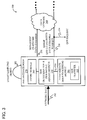
- FIG. 3 is another exemplary diagram 300 showing a high-level data flow of an embodiment of the present invention.
- Network data 202 which may include a number of different source content data or data flows, received by an intermediate node 270 are sampled every sampling period 302 by the QOSDP module 250.
- the sampling period 250 e.g., when to perform or the duration of the QOSDP process described herein, may be user-, programmatically-, and/or manufacturer-defined.
- the sampling period 302 may also be changed based on certain conditions, such as network conditions or resources available at the intermediate node 270. In some embodiments, the sampling period 302 may be based on the number of packets sampled from the inbound network data 202 over time, which may be based on processing resources available.
- An intermediate node 270 of the present invention may include a QOSDP module 250 and an intermediate node processing module 316 assigned to perform the conventional functions of this intermediate node.
- this intermediate node 270 is an Ethernet to PLC adapter
- the intermediate node processing module 316 is adapted to perform conventional Ethernet to PLC adapter functions, as well as the QOSDP module 250 processes described herein.
- these modules 250, 316 may communicate with each other via a shared memory, a data line, a bus, dedicated signal paths, or one or more channels 350.
- these two modules may be embodied in hardware, as a set of program instructions, e.g., software, or both, i.e., firmware.
- Other modules may also be included, e.g., a communication module 340 adapted to enable the intermediate node 270 to communicate via the network.
- Other modules may also be included, not shown, which may depend on other functions of the intermediate node 270.
- the QOSDP module 250 categorizes the sampled network 202 data to one or more categories or data flows, and provides some level of QOS to data flows categorized as QOSDP QOS data 330. Data designated as QOSDP QOS data 330 and those that are not, i.e., non-QOSDP data 320, are then accordingly transmitted via the network 360, so as to be transmitted to the designated receiving or client destination. Furthermore, once the header is extracted and/or network data 202 identified, network data 202 processed by the QOSDP module 250 may immediately be available to the QOS classifier 318, which may be embodied as part of the intermediate node processing module 316. For those source contents identified as QOSDP QOS data 330, the QOSDP module 250 also may request QOS (QOS request) 334 to be assigned to that particular data flow or category.
- QOS QOS
- Non-QOSDP data 320 are those network data 202 that have been categorized by the QOSDP module 250 as not to be provided specialized QOS handling according to the embodiments of the present invention. These non-QOSDP data 320 of the network data 202, however, may have been received by the intermediate node 270, particularly by the QOSDP module 250, with previous QOS or priority-handling services defined in their header. In some embodiments, these non-QOSDP data 320 may have been previously designated with best effort service. These non-QOSDP data 320 are thus typically provided the same service as they would have been provided if they did not undergo processing by the QOSDP module 250 of the present invention. These non-QOSDP data 320 thus are not assigned any QOS handling or processing of the present invention. No QOS requests are transmitted by the QOSDP module 250 on behalf of such non-QOSDP data 320.
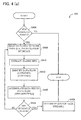
- this QOSDP process 400 may be triggered by a monitoring module, not shown, that may be adapted to control when the sampling of the network data is to occur and/or the duration of the sampling period.
- the monitoring and the triggering of the QOSDP process are embodied within the QOSDP module itself.
- the QOSDP process may also be triggered on-demand.
- a check is made if a new sampling period has occurred or needs to be triggered, e.g., it may be based on whether a scheduled time has arrived (step 404).
- the QOSDP module 250 with or without interfacing with the intermediate node processing module 316, in general, reads or samples network data 202 received by this exemplary intermediate node 270 via the appropriate interface(s) provided in the intermediate node 270 (step 408).
- such interface is at the PHY and/or media access control (MAC) level.
- MAC media access control
- the network data 202 is thus sampled and the header information of each sampled packet is then extracted (step 410). Based on the extracted or read header information, the various sampled packets are accordingly categorized or grouped into their respective categories or data flows (step 412), e.g., in a STREAM(i), in an array, in a data structure, or via other processes of categorizing such data. Furthermore, the byte count of each sampled packet is accordingly accumulated based on category (step 420), e.g., into an appropriate variable STREAMBYTES(i). Such a sampled byte count, as mentioned, may be the payload byte count or the entire packet byte count.
- step 408 The reading of the network data 202 (step 408), extraction of header information (step 410), identifying the data flow or category (step 412), and byte count accumulation (step 420) are typically repeated until the end of that sampling cycle.
- sampled data are transmitted to the next destination, e.g., receiver or another node in the network, immediately after determination of their category or data flow and their byte counts (not shown).
- a QOS determination process is then performed.
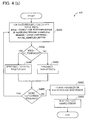
- FIG. 4B illustrates an exemplary process 428 of this QOS determination process, which in general, may include performing a calculation for each category or data flow to determine an estimated total average bandwidth (estimated average bandwidth; estimated average data flow bandwidth) that may be required by such source content or data flow.
- estimated average bandwidth estimated average data flow bandwidth
- IP Internet Protocol
- BW i ( TOTAL NUMBER ( # ) OF BYTES RECEIVED IN SAMPLING PERIOD / SAMPLING PERIOD ) * STREAMBYTES i / TOTAL_SAMPLED_BYTES
- the estimated average bandwidth may be defined as (a total size of the network data 202 received divided by the sampling period 298) multiplied by (the category size associated with the category divided by total sampled size).
- the total average bandwidth observed during the sampling period may be obtained by dividing the total number of bytes received by the intermediate node 270 during the sampling period divided by the sample period duration.
- This total number of bytes received during the sampling period may include sampled and non-sampled data received during this sampling period, e.g., all data packets received between the start 296A and end 296B of the sampling period.
- the total number of bytes received considers or is based on the entire packet size or total byte count for all packets received in the sampling period, which may include header and payload area, for example.
- the total number of bytes received during the sampling period may be maintained as part of the conventional processing of the intermediate node processing module 316. In this embodiment, the total number of bytes received during the sampling period may be queried by the QOSDP module 250 from the intermediate node processing module 316.
- the source content or data flows associated with that average bandwidth is then assumed to be an AV stream and is assigned and defined to be a QOS data 330 (step 448), meaning that packets associated or conforming to such data flow or category, e.g., based on header information, are to be accordingly provided QOS, if possible.
- the QOSDP module 250 samples packets over several sampling periods, for example, to ensure that the BW is generally maintained for a period of time, prior to testing whether the bandwidth of a particular data category exceeds the average threshold (step 432).
- the QOSDP module 250 in addition may request AV QOS status (QOS request) 334 from the network for this designated data flow (step 448), for example, based on unique packet header information. Future incoming network data that is associated with this category or data flow may thus be accordingly provided QOS. For example, if BW(1) is greater than the defined AV_THRESHOLD and BW(1) is associated with AV1 data 252, AV1 data packets conforming to the same data flow or header information are requested QOS priority handling (QOS request) 334.
- the QOS requirements or specification of the AV source content that crosses the intermediate node 270 may be known or be derived from the AV data flow itself.
- the QOS requirements may be configured in the intermediate node 270 of the present invention, such that the QOSDP module 250 is able to determine the level of QOS service to request for such a data flow.
- QOS parameters or requirements may be preconfigured, which may be based on data flows or data categories.
- one or more sets of QOS parameters may be predefined or preconfigured in the intermediate node 270.
- Such a set of QOS parameters may also be dynamically changed and/or be user-configured.
- the defined average threshold, AV_THRESHOLD may be based on the AV data type. For example, high definition AV data may be defined to have AV_THRESHOLD of 12 megabits per second (Mbps), while regular non-high definition AV data may be defined to have AV_THRESHOLD of 2 Mbps. The values listed are for exemplification purposes. Other AV_THRESHOLD values may also be defined and implemented. In some embodiments, the system 100 may be adapted to have multiple AV_THRESHOLD(s), depending on certain conditions, such as user expectation input, current network traffic, arrival time distribution, and/or detected network management traffic. Such AV_THRESHOLDs may be stored in a table or a database or be programmatically defined, for example.
- a QOS request 334 for example, in a PLC network may be implemented by having the QOSDP module 250 define a connection specification for such a data flow or category and specifying parameters defining or configuring a manner in which such data flows coming in through the intermediate node 270 are to be handled.
- a QOS request 334 may be sent to the MAC and/or PHY layer as a command, for example, QOS classifiers 318 and/or policy databases, for example, may accordingly also be updated based on such QOS requests 334.
- step 432 "no" branch
- the source content or packets associated with that data flow are not provided any special handling, e.g., such data flow/category is defined as non-AV data or non-QOSDP data (step 452) thus typically requiring no QOS handling of the present invention.
- non-AV data are typically handled as if they did not undergo the QOS processing of the present invention.
- Variables or memory locations used in this exemplary calculation may then be reset or cleared so as to prepare for the next sampling period and calculation (steps 462 and 464).
- the QOSDP process 400 described herein may be repeated at the next cycle.
- the QOSDP module 250 may incorrectly identify a non-AV data flow as AV data (step 448), according to the process described herein. This error, however, may typically be tolerated or acceptable due to the expectation that the exemplary intermediate device or node 270 of an embodiment of the present invention may be in a LAN configuration where there is a high probability that high bandwidth streams are AV streams. Furthermore, although granting or requesting AV QOS to an incorrect type of traffic or network data 202 may steer resources away from other subsequent or incoming AV streams, such diversion of resources typically occur only for the duration of the incorrectly identified data flow. Most of the incorrectly identified data flows, if non-AV data, are typically of relatively short duration, such as image downloads and file transfers.
- the duration of these data flows are typically on the order of a few seconds to a few minutes where AV streams or source contents are typically of a longer duration, such as in the order of hours.
- Granting or requesting QOS to an incorrect type of traffic or network data 202 is an error that may be acceptable to provide a low-complexity and/or a typically inexpensive intermediate node 270 of the present invention.
- Such an error may further be alleviated, particularly, if the intermediate node 270 is located in the network such that the intermediate node 270 is directed to receive and transfer network data 202 to potential rendering devices, e.g., those adapted to perform personal video recording or presenting type of functions.
- the intermediate node device of the present invention may be adapted so that said QOSDP module is further adapted to categorize said read one or more data flows based on a set of header information of said read data flow.
- the intermediate node device of the present invention may be adapted so that said header information comprises a protocol type, a source address, a destination address, a source port, and a destination port.
- the intermediate node device of the present invention may be adapted so that each of said read one or more data flows is associated with a flow size, wherein each of said one or more categories is associated with a category size, and wherein said QOSDP module is further adapted to accumulate said flow size of each read data flow into said category size associated with said read data flow.
- the intermediate node device of the present invention may be adapted so that each of said read one or more data flows is associated with a flow size based on a payload size.
- the intermediate node device of the present invention may be adapted so that the QOSDP module is further adapted to determine a total sampled size based on accumulating all of said each category size associated with said one or more categories, and wherein said determined estimated average data flow bandwidth for said category is based on (a total size of said network data received divided by said sampling period) multiplied by (said category size associated with said category divided by said total sampled size).
- the intermediate node device of the present invention may be adapted so that said total size of said network data received is based on an entire packet size, comprising packet header and packet payload.
- the system of the present invention may be adapted so that said intermediate node device further comprises a network adapter processing module adapted to process said set of network data from a first network type to a second network type.
- the system of the present invention may be adapted so that said first network type is Ethernet and said second network type is PowerLine Communication.
- Embodiments of the present invention may be used in conjunction with networks, systems, and devices that are adapted to employ intermediate nodes.
- this invention has been disclosed in the context of certain embodiments and examples, it will be understood by those of ordinary skill in the art that the present invention extends beyond the specifically disclosed embodiments to other alternative embodiments and/or uses of the invention and obvious modifications and equivalents thereof.
- a number of variations of the invention have been shown and described in detail, other modifications, which are within the scope of this invention, will be readily apparent to those of ordinary skill in the art based upon this disclosure.
Landscapes
- Engineering & Computer Science (AREA)
- Computer Networks & Wireless Communication (AREA)
- Signal Processing (AREA)
- Multimedia (AREA)
- Data Exchanges In Wide-Area Networks (AREA)
- Two-Way Televisions, Distribution Of Moving Picture Or The Like (AREA)
Applications Claiming Priority (1)
| Application Number | Priority Date | Filing Date | Title |
|---|---|---|---|
| US11/689,662 US7936677B2 (en) | 2007-03-22 | 2007-03-22 | Selection of an audio visual stream by sampling |
Publications (1)
| Publication Number | Publication Date |
|---|---|
| EP1973271A1 true EP1973271A1 (de) | 2008-09-24 |
Family
ID=39642668
Family Applications (1)
| Application Number | Title | Priority Date | Filing Date |
|---|---|---|---|
| EP08004596A Withdrawn EP1973271A1 (de) | 2007-03-22 | 2008-03-12 | Verfahren zur Bereitstellung einer Dienstqualität in einem Netzwerk, mittlere Knotenvorrichtung und System |
Country Status (3)
| Country | Link |
|---|---|
| US (1) | US7936677B2 (de) |
| EP (1) | EP1973271A1 (de) |
| JP (1) | JP4601681B2 (de) |
Cited By (2)
| Publication number | Priority date | Publication date | Assignee | Title |
|---|---|---|---|---|
| EP2372953A3 (de) * | 2010-03-30 | 2012-03-14 | Telefonaktiebolaget L M Ericsson (Publ) | Flussprobenahme mit Spitzensprechern |
| GB2532032A (en) * | 2014-11-05 | 2016-05-11 | Openwave Mobility Inc | Congestion monitoring |
Families Citing this family (6)
| Publication number | Priority date | Publication date | Assignee | Title |
|---|---|---|---|---|
| JP4889787B2 (ja) * | 2007-03-20 | 2012-03-07 | 富士通株式会社 | 測定方法、測定装置及びコンピュータプログラム |
| US8881212B2 (en) * | 2009-12-28 | 2014-11-04 | Verizon Patent And Licensing Inc. | Home network management |
| US8584187B2 (en) | 2010-03-26 | 2013-11-12 | Verizon Patent And Licensing Inc. | Bandwidth management |
| EP2748716B1 (de) | 2011-11-15 | 2018-05-16 | Nicira Inc. | Netzwerksteuerungssystem zur konfiguration von middleboxes |
| US10225161B2 (en) * | 2016-10-31 | 2019-03-05 | Accedian Networks Inc. | Precise statistics computation for communication networks |
| WO2022133875A1 (en) * | 2020-12-24 | 2022-06-30 | Intel Corporation | Protocol state aware power management |
Citations (6)
| Publication number | Priority date | Publication date | Assignee | Title |
|---|---|---|---|---|
| US6434116B1 (en) * | 1997-11-07 | 2002-08-13 | Telcordia Technologies, Inc. | Method and system for stabilized random early detection using connection sampling |
| GB2377117A (en) * | 2001-06-27 | 2002-12-31 | Cambridge Broadband Ltd | Prioritising access to communications bandwidth |
| US20060212917A1 (en) | 2005-03-16 | 2006-09-21 | Liberate Technologies | Upstream bandwidth management methods and apparatus |
| EP1729447A1 (de) | 2005-06-03 | 2006-12-06 | Fraunhofer-Gesellschaft zur Förderung der angewandten Forschung e.V. | Verfahren und Überwachungssystem zur Stichprobenanalyse von Daten bestehend aus einer Vielzahl von Datenpaketen |
| US20060285013A1 (en) * | 2005-06-16 | 2006-12-21 | Samsung Electronics Co., Ltd. | Apparatus and method for providing QoS of AV streams |
| US20070127410A1 (en) * | 2005-12-06 | 2007-06-07 | Jianlin Guo | QoS for AV transmission over wireless networks |
Family Cites Families (16)
| Publication number | Priority date | Publication date | Assignee | Title |
|---|---|---|---|---|
| US5446874A (en) | 1993-12-23 | 1995-08-29 | International Business Machines Corp. | Automated benchmarking with self customization |
| US6104700A (en) * | 1997-08-29 | 2000-08-15 | Extreme Networks | Policy based quality of service |
| US6594268B1 (en) * | 1999-03-11 | 2003-07-15 | Lucent Technologies Inc. | Adaptive routing system and method for QOS packet networks |
| JP3407696B2 (ja) * | 1999-07-13 | 2003-05-19 | 日本電気株式会社 | Atm交換機および呼受付処理方法 |
| JP2001217842A (ja) * | 2000-02-01 | 2001-08-10 | Fujitsu Ltd | Lan型ネットワーク制御装置 |
| JP2001285296A (ja) | 2000-03-29 | 2001-10-12 | Fujitsu Ltd | 中継装置 |
| JP3465703B2 (ja) * | 2001-07-18 | 2003-11-10 | 日本電気株式会社 | 共通チャネルフロー制御方法 |
| US7042888B2 (en) | 2001-09-24 | 2006-05-09 | Ericsson Inc. | System and method for processing packets |
| US7296288B1 (en) * | 2002-11-15 | 2007-11-13 | Packeteer, Inc. | Methods, apparatuses, and systems allowing for bandwidth management schemes responsive to utilization characteristics associated with individual users |
| EP1625713B1 (de) * | 2003-05-16 | 2011-11-09 | Panasonic Corporation | Paketklassifizierung und -verkettung über ein netzleitungsübertragungssystem |
| JP4100317B2 (ja) * | 2003-09-30 | 2008-06-11 | 日本電気株式会社 | 画像符号化装置およびその量子化制御方法 |
| WO2006004556A1 (en) | 2004-07-02 | 2006-01-12 | Agency For Science, Technology And Research | Traffic redirection attack protection method and system |
| US7609709B2 (en) * | 2006-01-23 | 2009-10-27 | Alcatel-Lucent Usa Inc. | Video aware traffic management |
| US7876696B2 (en) * | 2006-01-27 | 2011-01-25 | Texas Instruments Incorporated | Adaptive upstream bandwidth estimation and shaping |
| US7693157B2 (en) * | 2006-04-25 | 2010-04-06 | Microsoft Corporation | Quality of service support for A/V streams |
| US7639619B2 (en) * | 2006-06-07 | 2009-12-29 | Sharp Laboratories Of America, Inc. | System and method for quality of service (QoS) setup of a network segment having an intermediate device |
-
2007
- 2007-03-22 US US11/689,662 patent/US7936677B2/en not_active Expired - Fee Related
-
2008
- 2008-03-03 JP JP2008052339A patent/JP4601681B2/ja not_active Expired - Fee Related
- 2008-03-12 EP EP08004596A patent/EP1973271A1/de not_active Withdrawn
Patent Citations (6)
| Publication number | Priority date | Publication date | Assignee | Title |
|---|---|---|---|---|
| US6434116B1 (en) * | 1997-11-07 | 2002-08-13 | Telcordia Technologies, Inc. | Method and system for stabilized random early detection using connection sampling |
| GB2377117A (en) * | 2001-06-27 | 2002-12-31 | Cambridge Broadband Ltd | Prioritising access to communications bandwidth |
| US20060212917A1 (en) | 2005-03-16 | 2006-09-21 | Liberate Technologies | Upstream bandwidth management methods and apparatus |
| EP1729447A1 (de) | 2005-06-03 | 2006-12-06 | Fraunhofer-Gesellschaft zur Förderung der angewandten Forschung e.V. | Verfahren und Überwachungssystem zur Stichprobenanalyse von Daten bestehend aus einer Vielzahl von Datenpaketen |
| US20060285013A1 (en) * | 2005-06-16 | 2006-12-21 | Samsung Electronics Co., Ltd. | Apparatus and method for providing QoS of AV streams |
| US20070127410A1 (en) * | 2005-12-06 | 2007-06-07 | Jianlin Guo | QoS for AV transmission over wireless networks |
Cited By (5)
| Publication number | Priority date | Publication date | Assignee | Title |
|---|---|---|---|---|
| EP2372953A3 (de) * | 2010-03-30 | 2012-03-14 | Telefonaktiebolaget L M Ericsson (Publ) | Flussprobenahme mit Spitzensprechern |
| US8335160B2 (en) | 2010-03-30 | 2012-12-18 | Telefonaktiebolaget L M Ericsson (Publ) | Flow sampling with top talkers |
| GB2532032A (en) * | 2014-11-05 | 2016-05-11 | Openwave Mobility Inc | Congestion monitoring |
| GB2532032B (en) * | 2014-11-05 | 2017-10-25 | Openwave Mobility Inc | Congestion monitoring |
| US10103990B2 (en) | 2014-11-05 | 2018-10-16 | Openwave Mobility Inc. | Method and system for congestion monitoring in a data network |
Also Published As
| Publication number | Publication date |
|---|---|
| US7936677B2 (en) | 2011-05-03 |
| US20080232250A1 (en) | 2008-09-25 |
| JP4601681B2 (ja) | 2010-12-22 |
| JP2008236742A (ja) | 2008-10-02 |
Similar Documents
| Publication | Publication Date | Title |
|---|---|---|
| US11381625B2 (en) | Apparatus and method for transmitting multimedia data in hybrid network | |
| US7936677B2 (en) | Selection of an audio visual stream by sampling | |
| CA2762683C (en) | Quality of service for distribution of content to network devices | |
| US8045454B2 (en) | Multimedia data flow dropping | |
| US8971184B2 (en) | Latency based random early discard for network packets | |
| CN100596092C (zh) | 用于数据包的动态通道映射与最优化调度的设备与方法 | |
| US9781488B2 (en) | Controlled adaptive rate switching system and method for media streaming over IP networks | |
| US7957278B2 (en) | Detection of signaling flows | |
| KR102107514B1 (ko) | 방송 시스템에서 동적 큐 관리 방법 및 장치 | |
| JP2017526244A (ja) | マルチメディアシステムにおける情報を送受信する方法及び装置 | |
| CN112866390B (zh) | 一种数据传输方法、装置、终端设备和存储介质 | |
| US8630179B1 (en) | Internet protocol video quality of service | |
| JP7652582B2 (ja) | ネットワークスイッチおよびプログラム | |
| EP4360275B1 (de) | Datenverkehrsqualitätsanalyse | |
| CN107483220A (zh) | 一种服务质量控制方法、装置及系统 | |
| Clément et al. | Adapting Test and Measurement Tools to Centralcasting and Broadband IP Contribution | |
| Bottorff et al. | Networked video: MPEG transport, ATM, or IP? | |
| Foulkes et al. | Providing Interoperability of, and Control over, Quality of Service Networks for Real-time Audio and Video Devices |
Legal Events
| Date | Code | Title | Description |
|---|---|---|---|
| PUAI | Public reference made under article 153(3) epc to a published international application that has entered the european phase |
Free format text: ORIGINAL CODE: 0009012 |
|
| AK | Designated contracting states |
Kind code of ref document: A1 Designated state(s): AT BE BG CH CY CZ DE DK EE ES FI FR GB GR HR HU IE IS IT LI LT LU LV MC MT NL NO PL PT RO SE SI SK TR |
|
| AX | Request for extension of the european patent |
Extension state: AL BA MK RS |
|
| 17P | Request for examination filed |
Effective date: 20090223 |
|
| AKX | Designation fees paid |
Designated state(s): DE FR GB |
|
| 17Q | First examination report despatched |
Effective date: 20151208 |
|
| STAA | Information on the status of an ep patent application or granted ep patent |
Free format text: STATUS: THE APPLICATION IS DEEMED TO BE WITHDRAWN |
|
| 18D | Application deemed to be withdrawn |
Effective date: 20160419 |