EP1977318B1 - Reparation a distance de fichiers par controles de redondance cyclique hierarchiques et segmentees verifications - Google Patents
Reparation a distance de fichiers par controles de redondance cyclique hierarchiques et segmentees verifications Download PDFInfo
- Publication number
- EP1977318B1 EP1977318B1 EP06846661.4A EP06846661A EP1977318B1 EP 1977318 B1 EP1977318 B1 EP 1977318B1 EP 06846661 A EP06846661 A EP 06846661A EP 1977318 B1 EP1977318 B1 EP 1977318B1
- Authority
- EP
- European Patent Office
- Prior art keywords
- file
- remote
- local
- check codes
- corrupted
- Prior art date
- Legal status (The legal status is an assumption and is not a legal conclusion. Google has not performed a legal analysis and makes no representation as to the accuracy of the status listed.)
- Active
Links
Images





Classifications
-
- G—PHYSICS
- G06—COMPUTING OR CALCULATING; COUNTING
- G06F—ELECTRIC DIGITAL DATA PROCESSING
- G06F11/00—Error detection; Error correction; Monitoring
- G06F11/07—Responding to the occurrence of a fault, e.g. fault tolerance
-
- G—PHYSICS
- G06—COMPUTING OR CALCULATING; COUNTING
- G06F—ELECTRIC DIGITAL DATA PROCESSING
- G06F11/00—Error detection; Error correction; Monitoring
- G06F11/07—Responding to the occurrence of a fault, e.g. fault tolerance
- G06F11/08—Error detection or correction by redundancy in data representation, e.g. by using checking codes
- G06F11/10—Adding special bits or symbols to the coded information, e.g. parity check, casting out 9's or 11's
- G06F11/1004—Adding special bits or symbols to the coded information, e.g. parity check, casting out 9's or 11's to protect a block of data words, e.g. CRC or checksum
-
- G—PHYSICS
- G06—COMPUTING OR CALCULATING; COUNTING
- G06F—ELECTRIC DIGITAL DATA PROCESSING
- G06F11/00—Error detection; Error correction; Monitoring
-
- G—PHYSICS
- G06—COMPUTING OR CALCULATING; COUNTING
- G06F—ELECTRIC DIGITAL DATA PROCESSING
- G06F11/00—Error detection; Error correction; Monitoring
- G06F11/07—Responding to the occurrence of a fault, e.g. fault tolerance
- G06F11/14—Error detection or correction of the data by redundancy in operations
Definitions
- the present invention relates to remotely repairing files, and more specifically, to using hierarchical and segmented cyclic redundancy checks (CRC) to repair files.
- CRC hierarchical and segmented cyclic redundancy checks
- a remote server stores a large inventory of files, one or more of which may be of interest to a local client.
- the remote server can transmit the file of interest to the local client.
- the server and the client maintain identical copies of the file of interest.
- the client copy of the file may become corrupted as a result of hardware and/or software malfunction, user error, or transmission error.
- One reliable way to correct a corrupted file is to replace the entire file. Oftentimes, the file may be very large, e.g., in excess of 100 MB or more. This makes the process of transferring a replacement file over an existing transmission channel, such as the Internet, expensive and time consuming.
- Prior art to this invention includes US 2004/0250167 A1 , which discloses an arrangement in which checksums of downloaded files are calculated and compared with checksums of corresponding original files held on a server. Any file that has an error is downloaded again.
- Implementations of the present invention provide methods, apparatus, and programs for remotely repairing files using hierarchical and segmented check codes. Respective aspects of the present invention are defined according to Claims 1, 18 and 35.
- a relatively small number of bytes are transferred across the transmission channel between a client and a server, preserving valuable bandwidth and requiring shorter wait periods for users with low-or mid-bandwidth connections.
- Implementations of the present invention provide methods, apparatus, and programs for remotely repairing files using hierarchical and segmented check codes.
- the remote file repair technique provides relatively quick repair of local files while requiring substantially less data to be transferred than the conventional technique. Furthermore, the transfer can use simple, existing data transfer protocols without requiring any special communication protocol or interactive software server.
- a file of interest 102 is transmitted to the client 110 using a transmission channel 120.
- the client 110 maintains a local copy 112 of the file that is identical to the file of interest 102 stored in the remote server 100.
- the local copy 112 of the file may become corrupted as a result of errors/malfunctions including hardware and/or software malfunction, user error, disk error, read error, virus infection, intentional alteration, transmission error, and/or other related errors/malfunctions.
- the client 110 may detect the file corruption by periodic checking, problems with execution, prompts from a server (such as for updates), check on execution, or check after a virus removal.
- the local corrupted file is designated as 114 in Figure 1 . However, the local corrupted file 114 occupies substantially the same physical space as the local file 112.
- both the server 100 and the client compute repair files 104, 116 to support local self repair.
- the client 110 requests from the remote server 100 only the information it needs to identify the corrupted part(s) of the file 114.
- the server 100 retrieves the requested information from the repair file 104 and transmits it to the client 110, which uses the received information to determine what part(s) of the file 114 is corrupted.
- the client requests the part (s) from the server 100.
- the server 100 retrieves the replacement part(s) from the original file 102 and transmits the part(s) to the client 110 to repair or restore the corrupted file 114 to the correct state.
- the server 100 can compute the repair file 104 prior to transmitting the file of interest 102 to the client 110. In other implementations, the server 100 can compute the repair file 104 at any time including after receiving a request from the client 110 for transmission of part(s) of the repair file 104.
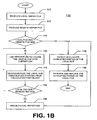
- Figure 1B illustrates a flowchart 130 of a remote file repair process according to one implementation of the present invention.
- a sequence of sections of check codes of the local corrupted file 114 is recursively generated to produce a local repair file 116.
- a sequence of sections of check codes of a remote original file 102 is then recursively generated, at box 142, to produce a remote repair file 104.
- the size of the local file 114 is compared, at 144, to the size of the remote file 102. If the local file size matches the remote file size, corrupted part(s) of the local file 114 is detected and located, at box 146. The detection and location of the corrupted part(s) involve recursive comparison and retrieval of check codes in the repair files 104, 116. The corrupted part(s) of the local file is retrieved and replaced, at box 148. If the local file size does not match the remote file size (box 144), then the repair files 104, 116 are used, at box 150, to locate the first corrupted part of the local file 114 from the beginning of the file 114.
- the local and remote files 114, 102 are resynchronized, at box 152, starting from the located first corrupted part of the local file 114.
- the resynchronization includes replacing missing data and/or dropping added data between the last correct part and the resynchronization point.
- the size of the local file 114 is compared again, at 154, to the size of the remote file 102. If the local file size matches the remote file size, at box 154, then the local repair file 116 is rebuilt, at 156, and the process continues at box 146 to detect and locate the corrupted part(s) of the local file 114. If the local file size does not match the remote file size (box 154), then the repair files 104, 116 are used, at box 150, to locate the first corrupted part of the local file 114 from the current resynchronization point.
- a remote repair file 104 (box 142) by recursively generating a sequence of sections of check codes of a remote original file 102 is described in detail below and is illustrated in Figures 2 and 3 .
- a similar process can be used to produce a local repair file 116 by recursively generate a sequence of sections of check codes of a local corrupted file 114 (box 140).
- the detection and location of corrupted part(s) of the local file (box 146) is also described in detail below and is illustrated in Figures 4 and 5 .
- the resynchronization of the local and remote files (box 152) is described in detail below and is illustrated in Figure 7 .
- Figure 2 illustrates one implementation of a "repair index file" 200.
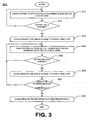
- the repair index file 200 (a') is generated according to a flowchart 300 shown in Figure 3 .
- an N byte block of the original file 210 (a) is hashed into an M byte check code, at box 310.
- an N:M block-to-check-code ratio of 100 to 1 provides an efficient ratio.
- a block is 2000 bytes long and a check code is 20 bytes long.
- check codes are implemented as cyclic redundancy check (CRC) codes.
- CRC cyclic redundancy check
- a check code is implemented as a secure 160-bit (20 byte) hash referred to as SHA-160.
- check codes can be implemented as other types of hashes.
- a "section" e.g., CRC Section in Figure 2
- the steps of boxes 310, 312, 314 are repeated at boxes 316, 318, 320 with the concatenated check codes (e.g., CRC Section l ) being treated as source material for a new "section" of check codes (e.g., CRC Section 2 ).
- the concatenated check codes e.g., CRC Section l
- CRC Section 2 e.g., CRC Section 2
- N bytes of the section formed at box 314 are hashed into an M byte check code, at box 316.
- a check is made, at box 318, to determine whether the entire section (e.g., CRC Section 1 ) has been hashed. If it is determined that the entire section has not yet been hashed, the process returns to box 316 to hash another N bytes of the formed section to generate another M byte check code.
- the hashed check codes are then concatenated, at box 320, to form a new "section" (e.g., CRC Section 2 ), where M*k through M* ( k + 1 ) th bytes of the new section (e.g., CRC Section 2 ) are hashed check codes for N*k through N*(k+1) th bytes in the previous section (e.g., CRC Section 1 ).
- the length of the new concatenated section (formed at box 320) is compared to a threshold to ensure that the generated check codes in the new section are sufficiently small enough for an effective local file repair with a minimal number of data downloads from the server. If the length of the new section is longer than the threshold, the process returns to boxes 316, 318, 320 to generate another section of check codes using the new section as source material.
- a threshold is set at 2000 bytes so that a section of check codes equal to or less than 2000 bytes terminates the process. Therefore, the sections of the repair index file 200 are recursively generated until a threshold is satisfied.
- all sections are concatenated, at box 324, in production order to form the repair index file 200 (a').
- a check code e.g., a CRC code
- Figure 2 illustrates one specific configuration of a repair file, different configurations including different sequences of sections of check codes are possible.
- Figure 4 shows one implementation of a process for using a repair index file 400 by selectively retrieving part(s) of the file 400 to identify and repair part(s) of the local corrupted file 406.
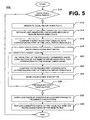
- the process for using the repair index file 400 by the client is illustrated in detail in a flowchart 500 shown in Figure 5 .
- the client uses selectively retrieved parts of the repair index file 400 to identify and repair local corrupted file section(s) 430.
- the client performs efficient repair by conceptually breaking the corrupted file into successively smaller sections while searching for the smallest unit of corruption.
- small part(s) of the remote repair index file 400 can be selectively retrieved using the standard HTTP 1.1 protocol and a "Byte Range Retrieval" method described in bttp://www.w3.org,/Protocols/rfc2616/rfc2616-sec14.html#sec14.35 .
- Boxes 512 to 526 in the flowchart 500 illustrate the repair process of isolating/identifying the corrupted areas 430 of the local file 406, retrieving the replacement part(s) 460 from the server, and repairing/correcting the corrupted areas 430 with the retrieved replacement part(s) (e.g., by replacement).
- the client generates a repair file 404 of the local corrupted file 406, at box 512.
- the process for generating the repair file 404 of the local corrupted file 406 mirrors the generation of the remote repair index file 400 illustrated in Figure 3 .
- the last generated check code section (Section k ) 450 of the remote repair index file 400 is retrieved, at box 514.
- the retrieved section 450 is then compared, at box 516, with a corresponding section 424 of the local repair file 404.
- Check codes 410 within the section 424 that differ from check codes in the section 450 are marked at box 518.
- the marked check codes 410 are used to retrieve, at box 520, part(s) 452 of previously generated section (Section k-1 ) in the remote repair index file 400.
- the retrieved part(s) 452 is then compared, at box 522, with a corresponding part(s) 412 of Section k-1 in the local repair file 404.
- Check codes 414 within the part(s) 412 that differ from check codes in the part(s) 452 are marked at box 524.
- the process repeats starting at box 520. That is, the steps of retrieving 520, comparing 522, and marking 524 are recursively repeated until part(s) of every check code sections have been examined.
- marked check codes 414 are used to retrieve, at box 520, part(s) 454 of the check code section (i.e., Section k-2 ) in the remote repair index file 400.
- the part(s) 454 retrieved in box 520 is compared, at box 522, with a corresponding part(s) 416 in Section k-2 of the local repair file 404.
- the part(s) 460 of the original file 402 in the server that corresponds to the marked check code 420 in the first section is downloaded, at box 528, to the client.
- the downloaded part(s) 460 of the original file in the server is used to replace, at box 530, the corrupted part(s) 430 of the local file 406.
- data in the local copy 406 of the original file 402 can become corrupted in several different ways.
- data bits are corrupted by being "twiddled”, “missing", “added”, or affected in any combination thereof.
- data bits are corrupted by being "twiddled", where the data bits in the corrupted file 406 are either rearranged with only bits that were in the original file 402 or rearranged with foreign bits that were not in the data bits of the original file 402.
- the same number of data bits may be added and dropped, and the lengths of the data bits in the files remain the same.
- data bits are corrupted by being "added", where the data bits in the corrupted file 406 include additional bits that were not in the original file 402.
- the number of data bits in the corrupted file 406 is more than the number of data bits in the original file 402.
- data bits are corrupted by a combination of bits being twiddled and dropped.
- the data bits of the corrupted file 406 are: (1) rearranged only with bits in the original file 402; (2) rearranged with foreign bits that were not in the data bits of the original file 402; and (3) missing bits that were in the original file 402.
- the number of data bits in the corrupted file 406 is less than the number of the data bits in the original file 402.
- data bits are corrupted by a combination of bits being twiddled and added.
- the data bits of the corrupted file 406 (1) are rearranged only with bits in the original file 402; (2) are rearranged with foreign bits that were not in the data bits of the original file 402; and/or (3) include additional bits that were not in the original file 402.
- the number of data bits in the corrupted file 406 is more than the number of the data bits in the original file 402.
- Figure 7 shows a flowchart 700 for identifying/isolating corrupted area(s) when the data bits are corrupted by being "missing", "added”, or affected in any combination thereof. Accordingly, when the size of the local corrupted file and the size of the remote original file do not match (i.e. the bits are "missing" and/or "added"), the local corrupted file is searched starting with the last of the first chain of "correct" sections, at box 702. The search moves forward one byte at a time, at box 704, using a complete original block size of data by assuming that the current block, starting from the new position on byte forward and continuing for an original block size unless the end of the file is within that space, is a "correct” block. At box 706, the check code for the assumed correct block is compared with following check codes. In an alternative implementation, the search can be performed using sub-block-size chunks. However, it must be realized that the smaller the block size, the smaller the gain in download efficiency.
- Figure 8A shows a representation of a computer system 800 and a user 802.
- the user 802 can use the computer system 800 to generate remote and/or local repair files and to use the repair files to identify and repair part(s) of the local corrupted file.
- a computer system stores and executes a repair file generating application program (a repair file generator).
- the repair file generator 815 is designed to generate remote and/or local repair files and to use the repair files to identify and repair part(s) of the local corrupted file as described above.
- Figure 8B shows a block diagram of one implementation of the computer system 800 in Figure 8A , including a repair file generator.
- the computer system 800 includes a controller 810, a memory 820, storage 830, a media device 840, a user interface 850, an input/output (I/O) interface 860, and a network interface 870. These components are interconnected by a common bus 880. Alternatively, different connection configurations can be used, such as a star pattern with the controller at the center.
- the controller 810 is a programmable processor and controls the operation of the computer system 800 and its components.
- the controller 810 loads instructions from the memory 820 or an embedded controller memory (not shown) and executes these instructions to control the system.
- the controller 810 provides a repair file generator 815 as a software system. Alternatively, this service can be implemented as separate components in the controller 810 or the computer system 800.
- the repair file generator 815 generates repair files and isolates the corrupted area(s) of the local file using the corrupted file and selected portions of the original file and remote repair file retrieved from storage 830.
- Memory 820 stores data temporarily for use by the other components of the computer system 800.
- memory 820 is implemented as RAM.
- memory 820 also includes long-term or permanent memory, such as flash memory and/or ROM.
- Storage 830 stores data temporarily or long term for use by the other components of the computer system 800, such as for storing selected portions of the original file and remote repair file retrieved from the server.
- storage 830 is a hard disk drive.
- Storage 830 stores information for use by the repair file generator 815, such as selected portions of the original file and remote repair file retrieved from the server.
- Storage 830 also stores data and data structures generated by the repair generator for future use, such as marked check codes.
- the media device 840 receives removable media and reads and/or writes data to the inserted media.
- the media device 840 is an optical disc drive.
- the user interface 850 includes components for accepting user input from a user of the computer system 800 and presenting information to the user.
- the user interface 850 includes a keyboard, a mouse, audio speakers, and a display.
- the controller 810 uses input from the user to adjust the operation of the computer system 800.
- the I/O interface 860 includes one or more I/O ports to connect to corresponding I/O devices, such as external storage or supplemental devices (e.g., a printer or a PDA).
- the ports of the I/O interface 860 include ports such as: USB ports, PCMCIA ports, serial ports, and/or parallel ports.
- the I/O interface 860 includes a wireless interface for communication with external devices wirelessly.
- the network interface 870 includes a wired and/or wireless network connection, such as an RJ-45 or "Wi-Fi" interface (802.11) supporting an Ethernet connection.
- a wired and/or wireless network connection such as an RJ-45 or "Wi-Fi" interface (802.11) supporting an Ethernet connection.
- the computer system 800 includes additional hardware and software typical of computer systems (e.g., power, cooling, operating system), though these components are not specifically shown in Figure 8B for simplicity. In other implementations, different configurations of the computer system can be used (e.g., different bus or storage configurations or a multi-processor configuration).
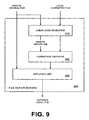
- Figure 9 show a block diagram of a file repair system 900.
- the system 900 includes a check code generator 910, a corruption identifier 920, and a replacing unit 930.
- the check code generator 910 is configured to recursively generate a sequence of sections of check codes of a remote original file and a local corrupted file.
- the check codes of the remote original file produce a remote repair file.
- the corruption identifier 920 is configured to selectively retrieve parts of a remote repair file and a remote original file, based on detected corrupted parts of the sequence of recursively generated sections of check codes of a local file, to identify corrupted parts of the local corrupted file.
- the replacing unit 930 is configured to replace the corrupted parts of the local corrupted file with the retrieved parts of the remote original file.
- the file repair system 900 could be used to update or change a version of a local file so that the system 900 can detect and selectively retrieve only the updated/changed section(s).
- the file repair system 900 will detect and selectively retrieve only the updated/changed section(s) of the remote original file while minimizing the amount of data downloaded from the remote server.
- the system can provide a list of part(s) to replace and the client can request or receive the updated parts for replacement.
- each computer includes one or more processors, one or more data-storage components (e.g., volatile or non-volatile memory modules and persistent optical and magnetic storage devices, such as hard and floppy disk drives, CD-ROM drives, and magnetic tape drives), one or more input devices (e.g., mice and keyboards), and one or more output devices (e.g., display consoles and printers).
- the computer programs include executable code that is usually stored in a persistent storage medium and then copied into memory at run-time.
- the processor executes the code by retrieving program instructions from memory in a prescribed order.
- the computer receives data from the input and/or storage devices, performs operations on the data, and then delivers the resulting data to the output and/or storage devices.
- server and “client”
- client can refer to actions and files that are "local”
- server can refer to actions and files that are "remote”.
- data within server and/or local files may be compressed.
Landscapes
- Engineering & Computer Science (AREA)
- Theoretical Computer Science (AREA)
- General Engineering & Computer Science (AREA)
- Quality & Reliability (AREA)
- Physics & Mathematics (AREA)
- General Physics & Mathematics (AREA)
- Computer Security & Cryptography (AREA)
- Information Retrieval, Db Structures And Fs Structures Therefor (AREA)
Claims (36)
- Procédé, comprenant : la génération récursive d'une séquence de sections de codes de contrôle d'un fichier corrompu local pour produire un fichier de réparation local (140) ; la génération récursive d'une séquence de sections de codes de contrôle d'un fichier original distant pour produire un fichier de réparation distant (142) ; la récupération sélective d'au moins une partie dudit fichier de réparation distant et d'au moins une partie dudit fichier original distant, sur la base de différences entre au moins une partie dudit fichier de réparation local et ladite au moins une partie dudit fichier de réparation distant, pour identifier au moins une partie corrompue dudit fichier corrompu local (146) ; et le remplacement de ladite au moins une partie corrompue dudit fichier corrompu local par ladite au moins une partie dudit fichier original distant (148) ; dans lequel
ladite séquence de sections de codes de contrôle dudit fichier corrompu local et ladite séquence de sections de codes de contrôle dudit fichier original distant comprennent une section de derniers codes de contrôle locaux générés dans une séquence temporelle et une section correspondante de derniers codes de contrôle distants générés dans une séquence temporelle, respectivement ; et
ladite récupération sélective d'au moins une partie dudit fichier de réparation distant et d'au moins une partie dudit fichier original distant comprend :la récupération de ladite section de derniers codes de contrôle distants générés ;la comparaison de ladite section de derniers codes de contrôle distants générés à ladite section correspondante de derniers codes de contrôle locaux générés ;le marquage de codes de contrôle dans ladite section de derniers codes de contrôle locaux générés qui diffèrent de ladite section de derniers codes de contrôle distants générés ;l'utilisation desdits codes de contrôle marqués pour le déplacement vers des parties de sections générées précédemment de ladite séquence temporelle de sections de codes de contrôle dudit fichier corrompu local et de ladite séquence temporelle de sections de codes de contrôle dudit fichier original distant ; la désignation desdites sections générées précédemment comme lesdits derniers codes de contrôle locaux générés et lesdits derniers codes de contrôle distants générés, respectivement ; et la répétition de ladite récupération, de ladite comparaison, dudit marquage, dudit déplacement, et de ladite désignation jusqu'à ce que ladite section de code de contrôle distant générée précédemment dans ladite séquence temporelle de sections de codes de contrôle dudit fichier original distant soit une première section de code de contrôle distant générée dans ladite séquence temporelle de sections de codes de contrôle dudit fichier original distant ; etle téléchargement de ladite au moins une partie dudit fichier original distant lorsque ladite section de code de contrôle distant précédente est ladite première section de code de contrôle distant générée dans ladite séquence temporelle de sections de codes de contrôle dudit fichier original distant, ladite au moins une partie dudit fichier original distant correspondant auxdits codes de contrôle marqués de ladite première section de code de contrôle distant générée. - Procédé selon la revendication 1, comprenant en outre la concaténation de ladite séquence de sections de codes de contrôle dudit fichier original distant pour produire ledit fichier de réparation distant.
- Procédé selon la revendication 1, dans lequel ladite génération récursive d'une séquence de sections de codes de contrôle dudit fichier corrompu local : le premier hachage d'un premier nombre d'octets dans ledit fichier corrompu local pour produire un code de contrôle ayant un second nombre d'octets, dans lequel ledit second nombre est inférieur audit premier nombre ; et la répétition dudit premier hachage jusqu'à ce que ledit fichier corrompu local ait été haché entièrement pour produire une première pluralité de codes de contrôle.
- Procédé selon la revendication 3, dans lequel ledit code de contrôle comprend un code de contrôle de redondance cyclique (CRC).
- Procédé selon la revendication 3, comprenant en outre la première concaténation de ladite première pluralité de codes de contrôle dans l'ordre dans lequel ils sont produits pour former une section particulière de ladite séquence de sections de codes de contrôle dudit fichier corrompu local.
- Procédé selon la revendication 5, dans lequel ladite section particulière est une première section de code de contrôle distant générée.
- Procédé selon la revendication 5, comprenant en outre : le second hachage dudit premier nombre d'octets dans ladite section particulière pour produire un code de contrôle ayant ledit second nombre d'octets ; et la répétition dudit second hachage jusqu'à ce que ladite section particulière ait été hachée entièrement pour produire une seconde pluralité de codes de contrôle.
- Procédé selon la revendication 7, comprenant en outre la seconde concaténation de ladite seconde pluralité de codes de contrôle dans l'ordre dans lequel ils sont produits pour former une autre section de ladite séquence de sections de codes de contrôle dudit fichier corrompu local.
- Procédé selon la revendication 8, dans lequel ladite une autre section de ladite séquence de sections est une dernière section de code de contrôle distant générée dans une séquence temporelle.
- Procédé selon la revendication 8, comprenant en outre le déplacement vers une section générée précédemment dans une séquence temporelle et la désignation de ladite section générée précédemment comme ladite section particulière, et la répétition dudit second hachage, de ladite seconde concaténation, et dudit déplacement jusqu'à ce que la longueur de ladite une autre section soit inférieure à un seuil.
- Procédé selon la revendication 10, dans lequel ledit seuil est de 2000 octets.
- Procédé selon la revendication 1, comprenant en outre l'utilisation dudit fichier de réparation local et dudit fichier de réparation distant pour localiser une première partie corrompue dudit fichier corrompu local dans une séquence physique à partir du début dudit fichier corrompu local lorsque la taille dudit fichier corrompu local ne concorde pas avec la taille dudit fichier original distant.
- Procédé selon la revendication 12, comprenant en outre la resynchronisation dudit fichier corrompu local et dudit fichier original distant en commençant par ladite première partie corrompue localisée dudit fichier corrompu local.
- Procédé selon la revendication 13, dans lequel ladite resynchronisation comprend le remplacement de données manquantes et/ou l'élimination de données ajoutées entre une dernière partie correcte avant ladite première partie corrompue et un point resynchronisé.
- Procédé selon la revendication 14, comprenant en outre le déplacement en avant depuis ladite première partie corrompue localisée d'un octet à la fois en supposant qu'une partie actuelle de codes de contrôle soit correcte ; et la comparaison dudit octet de ladite partie actuelle dudit fichier corrompu local à un octet dans ledit fichier original distant correspondant à ladite première partie corrompue localisée dudit fichier corrompu local.
- Procédé selon la revendication 15, comprenant en outre la suppression d'octets ajoutés erronément entre ladite dernière partie correcte et une partie nouvellement rencontrée dudit fichier corrompu local lorsque ladite partie nouvellement rencontrée est rencontrée lors dudit déplacement et de ladite comparaison.
- Procédé selon la revendication 15, comprenant en outre l'exécution d'une note selon laquelle au moins un bloc intermédiaire est éliminé lorsque ladite partie actuelle concorde avec un bloc physiquement plus loin qu'un bloc physique suivant.
- Système, comprenant : un premier générateur de code de contrôle (910) pour générer récursivement une séquence de sections de codes de contrôle d'un fichier corrompu local pour produire un fichier de réparation local ; un second générateur de code de contrôle pour générer récursivement une séquence de sections de codes de contrôle d'un fichier original distant pour produire un fichier de réparation distant ; un identificateur de corruption (920) pour récupérer sélectivement au moins une partie dudit fichier de réparation distant et au moins une partie dudit fichier original distant, sur la base de différences entre au moins une partie dudit fichier de réparation local et ladite au moins une partie dudit fichier de réparation distant, pour identifier au moins une partie corrompue dudit fichier corrompu local ; et une unité de remplacement (930) pour remplacer ladite au moins une partie corrompue dudit fichier corrompu local par ladite au moins une partie dudit fichier original distant ; dans lequel
ladite séquence de sections de codes de contrôle dudit fichier corrompu local et ladite séquence de sections de codes de contrôle dudit fichier original distant comprennent une section de derniers codes de contrôle locaux générés dans une séquence temporelle et une section correspondante de derniers codes de contrôle distants générés dans une séquence temporelle, respectivement ; et
ledit identificateur de corruption comprend :un récupérateur pour récupérer ladite section de derniers codes de contrôle distants générés ;un comparateur pour comparer ladite section de derniers codes de contrôle distants générés à ladite section correspondante de derniers codes de contrôle locaux générés ;une unité de marquage pour marquer des codes de contrôle dans ladite section de derniers codes de contrôle locaux générés qui diffèrent de ladite section de derniers codes de contrôle distants générés ;une unité d'itération pour utiliser lesdits codes de contrôle marqués pour le déplacement vers des parties de sections générées précédemment de ladite séquence temporelle de sections de codes de contrôle dudit fichier corrompu local et de ladite séquence temporelle de sections de codes de contrôle dudit fichier original distant ; et une unité de désignation pour désigner lesdites sections générées précédemment comme lesdits derniers codes de contrôle locaux générés et lesdits derniers codes de contrôle distants générés, respectivement ; et pour répéter les opérations de ladite récupération, de ladite comparaison, dudit marquage, dudit déplacement, et de ladite désignation jusqu'à ce que ladite section de code de contrôle distant générée précédemment dans ladite séquence temporelle de sections de codes de contrôle dudit fichier original distant soit une première section de code de contrôle distant générée dans ladite séquence temporelle de sections de codes de contrôle dudit fichier original distant ; etune unité de téléchargement pour télécharger ladite au moins une partie dudit fichier original distant lorsque ladite section de code de contrôle distant précédente est ladite première section de code de contrôle distant générée dans ladite séquence temporelle de sections de codes de contrôle dudit fichier original distant, ladite au moins une partie dudit fichier original distant correspondant auxdits codes de contrôle marqués de ladite première section de code de contrôle distant générée. - Système selon la revendication 18, comprenant en outre une unité de concaténation pour concaténer ladite séquence de sections de codes de contrôle dudit fichier original distant pour produire ledit fichier de réparation distant.
- Système selon la revendication 18, dans lequel ledit premier générateur de code contrôle comprend : une première unité de hachage pour hacher un premier nombre d'octets dans ledit fichier corrompu local pour produire un code de contrôle ayant un second nombre d'octets, dans lequel ledit second nombre est inférieur audit premier nombre, ladite première unité de hachage pour répéter ledit hachage jusqu'à ce que ledit fichier corrompu local ait été haché entièrement pour produire une première pluralité de codes de contrôle.
- Système selon la revendication 20, dans lequel ledit code de contrôle comprend un code de contrôle de redondance cyclique (CRC).
- Système selon la revendication 20, comprenant en outre une première unité de concaténation pour concaténer ladite première pluralité de codes de contrôle dans l'ordre dans lequel ils sont produits pour former une section particulière de ladite séquence de sections de codes de contrôle dudit fichier corrompu local.
- Système selon la revendication 22, dans lequel ladite section particulière est une première section de code de contrôle distant générée.
- Système selon la revendication 22, comprenant en outre : une seconde unité de hachage pour hacher ledit premier nombre d'octets dans ladite section particulière pour produire un code de contrôle ayant ledit second nombre d'octets, dans lequel ladite seconde unité de hachage répète le hachage dudit premier nombre d'octets jusqu'à ce que ladite section particulière ait été hachée entièrement pour produire une seconde pluralité de codes de contrôle.
- Système selon la revendication 24, comprenant en outre une seconde unité de concaténation pour concaténer ladite seconde pluralité de codes de contrôle dans l'ordre dans lequel ils sont produits pour former une autre section de ladite séquence de sections de codes de contrôle dudit fichier corrompu local.
- Système selon la revendication 25, dans lequel ladite une autre section de ladite séquence de sections est une dernière section de code de contrôle distant générée dans une séquence temporelle.
- Système selon la revendication 25, comprenant en outre une deuxième unité d'itération pour le déplacement vers une section générée précédemment dans une séquence temporelle et la désignation de ladite section générée précédemment comme ladite section particulière, et pour la répétition des opérations de ladite seconde unité hachage, de ladite seconde unité de concaténation, et de ladite deuxième unité d'itération jusqu'à ce que la longueur de ladite une autre section soit inférieure à un seuil.
- Système selon la revendication 27, dans lequel ledit seuil est de 2000 octets.
- Système selon la revendication 18, comprenant en outre un localisateur pour utiliser ledit fichier de réparation local et ledit fichier de réparation distant pour localiser une première partie corrompue dudit fichier corrompu local dans une séquence physique à partir du début dudit fichier corrompu local lorsque la taille dudit fichier corrompu local ne concorde pas avec la taille dudit fichier original distant.
- Système selon la revendication 29, comprenant en outre une unité de resynchronisation pour resynchroniser ledit fichier corrompu local et ledit fichier original distant en commençant par ladite première partie corrompue localisée dudit fichier corrompu local.
- Système selon la revendication 30, dans lequel ladite unité de resynchronisation comprend une unité pour remplacer des données manquantes et/ou éliminer des données ajoutées entre une dernière partie correcte avant ladite première partie corrompue et un point resynchronisé.
- Système selon la revendication 31, comprenant en outre une troisième unité d'itération pour le déplacement en avant depuis ladite première partie corrompue localisée d'un octet à la fois en supposant qu'une partie actuelle de codes de contrôle soit correcte ; et une unité de comparaison pour comparer ledit octet de ladite partie actuelle dudit fichier corrompu local à un octet dans ledit fichier original distant correspondant à ladite première partie corrompue localisée dudit fichier corrompu local.
- Système selon la revendication 32, comprenant en outre une unité de suppression pour supprimer des octets ajoutés erronément entre ladite dernière partie correcte et une partie nouvellement rencontrée dudit fichier corrompu local lorsque ladite partie nouvellement rencontrée est rencontrée lors dudit déplacement et de ladite comparaison.
- Système selon la revendication 32, comprenant en outre une unité de notation pour effectuer une note selon laquelle au moins un bloc intermédiaire est éliminé lorsque ladite partie actuelle concorde avec un bloc physiquement plus loin qu'un bloc physique suivant.
- Programme informatique contenant des instructions lisibles par ordinateur qui, lorsqu'elles sont chargées sur un ordinateur, configurent l'ordinateur pour effectuer un procédé selon l'une quelconque des revendications 1 à 17.
- Support de stockage configuré pour stocker le programme informatique selon la revendication 35 dedans ou dessus.
Applications Claiming Priority (2)
| Application Number | Priority Date | Filing Date | Title |
|---|---|---|---|
| US11/317,496 US7546492B2 (en) | 2005-12-22 | 2005-12-22 | Remotely repairing files by hierarchical and segmented cyclic redundancy checks |
| PCT/US2006/062239 WO2007073547A2 (fr) | 2005-12-22 | 2006-12-18 | Reparation a distance de fichiers par controles de redondance cyclique hierarchiques et segmentees verifications |
Publications (3)
| Publication Number | Publication Date |
|---|---|
| EP1977318A2 EP1977318A2 (fr) | 2008-10-08 |
| EP1977318A4 EP1977318A4 (fr) | 2012-04-25 |
| EP1977318B1 true EP1977318B1 (fr) | 2013-04-24 |
Family
ID=38189155
Family Applications (1)
| Application Number | Title | Priority Date | Filing Date |
|---|---|---|---|
| EP06846661.4A Active EP1977318B1 (fr) | 2005-12-22 | 2006-12-18 | Reparation a distance de fichiers par controles de redondance cyclique hierarchiques et segmentees verifications |
Country Status (4)
| Country | Link |
|---|---|
| US (1) | US7546492B2 (fr) |
| EP (1) | EP1977318B1 (fr) |
| KR (1) | KR101333417B1 (fr) |
| WO (1) | WO2007073547A2 (fr) |
Families Citing this family (18)
| Publication number | Priority date | Publication date | Assignee | Title |
|---|---|---|---|---|
| EP1533695B1 (fr) * | 2003-11-19 | 2013-08-07 | TELEFONAKTIEBOLAGET LM ERICSSON (publ) | Mise-à-jour des données dans un terminal mobile |
| KR100618379B1 (ko) * | 2005-02-23 | 2006-08-31 | 삼성전자주식회사 | 디바이스 메모리의 무결성을 원격으로 확인하는 확인장치및 그 시스템 그리고 무결성 확인 방법 |
| US10503418B2 (en) * | 2005-12-01 | 2019-12-10 | Drive Sentry Limited | System and method to secure a computer system by selective control of write access to a data storage medium |
| US9104574B2 (en) * | 2006-06-05 | 2015-08-11 | Reimage Limited | System and method for software application remediation |
| TWI325732B (en) * | 2006-07-31 | 2010-06-01 | Ind Tech Res Inst | File repair mechanism for mbms and umts network |
| US7823006B2 (en) * | 2007-05-29 | 2010-10-26 | Microsoft Corporation | Analyzing problem signatures |
| US8917646B2 (en) * | 2007-10-19 | 2014-12-23 | International Business Machines Corporation | Detecting and processing corrupted video recordings |
| US8370405B2 (en) * | 2009-01-19 | 2013-02-05 | International Business Machines Corporation | Variable-length record, corruption recovery apparatus, system, and method |
| US20110107325A1 (en) * | 2009-11-03 | 2011-05-05 | Jack Matthew | Early Detection of Errors in a Software Installation |
| US8612398B2 (en) * | 2010-03-11 | 2013-12-17 | Microsoft Corporation | Clean store for operating system and software recovery |
| US9158605B2 (en) * | 2010-12-01 | 2015-10-13 | Microsoft Technology Licensing, Llc | Method, system and device for validating repair files and repairing corrupt software |
| US8621267B2 (en) * | 2010-12-15 | 2013-12-31 | Microsoft Corporation | Extended page patching |
| US8918776B2 (en) | 2011-08-24 | 2014-12-23 | Microsoft Corporation | Self-adapting software system |
| US8925074B1 (en) * | 2012-05-22 | 2014-12-30 | Trend Micro Incorporated | Methods and apparatus for detecting abnormal computer files |
| US9152502B2 (en) | 2012-12-21 | 2015-10-06 | Microsoft Technology Licensing, Llc | Data error detection and correction using hash values |
| CN108572883B (zh) * | 2017-04-19 | 2021-06-18 | 北京金山云网络技术有限公司 | 一种数据正确性校验方法及装置 |
| US11269850B2 (en) * | 2017-09-29 | 2022-03-08 | Comcast Cable Communications, Llc | Methods and systems for repairing recorded content |
| WO2024101878A1 (fr) * | 2022-11-08 | 2024-05-16 | 삼성전자주식회사 | Procédé de récupération de métadonnées endommagées, et dispositif électronique le prenant en charge |
Family Cites Families (12)
| Publication number | Priority date | Publication date | Assignee | Title |
|---|---|---|---|---|
| WO1998047259A2 (fr) * | 1997-03-10 | 1998-10-22 | Fielder Guy L | Procede et systeme de cryptage pour fichiers |
| US6073250A (en) * | 1997-11-06 | 2000-06-06 | Luby; Michael G. | Loss resilient decoding technique |
| US6848069B1 (en) * | 1999-08-10 | 2005-01-25 | Intel Corporation | Iterative decoding process |
| IL140141A (en) * | 1999-12-14 | 2007-07-24 | Ibm | Transcoding in data communications |
| US6625754B1 (en) * | 2000-03-16 | 2003-09-23 | International Business Machines Corporation | Automatic recovery of a corrupted boot image in a data processing system |
| CA2809894C (fr) * | 2001-06-27 | 2017-12-12 | Skky Incorporated | Plate-forme de distribution de contenus de supports amelioree |
| US6836657B2 (en) * | 2002-11-12 | 2004-12-28 | Innopath Software, Inc. | Upgrading of electronic files including automatic recovery from failures and errors occurring during the upgrade |
| JP4399704B2 (ja) * | 2003-03-27 | 2010-01-20 | ソニー株式会社 | 情報処理装置および方法、プログラム、並びに記録媒体 |
| US7461319B2 (en) * | 2003-04-04 | 2008-12-02 | Sun Microsystems, Inc. | System and method for downloading files over a network with real time verification |
| US20050010916A1 (en) * | 2003-05-24 | 2005-01-13 | Hagen David A. | System for providing software application updates to multiple clients on a network |
| EP1533695B1 (fr) * | 2003-11-19 | 2013-08-07 | TELEFONAKTIEBOLAGET LM ERICSSON (publ) | Mise-à-jour des données dans un terminal mobile |
| US20080136586A1 (en) * | 2006-10-27 | 2008-06-12 | Michael Backes | Verification method and system |
-
2005
- 2005-12-22 US US11/317,496 patent/US7546492B2/en active Active
-
2006
- 2006-12-18 WO PCT/US2006/062239 patent/WO2007073547A2/fr not_active Ceased
- 2006-12-18 KR KR1020087017801A patent/KR101333417B1/ko active Active
- 2006-12-18 EP EP06846661.4A patent/EP1977318B1/fr active Active
Also Published As
| Publication number | Publication date |
|---|---|
| US20070168708A1 (en) | 2007-07-19 |
| WO2007073547A3 (fr) | 2008-08-21 |
| WO2007073547A2 (fr) | 2007-06-28 |
| JP2009521756A (ja) | 2009-06-04 |
| JP5066099B2 (ja) | 2012-11-07 |
| KR101333417B1 (ko) | 2013-11-28 |
| KR20080080399A (ko) | 2008-09-03 |
| EP1977318A2 (fr) | 2008-10-08 |
| US7546492B2 (en) | 2009-06-09 |
| EP1977318A4 (fr) | 2012-04-25 |
Similar Documents
| Publication | Publication Date | Title |
|---|---|---|
| EP1977318B1 (fr) | Reparation a distance de fichiers par controles de redondance cyclique hierarchiques et segmentees verifications | |
| KR100506785B1 (ko) | 정보의 업데이트 및 배포 시스템 및 방법 | |
| US6832373B2 (en) | System and method for updating and distributing information | |
| US7805719B2 (en) | System and method for updating and distributing information | |
| AU763524B2 (en) | Data file synchronisation | |
| JP4263477B2 (ja) | 共通デジタルシーケンスを識別するシステム | |
| US8768901B1 (en) | Method and apparatus for selectively storing blocks of data on a server | |
| US7504969B2 (en) | Locality-based stream segmentation for data deduplication | |
| US10459886B2 (en) | Client-side deduplication with local chunk caching | |
| US9917894B2 (en) | Accelerating transfer protocols | |
| US20050010916A1 (en) | System for providing software application updates to multiple clients on a network | |
| US10339124B2 (en) | Data fingerprint strengthening | |
| CN103154889A (zh) | 照明工程总线用户的并行编程和更新 | |
| JP5237661B2 (ja) | ファイル同期装置、ファイル同期方法及びファイル同期プログラム | |
| CN113590161A (zh) | 内存可控的nb-iot模组差分升级方法及系统 | |
| US10901952B2 (en) | Method for transferring a difference file | |
| US8234413B2 (en) | Partitioning a data stream using embedded anchors | |
| CN112346771B (zh) | 升级文件生成方法及装置 | |
| US6976133B1 (en) | System and method for updating devices using limited amounts of random access memory | |
| KR20060073724A (ko) | 파일의 정보를 이용하여 중복된 파일을 저장하고다운로드하는 방법 및 장치 | |
| JP5066099B6 (ja) | 階層式セグメント化巡回冗長検査による遠隔地でのファイルの修復 | |
| JP4619804B2 (ja) | 更新用データ送信システム及び送信側装置及び受信側装置及び更新用データ送信方法 | |
| Searle | A Multi-Tier Scientific Data Distribution System |
Legal Events
| Date | Code | Title | Description |
|---|---|---|---|
| PUAI | Public reference made under article 153(3) epc to a published international application that has entered the european phase |
Free format text: ORIGINAL CODE: 0009012 |
|
| 17P | Request for examination filed |
Effective date: 20080328 |
|
| AK | Designated contracting states |
Kind code of ref document: A2 Designated state(s): AT BE BG CH CY CZ DE DK EE ES FI FR GB GR HU IE IS IT LI LT LU LV MC NL PL PT RO SE SI SK TR |
|
| AX | Request for extension of the european patent |
Extension state: AL BA HR MK RS |
|
| RIN1 | Information on inventor provided before grant (corrected) |
Inventor name: MCCULLER, PATRICKSONY COR. OF AMERICA- CALIFORNIA |
|
| DAX | Request for extension of the european patent (deleted) | ||
| RBV | Designated contracting states (corrected) |
Designated state(s): DE FR GB |
|
| A4 | Supplementary search report drawn up and despatched |
Effective date: 20120323 |
|
| RIC1 | Information provided on ipc code assigned before grant |
Ipc: G06F 11/10 20060101AFI20120319BHEP |
|
| REG | Reference to a national code |
Ref country code: DE Ref legal event code: R079 Ref document number: 602006035967 Country of ref document: DE Free format text: PREVIOUS MAIN CLASS: G06F0011000000 Ipc: G06F0011100000 |
|
| GRAP | Despatch of communication of intention to grant a patent |
Free format text: ORIGINAL CODE: EPIDOSNIGR1 |
|
| RIC1 | Information provided on ipc code assigned before grant |
Ipc: G06F 11/10 20060101AFI20121022BHEP |
|
| GRAS | Grant fee paid |
Free format text: ORIGINAL CODE: EPIDOSNIGR3 |
|
| GRAA | (expected) grant |
Free format text: ORIGINAL CODE: 0009210 |
|
| AK | Designated contracting states |
Kind code of ref document: B1 Designated state(s): DE FR GB |
|
| REG | Reference to a national code |
Ref country code: GB Ref legal event code: FG4D |
|
| REG | Reference to a national code |
Ref country code: DE Ref legal event code: R096 Ref document number: 602006035967 Country of ref document: DE Effective date: 20130620 |
|
| PLBE | No opposition filed within time limit |
Free format text: ORIGINAL CODE: 0009261 |
|
| STAA | Information on the status of an ep patent application or granted ep patent |
Free format text: STATUS: NO OPPOSITION FILED WITHIN TIME LIMIT |
|
| 26N | No opposition filed |
Effective date: 20140127 |
|
| REG | Reference to a national code |
Ref country code: DE Ref legal event code: R097 Ref document number: 602006035967 Country of ref document: DE Effective date: 20140127 |
|
| REG | Reference to a national code |
Ref country code: FR Ref legal event code: PLFP Year of fee payment: 10 |
|
| REG | Reference to a national code |
Ref country code: FR Ref legal event code: PLFP Year of fee payment: 11 |
|
| REG | Reference to a national code |
Ref country code: FR Ref legal event code: PLFP Year of fee payment: 12 |
|
| P01 | Opt-out of the competence of the unified patent court (upc) registered |
Effective date: 20230515 |
|
| PGFP | Annual fee paid to national office [announced via postgrant information from national office to epo] |
Ref country code: GB Payment date: 20251229 Year of fee payment: 20 |
|
| PGFP | Annual fee paid to national office [announced via postgrant information from national office to epo] |
Ref country code: FR Payment date: 20251226 Year of fee payment: 20 |
|
| PGFP | Annual fee paid to national office [announced via postgrant information from national office to epo] |
Ref country code: DE Payment date: 20251229 Year of fee payment: 20 |