EP1978285B1 - Stufenlos verstellbares Getriebe - Google Patents
Stufenlos verstellbares Getriebe Download PDFInfo
- Publication number
- EP1978285B1 EP1978285B1 EP08251297.1A EP08251297A EP1978285B1 EP 1978285 B1 EP1978285 B1 EP 1978285B1 EP 08251297 A EP08251297 A EP 08251297A EP 1978285 B1 EP1978285 B1 EP 1978285B1
- Authority
- EP
- European Patent Office
- Prior art keywords
- rotational speed
- clutch
- continuously variable
- gear ratio
- variable transmission
- Prior art date
- Legal status (The legal status is an assumption and is not a legal conclusion. Google has not performed a legal analysis and makes no representation as to the accuracy of the status listed.)
- Active
Links
Images






Classifications
-
- F—MECHANICAL ENGINEERING; LIGHTING; HEATING; WEAPONS; BLASTING
- F16—ENGINEERING ELEMENTS AND UNITS; GENERAL MEASURES FOR PRODUCING AND MAINTAINING EFFECTIVE FUNCTIONING OF MACHINES OR INSTALLATIONS; THERMAL INSULATION IN GENERAL
- F16H—GEARING
- F16H61/00—Control functions within control units of change-speed- or reversing-gearings for conveying rotary motion ; Control of exclusively fluid gearing, friction gearing, gearings with endless flexible members or other particular types of gearing
- F16H61/66—Control functions within control units of change-speed- or reversing-gearings for conveying rotary motion ; Control of exclusively fluid gearing, friction gearing, gearings with endless flexible members or other particular types of gearing specially adapted for continuously variable gearings
- F16H61/662—Control functions within control units of change-speed- or reversing-gearings for conveying rotary motion ; Control of exclusively fluid gearing, friction gearing, gearings with endless flexible members or other particular types of gearing specially adapted for continuously variable gearings with endless flexible members
- F16H61/66254—Control functions within control units of change-speed- or reversing-gearings for conveying rotary motion ; Control of exclusively fluid gearing, friction gearing, gearings with endless flexible members or other particular types of gearing specially adapted for continuously variable gearings with endless flexible members controlling of shifting being influenced by a signal derived from the engine and the main coupling
- F16H61/66259—Control functions within control units of change-speed- or reversing-gearings for conveying rotary motion ; Control of exclusively fluid gearing, friction gearing, gearings with endless flexible members or other particular types of gearing specially adapted for continuously variable gearings with endless flexible members controlling of shifting being influenced by a signal derived from the engine and the main coupling using electrical or electronical sensing or control means
-
- B—PERFORMING OPERATIONS; TRANSPORTING
- B60—VEHICLES IN GENERAL
- B60W—CONJOINT CONTROL OF VEHICLE SUB-UNITS OF DIFFERENT TYPE OR DIFFERENT FUNCTION; CONTROL SYSTEMS SPECIALLY ADAPTED FOR HYBRID VEHICLES; ROAD VEHICLE DRIVE CONTROL SYSTEMS FOR PURPOSES NOT RELATED TO THE CONTROL OF A PARTICULAR SUB-UNIT
- B60W10/00—Conjoint control of vehicle sub-units of different type or different function
- B60W10/02—Conjoint control of vehicle sub-units of different type or different function including control of driveline clutches
-
- B—PERFORMING OPERATIONS; TRANSPORTING
- B60—VEHICLES IN GENERAL
- B60W—CONJOINT CONTROL OF VEHICLE SUB-UNITS OF DIFFERENT TYPE OR DIFFERENT FUNCTION; CONTROL SYSTEMS SPECIALLY ADAPTED FOR HYBRID VEHICLES; ROAD VEHICLE DRIVE CONTROL SYSTEMS FOR PURPOSES NOT RELATED TO THE CONTROL OF A PARTICULAR SUB-UNIT
- B60W10/00—Conjoint control of vehicle sub-units of different type or different function
- B60W10/10—Conjoint control of vehicle sub-units of different type or different function including control of change-speed gearings
- B60W10/101—Infinitely variable gearings
- B60W10/107—Infinitely variable gearings with endless flexible members
-
- B—PERFORMING OPERATIONS; TRANSPORTING
- B60—VEHICLES IN GENERAL
- B60W—CONJOINT CONTROL OF VEHICLE SUB-UNITS OF DIFFERENT TYPE OR DIFFERENT FUNCTION; CONTROL SYSTEMS SPECIALLY ADAPTED FOR HYBRID VEHICLES; ROAD VEHICLE DRIVE CONTROL SYSTEMS FOR PURPOSES NOT RELATED TO THE CONTROL OF A PARTICULAR SUB-UNIT
- B60W30/00—Purposes of road vehicle drive control systems not related to the control of a particular sub-unit, e.g. of systems using conjoint control of vehicle sub-units
- B60W30/18—Propelling the vehicle
- B60W30/18009—Propelling the vehicle related to particular drive situations
- B60W30/18027—Drive off, accelerating from standstill
-
- B—PERFORMING OPERATIONS; TRANSPORTING
- B60—VEHICLES IN GENERAL
- B60W—CONJOINT CONTROL OF VEHICLE SUB-UNITS OF DIFFERENT TYPE OR DIFFERENT FUNCTION; CONTROL SYSTEMS SPECIALLY ADAPTED FOR HYBRID VEHICLES; ROAD VEHICLE DRIVE CONTROL SYSTEMS FOR PURPOSES NOT RELATED TO THE CONTROL OF A PARTICULAR SUB-UNIT
- B60W2510/00—Input parameters relating to a particular sub-units
- B60W2510/06—Combustion engines, Gas turbines
- B60W2510/0638—Engine speed
-
- B—PERFORMING OPERATIONS; TRANSPORTING
- B60—VEHICLES IN GENERAL
- B60W—CONJOINT CONTROL OF VEHICLE SUB-UNITS OF DIFFERENT TYPE OR DIFFERENT FUNCTION; CONTROL SYSTEMS SPECIALLY ADAPTED FOR HYBRID VEHICLES; ROAD VEHICLE DRIVE CONTROL SYSTEMS FOR PURPOSES NOT RELATED TO THE CONTROL OF A PARTICULAR SUB-UNIT
- B60W2710/00—Output or target parameters relating to a particular sub-units
- B60W2710/02—Clutches
- B60W2710/021—Clutch engagement state
-
- F—MECHANICAL ENGINEERING; LIGHTING; HEATING; WEAPONS; BLASTING
- F16—ENGINEERING ELEMENTS AND UNITS; GENERAL MEASURES FOR PRODUCING AND MAINTAINING EFFECTIVE FUNCTIONING OF MACHINES OR INSTALLATIONS; THERMAL INSULATION IN GENERAL
- F16D—COUPLINGS FOR TRANSMITTING ROTATION; CLUTCHES; BRAKES
- F16D43/00—Automatic clutches
- F16D43/02—Automatic clutches actuated entirely mechanically
- F16D43/04—Automatic clutches actuated entirely mechanically controlled by angular speed
- F16D43/14—Automatic clutches actuated entirely mechanically controlled by angular speed with centrifugal masses actuating the clutching members directly in a direction which has at least a radial component; with centrifugal masses themselves being the clutching members
- F16D2043/145—Automatic clutches actuated entirely mechanically controlled by angular speed with centrifugal masses actuating the clutching members directly in a direction which has at least a radial component; with centrifugal masses themselves being the clutching members the centrifugal masses being pivoting
-
- F—MECHANICAL ENGINEERING; LIGHTING; HEATING; WEAPONS; BLASTING
- F16—ENGINEERING ELEMENTS AND UNITS; GENERAL MEASURES FOR PRODUCING AND MAINTAINING EFFECTIVE FUNCTIONING OF MACHINES OR INSTALLATIONS; THERMAL INSULATION IN GENERAL
- F16D—COUPLINGS FOR TRANSMITTING ROTATION; CLUTCHES; BRAKES
- F16D43/00—Automatic clutches
- F16D43/02—Automatic clutches actuated entirely mechanically
- F16D43/04—Automatic clutches actuated entirely mechanically controlled by angular speed
- F16D43/14—Automatic clutches actuated entirely mechanically controlled by angular speed with centrifugal masses actuating the clutching members directly in a direction which has at least a radial component; with centrifugal masses themselves being the clutching members
- F16D43/18—Automatic clutches actuated entirely mechanically controlled by angular speed with centrifugal masses actuating the clutching members directly in a direction which has at least a radial component; with centrifugal masses themselves being the clutching members with friction clutching members
-
- F—MECHANICAL ENGINEERING; LIGHTING; HEATING; WEAPONS; BLASTING
- F16—ENGINEERING ELEMENTS AND UNITS; GENERAL MEASURES FOR PRODUCING AND MAINTAINING EFFECTIVE FUNCTIONING OF MACHINES OR INSTALLATIONS; THERMAL INSULATION IN GENERAL
- F16H—GEARING
- F16H61/00—Control functions within control units of change-speed- or reversing-gearings for conveying rotary motion ; Control of exclusively fluid gearing, friction gearing, gearings with endless flexible members or other particular types of gearing
- F16H61/02—Control functions within control units of change-speed- or reversing-gearings for conveying rotary motion ; Control of exclusively fluid gearing, friction gearing, gearings with endless flexible members or other particular types of gearing characterised by the signals used
- F16H61/0202—Control functions within control units of change-speed- or reversing-gearings for conveying rotary motion ; Control of exclusively fluid gearing, friction gearing, gearings with endless flexible members or other particular types of gearing characterised by the signals used the signals being electric
- F16H61/0204—Control functions within control units of change-speed- or reversing-gearings for conveying rotary motion ; Control of exclusively fluid gearing, friction gearing, gearings with endless flexible members or other particular types of gearing characterised by the signals used the signals being electric for gearshift control, e.g. control functions for performing shifting or generation of shift signal
- F16H61/0213—Control functions within control units of change-speed- or reversing-gearings for conveying rotary motion ; Control of exclusively fluid gearing, friction gearing, gearings with endless flexible members or other particular types of gearing characterised by the signals used the signals being electric for gearshift control, e.g. control functions for performing shifting or generation of shift signal characterised by the method for generating shift signals
- F16H2061/023—Drive-off gear selection, i.e. optimising gear ratio for drive off of a vehicle
-
- F—MECHANICAL ENGINEERING; LIGHTING; HEATING; WEAPONS; BLASTING
- F16—ENGINEERING ELEMENTS AND UNITS; GENERAL MEASURES FOR PRODUCING AND MAINTAINING EFFECTIVE FUNCTIONING OF MACHINES OR INSTALLATIONS; THERMAL INSULATION IN GENERAL
- F16H—GEARING
- F16H61/00—Control functions within control units of change-speed- or reversing-gearings for conveying rotary motion ; Control of exclusively fluid gearing, friction gearing, gearings with endless flexible members or other particular types of gearing
- F16H61/02—Control functions within control units of change-speed- or reversing-gearings for conveying rotary motion ; Control of exclusively fluid gearing, friction gearing, gearings with endless flexible members or other particular types of gearing characterised by the signals used
- F16H61/0202—Control functions within control units of change-speed- or reversing-gearings for conveying rotary motion ; Control of exclusively fluid gearing, friction gearing, gearings with endless flexible members or other particular types of gearing characterised by the signals used the signals being electric
- F16H61/0204—Control functions within control units of change-speed- or reversing-gearings for conveying rotary motion ; Control of exclusively fluid gearing, friction gearing, gearings with endless flexible members or other particular types of gearing characterised by the signals used the signals being electric for gearshift control, e.g. control functions for performing shifting or generation of shift signal
- F16H61/0213—Control functions within control units of change-speed- or reversing-gearings for conveying rotary motion ; Control of exclusively fluid gearing, friction gearing, gearings with endless flexible members or other particular types of gearing characterised by the signals used the signals being electric for gearshift control, e.g. control functions for performing shifting or generation of shift signal characterised by the method for generating shift signals
- F16H2061/0232—Selecting ratios for bringing engine into a particular state, e.g. for fast warming up or for reducing exhaust emissions
-
- F—MECHANICAL ENGINEERING; LIGHTING; HEATING; WEAPONS; BLASTING
- F16—ENGINEERING ELEMENTS AND UNITS; GENERAL MEASURES FOR PRODUCING AND MAINTAINING EFFECTIVE FUNCTIONING OF MACHINES OR INSTALLATIONS; THERMAL INSULATION IN GENERAL
- F16H—GEARING
- F16H2312/00—Driving activities
- F16H2312/02—Driving off
-
- F—MECHANICAL ENGINEERING; LIGHTING; HEATING; WEAPONS; BLASTING
- F16—ENGINEERING ELEMENTS AND UNITS; GENERAL MEASURES FOR PRODUCING AND MAINTAINING EFFECTIVE FUNCTIONING OF MACHINES OR INSTALLATIONS; THERMAL INSULATION IN GENERAL
- F16H—GEARING
- F16H59/00—Control inputs to control units of change-speed- or reversing-gearings for conveying rotary motion
- F16H59/36—Inputs being a function of speed
- F16H59/38—Inputs being a function of speed of gearing elements
-
- F—MECHANICAL ENGINEERING; LIGHTING; HEATING; WEAPONS; BLASTING
- F16—ENGINEERING ELEMENTS AND UNITS; GENERAL MEASURES FOR PRODUCING AND MAINTAINING EFFECTIVE FUNCTIONING OF MACHINES OR INSTALLATIONS; THERMAL INSULATION IN GENERAL
- F16H—GEARING
- F16H61/00—Control functions within control units of change-speed- or reversing-gearings for conveying rotary motion ; Control of exclusively fluid gearing, friction gearing, gearings with endless flexible members or other particular types of gearing
- F16H61/66—Control functions within control units of change-speed- or reversing-gearings for conveying rotary motion ; Control of exclusively fluid gearing, friction gearing, gearings with endless flexible members or other particular types of gearing specially adapted for continuously variable gearings
- F16H61/662—Control functions within control units of change-speed- or reversing-gearings for conveying rotary motion ; Control of exclusively fluid gearing, friction gearing, gearings with endless flexible members or other particular types of gearing specially adapted for continuously variable gearings with endless flexible members
- F16H61/66231—Control functions within control units of change-speed- or reversing-gearings for conveying rotary motion ; Control of exclusively fluid gearing, friction gearing, gearings with endless flexible members or other particular types of gearing specially adapted for continuously variable gearings with endless flexible members controlling shifting exclusively as a function of speed
- F16H61/66236—Control functions within control units of change-speed- or reversing-gearings for conveying rotary motion ; Control of exclusively fluid gearing, friction gearing, gearings with endless flexible members or other particular types of gearing specially adapted for continuously variable gearings with endless flexible members controlling shifting exclusively as a function of speed using electrical or electronic sensing or control means
Definitions
- the present invention relates to a continuously variable transmission, and more specifically, a continuously variable transmission for transmitting power from an output shaft of a drive unit to an input shaft of a centrifugal clutch and in which a change gear ratio is controlled by a control unit.
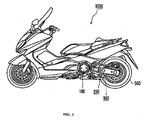
- a power unit 900 of a scooter-type motorcycle 1000 is transmitted in the following order: an engine 100 as a drive unit; a continuously variable transmission 200; a centrifugal clutch 300; a reduction gear 400; and a driving wheel 500.
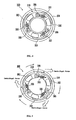
- the centrifugal clutch 300 is mounted between a hollow central axis 12 of a secondary sheave 14 of the continuously variable transmission 200 and a final gear shaft 401 extended through the central axis 12.
- the centrifugal clutch 300 includes a clutch plate 301, clutch shoes 302, clutch springs 303, and a clutch housing 304.
- the clutch plate 301 is fixed to the central axis 12 of the secondary sheave 14 of the continuously variable transmission 200.
- Pin 305 for assembling the clutch shoe 302 is provided in a protruding manner in the clutch plate 301.
- the three pins 305 are attached at regular intervals in a circumferential direction.
- one end of each clutch shoe 302 is attached to a respective pin 305 for turning relative to the clutch plate 301.
- Each clutch spring 303 is assembled so as to couple one end of one clutch shoe 302 with the other end of an adjacent clutch shoe 302 in the circumferential direction.
- Each clutch spring 303 exerts an elastic reaction force for constantly attracting respective ends of adjacent clutch shoes 302.
- the clutch housing 304 is a bowl-shaped member attached to the final gear shaft 401, which extends through the hollow central axis 12 of the secondary sheave 14, and is arranged to cover an assembly 310 of the aforementioned clutch shoe 302.
- the assembly 310 of the clutch shoe 302 When the engine 100 is not running, as shown in FIG. 4 , the assembly 310 of the clutch shoe 302 is contracted as a whole by the elastic reaction force of the clutch springs 303, and the clutch shoes 302 and the clutch housing 304 are not in contact with each other.
- the assembly 310 of the clutch shoe 302 expands as a whole with its centrifugal force against the elastic reaction force of the clutch springs 303, and the clutch shoes 302 come in contact with the clutch housing 304.
- the control unit 600 is provided with a database (a gear ratio map) for setting in advance target change gear ratios to be a control target based on a vehicle speed, a rotational speed of an engine, a throttle opening, and the like in various driving modes while a vehicle is running.
- the control unit 600 follows the gear ratio map to set the target change gear ratio becoming a control target based on the information such as the actual vehicle speed and the throttle opening.
- a startup ratio memorizing means for storing preset change gear ratios at startup according to various throttle openings is provided in JP-A-3194641 . It is disclosed that once an engine speed passes a preset value in an upward direction, a startup ratio memorizing means retrieves the change gear ratio at startup that corresponds to the throttle opening, and then the change gear ratio of the continuously variable transmission is adjusted to be the readout change gear ratio.
- the target change gear ratio of the continuously variable transmission is set according to the throttle opening at startup, that is, that the target change gear ratio of the continuously variable transmission is controlled closer to a TOP side than a maximum LOW ratio according to the throttle opening at startup. Also, according to the same patent document it is said that "because a startup ratio is set in the early stage when the engine speed starts increasing, and because a pulley 6b of a continuously variable transmission 3 is driven, as shown in a dotted line in FIG.
- a smooth start can be performed without the excessive rotational speed of the engine, occurrence of undershooting due to excessive suppression control of the excessive rotational speed of the engine, or repeating undershooting and overshooting, that is, so-called hunting" by such control ( JP-A-2006-71096 , para. 0037).
- the closest prior art document is another example of a control system for a continuously variable transmission, and is described by US20040235615 .
- This describes a motorcycle that includes a centrifugal clutch disposed between the transmission and a rear wheel.
- An electronic control unit stores an idle up use transmission map and a warmed up use transmission map and carries out control of the transmission based on the idle-up use transmission map upon starting the engine, and switches to the warmed-up use transmission map when various conditions are satisfied.
- a weighted transmission map or a warmed-up transmission map are set.
- the idle-up use transmission map is a high rotational speed map set such that the rotational speed of the engine in the idle-up state becomes highest
- the warmed-up use transmission map is a low rotational speed transmission map such that the rotational speed of the engine becomes the lowest.
- the weighted transmission map is set within a region between the idle-up use transmission map and the warmed up-use transmission map.
- a continuously variable transmission is a continuously variable transmission for transmitting power from an output shaft of a drive unit to an input shaft of a centrifugal clutch.
- a change gear ratio of the continuously variable transmission is controlled by a control unit. Then, the control unit performs a clutch engagement processing for controlling the change gear ratio of the continuously variable transmission to a TOP side in order for the centrifugal clutch to be engaged in a case where the centrifugal clutch is disengaged, and where a rotational speed of the drive unit is higher than a predetermined first rotational speed.
- a change gear ratio of the continuously variable transmission is controlled to a TOP side by a clutch engagement processing in order for a centrifugal clutch to be engaged in a case where the centrifugal clutch is disengaged and where a speed of a drive unit is higher than a predetermined rotational speed of the drive unit. Therefore, it can prevent the rotational speed of the drive unit from becoming abnormally higher than the predetermined rotational speed of the drive unit. Also, it allows to engage the centrifugal clutch in an early stage by shortening a period of time in which the centrifugal clutch stalls. Thereby, it can prevent the further deterioration of the centrifugal clutch such as abrasion of a clutch shoe.
- the clutch engagement processing is not performed in a case where the rotational speed of the drive unit does not become higher than the predetermined rotational speed of the drive unit. Therefore, when the centrifugal clutch functions normally, the continuously variable transmission functions is controlled normally, and an appropriate torque can be obtained at startup.
- the inventor considers an appropriate control method in relation to a continuously variable transmission for transmitting power from an output shaft of such a drive unit to an input shaft of a centrifugal clutch.
- a rotational speed of an engine becomes abnormally high at startup by the time the centrifugal clutch is engaged at startup.
- the clutch shoe or the centrifugal clutch is replaced with a new one.
- an event in which the rotational speed of the engine becomes abnormally high at startup by the time the centrifugal clutch is engaged, occurs in a similar fashion, for example, in a case when a foreign matter such as oil gets into a space between a clutch housing and the clutch shoe, or right after exchange to a brand-new clutch, or at startup in a cold condition, because friction between the clutch housing and the clutch shoe is unstable.
- the inventor has proposed to relieve the abnormal rise of the rotational speed of the engine by changing control of the continuously variable transmission in such a case.
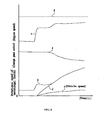
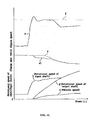
- a rotational speed "a” of an engine a rotational speed "b” of a secondary sheave of the continuously variable transmission, and a vehicle speed “c” when a scooter-type motorcycle 1000 starts moving from rest.
- a rotational speed "d” of an output shaft 401 of a centrifugal clutch 300 is calculated from the vehicle speed "c”.
- a target change gear ratio "e” of the continuously variable transmission indicates target values of control, which are respectively set by a control unit.
- the target change gear ratio "e” as a control target is set based on the information such as the vehicle speed "c" and a throttle opening, following a preset gear ratio map 601.
- a target change gear ratio of the continuously variable transmission is set in accordance with a throttle opening at startup, as described in FIG. 5 of the same patent document. Therefore, in the case where the centrifugal clutch 300 does not function normally due to the abrasion of the clutch shoes 302 in a considerable degree, as in the case shown in FIG. 7 , the centrifugal clutch 300 continues to stall for a long period of time, and there is a possible occurrence of an event in which a rotational speed of the engine 100 becomes abnormally high when the centrifugal clutch 300 is engaged.
- the clutch shoes 302 possibly wear at a faster pace. As a result, the replacement interval of the clutch shoes 302 shortens.
- the rotational speed of the engine 100 also increases abnormally. It is preferable that the rotational speed of the engine 100 be kept low to some extent at startup. Such an event is not limited to the scooter-type motorcycle, but may also occur to other types of vehicle.
- the inventor further made a study on a relationship between a condition in which the centrifugal clutch 300 is engaged and a change gear ratio of the centrifugal clutch 200.
- the centrifugal clutch 300 is engaged when an input torque 321 input to the centrifugal clutch 300 coincides with a transmission torque 322 which the centrifugal clutch 300 can transmit (C). That is, the faster the rotational speed input to the centrifugal clutch 300 becomes, the greater a centrifugal force of the centrifugal clutch 300 acting on the clutch shoes 302 becomes. Then, when the transmission torque 322 of the centrifugal clutch 300 becomes greater, and the transmission torque 322 of the centrifugal clutch 300 coincides with the input torque 322 input to the centrifugal clutch 300 (C), the centrifugal clutch 300 is engaged.
- centrifugal clutch 300 could possibly be engaged in an appropriate manner while suppressing the abnormal rise of the rotational speed of the engine 100 by controlling the continuously variable transmission 200 to the TOP side at the right time even in a case where the clutch shoes 302 have been worn in a considerable degree.
- the continuously variable transmission 200 transmits power from the output shaft of the engine 100 (drive unit) to the input shaft of the centrifugal clutch 300.
- the change gear ratio of the continuously variable transmission 200 is controlled by a control unit 600.
- the continuously variable transmission 200 as shown in FIG. 1 , is arranged in a power unit 900 of the scooter-type motorcycle 1000.
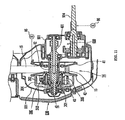
- the continuously variable transmission is a belt-type continuously variable transmission in which a belt 15 wound around a primary sheave 13 and the secondary sheave 14 each having a pair of flanges relatively movable in an axial direction.
- the belt-type continuously variable transmission 200 includes a primary shaft 11, the secondary shaft 12 (see FIG. 3 ), the primary sheave 13, the secondary sheave 14, the belt 15, a groove width adjustment mechanism 16, an actuator 17, a flange position detection sensor 19, and the control unit 600.
- the primary shaft 11 and the secondary shaft 12 are attached to a case 901 of the power unit 900 via bearings.
- the primary shaft 11 is integrally formed with a crankshaft 903, which is the output shaft of the engine 100.
- the secondary shaft 12 is disposed in parallel with the primary shaft 11 and is coupled with a drive shaft 904.
- Various members for constituting a crank journal 905, a crank web 906, a crank pin 907, a connecting rod 908, and a piston 909 are coupled with the crankshaft 903.
- the primary sheave 13 is arranged with the primary shaft 11 to which power output of the drive unit 100 is transmitted, and the secondary sheave 14 is arranged with the input shaft of the centrifugal clutch 300.
- a driven mechanism 40 for changing the groove width of the secondary sheave 14 in response to the groove width of the primary sheave 13 so that the secondary sheave 14 is capable of holding the belt 15 is included. Also included is the control unit 600 for controlling the groove width of the primary sheave 13.
- the primary sheave 13 and the secondary sheave 14 respectively include a fixed flange 31, 41 and a movable flange 32, 42 attached to a rotary shaft (the primary shaft 11 and the secondary shaft 12).
- the movable flange 42 of the secondary sheave 14 is constantly urged in a direction to narrow the groove width by a spring 43, which is disposed in a compressed state between the movable flange 42 and a clutch plate 301.
- the movement of the movable flange 32 of the primary sheave 13 is controlled by the control unit 600.
- the movable flange 42 of the secondary sheave 14 moves to a position at which a force received from the V-belt 15 in response to the movement of the movable flange 32 of the primary sheave 13 is balanced with an elastic reaction force of the spring 43.
- the fixed flanges 31, 41 and the movable flanges 32, 42 respectively form a V-groove for winding a belt thereon.
- the V-belt 15 is wound onto such V-grooves of the primary sheave 13 and the secondary sheave 14 to transmit the rotational driving force between both of the sheaves 13, 14.
- the groove widths of the V-grooves change by the respective movement of the movable flanges 32, 42 in the axial direction of the primary shaft 11 and the secondary shaft 12, and consequently, the change gear ratio of the belt-type continuously variable transmission 200 changes.
- the groove width adjustment mechanism 16 moves the movable flange 32 of the primary sheave 13 to adjust the groove width of the primary sheave 13.
- the actuator 17 drives the groove width adjustment mechanism 16.
- the groove width of the primary sheave 13 is adjusted by locomotion control on the movable flange 32 of the primary sheave 13 with the actuator 17.
- an electric motor is used as the actuator 17.
- output of the electric motor 17 is controlled by electricity supplied to the electric motor 17 based on a control signal of the control unit 600.
- the supplied electricity to the electric motor 17 is preferably controlled by a PWM (Pulse Wide Modulation) method, for example.
- PWM Pulse Wide Modulation
- the output of the electric motor 17 is controlled by changing a ON/OFF time ratio (duty ratio) of the electric motor 17 while voltage of the supplied electricity is kept constant.
- the output of the electric motor 17 is controlled by the PWM method in this embodiment; however, the control method is not limited to the PWM method as long as the output of the electric motor 17 can be suitably controlled.
- the output of the electric motor 17 may be controlled by making the voltage of the supplied electricity changeable in an analog fashion.
- the electric motor 17 is electrically connected to the control unit 600 (gearshift control unit).
- the control unit 600 is made up of an electronic control unit (ECU).
- the electronic control unit (ECU) includes a calculation section (microcomputer (MPU)) and a storage section (memory), for example.
- the control device 600 receives various vehicle information input from various sensors mounted on the vehicle.
- the movable flange 32 moves in accordance with the rotation of the electric motor 17.
- the position of the movable flange 32 is detected by the flange position detection sensor 19.
- various sensors such as a throttle position sensor 91 (TPS), an engine speed sensor 92, vehicle speed sensors 93, 94 as well as the aforementioned flange position detection sensor 19 are electrically connected to the control unit 600, and the control unit 600 receives required information from various sensors about various conditions of the scooter-type motorcycle 1000.
- the throttle position sensor 91 is a sensor for detecting an accelerator opening (throttle opening).
- the engine speed sensor 92 is a sensor for detecting the rotational speed of the engine, and, in this embodiment, is made up of a sensor for detecting the rotational speed of the crankshaft (primary shaft 11).
- the sensor 93 detects the rotational speed of the final gear shaft 401 (output shaft of the centrifugal clutch 300).
- the sensor 94 detects the rotational speed of the drive shaft 904 of the driving wheel 500.
- the centrifugal clutch 300 is attached between a hollow central axis 12 of the secondary sheave 14 of the continuously variable transmission 200 and the final gear shaft 401, which extends through such central axis 12.
- the final gear shaft 401 is coupled with the driving wheel 500 of the scooter-type motorcycle 1000 via a reduction gear 400.
- the control unit 600 includes a clutch engagement processor 615 for controlling the change gear ratio of the continuously variable transmission 200 to the TOP side in order for the centrifugal clutch 300 to be engaged in the case where the centrifugal clutch 300 is disengaged and where the rotational speed of the engine 100 (drive unit) is higher than a predetermined first rotational speed.
- the rotational speed "g" (the first rotational speed) becoming a standard for performing the clutch engagement processing is predetermined in the control unit 600.
- the change gear ratio of the continuously variable transmission 200 is controlled to the TOP side in order for the centrifugal clutch 300 to be engaged in a case where the rotational speed "a" of the engine 100 (drive unit) is higher than the predetermined rotational speed "g".
- Such clutch engagement processing can prevent the rotational speed "a” of the engine 100 from becoming abnormally higher than the predetermined rotational speed "g” in the case where the clutch shoes 302 have been worn in a considerable degree. Sequentially, the stall time of the centrifugal clutch 300 becomes shorter, and thus, the centrifugal clutch 300 is quickly engaged. Meanwhile, in the case where the centrifugal clutch 300 functions normally, as shown in FIG. 6 , the rotational speed "g" is set such that the rotational speed "a” of the engine 100 does not become higher than the predetermined rotational speed "g” at startup. Thereby, in the case where the centrifugal clutch 300 functions normally, the clutch engagement processing is not performed.
- the continuously variable transmission 200 is controlled as usual, and can obtain an appropriate amount of torque at startup.
- the control unit 600 includes a first determination section 611, a first detection section 612, a first setting section 613, a second determination section 614, and the clutch engagement processor 615.
- the control unit 600 respectively performs each designated processing according to the predetermined fixed programs.
- the first determination section 611 determines whether or not the centrifugal clutch 300 is engaged. In this embodiment, the first determination section 611 determines whether or not the centrifugal clutch 300 is engaged, based on the rotational speed input to the centrifugal clutch 300 and the rotational speed output from the centrifugal clutch 300. In other words, as shown in FIG. 6 and FIG. 12 , the first determination section 611 determines that the centrifugal clutch 300 is disengaged when the rotational speed "b" input to the centrifugal clutch 300 does not coincide with the rotational speed "d” output from the centrifugal clutch 300. On the other hand, the first determination section 611 determines that the centrifugal clutch 300 is engaged when the rotational speed "b" input to the centrifugal clutch 300 coincide with the rotational speed "d” output from the centrifugal clutch 300.
- the rotational speed input to the centrifugal clutch 300 is detected based on a sensor 95 for detecting the rotational speed of the secondary sheave 14 of the continuously variable transmission 200.
- the vehicle speed "c” is determined based on a detected value obtained by a sensor 96 for detecting the rotational speed of the drive shaft 904 of the driving wheel 500, and the rotational speed "d" of the output shaft (final gear shaft 401 in this embodiment) of the centrifugal clutch 300 is calculated in view of a reduction ratio of the reduction gear 400 from the vehicle speed "c".
- the first detection section 612 detects the rotational speed of the engine 100.
- the rotational speed of the engine 100 is detected based on the sensor 92 for detecting the rotational speed of the input shaft (primary shaft 11) of the continuously variable transmission 200.
- the first setting section 613 sets up the rotational speed "g" of the engine 100 (drive unit), which becomes a standard for starting the processing in which the change gear ratio of the continuously variable transmission 200 is controlled to the TOP side in order for the centrifugal clutch 300 to be engaged.
- the rotational speed "g” of the engine set herein is preferably stored in a storage section such as (nonvolatile memory) of the control unit 600 .
- the rotational speed "g” is preferably set in consideration of overshoot and the like, which may occur upon control, and is preferably set as a value slightly lower than the upper limit value of the rotational speed "a" of the engine at the precise startup, for example.
- the second determination section 614 determines whether or not the rotational speed "a" of the engine 100 detected in the first detection section 612 is higher than the rotational speed "g" set in the first setting section 613.
- the clutch engagement processor 615 is a control program set in the control unit 600, and performs the clutch engagement processing for controlling the change gear ratio "e" of the continuously variable transmission 200 to the TOP side in order for the centrifugal clutch 300 to be engaged in the case where the centrifugal clutch 300 is disengaged and where the rotational speed "a" of the engine 100 is higher than the predetermined rotational speed "g".
- the rotational speed "g" of the engine 100 at which the clutch engagement processing should be performed, is defined in advance in the first setting section 613. Then, the second determination section 614 determines whether or not the rotational speed "a" of the engine 100, which is detected in the first detection section 612, is higher than the rotational speed "g" set in the first setting section 613. Further, the first determination section 611 determines whether or not the centrifugal clutch 300 is engaged.
- the control unit 600 performs the clutch engagement processing 615 in the case where the centrifugal clutch 300 is determined to be disengaged based on the determination result in the first determination section 611, and where, in the second determination section 614, the rotational speed of the engine of the engine 100 is determined to be higher than the rotational speed of the engine 100 set in the first setting section 613.
- the scooter-type motorcycle 1000 is used in this embodiment. As shown in FIG. 6 , on the scooter-type motorcycle 1000, the engine 100 runs at the predetermined low rotational speed "a" in an idling state before startup. The centrifugal clutch 300 is disengaged in an idling state because the rotational speed "a" of the engine 100 is low. When the accelerator is operated at startup, the rotational speed "a" of the engine 100 becomes higher, and the centrifugal clutch 300 starts stalling.
- the clutch engagement processing 615 controls the change gear ratio of the continuously variable transmission 200 to the TOP side in order for the centrifugal clutch 300 to be engaged. If the change gear ratio of the continuously variable transmission 200 is controlled to the TOP side, the rotational speed input to the centrifugal clutch 300 becomes faster, and the centrifugal force acting on the clutch shoes 302 of the centrifugal clutch 300 becomes larger. On the contrary, the input torque input to the centrifugal clutch 300 becomes smaller. Therefore, the centrifugal clutch 300 becomes easily connectable. In addition, once the centrifugal clutch 300 becomes easily connectable, increase in the rotational speed "a" of the engine 100 can be suppressed. The engine speed does not rise sharply at startup with such control even in the case where there are aforementioned defects on the centrifugal clutch. Thereby, the torque transmitting to the driving wheel becomes further suitable, and drivability improves.
- the control unit 600 controls the change gear ratio of the continuously variable transmission 200 to the TOP side in order for the centrifugal clutch 300 to be engaged in the case where the centrifugal clutch is disengaged and where the rotational speed "a" of the engine 100 is higher than the predetermined rotational speed "g". Therefore, the centrifugal clutch 300 is engaged in an early stage even in the case where the clutch shoes 302 have been worn in a considerable degree. Because the centrifugal clutch 300 is engaged in the early stage, further abrasion of the clutch shoes 302 can be prevented or minimised. Thereby, the replacement interval of the clutch shoes 302 can be extended. Meanwhile, in the case where the centrifugal clutch 300 functions normally, as shown in FIG. 6 , the rotational speed "a" of the engine 100 does not become higher than the predetermined rotational speed "g". Therefore, the clutch engagement processing 615 is not performed, and the continuously variable transmission 200 is controlled as usual.
- control unit can automate the performance of the clutch engagement processing 615 by the determinations of the first determination section 611 and the second determination section 614.
- control unit 600 may cancel the clutch engagement processing 615 in the case where it is determined in the aforementioned first determination section 611 that the centrifugal clutch 300 is engaged, for example. In other words, in the case where the centrifugal clutch 300 is engaged, there is no necessity to keep the clutch engagement processing 615. Thus, it is preferable that the control unit 600 automatically cancel the clutch engagement processing 615. Once the centrifugal clutch 300 is engaged, the regular ordinary change gear ratio control is performed.
- the scooter-type motorcycle 1000 includes an accelerator operating means by which a rider operates the output. Also, as shown in FIG. 9 , the control unit 600 includes a target change gear ratio setting section 616 for setting the target change gear ratio based on the vehicle speed "c" and the throttle opening.
- the target change gear ratio setting section 616 stores the gear ratio map 601 which defines gear ratios of the continuously variable transmission 200 based on the vehicle information such as the vehicle speed and the throttle opening.
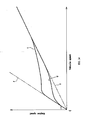
- the gear ratio map 601 shown in the FIG. 14 is set.
- the horizontal axis represents the vehicle speed
- the vertical axis represents the rotational speed of the engine.
- a theoretical relation between the vehicle speed and the rotational speed of the engine at the predetermined change gear ratio at the time when the change gear ratio of the continuously variable transmission 200 is made LOW is indicated by "r”.
- a theoretical relation between the vehicle speed and the rotational speed of the engine at the predetermined change gear ratio at the time when the change gear ratio of the continuously variable transmission 200 is made TOP is indicated by "s".
- a target rotational speed of the engine "t” in a case of accelerating at full throttle, and a target rotational speed of the engine “u” in a case of decelerating at fully closed throttle are set.
- target change gear ratio target engine speed / vehicle speed.
- the target engine speed "t” and the target engine speed "u” are respectively replaceable with the target change gear ratio based on the aforementioned relation.
- the gear ratio map 601 described herein merely shows an example.
- the target gear ratio setting section 616 initially determines a position of the vehicle speed "c" on the horizontal axis of FIG.14 based on the information of the vehicle speed "c". Next, the target gear ratio setting section 616 obtains, multiplied by vehicle speed of a predetermined coefficient in accordance with the throttle (accelerator) opening, a control target value of the rotational speed of the engine 100(target rotational speed of the engine),which is between the target rotational speed of the engine "u” for deceleration at fully closed throttle and the target rotational speed of the engine "t” for acceleration at full throttle. Then, a target change gear ratio is obtained by dividing the target rotational speed of the engine by the vehicle speed "c".
- the target rotational speed of the engine (target change gear ratio) is set to be closer to the target gear ratio for deceleration at fully closed throttle (u). Also, as the throttle opening gets larger, the target rotational speed of the engine (target change gear ratio) is set to be closer to the target gear ratio for acceleration at full throttle (t).
- the rotational speed (second rotational speed) for setting the target change gear ratio at the time of the clutch connection processing is preset in the clutch connection processor 615, and it is preferable that the target change gear ratio is set by dividing the second rotational speed by the rotational speed input to the centrifugal clutch.
- the rotational speed "g" (first rotational speed) to determine whether or not the clutch engagement processing should be performed is utilized for the second rotational speed for calculating the change gear ratio at the time of the clutch engagement processing.
- the rotational speed "g" (first rotational speed) for determining whether or not the clutch engagement processing should be performed is utilized for the second rotational speed for the clutch engagement processing; however, the second rotational speed for calculating the change gear ratio at the time of the clutch engagement processing can be set separately from the rotational speed "g" (first rotational speed) for determining whether or not the clutch engagement processing should be performed.
- the control unit 600 is provided with the target change gear ratio setting section 616 for calculating the target rotational speed of the engine based on the vehicle speed "c" and the throttle opening, and for setting the target change gear ratio by dividing the target rotational speed of the engine by the vehicle speed "c".
- the clutch engagement processor 615 sets up the target change gear ratio by utilizing the target change gear ratio setting section 616.
- the target change gear ratio setting section 616 performs processing to set the target change gear ratio for the clutch engagement processing by utilizing the predetermined rotational speed "g" for the clutch engagement processing instead of the target rotational speed of the engine, and the rotational speed "b” input to the centrifugal clutch instead of the vehicle speed "c", and by dividing the predetermined rotational speed "g” for the clutch engagement processing by the rotational speed "b” input to the centrifugal clutch at the time of the clutch engagement processing.
- the clutch engagement processor 615 sets up a target change gear ratio "e1" at the time of the clutch engagement processing by dividing the rotational speed "g” by the rotational speed "b” input to the centrifugal clutch 300, as shown in FIG. 12 .
- target change gear ratio at the time of the clutch engagement processing "e1” rotational speed "g” (second rotational speed) / rotational speed "b” of the secondary sheave)
- the rotational speed of the secondary sheave 14 detected by the sensor 95 is adopted for the rotational speed "b" input to the centrifugal clutch 300.
- the dotted line “e” in FIG. 12 represents the regular target change gear ratio, which is set based on the vehicle speed "c” and the throttle opening according to the gear ratio map 601.
- the solid line “e1” in FIG. 12 represents the target change gear ratio at the time of the clutch engagement processing, which is set by dividing the predetermined rotational speed "g" by the rotational speed "b” of the secondary sheave 14.
- the target change gear ratio setting section 616 usually controls the change gear ratio to the LOW shift while the vehicle speed "c" is low at startup. As described above, in the case where the clutch shoes 302 have been worn in a considerable degree and where the centrifugal clutch is disengaged due to the reason such as a slippery condition, as shown in FIG. 12 , the vehicle speed "c" is slow to increase. Thus, the regular target change gear ratio "e” is set to the LOW shift.
- the clutch engagement processing 615 is performed in the case where the centrifugal clutch 300 is disengaged and where the rotational speed "a" of the engine 100 is higher than the predetermined rotational speed "g".
- the target change gear ratio "e1" at the time of the clutch engagement processing is set.
- the target change gear ratio "e1" at the time of the clutch engagement processing is set by dividing the predetermined rotational speed "g” by the rotational speed "b" of the secondary sheave 14. In this case, as shown in FIG. 12 , the rotational speed "b” of the secondary sheave 14 increases in a similar manner as the actual rotational speed "a” of the engine.
- the target change gear ratio "e1" at the time of the clutch engagement processing is set to the TOP side.
- the change gear ratio is set according to the gear ratio map 601 in a regular control in which the clutch engagement processing is not performed.
- the gear ratio map 601 the change gear ratio in the LOW side is set at startup. Therefore, in the regular control, the target change gear ratio in the LOW side is set for the target change gear ratio "e" because the vehicle speed "c" is slow to increase at startup.
- the target change gear ratio "e1" at the time of clutch engagement processing is set to the TOP side compared to the target change gear ratio "e” in the regular control in the case where the clutch engagement processing is not performed.
- the target change gear ratio "e” in the case where the clutch engagement processing is not performed is calculated by calculating the target rotational speed of the engine based on the gear ratio map as described above, and by dividing the target rotational speed of the engine by the vehicle speed. In the case where the clutch is disengaged due to a reason such as the slipping clutch, the vehicle speed does not increase. Therefore, the target change gear ratio "e” in the case where the clutch engagement processing is not performed becomes higher, and the LOW ratio is set.
- the target change gear ratio "e1" at the time of the clutch engagement processing becomes lower than the target change gear ratio "e", and is set to the TOP even in the case where the clutch is slipping because the rotational speed "b" of the secondary sheave increases in comparison with the vehicle speed. Therefore, in the case where the clutch is disengaged due to the reason such as the slipping clutch, the target change gear ratio "e1" is set to the TOP ratio, which is higher than the target change gear ratio "e".
- the continuously variable transmission 200 is controlled to the TOP side, which is higher than usual, by controlling the change gear ratio of the continuously variable transmission 200 based on the target change gear ratio "e1" at the time of the clutch engagement processing.
- the centrifugal clutch 300 becomes easily engaged. Thereby, the defects such as that the centrifugal clutch 300 slips at startup are fixed, and it can prevent the engine speed from rising sharply at startup. In addition, thereby, the torque transmitted to the driving wheel becomes further suitable, and the drivability improves.
- the control unit 600 cancel the clutch engagement processing.
- the clutch engagement processing may be either cancelled or continued.
- the centrifugal clutch 300 is easily engaged if the change gear ratio is controlled at the target change gear ratio "e", which is usually set, controls. Therefore, the clutch engagement processing 615 is no longer needed to be continued, and thus, it may be cancelled.
- control unit may cancel the clutch engagement processing 615 in the case where the centrifugal clutch 300 is detected as being engaged. That is, once the centrifugal clutch 300 is engaged, the clutch engagement processing 615 may be cancelled.
- the regular change gear ratio is calculated in the target change gear ratio setting section 616 based on the vehicle speed and the throttle opening (S1).
- the first condition is that the vehicle speed is lower than the predetermined vehicle speed
- the second condition is that the centrifugal clutch 300 is disengaged
- the third condition is that the throttle is open (S2). If the determination in S2 is NO, the target change gear ratio "e", which is usually set in the target change gear ratio setting section 616, becomes the final target change gear ratio (S3).
- the determination in S2 is YES, it is determined whether or not the rotational speed of the engine 100 is higher than the predetermined rotational speed "g" (S4). If the determination in S4 is NO, that is, as shown in FIG. 6 , if the rotational speed "a" of the engine 100 is not higher than the predetermined rotational speed "g", the centrifugal clutch 300 is engaged normally; therefore, there is no necessity to perform the clutch engagement processing 615. Therefore, the regular target change gear ratio "e” becomes the final target change gear ratio (S3).
- the clutch engagement processing 615 is performed.
- the target change gear ratio "e1" at the time of the clutch engagement processing is calculated (S5).
- the target change gear ratio "e1" at the time of the clutch engagement processing is set by dividing the predetermined rotational speed "g" by the rotational speed "b" of the secondary sheave 14.
- conditions for maintaining the clutch connection processing 615 are determined (S6).
- the target change gear ratio "e1" at the time of the clutch engagement processing, which is calculated in S5 comes closer to the TOP side than the regular target change gear ratio "e” calculated in S1.
- the following formula is determined; the regular target change gear ratio "e” > the target change gear ratio "e1" at the time of the clutch engagement processing.
- the clutch engagement processing 615 is automatically performed by the determinations in S2 and S4, and the clutch engagement processing 615 is automatically cancelled by the determination in S6.
- the cancellation condition of the centrifugal clutch 300 determined in S6 is as follows; the clutch engagement processing may be cancelled either in the case where the engaging condition of the centrifugal clutch is detected or in the case when the regular target change gear ratio "e" is closer to the TOP side than the target change gear ratio "e1" at the time of the clutch engagement processing, whichever comes first.
- the control unit includes the target change gear ratio setting section for setting the target change gear ratio based on the vehicle speed and the throttle opening, and the clutch engagement processing sets up the target change gear ratio in the target change gear ratio setting section by dividing the predetermined rotational speed "g" by the rotational speed "b of the secondary sheave 14. Therefore, the change gear ratio can be shifted to the TOP side by the appropriate amount in accordance with the abnormal rise of the rotational speed "a" of the engine. Thereby, even in the case where the centrifugal clutch 300 has been worn in a considerable degree, the centrifugal clutch 300 can be appropriately engaged in the early stage.
- continuously variable transmission in accordance with an embodiment of the present invention has been described above, the continuously variable transmission in accordance with the present invention is not limited to the embodiment described above.
- the structures of the continuously variable transmission 200, the groove width adjustment mechanism 16, the flange position detection sensor 19, the control device 600 and so forth are not limited to those disclosed in the above embodiment.
- the detection of the rotational speed input to the centrifugal clutch 300 and the detection of the rotational speed output from the centrifugal clutch 300 are not limited to those disclosed in the above embodiment.
- the rotational speed input to the centrifugal clutch 300 may be detected by a sensor for detecting the rotational speed of the rotary shaft 12 provided with an assembly of the clutch shoes 302.
- the rotational speed output from the centrifugal clutch 300 may be detected by a sensor for detecting the rotational speed of the clutch housing 304.
- the above description is nothing but a single alternative example, and various modifications can be made.
- the rotational speed of the input shaft of the continuously variable transmission can also be detected by the rotational speeds of the primary sheave and the primary shaft.
- the present invention may be constructed such that, in the case where the change gear ratio of the continuously variable transmission is controlled by the control unit, the control unit is the one that performs the clutch engagement processing for controlling the change gear ratio to the TOP side in order for the centrifugal clutch to be engaged in the case where the centrifugal clutch is disengaged and where the rotational speed of the engine of the drive unit is higher than the predetermined first engine.
- the control unit is the one that performs the clutch engagement processing for controlling the change gear ratio to the TOP side in order for the centrifugal clutch to be engaged in the case where the centrifugal clutch is disengaged and where the rotational speed of the engine of the drive unit is higher than the predetermined first engine.
- a continuously variable transmission is not limited to a belt-type continuously variable transmission.
- An engine is illustrated as a drive unit; however, the drive unit is not limited to the engine but can be an electric motor, etc.
- the present invention is a continuously variable transmission for transmitting power from an output shaft of a drive unit to an input shaft of a centrifugal clutch, and is widely applicable as long as a change gear ratio of the continuously variable transmission is controlled by a control unit.
- a variety of modifications can be made for the structures of the drive unit, the continuously variable transmission, and the centrifugal clutch.
- the belt-type continuously variable transmission 200 included in a power unit of a motorcycle may be applied to various types of vehicles other than motorcycles.
- the belt-type continuously variable transmission 200 can be widely applied to a straddle-type vehicle (including a three-wheeled buggy, a four-wheeled buggy, and a snowmobile) , a scooter-type vehicle, or a small-sized vehicle such as a golf cart.
- the belt-type continuously variable transmission 200 included in a power unit is illustrated, the belt-type continuously variable transmission 200 may be provided separately from an engine.
- a continuously variable transmission in accordance with the present invention can be widely utilized for continuously variable transmissions provided to vehicles or the like.
Landscapes
- Engineering & Computer Science (AREA)
- Mechanical Engineering (AREA)
- Transportation (AREA)
- General Engineering & Computer Science (AREA)
- Chemical & Material Sciences (AREA)
- Combustion & Propulsion (AREA)
- Automation & Control Theory (AREA)
- Control Of Transmission Device (AREA)
- One-Way And Automatic Clutches, And Combinations Of Different Clutches (AREA)
- Hydraulic Clutches, Magnetic Clutches, Fluid Clutches, And Fluid Joints (AREA)
Claims (14)
- Stufenlos verstellbares Getriebe (200) für das Übertragen der Leistung von einer Abtriebswelle (11) einer Antriebseinheit (100) zu einer Antriebswelle (12) einer Fliehkraftkupplung (300), und das eine Steuereinheit (600) für das Steuern eines Gangschaltungsverhältnisses des Getriebes (200) aufweist, wobei die Steuereinheit (600) einen ersten Einstellabschnitt (613) aufweist, der die vorgegebene erste Drehzahl (g) der Antriebseinheit (100) einstellt, die zu einem Standard für das Starten des Vorganges wird, bei dem das Wechselradverhältnis des stufenlos verstellbaren Getriebes (200) zu einer TOP-Seite gesteuert wird, damit die Fliehkraftkupplung eingekuppelt wird, wobei die erste Drehzahl (g) als ein Wert etwas niedriger als der obere Grenzwert der Drehzahl der Antriebseinheit (100) beim genauen Starten eingestellt wird; und
wobei die Steuereinheit (600) ausgebildet ist, um den Einkuppelvorgang für das Steuern des Wechselradverhältnisses des stufenlos verstellbaren Getriebes (200) zur TOP-Seite durchzuführen, wo der Drehzahleingang zur Fliehkraftkupplung schneller wird und die Fliehkraft, die auf die Kupplungsbacken der Fliehkraftkupplung wirkt, größer wird, damit die Fliehkraftkupplung (300) in einem Fall eingekuppelt wird, wo:die Fliehkraftkupplung (300) ausgekuppelt ist; undeine Drehzahl der Antriebseinheit (100) höher ist als die vorgegebene erste Drehzahl. - Stufenlos verstellbares Getriebe (200) nach Anspruch 1, bei dem die Steuereinheit (600) einen ersten Ermittlungsabschnitt (611) für das Ermitteln aufweist, ob die Fliehkraftkupplung (300) eingekuppelt ist oder nicht.
- Stufenlos verstellbares Getriebe (200) nach Anspruch 2, bei dem der erste Ermittlungsabschnitt (611) ausgebildet ist, um zu ermitteln, ob die Fliehkraftkupplung (300) auf der Basis eines Drehzahleinganges in die Fliehkraftkupplung (300) und eines Drehzahlausganges aus der Fliehkraftkupplung (300) eingekuppelt ist oder nicht.
- Stufenlos verstellbares Getriebe (200) nach Anspruch 1, 2 oder 3, bei dem die Steuereinheit (600) aufweist:einen ersten Nachweisabschnitt (612) für das Nachweisen einer Drehzahl der Antriebseinheit (100); undeinen zweiten Ermittlungsabschnitt (614) für das Ermitteln, ob die im ersten Nachweisabschnitt (612) nachgewiesene Drehzahl der Antriebseinheit (100) höher ist als die erste Drehzahl, die im ersten Einstellabschnitt (613) eingestellt wird.
- Stufenlos verstellbares Getriebe (200) nach Anspruch 4, bei dem der erste Nachweisabschnitt (612) ausgebildet ist, um eine Drehzahl der Antriebseinheit (100) auf der Basis einer Drehzahl einer Antriebswelle (12) des stufenlos verstellbaren Getriebes (200) nachzuweisen.
- Stufenlos verstellbares Getriebe (200) nach einem der Ansprüche 2 bis 5, bei dem der Einkuppelvorgang rückgängig gemacht wird, wenn der erste Ermittlungsabschnitt (611) ermittelt, dass die Fliehkraftkupplung (300) eingekuppelt ist.
- Stufenlos verstellbares Getriebe (200) nach einem der vorhergehenden Ansprüche, bei dem der Einkuppelvorgang eine zweite Drehzahl vorgibt und die zweite Drehzahl durch einen Drehzahleingang zu einer Fliehkraftkupplung (300) dividiert, um ein Zielwechselradverhältnis zum Zeitpunkt des Einkuppelvorganges einzustellen.
- Stufenlos verstellbares Getriebe (200) nach Anspruch 7, bei dem die Steuereinheit (600) aufweist:einen Zielwechselradverhältnis-Einstellabschnitt (616) für das Berechnen einer Zieldrehzahl eines Motors auf der Basis einer Fahrzeuggeschwindigkeit und einer Drosselöffnung und für das Einstellen eines Zielwechselradverhältnisses durch Dividieren der Zieldrehzahl des Motors durch die Fahrzeuggeschwindigkeit,wobei der Einkuppelvorgang so eingestellt ist, dass ein Vorgang für das Einstellen eines Zielwechselradverhältnisses für den Einkuppelvorgang im Zielwechselradverhältnis-Einstellabschnitt (616) durch Nutzen der vorgegebenen zweiten Drehzahl anstelle der Zieldrehzahl des Motors und eines Drehzahleinganges zur Fliehkraftkupplung (300) anstelle der Fahrzeuggeschwindigkeit und durch Dividieren der vorgegebenen Drehzahl für den Einkuppelvorgang durch den Drehzahleingang zur Fliehkraftkupplung (300) durchgeführt wird.
- Stufenlos verstellbares Getriebe (200) nach Anspruch 7 oder 8, bei dem die erste Drehzahl für die zweite Drehzahl verwendet wird.
- Stufenlos verstellbares Getriebe (200) nach Anspruch 8 oder 9, bei dem die Steuereinheit (600) ausgebildet ist, um den Einkuppelvorgang in einem Fall rückgängig zu machen, wo ein Zielwechselradverhältnis, das im Zielwechselradverhältnis-Einstellabschnitt (616) auf der Basis einer Fahrzeuggeschwindigkeit und einer Drosselöffnung eingestellt wird, näher zu einer TOP-Seite ist als ein Zielwechselradverhältnis für den Einkuppelvorgang.
- Stufenlos verstellbares Getriebe (200) nach einem der vorhergehenden Ansprüche, bei dem die Steuereinheit (600) ausgebildet ist, um den Einkuppelvorgang rückgängig zu machen, wenn nachgewiesen wird, dass die Fliehkraftkupplung (300) eingekuppelt ist.
- Stufenlos verstellbares Getriebe (200) nach einem der vorhergehenden Ansprüche, das aufweist:eine primäre Scheibe (13) mit einem Paar Flanschen (31, 32) für eine relative Bewegung in einer axialen Richtung, wobei die primäre Scheibe (13) auf einer primären Welle (11) montiert ist, auf die die Abtriebsleistung einer Antriebswelle übertragen wird;eine sekundäre Scheibe (14) mit einem Paar Flanschen (41, 42) für eine relative Bewegung in einer axialen Richtung, wobei die sekundäre Scheibe (14) auf einer Antriebswelle (12) einer Fliehkraftkupplung montiert ist;einen Riemen (15), der so ausgebildet ist, dass er um die primäre und sekundäre Scheibe (13, 14) gewickelt ist;einen Abtriebsmechanismus (40) für das Wechseln einer Rillenbreite der sekundären Scheibe (14) entsprechend einer Rillenbreite der primären Scheibe (13), so dass die sekundäre Scheibe (14) den Riemen (15) aufnehmen kann; undeine Steuereinheit für das Steuern der Rillenbreite der primären Scheibe (13).
- Fahrzeug (1000), das ein stufenlos verstellbares Getriebe (200) nach einem der vorhergehenden Ansprüche aufweist.
- Fahrzeug (1000) nach Anspruch 13, das ein Motorrad, ein Grätschsitz-Fahrzeug, einen Motorroller oder einen Golfwagen aufweist.
Applications Claiming Priority (1)
| Application Number | Priority Date | Filing Date | Title |
|---|---|---|---|
| JP2007099818A JP5037998B2 (ja) | 2007-04-05 | 2007-04-05 | 無段変速機 |
Publications (3)
| Publication Number | Publication Date |
|---|---|
| EP1978285A2 EP1978285A2 (de) | 2008-10-08 |
| EP1978285A3 EP1978285A3 (de) | 2011-05-25 |
| EP1978285B1 true EP1978285B1 (de) | 2014-05-07 |
Family
ID=39638533
Family Applications (1)
| Application Number | Title | Priority Date | Filing Date |
|---|---|---|---|
| EP08251297.1A Active EP1978285B1 (de) | 2007-04-05 | 2008-04-03 | Stufenlos verstellbares Getriebe |
Country Status (6)
| Country | Link |
|---|---|
| US (1) | US7976429B2 (de) |
| EP (1) | EP1978285B1 (de) |
| JP (1) | JP5037998B2 (de) |
| CN (1) | CN101280843B (de) |
| ES (1) | ES2477492T3 (de) |
| TW (1) | TWI341371B (de) |
Families Citing this family (6)
| Publication number | Priority date | Publication date | Assignee | Title |
|---|---|---|---|---|
| US8022779B2 (en) * | 2009-06-09 | 2011-09-20 | Georgia Tech Research Corporation | Integrated circuit oscillators having microelectromechanical resonators therein with parasitic impedance cancellation |
| ES2717575T3 (es) * | 2014-09-19 | 2019-06-21 | Yamaha Motor Co Ltd | Sistema de control de potencia de accionamiento y vehículo equipado con un sistema de control de potencia de accionamiento |
| JP2018071552A (ja) * | 2015-02-26 | 2018-05-10 | ヤマハ発動機株式会社 | パワーユニットおよびこれを備える鞍乗型車両 |
| JP6200474B2 (ja) | 2015-10-08 | 2017-09-20 | 株式会社エフ・シー・シー | 遠心クラッチ |
| TWI632314B (zh) * | 2017-04-18 | 2018-08-11 | 彥豪金屬工業股份有限公司 | 變速器總成之換檔資訊之校正方法 |
| JP7641254B2 (ja) * | 2022-03-31 | 2025-03-06 | 本田技研工業株式会社 | ベルト式無段変速機の制御装置及び制御方法 |
Family Cites Families (12)
| Publication number | Priority date | Publication date | Assignee | Title |
|---|---|---|---|---|
| JPS59217051A (ja) * | 1983-05-23 | 1984-12-07 | Toyota Motor Corp | 車両用無段変速機の制御方法 |
| JPH0623034B2 (ja) * | 1986-01-08 | 1994-03-30 | 富士重工業株式会社 | 無段変速機の制御装置 |
| JP2517227B2 (ja) * | 1986-04-05 | 1996-07-24 | ダイハツ工業株式会社 | 無段変速機のクリ−プ力制御方法 |
| CN86208818U (zh) * | 1986-10-30 | 1988-10-05 | 宋晓海 | 自行车自动无级变速器 |
| JPH03194641A (ja) | 1989-12-25 | 1991-08-26 | Hitachi Ltd | アプリケーションプログラム共用方式 |
| JP3194641B2 (ja) * | 1993-02-24 | 2001-07-30 | 本田技研工業株式会社 | 車両用無段変速制御装置 |
| JP3709971B2 (ja) * | 2000-03-07 | 2005-10-26 | 本田技研工業株式会社 | 車両用vベルト式自動変速機 |
| JP2004340294A (ja) * | 2003-05-16 | 2004-12-02 | Suzuki Motor Corp | 自動二輪車用無段変速装置の制御装置 |
| WO2006009014A1 (ja) * | 2004-07-16 | 2006-01-26 | Yamaha Hatsudoki Kabushiki Kaisha | ベルト式無段変速機、ベルト式無段変速機の制御方法、及び鞍乗型車両 |
| JP2006071096A (ja) | 2004-08-03 | 2006-03-16 | Yamaha Motor Co Ltd | 遠心クラッチ及びその組立て方法 |
| JP4008437B2 (ja) * | 2004-08-10 | 2007-11-14 | 本田技研工業株式会社 | パワーモジュールの駆動制御装置、及び、ハイブリッド車両 |
| US7862459B2 (en) * | 2007-03-20 | 2011-01-04 | Yamaha Hatsudoki Kabushiki Kaisha | Transmission, power unit having the same, vehicle, controller for transmission, and method of controlling transmission |
-
2007
- 2007-04-05 JP JP2007099818A patent/JP5037998B2/ja active Active
-
2008
- 2008-02-29 TW TW097107229A patent/TWI341371B/zh active
- 2008-04-03 ES ES08251297.1T patent/ES2477492T3/es active Active
- 2008-04-03 EP EP08251297.1A patent/EP1978285B1/de active Active
- 2008-04-04 US US12/098,307 patent/US7976429B2/en active Active
- 2008-04-07 CN CN2008100906491A patent/CN101280843B/zh active Active
Also Published As
| Publication number | Publication date |
|---|---|
| US7976429B2 (en) | 2011-07-12 |
| CN101280843A (zh) | 2008-10-08 |
| EP1978285A3 (de) | 2011-05-25 |
| ES2477492T3 (es) | 2014-07-17 |
| TW200912164A (en) | 2009-03-16 |
| JP2008256122A (ja) | 2008-10-23 |
| EP1978285A2 (de) | 2008-10-08 |
| CN101280843B (zh) | 2013-03-20 |
| US20080248919A1 (en) | 2008-10-09 |
| TWI341371B (en) | 2011-05-01 |
| JP5037998B2 (ja) | 2012-10-03 |
Similar Documents
| Publication | Publication Date | Title |
|---|---|---|
| US7666110B2 (en) | Control system for power transmission mechanism | |
| US8131438B2 (en) | Method for controlling an automated friction clutch | |
| US7976429B2 (en) | Continuously variable transmission | |
| US5672132A (en) | Continuously variable transmission regulation process | |
| US20080183350A1 (en) | Vehicle and Controller for Vehicle and Method for Detecting Vehicle Abnormality Thereof | |
| EP1972836B1 (de) | Elektronisch geregeltes, stufenlos verstellbares Getriebe | |
| EP2131074B1 (de) | Fahrzeug mit elektronischem Riemenantrieb | |
| US5069083A (en) | Continuous speed variable transmission control apparatus | |
| KR950005757B1 (ko) | 자동발진 클러치 제어방법 | |
| US20080269012A1 (en) | Hydraulic pressure control device for continuously variable transmission | |
| CN101270806A (zh) | 变速器、其控制器和控制方法、具有其的动力单元及车辆 | |
| EP1403547A2 (de) | Kriechmoment- Steuerungsgerät | |
| JP6428706B2 (ja) | 車両の制御装置 | |
| US7354377B2 (en) | Continuously variable transmission | |
| US7189185B2 (en) | Method for operating a drive train in a motor vehicle | |
| JP4944724B2 (ja) | 傾斜センサの出力補正装置 | |
| US20070197323A1 (en) | Hydraulic pressure control device for vehicle continuously variable transmission | |
| JP5461498B2 (ja) | 油圧クラッチの初期制御値学習装置 | |
| JP2003343604A (ja) | 発進クラッチ制御装置 | |
| JP4626553B2 (ja) | 発進装置の制御装置 | |
| JP2956194B2 (ja) | 車両用自動変速機の制御方法 | |
| JP2899754B2 (ja) | 連続可変変速機の異常時制御方法 | |
| JP5307423B2 (ja) | 電子制御式無段変速機、それを備えたパワーユニット、およびそれを備えた車両 | |
| JPH0739255B2 (ja) | 連続可変変速機のライン圧制御方法 | |
| EP2843217B1 (de) | Elektronische Fahrzeugsteuerungseinheit |
Legal Events
| Date | Code | Title | Description |
|---|---|---|---|
| PUAI | Public reference made under article 153(3) epc to a published international application that has entered the european phase |
Free format text: ORIGINAL CODE: 0009012 |
|
| 17P | Request for examination filed |
Effective date: 20080417 |
|
| AK | Designated contracting states |
Kind code of ref document: A2 Designated state(s): AT BE BG CH CY CZ DE DK EE ES FI FR GB GR HR HU IE IS IT LI LT LU LV MC MT NL NO PL PT RO SE SI SK TR |
|
| AX | Request for extension of the european patent |
Extension state: AL BA MK RS |
|
| PUAL | Search report despatched |
Free format text: ORIGINAL CODE: 0009013 |
|
| AK | Designated contracting states |
Kind code of ref document: A3 Designated state(s): AT BE BG CH CY CZ DE DK EE ES FI FR GB GR HR HU IE IS IT LI LT LU LV MC MT NL NO PL PT RO SE SI SK TR |
|
| AX | Request for extension of the european patent |
Extension state: AL BA MK RS |
|
| AKX | Designation fees paid |
Designated state(s): AT BE BG CH CY CZ DE DK EE ES FI FR GB GR HR HU IE IS IT LI LT LU LV MC MT NL NO PL PT RO SE SI SK TR |
|
| GRAP | Despatch of communication of intention to grant a patent |
Free format text: ORIGINAL CODE: EPIDOSNIGR1 |
|
| RIC1 | Information provided on ipc code assigned before grant |
Ipc: F16H 61/662 20060101AFI20131219BHEP Ipc: F16H 59/38 20060101ALN20131219BHEP |
|
| INTG | Intention to grant announced |
Effective date: 20140116 |
|
| GRAS | Grant fee paid |
Free format text: ORIGINAL CODE: EPIDOSNIGR3 |
|
| GRAA | (expected) grant |
Free format text: ORIGINAL CODE: 0009210 |
|
| AK | Designated contracting states |
Kind code of ref document: B1 Designated state(s): AT BE BG CH CY CZ DE DK EE ES FI FR GB GR HR HU IE IS IT LI LT LU LV MC MT NL NO PL PT RO SE SI SK TR |
|
| REG | Reference to a national code |
Ref country code: GB Ref legal event code: FG4D |
|
| REG | Reference to a national code |
Ref country code: AT Ref legal event code: REF Ref document number: 666964 Country of ref document: AT Kind code of ref document: T Effective date: 20140515 |
|
| REG | Reference to a national code |
Ref country code: IE Ref legal event code: FG4D |
|
| REG | Reference to a national code |
Ref country code: DE Ref legal event code: R096 Ref document number: 602008032016 Country of ref document: DE Effective date: 20140618 |
|
| REG | Reference to a national code |
Ref country code: ES Ref legal event code: FG2A Ref document number: 2477492 Country of ref document: ES Kind code of ref document: T3 Effective date: 20140717 |
|
| REG | Reference to a national code |
Ref country code: AT Ref legal event code: MK05 Ref document number: 666964 Country of ref document: AT Kind code of ref document: T Effective date: 20140507 |
|
| REG | Reference to a national code |
Ref country code: NL Ref legal event code: VDEP Effective date: 20140507 |
|
| REG | Reference to a national code |
Ref country code: LT Ref legal event code: MG4D |
|
| PG25 | Lapsed in a contracting state [announced via postgrant information from national office to epo] |
Ref country code: NO Free format text: LAPSE BECAUSE OF FAILURE TO SUBMIT A TRANSLATION OF THE DESCRIPTION OR TO PAY THE FEE WITHIN THE PRESCRIBED TIME-LIMIT Effective date: 20140807 Ref country code: CY Free format text: LAPSE BECAUSE OF FAILURE TO SUBMIT A TRANSLATION OF THE DESCRIPTION OR TO PAY THE FEE WITHIN THE PRESCRIBED TIME-LIMIT Effective date: 20140507 Ref country code: FI Free format text: LAPSE BECAUSE OF FAILURE TO SUBMIT A TRANSLATION OF THE DESCRIPTION OR TO PAY THE FEE WITHIN THE PRESCRIBED TIME-LIMIT Effective date: 20140507 Ref country code: IS Free format text: LAPSE BECAUSE OF FAILURE TO SUBMIT A TRANSLATION OF THE DESCRIPTION OR TO PAY THE FEE WITHIN THE PRESCRIBED TIME-LIMIT Effective date: 20140907 Ref country code: LT Free format text: LAPSE BECAUSE OF FAILURE TO SUBMIT A TRANSLATION OF THE DESCRIPTION OR TO PAY THE FEE WITHIN THE PRESCRIBED TIME-LIMIT Effective date: 20140507 Ref country code: GR Free format text: LAPSE BECAUSE OF FAILURE TO SUBMIT A TRANSLATION OF THE DESCRIPTION OR TO PAY THE FEE WITHIN THE PRESCRIBED TIME-LIMIT Effective date: 20140808 |
|
| PG25 | Lapsed in a contracting state [announced via postgrant information from national office to epo] |
Ref country code: HR Free format text: LAPSE BECAUSE OF FAILURE TO SUBMIT A TRANSLATION OF THE DESCRIPTION OR TO PAY THE FEE WITHIN THE PRESCRIBED TIME-LIMIT Effective date: 20140507 Ref country code: LV Free format text: LAPSE BECAUSE OF FAILURE TO SUBMIT A TRANSLATION OF THE DESCRIPTION OR TO PAY THE FEE WITHIN THE PRESCRIBED TIME-LIMIT Effective date: 20140507 Ref country code: SE Free format text: LAPSE BECAUSE OF FAILURE TO SUBMIT A TRANSLATION OF THE DESCRIPTION OR TO PAY THE FEE WITHIN THE PRESCRIBED TIME-LIMIT Effective date: 20140507 Ref country code: AT Free format text: LAPSE BECAUSE OF FAILURE TO SUBMIT A TRANSLATION OF THE DESCRIPTION OR TO PAY THE FEE WITHIN THE PRESCRIBED TIME-LIMIT Effective date: 20140507 Ref country code: PL Free format text: LAPSE BECAUSE OF FAILURE TO SUBMIT A TRANSLATION OF THE DESCRIPTION OR TO PAY THE FEE WITHIN THE PRESCRIBED TIME-LIMIT Effective date: 20140507 |
|
| PG25 | Lapsed in a contracting state [announced via postgrant information from national office to epo] |
Ref country code: PT Free format text: LAPSE BECAUSE OF FAILURE TO SUBMIT A TRANSLATION OF THE DESCRIPTION OR TO PAY THE FEE WITHIN THE PRESCRIBED TIME-LIMIT Effective date: 20140908 |
|
| PG25 | Lapsed in a contracting state [announced via postgrant information from national office to epo] |
Ref country code: EE Free format text: LAPSE BECAUSE OF FAILURE TO SUBMIT A TRANSLATION OF THE DESCRIPTION OR TO PAY THE FEE WITHIN THE PRESCRIBED TIME-LIMIT Effective date: 20140507 Ref country code: DK Free format text: LAPSE BECAUSE OF FAILURE TO SUBMIT A TRANSLATION OF THE DESCRIPTION OR TO PAY THE FEE WITHIN THE PRESCRIBED TIME-LIMIT Effective date: 20140507 Ref country code: BE Free format text: LAPSE BECAUSE OF FAILURE TO SUBMIT A TRANSLATION OF THE DESCRIPTION OR TO PAY THE FEE WITHIN THE PRESCRIBED TIME-LIMIT Effective date: 20140507 Ref country code: CZ Free format text: LAPSE BECAUSE OF FAILURE TO SUBMIT A TRANSLATION OF THE DESCRIPTION OR TO PAY THE FEE WITHIN THE PRESCRIBED TIME-LIMIT Effective date: 20140507 Ref country code: SK Free format text: LAPSE BECAUSE OF FAILURE TO SUBMIT A TRANSLATION OF THE DESCRIPTION OR TO PAY THE FEE WITHIN THE PRESCRIBED TIME-LIMIT Effective date: 20140507 Ref country code: RO Free format text: LAPSE BECAUSE OF FAILURE TO SUBMIT A TRANSLATION OF THE DESCRIPTION OR TO PAY THE FEE WITHIN THE PRESCRIBED TIME-LIMIT Effective date: 20140507 |
|
| REG | Reference to a national code |
Ref country code: DE Ref legal event code: R097 Ref document number: 602008032016 Country of ref document: DE |
|
| PG25 | Lapsed in a contracting state [announced via postgrant information from national office to epo] |
Ref country code: NL Free format text: LAPSE BECAUSE OF FAILURE TO SUBMIT A TRANSLATION OF THE DESCRIPTION OR TO PAY THE FEE WITHIN THE PRESCRIBED TIME-LIMIT Effective date: 20140507 |
|
| PLBE | No opposition filed within time limit |
Free format text: ORIGINAL CODE: 0009261 |
|
| STAA | Information on the status of an ep patent application or granted ep patent |
Free format text: STATUS: NO OPPOSITION FILED WITHIN TIME LIMIT |
|
| 26N | No opposition filed |
Effective date: 20150210 |
|
| REG | Reference to a national code |
Ref country code: DE Ref legal event code: R097 Ref document number: 602008032016 Country of ref document: DE Effective date: 20150210 |
|
| PG25 | Lapsed in a contracting state [announced via postgrant information from national office to epo] |
Ref country code: SI Free format text: LAPSE BECAUSE OF FAILURE TO SUBMIT A TRANSLATION OF THE DESCRIPTION OR TO PAY THE FEE WITHIN THE PRESCRIBED TIME-LIMIT Effective date: 20140507 |
|
| PG25 | Lapsed in a contracting state [announced via postgrant information from national office to epo] |
Ref country code: LU Free format text: LAPSE BECAUSE OF FAILURE TO SUBMIT A TRANSLATION OF THE DESCRIPTION OR TO PAY THE FEE WITHIN THE PRESCRIBED TIME-LIMIT Effective date: 20150403 Ref country code: MC Free format text: LAPSE BECAUSE OF FAILURE TO SUBMIT A TRANSLATION OF THE DESCRIPTION OR TO PAY THE FEE WITHIN THE PRESCRIBED TIME-LIMIT Effective date: 20140507 |
|
| REG | Reference to a national code |
Ref country code: CH Ref legal event code: PL |
|
| REG | Reference to a national code |
Ref country code: IE Ref legal event code: MM4A |
|
| PG25 | Lapsed in a contracting state [announced via postgrant information from national office to epo] |
Ref country code: CH Free format text: LAPSE BECAUSE OF NON-PAYMENT OF DUE FEES Effective date: 20150430 Ref country code: LI Free format text: LAPSE BECAUSE OF NON-PAYMENT OF DUE FEES Effective date: 20150430 |
|
| REG | Reference to a national code |
Ref country code: FR Ref legal event code: PLFP Year of fee payment: 9 |
|
| PG25 | Lapsed in a contracting state [announced via postgrant information from national office to epo] |
Ref country code: IE Free format text: LAPSE BECAUSE OF NON-PAYMENT OF DUE FEES Effective date: 20150403 |
|
| PG25 | Lapsed in a contracting state [announced via postgrant information from national office to epo] |
Ref country code: MT Free format text: LAPSE BECAUSE OF FAILURE TO SUBMIT A TRANSLATION OF THE DESCRIPTION OR TO PAY THE FEE WITHIN THE PRESCRIBED TIME-LIMIT Effective date: 20140507 |
|
| REG | Reference to a national code |
Ref country code: FR Ref legal event code: PLFP Year of fee payment: 10 |
|
| PG25 | Lapsed in a contracting state [announced via postgrant information from national office to epo] |
Ref country code: BG Free format text: LAPSE BECAUSE OF FAILURE TO SUBMIT A TRANSLATION OF THE DESCRIPTION OR TO PAY THE FEE WITHIN THE PRESCRIBED TIME-LIMIT Effective date: 20140507 Ref country code: HU Free format text: LAPSE BECAUSE OF FAILURE TO SUBMIT A TRANSLATION OF THE DESCRIPTION OR TO PAY THE FEE WITHIN THE PRESCRIBED TIME-LIMIT; INVALID AB INITIO Effective date: 20080403 |
|
| PG25 | Lapsed in a contracting state [announced via postgrant information from national office to epo] |
Ref country code: TR Free format text: LAPSE BECAUSE OF FAILURE TO SUBMIT A TRANSLATION OF THE DESCRIPTION OR TO PAY THE FEE WITHIN THE PRESCRIBED TIME-LIMIT Effective date: 20140507 |
|
| REG | Reference to a national code |
Ref country code: FR Ref legal event code: PLFP Year of fee payment: 11 |
|
| P01 | Opt-out of the competence of the unified patent court (upc) registered |
Effective date: 20230526 |
|
| PGFP | Annual fee paid to national office [announced via postgrant information from national office to epo] |
Ref country code: DE Payment date: 20250422 Year of fee payment: 18 |
|
| PGFP | Annual fee paid to national office [announced via postgrant information from national office to epo] |
Ref country code: ES Payment date: 20250529 Year of fee payment: 18 Ref country code: GB Payment date: 20250418 Year of fee payment: 18 |
|
| PGFP | Annual fee paid to national office [announced via postgrant information from national office to epo] |
Ref country code: IT Payment date: 20250424 Year of fee payment: 18 |
|
| PGFP | Annual fee paid to national office [announced via postgrant information from national office to epo] |
Ref country code: FR Payment date: 20250424 Year of fee payment: 18 |