EP1978719B1 - Mobilkommunikationsendgerät und Verfahren zur Steuerung der Rundausgabe dafür - Google Patents
Mobilkommunikationsendgerät und Verfahren zur Steuerung der Rundausgabe dafür Download PDFInfo
- Publication number
- EP1978719B1 EP1978719B1 EP07021028A EP07021028A EP1978719B1 EP 1978719 B1 EP1978719 B1 EP 1978719B1 EP 07021028 A EP07021028 A EP 07021028A EP 07021028 A EP07021028 A EP 07021028A EP 1978719 B1 EP1978719 B1 EP 1978719B1
- Authority
- EP
- European Patent Office
- Prior art keywords
- broadcast program
- mobile communication
- communication terminal
- output
- call signal
- Prior art date
- Legal status (The legal status is an assumption and is not a legal conclusion. Google has not performed a legal analysis and makes no representation as to the accuracy of the status listed.)
- Not-in-force
Links
- 238000010295 mobile communication Methods 0.000 title claims description 59
- 238000000034 method Methods 0.000 title claims description 24
- 230000005236 sound signal Effects 0.000 description 7
- 238000010586 diagram Methods 0.000 description 4
- 238000004891 communication Methods 0.000 description 3
- 230000008901 benefit Effects 0.000 description 2
- 230000000694 effects Effects 0.000 description 1
- 239000004973 liquid crystal related substance Substances 0.000 description 1
- 230000002459 sustained effect Effects 0.000 description 1
Images


Classifications
-
- H—ELECTRICITY
- H04—ELECTRIC COMMUNICATION TECHNIQUE
- H04M—TELEPHONIC COMMUNICATION
- H04M1/00—Substation equipment, e.g. for use by subscribers
- H04M1/72—Mobile telephones; Cordless telephones, i.e. devices for establishing wireless links to base stations without route selection
- H04M1/724—User interfaces specially adapted for cordless or mobile telephones
- H04M1/72403—User interfaces specially adapted for cordless or mobile telephones with means for local support of applications that increase the functionality
-
- H—ELECTRICITY
- H04—ELECTRIC COMMUNICATION TECHNIQUE
- H04M—TELEPHONIC COMMUNICATION
- H04M1/00—Substation equipment, e.g. for use by subscribers
- H04M1/57—Arrangements for indicating or recording the number of the calling subscriber at the called subscriber's set
- H04M1/575—Means for retrieving and displaying personal data about calling party
-
- H—ELECTRICITY
- H04—ELECTRIC COMMUNICATION TECHNIQUE
- H04B—TRANSMISSION
- H04B1/00—Details of transmission systems, not covered by a single one of groups H04B3/00 - H04B13/00; Details of transmission systems not characterised by the medium used for transmission
- H04B1/38—Transceivers, i.e. devices in which transmitter and receiver form a structural unit and in which at least one part is used for functions of transmitting and receiving
- H04B1/40—Circuits
-
- H—ELECTRICITY
- H04—ELECTRIC COMMUNICATION TECHNIQUE
- H04N—PICTORIAL COMMUNICATION, e.g. TELEVISION
- H04N5/00—Details of television systems
- H04N5/76—Television signal recording
-
- H—ELECTRICITY
- H04—ELECTRIC COMMUNICATION TECHNIQUE
- H04N—PICTORIAL COMMUNICATION, e.g. TELEVISION
- H04N5/00—Details of television systems
- H04N5/76—Television signal recording
- H04N5/765—Interface circuits between an apparatus for recording and another apparatus
- H04N5/775—Interface circuits between an apparatus for recording and another apparatus between a recording apparatus and a television receiver
-
- H—ELECTRICITY
- H04—ELECTRIC COMMUNICATION TECHNIQUE
- H04W—WIRELESS COMMUNICATION NETWORKS
- H04W52/00—Power management, e.g. Transmission Power Control [TPC] or power classes
- H04W52/02—Power saving arrangements
- H04W52/0209—Power saving arrangements in terminal devices
- H04W52/0261—Power saving arrangements in terminal devices managing power supply demand, e.g. depending on battery level
- H04W52/0264—Power saving arrangements in terminal devices managing power supply demand, e.g. depending on battery level by selectively disabling software applications
-
- H—ELECTRICITY
- H04—ELECTRIC COMMUNICATION TECHNIQUE
- H04M—TELEPHONIC COMMUNICATION
- H04M1/00—Substation equipment, e.g. for use by subscribers
- H04M1/72—Mobile telephones; Cordless telephones, i.e. devices for establishing wireless links to base stations without route selection
- H04M1/724—User interfaces specially adapted for cordless or mobile telephones
- H04M1/72469—User interfaces specially adapted for cordless or mobile telephones for operating the device by selecting functions from two or more displayed items, e.g. menus or icons
-
- Y—GENERAL TAGGING OF NEW TECHNOLOGICAL DEVELOPMENTS; GENERAL TAGGING OF CROSS-SECTIONAL TECHNOLOGIES SPANNING OVER SEVERAL SECTIONS OF THE IPC; TECHNICAL SUBJECTS COVERED BY FORMER USPC CROSS-REFERENCE ART COLLECTIONS [XRACs] AND DIGESTS
- Y02—TECHNOLOGIES OR APPLICATIONS FOR MITIGATION OR ADAPTATION AGAINST CLIMATE CHANGE
- Y02D—CLIMATE CHANGE MITIGATION TECHNOLOGIES IN INFORMATION AND COMMUNICATION TECHNOLOGIES [ICT], I.E. INFORMATION AND COMMUNICATION TECHNOLOGIES AIMING AT THE REDUCTION OF THEIR OWN ENERGY USE
- Y02D30/00—Reducing energy consumption in communication networks
- Y02D30/70—Reducing energy consumption in communication networks in wireless communication networks
Definitions
- the present invention relates to a mobile communication terminal, and more particularly, to a mobile communication terminal and method of controlling a broadcast output thereof.
- the present invention is suitable for a wide scope of applications, it is particularly suitable for controlling the broadcast output in case of receiving a call signal in the course of viewing a broadcast program.
- a mobile communication terminal moves around within a mobile communication service area to perform a phone call operation with a normal phone subscriber or another mobile communication terminal, mobile management for managing personal information, and information transaction with a personal computer.
- a mobile communication terminal is provided with various functions such as a broadcast receiving function. So, a user is able to view such a broadcast program as a movie, news, a drams, a sports game, and the like using the mobile communication terminal having the broadcast receiving function.
- the mobile communication terminal receives a call signal in the course of a broadcast viewing, it may have a technical difficulty in handling an output of the currently viewed broadcast program. So, many efforts have been made to research and develop a method of controlling the output of the currently viewed broadcast program in case that a call signal is received in the course of the broadcast viewing.
- Document US 2007/0183744 discloses a mobile terminal having a broadcast receiving function, wherein even when reception of an incoming call interrupts playback of a broadcast being received, all remaining contents of the broadcast including an interrupted part can be played after the call has ended.
- the present invention is directed to a mobile communication terminal and method of controlling a broadcast output thereof that substantially obviate one or more problems due to limitations and disadvantages of the related art.
- FIG. 1 is a flowchart of a method of controlling a broadcast output in a mobile communication terminal according to one exemplary embodiment of the present invention
- FIG. 2 is a block diagram of a mobile communication terminal according to one exemplary embodiment of the present invention.
- FIGs. 3 to 6 are diagrams to explain examples of a method of controlling a broadcast output in a mobile communication terminal in FIG. 1 ;
- FIG. 7 is a flowchart of a method of controlling a broadcast output in a mobile communication terminal according to a preferred embodiment of the present invention.
- FIGs. 8 to 10 are diagrams to explain examples of a method of controlling a broadcast output in a mobile communication terminal in FIG. 7 .
- a mobile communication terminal described in the specification can include an electronic device portable by a user.
- the electronic device can be, but is not limited to, a mobile phone, a digital broadcast terminal, an MP3 player, a PDA, (personal digital assistant), a PMP (portable multimedia player), a smart device, a laptop computer, or the like.
- FIG. 1 is a flowchart of a method of controlling a broadcast output in a mobile communication terminal according to one exemplary embodiment of the present invention
- FIG. 2 is a block diagram of a mobile communication terminal according to one exemplary embodiment of the present invention.
- the method of FIG. 1 is implemented by the mobile communication terminal 100, but can be implemented by other suitable device.
- a mobile communication terminal 100 includes a control unit 110, a wireless communication unit 120, an output unit 130, an input unit 140, and a storage unit 150.
- the mobile communication terminal 100 shown in FIG. 2 is just one exemplary embodiment of the present invention and does not put limitation on the present invention. Namely, to configure the mobile communication terminal of the present invention, the elements shown in the drawing can be omitted in part or new element(s) can be added according to implementation of the present invention. For instance, the mobile communication terminal 100 can include other components. All components of the mobile communication terminal 100 are operatively coupled and configured.
- the mobile communication terminal 100 can receive a broadcast signal including broadcast programs, related data (e.g., program guidance information, or information about the programs, etc.), etc.
- the received broadcast program is outputted via the output unit 130 of the mobile communication terminal 100 (S10).
- the output unit 130 includes a display unit 131 for outputting a video signal and an audio output unit 132 (e.g., speaker) for outputting an audio signal.
- the display unit 131 can include one or more screens, which can be one of LCD (liquid crystal display), PDP (plasma display panel), CRT (cathode ray tube), etc.
- Such screen(s) can be a touch screen through which the user can enter the user's input by touching the surface of the screen, and thus the display unit 131 can function as an input unit.
- the mobile communication terminal 100 can receive the broadcast program via a channel assigned according to a frequency domain. And, the signal reception can be carried out via the wireless communication unit 120.
- the received broadcast program can be outputted via the output unit 130.
- a user is able to view the received broadcast program via the output unit 130, e.g., the display unit 131 and/or the audio output unit 132.
- a call signal can be received from a correspondent (another) mobile communication terminal referred to herein as the terminal X (S20).
- the user of the mobile communication terminal 100 is able to decide whether to perform a call connection according to the call signal from the terminal X or reject the call connection. This decision can be made through a key manipulation of the input unit 140 by the user and according to this decision, the mobile communication terminal 100 is able to perform a call connection or a call connection rejection. In this case, the user is also able to decide whether to end or sustain the outputted broadcast program.
- the above-explained key signal input can be carried out using a shortcut key.
- the shortcut key can be provided to the input unit 140 for the convenience of key signal manipulation.
- the input unit 140 can include a keypad, a touch pad, a touch screen, or the like according to a configuration of the mobile communication terminal 100. In particular, if the input unit 140 includes the touch screen, the key manipulation of the input unit 140 can be carried out according to the way that the display unit 131 is touched.
- control unit 110 in case of receiving a key signal relating to a broadcast program end for ending the broadcast program that is being currently displayed/outputted on/through the display unit 131 and/or audio output unit 132, the control unit 110 is able to end the outputting of the currently outputted broadcast program (S30).
- a corresponding end time can be decided as well.
- the user or the mobile communication terminal 100 can decide whether to end the outputting of the broadcast program before or after the completion of the call connection.
- the control unit 110 can display an image, as shown in (a) of FIG. 3 , on the display unit 131.
- an image, as shown in (b) of FIG. 3 for terminating the broadcast program output, for terminating the call, or for terminating the broadcast program and the call can be displayed.
- selectable menu items such as 'Broadcast end' (broadcast program output end), 'Call end' (call connection rejection), and 'Complete end' (broadcast program output end and call connection rejection) are displayed on the screen of the mobile communication terminal 100.
- At least one of the broadcast program output end and the call connection rejection can be selected. For instance, if the 'Broadcast end' corresponding to 'No.2' is selected by the user, the broadcast program that is currently being outputted on the output unit 130 is ended and the call connection according to the call signal are executed, as shown in (c) of FIG. 3 .
- FIG. 4 shows a method of ending the outputting of a broadcast program after the completion of a call connection according to an exemplary embodiment of the present invention.
- the control unit 110 is able to execute a call connection as shown in (a) of FIG. 4 .
- an image e.g., a menu for ending the broadcast program output can be displayed
- an image e.g., a menu for ending the broadcast program output can be displayed
- selectable items such as 'Broadcast end' (broadcast program output end), 'Call end' (call connection rejection), and 'Complete end' (broadcast program output end and call connection rejection) are displayed on the screen of the mobile terminal 100.
- the control unit 110 is able to end the currently outputted broadcast program and/or the call connection.
- the specific situation there is a case that a prescribed time has passed from a call connection, a case that the battery of the mobile communication terminal 100 remains below a prescribed quantity, a case that the broadcast signal reception strength of the mobile communication terminal 100 is reduced below a prescribed strength, or the like.
- control unit 110 enables the user to recognize that the specific situation has taken place. Having recognized the situation, the user can input to end the currently outputted broadcast program and/or the current call connection.
- the control unit 110 is able to receive and implement the input of a key signal for the broadcast program output end and/or the call connection end.
- control unit 110 itself is able to automatically execute the broadcast program output end and/or the call connection end as needed.
- a method of enabling a user to recognize the specific situation can exist in various ways.
- an image e.g., menu
- a broadcast program output end and/or a call connection end is displayed on the display unit 131. So, the user is able to recognize the specific situation. This example is shown in FIG. 5 .
- the nature of the specific situation e.g., 'low battery'
- the control unit 110 can control the image shown in FIG. 5 to be displayed before a call connection.
- a user can be informed of the specific situation occurrence by outputting an audio signal.
- an audio signal a voice or alarm sound for announcing the situation occurrence and/or the nature of the specific situation can be used.
- the user can be informed of the specific situation occurrence via other means such as vibration. That is, the user can be notified of the occurrence of the specific situation and/or what the specific situation is via various ways, which the user can set according to the user's preference.
- FIG. 6 shows an example where a broadcast program output is ended if a mobile communication terminal moves away into a shadow area or an area having a weak broadcast reception strength according to an embodiment of the present invention.
- a mobile communication terminal e.g., the mobile terminal 100
- an image for 'Out of service area is displayed on the display unit 131 as shown in (b).
- a currently outputted broadcast program can be ended according to a user's selection or automatically as shown in (c) and (d) of FIG. 6 .
- the mobile terminal 100 if a call signal is received in the course of a broadcast program output, the mobile terminal 100 is able to select one of a broadcast end, a call end, and a broadcast reserve (reservation such as recording the currently outputted broadcast). This can be executed according to the call signal while the call is connected. And, a prescribed function can be executed in correspondence to the selection of one of the broadcast end, call end and broadcast reserve.
- the mobile communication terminal 100 is able to inform a user of the occurrence of a specific situation for the selection.
- a specific situation there is a case that a prescribed time has passed from a call connection, a case that a battery of the mobile communication terminal 100 remains below a prescribed quantity, a case that a broadcast signal reception strength of the mobile communication terminal 100 is reduced below a prescribed strength, or the like.
- a method of informing a user of the specific situation occurrence can exist in various ways as discussed above. For instance, if the specific situation takes place, the control unit 110 is able to display an image for selecting one of the call end, call reserve (e.g., call taking, call waiting, etc.), and the broadcast program output end on the display unit 131. And, the user can be informed of the specific situation occurrence from the outputted audio signal. As mentioned above, an example of the audio signal can be a voice or alarm sound for announcing the situation occurrence. Moreover, the user can be informed of the specific situation occurrence via vibration.
- FIG. 7 is a flowchart of a method of controlling a broadcast output in a mobile communication terminal according to a preferred embodiment of the present invention. The method of FIG. 7 is discussed below as being implemented in the mobile communication terminal 100 as an example only, but can be implemented in other terminals.
- the mobile communication terminal 100 receives a broadcast signal including a broadcast program, and the received broadcast program is outputted via the output unit 130 of the mobile communication terminal 100 (S110).
- the reception of the broadcast program can be carried out by the wireless communication unit 120.
- the received broadcast program is outputted via the output unit 130.
- a call signal can be received from a correspondent mobile communication terminal X (S120).
- the user is able to decide whether to execute a call connection according to the call signal or reject the call connection. And, this can be carried out by a key manipulation of the input unit 140.
- the control unit 110 controls the output unit 130 to be able to give a pause to the broadcast program output.
- the control unit 110 is able to store or record the received broadcast program in the storage unit 150 from the timing point (pause point) at which the received program has been paused (S130). This is to enable a user to view the stored program later, if desired, by storing the broadcast program received after the pause.
- the pause of the received broadcast program output and the recording of the broadcast program from the pause point can be simultaneously and/or automatically carried out.
- the control unit 110 is able to establish a call connection according to the received call signal (S140).
- the present invention can include the simultaneous executions of both steps 5130 and 5140.
- step S130 can be executed as soon as the call connection is established.
- steps S130 or S140 can be executed using a shortcut key of the input unit 140.
- the 'broadcast program output delay mode' means a function or status wherein both a broadcast program output pause and a broadcast program recording can be simultaneously carried out.
- step S130 after the call signal is received as shown in (a) of FIG. 8 , the control unit 110 is able to display at least one of a time available for storing the broadcast program and the remaining quantity of the battery of the mobile communication terminal, which is shown in (b) of FIG. 8 . Then a call image is displayed on the screen of the mobile terminal 100 as shown in (c) of FIG. 8 .
- the time available for storing the broadcast program can indicate the current available storage space of the storage unit 150 or the time length (e.g., in minutes) of the broadcast program which can be stored in the storage unit 150. Based on this indication, the user can vary the length of the user's call according to the indication, if desired.
- the time available for storing the broadcast program and the remaining battery quantity of the mobile communication terminal can be indicated by outputting audio signals.
- the audio signals can be outputted via the audio output unit 132.
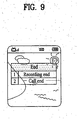
- a popup window for selecting at least one of the broadcast program storage end and the call connection end can be displayed. This example is shown in FIG. 9 .
- 'Recording end' means the broadcast program storage end.
- the control unit 110 is able to continue to play the broadcast program (S150, S160).
- the played broadcast program includes the stored broadcast program or a real-time received broadcast program.
- the outputting of the broadcast program is resumed by reproducing the stored broadcast program from the storage unit 150 or reproducing a received broadcast program in real time, or a combination thereof.
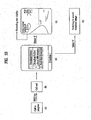
- control unit 110 is able to display an item for selecting one of the two broadcast programs (the stored broadcast program and the real-time received broadcast program) on the display unit 131. This example is shown in FIG. 10 .
- an image for a broadcast selection is displayed on the display unit 131 as shown in (c) of FIG. 10 . If 'No. 1' is selected, the stored broadcast program is played back via the output unit 130 as shown in (d) of FIG. 10 . If 'No. 2' is selected, the real-time received broadcast program is played via the output unit 130 as shown in (e) of FIG. 10 .
- the corresponding play speed can be adjusted.
- control unit 110 can erase the stored broadcast program from the storage unit 150 in the order in which the broadcast program is outputted. For instance, once the stored broadcast program is played back, it may be unnecessary to keep the stored broadcast program in the mobile communication terminal 100 and thus, the stored broadcast program can be removed/erased.
- Step S160 can be executed if a broadcast program output request is made or as soon as the call connection ends.
- the mobile terminal 100 can be configured to display at least one menu or button for making the selection(s) and/or settings discussed herein.
- an image or menu can be displayed on the screen of the mobile terminal for generating the specific situation occurrence and/or the nature of the specific situation either audibly or through vibration.
- the present invention provides the following effects or advantages.
- the present invention is able to pause the corresponding broadcast output and record the corresponding broadcast program from the pause point for reproduction at a later time.
Landscapes
- Engineering & Computer Science (AREA)
- Signal Processing (AREA)
- Computer Networks & Wireless Communication (AREA)
- Multimedia (AREA)
- Human Computer Interaction (AREA)
- Telephone Function (AREA)
- Mobile Radio Communication Systems (AREA)
- Two-Way Televisions, Distribution Of Moving Picture Or The Like (AREA)
Claims (10)
- Verfahren zum Steuern einer Sendeausgabe in einem Mobilkommunikationsendgerät, das umfasst:Empfangen eines Anrufsignals im Verlauf der Ausgabe eines Sendeprogramms (S110, S120);als Reaktion auf das empfangene Anrufsignal, Anhalten der Sendeprogrammausgabe und Speichern des Sendeprogramms ab einem Pausenpunkt (S130); undAusgeben des gespeicherten Sendeprogramms oder eines in Echtzeit empfangenen Sendeprogramms (S160), dadurch gekennzeichnet, dass das Verfahren weiterhin umfasst:automatisches Anzeigen eines Popup-Fensters zum Auswählen, wenn eine Akkumenge des Mobilkommunikationsendgeräts unter ein bestimmtes Mengenniveau fällt, während die Anrufverbindung gemäß dem empfangenen Anrufsignal erstellt wird und gleichzeitig das Speichern des Sendeprogramms durchgeführt wird, eines von dem Beenden der Sendeprogrammspeicherung und dem Beenden des Anrufsignalempfangs,wobei der Ausgabeschritt des Sendeprogramms ausgeführt wird, wenn eine Ausgabeanforderung für das Sendeprogramm nach einem Ende der gemäß dem Anrufsignal erstellten Anrufverbindung erfolgt.
- Verfahren nach Anspruch 1, wobei der Speicherungsschritt des Sendeprogramms zusammen mit der Anrufverbindung gemäß dem Anrufsignal ausgeführt wird, wenn ein bestimmter Modus ausgewählt ist.
- Verfahren nach Anspruch 1, wobei, wenn das gespeicherte Sendeprogramm an oder nach einem Pausenpunkt ausgegeben wird, eine Ausgabegeschwindigkeit des Sendeprogramms variiert werden kann.
- Verfahren nach Anspruch 1, wobei der Speicherungsschritt des Sendeprogramms umfasst:Anzeigen von wenigstens einem einer verfügbaren Zeit zum Speichern des Sendeprogramms und einer restlichen Akkumenge des Mobilkommunikationsendgeräts.
- Verfahren nach Anspruch 1, wobei der Ausgabeschritt des Sendeprogramms umfasst:wenn das gespeicherte Sendeprogramm aus einem Speicherbereich ausgegeben wird, Löschen des gespeicherten Sendeprogramms aus dem Speicherbereich.
- Mobilkommunikationsendgerät (100), das umfasst:einen Empfänger (120), der dazu ausgebildet ist, ein Anrufsignal zu empfangen, während das Mobilkommunikationsendgerät ein Sendeprogramm ausgibt;einen Controller (110), der dazu ausgebildet ist, die Ausgabe des Sendeprogramms anzuhalten und das Sendeprogramm ab einem Pausenpunkt als Reaktion auf das empfangene Anrufsignal zu speichern; undeine Ausgabeeinheit (130), die dazu ausgebildet ist, das gespeicherte Sendeprogramm oder ein in Echtzeit empfangenes Sendeprogramm auszugeben, dadurch gekennzeichnet, dass der Controller weiterhin dazu ausgebildet ist:automatisch ein Popup-Fenster anzuzeigen zum Auswählen, wenn eine Akkumenge des Mobilkommunikationsendgeräts unter ein bestimmtes Mengenniveau fällt, während die Anrufverbindung gemäß dem empfangenen Anrufsignal erstellt wird und gleichzeitig das Speichern des Sendeprogramms durchgeführt wird, eines von dem Beenden der Sendeprogrammspeicherung und dem Beenden des Anrufsignalempfangs, unddie Sendeprogrammausgabe auszugeben, wenn eine Ausgabeanforderung für das Sendeprogramm nach einem Ende der gemäß der Anrufsignalausgabe erstellten Anrufverbindung erfolgt.
- Mobilkommunikationsendgerät nach Anspruch 6, wobei der Controller weiterhin dazu ausgebildet ist, das Sendeprogramm zusammen mit der Anrufverbindung gemäß dem Anrufsignal zu speichern, wenn ein bestimmter Modus ausgewählt ist.
- Mobilkommunikationsendgerät nach Anspruch 6, wobei, wenn das gespeicherte Sendeprogramm an oder nach einem Pausenpunkt ausgegeben wird, eine Ausgabegeschwindigkeit des Sendeprogramms variiert werden kann.
- Mobilkommunikationsendgerät nach Anspruch 6, wobei der Controller weiterhin dazu ausgebildet ist, wenigstens eines anzuzeigen von einer Zeit, die zum Speichern des Sendeprogramms verfügbar ist, und einer restlichen Akkumenge des Mobilkommunikationsendgeräts.
- Mobilkommunikationsendgerät nach Anspruch 6, wobei, wenn das gespeicherte Sendeprogramm aus einem Speicherbereich (150) ausgegeben wird, der Controller weiterhin dazu ausgebildet ist, das gespeicherte Sendeprogramm aus dem Speicherbereich zu löschen.
Applications Claiming Priority (1)
| Application Number | Priority Date | Filing Date | Title |
|---|---|---|---|
| KR1020070033823A KR101448616B1 (ko) | 2007-04-05 | 2007-04-05 | 이동통신 단말기의 방송 출력 제어방법 및 이동통신 단말기 |
Publications (3)
| Publication Number | Publication Date |
|---|---|
| EP1978719A2 EP1978719A2 (de) | 2008-10-08 |
| EP1978719A3 EP1978719A3 (de) | 2011-07-06 |
| EP1978719B1 true EP1978719B1 (de) | 2013-03-06 |
Family
ID=39591581
Family Applications (1)
| Application Number | Title | Priority Date | Filing Date |
|---|---|---|---|
| EP07021028A Not-in-force EP1978719B1 (de) | 2007-04-05 | 2007-10-26 | Mobilkommunikationsendgerät und Verfahren zur Steuerung der Rundausgabe dafür |
Country Status (4)
| Country | Link |
|---|---|
| US (1) | US8442582B2 (de) |
| EP (1) | EP1978719B1 (de) |
| KR (1) | KR101448616B1 (de) |
| CN (1) | CN101282536A (de) |
Families Citing this family (6)
| Publication number | Priority date | Publication date | Assignee | Title |
|---|---|---|---|---|
| KR101583802B1 (ko) * | 2009-02-02 | 2016-01-08 | 엘지전자 주식회사 | 이동 단말기 및 이동 단말기의 제어 방법 |
| KR101532095B1 (ko) * | 2009-03-03 | 2015-06-26 | 엘지전자 주식회사 | 이미지 데이터 표시 방법 및 이를 적용한 이동 통신 단말기 |
| US8655335B2 (en) * | 2010-12-29 | 2014-02-18 | Eldon Technology Limited | Playback pause before signal loss of a mobile device |
| FR3057725B1 (fr) * | 2016-10-14 | 2018-11-02 | Sagemcom Broadband Sas | Systeme de communication a recepteur de contenu propre a gerer un appel pendant une diffusion, et procede de gestion associe |
| FR3068552B1 (fr) | 2017-06-28 | 2021-04-02 | Tdf | Procede de reception de contenus audio dans un recepteur hybride et reproduction en differe, recepteur et programme associe au procede |
| FR3068554B1 (fr) | 2017-06-28 | 2020-07-17 | Tdf | Procede de transmission d'un contenu audio interrompu dans un recepteur hybride, systeme, recepteur et programme associe au procede |
Citations (1)
| Publication number | Priority date | Publication date | Assignee | Title |
|---|---|---|---|---|
| US20010029196A1 (en) * | 2000-04-07 | 2001-10-11 | Kiichirou Wakamatsu | Battery-powered mobile phone having additional functions |
Family Cites Families (13)
| Publication number | Priority date | Publication date | Assignee | Title |
|---|---|---|---|---|
| JPS63209089A (ja) * | 1987-02-24 | 1988-08-30 | Canon Inc | 記録装置 |
| KR100539871B1 (ko) * | 1998-12-26 | 2006-04-21 | 삼성전자주식회사 | 텔레비전 휴대폰의 수신 메세지 표시 방법 |
| JP4182257B2 (ja) * | 2001-09-27 | 2008-11-19 | 京セラ株式会社 | 携帯型視聴装置 |
| KR100921303B1 (ko) * | 2002-04-05 | 2009-10-09 | 파나소닉 주식회사 | 콘텐츠 수신 및 음성 통신이 가능한 통신 단말 장치 |
| US7100162B2 (en) * | 2002-06-20 | 2006-08-29 | Hewlett-Packard Development Company, L.P. | System and method for process management |
| EP1868382A3 (de) * | 2002-09-13 | 2008-02-27 | Sharp Kabushiki Kaisha | Rundfunkprogramm-Aufzeichnungsverfahren, Kommunikationssteuerungsvorrichtung und mobile Kommunikationsvorrichtung |
| JP4622223B2 (ja) * | 2003-09-30 | 2011-02-02 | カシオ計算機株式会社 | 携帯電話機 |
| JP4295644B2 (ja) * | 2004-03-08 | 2009-07-15 | 京セラ株式会社 | 携帯端末及び携帯端末の放送記録再生方法並びに放送記録再生プログラム |
| KR100606000B1 (ko) * | 2005-05-17 | 2006-07-31 | 삼성전자주식회사 | 통화 서비스 및 방송 서비스 제공 방법 및 이를 위한디지털 멀티미디어 방송 단말기 |
| EP1724955A3 (de) * | 2005-05-17 | 2007-01-03 | Samsung Electronics Co.,Ltd. | Verfahren zum Annehmen eines Telefonanrufes während des Empfangs eines Rundfunkdienstes, sowie digitales multimedia Rundfunkendgerät mit Verwendung dieses Verfahrens |
| KR100751412B1 (ko) * | 2005-09-29 | 2007-08-23 | 엘지전자 주식회사 | 방송 프로그램 재생 기능을 갖는 이동통신단말기 및 이를이용한 방법 |
| KR100781266B1 (ko) * | 2005-10-20 | 2007-11-30 | 엘지전자 주식회사 | 통신 기기 및 처리 방법 |
| KR100678025B1 (ko) * | 2006-09-13 | 2007-02-02 | 삼성전자주식회사 | 디지털 방송 데이터 출력 중 통화기능을 처리하는이동통신단말기 및 그 방법 |
-
2007
- 2007-04-05 KR KR1020070033823A patent/KR101448616B1/ko not_active Expired - Fee Related
- 2007-10-26 EP EP07021028A patent/EP1978719B1/de not_active Not-in-force
-
2008
- 2008-01-10 US US11/972,480 patent/US8442582B2/en not_active Expired - Fee Related
- 2008-03-21 CN CNA2008100862811A patent/CN101282536A/zh active Pending
Patent Citations (1)
| Publication number | Priority date | Publication date | Assignee | Title |
|---|---|---|---|---|
| US20010029196A1 (en) * | 2000-04-07 | 2001-10-11 | Kiichirou Wakamatsu | Battery-powered mobile phone having additional functions |
Also Published As
| Publication number | Publication date |
|---|---|
| KR101448616B1 (ko) | 2014-10-10 |
| EP1978719A2 (de) | 2008-10-08 |
| US8442582B2 (en) | 2013-05-14 |
| KR20080090691A (ko) | 2008-10-09 |
| CN101282536A (zh) | 2008-10-08 |
| US20080248832A1 (en) | 2008-10-09 |
| EP1978719A3 (de) | 2011-07-06 |
Similar Documents
| Publication | Publication Date | Title |
|---|---|---|
| US11363337B2 (en) | User interface method, system, and device in multitasking environment | |
| US8321811B2 (en) | Method and apparatus for controlling multi-tasking operation for terminal device provided with touch screen | |
| US7698711B2 (en) | Multi-tasking apparatus and method in portable terminal | |
| US7966035B2 (en) | Screen changing method in mobile terminal | |
| US8145269B2 (en) | Mobile terminal and method for displaying menu on the same | |
| US20030064757A1 (en) | Method of displaying information on a screen | |
| EP1978719B1 (de) | Mobilkommunikationsendgerät und Verfahren zur Steuerung der Rundausgabe dafür | |
| EP2045704A2 (de) | Vorrichtung und Verfahren zur Wiedergabe eines Videos auf einem mobilen Endgerät | |
| EP1916788A2 (de) | Rundfunkempfänger und Steuerungsverfahren dafür | |
| US8489211B2 (en) | Communication apparatus | |
| US9084018B2 (en) | Program guide display apparatus | |
| US8549426B2 (en) | Apparatus and method for configuring an on-screen image in a mobile telecommunication handset upon connection of earphone | |
| US9213476B2 (en) | Apparatus and method for reproducing music in mobile terminal | |
| KR20040081512A (ko) | 무선통신단말기에서 숨김 기능을 이용한 메뉴 또는최근통화목록 제어 방법 | |
| KR100783113B1 (ko) | 이동 통신 단말기의 음악 파일 단축 저장 방법 | |
| JP2009230541A (ja) | 携帯端末装置 | |
| CN101009894B (zh) | 显示关于便携式终端的条件的信息的方法 | |
| JP2007110667A (ja) | デジタルマルチメディア放送端末において、プリセットされたスリープモードの実行を一時中断する方法 | |
| JP2006262219A (ja) | 情報記録装置 | |
| KR20080093567A (ko) | 이동통신 단말기 및 그의 동영상 목록 표시 방법 | |
| KR100672360B1 (ko) | 디지털방송용 단말기 및 디지털방송용 단말기의 유저인터페이스 표출 방법 | |
| JP2008148065A (ja) | 携帯電話、プログラムおよび情報記憶媒体 | |
| US20070206520A1 (en) | Multi-tasking method and apparatus in mobile terminal with DMB module | |
| JP5282624B2 (ja) | 携帯電話装置、携帯電話装置の制御方法及びプログラム | |
| JP2007110488A (ja) | テレビ機能付き携帯端末装置及びプログラム |
Legal Events
| Date | Code | Title | Description |
|---|---|---|---|
| PUAI | Public reference made under article 153(3) epc to a published international application that has entered the european phase |
Free format text: ORIGINAL CODE: 0009012 |
|
| AK | Designated contracting states |
Kind code of ref document: A2 Designated state(s): AT BE BG CH CY CZ DE DK EE ES FI FR GB GR HU IE IS IT LI LT LU LV MC MT NL PL PT RO SE SI SK TR |
|
| AX | Request for extension of the european patent |
Extension state: AL BA HR MK RS |
|
| RAP1 | Party data changed (applicant data changed or rights of an application transferred) |
Owner name: LG ELECTRONICS, INC. |
|
| PUAL | Search report despatched |
Free format text: ORIGINAL CODE: 0009013 |
|
| AK | Designated contracting states |
Kind code of ref document: A3 Designated state(s): AT BE BG CH CY CZ DE DK EE ES FI FR GB GR HU IE IS IT LI LT LU LV MC MT NL PL PT RO SE SI SK TR |
|
| AX | Request for extension of the european patent |
Extension state: AL BA HR MK RS |
|
| RIC1 | Information provided on ipc code assigned before grant |
Ipc: H04M 1/73 20060101ALI20110530BHEP Ipc: H04N 5/76 20060101ALI20110530BHEP Ipc: H04M 1/725 20060101ALI20110530BHEP Ipc: H04M 1/57 20060101AFI20080716BHEP |
|
| 17P | Request for examination filed |
Effective date: 20111208 |
|
| AKX | Designation fees paid |
Designated state(s): AT BE BG CH CY CZ DE DK EE ES FI FR GB GR HU IE IS IT LI LT LU LV MC MT NL PL PT RO SE SI SK TR |
|
| 17Q | First examination report despatched |
Effective date: 20120319 |
|
| GRAP | Despatch of communication of intention to grant a patent |
Free format text: ORIGINAL CODE: EPIDOSNIGR1 |
|
| GRAS | Grant fee paid |
Free format text: ORIGINAL CODE: EPIDOSNIGR3 |
|
| GRAA | (expected) grant |
Free format text: ORIGINAL CODE: 0009210 |
|
| AK | Designated contracting states |
Kind code of ref document: B1 Designated state(s): AT BE BG CH CY CZ DE DK EE ES FI FR GB GR HU IE IS IT LI LT LU LV MC MT NL PL PT RO SE SI SK TR |
|
| REG | Reference to a national code |
Ref country code: GB Ref legal event code: FG4D |
|
| REG | Reference to a national code |
Ref country code: CH Ref legal event code: EP Ref country code: AT Ref legal event code: REF Ref document number: 600168 Country of ref document: AT Kind code of ref document: T Effective date: 20130315 |
|
| REG | Reference to a national code |
Ref country code: IE Ref legal event code: FG4D |
|
| REG | Reference to a national code |
Ref country code: DE Ref legal event code: R096 Ref document number: 602007028843 Country of ref document: DE Effective date: 20130502 |
|
| REG | Reference to a national code |
Ref country code: AT Ref legal event code: MK05 Ref document number: 600168 Country of ref document: AT Kind code of ref document: T Effective date: 20130306 |
|
| PG25 | Lapsed in a contracting state [announced via postgrant information from national office to epo] |
Ref country code: ES Free format text: LAPSE BECAUSE OF FAILURE TO SUBMIT A TRANSLATION OF THE DESCRIPTION OR TO PAY THE FEE WITHIN THE PRESCRIBED TIME-LIMIT Effective date: 20130617 Ref country code: SE Free format text: LAPSE BECAUSE OF FAILURE TO SUBMIT A TRANSLATION OF THE DESCRIPTION OR TO PAY THE FEE WITHIN THE PRESCRIBED TIME-LIMIT Effective date: 20130306 Ref country code: AT Free format text: LAPSE BECAUSE OF FAILURE TO SUBMIT A TRANSLATION OF THE DESCRIPTION OR TO PAY THE FEE WITHIN THE PRESCRIBED TIME-LIMIT Effective date: 20130306 Ref country code: BG Free format text: LAPSE BECAUSE OF FAILURE TO SUBMIT A TRANSLATION OF THE DESCRIPTION OR TO PAY THE FEE WITHIN THE PRESCRIBED TIME-LIMIT Effective date: 20130606 Ref country code: LT Free format text: LAPSE BECAUSE OF FAILURE TO SUBMIT A TRANSLATION OF THE DESCRIPTION OR TO PAY THE FEE WITHIN THE PRESCRIBED TIME-LIMIT Effective date: 20130306 |
|
| REG | Reference to a national code |
Ref country code: NL Ref legal event code: VDEP Effective date: 20130306 |
|
| REG | Reference to a national code |
Ref country code: LT Ref legal event code: MG4D |
|
| PG25 | Lapsed in a contracting state [announced via postgrant information from national office to epo] |
Ref country code: GR Free format text: LAPSE BECAUSE OF FAILURE TO SUBMIT A TRANSLATION OF THE DESCRIPTION OR TO PAY THE FEE WITHIN THE PRESCRIBED TIME-LIMIT Effective date: 20130607 Ref country code: LV Free format text: LAPSE BECAUSE OF FAILURE TO SUBMIT A TRANSLATION OF THE DESCRIPTION OR TO PAY THE FEE WITHIN THE PRESCRIBED TIME-LIMIT Effective date: 20130306 Ref country code: SI Free format text: LAPSE BECAUSE OF FAILURE TO SUBMIT A TRANSLATION OF THE DESCRIPTION OR TO PAY THE FEE WITHIN THE PRESCRIBED TIME-LIMIT Effective date: 20130306 Ref country code: FI Free format text: LAPSE BECAUSE OF FAILURE TO SUBMIT A TRANSLATION OF THE DESCRIPTION OR TO PAY THE FEE WITHIN THE PRESCRIBED TIME-LIMIT Effective date: 20130306 |
|
| PG25 | Lapsed in a contracting state [announced via postgrant information from national office to epo] |
Ref country code: BE Free format text: LAPSE BECAUSE OF FAILURE TO SUBMIT A TRANSLATION OF THE DESCRIPTION OR TO PAY THE FEE WITHIN THE PRESCRIBED TIME-LIMIT Effective date: 20130306 |
|
| PG25 | Lapsed in a contracting state [announced via postgrant information from national office to epo] |
Ref country code: PT Free format text: LAPSE BECAUSE OF FAILURE TO SUBMIT A TRANSLATION OF THE DESCRIPTION OR TO PAY THE FEE WITHIN THE PRESCRIBED TIME-LIMIT Effective date: 20130708 Ref country code: CZ Free format text: LAPSE BECAUSE OF FAILURE TO SUBMIT A TRANSLATION OF THE DESCRIPTION OR TO PAY THE FEE WITHIN THE PRESCRIBED TIME-LIMIT Effective date: 20130306 Ref country code: EE Free format text: LAPSE BECAUSE OF FAILURE TO SUBMIT A TRANSLATION OF THE DESCRIPTION OR TO PAY THE FEE WITHIN THE PRESCRIBED TIME-LIMIT Effective date: 20130306 Ref country code: IS Free format text: LAPSE BECAUSE OF FAILURE TO SUBMIT A TRANSLATION OF THE DESCRIPTION OR TO PAY THE FEE WITHIN THE PRESCRIBED TIME-LIMIT Effective date: 20130706 Ref country code: RO Free format text: LAPSE BECAUSE OF FAILURE TO SUBMIT A TRANSLATION OF THE DESCRIPTION OR TO PAY THE FEE WITHIN THE PRESCRIBED TIME-LIMIT Effective date: 20130306 Ref country code: NL Free format text: LAPSE BECAUSE OF FAILURE TO SUBMIT A TRANSLATION OF THE DESCRIPTION OR TO PAY THE FEE WITHIN THE PRESCRIBED TIME-LIMIT Effective date: 20130306 Ref country code: SK Free format text: LAPSE BECAUSE OF FAILURE TO SUBMIT A TRANSLATION OF THE DESCRIPTION OR TO PAY THE FEE WITHIN THE PRESCRIBED TIME-LIMIT Effective date: 20130306 |
|
| PG25 | Lapsed in a contracting state [announced via postgrant information from national office to epo] |
Ref country code: CY Free format text: LAPSE BECAUSE OF FAILURE TO SUBMIT A TRANSLATION OF THE DESCRIPTION OR TO PAY THE FEE WITHIN THE PRESCRIBED TIME-LIMIT Effective date: 20130306 Ref country code: PL Free format text: LAPSE BECAUSE OF FAILURE TO SUBMIT A TRANSLATION OF THE DESCRIPTION OR TO PAY THE FEE WITHIN THE PRESCRIBED TIME-LIMIT Effective date: 20130306 |
|
| PLBE | No opposition filed within time limit |
Free format text: ORIGINAL CODE: 0009261 |
|
| STAA | Information on the status of an ep patent application or granted ep patent |
Free format text: STATUS: NO OPPOSITION FILED WITHIN TIME LIMIT |
|
| PG25 | Lapsed in a contracting state [announced via postgrant information from national office to epo] |
Ref country code: DK Free format text: LAPSE BECAUSE OF FAILURE TO SUBMIT A TRANSLATION OF THE DESCRIPTION OR TO PAY THE FEE WITHIN THE PRESCRIBED TIME-LIMIT Effective date: 20130306 |
|
| 26N | No opposition filed |
Effective date: 20131209 |
|
| PG25 | Lapsed in a contracting state [announced via postgrant information from national office to epo] |
Ref country code: IT Free format text: LAPSE BECAUSE OF FAILURE TO SUBMIT A TRANSLATION OF THE DESCRIPTION OR TO PAY THE FEE WITHIN THE PRESCRIBED TIME-LIMIT Effective date: 20130306 |
|
| REG | Reference to a national code |
Ref country code: DE Ref legal event code: R097 Ref document number: 602007028843 Country of ref document: DE Effective date: 20131209 |
|
| PG25 | Lapsed in a contracting state [announced via postgrant information from national office to epo] |
Ref country code: MC Free format text: LAPSE BECAUSE OF FAILURE TO SUBMIT A TRANSLATION OF THE DESCRIPTION OR TO PAY THE FEE WITHIN THE PRESCRIBED TIME-LIMIT Effective date: 20130306 |
|
| REG | Reference to a national code |
Ref country code: CH Ref legal event code: PL |
|
| REG | Reference to a national code |
Ref country code: IE Ref legal event code: MM4A |
|
| PG25 | Lapsed in a contracting state [announced via postgrant information from national office to epo] |
Ref country code: CH Free format text: LAPSE BECAUSE OF NON-PAYMENT OF DUE FEES Effective date: 20131031 Ref country code: LI Free format text: LAPSE BECAUSE OF NON-PAYMENT OF DUE FEES Effective date: 20131031 |
|
| PG25 | Lapsed in a contracting state [announced via postgrant information from national office to epo] |
Ref country code: IE Free format text: LAPSE BECAUSE OF NON-PAYMENT OF DUE FEES Effective date: 20131026 |
|
| PG25 | Lapsed in a contracting state [announced via postgrant information from national office to epo] |
Ref country code: TR Free format text: LAPSE BECAUSE OF FAILURE TO SUBMIT A TRANSLATION OF THE DESCRIPTION OR TO PAY THE FEE WITHIN THE PRESCRIBED TIME-LIMIT Effective date: 20130306 |
|
| PG25 | Lapsed in a contracting state [announced via postgrant information from national office to epo] |
Ref country code: LU Free format text: LAPSE BECAUSE OF NON-PAYMENT OF DUE FEES Effective date: 20131026 Ref country code: HU Free format text: LAPSE BECAUSE OF FAILURE TO SUBMIT A TRANSLATION OF THE DESCRIPTION OR TO PAY THE FEE WITHIN THE PRESCRIBED TIME-LIMIT; INVALID AB INITIO Effective date: 20071026 |
|
| PG25 | Lapsed in a contracting state [announced via postgrant information from national office to epo] |
Ref country code: MT Free format text: LAPSE BECAUSE OF FAILURE TO SUBMIT A TRANSLATION OF THE DESCRIPTION OR TO PAY THE FEE WITHIN THE PRESCRIBED TIME-LIMIT Effective date: 20130306 |
|
| REG | Reference to a national code |
Ref country code: FR Ref legal event code: PLFP Year of fee payment: 10 |
|
| REG | Reference to a national code |
Ref country code: FR Ref legal event code: PLFP Year of fee payment: 11 |
|
| PGFP | Annual fee paid to national office [announced via postgrant information from national office to epo] |
Ref country code: FR Payment date: 20170907 Year of fee payment: 11 Ref country code: GB Payment date: 20170906 Year of fee payment: 11 |
|
| PGFP | Annual fee paid to national office [announced via postgrant information from national office to epo] |
Ref country code: DE Payment date: 20170905 Year of fee payment: 11 |
|
| REG | Reference to a national code |
Ref country code: DE Ref legal event code: R119 Ref document number: 602007028843 Country of ref document: DE |
|
| GBPC | Gb: european patent ceased through non-payment of renewal fee |
Effective date: 20181026 |
|
| PG25 | Lapsed in a contracting state [announced via postgrant information from national office to epo] |
Ref country code: DE Free format text: LAPSE BECAUSE OF NON-PAYMENT OF DUE FEES Effective date: 20190501 |
|
| PG25 | Lapsed in a contracting state [announced via postgrant information from national office to epo] |
Ref country code: FR Free format text: LAPSE BECAUSE OF NON-PAYMENT OF DUE FEES Effective date: 20181031 |
|
| PG25 | Lapsed in a contracting state [announced via postgrant information from national office to epo] |
Ref country code: GB Free format text: LAPSE BECAUSE OF NON-PAYMENT OF DUE FEES Effective date: 20181026 |