EP1978776B1 - Direktionaler Lautsprecher zur Direktklangminderung - Google Patents
Direktionaler Lautsprecher zur Direktklangminderung Download PDFInfo
- Publication number
- EP1978776B1 EP1978776B1 EP08006820.8A EP08006820A EP1978776B1 EP 1978776 B1 EP1978776 B1 EP 1978776B1 EP 08006820 A EP08006820 A EP 08006820A EP 1978776 B1 EP1978776 B1 EP 1978776B1
- Authority
- EP
- European Patent Office
- Prior art keywords
- loudspeaker
- sound field
- loudspeaker element
- listener
- sound
- Prior art date
- Legal status (The legal status is an assumption and is not a legal conclusion. Google has not performed a legal analysis and makes no representation as to the accuracy of the status listed.)
- Active
Links
Images




Classifications
-
- H—ELECTRICITY
- H04—ELECTRIC COMMUNICATION TECHNIQUE
- H04R—LOUDSPEAKERS, MICROPHONES, GRAMOPHONE PICK-UPS OR LIKE ACOUSTIC ELECTROMECHANICAL TRANSDUCERS; ELECTRIC HEARING AIDS; PUBLIC ADDRESS SYSTEMS
- H04R1/00—Details of transducers, loudspeakers or microphones
- H04R1/20—Arrangements for obtaining desired frequency or directional characteristics
- H04R1/32—Arrangements for obtaining desired frequency or directional characteristics for obtaining desired directional characteristic only
- H04R1/34—Arrangements for obtaining desired frequency or directional characteristics for obtaining desired directional characteristic only by using a single transducer with sound reflecting, diffracting, directing or guiding means
- H04R1/345—Arrangements for obtaining desired frequency or directional characteristics for obtaining desired directional characteristic only by using a single transducer with sound reflecting, diffracting, directing or guiding means for loudspeakers
-
- H—ELECTRICITY
- H04—ELECTRIC COMMUNICATION TECHNIQUE
- H04R—LOUDSPEAKERS, MICROPHONES, GRAMOPHONE PICK-UPS OR LIKE ACOUSTIC ELECTROMECHANICAL TRANSDUCERS; ELECTRIC HEARING AIDS; PUBLIC ADDRESS SYSTEMS
- H04R1/00—Details of transducers, loudspeakers or microphones
- H04R1/02—Casings; Cabinets ; Supports therefor; Mountings therein
- H04R1/025—Arrangements for fixing loudspeaker transducers, e.g. in a box, furniture
-
- H—ELECTRICITY
- H04—ELECTRIC COMMUNICATION TECHNIQUE
- H04R—LOUDSPEAKERS, MICROPHONES, GRAMOPHONE PICK-UPS OR LIKE ACOUSTIC ELECTROMECHANICAL TRANSDUCERS; ELECTRIC HEARING AIDS; PUBLIC ADDRESS SYSTEMS
- H04R5/00—Stereophonic arrangements
- H04R5/02—Spatial or constructional arrangements of loudspeakers
-
- H—ELECTRICITY
- H04—ELECTRIC COMMUNICATION TECHNIQUE
- H04R—LOUDSPEAKERS, MICROPHONES, GRAMOPHONE PICK-UPS OR LIKE ACOUSTIC ELECTROMECHANICAL TRANSDUCERS; ELECTRIC HEARING AIDS; PUBLIC ADDRESS SYSTEMS
- H04R2201/00—Details of transducers, loudspeakers or microphones covered by H04R1/00 but not provided for in any of its subgroups
- H04R2201/02—Details casings, cabinets or mounting therein for transducers covered by H04R1/02 but not provided for in any of its subgroups
- H04R2201/021—Transducers or their casings adapted for mounting in or to a wall or ceiling
Definitions
- the invention relates to loudspeaker directivity control.
- the invention relates to a loudspeaker for generating an indirect sound field greater than a direct sound field.
- Loudspeaker systems may be included in a variety of environments.
- One type of environment is a vehicle in which the loudspeaker system is coupled to an audio system. Loudspeaker systems may be placed throughout the vehicle to produce sound in the vehicle. The sound produced may be degraded because of the vehicle's interaction with the outside environment and the nature of the interior of the vehicle. For example, exterior vehicle noise such as road noise, wind noise, and surrounding vehicle sounds may interfere with the sound environment inside the vehicle.
- the interior design and boundary walls of the vehicle may affect the acoustics of a vehicle audio system.
- the placement of seats, passengers, and vehicle structures such a pillars, windows, and headliners may affect sound reflections.
- the available placement of speakers may not allow optimal, sound reproduction.
- Document JP 2003-230187 relates to a method of attaching a loudspeaker to the cabin of a car and forming an acoustic field with a soft sound around the loudspeaker.
- a metal form object 16 can diffuse the directivity of the sound suitably by controlling the intensity distribution and the phase of the sound as an acoustic lens.
- FIG. 18 shows the loudspeaker installed below the seat of a car and or backwards in the dashboard.
- Document JP 5-344580 discloses that, by using an acoustic lens, the direct wave emitted from a loudspeaker device may reach the listening position in a car interior, and indirect sound can be heard in a listening position by letting the acoustic lens make an acoustic image.
- the acoustic energy emitted by the acoustic lens from the loudspeaker unit is diffused, and many reflections at reflective barriers, such as the windshield, further diffuse the sound. Therefore, the sound heard in the listening position is turned into indirect sound containing many reflected sound components.
- the acoustic lens 2 and the loudspeaker unit 3 are attached ahead of the dashboard 4.
- a squaker and tweeter in pairs are fitted respectively to a lower part of left and right front pillars.
- Major sound axes of a squaker in the tweeter are directed in a direction of a front glass and in parallel with an instrument panel and the face of the front glass.
- Document US 5,031,220 teaches a speaker unit to be attached in an embedded fashion in a central position of an interior-panel pad portion, in order to provide an auditory localization with an unbounded stereo sense to a passenger in the front seat.
- a reflector may be arranged symmetrically as shown in Fig. 9 , so that a part of the reproduced sound is partly reflected off the front windshield and the rest thereof is radiated directly to the listeners.
- the disclosure provides an enhanced audio experience in an enclosed or partially enclosed environment with a multi-directional loudspeaker.
- a multi-directional loudspeaker system includes a directional loudspeaker system.
- the loudspeaker may include loudspeaker elements that produce an indirect sound field greater than a direct sound field at a listener position.
- the loudspeaker elements may include dipole loudspeakers (such as electrodynamic planar loudspeakers).
- the loudspeaker elements may be mechanically baffled, or the loudspeaker elements may be configured with an acoustic waveguide and deflector to produce the indirect sound fields.
- the invention also provides a sound processing system to implement a bidirectional loudspeaker system with electronic enhancement.
- the sound processing system may include an input unit, a sound processor, memory, and an output unit.
- the sound processor processes an input sound source to generate an indirect sound field greater than a direct sound field at a listener position.
- Fig. 1 illustrates an example directional loudspeaker 100.
- the loudspeaker system 100 may be placed in an enclosure, such as a vehicle or a home theater environment.
- the vehicle or home theater environment may have boundary walls 104 defining the enclosure.
- the boundary walls may be ceilings 105, floors, windows 107, and walls.
- the loudspeaker 100 is configured to include one or more listener positions 101 and 120 where a listener may experience the output from the loudspeaker 100.
- the loudspeaker 100 may include at least one loudspeaker element 103 and 113.
- a loudspeaker element 103 or 113 may include a second loudspeaker element 123 or 133 positioned near the loudspeaker element 103 or 113 respectively.
- the second loudspeaker element 123 and 133 may allow the loudspeaker element 103 and 113 to operate in phase with respect to the sound fields radiated from the loudspeaker.
- the loudspeaker elements 103 and 113 are mountably positioned integral with the boundary wall proximate a listener position. Placement of the loudspeaker elements 103 and 113 may include mounting the loudspeaker elements 103 and 113 in the ceiling or headliner of the vehicle, such that a loudspeaker element 103 or 113 may be mounted over the head of a listener positioned at one of the listener positions.
- the loudspeaker element 103 may be mounted within the ceiling or headliner of a vehicle such that the loudspeaker element 103 is wholly or nearly wholly contained below the surface of the ceiling or headliner.
- the loudspeaker element 103 may then be mounted with a fastener, locking ring, within a groove in the ceiling or headliner, or bolted, glued, or hinged to the ceiling or headliner.
- the loudspeaker element 103 and 113 may or may not be movable within its position within the boundary wall.
- the loudspeaker element 103 and 113 may be pivotably mounted to the ceiling or headliner.
- the loudspeaker element 103 and 113 may be positioned approximately less than two to three feet from the listener position, or on the order of a few feet or less, depending on the configuration of the enclosed space. For example, in a large sport utility vehicle, the loudspeaker element 103 and 113 may be positionable approximately two to three feet from the listener position. In a smaller vehicle, such as a mid-size or compact vehicle, the loudspeaker element 103 and 113 may be positionable approximately one or two feet or less from the listener position.
- the loudspeaker element 103 may extend partially away in a downward direction from the ceiling or headliner.
- the loudspeaker element 103 may be mounted with a fastener to the ceiling or headliner, and the loudspeaker element 103 may be positionable about its mounted position along the boundary wall to adjust the directionality of the sound waves emanating from the loudspeaker element 103.
- the loudspeaker element 103 may be further pivotable about either an axis extending perpendicular to the boundary wall plane, or pivotable about an axis formed along the intersection of the plane of the boundary wall surface and the fastening structure mounting the loudspeaker element 103 to the boundary wall.
- the loudspeaker element 103 and 113 produces an indirect sound field 109 and a direct sound field 111 and 121.
- the indirect sound field 109 and 119 may reflect by at least one of the surfaces, such as the ceiling 105, floors (not shown), windows 107, or other surface of the enclosure 104.
- the indirect sound field 109 is depicted reflecting by the window 107 of the vehicle.
- the direct sound field 111 and 121 is propagated substantially parallel to a straight line between the listener position 101 and the loudspeaker element 103 and 113.
- the direct sound field 111 and 121 may deviate slightly from the straight line between the listener position 101 and the loudspeaker element 103 and 113 because of diffraction around solid objects in the path of the direct sound field 111 and 121.
- the indirect sound field 109 and 119 and the indirect sound field 111 and 121 produced by the loudspeaker elements 103 and 113 may arrive to create a sound experience for a listener positioned at the listener position 101 and 120.
- a location substantially beneath the loudspeaker element 103 and 113 is a null zone for sound fields, where the sound pressure in the null zone is substantially zero.
- the loudspeaker element 103 and 113 may provide directivity control for the sound fields radiated from the loudspeaker.
- the loudspeaker elements 103 and 113 are configured so that the indirect sound field 109 is greater than the direct sound field 111 at the listener position 101 within the enclosure.
- a path length of the direct sound field 111 propagating from the first loudspeaker element 103 to the listener position 120 may be substantially equal to a path length of the indirect sound field 119 propagating from the second loudspeaker element 113 to the listener position 120.
- the loudspeaker elements 103 and 113 may be dipole loudspeakers.
- Dipole loudspeakers have the property where the sound field produced by the opposing radiating surfaces of the loudspeaker create a dipole field, where the sound pressure in a direction substantially along the axis parallel to a radiating surface of the dipole speaker is null.
- Dipole loudspeakers may be implemented as a system of in-phase loudspeaker configured back-to-back together, such as the configuration shown in Fig. 1 .
- a second loudspeaker element 123 or 133 may be combined with the loudspeaker element 103 and 113 to produce a direct sound field that is in-phase relative to a single loudspeaker element.
- the dipole loudspeaker may also be implemented as a commercially available system such as an electrodynamic planar loudspeaker.
- the boundary walls 104 of the enclosure may be substantially reflective of sound waves incident on the boundary walls 104.
- suitable boundary walls include vehicle doors, windshields, side and rear windows, floors, seats, partitions, pillars, and seats located within a vehicle.
- suitable boundary walls include side walls, windows, chairs, furniture, and other substantially hard furnishings.
- Fig. 2 illustrates an example directional loudspeaker system 200 with two loudspeaker elements 203 and 213.
- the loudspeaker elements 203 and 213 depicted in Fig. 2 may be conventional loudspeaker systems with a channeling device acoustically coupled to the loudspeaker element, where the channeling device is operable to produce a greater indirect sound pressure than a direct sound pressure at a listener position.
- the channeling device may be implemented as a mechanical baffle 215 and 216 positioned between the loudspeaker elements 203 and 213 and the listener positions 101 and 120.
- the baffle 215 and 216 may deflect the indirect sound field 109 and 119 from a direction directly below the loudspeaker element 203 and 213.
- the indirect sound field 109 may reflect by at least one of the boundary walls or surfaces, such as the ceiling 105, floors (not shown) or windows 107 of the enclosure 104.
- the direct sound field 111 and 121 may radiate from one loudspeaker element 203 to a listener position 120 not located directly below the loudspeaker element 203.
- the direct sound field 111 and 121 from a different loudspeaker element 213 may radiate directly to a listener position 101 not located directly below the loudspeaker element 213.
- the position of the baffle 215 creates a zone of reduced sound field below the loudspeaker element 203 and 213.
- the indirect sound field 109 and 119 produced by the baffled mechanical loudspeaker 203 is greater than the direct sound field 121 at a listener position 101.
- the loudspeaker element 203 and 213 may include a radiating surface 221 and 222 indicating the direction that sound may radiate from the loudspeaker element 203 and 213.
- the mechanical baffle 215 and 216 may be positioned proximate to the radiating surface 221 and 222.
- the mechanical baffle 215 and 216 may abut the radiating surface 221 and 222 of the loudspeaker element 203 and 213.
- the loudspeaker elements 103, 113, 203, and 213 need not be of the same configuration within the same loudspeaker system 100 and 200.
- the mechanical baffle 215 and 216 may have a dimension 50% greater than the lateral dimension of the loudspeaker element 103 and 113, such that the radius of the baffle 215 and 216 is greater than the radius of the loudspeaker element 103 and 113, but less than 1.5 times the radius of the loudspeaker element 103 and 113.
- Other baffle dimensions may be available corresponding to different vehicle or room environment configurations and/or acoustics.
- the channeling device may also include an acoustic lens positioned proximate the radiating surface of the loudspeaker element and the baffle.
- the acoustic lens is further positioned between the radiating surface of the loudspeaker element and the baffle.
- the acoustic lens may be configurable to channel or focus the direct sound field radiated by the loudspeaker element 103.
- the acoustic lens may be configured to be approximately 20% of the width of the loudspeaker element 103 and 113. Other acoustic lens dimensions may be available corresponding to different vehicle or room environment configurations and/or acoustics.
- Fig. 3 illustrates an example loudspeaker system 300 that indicates the position of "phantom speaker” locations.
- the loudspeaker system 300 includes one or more second loudspeaker elements 305 and 306.
- the second loudspeaker elements 305 and 306 may be positioned on the dashboard of a vehicle, in a pillar or other structural support of the vehicle, or in a center or rear console of the vehicle.
- the second loudspeaker elements 305 and 306 produce a direct sound field 307 and 308 radiated from the second loudspeaker elements 305 and 306 toward a listener position 101 and 120.
- the indirect sound fields 109 and 119 produced by the loudspeaker elements 103 and 113, and which may be reflected by a boundary 104 and 105, may be perceived by a listener located at a listener position 101 and 120.
- the listener may perceive the indirect sound field 109 and 119 to be radiating from a "phantom source" location 310 and 311.
- This phantom source location may be perceived to be the location of the source of the indirect sound field, because the listener may only hear the apparent location of the indirect sound field 109 and 119.
- the actual location of the source of the indirect sound field 109 is the loudspeaker element 103 and 113.
- the loudspeaker element 103 and 113 may provide a sharp, focused, indirect sound field "phantom speaker" 310 and 311.
- the listener may perceive that the two sound fields 109 and 307 or 109 and 308 sum to produce a second "phantom loudspeaker" 316 and 317, where the listener may perceive the second phantom loudspeaker 316 and 317 to be positioned outside of the boundary 104 and 105.
- the second phantom loudspeaker 316 and 317 is perceived by the listener to be a sharply located loudspeaker, and not a diffuse sound source.
- the loudspeaker system 300 may therefore provide directivity control for spatial sound effects.
- Fig. 4 illustrates an example directional loudspeaker 400 including a vehicle separated into a front compartment 430 and a rear compartment 431 with two loudspeaker elements 403 and 413.
- the front compartment 430 includes a driver area and front passenger area
- the rear compartment 431 includes an area rearward of the front compartment 430.
- a partition 402, such as a seat or vehicle pillar, may separate the front compartment 430 from the rear compartment 431.
- At least one of the loudspeaker elements 403 may be located in the rear compartment 431, producing a direct sound field 411
- at least one of the loudspeaker elements 413 may be located in the front compartment 430, producing a direct sound field 422.
- the indirect sound field 409 produced by the loudspeaker element 403 may reflect by the rear window 407 of the rear compartment 431, and the indirect sound field 419 produced by the loudspeaker element 413 may reflect by the front windshield 417 of the front compartment 430.
- the loudspeaker 400 may be used when a listener wishes to hear multichannel sound, such as with Logic 7-configured loudspeaker systems. In such multichannel systems, it may be intended for the listener to perceive sound fields propagating from the rear of the vehicle.
- the loudspeaker 400 may provide rear-emanating sound fields for listeners positioned in the rear compartment 431 of the vehicle without excessive numbers of loudspeaker elements positioned throughout the rear compartment 431 of the vehicle, if even possible.
- the loudspeaker elements 103, 113, 203, and 213 may be in the same configuration or a different configuration within the loudspeaker system 400.
- Fig. 5 illustrates an example directional loudspeaker system as in Fig. 4 , with second loudspeaker elements 505 and 506.
- the second loudspeaker elements 505 and 506 may be positioned in a front dashboard, a front console, a rear panel, rear ledge, vehicle pillar, door, or other structural support.
- the second loudspeaker elements 505 and 506 may produce a direct sound field 507 and 508 radiated from the second loudspeaker elements 505 and 506 toward a listener position 101 and 120.
- the listener may perceive the indirect sound field 409 and 419 to be radiate from a "phantom source" location 510 and 511.
- This phantom source location may be perceived to be the location of the source of the indirect sound field, because the listener may only hear the apparent location of the indirect sound field 409.
- the actual location of the source of the indirect sound field 409 and 419 is the loudspeaker element 403 and 413 respectively.
- the loudspeaker element 403 and 413 may provide a sharp, focused, indirect sound field "phantom speaker" 510 and 511.
- the listener may perceive that the two sound fields 409 and 419 and 507 or 509 and 508 sum to produce a second "phantom loudspeaker" 516 and 517.
- the listener may perceive the second phantom loudspeaker 516 and 517 is positioned outside of the boundary 404 and 405.
- Fig. 6 illustrates an example directional loudspeaker system as in Fig. 4 , where the loudspeaker system includes a vehicle separated into a front compartment 430 and a rear compartment 431 with one loudspeaker element 403 located in the rear compartment 430.
- the loudspeaker element 403 may be a loudspeaker system with a mechanical baffle 415 positioned between the loudspeaker element 403 and the listener position 401 positioned beneath the loudspeaker element 403.
- the loudspeaker element 403 may include a radiating surface 421, where the baffle 415 may be positioned proximate to the radiating surface 421.
- the baffle 415 may abut the radiating surface 421 of the loudspeaker element 403.
- the indirect sound field 409 produced by the loudspeaker element 403 may reflect by the rear window 407 of the rear compartment 431.
- the direct sound field 411 may radiate from the loudspeaker element 403 to the listener position 420 located in the front compartment 430 of the vehicle.
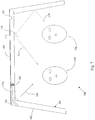
- Fig. 7 illustrates an example directional loudspeaker system 700 where the loudspeaker element 703 may include a loudspeaker element 703, and where a channeling device may include an acoustic waveguide 710, and an acoustic deflector 720.
- the acoustic waveguide 710 may be positioned proximate to the loudspeaker element 703.
- the acoustic deflector 720 may be positioned proximate to the acoustic waveguide 710, and may be positioned to radiate an indirect sound field 709 towards a listener position 101.
- the acoustic waveguide 710 may be positioned along the ceiling 105 of the vehicle enclosure, such as a vehicle headliner.
- the acoustic deflector 720 may abut an intersection of the ceiling 105 and a boundary wall 104 of the enclosure. An example includes the corner joint of window and ceiling 105 of a window 107 in the vehicle.
- the loudspeaker system 700 may operate when the enclosure has an opening to an outside environment.
- the acoustic deflector 720 and waveguide 710 may function to provide an indirect sound field 709 to a listener positioned in the listener position 101 when a window next to the listener position 101 is open, for example. Without the acoustic deflector 720, the indirect sound field 709 may radiate out an open window and not reflect back to the listener.
- the acoustic deflector 720 may ensure that an indirect sound field 709 is provided to the listener in that circumstance to provide a sense of spaciousness to the listener.
- the direct sound field 711 from the loudspeaker element 730 may propagate substantially parallel to a straight line between the listener position 101 and the loudspeaker element 710.
- the loudspeaker element 710 may be a dipole loudspeaker such as an electrodynamic planar loudspeaker.
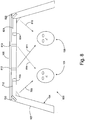
- Fig. 8 illustrates an example directional loudspeaker system 800 with a loudspeaker 703, an acoustic waveguide 710, and an acoustic deflector 720.
- the directional loudspeaker system 800 also may include a second loudspeaker 804, acoustic waveguide 821, and acoustic deflector 822 positioned opposite in configuration to the first loudspeaker 703, acoustic waveguide 710, and acoustic deflector 720, and operable to produce an indirect sound field 815.
- the indirect sound field 815 may propagate to the listener position 120 in a direction substantially parallel to a straight line between the acoustic deflector 822 and the listener position 120.
- the directional loudspeaker system 800 may also include internal acoustic deflectors 812 and 813.
- the internal acoustic deflectors may be operable to produce indirect sound fields 811 and 814.
- the indirect sound field 811 may propagate from the loudspeaker 703, deflect from the internal acoustic deflector 812, and propagate to the listener position 120.
- the indirect sound field 814 may propagate from the loudspeaker 804, deflect from the internal acoustic deflector 813, and propagate to the listener position 101.
- Fig. 9 illustrates an example loudspeaker system 900 viewed from a location above the vehicle and looking down at the vehicle.
- the loudspeaker system 900 has a similar configuration to that illustrated in Fig. 3 , in that a second loudspeaker element 910 and 911 may be positioned along a boundary of the vehicle along with the loudspeaker elements 912 and 913 positionable along the ceiling of the vehicle above a listener position.
- the loudspeaker elements 912 and 913 produce an indirect sound field, which, when reflected by a boundary, may be perceived by the listener as radiating from a "phantom loudspeaker" position 921 and 922.
- the configuration of the loudspeaker elements 912 and 913 may be such that for a certain range of frequencies, the phantom loudspeaker position 921 and 922 may be a sharply defined and localized position as perceived by the listener. The phantom loudspeaker position 921 and 922 therefore may not be perceived as a diffuse source.
- the second loudspeaker element 910 and 911 may combine with the phantom loudspeaker 912 and 922 to produce a summed loudspeaker 925 and 926, which appears to radiate a sound field to the listener from a location that may be different from the locations of the second loudspeaker element 910 and 911 or the phantom loudspeaker location 912 and 922.
- the summed loudspeaker 925 and 926 may be perceived to be located at a position outside of the boundary, such as outside of the vehicle.
- the summed loudspeaker 925 and 926 may be perceived to be located at a defined position, rather than a diffuse source location.
- the summed loudspeaker 925 and 926 may therefore provide an illusion of spaciousness to the listener within the boundary.
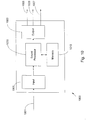
- Fig. 10 illustrates an example loudspeaker processor 1000 adapted to operate with an automobile audio system and bidirectional loudspeaker 100-800 to adjust a phase, gain, or delay parameter of the sound field for electronic enhancement, such as for multichannel sound systems like Logic 7®.
- the loudspeaker processor 1000 may include an input sound source 1001, an input unit 1005, a sound processor 1010, a memory 1015, an output unit 1020, and one or more output signals 1025, 1026, and 1027.
- the loudspeaker processor 1000 may process a sound source input 1001 by receiving the sound source with an input unit 1005.
- the input unit 1005 may include a pre-processor or buffer for the sound source input 1001.
- a sound processor 1010 may adjust a phase, gain, or delay parameter of the sound field for electronic enhancement.
- the sound processor may also store a portion or all of the sound source input 1001 in a memory 1015 for buffering or later retrieval.
- the memory 1015 may also store parameters for use by the sound processor 1010 in adjusting the sound source input 1001, such as gain, delay, and phase parameters.
- the sound processor may read these parameters from the memory 1015.
- the memory 1015 may also contain system parameters for creating the indirect sound field 109 and 119 and the direct sound field 111 and 121 output by the loudspeaker elements 103 and 113.
- the sound processor 1010 may generate the indirect sound field 109 and 119 and the direct sound field 111 and 121 based on the type of loudspeaker element 103 and 113 present, and may read any parameters necessary to generate the fields from the memory 1015.
- the memory 1015 may also integrate with the sound processor 1010 as a single unit.
- An output unit 1020 following the sound processor 1010 may then be configured to process the indirect sound field 109 and 119 and the direct sound field 111 and 121 for output to the loudspeaker elements 103 and 113.
- the output unit 1020 may create one or more channels 1025, 1026, and 1027 (for example) for output to the loudspeaker elements 103 and 113.
- the output unit 1020 may, for instance, be configured to process the sound fields for multichannel distribution or to the different loudspeaker elements 103 and 113 present in the loudspeaker system 100-800.
- the loudspeaker processing system 1000 may be implemented on a microprocessor or microcontroller multi-chip or integrated chip system.
- the loudspeaker processor 1000 may be implemented with digital signal processing (DSP) systems, as well as DSP algorithms encoded in firmware or instructions stored in the memory 1015.
- DSP digital signal processing
- Fig. 11 illustrates example acts that generate an indirect and direct sound field for a loudspeaker.
- the input sound source may be pre-processed, at act 1110, prior to reception by the loudspeaker by incorporating spatial and/or temporal effects to the input sound source.
- Such effects may include the "spaciousness" effects that the application replicates with the directional loudspeaker through the use of indirect and direct sound fields.
- Other effects may include multichannel sound effects, delays, equalization, or other electronic enhancements.
- a system designer may also relate specific vehicle architecture and acoustical characteristics with the input sound source, to modify the steering of the output sound source to correctly align the output sound source with the physical and non-physical (desired phantom speaker) aspects of the loudspeaker system.
- the loudspeaker system receives, at act 1120, the input sound source.
- the loudspeaker may analyze, at act 1130, the sound source for spatial and/or temporal effects included within the sound source. The analysis may be done by a sound processor 1000 or other processing units included with the loudspeaker.
- the loudspeaker may store the sound source, at act 1140, in a memory 1015 or the loudspeaker may retrieve one or more sound source processing parameters. Examples of the sound source processing parameters include parameters for generating the indirect and direct sound fields, acoustic environment specifications, and parameters for electronic enhancement. Other example sound source processing parameters include Logic-7® sound parameters associated with the input sound encoding.
- the memory 1015 may buffer all or part of the sound source for processing.
- the loudspeaker may then incorporate, at act 1150, electronic enhancement effects into the sound source, such as gain, delay, or phase parameters.
- the loudspeaker may produce, at act 1160, one or more channels of sound output including indirect and direct sound field streams.
- the loudspeaker may then produce an indirect sound field, at act 1170, by the loudspeaker elements in the loudspeaker.
- the loudspeaker may produce, at step 1180, a direct sound field by the loudspeaker elements in the loudspeaker system.
- the sequence diagram in Fig. 11 may be encoded in a signal bearing medium, a computer readable medium such as a memory, programmed within a device such as one or more integrated circuits, or processed by a controller or a computer. If the methods are performed by software, the software may reside in a memory resident to or interfaced to the sound processor 1000, a communication interface, or any other type of non-volatile or volatile memory interfaced or resident to the sound processor 1010, such as memory 1015.
- the memory may include an ordered listing of executable instructions for implementing logical functions. A logical function may be implemented through digital circuitry, through source code, through analog circuitry, or through an analog source such as through an analog electrical, audio, or video signal.
- the software may be embodied in any computer-readable or signal-bearing medium, for use by, or in connection with an instruction executable system, apparatus, or device.
- a system may include a computer-based system, a processor-containing system, or another system that may selectively fetch instructions from an instruction executable system, apparatus, or device that may also execute instructions.
- a “computer-readable medium,” “machine-readable medium,” “propagated-signal” medium, and/or “signal-bearing medium” may comprise any means that contains, stores, communicates, propagates, or transports software for use by or in connection with an instruction executable system, apparatus, or device.
- the machine-readable medium may selectively be, but not limited to, an electronic, magnetic, optical, electromagnetic, infrared, or semiconductor system, apparatus, device, or propagation medium.
- a non-exhaustive list of examples of a machine-readable medium would include: an electrical connection "electronic” having one or more wires, a portable magnetic or optical disk, a volatile memory such as a Random Access Memory “RAM” (electronic), a Read-Only Memory “ROM” (electronic), an Erasable Programmable Read-Only Memory (EPROM or Flash memory) (electronic), or an optical fiber (optical).
- a machine-readable medium may also include a tangible medium upon which software is printed, as the software may be electronically stored as an image or in another format (e.g., through an optical scan), then compiled, and/or interpreted or otherwise processed. The processed medium may then be stored in a computer and/or machine memory.
Landscapes
- Physics & Mathematics (AREA)
- Engineering & Computer Science (AREA)
- Acoustics & Sound (AREA)
- Signal Processing (AREA)
- Health & Medical Sciences (AREA)
- Otolaryngology (AREA)
- Fittings On The Vehicle Exterior For Carrying Loads, And Devices For Holding Or Mounting Articles (AREA)
- Stereophonic System (AREA)
Claims (16)
- Lautsprechersystem zur Platzierung in einem zumindest teilweise geschlossenen Raum, wobei der zumindest teilweise geschlossene Raum Begrenzungswände, einschließlich Deckenbegrenzungswänden (405) und mindestens eine Zuhörerposition (401, 420) aufweist, wobei das System Folgendes beinhaltet:ein Lautsprecherelement (403), das innerhalb des Raums integral mit einer der Begrenzungswände nahe der mindestens einen Zuhörerposition (401, 420) zu positionieren und in einer Deckenbegrenzungswand (405) zu montieren ist undeine Kanalisierungsvorrichtung, die akustisch mit dem Lautsprecherelement (403) gekoppelt ist, um ein von dem Lautsprecherelement (403) emittiertes Klangfeld derart umzulenken, dass ein indirektes Klangfeld (409) und ein direktes Klangfeld (411) an der mindestens einen Zuhörerposition (401, 420) erzeugt wird,wobei die Kanalisierungsvorrichtung so umgesetzt ist, dass sie eine mechanische Schallwand (415) umfasst, die zwischen dem Lautsprecherelement (403) und der Zuhörerposition (401, 420) zu positionieren ist, und wobei die Schallwand benutzt wird, um an einer Zuhörerposition (401, 420) einen größeren indirekten Klangdruck als direkten Klangdruck zu erzeugen, und wobei das indirekte Klangfeld (409) von mindestens einer Fläche (407) des zumindest teilweise geschlossenen Raums reflektiert wird, bevor es die mindestens eine Zuhörerposition (401, 420) erreicht, undwobei die Kanalisierungsvorrichtung ferner eine akustische Linse umfasst, die nahe den und zwischen einer Abstrahlfläche des Lautsprecherelements (403) und der Schallwand (415) positioniert ist.
- Lautsprechersystem nach Anspruch 1, wobei das Lautsprechersystem ein erstes Lautsprecherelement (403) und eine akustisch mit dem ersten Lautsprecherelement gekoppelte erste Kanalisierungsvorrichtung (415) umfasst und wobei das Lautsprechersystem ferner ein zweites Lautsprecherelement (413) und eine akustisch mit dem zweiten Lautsprecherelement gekoppelte zweite Kanalisierungsvorrichtung umfasst, die derart positioniert sind, dass eine Weglänge des direkten Klangfelds (411) von dem ersten Lautsprecherelement (403) zu der mindestens einen Zuhörerposition (420) im Wesentlichen einer Weglänge des indirekten Klangfelds (419) von dem zweiten Lautsprecherelement (413) zu der mindestens einen Zuhörerposition (420) entspricht.
- Lautsprechersystem nach Anspruch 2, wobei der zumindest teilweise geschlossene Raum ein in einen Frontraum und einen Heckraum geteiltes Fahrzeug umfasst, wobei der Frontraum einen Fahrerbereich und einen Beifahrerbereich umfasst und der Heckraum einen Bereich hinter dem Frontraum umfasst und wobei das erste Lautsprecherelement im Frontraum positioniert ist und das zweite Lautsprecherelement im Heckraum positioniert ist.
- Lautsprechersystem nach Anspruch 1 oder 2, wobei das Lautsprechersystem für eine Verwendung in einer Heimkinoumgebung konfiguriert ist.
- Lautsprechersystem nach einem der Ansprüche 1-4, wobei das Lautsprechersystem mit einem Audiosystem arbeitet, um einen Phasen-, Verstärkungs- oder Verzögerungsparameter des mindestens einen direkten Klangfelds oder des indirekten Klangfelds für eine elektronische Verbesserung anzupassen.
- Lautsprechersystem nach Anspruch 5, wobei das Audiosystem Folgendes umfasst: eine Eingabeeinheit (1005), die dazu benutzt werden kann, eine Eingabeklangquelle zu empfangen; einen Klangprozessor (1010), der dazu benutzt werden kann, das indirekte Klangfeld und das direkte Klangfeld von der Eingabeklangquelle zu erzeugen; und eine Ausgabeeinheit (1020), die dazu benutzt werden kann, eine Ausgabeklangquelle an das Lautsprecherelement auszugeben.
- Lautsprechersystem nach Anspruch 5 oder 6, wobei das Audiosystem Folgendes umfasst: einen Speicher (1015), der dazu benutzt werden kann, einen oder mehrere Parameter zu speichern, die das indirekte Klangfeld und das direkte Klangfeld erzeugen.
- Lautsprechersystem nach Anspruch 6, wobei die Ausgabeeinheit mehr als einen Kanal einer Klangausgabe erzeugen kann.
- Lautsprechersystem nach einem der Ansprüche 2-8, wobei das Lautsprecherelement ein erstes Lautsprecherelement und ein zweites Lautsprecherelement umfasst, die derart positioniert sind, dass ein mithilfe des zweiten Lautsprecherelements erzeugtes zweites direktes Klangfeld und ein mithilfe des ersten Lautsprecherelements erzeugtes erstes indirektes Klangfeld kombiniert werden können, um eine virtuelle Lautsprecherquelle zu produzieren, die von einem Zuhörer als von einer Position, die von einer Position des ersten Lautsprecherelements und einer Position des zweiten Lautsprecherelements abweicht, ausgehend wahrgenommen werden kann.
- Lautsprechersystem nach einem der Ansprüche 1-9, wobei die Kanalisierungsvorrichtung eine akustische Umlenkvorrichtung und einen akustischen Wellenleiter, der das Lautsprecherelement und die akustische Umlenkvorrichtung koppelt, umfasst und wobei das Lautsprecherelement an einem ersten Ende des akustischen Wellenleiters positioniert ist und die akustische Umlenkvorrichtung an einem zweiten Ende des akustischen Wellenleiters positioniert ist.
- Lautsprechersystem nach einem der Ansprüche 1-10, wobei das Lautsprecherelement einen Dipol-Lautsprecher umfasst.
- Lautsprechersystem nach einem der Ansprüche 1-11, wobei das Lautsprecherelement einen elektrodynamischen Plattenlautsprecher umfasst.
- Lautsprechersystem nach Anspruch 10, wobei der akustische Wellenleiter entlang der Deckenbegrenzungswand des zumindest teilweise geschlossenen Raums positioniert ist.
- Lautsprechersystem nach Anspruch 13, wobei die akustische Umlenkvorrichtung an einer Schnittstelle einer Deckenbegrenzungswand und einer anderen der Begrenzungswände des zumindest teilweise geschlossenen Raums anliegt.
- Lautsprechersystem nach einem der Ansprüche 1-14, wobei das Lautsprecherelement drehbar an der Begrenzungswand montiert ist.
- Lautsprechersystem nach einem der Ansprüche 10-14, wobei die akustische Umlenkvorrichtung derart positioniert ist, dass sie ein indirektes Klangfeld in Richtung einer Zuhörerposition ausstrahlt, wenn ein Fenster neben der Zuhörerposition geöffnet ist.
Applications Claiming Priority (1)
| Application Number | Priority Date | Filing Date | Title |
|---|---|---|---|
| US11/697,088 US8121336B2 (en) | 2007-04-05 | 2007-04-05 | Directional loudspeaker to reduce direct sound |
Publications (2)
| Publication Number | Publication Date |
|---|---|
| EP1978776A1 EP1978776A1 (de) | 2008-10-08 |
| EP1978776B1 true EP1978776B1 (de) | 2018-03-14 |
Family
ID=39535204
Family Applications (1)
| Application Number | Title | Priority Date | Filing Date |
|---|---|---|---|
| EP08006820.8A Active EP1978776B1 (de) | 2007-04-05 | 2008-04-03 | Direktionaler Lautsprecher zur Direktklangminderung |
Country Status (2)
| Country | Link |
|---|---|
| US (1) | US8121336B2 (de) |
| EP (1) | EP1978776B1 (de) |
Families Citing this family (13)
| Publication number | Priority date | Publication date | Assignee | Title |
|---|---|---|---|---|
| US20100124342A1 (en) * | 2008-11-17 | 2010-05-20 | Electronics And Telecommunications Research Institute | Forced acoustic dipole and forced acoustic multipole array using the same |
| US20100198428A1 (en) * | 2009-01-30 | 2010-08-05 | Delphi Technologies, Inc. | Multi-purpose fob system |
| US9036837B2 (en) * | 2009-06-18 | 2015-05-19 | James Tuomy | Desktop audio monitor system and method |
| BR112013002306B1 (pt) * | 2010-07-30 | 2021-05-25 | Fraunhofer -Gesellschaft Zur Föerderung Der Angewandten Forschung E.V. | disposição de alto-falante de apoio de cabeça |
| KR101630790B1 (ko) * | 2011-07-28 | 2016-06-15 | 프라운호퍼 게젤샤프트 쭈르 푀르데룽 데어 안겐반텐 포르슝 에. 베. | 측벽 스피커들이 구비된 차량 |
| US9088842B2 (en) | 2013-03-13 | 2015-07-21 | Bose Corporation | Grille for electroacoustic transducer |
| DE102013006068B4 (de) * | 2013-04-08 | 2018-12-13 | Volkswagen Aktiengesellschaft | "Fahrzeug mit Audiosystem" |
| US9327628B2 (en) | 2013-05-31 | 2016-05-03 | Bose Corporation | Automobile headrest |
| EP3063950B1 (de) * | 2013-10-30 | 2017-08-16 | L Acoustics | Tonsystem mit verbesserter einstellbarer richtwirkung |
| US9699537B2 (en) | 2014-01-14 | 2017-07-04 | Bose Corporation | Vehicle headrest with speakers |
| WO2016182184A1 (ko) | 2015-05-08 | 2016-11-17 | 삼성전자 주식회사 | 입체 음향 재생 방법 및 장치 |
| US9967672B2 (en) | 2015-11-11 | 2018-05-08 | Clearmotion Acquisition I Llc | Audio system |
| CN114556967A (zh) | 2019-10-10 | 2022-05-27 | 哈曼国际工业有限公司 | 具有全向透镜的侧射式头枕扬声器 |
Family Cites Families (34)
| Publication number | Priority date | Publication date | Assignee | Title |
|---|---|---|---|---|
| US4596034A (en) | 1981-01-02 | 1986-06-17 | Moncrieff J Peter | Sound reproduction system and method |
| US7134687B2 (en) | 1992-05-05 | 2006-11-14 | Automotive Technologies International, Inc. | Rear view mirror monitor |
| US7164117B2 (en) | 1992-05-05 | 2007-01-16 | Automotive Technologies International, Inc. | Vehicular restraint system control system and method using multiple optical imagers |
| US6778672B2 (en) | 1992-05-05 | 2004-08-17 | Automotive Technologies International Inc. | Audio reception control arrangement and method for a vehicle |
| US4503930A (en) | 1982-09-03 | 1985-03-12 | Mcdowell Vaughn P | Loudspeaker system |
| US4653606A (en) | 1985-03-22 | 1987-03-31 | American Telephone And Telegraph Company | Electroacoustic device with broad frequency range directional response |
| US4845759A (en) | 1986-04-25 | 1989-07-04 | Intersonics Incorporated | Sound source having a plurality of drivers operating from a virtual point |
| US5023914A (en) * | 1988-03-11 | 1991-06-11 | Bose Corporation | Acoustical frequency response improving with non-minimum phase circuitry |
| JPH02113494U (de) * | 1989-01-17 | 1990-09-11 | ||
| JP2890764B2 (ja) | 1990-09-18 | 1999-05-17 | 日産自動車株式会社 | 車載スピーカ |
| US5109416A (en) * | 1990-09-28 | 1992-04-28 | Croft James J | Dipole speaker for producing ambience sound |
| JPH05344580A (ja) | 1992-06-04 | 1993-12-24 | Matsushita Electric Ind Co Ltd | 車載用音場再生装置 |
| US5809150A (en) | 1995-06-28 | 1998-09-15 | Eberbach; Steven J. | Surround sound loudspeaker system |
| US5870484A (en) | 1995-09-05 | 1999-02-09 | Greenberger; Hal | Loudspeaker array with signal dependent radiation pattern |
| US5526325A (en) | 1995-09-21 | 1996-06-11 | The United States Of America As Represented By The Secretary Of The Navy | Steerable beamformer |
| US5850060A (en) * | 1997-04-08 | 1998-12-15 | Gerber; Allen | Acoustic lens device |
| US6937740B2 (en) | 1998-08-03 | 2005-08-30 | Visteon Global Technologies, Inc. | Monopole low frequency test woofer |
| US6179359B1 (en) | 1999-08-12 | 2001-01-30 | Daimlerchrysler Corporation | Interior trim to windshield mounting arrangement |
| AU1621201A (en) | 1999-11-19 | 2001-05-30 | Gentex Corporation | Vehicle accessory microphone |
| US7120261B1 (en) | 1999-11-19 | 2006-10-10 | Gentex Corporation | Vehicle accessory microphone |
| AU2013400A (en) | 1999-11-25 | 2001-06-04 | Embracing Sound Experience Ab | A method of processing and reproducing an audio stereo signal, and an audio stereo signal reproduction system |
| US6650758B1 (en) | 1999-12-23 | 2003-11-18 | Nortel Networks Limited | Adaptive dual port loudspeaker implementation for reducing lateral transmission |
| US6977653B1 (en) | 2000-03-08 | 2005-12-20 | Tektronix, Inc. | Surround sound display |
| US7164773B2 (en) | 2001-01-09 | 2007-01-16 | Bose Corporation | Vehicle electroacoustical transducing |
| US6980098B2 (en) | 2001-01-29 | 2005-12-27 | Sony Corporation | Information processing apparatus, information processing method and program executed in information processing apparatus |
| US6996239B2 (en) | 2001-05-03 | 2006-02-07 | Harman International Industries, Inc. | System for transitioning from stereo to simulated surround sound |
| US7164768B2 (en) | 2001-06-21 | 2007-01-16 | Bose Corporation | Audio signal processing |
| JP4372386B2 (ja) | 2002-02-04 | 2009-11-25 | 株式会社吹田屋 | 汎用スピーカとその取り付け法 |
| DE60228529D1 (de) | 2001-07-30 | 2008-10-09 | Matsushita Electric Industrial Co Ltd | Schallwiedergabeeinrichtung |
| US6991289B2 (en) | 2002-07-31 | 2006-01-31 | Harman International Industries, Incorporated | Seatback audio system |
| US7551749B2 (en) | 2002-08-23 | 2009-06-23 | Bose Corporation | Baffle vibration reducing |
| US7343020B2 (en) * | 2002-09-18 | 2008-03-11 | Thigpen F Bruce | Vehicle audio system with directional sound and reflected audio imaging for creating a personal sound stage |
| US20060050907A1 (en) | 2004-09-03 | 2006-03-09 | Igor Levitsky | Loudspeaker with variable radiation pattern |
| US8041061B2 (en) | 2004-10-04 | 2011-10-18 | Altec Lansing, Llc | Dipole and monopole surround sound speaker system |
-
2007
- 2007-04-05 US US11/697,088 patent/US8121336B2/en active Active
-
2008
- 2008-04-03 EP EP08006820.8A patent/EP1978776B1/de active Active
Non-Patent Citations (1)
| Title |
|---|
| None * |
Also Published As
| Publication number | Publication date |
|---|---|
| US20080247575A1 (en) | 2008-10-09 |
| EP1978776A1 (de) | 2008-10-08 |
| US8121336B2 (en) | 2012-02-21 |
Similar Documents
| Publication | Publication Date | Title |
|---|---|---|
| EP1978776B1 (de) | Direktionaler Lautsprecher zur Direktklangminderung | |
| CN1778141B (zh) | 车辆的扬声器阵列 | |
| US9854363B2 (en) | Loudspeaker system | |
| KR102640919B1 (ko) | 라우드 스피커 배열체 | |
| US9049534B2 (en) | Directionally radiating sound in a vehicle | |
| US8345883B2 (en) | Audio playback method and apparatus using line array speaker unit | |
| US20080273722A1 (en) | Directionally radiating sound in a vehicle | |
| US8014545B2 (en) | Ceiling or wall-mounted loudspeaker system with anti-diffraction wave launch device | |
| KR102478070B1 (ko) | 확성기 시스템 및 방향성과 확산 제어를 위한 구조체 | |
| US11167700B2 (en) | Vehicle audio system | |
| US20040047476A1 (en) | Method and system for improved sound quality of automotive audio | |
| EP4052483B1 (de) | Lautsprecheranordnung | |
| JPH05199595A (ja) | 車載用音場再生装置 | |
| JPH05161192A (ja) | 車載用音場再生装置 | |
| US20260067613A1 (en) | Sound reproducing device, acoustic system, and mobile device | |
| US12495246B2 (en) | Headrest with side-firing loudspeakers | |
| WO2023081437A1 (en) | Instrument panel speaker system | |
| WO2025013427A1 (ja) | 車載用電子機器及び車両 | |
| JP2004168265A (ja) | 車載用スピーカ装置 |
Legal Events
| Date | Code | Title | Description |
|---|---|---|---|
| PUAI | Public reference made under article 153(3) epc to a published international application that has entered the european phase |
Free format text: ORIGINAL CODE: 0009012 |
|
| 17P | Request for examination filed |
Effective date: 20080403 |
|
| AK | Designated contracting states |
Kind code of ref document: A1 Designated state(s): AT BE BG CH CY CZ DE DK EE ES FI FR GB GR HR HU IE IS IT LI LT LU LV MC MT NL NO PL PT RO SE SI SK TR |
|
| AX | Request for extension of the european patent |
Extension state: AL BA MK RS |
|
| 17Q | First examination report despatched |
Effective date: 20090515 |
|
| AKX | Designation fees paid |
Designated state(s): AT BE BG CH CY CZ DE DK EE ES FI FR GB GR HR HU IE IS IT LI LT LU LV MC MT NL NO PL PT RO SE SI SK TR |
|
| GRAP | Despatch of communication of intention to grant a patent |
Free format text: ORIGINAL CODE: EPIDOSNIGR1 |
|
| RAP1 | Party data changed (applicant data changed or rights of an application transferred) |
Owner name: HARMAN INTERNATIONAL INDUSTRIES, INCORPORATED |
|
| INTG | Intention to grant announced |
Effective date: 20171023 |
|
| GRAS | Grant fee paid |
Free format text: ORIGINAL CODE: EPIDOSNIGR3 |
|
| GRAA | (expected) grant |
Free format text: ORIGINAL CODE: 0009210 |
|
| AK | Designated contracting states |
Kind code of ref document: B1 Designated state(s): AT BE BG CH CY CZ DE DK EE ES FI FR GB GR HR HU IE IS IT LI LT LU LV MC MT NL NO PL PT RO SE SI SK TR |
|
| REG | Reference to a national code |
Ref country code: GB Ref legal event code: FG4D |
|
| REG | Reference to a national code |
Ref country code: CH Ref legal event code: EP Ref country code: AT Ref legal event code: REF Ref document number: 979936 Country of ref document: AT Kind code of ref document: T Effective date: 20180315 |
|
| REG | Reference to a national code |
Ref country code: IE Ref legal event code: FG4D |
|
| REG | Reference to a national code |
Ref country code: DE Ref legal event code: R096 Ref document number: 602008054412 Country of ref document: DE |
|
| REG | Reference to a national code |
Ref country code: NL Ref legal event code: MP Effective date: 20180314 |
|
| REG | Reference to a national code |
Ref country code: LT Ref legal event code: MG4D |
|
| PG25 | Lapsed in a contracting state [announced via postgrant information from national office to epo] |
Ref country code: LT Free format text: LAPSE BECAUSE OF FAILURE TO SUBMIT A TRANSLATION OF THE DESCRIPTION OR TO PAY THE FEE WITHIN THE PRESCRIBED TIME-LIMIT Effective date: 20180314 Ref country code: CY Free format text: LAPSE BECAUSE OF FAILURE TO SUBMIT A TRANSLATION OF THE DESCRIPTION OR TO PAY THE FEE WITHIN THE PRESCRIBED TIME-LIMIT Effective date: 20180314 Ref country code: NO Free format text: LAPSE BECAUSE OF FAILURE TO SUBMIT A TRANSLATION OF THE DESCRIPTION OR TO PAY THE FEE WITHIN THE PRESCRIBED TIME-LIMIT Effective date: 20180614 Ref country code: HR Free format text: LAPSE BECAUSE OF FAILURE TO SUBMIT A TRANSLATION OF THE DESCRIPTION OR TO PAY THE FEE WITHIN THE PRESCRIBED TIME-LIMIT Effective date: 20180314 Ref country code: ES Free format text: LAPSE BECAUSE OF FAILURE TO SUBMIT A TRANSLATION OF THE DESCRIPTION OR TO PAY THE FEE WITHIN THE PRESCRIBED TIME-LIMIT Effective date: 20180314 Ref country code: FI Free format text: LAPSE BECAUSE OF FAILURE TO SUBMIT A TRANSLATION OF THE DESCRIPTION OR TO PAY THE FEE WITHIN THE PRESCRIBED TIME-LIMIT Effective date: 20180314 |
|
| REG | Reference to a national code |
Ref country code: AT Ref legal event code: MK05 Ref document number: 979936 Country of ref document: AT Kind code of ref document: T Effective date: 20180314 |
|
| PG25 | Lapsed in a contracting state [announced via postgrant information from national office to epo] |
Ref country code: GR Free format text: LAPSE BECAUSE OF FAILURE TO SUBMIT A TRANSLATION OF THE DESCRIPTION OR TO PAY THE FEE WITHIN THE PRESCRIBED TIME-LIMIT Effective date: 20180615 Ref country code: BG Free format text: LAPSE BECAUSE OF FAILURE TO SUBMIT A TRANSLATION OF THE DESCRIPTION OR TO PAY THE FEE WITHIN THE PRESCRIBED TIME-LIMIT Effective date: 20180614 Ref country code: LV Free format text: LAPSE BECAUSE OF FAILURE TO SUBMIT A TRANSLATION OF THE DESCRIPTION OR TO PAY THE FEE WITHIN THE PRESCRIBED TIME-LIMIT Effective date: 20180314 Ref country code: SE Free format text: LAPSE BECAUSE OF FAILURE TO SUBMIT A TRANSLATION OF THE DESCRIPTION OR TO PAY THE FEE WITHIN THE PRESCRIBED TIME-LIMIT Effective date: 20180314 |
|
| PG25 | Lapsed in a contracting state [announced via postgrant information from national office to epo] |
Ref country code: NL Free format text: LAPSE BECAUSE OF FAILURE TO SUBMIT A TRANSLATION OF THE DESCRIPTION OR TO PAY THE FEE WITHIN THE PRESCRIBED TIME-LIMIT Effective date: 20180314 Ref country code: PL Free format text: LAPSE BECAUSE OF FAILURE TO SUBMIT A TRANSLATION OF THE DESCRIPTION OR TO PAY THE FEE WITHIN THE PRESCRIBED TIME-LIMIT Effective date: 20180314 Ref country code: RO Free format text: LAPSE BECAUSE OF FAILURE TO SUBMIT A TRANSLATION OF THE DESCRIPTION OR TO PAY THE FEE WITHIN THE PRESCRIBED TIME-LIMIT Effective date: 20180314 Ref country code: IT Free format text: LAPSE BECAUSE OF FAILURE TO SUBMIT A TRANSLATION OF THE DESCRIPTION OR TO PAY THE FEE WITHIN THE PRESCRIBED TIME-LIMIT Effective date: 20180314 Ref country code: EE Free format text: LAPSE BECAUSE OF FAILURE TO SUBMIT A TRANSLATION OF THE DESCRIPTION OR TO PAY THE FEE WITHIN THE PRESCRIBED TIME-LIMIT Effective date: 20180314 |
|
| PG25 | Lapsed in a contracting state [announced via postgrant information from national office to epo] |
Ref country code: SK Free format text: LAPSE BECAUSE OF FAILURE TO SUBMIT A TRANSLATION OF THE DESCRIPTION OR TO PAY THE FEE WITHIN THE PRESCRIBED TIME-LIMIT Effective date: 20180314 Ref country code: CZ Free format text: LAPSE BECAUSE OF FAILURE TO SUBMIT A TRANSLATION OF THE DESCRIPTION OR TO PAY THE FEE WITHIN THE PRESCRIBED TIME-LIMIT Effective date: 20180314 Ref country code: AT Free format text: LAPSE BECAUSE OF FAILURE TO SUBMIT A TRANSLATION OF THE DESCRIPTION OR TO PAY THE FEE WITHIN THE PRESCRIBED TIME-LIMIT Effective date: 20180314 |
|
| REG | Reference to a national code |
Ref country code: CH Ref legal event code: PL |
|
| REG | Reference to a national code |
Ref country code: DE Ref legal event code: R097 Ref document number: 602008054412 Country of ref document: DE |
|
| REG | Reference to a national code |
Ref country code: BE Ref legal event code: MM Effective date: 20180430 |
|
| PG25 | Lapsed in a contracting state [announced via postgrant information from national office to epo] |
Ref country code: PT Free format text: LAPSE BECAUSE OF FAILURE TO SUBMIT A TRANSLATION OF THE DESCRIPTION OR TO PAY THE FEE WITHIN THE PRESCRIBED TIME-LIMIT Effective date: 20180716 |
|
| PLBE | No opposition filed within time limit |
Free format text: ORIGINAL CODE: 0009261 |
|
| STAA | Information on the status of an ep patent application or granted ep patent |
Free format text: STATUS: NO OPPOSITION FILED WITHIN TIME LIMIT |
|
| REG | Reference to a national code |
Ref country code: IE Ref legal event code: MM4A |
|
| PG25 | Lapsed in a contracting state [announced via postgrant information from national office to epo] |
Ref country code: LU Free format text: LAPSE BECAUSE OF NON-PAYMENT OF DUE FEES Effective date: 20180403 Ref country code: MC Free format text: LAPSE BECAUSE OF FAILURE TO SUBMIT A TRANSLATION OF THE DESCRIPTION OR TO PAY THE FEE WITHIN THE PRESCRIBED TIME-LIMIT Effective date: 20180314 Ref country code: DK Free format text: LAPSE BECAUSE OF FAILURE TO SUBMIT A TRANSLATION OF THE DESCRIPTION OR TO PAY THE FEE WITHIN THE PRESCRIBED TIME-LIMIT Effective date: 20180314 |
|
| 26N | No opposition filed |
Effective date: 20181217 |
|
| PG25 | Lapsed in a contracting state [announced via postgrant information from national office to epo] |
Ref country code: SI Free format text: LAPSE BECAUSE OF FAILURE TO SUBMIT A TRANSLATION OF THE DESCRIPTION OR TO PAY THE FEE WITHIN THE PRESCRIBED TIME-LIMIT Effective date: 20180314 Ref country code: CH Free format text: LAPSE BECAUSE OF NON-PAYMENT OF DUE FEES Effective date: 20180430 Ref country code: BE Free format text: LAPSE BECAUSE OF NON-PAYMENT OF DUE FEES Effective date: 20180430 Ref country code: LI Free format text: LAPSE BECAUSE OF NON-PAYMENT OF DUE FEES Effective date: 20180430 |
|
| PG25 | Lapsed in a contracting state [announced via postgrant information from national office to epo] |
Ref country code: IE Free format text: LAPSE BECAUSE OF NON-PAYMENT OF DUE FEES Effective date: 20180403 Ref country code: FR Free format text: LAPSE BECAUSE OF NON-PAYMENT OF DUE FEES Effective date: 20180514 |
|
| PG25 | Lapsed in a contracting state [announced via postgrant information from national office to epo] |
Ref country code: MT Free format text: LAPSE BECAUSE OF NON-PAYMENT OF DUE FEES Effective date: 20180403 |
|
| PG25 | Lapsed in a contracting state [announced via postgrant information from national office to epo] |
Ref country code: TR Free format text: LAPSE BECAUSE OF FAILURE TO SUBMIT A TRANSLATION OF THE DESCRIPTION OR TO PAY THE FEE WITHIN THE PRESCRIBED TIME-LIMIT Effective date: 20180314 |
|
| PG25 | Lapsed in a contracting state [announced via postgrant information from national office to epo] |
Ref country code: HU Free format text: LAPSE BECAUSE OF FAILURE TO SUBMIT A TRANSLATION OF THE DESCRIPTION OR TO PAY THE FEE WITHIN THE PRESCRIBED TIME-LIMIT; INVALID AB INITIO Effective date: 20080403 |
|
| PG25 | Lapsed in a contracting state [announced via postgrant information from national office to epo] |
Ref country code: IS Free format text: LAPSE BECAUSE OF FAILURE TO SUBMIT A TRANSLATION OF THE DESCRIPTION OR TO PAY THE FEE WITHIN THE PRESCRIBED TIME-LIMIT Effective date: 20180714 |
|
| P01 | Opt-out of the competence of the unified patent court (upc) registered |
Effective date: 20230527 |
|
| PGFP | Annual fee paid to national office [announced via postgrant information from national office to epo] |
Ref country code: GB Payment date: 20250319 Year of fee payment: 18 |
|
| PGFP | Annual fee paid to national office [announced via postgrant information from national office to epo] |
Ref country code: DE Payment date: 20250319 Year of fee payment: 18 |