EP1982007B1 - Procédé de fabrication d'un corps métallique et corps métallique - Google Patents
Procédé de fabrication d'un corps métallique et corps métallique Download PDFInfo
- Publication number
- EP1982007B1 EP1982007B1 EP07722775.9A EP07722775A EP1982007B1 EP 1982007 B1 EP1982007 B1 EP 1982007B1 EP 07722775 A EP07722775 A EP 07722775A EP 1982007 B1 EP1982007 B1 EP 1982007B1
- Authority
- EP
- European Patent Office
- Prior art keywords
- implant
- base body
- metal
- titanium
- current
- Prior art date
- Legal status (The legal status is an assumption and is not a legal conclusion. Google has not performed a legal analysis and makes no representation as to the accuracy of the status listed.)
- Not-in-force
Links
- 238000000034 method Methods 0.000 title claims description 50
- 229910052751 metal Inorganic materials 0.000 title claims description 40
- 239000002184 metal Substances 0.000 title claims description 40
- 230000008569 process Effects 0.000 title claims description 29
- 239000007943 implant Substances 0.000 claims description 59
- 239000002086 nanomaterial Substances 0.000 claims description 22
- 229910052719 titanium Inorganic materials 0.000 claims description 22
- 239000010936 titanium Substances 0.000 claims description 22
- RTAQQCXQSZGOHL-UHFFFAOYSA-N Titanium Chemical compound [Ti] RTAQQCXQSZGOHL-UHFFFAOYSA-N 0.000 claims description 21
- 239000004053 dental implant Substances 0.000 claims description 21
- 239000003792 electrolyte Substances 0.000 claims description 21
- 210000000988 bone and bone Anatomy 0.000 claims description 18
- 238000005868 electrolysis reaction Methods 0.000 claims description 17
- 239000011148 porous material Substances 0.000 claims description 13
- 150000002500 ions Chemical class 0.000 claims description 10
- 238000009736 wetting Methods 0.000 claims description 10
- 229910045601 alloy Inorganic materials 0.000 claims description 7
- 239000000956 alloy Substances 0.000 claims description 7
- PMZURENOXWZQFD-UHFFFAOYSA-L Sodium Sulfate Chemical compound [Na+].[Na+].[O-]S([O-])(=O)=O PMZURENOXWZQFD-UHFFFAOYSA-L 0.000 claims description 5
- 125000004433 nitrogen atom Chemical group N* 0.000 claims description 5
- VYZAMTAEIAYCRO-UHFFFAOYSA-N Chromium Chemical compound [Cr] VYZAMTAEIAYCRO-UHFFFAOYSA-N 0.000 claims description 4
- CAMXVZOXBADHNJ-UHFFFAOYSA-N ammonium nitrite Chemical compound [NH4+].[O-]N=O CAMXVZOXBADHNJ-UHFFFAOYSA-N 0.000 claims description 4
- BFNBIHQBYMNNAN-UHFFFAOYSA-N ammonium sulfate Chemical compound N.N.OS(O)(=O)=O BFNBIHQBYMNNAN-UHFFFAOYSA-N 0.000 claims description 4
- 229910052804 chromium Inorganic materials 0.000 claims description 4
- 239000011651 chromium Substances 0.000 claims description 4
- 230000000737 periodic effect Effects 0.000 claims description 4
- 229910052938 sodium sulfate Inorganic materials 0.000 claims description 4
- 235000011152 sodium sulphate Nutrition 0.000 claims description 4
- 229910017464 nitrogen compound Inorganic materials 0.000 claims description 3
- 150000002830 nitrogen compounds Chemical class 0.000 claims description 3
- 230000001052 transient effect Effects 0.000 claims description 3
- QAOWNCQODCNURD-UHFFFAOYSA-N Sulfuric acid Chemical compound OS(O)(=O)=O QAOWNCQODCNURD-UHFFFAOYSA-N 0.000 description 18
- 239000002253 acid Substances 0.000 description 15
- IJGRMHOSHXDMSA-UHFFFAOYSA-N Atomic nitrogen Chemical compound N#N IJGRMHOSHXDMSA-UHFFFAOYSA-N 0.000 description 12
- VEXZGXHMUGYJMC-UHFFFAOYSA-N Hydrochloric acid Chemical compound Cl VEXZGXHMUGYJMC-UHFFFAOYSA-N 0.000 description 12
- 238000002203 pretreatment Methods 0.000 description 12
- XLYOFNOQVPJJNP-UHFFFAOYSA-N water Substances O XLYOFNOQVPJJNP-UHFFFAOYSA-N 0.000 description 12
- -1 nitrate ions Chemical class 0.000 description 11
- 150000003839 salts Chemical class 0.000 description 10
- 239000000460 chlorine Substances 0.000 description 9
- 238000005530 etching Methods 0.000 description 9
- NBIIXXVUZAFLBC-UHFFFAOYSA-N Phosphoric acid Chemical compound OP(O)(O)=O NBIIXXVUZAFLBC-UHFFFAOYSA-N 0.000 description 8
- 230000002349 favourable effect Effects 0.000 description 8
- 238000004519 manufacturing process Methods 0.000 description 7
- 229910052757 nitrogen Inorganic materials 0.000 description 7
- 238000011282 treatment Methods 0.000 description 7
- 239000000470 constituent Substances 0.000 description 6
- 239000007788 liquid Substances 0.000 description 6
- 239000000463 material Substances 0.000 description 6
- 235000019592 roughness Nutrition 0.000 description 6
- LPXPTNMVRIOKMN-UHFFFAOYSA-M sodium nitrite Chemical compound [Na+].[O-]N=O LPXPTNMVRIOKMN-UHFFFAOYSA-M 0.000 description 6
- 239000000243 solution Substances 0.000 description 6
- GRYLNZFGIOXLOG-UHFFFAOYSA-N Nitric acid Chemical compound O[N+]([O-])=O GRYLNZFGIOXLOG-UHFFFAOYSA-N 0.000 description 5
- 239000007795 chemical reaction product Substances 0.000 description 5
- 238000000866 electrolytic etching Methods 0.000 description 5
- 229910052731 fluorine Inorganic materials 0.000 description 5
- 239000011737 fluorine Substances 0.000 description 5
- 229910017604 nitric acid Inorganic materials 0.000 description 5
- 239000000126 substance Substances 0.000 description 5
- XEEYBQQBJWHFJM-UHFFFAOYSA-N Iron Chemical compound [Fe] XEEYBQQBJWHFJM-UHFFFAOYSA-N 0.000 description 4
- FAPWRFPIFSIZLT-UHFFFAOYSA-M Sodium chloride Chemical compound [Na+].[Cl-] FAPWRFPIFSIZLT-UHFFFAOYSA-M 0.000 description 4
- QCWXUUIWCKQGHC-UHFFFAOYSA-N Zirconium Chemical compound [Zr] QCWXUUIWCKQGHC-UHFFFAOYSA-N 0.000 description 4
- 150000007513 acids Chemical class 0.000 description 4
- 229910000147 aluminium phosphate Inorganic materials 0.000 description 4
- 229910052801 chlorine Inorganic materials 0.000 description 4
- 230000035876 healing Effects 0.000 description 4
- 239000000203 mixture Substances 0.000 description 4
- 229910052758 niobium Inorganic materials 0.000 description 4
- 239000010955 niobium Substances 0.000 description 4
- GUCVJGMIXFAOAE-UHFFFAOYSA-N niobium atom Chemical compound [Nb] GUCVJGMIXFAOAE-UHFFFAOYSA-N 0.000 description 4
- 229910052698 phosphorus Inorganic materials 0.000 description 4
- 239000011574 phosphorus Substances 0.000 description 4
- 229910052717 sulfur Inorganic materials 0.000 description 4
- 239000011593 sulfur Substances 0.000 description 4
- 229910052726 zirconium Inorganic materials 0.000 description 4
- VEXZGXHMUGYJMC-UHFFFAOYSA-M Chloride anion Chemical compound [Cl-] VEXZGXHMUGYJMC-UHFFFAOYSA-M 0.000 description 3
- ZAMOUSCENKQFHK-UHFFFAOYSA-N Chlorine atom Chemical compound [Cl] ZAMOUSCENKQFHK-UHFFFAOYSA-N 0.000 description 3
- YCKRFDGAMUMZLT-UHFFFAOYSA-N Fluorine atom Chemical compound [F] YCKRFDGAMUMZLT-UHFFFAOYSA-N 0.000 description 3
- OAICVXFJPJFONN-UHFFFAOYSA-N Phosphorus Chemical compound [P] OAICVXFJPJFONN-UHFFFAOYSA-N 0.000 description 3
- NINIDFKCEFEMDL-UHFFFAOYSA-N Sulfur Chemical compound [S] NINIDFKCEFEMDL-UHFFFAOYSA-N 0.000 description 3
- 229910052921 ammonium sulfate Inorganic materials 0.000 description 3
- 235000011130 ammonium sulphate Nutrition 0.000 description 3
- 239000007864 aqueous solution Substances 0.000 description 3
- 230000008901 benefit Effects 0.000 description 3
- 230000008859 change Effects 0.000 description 3
- 150000001875 compounds Chemical class 0.000 description 3
- 238000000635 electron micrograph Methods 0.000 description 3
- 239000012530 fluid Substances 0.000 description 3
- 239000010410 layer Substances 0.000 description 3
- 229910021645 metal ion Inorganic materials 0.000 description 3
- 238000010883 osseointegration Methods 0.000 description 3
- 239000000376 reactant Substances 0.000 description 3
- 238000005488 sandblasting Methods 0.000 description 3
- 235000010288 sodium nitrite Nutrition 0.000 description 3
- 239000002344 surface layer Substances 0.000 description 3
- 229910052715 tantalum Inorganic materials 0.000 description 3
- GUVRBAGPIYLISA-UHFFFAOYSA-N tantalum atom Chemical compound [Ta] GUVRBAGPIYLISA-UHFFFAOYSA-N 0.000 description 3
- 238000012876 topography Methods 0.000 description 3
- NLXLAEXVIDQMFP-UHFFFAOYSA-N Ammonia chloride Chemical compound [NH4+].[Cl-] NLXLAEXVIDQMFP-UHFFFAOYSA-N 0.000 description 2
- KRHYYFGTRYWZRS-UHFFFAOYSA-N Fluorane Chemical compound F KRHYYFGTRYWZRS-UHFFFAOYSA-N 0.000 description 2
- QAOWNCQODCNURD-UHFFFAOYSA-L Sulfate Chemical compound [O-]S([O-])(=O)=O QAOWNCQODCNURD-UHFFFAOYSA-L 0.000 description 2
- LSNNMFCWUKXFEE-UHFFFAOYSA-N Sulfurous acid Chemical compound OS(O)=O LSNNMFCWUKXFEE-UHFFFAOYSA-N 0.000 description 2
- HBBATKAUXPHIQN-UHFFFAOYSA-N [Cl].[Ti] Chemical class [Cl].[Ti] HBBATKAUXPHIQN-UHFFFAOYSA-N 0.000 description 2
- 230000015572 biosynthetic process Effects 0.000 description 2
- 230000008468 bone growth Effects 0.000 description 2
- 210000004027 cell Anatomy 0.000 description 2
- 238000006243 chemical reaction Methods 0.000 description 2
- 238000000576 coating method Methods 0.000 description 2
- 238000002425 crystallisation Methods 0.000 description 2
- 230000008025 crystallization Effects 0.000 description 2
- 238000000708 deep reactive-ion etching Methods 0.000 description 2
- 230000000694 effects Effects 0.000 description 2
- 238000009760 electrical discharge machining Methods 0.000 description 2
- 229940021013 electrolyte solution Drugs 0.000 description 2
- 239000008151 electrolyte solution Substances 0.000 description 2
- 229960002050 hydrofluoric acid Drugs 0.000 description 2
- 238000002513 implantation Methods 0.000 description 2
- 239000012535 impurity Substances 0.000 description 2
- 229910052742 iron Inorganic materials 0.000 description 2
- 238000013532 laser treatment Methods 0.000 description 2
- 150000002739 metals Chemical class 0.000 description 2
- QJGQUHMNIGDVPM-UHFFFAOYSA-N nitrogen group Chemical group [N] QJGQUHMNIGDVPM-UHFFFAOYSA-N 0.000 description 2
- 238000007750 plasma spraying Methods 0.000 description 2
- BASFCYQUMIYNBI-UHFFFAOYSA-N platinum Chemical compound [Pt] BASFCYQUMIYNBI-UHFFFAOYSA-N 0.000 description 2
- 238000007788 roughening Methods 0.000 description 2
- 238000010079 rubber tapping Methods 0.000 description 2
- 239000011780 sodium chloride Substances 0.000 description 2
- 238000003860 storage Methods 0.000 description 2
- 238000011144 upstream manufacturing Methods 0.000 description 2
- OYPRJOBELJOOCE-UHFFFAOYSA-N Calcium Chemical compound [Ca] OYPRJOBELJOOCE-UHFFFAOYSA-N 0.000 description 1
- 102000008186 Collagen Human genes 0.000 description 1
- 108010035532 Collagen Proteins 0.000 description 1
- 229910002651 NO3 Inorganic materials 0.000 description 1
- 241001274216 Naso Species 0.000 description 1
- IOVCWXUNBOPUCH-UHFFFAOYSA-N Nitrous acid Chemical compound ON=O IOVCWXUNBOPUCH-UHFFFAOYSA-N 0.000 description 1
- 229910019142 PO4 Inorganic materials 0.000 description 1
- 229910001069 Ti alloy Inorganic materials 0.000 description 1
- GWEVSGVZZGPLCZ-UHFFFAOYSA-N Titan oxide Chemical compound O=[Ti]=O GWEVSGVZZGPLCZ-UHFFFAOYSA-N 0.000 description 1
- 238000002679 ablation Methods 0.000 description 1
- 230000009471 action Effects 0.000 description 1
- 239000000853 adhesive Substances 0.000 description 1
- 230000001070 adhesive effect Effects 0.000 description 1
- 235000019270 ammonium chloride Nutrition 0.000 description 1
- 238000004873 anchoring Methods 0.000 description 1
- 239000010405 anode material Substances 0.000 description 1
- 239000012298 atmosphere Substances 0.000 description 1
- QVGXLLKOCUKJST-UHFFFAOYSA-N atomic oxygen Chemical compound [O] QVGXLLKOCUKJST-UHFFFAOYSA-N 0.000 description 1
- 230000009286 beneficial effect Effects 0.000 description 1
- 230000005540 biological transmission Effects 0.000 description 1
- 238000005422 blasting Methods 0.000 description 1
- 238000009835 boiling Methods 0.000 description 1
- 230000010256 bone deposition Effects 0.000 description 1
- 239000011575 calcium Substances 0.000 description 1
- 229910052791 calcium Inorganic materials 0.000 description 1
- QHFQAJHNDKBRBO-UHFFFAOYSA-L calcium chloride hexahydrate Chemical compound O.O.O.O.O.O.[Cl-].[Cl-].[Ca+2] QHFQAJHNDKBRBO-UHFFFAOYSA-L 0.000 description 1
- 239000002800 charge carrier Substances 0.000 description 1
- 239000003153 chemical reaction reagent Substances 0.000 description 1
- 239000003795 chemical substances by application Substances 0.000 description 1
- 230000001055 chewing effect Effects 0.000 description 1
- 150000001805 chlorine compounds Chemical class 0.000 description 1
- 239000011248 coating agent Substances 0.000 description 1
- 229920001436 collagen Polymers 0.000 description 1
- 239000000306 component Substances 0.000 description 1
- 239000002131 composite material Substances 0.000 description 1
- 238000010276 construction Methods 0.000 description 1
- 230000007797 corrosion Effects 0.000 description 1
- 238000005260 corrosion Methods 0.000 description 1
- 238000005553 drilling Methods 0.000 description 1
- 229940079593 drug Drugs 0.000 description 1
- 239000003814 drug Substances 0.000 description 1
- 238000005516 engineering process Methods 0.000 description 1
- 150000002222 fluorine compounds Chemical class 0.000 description 1
- PCHJSUWPFVWCPO-UHFFFAOYSA-N gold Chemical compound [Au] PCHJSUWPFVWCPO-UHFFFAOYSA-N 0.000 description 1
- 239000010931 gold Substances 0.000 description 1
- 229910052737 gold Inorganic materials 0.000 description 1
- IXCSERBJSXMMFS-UHFFFAOYSA-N hcl hcl Chemical compound Cl.Cl IXCSERBJSXMMFS-UHFFFAOYSA-N 0.000 description 1
- 238000010438 heat treatment Methods 0.000 description 1
- 210000001624 hip Anatomy 0.000 description 1
- 210000004394 hip joint Anatomy 0.000 description 1
- 230000002209 hydrophobic effect Effects 0.000 description 1
- 208000014674 injury Diseases 0.000 description 1
- 238000003780 insertion Methods 0.000 description 1
- 230000037431 insertion Effects 0.000 description 1
- 230000010354 integration Effects 0.000 description 1
- 239000011244 liquid electrolyte Substances 0.000 description 1
- 230000008018 melting Effects 0.000 description 1
- 238000002844 melting Methods 0.000 description 1
- 239000007769 metal material Substances 0.000 description 1
- 230000002906 microbiologic effect Effects 0.000 description 1
- 150000002823 nitrates Chemical class 0.000 description 1
- 150000004767 nitrides Chemical class 0.000 description 1
- 230000000399 orthopedic effect Effects 0.000 description 1
- 210000000963 osteoblast Anatomy 0.000 description 1
- 229910052760 oxygen Inorganic materials 0.000 description 1
- 239000001301 oxygen Substances 0.000 description 1
- 239000003973 paint Substances 0.000 description 1
- NBIIXXVUZAFLBC-UHFFFAOYSA-K phosphate Chemical compound [O-]P([O-])([O-])=O NBIIXXVUZAFLBC-UHFFFAOYSA-K 0.000 description 1
- 235000021317 phosphate Nutrition 0.000 description 1
- 150000003013 phosphoric acid derivatives Chemical class 0.000 description 1
- 230000000704 physical effect Effects 0.000 description 1
- 229910052697 platinum Inorganic materials 0.000 description 1
- 230000002980 postoperative effect Effects 0.000 description 1
- 239000010970 precious metal Substances 0.000 description 1
- 238000004886 process control Methods 0.000 description 1
- 239000000047 product Substances 0.000 description 1
- 230000002035 prolonged effect Effects 0.000 description 1
- 102000004169 proteins and genes Human genes 0.000 description 1
- 108090000623 proteins and genes Proteins 0.000 description 1
- 230000005855 radiation Effects 0.000 description 1
- 230000009467 reduction Effects 0.000 description 1
- 230000000717 retained effect Effects 0.000 description 1
- 238000007493 shaping process Methods 0.000 description 1
- 239000011734 sodium Substances 0.000 description 1
- 230000004936 stimulating effect Effects 0.000 description 1
- 150000003467 sulfuric acid derivatives Chemical class 0.000 description 1
- 238000004381 surface treatment Methods 0.000 description 1
- 235000019587 texture Nutrition 0.000 description 1
- 150000003568 thioethers Chemical class 0.000 description 1
- OGIDPMRJRNCKJF-UHFFFAOYSA-N titanium oxide Inorganic materials [Ti]=O OGIDPMRJRNCKJF-UHFFFAOYSA-N 0.000 description 1
- 230000008733 trauma Effects 0.000 description 1
- 229910052720 vanadium Inorganic materials 0.000 description 1
- GPPXJZIENCGNKB-UHFFFAOYSA-N vanadium Chemical compound [V]#[V] GPPXJZIENCGNKB-UHFFFAOYSA-N 0.000 description 1
- 239000002699 waste material Substances 0.000 description 1
Images




Classifications
-
- C—CHEMISTRY; METALLURGY
- C25—ELECTROLYTIC OR ELECTROPHORETIC PROCESSES; APPARATUS THEREFOR
- C25D—PROCESSES FOR THE ELECTROLYTIC OR ELECTROPHORETIC PRODUCTION OF COATINGS; ELECTROFORMING; APPARATUS THEREFOR
- C25D11/00—Electrolytic coating by surface reaction, i.e. forming conversion layers
- C25D11/02—Anodisation
-
- A—HUMAN NECESSITIES
- A61—MEDICAL OR VETERINARY SCIENCE; HYGIENE
- A61C—DENTISTRY; APPARATUS OR METHODS FOR ORAL OR DENTAL HYGIENE
- A61C13/00—Dental prostheses; Making same
- A61C13/0003—Making bridge-work, inlays, implants or the like
- A61C13/0006—Production methods
- A61C13/0012—Electrolytic coating
-
- A—HUMAN NECESSITIES
- A61—MEDICAL OR VETERINARY SCIENCE; HYGIENE
- A61C—DENTISTRY; APPARATUS OR METHODS FOR ORAL OR DENTAL HYGIENE
- A61C8/00—Means to be fixed to the jaw-bone for consolidating natural teeth or for fixing dental prostheses thereon; Dental implants; Implanting tools
- A61C8/0012—Means to be fixed to the jaw-bone for consolidating natural teeth or for fixing dental prostheses thereon; Dental implants; Implanting tools characterised by the material or composition, e.g. ceramics, surface layer, metal alloy
-
- A—HUMAN NECESSITIES
- A61—MEDICAL OR VETERINARY SCIENCE; HYGIENE
- A61L—METHODS OR APPARATUS FOR STERILISING MATERIALS OR OBJECTS IN GENERAL; DISINFECTION, STERILISATION OR DEODORISATION OF AIR; CHEMICAL ASPECTS OF BANDAGES, DRESSINGS, ABSORBENT PADS OR SURGICAL ARTICLES; MATERIALS FOR BANDAGES, DRESSINGS, ABSORBENT PADS OR SURGICAL ARTICLES
- A61L27/00—Materials for grafts or prostheses or for coating grafts or prostheses
- A61L27/02—Inorganic materials
- A61L27/04—Metals or alloys
- A61L27/06—Titanium or titanium alloys
-
- A—HUMAN NECESSITIES
- A61—MEDICAL OR VETERINARY SCIENCE; HYGIENE
- A61L—METHODS OR APPARATUS FOR STERILISING MATERIALS OR OBJECTS IN GENERAL; DISINFECTION, STERILISATION OR DEODORISATION OF AIR; CHEMICAL ASPECTS OF BANDAGES, DRESSINGS, ABSORBENT PADS OR SURGICAL ARTICLES; MATERIALS FOR BANDAGES, DRESSINGS, ABSORBENT PADS OR SURGICAL ARTICLES
- A61L27/00—Materials for grafts or prostheses or for coating grafts or prostheses
- A61L27/50—Materials characterised by their function or physical properties, e.g. injectable or lubricating compositions, shape-memory materials, surface modified materials
-
- A—HUMAN NECESSITIES
- A61—MEDICAL OR VETERINARY SCIENCE; HYGIENE
- A61L—METHODS OR APPARATUS FOR STERILISING MATERIALS OR OBJECTS IN GENERAL; DISINFECTION, STERILISATION OR DEODORISATION OF AIR; CHEMICAL ASPECTS OF BANDAGES, DRESSINGS, ABSORBENT PADS OR SURGICAL ARTICLES; MATERIALS FOR BANDAGES, DRESSINGS, ABSORBENT PADS OR SURGICAL ARTICLES
- A61L27/00—Materials for grafts or prostheses or for coating grafts or prostheses
- A61L27/50—Materials characterised by their function or physical properties, e.g. injectable or lubricating compositions, shape-memory materials, surface modified materials
- A61L27/56—Porous materials, e.g. foams or sponges
-
- C—CHEMISTRY; METALLURGY
- C25—ELECTROLYTIC OR ELECTROPHORETIC PROCESSES; APPARATUS THEREFOR
- C25D—PROCESSES FOR THE ELECTROLYTIC OR ELECTROPHORETIC PRODUCTION OF COATINGS; ELECTROFORMING; APPARATUS THEREFOR
- C25D11/00—Electrolytic coating by surface reaction, i.e. forming conversion layers
- C25D11/02—Anodisation
- C25D11/26—Anodisation of refractory metals or alloys based thereon
-
- C—CHEMISTRY; METALLURGY
- C25—ELECTROLYTIC OR ELECTROPHORETIC PROCESSES; APPARATUS THEREFOR
- C25F—PROCESSES FOR THE ELECTROLYTIC REMOVAL OF MATERIALS FROM OBJECTS; APPARATUS THEREFOR
- C25F3/00—Electrolytic etching or polishing
- C25F3/02—Etching
-
- C—CHEMISTRY; METALLURGY
- C25—ELECTROLYTIC OR ELECTROPHORETIC PROCESSES; APPARATUS THEREFOR
- C25F—PROCESSES FOR THE ELECTROLYTIC REMOVAL OF MATERIALS FROM OBJECTS; APPARATUS THEREFOR
- C25F3/00—Electrolytic etching or polishing
- C25F3/02—Etching
- C25F3/08—Etching of refractory metals
-
- A—HUMAN NECESSITIES
- A61—MEDICAL OR VETERINARY SCIENCE; HYGIENE
- A61C—DENTISTRY; APPARATUS OR METHODS FOR ORAL OR DENTAL HYGIENE
- A61C8/00—Means to be fixed to the jaw-bone for consolidating natural teeth or for fixing dental prostheses thereon; Dental implants; Implanting tools
- A61C8/0018—Means to be fixed to the jaw-bone for consolidating natural teeth or for fixing dental prostheses thereon; Dental implants; Implanting tools characterised by the shape
- A61C8/0037—Details of the shape
- A61C2008/0046—Textured surface, e.g. roughness, microstructure
-
- A—HUMAN NECESSITIES
- A61—MEDICAL OR VETERINARY SCIENCE; HYGIENE
- A61L—METHODS OR APPARATUS FOR STERILISING MATERIALS OR OBJECTS IN GENERAL; DISINFECTION, STERILISATION OR DEODORISATION OF AIR; CHEMICAL ASPECTS OF BANDAGES, DRESSINGS, ABSORBENT PADS OR SURGICAL ARTICLES; MATERIALS FOR BANDAGES, DRESSINGS, ABSORBENT PADS OR SURGICAL ARTICLES
- A61L2400/00—Materials characterised by their function or physical properties
- A61L2400/12—Nanosized materials, e.g. nanofibres, nanoparticles, nanowires, nanotubes; Nanostructured surfaces
-
- Y—GENERAL TAGGING OF NEW TECHNOLOGICAL DEVELOPMENTS; GENERAL TAGGING OF CROSS-SECTIONAL TECHNOLOGIES SPANNING OVER SEVERAL SECTIONS OF THE IPC; TECHNICAL SUBJECTS COVERED BY FORMER USPC CROSS-REFERENCE ART COLLECTIONS [XRACs] AND DIGESTS
- Y10—TECHNICAL SUBJECTS COVERED BY FORMER USPC
- Y10T—TECHNICAL SUBJECTS COVERED BY FORMER US CLASSIFICATION
- Y10T428/00—Stock material or miscellaneous articles
- Y10T428/12—All metal or with adjacent metals
- Y10T428/12479—Porous [e.g., foamed, spongy, cracked, etc.]
Definitions
- the invention is therefore based on the object of specifying a method for producing a metal body with which a surface enlargement is obtainable in a particularly favorable and reliable manner, in which by means of the process parameters (etching medium / electrolyte, voltage curve, current density, temperature, duration of application, etc.) Surface texture with respect to the microscopic roughness and nanoscopic pores / structures can be selectively generated, which ensure particularly favorable microretention properties and or particularly favorable wetting properties.
- a bone implant with surface properties that are particularly advantageous in the above-mentioned sense should be specified, which is particularly suitable for ingrowing into the bone for use as a dental implant and / or as an orthopedic implant (eg hip joint implant).
- the nanostructures arising in this process generally appear to promote the wetting behavior of the metal body or, when used as a dental implant, also protein attachment as well as collagen and cell binding.
- chemical properties of the surface in the micrometer range and in the nanometer range play an important role (eg hydrophilic or hydrophobic, doped or pure, etc.).
- one seems to be oral Implantology particularly important advantage of the metal or implant surfaces prepared or prepared by the process according to the invention consist in particular that they have a pronounced hydrophilic character, which is not lost, for example, even after prolonged contact of the metal body with the earth's atmosphere.
- the measure of the hydrophilic character is, in particular, the contact angle which a liquid droplet wetting the surface forms with the surface.
- the metal surfaces treated by the new process lead to markedly good wettability with contact angles of less than 10 °. That is, drops of liquid on the surface have the shape of a very shallow cheek cap.
- the hydrophilic character of the metal bodies produced as a result is retained permanently over a period of more than a few days.
- Suitable salt-forming ions may be, for example, chloride ions (Cl - ) or phosphate ions (PO 4 3- ).
- Na 2 SO 4 sodium sulfate
- ammonium sulfate (NH 4 ) 2 SO 4 ) or sodium nitrite (NaNO 2 ) or ammonium nitrite (NH 4 NO 2 )
- H 2 O water
- sulfates, sulfides, nitrates, nitrides, chlorides, fluorides or phosphates are dissolved in an aqueous or non-aqueous liquid.
- the electrolyte temperature in carrying out the process should be chosen above about 0 ° C and below the boiling point of the electrolyte and is advantageously 40 ° C to 120 ° C, especially about 50
- an alternating voltage having a frequency of preferably 1 Hz, in particular greater than 1 Hz is applied to the electrodes of the electrolysis bath, the amplitude of which is successive in successive time intervals, preferably in steps of approximately 5 V or less, of approximately 5 V. is increased to about 30V.
- the voltage-related reduction of the voltage, a comparatively slow increase in the voltage with respect to the step size and a longer residence time at the respective voltage level prevent an uncontrolled material removal from the implant surface.
- an interval length of about 5 minutes represents a particularly favorable compromise in terms of a reliable and targeted process management on the one hand and on the other hand economically justifiable, not too long total treatment time.
- particularly favorable treatment results can be achieved by a particularly high rate of change of the voltage of at least 1 V / s, preferably greater than 10 V / s, in the phases of the voltage change, ie the so-called transient phases. in particular greater than 1000 V / s, is selected.
- the best results were achieved with the voltage change rates of a square wave signal. This makes it possible to achieve comparatively intense, pulse-like voltage changes in the positive and negative directions, which evidently favor the desired nanoscopic shaping of surface structures.
- the method produces a bone implant for medical purposes, in particular for use or for insertion in the human body, preferably a dental implant or hip implant.
- a basic implant body provided with a microstructured, preferably electrically or electrochemically produced surface is preferably used as the metal base body.
- the implant surface of the dental implant produced in this way has a large number of micropores or "craters" which are arranged irregularly but statistically distributed approximately homogeneously, with an average extent of approximately 0.5 ⁇ m to 100 ⁇ m, preferably 0.5 ⁇ m to 20 ⁇ m on the other hand, within these micropores, in each case, the nanopores produced by the pulsed etching are arranged.
- Such designed dental implants support and accelerate by stimulating the activity of bone-forming cells, the osteoblasts, the occurring after implantation healing process emphatically.
- the manufacturing process for the implant also comparatively easy and inexpensive to perform and control on an industrial scale.
- the process parameters are preferably selected such that a nanostructure of the type described above forms on the surface of the implant base body.
- the implant base body should preferably already be provided with a microscopic surface structure and / or be chemically activated. This pretreatment plays an important role in terms of the achievable end results. Two of the following six pretreatment methods have proven to be particularly effective:
- the stated object is achieved with the features of claim 9.
- said method is used to produce such a bone implant.
- a structure predominantly formed by pores in the surface or alternatively also by a structure predominantly embossed on the surface can arise.
- the lateral dimensions should be within the nanoscopic range, so that the desired surface properties are achieved in terms of hydrophilicity or also in terms of bone growth. Therefore, in the case of formation of surface elevations, they should also have on average lateral expansions of not more than about 250 nm.
- the bone implant is designed particularly advantageous as a dental implant. It is preferably formed of titanium or of a titanium-containing alloy, advantageously with a microstructured surface, wherein the microstructure is superimposed on a nanostructure, and wherein in the region of the surface preferably nitrogen atoms and / or nitrogen compounds are attached or enclosed. This is based on the consideration that the targeted introduction or application of nitrogen atoms in the atomic or molecular composite of the implant surface in the manner of a nitrogen doping can achieve a particularly positive influence on the bone attachment.
- this metal body is in particular titanium, chromium, iron, zirconium, tantalum, niobium or an alloy with at least one of these metals as the main constituent, in an ambient medium preferably in a liquid electrolyte which contains ions, of which at least one is constituted by or consists of an element of the fifth to seventh main group of the Periodic Table of the Elements and comprises such an element as a constituent and, during use, is subjected to a time-varying voltage which varies with voltage changes of at least 1 V / s, 10 V / s, preferably greater than 100 V / s is applied.
- the applied voltage is at least 1 V, preferably greater than 5 V.
- a metal body, in particular for use as a dental implant, with a nanostructure and a Nanorauhtechnik is manufacturable by means of a simple and inexpensive to be realized electrochemical process, which is beneficial to the healing process after anchoring the implant in the Jaw bone and in particular on the achievable strength of the bone-implant connection affects.
- impurities in particular nitrogen atoms
- the nano-surface structure of the metal body in terms of the associated hydrophilic properties and / or capillary action liquids can bring particularly easy and effective in the surface. This could be used, for example, to place drugs or other agents or reagents on the surface. Due to the good wettability but other advantageous applications are conceivable, for example, the application of paints, adhesives or other surface coatings on the metal body is much easier.
- the particularly favorable hydrophilic behavior of the treated surface obtained by the obtained nanostructure or nanorughness can be recognized, for example, by the characteristic wetting angle thereby obtained, which is in particular less than 15%.
- the hydrophilic behavior thus obtained lasts for a comparatively longer time through the nanopores, nanostructures, the doping or addition of nitrogen atoms / compounds on and / or at the surface than with a metal surface which has been activated chemically or electrochemically.
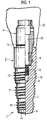
- Fig. 1 shows partly in a view and partly in an axial section of a two-part dental implant 1 with a post part 2 and with a mounting part 4.
- the post part 2 and also the head or body part 4 are made of metal, in particular of titanium or a titanium alloy.
- the post part 2 is designed as a stepped screw and contains three stages 6 to 8, which each have a self-tapping thread 10 to 12 with the same increase.
- the closest to the apical end 14 stage 6 has the smallest diameter.
- the step 9 closest to the structural part 4 has a smooth cylindrical outer surface.
- the post part 2 has at the coronal end 15 an inner bore 16, in which the head or body part 4 is inserted, and which further includes an internal thread 18.
- the post part 2 is anchored in a correspondingly prepared implant bed of the jawbone.
- the thread construction ensures a high primary stability and a uniform transmission of the forces occurring during chewing load in the jawbone.
- the bone should grow as directly as possible to the implant during the healing phase following the implantation and intimately associate with him.
- This process known as osseointegration, is significantly improved by roughening the implant surface.
- many implants available on the market differ, although no specific type of surface treatment has yet been established scientifically or commercially. On the contrary, there is a need to develop novel methods which lead to improved surface properties and in particular take into account, implement and develop the findings of nanostructure research.
- essentially electrolytic etching processes are used, which are based on a pretreatment of an implant blank for nanostructuring, so that overall a microstructured surface with embedded nanopores is formed.
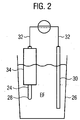
- the two method steps are each performed in an electrolysis device, as in FIG Fig. 2 shown schematically performed.
- the implant base body or titanium blank 24 to be treated dips at least partially into an electrolyte liquid EF stored in a container 26 and forms an electrode 28.
- a second electrode 30 dips away from this first electrode 28, in the exemplary embodiment made of titanium, platinum or gold into the electrolyte fluid EF.
- the two electrodes 28, 30 are connected via electrically conductive wire connections 32 to a controllable voltage source, which supplies a temporally constant or a temporally varying electrical voltage as required.
- the implant base body 24 is mechanically held by an electrically insulating holding element 34, wherein an electrically conductive inner element (in FIG Fig. 2 not visible) is passed through the support member 34. Due to the dissolved in the electrolyte fluid EF, from electrode to electrode migrating ions, which act as charge carriers for the electrical current transport, the circuit is closed. The metal ions or electrodes are thereby reduced at the cathode by the addition of electrons to pure metal. The anode material is oxidized to metal ions with the release of electrons.
- the temperature of the electrolyte fluid EF can be adjusted by means of a controllable heating device (not shown here).
- a titanium oxide layer is formed on the implant, which evenly coats the initial microstructures.
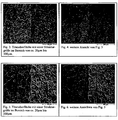
- a nanostructure impressed or superimposed on the microstructure forms whose pores have an average size of less than one micrometer, depending on the process parameters set, usually 10 nm to 900 nm.
- Variant 2 can be used both with and without one of the six mentioned pretreatment methods.
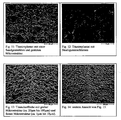
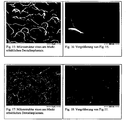
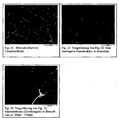
- the electrolyte is a solution of 5 g of sodium nitrite (NaNO 2) in 30 ml of water or 5 g of ammonium nitrite in 30 ml of water. Alternatively, a 60 percent nitric acid can be used. Otherwise, the details of the procedure and the parameters correspond to those mentioned under II a) above. Here, a superposition of three structures (see FIGS. 23 to 26 ) arise.
- a coarse roughness of about 20 microns to 60 microns is superimposed on a fine microstructure with a roughness of about 1 micron to 10 microns and this still a nanostructure with a structure size of about 10 nm to 50 nm.
- a nanostructure with a structure size of about 10 nm to 50 nm can deposit or store on the surface of elemental nitrogen or nitrogen compounds.
Landscapes
- Health & Medical Sciences (AREA)
- Chemical & Material Sciences (AREA)
- Engineering & Computer Science (AREA)
- Oral & Maxillofacial Surgery (AREA)
- Veterinary Medicine (AREA)
- Public Health (AREA)
- General Health & Medical Sciences (AREA)
- Animal Behavior & Ethology (AREA)
- Life Sciences & Earth Sciences (AREA)
- Epidemiology (AREA)
- Organic Chemistry (AREA)
- Metallurgy (AREA)
- Materials Engineering (AREA)
- Electrochemistry (AREA)
- Chemical Kinetics & Catalysis (AREA)
- Medicinal Chemistry (AREA)
- Transplantation (AREA)
- Dermatology (AREA)
- Dentistry (AREA)
- Dispersion Chemistry (AREA)
- Ceramic Engineering (AREA)
- Orthopedic Medicine & Surgery (AREA)
- Inorganic Chemistry (AREA)
- Manufacturing & Machinery (AREA)
- Prostheses (AREA)
- Materials For Medical Uses (AREA)
- Dental Prosthetics (AREA)
Claims (11)
- Procédé de fabrication d'un corps métallique avec une surface ayant des pores nanoscopiques ou une structure nanoscopique, dans lequel un corps de base métallique se composant de titane ou d'un alliage contenant titane est soumis à un courant pulsatif dans un bain d'électrolyse, le bain d'électrolyse étant chargé d'ions qui à chaque fois se composent d'un élément de l'un des groupes principaux V à VII du système périodique des éléments ou comprennent un tel élément en tant que composant, et dans lequel le corps de base métallique est soumis à un courant alternatif ou à un courant continu pulsatif, l'amplitude de la tension de contrôle du courant étant augmentée progressivement dans des intervalles de temps successifs et ayant dans le domaine transitoire une vitesse de changement d'au moins 1 V/s.
- Procédé selon la revendication 1, dans lequel la tension de contrôle appliquée pour générer le courant a dans le domaine transitoire une vitesse de changement d'au moins 10 V/s, de préférence de 100 V/s.
- Procédé selon la revendication 1 ou 2, dans lequel du chrome est mélangé au corps de base métallique.
- Procédé selon l'une quelconque des revendications 1 à 3, dans lequel l'amplitude est augmentée dans des intervalles de temps successifs dans des pas de 5 V ou moins, de 5 V jusqu'à 15 V.
- Procédé selon l'une quelconque des revendications précédentes, dans lequel un signal de tension rectangulaire pulsatif est appliqué comme tension de contrôle.
- Procédé selon l'une quelconque des revendications précédentes, dans lequel une solution aqueuse de sulfate de sodium solution ou une solution de sulfate d'ammonium ou une solution de nitrite d'ammonium est choisie comme électrolyte.
- Procédé selon l'une quelconque des revendications 1 à 6, dans lequel un implant dentaire est fabriqué.
- Procédé selon la revendication 7, dans lequel un corps de base d'implant ayant une surface microstructurée est utilisé comme corps de base métallique.
- Implant osseux, fait de titane ou d'un alliage contenant titane, avec une surface ayant des pores nanoscopiques ou une structure nanoscopique, fabriqué par un procédé de l'une quelconque des revendications 1 à 8, dans lequel les pores nanoscopiques ont un diamètre de pore moyen de non plus de 250 nm ou la structure nanoscopique a une taille de structure de non plus de 250 nm.
- Implant osseux selon la revendication 9, dont la surface a un angle de mouillage hydrophile de non plus de 15°.
- Implant osseux selon la revendication 9 ou 10 avec une surface microstructurée, dans lequel la microstructure est recouverte d'une nanostructure et dans lequel des atomes d'azote et/ou des composés d'azote sont fixés et/ou inclus au niveau de la surface.
Applications Claiming Priority (2)
| Application Number | Priority Date | Filing Date | Title |
|---|---|---|---|
| DE102006004653A DE102006004653A1 (de) | 2006-01-31 | 2006-01-31 | Verfahren zur Herstellung eines Metallkörpers sowie Metallkörper |
| PCT/EP2007/000711 WO2007088013A1 (fr) | 2006-01-31 | 2007-01-27 | Procédé de fabrication d'un corps métallique et corps métallique |
Publications (2)
| Publication Number | Publication Date |
|---|---|
| EP1982007A1 EP1982007A1 (fr) | 2008-10-22 |
| EP1982007B1 true EP1982007B1 (fr) | 2017-05-17 |
Family
ID=37949379
Family Applications (1)
| Application Number | Title | Priority Date | Filing Date |
|---|---|---|---|
| EP07722775.9A Not-in-force EP1982007B1 (fr) | 2006-01-31 | 2007-01-27 | Procédé de fabrication d'un corps métallique et corps métallique |
Country Status (4)
| Country | Link |
|---|---|
| US (1) | US7951285B2 (fr) |
| EP (1) | EP1982007B1 (fr) |
| DE (1) | DE102006004653A1 (fr) |
| WO (1) | WO2007088013A1 (fr) |
Families Citing this family (25)
| Publication number | Priority date | Publication date | Assignee | Title |
|---|---|---|---|---|
| GB0208642D0 (en) * | 2002-04-16 | 2002-05-22 | Accentus Plc | Metal implants |
| GB0405680D0 (en) * | 2004-03-13 | 2004-04-21 | Accentus Plc | Metal implants |
| CA2654235C (fr) * | 2006-06-12 | 2015-01-06 | Accentus Plc | Implant metallique comprenant une surface d'oxyde anodise revetue de ceramique et contenant des ions metalliques biocides |
| US20100136083A1 (en) * | 2007-01-15 | 2010-06-03 | Accentus Plc | Metal Implants |
| DE102007007865A1 (de) * | 2007-02-14 | 2008-08-21 | Jennissen, Herbert, Prof. Dr. | Verfahren zur Herstellung von lagerfähigen Implantaten mit einer ultrahydrophilen Oberfläche |
| US8858775B2 (en) | 2007-10-03 | 2014-10-14 | Accentus Medical Limited | Method of manufacturing metal with biocidal properties |
| US8696759B2 (en) * | 2009-04-15 | 2014-04-15 | DePuy Synthes Products, LLC | Methods and devices for implants with calcium phosphate |
| EP2314251A1 (fr) * | 2009-10-20 | 2011-04-27 | Giuseppe Vrespa | Prothèse dentaire doté d'une surface en nanotubes avec des cavités micrométriques |
| TW201216926A (en) * | 2010-10-18 | 2012-05-01 | Metal Ind Res & Dev Ct | capable of increasing affinity of the surface film to biological cells to enhance the compatibility of medical implants to biological cells |
| JP2012143416A (ja) * | 2011-01-13 | 2012-08-02 | Gc Corp | 歯科用インプラント及び歯科用インプラントの表面処理方法 |
| DE102011018677B4 (de) * | 2011-04-21 | 2014-11-20 | Zl Microdent-Attachment Gmbh & Co. Kg | Implantat mit einer heterogen strukturierten Implantatoberfläche und Verfahren zur Herstellung |
| US9221563B2 (en) * | 2011-06-09 | 2015-12-29 | DePuy Synthes Products, Inc. | Anodizing container |
| EP2641621A1 (fr) * | 2012-03-23 | 2013-09-25 | Elos Medtech Pinol A/S | Revêtement à base de strontium pour implants corporels |
| ES2887245T3 (es) * | 2013-06-07 | 2021-12-22 | Straumann Holding Ag | Procedimiento para proporcionar sitios de adherencia de proteínas mejorada en un cuerpo básico de pilar |
| DE102014006739B3 (de) | 2014-05-12 | 2015-06-25 | Albert-Ludwigs-Universität Freiburg | Verfahren zur Beschichtung von Oberflächen mit Nanostrukturen, nach dem Verfahren her- gestelltes Bauteil und Verwendung des Bauteils |
| US10687956B2 (en) | 2014-06-17 | 2020-06-23 | Titan Spine, Inc. | Corpectomy implants with roughened bioactive lateral surfaces |
| EP3034033A1 (fr) | 2014-12-16 | 2016-06-22 | Nobel Biocare Services AG | Implant dentaire |
| TWI726940B (zh) | 2015-11-20 | 2021-05-11 | 美商泰坦脊柱股份有限公司 | 積層製造整形外科植入物之方法 |
| EP3493769B1 (fr) | 2016-08-03 | 2022-03-30 | Titan Spine, Inc. | Surfaces d'implant en titane libre de l'alpha-case et à ostéoinduction améliorée |
| ES2971657T3 (es) | 2018-11-12 | 2024-06-06 | Nobel Biocare Services Ag | Implante dental, componente para aplicaciones dentales, sistema de implante para aplicaciones dentales, método para formar una capa protectora sobre la superficie de un componente de implante o implantable, componente de implante o implantable que tiene una capa protectora, y uso de una capa protectora |
| KR102187414B1 (ko) * | 2020-07-09 | 2020-12-07 | 박태석 | 디지털스캐닝에 적합한 무광택의 강화 지르코니아 어버트먼트 및 이의 제조방법 |
| DE102021111147A1 (de) | 2021-04-29 | 2022-11-03 | Christian-Albrechts-Universität zu Kiel, Körperschaft des öffentlichen Rechts | Kompositstruktur aus titan und/oder eine titanlegierung und/oder niti und einem polymer sowie elektrochemisches ätz-herstellungsverfahren dazu |
| CN113862768A (zh) * | 2021-09-16 | 2021-12-31 | 深圳市鑫鸿达清洗技术有限公司 | 钛合金表面的成孔方法、钛合金-塑胶复合体及制备方法 |
| DE102024111115A1 (de) | 2024-04-19 | 2025-10-23 | Christian-Albrechts-Universität zu Kiel, Körperschaft des öffentlichen Rechts | Gepulstes anodisches ätz-herstellungsverfahren von verzahnungsstrukturen auf oberflächen von kupfer und/oder kupferlegierungen, kupfer und/oder kupferlegierungen |
| CN120505690A (zh) * | 2025-04-29 | 2025-08-19 | 深圳市协力达精密科技有限公司 | 光模块毛坯料的表面纳米结构化处理工艺 |
Family Cites Families (21)
| Publication number | Priority date | Publication date | Assignee | Title |
|---|---|---|---|---|
| DD246028A1 (de) | 1986-02-12 | 1987-05-27 | Karl Marx Stadt Tech Hochschul | Keramisiertes metallimplantat |
| JPH0747836B2 (ja) * | 1990-03-02 | 1995-05-24 | ワイケイケイ株式会社 | アルミニウム又はアルミニウム合金材の着色法 |
| CN1055540C (zh) * | 1995-10-11 | 2000-08-16 | 中国兵器工业第208研究所 | 自动报靶器 |
| DE19643555A1 (de) | 1996-10-24 | 1998-04-30 | Univ Dresden Tech | Metallischer Gegenstand mit einer dünnen mehrphasigen Oxidschicht sowie Verfahren zu dessen Herstellung |
| JPH1143799A (ja) | 1997-07-24 | 1999-02-16 | Nikon Corp | 生体親和性酸化チタン皮膜の製造方法 |
| US6290834B1 (en) * | 2000-04-12 | 2001-09-18 | Ceramic Coatings Technologies, Inc. | Ceramic coated liquid transfer rolls and methods of making them |
| EP1159935A1 (fr) | 2000-05-31 | 2001-12-05 | SAY, Wen-Ching | Implant orthopédique ayant une surface poreuse et procédé pour le fabriquer |
| US7291178B2 (en) * | 2001-05-29 | 2007-11-06 | Mediteam Dental Ab | Modified oxide |
| CN1147625C (zh) | 2002-03-01 | 2004-04-28 | 西安交通大学 | 多孔纳米氧化钛基复相生物活性表层及其制备工艺 |
| AU2003221365A1 (en) * | 2002-03-15 | 2003-09-29 | Canon Kabushiki Kaisha | Porous material and process for producing the same |
| DE10230720A1 (de) * | 2002-07-08 | 2004-02-12 | Tinox Ag I.Ins. | Implantat |
| SE523236C2 (sv) | 2002-07-19 | 2004-04-06 | Astra Tech Ab | Ett implantat och ett förfarande för behandling av en implantatyta |
| DE10234136A1 (de) * | 2002-07-26 | 2004-02-05 | Mir-Chem Gmbh | Verfahren zum elektrochemischen Mikro-Bearbeiten eines Werkstücks |
| JP5079208B2 (ja) * | 2003-02-24 | 2012-11-21 | デピュイ・プロダクツ・インコーポレイテッド | 粗面を有する金属製インプラント及びその製造方法 |
| US6974532B2 (en) | 2003-05-01 | 2005-12-13 | New York University | Method for producing adherent coatings of calcium phosphate phases on titanium and titanium alloy substrates by electrochemical deposition |
| US7488343B2 (en) * | 2003-09-16 | 2009-02-10 | Boston Scientific Scimed, Inc. | Medical devices |
| US20050103639A1 (en) * | 2003-11-18 | 2005-05-19 | Fu-Hsing Lu | Titanium dioxide film synthesizing method and the product thereof |
| GB0500407D0 (en) | 2005-01-10 | 2005-02-16 | Short Brothers Plc | Anodising aluminium alloy |
| DE202005002450U1 (de) | 2005-02-16 | 2005-07-07 | Oraltronics Dental Implant Technology Gmbh | Nanostrukturierte Oberfläche |
| US20060229715A1 (en) * | 2005-03-29 | 2006-10-12 | Sdgi Holdings, Inc. | Implants incorporating nanotubes and methods for producing the same |
| RU2291918C1 (ru) * | 2005-05-31 | 2007-01-20 | Институт физики прочности и материаловедения Сибирского отделения Российской академии наук (ИФПМ СО РАН) | Кальций-фосфатное покрытие на титане и титановых сплавах и способ его нанесения |
-
2006
- 2006-01-31 DE DE102006004653A patent/DE102006004653A1/de not_active Ceased
-
2007
- 2007-01-27 WO PCT/EP2007/000711 patent/WO2007088013A1/fr not_active Ceased
- 2007-01-27 US US12/162,635 patent/US7951285B2/en not_active Expired - Fee Related
- 2007-01-27 EP EP07722775.9A patent/EP1982007B1/fr not_active Not-in-force
Also Published As
| Publication number | Publication date |
|---|---|
| US7951285B2 (en) | 2011-05-31 |
| US20090164027A1 (en) | 2009-06-25 |
| EP1982007A1 (fr) | 2008-10-22 |
| WO2007088013A1 (fr) | 2007-08-09 |
| DE102006004653A1 (de) | 2007-08-02 |
Similar Documents
| Publication | Publication Date | Title |
|---|---|---|
| EP1982007B1 (fr) | Procédé de fabrication d'un corps métallique et corps métallique | |
| EP2543333B1 (fr) | Procédé de fabrication d'un corps implantaire et implant comprenant un tel corps implantaire | |
| EP2004248B1 (fr) | Revêtements salins biorésorbables pour protéger des implants contre les contaminants organiques | |
| DE69533448T2 (de) | Preparierung einer implantatoberfläche | |
| EP1150620A1 (fr) | Implants osteophiles | |
| EP1434607A1 (fr) | Implants osteophiles | |
| EP2476443A1 (fr) | Implant, en particulier implant dentaire | |
| EP1440669A1 (fr) | Implant osseux et procédé pour sa fabrication | |
| EP1888139B1 (fr) | Implant dentaire et procede de fabrication | |
| DE102008046198B3 (de) | Implantat und Verfahren zur seiner Herstellung sowie deren Verwendung | |
| EP2097118A2 (fr) | Revetement d'implant bioactif | |
| DE102008046197B3 (de) | Degradierbares Implantat und Verfahren zu seiner Herstellung sowie deren Verwendung | |
| DE102012021003B4 (de) | Perkutanes lmplantat und Verfahren zum Herstellen eines solchen lmplantates | |
| DE112015001890T5 (de) | Implantat und Herstellungsverfahren hierfür | |
| DE202019105040U1 (de) | Zweiteiliges Zahn-Kieferimplantat | |
| DE102004021739A1 (de) | Implantat mit Oberflächenbeschichtung | |
| EP4267212B1 (fr) | Procédé de production d'un implant métallique à surface modifiée | |
| EP1293219A1 (fr) | Produit biomédical ayant un substrat comprenant un alliage à base de nickel et titane et un revêtement comprenant du phosphate de calcium | |
| DE10158302A1 (de) | Beschichtung von implantierbaren Metallkörpern mit bioaktiven Materialien | |
| EP2427162B1 (fr) | Accessoire d'acupuncture, en particulier aiguille d'acupuncture | |
| DD300262A7 (de) | Metallspongiosa | |
| DE102008026557A1 (de) | Elektrochemisch hergestellte, biologisch degradationsstabile, duktile und haftfeste Titanoxid-Oberflächenschicht auf Titan oder Titanbasislegierungen |
Legal Events
| Date | Code | Title | Description |
|---|---|---|---|
| PUAI | Public reference made under article 153(3) epc to a published international application that has entered the european phase |
Free format text: ORIGINAL CODE: 0009012 |
|
| 17P | Request for examination filed |
Effective date: 20080829 |
|
| AK | Designated contracting states |
Kind code of ref document: A1 Designated state(s): AT BE BG CH CY CZ DE DK EE ES FI FR GB GR HU IE IS IT LI LT LU LV MC NL PL PT RO SE SI SK TR |
|
| DAX | Request for extension of the european patent (deleted) | ||
| 17Q | First examination report despatched |
Effective date: 20141014 |
|
| GRAP | Despatch of communication of intention to grant a patent |
Free format text: ORIGINAL CODE: EPIDOSNIGR1 |
|
| STAA | Information on the status of an ep patent application or granted ep patent |
Free format text: STATUS: GRANT OF PATENT IS INTENDED |
|
| INTG | Intention to grant announced |
Effective date: 20161206 |
|
| GRAS | Grant fee paid |
Free format text: ORIGINAL CODE: EPIDOSNIGR3 |
|
| GRAA | (expected) grant |
Free format text: ORIGINAL CODE: 0009210 |
|
| STAA | Information on the status of an ep patent application or granted ep patent |
Free format text: STATUS: THE PATENT HAS BEEN GRANTED |
|
| AK | Designated contracting states |
Kind code of ref document: B1 Designated state(s): AT BE BG CH CY CZ DE DK EE ES FI FR GB GR HU IE IS IT LI LT LU LV MC NL PL PT RO SE SI SK TR |
|
| REG | Reference to a national code |
Ref country code: GB Ref legal event code: FG4D Free format text: NOT ENGLISH |
|
| REG | Reference to a national code |
Ref country code: CH Ref legal event code: EP Ref country code: CH Ref legal event code: NV Representative=s name: E. BLUM AND CO. AG PATENT- UND MARKENANWAELTE , CH |
|
| REG | Reference to a national code |
Ref country code: IE Ref legal event code: FG4D Free format text: LANGUAGE OF EP DOCUMENT: GERMAN |
|
| REG | Reference to a national code |
Ref country code: AT Ref legal event code: REF Ref document number: 894556 Country of ref document: AT Kind code of ref document: T Effective date: 20170615 |
|
| REG | Reference to a national code |
Ref country code: DE Ref legal event code: R096 Ref document number: 502007015651 Country of ref document: DE |
|
| REG | Reference to a national code |
Ref country code: DE Ref legal event code: R081 Ref document number: 502007015651 Country of ref document: DE Owner name: ZIPPRICH, HOLGER, DE Free format text: FORMER OWNER: ZIPPRICH, HOLGER, 64283 DARMSTADT, DE |
|
| REG | Reference to a national code |
Ref country code: NL Ref legal event code: MP Effective date: 20170517 |
|
| REG | Reference to a national code |
Ref country code: LT Ref legal event code: MG4D |
|
| PG25 | Lapsed in a contracting state [announced via postgrant information from national office to epo] |
Ref country code: ES Free format text: LAPSE BECAUSE OF FAILURE TO SUBMIT A TRANSLATION OF THE DESCRIPTION OR TO PAY THE FEE WITHIN THE PRESCRIBED TIME-LIMIT Effective date: 20170517 Ref country code: LT Free format text: LAPSE BECAUSE OF FAILURE TO SUBMIT A TRANSLATION OF THE DESCRIPTION OR TO PAY THE FEE WITHIN THE PRESCRIBED TIME-LIMIT Effective date: 20170517 Ref country code: FI Free format text: LAPSE BECAUSE OF FAILURE TO SUBMIT A TRANSLATION OF THE DESCRIPTION OR TO PAY THE FEE WITHIN THE PRESCRIBED TIME-LIMIT Effective date: 20170517 Ref country code: GR Free format text: LAPSE BECAUSE OF FAILURE TO SUBMIT A TRANSLATION OF THE DESCRIPTION OR TO PAY THE FEE WITHIN THE PRESCRIBED TIME-LIMIT Effective date: 20170818 |
|
| PG25 | Lapsed in a contracting state [announced via postgrant information from national office to epo] |
Ref country code: SE Free format text: LAPSE BECAUSE OF FAILURE TO SUBMIT A TRANSLATION OF THE DESCRIPTION OR TO PAY THE FEE WITHIN THE PRESCRIBED TIME-LIMIT Effective date: 20170517 Ref country code: BG Free format text: LAPSE BECAUSE OF FAILURE TO SUBMIT A TRANSLATION OF THE DESCRIPTION OR TO PAY THE FEE WITHIN THE PRESCRIBED TIME-LIMIT Effective date: 20170817 Ref country code: LV Free format text: LAPSE BECAUSE OF FAILURE TO SUBMIT A TRANSLATION OF THE DESCRIPTION OR TO PAY THE FEE WITHIN THE PRESCRIBED TIME-LIMIT Effective date: 20170517 Ref country code: IS Free format text: LAPSE BECAUSE OF FAILURE TO SUBMIT A TRANSLATION OF THE DESCRIPTION OR TO PAY THE FEE WITHIN THE PRESCRIBED TIME-LIMIT Effective date: 20170917 Ref country code: NL Free format text: LAPSE BECAUSE OF FAILURE TO SUBMIT A TRANSLATION OF THE DESCRIPTION OR TO PAY THE FEE WITHIN THE PRESCRIBED TIME-LIMIT Effective date: 20170517 Ref country code: PL Free format text: LAPSE BECAUSE OF FAILURE TO SUBMIT A TRANSLATION OF THE DESCRIPTION OR TO PAY THE FEE WITHIN THE PRESCRIBED TIME-LIMIT Effective date: 20170517 |
|
| REG | Reference to a national code |
Ref country code: FR Ref legal event code: PLFP Year of fee payment: 12 |
|
| PG25 | Lapsed in a contracting state [announced via postgrant information from national office to epo] |
Ref country code: CZ Free format text: LAPSE BECAUSE OF FAILURE TO SUBMIT A TRANSLATION OF THE DESCRIPTION OR TO PAY THE FEE WITHIN THE PRESCRIBED TIME-LIMIT Effective date: 20170517 Ref country code: RO Free format text: LAPSE BECAUSE OF FAILURE TO SUBMIT A TRANSLATION OF THE DESCRIPTION OR TO PAY THE FEE WITHIN THE PRESCRIBED TIME-LIMIT Effective date: 20170517 Ref country code: DK Free format text: LAPSE BECAUSE OF FAILURE TO SUBMIT A TRANSLATION OF THE DESCRIPTION OR TO PAY THE FEE WITHIN THE PRESCRIBED TIME-LIMIT Effective date: 20170517 Ref country code: SK Free format text: LAPSE BECAUSE OF FAILURE TO SUBMIT A TRANSLATION OF THE DESCRIPTION OR TO PAY THE FEE WITHIN THE PRESCRIBED TIME-LIMIT Effective date: 20170517 Ref country code: EE Free format text: LAPSE BECAUSE OF FAILURE TO SUBMIT A TRANSLATION OF THE DESCRIPTION OR TO PAY THE FEE WITHIN THE PRESCRIBED TIME-LIMIT Effective date: 20170517 |
|
| REG | Reference to a national code |
Ref country code: DE Ref legal event code: R097 Ref document number: 502007015651 Country of ref document: DE |
|
| PG25 | Lapsed in a contracting state [announced via postgrant information from national office to epo] |
Ref country code: IT Free format text: LAPSE BECAUSE OF FAILURE TO SUBMIT A TRANSLATION OF THE DESCRIPTION OR TO PAY THE FEE WITHIN THE PRESCRIBED TIME-LIMIT Effective date: 20170517 |
|
| PLBE | No opposition filed within time limit |
Free format text: ORIGINAL CODE: 0009261 |
|
| STAA | Information on the status of an ep patent application or granted ep patent |
Free format text: STATUS: NO OPPOSITION FILED WITHIN TIME LIMIT |
|
| 26N | No opposition filed |
Effective date: 20180220 |
|
| PG25 | Lapsed in a contracting state [announced via postgrant information from national office to epo] |
Ref country code: SI Free format text: LAPSE BECAUSE OF FAILURE TO SUBMIT A TRANSLATION OF THE DESCRIPTION OR TO PAY THE FEE WITHIN THE PRESCRIBED TIME-LIMIT Effective date: 20170517 |
|
| PG25 | Lapsed in a contracting state [announced via postgrant information from national office to epo] |
Ref country code: LU Free format text: LAPSE BECAUSE OF NON-PAYMENT OF DUE FEES Effective date: 20180127 |
|
| REG | Reference to a national code |
Ref country code: IE Ref legal event code: MM4A |
|
| REG | Reference to a national code |
Ref country code: BE Ref legal event code: MM Effective date: 20180131 |
|
| PG25 | Lapsed in a contracting state [announced via postgrant information from national office to epo] |
Ref country code: BE Free format text: LAPSE BECAUSE OF NON-PAYMENT OF DUE FEES Effective date: 20180131 |
|
| PG25 | Lapsed in a contracting state [announced via postgrant information from national office to epo] |
Ref country code: IE Free format text: LAPSE BECAUSE OF NON-PAYMENT OF DUE FEES Effective date: 20180127 |
|
| REG | Reference to a national code |
Ref country code: AT Ref legal event code: MM01 Ref document number: 894556 Country of ref document: AT Kind code of ref document: T Effective date: 20180127 |
|
| PG25 | Lapsed in a contracting state [announced via postgrant information from national office to epo] |
Ref country code: AT Free format text: LAPSE BECAUSE OF NON-PAYMENT OF DUE FEES Effective date: 20180127 |
|
| PG25 | Lapsed in a contracting state [announced via postgrant information from national office to epo] |
Ref country code: MC Free format text: LAPSE BECAUSE OF FAILURE TO SUBMIT A TRANSLATION OF THE DESCRIPTION OR TO PAY THE FEE WITHIN THE PRESCRIBED TIME-LIMIT Effective date: 20170517 |
|
| PG25 | Lapsed in a contracting state [announced via postgrant information from national office to epo] |
Ref country code: TR Free format text: LAPSE BECAUSE OF FAILURE TO SUBMIT A TRANSLATION OF THE DESCRIPTION OR TO PAY THE FEE WITHIN THE PRESCRIBED TIME-LIMIT Effective date: 20170517 |
|
| PG25 | Lapsed in a contracting state [announced via postgrant information from national office to epo] |
Ref country code: HU Free format text: LAPSE BECAUSE OF FAILURE TO SUBMIT A TRANSLATION OF THE DESCRIPTION OR TO PAY THE FEE WITHIN THE PRESCRIBED TIME-LIMIT; INVALID AB INITIO Effective date: 20070127 Ref country code: PT Free format text: LAPSE BECAUSE OF FAILURE TO SUBMIT A TRANSLATION OF THE DESCRIPTION OR TO PAY THE FEE WITHIN THE PRESCRIBED TIME-LIMIT Effective date: 20170517 |
|
| PG25 | Lapsed in a contracting state [announced via postgrant information from national office to epo] |
Ref country code: CY Free format text: LAPSE BECAUSE OF FAILURE TO SUBMIT A TRANSLATION OF THE DESCRIPTION OR TO PAY THE FEE WITHIN THE PRESCRIBED TIME-LIMIT Effective date: 20170517 |
|
| PGFP | Annual fee paid to national office [announced via postgrant information from national office to epo] |
Ref country code: FR Payment date: 20210120 Year of fee payment: 15 |
|
| PGFP | Annual fee paid to national office [announced via postgrant information from national office to epo] |
Ref country code: GB Payment date: 20210122 Year of fee payment: 15 |
|
| PGFP | Annual fee paid to national office [announced via postgrant information from national office to epo] |
Ref country code: DE Payment date: 20220126 Year of fee payment: 16 Ref country code: CH Payment date: 20220125 Year of fee payment: 16 |
|
| GBPC | Gb: european patent ceased through non-payment of renewal fee |
Effective date: 20220127 |
|
| PG25 | Lapsed in a contracting state [announced via postgrant information from national office to epo] |
Ref country code: GB Free format text: LAPSE BECAUSE OF NON-PAYMENT OF DUE FEES Effective date: 20220127 |
|
| PG25 | Lapsed in a contracting state [announced via postgrant information from national office to epo] |
Ref country code: FR Free format text: LAPSE BECAUSE OF NON-PAYMENT OF DUE FEES Effective date: 20220131 |
|
| P01 | Opt-out of the competence of the unified patent court (upc) registered |
Effective date: 20230526 |
|
| REG | Reference to a national code |
Ref country code: DE Ref legal event code: R119 Ref document number: 502007015651 Country of ref document: DE |
|
| REG | Reference to a national code |
Ref country code: CH Ref legal event code: PL |
|
| PG25 | Lapsed in a contracting state [announced via postgrant information from national office to epo] |
Ref country code: LI Free format text: LAPSE BECAUSE OF NON-PAYMENT OF DUE FEES Effective date: 20230131 Ref country code: DE Free format text: LAPSE BECAUSE OF NON-PAYMENT OF DUE FEES Effective date: 20230801 Ref country code: CH Free format text: LAPSE BECAUSE OF NON-PAYMENT OF DUE FEES Effective date: 20230131 |