EP1982476B1 - Direktzugriffsprozedur mit verbesserter abdeckung - Google Patents
Direktzugriffsprozedur mit verbesserter abdeckung Download PDFInfo
- Publication number
- EP1982476B1 EP1982476B1 EP07700502.3A EP07700502A EP1982476B1 EP 1982476 B1 EP1982476 B1 EP 1982476B1 EP 07700502 A EP07700502 A EP 07700502A EP 1982476 B1 EP1982476 B1 EP 1982476B1
- Authority
- EP
- European Patent Office
- Prior art keywords
- message burst
- preamble
- message
- base station
- providing
- Prior art date
- Legal status (The legal status is an assumption and is not a legal conclusion. Google has not performed a legal analysis and makes no representation as to the accuracy of the status listed.)
- Active
Links
Images


Classifications
-
- H—ELECTRICITY
- H04—ELECTRIC COMMUNICATION TECHNIQUE
- H04W—WIRELESS COMMUNICATION NETWORKS
- H04W74/00—Wireless channel access
- H04W74/002—Transmission of channel access control information
-
- H—ELECTRICITY
- H04—ELECTRIC COMMUNICATION TECHNIQUE
- H04L—TRANSMISSION OF DIGITAL INFORMATION, e.g. TELEGRAPHIC COMMUNICATION
- H04L1/00—Arrangements for detecting or preventing errors in the information received
- H04L1/12—Arrangements for detecting or preventing errors in the information received by using return channel
- H04L1/16—Arrangements for detecting or preventing errors in the information received by using return channel in which the return channel carries supervisory signals, e.g. repetition request signals
- H04L1/18—Automatic repetition systems, e.g. Van Duuren systems
- H04L1/1812—Hybrid protocols; Hybrid automatic repeat request [HARQ]
-
- H—ELECTRICITY
- H04—ELECTRIC COMMUNICATION TECHNIQUE
- H04W—WIRELESS COMMUNICATION NETWORKS
- H04W74/00—Wireless channel access
- H04W74/08—Non-scheduled access, e.g. ALOHA
- H04W74/0833—Random access procedures, e.g. with 4-step access
-
- H—ELECTRICITY
- H04—ELECTRIC COMMUNICATION TECHNIQUE
- H04W—WIRELESS COMMUNICATION NETWORKS
- H04W74/00—Wireless channel access
- H04W74/08—Non-scheduled access, e.g. ALOHA
- H04W74/0866—Non-scheduled access, e.g. ALOHA using a dedicated channel for access
-
- H—ELECTRICITY
- H04—ELECTRIC COMMUNICATION TECHNIQUE
- H04W—WIRELESS COMMUNICATION NETWORKS
- H04W52/00—Power management, e.g. Transmission Power Control [TPC] or power classes
- H04W52/04—Transmission power control [TPC]
- H04W52/38—TPC being performed in particular situations
- H04W52/50—TPC being performed in particular situations at the moment of starting communication in a multiple access environment
-
- H—ELECTRICITY
- H04—ELECTRIC COMMUNICATION TECHNIQUE
- H04W—WIRELESS COMMUNICATION NETWORKS
- H04W56/00—Synchronisation arrangements
- H04W56/0055—Synchronisation arrangements determining timing error of reception due to propagation delay
- H04W56/0065—Synchronisation arrangements determining timing error of reception due to propagation delay using measurement of signal travel time
- H04W56/007—Open loop measurement
- H04W56/0075—Open loop measurement based on arrival time vs. expected arrival time
- H04W56/0085—Open loop measurement based on arrival time vs. expected arrival time detecting a given structure in the signal
-
- H—ELECTRICITY
- H04—ELECTRIC COMMUNICATION TECHNIQUE
- H04W—WIRELESS COMMUNICATION NETWORKS
- H04W72/00—Local resource management
- H04W72/20—Control channels or signalling for resource management
- H04W72/23—Control channels or signalling for resource management in the downlink direction of a wireless link, i.e. towards a terminal
-
- H—ELECTRICITY
- H04—ELECTRIC COMMUNICATION TECHNIQUE
- H04W—WIRELESS COMMUNICATION NETWORKS
- H04W8/00—Network data management
- H04W8/26—Network addressing or numbering for mobility support
Definitions
- the present invention pertains to the field of wireless communication. More particularly, the present invention pertains to the random access procedure that a User Equipment (UE) (wireless communication terminal) follows for (among other uses) initial network access.
- UE User Equipment
- the evolved UTRA (E-UTRA or evolved UMTS (Universal Mobile Telecommunication System) Terrestrial Radio Access) network architecture includes a radio access network (providing UEs access to a core network of a cellular communication system) where the radio resources are divided into blocks of time (sub-frames) and frequency (frequency blocks). In the uplink, these blocks are used either for what is called here the Shared CHannel (SCH) or the contention-based Random Access CHannel (RACH).
- SCH Shared CHannel
- RACH contention-based Random Access CHannel
- the E-UTRA network includes entities that are called here base stations, and are elsewhere sometimes called Node-Bs, or eNBs.
- a base station of an E-UTRA network allocates SCH resources for UEs and RACH is used by the UEs to access the network or request SCH resources (or possibly to communicate a small amount of user data in some networks under some circumstances).
- RACH is also used in networks other than E-UTRA type radio network.
- RACH is in general a contention-based resource (as opposed to a shared resource) used by UEs to access a radio access network typically for initial access and bursty data transmission.
- the random access procedure is used (i.e. RACH is used or an analogous contention-based resource) when a UE needs to transmit user traffic (voice or data) or send a synchronization burst but the UE does not have an allocation of system resources on SCH.
- the UE may want to perform initial network access, make a location area update, move from the idle mode to the active state, or request capacity while in the active state.
- the random access procedure ends in an E-UTRA network when the radio access network gives the UE a timing advance value (to compensate for the time between sending a message to the radio access network and the latter receiving the message, and vice versa) and an allocation on SCH (for use as a traffic channel for sending voice or user data to the radio access network).
- UTRA FDD "Physical layer procedures", TECHNICAL REPORT, EUROPEAN TELECOMMUNICATIONS STANDARDS INSTITUTE (ETSI), January 1999 (1999-01), XP014030016 discloses a digital cellular telecommunications system that uses a random access procedure.
- the problem is to design a random access procedure that provides good coverage and low delay, with minimum use of resources.
- the prior art teaches transmitting the random access message (over RACH) on a constant frequency band. It can be advantageous to use a non-constant frequency band. In addition, it can be advantageous to use HARQ (hybrid automatic repeat request processing) in connection with the random access procedure.
- HARQ hybrid automatic repeat request processing
- the invention can involve what is called here a temporary cell specific address, and now in the art sometimes called a C-RNTI (Cell Radio Network Temporary Identity).
- the temporary cell specific address/ C-RNTI is shorter (e.g. 16 bits) than other unique identifiers such as TMSI (temporary mobile subscriber identifier), IMSI (international mobile subscriber identity), and IMEI (international mobile equipment identity), and so can be used more easily. All the resource allocations are made using the temporary cell specific address (to identity the receiver of the resources).
- a UE can receive a temporary cell specific address when it first establishes communication with a cell.
- the invention involves or is related to cooperation between elements of a wireless communication system, and in particular between a user equipment (UE) wireless communication terminal and the element of a radio access network of a wireless communication system by which the UE connects to the wireless communication system.
- a wireless communication system include implementations of GSM (Global System for Mobile Communication) and implementations of UMTS (Universal Mobile Telecommunication System).
- GSM Global System for Mobile Communication
- UMTS Universal Mobile Telecommunication System
- Each such wireless communication system includes a radio access network (RAN).
- RAN radio access network
- UTRAN UMTS Terrestrial RAN
- a UTRAN includes one or more Radio Network Controllers (RNCs), each having control of one or more Node Bs, which are wireless terminals configured to communicatively couple to one or more UE terminals.
- RNCs Radio Network Controllers
- a GSM RAN includes one or more base station controllers (BSCs), each controlling one or more base transceiver stations (BTSs).
- BSCs base station controllers
- BTSs base transceiver stations
- BSS base station system
- a wireless communication system 10a in which the present invention may be implemented including a UE (wireless communication) terminal 11, a radio access network 12, a core network 14 and a gateway 15, coupled via the gateway to another communications system 10b, such as the Internet, wireline communication systems (including the so-called plain old telephone system), and/or other wireless communication systems.
- the radio access network includes a wireless terminal 12a (e.g. a Node B or a BTS, both of which are called here simply a base station) and a controller 12b (e.g. a RNC or a BSC).
- the controller is in wireline communication with the core network.
- the core network typically includes a mobile switching center (MSC) for circuit-switched communication, and a serving general packet radio service (GPRS) support node (SGSN) for packet-switched communication.
- MSC mobile switching center
- GPRS general packet radio service
- LTE Long Term Evolution
- 3GPP Third Generation Partnership Project
- a prefix of the letter "E” in upper or lower case signifies LTE.
- the E-UTRAN consists of eNBs (E-UTRAN or enhanced Node Bs), providing the E-UTRA user plane (RLC/MAC/PHY) and control plane (RRC) protocol terminations towards the UE.
- the eNBs are interconnected with each other by means of a so-called X2 interface, and are also connected by means of a so-called S1 interface to an EPC (evolved packet core), e.g.
- EPC evolved packet core
- the S1 interface supports a many-to-many relation between MMEs/UPEs and eNBs, and provides a functional split between the MME and the UPE.
- FIG 2 shows some components of a communication terminal 20, which could be either the UE terminal 11 or the RAN wireless terminal 12a of Figure 1 , i.e. what is called here a base station (and so what encompasses a base transceiver station, a Node-B or a eNB).
- the communication terminal includes a processor 22 for controlling operation of the device, including all input and output.
- the processor whose speed/timing is regulated by a clock 22a, may include a BIOS (basic input/output system) or may include device handlers for controlling user audio and video input and output as well as user input from a keyboard.
- the BIOS/ device handlers may also allow for input from and output to a network interface card.
- the BIOS and/or device handlers also provide for control of input and output to a radio front end 25 including a transceiver (TRX) 25b and a TRX interface 25a, the TRX interface including possibly one or more digital signal processors (DSPs), application specific integrated circuits (ASICs), and/or field programmable gate arrays (FPGAs).
- TRX enables communication over the air with another similarly equipped communication terminal.
- the communication terminal may also include (depending on the application) other I/O devices, such as a keyboard and a mouse or other pointing device, a video display, a speaker/ microphone, and also a network interface (card), allowing wireline communication with other communication terminals, and in particular such communication over the Internet.
- the communication terminal includes volatile memory, i.e. so-called executable memory 23, and also non-volatile memory 24, i.e. storage memory.
- the processor 22 may copy applications (e.g. a calendar application or a game) stored in the non-volatile memory into the executable memory for execution by the processor.
- the processor functions according to an operating system, and to do so, the processor may load at least a portion of the operating system from the storage memory to the executable memory in order to activate a corresponding portion of the operating system.
- Other parts of the operating system, and in particular often at least a portion of the BIOS may exist in the communication terminal as firmware, and are then not copied into executable memory in order to be executed.
- the booting up instructions are such a portion of the operating system.
- the functionality described below can be implemented as software modules stored in a non-volatile memory, and executed as needed by a processor, after copying all or part of the software into executable RAM (random access memory).
- the logic provided by such software can also be provided by an ASIC (application specific integrated circuit).
- the invention can be provided as a computer program product including a computer readable storage structure embodying computer program code--i.e. the software--thereon for execution by a computer processor.
- An example is a so-called floppy disk having instructions for performing a method according to the invention encoded on the disk in machine (processor) readable form.
- the invention in particular provides a random access procedure for use by a UE in obtaining a resource allocation on SCH for uplinking user data, and for use by a base station of a radio access network in providing the allocation.
- a radio access network such as, for example, the E-UTRA network, i.e. an evolved version of a UTRA network now under development by the 3GPP (third generation partnership program) :
- a random access procedure is first, that the UE obtains a preamble identifier from an acknowledgement of the preamble, and second, that the resource allocation for the random access message can be separate from the preamble acknowledgement, and third, that after sending the random access message, the UE must try to detect not only an acknowledgement of the message but also any request for retransmission of the random access message burst. Further, the separate preamble and/ or the random access message burst may be frequency hopped.
- the base station assigns a preamble identifier for addressing the UE, and uses the preamble identifier to request retransmissions as needed, and utilizes HARQ (soft-combining) for decoding the random access message burst (on SCH).
- HARQ soft-combining
- An advantage accruing from the use of a separate preamble and a preamble identifier is that HARQ can be used in the reception of the random access message burst. HARQ improves detection probability. Coverage is improved and also any delay is reduced since a UE does not have to restart a random access process from the preamble phase if the base station does not succeed in decoding after the first transmission; the UE just retransmits the message burst, using the preamble identifier to determine what to retransmit.
- Frequency hopping randomizes both the fading of the UE's own signal and also interference: it is unlikely that fading and interference conditions are unfavorable on all the frequencies in a hopping pattern.
- the invention uses a preamble identifier and a temporary address, but for different purposes.
- the preamble identifier is given by the base station for asking for retransmissions of the random access message burst.
- the temporary address which can be a random address or a temporary cell specific address, is included by the UE in the message burst for the UE to be able to unambiguously identify messages intended for the UE. If the UE does not have a temporary cell specific address, the UE chooses a random address as a temporary address.
- the UE After the UE sends the temporary address to the base station in the random access message burst, the UE then reads the downlink shared control channel (DSCCH), searching for uplink and downlink resource allocations that are directed to the UE using the UE's preamble identifier.
- An uplink resource allocation is understood by the UE as indicating that the UE must retransmit its random access message burst.
- a downlink resource allocation means that the base station has correctly decoded a random access message burst (per a CRC check), but not necessarily the message burst from the UE.
- the downlink resource allocation indicates a downlink shared channel resource the UE is to decode so as to obtain a temporary address.
- the UE If the temporary address in the downlink message agrees with the UE's temporary address, the UE knows that the procedure was successful. On the other hand, if the temporary addresses do not agree, the UE is configured to terminate the procedure, since if the temporary addresses are not the same, the UE's preamble likely collided with the preamble of another UE (i.e. both the UE and another UE used the same access slot). To obtain a random address for use as a temporary cell specific address, the UE selects an address randomly from a set of addresses provided by a System Info message broadcast by the base station, which the UE reads after it has approximately synchronized to the base station (by procedures not the subject of the invention), i.e. synchronized except for taking into account propagation delays based on the UE to base station separation.
- the random access message burst (which is sent on SCH) includes:
- the information bits could be used to indicate the need for (further) SCH communication resources, such as for an emergency call. Furthermore, the amount of data to be transmitted on the SCH could be roughly indicated.
- the time frame could be two sub-frames or could be instead even less than a subframe.
- a section of the message comprises a pilot or signature part, and data symbols, i.e. the payload, and each section is followed by a guard time/ period (a portion of a sub-frame).
- the total length of a section of the message burst is therefore less than 0.5 ms (i.e. less than one sub-frame on SCH) because of the guard time, which is needed because of the UE not (at least sometimes) having a timing advance at this stage in the communication.
- Figure 3 also show frequency hopping of the preamble (on RACH).
- the encoding scheme for the message burst should preferably be such that each sub-frame is self-decodable. In the simplest example, identical symbols are transmitted during each sub-frame. In good conditions, the base station would succeed in decoding the message burst from the first sub-frame, which could speed-up the random access procedure, save resources and reduce interference if the base station could communicate an acknowledgment before the UE has sent the remainder of the message burst.
- a section can be longer than one sub-frame or even shorter than one sub-frame.
- the frame format of a random access message burst according to the invention can be utilized in other cases when the timing advance for communication between a UE and a base station is uncertain but the UE has obtained a cell specific temporary address.
- a case is handover when handover is handled as in GSM (Global System for Mobile communication).
- GSM Global System for Mobile communication
- the UE would get the address for the target cell through the serving base station.
- the target base station would start to allocate uplink resources when the UE should be ready to read the downlink shared control channel (DSCCH) carrying information on uplink communication channel allocations.
- the first transmission by the UE would be made with a frame format allowing uncertainty of timing advance, as in the frame format of a random access message burst according to the invention, i.e. the UE would start transmission in the target cell using the frame format of the invention even though there is no contention of the uplink communication resource in the case of handover.
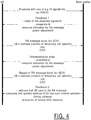
- FIG. 4 The signaling flow of a random access procedure according to an embodiment of the invention is shown in Figure 4 .
- access slots of RACH are reserved for sending preambles.
- the UE chooses an access slot and sends to the (serving) base station (eNB in E-UTRA) a preamble with a signature selected from a small set (e.g. 16). After a fixed period of time from reception of the preamble by the base station, i.e.
- the base station sends a first feedback message (indicated as feedback 1 in Figure 4 ) on DSCCH one or more messages serving to acknowledge receipt of the preamble, and includes in the first feedback a digest of the signature or an index of the signature (serving to identify to the UE the preamble being acknowledged, and so the first feedback is understood by the user equipment to be an acknowledgement because the first feedback identifies the preamble via the signature included in the preamble), a transmit power adjustment field, and a short identifier called here a preamble identifier (indicated as preamble-id in Figure 4 ), and also a pointer to a resource on SCH for sending the random access message burst (i.e.
- the pointer need not necessarily be given in the same message as the preamble identifier, because the pointer can be provided to the UE in a follow-up message (still part of feedback 1) addressed also to the UE using the preamble identifier.
- the resources for the message burst are reserved only after the base station observes a preamble, and note also that UEs with different signatures would be given different resources for transmission of their respective message bursts.
- the resources for the preambles and the cell specific access parameters are given in the System Info broadcast by the base station.
- one or more UEs may recognize themselves from the preamble identifier of the first feedback and would then associate themselves with the preamble identifier (because it is possible for more than one UE to transmit a preamble at the same time, since the RACH is a contention-based resource, i.e. it is not shared via a multiple access mechanism).
- Each such UE will read the downlink shared control channel (DSCCH), and when a resource on (uplink) SCH is pointed to on the DSCCH using the preamble identifier, the UE will send its random access message burst via the resource, using a zero timing advance.
- the message burst fields are as explained above, i.e. a temporary address, information bits, and a CRC word.
- the base station After a successful reception of the message burst, the base station sends a second feedback (indicated as feedback 2 in Figure 4 ), which contains the temporary address, the timing advance value, and a pointer to a further SCH resource to continue the uplink/ message exchange, as needed. After this second feedback, only the UE terminals that find their temporary address in the second feedback would continue the message exchange. Terminals that succeed in decoding the second feedback but that do not find their temporary address in it must start the random access procedure from the beginning.
- the base station If the base station does not succeed in decoding the random access message burst from a particular one of the one or more UEs, it can ask the UE to retransmit the message burst by addressing the UE again with the preamble identifier, which is used for allowing the base station to request retransmission, whereas the temporary address is for separating UE's that have chosen the same signature and access slot.
- the base station can then soft combine the symbols of the latest received random access message burst from the UE with the symbols of the earlier transmissions, i.e. the base station can use HARQ processing in the random access procedure. This greatly improves the probability of detection.
- the base station may also optimize for delay by asking the UE to repeat transmission of the random access message before trying to decode it.
- the preamble identifier can be short (e.g. 5 bits) if it is predetermined that the preamble identifier is to be valid only for a relatively short time (e.g. 10 ms) after it has been associated by the base station with a signature observed by the base station in a certain time and frequency resource. A time period of 10 ms would still allow time for a few retransmissions of the message part.
- Timing advance it may not be useful to send the timing advance to a UE terminal in the first feedback since two UE terminals, say terminal X and terminal Y, might have sent a preamble with the same signature but the base station has only detected the preamble sent by terminal X.
- the timing advance suitable for terminal Y could be completely different from the one for terminal X.
- terminal Y transmits with the timing advance meant for terminal X the transmission could overlap a previous or later timeslot.
- the timing advance is advantageously provided in the second feedback, as indicated in Figure 4 .
- two UEs send their respective random access message bursts on the same resource (of SCH) only if they have chosen the same preamble signature.
- Both the (separate) preamble and the message burst can be divided into sections that are transmitted at different frequencies.
- the following is an example of the use of the random access procedure according to one embodiment of the invention, in the case where a UE uses the random access procedure to request an allocation on the shared channel SCH for uplinking user data.
- the UE uses the random access message burst only for indicating the need for an allocation on SCH, so that the base station can determine how much of a resource is needed, the invention also allows a UE to use the information bits in the random access message burst itself to uplink user data.
- the preamble is transmitted on RACH in a narrow BW (e.g. resource chunk of 1.25MHz/3) of RACH. See Figure 3 . Its length is set to two sub-frames. The frequency is hopped between the sub-frames in order to gain diversity.
- a narrow BW e.g. resource chunk of 1.25MHz/3
- the symbol sequence is chosen randomly from a set of signatures. The random selection is repeated for every retransmission.
- the set of available signatures is given in the so-called System Info broadcast by the base station.
- Open loop power control is utilized: the transmission power is tuned according to the measured downlink attenuation and the desired power level in the base station receiver. In addition, power ramp-up is done if the preamble transmission has to be repeated. The parameters are given in the System Info.
- the density of access slots is chosen according to the RACH load and the delay requirements (waiting for the first access slot must not take too long).
- the time window for selection of the access slot is growing exponentially with each repeated transmission of the preamble, or some other way of randomizing transmission times is utilized.
- Preamble acknowledgment is provided in the Allocation Table transmitted on the downlink shared control channel (DSCCH).
- DSCCH downlink shared control channel
- the base station measures impulse response for each signature and access slot and sends an acknowledgment in downlink, if it observes a preamble.
- Timing advance may not be useful in this stage because, depending on the load and the number of signatures and access slots, it can become too probable that two or more UEs might send preambles in the same access slot with the same signature.
- the timing advance value would be correct for only one of them.
- the base station can also send a NACK: UEs that had sent a preamble in the access slot have to stop the RACH procedure. This provides means to recover from RACH overload.
- the random access message burst is sent on SCH using a narrow bandwidth (e.g. resource chunk of 1.25 MHz/3) and extending over a few sub-frames, hopping the frequency between the sub-frames.
- a tentative value for the length of the burst is 4 sub-frames. The prolonging over a few sub-frames seems necessary in order to fulfill the coverage requirements.
- Exemplary content of the random access message burst is:
- the random address has to be long enough since it separates all UEs that have sent preambles in the same access slot with the same signature.
- Acknowledgement of the random access message burst is provided in the Allocation Table that is transmitted on the shared control channel in downlink. If the CRC fails, the base station can ask for retransmission of the message burst by using the preamble identifier it provided in acknowledgment of the preamble. If the CRC succeeds, the UE's address (temporary cell specific or random) is acknowledged. A temporary cell specific address is given if the UE sent a random address.
- the timing advance can be used after receiving the acknowledgment of the random access message burst because the temporary cell specific address has identified the UE uniquely and the random address nearly uniquely.
- a resource allocation (on SCH) for the uplink message can be given as a regular SCH entry in the Allocation Table.
- a UE sends a preamble with a signature on RACH.
- the base station acknowledges on DSCCH with a preamble identifier, an index (also called a signature number) of the signature (although a digest of the signature could be sent instead) so that the UE knows the ACK is to its preamble, and a SCH (shared channel) allocation (a time slot and frequency on SCH) for transmission of the random access message burst (which may be given in a different message than the preamble identifier).
- the UE then sends the message burst (including the info field, indicating the need for a further allocation on SCH) with the preamble identifier on the allocated time slot and frequency. There can be a collision, since another UE could have sent a preamble with identical parameters and thus obtained the same SCH allocation for the random access message.
- the UE includes a temporary address the base station can use to identify the UE.
- the base station asks the UE for repeats as necessary, using the DSCCH, if it cannot decode the message burst (possibly using soft-combining/ HARQ in its attempts to decode), and the base station uses the preamble identifier to address the repeat request to the UE.
- the base station knows what preamble identifier to use based on the time slot and frequency used by the UE to transmit the message burst).
- the base station succeeds in decoding the message burst, and then makes a further SCH allocation to the UE (via DSCCH), and the further SCH allocation is addressed to the UE using the address the UE included in the message burst or using the preamble identifier or a temporary cell specific identifier that the base station provides for the UE in the acknowledgement of the random access message.
Landscapes
- Engineering & Computer Science (AREA)
- Computer Networks & Wireless Communication (AREA)
- Signal Processing (AREA)
- Databases & Information Systems (AREA)
- Mobile Radio Communication Systems (AREA)
- Detection And Prevention Of Errors In Transmission (AREA)
Claims (24)
- Verfahren, umfassend:Bereitstellen, zur Übertragung über einen Direktzugriffskanal eines Funkzugangsnetzes (12) eines drahtlosen Kommunikationssystems von einem Benutzergerät (11) an eine Basisstation (12a) des Funkzugangsnetzes (12), einer Nachrichtenburstpräambel und Einbinden einer Signatur in der Präambel;dadurch gekennzeichnet, dass das Verfahren umfasst:Empfangen, von der Basisstation (12a) als Antwort, einer oder mehrerer Nachrichten, die eine Bestätigung des Empfangs der Präambel anzeigen und eine Präambelkennung und eine Ressourcenzuweisung eines gemeinsam genutzten Kanals bereitstellen; undBereitstellen eines Nachrichtenbursts zur Übertragung auf dem gemeinsam genutzten Kanal gemäß der Ressourcenzuweisung, jedoch erst beim Empfangen der einen oder mehreren Nachrichten, die die Bestätigung anzeigen und die Ressourcenzuweisung bereitstellen, und Einbinden einer temporären zellspezifischen Adresse in dem Nachrichtenburst zur Verwendung beim Identifizieren des Benutzergeräts (11).
- Verfahren nach Anspruch 1, wobei die Ressourcenzuweisung in einer Nachricht getrennt von der Nachricht, die die Bestätigung anzeigt, bereitgestellt wird.
- Verfahren nach Anspruch 1, ferner umfassend- Empfangen einer Bestätigung der Basisstation (12a), die den Nachrichtenburst empfangen hat, wobei die Bestätigung ein Signal von der Basisstation (12a) auf einem gemeinsam genutzten Downlink-Steuerkanal ist, das eine Downlink-Ressourcenzuweisung anzeigt und die Präambelkennung beinhaltet, und- Decodieren des Signals an dem Benutzergerät (11) und Erhalten einer Adresse, die durch das Signal angezeigt wird, und anschließend Vergleichen der Adresse mit der Adresse, die durch das Benutzergerät (11) in dem Nachrichtenburst eingebunden wird, um zu bestimmen, ob die Bestätigung eine Bestätigung des Nachrichtenbursts oder stattdessen die Bestätigung eines Nachrichtenbursts von einem anderen Benutzergerät (11) ist.
- Verfahren nach Anspruch 1, ferner umfassend:Bereitstellen, zur Übertragung, eines Teils des Nachrichtenbursts unter Verwendung eines ersten schmalen Frequenzbereichs von dem Frequenzbereich des gemeinsam genutzten Kanals; undBereitstellen, zur Übertragung, eines weiteren Teils des Nachrichtenbursts unter Verwendung eines zweiten schmalen Frequenzbereichs von dem Frequenzbereich des gemeinsam genutzten Kanals, der sich von dem ersten schmalen Frequenzbereich unterscheidet.
- Verfahren nach Anspruch 1, ferner umfassend Bereitstellen der Präambel zur Übertragung zum Teil unter Verwendung eines ersten schmalen Frequenzbereichs von dem Frequenzbereich des Direktzugriffskanals und zum Teil unter Verwendung eines zweiten schmalen Frequenzbereichs von dem Frequenzbereich des Direktzugriffskanals, der sich von dem ersten unterscheidet.
- Verfahren nach Anspruch 1, ferner umfassend Empfangen, von der Basisstation (12a), einer weiteren Zuweisung des gemeinsam genutzten Kanals für einen Uplink von Benutzerdaten als Antwort auf den Nachrichtenburst, wobei die Zuweisung mit der Adresse bereitgestellt wird, die durch das Benutzergerät (11) bereitgestellt wird, und wobei der Nachrichtenburst Informationsbits beinhaltet, die Informationen bereitstellen, die von der Basisstation (12a) beim Bestimmen der weiteren Zuweisung, die dem Benutzer zugeordnet werden soll, verwendet werden können.
- Computerprogrammprodukt, aufweisend eine computerlesbare Speicherstruktur, die Computerprogrammcode zur Ausführung durch einen Computerprozessor darin enthält, wobei der Computerprogrammcode Anweisungen zur Durchführung des Verfahrens nach einem der Ansprüche 1-7 umfasst.
- Vorrichtung, aufweisend:Mittel zum Bereitstellen, zur Übertragung über einen Direktzugriffskanal eines Funkzugangsnetzes (12) eines drahtlosen Kommunikationssystems von einem Benutzergerät (11) an eine Basisstation (12a) des Funkzugangsnetzes (12), einer Nachrichtenburstpräambel und zum Einbinden einer Signatur in der Präambel;dadurch gekennzeichnet, dass die Vorrichtung aufweist:Mittel zum Empfangen, von der Basisstation (12a) als Antwort, einer oder mehrerer Nachrichten, die eine Bestätigung des Empfangs der Präambel anzeigen und eine Präambelkennung und eine Ressourcenzuweisung eines gemeinsam genutzten Kanals bereitstellen; undMittel zum Bereitstellen eines Nachrichtenbursts zur Übertragung auf dem gemeinsam genutzten Kanal gemäß der Ressourcenzuweisung, jedoch erst beim Empfangen der einen oder der mehreren Nachrichten, die die Bestätigung anzeigen und die Ressourcenzuweisung bereitstellen, und zum Einbinden einer temporären zellspezifischen Adresse in dem Nachrichtenburst zur Verwendung beim Identifizieren des Benutzergeräts (11).
- Vorrichtung nach Anspruch 8, ferner aufweisend:Mittel zum Empfangen einer Bestätigung der Basisstation (12a), die den Nachrichtenburst empfangen hat, wobei die Bestätigung ein Signal von der Basisstation (12a) auf einem gemeinsam genutzten Downlink-Steuerkanal ist, das eine Downlink-Ressourcenzuweisung anzeigt und die Präambelkennung beinhaltet, undMittel zum Decodieren des Signals und Erhalten einer Adresse, die durch das Signal angezeigt wird, und zum anschließenden Vergleichen der Adresse mit der Adresse, die durch das Benutzergerät (11) in dem Nachrichtenburst eingebunden wird, um zu bestimmen, ob die Bestätigung eine Bestätigung des Nachrichtenbursts oder stattdessen die Bestätigung eines Nachrichtenbursts von einem anderen Benutzergerät (11) ist.
- Vorrichtung nach Anspruch 8, ferner aufweisend:Mittel zum Bereitstellen, zur Übertragung, eines Teils des Nachrichtenbursts unter Verwendung eines ersten schmalen Frequenzbereichs von dem Frequenzbereich des gemeinsam genutzten Kanals; undMittel zum Bereitstellen, zur Übertragung, eines weiteren Teils des Nachrichtenbursts unter Verwendung eines zweiten schmalen Frequenzbereichs von dem Frequenzbereich des gemeinsam genutzten Kanals, der sich von dem ersten schmalen Frequenzbereich unterscheidet.
- Vorrichtung nach Anspruch 8, ferner aufweisend Mittel zum Bereitstellen der Präambel zur Übertragung zum Teil unter Verwendung eines ersten schmalen Frequenzbereichs von dem Frequenzbereich des Direktzugriffskanals und zum Teil unter Verwendung eines zweiten schmalen Frequenzbereichs von dem Frequenzbereich des Direktzugriffskanals, der sich von dem ersten unterscheidet.
- Vorrichtung nach Anspruch 8, wobei die Vorrichtung ein Benutzergerät (11) ist und ferner ein Funk-Frontend zum Übertragen der Präambel und des Nachrichtenbursts und zum Empfangen der Bestätigung aufweist.
- Verfahren, umfassend:Empfangen, über einen Direktzugriffskanal eines Funkzugangsnetzes (12) eines drahtlosen Kommunikationssystems, einer Nachrichtenburstpräambel und einer Signatur von einem Benutzergerät (11);dadurch gekennzeichnet, dass das Verfahren umfasst:Bereitstellen, zur Übertragung, einer oder mehrerer Nachrichten als Antwort auf die Nachrichtenburstpräambel, wobei die eine oder die mehreren Nachrichten eine Bestätigung des Empfangs der Präambel anzeigen und eine Präambelkennung und eine Ressourcenzuweisung mindestens eines Teils eines gemeinsam genutzten Kanals beinhalten; undEmpfangen eines Nachrichtenbursts auf dem gemeinsam genutzten Kanal gemäß der Ressourcenzuweisung, Decodieren des Nachrichtenbursts und Erhalten einer temporären zellspezifischen Adresse in dem Nachrichtenburst zur Verwendung beim Identifizieren des Benutzergeräts (11).
- Verfahren nach Anspruch 13, wobei die Ressourcenzuweisung in einer Nachricht getrennt von der Nachricht, die die Bestätigung anzeigt, bereitgestellt wird.
- Verfahren nach Anspruch 13, ferner umfassend:Bereitstellen, zur Übertragung an das Benutzergerät (11), einer Anforderung zum erneuten Übertragen des Nachrichtenbursts, und Einbetten der Präambelkennung in der Anforderung, um den Nachrichtenburst zu identifizieren; undEmpfangen des erneut übertragenen Nachrichtenbursts und weiches Kombinieren des erneut übertragenen Nachrichtenbursts mit vorherigen Übertragungen des Nachrichtenbursts.
- Verfahren nach Anspruch 13, ferner umfassend Bereitstellen einer Bestätigung der Basisstation (12a), die den Nachrichtenburst empfangen hat, wobei die Bestätigung ein Signal von der Basisstation (12a) auf einem gemeinsam genutzten Downlink-Steuerkanal ist, das eine Downlink-Ressourcenzuweisung anzeigt und die Präambelkennung beinhaltet.
- Computerprogrammprodukt, aufweisend eine computerlesbare Speicherstruktur, die Computerprogrammcode zur Ausführung durch einen Computerprozessor darin enthält, wobei der Computerprogrammcode Anweisungen zur Durchführung des Verfahrens nach einem der Ansprüche 13 bis 16 umfasst.
- Vorrichtung, aufweisend:Mittel zum Empfangen, über einen Direktzugriffskanal eines Funkzugangsnetzes (12) eines drahtlosen Kommunikationssystems, einer Nachrichtenburstpräambel und einer Signatur von einem Benutzergerät (11);dadurch gekennzeichnet, dass die Vorrichtung aufweist:Mittel zum Bereitstellen, zur Übertragung, einer oder mehrerer Nachrichten als Antwort auf die Nachrichtenburstpräambel, wobei die eine oder die mehreren Nachrichten eine Bestätigung des Empfangs der Präambel anzeigen und eine Präambelkennung und eine Ressourcenzuweisung mindestens eines Teils eines gemeinsam genutzten Kanals beinhalten; undMittel zum Empfangen eines Nachrichtenbursts auf dem gemeinsam genutzten Kanal gemäß der Ressourcenzuweisung, zum Decodieren des Nachrichtenbursts und zum Erhalten einer temporären zellspezifischen Adresse aus dem Nachrichtenburst zur Verwendung beim Identifizieren des Benutzergeräts (11).
- Vorrichtung nach Anspruch 18, wobei die Vorrichtung ferner Mittel zum Bereitstellen der Ressourcenzuweisung in einer Nachricht getrennt von der Nachricht, die die Bestätigung anzeigt, aufweist.
- Vorrichtung nach Anspruch 18, ferner aufweisend:Mittel zum Bereitstellen, zur Übertragung an das Benutzergerät (11), einer Anforderung zum erneuten Übertragen des Nachrichtenbursts, und zum Einbetten der Präambelkennung in der Anforderung, um den Nachrichtenburst zu identifizieren; undMittel zum Empfangen des erneut übertragenen Nachrichtenbursts und zum weichen Kombinieren des erneut übertragenen Nachrichtenbursts mit vorherigen Übertragungen des Nachrichtenbursts.
- Vorrichtung nach Anspruch 18, ferner aufweisend Mittel zum Bereitstellen einer Bestätigung der Basisstation (12a), die den Nachrichtenburst empfangen hat, wobei die Bestätigung ein Signal von der Basisstation (12a) auf einem gemeinsam genutzten Downlink-Steuerkanal ist, das eine Downlink-Ressourcenzuweisung anzeigt und die Präambelkennung beinhaltet.
- Vorrichtung nach Anspruch 18, ferner aufweisend Mittel zum Bereitstellen, an das Benutzergerät (11), einer weiteren Zuweisung des gemeinsam genutzten Kanals für einen Uplink von Benutzerdaten als Antwort auf den Nachrichtenburst, wobei die Zuweisung mit der Adresse bereitgestellt wird, die durch das Benutzergerät (11) bereitgestellt wird, und wobei die Basisstation (12a) ferner dafür ausgelegt ist, Informationsbits, die in den Nachrichtenbursts eingebettet sind, zu decodieren und die weitere Zuweisung mindestens teilweise basierend auf den Informationsbits zu bestimmen.
- Vorrichtung nach einem der Ansprüche 18 bis 22, wobei die Vorrichtung eine Basisstation (12a) eines Funkzugangsnetzes (12) eines drahtlosen Kommunikationssystems ist und ferner ein Funk-Frontend zum Empfangen der Präambel und des Nachrichtenbursts und zum Übertragen der Bestätigung aufweist.
- System, aufweisend:mehrere Basisstationen (12a) nach Anspruch 23; undmehrere Benutzergeräte (11) nach Anspruch 12.
Applications Claiming Priority (2)
| Application Number | Priority Date | Filing Date | Title |
|---|---|---|---|
| US76047406P | 2006-01-20 | 2006-01-20 | |
| PCT/IB2007/000134 WO2007083230A2 (en) | 2006-01-20 | 2007-01-18 | Random access procedure with enhanced coverage |
Publications (3)
| Publication Number | Publication Date |
|---|---|
| EP1982476A2 EP1982476A2 (de) | 2008-10-22 |
| EP1982476A4 EP1982476A4 (de) | 2012-07-04 |
| EP1982476B1 true EP1982476B1 (de) | 2018-09-05 |
Family
ID=38287993
Family Applications (1)
| Application Number | Title | Priority Date | Filing Date |
|---|---|---|---|
| EP07700502.3A Active EP1982476B1 (de) | 2006-01-20 | 2007-01-18 | Direktzugriffsprozedur mit verbesserter abdeckung |
Country Status (11)
| Country | Link |
|---|---|
| US (1) | US9301318B2 (de) |
| EP (1) | EP1982476B1 (de) |
| JP (1) | JP4819911B2 (de) |
| KR (1) | KR101018037B1 (de) |
| CN (1) | CN101395862B (de) |
| AP (2) | AP2008084562A0 (de) |
| BR (1) | BRPI0707460A2 (de) |
| MY (1) | MY152587A (de) |
| RU (1) | RU2407155C2 (de) |
| WO (1) | WO2007083230A2 (de) |
| ZA (1) | ZA200806216B (de) |
Families Citing this family (231)
| Publication number | Priority date | Publication date | Assignee | Title |
|---|---|---|---|---|
| US7904055B2 (en) | 2005-08-23 | 2011-03-08 | Lg Electronics Inc. | Communicating message in mobile communication system |
| USRE44283E1 (en) | 2005-12-23 | 2013-06-11 | Lg Electronics Inc. | Method and procedures for unsynchronized, synchronized, and synchronization stand by communications in E-UTRA systems |
| KR101203841B1 (ko) | 2006-01-05 | 2012-11-21 | 엘지전자 주식회사 | 무선 통신 시스템에서의 페이징 메시지 전송 및 수신 방법 |
| KR101265628B1 (ko) | 2006-01-05 | 2013-05-22 | 엘지전자 주식회사 | 이동 통신 시스템에서의 무선 자원 스케줄링 방법 |
| KR101333918B1 (ko) | 2006-01-05 | 2013-11-27 | 엘지전자 주식회사 | 이동 통신 시스템의 점-대-다 서비스 통신 |
| KR100912784B1 (ko) * | 2006-01-05 | 2009-08-18 | 엘지전자 주식회사 | 데이터 송신 방법 및 데이터 재전송 방법 |
| KR101319870B1 (ko) | 2006-01-05 | 2013-10-18 | 엘지전자 주식회사 | 이동 통신 시스템에서의 핸드오버 방법 |
| BRPI0706353B1 (pt) | 2006-01-05 | 2023-01-24 | Interdigital Patent Holdings, Inc | Método para alocar recursos de rádio em um sistema de comunicação móvel |
| KR101268200B1 (ko) * | 2006-01-05 | 2013-05-27 | 엘지전자 주식회사 | 이동통신 시스템에서의 무선자원 할당방법 |
| KR101211807B1 (ko) | 2006-01-05 | 2012-12-12 | 엘지전자 주식회사 | 이동통신 시스템에서 무선단말의 동기상태 관리방법 |
| WO2007078156A2 (en) | 2006-01-05 | 2007-07-12 | Lg Electronics Inc. | Transmitting data in a mobile communication system |
| CN105515736A (zh) | 2006-01-05 | 2016-04-20 | Lg电子株式会社 | 在移动通信系统中发送数据 |
| KR101187076B1 (ko) | 2006-01-05 | 2012-09-27 | 엘지전자 주식회사 | 이동 통신 시스템에 있어서 신호 전송 방법 |
| WO2007078171A2 (en) | 2006-01-05 | 2007-07-12 | Lg Electronics Inc. | Method of transmitting feedback information in a wireless communication system |
| WO2007083230A2 (en) | 2006-01-20 | 2007-07-26 | Nokia Corporation | Random access procedure with enhanced coverage |
| KR101216751B1 (ko) | 2006-02-07 | 2012-12-28 | 엘지전자 주식회사 | 이동 통신 시스템에서 식별자를 이용한 충돌 회피 방법 |
| US8493854B2 (en) * | 2006-02-07 | 2013-07-23 | Lg Electronics Inc. | Method for avoiding collision using identifier in mobile network |
| KR101358469B1 (ko) | 2006-02-07 | 2014-02-06 | 엘지전자 주식회사 | 무선 네트워크(network) 안에서 상향(uplink)및 하향(downlink) 대역폭(bandwidth)의선택 및 신호 방법 |
| KR101387475B1 (ko) | 2006-03-22 | 2014-04-22 | 엘지전자 주식회사 | 복수의 네트워크 엔터티를 포함하는 이동 통신시스템에서의 데이터 처리 방법 |
| CN101438511A (zh) | 2006-03-24 | 2009-05-20 | 交互数字技术公司 | 用于保持上行链路同步并且降低电池功耗的方法和设备 |
| JP4732948B2 (ja) * | 2006-05-01 | 2011-07-27 | 株式会社エヌ・ティ・ティ・ドコモ | 送信装置および受信装置並びにランダムアクセス制御方法 |
| KR101151817B1 (ko) * | 2006-05-03 | 2012-06-01 | 한국전자통신연구원 | 이동 통신 시스템에서의 상향 링크 제어 정보 전송 방법 |
| EP2030470B1 (de) * | 2006-06-20 | 2018-06-13 | LG Electronics Inc. | Verfahren für einen anfangszugriff |
| KR20070121505A (ko) | 2006-06-21 | 2007-12-27 | 엘지전자 주식회사 | 무선링크 재설정 방법 |
| US8570956B2 (en) * | 2006-06-21 | 2013-10-29 | Lg Electronics Inc. | Method of communicating data in a wireless mobile communications system using message separation and mobile terminal for use with the same |
| KR101369135B1 (ko) * | 2006-06-21 | 2014-03-05 | 엘지전자 주식회사 | 이동통신 시스템에서의 멀티미디어 및 방송서비스의 품질보장 방법 및 그 단말 |
| KR20070121513A (ko) | 2006-06-21 | 2007-12-27 | 엘지전자 주식회사 | 이동통신 시스템의 상향 접속 방법 |
| WO2007148930A1 (en) * | 2006-06-21 | 2007-12-27 | Electronics And Telecommunications Research Institute | Method to transmit downlink signaling message on cellular systems for packet transmission and method for receiving the message |
| WO2007148881A2 (en) | 2006-06-21 | 2007-12-27 | Lg Electronics Inc. | Method of supporting data retransmission in a mobile communication system |
| US8929472B1 (en) | 2006-07-26 | 2015-01-06 | Marvell International Ltd. | Bit-level combining for MIMO systems with HARQ and/or repetition coding |
| US8411778B1 (en) | 2006-08-08 | 2013-04-02 | Marvell World Trade Ltd. | Optimal linear equalizer for MIMO systems with HARQ and/or repetition coding |
| US8699601B1 (en) | 2006-08-08 | 2014-04-15 | Marvell World Trade Ltd. | Distance-level combining for MIMO systems with HARQ and/or repetition coding |
| US8718166B2 (en) | 2006-08-08 | 2014-05-06 | Marvell World Trade Ltd. | Maximal ratio combining of equalized symbols for MIMO systems with HARQ and/or repetition coding |
| US8295243B2 (en) | 2006-08-21 | 2012-10-23 | Qualcomm Incorporated | Method and apparatus for random access in an orthogonal multiple-access communication system |
| KR101265643B1 (ko) * | 2006-08-22 | 2013-05-22 | 엘지전자 주식회사 | 무선 통신 시스템에서의 핸드오버 수행 및 그 제어 방법 |
| KR101387500B1 (ko) | 2006-08-22 | 2014-04-21 | 엘지전자 주식회사 | 무선 통신 시스템에서의 제어정보 전송 및 수신 방법 |
| KR101424258B1 (ko) * | 2006-08-23 | 2014-08-13 | 엘지전자 주식회사 | 무선통신 시스템에서 랜덤 액세스 과정을 수행하는 방법 |
| US8259688B2 (en) * | 2006-09-01 | 2012-09-04 | Wi-Lan Inc. | Pre-allocated random access identifiers |
| US8265025B2 (en) * | 2006-09-26 | 2012-09-11 | Panasonic Corporation | Radio transmission device and radio transmission method |
| DK2070365T3 (en) | 2006-09-27 | 2017-02-06 | Nokia Technologies Oy | APPARATUS, PROCEDURE AND COMPUTER PROGRAM PRODUCT; WHICH DOES NOT PROVIDE SYNCHRONIZED DELIVERY WITH DIRECT ACCESS |
| KR100837704B1 (ko) * | 2006-09-29 | 2008-06-13 | 한국전자통신연구원 | 진화된 umts 망 시스템에서의 데이터 전송 방법 |
| US8619685B2 (en) * | 2006-10-02 | 2013-12-31 | Lg Electronics Inc. | Method for transmitting and receiving paging message in wireless communication system |
| US9161212B2 (en) * | 2006-10-03 | 2015-10-13 | Qualcomm Incorporated | Method and apparatus for re-synchronizing of temporary UE IDs in a wireless communication system |
| KR100938754B1 (ko) | 2006-10-30 | 2010-01-26 | 엘지전자 주식회사 | 비연속 수신을 이용한 데이터 수신 및 전송 방법 |
| WO2008054114A2 (en) | 2006-10-30 | 2008-05-08 | Lg Electronics Inc. | Methods for re-direction of uplink access and for controlling random access in mobile communication system |
| US8442017B2 (en) | 2006-10-30 | 2013-05-14 | Lg Electronics Inc. | Method for transmitting random access channel message and response message, and mobile communication terminal |
| US8428013B2 (en) * | 2006-10-30 | 2013-04-23 | Lg Electronics Inc. | Method of performing random access in a wireless communcation system |
| RU2426251C2 (ru) * | 2006-10-31 | 2011-08-10 | Квэлкомм Инкорпорейтед | Устройство и способ произвольного доступа для беспроводной связи |
| KR101384865B1 (ko) * | 2007-01-09 | 2014-04-16 | 엘지전자 주식회사 | 충돌 해결을 위한 랜덤 액세스 방법 |
| KR100934664B1 (ko) * | 2007-02-02 | 2009-12-31 | 엘지전자 주식회사 | 이동 통신 시스템에서 제어 채널 송신 방법 |
| KR101112145B1 (ko) * | 2007-02-09 | 2012-02-22 | 삼성전자주식회사 | 이동통신 시스템의 랜덤 액세스 프로시져에서 경쟁의 감지 방법 및 장치 |
| US8503388B2 (en) * | 2007-03-01 | 2013-08-06 | Ntt Docomo, Inc. | Base station apparatus, user equipment, and communication control method |
| WO2008111821A1 (en) * | 2007-03-15 | 2008-09-18 | Electronics And Telecommunications Research Institute | Preamble allocation method and random access method in mobile communication system |
| KR20080084533A (ko) | 2007-03-16 | 2008-09-19 | 엘지전자 주식회사 | 이동통신 시스템에서의 데이터 통신 방법 |
| US9516580B2 (en) * | 2007-03-19 | 2016-12-06 | Texas Instruments Incorporated | Enabling down link reception of system and control information from intra-frequency neighbors without gaps in the serving cell in evolved-UTRA systems |
| US8289911B2 (en) * | 2007-03-21 | 2012-10-16 | Lg Electronics Inc. | Method of scheduling of transmitting data in a wireless communication system |
| JP2008263600A (ja) * | 2007-03-21 | 2008-10-30 | Asustek Computer Inc | 無線通信システムにおいてランダムアクセスプロセスを処理する方法及び装置 |
| US8619910B1 (en) | 2007-04-11 | 2013-12-31 | Marvell International Ltd. | Decision feedback equalization for MIMO systems with hybrid ARQ |
| US8050223B2 (en) * | 2007-04-12 | 2011-11-01 | Wi-Lan Inc. | System and method for facilitating co-channel and co-existence via enhanced frame preambles |
| WO2008133480A1 (en) | 2007-04-30 | 2008-11-06 | Lg Electronics Inc. | Method for transmitting or receiving data unit using header field existence indicator |
| KR101464748B1 (ko) * | 2007-04-30 | 2014-11-24 | 엘지전자 주식회사 | 무선단말의 측정보고 기동방식 |
| US8081662B2 (en) * | 2007-04-30 | 2011-12-20 | Lg Electronics Inc. | Methods of transmitting data blocks in wireless communication system |
| WO2008133481A1 (en) | 2007-04-30 | 2008-11-06 | Lg Electronics Inc. | Method for performing an authentication of entities during establishment of wireless call connection |
| KR101469281B1 (ko) | 2007-04-30 | 2014-12-04 | 엘지전자 주식회사 | 무선단말의 상태 전환 방식 |
| WO2008133478A2 (en) * | 2007-04-30 | 2008-11-06 | Lg Electronics Inc. | Method of transmitting data in a wireless communication system |
| US8184570B2 (en) | 2007-04-30 | 2012-05-22 | Lg Electronics Inc. | Method of transmitting data in wireless communication system supporting multimedia broadcast/multicast service |
| KR101476188B1 (ko) * | 2007-04-30 | 2014-12-24 | 엘지전자 주식회사 | 이동 통신 시스템에서의 데이터 블록 생성 방법 |
| KR20080097338A (ko) * | 2007-05-01 | 2008-11-05 | 엘지전자 주식회사 | 불연속 데이터 송수신 방법 |
| US20080273482A1 (en) * | 2007-05-02 | 2008-11-06 | Lg Electronics Inc. | Uplink access method for receiving a point-to-multipoint service |
| KR100917205B1 (ko) | 2007-05-02 | 2009-09-15 | 엘지전자 주식회사 | 무선 통신 시스템에서의 데이터 블록 구성 방법 |
| US8005115B2 (en) * | 2007-05-03 | 2011-08-23 | Lg Electronics Inc. | Method of transferring a data block in a wireless communication system |
| KR100956494B1 (ko) | 2007-06-14 | 2010-05-07 | 엘지전자 주식회사 | 제어신호 전송 방법 |
| KR100991406B1 (ko) * | 2007-06-14 | 2010-11-02 | 삼성전자주식회사 | 무선통신시스템에서 재전송 장치 및 방법 |
| CN101682935B (zh) * | 2007-06-15 | 2012-08-08 | 夏普株式会社 | 基站装置、移动站装置、无线通信系统、程序、随机接入响应发送方法以及随机接入响应接收方法 |
| KR101470638B1 (ko) * | 2007-06-18 | 2014-12-08 | 엘지전자 주식회사 | 이동통신 시스템에서의 무선자원 향상 방법, 상태정보 보고방법 및 수신장치 |
| KR101526971B1 (ko) * | 2007-06-18 | 2015-06-11 | 엘지전자 주식회사 | 방송 또는 멀티캐스트 서비스 송수신 방법 및 단말 |
| KR101486352B1 (ko) * | 2007-06-18 | 2015-01-26 | 엘지전자 주식회사 | 무선 통신 시스템의 단말에서의 상향링크 동기 상태 제어방법 |
| HUE033683T2 (en) | 2007-06-18 | 2017-12-28 | Lg Electronics Inc | Method and user equipment for performing uplink synchronization in wireless communication system |
| KR101341515B1 (ko) | 2007-06-18 | 2013-12-16 | 엘지전자 주식회사 | 무선 통신 시스템에서의 반복 전송 정보 갱신 방법 |
| WO2008156308A2 (en) | 2007-06-18 | 2008-12-24 | Lg Electronics Inc. | Paging information transmission method for effective call setup |
| KR101476194B1 (ko) * | 2007-06-18 | 2014-12-24 | 엘지전자 주식회사 | 방송 또는 멀티캐스트 서비스 수신을 위한 제어채널 수신방식 |
| EP2145493B1 (de) * | 2007-06-19 | 2015-08-12 | LG Electronics Inc. | Erweiterung der lte-zufallzugriffsprozedur |
| WO2008156314A2 (en) | 2007-06-20 | 2008-12-24 | Lg Electronics Inc. | Effective system information reception method |
| JP2010530691A (ja) * | 2007-06-20 | 2010-09-09 | ノキア シーメンス ネットワークス オサケユヒティエ | 無線アクセス網での半永久的割り当てとダイナミック割り当てとの衝突を回避する方法 |
| PL2846560T3 (pl) * | 2007-07-06 | 2017-06-30 | Huawei Technologies Co., Ltd. | System komunikacji mobilnej, sposób i urządzenie stacji mobilnej |
| GB0714927D0 (en) * | 2007-08-01 | 2007-09-12 | Nokia Siemens Networks Oy | Resource allocation |
| US8169992B2 (en) * | 2007-08-08 | 2012-05-01 | Telefonaktiebolaget Lm Ericsson (Publ) | Uplink scrambling during random access |
| EA016365B1 (ru) * | 2007-08-08 | 2012-04-30 | Шарп Кабусики Кайся | Система радиосвязи и устройство мобильной станции |
| KR101234418B1 (ko) * | 2007-08-10 | 2013-02-18 | 후지쯔 가부시끼가이샤 | 무선 통신 시스템에서의 랜덤 액세스 방법 및 무선 통신 시스템, 무선 단말기 및 기지국 장치 |
| AU2013206027C1 (en) * | 2007-08-10 | 2015-11-26 | Fujitsu Limited | Method for random access in wireless communication system, wireless communication system, wireless terminal, and base station unit |
| KR101392697B1 (ko) | 2007-08-10 | 2014-05-19 | 엘지전자 주식회사 | 이동통신 시스템에서의 보안 오류 검출방법 및 장치 |
| ES2388951T3 (es) * | 2007-08-17 | 2012-10-22 | Ntt Docomo, Inc. | Procedimiento de comunicaciones móviles, dispositivo de estación base de radio y estación móvil |
| WO2009025609A1 (en) * | 2007-08-20 | 2009-02-26 | Telefonaktiebolaget L M Ericsson (Publ) | Method and arrangement in a communication network system |
| KR100937432B1 (ko) | 2007-09-13 | 2010-01-18 | 엘지전자 주식회사 | 무선 통신 시스템에서의 무선자원 할당 방법 |
| KR101591824B1 (ko) | 2007-09-18 | 2016-02-04 | 엘지전자 주식회사 | 무선 통신 시스템에서의 폴링 과정 수행 방법 |
| KR101513033B1 (ko) | 2007-09-18 | 2015-04-17 | 엘지전자 주식회사 | 다중 계층 구조에서 QoS를 보장하기 위한 방법 |
| KR101387537B1 (ko) | 2007-09-20 | 2014-04-21 | 엘지전자 주식회사 | 성공적으로 수신했으나 헤더 압축 복원에 실패한 패킷의 처리 방법 |
| WO2009038312A2 (en) * | 2007-09-20 | 2009-03-26 | Lg Electronics Inc. | A method for handling correctly received but header compression failed packets |
| EP2160048B1 (de) * | 2007-09-24 | 2015-12-23 | ZTE Corporation | Zufallszugriffsverfahren auf endgeräte eines drahtlosen zellulären kommunikationssystems und verfahren zur generierung eines gruppen-identifikators |
| CN105101455A (zh) * | 2007-09-27 | 2015-11-25 | 交互数字专利控股公司 | 分配资源至wtru的方法和wtru及由基站执行的方法和基站 |
| US20090086698A1 (en) * | 2007-09-27 | 2009-04-02 | Interdigital Patent Holdings, Inc. | Method and apparatus for managing a collision in common e-dch transmissions |
| AU2012261701B2 (en) * | 2007-09-27 | 2015-06-04 | Interdigital Patent Holdings, Inc | Method and apparatus to allocate radio resources for transmitting a message part in an enhanced RACH |
| CN110087317B (zh) | 2007-09-28 | 2021-01-05 | 无线创新信号信任公司 | Wtru、wtru执行的方法、基站执行的方法以及装置 |
| WO2009120001A2 (en) | 2008-03-24 | 2009-10-01 | Lg Electronics Inc. | Method for configuring different data block formats for downlink and uplink |
| JP5278642B2 (ja) | 2007-10-02 | 2013-09-04 | 日本電気株式会社 | 共通チャネルのリソース割当方法および装置 |
| KR100991937B1 (ko) * | 2007-10-08 | 2010-11-04 | 엘지전자 주식회사 | 무선통신 시스템에서 제어신호 전송 방법 |
| KR20090041323A (ko) | 2007-10-23 | 2009-04-28 | 엘지전자 주식회사 | 데이터 블록 구성함에 있어서 단말의 식별 정보를 효과적으로 전송하는 방법 |
| DK2208383T3 (da) | 2007-10-25 | 2020-12-14 | Signal Trust For Wireless Innovation | Fremgangsmåde, indretninger og system til håndtering og opsætning af forbedrede MAC-E/ES-ressourcer |
| KR101438238B1 (ko) | 2007-10-29 | 2014-09-12 | 엘지전자 주식회사 | 무선통신 시스템에서 랜덤 액세스 과정 수행 방법 |
| US8432812B2 (en) * | 2007-10-29 | 2013-04-30 | Lg Electronics Inc. | Method of performing random access procedure in wireless communication system |
| BRPI0819126B1 (pt) * | 2007-11-01 | 2020-09-15 | Koninklijke Philips N.V. | Método de uma estação primária dar acesso a um recurso para uma estação secundária, e , estação primária |
| US8411664B2 (en) * | 2007-11-05 | 2013-04-02 | Telefonaktiebolaget Lm Ericsson (Publ) | Random access preamble collision detection |
| WO2009061256A1 (en) * | 2007-11-05 | 2009-05-14 | Telefonaktiebolaget L M Ericsson (Publ) | Improved timing alignment in an lte system |
| KR100956311B1 (ko) | 2007-12-13 | 2010-05-10 | 한국전자통신연구원 | 임의 접속 방법 |
| KR100945860B1 (ko) | 2007-12-14 | 2010-03-05 | 한국전자통신연구원 | 임의 접속 방법 |
| US8665857B2 (en) * | 2007-12-18 | 2014-03-04 | Qualcomm Incorporated | Method and apparatus for sending and receiving random access response in a wireless communication system |
| US9215731B2 (en) | 2007-12-19 | 2015-12-15 | Qualcomm Incorporated | Method and apparatus for transfer of a message on a common control channel for random access in a wireless communication network |
| TWM355515U (en) | 2007-12-31 | 2009-04-21 | Interdigital Patent Holdings | Apparatus for radio link synchronization and power control in CELL_FACH and idle mode |
| KR101519345B1 (ko) * | 2008-01-01 | 2015-05-21 | 주식회사 팬택 | 랜덤 액세스 요청 송수신 및 랜덤 액세스 응답 송수신 방법 |
| CN103347287B (zh) | 2008-01-02 | 2017-03-01 | 交互数字专利控股公司 | Wtru以及与wtru相关联的小区重选的方法 |
| KR101447750B1 (ko) | 2008-01-04 | 2014-10-06 | 엘지전자 주식회사 | 랜덤 액세스 과정을 수행하는 방법 |
| TWM355510U (en) * | 2008-01-04 | 2009-04-21 | Interdigital Patent Holdings | Apparatus for performing an enhanced random access channel procedure in a CELL_FACH state |
| CN101483915B (zh) * | 2008-01-07 | 2012-06-27 | 三星电子株式会社 | 传输随机接入前导信号的设备和方法 |
| US20090175253A1 (en) * | 2008-01-08 | 2009-07-09 | Sunplus Mmobile Inc. | Frame format for random access response of wireless communication transmission |
| CN101217348B (zh) * | 2008-01-09 | 2011-05-04 | 华为技术有限公司 | 信号检测方法、装置及系统 |
| EP2235995B1 (de) * | 2008-01-15 | 2019-10-16 | LG Electronics Inc. | Rach-frequenzdiversität |
| KR101449757B1 (ko) | 2008-01-23 | 2014-10-13 | 한국전자통신연구원 | 셀룰라 시스템에서의 임의 접속 방법 및 장치 |
| WO2009093861A1 (en) * | 2008-01-24 | 2009-07-30 | Lg Electronics Inc. | Random access channel preamble detection |
| KR101531914B1 (ko) * | 2008-01-28 | 2015-06-29 | 엘지전자 주식회사 | 단말 유발 채널상태정보 전송 방법 |
| CN103402252A (zh) | 2008-01-31 | 2013-11-20 | 日本电气株式会社 | 无线通信系统、基站设备、移动控制节点以及无线通信的方法 |
| WO2009096731A2 (en) | 2008-01-31 | 2009-08-06 | Lg Electronics Inc. | Method for signaling back-off information in random access |
| KR101594359B1 (ko) | 2008-01-31 | 2016-02-16 | 엘지전자 주식회사 | 랜덤 접속에서 백오프 정보를 시그널링하는 방법 |
| US8446859B2 (en) * | 2008-02-01 | 2013-05-21 | Lg Electronics Inc. | Method for controlling uplink load in cell— FACH state |
| EP2243328A4 (de) * | 2008-02-10 | 2014-04-30 | Lg Electronics Inc | Frequenzzuordnung für direktzugriffskanäle |
| CN101978763B (zh) * | 2008-02-11 | 2016-01-06 | 诺基亚公司 | 具有灵活上行链路分配的rach前导码响应 |
| US8649353B2 (en) | 2008-03-04 | 2014-02-11 | Interdigital Patent Holdings, Inc. | Method and apparatus for accessing a random access channel by selectively using dedicated or contention-based preambles during handover |
| US7903818B2 (en) * | 2008-03-13 | 2011-03-08 | Lg Electronics Inc. | Random access method for improving scrambling efficiency |
| KR100893869B1 (ko) | 2008-03-13 | 2009-04-20 | 엘지전자 주식회사 | 측정 간격을 고려한 harq 동작 방법 |
| EP2242203A3 (de) * | 2008-03-21 | 2014-01-01 | Lg Electronics Inc. | Verfahren zur Datenkommunikation in einem drahtlosen Kommunikationssystem |
| CN101547513B (zh) * | 2008-03-25 | 2011-09-14 | 华为技术有限公司 | 一种多频点系统中控制用户设备接入的方法及网络设备 |
| CN101547421B (zh) * | 2008-03-25 | 2012-06-13 | 中兴通讯股份有限公司 | 随机接入响应消息的群标识生成方法及随机接入方法 |
| ES2397314T3 (es) | 2008-03-27 | 2013-03-06 | Koninklijke Philips Electronics N.V. | Método de comunicación en una red móvil |
| EP2269398B1 (de) * | 2008-04-28 | 2018-07-25 | LG Electronics Inc. | Direktzugriffskanal-präambelauswahl |
| RU2476001C2 (ru) * | 2008-04-28 | 2013-02-20 | Фудзицу Лимитед | Способ обработки соединения в системе беспроводной связи, и базовая станция беспроводной связи и терминал беспроводной связи |
| JP4413975B2 (ja) | 2008-04-28 | 2010-02-10 | 株式会社エヌ・ティ・ティ・ドコモ | 移動通信システム、移動通信方法、移動局、無線アクセスネットワーク装置及びコアネットワーク装置 |
| EP2136599B1 (de) * | 2008-06-18 | 2017-02-22 | LG Electronics Inc. | Erkennung von Direktzugriffsprozedurfehlern |
| KR100968020B1 (ko) | 2008-06-18 | 2010-07-08 | 엘지전자 주식회사 | 랜덤 액세스 절차를 수행하는 방법 및 그 단말 |
| US9125164B2 (en) | 2008-06-18 | 2015-09-01 | Lg Electronics Inc. | Method of transmitting power headroom reporting in wireless communication system |
| GB2461159B (en) | 2008-06-18 | 2012-01-04 | Lg Electronics Inc | Method for transmitting Mac PDUs |
| GB2461780B (en) | 2008-06-18 | 2011-01-05 | Lg Electronics Inc | Method for detecting failures of random access procedures |
| GB2461158B (en) | 2008-06-18 | 2011-03-02 | Lg Electronics Inc | Method for performing random access procedures and terminal therof |
| US11272449B2 (en) | 2008-06-18 | 2022-03-08 | Optis Cellular Technology, Llc | Method and mobile terminal for performing random access |
| BRPI0822709B1 (pt) * | 2008-06-19 | 2020-04-22 | Telefonaktiebolaget Lm Ericsson ( Publ ) | método para possibilitar que um equipamento do usuário efetue um acesso randômico com base em contenção, estação de rádio base, equipamento do usuário, e, sistema de telecomunicações |
| EP3101990B1 (de) * | 2008-07-01 | 2020-04-01 | Telefonaktiebolaget LM Ericsson (publ) | Durchführung von präambelzuweisung für direktzugriff in einem telekommunikationssystem |
| EP2296423A4 (de) * | 2008-07-03 | 2016-04-27 | Sharp Kk | Drahtloses kommunikationssystem, kommunikationsvorrichtung, drahtloses kommunikationsverfahren und drahtloses kommunikationsprogramm |
| US9094202B2 (en) * | 2008-08-08 | 2015-07-28 | Qualcomm Incorporated | Utilizing HARQ for uplink grants received in wireless communications |
| US9374837B2 (en) * | 2008-08-12 | 2016-06-21 | Google Technology Holdings LLC | Preventing misuse of random access procedure in wireless communication system |
| US8780816B2 (en) | 2008-08-12 | 2014-07-15 | Qualcomm Incorporated | Handling uplink grant in random access response |
| US9357563B2 (en) * | 2008-08-12 | 2016-05-31 | Google Technology Holdings LLC | Preventing misuse of random access procedure in wireless communication system |
| KR101036482B1 (ko) | 2009-02-03 | 2011-05-24 | 엘지전자 주식회사 | 무선 통신 시스템에서 임의 접속 방법 |
| KR20100089728A (ko) | 2009-02-03 | 2010-08-12 | 엘지전자 주식회사 | 무선 통신 시스템에서 확인 응답 전송 및 수신 방법 |
| US8310921B2 (en) * | 2008-09-04 | 2012-11-13 | Lg Electronics Inc. | Method of random access in a wireless system |
| US20100074204A1 (en) * | 2008-09-16 | 2010-03-25 | Qualcomm Incorporated | Uplink hybrid automatic repeat request operation during random access |
| WO2010052522A1 (en) * | 2008-11-07 | 2010-05-14 | Nokia Corporation | Random access channel message bundling |
| CN101742682B (zh) * | 2008-11-12 | 2013-03-27 | 中兴通讯股份有限公司 | 一种lte系统中的随机接入方法 |
| WO2010064858A2 (en) * | 2008-12-04 | 2010-06-10 | Lg Electronics Inc. | Method and apparatus for performing random access in a multi-carrier system |
| US8848594B2 (en) | 2008-12-10 | 2014-09-30 | Blackberry Limited | Method and apparatus for discovery of relay nodes |
| US8040904B2 (en) * | 2008-12-17 | 2011-10-18 | Research In Motion Limited | System and method for autonomous combining |
| US8355388B2 (en) * | 2008-12-17 | 2013-01-15 | Research In Motion Limited | System and method for initial access to relays |
| US8402334B2 (en) | 2008-12-17 | 2013-03-19 | Research In Motion Limited | System and method for hybrid automatic repeat request (HARQ) functionality in a relay node |
| US8311061B2 (en) | 2008-12-17 | 2012-11-13 | Research In Motion Limited | System and method for multi-user multiplexing |
| US20100150022A1 (en) * | 2008-12-17 | 2010-06-17 | Research In Motion Corporation | System and Method for a Relay Protocol Stack |
| US8446856B2 (en) | 2008-12-19 | 2013-05-21 | Research In Motion Limited | System and method for relay node selection |
| US8335466B2 (en) | 2008-12-19 | 2012-12-18 | Research In Motion Limited | System and method for resource allocation |
| US8265128B2 (en) | 2008-12-19 | 2012-09-11 | Research In Motion Limited | Multiple-input multiple-output (MIMO) with relay nodes |
| KR100949972B1 (ko) | 2009-01-02 | 2010-03-29 | 엘지전자 주식회사 | 단말의 임의접속 수행 기법 |
| KR101122095B1 (ko) | 2009-01-05 | 2012-03-19 | 엘지전자 주식회사 | 불필요한 재전송 방지를 위한 임의접속 기법 및 이를 위한 단말 |
| US8693448B2 (en) * | 2009-02-11 | 2014-04-08 | Lg Electronics Inc. | Random access procedure |
| WO2010117206A2 (ko) | 2009-04-07 | 2010-10-14 | 엘지전자 주식회사 | 광대역 무선 접속 시스템에서의 자원할당 방법 |
| EP2418908A4 (de) * | 2009-04-07 | 2012-03-28 | Huawei Tech Co Ltd | Direktzugriffsverfahren und einrichtung dafür |
| KR101638899B1 (ko) * | 2009-04-08 | 2016-07-12 | 엘지전자 주식회사 | 무선 통신 시스템에서 확인 응답 전송 및 수신 방법 |
| US20110044260A1 (en) * | 2009-08-21 | 2011-02-24 | Motorola, Inc. | Acknowledgment of Uplink Transmission on Contention Based Resource in Wireless Communication System |
| WO2011059522A1 (en) * | 2009-11-10 | 2011-05-19 | Qualcomm Incorporated | Method and apparatus for facilitating user equipment backoff during random access procedures |
| KR20120113698A (ko) * | 2009-12-03 | 2012-10-15 | 엘지전자 주식회사 | 무선 통신 시스템에서 효율적인 경합 기반 전송 방법 및 장치 |
| MX2012009337A (es) * | 2010-02-12 | 2012-11-29 | Fujitsu Ltd | Aparato de comunicacion por radio, sistema de comunicacion por radio y metodo de comunicacion por radio. |
| EP2367394B1 (de) * | 2010-03-12 | 2015-11-25 | BlackBerry Limited | Kommunikationsstation und Verfahren zur Übertragung zusätzlicher Informationen auf einem erweiterten Direktzugriffskanal |
| EP2390693B1 (de) | 2010-05-25 | 2022-11-23 | Suzhou Lekin Semiconductor Co., Ltd. | Rückbeleuchtungseinheit und Anzeigevorrichtung |
| JP5589558B2 (ja) * | 2010-05-26 | 2014-09-17 | ソニー株式会社 | 無線通信装置および無線通信方法 |
| US8767596B2 (en) | 2010-08-19 | 2014-07-01 | Motorola Mobility Llc | Method and apparatus for using contention-based resource zones for transmitting data in a wireless network |
| US8711789B2 (en) | 2010-08-19 | 2014-04-29 | Motorola Mobility Llc | Method and apparatus for providing contention-based resource zones in a wireless network |
| US8625442B2 (en) * | 2010-08-19 | 2014-01-07 | Motorola Mobility Llc | Method and apparatus for determining when to use contention-based access for transmitting data in a wireless network |
| EP2651173A4 (de) * | 2010-12-10 | 2017-03-01 | Fujitsu Limited | Drahtloses kommunikationssystem, empfangsvorrichtung, übertragungsvorrichtung und drahtloses kommunikationsverfahren |
| EP2656678B1 (de) * | 2010-12-21 | 2016-10-12 | Telefonaktiebolaget LM Ericsson (publ) | Verfahren und anordnung zur bestätigung von konfliktbasierten uplink-übertragungen in einem telekommunikationssystem |
| KR20120071229A (ko) * | 2010-12-22 | 2012-07-02 | 한국전자통신연구원 | 이동통신 시스템의 데이터 전송 방법 |
| KR101781356B1 (ko) * | 2011-01-28 | 2017-09-25 | 삼성전자주식회사 | 무선통신 시스템에서 고립된 단말을 지원하는 방법 및 장치 |
| EP2710851A4 (de) * | 2011-05-16 | 2014-11-05 | Blackberry Ltd | Uplink-direktzugriffsdatenkanal für mobile vorrichtung |
| US9883496B2 (en) * | 2012-03-06 | 2018-01-30 | Lg Electronics Inc. | Method and apparatus for transmitting/receiving control information for device to device (D2D) communication in a wireless communications system |
| US20130252657A1 (en) * | 2012-03-23 | 2013-09-26 | Nokia Corporation | Method, apparatus, and computer program product for transmit power management and location information estimation |
| US9369247B2 (en) * | 2013-03-15 | 2016-06-14 | Blackberry Limited | Simultaneously accessing shared resources |
| WO2014153769A1 (zh) * | 2013-03-29 | 2014-10-02 | 华为技术有限公司 | 传输反馈信息的方法、用户设备和基站 |
| US20150016352A1 (en) * | 2013-07-10 | 2015-01-15 | Qualcomm Incorporated | Methods and apparatus for performing random access channel procedures |
| WO2015072905A1 (en) * | 2013-11-12 | 2015-05-21 | Telefonaktiebolaget L M Ericsson (Publ) | Devices and methods for handling blind (re)transmissions in a network |
| CN104812083B (zh) * | 2014-01-28 | 2019-05-14 | 上海诺基亚贝尔股份有限公司 | 用于随机接入过程的方法和装置 |
| ES2667805T3 (es) * | 2014-01-28 | 2018-05-14 | Huawei Technologies Co., Ltd. | Método y aparato para determinar potencia de transmisión en escenario de aumento de cobertura |
| WO2015142664A1 (en) | 2014-03-20 | 2015-09-24 | Interdigital Patent Holdings, Inc. | Method and apparatus for non-orthogonal access in lte systems |
| US10499421B2 (en) * | 2014-03-21 | 2019-12-03 | Qualcomm Incorporated | Techniques for configuring preamble and overhead signals for transmissions in an unlicensed radio frequency spectrum band |
| WO2016078034A1 (zh) * | 2014-11-19 | 2016-05-26 | 华为技术有限公司 | 一种传输消息的方法、用户设备、基站和系统 |
| CN107409370B (zh) | 2014-12-23 | 2020-08-21 | Idac控股公司 | 通过wtru执行的用于传达数据的方法及wtru |
| US9854574B2 (en) * | 2015-01-27 | 2017-12-26 | Telefonaktiebolaget Lm Ericsson (Publ) | GSM evolution packet data traffic channel resource transmission management—flexible downlink allocation technique |
| EP3262778B1 (de) * | 2015-02-23 | 2018-12-12 | Telefonaktiebolaget LM Ericsson (publ) | Technik zum zuweisen von pilotsignalen an benutzergeräte |
| US20180103419A1 (en) * | 2015-04-19 | 2018-04-12 | Lg Electronics Inc. | Method and apparatus for changing a coverage enhancement mode |
| JP7010212B2 (ja) * | 2015-09-25 | 2022-02-10 | ソニーグループ株式会社 | 低複雑度の狭帯域端末のためのランダムアクセス手順でのharqメッセージに割り当てられたリソースを示すための方法 |
| US20170265230A1 (en) | 2016-03-14 | 2017-09-14 | Futurewei Technologies, Inc. | System and Method for Random Access Backoffs |
| CN107277933B (zh) * | 2016-04-06 | 2023-05-02 | 中兴通讯股份有限公司 | 随机接入信道拥塞处理方法及装置 |
| US20170332417A1 (en) * | 2016-05-16 | 2017-11-16 | Futurewei Technologies, Inc. | Random Access Procedure and Burst Transmission in a High Frequency System |
| JP2019534615A (ja) | 2016-09-28 | 2019-11-28 | アイディーエーシー ホールディングス インコーポレイテッド | ビームフォーミングシステムにおけるNew Radioランダムアクセス |
| CN108282898B (zh) * | 2017-01-06 | 2023-10-24 | 华为技术有限公司 | 随机接入方法、用户设备和网络设备 |
| CN110447297B (zh) * | 2017-03-23 | 2023-04-28 | 株式会社Ntt都科摩 | 终端和随机接入前导码发送方法 |
| WO2018183578A1 (en) * | 2017-03-29 | 2018-10-04 | Sharp Laboratories Of America, Inc. | Random access procedure(s) for radio system |
| WO2019081020A1 (en) * | 2017-10-26 | 2019-05-02 | Huawei Technologies Co., Ltd. | CLIENT DEVICE, NETWORK ACCESS NODE, AND ASSOCIATED METHODS |
| BR112020009594A2 (pt) * | 2017-11-17 | 2020-10-13 | Huawei Technologies Co., Ltd. | método e aparelho de comunicação |
| CN111656691A (zh) * | 2017-11-17 | 2020-09-11 | 瑞典爱立信有限公司 | 第一通信设备、第二通信设备和由它们执行的用于处理信道解码的方法 |
| EP4358624A3 (de) * | 2018-02-15 | 2024-06-26 | Ntt Docomo, Inc. | Endgerät und basisstation |
| EP3788833B1 (de) | 2018-05-11 | 2023-11-15 | Sony Group Corporation | Verfahren, kommunikationsvorrichtung und infrastrukturausrüstung |
| US11483870B2 (en) | 2019-03-28 | 2022-10-25 | Qualcomm Incorporated | Resource mapping and waveform generation for uplink transmission |
| US12289773B2 (en) * | 2019-08-14 | 2025-04-29 | Google Llc | Accessing a communication channel by multiple user devices at the same time |
| WO2021028056A1 (en) * | 2019-08-15 | 2021-02-18 | Nokia Technologies Oy | Radar operation of wireless device in wireless communication system |
| CN111541528B (zh) * | 2020-04-17 | 2023-04-07 | 深圳市科思科技股份有限公司 | 载波侦听接入网络跳频方法、装置和可读存储介质 |
| CN114866201B (zh) * | 2021-01-20 | 2023-07-25 | 大唐移动通信设备有限公司 | 接入传输方法、网络侧设备、终端和存储介质 |
| CN116419418A (zh) * | 2021-12-29 | 2023-07-11 | 华为技术有限公司 | 一种通信方法及通信装置 |
| WO2023205962A1 (en) * | 2022-04-24 | 2023-11-02 | Huawei Technologies Co., Ltd. | Communication systems using unsourced random access with feedback signaling and methods and non-transitory computer-readable storage media therefor |
Family Cites Families (20)
| Publication number | Priority date | Publication date | Assignee | Title |
|---|---|---|---|---|
| FI105741B (fi) * | 1998-02-12 | 2000-09-29 | Nokia Networks Oy | Tiedonsiirtomenetelmä ja radiojärjestelmä |
| US6690931B2 (en) * | 1998-03-25 | 2004-02-10 | Lg Information & Communications, Ltd. | Method of doing a broadcast service of a short message in a communication system |
| US6263031B1 (en) * | 1998-04-29 | 2001-07-17 | Hughes Electronics Corp. | Method and apparatus for signal burst classification |
| US6643275B1 (en) * | 1998-05-15 | 2003-11-04 | Telefonaktiebolaget Lm Ericsson (Publ) | Random access in a mobile telecommunications system |
| GB9823467D0 (en) * | 1998-10-28 | 1998-12-23 | Koninkl Philips Electronics Nv | Radio communication system |
| KR100327104B1 (ko) | 1998-12-05 | 2002-07-31 | 한국전자통신연구원 | 부호분할다중접속방식에서역방향공통채널의임의접속장치및방법 |
| EP1311075B9 (de) | 1998-12-14 | 2012-05-02 | Interdigital Technology Corporation | Direkt-Zugriffskanalpräambeldetektion |
| DE19901622A1 (de) * | 1999-01-18 | 2000-07-20 | Philips Corp Intellectual Pty | Drahtloses Netzwerk |
| GB9925896D0 (en) | 1999-11-03 | 1999-12-29 | Koninkl Philips Electronics Nv | Radio communication system |
| US7103027B2 (en) | 1999-12-14 | 2006-09-05 | Interdigital Technology Corporation | Random access channel preamble detection |
| EP1109326A1 (de) | 1999-12-15 | 2001-06-20 | Lucent Technologies Inc. | Präambeldetektor für einen CDMA-Empfänger |
| US20010026543A1 (en) | 2000-02-16 | 2001-10-04 | Samsung Electronics Co.,Ltd. | Apparatus and method for assigning a common packet channel in a CDMA communication system |
| CN1157872C (zh) | 2000-06-02 | 2004-07-14 | 三星电子株式会社 | 码分多址移动通信系统中选择随机访问信道的方法 |
| US7339906B1 (en) * | 2001-03-20 | 2008-03-04 | Arraycomm, Llc | Opening a communications stream between a user terminal and a base station |
| US7027415B1 (en) * | 2001-03-20 | 2006-04-11 | Arraycomm, Inc. | Dynamic allocation and de-allocation of multiple communication channels for bandwidth on-demand |
| JP2005223474A (ja) | 2004-02-04 | 2005-08-18 | Matsushita Electric Ind Co Ltd | 信号判定装置および信号判定方法 |
| KR100620692B1 (ko) * | 2004-12-21 | 2006-09-13 | 주식회사 팬택앤큐리텔 | 이동통신 단말기의 방송용 단문메시지 처리시스템과, 이를탑재한 이동통신 단말기 및 이동통신 단말기의 방송용단문메시지 처리방법 |
| US8687618B2 (en) | 2005-04-28 | 2014-04-01 | Nokia Corporation | System and method which allow base station control of user equipment transmission |
| USRE44283E1 (en) * | 2005-12-23 | 2013-06-11 | Lg Electronics Inc. | Method and procedures for unsynchronized, synchronized, and synchronization stand by communications in E-UTRA systems |
| WO2007083230A2 (en) | 2006-01-20 | 2007-07-26 | Nokia Corporation | Random access procedure with enhanced coverage |
-
2007
- 2007-01-18 WO PCT/IB2007/000134 patent/WO2007083230A2/en not_active Ceased
- 2007-01-18 EP EP07700502.3A patent/EP1982476B1/de active Active
- 2007-01-18 AP AP2008084562A patent/AP2008084562A0/xx unknown
- 2007-01-18 RU RU2008129202/09A patent/RU2407155C2/ru active
- 2007-01-18 CN CN2007800070271A patent/CN101395862B/zh active Active
- 2007-01-18 JP JP2008550867A patent/JP4819911B2/ja active Active
- 2007-01-18 KR KR1020087020283A patent/KR101018037B1/ko active Active
- 2007-01-18 US US11/655,763 patent/US9301318B2/en active Active
- 2007-01-18 BR BRPI0707460-3A patent/BRPI0707460A2/pt not_active Application Discontinuation
- 2007-01-18 MY MYPI20082664 patent/MY152587A/en unknown
- 2007-01-18 AP AP2008004562A patent/AP2648A/xx active
-
2008
- 2008-07-17 ZA ZA200806216A patent/ZA200806216B/xx unknown
Non-Patent Citations (1)
| Title |
|---|
| None * |
Also Published As
| Publication number | Publication date |
|---|---|
| CN101395862B (zh) | 2011-12-07 |
| WO2007083230A3 (en) | 2007-10-18 |
| JP4819911B2 (ja) | 2011-11-24 |
| EP1982476A4 (de) | 2012-07-04 |
| MY152587A (en) | 2014-10-31 |
| EP1982476A2 (de) | 2008-10-22 |
| JP2009524324A (ja) | 2009-06-25 |
| CN101395862A (zh) | 2009-03-25 |
| ZA200806216B (en) | 2009-10-28 |
| RU2407155C2 (ru) | 2010-12-20 |
| KR101018037B1 (ko) | 2011-03-02 |
| KR20080096557A (ko) | 2008-10-30 |
| AP2648A (en) | 2013-04-24 |
| US9301318B2 (en) | 2016-03-29 |
| RU2008129202A (ru) | 2010-02-27 |
| US20070206531A1 (en) | 2007-09-06 |
| WO2007083230A2 (en) | 2007-07-26 |
| BRPI0707460A2 (pt) | 2011-05-03 |
| AP2008084562A0 (en) | 2008-08-31 |
| HK1129179A1 (en) | 2009-11-20 |
Similar Documents
| Publication | Publication Date | Title |
|---|---|---|
| EP1982476B1 (de) | Direktzugriffsprozedur mit verbesserter abdeckung | |
| KR101531419B1 (ko) | 시간동기 타이머의 만료 시 상향링크 harq의 동작 방법 | |
| USRE44283E1 (en) | Method and procedures for unsynchronized, synchronized, and synchronization stand by communications in E-UTRA systems | |
| RU2411660C2 (ru) | Способ передачи и приема информации о радиодоступе в системе беспроводной подвижной связи | |
| US9282575B2 (en) | Reducing access channel delay in a wireless communication system | |
| KR101375936B1 (ko) | 시간동기 타이머의 만료 시 하향링크 harq의 동작 방법 | |
| CN101433008B (zh) | 在移动通信系统中发送响应信息的方法 | |
| AU2010203924B2 (en) | Method of handling time alignment command during a random access procedure | |
| US8489950B2 (en) | Discontinuous reception retransmission timer and method | |
| US9137828B2 (en) | Methods and apparatuses for performing random access in a telecommunications system | |
| WO2009038381A2 (en) | Method of restricting scheduling request for effective data transmission | |
| CN102647264A (zh) | 在移动通信系统中发送响应信息的方法 | |
| CN101742724A (zh) | 使用于移动装置和基站的方法及其移动装置和基站 | |
| EP2030470A2 (de) | Verfahren für einen anfangszugriff | |
| US20250358078A1 (en) | Communications device, infrastructure equipment and methods | |
| HK1129179B (en) | Random access procedure with enhanced coverage | |
| RU2404548C2 (ru) | Способ передачи ответной информации в системе связи с подвижными объектами |
Legal Events
| Date | Code | Title | Description |
|---|---|---|---|
| PUAI | Public reference made under article 153(3) epc to a published international application that has entered the european phase |
Free format text: ORIGINAL CODE: 0009012 |
|
| 17P | Request for examination filed |
Effective date: 20080820 |
|
| AK | Designated contracting states |
Kind code of ref document: A2 Designated state(s): AT BE BG CH CY CZ DE DK EE ES FI FR GB GR HU IE IS IT LI LT LU LV MC NL PL PT RO SE SI SK TR |
|
| RIN1 | Information on inventor provided before grant (corrected) |
Inventor name: VAINIKKA, MARKKU J. Inventor name: TIIROLA, ESA Inventor name: PAJUKOSKI, KARI Inventor name: KORHONEN, JUHA S. |
|
| A4 | Supplementary search report drawn up and despatched |
Effective date: 20120601 |
|
| RIC1 | Information provided on ipc code assigned before grant |
Ipc: H04L 12/56 20060101AFI20120529BHEP Ipc: H04W 4/00 20090101ALI20120529BHEP Ipc: H04B 1/707 20110101ALI20120529BHEP Ipc: H04B 7/005 20060101ALI20120529BHEP |
|
| DAX | Request for extension of the european patent (deleted) | ||
| RAP1 | Party data changed (applicant data changed or rights of an application transferred) |
Owner name: NOKIA CORPORATION |
|
| RAP1 | Party data changed (applicant data changed or rights of an application transferred) |
Owner name: NOKIA TECHNOLOGIES OY |
|
| STAA | Information on the status of an ep patent application or granted ep patent |
Free format text: STATUS: EXAMINATION IS IN PROGRESS |
|
| 17Q | First examination report despatched |
Effective date: 20161202 |
|
| GRAP | Despatch of communication of intention to grant a patent |
Free format text: ORIGINAL CODE: EPIDOSNIGR1 |
|
| STAA | Information on the status of an ep patent application or granted ep patent |
Free format text: STATUS: GRANT OF PATENT IS INTENDED |
|
| RIC1 | Information provided on ipc code assigned before grant |
Ipc: H04W 72/04 20090101ALN20180216BHEP Ipc: H04W 74/08 20090101AFI20180216BHEP |
|
| INTG | Intention to grant announced |
Effective date: 20180309 |
|
| GRAS | Grant fee paid |
Free format text: ORIGINAL CODE: EPIDOSNIGR3 |
|
| GRAJ | Information related to disapproval of communication of intention to grant by the applicant or resumption of examination proceedings by the epo deleted |
Free format text: ORIGINAL CODE: EPIDOSDIGR1 |
|
| GRAL | Information related to payment of fee for publishing/printing deleted |
Free format text: ORIGINAL CODE: EPIDOSDIGR3 |
|
| STAA | Information on the status of an ep patent application or granted ep patent |
Free format text: STATUS: EXAMINATION IS IN PROGRESS |
|
| REG | Reference to a national code |
Ref country code: DE Ref legal event code: R079 Ref document number: 602007056006 Country of ref document: DE Free format text: PREVIOUS MAIN CLASS: H04L0012560000 Ipc: H04W0074080000 |
|
| GRAR | Information related to intention to grant a patent recorded |
Free format text: ORIGINAL CODE: EPIDOSNIGR71 |
|
| STAA | Information on the status of an ep patent application or granted ep patent |
Free format text: STATUS: GRANT OF PATENT IS INTENDED |
|
| GRAA | (expected) grant |
Free format text: ORIGINAL CODE: 0009210 |
|
| STAA | Information on the status of an ep patent application or granted ep patent |
Free format text: STATUS: THE PATENT HAS BEEN GRANTED |
|
| INTC | Intention to grant announced (deleted) | ||
| RIC1 | Information provided on ipc code assigned before grant |
Ipc: H04W 72/04 20090101ALN20180718BHEP Ipc: H04W 74/08 20090101AFI20180718BHEP |
|
| INTG | Intention to grant announced |
Effective date: 20180726 |
|
| AK | Designated contracting states |
Kind code of ref document: B1 Designated state(s): AT BE BG CH CY CZ DE DK EE ES FI FR GB GR HU IE IS IT LI LT LU LV MC NL PL PT RO SE SI SK TR |
|
| REG | Reference to a national code |
Ref country code: GB Ref legal event code: FG4D |
|
| REG | Reference to a national code |
Ref country code: CH Ref legal event code: EP |
|
| REG | Reference to a national code |
Ref country code: AT Ref legal event code: REF Ref document number: 1039431 Country of ref document: AT Kind code of ref document: T Effective date: 20180915 |
|
| REG | Reference to a national code |
Ref country code: IE Ref legal event code: FG4D |
|
| REG | Reference to a national code |
Ref country code: DE Ref legal event code: R096 Ref document number: 602007056006 Country of ref document: DE |
|
| REG | Reference to a national code |
Ref country code: NL Ref legal event code: FP |
|
| REG | Reference to a national code |
Ref country code: LT Ref legal event code: MG4D |
|
| PG25 | Lapsed in a contracting state [announced via postgrant information from national office to epo] |
Ref country code: GR Free format text: LAPSE BECAUSE OF FAILURE TO SUBMIT A TRANSLATION OF THE DESCRIPTION OR TO PAY THE FEE WITHIN THE PRESCRIBED TIME-LIMIT Effective date: 20181206 Ref country code: FI Free format text: LAPSE BECAUSE OF FAILURE TO SUBMIT A TRANSLATION OF THE DESCRIPTION OR TO PAY THE FEE WITHIN THE PRESCRIBED TIME-LIMIT Effective date: 20180905 Ref country code: SE Free format text: LAPSE BECAUSE OF FAILURE TO SUBMIT A TRANSLATION OF THE DESCRIPTION OR TO PAY THE FEE WITHIN THE PRESCRIBED TIME-LIMIT Effective date: 20180905 Ref country code: LT Free format text: LAPSE BECAUSE OF FAILURE TO SUBMIT A TRANSLATION OF THE DESCRIPTION OR TO PAY THE FEE WITHIN THE PRESCRIBED TIME-LIMIT Effective date: 20180905 Ref country code: BG Free format text: LAPSE BECAUSE OF FAILURE TO SUBMIT A TRANSLATION OF THE DESCRIPTION OR TO PAY THE FEE WITHIN THE PRESCRIBED TIME-LIMIT Effective date: 20181205 |
|
| REG | Reference to a national code |
Ref country code: AT Ref legal event code: MK05 Ref document number: 1039431 Country of ref document: AT Kind code of ref document: T Effective date: 20180905 |
|
| PG25 | Lapsed in a contracting state [announced via postgrant information from national office to epo] |
Ref country code: ES Free format text: LAPSE BECAUSE OF FAILURE TO SUBMIT A TRANSLATION OF THE DESCRIPTION OR TO PAY THE FEE WITHIN THE PRESCRIBED TIME-LIMIT Effective date: 20180905 Ref country code: LV Free format text: LAPSE BECAUSE OF FAILURE TO SUBMIT A TRANSLATION OF THE DESCRIPTION OR TO PAY THE FEE WITHIN THE PRESCRIBED TIME-LIMIT Effective date: 20180905 |
|
| PG25 | Lapsed in a contracting state [announced via postgrant information from national office to epo] |
Ref country code: IS Free format text: LAPSE BECAUSE OF FAILURE TO SUBMIT A TRANSLATION OF THE DESCRIPTION OR TO PAY THE FEE WITHIN THE PRESCRIBED TIME-LIMIT Effective date: 20190105 Ref country code: PL Free format text: LAPSE BECAUSE OF FAILURE TO SUBMIT A TRANSLATION OF THE DESCRIPTION OR TO PAY THE FEE WITHIN THE PRESCRIBED TIME-LIMIT Effective date: 20180905 Ref country code: AT Free format text: LAPSE BECAUSE OF FAILURE TO SUBMIT A TRANSLATION OF THE DESCRIPTION OR TO PAY THE FEE WITHIN THE PRESCRIBED TIME-LIMIT Effective date: 20180905 Ref country code: EE Free format text: LAPSE BECAUSE OF FAILURE TO SUBMIT A TRANSLATION OF THE DESCRIPTION OR TO PAY THE FEE WITHIN THE PRESCRIBED TIME-LIMIT Effective date: 20180905 Ref country code: RO Free format text: LAPSE BECAUSE OF FAILURE TO SUBMIT A TRANSLATION OF THE DESCRIPTION OR TO PAY THE FEE WITHIN THE PRESCRIBED TIME-LIMIT Effective date: 20180905 Ref country code: CZ Free format text: LAPSE BECAUSE OF FAILURE TO SUBMIT A TRANSLATION OF THE DESCRIPTION OR TO PAY THE FEE WITHIN THE PRESCRIBED TIME-LIMIT Effective date: 20180905 Ref country code: IT Free format text: LAPSE BECAUSE OF FAILURE TO SUBMIT A TRANSLATION OF THE DESCRIPTION OR TO PAY THE FEE WITHIN THE PRESCRIBED TIME-LIMIT Effective date: 20180905 |
|
| PG25 | Lapsed in a contracting state [announced via postgrant information from national office to epo] |
Ref country code: PT Free format text: LAPSE BECAUSE OF FAILURE TO SUBMIT A TRANSLATION OF THE DESCRIPTION OR TO PAY THE FEE WITHIN THE PRESCRIBED TIME-LIMIT Effective date: 20190105 Ref country code: SK Free format text: LAPSE BECAUSE OF FAILURE TO SUBMIT A TRANSLATION OF THE DESCRIPTION OR TO PAY THE FEE WITHIN THE PRESCRIBED TIME-LIMIT Effective date: 20180905 |
|
| REG | Reference to a national code |
Ref country code: DE Ref legal event code: R097 Ref document number: 602007056006 Country of ref document: DE |
|
| PLBE | No opposition filed within time limit |
Free format text: ORIGINAL CODE: 0009261 |
|
| STAA | Information on the status of an ep patent application or granted ep patent |
Free format text: STATUS: NO OPPOSITION FILED WITHIN TIME LIMIT |
|
| PG25 | Lapsed in a contracting state [announced via postgrant information from national office to epo] |
Ref country code: DK Free format text: LAPSE BECAUSE OF FAILURE TO SUBMIT A TRANSLATION OF THE DESCRIPTION OR TO PAY THE FEE WITHIN THE PRESCRIBED TIME-LIMIT Effective date: 20180905 |
|
| 26N | No opposition filed |
Effective date: 20190606 |
|
| PG25 | Lapsed in a contracting state [announced via postgrant information from national office to epo] |
Ref country code: MC Free format text: LAPSE BECAUSE OF FAILURE TO SUBMIT A TRANSLATION OF THE DESCRIPTION OR TO PAY THE FEE WITHIN THE PRESCRIBED TIME-LIMIT Effective date: 20180905 Ref country code: SI Free format text: LAPSE BECAUSE OF FAILURE TO SUBMIT A TRANSLATION OF THE DESCRIPTION OR TO PAY THE FEE WITHIN THE PRESCRIBED TIME-LIMIT Effective date: 20180905 |
|
| REG | Reference to a national code |
Ref country code: CH Ref legal event code: PL |
|
| PG25 | Lapsed in a contracting state [announced via postgrant information from national office to epo] |
Ref country code: LU Free format text: LAPSE BECAUSE OF NON-PAYMENT OF DUE FEES Effective date: 20190118 |
|
| REG | Reference to a national code |
Ref country code: BE Ref legal event code: MM Effective date: 20190131 |
|
| REG | Reference to a national code |
Ref country code: IE Ref legal event code: MM4A |
|
| PG25 | Lapsed in a contracting state [announced via postgrant information from national office to epo] |
Ref country code: BE Free format text: LAPSE BECAUSE OF NON-PAYMENT OF DUE FEES Effective date: 20190131 |
|
| PG25 | Lapsed in a contracting state [announced via postgrant information from national office to epo] |
Ref country code: CH Free format text: LAPSE BECAUSE OF NON-PAYMENT OF DUE FEES Effective date: 20190131 Ref country code: LI Free format text: LAPSE BECAUSE OF NON-PAYMENT OF DUE FEES Effective date: 20190131 |
|
| PG25 | Lapsed in a contracting state [announced via postgrant information from national office to epo] |
Ref country code: IE Free format text: LAPSE BECAUSE OF NON-PAYMENT OF DUE FEES Effective date: 20190118 |
|
| PG25 | Lapsed in a contracting state [announced via postgrant information from national office to epo] |
Ref country code: TR Free format text: LAPSE BECAUSE OF FAILURE TO SUBMIT A TRANSLATION OF THE DESCRIPTION OR TO PAY THE FEE WITHIN THE PRESCRIBED TIME-LIMIT Effective date: 20180905 |
|
| PG25 | Lapsed in a contracting state [announced via postgrant information from national office to epo] |
Ref country code: CY Free format text: LAPSE BECAUSE OF FAILURE TO SUBMIT A TRANSLATION OF THE DESCRIPTION OR TO PAY THE FEE WITHIN THE PRESCRIBED TIME-LIMIT Effective date: 20180905 |
|
| PG25 | Lapsed in a contracting state [announced via postgrant information from national office to epo] |
Ref country code: HU Free format text: LAPSE BECAUSE OF FAILURE TO SUBMIT A TRANSLATION OF THE DESCRIPTION OR TO PAY THE FEE WITHIN THE PRESCRIBED TIME-LIMIT; INVALID AB INITIO Effective date: 20070118 |
|
| PGFP | Annual fee paid to national office [announced via postgrant information from national office to epo] |
Ref country code: GB Payment date: 20251204 Year of fee payment: 20 |
|
| PGFP | Annual fee paid to national office [announced via postgrant information from national office to epo] |
Ref country code: NL Payment date: 20251215 Year of fee payment: 20 Ref country code: FR Payment date: 20251208 Year of fee payment: 20 |
|
| PGFP | Annual fee paid to national office [announced via postgrant information from national office to epo] |
Ref country code: DE Payment date: 20251203 Year of fee payment: 20 |