EP1984005B1 - Verwendung von gallium (iii) komplexen zur behandlung von melanomen - Google Patents
Verwendung von gallium (iii) komplexen zur behandlung von melanomen Download PDFInfo
- Publication number
- EP1984005B1 EP1984005B1 EP07701315A EP07701315A EP1984005B1 EP 1984005 B1 EP1984005 B1 EP 1984005B1 EP 07701315 A EP07701315 A EP 07701315A EP 07701315 A EP07701315 A EP 07701315A EP 1984005 B1 EP1984005 B1 EP 1984005B1
- Authority
- EP
- European Patent Office
- Prior art keywords
- compound according
- alkyl
- cycloalkyl
- aryl
- heteroaryl
- Prior art date
- Legal status (The legal status is an assumption and is not a legal conclusion. Google has not performed a legal analysis and makes no representation as to the accuracy of the status listed.)
- Active
Links
- 0 C*C1(C)C(C)(C2)CC2C1C Chemical compound C*C1(C)C(C)(C2)CC2C1C 0.000 description 3
Classifications
-
- A—HUMAN NECESSITIES
- A61—MEDICAL OR VETERINARY SCIENCE; HYGIENE
- A61K—PREPARATIONS FOR MEDICAL, DENTAL OR TOILETRY PURPOSES
- A61K33/00—Medicinal preparations containing inorganic active ingredients
- A61K33/24—Heavy metals; Compounds thereof
-
- A—HUMAN NECESSITIES
- A61—MEDICAL OR VETERINARY SCIENCE; HYGIENE
- A61K—PREPARATIONS FOR MEDICAL, DENTAL OR TOILETRY PURPOSES
- A61K31/00—Medicinal preparations containing organic active ingredients
- A61K31/28—Compounds containing heavy metals
-
- A—HUMAN NECESSITIES
- A61—MEDICAL OR VETERINARY SCIENCE; HYGIENE
- A61P—SPECIFIC THERAPEUTIC ACTIVITY OF CHEMICAL COMPOUNDS OR MEDICINAL PREPARATIONS
- A61P35/00—Antineoplastic agents
Definitions
- the invention relates to the use of gallium (III) complexes for the treatment of melanomas.
- gallium maltolate which is currently in clinical trials ( Lawrence Bernstein, WO 93/09776 ) This compound is characterized by a significantly increased bioavailability.
- gallium (III) complexes with nitrogen-containing ligands show a much higher lipophilicity and improved bioavailability in oral Application and were able to show their antitumor effect in experimental animal tumors such as soft tissue sarcomas ( Collery et al. WO 93/02087 ; Thiel et al. in: Relevance of Tumor Models for Anticancer Drug Development. Contrib. Oncol. Basel, Karger, 54, 439-442, 1999 ).
- Oral administration is particularly desirable for gallium compounds in the treatment of tumors, as these compounds should be given continuously over a longer period, as far as possible, due to the mechanism of ribonucleotide reductase inhibition.
- WO 02/074304 describes the use of gallium (III) complexes with nitrogen-containing ligands in combination with other therapeutically effective cytotoxic agents such as various platinum (II) complexes.
- gallium (III) complexes of the general formula (I) are particularly suitable for use in the treatment of melanomas.
- the need for effective drugs for this indication remains high.
- Preclinical studies have shown that gallium complexes of the general formula (I) have a high activity in the treatment of these cancers.
- R 1 is C 1 -C 6 -alkylene, C 3 -C 6 -cycloalkylene, C 3 -C 6 -cycloalkenylene, C 2 -C 6 -alkenylene, C 6 -C 14 -arylene or a heterocycle, each of which may be substituted or unsubstituted
- R 2 and R 3 are C 1 -C 10 alkyl, C 3 -C 6 cycloalkyl, C 3 -C 6 cycloalkenyl, C 2 -C 10 alkenyl, C 6 -C 14 aryl, or a heterocycle which each may be substituted or unsubstituted, or hydrogen.
- R 4 and R 5 form an aromatic ring.
- two ortho-substituents R 6 may form an optionally aromatic cycle.
- R 6 is substituted in preferred embodiments as defined above for R 1 , R 2 and / or R 3 .
- two ortho substituents R 6 may form an optionally aromatic cycle.
- Groups of the general formula (VI) are preferably selected from the formulas (XVI) and (XVII) in which R 6 , R 7 , q, r, n are as defined above, selected.
- Groups of the general formula (VII) are preferably selected from the formulas (XIII) and (XIX) in which R 6 , R 7 , q, r, n as defined above, selected.
- Y in the general formula (I) is chlorine.
- q and r 0 in the groups of formulas (XIV), (XV), (XVI), (XVII), (XVIII) and (XIX).
- the invention also relates to the use of gallium (III) complexes of the general formula (I) for the preparation of a medicament for the treatment of melanomas.
- the melanomas which are suitable for treatment by a gallium complex of the general formula (I) may be an amelanotic melanoma, a lentigo maligna, an acral lentiginous, an epitheloid cell melanoma, a nodular melanoma, a melanoma Naevus, a melanoma with superficialem spreading or a spindle cell melanoma act. Also metastases of these tumors in other organs can be treated by a gallium complex of the general formula (I).
- the gallium complex of the formula (I) is more preferably administered orally, but also intravenously, intramuscularly, intraperitoneally or subcutaneously.
- An external or local application is possible.
- the administration is by peroral application.
- gallium (III) complexes can be carried out in any suitable formulation, provided that the formation or maintenance of sufficient drug levels is ensured. This can be achieved for example by oral or parenteral administration in appropriate doses.
- the pharmaceutical preparation of the active ingredient is in unit dose form adapted to the desired administration.
- a unit dose may be, for example, a tablet, a dragee, a capsule, a suppository or a measured volume of a powder, granule, solution, emulsion or suspension.
- unit dose is understood to mean a physically determined unit which has an individual quantity of the unit active ingredient in combination with a pharmaceutical carrier and the active substance content of which corresponds to a fraction or multiple of a single therapeutic dose.
- a single dose preferably contains the amount of active ingredient which is administered in one application and which usually corresponds to a whole, a half, a third or a quarter daily dose. If only a fraction, such as one half or one quarter of the unit dose is needed for a single therapeutic administration, the unit dose is advantageously divisible, eg in the form of a scored tablet.
- gallium (III) complexes in a suitable drug, when carried out in unit doses and used for applications e.g. is determined in humans, with about 0.1 to 3000 mg, preferably 10 to 2000 mg and in particular 30 to 1500 mg of active ingredient.
- the drug can be administered once, but also continuously over a longer period of time. For oral treatment, similar dosages may be used.
- gallium (III) complexes in a pharmaceutical composition according to the invention may take place 1 to 4 times a day at fixed or varying times, for example before meals and / or in the evening.
- gallium (III) complexes in accordance with the invention may be in the form of drugs which typically comprise the gallium (III) complex and non-toxic pharmaceutically acceptable excipients which may be used as admixture or diluent, for example in solid, semisolid or liquid form or as a wrapping agent, for example in the form of a capsule, a tablet coating, a pouch or other container for the therapeutically active ingredient.
- a carrier can e.g. serve as a mediator for the ingestion of drug by the body, as a formulation aid, as a sweetener, as a flavoring, as a dye or as a preservative.
- Tablets dragees e.g. Tablets dragees, hard and soft capsules, e.g. from gelatin, dispersible powders, granules, aqueous and oily suspensions, emulsions, solutions or syrups.
- Tablets may contain inert diluents, eg calcium carbonate, calcium phosphate, sodium phosphate or lactose; Granulating and distributing agents, for example maize starch, polyvinylpyrrolidone or alginates; Binders, eg starch, gelatin or acacia gum; and lubricants, for example, aluminum or magnesium stearate, talc or silicone oil. They may additionally be provided with a coating which may also be such as to cause a delayed dissolution and absorption of the drug preparation in the gastrointestinal tract so that, for example, better tolerability, protease or retardation is achieved.
- Gelatin capsules may be mixed with a solid, eg calcium carbonate or kaolin, or an oily, eg olive, peanut, or paraffin oil, diluents.
- Aqueous suspensions may contain suspending agents, e.g. Sodium carboxymethylcellulose, methylcellulose, hydroxypropylcellulose, sodium alginate, polyvinylpyrrolidone, tragacanth gum or acacia gum; Dispersing and wetting agents, e.g. Polyoxyethylene stearate, heptadecaethylene oxycatanol, polyoxyethylene sorbitol monooleate or lecithin; Preservatives, e.g. Methyl or propyl hydroxybenzoates; Flavoring agents; Sweeteners, e.g. Sucrose, lactose, sodium cyclamate, dextrose, invert sugar syrup.
- suspending agents e.g. Sodium carboxymethylcellulose, methylcellulose, hydroxypropylcellulose, sodium alginate, polyvinylpyrrolidone, tragacanth gum or acacia gum
- Dispersing and wetting agents e.g. Polyoxyethylene stearate
- Oily suspensions may e.g. Peanut, olive, sesame, coconut or paraffin oil and thickening agents, e.g. Beeswax, hard paraffin or cetyl alcohol; sweeteners, flavorings and antioxidants.
- Peanut olive, sesame, coconut or paraffin oil and thickening agents, e.g. Beeswax, hard paraffin or cetyl alcohol; sweeteners, flavorings and antioxidants.
- Water-dispersible powders and granules may be used in the inventive use of gallium (III) complexes in admixture with dispersing, wetting and suspending agents, e.g. the above, as well as sweeteners, flavorings and colorants.
- gallium (III) complexes in admixture with dispersing, wetting and suspending agents, e.g. the above, as well as sweeteners, flavorings and colorants.
- Emulsions can e.g. Olive, peanut or paraffin oil in addition to emulsifying agents, e.g. Acacia, tragacanth, phosphatides, sorbitan monooleate, polyoxyethylene sorbitan monooleate, and sweetening and flavoring agents.
- emulsifying agents e.g. Acacia, tragacanth, phosphatides, sorbitan monooleate, polyoxyethylene sorbitan monooleate, and sweetening and flavoring agents.
- Aqueous solutions may contain preservatives, for example methyl or propyl hydroxybenzoates; Thickener; Flavoring agents; Contain sweeteners, such as sucrose, lactose, sodium cyclamate, dextrose, invert sugar syrup, as well as flavorings and dyes.
- sterile injectable aqueous solutions for parenteral administration of the drugs are sterile injectable aqueous solutions, isotonic saline or other solutions.
- the compound tris-hydroxyquinolinolato gallium (III) was tested for its cytotoxic activity in cell culture on melanoma cell lines derived from human tumors.
- the compound showed a high activity in the ⁇ molar range: SK-MEL-5 0.76 SK-MEL-28 35
Landscapes
- Health & Medical Sciences (AREA)
- Life Sciences & Earth Sciences (AREA)
- Public Health (AREA)
- Animal Behavior & Ethology (AREA)
- Medicinal Chemistry (AREA)
- Veterinary Medicine (AREA)
- Pharmacology & Pharmacy (AREA)
- Chemical & Material Sciences (AREA)
- General Health & Medical Sciences (AREA)
- Epidemiology (AREA)
- Inorganic Chemistry (AREA)
- Chemical Kinetics & Catalysis (AREA)
- Organic Chemistry (AREA)
- Nuclear Medicine, Radiotherapy & Molecular Imaging (AREA)
- General Chemical & Material Sciences (AREA)
- Pharmaceuticals Containing Other Organic And Inorganic Compounds (AREA)
- Acyclic And Carbocyclic Compounds In Medicinal Compositions (AREA)
- Organic Low-Molecular-Weight Compounds And Preparation Thereof (AREA)
- Quinoline Compounds (AREA)
Abstract
Description
- Die Erfindung betrifft die Verwendung von Gallium(III)-Komplexen zur Behandlung von Melanomen.
- Es ist bekannt, einfache Galliumsalze wie z.B. Gallium(III)chlorid und Galliumnitrat zur Bekämpfung von Tumorerkrankungen am Menschen einzusetzen. So beschreibt Collery in
US 4,596,710 die Verwendung von Galliumchlorid bei der Behandlung verschiedener humaner Tumore. InUS 4,529,593 wird die Verwendung von unter anderem Galliumnitrat zur Behandlung von tumorassoziierter Hypercalcemie beschrieben. Ein schwerwiegender Nachteil dieser kleinen anorganischen Verbindungen ist einerseits die nur sehr begrenzte Bioverfügbarkeit bei oraler Applikation als auch die große Nephrotoxizität, die eine klinische Anwendung am Menschen sehr erschweren (Krakoff et al., Cancer 44, 1722-1727, 1997; Senderowicz et al., Urol. Int. 1999, 63, 120-125; Fagbemi et al. Seminars in Urologic Oncology, 1998, 16, 23-29; Schwartz et al. Anticancer Res. 1984, 4, 317-318). Daneben wurde bei der Anwendung von einfachen Galliumsalzen auch Gewichtsverlust, Pneumonie und Leberschäden beobachtet (Hart et al, J. Natl. Cancer Inst. 47, 1121-1127, 1971). Daher wurde nach Alternativen zu den einfachen Galliumsalzen Galliumchlorid und Galliumnitrat gesucht. - Eine Verbindung, die die oben genannten Nachteile vermeidet, ist das Gallium-Maltolat, das sich derzeit in der klinischen Erprobung befindet (
Lawrence Bernstein, WO 93/09776 - Auch Gallium(III)-Komplexe mit Stickstoffhaltigen Liganden zeigen eine sehr viel höherer Lipophilie und verbesserter Bioverfügbarkeit bei oraler Applikation und konnten in experimentellen Tiertumoren wie Weichteilsarkomen ihre Antitumorwirkung zeigen (
Collery et al. WO 93/02087 - In der
WO 02/074304 - Überraschend hat sich nunmehr herausgestellt, dass Gallium(III)-Komplexe der allgemeinen Formel (I) auch ohne die Kombination mit weiteren zytotoxischen Verbindungen besonders zur Verwendung zur Behandlung von Melanomen geeignet sind. Nach wie vor ist der Bedarf an wirksamen Arzneimitteln für diese Indikation groß. In präklinischen Untersuchungen konnte gezeigt werden, dass Gallium-Komplexe der allgemeinen Formel (I) bei der Behandlung dieser Krebserkrankungen eine große Aktivität besitzen.
- Daher liegt der Erfindung die Aufgabe zugrunde, Melanome zu behandeln.
- Diese Aufgabe wird gelöst durch die Verwendung einer Verbindung der allgemeinen Formel (I)

eine N-haltige Gruppe ist, ausgewählt aus einer Gruppe der allgemeinen Formel (II) bis (VII):
R1 C1 - C6 -Alkylen, C3 - C8 -Cycloalkylen, C3 - C8 - Cycloalkenylen, C2 - C6 -Alkenylen, ein ein- oder mehrkerniges gegebenenfalls aromatisches C6 - C14 -Ringsystem oder ein Heterocyclus, die jeweils substituiert oder unsubstituiert sein können, ist;
R2 und R3 C1 - C10 Alkyl, C3 - C8- Cycloalkyl, C3 - C8-Cycloalkenyl, C2 - C10-Alkenyl, ein ein- oder mehrkemiges gegebenenfalls aromatisches C6 - C14 -Ringsystem, oder ein Heterocyclus, die jeweils substituiert oder unsubstituiert sein können, oder Wasserstoff ist;
und R1 und R2, oder R1 und R3, oder R2 und R3 einen Heterocyclus bilden können, der gegebenenfalls weitere Stickstoffatome enthalten kann;
R4 die gleiche Bedeutung wie R1 besitzt, R5 die gleiche Bedeutung wie R2 besitzt, und
R4 und R5 zusammen mit N ein gegebenenfalls aromatisches Ringsystem bilden können, das weitere Stickstoffatome enthalten kann; - i
- eine ganze Zahl von 0 bis 3 ist und der Summe der N-haltigen Gruppen der Formeln (III) und/oder (VI) entspricht;
- Y
- ein Halogen, Pseudohalogen, HCO3 oder R'COO, worin R' C1 - C6 -Alkyl, C2 - C6 -Alkenyl, C3 - C6 -Cycloalkyl, C3 - C6 - Cycloalkenyl, Aryl, die jeweils substituiert oder unsubstituiert sein können, und/oder ein physiologisch veträgliches Anion ist; und
physiologisch verträgliche Additionssalze davon, - In einer bevorzugten Ausführungsform ist R1 C1 - C6 -Alkylen, C3 - C6 -Cycloalkylen, C3- C6-Cycloalkenylen, C2- C6 -Alkenylen, C6 - C14 - Arylen oder ein Heterocyclus, die jeweils substituiert oder unsubstituiert sein können, und
R2 und R3 C1 - C10 -Alkyl, C3 - C6- Cycloalkyl, C3 - C6 -Cycloalkenyl, C2 - C10-Alkenyl, C6 - C14 - Aryl, oder ein Heterocyclus, die jeweils substituiert oder unsubstituiert sein können, oder Wasserstoff. - R1 ist bevorzugt:
- C1 - C5 -Alkylen, wie n-Butylen oder n-Pentylen, insbesondere C1 - C3 - Alkylen, wie Methylen, Ethylen, n-Propylen oder i-Propylen;
- C2 - C5 Alkenylen, wie Butenylen oder Pentenylen, insbesondere C2 - C3 -Alkenylen, wie Ethenylen oder Propenylen;
- C3 - C6-Cycloalkylen, wie Cyclopentylen oder Cyclohexylen, insbesondere C3 - C4-Cycloalkylen, wie Cyclopropylen oder Cyclobutylen;
- C3 - C6-Cycloalkenylen, insbesondere C5 - C6-Cycloalkenylen, wie Cyclopentenylen oder Cyclohexenylen;
- C6 - C10-Arylen, insbesondere Benzylen.
- R2 und R3 sind bevorzugt:
- C1 - C6 -Alkyl, wie n-Butyl, n-Pentyl, oder n-Hexyl, insbesondere C1 - C3 -Alkyl, wie Methyl, Ethyl, n-Propyl oder i-Propyl;
- C2 - C6-Alkenyl, wie Butenyl, Pentenyl, insbesondere C2 - C3-Alkenyl, wie Ethenyl oder Propenyl;
- C3 - C6-Cycloalkyl, wie Cyclopentyl oder Cyclohexyl, insbesondere C3 - C6-Cycloalkyl, wie Cyclopropyl oder Cyclobutyl;
- C3 - C6-Cycloalkenyl, insbesondere C5 - C6-Cycloalkenyl, wie Cyclopentenyl oder Cyclohexenyl;
- C6 - C10-Aryl, insbesondere Benzyl.
- In einer bevorzugten Ausführungsform bilden R4 und R5 einen aromatischen Ring.
- R1, R2 und/oder R3 sind in bevorzugten Ausführungsformen substituiert durch:
- Hydroxyl, Amino, -SO3H, Halogen, C1-C4-Alkyl, C2-C4-Alkenyl, C3-C6-Cycloalkyl, C3-C6-Cycloalkenyl, C1-C4-Alkoxy, C1-C4-Alkoxy-C1-C4-alkylen, C1-C4-Alkylmercapto, C1-C4-Alkylmercapto-C1-C4-alkylen, Formyl, C1-C4-Alkoxycarbonyl, C1-C4-Alkoxycarbonyl-C1-C4-alkylen, Di-C1-C4-alkyl-amino, Di-C1-C4-alkylamino-C1-C4-alkylen, Di-C1-C4-alkylaminocarbonyl, Di-C1-C4-alkylaminocarbonyl-C1-C4-alkylen.
- Weiterhin sind Gruppen der allgemeinen Formel (II) bevorzugt aus Gruppen der Formeln (VIII) und (IX)

- R2, R3
- wie oben definiert,
- R6
- Alkyl, Cycloalkyl, Aryl oder Heteroaryl, die jeweils substituiert oder unsubstituiert sein können,
- p
- 0 bis 4,
- m, m'
- 0 bis 2, insbesondere 1 sind.
- Ferner können, falls p gleich 2 ist, zwei orthoständige Substituenten R6 einen gegebenenfalls aromatischen Cyclus bilden.
- R6 ist in bevorzugten Ausführungsformen substituiert wie oben definiert für R1, R2 und/oder R3.
- Gruppen der allgemeinen Formel (III) sind bevorzugt aus Gruppen der Formeln (X) und (XI)

- R2, R3, R6, p, m, m'
- wie oben definiert sind.
- R2, R3, R6, p, m, m'
- wie oben definiert sind.
- R6
- wie oben,
- R7
- Alkyl, Cycloalkyl, Aryl oder Heteroaryl, die jeweils substituiert oder unsubstituiert sein können, Halogen, Sulfonyl,
- q
- 0 bis 3,
- r
- 0 bis 2, und
- n
- 0 bis 2, insbesondere 1 sind,
- Ferner können, falls q oder r gleich 2 sind, zwei orthoständige Substituenten R6 einen gegebenenfalls aromatischen Cyclus bilden.
- Gruppen der allgemeinen Formel (VI) sind bevorzugt aus den Formeln (XVI) und (XVII)

R6, R7, q, r, n wie oben definiert sind,
Gruppen der allgemeinen Formel (VII) sind bevorzugt aus den Formeln (XIII) und (XIX)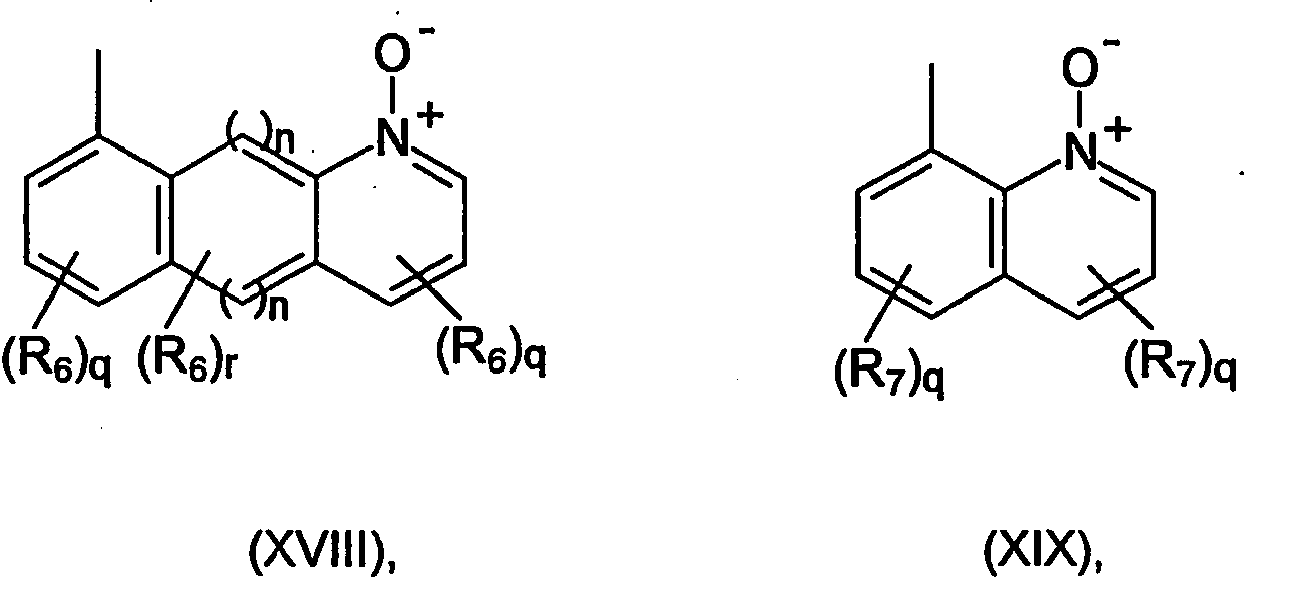
R6, R7, q, r, n
wie oben definiert sind,
- In einer weiteren bevorzugten Ausführungsform ist Y in der allgemeinen Formel (I) Chlor.
- Besonders bevorzugt sind q und r = 0 in den Gruppen der Formeln (XIV), (XV), (XVI), (XVII), (XVIII) und (XIX).
- Ganz besonders bevorzugt ist R in der allgemeinen Formel (I) eine Gruppe der Formel (XV) und q = 0.
- Die Erfindung betrifft auch die Verwendung von Gallium(III)-Komplexen der allg. Formel (I) zur Herstellung eines Arzneimittels zur Behandlung von Melanomen.
- Bei den Melanomen, die für Behandlung durch einen Galliumkomplex der allgemeinen Formel (I) geeignet sind, kann es sich um ein amelanotisches Melanom, ein Lentigo Maligna, ein Acral Lentiginous, ein Epitheloid-Zell Melanom, ein noduläres Melanom, ein Melanom in Verbindung mit Naevus, ein Melanom mit superficialem Spreading oder ein Spindelzell Melanom handeln. Auch Metastasen dieser Tumore in anderen Organen können durch einen Galliumkomplex der allg. Formel (I) behandelt werden.
- Zur Behandlung der vorstehend genannten Krebserkrankungen wird der Gallium-Komplex der Fromel (I) besonders bevorzugt peroral, aber auch intravenös, intramuskulär, intraperitoneal oder subkutan verabreicht. Auch eine äußerliche oder lokale Applikation ist möglich. Bevorzugt ist die Verabreichung durch perorale Applikation.
- Die erfindungsgemäße Verwendung von Gallium(III)-Komplexen kann in jeder geeigneten Formulierung durchgeführt werden unter der Voraussetzung, dass die Ausbildung bzw. Aufrechterhaltung von ausreichenden Wirkstoffpegeln gewährleistet ist. Das kann beispielsweise durch orale oder parenterale Gabe in geeigneten Dosen erreicht werden. Vorteilhafterweise liegt die pharmazeutische Zubereitung des Wirkstoffs in Form von Einheitsdosen vor, die auf die gewünschte Verabreichung abgestimmt sind. Eine Einheitsdosis kann zum Beispiel eine Tablette, ein Dragee, eine Kapsel, ein Suppositorium oder eine gemessene Volumenmenge eines Pulvers, eines Granulates, einer Lösung, einer Emulsion oder einer Suspension sein.
- Unter "Einheitsdosis" im Sinne der vorliegenden Erfindung wird eine physikalisch bestimmte Einheit verstanden, die eine individuelle Menge des aktiven Bestandteils in Kombination mit einem pharmazeutischen Trägerstoff enthält und deren Wirkstoffgehalt einem Bruchteil oder Vielfachen einer therapeutischen Einzeldosis entspricht. Eine Einzeldosis enthält vorzugsweise die Menge Wirkstoff, die bei einer Applikation verabreicht wird und die gewöhnlich einer ganzen, einer halben, einer drittel oder einer viertel Tagesdosis entspricht. Wenn für eine einzelne therapeutische Verabreichung nur ein Bruchteil, wie die Hälfte oder ein Viertel der Einheitsdosis benötigt wird, ist die Einheitsdosis vorteilhafterweise teilbar, z.B. in Form einer Tablette mit Bruchkerbe.
- Die erfindungsgemäßen Verwendung von Gallium(III)-Komplexen in einem geeigneten Arzneimittel kann, wenn sie in Einheitsdosen durchgeführt wird und für Applikationen z.B. am Menschen bestimmt ist, mit etwa 0,1 bis 3000 mg, bevorzugt 10 bis 2000 mg und insbesondere 30 bis 1500 mg Wirkstoff erfolgen. Der Wirkstoff kann einmalig verabreicht werden, aber auch kontinuierlich über einen längeren Zeitraum. Bei einer oralen Behandlung können ähnliche Dosierungen zur Anwendung kommen.
- Die erfindungsgemäße therapeutische Verwendung von Gallium(III)-Komplexen in einem Arzneimittel kann 1 bis 4 mal am Tage zu festgelegten oder variierenden Zeitpunkten erfolgen, z.B. jeweils vor den Mahlzeiten und/oder am Abend. Es kann jedoch erforderlich sein, von den genannten Dosierungen abzuweichen, und zwar in Abhängigkeit von der Art, dem Körpergewicht und dem Alter der zu behandelnden Individuen, der Art und Schwere der Erkrankung, der Art der Zubereitung und der Applikation der Arzneimittel, sowie dem Zeitraum bzw. Intervall, innerhalb welchem die Verabreichung erfolgt. So kann es in einigen Fällen ausreichend sein, mit weniger als der oben genannten Menge Wirkstoff auszukommen, während in anderen Fällen die oben angeführte Wirkstoffmenge überschritten werden muss. Es kann sich auch als zweckmäßig erweisen, die Arzneimittel nur einmalig oder im Abstand von mehreren Tagen zu verabreichen.
- Die Festlegung der erforderlichen optimalen Dosierung und Applikationsart von Gallium(III)-Komplexen kann durch jeden Fachmann aufgrund seines Fachwissens erfolgen.
- Die erfindungsgemäße Verwendung von Gallium(III)-Komplexen kann in Form von Arzneimitteln erfolgen, die in der Regel den Gallium(III)-Komplex und nichttoxische, pharmazeutisch verträgliche Arzneimittelträger umfassen, die als Zumischung oder Verdünnungsmittel, beispielsweise in fester, halbfester oder flüssiger Form oder als Umhüllungsmittel, beispielsweise in Form einer Kapsel, eines Tablettenüberzugs, eines Beutels oder eines anderen Behältnisses für den therapeutisch aktiven Bestandteil in Anwendung kommen. Ein Trägerstoff kann z.B. als Vermittler für die Arzneimittelaufnahme durch den Körper, als Formulierungshilfsmittel, als Süßungsmittel, als Geschmackskorrigens, als Farbstoff oder als Konservierungsmittel dienen.
- Zur oralen Anwendung können z.B. Tabletten Dragees, harte und weiche Kapseln, z.B. aus Gelatine, dispergierbare Pulver, Granulate, wässrige und ölige Suspensionen, Emulsionen, Lösungen oder Sirupe kommen.
- Tabletten können inerte Verdünnungsmittel, z.B. Calciumcarbonat, Calciumphosphat, Natriumphosphat oder Laktose; Granulierungs- und Verteilungsmittel, z.B. Maisstärke, Polyvinylpyrrolidon oder Alginate; Bindemittel, z.B. Stärke, Gelatine oder Akaziengummi; und Gleitmittel, z.B. Aluminium- oder Magnesiumstearat, Talkum oder Silikonöl, enthalten. Sie können zusätzlich mit einem Überzug versehen sein, der auch so beschaffen sein kann, dass er eine verzögerte Auflösung und Resorption der Arzneimittelzubereitung im Gastrointestinaltrakt bewirkt, so dass z.B. eine bessere Verträglichkeit, Protahierung oder Retardierung erreicht wird. Gelatinekapseln können den Arzneistoff vermischt mit einem festen, z.B. Calciumcarbonat oder Kaolin, oder einem öligen, z.B. Oliven-, Erdnuss-, oder Paraffinöl, Verdünnungsmittel enthalten.
- Wässrige Suspensionen können Suspendiermittel, z.B. Natriumcarboxymethylcellulose, Methylcellulose, Hydroxypropylcellulose, Natriumalginat, Polyvinylpyrrolidon, Traganthgummi oder Akaziengummi; Dispergier- und Benetzungsmittel, z.B. Polyoxyethylenstearat, Heptadecaethylenoxycatanol, Polyoxyethylensorbitolmonooleat oder Lecithin; Konservierungsmittel, z.B. Methyl- oder Propylhydroxybenzoate; Geschmacksmittel; Süßungsmittel, z.B. Saccharose, Laktose, Natriumcyclamat, Dextrose, Invertzuckersirup, enthalten.
- Ölige Suspensionen können z.B. Erdnuss-, Oliven-, Sesam-, Kokos- oder Paraffinöl und Verdickungsmittel, wie z.B. Bienenwachs, Hartparaffin oder Cetylalkohol, enthalten; ferner Süßungsmittel, Geschmacksmittel und Antioxidantien.
- In Wasser dispergierbare Pulver und Granulate können bei der erfindungsgemäßen Verwendung von Gallium(III)-Komplexen in Mischung mit Dispergier-, Benetzungs- und Suspendiermitteln, z.B. den oben genannten, sowie mit Süßungsmitteln, Geschmacksmitteln und Farbstoffen enthalten.
- Emulsionen können z.B. Oliven-, Erdnuss-, oder Paraffinöl neben Emulgiermitteln, wie z.B. Akaziengummi, Traganthgummi, Phosphatiden, Sorbitanmonooleat, Polyoxyethylensorbitanmonooleat, und Süßungs- und Geschmacksmittel enthalten.
- Wässrige Lösungen können Konservierungsmittel, z.B. Methyl- oder Propylhydroxybenzoate; Verdickungsmittel; Geschmacksmittel; Süßungsmittel, z.B. Saccharose, Laktose, Natriumcyclamat, Dextrose, Invertzuckersirup, sowie Geschmacksmittel und Farbstoffe enthalten.
- Zur parenteralen Anwendung der Arzneistoffe dienen steril injizierbare, wässrige Lösungen, isotonische Salzlösungen oder sonstige Lösungen.
- Die Erfindung wird nachstehend anhand von Beispielen erläutert.
- Die Verbindung Tris-Hydroxychinolinolato-Gallium (III) wurde in der Zellkultur an den Melanom-Zellinien, die aus humanen Tumoren gewonnen worden sind, bezüglich ihrer zytotoxischen Aktivität untersucht.
- Dabei zeigte die Verbindung eine hohe Aktivität im µmolaren Bereich:
SK-MEL-5 0,76 SK-MEL-28 35


Claims (26)
- Verwendung einer Verbindung der allgemeinen Formel (I)

eine N-haltige Gruppe ist, ausgewählt aus einer Gruppe der allgemeinen Formel (II) bis (VII):
R1 C1 - C6 -Alkylen, C3 - C8 -Cycloalkylen, C3 - C8 -Cycloalkenylen, C2 - C6 -Alkenylen, ein ein- oder mehrkemiges gegebenenfalls aromatisches C6 - C14 -Ringsystem oder ein Heterocyclus, die jeweils substituiert oder unsubstituiert sein können, ist;
R2 und R3 C1 - C10 -Alkyl, C3 - C8- Cycloalkyl, C3 - C8- Cycloalkenyl, C2 - C10-Alkenyl, ein ein- oder mehrkemiges gegebenenfalls aromatisches C6 - C14 -Ringsystem, oder ein Heterocyclus, die jeweils substituiert oder unsubstituiert sein können, oder Wasserstoff ist;
und R1 und R2, oder R1 und R3, oder R2 und R3 einen Heterocyclus bilden können, der gegebenenfalls weitere Strickstoffatome enthalten kann;
R4 die gleiche Bedeutung wie R1 besitzt, R5 die gleiche Bedeutung wie R2 besitzt, und
R4 und R5 zusammen mit N ein gegebenenfalls aromatisches Ringsystem bilden können, das weitere Stickstoffatome enthalten kann;
oder
i eine ganze Zahl von 0 bis 3 ist und der Summe der N-halfigen Gruppen der Formeln (III) und/oder (VI) entspricht;
Y ein Halogen, Pseudohalogen, HCO3 oder R'COO, worin R' C1 - C6 -Alkyl, C2 - C6 -Alkenyl, C3 - C6 -Cycloalkyl, C3 - C6 -Cycloalkenyl, Aryl, die jeweils substituiert oder unsubstituiert sein können, und/oder ein physiologisch verträgliches Anion ist; und
physiologisch verträgliche Additionssalze davon,
zur Herstellung eines Arzneimittels zur Behandlung von Melanomen. - Verwendung einer Verbindung nach Anspruch 1, worin R
 R6 Alkyl, Cycloalkyl, Aryl oder Heteroaryl, undp 0 bis 4 sind.
 - Verwendung einer Verbindung nach Anspruch 1, worin R
 R6 Alkyl, Cycloalkyl, Aryl oder Heteroaryl, undp 0 bis 4 sind.
 - Verwendung einer Verbindung nach Anspruch 1, worin R
 R6 Alkyl, Cycloalkyl, Aryl oder Heteroaryl, undp 0 bis 4 sind.
 - Verwendung einer Verbindung nach einem der Ansprüche 2 bis 4, wobei p = 0 ist.
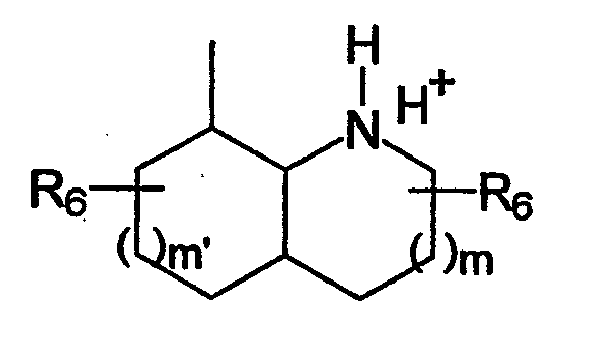
- Verwendung einer Verbindung nach Anspruch 1, worin R
 R6 Alkyl, Cycloalkyl, Aryl oder Heteroaryl, undm, m' 0 bis 2 sind.
 - Verwendung einer Verbindung nach Anspruch 1, worin R
 R6 Alkyl, Cycloalkyl, Aryl oder Heteroaryl, undm, m' 0 bis 2 sind.
 - Verwendung einer Verbindung nach Anspruch 1, worin R
 R6 Alkyl, Cycloalkyl, Aryl oder Heteroaryl, undm, m' 0 bis 2 sind.
 - Verwendung einer Verbindung nach einem der Ansprüche 6 bis 8, wobei m und m' 1 sind.
- Verwendung einer Verbindung nach Anspruch 1, worin R
 R6 Alkyl, Cycloalkyl, Aryl oder Heteroaryl,q 0 bis 3,r 0 bis 2, undn 0 bis 2 sind.
 - Verwendung einer Verbindung nach Anspruch 1, worin R
 R6 Alkyl, Cycloalkyl, Aryl oder Heteroaryl,q 0 bis 3,r 0 bis 2, undn 0 bis 2 sind.
 - Verwendung einer Verbindung nach Anspruch 1, worin R
 R6 Alkyl, Cycloalkyl, Aryl oder Heteroaryl,q 0 bis 3,r 0 bis 2, undn 0 bis 2 sind.
 - Verwendung einer Verbindung nach einem der Ansprüche 10 bis 12, wobei n gleich 1 ist.
- Verwendung einer Verbindung nach Anspruch 1, worin R
 R7 Alkyl, Cycloalkyl, Aryl oder Heteroaryl, die jeweils substituiert oder unsubstituiert sein können, Halogen, Sulfonyl, undq 0 bis 3 ist.
 - Verwendung einer Verbindung nach Anspruch 1, worin R

- Verwendung einer Verbindung nach Anspruch 1, worin R

- Verwendung einer Verbindung nach Anspruch 1, worin R
 R7 Alkyl, Cycloalkyl, Aryl oder Heteroaryl, die jeweils substituiert oder unsubstituiert sein können, Halogen, Sulfonyl, undq 0 bis 3 ist.
 - Verwendung einer Verbindung nach Anspruch 1, worin R

- Verwendung einer Verbindung nach Anspruch 1, worin R

- Verwendung einer Verbindung nach Anspruch 1, worin R
 R7 Alkyl, Cycloalkyl, Aryl oder Heteroaryl, die jeweils substituiert oder unsubstituiert sein können, Halogen, Sulfonyl, undq 0 bis 3 ist.
 - Verwendung einer Verbindung nach Anspruch 1, worin R

- Verwendung einer Verbindung nach Anspruch 1, worin R

- Verwendung einer Verbindung nach mindestens einem der Ansprüche 1 bis 22, worin Y Chlor ist.
- Verwendung einer Verbindung nach einem der Ansprüche 14, 17 oder 20, wobei q gleich 0 ist.
- Verwendung von Tris-Hydroxychinolinolato-Gailium (III) zur Behandlung von Melanomen.
- Verwendung einer Verbindung nach einem der Ansprüche 1-25 zur Behandlung von Metastasen eines Melanoms.
Applications Claiming Priority (2)
| Application Number | Priority Date | Filing Date | Title |
|---|---|---|---|
| AT0022006A AT503317B1 (de) | 2006-02-13 | 2006-02-13 | Verwendung von gallium(iii)-komplexen zur herstellung eines medikaments zur behandlung von melanomen |
| PCT/AT2007/000071 WO2007092978A1 (de) | 2006-02-13 | 2007-02-13 | Verwendung von gallium (iii) komplexen zur behandlung von melanomen |
Publications (2)
| Publication Number | Publication Date |
|---|---|
| EP1984005A1 EP1984005A1 (de) | 2008-10-29 |
| EP1984005B1 true EP1984005B1 (de) | 2011-04-06 |
Family
ID=37969931
Family Applications (1)
| Application Number | Title | Priority Date | Filing Date |
|---|---|---|---|
| EP07701315A Active EP1984005B1 (de) | 2006-02-13 | 2007-02-13 | Verwendung von gallium (iii) komplexen zur behandlung von melanomen |
Country Status (12)
| Country | Link |
|---|---|
| US (1) | US7919486B2 (de) |
| EP (1) | EP1984005B1 (de) |
| JP (1) | JP5210888B2 (de) |
| CN (1) | CN101466387A (de) |
| AT (2) | AT503317B1 (de) |
| AU (1) | AU2007215363A1 (de) |
| CA (1) | CA2640509C (de) |
| DE (1) | DE502007006880D1 (de) |
| ES (1) | ES2365028T3 (de) |
| NZ (1) | NZ571119A (de) |
| PT (1) | PT1984005E (de) |
| WO (1) | WO2007092978A1 (de) |
Families Citing this family (5)
| Publication number | Priority date | Publication date | Assignee | Title |
|---|---|---|---|---|
| EP2533781B1 (de) | 2010-02-12 | 2016-11-16 | Niiki Pharma Inc. | Verfahren zur behandlung von blutkrebs myeloischen ursprungs |
| CN103108636A (zh) * | 2010-02-26 | 2013-05-15 | 尼基制药公司 | 治疗脑癌的方法 |
| CN102946879B (zh) * | 2010-04-19 | 2015-04-22 | 尼基制药公司 | 一种蛋白酶体抑制剂和镓络合物在制备治疗增殖性疾病的药物中的应用 |
| JP6112512B2 (ja) * | 2010-12-01 | 2017-04-12 | レクシ ファーマ インコーポレイテッド | 難治性癌を治療するための方法 |
| CN113372269A (zh) * | 2021-06-25 | 2021-09-10 | 云南大学 | 一种席夫碱镓配合物及其制备方法和应用 |
Family Cites Families (4)
| Publication number | Priority date | Publication date | Assignee | Title |
|---|---|---|---|---|
| ATE166056T1 (de) * | 1991-07-25 | 1998-05-15 | Philippe Collery | Gallium iii komplexe, verfahren zu ihrer herstellung und pharmazeutische zusammensetzungen, die sie enthalten |
| DE10113185A1 (de) * | 2001-03-19 | 2002-10-24 | Faustus Forschungs Cie | Zusammensetzung, enthaltend einen Gallium(III)-Komplex und einen therapeutisch wirksamen Platin-Komplex |
| DE10116527C2 (de) * | 2001-04-03 | 2003-05-15 | Faustus Forschungs Cie | Tumorhemmende Galliumverbindungen, deren Verwendung als Arzneimittel sowie ein Arzneimittel, diese enthaltend |
| AT501819B1 (de) * | 2005-04-18 | 2007-01-15 | Faustus Forschung Translationa | Verwendung von gallium(iii)-komplexen zur behandlung von tumorerkrankungen der leber |
-
2006
- 2006-02-13 AT AT0022006A patent/AT503317B1/de not_active IP Right Cessation
-
2007
- 2007-02-13 NZ NZ571119A patent/NZ571119A/en not_active IP Right Cessation
- 2007-02-13 DE DE502007006880T patent/DE502007006880D1/de active Active
- 2007-02-13 CN CNA2007800127458A patent/CN101466387A/zh active Pending
- 2007-02-13 CA CA2640509A patent/CA2640509C/en not_active Expired - Fee Related
- 2007-02-13 EP EP07701315A patent/EP1984005B1/de active Active
- 2007-02-13 JP JP2008553574A patent/JP5210888B2/ja not_active Expired - Fee Related
- 2007-02-13 PT PT07701315T patent/PT1984005E/pt unknown
- 2007-02-13 ES ES07701315T patent/ES2365028T3/es active Active
- 2007-02-13 AT AT07701315T patent/ATE504307T1/de active
- 2007-02-13 WO PCT/AT2007/000071 patent/WO2007092978A1/de not_active Ceased
- 2007-02-13 AU AU2007215363A patent/AU2007215363A1/en not_active Abandoned
-
2008
- 2008-08-13 US US12/190,759 patent/US7919486B2/en not_active Expired - Fee Related
Also Published As
| Publication number | Publication date |
|---|---|
| ES2365028T3 (es) | 2011-09-20 |
| WO2007092978A1 (de) | 2007-08-23 |
| US20090137620A1 (en) | 2009-05-28 |
| ATE504307T1 (de) | 2011-04-15 |
| JP5210888B2 (ja) | 2013-06-12 |
| EP1984005A1 (de) | 2008-10-29 |
| CA2640509C (en) | 2014-07-08 |
| US7919486B2 (en) | 2011-04-05 |
| PT1984005E (pt) | 2011-07-11 |
| AU2007215363A1 (en) | 2007-08-23 |
| NZ571119A (en) | 2011-11-25 |
| JP2009525987A (ja) | 2009-07-16 |
| CA2640509A1 (en) | 2007-08-23 |
| DE502007006880D1 (de) | 2011-05-19 |
| AT503317B1 (de) | 2007-09-15 |
| CN101466387A (zh) | 2009-06-24 |
| AT503317A4 (de) | 2007-09-15 |
Similar Documents
| Publication | Publication Date | Title |
|---|---|---|
| DE10103565B4 (de) | Zusammensetzungen, enthaltend einen Ruthenium(III)-komplex und einen Heterocyclus | |
| EP1984005B1 (de) | Verwendung von gallium (iii) komplexen zur behandlung von melanomen | |
| EP0191096A1 (de) | Tumorhemmend wirkende rutheniumverbindungen. | |
| DE10141528A1 (de) | Platin(II)- und Platin(IV)-Komplexe und ihre Verwendung | |
| DE2923334A1 (de) | Verwendung von cyclopentadienylmetall-acido-komplexen bei der krebsbekaempfung und diese komplexe enthaltende arzneimittel | |
| DE3134709A1 (de) | Antineoplastisch wirkende titanverbindung und diese enthaltende arzneimittel | |
| WO2002074304A2 (de) | Zusammensetzung, enthaltend einen gallium(iii)-komplex und ein therapeutisch wirksames zytostatikum | |
| AT501819B1 (de) | Verwendung von gallium(iii)-komplexen zur behandlung von tumorerkrankungen der leber | |
| EP1414829B1 (de) | Tumorhemmende cerverbindungen | |
| AT505367A1 (de) | Tumorhemmende ruthenium und osmium- thiosemicarbazonatokomplexe | |
| DE10116527C2 (de) | Tumorhemmende Galliumverbindungen, deren Verwendung als Arzneimittel sowie ein Arzneimittel, diese enthaltend | |
| DE10114222C1 (de) | Tumorhemmende Siliciumverbindungen, Verfahren zu ihrer Herstellung und deren Verwendung | |
| DE10138538C2 (de) | Tumorhemmende Lanthanverbindungen | |
| AT501262B1 (de) | Verwendung von gallium(iii)-komplexen zur behandlung von tumoren des urothelialtraktes | |
| DE10114106C1 (de) | Tumorhemmende Siliciumverbindungen, Verfahren zu ihrer Herstellung und deren Verwendung als Arzneimittel | |
| WO2004075887A1 (de) | Verwendung von 1-(2-chlorethyl)-1-nitroso-3-(2-hydroxyethyl)-urea zur behandlung von pankreaskarzinomen, weichteilsarkomen, hodentumoren, lymphomen, thymomen, wilms tumoren, nierenkarzinomen, melanomen, lungentumoren, intracerebralen metastasen, tumoren im kopf- und halsbereich, und mamma-karzinomen | |
| DE10218312C1 (de) | Tumorhemmende Siliziumverbindungen, diese enthaltende Arzneimittel und deren Verwendung | |
| DE19701692A1 (de) | Antineoplastisch wirkende Metallkomplexe und diese enthaltende Arzneimittel | |
| AT503592A1 (de) | Tumorhemmende galliumverbindungen | |
| DE3048109A1 (de) | Antineoplastisch wirkende arzneimittel | |
| DE3037665A1 (de) | Cytostatisch wirkende arzneimittel |
Legal Events
| Date | Code | Title | Description |
|---|---|---|---|
| PUAI | Public reference made under article 153(3) epc to a published international application that has entered the european phase |
Free format text: ORIGINAL CODE: 0009012 |
|
| 17P | Request for examination filed |
Effective date: 20080828 |
|
| AK | Designated contracting states |
Kind code of ref document: A1 Designated state(s): AT BE BG CH CY CZ DE DK EE ES FI FR GB GR HU IE IS IT LI LT LU LV MC NL PL PT RO SE SI SK TR |
|
| AX | Request for extension of the european patent |
Extension state: AL BA HR MK RS |
|
| 17Q | First examination report despatched |
Effective date: 20090505 |
|
| RAP1 | Party data changed (applicant data changed or rights of an application transferred) |
Owner name: NIIKI PHARMA INC. |
|
| GRAP | Despatch of communication of intention to grant a patent |
Free format text: ORIGINAL CODE: EPIDOSNIGR1 |
|
| GRAS | Grant fee paid |
Free format text: ORIGINAL CODE: EPIDOSNIGR3 |
|
| GRAA | (expected) grant |
Free format text: ORIGINAL CODE: 0009210 |
|
| AK | Designated contracting states |
Kind code of ref document: B1 Designated state(s): AT BE BG CH CY CZ DE DK EE ES FI FR GB GR HU IE IS IT LI LT LU LV MC NL PL PT RO SE SI SK TR |
|
| AX | Request for extension of the european patent |
Extension state: AL BA HR MK RS |
|
| REG | Reference to a national code |
Ref country code: GB Ref legal event code: FG4D Free format text: NOT ENGLISH |
|
| REG | Reference to a national code |
Ref country code: CH Ref legal event code: EP |
|
| REG | Reference to a national code |
Ref country code: IE Ref legal event code: FG4D |
|
| REF | Corresponds to: |
Ref document number: 502007006880 Country of ref document: DE Date of ref document: 20110519 Kind code of ref document: P |
|
| REG | Reference to a national code |
Ref country code: DE Ref legal event code: R096 Ref document number: 502007006880 Country of ref document: DE Effective date: 20110519 |
|
| REG | Reference to a national code |
Ref country code: PT Ref legal event code: SC4A Free format text: AVAILABILITY OF NATIONAL TRANSLATION Effective date: 20110701 |
|
| REG | Reference to a national code |
Ref country code: NL Ref legal event code: VDEP Effective date: 20110406 |
|
| PG25 | Lapsed in a contracting state [announced via postgrant information from national office to epo] |
Ref country code: SI Free format text: LAPSE BECAUSE OF FAILURE TO SUBMIT A TRANSLATION OF THE DESCRIPTION OR TO PAY THE FEE WITHIN THE PRESCRIBED TIME-LIMIT Effective date: 20110406 |
|
| REG | Reference to a national code |
Ref country code: ES Ref legal event code: FG2A Ref document number: 2365028 Country of ref document: ES Kind code of ref document: T3 Effective date: 20110920 |
|
| LTIE | Lt: invalidation of european patent or patent extension |
Effective date: 20110406 |
|
| REG | Reference to a national code |
Ref country code: IE Ref legal event code: FD4D |
|
| PG25 | Lapsed in a contracting state [announced via postgrant information from national office to epo] |
Ref country code: SE Free format text: LAPSE BECAUSE OF FAILURE TO SUBMIT A TRANSLATION OF THE DESCRIPTION OR TO PAY THE FEE WITHIN THE PRESCRIBED TIME-LIMIT Effective date: 20110406 Ref country code: LT Free format text: LAPSE BECAUSE OF FAILURE TO SUBMIT A TRANSLATION OF THE DESCRIPTION OR TO PAY THE FEE WITHIN THE PRESCRIBED TIME-LIMIT Effective date: 20110406 |
|
| PG25 | Lapsed in a contracting state [announced via postgrant information from national office to epo] |
Ref country code: FI Free format text: LAPSE BECAUSE OF FAILURE TO SUBMIT A TRANSLATION OF THE DESCRIPTION OR TO PAY THE FEE WITHIN THE PRESCRIBED TIME-LIMIT Effective date: 20110406 Ref country code: IS Free format text: LAPSE BECAUSE OF FAILURE TO SUBMIT A TRANSLATION OF THE DESCRIPTION OR TO PAY THE FEE WITHIN THE PRESCRIBED TIME-LIMIT Effective date: 20110806 Ref country code: GR Free format text: LAPSE BECAUSE OF FAILURE TO SUBMIT A TRANSLATION OF THE DESCRIPTION OR TO PAY THE FEE WITHIN THE PRESCRIBED TIME-LIMIT Effective date: 20110707 Ref country code: LV Free format text: LAPSE BECAUSE OF FAILURE TO SUBMIT A TRANSLATION OF THE DESCRIPTION OR TO PAY THE FEE WITHIN THE PRESCRIBED TIME-LIMIT Effective date: 20110406 Ref country code: CY Free format text: LAPSE BECAUSE OF FAILURE TO SUBMIT A TRANSLATION OF THE DESCRIPTION OR TO PAY THE FEE WITHIN THE PRESCRIBED TIME-LIMIT Effective date: 20110406 |
|
| PG25 | Lapsed in a contracting state [announced via postgrant information from national office to epo] |
Ref country code: NL Free format text: LAPSE BECAUSE OF FAILURE TO SUBMIT A TRANSLATION OF THE DESCRIPTION OR TO PAY THE FEE WITHIN THE PRESCRIBED TIME-LIMIT Effective date: 20110406 |
|
| PG25 | Lapsed in a contracting state [announced via postgrant information from national office to epo] |
Ref country code: EE Free format text: LAPSE BECAUSE OF FAILURE TO SUBMIT A TRANSLATION OF THE DESCRIPTION OR TO PAY THE FEE WITHIN THE PRESCRIBED TIME-LIMIT Effective date: 20110406 Ref country code: CZ Free format text: LAPSE BECAUSE OF FAILURE TO SUBMIT A TRANSLATION OF THE DESCRIPTION OR TO PAY THE FEE WITHIN THE PRESCRIBED TIME-LIMIT Effective date: 20110406 Ref country code: IE Free format text: LAPSE BECAUSE OF FAILURE TO SUBMIT A TRANSLATION OF THE DESCRIPTION OR TO PAY THE FEE WITHIN THE PRESCRIBED TIME-LIMIT Effective date: 20110406 |
|
| PLBE | No opposition filed within time limit |
Free format text: ORIGINAL CODE: 0009261 |
|
| STAA | Information on the status of an ep patent application or granted ep patent |
Free format text: STATUS: NO OPPOSITION FILED WITHIN TIME LIMIT |
|
| PG25 | Lapsed in a contracting state [announced via postgrant information from national office to epo] |
Ref country code: PL Free format text: LAPSE BECAUSE OF FAILURE TO SUBMIT A TRANSLATION OF THE DESCRIPTION OR TO PAY THE FEE WITHIN THE PRESCRIBED TIME-LIMIT Effective date: 20110406 Ref country code: SK Free format text: LAPSE BECAUSE OF FAILURE TO SUBMIT A TRANSLATION OF THE DESCRIPTION OR TO PAY THE FEE WITHIN THE PRESCRIBED TIME-LIMIT Effective date: 20110406 Ref country code: DK Free format text: LAPSE BECAUSE OF FAILURE TO SUBMIT A TRANSLATION OF THE DESCRIPTION OR TO PAY THE FEE WITHIN THE PRESCRIBED TIME-LIMIT Effective date: 20110406 Ref country code: RO Free format text: LAPSE BECAUSE OF FAILURE TO SUBMIT A TRANSLATION OF THE DESCRIPTION OR TO PAY THE FEE WITHIN THE PRESCRIBED TIME-LIMIT Effective date: 20110406 |
|
| 26N | No opposition filed |
Effective date: 20120110 |
|
| REG | Reference to a national code |
Ref country code: DE Ref legal event code: R097 Ref document number: 502007006880 Country of ref document: DE Effective date: 20120110 |
|
| BERE | Be: lapsed |
Owner name: NIIKI PHARMA INC. Effective date: 20120228 |
|
| PG25 | Lapsed in a contracting state [announced via postgrant information from national office to epo] |
Ref country code: MC Free format text: LAPSE BECAUSE OF NON-PAYMENT OF DUE FEES Effective date: 20120229 |
|
| REG | Reference to a national code |
Ref country code: CH Ref legal event code: PL |
|
| PG25 | Lapsed in a contracting state [announced via postgrant information from national office to epo] |
Ref country code: CH Free format text: LAPSE BECAUSE OF NON-PAYMENT OF DUE FEES Effective date: 20120229 Ref country code: LI Free format text: LAPSE BECAUSE OF NON-PAYMENT OF DUE FEES Effective date: 20120229 |
|
| PG25 | Lapsed in a contracting state [announced via postgrant information from national office to epo] |
Ref country code: BE Free format text: LAPSE BECAUSE OF NON-PAYMENT OF DUE FEES Effective date: 20120228 |
|
| REG | Reference to a national code |
Ref country code: AT Ref legal event code: MM01 Ref document number: 504307 Country of ref document: AT Kind code of ref document: T Effective date: 20120213 |
|
| PG25 | Lapsed in a contracting state [announced via postgrant information from national office to epo] |
Ref country code: AT Free format text: LAPSE BECAUSE OF NON-PAYMENT OF DUE FEES Effective date: 20120213 Ref country code: BG Free format text: LAPSE BECAUSE OF FAILURE TO SUBMIT A TRANSLATION OF THE DESCRIPTION OR TO PAY THE FEE WITHIN THE PRESCRIBED TIME-LIMIT Effective date: 20110706 |
|
| REG | Reference to a national code |
Ref country code: DE Ref legal event code: R082 Ref document number: 502007006880 Country of ref document: DE Representative=s name: PATENTANWALTSKANZLEI MEYER, DE |
|
| REG | Reference to a national code |
Ref country code: PT Ref legal event code: PC4A Owner name: NIIKI PHARMA ACQUISITION CORP.2, US Effective date: 20130913 |
|
| REG | Reference to a national code |
Ref country code: FR Ref legal event code: TP Owner name: NIIKI PHARMA INC., US Effective date: 20130924 Ref country code: FR Ref legal event code: CD Owner name: NIIKI PHARMA INC., US Effective date: 20130924 |
|
| REG | Reference to a national code |
Ref country code: DE Ref legal event code: R081 Ref document number: 502007006880 Country of ref document: DE Owner name: NIIKI PHARMA INC. (N.D.GES.D. STAATES DELAWARE, US Free format text: FORMER OWNER: NIIKI PHARMA INC., HOBOKEN, N.J., US Effective date: 20130916 Ref country code: DE Ref legal event code: R082 Ref document number: 502007006880 Country of ref document: DE Representative=s name: PATENTANWALTSKANZLEI MEYER, DE Effective date: 20130916 Ref country code: DE Ref legal event code: R081 Ref document number: 502007006880 Country of ref document: DE Owner name: NIIKI PHARMA INC. (N.D.GES.D. STAATES DELAWARE, US Free format text: FORMER OWNER: NIIKI PHARMA INC., HOBOKEN, US Effective date: 20130916 |
|
| REG | Reference to a national code |
Ref country code: ES Ref legal event code: PC2A Owner name: NIIKI PHARMA INC. Effective date: 20131108 |
|
| PG25 | Lapsed in a contracting state [announced via postgrant information from national office to epo] |
Ref country code: TR Free format text: LAPSE BECAUSE OF FAILURE TO SUBMIT A TRANSLATION OF THE DESCRIPTION OR TO PAY THE FEE WITHIN THE PRESCRIBED TIME-LIMIT Effective date: 20110406 |
|
| PG25 | Lapsed in a contracting state [announced via postgrant information from national office to epo] |
Ref country code: LU Free format text: LAPSE BECAUSE OF NON-PAYMENT OF DUE FEES Effective date: 20120213 |
|
| PG25 | Lapsed in a contracting state [announced via postgrant information from national office to epo] |
Ref country code: HU Free format text: LAPSE BECAUSE OF FAILURE TO SUBMIT A TRANSLATION OF THE DESCRIPTION OR TO PAY THE FEE WITHIN THE PRESCRIBED TIME-LIMIT Effective date: 20070213 |
|
| REG | Reference to a national code |
Ref country code: FR Ref legal event code: PLFP Year of fee payment: 10 |
|
| REG | Reference to a national code |
Ref country code: FR Ref legal event code: PLFP Year of fee payment: 11 |
|
| PGFP | Annual fee paid to national office [announced via postgrant information from national office to epo] |
Ref country code: FR Payment date: 20170426 Year of fee payment: 11 Ref country code: GB Payment date: 20170427 Year of fee payment: 11 Ref country code: DE Payment date: 20170427 Year of fee payment: 11 |
|
| PGFP | Annual fee paid to national office [announced via postgrant information from national office to epo] |
Ref country code: IT Payment date: 20170524 Year of fee payment: 11 Ref country code: PT Payment date: 20170509 Year of fee payment: 11 Ref country code: ES Payment date: 20170426 Year of fee payment: 11 |
|
| REG | Reference to a national code |
Ref country code: DE Ref legal event code: R119 Ref document number: 502007006880 Country of ref document: DE |
|
| GBPC | Gb: european patent ceased through non-payment of renewal fee |
Effective date: 20180213 |
|
| PG25 | Lapsed in a contracting state [announced via postgrant information from national office to epo] |
Ref country code: PT Free format text: LAPSE BECAUSE OF NON-PAYMENT OF DUE FEES Effective date: 20180813 |
|
| REG | Reference to a national code |
Ref country code: FR Ref legal event code: ST Effective date: 20181031 |
|
| PG25 | Lapsed in a contracting state [announced via postgrant information from national office to epo] |
Ref country code: DE Free format text: LAPSE BECAUSE OF NON-PAYMENT OF DUE FEES Effective date: 20180901 |
|
| PG25 | Lapsed in a contracting state [announced via postgrant information from national office to epo] |
Ref country code: GB Free format text: LAPSE BECAUSE OF NON-PAYMENT OF DUE FEES Effective date: 20180213 Ref country code: FR Free format text: LAPSE BECAUSE OF NON-PAYMENT OF DUE FEES Effective date: 20180228 Ref country code: IT Free format text: LAPSE BECAUSE OF NON-PAYMENT OF DUE FEES Effective date: 20180213 |
|
| REG | Reference to a national code |
Ref country code: ES Ref legal event code: FD2A Effective date: 20190801 |
|
| PG25 | Lapsed in a contracting state [announced via postgrant information from national office to epo] |
Ref country code: ES Free format text: LAPSE BECAUSE OF NON-PAYMENT OF DUE FEES Effective date: 20180214 |