EP1987152B1 - Herstellungsverfahren für optisch aktive chirale amine - Google Patents
Herstellungsverfahren für optisch aktive chirale amine Download PDFInfo
- Publication number
- EP1987152B1 EP1987152B1 EP07711521A EP07711521A EP1987152B1 EP 1987152 B1 EP1987152 B1 EP 1987152B1 EP 07711521 A EP07711521 A EP 07711521A EP 07711521 A EP07711521 A EP 07711521A EP 1987152 B1 EP1987152 B1 EP 1987152B1
- Authority
- EP
- European Patent Office
- Prior art keywords
- process according
- reaction
- transaminase
- pdc
- pyruvate
- Prior art date
- Legal status (The legal status is an assumption and is not a legal conclusion. Google has not performed a legal analysis and makes no representation as to the accuracy of the status listed.)
- Not-in-force
Links
- 238000000034 method Methods 0.000 title claims description 53
- 230000008569 process Effects 0.000 title claims description 44
- 150000001412 amines Chemical class 0.000 title claims description 42
- 238000002360 preparation method Methods 0.000 title claims description 14
- 238000006243 chemical reaction Methods 0.000 claims description 141
- 108010011939 Pyruvate Decarboxylase Proteins 0.000 claims description 74
- IKHGUXGNUITLKF-UHFFFAOYSA-N Acetaldehyde Chemical compound CC=O IKHGUXGNUITLKF-UHFFFAOYSA-N 0.000 claims description 66
- 125000002924 primary amino group Chemical group [H]N([H])* 0.000 claims description 56
- 102000003929 Transaminases Human genes 0.000 claims description 51
- 108090000340 Transaminases Proteins 0.000 claims description 51
- QNAYBMKLOCPYGJ-REOHCLBHSA-N L-alanine Chemical compound C[C@H](N)C(O)=O QNAYBMKLOCPYGJ-REOHCLBHSA-N 0.000 claims description 47
- 235000004279 alanine Nutrition 0.000 claims description 39
- IJGRMHOSHXDMSA-UHFFFAOYSA-N Atomic nitrogen Chemical compound N#N IJGRMHOSHXDMSA-UHFFFAOYSA-N 0.000 claims description 37
- LCTONWCANYUPML-UHFFFAOYSA-M Pyruvate Chemical compound CC(=O)C([O-])=O LCTONWCANYUPML-UHFFFAOYSA-M 0.000 claims description 32
- 229940076788 pyruvate Drugs 0.000 claims description 32
- 239000011541 reaction mixture Substances 0.000 claims description 21
- 102000007698 Alcohol dehydrogenase Human genes 0.000 claims description 19
- 108010021809 Alcohol dehydrogenase Proteins 0.000 claims description 19
- 229910052757 nitrogen Inorganic materials 0.000 claims description 18
- 102000004190 Enzymes Human genes 0.000 claims description 16
- 108090000790 Enzymes Proteins 0.000 claims description 16
- KWOLFJPFCHCOCG-UHFFFAOYSA-N Acetophenone Chemical compound CC(=O)C1=CC=CC=C1 KWOLFJPFCHCOCG-UHFFFAOYSA-N 0.000 claims description 14
- 241000607291 Vibrio fluvialis Species 0.000 claims description 13
- 230000009471 action Effects 0.000 claims description 10
- 239000006227 byproduct Substances 0.000 claims description 10
- -1 bicyclic amines Chemical class 0.000 claims description 9
- 150000003839 salts Chemical class 0.000 claims description 9
- HOKIDJSKDBPKTQ-UHFFFAOYSA-N 3-(acetyloxymethyl)-7-[(5-amino-5-carboxypentanoyl)amino]-8-oxo-5-thia-1-azabicyclo[4.2.0]oct-2-ene-2-carboxylic acid Chemical compound S1CC(COC(=O)C)=C(C(O)=O)N2C(=O)C(NC(=O)CCCC(N)C(O)=O)C12 HOKIDJSKDBPKTQ-UHFFFAOYSA-N 0.000 claims description 8
- 239000000126 substance Substances 0.000 claims description 8
- WEGYGNROSJDEIW-UHFFFAOYSA-N 3-Acetylpyridine Chemical compound CC(=O)C1=CC=CN=C1 WEGYGNROSJDEIW-UHFFFAOYSA-N 0.000 claims description 7
- NGXSWUFDCSEIOO-UHFFFAOYSA-N pyrrolidin-3-amine Chemical compound NC1CCNC1 NGXSWUFDCSEIOO-UHFFFAOYSA-N 0.000 claims description 7
- LCTONWCANYUPML-UHFFFAOYSA-N Pyruvic acid Chemical compound CC(=O)C(O)=O LCTONWCANYUPML-UHFFFAOYSA-N 0.000 claims description 6
- 150000004982 aromatic amines Chemical class 0.000 claims description 6
- BTNMPGBKDVTSJY-UHFFFAOYSA-N keto-phenylpyruvic acid Chemical group OC(=O)C(=O)CC1=CC=CC=C1 BTNMPGBKDVTSJY-UHFFFAOYSA-N 0.000 claims description 6
- 241001453369 Achromobacter denitrificans Species 0.000 claims description 5
- HHIOOBJZIASBFF-UHFFFAOYSA-N ethyl 3-aminobutanoate Chemical compound CCOC(=O)CC(C)N HHIOOBJZIASBFF-UHFFFAOYSA-N 0.000 claims description 5
- STSLIPZQSYMYNW-UHFFFAOYSA-N methyl 3-aminopentanoate Chemical compound CCC(N)CC(=O)OC STSLIPZQSYMYNW-UHFFFAOYSA-N 0.000 claims description 5
- 108090000489 Carboxy-Lyases Proteins 0.000 claims description 4
- WTDRDQBEARUVNC-LURJTMIESA-N L-DOPA Chemical compound OC(=O)[C@@H](N)CC1=CC=C(O)C(O)=C1 WTDRDQBEARUVNC-LURJTMIESA-N 0.000 claims description 4
- 150000001875 compounds Chemical class 0.000 claims description 4
- 125000004122 cyclic group Chemical group 0.000 claims description 4
- 229930195733 hydrocarbon Natural products 0.000 claims description 4
- 125000002950 monocyclic group Chemical group 0.000 claims description 4
- 230000035484 reaction time Effects 0.000 claims description 4
- ZWEHNKRNPOVVGH-UHFFFAOYSA-N 2-Butanone Chemical compound CCC(C)=O ZWEHNKRNPOVVGH-UHFFFAOYSA-N 0.000 claims description 3
- 239000001903 2-oxo-3-phenylpropanoic acid Substances 0.000 claims description 3
- KPGXRSRHYNQIFN-UHFFFAOYSA-N 2-oxoglutaric acid Chemical compound OC(=O)CCC(=O)C(O)=O KPGXRSRHYNQIFN-UHFFFAOYSA-N 0.000 claims description 3
- WDJHALXBUFZDSR-UHFFFAOYSA-N acetoacetic acid Chemical compound CC(=O)CC(O)=O WDJHALXBUFZDSR-UHFFFAOYSA-N 0.000 claims description 3
- DEDGUGJNLNLJSR-UHFFFAOYSA-N alpha-hydroxycinnamic acid Natural products OC(=O)C(O)=CC1=CC=CC=C1 DEDGUGJNLNLJSR-UHFFFAOYSA-N 0.000 claims description 3
- XYIBRDXRRQCHLP-UHFFFAOYSA-N ethyl acetoacetate Chemical compound CCOC(=O)CC(C)=O XYIBRDXRRQCHLP-UHFFFAOYSA-N 0.000 claims description 3
- XJMIXEAZMCTAGH-UHFFFAOYSA-N methyl 3-oxopentanoate Chemical compound CCC(=O)CC(=O)OC XJMIXEAZMCTAGH-UHFFFAOYSA-N 0.000 claims description 3
- QGKLPGKXAVVPOJ-UHFFFAOYSA-N pyrrolidin-3-one Chemical compound O=C1CCNC1 QGKLPGKXAVVPOJ-UHFFFAOYSA-N 0.000 claims description 3
- 229940107700 pyruvic acid Drugs 0.000 claims description 3
- JRZGPXSSNPTNMA-UHFFFAOYSA-N 1,2,3,4-tetrahydronaphthalen-1-amine Chemical compound C1=CC=C2C(N)CCCC2=C1 JRZGPXSSNPTNMA-UHFFFAOYSA-N 0.000 claims description 2
- NXMXETCTWNXSFG-UHFFFAOYSA-N 1-methoxypropan-2-amine Chemical compound COCC(C)N NXMXETCTWNXSFG-UHFFFAOYSA-N 0.000 claims description 2
- CUZLJOLBIRPEFB-UHFFFAOYSA-N 1-methoxypropan-2-one Chemical compound COCC(C)=O CUZLJOLBIRPEFB-UHFFFAOYSA-N 0.000 claims description 2
- RQEUFEKYXDPUSK-UHFFFAOYSA-N 1-phenylethylamine Chemical compound CC(N)C1=CC=CC=C1 RQEUFEKYXDPUSK-UHFFFAOYSA-N 0.000 claims description 2
- OQEBBZSWEGYTPG-UHFFFAOYSA-N 3-aminobutanoic acid Chemical compound CC(N)CC(O)=O OQEBBZSWEGYTPG-UHFFFAOYSA-N 0.000 claims description 2
- FVWVJTJAALVOQO-UHFFFAOYSA-N 5-pyridin-3-ylpentan-2-amine Chemical compound CC(N)CCCC1=CC=CN=C1 FVWVJTJAALVOQO-UHFFFAOYSA-N 0.000 claims description 2
- 241000193388 Bacillus thuringiensis Species 0.000 claims description 2
- ZGUNAGUHMKGQNY-SSDOTTSWSA-N D-alpha-phenylglycine Chemical compound OC(=O)[C@H](N)C1=CC=CC=C1 ZGUNAGUHMKGQNY-SSDOTTSWSA-N 0.000 claims description 2
- 241000588747 Klebsiella pneumoniae Species 0.000 claims description 2
- WHUUTDBJXJRKMK-VKHMYHEASA-N L-glutamic acid Chemical compound OC(=O)[C@@H](N)CCC(O)=O WHUUTDBJXJRKMK-VKHMYHEASA-N 0.000 claims description 2
- COLNVLDHVKWLRT-QMMMGPOBSA-N L-phenylalanine Chemical compound OC(=O)[C@@H](N)CC1=CC=CC=C1 COLNVLDHVKWLRT-QMMMGPOBSA-N 0.000 claims description 2
- CJCSPKMFHVPWAR-JTQLQIEISA-N alpha-methyl-L-dopa Chemical compound OC(=O)[C@](N)(C)CC1=CC=C(O)C(O)=C1 CJCSPKMFHVPWAR-JTQLQIEISA-N 0.000 claims description 2
- 229940097012 bacillus thuringiensis Drugs 0.000 claims description 2
- IAJOBQBIJHVGMQ-BYPYZUCNSA-M glufosinate-P zwitterion(1-) Chemical compound CP([O-])(=O)CC[C@H](N)C(O)=O IAJOBQBIJHVGMQ-BYPYZUCNSA-M 0.000 claims description 2
- 229930195712 glutamate Natural products 0.000 claims description 2
- JNHZPXFARRJZQR-UHFFFAOYSA-N n-ethylpyridin-3-amine Chemical compound CCNC1=CC=CN=C1 JNHZPXFARRJZQR-UHFFFAOYSA-N 0.000 claims description 2
- COLNVLDHVKWLRT-UHFFFAOYSA-N phenylalanine Natural products OC(=O)C(N)CC1=CC=CC=C1 COLNVLDHVKWLRT-UHFFFAOYSA-N 0.000 claims description 2
- PEUGKEHLRUVPAN-UHFFFAOYSA-N piperidin-3-amine Chemical compound NC1CCCNC1 PEUGKEHLRUVPAN-UHFFFAOYSA-N 0.000 claims description 2
- USISRUCGEISZIB-UHFFFAOYSA-N piperidin-3-one Chemical compound O=C1CCCNC1 USISRUCGEISZIB-UHFFFAOYSA-N 0.000 claims description 2
- BHRZNVHARXXAHW-UHFFFAOYSA-N sec-butylamine Chemical compound CCC(C)N BHRZNVHARXXAHW-UHFFFAOYSA-N 0.000 claims description 2
- AKQXKEBCONUWCL-UHFFFAOYSA-N tert-butyl 3-aminopiperidine-1-carboxylate Chemical compound CC(C)(C)OC(=O)N1CCCC(N)C1 AKQXKEBCONUWCL-UHFFFAOYSA-N 0.000 claims description 2
- YNDAMDVOGKACTP-UHFFFAOYSA-N 3-aminopyrrolidin-2-one Chemical compound NC1CCNC1=O YNDAMDVOGKACTP-UHFFFAOYSA-N 0.000 claims 1
- HNJBEVLQSNELDL-UHFFFAOYSA-N pyrrolidin-2-one Chemical compound O=C1CCCN1 HNJBEVLQSNELDL-UHFFFAOYSA-N 0.000 claims 1
- 238000003786 synthesis reaction Methods 0.000 abstract description 10
- 230000015572 biosynthetic process Effects 0.000 abstract description 9
- 238000004519 manufacturing process Methods 0.000 abstract description 4
- 239000013067 intermediate product Substances 0.000 abstract 1
- 239000000825 pharmaceutical preparation Substances 0.000 abstract 1
- 229940127557 pharmaceutical product Drugs 0.000 abstract 1
- 150000003335 secondary amines Chemical class 0.000 abstract 1
- 229960003767 alanine Drugs 0.000 description 44
- NGVDGCNFYWLIFO-UHFFFAOYSA-N pyridoxal 5'-phosphate Chemical compound CC1=NC=C(COP(O)(O)=O)C(C=O)=C1O NGVDGCNFYWLIFO-UHFFFAOYSA-N 0.000 description 22
- 239000000370 acceptor Substances 0.000 description 20
- 235000007682 pyridoxal 5'-phosphate Nutrition 0.000 description 20
- 239000011589 pyridoxal 5'-phosphate Substances 0.000 description 20
- 238000011914 asymmetric synthesis Methods 0.000 description 19
- LFQSCWFLJHTTHZ-UHFFFAOYSA-N Ethanol Chemical compound CCO LFQSCWFLJHTTHZ-UHFFFAOYSA-N 0.000 description 18
- 239000000047 product Substances 0.000 description 17
- 230000000694 effects Effects 0.000 description 16
- 150000002576 ketones Chemical group 0.000 description 16
- 239000000758 substrate Substances 0.000 description 13
- QNAYBMKLOCPYGJ-UHFFFAOYSA-N Alanine Chemical compound CC([NH3+])C([O-])=O QNAYBMKLOCPYGJ-UHFFFAOYSA-N 0.000 description 12
- 241000588902 Zymomonas mobilis Species 0.000 description 11
- TWRXJAOTZQYOKJ-UHFFFAOYSA-L Magnesium chloride Chemical compound [Mg+2].[Cl-].[Cl-] TWRXJAOTZQYOKJ-UHFFFAOYSA-L 0.000 description 10
- 239000002518 antifoaming agent Substances 0.000 description 10
- QNAYBMKLOCPYGJ-UWTATZPHSA-N L-Alanine Natural products C[C@@H](N)C(O)=O QNAYBMKLOCPYGJ-UWTATZPHSA-N 0.000 description 8
- 229930027945 nicotinamide-adenine dinucleotide Natural products 0.000 description 8
- BOPGDPNILDQYTO-NNYOXOHSSA-N nicotinamide-adenine dinucleotide Chemical compound C1=CCC(C(=O)N)=CN1[C@H]1[C@H](O)[C@H](O)[C@@H](COP(O)(=O)OP(O)(=O)OC[C@@H]2[C@H]([C@@H](O)[C@@H](O2)N2C3=NC=NC(N)=C3N=C2)O)O1 BOPGDPNILDQYTO-NNYOXOHSSA-N 0.000 description 8
- 230000003287 optical effect Effects 0.000 description 8
- 235000008170 thiamine pyrophosphate Nutrition 0.000 description 7
- 239000011678 thiamine pyrophosphate Substances 0.000 description 7
- 241000588724 Escherichia coli Species 0.000 description 6
- 125000003277 amino group Chemical group 0.000 description 6
- 239000000872 buffer Substances 0.000 description 6
- 230000009467 reduction Effects 0.000 description 6
- AYEKOFBPNLCAJY-UHFFFAOYSA-O thiamine pyrophosphate Chemical compound CC1=C(CCOP(O)(=O)OP(O)(O)=O)SC=[N+]1CC1=CN=C(C)N=C1N AYEKOFBPNLCAJY-UHFFFAOYSA-O 0.000 description 6
- 241001464780 Zymobacter palmae Species 0.000 description 5
- 125000003295 alanine group Chemical group N[C@@H](C)C(=O)* 0.000 description 5
- 238000005251 capillar electrophoresis Methods 0.000 description 5
- 230000002255 enzymatic effect Effects 0.000 description 5
- 229910001629 magnesium chloride Inorganic materials 0.000 description 5
- 239000012064 sodium phosphate buffer Substances 0.000 description 5
- 102000003855 L-lactate dehydrogenase Human genes 0.000 description 4
- 108700023483 L-lactate dehydrogenases Proteins 0.000 description 4
- 240000004808 Saccharomyces cerevisiae Species 0.000 description 4
- 235000014680 Saccharomyces cerevisiae Nutrition 0.000 description 4
- 238000010521 absorption reaction Methods 0.000 description 4
- 239000012141 concentrate Substances 0.000 description 4
- 244000005700 microbiome Species 0.000 description 4
- 239000000376 reactant Substances 0.000 description 4
- CSCPPACGZOOCGX-UHFFFAOYSA-N Acetone Chemical compound CC(C)=O CSCPPACGZOOCGX-UHFFFAOYSA-N 0.000 description 3
- HEMHJVSKTPXQMS-UHFFFAOYSA-M Sodium hydroxide Chemical compound [OH-].[Na+] HEMHJVSKTPXQMS-UHFFFAOYSA-M 0.000 description 3
- 230000008901 benefit Effects 0.000 description 3
- 230000001419 dependent effect Effects 0.000 description 3
- 238000004817 gas chromatography Methods 0.000 description 3
- 239000012429 reaction media Substances 0.000 description 3
- 238000005891 transamination reaction Methods 0.000 description 3
- HBAQYPYDRFILMT-UHFFFAOYSA-N 8-[3-(1-cyclopropylpyrazol-4-yl)-1H-pyrazolo[4,3-d]pyrimidin-5-yl]-3-methyl-3,8-diazabicyclo[3.2.1]octan-2-one Chemical class C1(CC1)N1N=CC(=C1)C1=NNC2=C1N=C(N=C2)N1C2C(N(CC1CC2)C)=O HBAQYPYDRFILMT-UHFFFAOYSA-N 0.000 description 2
- 102000004031 Carboxy-Lyases Human genes 0.000 description 2
- PEDCQBHIVMGVHV-UHFFFAOYSA-N Glycerine Chemical compound OCC(O)CO PEDCQBHIVMGVHV-UHFFFAOYSA-N 0.000 description 2
- 125000000217 alkyl group Chemical group 0.000 description 2
- 229940024606 amino acid Drugs 0.000 description 2
- 238000003556 assay Methods 0.000 description 2
- UCMIRNVEIXFBKS-UHFFFAOYSA-N beta-alanine Chemical compound NCCC(O)=O UCMIRNVEIXFBKS-UHFFFAOYSA-N 0.000 description 2
- 230000002210 biocatalytic effect Effects 0.000 description 2
- 230000007423 decrease Effects 0.000 description 2
- 238000002474 experimental method Methods 0.000 description 2
- 239000012847 fine chemical Substances 0.000 description 2
- 239000006260 foam Substances 0.000 description 2
- HHLFWLYXYJOTON-UHFFFAOYSA-N glyoxylic acid Chemical compound OC(=O)C=O HHLFWLYXYJOTON-UHFFFAOYSA-N 0.000 description 2
- 238000011534 incubation Methods 0.000 description 2
- 230000005764 inhibitory process Effects 0.000 description 2
- 239000000543 intermediate Substances 0.000 description 2
- 238000005259 measurement Methods 0.000 description 2
- 239000008363 phosphate buffer Substances 0.000 description 2
- 239000002243 precursor Substances 0.000 description 2
- 239000001488 sodium phosphate Substances 0.000 description 2
- 229910000162 sodium phosphate Inorganic materials 0.000 description 2
- RYFMWSXOAZQYPI-UHFFFAOYSA-K trisodium phosphate Chemical compound [Na+].[Na+].[Na+].[O-]P([O-])([O-])=O RYFMWSXOAZQYPI-UHFFFAOYSA-K 0.000 description 2
- XLYOFNOQVPJJNP-UHFFFAOYSA-N water Substances O XLYOFNOQVPJJNP-UHFFFAOYSA-N 0.000 description 2
- ASNHGEVAWNWCRQ-UHFFFAOYSA-N 4-(hydroxymethyl)oxolane-2,3,4-triol Chemical compound OCC1(O)COC(O)C1O ASNHGEVAWNWCRQ-UHFFFAOYSA-N 0.000 description 1
- 102000004092 Amidohydrolases Human genes 0.000 description 1
- 108090000531 Amidohydrolases Proteins 0.000 description 1
- 241000024188 Andala Species 0.000 description 1
- 241000233788 Arecaceae Species 0.000 description 1
- 241000894006 Bacteria Species 0.000 description 1
- VEXZGXHMUGYJMC-UHFFFAOYSA-M Chloride anion Chemical compound [Cl-] VEXZGXHMUGYJMC-UHFFFAOYSA-M 0.000 description 1
- 241000196324 Embryophyta Species 0.000 description 1
- 241000282412 Homo Species 0.000 description 1
- 102000004157 Hydrolases Human genes 0.000 description 1
- 108090000604 Hydrolases Proteins 0.000 description 1
- 239000004367 Lipase Substances 0.000 description 1
- 102000004882 Lipase Human genes 0.000 description 1
- 108090001060 Lipase Proteins 0.000 description 1
- 241001465754 Metazoa Species 0.000 description 1
- 229910014130 Na—P Inorganic materials 0.000 description 1
- 108091028043 Nucleic acid sequence Proteins 0.000 description 1
- 102000035195 Peptidases Human genes 0.000 description 1
- 108091005804 Peptidases Proteins 0.000 description 1
- 239000004365 Protease Substances 0.000 description 1
- 241000235070 Saccharomyces Species 0.000 description 1
- 241000607598 Vibrio Species 0.000 description 1
- 241000700605 Viruses Species 0.000 description 1
- IKHGUXGNUITLKF-XPULMUKRSA-N acetaldehyde Chemical compound [14CH]([14CH3])=O IKHGUXGNUITLKF-XPULMUKRSA-N 0.000 description 1
- 239000013543 active substance Substances 0.000 description 1
- 239000003905 agrochemical Substances 0.000 description 1
- 150000001370 alpha-amino acid derivatives Chemical class 0.000 description 1
- 235000008206 alpha-amino acids Nutrition 0.000 description 1
- 235000001014 amino acid Nutrition 0.000 description 1
- 150000001413 amino acids Chemical class 0.000 description 1
- 239000012736 aqueous medium Substances 0.000 description 1
- 125000003710 aryl alkyl group Chemical group 0.000 description 1
- 229940000635 beta-alanine Drugs 0.000 description 1
- 125000002619 bicyclic group Chemical group 0.000 description 1
- 150000001735 carboxylic acids Chemical class 0.000 description 1
- 238000006555 catalytic reaction Methods 0.000 description 1
- 239000003153 chemical reaction reagent Substances 0.000 description 1
- 238000003776 cleavage reaction Methods 0.000 description 1
- 238000002425 crystallisation Methods 0.000 description 1
- 230000003247 decreasing effect Effects 0.000 description 1
- 238000005516 engineering process Methods 0.000 description 1
- 238000001704 evaporation Methods 0.000 description 1
- 230000008020 evaporation Effects 0.000 description 1
- 230000001747 exhibiting effect Effects 0.000 description 1
- 238000000605 extraction Methods 0.000 description 1
- 230000002349 favourable effect Effects 0.000 description 1
- 238000005187 foaming Methods 0.000 description 1
- 235000011187 glycerol Nutrition 0.000 description 1
- 235000019421 lipase Nutrition 0.000 description 1
- 230000004060 metabolic process Effects 0.000 description 1
- 230000000813 microbial effect Effects 0.000 description 1
- 150000007523 nucleic acids Chemical group 0.000 description 1
- 125000004043 oxo group Chemical group O=* 0.000 description 1
- 230000001766 physiological effect Effects 0.000 description 1
- 235000018102 proteins Nutrition 0.000 description 1
- 102000004169 proteins and genes Human genes 0.000 description 1
- 108090000623 proteins and genes Proteins 0.000 description 1
- 229960001327 pyridoxal phosphate Drugs 0.000 description 1
- 150000003235 pyrrolidines Chemical class 0.000 description 1
- 150000004040 pyrrolidinones Chemical class 0.000 description 1
- 238000011002 quantification Methods 0.000 description 1
- 238000004064 recycling Methods 0.000 description 1
- 230000007017 scission Effects 0.000 description 1
- 229920005573 silicon-containing polymer Polymers 0.000 description 1
- YXVCLPJQTZXJLH-UHFFFAOYSA-N thiamine(1+) diphosphate chloride Chemical compound [Cl-].CC1=C(CCOP(O)(=O)OP(O)(O)=O)SC=[N+]1CC1=CN=C(C)N=C1N YXVCLPJQTZXJLH-UHFFFAOYSA-N 0.000 description 1
- 238000012546 transfer Methods 0.000 description 1
Images





Classifications
-
- C—CHEMISTRY; METALLURGY
- C12—BIOCHEMISTRY; BEER; SPIRITS; WINE; VINEGAR; MICROBIOLOGY; ENZYMOLOGY; MUTATION OR GENETIC ENGINEERING
- C12P—FERMENTATION OR ENZYME-USING PROCESSES TO SYNTHESISE A DESIRED CHEMICAL COMPOUND OR COMPOSITION OR TO SEPARATE OPTICAL ISOMERS FROM A RACEMIC MIXTURE
- C12P13/00—Preparation of nitrogen-containing organic compounds
-
- C—CHEMISTRY; METALLURGY
- C12—BIOCHEMISTRY; BEER; SPIRITS; WINE; VINEGAR; MICROBIOLOGY; ENZYMOLOGY; MUTATION OR GENETIC ENGINEERING
- C12P—FERMENTATION OR ENZYME-USING PROCESSES TO SYNTHESISE A DESIRED CHEMICAL COMPOUND OR COMPOSITION OR TO SEPARATE OPTICAL ISOMERS FROM A RACEMIC MIXTURE
- C12P17/00—Preparation of heterocyclic carbon compounds with only O, N, S, Se or Te as ring hetero atoms
- C12P17/10—Nitrogen as only ring hetero atom
-
- C—CHEMISTRY; METALLURGY
- C12—BIOCHEMISTRY; BEER; SPIRITS; WINE; VINEGAR; MICROBIOLOGY; ENZYMOLOGY; MUTATION OR GENETIC ENGINEERING
- C12N—MICROORGANISMS OR ENZYMES; COMPOSITIONS THEREOF; PROPAGATING, PRESERVING, OR MAINTAINING MICROORGANISMS; MUTATION OR GENETIC ENGINEERING; CULTURE MEDIA
- C12N9/00—Enzymes; Proenzymes; Compositions thereof; Processes for preparing, activating, inhibiting, separating or purifying enzymes
- C12N9/10—Transferases (2.)
- C12N9/1096—Transferases (2.) transferring nitrogenous groups (2.6)
-
- C—CHEMISTRY; METALLURGY
- C12—BIOCHEMISTRY; BEER; SPIRITS; WINE; VINEGAR; MICROBIOLOGY; ENZYMOLOGY; MUTATION OR GENETIC ENGINEERING
- C12P—FERMENTATION OR ENZYME-USING PROCESSES TO SYNTHESISE A DESIRED CHEMICAL COMPOUND OR COMPOSITION OR TO SEPARATE OPTICAL ISOMERS FROM A RACEMIC MIXTURE
- C12P13/00—Preparation of nitrogen-containing organic compounds
- C12P13/001—Amines; Imines
-
- C—CHEMISTRY; METALLURGY
- C12—BIOCHEMISTRY; BEER; SPIRITS; WINE; VINEGAR; MICROBIOLOGY; ENZYMOLOGY; MUTATION OR GENETIC ENGINEERING
- C12P—FERMENTATION OR ENZYME-USING PROCESSES TO SYNTHESISE A DESIRED CHEMICAL COMPOUND OR COMPOSITION OR TO SEPARATE OPTICAL ISOMERS FROM A RACEMIC MIXTURE
- C12P13/00—Preparation of nitrogen-containing organic compounds
- C12P13/02—Amides, e.g. chloramphenicol or polyamides; Imides or polyimides; Urethanes, i.e. compounds comprising N-C=O structural element or polyurethanes
-
- C—CHEMISTRY; METALLURGY
- C12—BIOCHEMISTRY; BEER; SPIRITS; WINE; VINEGAR; MICROBIOLOGY; ENZYMOLOGY; MUTATION OR GENETIC ENGINEERING
- C12P—FERMENTATION OR ENZYME-USING PROCESSES TO SYNTHESISE A DESIRED CHEMICAL COMPOUND OR COMPOSITION OR TO SEPARATE OPTICAL ISOMERS FROM A RACEMIC MIXTURE
- C12P13/00—Preparation of nitrogen-containing organic compounds
- C12P13/04—Alpha- or beta- amino acids
-
- C—CHEMISTRY; METALLURGY
- C12—BIOCHEMISTRY; BEER; SPIRITS; WINE; VINEGAR; MICROBIOLOGY; ENZYMOLOGY; MUTATION OR GENETIC ENGINEERING
- C12P—FERMENTATION OR ENZYME-USING PROCESSES TO SYNTHESISE A DESIRED CHEMICAL COMPOUND OR COMPOSITION OR TO SEPARATE OPTICAL ISOMERS FROM A RACEMIC MIXTURE
- C12P13/00—Preparation of nitrogen-containing organic compounds
- C12P13/04—Alpha- or beta- amino acids
- C12P13/06—Alanine; Leucine; Isoleucine; Serine; Homoserine
-
- C—CHEMISTRY; METALLURGY
- C12—BIOCHEMISTRY; BEER; SPIRITS; WINE; VINEGAR; MICROBIOLOGY; ENZYMOLOGY; MUTATION OR GENETIC ENGINEERING
- C12P—FERMENTATION OR ENZYME-USING PROCESSES TO SYNTHESISE A DESIRED CHEMICAL COMPOUND OR COMPOSITION OR TO SEPARATE OPTICAL ISOMERS FROM A RACEMIC MIXTURE
- C12P13/00—Preparation of nitrogen-containing organic compounds
- C12P13/04—Alpha- or beta- amino acids
- C12P13/22—Tryptophan; Tyrosine; Phenylalanine; 3,4-Dihydroxyphenylalanine
-
- C—CHEMISTRY; METALLURGY
- C12—BIOCHEMISTRY; BEER; SPIRITS; WINE; VINEGAR; MICROBIOLOGY; ENZYMOLOGY; MUTATION OR GENETIC ENGINEERING
- C12Y—ENZYMES
- C12Y206/00—Transferases transferring nitrogenous groups (2.6)
- C12Y206/01—Transaminases (2.6.1)
- C12Y206/01018—Beta-alanine-pyruvate transaminase (2.6.1.18)
Definitions
- the present invention relates to a process for the preparation of optically active chiral amines.
- Chiral amines play an important role in the pharmaceutical, agrochemical and chemical industry. They are frequently used as intermediates or synthons for the preparation of various physiologically, for instance pharmaceutically active substances, such as cephalosporine or pyrrolidine derivatives. In a great number of the various applications of chiral amines, only one particular optically active form, either the (R) or the (S) enantiomer has the desired physiological activity. Thus, there is a clear need to provide processes for the preparation of chiral amines in an optically active form.
- Shin and Kim discloses a process for the asymmetric synthesis of chiral amines with an ⁇ -transaminase (Vibrio fluvialis JS17).
- Hwang and Kim discloses a process for producing optically active chiral amines by reacting an amino acceptor and an amino donor in the presence of an ⁇ -transaminase.
- the present invention solves the technical problem underling the present invention by the provision of a process for the preparation of an optically active chiral amine and pyruvate as ⁇ -ketone by-product comprising a) providing an amino acceptor and alanine as an amino donor, b) reacting the amino acceptor and the amino donor with a (R)- or (S)-selective transaminase, c) obtaining the desired optically active chiral amine and pyruvate as an ⁇ -ketone by-product and d) removing pyruvate from the reaction mixture with a decarboxylase.
- the optically active chiral amine obtained in step c) and d) is isolated and purified from the reaction mixture obtained in step c) and d).
- the present invention provides a process for the asymmetric synthesis of chiral amines by using at least one transaminase for the transamination of an amino group from alanine as an amino donor to an amino acceptor, thereby forming the desired product.
- an optically active chiral amine of the desired optical configuration i.e. either the (R) or (S) enantiomer, is obtained.
- a (S)-selective-transaminase for the asymmetric synthesis generates the desired (S) enantiomer of the chiral amine while using in another embodiment of the present invention an (R)-selective-transaminase generates the desired (R)-enantiomer.
- the reaction results in pyruvate as an ⁇ -ketone by-product from the used amino donor and possibly non-converted amino acceptor and amino donor.
- a transaminase is a pyridoxalphosphate-dependent enzyme catalysing the transfer of amino groups.
- Transaminases are classified in E.C. 2.6.1.X.
- the transaminase is a (R)- or (S)-selective transaminase, particularly is in a preferred embodiment an ⁇ -transaminase.
- a ⁇ -transaminase is an enzyme preferably with the classification code E.C.2.6.1.18. These amino transaminases are characterised in that they mainly use amines as substrates. These enzymes are further characterised by exhibiting an equilibrium constant of ⁇ -transaminase catalysed reactions which is greater than 1.
- ⁇ -transaminases which may be used according to the present invention are described for instance in Iwasaki et al., Biotechnol. Lett. (2003) 25, 1843-1846 , Shin et al., Biotechnol. Bioeng.
- the (R)- or (S)-selective transaminase in particular the (R)- or (S)-selective ⁇ -transaminase used in the present process is a (R)- or (S)-selective transaminase, in particular a (R)- or (S)-selective ⁇ -transaminase obtained from Vibrio fluvialis, in particular from strain JS17.
- the (R)- or (S)-selective transaminase is from Alcaligenes denitrificans, in particular from strain Y2k-2.
- the (R)- or (S)-selective transaminase is from Klebsiella pneumoniae, in particular from strain YS2F.
- the (R)- or (S)-selective transaminase is from Bacillus thuringiensis, in particular from strain JS64. For the strain designations see Shin and Kim, 1998, above.
- (R)- or (S)-selective transaminase in particular (R)- or (S)-selective ⁇ -transaminase
- an extract of an organism such as a microorganism or a cell, containing a (R)- or (S)-selective transaminase, in particular a (R)- or (S)-selective ⁇ -transaminase, or a living or dead cell or microorganism itself comprising a (R)- or (S)-selective transaminase, in particular a (R)- or (S)-selective ⁇ -transaminase.
- Such a microorganism or cell or extract or (R)- or (S)-selective transaminase enzyme may be used in immobilised or non-immobilised form.
- the (R)- or (S)-selective transaminase in particular the (R)- or (S)-selective ⁇ -transaminase, may also be a recombinantly produced naturally occurring or genetically modified (R)- or (S)-selective transaminase, in particular a (R)- or (S)-selective ⁇ -transaminase, which is coded partially or completely by a nucleic acid sequence or a derivative thereof contained in one of the above-identified organisms or being equivalent thereto.
- optically active chiral amine relates to the same subject-matter as the term enantiomerically active chiral amine. These terms in particular refer to a preparation which is essentially free, in an even more preferred embodiment free of the undesired enantiomer. Accordingly, an optically active chiral amine essentially comprises an excess of one enantiomer or even consists of only one enantiomer.
- an optically active chiral amine has an optical purity of at least 70%, in particular more than 90% and at best >99%.
- the amino acceptor is converted to the desired chiral amine in a conversion of at least 40, 50, 60, 70, 80, 90, 95, in particular 100%.
- concentrations for analysing the optical purity and the conversion can be determined for instance using gaschromatography (GC) or photo- or fluorimetric methods.
- an amino acceptor is a molecule capable of accepting an amino group transferred from an amino donor by a (R)- or (S)-selective transaminase, in particular a (R)- or (S)-selective ⁇ -transaminase.
- the amino acceptor contains a ketone functionality.
- the amino acceptor is selected from the group consisting of phenylpyruvic acid, a salt thereof, pyruvic acid, a salt thereof, acetophenone, 2-ketoglutarate, 3-oxobutyrate, 2-butanone, 3-oxopyrrolidine (3-OP), 3-pyridylmethylketone (3-PMK), 3-oxobutyric acid ethyl ester (3-OBEE), 3-oxopentanoic acid methyl ester (3-OPME), N-1-boc-oxopiperidinone, N-1-boc-3-oxopyrrolidine (B3OP), 3-oxo-piperidine, alkyl-3-oxo-butonoates, methoxyacetone and 1-oxotetralone.
- amino acceptor is B3OP.
- an amino donor is a molecule capable of providing an amino group to an amino acceptor using a (R)- or (S)-selective transaminase, in particular a (R)- or (S)-selective ⁇ -transaminase.
- Amino donors are ⁇ -alanine, alanine, in particular D,L-alanine, L-alanine or D-alanine.
- Ketone products are phenylpyruvic acid, a salt thereof, pyruvic acid, a salt thereof, glyoxylic acid, a salt thereof, acetophenone, 2-ketoglutarate, acetone, 3-oxobutyrate, 2-butanone, 3-oxopyrrolidine (3-OP), 3-pyridylmethylketone (3-PMK), 3-oxobutyric acid ethyl ester (3-OBEE), 3-oxopentanoic acid methyl ester (3-OPME), N-1-boc-3-oxopiperidinone and N-1-boc-3-oxopyrrolidine (B3OP) or a salt, for instance a chloride, of any one thereof.
- the ⁇ -ketone by-product according to the present invention is pyruvate.
- the amino donor is alanine, in particular L-alanine.
- the present invention relates to a process for the preparation of an optically active chiral amine which is selected from the group of amines having an optically active amino group, in particular amines with alkylgroups, branched alkylgroups or arylalkylgroups.
- these amines in particular mono- or bicyclic amines, are in particular amines of 5 to 6-membered cyclic or S-, O-, or N-substituted heterocyclic hydrocarbons or aromatic amines, in particular alkyl- or alkoxy-substituted aromatic amines.
- the obtained chiral amines are selected from the group consisting of phenylalanine, alanine, 3-aminopiperidine, alkyl-3-amino-butanoates, 3-aminopyrrolidine (3-AP), 3-pyridyl-1-ethylamine (3-PEA), N-1-boc-3-aminopyrrolidine (B3AP), 3-aminobutyric acid ethyl ester (3-ABEE), 3-aminopentanoic acid methyl ester (3-APME), ⁇ -methylbenzylamine ( ⁇ -MBA), 1-aminotetraline, ⁇ -methyl-4-(3-pyridyl)-butanamine, glutamate, ⁇ -aminobutyrate, sec-butylamine, methoxyisopropylamine, derivatives of 3-aminopyrrolidine, 1-N-Boc-3-aminopiperidin, cephalosporine and derivatives of cephalosporine.
- 3-AP 3-aminopyrrol
- the present invention therefore foresees reacting 3OP with an (S)- or (R)-selective transaminase and alanine as an amino donor to obtain optically active (S) or (R)-3AP.
- the present invention foresees reacting 3-PMK with an (R)- or (S)-selective transaminase and alanine as an amino donor to obtain optically active (R) or (S) 3-PEA.
- the invention foresees reacting 3-OBEE with an (R)- or (S)-selective transaminase and alanine as an amino donor to obtain optically active (R) or (S) 3-ABEE.
- the invention foresees reacting 3-OPME with an (R)- or (S)-selective transaminase and alanine as an amino donor to obtain optically active (R) or (S) 3-APME.
- the invention foresees reacting B3OP with an (R)- or (S)-selective transaminase and alanine as an amino donor to obtain optically active (R) or (S) B3AP.
- the invention relates to a reaction between B3OP and the amino donor alanine, in the presence of a transaminase to obtain optically active B3AP and pyruvate, wherein the reaction is carried out at a pH from 5.0 to 9.5, preferably 6.0 to 7.0, in particular 6.0 to 6.9, for a time from 30 to 70 minutes, in particular 40 to 65 minutes, in particular 50 to 60 minutes.
- transaminase is an (R)-selective transaminase. In a further preferred embodiment said transaminase is an (S)-selective transaminase.
- reaction of B3OP with the amino donor alanine is carried out in the presence of at least one pyruvate decarboxylase (PDC).
- PDC pyruvate decarboxylase
- reaction of B3OP with the amino donor alanine in the presence of at least one pyruvate decarboxylase is carried out while simultaneously introducing gaseous nitrogen in the reaction mixture for the removal of the acetaldehyde obtained from the formed pyruvate by the action of the PDC.
- reaction of B3OP with the amino donor alanine in the presence of at least one pyruvate decarboxylase is carried out in the presence of at least one alcohol dehydrogenase (ADH) for the removal of the acetaldehyde obtained from the formed pyruvate by the action of the PDC.
- ADH alcohol dehydrogenase
- reaction of B3OP with the amino donor alanine, in the presence of at least one pyruvate decarboxylase is carried out while simultaneously introducing gaseous nitrogen into the reaction mixture, wherein at least one alcohol dehydrogenase is present in the reaction medium to remove the acetaldehyde obtained from the formed pyruvate by the action of the PDC.
- the invention foresees reacting acetophenone with an (R) or (S)-selective transaminase and alanine as an amino donor to obtain optically active (R) or (S) ⁇ -MBA.
- the present invention foresees reacting as an amino acceptor, in particular mono- or bicyclic, oxogroup-containing 5 to 6 membered cyclic or S-, O-, or N-substituted heterocyclic hydrocarbons or aromatics, in particular alkyl- or alkoxy-substituted aromatics with alanine as an amino donor and an (R) or (S)-selective transaminase to obtain optically active amines, in particular mono- or bicyclic amines, in particular amines of 5 to 6 membered cyclic or S-, O-, or N-substituted heterocyclic hydrocarbons or aromatic amines, in particular alkyl- or alkoxy-substituted aromatic amines, in particular in (S) or (R) form.
- an amino acceptor in particular mono- or bicyclic, oxogroup-containing 5 to 6 membered cyclic or S-, O-, or N-substituted
- the amino acceptor and the amino donor alanine are reacted with the (R)- or (S)-selective transaminase in aqueous medium, for example physiological buffer.
- the transamination reaction is carried out at a pH in the range from 5.0 to 9.5, 5 to 9, in particular from 7 to 8.5.
- the invention foresees in a particularly preferred embodiment to react the amino acceptor and the amino donor at a pH-value from 6.0 to 7.0, preferably from 6.0 to 6.9.
- the reaction is carried out in a temperature range from 10 to 65°C, preferably 20 to 50°C, in particular 18 to 25°C, preferably room temperature or 34°C to 39°C, in particular 37°C.
- the amino acceptor and the amino donor are provided in a molar ratio from 1:50 to 1:200, in particular from 1:50 to 1:100, in particular 1:100, in particular 1:1 to 1:5, in particular from 1:1 to 1:2.
- the enzymatic activity may be from 1 to 20.000 ⁇ mol/min.
- reaction is carried out for a reaction time of 30 to 70, preferably 40 to 65, in particular 50 to 60 minutes.
- a process for the preparation of an optically active chiral amine according to the above is provided, that means according to which in a first process step a) an amino acceptor and as an amino donor alanine are provided, in a second process step b) the amino acceptor and the amino donor are reacted with at least one (R)- or (S)-selective transaminase, preferably an ⁇ -transaminase, in a third process step c) an optically pure chiral amine and an pyruvate as ⁇ -ketone by-product are obtained, and wherein in a further process step d) the ketone by-product, in particular the ⁇ -ketone by-product, obtained in step c) is removed from the obtained reaction mixture by reaction with an enzyme, that means by enzymatic cleavage using a decarboxylase.
- the ketone product, namely pyruvate, obtained in step c) is removed by reaction with a pyruvate decarboxylase (PDC), for instance from Saccharomyces cerevisiae, Zymomonas mobilis or Zymobacter palmae, thereby preferably producing acetaldehyde and CO 2 .
- PDC pyruvate decarboxylase
- the invention relates to a process, wherein the ketone product, namely pyruvate, obtained is removed by action of a PDC and wherein the acetaldehyde formed thereby is removed for instance by a chemical, enzymatic or physical treatment.
- the invention relates to a process, wherein the ketone product, namely pyruvate, obtained is removed by action of a PDC and wherein the acetaldehyde formed thereby is removed for instance by feeding gaseous nitrogen into the reaction mixture, preferably by feeding said gaseous nitrogen continuously into the reaction mixture, to remove the acetaldehyde from the reaction mixture.
- the invention relates to a process, wherein the ketone product, namely pyruvate, obtained is removed by action of a PDC and wherein the acetaldehyde formed thereby is removed by reacting the acetaldehyde with at least one alcohol dehydroxygenase (ADH) to remove the acetaldehyde from the reaction mixture and convert it to ethanol.
- ADH alcohol dehydroxygenase
- the invention relates to a process, wherein the ketone product, namely pyruvate, obtained is removed by action of a PDC and wherein the acetaldehyde formed thereby is removed by applying a reduced pressure to the reaction mixture.
- the invention relates to a process, wherein the ketone product, namely pyruvate, obtained is removed by action of a PDC and wherein the acetaldehyde formed thereby is removed by chemical reactions.
- the invention relates to a process, wherein the ketone product, namely pyruvate, obtained is removed by action of a PDC and wherein the acetaldehyde formed thereby is removed by feeding gaseous nitrogen into the reaction mixture, preferably by feeding said gaseous nitrogen continuously into the reaction mixture, and wherein additionally the acetaldehyde is reacted with at least one alcohol dehydroxygenase (ADH) to remove the acetaldehyde from the reaction mixture and convert it to ethanol.
- ADH alcohol dehydroxygenase
- the ketone product, namely pyruvate, obtained in step c) is continuously removed from the reaction mixture.
- the present invention also relates to processes for the preparation of physiologically active compounds or their precursors and/or intermediates in the production thereof, in particular selected from the group of 3-aminopyrrolidine derivatives, cephalosporine, derivatives of cephalosporine, heterocyclic boronic acids, L-dihydroxyphenylalanine (L-Dopa), ⁇ -methyldopa, D-phenylglycine, ⁇ -hydroxyphenylglycine, phosphinothricine, pyrimido derivatives and pyrrolidone derivatives, wherein any one of the above identified processes of the present invention is employed.
- a physiologically active compound is a compound which is physiologically active either in plants, animals, humans, yeasts or microorganisms, such as protozoa, bacteria or viruses, i.e. interacts with the metabolism of the organism.
- B3OP as amino acceptor was used in a concentration of 5 mM (7,5 ⁇ mol).
- concentration of the used amino donor L-alanine was 5 mM.
- the reagents and reaction conditions used are evident from table 1 below.
- the buffer used was 50 mM sodium phosphate, pH 7.
- TA7 designates the ⁇ -transaminase from Vibrio fluvialis (Jülich Fine Chemicals, Germany).
- TA8 designates the w transaminase from Alcaligenes denitrificans (Jülich Fine Chemicals, Germany).
- lactate dehydrogenase an extract of Escherichia coli was used.
- NADH was added to a final concentration of 10 mM.
- the concentration of pyruvate decarboxylase was varied. 1,5 units (20 ⁇ l) and 15 units (200 ⁇ l) of the pyruvate decarboxylase of Saccharomyces cerevisiae (PDC1) were used.
- the figure shows the thin layer chromatogram of reactions carried out according to table 1.
- A designates the ⁇ -transaminase from Alcaligenis denitrificans while “V” the ⁇ -transaminase from Vibrio fluvialis.
- K designates run 1 using TA7 or TA8 alone (run 1).
- PDC1 designates the run with Saccharomyses cerevisiae pyruvate decarboxylase (run 3), LDH the run with lactate dehydrogenase from Es cherichia coli (run 6) and PDC2 the run with Zymomonas mobilis pyruvate decarboxylase (after 24 and 72 hrs) (run 4 and 5).
- Run 6 does not belong to the present teaching.
- Example 2 pH-dependency of ⁇ -transaminase activity in the conversion reaction of (S)- ⁇ MBA to acetophenone (not belonging to the present teaching)
- the synthesis was carried out in a quarz cuvette using 50 ⁇ l 100 mM pyruvate, 4 units/ml of ⁇ -TA Vibrio fluvialis (in the following also Vfl) (12 ⁇ l) and 388 ⁇ l of sodium phosphate buffer, 50 mM with pH-variations from pH 6.0 to pH 7.4 in 0,2 steps.
- the reaction was started with 50 ⁇ l 100 mM (S)- ⁇ MBA as amino donor and the increase in absorption was measured at 250 to 260 nm. The increase in absorption is due to the acetophenone formed.
- the other substrates only insignificantly contribute to the absorption so that the velocity of the reaction can be determines by measuring the absorption of acetophenone.
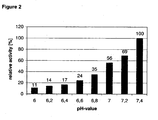
- the value reached at pH 7.4 was set as 100% and the relative activity for the other pH-values was calculated as is evident from figure 2.
- Figure 2 shows the relative activity of V. fluvialis ⁇ -TA in dependence from the given pH-value.
- FIG. 2 shows that at lower pH-values such as 6.0, 6.2 or 6.4 there is still considerable activity present, for instance 11% at pH 6.0.
- this result demonstrates that even at a low pH, it is possible to obtain a significant transaminase activity, allowing to react the substrates at a lower pH, which in turn allows to increase the conversion by using a PDC, which is sensitive to higher pH-values.
- Run 1 used the PDC of Zymomonas mobilis (wild-type cell extract)
- run 2 used the Zymobacter palmae (recombinant in E. coli )
- run 3 was a control without PDC, employing only the transaminase.
- the activities of both of the PDC's have been determined at pH 6 with an alcohol dehydrogenase assay and the same quantity of activity of the PDC's was used in the runs identified above.
- Table 3 gives the volumes of the used substance in ⁇ l. Each reaction run was carried out three times at pH-values 6.0, 6.4 and 7.0. The pH-value was adjusted by the buffer of the B3OP substrate solution. The activity of the PDC was about 2.5 units/ml at pH 7. The substrate and enzyme concentrations are also evident from table 3 below. After 10 minutes, 30 minutes, 60 minutes and 120 minutes a sample of 100 ⁇ l was taken and the reaction stopped by the addition of 100 ⁇ l 1 M NaOH. The quantification of the B3AP-concentration was done using CE (capillary electrophoresis).
- Table 4 below shows the conversion at different pH-values for the different PDC's. It is evident that the use of the PDC increases the conversion. It is also evident that the PDC from Z. palmae ( Zpa ) causes a somewhat higher conversion than the PDC from Z. mobilis (Zmo). It is also evident that at lower pH-values, such as 6.0 or 6.4, a remarkable conversion increase in the runs employing PDC's is to be observed, which is not to be seen in the PDC-free control. In all reaction runs it could be observed that after 120 minutes the conversion decreased.
- Example 4 Stability of B3AP in the presence of various reactants of an asymmetric synthesis reaction
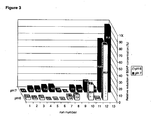
- the example was carried out at a pH of 6 and 7 (sodium phosphate buffer). Directly after reacting the substances being a first sample To was taken, and another sample, T 1 , after 3 hrs. After the extraction the amine concentration was determined with an internal standard ( ⁇ MBA) by CE. From the difference of the concentrations obtained, the %-decrease of the B3AP concentration was calculated (see figure 3 ).
- B3AP was reacted with 2 mM pyruvate or 2 mM acetaldehyd (36 ⁇ l Alcaligenes denitrificans ( Ade ) or 6 ⁇ l Vibrio fluvialis ( Vfl )-transaminase per 0,5 ⁇ l reaction volume, corresponding to 2 units/ ⁇ l transaminase was reacted for 30 minutes).
- Figure 4 shows the results. Accordingly, B3AP was converted to B3OP by both enzymes, both with pyruvate and acetaldehyde, without any significant differences.
- Example 6 Asymmetric synthesis of B3AP under reduced pressure at pH 6
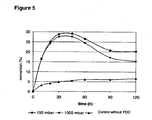
- the reduced pressure was applied using a rotary evaporator (150 mBar).
- the measurement was done using CE.
- Figure 5 shows the conversion of B3OP to B3AP over the time for various pressures. It is evident that the conversion is almost independent from the pressure applied. The conversion at a pressure of 150 mbar is, with regard to the maximal conversion reached, similar to the conversion at a pressure of 1000 mbar.
- Example 8 Influence of enzyme and co-substrate concentrations on the conversion of B3OP to B3AP
- reaction conditions are given in example 6, except that a pH of 7 was used and except if otherwise stated.
- Zymobacter palmae TA was used.
- Example 9 Influence of the alanine concentration on the asymmetric synthesis of B3AP
- Figure 8 shows the conversion of the asymmetric B3AP-synthesis at increased alanine concentrations.
- Figure 8 clearly shows that the conversion can reach 60 to 70%. It is evident that increasing the alanine concentration from 25 to 110 mM has a significant effect on the conversion from B3OP to B3AP and that a further increase up to 500 mM only slightly influences the conversion. The influence of PDC on the conversion decreases with increasing alanine concentration.
- Reaction conditions 1 ml final volume, 37 ⁇ l Vfl -transaminase, 5 mM B3OP, phosphate buffer pH 7.0.
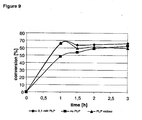
- the L-alanine concentration was 110 mM.
- the measurements were taken by CE and ⁇ -MBA was used as internal standard.
- Figure 9 shows the conversion over the time. There appears to be no significant influence on the maximal conversion due to the PLP addition in run b) compared to run a). The reaction without PLP appears to be slower, although it reached the same conversion as the other reactions. The addition of PLP in run b) causes a slightly greater reduction in the amine concentration as compared to the control run.
- Example 11 Asymmetric synthesis of B3AP with removal of acetaldehyde by the addition of nitrogen
- reaction solution contained a significant amount of protein, there was a strong tendency to the formation of foam.
- an antifoam A concentrate (Sigma, silicone-polymer) was added to the reaction run. The concentrate suppressed the foam generation to a large extent but could not inhibit it completely.
- antifoam concentrate inhibits the enzymes, a control run without the addition of nitrogen was supplemented with antifoam A.
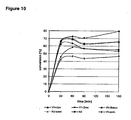
- Figure 10 shows the calculated relative B3AP conversions.
- the control with antifoam A (N 2 -control: Vfl -TA, Zpa-PDC, antifoam, no nitrogen N 2 ) without nitrogen addition corresponds exactly to the reaction run without antifoam A ( Vfl -TA, Zpa PDC).
- the enzymes are not influenced by the addition of the antifoam concentrate.
- the run (run N 2 : Vfl -TA, Zpa-PDC, antifoam, N 2 ) treated with nitrogen showed an increased conversion after 60, 90 and 180 minutes.
- Example 12 Asymmetric B3AP synthesis under various conditions
- Figure 10 shows the conversion of B3OP to B3AP for the above-identified reaction runs combining the Vfl -transaminase with each PDC.
- the run designated N2 is the run containing Vfl- transaminase and Zpa-PDC treated with nitrogen and antifoam A.
- the N2 control is a sample containing Vfl -transaminase, Zpa -PDC and antifoam A without nitrogen treatment. It is evident that there is a significant increase in conversion from the N2 control to the N2-sample due to the presence of nitrogen, which has been fed into the reaction solution. Thus, feeding nitrogen in gaseous form into the reaction medium significantly increases the conversion from B3OP to B3AP.
- Example 13 Asymmetric synthesis of B3AP in the presence of alcohol dehydrogenase (ADH)
- ADH can be used to convert the acetaldehyde to ethanol.
- the ADH used was the ADH from Saccharomyces cerevisae with an activity between 50 and 100 units/ml.
- the PDC-activity was 32 units/ml.
Landscapes
- Chemical & Material Sciences (AREA)
- Organic Chemistry (AREA)
- Life Sciences & Earth Sciences (AREA)
- Engineering & Computer Science (AREA)
- Zoology (AREA)
- Wood Science & Technology (AREA)
- Health & Medical Sciences (AREA)
- Genetics & Genomics (AREA)
- Bioinformatics & Cheminformatics (AREA)
- General Health & Medical Sciences (AREA)
- Biochemistry (AREA)
- General Engineering & Computer Science (AREA)
- Microbiology (AREA)
- Biotechnology (AREA)
- Chemical Kinetics & Catalysis (AREA)
- General Chemical & Material Sciences (AREA)
- Biomedical Technology (AREA)
- Medicinal Chemistry (AREA)
- Molecular Biology (AREA)
- Proteomics, Peptides & Aminoacids (AREA)
- Preparation Of Compounds By Using Micro-Organisms (AREA)
- Organic Low-Molecular-Weight Compounds And Preparation Thereof (AREA)
- Enzymes And Modification Thereof (AREA)
Claims (18)
- Verfahren zur Herstellung eines optisch aktiven, chiralen Amins und von Pyruvat als alpha-Keton-Nebenprodukt umfassend:a) Bereitstellung eines Aminoakzeptors und von Alanin als Aminodonor,b) Umsetzung des Aminoakzeptors und des Aminodonors mit einer (R)- oder (S)-selektiven Transaminase,c) Erhalt des gewünschten optisch aktiven, chiralen Amins und von Pyruvat als alpha-Keton-Nebenprodukt undd) Entfernung von Pyruvat aus dem Reaktionsgemisch mit einer Decarboxylase.
- Verfahren nach Anspruch 1, wobei es sich bei der Decarboxylase um eine Pyruvatdecarboxylase (PDC) handelt.
- Verfahren nach Anspruch 2, wobei der durch die Wirkung der PDC gebildete Acetaldehyd entfernt wird.
- Verfahren nach Anspruch 3, wobei der Acetaldehyd durch Umsetzung mit mindestens einem Enzym entfernt wird.
- Verfahren nach Anspruch 4, wobei es sich wobei dem Enzym um eine Alkoholdehydrogenase handelt.
- Verfahren nach Anspruch 3, wobei der Acetaldehyd durch die Zufuhr von gasförmigem Stickstoff in das Reaktionsgemisch entfernt wird.
- Verfahren nach Anspruch 3, wobei der Acetaldehyd durch Anwendung eines reduzierten Drucks auf das Reaktionsgemisch entfernt wird.
- Verfahren nach Anspruch 3, wobei der Acetaldehyd durch chemische Verfahren entfernt wird.
- Verfahren nach einem der vorhergehenden Ansprüche, wobei der Aminoakzeptor ausgewählt ist aus der Gruppe bestehend aus Phenylbrenztraubensäure, einem Salz derselben, Brenztraubensäure, einem Salz derselben, Acetophenon, 2-Ketoglutarat, 3-Oxobutyrat, 2-Butanon, 3-Oxopyrrolidin (3-OP), 3-Pyridylmethylketon (3-PMK), 3-Oxobuttersäure-ethylester (3-OBEE), 3-Oxopentansäuremethylester (3-OPME), N-1-Boo-3-oxopiperidinon, N-1-Boc-3-oxopyrrolidin (B30P), 3-Oxopiperidin, Alkyl-3-oxobutanoate, Methoxyaceton und 1-Oxotetralon.
- Verfahren nach einem der vorhergehenden Ansprüche, wobei es sich bei den erhaltenen Aminen um mono- oder bizyklische Amine handelt, insbesondere um Amine von 5- bis 6-gliedrigen zyklischen oder S-, O- oder N-substituierten heterozyklischen Kohlenwasserstoffen, oder aromatische Amine, insbesondere Alkyl- oder Alkoxy-substituierte aromatische Amine.
- Verfahren nach einem der vorhergehenden Ansprüche, wobei die erhaltenen Amine ausgewählt sind aus der Gruppe bestehend aus Phenylalanin, Alanin, 3-Aminopiperidin, Alkyl-3-Aminobutanoate, 3-Aminopyrrolidin (3-AP), 3-Pyridyl-1-ethylamin (3-PEA), N-1-Boc-3-aminopyrrolidin (B3AP), 3-Aminobuttersäureethylester (3-ABEE), 3-Aminopentansäuremethylester (3-APME), α-Methylbenzylamin (α-MBA), 1-Aminotetralin, α-Methyl-4-(3-pyridyl)-butanamin, Glutamat, β-Aminobutyrat, sec-Butylamin, Methoxyisopropylamin, Derivate von 3-Aminopyrrolidin, 1-N-Boc-3-Aminopiperidin, Cephalosporin und Derivate von Cephalosporin.
- Verfahren nach einem der vorhergehenden Ansprüche, wobei die ω-Transaminase aus Vibrio fluvialis, Alcaligenes denitrificans, Klebsiella pneumoniae oder Bacillus thuringiensis stammt.
- Verfahren nach einem der vorhergehenden Ansprüche, wobei das in Schritt c) oder d) erhaltene optisch aktive, chirale Amin aus dem Reaktionsgemisch entfernt wird.
- Verfahren nach einem der vorhergehenden Ansprüche, wobei das Verfahren in einem Reaktionsgemisch mit einem pH-Wert von 5,0 bis 9,5 durchgeführt wird.
- Verfahren nach einem der vorhergehenden Ansprüche, wobei das Verfahren für eine Reaktionsdauer von 40 bis 70 Minuten durchgeführt wird.
- Verfahren nach einem der vorhergehenden Ansprüche, wobei die Umsetzung in Anwesenheit von mindestens einer Pyruvatdecarboxylase und mindestens einer Alkoholdehydrogenase durchgeführt wird.
- Verfahren nach einem der vorhergehenden Ansprüche, wobei die Umsetzung in Anwesenheit von mindestens einer Pyruvatdecarboxylase, mindestens einer Alkoholdehydrogenase und zusätzlich in Anwesenheit von gasförmigem Stickstoff (N2) durchgeführt wird.
- Verfahren zur Herstellung einer physiologisch aktiven Verbindung ausgewählt aus der Gruppe aus 3-Aminopyrrolidon-Derivaten, Cephalosporin, Derivaten von Cephalosporin, heterozyklischen Boronsäuren, L-Dihydroxyphenylalanin (L-Dopa), α-Methyldopa, D-Phenylglycin, β-Hydroxyphenylglycin, Phosphinothricin, Pyrimidoderivaten und Pyrrolidonderivaten, wobei das Verfahren nach einem der Ansprüche 1 bis 17 verwendet wird.
Priority Applications (3)
| Application Number | Priority Date | Filing Date | Title |
|---|---|---|---|
| EP07711521A EP1987152B1 (de) | 2006-02-13 | 2007-02-13 | Herstellungsverfahren für optisch aktive chirale amine |
| EP10002780.4A EP2202318B1 (de) | 2006-02-13 | 2007-02-13 | Verfahren zur herstellung eines optisch aktiven chiralen amins |
| EP10002779.6A EP2202317B1 (de) | 2006-02-13 | 2007-02-13 | Verfahren zur herstellung von optisch aktiven chiralen aminopyrrolidinen (3-ap, b3-ap) |
Applications Claiming Priority (3)
| Application Number | Priority Date | Filing Date | Title |
|---|---|---|---|
| EP06002859A EP1818411A1 (de) | 2006-02-13 | 2006-02-13 | Verfahren zur Herstellung von optisch aktiven chiralen Aminen |
| EP07711521A EP1987152B1 (de) | 2006-02-13 | 2007-02-13 | Herstellungsverfahren für optisch aktive chirale amine |
| PCT/EP2007/001222 WO2007093372A1 (en) | 2006-02-13 | 2007-02-13 | Process for the preparation of optically active chiral amines |
Related Child Applications (4)
| Application Number | Title | Priority Date | Filing Date |
|---|---|---|---|
| EP10002780.4A Division EP2202318B1 (de) | 2006-02-13 | 2007-02-13 | Verfahren zur herstellung eines optisch aktiven chiralen amins |
| EP10002779.6A Division EP2202317B1 (de) | 2006-02-13 | 2007-02-13 | Verfahren zur herstellung von optisch aktiven chiralen aminopyrrolidinen (3-ap, b3-ap) |
| EP10002780.4 Division-Into | 2010-03-17 | ||
| EP10002779.6 Division-Into | 2010-03-17 |
Publications (2)
| Publication Number | Publication Date |
|---|---|
| EP1987152A1 EP1987152A1 (de) | 2008-11-05 |
| EP1987152B1 true EP1987152B1 (de) | 2010-05-26 |
Family
ID=36686005
Family Applications (4)
| Application Number | Title | Priority Date | Filing Date |
|---|---|---|---|
| EP06002859A Withdrawn EP1818411A1 (de) | 2006-02-13 | 2006-02-13 | Verfahren zur Herstellung von optisch aktiven chiralen Aminen |
| EP07711521A Not-in-force EP1987152B1 (de) | 2006-02-13 | 2007-02-13 | Herstellungsverfahren für optisch aktive chirale amine |
| EP10002780.4A Active EP2202318B1 (de) | 2006-02-13 | 2007-02-13 | Verfahren zur herstellung eines optisch aktiven chiralen amins |
| EP10002779.6A Not-in-force EP2202317B1 (de) | 2006-02-13 | 2007-02-13 | Verfahren zur herstellung von optisch aktiven chiralen aminopyrrolidinen (3-ap, b3-ap) |
Family Applications Before (1)
| Application Number | Title | Priority Date | Filing Date |
|---|---|---|---|
| EP06002859A Withdrawn EP1818411A1 (de) | 2006-02-13 | 2006-02-13 | Verfahren zur Herstellung von optisch aktiven chiralen Aminen |
Family Applications After (2)
| Application Number | Title | Priority Date | Filing Date |
|---|---|---|---|
| EP10002780.4A Active EP2202318B1 (de) | 2006-02-13 | 2007-02-13 | Verfahren zur herstellung eines optisch aktiven chiralen amins |
| EP10002779.6A Not-in-force EP2202317B1 (de) | 2006-02-13 | 2007-02-13 | Verfahren zur herstellung von optisch aktiven chiralen aminopyrrolidinen (3-ap, b3-ap) |
Country Status (17)
| Country | Link |
|---|---|
| US (2) | US9074228B2 (de) |
| EP (4) | EP1818411A1 (de) |
| JP (2) | JP5430945B2 (de) |
| KR (1) | KR101294499B1 (de) |
| CN (1) | CN101384723B (de) |
| AT (1) | ATE469233T1 (de) |
| AU (1) | AU2007214717B2 (de) |
| BR (1) | BRPI0707454A2 (de) |
| CA (1) | CA2637821A1 (de) |
| DE (1) | DE602007006765D1 (de) |
| DK (1) | DK1987152T3 (de) |
| EA (1) | EA017070B1 (de) |
| ES (3) | ES2345734T3 (de) |
| IL (3) | IL192637A (de) |
| MX (1) | MX2008010416A (de) |
| PT (1) | PT1987152E (de) |
| WO (1) | WO2007093372A1 (de) |
Families Citing this family (36)
| Publication number | Priority date | Publication date | Assignee | Title |
|---|---|---|---|---|
| EP1818411A1 (de) * | 2006-02-13 | 2007-08-15 | Lonza AG | Verfahren zur Herstellung von optisch aktiven chiralen Aminen |
| EP2022852B8 (de) * | 2006-05-29 | 2017-08-23 | Kaneka Corporation | Verfahren zur herstellung einer optisch aktiven aminverbindung, rekombinanter vektor und den vektor tragende transformante |
| TWI433674B (zh) | 2006-12-28 | 2014-04-11 | Infinity Discovery Inc | 環杷明(cyclopamine)類似物類 |
| DE102007042600A1 (de) * | 2007-09-07 | 2009-03-12 | Evonik Degussa Gmbh | Verfahren zur Herstellung von enantiomerenangereichten Aminen |
| DE102007060705A1 (de) * | 2007-12-17 | 2009-06-18 | Evonik Degussa Gmbh | ω-Aminocarbonsäuren oder ihre Lactame, herstellende, rekombinante Zellen |
| CN104059124A (zh) | 2007-12-27 | 2014-09-24 | 无限药品股份有限公司 | 立体选择性还原的方法 |
| ES2840000T3 (es) | 2009-01-08 | 2021-07-06 | Codexis Inc | Polipéptidos de transaminasa |
| SG173815A1 (en) | 2009-02-26 | 2011-09-29 | Codexis Inc | Transaminase biocatalysts |
| KR101185603B1 (ko) | 2009-03-23 | 2012-09-24 | 주식회사 아미노룩스 | 광학적으로 순수한 아미노산을 얻는 방법 |
| ES2644992T3 (es) | 2009-06-22 | 2017-12-01 | Codexis, Inc. | Reacciones de transaminasa |
| JP6141015B2 (ja) * | 2009-08-05 | 2017-06-07 | インフィニティ ファーマスーティカルズ、インク. | シクロパミン類似体の酵素によるアミノ基転移 |
| ES2599644T3 (es) * | 2009-09-02 | 2017-02-02 | Lonza Ag | Un proceso para la identificación y preparación de una omega-transaminasa (R)-específica |
| US8852900B2 (en) | 2010-06-17 | 2014-10-07 | Codexis, Inc. | Biocatalysts and methods for the synthesis of (S)-3-(1-aminoethyl)-phenol |
| US8932836B2 (en) | 2010-08-16 | 2015-01-13 | Codexis, Inc. | Biocatalysts and methods for the synthesis of (1R,2R)-2-(3,4-dimethoxyphenethoxy)cyclohexanamine |
| US9376447B2 (en) | 2010-09-14 | 2016-06-28 | Infinity Pharmaceuticals, Inc. | Transfer hydrogenation of cyclopamine analogs |
| EP2623595B1 (de) | 2010-09-28 | 2016-11-02 | Kaneka Corporation | Neue transaminase mit hoher wirksamkeit gegen glutaminsäure, dafür kodierendes gen und verfahren zu ihrer verwendung |
| WO2012124639A1 (ja) | 2011-03-11 | 2012-09-20 | 株式会社カネカ | 改変型アミノ基転移酵素、その遺伝子、およびそれらを利用した光学活性アミノ化合物の製造方法 |
| KR101479718B1 (ko) | 2012-07-06 | 2015-01-08 | 연세대학교 산학협력단 | 오메가 트랜스아미나아제의 조기질 순환을 이용한 광학 활성 아미노산의 제조방법 |
| JP2015533501A (ja) * | 2012-10-18 | 2015-11-26 | サンド・アクチエンゲゼルシヤフト | インドリン誘導体の調製方法 |
| WO2014092496A1 (ko) * | 2012-12-13 | 2014-06-19 | 연세대학교 산학협력단 | 탈라세믹화를 이용한 광학 활성 아민 화합물의 제조방법 |
| KR101493311B1 (ko) * | 2012-12-13 | 2015-02-16 | 연세대학교 산학협력단 | 광학 활성 아민 및 호모알라닌의 제조방법 |
| KR101479717B1 (ko) * | 2013-02-27 | 2015-01-08 | 연세대학교 산학협력단 | 트랜스아미나제를 이용한 광학활성 알킬아민과 아릴알킬아민의 동시생산방법 |
| WO2015078267A1 (zh) * | 2013-11-26 | 2015-06-04 | 凯莱英医药集团(天津)股份有限公司 | 转氨酶及其应用 |
| CN103865964A (zh) * | 2014-03-14 | 2014-06-18 | 上海朴颐化学科技有限公司 | 转氨酶法合成(r)-3-氨基哌啶的方法 |
| HRP20251395T1 (hr) | 2015-06-04 | 2026-02-13 | Sol-Gel Technologies Ltd. | Topikalne formulacije za isporuku spojeva inhibitora hedgehog signalnog puta i njihova uporaba |
| CN105112468B (zh) * | 2015-10-14 | 2019-01-08 | 厦门大学 | 一种多酶耦联体系制备手性胺的方法 |
| CN105200089B (zh) * | 2015-10-15 | 2018-09-11 | 江苏暨明医药科技有限公司 | (s)-1-叔丁氧羰基-3-羟基哌啶制备方法及其装置 |
| MA43711A (fr) | 2016-03-02 | 2018-11-28 | Agrimetis Llc | Procédés de production de l-glufosinate |
| CN111349667B (zh) * | 2016-11-01 | 2022-05-06 | 凯莱英医药集团(天津)股份有限公司 | 一种手性氨基杂环化合物及其衍生物的制备方法 |
| JPWO2018207888A1 (ja) * | 2017-05-10 | 2020-03-12 | 株式会社カネカ | ラメルテオンの製造法 |
| CN107805648B (zh) * | 2017-10-10 | 2020-09-11 | 凯莱英生命科学技术(天津)有限公司 | 制备具有多个手性中心的胺化合物的方法 |
| CN119120607A (zh) | 2018-09-05 | 2024-12-13 | 巴斯夫欧洲公司 | 改善l-草胺膦产率的方法 |
| CN109370998B (zh) * | 2018-11-30 | 2020-08-04 | 江南大学 | 一种催化效率提高的ω-转氨酶突变体I215F |
| CN110724675B (zh) * | 2019-10-31 | 2021-02-02 | 宁波酶赛生物工程有限公司 | 转氨酶催化剂和酶法合成(r)-1-叔丁氧羰基-3-氨基哌啶的方法 |
| CN112626142B (zh) * | 2020-12-17 | 2022-10-18 | 永农生物科学有限公司 | 利用生物多酶偶联法制备l-草铵膦的方法 |
| CN112410383B (zh) * | 2020-12-17 | 2022-07-12 | 永农生物科学有限公司 | 利用生物多酶偶联法制备l-草铵膦的方法 |
Family Cites Families (20)
| Publication number | Priority date | Publication date | Assignee | Title |
|---|---|---|---|---|
| EP0135846B1 (de) | 1983-09-01 | 1990-08-16 | Genetics Institute, Inc. | Herstellung von L-Aminosäuren durch Transaminierung |
| DE3752311D1 (de) | 1986-06-04 | 2000-04-27 | Hoechst Schering Agrevo Gmbh | Verfahren zur Herstellung von L-tertiär-Leucin durch Transaminierung |
| JPS63304986A (ja) | 1987-06-04 | 1988-12-13 | Daicel Chem Ind Ltd | プラスミド |
| JPH0787778B2 (ja) | 1987-12-10 | 1995-09-27 | 田辺製薬株式会社 | 新規微生物及びそれを用いるl−アミノ酸の製法 |
| US5424202A (en) * | 1988-08-31 | 1995-06-13 | The University Of Florida | Ethanol production by recombinant hosts |
| US4950606A (en) * | 1989-06-22 | 1990-08-21 | Celgene Corporation | Enantiomeric enrichment and stereoselective synthesis of chiral amines |
| US5300437A (en) * | 1989-06-22 | 1994-04-05 | Celgene Corporation | Enantiomeric enrichment and stereoselective synthesis of chiral amines |
| US6197558B1 (en) | 1997-05-19 | 2001-03-06 | Nsc Technologies | Transaminase biotransformation process |
| IL125658A0 (en) | 1997-08-18 | 1999-04-11 | Hoffmann La Roche | Ccr-3 receptor antagonists |
| PL342882A1 (en) * | 1998-03-11 | 2001-07-16 | Celgro | Improvements in the enzymatic synthesis of chiral amines |
| DE19919848A1 (de) * | 1999-04-30 | 2000-11-02 | Aventis Cropscience Gmbh | Verfahren zur Herstellung von L-Phosphinothricin durch enzymatische Transaminierung mit Aspartat |
| CA2424890C (en) | 2000-10-06 | 2014-06-03 | Elsworth Biotechnology Limited | Ethanol production in gram-positive bacteria with a stabilized mutation in lactate dehydrogenase |
| US6576794B2 (en) * | 2000-12-28 | 2003-06-10 | Kao Corporation | Process for production of ether amine |
| TWI324181B (en) | 2001-04-16 | 2010-05-01 | Martek Biosciences Corp | Product and process for transformation of thraustochytriales microorganisms |
| WO2003093231A2 (en) | 2002-04-29 | 2003-11-13 | Merck & Co., Inc. | Tetrahydropyranyl cyclopentyl tetrahydroisoquinoline modulators of chemokine receptor activity |
| CA2491133C (en) * | 2002-08-01 | 2009-09-01 | Basilea Pharmaceutica Ag | Process for the preparation of amino-pyrrolidine derivatives |
| CA2564678C (en) * | 2004-04-27 | 2014-09-02 | Archer-Daniels-Midland Company | Enzymatic decarboxylation of 2-keto-l-gulonic acid to produce xylose |
| US8133705B2 (en) * | 2005-05-23 | 2012-03-13 | Kaneka Corporation | Aminotransferase, gene encoding the same, and method of using them |
| EP1818411A1 (de) * | 2006-02-13 | 2007-08-15 | Lonza AG | Verfahren zur Herstellung von optisch aktiven chiralen Aminen |
| EP1897956A1 (de) * | 2006-09-06 | 2008-03-12 | Lonza AG | Verfahren zur Herstellung von optisch aktiven Aminen durch Racematspaltung unter Verwendung einer bakteriellen omega-Transaminase |
-
2006
- 2006-02-13 EP EP06002859A patent/EP1818411A1/de not_active Withdrawn
-
2007
- 2007-02-13 ES ES07711521T patent/ES2345734T3/es active Active
- 2007-02-13 US US12/223,730 patent/US9074228B2/en not_active Expired - Fee Related
- 2007-02-13 KR KR1020087019720A patent/KR101294499B1/ko not_active Expired - Fee Related
- 2007-02-13 EP EP07711521A patent/EP1987152B1/de not_active Not-in-force
- 2007-02-13 DE DE602007006765T patent/DE602007006765D1/de active Active
- 2007-02-13 JP JP2008554659A patent/JP5430945B2/ja not_active Expired - Fee Related
- 2007-02-13 CN CN2007800052396A patent/CN101384723B/zh not_active Expired - Fee Related
- 2007-02-13 ES ES10002780T patent/ES2767898T3/es active Active
- 2007-02-13 AU AU2007214717A patent/AU2007214717B2/en not_active Ceased
- 2007-02-13 MX MX2008010416A patent/MX2008010416A/es active IP Right Grant
- 2007-02-13 ES ES10002779.6T patent/ES2626645T3/es active Active
- 2007-02-13 CA CA002637821A patent/CA2637821A1/en not_active Abandoned
- 2007-02-13 BR BRPI0707454-9A patent/BRPI0707454A2/pt not_active IP Right Cessation
- 2007-02-13 AT AT07711521T patent/ATE469233T1/de not_active IP Right Cessation
- 2007-02-13 WO PCT/EP2007/001222 patent/WO2007093372A1/en not_active Ceased
- 2007-02-13 EA EA200870262A patent/EA017070B1/ru not_active IP Right Cessation
- 2007-02-13 PT PT07711521T patent/PT1987152E/pt unknown
- 2007-02-13 DK DK07711521.0T patent/DK1987152T3/da active
- 2007-02-13 EP EP10002780.4A patent/EP2202318B1/de active Active
- 2007-02-13 EP EP10002779.6A patent/EP2202317B1/de not_active Not-in-force
-
2008
- 2008-07-06 IL IL192637A patent/IL192637A/en not_active IP Right Cessation
-
2012
- 2012-04-15 IL IL219164A patent/IL219164A0/en unknown
- 2012-04-15 IL IL219163A patent/IL219163A0/en unknown
-
2013
- 2013-05-08 JP JP2013098609A patent/JP2013188217A/ja active Pending
-
2015
- 2015-06-16 US US14/740,646 patent/US9551018B2/en not_active Expired - Fee Related
Non-Patent Citations (1)
| Title |
|---|
| CHO ET AL: "Simultaneous synthesis of enantiomerically pure (S)-amino acids and (R)-amines using coupled transaminase reactions", BIOTECHNOLOGY AND BIOENGINEERING, vol. 81, 2003, pages 783 - 789, XP001091183 * |
Also Published As
Similar Documents
| Publication | Publication Date | Title |
|---|---|---|
| EP2202317B1 (de) | Verfahren zur herstellung von optisch aktiven chiralen aminopyrrolidinen (3-ap, b3-ap) | |
| JP5102297B2 (ja) | 細菌性オメガアミノ基転移酵素を利用したラセミアミン混合物の光学的分解能による光学活性n−保護3−アミノピロリジン又は光学活性n−保護3−アミノピペリジン及び対応するケトンの調製方法 | |
| US20100323409A1 (en) | Process for producing (2s,3r,4s)-4-hydroxy-l-isoleucine | |
| US5374542A (en) | Process for producing 4-hydroxy-L-proline | |
| US20160289715A1 (en) | Method for producing optically active amine compounds by deracemization | |
| JPH02124087A (ja) | シユードモナス属細菌の培養方法 |
Legal Events
| Date | Code | Title | Description |
|---|---|---|---|
| PUAI | Public reference made under article 153(3) epc to a published international application that has entered the european phase |
Free format text: ORIGINAL CODE: 0009012 |
|
| 17P | Request for examination filed |
Effective date: 20080915 |
|
| AK | Designated contracting states |
Kind code of ref document: A1 Designated state(s): AT BE BG CH CY CZ DE DK EE ES FI FR GB GR HU IE IS IT LI LT LU LV MC NL PL PT RO SE SI SK TR |
|
| 17Q | First examination report despatched |
Effective date: 20081215 |
|
| R17C | First examination report despatched (corrected) |
Effective date: 20081215 |
|
| GRAP | Despatch of communication of intention to grant a patent |
Free format text: ORIGINAL CODE: EPIDOSNIGR1 |
|
| RIC1 | Information provided on ipc code assigned before grant |
Ipc: C12P 17/10 20060101ALI20091013BHEP Ipc: C12P 13/00 20060101AFI20091013BHEP |
|
| GRAS | Grant fee paid |
Free format text: ORIGINAL CODE: EPIDOSNIGR3 |
|
| GRAA | (expected) grant |
Free format text: ORIGINAL CODE: 0009210 |
|
| AK | Designated contracting states |
Kind code of ref document: B1 Designated state(s): AT BE BG CH CY CZ DE DK EE ES FI FR GB GR HU IE IS IT LI LT LU LV MC NL PL PT RO SE SI SK TR |
|
| REG | Reference to a national code |
Ref country code: GB Ref legal event code: FG4D |
|
| REG | Reference to a national code |
Ref country code: CH Ref legal event code: EP |
|
| REG | Reference to a national code |
Ref country code: IE Ref legal event code: FG4D |
|
| REF | Corresponds to: |
Ref document number: 602007006765 Country of ref document: DE Date of ref document: 20100708 Kind code of ref document: P |
|
| REG | Reference to a national code |
Ref country code: PT Ref legal event code: SC4A Free format text: AVAILABILITY OF NATIONAL TRANSLATION Effective date: 20100811 Ref country code: NL Ref legal event code: T3 |
|
| REG | Reference to a national code |
Ref country code: DK Ref legal event code: T3 |
|
| REG | Reference to a national code |
Ref country code: SE Ref legal event code: TRGR |
|
| REG | Reference to a national code |
Ref country code: ES Ref legal event code: FG2A Ref document number: 2345734 Country of ref document: ES Kind code of ref document: T3 |
|
| LTIE | Lt: invalidation of european patent or patent extension |
Effective date: 20100526 |
|
| PG25 | Lapsed in a contracting state [announced via postgrant information from national office to epo] |
Ref country code: LT Free format text: LAPSE BECAUSE OF FAILURE TO SUBMIT A TRANSLATION OF THE DESCRIPTION OR TO PAY THE FEE WITHIN THE PRESCRIBED TIME-LIMIT Effective date: 20100526 |
|
| PG25 | Lapsed in a contracting state [announced via postgrant information from national office to epo] |
Ref country code: IS Free format text: LAPSE BECAUSE OF FAILURE TO SUBMIT A TRANSLATION OF THE DESCRIPTION OR TO PAY THE FEE WITHIN THE PRESCRIBED TIME-LIMIT Effective date: 20100926 Ref country code: FI Free format text: LAPSE BECAUSE OF FAILURE TO SUBMIT A TRANSLATION OF THE DESCRIPTION OR TO PAY THE FEE WITHIN THE PRESCRIBED TIME-LIMIT Effective date: 20100526 Ref country code: AT Free format text: LAPSE BECAUSE OF FAILURE TO SUBMIT A TRANSLATION OF THE DESCRIPTION OR TO PAY THE FEE WITHIN THE PRESCRIBED TIME-LIMIT Effective date: 20100526 Ref country code: SI Free format text: LAPSE BECAUSE OF FAILURE TO SUBMIT A TRANSLATION OF THE DESCRIPTION OR TO PAY THE FEE WITHIN THE PRESCRIBED TIME-LIMIT Effective date: 20100526 Ref country code: LV Free format text: LAPSE BECAUSE OF FAILURE TO SUBMIT A TRANSLATION OF THE DESCRIPTION OR TO PAY THE FEE WITHIN THE PRESCRIBED TIME-LIMIT Effective date: 20100526 |
|
| PG25 | Lapsed in a contracting state [announced via postgrant information from national office to epo] |
Ref country code: CY Free format text: LAPSE BECAUSE OF FAILURE TO SUBMIT A TRANSLATION OF THE DESCRIPTION OR TO PAY THE FEE WITHIN THE PRESCRIBED TIME-LIMIT Effective date: 20100602 Ref country code: PL Free format text: LAPSE BECAUSE OF FAILURE TO SUBMIT A TRANSLATION OF THE DESCRIPTION OR TO PAY THE FEE WITHIN THE PRESCRIBED TIME-LIMIT Effective date: 20100526 |
|
| PG25 | Lapsed in a contracting state [announced via postgrant information from national office to epo] |
Ref country code: EE Free format text: LAPSE BECAUSE OF FAILURE TO SUBMIT A TRANSLATION OF THE DESCRIPTION OR TO PAY THE FEE WITHIN THE PRESCRIBED TIME-LIMIT Effective date: 20100526 |
|
| PG25 | Lapsed in a contracting state [announced via postgrant information from national office to epo] |
Ref country code: SK Free format text: LAPSE BECAUSE OF FAILURE TO SUBMIT A TRANSLATION OF THE DESCRIPTION OR TO PAY THE FEE WITHIN THE PRESCRIBED TIME-LIMIT Effective date: 20100526 Ref country code: RO Free format text: LAPSE BECAUSE OF FAILURE TO SUBMIT A TRANSLATION OF THE DESCRIPTION OR TO PAY THE FEE WITHIN THE PRESCRIBED TIME-LIMIT Effective date: 20100526 |
|
| PLBE | No opposition filed within time limit |
Free format text: ORIGINAL CODE: 0009261 |
|
| STAA | Information on the status of an ep patent application or granted ep patent |
Free format text: STATUS: NO OPPOSITION FILED WITHIN TIME LIMIT |
|
| 26N | No opposition filed |
Effective date: 20110301 |
|
| PG25 | Lapsed in a contracting state [announced via postgrant information from national office to epo] |
Ref country code: GR Free format text: LAPSE BECAUSE OF FAILURE TO SUBMIT A TRANSLATION OF THE DESCRIPTION OR TO PAY THE FEE WITHIN THE PRESCRIBED TIME-LIMIT Effective date: 20100827 |
|
| REG | Reference to a national code |
Ref country code: DE Ref legal event code: R097 Ref document number: 602007006765 Country of ref document: DE Effective date: 20110228 |
|
| PG25 | Lapsed in a contracting state [announced via postgrant information from national office to epo] |
Ref country code: MC Free format text: LAPSE BECAUSE OF NON-PAYMENT OF DUE FEES Effective date: 20110228 |
|
| REG | Reference to a national code |
Ref country code: IE Ref legal event code: MM4A |
|
| PG25 | Lapsed in a contracting state [announced via postgrant information from national office to epo] |
Ref country code: IE Free format text: LAPSE BECAUSE OF NON-PAYMENT OF DUE FEES Effective date: 20110213 |
|
| PGFP | Annual fee paid to national office [announced via postgrant information from national office to epo] |
Ref country code: SE Payment date: 20111125 Year of fee payment: 6 |
|
| PG25 | Lapsed in a contracting state [announced via postgrant information from national office to epo] |
Ref country code: LU Free format text: LAPSE BECAUSE OF NON-PAYMENT OF DUE FEES Effective date: 20110213 |
|
| PG25 | Lapsed in a contracting state [announced via postgrant information from national office to epo] |
Ref country code: BG Free format text: LAPSE BECAUSE OF FAILURE TO SUBMIT A TRANSLATION OF THE DESCRIPTION OR TO PAY THE FEE WITHIN THE PRESCRIBED TIME-LIMIT Effective date: 20100826 Ref country code: TR Free format text: LAPSE BECAUSE OF FAILURE TO SUBMIT A TRANSLATION OF THE DESCRIPTION OR TO PAY THE FEE WITHIN THE PRESCRIBED TIME-LIMIT Effective date: 20100526 |
|
| REG | Reference to a national code |
Ref country code: SE Ref legal event code: EUG |
|
| PG25 | Lapsed in a contracting state [announced via postgrant information from national office to epo] |
Ref country code: SE Free format text: LAPSE BECAUSE OF NON-PAYMENT OF DUE FEES Effective date: 20130214 Ref country code: HU Free format text: LAPSE BECAUSE OF FAILURE TO SUBMIT A TRANSLATION OF THE DESCRIPTION OR TO PAY THE FEE WITHIN THE PRESCRIBED TIME-LIMIT Effective date: 20100526 |
|
| PGFP | Annual fee paid to national office [announced via postgrant information from national office to epo] |
Ref country code: PT Payment date: 20141210 Year of fee payment: 9 |
|
| PGFP | Annual fee paid to national office [announced via postgrant information from national office to epo] |
Ref country code: CZ Payment date: 20150108 Year of fee payment: 9 Ref country code: DK Payment date: 20150212 Year of fee payment: 9 Ref country code: IT Payment date: 20150213 Year of fee payment: 9 |
|
| PGFP | Annual fee paid to national office [announced via postgrant information from national office to epo] |
Ref country code: BE Payment date: 20150212 Year of fee payment: 9 |
|
| REG | Reference to a national code |
Ref country code: FR Ref legal event code: PLFP Year of fee payment: 10 |
|
| PG25 | Lapsed in a contracting state [announced via postgrant information from national office to epo] |
Ref country code: BE Free format text: LAPSE BECAUSE OF NON-PAYMENT OF DUE FEES Effective date: 20160229 |
|
| REG | Reference to a national code |
Ref country code: DK Ref legal event code: EBP Effective date: 20160229 |
|
| PG25 | Lapsed in a contracting state [announced via postgrant information from national office to epo] |
Ref country code: CZ Free format text: LAPSE BECAUSE OF NON-PAYMENT OF DUE FEES Effective date: 20160213 Ref country code: PT Free format text: LAPSE BECAUSE OF NON-PAYMENT OF DUE FEES Effective date: 20160816 |
|
| PG25 | Lapsed in a contracting state [announced via postgrant information from national office to epo] |
Ref country code: IT Free format text: LAPSE BECAUSE OF NON-PAYMENT OF DUE FEES Effective date: 20160213 |
|
| PG25 | Lapsed in a contracting state [announced via postgrant information from national office to epo] |
Ref country code: DK Free format text: LAPSE BECAUSE OF NON-PAYMENT OF DUE FEES Effective date: 20160229 |
|
| REG | Reference to a national code |
Ref country code: FR Ref legal event code: PLFP Year of fee payment: 11 |
|
| REG | Reference to a national code |
Ref country code: FR Ref legal event code: PLFP Year of fee payment: 12 |
|
| PGFP | Annual fee paid to national office [announced via postgrant information from national office to epo] |
Ref country code: GB Payment date: 20200130 Year of fee payment: 14 Ref country code: NL Payment date: 20200130 Year of fee payment: 14 Ref country code: DE Payment date: 20200130 Year of fee payment: 14 |
|
| PGFP | Annual fee paid to national office [announced via postgrant information from national office to epo] |
Ref country code: CH Payment date: 20200131 Year of fee payment: 14 |
|
| PGFP | Annual fee paid to national office [announced via postgrant information from national office to epo] |
Ref country code: FR Payment date: 20200131 Year of fee payment: 14 |
|
| PGFP | Annual fee paid to national office [announced via postgrant information from national office to epo] |
Ref country code: ES Payment date: 20200331 Year of fee payment: 14 |
|
| REG | Reference to a national code |
Ref country code: DE Ref legal event code: R119 Ref document number: 602007006765 Country of ref document: DE |
|
| GBPC | Gb: european patent ceased through non-payment of renewal fee |
Effective date: 20210213 |
|
| PG25 | Lapsed in a contracting state [announced via postgrant information from national office to epo] |
Ref country code: LI Free format text: LAPSE BECAUSE OF NON-PAYMENT OF DUE FEES Effective date: 20210228 Ref country code: CH Free format text: LAPSE BECAUSE OF NON-PAYMENT OF DUE FEES Effective date: 20210228 |
|
| REG | Reference to a national code |
Ref country code: NL Ref legal event code: MM Effective date: 20210301 |
|
| PG25 | Lapsed in a contracting state [announced via postgrant information from national office to epo] |
Ref country code: NL Free format text: LAPSE BECAUSE OF NON-PAYMENT OF DUE FEES Effective date: 20210301 |
|
| PG25 | Lapsed in a contracting state [announced via postgrant information from national office to epo] |
Ref country code: FR Free format text: LAPSE BECAUSE OF NON-PAYMENT OF DUE FEES Effective date: 20210228 Ref country code: GB Free format text: LAPSE BECAUSE OF NON-PAYMENT OF DUE FEES Effective date: 20210213 Ref country code: DE Free format text: LAPSE BECAUSE OF NON-PAYMENT OF DUE FEES Effective date: 20210901 |
|
| REG | Reference to a national code |
Ref country code: ES Ref legal event code: FD2A Effective date: 20220510 |
|
| PG25 | Lapsed in a contracting state [announced via postgrant information from national office to epo] |
Ref country code: ES Free format text: LAPSE BECAUSE OF NON-PAYMENT OF DUE FEES Effective date: 20210214 |