EP1988687A1 - System und Verfahren zum Senden und Empfangen von Paketen - Google Patents
System und Verfahren zum Senden und Empfangen von Paketen Download PDFInfo
- Publication number
- EP1988687A1 EP1988687A1 EP07107235A EP07107235A EP1988687A1 EP 1988687 A1 EP1988687 A1 EP 1988687A1 EP 07107235 A EP07107235 A EP 07107235A EP 07107235 A EP07107235 A EP 07107235A EP 1988687 A1 EP1988687 A1 EP 1988687A1
- Authority
- EP
- European Patent Office
- Prior art keywords
- layer
- native
- network
- access node
- wireless communication
- Prior art date
- Legal status (The legal status is an assumption and is not a legal conclusion. Google has not performed a legal analysis and makes no representation as to the accuracy of the status listed.)
- Granted
Links
Images




Classifications
-
- H—ELECTRICITY
- H04—ELECTRIC COMMUNICATION TECHNIQUE
- H04L—TRANSMISSION OF DIGITAL INFORMATION, e.g. TELEGRAPHIC COMMUNICATION
- H04L69/00—Network arrangements, protocols or services independent of the application payload and not provided for in the other groups of this subclass
- H04L69/16—Implementation or adaptation of Internet protocol [IP], of transmission control protocol [TCP] or of user datagram protocol [UDP]
-
- H—ELECTRICITY
- H04—ELECTRIC COMMUNICATION TECHNIQUE
- H04L—TRANSMISSION OF DIGITAL INFORMATION, e.g. TELEGRAPHIC COMMUNICATION
- H04L69/00—Network arrangements, protocols or services independent of the application payload and not provided for in the other groups of this subclass
- H04L69/16—Implementation or adaptation of Internet protocol [IP], of transmission control protocol [TCP] or of user datagram protocol [UDP]
- H04L69/163—In-band adaptation of TCP data exchange; In-band control procedures
-
- H—ELECTRICITY
- H04—ELECTRIC COMMUNICATION TECHNIQUE
- H04L—TRANSMISSION OF DIGITAL INFORMATION, e.g. TELEGRAPHIC COMMUNICATION
- H04L69/00—Network arrangements, protocols or services independent of the application payload and not provided for in the other groups of this subclass
- H04L69/16—Implementation or adaptation of Internet protocol [IP], of transmission control protocol [TCP] or of user datagram protocol [UDP]
- H04L69/164—Adaptation or special uses of UDP protocol
-
- H—ELECTRICITY
- H04—ELECTRIC COMMUNICATION TECHNIQUE
- H04L—TRANSMISSION OF DIGITAL INFORMATION, e.g. TELEGRAPHIC COMMUNICATION
- H04L69/00—Network arrangements, protocols or services independent of the application payload and not provided for in the other groups of this subclass
- H04L69/30—Definitions, standards or architectural aspects of layered protocol stacks
- H04L69/32—Architecture of open systems interconnection [OSI] 7-layer type protocol stacks, e.g. the interfaces between the data link level and the physical level
- H04L69/322—Intralayer communication protocols among peer entities or protocol data unit [PDU] definitions
- H04L69/325—Intralayer communication protocols among peer entities or protocol data unit [PDU] definitions in the network layer [OSI layer 3], e.g. X.25
-
- H—ELECTRICITY
- H04—ELECTRIC COMMUNICATION TECHNIQUE
- H04W—WIRELESS COMMUNICATION NETWORKS
- H04W12/00—Security arrangements; Authentication; Protecting privacy or anonymity
- H04W12/08—Access security
- H04W12/088—Access security using filters or firewalls
-
- H—ELECTRICITY
- H04—ELECTRIC COMMUNICATION TECHNIQUE
- H04W—WIRELESS COMMUNICATION NETWORKS
- H04W80/00—Wireless network protocols or protocol adaptations to wireless operation
- H04W80/06—Transport layer protocols, e.g. TCP [Transport Control Protocol] over wireless
Definitions
- the present disclosure relates generally to electronic communications and more particularly relates to a system and method for sending and receiving packets.
- Wireless communication devices and wireless networks continue to proliferate.
- a number of different types of wireless communication networks exist and are contemplated.
- Examples of wireless networks include, but are not limited to, the Global System for Mobile communication (“GSM”) (which includes General Packet Radio Service (“GPRS”) and Enhanced Data rates for Global Evolution (“EDGE”)), Code Division Multiple Access (“CDMA”), Wide-band CDMA (“WCDMA”), the Universal Mobile Telecommunications System (“UMTS”), the Institute of Electrical and Electronics Engineers (“IEEE”) 802.16 standard (“WiMax”), the IEEE 802.11 standard and its variants (“WiFi”), and Bluetooth TM .
- GSM Global System for Mobile communication
- GPRS General Packet Radio Service
- EDGE Enhanced Data rates for Global Evolution
- CDMA Code Division Multiple Access
- WCDMA Wide-band CDMA
- UMTS Universal Mobile Telecommunications System
- IEEE Institute of Electrical and Electronics Engineers
- WiMax the Institute of Electrical and Electronics Engineers
- WiFi IEEE 802.11 standard and its variant
- wireless communication devices that can communicate over those networks, including so called “hybrid” or “multi-mode” wireless communication devices that are capable of communicating over more than one type of wireless networks.
- GAN Generic Access Network
- UMA Unlicensed Mobile Access
- WLAN wireless local area networks
- the GAN Whitepaper discloses a hybrid cellular telephone configured to communicate via GSM or via a WLAN. (See Figure 2 of the GAN Whitepaper).
- GANC Generic Access Network Controller
- BSC base station controller
- This structure results in a large amount of additional overhead in order to carry the ultimate payload traffic, particularly between the hybrid cellular telephone and the GANC.
- the additional overhead can result in an effective reduction in bandwidth for the payload traffic.
- GAN can result in forcing data back through the carrier network and thereby increasing costs to the subscriber.
- An aspect of this specification may provide a system for sending and receiving packets comprising a wireless communication device configured to communicate by sending and receiving packets over a wireless local area network.
- the system may also comprise at least one device access node configured to communicate with the wireless communication device via the wireless local area network.
- the system may also comprise an application server.
- the wireless communication device may be configured to use at least one native network layer to communicate with the device access node.
- the at least one native network layer may correspond to protocol layers native to the wireless local area network.
- the wireless communication device may be further configured to use at least one additional layer disposed above the at least one native network layer to communicate with the application server via the device access node.
- the at least one additional layer may correspond to protocol layers native to the device access node.
- the wireless communication device can be further configured to communicate over a core mobile network.
- the at least one device access node can be configured to communicate with the wireless communication device via either the wireless local area network or the core mobile network.
- the wireless communication device may be further configured to use at least one additional native network layer.
- the at least one additional native network layer may correspond to layers native to the core mobile network.
- the at least one native network layers can include an Internet protocol (“IP”) layer and a transport control protocol (“TCP”) layer.
- IP Internet protocol
- TCP transport control protocol
- the at least one native network layers can further include a secure socket layer (“SSL”) or datagram transport level security (“DTLS”).
- SSL secure socket layer
- DTLS datagram transport level security
- the system can further comprise a handler between the application server and the device access node.
- Another aspect of this specification may provide a method for sending and receiving packets comprising:
- one of the wireless links can be a wireless local area network and a second one of the links can be a core mobile network.
- the wireless communication device comprising a radio for sending packets to at least one device access node over a wireless local area network.
- the wireless communication device can further comprise a processor connected to the radio and configured to select at least one native network layer; the at least one native network layer corresponding to at least one protocol layer that is native to the wireless local area network.
- the processor may further be configured to select at least one additional layer that is native to the device access node.
- the processor may further be configured to layer an application above the at least one native network layer and the at least one additional layer.
- the processor may be further configured to send packets constructed according to the layers to the device access node.
- the application may typically be destined for an application server connected to the device access node.
- the wireless communication device can further comprise a second radio for sending packets to the at least one device access node over a core mobile network.
- the at least one device access node can be further configured to communicate with the wireless communication device via either the wireless local area network or the core mobile network.
- the wireless communication device and the at least one device access node can be further configured to use at least one additional native network layer.
- the at least one additional native network layer corresponding to protocol layers native to the core mobile network.
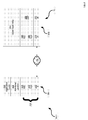
- Figure 1 is a schematic representation of a system for sending and receiving packets.
- Figure 2 is a schematic representation of a wireless communication device from Figure 1 .
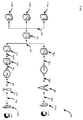
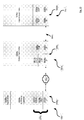
- Figure 3 is a schematic representation of a protocol stack that can be used in the system of Figure 1 .
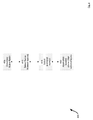
- Figure 4 shows a flowchart depicting a method for sending and receiving packets.
- Figure 5 is a schematic representation of another system for sending and receiving packets.
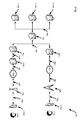
- Figure 6 is a schematic representation of a protocol stack that can be used in the system of Figure 5 .
- Figure 7 is a schematic representation of another system for sending and receiving packets.
- Figure 8 is a schematic representation of a protocol stack that can be used in the system of Figure 7 .
- Figure 9 is a schematic representation of another system for sending and receiving packets.
- Figure 10 is a schematic representation of a protocol stack that can be used in the system of Figure 7 .
- System 50 comprises one or more wireless communication devices 54-1, 54-2 (collectively, wireless communication devices 54, and generically, wireless communication device 54. This nomenclature is used elsewhere herein).
- Each communication device 54-1, 54-2 is shown in Figure 1 as being operated by a respective subscriber S-1, S-2.
- device 54-1 is shown communicating with a WLAN access point 62 via a WLAN link 58.
- WLAN link 58 can be based on WiFi or Bluetooth or the like.
- WLAN access point 62 communicates over a link 66 with a data network which in the present embodiment is the Internet 70.
- Link 66 can be based on any known wireless or wired infrastructure, or combinations thereof. Exemplary wired infrastructures include Internet carried over Community Access Television (“CATV”) coaxial cable, or Digital Subscriber Line (“DSL”) or Ethernet.
- CATV Community Access Television
- DSL Digital Subscriber Line
- System 50 also includes at least one device access node 74 that also connects to Internet 70 via a link 78.
- link 78 can be based on any known wireless or wired infrastructure. While not shown, appropriate firewalls can also be included in transport node 74 to protect it from malicious traffic via Internet 70.
- Each such server can be based on any desired computing environment consisting of any combination of hardware, firmware, operating systems and software.
- Exemplary servers include any of the servers offered under the Sun Fire TM product line from Sun Microsystems, Inc., 4150 Network Circle, Santa Clara, CA 95054 USA, or any other computing environment comprising one or more central processing units interconnecting random access memory (or other volatile storage), read only memory (or other non-volatile storage), hard discs (or other persistent storage), network interfaces, input device and output devices via a bus.
- WiFi device access node 74 can in fact be implemented as a plurality or cluster of device access nodes 74.
- a single device access node 74 may be provided, but a plurality of "virtual servers" can be run on that single node 74, by using multi-threading or similar programming techniques.
- multiple transport nodes 74 can be provided, each of which run multiple threads.
- a load balancer (not shown) can be provided in these alternative situations. Such alternative situations can be desired where a plurality of access points like access point 62 and/or a plurality of devices 54 that are connected to access point(s) 62 are provided and all of which connect to device access node(s) 74.
- WiFi device access node 74 communicates with at least one service access handler 82.
- Traffic between node 74 and service access handler 82 is carried via a link 86.
- link 86 can be based on any known wireless or wired infrastructure and/or link 86 can be based on Internet 70 itself, and/or combinations thereof.
- link 86 carries traffic in User Datagram Protocol ("UDP") / Internet Protocol (“IP”), although this is a non-limiting example.
- UDP User Datagram Protocol
- IP Internet Protocol
- service access handler 82 can in fact be implemented as a plurality or cluster of service access handlers 82 and/or multi-threading can be employed, particularly where the volume of traffic so warrants.
- Service access handler 82 communicates with a plurality of application servers 90-1, 90-2, 90-3.
- Each application server 90 hosts a service can be accessed by subscribers S via devices 54.
- Service access handler 82 connects to servers 90 via link 94.
- Link 94 can be based on any known wireless or wired infrastructure, including the Internet.
- servers 90 can themselves be, for example, web servers that host web sites that subscribers S wish to browse via their respective devices 54. However, this is merely an example.
- Servers 90 can in fact host any type of application or service, whether or not based on the Internet.
- An exemplary and non-limiting list of services includes e-mail, instant messaging, web browsing, file transfers and content distribution.
- Figure 1 also shows device 54-2 in communication with a wireless base station 98 via cellular link 102.
- Base station 98 and cellular link 102 can be based on GPRS, CDMA, UMTS or the like.
- base station 86 communicates over a link 106 with the core mobile network 110.
- core mobile network 110 can include, for example, one or more home location registers ("HLR"), mobile switching centers (“MSC”), Gateway GPRS Support Nodes (“GGSN”), and Service GPRS Support Node (“SGSN”).
- Link 106 can be based on any known wireless or wired infrastructure, or combinations thereof, but is typically a backhaul such as a T1, T3, OC3 or the like.
- core mobile network 110 connects to a cellular device access node 118 via link 114.
- link 114 uses standard Internet Protocol ("IP") routing techniques, using a frame-relay based leased line over which IP traffic is routed from the infrastructure of core mobile network 110 to server 118.
- IP Internet Protocol
- link 114 can be a dedicated link that is not reliant on IP routing techniques.
- appropriate firewalls can also be included in transport server 118 to protect it from malicious traffic via core network 110.
- device access node 118 connects to service access handler 82 via link 86.
- device access node 118 is functionally equivalent to device access nodes that are presently deployed in networks based on the Relay infrastructure from Research in Motion Inc.
- server 118 can be based on other infrastructures, such as the Networks Operations Center ("NOC") from Visto Corporation, 101 Redwood Shores Parkway, Suite 400, Redwood City, CA 94065. Server 118 can also be implemented in clusters and/or via multi-threading as desired.
- NOC Networks Operations Center
- Server 118 can also be implemented in clusters and/or via multi-threading as desired.
- components between base station 98 and servers 90 need not be based on infrastructure specific to Research in Motion and that components between base station 98 and servers 90 can also be based on infrastructures such as the GSM/WCDMA Radio Access Networks (RAN) as shown in Figure 1 and Figure 2 of the GAN Whitepaper, or based on the NOC infrastructure from Server 118 can be based on other infrastructures, such as the Networks Operations Center (“NOC”) from Visto Corporation.
- GSM/WCDMA Radio Access Networks RAN
- NOC Networks Operations Center
- WLAN device access node 74 provides substantially the same functionality as cellular device access node 118 in that traffic carried via link 86 between node 74 and service access handler 82 is substantially the same format and protocol as the traffic carried between server 118 and service access handler 82.
- WLAN node 74 is configured for traffic carried via access point 62
- server 118 is configured for traffic carried via base station 98.
- WLAN device access node 74 carries data on behalf of devices 54 that access servers 90 via WLAN infrastructure
- cellular device access node 118 carries traffic on behalf of devices 54 that access servers 89 via cellular infrastructure.
- the functionality provided by one or more of node 74, server 118 and service access handler 82 can be implemented in a single server, or clusters of servers, as desired.
- Device 54 includes a plurality of input devices which in a present embodiment includes a keyboard 200 and a microphone 204. Other input devices, such as a trackwheel, trackball, touch screen, and camera lens are also contemplated. Input from keyboard 200 and microphone 204 is received at a processor 208, which in turn communicates with a non-volatile storage unit 212 (e.g.
- ROM read only memory
- EEPROM Erasable Electronic Programmable Read Only Memory
- RAM random access memory
- Programming instructions that implement the functional teachings of device 54 as described herein are typically maintained, persistently, in non-volatile storage unit 212 and used by processor 208 which makes appropriate utilization of volatile storage 216 during the execution of such programming instructions.
- Processor 208 in turn is also configured to send output to a speaker 220 and a display 224.
- Processor 208 also contains a first radio 228 and a second radio 232.
- First radio 228 is configured for communication via link 58
- second radio 232 is configured for communication via link 102.
- each device 54 is a hybrid device that can communicate over link 58 and/or over link 102.
- second radio 232 can be omitted from device 54 so that device 54 can only communicate via link 58.
- Figure 3 shows a protocol stack 304 that can be employed by device 54-1 and a pair of protocol stacks 308 that can be employed by node 74.
- the left side of stacks 308 i.e. the protocol stack on the left side of stacks 308) reflects a first protocol stack for communications between device 54-1 and node 74 via Internet 70 according to the system in Figure 1 .
- the right side of stacks 308 i.e. the protocol stack on the right side of stacks 308) reflects a second protocol stack for communications between node 74 and handler 82.
- messages flow up the left side of protocol stacks 308 and down the right side of protocol stacks 308. (This nomenclature and structure of for protocol stack(s) is used elsewhere herein).
- Device 54-1 and node 74 are thus configured to utilize stack 304 and stacks 308 respectively.
- IP Stack 304 thus comprises an Internet Protocol (“IP”) layer 312; a transport control protocol (“TCP”) layer 316; a secure socket layer (“SSL”) 320; at least one additional layer 324 and an application layer 332.
- IP Internet Protocol
- TCP transport control protocol
- SSL secure socket layer
- IP layer 312, TCP layer 316 and SSL 320 are all non-proprietary protocols that are inherent to Internet 70, and thus those skilled in the art that will now recognize that collectively, IP layer 312, TCP layer 316 and SSL 320 comprise at least one native network layer 336, which is native and/or specific to Internet 70. Thus, layers 312, 316 and 320 can be implemented using any one or more protocol layers that are native to Internet 70, or native to any other type of network that is used instead of Internet 70.
- the at least one additional layer 324 which is actually optional and can be omitted altogether depending on how node 74 and/or handler 82 are implemented, is one or more protocol layers that may be proprietary and/or specific to node 74 and/or handler 82.
- the at least one additional layer 324 can be presentation and/or session layers.
- the at least one additional layer 324 can be implemented in accordance with any proprietary layers and or other layers that may be relevant to infrastructures that provide similar functionality to node 74 and/or handler 82, and/or any other components between Internet 70 and servers 90, or even servers 90 themselves.
- the at least one additional layer 324 can, though need not be, substantially the same as similar layer(s) used to implement server 118, to thereby allow harmonization of the at least one additional layers used by both node 74 and server 118.
- Application layer 332 contains data corresponding to the relevant application being accessed by device 54-1 on application server 90.
- node 74 is (or node 74 and handler 82 collectively are) configured to communicate with device 54 in accordance with at least one additional layer(s) 324, either as exactly shown or in accordance with variations thereof that can be effected as previously discussed.
- node 74 is configured to operate using stacks 308.
- the left side of stacks 308 comprises an IP layer 314 complementary to IP layer 312; a TCP layer 344 complementary to TCP layer 316; and an SSL 346 complementary to SSL 320. Layers 312, 344 and 346 are thus, collectively, directly complementary to at least one native network layer 336.
- Stacks 308 also comprise an upper layer relay 354, which passes the at least one additional layer(s) 324 and application layer 332 on to handler 82, making use of any additional point-to-point proprietary protocols needed to effect such passing.
- Upper layer 354 is thus common to both the left and right halves of stacks 308.
- Upper layer relay 354 is effectively the messages carried through node 74, such messages comprised of at least one additional layer 324 and application layer 332, which is routed through node 74 and/or handler 82 so that application layer 332 can ultimately be delivered to the appropriate server 90.
- the right side of stacks 308 reflect protocol layers that are complementary to handler 82 and used for communication with handler 82 via link 86.
- IP Layer 314, TCP layer 344 and SSL 346 are replaced, in a present embodiment, by node 74 with an IP Layer 315 and a User Datagram Protocol ("UDP") layer 358.
- UDP layer 358 is also a network layer that is native to Internet 70.
- node 74 is configured to manage the SSL and remove the SSL on behalf of the handler 82.
- UDP layer 358 could be replaced by a TCP layer.
- a method for sending and receiving packets represented in the form of a flow chart is indicated generally at 400.
- method 400 will be explained in relation to its performance on system 50. However, it is to be understood that method 400 can be performed on systems different than system 50, and likewise that system 50 can be operated differently.
- Method 400 in a present embodiment is performed by either device 54-1 or device 54-2. For the purposes of the present explanation, it will be assumed that method 400 is performed using device 54-1. Beginning first at step 405, a determination is made as to which radio is active. When performed by device 54-1, processor 208 will determine that first radio 228 is active and therefore will determine that device 54-1 is using wireless link 58 which is based on WiFi. Typically, device 54-1 detects the presence of WiFi and/or cellular signals, perhaps measuring the strength of those signals, and then according to a pre-defined policy, processor 208 will select one of them to use. In a present embodiment only one is used at a time, but it should be understood that in other embodiments that simultaneous use of radios 228 and 232 is contemplated.
- step 410 native network layer(s) are selected.
- step 410 can be implemented by the device selecting native network layer(s) 336.
- the device will select the protocol layers that are native the network that will be used to connect device 54 with node 74.
- device 54-1 will select IP layer 312, TCP layer 316, and SSL 320.
- step 415 at least one additional layer is selected.
- step 415 can be implemented by the device selecting at least one additional layer 324.
- the device will select layers that correspond to the data infrastructure that is native to communications between device 54 and node 74 and/or handler 82 and/or servers 90. (However, it should be noted that, in cases where at least one additional layer 324 is omitted, then likewise step 415 can be omitted in certain implementations, where at least one additional layer is simply not required).
- step 420 the application is layered above the layers selected at step 410 and step 415.
- application layer 332 is created and placed above the preceding layers.
- the result of performance of method 400 is the implementation of protocol stack 304 in order to route packets to node 74, and ultimately to allow device 54-1 to access application server(s) 90.
- method 400 can also be performed by device 54-2 in order to route packets to server 118, and ultimately to allow device 54-2 to access application server(s) 90.
- device 54-2 will select, at step 410, native network layers that are native to the core mobile network 110, but will also select, at step 415, at least one additional layer that complement communications with server 118 - which can in fact be the same as at least one additional layer 324.
- Figure 5 shows a modified version of system 50 labeled as system 50a.
- the majority of system 50a includes elements that are substantially the same as the elements of system 50, and like elements are provided with like references, except followed by the suffix "a".
- an SSL accelerator server 400a is included between node 74a and Internet 70a.
- SSL accelerator server 400a and node 74a can, if desired, be implemented on a single server or other piece of hardware. Regardless of how implemented, server 400a is configured to reduce, in comparison to node 74 of system 50, the effort required to manage SSL 320 and thereby increase the operating speed and/or efficiency of node 74a in comparison to node 74.
- Figure 6 shows a protocol stack 304a that can be employed by device 54a-1 and a pair of protocol stacks 608a that can be employed by node 74a, and a pair of protocol stacks 604a that can be employed by SSL accelerator 400a.
- Stack 304a is, in a present embodiment, substantially the same as stack 304 and accordingly no further explanation of stack 304a is needed. Again, of note is that at least one additional layer(s) 324a can be optional depending on the protocols used to implement node 74a and/or handler 82a.
- the left side of stacks 604a comprises an IP layer 612a, a TCP layer 616a and an SSL 620a, again all of which are all native protocols of Internet 70.
- the right side of stacks 604a also comprises an IP layer 613a and a TCP layer 624a for communications via link 404a.
- Stacks 604a also includes a upper layer relay 354a which passes at least one additional layer(s) 324a and application layer 332a from the left side of stacks 604a to the right side of stacks 604a.
- stacks 604a are configured to manage SSL 620a and thereby present stack 304a to device 74a without inclusion of SSL 620a.
- stacks 608a are simpler than stacks 308a, without the presence of SSL 346. Otherwise stacks 608a are substantially the same as stacks 308a.
- the left side of stacks 608a include IP layer 630a which is substantially the same as IP layer 314 and TCP layer 634a which is substantially the same as TCP layer 344.
- Stacks 608a also include an upper layer relay 642a which performs substantially the same function as upper layer relay 354a.
- the right side of stacks 608a also include IP layer 631a which is substantially the same as IP layer 315 and UDP layer 650a which is substantially the same as UDP layer 358.
- FIG. 7 shows a modified version of system 50a labeled as system 50b.
- the majority of system 50b includes elements that are substantially the same as the elements of system 50a, and like elements are provided with like references, except followed by the suffix "b".
- a plurality of TCP aggregator servers 700b are included between a plurality of nodes 74b and SSL accelerator 400b.
- Servers 700b-1 and 700b-2 are both connected via link 708b to nodes 74b-1 and node 74b-2, so that either of servers 700b-1 or 700b-2 can deliver traffic to either node 74b-1 and node 74b-2.
- server 700b is configured to reduce, in comparison to node 74a of system 50a, the effort required to manage TCP layer 624a, by terminating the connection for TCP layer 316a at server 700b, and thereby increase the operating speed and/or efficiency of node 74a in comparison to node 74.
- load balancers can also be deployed to equalize flow of traffic to various components.
- Figure 8 shows a protocol stack 304b that can be employed by device 54b-1 and a pair of protocol stacks 808b that can be employed by node 74b, and a pair protocol stacks 604b that can be employed by SSL accelerator 400b, and a pair of protocol stacks 804b that can be employed by TCP aggregator servers 700b.
- Stack 304b is, in a present embodiment, substantially the same as stack 304a and accordingly no further explanation of stack 304b is needed.
- Stacks 604b are, in a present embodiment, substantially the same as stacks 604a and accordingly no further explanation of stacks 604b are needed.
- the left side of stacks 804b comprises an IP layer 812a complementary to IP layer 613b, and a TCP layer 816a complementary to TCP layer 624b.
- the right side of stacks 804b also includes a TCP layer 824b and an IP layer 813b for communications between servers 700b and nodes 74b.
- Stacks 804b also include an aggregating upper layer relay 828b that collects packets from upper layer relay 354b and is used to distribute the processing of the protocol layers from upper layer relay 354b, thereby permitting the contact point at which traffic from devices 54b terminates to be separated from the device that access nodes 74b, and thereby reduce the total number of TCP connections managed by servers 700b. Overall, aggregating upper layer relay 828b can allow extra flexibility in the routing options in deploying the architecture.
- stacks 804b are configured to manage TCP layer 624b and thereby present messages from stack 304b to nodes 74b, so that nodes 74b do not have to manage TCP layer 316b or TCP layer 624b, effectively allowing the TCP connection from device 54b to be terminated at TCP aggregator server 700b.
- Stacks 808b can permit nodes 74b to operate more efficiently, in that while stacks 808b do include a TCP layer 829b, TCP layer 829b need not manage connections of TCP layers 316b originating from devices 54b, but need only manage connections from TCP aggregator servers 700b.
- Stacks 808b also include IP layer 826b which is complementary to IP layer 812b.
- Stacks 808b also include an upper layer relay 842b to manage traffic from aggregating upper layer relay 828b.
- Stacks also include UDP layer 846b that is substantially the same as UDP layer 650a and an IP layer 827b that is substantially the same as IP layer 631 a.
- System 50b can provide better modularity, since the TCP connection from device 54b is terminated at TCP aggregator server(s) 700b. Likewise, the complexity and workload of node 74b is reduced.
- the TCP aggregator server(s) 700b can be optimized and/or modified without interrupting services provided by node 74b, thereby providing improved efficiency and scalability. Such modifications can be made in a manner that is transparent to handler 82b.
- the TCP aggregator server 700b can provide extra flexibility in test and deployment, as static routing from device 54b-1 can be implemented on the TCP aggregator server 700b, and test components can be connected to handler 82b. Also, since node 74b is typically closely tied to handler 82b, and needs to be accessed conveniently by handler 82, yet the TCP aggregator server 700b can be deployed almost anywhere.
- System 50b can also offer better load balancing capability, in that more sophisticated load balancing mechanisms can be implemented prior to TCP aggregator servers 700b than can be deployed prior to nodes 74, 74a or 74b.
- nodes 74b can inform TCP aggregator server 700b to close the TCP connection with device 54b-1 in the event device 54b-1 switches to the cellular network and starts communicating over link 102b with base station 98b and continues to access one or more of servers 90b.
- Figure 9 shows a modified version of system 50 labeled as system 50c.
- the majority of system 50c includes elements that are substantially the same as the elements of system 50, and like elements are provided with like references, except followed by the suffix "c".
- a network interface adapter server 900c is included between node 74c and Internet 70c.
- Server 900c and node 74c can, if desired, be implemented on a single server or other piece of hardware.
- Figure 10 shows a protocol stack 1004c that can be employed by device 54c-1 and a pair of protocol stacks 1008c that can be employed by node 74c, and a pair of protocol stacks 1006c that can be employed by server 900c.
- Stack 1004c thus comprises an Internet Protocol (“IP”) layer 1012c; a UDP layer 1016c; a datagram transport layer security (“DTLS”) layer 1020c; at least one additional layer 1024c; and an application layer 1032c. (Again, in other embodiments at least one additional layer 1024c can be omitted).
- IP Internet Protocol
- UDP User Datagram Protocol
- DTLS datagram transport layer security
- IP layer 1012c, TCP layer 1016c and DTLS layer 1020c are all native protocols to Internet 70c, and thus those skilled in the art will recognize that collectively, IP layer 1012c, TCP layer 1016c and DTLS layer 1020c comprise at least one native network layer 336c, which is native and/or complementary to Internet 70c.
- At least one additional layer 1024c are all native protocols to node 74c and/or handler 82c and/or server 90c.
- the at least one additional layer 1024c can be, though need not be, substantially the same as, or comprised of, any additional layers used to implement server 118c, to thereby allow harmonization of the at least at least one additional layers 1024c used by both node 74c and server 118c.
- Application layer 1032c contains data corresponding to the relevant application being accessed by device 54c-1 on application server 90c.
- server 900c is configured to operate using stacks 1006c.
- the left side of stacks 1006c comprises an IP layer 1036c complementary to IP layer 1012c; a UDP layer 1040c complementary to UDP layer 1016c; and a DTLS layer 1044c complementary to DTLS layer 1020c.
- Layers 1036c, 1040c and 1044c are thus, collectively, directly complementary to at least one network layer 336c.
- Stack 1006c also includes an upper layer relay 1044c which passes through at least one additional layer 1024c and layer 1032c without any handling or inspection.
- the right side of stacks 1006c also includes a TCP layer 1060c that is complementary to a TCP layer 1070c of stacks 1008c.
- the right side of stacks 1006c also includes an IP layer 1037c that is complementary to IP layer 1066c of stacks 1008c.
- the left side of stacks 1008c, used by node 74c, includes IP layer 1066c which is complementary to IP layer 1037c, and TCP layer 1070c which is complementary to TCP layer 1060c.
- Stacks 1008c also includes an upper layer relay 1076c cooperative with upper layer relay 1044c to pass through layers 1024c and 1032c.
- the rights side of stacks 1008c reflects layers which are complementary to handler 82c and used for communication with handler 82c via link 86c.
- the right side of stacks 1008c includes a UDP layer 1090c and an IP layer 1067c.
- DTLS layer is based on TLS (transport layer security), a variant of SSL (secure socket layer), and is capable of datagram transport.
- the DTLS/UDP approach for stack 1004 can be more suitable for delay sensitive applications and can offer better scalability, in some circumstances, than the SSL/TCP approach in stack 304a and stack 304b.
- server 900c effectively serves as an equivalent to the TCP aggregator server in system 50b.
- the upper layer relay 1044c can maintain the DTLS session with device 54c-1 and pass packets from layers 1024c and/or 1032c to node 74c.
Landscapes
- Engineering & Computer Science (AREA)
- Computer Security & Cryptography (AREA)
- Computer Networks & Wireless Communication (AREA)
- Signal Processing (AREA)
- Mobile Radio Communication Systems (AREA)
- Communication Control (AREA)
Priority Applications (5)
| Application Number | Priority Date | Filing Date | Title |
|---|---|---|---|
| AT07107235T ATE450970T1 (de) | 2007-04-30 | 2007-04-30 | System und verfahren zum senden und empfangen von paketen |
| DE602007003569T DE602007003569D1 (de) | 2007-04-30 | 2007-04-30 | System und Verfahren zum Senden und Empfangen von Paketen |
| EP07107235A EP1988687B1 (de) | 2007-04-30 | 2007-04-30 | System und Verfahren zum Senden und Empfangen von Paketen |
| CA2686123A CA2686123C (en) | 2007-04-30 | 2008-04-24 | System and method for sending and receiving packets |
| PCT/CA2008/000775 WO2008131532A1 (en) | 2007-04-30 | 2008-04-24 | System and method for sending and receiving packets |
Applications Claiming Priority (1)
| Application Number | Priority Date | Filing Date | Title |
|---|---|---|---|
| EP07107235A EP1988687B1 (de) | 2007-04-30 | 2007-04-30 | System und Verfahren zum Senden und Empfangen von Paketen |
Publications (2)
| Publication Number | Publication Date |
|---|---|
| EP1988687A1 true EP1988687A1 (de) | 2008-11-05 |
| EP1988687B1 EP1988687B1 (de) | 2009-12-02 |
Family
ID=38656490
Family Applications (1)
| Application Number | Title | Priority Date | Filing Date |
|---|---|---|---|
| EP07107235A Active EP1988687B1 (de) | 2007-04-30 | 2007-04-30 | System und Verfahren zum Senden und Empfangen von Paketen |
Country Status (5)
| Country | Link |
|---|---|
| EP (1) | EP1988687B1 (de) |
| AT (1) | ATE450970T1 (de) |
| CA (1) | CA2686123C (de) |
| DE (1) | DE602007003569D1 (de) |
| WO (1) | WO2008131532A1 (de) |
Cited By (1)
| Publication number | Priority date | Publication date | Assignee | Title |
|---|---|---|---|---|
| US9603192B2 (en) | 2013-01-16 | 2017-03-21 | Ncore Communications, Inc. | Methods and apparatus for hybrid access to a core network |
Citations (3)
| Publication number | Priority date | Publication date | Assignee | Title |
|---|---|---|---|---|
| WO2006047862A1 (en) * | 2004-11-02 | 2006-05-11 | Research In Motion Limited | Network selection in gan environment |
| US20070014281A1 (en) * | 2005-06-15 | 2007-01-18 | Azaire Networks | Voice call continuity application server between IP-CAN and CS networks |
| US20070041360A1 (en) | 2005-08-10 | 2007-02-22 | Gallagher Michael D | Mechanisms to extend UMA or GAN to inter-work with UMTS core network |
Family Cites Families (4)
| Publication number | Priority date | Publication date | Assignee | Title |
|---|---|---|---|---|
| US7035932B1 (en) * | 2000-10-27 | 2006-04-25 | Eric Morgan Dowling | Federated multiprotocol communication |
| US7151764B1 (en) * | 2001-11-01 | 2006-12-19 | Nokia Corporation | Service notification on a low bluetooth layer |
| DE602004020329D1 (de) * | 2004-07-01 | 2009-05-14 | Alcatel Lucent | Verfahren zur Auswahl zwischen Netzwerkschnittstellen, Gerät mit mehreren Netzwerkschnittstellen und Verarbeitungsschicht |
| US20070058636A1 (en) * | 2005-09-15 | 2007-03-15 | Research In Motion Limited | System and method for evaluating lower layer reliability using upper layer protocol functionality in a communications network |
-
2007
- 2007-04-30 AT AT07107235T patent/ATE450970T1/de not_active IP Right Cessation
- 2007-04-30 EP EP07107235A patent/EP1988687B1/de active Active
- 2007-04-30 DE DE602007003569T patent/DE602007003569D1/de active Active
-
2008
- 2008-04-24 WO PCT/CA2008/000775 patent/WO2008131532A1/en not_active Ceased
- 2008-04-24 CA CA2686123A patent/CA2686123C/en active Active
Patent Citations (3)
| Publication number | Priority date | Publication date | Assignee | Title |
|---|---|---|---|---|
| WO2006047862A1 (en) * | 2004-11-02 | 2006-05-11 | Research In Motion Limited | Network selection in gan environment |
| US20070014281A1 (en) * | 2005-06-15 | 2007-01-18 | Azaire Networks | Voice call continuity application server between IP-CAN and CS networks |
| US20070041360A1 (en) | 2005-08-10 | 2007-02-22 | Gallagher Michael D | Mechanisms to extend UMA or GAN to inter-work with UMTS core network |
Non-Patent Citations (1)
| Title |
|---|
| "Digital cellular telecommunications system (Phase 2+); Generic access to the A/Gb interface; Stage 2 (3GPP TS 43.318 version 6.0.0 Release 6); ETSI TS 143 318", ETSI STANDARDS, EUROPEAN TELECOMMUNICATIONS STANDARDS INSTITUTE, SOPHIA-ANTIPO, FR, vol. 3-G1, no. V600, January 2005 (2005-01-01), XP014028301, ISSN: 0000-0001 * |
Cited By (1)
| Publication number | Priority date | Publication date | Assignee | Title |
|---|---|---|---|---|
| US9603192B2 (en) | 2013-01-16 | 2017-03-21 | Ncore Communications, Inc. | Methods and apparatus for hybrid access to a core network |
Also Published As
| Publication number | Publication date |
|---|---|
| WO2008131532A1 (en) | 2008-11-06 |
| CA2686123C (en) | 2013-07-09 |
| ATE450970T1 (de) | 2009-12-15 |
| CA2686123A1 (en) | 2008-11-06 |
| EP1988687B1 (de) | 2009-12-02 |
| DE602007003569D1 (de) | 2010-01-14 |
Similar Documents
| Publication | Publication Date | Title |
|---|---|---|
| US8670422B2 (en) | System and method for sending and receiving packets | |
| KR102555671B1 (ko) | 패킷 처리 방법, 관련 기기 및 컴퓨터 저장 매체 | |
| US20220247688A1 (en) | Establishing a Packet Forwarding Control Protocol Session | |
| US20250081089A1 (en) | Digital network communication method and apparatus | |
| US11863519B2 (en) | Communication method and apparatus for handling DNS messages | |
| US11678225B2 (en) | Wireless network slice optimization for user applications | |
| WO2006130807A2 (en) | Selecting data interfaces in a multi-homing, multi-mode communication device | |
| US20040259585A1 (en) | Wireless device having dual bus archeticure for interfacing with cellular signals and short-range radio signals | |
| CN115632957A (zh) | 网络系统及通信方法 | |
| EP2132915B1 (de) | Management eines funktelekommunikationsnetzwerks | |
| US20110113135A1 (en) | Method, system and apparatus for management of push content when changing computing devices | |
| WO2009011691A1 (en) | Multi-dimensional access for mobile user equipment | |
| CN114189893A (zh) | O-ran能力开放方法、通信系统、装置及存储介质 | |
| EP1988687B1 (de) | System und Verfahren zum Senden und Empfangen von Paketen | |
| WO2010091645A1 (en) | Apparatus and method of flow movement for network-based mobility management protocol | |
| JP6477040B2 (ja) | 通信端末、通信方法、および、プログラム | |
| EP4500811A1 (de) | Absichtsbasierte verwaltung von cloud-nativen netzwerkfunktionen | |
| CN115776487A (zh) | 数据分流方法、装置、设备及存储介质 | |
| US20120034881A1 (en) | Radio Access Technology Multiplexing | |
| JP2024006216A (ja) | 通信制御装置、通信制御方法および通信制御プログラム | |
| CN100583881C (zh) | 移动ip环境中的地址管理 | |
| GB2438664A (en) | Reconfigurable mobile terminal supporting multiple network addresses and interfaces | |
| US11575601B2 (en) | Network device and packet processing method using same | |
| CN109661037A (zh) | 一种sfc报文转发方法及设备 | |
| EP1811739B1 (de) | Heimagentvorrichtung und Verfahren zur Ausführung von Lastzuteilung in einem Kommunikationsnetz |
Legal Events
| Date | Code | Title | Description |
|---|---|---|---|
| PUAI | Public reference made under article 153(3) epc to a published international application that has entered the european phase |
Free format text: ORIGINAL CODE: 0009012 |
|
| 17P | Request for examination filed |
Effective date: 20070430 |
|
| AK | Designated contracting states |
Kind code of ref document: A1 Designated state(s): AT BE BG CH CY CZ DE DK EE ES FI FR GB GR HU IE IS IT LI LT LU LV MC MT NL PL PT RO SE SI SK TR |
|
| AX | Request for extension of the european patent |
Extension state: AL BA HR MK RS |
|
| GRAP | Despatch of communication of intention to grant a patent |
Free format text: ORIGINAL CODE: EPIDOSNIGR1 |
|
| AKX | Designation fees paid |
Designated state(s): AT BE BG CH CY CZ DE DK EE ES FI FR GB GR HU IE IS IT LI LT LU LV MC MT NL PL PT RO SE SI SK TR |
|
| AXX | Extension fees paid |
Extension state: HR Payment date: 20070430 Extension state: RS Payment date: 20070430 Extension state: MK Payment date: 20070430 Extension state: BA Payment date: 20070430 Extension state: AL Payment date: 20070430 |
|
| GRAS | Grant fee paid |
Free format text: ORIGINAL CODE: EPIDOSNIGR3 |
|
| GRAA | (expected) grant |
Free format text: ORIGINAL CODE: 0009210 |
|
| AK | Designated contracting states |
Kind code of ref document: B1 Designated state(s): AT BE BG CH CY CZ DE DK EE ES FI FR GB GR HU IE IS IT LI LT LU LV MC MT NL PL PT RO SE SI SK TR |
|
| AX | Request for extension of the european patent |
Extension state: AL BA HR MK RS |
|
| REG | Reference to a national code |
Ref country code: GB Ref legal event code: FG4D |
|
| REG | Reference to a national code |
Ref country code: CH Ref legal event code: EP |
|
| REG | Reference to a national code |
Ref country code: IE Ref legal event code: FG4D |
|
| REF | Corresponds to: |
Ref document number: 602007003569 Country of ref document: DE Date of ref document: 20100114 Kind code of ref document: P |
|
| REG | Reference to a national code |
Ref country code: NL Ref legal event code: VDEP Effective date: 20091202 |
|
| PG25 | Lapsed in a contracting state [announced via postgrant information from national office to epo] |
Ref country code: FI Free format text: LAPSE BECAUSE OF FAILURE TO SUBMIT A TRANSLATION OF THE DESCRIPTION OR TO PAY THE FEE WITHIN THE PRESCRIBED TIME-LIMIT Effective date: 20091202 Ref country code: LT Free format text: LAPSE BECAUSE OF FAILURE TO SUBMIT A TRANSLATION OF THE DESCRIPTION OR TO PAY THE FEE WITHIN THE PRESCRIBED TIME-LIMIT Effective date: 20091202 Ref country code: SE Free format text: LAPSE BECAUSE OF FAILURE TO SUBMIT A TRANSLATION OF THE DESCRIPTION OR TO PAY THE FEE WITHIN THE PRESCRIBED TIME-LIMIT Effective date: 20091202 |
|
| LTIE | Lt: invalidation of european patent or patent extension |
Effective date: 20091202 |
|
| PG25 | Lapsed in a contracting state [announced via postgrant information from national office to epo] |
Ref country code: CY Free format text: LAPSE BECAUSE OF FAILURE TO SUBMIT A TRANSLATION OF THE DESCRIPTION OR TO PAY THE FEE WITHIN THE PRESCRIBED TIME-LIMIT Effective date: 20091202 Ref country code: PL Free format text: LAPSE BECAUSE OF FAILURE TO SUBMIT A TRANSLATION OF THE DESCRIPTION OR TO PAY THE FEE WITHIN THE PRESCRIBED TIME-LIMIT Effective date: 20091202 Ref country code: LV Free format text: LAPSE BECAUSE OF FAILURE TO SUBMIT A TRANSLATION OF THE DESCRIPTION OR TO PAY THE FEE WITHIN THE PRESCRIBED TIME-LIMIT Effective date: 20091202 Ref country code: SI Free format text: LAPSE BECAUSE OF FAILURE TO SUBMIT A TRANSLATION OF THE DESCRIPTION OR TO PAY THE FEE WITHIN THE PRESCRIBED TIME-LIMIT Effective date: 20091202 |
|
| PG25 | Lapsed in a contracting state [announced via postgrant information from national office to epo] |
Ref country code: AT Free format text: LAPSE BECAUSE OF FAILURE TO SUBMIT A TRANSLATION OF THE DESCRIPTION OR TO PAY THE FEE WITHIN THE PRESCRIBED TIME-LIMIT Effective date: 20091202 |
|
| PG25 | Lapsed in a contracting state [announced via postgrant information from national office to epo] |
Ref country code: EE Free format text: LAPSE BECAUSE OF FAILURE TO SUBMIT A TRANSLATION OF THE DESCRIPTION OR TO PAY THE FEE WITHIN THE PRESCRIBED TIME-LIMIT Effective date: 20091202 Ref country code: ES Free format text: LAPSE BECAUSE OF FAILURE TO SUBMIT A TRANSLATION OF THE DESCRIPTION OR TO PAY THE FEE WITHIN THE PRESCRIBED TIME-LIMIT Effective date: 20100313 Ref country code: BG Free format text: LAPSE BECAUSE OF FAILURE TO SUBMIT A TRANSLATION OF THE DESCRIPTION OR TO PAY THE FEE WITHIN THE PRESCRIBED TIME-LIMIT Effective date: 20100302 Ref country code: PT Free format text: LAPSE BECAUSE OF FAILURE TO SUBMIT A TRANSLATION OF THE DESCRIPTION OR TO PAY THE FEE WITHIN THE PRESCRIBED TIME-LIMIT Effective date: 20100402 Ref country code: IS Free format text: LAPSE BECAUSE OF FAILURE TO SUBMIT A TRANSLATION OF THE DESCRIPTION OR TO PAY THE FEE WITHIN THE PRESCRIBED TIME-LIMIT Effective date: 20100402 Ref country code: NL Free format text: LAPSE BECAUSE OF FAILURE TO SUBMIT A TRANSLATION OF THE DESCRIPTION OR TO PAY THE FEE WITHIN THE PRESCRIBED TIME-LIMIT Effective date: 20091202 Ref country code: RO Free format text: LAPSE BECAUSE OF FAILURE TO SUBMIT A TRANSLATION OF THE DESCRIPTION OR TO PAY THE FEE WITHIN THE PRESCRIBED TIME-LIMIT Effective date: 20091202 |
|
| PG25 | Lapsed in a contracting state [announced via postgrant information from national office to epo] |
Ref country code: SK Free format text: LAPSE BECAUSE OF FAILURE TO SUBMIT A TRANSLATION OF THE DESCRIPTION OR TO PAY THE FEE WITHIN THE PRESCRIBED TIME-LIMIT Effective date: 20091202 Ref country code: CZ Free format text: LAPSE BECAUSE OF FAILURE TO SUBMIT A TRANSLATION OF THE DESCRIPTION OR TO PAY THE FEE WITHIN THE PRESCRIBED TIME-LIMIT Effective date: 20091202 Ref country code: BE Free format text: LAPSE BECAUSE OF FAILURE TO SUBMIT A TRANSLATION OF THE DESCRIPTION OR TO PAY THE FEE WITHIN THE PRESCRIBED TIME-LIMIT Effective date: 20091202 |
|
| PLBE | No opposition filed within time limit |
Free format text: ORIGINAL CODE: 0009261 |
|
| STAA | Information on the status of an ep patent application or granted ep patent |
Free format text: STATUS: NO OPPOSITION FILED WITHIN TIME LIMIT |
|
| PG25 | Lapsed in a contracting state [announced via postgrant information from national office to epo] |
Ref country code: GR Free format text: LAPSE BECAUSE OF FAILURE TO SUBMIT A TRANSLATION OF THE DESCRIPTION OR TO PAY THE FEE WITHIN THE PRESCRIBED TIME-LIMIT Effective date: 20100303 |
|
| 26N | No opposition filed |
Effective date: 20100903 |
|
| PG25 | Lapsed in a contracting state [announced via postgrant information from national office to epo] |
Ref country code: MC Free format text: LAPSE BECAUSE OF NON-PAYMENT OF DUE FEES Effective date: 20100430 |
|
| PG25 | Lapsed in a contracting state [announced via postgrant information from national office to epo] |
Ref country code: DK Free format text: LAPSE BECAUSE OF FAILURE TO SUBMIT A TRANSLATION OF THE DESCRIPTION OR TO PAY THE FEE WITHIN THE PRESCRIBED TIME-LIMIT Effective date: 20091202 |
|
| PG25 | Lapsed in a contracting state [announced via postgrant information from national office to epo] |
Ref country code: IT Free format text: LAPSE BECAUSE OF FAILURE TO SUBMIT A TRANSLATION OF THE DESCRIPTION OR TO PAY THE FEE WITHIN THE PRESCRIBED TIME-LIMIT Effective date: 20091202 |
|
| PG25 | Lapsed in a contracting state [announced via postgrant information from national office to epo] |
Ref country code: MT Free format text: LAPSE BECAUSE OF FAILURE TO SUBMIT A TRANSLATION OF THE DESCRIPTION OR TO PAY THE FEE WITHIN THE PRESCRIBED TIME-LIMIT Effective date: 20091202 Ref country code: IE Free format text: LAPSE BECAUSE OF NON-PAYMENT OF DUE FEES Effective date: 20100430 |
|
| REG | Reference to a national code |
Ref country code: CH Ref legal event code: PL |
|
| PG25 | Lapsed in a contracting state [announced via postgrant information from national office to epo] |
Ref country code: LI Free format text: LAPSE BECAUSE OF NON-PAYMENT OF DUE FEES Effective date: 20110430 Ref country code: CH Free format text: LAPSE BECAUSE OF NON-PAYMENT OF DUE FEES Effective date: 20110430 |
|
| PG25 | Lapsed in a contracting state [announced via postgrant information from national office to epo] |
Ref country code: HU Free format text: LAPSE BECAUSE OF FAILURE TO SUBMIT A TRANSLATION OF THE DESCRIPTION OR TO PAY THE FEE WITHIN THE PRESCRIBED TIME-LIMIT Effective date: 20100603 Ref country code: LU Free format text: LAPSE BECAUSE OF NON-PAYMENT OF DUE FEES Effective date: 20100430 |
|
| PG25 | Lapsed in a contracting state [announced via postgrant information from national office to epo] |
Ref country code: TR Free format text: LAPSE BECAUSE OF FAILURE TO SUBMIT A TRANSLATION OF THE DESCRIPTION OR TO PAY THE FEE WITHIN THE PRESCRIBED TIME-LIMIT Effective date: 20091202 |
|
| REG | Reference to a national code |
Ref country code: DE Ref legal event code: R082 Ref document number: 602007003569 Country of ref document: DE Representative=s name: MERH-IP MATIAS ERNY REICHL HOFFMANN, DE |
|
| REG | Reference to a national code |
Ref country code: DE Ref legal event code: R081 Ref document number: 602007003569 Country of ref document: DE Owner name: BLACKBERRY LIMITED, WATERLOO, CA Free format text: FORMER OWNER: RESEARCH IN MOTION LTD., WATERLOO, ONTARIO, CA Effective date: 20140925 Ref country code: DE Ref legal event code: R082 Ref document number: 602007003569 Country of ref document: DE Representative=s name: MERH-IP MATIAS ERNY REICHL HOFFMANN, DE Effective date: 20140925 Ref country code: DE Ref legal event code: R082 Ref document number: 602007003569 Country of ref document: DE Representative=s name: MERH-IP MATIAS ERNY REICHL HOFFMANN PATENTANWA, DE Effective date: 20140925 |
|
| REG | Reference to a national code |
Ref country code: FR Ref legal event code: PLFP Year of fee payment: 10 |
|
| REG | Reference to a national code |
Ref country code: FR Ref legal event code: PLFP Year of fee payment: 11 |
|
| REG | Reference to a national code |
Ref country code: FR Ref legal event code: PLFP Year of fee payment: 12 |
|
| REG | Reference to a national code |
Ref country code: DE Ref legal event code: R079 Ref document number: 602007003569 Country of ref document: DE Free format text: PREVIOUS MAIN CLASS: H04L0029080000 Ipc: H04L0065000000 |
|
| REG | Reference to a national code |
Ref country code: DE Ref legal event code: R082 Ref document number: 602007003569 Country of ref document: DE Ref country code: DE Ref legal event code: R081 Ref document number: 602007003569 Country of ref document: DE Owner name: MALIKIE INNOVATIONS LTD., IE Free format text: FORMER OWNER: BLACKBERRY LIMITED, WATERLOO, ONTARIO, CA |
|
| PGFP | Annual fee paid to national office [announced via postgrant information from national office to epo] |
Ref country code: DE Payment date: 20250428 Year of fee payment: 19 |
|
| PGFP | Annual fee paid to national office [announced via postgrant information from national office to epo] |
Ref country code: FR Payment date: 20250424 Year of fee payment: 19 |
|
| PGFP | Annual fee paid to national office [announced via postgrant information from national office to epo] |
Ref country code: GB Payment date: 20260319 Year of fee payment: 20 |