EP1990081A2 - LNT Katalysator und Verfahren zur Herstellung eines solchen Katalysators - Google Patents
LNT Katalysator und Verfahren zur Herstellung eines solchen Katalysators Download PDFInfo
- Publication number
- EP1990081A2 EP1990081A2 EP07107598A EP07107598A EP1990081A2 EP 1990081 A2 EP1990081 A2 EP 1990081A2 EP 07107598 A EP07107598 A EP 07107598A EP 07107598 A EP07107598 A EP 07107598A EP 1990081 A2 EP1990081 A2 EP 1990081A2
- Authority
- EP
- European Patent Office
- Prior art keywords
- praseodymium
- platinum
- catalyst
- oxide
- activity
- Prior art date
- Legal status (The legal status is an assumption and is not a legal conclusion. Google has not performed a legal analysis and makes no representation as to the accuracy of the status listed.)
- Withdrawn
Links
- 239000003054 catalyst Substances 0.000 title claims abstract description 99
- 238000000034 method Methods 0.000 title claims abstract description 23
- 230000008569 process Effects 0.000 title claims abstract description 19
- 238000004519 manufacturing process Methods 0.000 title claims abstract description 12
- BASFCYQUMIYNBI-UHFFFAOYSA-N platinum Chemical group [Pt] BASFCYQUMIYNBI-UHFFFAOYSA-N 0.000 claims abstract description 157
- 229910003447 praseodymium oxide Inorganic materials 0.000 claims abstract description 47
- 150000004706 metal oxides Chemical class 0.000 claims abstract description 16
- 229910044991 metal oxide Inorganic materials 0.000 claims abstract description 15
- 229910052751 metal Inorganic materials 0.000 claims abstract description 12
- 239000002184 metal Substances 0.000 claims abstract description 12
- 238000003837 high-temperature calcination Methods 0.000 claims abstract description 10
- MMKQUGHLEMYQSG-UHFFFAOYSA-N oxygen(2-);praseodymium(3+) Chemical compound [O-2].[O-2].[O-2].[Pr+3].[Pr+3] MMKQUGHLEMYQSG-UHFFFAOYSA-N 0.000 claims abstract description 10
- 238000003860 storage Methods 0.000 claims abstract description 9
- IBZJOKLLDLPWSM-UHFFFAOYSA-N lanthanum(3+) oxygen(2-) praseodymium(3+) Chemical compound [O-2].[Pr+3].[La+3].[O-2].[O-2] IBZJOKLLDLPWSM-UHFFFAOYSA-N 0.000 claims abstract 4
- KDLHZDBZIXYQEI-UHFFFAOYSA-N palladium Substances [Pd] KDLHZDBZIXYQEI-UHFFFAOYSA-N 0.000 claims description 58
- KRKNYBCHXYNGOX-UHFFFAOYSA-N citric acid Chemical compound OC(=O)CC(O)(C(O)=O)CC(O)=O KRKNYBCHXYNGOX-UHFFFAOYSA-N 0.000 claims description 45
- 230000009467 reduction Effects 0.000 claims description 24
- 229910052763 palladium Inorganic materials 0.000 claims description 20
- 229910052746 lanthanum Inorganic materials 0.000 claims description 10
- FZLIPJUXYLNCLC-UHFFFAOYSA-N lanthanum atom Chemical compound [La] FZLIPJUXYLNCLC-UHFFFAOYSA-N 0.000 claims description 8
- XSQUKJJJFZCRTK-UHFFFAOYSA-N Urea Chemical compound NC(N)=O XSQUKJJJFZCRTK-UHFFFAOYSA-N 0.000 claims description 7
- 239000004202 carbamide Substances 0.000 claims description 7
- 230000003647 oxidation Effects 0.000 claims description 6
- 238000007254 oxidation reaction Methods 0.000 claims description 6
- 239000002243 precursor Substances 0.000 claims description 4
- 238000005470 impregnation Methods 0.000 claims description 2
- PXXKQOPKNFECSZ-UHFFFAOYSA-N platinum rhodium Chemical compound [Rh].[Pt] PXXKQOPKNFECSZ-UHFFFAOYSA-N 0.000 claims 2
- 238000004140 cleaning Methods 0.000 claims 1
- 230000000694 effects Effects 0.000 description 84
- 239000010948 rhodium Substances 0.000 description 47
- 238000006243 chemical reaction Methods 0.000 description 46
- 238000011068 loading method Methods 0.000 description 34
- 239000000523 sample Substances 0.000 description 34
- PNEYBMLMFCGWSK-UHFFFAOYSA-N Alumina Chemical compound [O-2].[O-2].[O-2].[Al+3].[Al+3] PNEYBMLMFCGWSK-UHFFFAOYSA-N 0.000 description 33
- 229910052777 Praseodymium Inorganic materials 0.000 description 33
- 229910052697 platinum Inorganic materials 0.000 description 32
- PUDIUYLPXJFUGB-UHFFFAOYSA-N praseodymium atom Chemical compound [Pr] PUDIUYLPXJFUGB-UHFFFAOYSA-N 0.000 description 27
- XLYOFNOQVPJJNP-UHFFFAOYSA-N water Substances O XLYOFNOQVPJJNP-UHFFFAOYSA-N 0.000 description 24
- 239000000203 mixture Substances 0.000 description 23
- 229910018967 Pt—Rh Inorganic materials 0.000 description 21
- 229910052703 rhodium Inorganic materials 0.000 description 21
- MHOVAHRLVXNVSD-UHFFFAOYSA-N rhodium atom Chemical compound [Rh] MHOVAHRLVXNVSD-UHFFFAOYSA-N 0.000 description 21
- 229910018879 Pt—Pd Inorganic materials 0.000 description 15
- 229910052684 Cerium Inorganic materials 0.000 description 14
- MRELNEQAGSRDBK-UHFFFAOYSA-N lanthanum(3+);oxygen(2-) Chemical compound [O-2].[O-2].[O-2].[La+3].[La+3] MRELNEQAGSRDBK-UHFFFAOYSA-N 0.000 description 14
- GWXLDORMOJMVQZ-UHFFFAOYSA-N cerium Chemical compound [Ce] GWXLDORMOJMVQZ-UHFFFAOYSA-N 0.000 description 13
- 239000000243 solution Substances 0.000 description 12
- 229910052788 barium Inorganic materials 0.000 description 11
- DSAJWYNOEDNPEQ-UHFFFAOYSA-N barium atom Chemical compound [Ba] DSAJWYNOEDNPEQ-UHFFFAOYSA-N 0.000 description 10
- 239000007789 gas Substances 0.000 description 10
- GESWHEKGODWMHD-UHFFFAOYSA-N [Pr].[La] Chemical compound [Pr].[La] GESWHEKGODWMHD-UHFFFAOYSA-N 0.000 description 9
- 238000012360 testing method Methods 0.000 description 9
- 239000004411 aluminium Substances 0.000 description 8
- 229910052782 aluminium Inorganic materials 0.000 description 8
- XAGFODPZIPBFFR-UHFFFAOYSA-N aluminium Chemical compound [Al] XAGFODPZIPBFFR-UHFFFAOYSA-N 0.000 description 8
- 230000003993 interaction Effects 0.000 description 7
- 229910000510 noble metal Inorganic materials 0.000 description 7
- YWECOPREQNXXBZ-UHFFFAOYSA-N praseodymium(3+);trinitrate Chemical compound [Pr+3].[O-][N+]([O-])=O.[O-][N+]([O-])=O.[O-][N+]([O-])=O YWECOPREQNXXBZ-UHFFFAOYSA-N 0.000 description 7
- RBAKORNXYLGSJB-UHFFFAOYSA-N azane;platinum(2+);dinitrate Chemical compound N.N.N.N.[Pt+2].[O-][N+]([O-])=O.[O-][N+]([O-])=O RBAKORNXYLGSJB-UHFFFAOYSA-N 0.000 description 6
- CETPSERCERDGAM-UHFFFAOYSA-N ceric oxide Chemical compound O=[Ce]=O CETPSERCERDGAM-UHFFFAOYSA-N 0.000 description 6
- 229910000422 cerium(IV) oxide Inorganic materials 0.000 description 6
- 239000012153 distilled water Substances 0.000 description 6
- FYDKNKUEBJQCCN-UHFFFAOYSA-N lanthanum(3+);trinitrate Chemical compound [La+3].[O-][N+]([O-])=O.[O-][N+]([O-])=O.[O-][N+]([O-])=O FYDKNKUEBJQCCN-UHFFFAOYSA-N 0.000 description 6
- NINIDFKCEFEMDL-UHFFFAOYSA-N Sulfur Chemical compound [S] NINIDFKCEFEMDL-UHFFFAOYSA-N 0.000 description 5
- JSKIRARMQDRGJZ-UHFFFAOYSA-N dimagnesium dioxido-bis[(1-oxido-3-oxo-2,4,6,8,9-pentaoxa-1,3-disila-5,7-dialuminabicyclo[3.3.1]nonan-7-yl)oxy]silane Chemical compound [Mg++].[Mg++].[O-][Si]([O-])(O[Al]1O[Al]2O[Si](=O)O[Si]([O-])(O1)O2)O[Al]1O[Al]2O[Si](=O)O[Si]([O-])(O1)O2 JSKIRARMQDRGJZ-UHFFFAOYSA-N 0.000 description 5
- 238000011084 recovery Methods 0.000 description 5
- 229910002651 NO3 Inorganic materials 0.000 description 4
- NHNBFGGVMKEFGY-UHFFFAOYSA-N Nitrate Chemical compound [O-][N+]([O-])=O NHNBFGGVMKEFGY-UHFFFAOYSA-N 0.000 description 4
- 239000005864 Sulphur Substances 0.000 description 4
- 238000001354 calcination Methods 0.000 description 4
- 230000009849 deactivation Effects 0.000 description 4
- 230000003247 decreasing effect Effects 0.000 description 4
- 230000006872 improvement Effects 0.000 description 4
- 238000002360 preparation method Methods 0.000 description 4
- 239000013074 reference sample Substances 0.000 description 4
- VXNYVYJABGOSBX-UHFFFAOYSA-N rhodium(3+);trinitrate Chemical compound [Rh+3].[O-][N+]([O-])=O.[O-][N+]([O-])=O.[O-][N+]([O-])=O VXNYVYJABGOSBX-UHFFFAOYSA-N 0.000 description 4
- 238000006467 substitution reaction Methods 0.000 description 4
- MWUXSHHQAYIFBG-UHFFFAOYSA-N Nitric oxide Chemical compound O=[N] MWUXSHHQAYIFBG-UHFFFAOYSA-N 0.000 description 3
- 150000001553 barium compounds Chemical class 0.000 description 3
- QVQLCTNNEUAWMS-UHFFFAOYSA-N barium oxide Inorganic materials [Ba]=O QVQLCTNNEUAWMS-UHFFFAOYSA-N 0.000 description 3
- 150000001875 compounds Chemical class 0.000 description 3
- 229910052878 cordierite Inorganic materials 0.000 description 3
- CPLXHLVBOLITMK-UHFFFAOYSA-N magnesium oxide Inorganic materials [Mg]=O CPLXHLVBOLITMK-UHFFFAOYSA-N 0.000 description 3
- 239000000463 material Substances 0.000 description 3
- 238000005259 measurement Methods 0.000 description 3
- GPNDARIEYHPYAY-UHFFFAOYSA-N palladium(ii) nitrate Chemical compound [Pd+2].[O-][N+]([O-])=O.[O-][N+]([O-])=O GPNDARIEYHPYAY-UHFFFAOYSA-N 0.000 description 3
- 239000011541 reaction mixture Substances 0.000 description 3
- 230000008929 regeneration Effects 0.000 description 3
- 238000011069 regeneration method Methods 0.000 description 3
- 238000003756 stirring Methods 0.000 description 3
- 239000000126 substance Substances 0.000 description 3
- 229910052727 yttrium Inorganic materials 0.000 description 3
- VWQVUPCCIRVNHF-UHFFFAOYSA-N yttrium atom Chemical compound [Y] VWQVUPCCIRVNHF-UHFFFAOYSA-N 0.000 description 3
- UFHFLCQGNIYNRP-UHFFFAOYSA-N Hydrogen Chemical compound [H][H] UFHFLCQGNIYNRP-UHFFFAOYSA-N 0.000 description 2
- XEEYBQQBJWHFJM-UHFFFAOYSA-N Iron Chemical compound [Fe] XEEYBQQBJWHFJM-UHFFFAOYSA-N 0.000 description 2
- MCMNRKCIXSYSNV-UHFFFAOYSA-N Zirconium dioxide Chemical compound O=[Zr]=O MCMNRKCIXSYSNV-UHFFFAOYSA-N 0.000 description 2
- 230000004913 activation Effects 0.000 description 2
- 229910000287 alkaline earth metal oxide Inorganic materials 0.000 description 2
- 230000015572 biosynthetic process Effects 0.000 description 2
- HSJPMRKMPBAUAU-UHFFFAOYSA-N cerium(3+);trinitrate Chemical compound [Ce+3].[O-][N+]([O-])=O.[O-][N+]([O-])=O.[O-][N+]([O-])=O HSJPMRKMPBAUAU-UHFFFAOYSA-N 0.000 description 2
- 239000003638 chemical reducing agent Substances 0.000 description 2
- 230000007423 decrease Effects 0.000 description 2
- 238000011161 development Methods 0.000 description 2
- 230000018109 developmental process Effects 0.000 description 2
- 238000004090 dissolution Methods 0.000 description 2
- 238000001035 drying Methods 0.000 description 2
- 239000001257 hydrogen Substances 0.000 description 2
- 229910052739 hydrogen Inorganic materials 0.000 description 2
- 239000000395 magnesium oxide Substances 0.000 description 2
- 238000002844 melting Methods 0.000 description 2
- 230000008018 melting Effects 0.000 description 2
- 150000002823 nitrates Chemical class 0.000 description 2
- KTUFCUMIWABKDW-UHFFFAOYSA-N oxo(oxolanthaniooxy)lanthanum Chemical group O=[La]O[La]=O KTUFCUMIWABKDW-UHFFFAOYSA-N 0.000 description 2
- LXXCECZPOWZKLC-UHFFFAOYSA-N praseodymium(3+);trinitrate;hexahydrate Chemical compound O.O.O.O.O.O.[Pr+3].[O-][N+]([O-])=O.[O-][N+]([O-])=O.[O-][N+]([O-])=O LXXCECZPOWZKLC-UHFFFAOYSA-N 0.000 description 2
- 229910052712 strontium Inorganic materials 0.000 description 2
- 239000000758 substrate Substances 0.000 description 2
- 229910000897 Babbitt (metal) Inorganic materials 0.000 description 1
- 241000220317 Rosa Species 0.000 description 1
- QCWXUUIWCKQGHC-UHFFFAOYSA-N Zirconium Chemical compound [Zr] QCWXUUIWCKQGHC-UHFFFAOYSA-N 0.000 description 1
- SWFUVJZCUYQMRR-UHFFFAOYSA-N [O-2].[La+3].[O-2].[Pr+3] Chemical compound [O-2].[La+3].[O-2].[Pr+3] SWFUVJZCUYQMRR-UHFFFAOYSA-N 0.000 description 1
- 230000009471 action Effects 0.000 description 1
- 238000004458 analytical method Methods 0.000 description 1
- QVGXLLKOCUKJST-UHFFFAOYSA-N atomic oxygen Chemical compound [O] QVGXLLKOCUKJST-UHFFFAOYSA-N 0.000 description 1
- 229910052791 calcium Inorganic materials 0.000 description 1
- 229910002091 carbon monoxide Inorganic materials 0.000 description 1
- 239000012018 catalyst precursor Substances 0.000 description 1
- 150000001785 cerium compounds Chemical class 0.000 description 1
- 229910000420 cerium oxide Inorganic materials 0.000 description 1
- 238000002512 chemotherapy Methods 0.000 description 1
- UBEWDCMIDFGDOO-UHFFFAOYSA-N cobalt(II,III) oxide Inorganic materials [O-2].[O-2].[O-2].[O-2].[Co+2].[Co+3].[Co+3] UBEWDCMIDFGDOO-UHFFFAOYSA-N 0.000 description 1
- IVMYJDGYRUAWML-UHFFFAOYSA-N cobalt(ii) oxide Chemical class [Co]=O IVMYJDGYRUAWML-UHFFFAOYSA-N 0.000 description 1
- 238000009833 condensation Methods 0.000 description 1
- 230000005494 condensation Effects 0.000 description 1
- 230000007797 corrosion Effects 0.000 description 1
- 238000005260 corrosion Methods 0.000 description 1
- 229910052593 corundum Inorganic materials 0.000 description 1
- 230000008021 deposition Effects 0.000 description 1
- 230000006866 deterioration Effects 0.000 description 1
- 230000001627 detrimental effect Effects 0.000 description 1
- 230000001747 exhibiting effect Effects 0.000 description 1
- 238000009472 formulation Methods 0.000 description 1
- 229930195733 hydrocarbon Natural products 0.000 description 1
- 150000002430 hydrocarbons Chemical class 0.000 description 1
- XLYOFNOQVPJJNP-UHFFFAOYSA-M hydroxide Chemical compound [OH-] XLYOFNOQVPJJNP-UHFFFAOYSA-M 0.000 description 1
- 230000001771 impaired effect Effects 0.000 description 1
- 229910052742 iron Inorganic materials 0.000 description 1
- JEIPFZHSYJVQDO-UHFFFAOYSA-N iron(III) oxide Inorganic materials O=[Fe]O[Fe]=O JEIPFZHSYJVQDO-UHFFFAOYSA-N 0.000 description 1
- GJKFIJKSBFYMQK-UHFFFAOYSA-N lanthanum(3+);trinitrate;hexahydrate Chemical compound O.O.O.O.O.O.[La+3].[O-][N+]([O-])=O.[O-][N+]([O-])=O.[O-][N+]([O-])=O GJKFIJKSBFYMQK-UHFFFAOYSA-N 0.000 description 1
- 238000002796 luminescence method Methods 0.000 description 1
- 239000011777 magnesium Substances 0.000 description 1
- AXZKOIWUVFPNLO-UHFFFAOYSA-N magnesium;oxygen(2-) Chemical compound [O-2].[Mg+2] AXZKOIWUVFPNLO-UHFFFAOYSA-N 0.000 description 1
- BMMGVYCKOGBVEV-UHFFFAOYSA-N oxo(oxoceriooxy)cerium Chemical compound [Ce]=O.O=[Ce]=O BMMGVYCKOGBVEV-UHFFFAOYSA-N 0.000 description 1
- 239000001301 oxygen Substances 0.000 description 1
- 229910052760 oxygen Inorganic materials 0.000 description 1
- 230000008092 positive effect Effects 0.000 description 1
- -1 praseodymium ions Chemical class 0.000 description 1
- 238000001556 precipitation Methods 0.000 description 1
- 238000002203 pretreatment Methods 0.000 description 1
- 238000012545 processing Methods 0.000 description 1
- 239000010453 quartz Substances 0.000 description 1
- VYPSYNLAJGMNEJ-UHFFFAOYSA-N silicon dioxide Inorganic materials O=[Si]=O VYPSYNLAJGMNEJ-UHFFFAOYSA-N 0.000 description 1
- 239000006104 solid solution Substances 0.000 description 1
- 241000894007 species Species 0.000 description 1
- CIOAGBVUUVVLOB-UHFFFAOYSA-N strontium atom Chemical compound [Sr] CIOAGBVUUVVLOB-UHFFFAOYSA-N 0.000 description 1
- 238000010998 test method Methods 0.000 description 1
- 231100000331 toxic Toxicity 0.000 description 1
- 230000002588 toxic effect Effects 0.000 description 1
- 230000007704 transition Effects 0.000 description 1
- 229910000314 transition metal oxide Inorganic materials 0.000 description 1
- 238000011144 upstream manufacturing Methods 0.000 description 1
- 229910001845 yogo sapphire Inorganic materials 0.000 description 1
- 229910052726 zirconium Inorganic materials 0.000 description 1
Images



Classifications
-
- B—PERFORMING OPERATIONS; TRANSPORTING
- B01—PHYSICAL OR CHEMICAL PROCESSES OR APPARATUS IN GENERAL
- B01J—CHEMICAL OR PHYSICAL PROCESSES, e.g. CATALYSIS OR COLLOID CHEMISTRY; THEIR RELEVANT APPARATUS
- B01J23/00—Catalysts comprising metals or metal oxides or hydroxides, not provided for in group B01J21/00
- B01J23/38—Catalysts comprising metals or metal oxides or hydroxides, not provided for in group B01J21/00 of noble metals
- B01J23/54—Catalysts comprising metals or metal oxides or hydroxides, not provided for in group B01J21/00 of noble metals combined with metals, oxides or hydroxides provided for in groups B01J23/02 - B01J23/36
- B01J23/56—Platinum group metals
- B01J23/63—Platinum group metals with rare earths or actinides
-
- B—PERFORMING OPERATIONS; TRANSPORTING
- B01—PHYSICAL OR CHEMICAL PROCESSES OR APPARATUS IN GENERAL
- B01D—SEPARATION
- B01D53/00—Separation of gases or vapours; Recovering vapours of volatile solvents from gases; Chemical or biological purification of waste gases, e.g. engine exhaust gases, smoke, fumes, flue gases, aerosols
- B01D53/34—Chemical or biological purification of waste gases
- B01D53/92—Chemical or biological purification of waste gases of engine exhaust gases
- B01D53/94—Chemical or biological purification of waste gases of engine exhaust gases by catalytic processes
- B01D53/9404—Removing only nitrogen compounds
- B01D53/9409—Nitrogen oxides
- B01D53/9413—Processes characterised by a specific catalyst
- B01D53/9422—Processes characterised by a specific catalyst for removing nitrogen oxides by NOx storage or reduction by cyclic switching between lean and rich exhaust gases (LNT, NSC, NSR)
-
- B—PERFORMING OPERATIONS; TRANSPORTING
- B01—PHYSICAL OR CHEMICAL PROCESSES OR APPARATUS IN GENERAL
- B01J—CHEMICAL OR PHYSICAL PROCESSES, e.g. CATALYSIS OR COLLOID CHEMISTRY; THEIR RELEVANT APPARATUS
- B01J23/00—Catalysts comprising metals or metal oxides or hydroxides, not provided for in group B01J21/00
- B01J23/002—Mixed oxides other than spinels, e.g. perovskite
-
- B—PERFORMING OPERATIONS; TRANSPORTING
- B01—PHYSICAL OR CHEMICAL PROCESSES OR APPARATUS IN GENERAL
- B01J—CHEMICAL OR PHYSICAL PROCESSES, e.g. CATALYSIS OR COLLOID CHEMISTRY; THEIR RELEVANT APPARATUS
- B01J37/00—Processes, in general, for preparing catalysts; Processes, in general, for activation of catalysts
- B01J37/02—Impregnation, coating or precipitation
- B01J37/0201—Impregnation
- B01J37/0205—Impregnation in several steps
-
- B—PERFORMING OPERATIONS; TRANSPORTING
- B01—PHYSICAL OR CHEMICAL PROCESSES OR APPARATUS IN GENERAL
- B01J—CHEMICAL OR PHYSICAL PROCESSES, e.g. CATALYSIS OR COLLOID CHEMISTRY; THEIR RELEVANT APPARATUS
- B01J37/00—Processes, in general, for preparing catalysts; Processes, in general, for activation of catalysts
- B01J37/02—Impregnation, coating or precipitation
- B01J37/0201—Impregnation
- B01J37/0207—Pretreatment of the support
-
- B—PERFORMING OPERATIONS; TRANSPORTING
- B01—PHYSICAL OR CHEMICAL PROCESSES OR APPARATUS IN GENERAL
- B01J—CHEMICAL OR PHYSICAL PROCESSES, e.g. CATALYSIS OR COLLOID CHEMISTRY; THEIR RELEVANT APPARATUS
- B01J37/00—Processes, in general, for preparing catalysts; Processes, in general, for activation of catalysts
- B01J37/02—Impregnation, coating or precipitation
- B01J37/024—Multiple impregnation or coating
- B01J37/0242—Coating followed by impregnation
-
- B—PERFORMING OPERATIONS; TRANSPORTING
- B01—PHYSICAL OR CHEMICAL PROCESSES OR APPARATUS IN GENERAL
- B01J—CHEMICAL OR PHYSICAL PROCESSES, e.g. CATALYSIS OR COLLOID CHEMISTRY; THEIR RELEVANT APPARATUS
- B01J37/00—Processes, in general, for preparing catalysts; Processes, in general, for activation of catalysts
- B01J37/08—Heat treatment
-
- B—PERFORMING OPERATIONS; TRANSPORTING
- B01—PHYSICAL OR CHEMICAL PROCESSES OR APPARATUS IN GENERAL
- B01D—SEPARATION
- B01D2255/00—Catalysts
- B01D2255/10—Noble metals or compounds thereof
- B01D2255/102—Platinum group metals
-
- B—PERFORMING OPERATIONS; TRANSPORTING
- B01—PHYSICAL OR CHEMICAL PROCESSES OR APPARATUS IN GENERAL
- B01D—SEPARATION
- B01D2255/00—Catalysts
- B01D2255/20—Metals or compounds thereof
- B01D2255/206—Rare earth metals
- B01D2255/2063—Lanthanum
-
- B—PERFORMING OPERATIONS; TRANSPORTING
- B01—PHYSICAL OR CHEMICAL PROCESSES OR APPARATUS IN GENERAL
- B01D—SEPARATION
- B01D2255/00—Catalysts
- B01D2255/20—Metals or compounds thereof
- B01D2255/206—Rare earth metals
- B01D2255/2066—Praseodymium
-
- B—PERFORMING OPERATIONS; TRANSPORTING
- B01—PHYSICAL OR CHEMICAL PROCESSES OR APPARATUS IN GENERAL
- B01D—SEPARATION
- B01D2255/00—Catalysts
- B01D2255/90—Physical characteristics of catalysts
- B01D2255/91—NOx-storage component incorporated in the catalyst
-
- B—PERFORMING OPERATIONS; TRANSPORTING
- B01—PHYSICAL OR CHEMICAL PROCESSES OR APPARATUS IN GENERAL
- B01D—SEPARATION
- B01D2258/00—Sources of waste gases
- B01D2258/01—Engine exhaust gases
- B01D2258/012—Diesel engines and lean burn gasoline engines
-
- B—PERFORMING OPERATIONS; TRANSPORTING
- B01—PHYSICAL OR CHEMICAL PROCESSES OR APPARATUS IN GENERAL
- B01J—CHEMICAL OR PHYSICAL PROCESSES, e.g. CATALYSIS OR COLLOID CHEMISTRY; THEIR RELEVANT APPARATUS
- B01J23/00—Catalysts comprising metals or metal oxides or hydroxides, not provided for in group B01J21/00
- B01J23/38—Catalysts comprising metals or metal oxides or hydroxides, not provided for in group B01J21/00 of noble metals
- B01J23/54—Catalysts comprising metals or metal oxides or hydroxides, not provided for in group B01J21/00 of noble metals combined with metals, oxides or hydroxides provided for in groups B01J23/02 - B01J23/36
- B01J23/56—Platinum group metals
- B01J23/58—Platinum group metals with alkali- or alkaline earth metals
-
- B—PERFORMING OPERATIONS; TRANSPORTING
- B01—PHYSICAL OR CHEMICAL PROCESSES OR APPARATUS IN GENERAL
- B01J—CHEMICAL OR PHYSICAL PROCESSES, e.g. CATALYSIS OR COLLOID CHEMISTRY; THEIR RELEVANT APPARATUS
- B01J23/00—Catalysts comprising metals or metal oxides or hydroxides, not provided for in group B01J21/00
- B01J23/70—Catalysts comprising metals or metal oxides or hydroxides, not provided for in group B01J21/00 of the iron group metals or copper
- B01J23/89—Catalysts comprising metals or metal oxides or hydroxides, not provided for in group B01J21/00 of the iron group metals or copper combined with noble metals
- B01J23/8906—Iron and noble metals
-
- B—PERFORMING OPERATIONS; TRANSPORTING
- B01—PHYSICAL OR CHEMICAL PROCESSES OR APPARATUS IN GENERAL
- B01J—CHEMICAL OR PHYSICAL PROCESSES, e.g. CATALYSIS OR COLLOID CHEMISTRY; THEIR RELEVANT APPARATUS
- B01J23/00—Catalysts comprising metals or metal oxides or hydroxides, not provided for in group B01J21/00
- B01J23/70—Catalysts comprising metals or metal oxides or hydroxides, not provided for in group B01J21/00 of the iron group metals or copper
- B01J23/89—Catalysts comprising metals or metal oxides or hydroxides, not provided for in group B01J21/00 of the iron group metals or copper combined with noble metals
- B01J23/8913—Cobalt and noble metals
-
- B—PERFORMING OPERATIONS; TRANSPORTING
- B01—PHYSICAL OR CHEMICAL PROCESSES OR APPARATUS IN GENERAL
- B01J—CHEMICAL OR PHYSICAL PROCESSES, e.g. CATALYSIS OR COLLOID CHEMISTRY; THEIR RELEVANT APPARATUS
- B01J2523/00—Constitutive chemical elements of heterogeneous catalysts
Definitions
- the present invention concerns a LNT catalyst and process for the production thereof.
- LNT lean NO x trap
- barium Ba
- cerium Ce
- rhodium Rh
- WO 2004/060541 and EP 1 685 891 A1 also disclose catalysts with praseodymium oxide in combination with further components, basically with cerium oxide.
- the conventional catalysts suffer from the further disadvantage that they have only a low level of activity or no activity at low temperatures in terms of NO x conversion so that temperatures in the range of 250°C and above are required for effective NO x conversion. Such temperatures however exceed the exhaust gas temperatures which usually occur in a diesel engine.
- the object of the present invention is to provide an alternative LNT catalyst and a process for the production thereof which, while avoiding barium and cerium compounds, has sufficient activity in respect of nitrogen oxide conversion even at the low exhaust gas temperatures which a typical with diesel engines.
- a LNT catalyst according to the invention for a NO x storage catalyst comprising a platinum group metal component and a metal oxide component, is characterised in that the metal oxide component contains exclusively praseodymium oxide (Pr 6 O 11 ) or praseodymium lanthanum mixed oxide.
- these novel mixtures of LNT catalysts have been developed for NO x storage without using barium or cerium. Those mixtures are based on praseodymium oxide or praseodymium lanthanum mixtures.
- the problems which occur with commercially available Pt-Rh-Ba-Ce/aluminium oxide mixtures namely thermal deactivation, high aggressiveness and corrosion action of the barium compounds, low melting points of the barium compounds, difficulties in terms of regeneration after sulphation under high temperature and incomplete recovery after sulphation, the solubility of barium in water leading to a gradual loss of activity and barium emissions and a low level of activity at low temperatures were avoided.
- praseodymium or praseodymium lanthanum mixtures in contrast to barium compounds are not toxic, they are not water-soluble and they have very high respective melting points of substantially over 2000°C.
- the mixturess according to the invention also do not have any cerium and do not require cerium to increase low-temperature activity.
- cerium in commercially available catalysts leads to an increase in the low-temperature activity but a worsening in the high-temperature performance and also leads to high peak temperatures during desulphation in lean-rich cycles, which is also avoided with the present invention.
- Both praseodymium and also in particular lanthanum oxide contribute to increasing the thermal stability of the aluminium oxide.
- inventive praseodymium (or praseodymium lanthanum)-based LNT catalysts combined with a noble metal component of Pt-Pd or Pt-Rh showed comparable or substantially improved properties in NO x reduction in the entire investigated temperature range in comparison to commercially available samples.
- a lower platinum loading by substitution of platinum with less expensive palladium and a non-existent or only low rhodium loading contribute to the cost reduction in the exhaust gas posttreatment arrangement (NO x storage-reduction catalyst).
- the invention concerns a process for the production of a LNT catalyst comprising a platinum group metal component and a metal oxide component. That process is characterised in that high-temperature calcination of the metal oxide component is applied prior to the addition of the platinum group metal component.
- the invention thus also provides a novel production process involving high-temperature calcination of the base oxide (preferably once again praseodymium or praseodymium lanthanum) prior to the addition of the noble metal component, thereby permitting the development of LNT catalysts with a high level of activity at temperatures in the range of 150°C to 200°C which is a typical temperature range for exhaust gases for diesel engines.
- the base oxide preferably once again praseodymium or praseodymium lanthanum
- the invention in relation to the production process, is based on the consideration that opposite influences apply in terms of activity at low temperatures insofar as base oxides for storing NO x in the form of nitrates are required and at the same time those oxides suppress the activity of the platinum in NO oxidation and NO x reduction, whereby low-temperature activity is reduced.
- samples were treated at high temperatures with a base oxide, whereby a good interaction or reaction with aluminium oxide was achieved.
- cores from cordierite with washcoated alumina were first calcined with impregnated praseodymium nitrate or a mixture of praseodymium and lanthanum nitrate at a temperature of 900°C for a period of 1.5 hours.
- the core samples obtained in that case were colourless, wherein the dark-brown colour of the praseodymium oxide disappeared completely, which indicates a reaction with aluminium oxide, with the formation of PrAlO 3 - or Pr(La)AlO 3 -compounds. In that situation a large excess of citric acid was used. Aluminium oxide is soluble in citric acid so that citric acid provides a better interaction between aluminium oxide and the base oxide during impregnation.
- the noble metal component (or the noble metal components) was or were added, whereupon drying and final calcination was implemented.
- no citric acid was used in order to avoid dissolution of the base oxide (Pr or Pr-La) interacted with alumina, instead of which urea was added in order to achieve homogeneous deposition of the noble metal component or components.
- Such an interaction with aluminium oxide resulted in a reduction in the level of conversion efficiency at high temperatures due to the weaker basic properties but afforded excellent activity at lower temperatures which was substantially above the level of activity of commercially available LNT samples.
- the cores or substrates were impregnated with a solution which contained catalyst precursors, typically platinum, platinum-palladium or platinum-palladium-rhodium precursors, with citric acid or urea being added.
- the precursors contained platinum-tetraammine nitrate or hydroxide, palladium tetra ammine nitrate or rhodium nitrate, as well as nitrates of oxide components, for example praseodymium and lanthanum nitrate.
- the cores were dried at a temperature of 88°C overnight and finally calcined at a temperature of 600°C for a period of 2 hours.
- the solution was prepared using 0.0680 g of tetraammine platinum (II) nitrate (with 49.9% by weight of platinum), 0.0685 g of tetraammine palladium nitrate (with 35.1% by weight of palladium), 0.66 g of praseodymium nitrate hexahydrate (with loading 1.5 mmol of Pr/core) and 0.57 g of citric acid in 2.2 g of distilled water and stirring at ambient temperature.
- the aluminium-coated cordierite was impregnated with that solution and dried at a temperature of 88°C for a period of 16 hours.
- the dried core sample was finally calcined at a temperature of 600°C for a period of 2 hours.
- the platinum loading was 0.034 g (corresponding to a Pt concentration of 50 g/ft 3 ⁇ 1.77 g/L of the filter volume) and the palladium loading was 0.024 g (corresponding to a Pd concentration of 35 g/ft 3 ⁇ 1.239 g/L of the filter volume).
- the dried core sample was finally calcined at a temperature of 600°C for a period of 2 hours.
- the platinum loading was 0.034 g (corresponding to a Pt concentration of 50 g/ft 3 ⁇ 1.77 g/L of the filter volume) and the palladium loading was 0.024 g (corresponding to a Pd concentration of 35 g/ft 3 ⁇ 1.239 g/L of the filter volume).
- the platinum loading was 0.058 g (corresponding to a Pt concentration of 85 g/ft 3 ⁇ 3.009 g/L of the filter volume) and the rhodium loading was 0.00155 g (corresponding to a Rh concentration of 2.3 g/ft 3 ⁇ 0.08142 g/L of the filter volume).
- the sample was prepared just like the sample of Example 3 but in this case, instead of praseodymium nitrate, a mixture of 0.55 g of praseodymium nitrate and 0.13 g of lanthanum nitrate (with loading 1.2 mmol of Pr/core and 0.3 mmol of La/core) was added.
- the core sample impregnated in that way was dried overnight in a closed container for a period of 16 hours and finally calcined at a temperature of 600°C for a period of 2 hours.
- the platinum loading was 0.058 g (corresponding to a Pt concentration of 85 g/ft 3 ⁇ 3.009 g/L of the filter volume)
- the palladium loading was 0.024 g (corresponding to a Pd concentration of 35 g/ft 3 ⁇ 1.239 g/L of the filter volume)
- the rhodium loading was 0.00155 g corresponding to a Rh concentration of 2.3 g/ft 3 ⁇ 0.08142 g/L of the filter volume).
- the core was then impregnated with a solution which contained 0.0680 g of tetraammine platinum (II) nitrate (with 49.9% of platinum), 0.0685 g of tetraammine palladium nitrate (with 35.1% of palladium) and 0.3 g of urea.
- the impregnated core sample was then dried overnight in a closed container for a period of 16 hours and finally calcined at a temperature of 600°C for a period of 2 hours.
- the platinum loading was 0.034 g (corresponding to a Pt concentration of 50 g/ft 3 ⁇ 1.77 g/L of the filter volume) and the palladium loading was 0.024 g (corresponding to a Pd concentration 35 g/ft 3 ⁇ 1.239 g/L of the filter volume).
- the impregnated core sample was then dried overnight in a closed container for a period of 16 hours and finally calcined at a temperature of 600°C for a period of 2 hours.
- the platinum loading was 0.034 g (corresponding to a Pt concentration of 50 g/ft 3 ⁇ 1.77 g/L of the filter volume) and the rhodium loading was 0.00155 g (corresponding to a Rh concentration 2.3 g/ft 3 ⁇ 0.08142 g/L of the filter volume).
- the reference samples were prepared under the same preparation conditions and with the same chemicals as the sample of Example 1 but in the case of the reference samples yttrium or cerium nitrate or another nitrate were added.
- a precursor containing exclusively platinum was used.
- the commercially available LNT catalysts with a loading of 100 Pt/20 Rh and 100 Pt/10 Rh (g/ft 3 ) respectively were calcined under the same conditions, that is to say at a temperature of 600°C for a period of 2 hours.
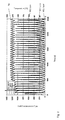
- Figure 1 shows the typical NO x profiles obtained for such an operation with alternating rich-lean conditions.
- the water treatment test was carried out in the following way:
- the core samples were dipped in water for 30 minutes whereby the water was carefully stirred. The samples were then dried at a temperature of 100°C followed by calcination at 600°C for a period of 1 hour.
- Table 1 shows the results, obtained for NO x conversion, for catalyst samples which contained exclusively platinum as the platinum group component.
- the testing revealed that only the Pt/praseodymium oxide sample presented a promising result, in which respect its properties to reduce NO x , apart from the lowest test temperature of 200°C, were equal to or better than the results obtained for commercial LNT materials. It is found that the Pt/praseodymium sample exhibited effective NO x conversion at virtually all temperatures, in which respect the conversion efficiency is only lower at 200°C than that of commercial LNT catalysts.
- the Pt catalyst with oxides having very strong basic properties like Ba, Sr, Ca and Lanthanum oxides revealed bad performance at low temperatures, suppressing Pt activity for NO and reductant oxidation, but has shown excellent activity at higher temperatures of 300-400°C.
- the oxides with moderate basic properties like yttrium and magnesium oxide revealed good activity only at medium temperatures of 300-350°C.
- the oxides like alumina and zirconium with weak basic properties were not effective at all temperatures. In contrast to some transition metal oxides, namely iron and cobalt oxides and also ceria quite good Pt activation at low temperatures were found and activity was comparable with activity of commercial LNTs.
- the praseodymium oxide therefore just like cerium can activate the platinum at low temperatures (even if with a lower level of efficiency), but it can be simultaneously in a lower valence state in comparison to cerium.
- Pr 2 O 3 has strong basic properties similar to lanthanum oxide which provides good performance at high temperatures. Those features provide good activity both at low and also at high temperatures, in which respect, in contrast to cerium, the efficiency or NO x conversion does not decrease at high temperatures.
- the good activity of the Pt/praseodymium oxide sample was observed in a wide range of values with respect to the praseodymium loading. A higher loading gave a better NO x conversion efficiency at higher temperatures, but with an excessively high loading the NO x conversion efficiency decreased at low temperatures.
- the LNT catalyst presented by this invention is thus distinguished by excellent activity in respect of NO x reduction at high temperatures, whilst platinum activity at lower temperatures is less impaired in comparison for example with barium-bearing metal oxides or other alkaline-earth metal oxides. It is valuable to notice, that lanthanum oxide has shown the second ranking of performance with excellent activity in NO x reduction at high temperature and it did not suppressed Pt activity at low temperatures so strongly as Ba and other alkaline-earth metal oxides.
- Table 2 shows the results of the endeavour to improve the activity of the Pt/Pr 6 O 11 sample by means of the addition of a second oxide to praseodymium. In that respect no improvement was noted and typically even negative effects were found.
- Oxides of barium and strontium improved activity at high temperatures, but activity at low temperatures was suppressed.
- Other tested oxides including yttrium had a negative effect.
- a positive effect on NO x conversion at high temperatures was found only for the praseodymium-lanthanum system whereas activity at low temperatures was not worsened or suppressed by the lanthanum. That effect was found however only for a relatively low lanthanum loading.
- a lanthanum oxide-praseodymium oxide ratio of more than 1/3 led to a negative effect in the range of 200°C to 250°C.
- the praseodymium was replaced by lanthanum to an extent of more than 50% the activity achieved was the same as that of Pt/lanthanum.
- the activity of the praseodymium-based LNT catalyst could be substantially increased at low temperatures if platinum was substituted by palladium.
- the addition of palladium results in a reduction in conversion and activity of alkaline earth-bearing oxides such as barium oxide.
- the opposite effect could be achieved for praseodymium or praseodymium lanthanum as basic LNT material.
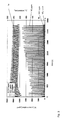
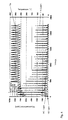
- Figures 2 to 4 show the test results in comparison with commercial Pt-Rh/Ba-Ce catalysts.
- the Pt-Pd/Pr 6 O 11 catalyst exhibits a slightly better level of NO x reduction under rich conditions and better NO x storage under lean conditions and thus better NO x conversion of 68% (in comparison with 53%) at a temperature of 200°C.
- the Pt-Pd catalyst on a praseodymium or praseodymium-lanthanum basis showed an efficient NO x reduction under rich conditions and excellent NO x storage under lean conditions at 250°C, as is shown in Figures 4 , which leads to a NO x conversion of more than 90%.
- Example 3 excellent NO x reduction was achieved at a temperature range of 200°C to 250°C, wherein a NO x conversion rate of 78% was achieved at 200°C and 96% at 250°C. It will be noted however that as shown in Table 4 the higher rhodium loading did not lead to a further improvement in activity. A similar effect was found for the addition of rhodium to the Pt/Pr-La catalyst for which an increased activity was achieved in NO x reduction in the low-temperature range. The NO x reduction in the temperature range of 200°C to 250°C was slightly lower than for Pt/ Rh/Pr 6 O 11 but was better at 300°C to 400°C.
- the basic contradiction for low-temperature activity is that basic oxides are necessary to keep stored NO x as nitrate, but simultaneously such oxides suppress the activity of platinum in NO oxidation and NO x reduction that reduces low-temperature activity.
- the idea of the method is to treat preliminary samples with deposited basic oxide at high temperatures to provide good interaction and reaction with alumina. Such interaction leads to decreased basic properties and should not suppress so much the Pt activity at low temperatures.
- the cores containing impregnated praseodymium nitrate or a mixture of praseodymium and lanthanum nitrate were calcined at 900C for 1.5h.
- Figure 6 shows the corresponding results including low-temperature NO x reduction at 150°C to 175°C.
- the Pt-Rh/praseodymium oxide LNT catalyst showed the best properties at low temperatures, in which respect at 175°C it presented a NO x conversion of 53% and at 150°C it presented a NO x conversion of 33% whilst the best of the commercial samples achieved a conversion of 53% only at 200°C.
- Such low-temperature activity is important in particular in Diesel engine applications as for example the average temperature in the European NEDC drive cycle is only 150°C.
- Pt-Rh/Pr-La oxide and Pt-Pd/Pr-La oxide samples which were prepared with the process according to the invention also showed good low-temperature activity which exceeded the activity of catalysts which were prepared with the conventional process (see Examples 1 to 3) and gave better NO x reduction at high temperatures.
- NO x conversion at 400°C was typically lower for all catalysts prepared with the process according to the invention, which is to be attributed to the less pronounced basic properties of the basic oxide after high-temperature calcination in comparison with the samples produced without such calcination operations.
- the NO x conversion rate was excellent at 350°C and with 90% exceeded those of Rh/Pr-La oxide and Pt-Pd/Pr-La oxide, as can be clearly seen from Figure 6 .
- the catalysts prepared by means of the process according to the invention are thus highly promising for the entire temperature range which is relevant for Diesel operated vehicles. High-temperature calcination of an aluminium oxide carrier together with the basic oxide is also advantageous for the high-temperature stability of the LNT catalyst.
Landscapes
- Chemical & Material Sciences (AREA)
- Engineering & Computer Science (AREA)
- Materials Engineering (AREA)
- Chemical Kinetics & Catalysis (AREA)
- Organic Chemistry (AREA)
- Health & Medical Sciences (AREA)
- Thermal Sciences (AREA)
- Combustion & Propulsion (AREA)
- Physics & Mathematics (AREA)
- Biomedical Technology (AREA)
- Environmental & Geological Engineering (AREA)
- Analytical Chemistry (AREA)
- General Chemical & Material Sciences (AREA)
- Oil, Petroleum & Natural Gas (AREA)
- Catalysts (AREA)
- Exhaust Gas Treatment By Means Of Catalyst (AREA)
Priority Applications (1)
| Application Number | Priority Date | Filing Date | Title |
|---|---|---|---|
| EP07107598A EP1990081A3 (de) | 2007-05-07 | 2007-05-07 | LNT Katalysator und Verfahren zur Herstellung eines solchen Katalysators |
Applications Claiming Priority (1)
| Application Number | Priority Date | Filing Date | Title |
|---|---|---|---|
| EP07107598A EP1990081A3 (de) | 2007-05-07 | 2007-05-07 | LNT Katalysator und Verfahren zur Herstellung eines solchen Katalysators |
Publications (2)
| Publication Number | Publication Date |
|---|---|
| EP1990081A2 true EP1990081A2 (de) | 2008-11-12 |
| EP1990081A3 EP1990081A3 (de) | 2008-12-10 |
Family
ID=38521006
Family Applications (1)
| Application Number | Title | Priority Date | Filing Date |
|---|---|---|---|
| EP07107598A Withdrawn EP1990081A3 (de) | 2007-05-07 | 2007-05-07 | LNT Katalysator und Verfahren zur Herstellung eines solchen Katalysators |
Country Status (1)
| Country | Link |
|---|---|
| EP (1) | EP1990081A3 (de) |
Cited By (6)
| Publication number | Priority date | Publication date | Assignee | Title |
|---|---|---|---|---|
| WO2014102586A1 (en) * | 2012-12-27 | 2014-07-03 | Toyota Jidosha Kabushiki Kaisha | Exhaust gas control catalyst, catalyst apparatus and exhaust gas control method |
| GB2551332A (en) * | 2016-06-10 | 2017-12-20 | Johnson Matthey Plc | NOx adsorber catalyst |
| CN107824186A (zh) * | 2017-11-17 | 2018-03-23 | 中国科学技术大学 | 一种氧化镨负载纳米钯复合材料及其制备方法 |
| CN113522232A (zh) * | 2021-06-28 | 2021-10-22 | 东风商用车有限公司 | 一种被动式NOx吸附剂及其制备方法和应用 |
| US11365660B2 (en) | 2016-06-10 | 2022-06-21 | Johnson Matthey Public Limited Company | NOx adsorber catalyst |
| CN115425245A (zh) * | 2022-08-17 | 2022-12-02 | 厦门悦荣欣科技有限公司 | 一种石墨烯负载铂镨/氧化镨纳米粒子复合催化剂及其制备方法 |
Citations (2)
| Publication number | Priority date | Publication date | Assignee | Title |
|---|---|---|---|---|
| US5736482A (en) * | 1995-02-03 | 1998-04-07 | Institut Francais Du Petrole | Catalysts for reducing nitrogen oxides to molecular nitrogen in a superstoichiometric medium of oxidizing compounds, process for preparation, and uses |
| WO2006109849A1 (ja) * | 2005-04-11 | 2006-10-19 | Valtion Teknillinen Tutkimuskeskus | 窒素酸化物を接触還元するための触媒、触媒構造体及び窒素酸化物を接触還元するための方法 |
Family Cites Families (6)
| Publication number | Priority date | Publication date | Assignee | Title |
|---|---|---|---|---|
| JPS58177153A (ja) * | 1982-04-12 | 1983-10-17 | Nissan Motor Co Ltd | メタノ−ル改質用触媒 |
| EP0315896B1 (de) * | 1987-11-07 | 1995-03-08 | Nippon Shokubai Kagaku Kogyo Co., Ltd | Katalysator zur Abgasreinigung von Dieselmotoren |
| DE4003939A1 (de) * | 1990-02-09 | 1991-08-14 | Degussa | Katalysator fuer die reinigung der abgase von brennkraftmaschinen |
| JP2821033B2 (ja) * | 1991-01-07 | 1998-11-05 | 株式会社日本触媒 | ディーゼルエンジン排ガス浄化用触媒 |
| DE69427602T2 (de) * | 1993-01-11 | 2001-11-22 | Cataler Industrial Co., Ltd. | Verfahren zur Reinigung von Abgasen |
| JP2006043634A (ja) * | 2004-08-06 | 2006-02-16 | Nissan Motor Co Ltd | 排ガス浄化用触媒及び排ガス浄化用触媒の製造方法 |
-
2007
- 2007-05-07 EP EP07107598A patent/EP1990081A3/de not_active Withdrawn
Patent Citations (2)
| Publication number | Priority date | Publication date | Assignee | Title |
|---|---|---|---|---|
| US5736482A (en) * | 1995-02-03 | 1998-04-07 | Institut Francais Du Petrole | Catalysts for reducing nitrogen oxides to molecular nitrogen in a superstoichiometric medium of oxidizing compounds, process for preparation, and uses |
| WO2006109849A1 (ja) * | 2005-04-11 | 2006-10-19 | Valtion Teknillinen Tutkimuskeskus | 窒素酸化物を接触還元するための触媒、触媒構造体及び窒素酸化物を接触還元するための方法 |
Cited By (7)
| Publication number | Priority date | Publication date | Assignee | Title |
|---|---|---|---|---|
| WO2014102586A1 (en) * | 2012-12-27 | 2014-07-03 | Toyota Jidosha Kabushiki Kaisha | Exhaust gas control catalyst, catalyst apparatus and exhaust gas control method |
| GB2551332A (en) * | 2016-06-10 | 2017-12-20 | Johnson Matthey Plc | NOx adsorber catalyst |
| US11365660B2 (en) | 2016-06-10 | 2022-06-21 | Johnson Matthey Public Limited Company | NOx adsorber catalyst |
| CN107824186A (zh) * | 2017-11-17 | 2018-03-23 | 中国科学技术大学 | 一种氧化镨负载纳米钯复合材料及其制备方法 |
| CN113522232A (zh) * | 2021-06-28 | 2021-10-22 | 东风商用车有限公司 | 一种被动式NOx吸附剂及其制备方法和应用 |
| CN113522232B (zh) * | 2021-06-28 | 2022-05-03 | 东风商用车有限公司 | 一种被动式NOx吸附剂及其制备方法和应用 |
| CN115425245A (zh) * | 2022-08-17 | 2022-12-02 | 厦门悦荣欣科技有限公司 | 一种石墨烯负载铂镨/氧化镨纳米粒子复合催化剂及其制备方法 |
Also Published As
| Publication number | Publication date |
|---|---|
| EP1990081A3 (de) | 2008-12-10 |
Similar Documents
| Publication | Publication Date | Title |
|---|---|---|
| JP6991270B2 (ja) | 白金族金属および非白金族金属を含有する触媒物品ならびに該触媒物品の製造方法およびその使用 | |
| RU2736939C2 (ru) | Катализаторы для удаления закиси азота для выхлопных систем | |
| CN100569362C (zh) | 溶胶-凝胶法在蜂窝陶瓷载体上原位制备三效催化剂的方法 | |
| KR101688850B1 (ko) | 자동차에서 엔진 근처의 위치에서 사용하기 위한 질소 산화물 저장 촉매 컨버터 | |
| US9757691B2 (en) | High efficiency and durability selective catalytic reduction catalyst | |
| RU2506996C2 (ru) | Катализаторы окисления для дизельных двигателей на основе неблагородных металлов и модифицированные неблагородными металлами | |
| JP4959129B2 (ja) | 排ガス浄化用触媒 | |
| JP5938698B2 (ja) | 排ガス浄化用酸化触媒、その製造方法およびそれを用いた排ガス浄化方法 | |
| EP2308596A1 (de) | Cu/Zeolith SCR Katalysator zur NOx Reduzierung in Abgasen und Verfahren zu deren Herstellung | |
| JP4012320B2 (ja) | 希薄燃焼エンジン用排気ガス浄化用触媒 | |
| JP2010184238A (ja) | 排ガス中の窒素酸化物除去方法 | |
| CN101528326A (zh) | 用于选择性催化还原的无钒的催化剂及其制备方法 | |
| EP0935055B1 (de) | Verfahren zur Reinigung von hochsauerstoffhaltigen Abgasen | |
| KR20200024333A (ko) | 희박/풍부 시스템을 위한 자동차 배출물로부터의 n₂o 제거 | |
| EP3097977B1 (de) | Abgasreinigungskatalysator für magermotor | |
| JP7270549B2 (ja) | NOx吸着触媒 | |
| EP2177269B1 (de) | Nox-reinigungskatalysator | |
| CN111372893A (zh) | 吸放氧材料、催化剂、废气净化系统及废气处理方法 | |
| JP2003320252A (ja) | 排気ガス浄化触媒及びその製造方法 | |
| JP2009191823A (ja) | NOx浄化装置 | |
| EP2145679A1 (de) | Multifunktionaler Katalysator für Diesel Abgasnachbehandlungsanwendungen und Verfahren zu seiner Herstellung | |
| JP5078125B2 (ja) | 排ガス浄化用触媒及びその再生方法 | |
| JP2010022892A (ja) | 排ガス浄化用触媒 | |
| JP5299603B2 (ja) | 酸化物複合体前駆体水溶液、酸化物複合体の製造方法、酸化物複合体、その酸化物複合体を備える排ガス浄化用触媒及びその排ガス浄化用触媒を用いた排ガス浄化方法 | |
| KR100494543B1 (ko) | 저 백금-팔라듐-로듐 함량의 삼원촉매 제조방법 |
Legal Events
| Date | Code | Title | Description |
|---|---|---|---|
| PUAI | Public reference made under article 153(3) epc to a published international application that has entered the european phase |
Free format text: ORIGINAL CODE: 0009012 |
|
| AK | Designated contracting states |
Kind code of ref document: A2 Designated state(s): AT BE BG CH CY CZ DE DK EE ES FI FR GB GR HU IE IS IT LI LT LU LV MC MT NL PL PT RO SE SI SK TR |
|
| AX | Request for extension of the european patent |
Extension state: AL BA HR MK RS |
|
| PUAL | Search report despatched |
Free format text: ORIGINAL CODE: 0009013 |
|
| AK | Designated contracting states |
Kind code of ref document: A3 Designated state(s): AT BE BG CH CY CZ DE DK EE ES FI FR GB GR HU IE IS IT LI LT LU LV MC MT NL PL PT RO SE SI SK TR |
|
| AX | Request for extension of the european patent |
Extension state: AL BA HR MK RS |
|
| 17P | Request for examination filed |
Effective date: 20090610 |
|
| 17Q | First examination report despatched |
Effective date: 20090721 |
|
| AKX | Designation fees paid |
Designated state(s): DE FR GB |
|
| STAA | Information on the status of an ep patent application or granted ep patent |
Free format text: STATUS: THE APPLICATION HAS BEEN WITHDRAWN |
|
| 18W | Application withdrawn |
Effective date: 20101222 |