EP1990438B1 - Werkzeug mit Beschichtung - Google Patents
Werkzeug mit Beschichtung Download PDFInfo
- Publication number
- EP1990438B1 EP1990438B1 EP20080450060 EP08450060A EP1990438B1 EP 1990438 B1 EP1990438 B1 EP 1990438B1 EP 20080450060 EP20080450060 EP 20080450060 EP 08450060 A EP08450060 A EP 08450060A EP 1990438 B1 EP1990438 B1 EP 1990438B1
- Authority
- EP
- European Patent Office
- Prior art keywords
- tool
- coating
- object according
- body portion
- alloy
- Prior art date
- Legal status (The legal status is an assumption and is not a legal conclusion. Google has not performed a legal analysis and makes no representation as to the accuracy of the status listed.)
- Active
Links
Images


Classifications
-
- C—CHEMISTRY; METALLURGY
- C22—METALLURGY; FERROUS OR NON-FERROUS ALLOYS; TREATMENT OF ALLOYS OR NON-FERROUS METALS
- C22C—ALLOYS
- C22C38/00—Ferrous alloys, e.g. steel alloys
- C22C38/10—Ferrous alloys, e.g. steel alloys containing cobalt
-
- C—CHEMISTRY; METALLURGY
- C22—METALLURGY; FERROUS OR NON-FERROUS ALLOYS; TREATMENT OF ALLOYS OR NON-FERROUS METALS
- C22C—ALLOYS
- C22C33/00—Making ferrous alloys
- C22C33/02—Making ferrous alloys by powder metallurgy
- C22C33/0257—Making ferrous alloys by powder metallurgy characterised by the range of the alloying elements
- C22C33/0278—Making ferrous alloys by powder metallurgy characterised by the range of the alloying elements with at least one alloying element having a minimum content above 5%
- C22C33/0285—Making ferrous alloys by powder metallurgy characterised by the range of the alloying elements with at least one alloying element having a minimum content above 5% with Cr, Co, or Ni having a minimum content higher than 5%
-
- C—CHEMISTRY; METALLURGY
- C22—METALLURGY; FERROUS OR NON-FERROUS ALLOYS; TREATMENT OF ALLOYS OR NON-FERROUS METALS
- C22C—ALLOYS
- C22C38/00—Ferrous alloys, e.g. steel alloys
- C22C38/001—Ferrous alloys, e.g. steel alloys containing N
-
- C—CHEMISTRY; METALLURGY
- C22—METALLURGY; FERROUS OR NON-FERROUS ALLOYS; TREATMENT OF ALLOYS OR NON-FERROUS METALS
- C22C—ALLOYS
- C22C38/00—Ferrous alloys, e.g. steel alloys
- C22C38/02—Ferrous alloys, e.g. steel alloys containing silicon
-
- C—CHEMISTRY; METALLURGY
- C22—METALLURGY; FERROUS OR NON-FERROUS ALLOYS; TREATMENT OF ALLOYS OR NON-FERROUS METALS
- C22C—ALLOYS
- C22C38/00—Ferrous alloys, e.g. steel alloys
- C22C38/04—Ferrous alloys, e.g. steel alloys containing manganese
-
- C—CHEMISTRY; METALLURGY
- C22—METALLURGY; FERROUS OR NON-FERROUS ALLOYS; TREATMENT OF ALLOYS OR NON-FERROUS METALS
- C22C—ALLOYS
- C22C38/00—Ferrous alloys, e.g. steel alloys
- C22C38/18—Ferrous alloys, e.g. steel alloys containing chromium
- C22C38/40—Ferrous alloys, e.g. steel alloys containing chromium with nickel
- C22C38/44—Ferrous alloys, e.g. steel alloys containing chromium with nickel with molybdenum or tungsten
-
- C—CHEMISTRY; METALLURGY
- C22—METALLURGY; FERROUS OR NON-FERROUS ALLOYS; TREATMENT OF ALLOYS OR NON-FERROUS METALS
- C22C—ALLOYS
- C22C38/00—Ferrous alloys, e.g. steel alloys
- C22C38/18—Ferrous alloys, e.g. steel alloys containing chromium
- C22C38/40—Ferrous alloys, e.g. steel alloys containing chromium with nickel
- C22C38/46—Ferrous alloys, e.g. steel alloys containing chromium with nickel with vanadium
-
- C—CHEMISTRY; METALLURGY
- C22—METALLURGY; FERROUS OR NON-FERROUS ALLOYS; TREATMENT OF ALLOYS OR NON-FERROUS METALS
- C22C—ALLOYS
- C22C38/00—Ferrous alloys, e.g. steel alloys
- C22C38/18—Ferrous alloys, e.g. steel alloys containing chromium
- C22C38/40—Ferrous alloys, e.g. steel alloys containing chromium with nickel
- C22C38/50—Ferrous alloys, e.g. steel alloys containing chromium with nickel with titanium or zirconium
-
- C—CHEMISTRY; METALLURGY
- C22—METALLURGY; FERROUS OR NON-FERROUS ALLOYS; TREATMENT OF ALLOYS OR NON-FERROUS METALS
- C22C—ALLOYS
- C22C38/00—Ferrous alloys, e.g. steel alloys
- C22C38/18—Ferrous alloys, e.g. steel alloys containing chromium
- C22C38/40—Ferrous alloys, e.g. steel alloys containing chromium with nickel
- C22C38/52—Ferrous alloys, e.g. steel alloys containing chromium with nickel with cobalt
-
- B—PERFORMING OPERATIONS; TRANSPORTING
- B22—CASTING; POWDER METALLURGY
- B22F—WORKING METALLIC POWDER; MANUFACTURE OF ARTICLES FROM METALLIC POWDER; MAKING METALLIC POWDER; APPARATUS OR DEVICES SPECIALLY ADAPTED FOR METALLIC POWDER
- B22F5/00—Manufacture of workpieces or articles from metallic powder characterised by the special shape of the product
- B22F2005/001—Cutting tools, earth boring or grinding tool other than table ware
-
- Y—GENERAL TAGGING OF NEW TECHNOLOGICAL DEVELOPMENTS; GENERAL TAGGING OF CROSS-SECTIONAL TECHNOLOGIES SPANNING OVER SEVERAL SECTIONS OF THE IPC; TECHNICAL SUBJECTS COVERED BY FORMER USPC CROSS-REFERENCE ART COLLECTIONS [XRACs] AND DIGESTS
- Y10—TECHNICAL SUBJECTS COVERED BY FORMER USPC
- Y10T—TECHNICAL SUBJECTS COVERED BY FORMER US CLASSIFICATION
- Y10T428/00—Stock material or miscellaneous articles
- Y10T428/12—All metal or with adjacent metals
- Y10T428/12014—All metal or with adjacent metals having metal particles
- Y10T428/12028—Composite; i.e., plural, adjacent, spatially distinct metal components [e.g., layers, etc.]
- Y10T428/12049—Nonmetal component
-
- Y—GENERAL TAGGING OF NEW TECHNOLOGICAL DEVELOPMENTS; GENERAL TAGGING OF CROSS-SECTIONAL TECHNOLOGIES SPANNING OVER SEVERAL SECTIONS OF THE IPC; TECHNICAL SUBJECTS COVERED BY FORMER USPC CROSS-REFERENCE ART COLLECTIONS [XRACs] AND DIGESTS
- Y10—TECHNICAL SUBJECTS COVERED BY FORMER USPC
- Y10T—TECHNICAL SUBJECTS COVERED BY FORMER US CLASSIFICATION
- Y10T428/00—Stock material or miscellaneous articles
- Y10T428/12—All metal or with adjacent metals
- Y10T428/12014—All metal or with adjacent metals having metal particles
- Y10T428/12028—Composite; i.e., plural, adjacent, spatially distinct metal components [e.g., layers, etc.]
- Y10T428/12063—Nonparticulate metal component
- Y10T428/12104—Particles discontinuous
- Y10T428/12111—Separated by nonmetal matrix or binder [e.g., welding electrode, etc.]
- Y10T428/12125—Nonparticulate component has Fe-base
-
- Y—GENERAL TAGGING OF NEW TECHNOLOGICAL DEVELOPMENTS; GENERAL TAGGING OF CROSS-SECTIONAL TECHNOLOGIES SPANNING OVER SEVERAL SECTIONS OF THE IPC; TECHNICAL SUBJECTS COVERED BY FORMER USPC CROSS-REFERENCE ART COLLECTIONS [XRACs] AND DIGESTS
- Y10—TECHNICAL SUBJECTS COVERED BY FORMER USPC
- Y10T—TECHNICAL SUBJECTS COVERED BY FORMER US CLASSIFICATION
- Y10T428/00—Stock material or miscellaneous articles
- Y10T428/12—All metal or with adjacent metals
- Y10T428/12493—Composite; i.e., plural, adjacent, spatially distinct metal components [e.g., layers, joint, etc.]
- Y10T428/12639—Adjacent, identical composition, components
- Y10T428/12646—Group VIII or IB metal-base
- Y10T428/12653—Fe, containing 0.01-1.7% carbon [i.e., steel]
-
- Y—GENERAL TAGGING OF NEW TECHNOLOGICAL DEVELOPMENTS; GENERAL TAGGING OF CROSS-SECTIONAL TECHNOLOGIES SPANNING OVER SEVERAL SECTIONS OF THE IPC; TECHNICAL SUBJECTS COVERED BY FORMER USPC CROSS-REFERENCE ART COLLECTIONS [XRACs] AND DIGESTS
- Y10—TECHNICAL SUBJECTS COVERED BY FORMER USPC
- Y10T—TECHNICAL SUBJECTS COVERED BY FORMER US CLASSIFICATION
- Y10T428/00—Stock material or miscellaneous articles
- Y10T428/31504—Composite [nonstructural laminate]
- Y10T428/31678—Of metal
Definitions
- the invention relates to a tool or article which carries a coating applied by a PVD or CVD method.
- the invention preferably relates to a tool for machining metals, in particular austenitic steels, nickel-base alloys and titanium, and titanium alloys.
- Precipitation-hardenable iron-cobalt-molybdenum and / or tungsten alloys are known as tool materials and state of the art.
- a production of larger tools from these so-called quick-cut alloys is associated with a number of problems because on the one hand given a high separation tendency in the solidification of the melt and on the other hand, a hot working of the material are possible only within narrow limits at high temperature.
- the tool as a composite tool, with only small cutting parts made of an iron-cobalt-tungsten alloy, which are connected to a support member, usually made of an alloy steel, by welding.
- An improvement in the performance characteristics of the cutting parts should be achieved by a powder metallurgical (PM) production.
- the tool has long been known and customary to provide at least the working areas of the cutting tools with a surface hard layer.
- the tool After the tool has been formed in its shape and given a thermal coating, it is applied by applying at least one layer of hard material, usually of carbide and / or nitride and of carbonitride and / or oxide, in particular of the elements Ti and / or Al and / or Cr, after PVD or CVD process at a temperature between 500 ° C and 680 ° C, at most below the tempering temperature of the tool steel alloy, in particular the high speed steel alloy.
- hard material usually of carbide and / or nitride and of carbonitride and / or oxide, in particular of the elements Ti and / or Al and / or Cr
- a carbide coating is also known for hard metals and is used extensively for such tools.
- the technological advancement of coated high-speed steel tools improved their quality and performance characteristics such that similarly coated tools made of carbon-free, precipitation hardened (Fe-Co-Mo) cutting parts have approximately the same property profile or equal cutting strength during chip removal.
- the invention which is based on the object to provide a tool or an object, which or which, in particular in a machining of metals, such as titanium, has a significantly improved performance.
- a tool or article which consists of a substantially carbon-free, precipitation-hardened iron-cobalt-molybdenum / tungsten-nitrogen alloy and carries a coating which is applied by the PVD or CVD method and having a monophasic crystalline structure, said body part using a powder metallurgical (PM) process with atomization of liquid metal for block production from an alloy containing in% by weight: Cobalt (Co) 15.0 to 30.0 Molybdenum (Mo) to 20.0 Nitrogen (N) 0005 to 12:12 Silicon (Si) 0.1 to 0.8 Manganese (Mn) 0.1 to 0.6 Chrome (Cr) 12:02 to 0.2 Vanadium (1 /) 12:02 to 0.2 Tungsten (W) to 25.0 Molybdenum + 0.5 tungsten Mo + W / 2 10.0 to 22.0 Nickel (Ni) 12:01 to 0.5 Titanium (Ti) 0001 to 0.2 Niobium / tantalum
- the advantages of the invention can be seen synergistically in an optimization of the alloying technology as well as the selected production method of the main body and in the coating formation.
- a nitrogen content of the Fe-Co-Mo / WN alloy provided according to the invention not only a favorable precipitation behavior of the intermetallic phase with improved homogeneity is achieved, but also the seeding conditions or the adhesion conditions for a hard material layer are advantageously influenced.
- a PM production improves the uniformity of a fine microstructure and has a favorable effect on the deformability of the material.
- the applied to the tool under improved adhesion according to the invention single-phase crystalline structured coating has not only a high hardness and high toughness and a low surface roughness, which has in a chip of particularly tough metals, as has been shown, particular advantages in terms of reduced Tool heating and an improved chip removal brings.
- the advantages of the article or the like according to the invention are, as it turned out, based on a synergy.
- a powder metallurgical production of the main body which has a significantly higher thermal conductivity, a microstructure with a fine distribution of the phases of the material is achieved, in comparison with high-alloyed high-speed steels no noticeable material softening at high temperatures, eg at 600 ° C, occurs.
- the alloying element nitrogen with a minimum concentration of 0.005 wt .-%, in particular of 0.01 wt .-% in the substrate, because this significantly increases the adhesion of the growing coating.
- a monophasic crystalline layer with face-centered cubic structure proves to be superior, because on the one hand it has improved mechanical properties and, on the other hand, has a low surface roughness, which is advantageous in particular for cutting tools.
- the abovementioned alloy within wide limits of the chemical composition is also particularly suitable for atomization of the liquid metal and subsequent solidification to largely homogeneous, small powder grains. This also results in improved deformation conditions of the hot isostatic pressed (HIP) block.
- HIP hot isostatic pressed
- thermoformed article but also the property profile of the main body of a tool and ultimately of the tool itself can be further improved if the body part using a powder metallurgical (PM) method with atomization of liquid metal for block production and of an alloy containing in% by weight: Cobalt (Co) 20.0 to 30.0 Molybdenum (Mo) 11.0 to 19.0 Tungsten (W) 12:01 to 0.9
- PM powder metallurgical
- Iron (Fe) and production-related impurities is made as a remainder .
- An alloy optimization of the chemical composition according to the above values relates to the concentrations of the basic elements, the ratio of cobalt to molybdenum, a narrow limitation of the micro-alloying elements and a limitation of the impurities in the material.
- the nitrogen content is ambivalent on the one hand with regard to the microstructure, on the other hand advantageous in terms of adhesion and a type of coating.
- the elements of silicon and manganese are particularly suitable, which in particular reduce harmful grain boundary deposits.
- the impurity elements aluminum and carbon are ambivalently effective, but should not exceed the specified maximum concentrations.
- Phosphorus, sulfur and oxygen are to be regarded as pests which should have as low as possible levels in the alloy.
- one or more alloying constituent (s) or accompanying element (s) has a concentration in% by weight: Co 24.0 to 27.0 Not a word 13.5 to 17.5 N 0008 to 12:01 Si 0.2 to 0.6 Mn 0.1 to 0.3 Cr 12:03 to 12:07 V 0025 to 12:06 W 12:03 to 12:08 Ni 12:09 to 0.2 Ti 0003 to 0009 Nb / Ta 0003 to 0009 al 0001 to 0009 C 12:01 to 12:07 P MAX 0008 S MAX 0015
- the hardness of the body part exceeds a value of 66 HRC, in particular of 67 HRC, the highest possible stability of the coating can be achieved. Even in the case of a small-area pressure load, ie a locally high, specific surface load, high hardness of the body part or of the main body prevents the brittle hard material layer from breaking in. An improved support of the coating on the substrate with high hardness causes an intact hard layer, prevents a partial peeling thereof, thereby extending the possible service life of the tool.
- the material toughness can be increased in spite of high material hardness.
- the aforementioned tool according to the invention or a like object has a coating with a largely single-phase crystalline structure.
- a predominantly single-phase, cubic face-centered atomic structure of the applied layer can only be achieved at a coating temperature of substantially above 500 ° C.
- thermodynamic and kinetic energy in the micro-region during layer formation or layer build-up, exerts a decisive influence on the formation of the structure of the growing layer.
- a high energy promotes the diffusion of the atoms in a columnar layer forming and thereby causes a compact, contiguous, face-centered cubic, electrically conductive, substantially single-phase layer structure with high layer hardness.
- a hexagonal atomic structure of a layer is hard, but also brittle and electrically non-conductive.
- a high energy or temperature load in the micron range is achieved on the substrate with an abovementioned chemical composition without a decrease in material hardness, hard, smooth and tough surface coatings can be produced which also have a low tendency to breakdown due to the high substrate hardness due to local stresses have and thus cause a high quality of the tool or object.
- a temperature of about 520 ° C. to 600 ° C. in PVD or CVD processes is usually used for a single-phase crystalline formation thereof.
- high coating temperatures can have a retroactive effect on the material hardness of a main body or body part made of conventional tool steels, eg high-speed steels.
- HIP hot isostatic pressing
- the thus prepared HIP block with a diameter of approx. 400 mm ⁇ was hot-rolled at high temperature onto a round bar with a diameter of 31 mm ⁇ .
- an Fe-Co-Mo-N alloy in the present case the material S 903 PM, in particular in the range between RT and 600 ° C has a significantly higher thermal conductivity than a high-speed steel of type S 6-5-2 ( M2).
- the hardness and Young's modulus of a layer deposited on a substrate by the PVD or CVD method increases with higher coating temperatures. At the same time, the roughness of the surface of the applied layer, in particular of a single-phase crystalline structure, is reduced.
- An increased nitrogen concentration on the surface of the tool body part can also be achieved by embroidering it to a nitrogen content of up to 0.4% by weight.
- a favorable kinetics for growth of the layer on the substrate can be achieved.
- X-ray studies can be used to determine the structure of a PVD or CVD layer applied to a substrate or tool.
- Single-phase crystalline, cubic-face-centered structure having high-temperature layers show at the same X-ray intensity due to the lattice planes of the crystals a much higher reflectance in the angular range of the compound TiN / AIN, as in Fig. 4 is illustrated.
- test results of layers according to Fig. 4 show that high temperature layers applied at 575 ° C are at least 5-fold, preferably at least 10-fold, in intensity as measured in pulses by TiN as compared to low-temperature layers applied to 375 ° C (lower panel) / AIN at 2 theta (2 ⁇ ) between 60 and 80.
- a milling cutter with grinding addition formed by cutting and subjected to a thermal treatment in vacuum at a solution annealing temperature of 1180 ° C with a subsequent quenching in nitrogen at 5 bar. This was followed by hardening of the raw mill at a temperature between 580 ° C and 620 ° C, for a period of between 2 and 4 hours.
- a similar milling cutter was made of S-ISO-PM super high speed steel with a previously mentioned composition, thermally tempered and coated with hard material.
- Figure 5 shows that the service life of the tool according to the invention was significantly greater or the cutting wear extremely low. Such a possible duration of use of a tool according to the invention can be extended to a high degree.
Landscapes
- Chemical & Material Sciences (AREA)
- Engineering & Computer Science (AREA)
- Materials Engineering (AREA)
- Mechanical Engineering (AREA)
- Metallurgy (AREA)
- Organic Chemistry (AREA)
- Physical Vapour Deposition (AREA)
- Chemical Vapour Deposition (AREA)
- Cutting Tools, Boring Holders, And Turrets (AREA)
- Other Surface Treatments For Metallic Materials (AREA)
Description
- Die Erfindung betrifft ein Werkzeug oder einen Gegenstand, welches bzw. welcher eine Beschichtung trägt, die nach einem PVD- oder CVD-Verfahren aufgebracht ist. Bevorzugt bezieht sich die Erfindung auf ein Werkzeug zur spanabhebenden Bearbeitung von Metallen, insbesondere von austenitischen Stählen, Nickel-Basislegierungen und Titan sowie Titanlegierungen.
- Ausscheidungshärtbare Eisen-Cobalt-Molybdän- und/oder Wolfram-Legierungen sind als Werkzeugwerkstoffe bekannt und Stand der Technik. Eine Herstellung von größeren Werkzeugen aus diesen sogenannten Schnellschnitt-Legierungen ist jedoch mit einer Anzahl von Problemen verbunden, weil einerseits eine hohe Entmischungsneigung bei der Erstarrung der Schmelze gegeben und andererseits eine Warmumformung des Werkstoffes nur in engen Grenzen bei hoher Temperatur möglich sind.
- Es wurde schon vorgeschlagen (
WO 01/91 962 - Um eine Schneidhaltigkeit von Werkzeugen zu erhöhen, ist seit langem bekannt und üblich, zumindest die Arbeitsbereiche der Schneidwerkzeuge mit einer Oberflächen-Hartschicht zu versehen. Nach der Erstellung des Werkzeuges in seiner Form und einer thermischen Vergütung desselben erfolgt dabei ein Aufbringen mindestens einer Hartstoffschicht, zumeist aus Karbid und/oder Nitrid sowie Carbonitrid und/oder Oxid, insbesondere der Elemente Ti und/oder Al und/oder Cr, nach dem PVD- oder CVD-Verfahren bei einer Temperatur zwischen 500°C und 680°C, allenfalls unter der Anlasstemperatur der Werkzeugstahllegierung, insbesondere der Schnellarbeitsstahllegierung.
- Auch für Hartmetalle ist eine Hartstoffbeschichtung bekannt und findet für derartige Werkzeuge in hohem Umfang Anwendung.
- Die eingangs genannten ausscheidungsgehärteten Fe-Co-Mo/W-Legierungen als Schneidteilwerkstoffe erbrachten vormals insbesondere bei einer Bearbeitung von Ti-Basiswerkstoffen und dgl. Materialien verbesserte Standzeiten der Werkzeuge. Die technologische Weiterentwicklung von beschichteten Schnellarbeitsstahl-Werkzeugen verbesserte jedoch deren Güte und Gebrauchseigenschaften derart, dass auch gleichartig beschichtete Werkzeuge aus kohlenstofffreien, ausscheidungsgehärteten (Fe-Co-Mo-) Schneidteilen ein etwa gleiches Eigenschaftsprofil bzw. gleiche Schneidhaltigkeit bei der Abspanung aufweisen.
- Hier setzt die Erfindung an, der die Aufgabe zugrunde liegt, ein Werkzeug oder einen Gegenstand zu schaffen, welches bzw. welcher, insbesondere bei einer spanabhebenden Bearbeitung von Metallen, wie Titan, eine wesentlich verbesserte Leistung aufweist.
- Diese Aufgabe wird erfindungsgemäß bei einem Werkzeug oder Gegenstand gelöst, welches bzw. welcher aus einer im Wesentlichen kohlenstofffreien, ausscheidungsgehärteten Eisen-Cobalt-Molybdän/Wolfram-Stickstoff-Legierung besteht und eine Beschichtung trägt, die nach dem PVD- oder CVD-Verfahren aufgebracht ist und eine einphasig kristalline Struktur aufweist, wobei das Körperteil unter Verwendung eines pulvermetallurgischen (PM-) Verfahrens mit einer Verdüsung von Flüssigmetall zur Blockherstellung aus einer Legierung, enthaltend in Gew.-%:
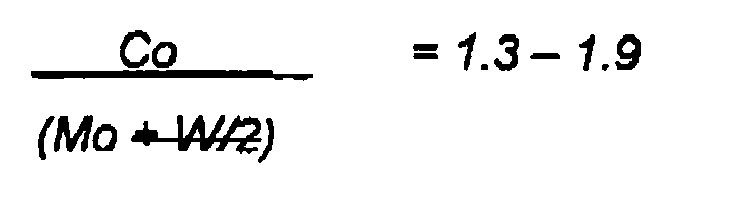
Cobalt (Co) 15.0 bis 30.0 Molybdän (Mo) bis 20.0 Stickstoff (N) 0.005 bis 0.12 Silicium (Si) 0.1 bis 0.8 Mangan (Mn) 0.1 bis 0.6 Chrom (Cr) 0.02 bis 0.2 Vanadium (1/) 0.02 bis 0.2 Wolfram (W) bis 25.0 Molybdän + 0.5 Wolfram Mo + W/2 10.0 bis 22.0 Nickel (Ni) 0.01 bis 0.5 Titan (Ti) 0.001 bis 0.2 Niob/Tantal (Nb/Ta) 0.001 bis 0.1 Aluminium (Al) MAX 0.043 Kohlenstoff (C) MAX 0.09 Phosphor (P) MAX 0.01 Schwefel (S) MAX 0.02 Sauerstoff (O) MAX 0.032 - Eisen (Fe) und herstellungsbedingte Verunreinigungen als Rest mit der Maßgabe, dass das Verhältnis der Konzentrationen von Cobalt zu Molybdän plus 0.5 Wolfram einen Wert von 1.3 bis 1.9 aufweist,
- Die Vorteile der Erfindung sind synergetisch in einer legierungstechnischen Optimierung sowie der gewählten Herstellungsart des Grundkörpers und in der Beschichtungsausbildung zu sehen. Durch einen erfindungsgemäß vorgesehenen Stickstoffgehalt der Fe-Co-Mo/W-N-Legierung wird nicht nur ein günstiges Ausscheidungsverhalten der intermetallischen Phase mit verbesserter Homogenität erreicht, sondern es werden auch die Ankeimbedingungen bzw. die Haftungsbedingungen für eine Hartstoffschicht vorteilhaft beeinflusst.
- Eine PM-Herstellung verbessert dabei die Gleichmäßigkeit einer feinen Gefügestruktur und wirkt sich günstig auf die Verformbarkeit des Werkstoffes aus.
- Die nach der Erfindung auf das Werkzeug unter verbesserter Haftung aufgebrachte einphasig kristallin strukturierte Beschichtung hat neben einer hohen Härte und einer hohen Zähigkeit auch eine geringe Oberflächenrauheit, was bei einer Abspanung von insbesondere zähen Metallen, wie sich gezeigt hat, besondere Vorteile im Hinblick auf eine verminderte Werkzeugerwärmung und einen verbesserten Spanaustrag bringt.
- Mit anderen Worten: Die Vorteile des erfindungsgemäßen Gegenstandes oder dgl. Werkzeuges sind, wie sich zeigte, in einer Synergie begründet.
Mittels einer pulvermetallurgischen Herstellung des Grundkörpers, welcher eine bedeutend höhere Wärmeleitfähigkeit aufweist, wird ein Gefüge mit feiner Verteilung der Phasen des Werkstoffes erreicht, wobei im Vergleich mit höchstlegierten Schnellstählen keine merkbare Materialerweichung bei hohen Temperaturen, z.B. bei 600°C, eintritt. Wichtig ist auch das Legierungselement Stickstoff mit einer Mindestkonzentration von 0.005 Gew.-%, insbesondere von 0.01 Gew.-% im Substrat, weil sich dadurch die Haftung der aufwachsenden Beschichtung wesentlich verstärkt ausbildet. Schließlich erweist sich eine einphasig kristalline Schicht mit kubisch-flächenzentrierter Struktur als überlegen, weil diese einerseits verbesserte, mechanische Eigenschaften hat und andererseits eine geringe Oberflächenrauigkeit aufweist, was insbesondere bei spanabhebenden Werkzeugen Vorteile bringt. - Insgesamt werden die Gebrauchseigenschaften des Gegenstandes verbessert, insbesondere die Schneidhaltigkeit eines spanenden Werkzeuges wesentlich verlängert.
- Es hat sich gezeigt, dass die vorstehend angegebene Legierung in weiten Grenzen der chemischen Zusammensetzung sich auch für eine Verdüsung des Flüssigmetalls und die nachfolgende Erstarrung zu weitestgehend homogenen, kleinen Pulverkörner besonders gut eignet. Dabei ergeben sich auch verbesserte Verformungsbedingungen des heißisostatisch gepressten (HIP) Blockes.
- Die Herstellbarkeit eines warmgeformten Gegenstandes, aber auch das Eigenschaftsprofil des Grundkörpers eines Werkzeuges und letztlich des Werkzeuges selbst, können weiter verbessert werden, wenn das Körperteil unter Verwendung eines pulvermetallurgischen (PM-)Verfahrens mit einer Verdüsung von Flüssigmetall zur Blockherstellung und aus einer Legierung, enthaltend in Gew.-%:
Cobalt (Co) 20.0 bis 30.0 Molybdän (Mo) 11,0 bis 19.0 Wolfram (W) 0.01 bis 0.9 - Eisen (Fe) und herstellungsbedingte Verunreinigungen als Rest gefertigt ist.
- Eine legierungstechnische Optimierung der chemischen Zusammensetzung gemäß der vorgeordneten Werte betrifft die Konzentrationen der Basiselemente, das Verhältnis von Cobalt zu Molybdän, eine enge Begrenzung der Mikrolegierungselemente und eine Limitierung der Verunreinigungen im Werkstoff. Der Stickstoffgehalt ist ambivalent einerseits hinsichtlich der Mikrostruktur, andererseits bezüglich einer Haftung und einer Beschichtungsart vorteilhaft wirksam.
- Ergebnisse von umfangreichen Untersuchungen zeigten, dass die Verwendung von hauptsächlich Molybdän als ein Basiselement bei kleinen Wolframwerten Vorteile bei einer Bildung der Phase (FeCo)7Moa und in der Folge im Härteverhalten aufweist, wobei für eine Härteannahme bei der thermischen Vergütung ein Cobalt- zu Molybdänverhältnis in engen Grenzen günstig ist.
- Von den Mikrolegierungselementen in den genannten Gehaltsbereichen, welche für die Herstellung und für das Eigenschaftsprofil des Werkstoffes vorteilhaft wirksam sind, sind hervorragend die Elemente Silicium und Mangan zu nennen, die insbesondere schädliche Korngrenzenablagerungen verringern.
- Die Verunreinigungselemente Aluminium und Kohlenstoff sind ambivalent wirksam, sollten jedoch die angegebenen Höchstwerte der Konzentrationen nicht überschreiten. Phosphor, Schwefel und Sauerstoff hingegen sind als Schädlinge zu werten, welche möglichst niedrige Gehalte in der Legierung aufweisen sollten.
- Eine Verbesserung der Werkstoffkennwerte ist erreichbar, wenn ein oder mehrere Legierungsbestandteil(e) oder Begleitelement(e) eine Konzentration in Gew.-% aufweist (aufweisen):
Co 24.0 bis 27.0 Mo 13.5 bis 17.5 N 0.008 bis 0.01 Si 0.2 bis 0.6 Mn 0.1 bis 0.3 Cr 0.03 bis 0.07 V 0.025 bis 0.06 W 0.03 bis 0.08 Ni 0.09 bis 0.2 Ti 0.003 bis 0.009 Nb / Ta 0.003 bis 0.009 Al 0.001 bis 0.009 C 0.01 bis 0.07 P MAX 0.008 S MAX 0.015 - Dabei kann ein zusätzlicher Vorteil erreicht werden, wenn das Verhältnis der Konzentrationen Co zu Mo in der Legierung einen Wert von 1.5 bis 1.8 aufweist.

- Wenn, wie erfindungsgemäß für das Werkzeug oder den Gegenstand vorgesehen sein kann, die Härte des Körperteiles einen Wert von 66 HRC, insbesondere von 67 HRC übersteigt, kann eine höchstmögliche Stabilität der Beschichtung erreicht werden. Auch bei einer kleinflächigen Druckbelastung, also einer örtlich hohen, spezifischen Flächenbelastung, verhindert eine hohe Härte des Körperteiles bzw. des Grundkörpers ein Einbrechen der spröden Hartstoffschicht. Eine verbesserte Stützung der Beschichtung am Substrat mit hoher Härte bewirkt eine unversehrt bleibende Hartschicht, verhindert ein teilweises Abblättern derselben und verlängert dadurch die mögliche Einsatzdauer des Werkzeuges.
- Wenn nach einer Ausführungsform der Erfindung das Körperteil vom Werkzeug oder vom Gegenstand aus einer vorgenannten Legierung, mit einer Warmverformung des heißisostatisch verdichteten (HIP) Blockes mit einem Verformungsgrad von mindestens 2.5-fach hergestellt ist, kann derart die Werkstoffzähigkeit trotz hoher Materialhärte gesteigert sein.
- Das eingangs genannte erfindungsgemäße Werkzeug bzw. ein dgl. Gegenstand weist eine Beschichtung mit einer weitgehend einphasig kristallinen Struktur auf. Eine vorwiegend einphasige, kubisch-flächenzentrierte Atomstruktur der aufgebrachten Schicht kann erst bei einer Beschichtungstemperatur von im Wesentlichen über 500°C erreicht werden.
- Bei wissenschaftüchen Untersuchungen wurde gefunden, dass das energetische Potenzial, bestehend aus thermodynamischer und kinetischer Energie im Mikrobereich bei der Schichtbildung bzw. beim Schichtaufbau einen entscheidenden Einfluss auf die Ausformung des Gefüges der aufwachsenden Schicht ausübt. Eine hohe Energie fördert die Diffusion der Atome bei einer stängeligen Schichtformung und bewirkt dadurch eine kompakte, zusammenhängende, kubisch-flächenzentrierte, elektrisch leitende, im Wesentlichen einphasige Schichtstruktur mit hoher Schichthärte. Eine hexagonale Atomstruktur einer Schicht ist zwar hart, aber auch spröde und elektrisch nicht leitend.
- Wenn nun erfindungsgemäß am Substrat mit einer vorgenannten, chemischen Zusammensetzung beim Schichtaufbau eine hohe Energie- bzw. Temperaturbelastung im Mikrobereich ohne Abfall der Materialhärte erreicht wird, sind harte, glatte und zähe Oberflächenbeschichtungen erstellbar, die auch der hohen Substrathärte wegen bei örtlichen Belastungen eine geringe Durchbruchsneigung haben und somit eine hohe Güte des Werkzeuges oder Gegenstandes bewirken.
- Für eine weitgehende Vermeidung von gegebenenfalls amorphen und/oder hexagonalen Teilen in den aufgebrachten Schichten wird für eine einphasig kristalline Ausbildung derselben zumeist eine Temperatur von ca. 520°C bis 600°C in PVD- oder CVD-Verfahren angewendet. Derartig hohe Beschichtungstemperaturen können allerdings eine Rückwirkung auf die Werkstoffhärte eines Grundkörpers bzw. Körperteiles aus üblichen Werkzeugstählen z.B. Schnellarbeitsstählen haben.
- Beispielhaft soll die Erfindung anhand von Daten und Ergebnissen aus Untersuchungsarbeiten näher erläutert werden.
- Eine Versuchsschmelze mit Konzentrationen in Gew.-%
der Basiselemente: Cobalt 25 Molybdän 15 Wolfram 0.1 Stickstoff 0.02 der Mikrolegierungselemente: Silicium 0.29 Mangan 0.21 Chrom 0.05 Vanadium 0.03 Nickel 0.1 Titan 0.004 Niob/Tantal 0.004 der Verunreinigungselemente: Aluminium 0.002 Kohlenstoff 0.028 Phosphor 0.002 Schwefel 0.0021 Eisen Rest
wurde mit Gas verdüst, das daraus gebildete Metallpulver in eine Kapsel mit einem Durchmesser von 423 mm ∅ gefüllt, in dieser druckdicht eingeschlossen und diese Kapsel einem heißisostatischen Pressvorgang (HIP) unterworfen. - Am derart erstellten HIP-Block mit einem Durchmesser von ca. 400 mm ∅ erfolgte eine Warmwalzung bei hoher Temperatur auf einen Rundstab mit einem Durchmesser von 31 mm ∅.
- Aus dem Rundstab wurden Proben gefertigt, welche bei werkstofftechnologischen Untersuchungen zum Einsatz kamen.
- Weiters erfolgte ein Verwendung dieses Rundmaterials für eine Herstellung eines Umfangfräsers für Zeitstandsuntersuchungen des Werkzeuges.
- Um einen Vergleich der erfindungsgemäßen Legierung, welche in den Untersuchungsprotokollen die Bezeichnung S 903 PM trug, bzw. der mit dieser gebildeten Werkzeuge mit Schneidwerkstoffen anderer Art erstellen zu können, wurden Schnellarbeitsstähle der Sorte S 6-5-2 (M2) und ein Super-Schnellarbeitsstahlwerkzeug der Marke S-ISO-PM aus der Produktion herausgezogen.
- Nachfolgend ist die jeweilige, chemische Zusammensetzung in Gew.-% der Vergleichswerkstoffe angegeben:
- S 6-5-2 (M2): C = 0.91, Cr = 4.15, Mo = 5.1, V = 1.82, W = 6.39, Fe und Verunreinigungen = Rest.
- S-ISO-PM: C = 1.612, Cr = 4.79, Mo = 2.11, V = 5.12, W = 10.49, Co = 8.12, Fe und Verunreinigungen = Rest.
- Die Ergebnisse von Untersuchungen der erfindungsgemäßen Legierung bzw. Beschichtung bzw. Werkzeuge sind aus den Schaubildern, gegebenenfalls im Vergleich mit den genannten Schnellarbeitsstählen aus
Fig. 1 bis Fig. 7 zu sehen. - Es zeigen:
- Fig. 1
- Wärmeleitfähigkeit des Werkstoffes in Abhängigkeit von der Temperatur
- Fig. 2
- Werkstoffhärte in Abhängigkeit von der Anlasstemperatur
- Fig. 3
- Warmhärte des Werkstoffes in Abhängigkeit von der Zeit
- Fig. 4
- Härte einer Beschichtung in Abhängigkeit von der Abscheidungstemperatur
- Fig. 5
- Beschichtungsstruktur (Stand der Technik)
- Fig. 6
- Beschichtungsstruktur in einphasig kristalliner Ausbildung
- Fig. 7
- Werkzeugverschleiß in Abhängigkeit von der Einsatzzeit
- Aus
Fig. 1 ist ersichtlich, dass eine Fe-Co-Mo-N-Legierung, im vorliegenden Fall der Werkstoff S 903 PM, insbesondere im Bereich zwischen RT und 600°C eine wesentlich höhere Wärmeleitfähigkeit aufweist als ein Schnellarbeitsstahl vom Typ S 6-5-2 (M2). Dies führt bei einer Abspanung mit einem erfindungsgemäßen Werkzeug zu einer vergrößerten Wärmeableitung vom Schneidbereich in den Werkzeugkörper, wodurch eine erhöhte Stabilität des Materials und ein verringerter Verschleiß der Schneiden erreicht werden können. - Bei einer thermischen Vergütung der erfindungsgemäßen Fe-Co-Mo-N-Legierung (S 903 PM) erfolgt, wie in
Fig. 2 dargestellt, vorerst ein Lösungsglühen zumeist im Vakuum bei einer Temperatur im Bereich von 1160°C bis 1200°C, insbesondere bei etwa 1180°C, gefolgt von einem Ablöschen vorzugsweise mit Stickstoff bei Unterdruck. Ein anschließendes Anlassen des lösungsgeglühten Werkstoffes führt zu einer Ausscheidung von im Wesentlichen (FeCo)7Mo6-Phasen, wodurch bis zu einer Anlasstemperatur von etwa 590°C ein Materialhärteanstieg bis über 68 HRC erfolgt. Eine hohe Materialhärte von ca. 66 HRC kann noch bei einer Anlasstemperatur von 620°C erreicht werden. - Im Vergleich mit einem Schnellarbeitsstahl S 6-5-2 (M2), der von 1210°C abgelöscht wurde, erbringt, wie in
Fig. 2 veranschaulicht ist, ein Fe-Co-Mo-N-Werkstoff wesentlich höhere Härtewerte bei hohen Anlasstemperaturen, wodurch aufgebrachte Beschichtungen, insbesondere mit einphasig kristalliner Struktur, bei hoher örtlicher Krafteinwirkung keine Durchbruchsneigung zeigen. - Wird, wie in
Fig. 3 dargestellt, die Warmhärte bei 600°C des Fe-Co-Mo-N-Werkstoffes (S 903 PM) mit jener eines Schnellarbeitsstahles S 6-5-2 (M2) in Abhängigkeit von der Glühzeit verglichen, so ist im Gegensatz zum Schnellarbeitsstahl bis 1000 min kein Abfall der Härtewerte des Grundkörpers eines erfindungsgemäßen Werkzeuges gegeben. - Die Härte und der Elastizitätsmodul von einer auf einem Substrat nach dem PVD- oder CVD-Verfahren abgeschiedenen Schicht steigt mit höheren Beschichtungstemperaturen an. Gleichzeitig wird die Rauigkeit der Oberfläche der aufgebrachten Schicht insbesondere einer mit einphasig kristalliner Struktur verringert.
- Vom Fachmann bzw. gemäß Fachmeinung wurde erwartet, dass eine eine einphasig kristalline Struktur aufweisende PVD- oder CVD-Schicht eine schlechte Haftung am Substrat aufweist. Untersuchungen von mit Stickstoff legierten, ausscheidungsgehärteten Fe-Co-Mo-N-Gegenständen haben jedoch gezeigt, dass eine bei hohen Temperaturen aufgebrachte, kristalline Schicht eine wesentlich höhere Sicherheit gegen eine Ablösung vom Grundkörper hat. Eine streng wissenschaftliche Erklärung dafür liegt noch nicht vor; es kann jedoch angenommen werden, dass die Gehalte an Stickstoff im Substrat ein Ankeimen einer (Σ MexAly)N-Schicht mit obiger Struktur fördert.
- Eine erhöhte Stickstoffkonzentration an der Oberfläche des Werkzeug-Körperteiles kann auch durch Aufsticken desselben auf einen Stickstoffgehalt bis 0.4 Gew.-% erreicht werden. Derart ist, wie vorstehend ausgeführt, eine günstige Kinetik für ein Aufwachsen der Schicht am Substrat erzielbar.
- Durch Röntgenuntersuchungen kann die Struktur einer auf einem Substrat oder Werkzeug aufgebrachten PVD- oder CVD-Schicht ermittelt werden. Einphasig kristalline, kubisch-flächenzentrierte Struktur aufweisende Hochtemperatur-Schichten zeigen bei gleicher Röntgen-Strahlungsintensität aufgrund der Gitterebenen der Kristalle einen wesentlich höheren Reflexionsgrad im Winkelbereich der Verbindung TiN/AIN, wie in
Fig. 4 veranschaulicht ist. - Die Versuchsergebnisse von Schichten gemäß
Fig. 4 zeigen, dass im Vergleich mit Niedrigtemperatur-Schichten, die bis 375°C aufgebracht wurden (unteres Teübild), bei 575°C aufgebrachte Hochtemperatur-Schichten eine mindestens 5-fache, vorzugsweise eine mindestens 10-fache, Intensität, gemessen in Impulsen durch TiN/AIN bei 2 Theta (2 ⊖) zwischen 60 und 80 aufweisen. - Aus dem Rundmaterial gemäß der vorhin dargelegten Erzeugung wurde, wie erwähnt, ein Fräser mit Schleifzugabe spanabhebend gebildet, und einer thermischen Vergütung im Vakuum bei einer Lösungsglühtemperatur von 1180°C mit einer nachfolgenden Abschreckung in Stickstoff bei 5 bar unterworfen. Danach erfolgte ein Aushärten des Rohfräsers bei einer Temperatur zwischen 580°C und 620°C, während eines Zeitraumes zwischen 2 und 4 Stunden.
- Nach einem Schleifen auf Werkzeugmaß erfolge eine Beschichtung bei ca. 595°C nach dem PVD-Verfahren, wobei eine einphasig kristalline Schicht aus (TixAly)N mit einer Dicke von ca. 5 µm abgeschieden wurde. Untersuchungen der stöchiometrischen Zahl im Atomverband der Schicht erbrachten Werte für x = 0.33 und für y = 0.67.
- Ein gleichartiger Fräser wurde aus Super-Schnellarbeitsstahl der Marke S-ISO-PM mit einer vorher genannten Zusammensetzung hergestellt, thermisch vergütet und mit Hartstoff beschichtet.
- Die Untersuchungen zur Ermittlung der Standzeit beider Werkzeuge im praktischen Betrieb erfolgten durch Abspanung von Proben aus einer TiAI6V4-Legierung mit folgenden Parametern:
Schnittgeschwindigkeit: Vc = 80 m/min Vorschub: f = 0.1 mm/Zahn Schnitttiefe achsial: ap = 5.0 mm Schnittbreite radial: ae = 0.5 mm - Wie
Fig.5 zeigt, war die Standzeit vom erfindungsgemäßen Werkzeug wesentlich größer bzw. der Schneidenverschleiß äußerst gering. Derart kann eine mögliche Einsatzdauer eines Werkzeuges nach der Erfindung um ein hohes Maß verlängert werden.
Claims (11)
- Werkzeug oder Gegenstand, insbesondere Werkzeug für eine spanabhebende Bearbeitung von Metallen, welches Werkzeug aus einem Körperteil aus einer im Wesentlichen kohlenstofffreien, ausscheidungsgehärteten Eisen-Cobalt-Molybdän/Wolfram-Stickstoff-Legierung gebildet ist und eine Beschichtung trägt, die nach dem PVD- oder CVD-Verfahren aufgebracht ist und eine im Wesentlichen einphasig kristalline, kubisch-flächenzentrierte Struktur aufweist, wobei das Körperteil unter Verwendung eines pulvermetallurgischen (PM-) Verfahrens mit einer Verdüsung von Flüssigmetall zur Blockherstellung aus einer Legierung, enthaltend in Gew.-%:
Cobalt (Co) 15.0 bis 30.0 Molybdän (Mo) bis 20.0 Stickstoff (N) 0.005 bis 0.12 Silicium (Si) 0.1 bis 0.8 Mangan (Mn) 0.1 bis 0.6 Chrom (Cr) 0.02 bis 0.2 Vanadium (V) 0.02 bis 0.2 Wolfram (W) bis 25.0 Molybdän + 0.5 Wolfram Mo + W/2 10.0 bis 22.0 Nickel (Ni) 0.01 bis 0.5 Titan (Ti) 0.001 bis 0.2 Niob/Tantal (Nb/Ta) 0.001 bis 0.1 Aluminium (Al) MAX 0.043 Kohlenstoff (C) MAX 0.09 Phosphor (P) MAX 0.01 Schwefel (S) MAX 0.02 Sauerstoff (O) MAX 0.032 
- Werkzeug oder Gegenstand nach Anspruch 1, bei welchem das Körperteil aus in Gew.-%
Cobalt (Co) 20.0 bis 30.0 Molybdän (Mo) 11.0 bis 19.0 Wolfram (W) 0.01 bis 0.9 - Werkzeug oder Gegenstand nach einem der Ansprüche 1 oder 2, dadurch gekennzeichnet, dass ein oder mehrere Legierungsbestandteil(e) oder Begleitelement(e) eine Konzentration in Gew.-% aufweist (aufweisen):
Co 24.0 bis 27.0 Mo 13.5 bis 17.5 N 0.008 bis 0.01 Si 0.2 bis 0.6 Mn 0.1 bis 0.3 Cr 0.03 bis 0.07 V 0.025 bis 0.06 W 0.03 bis 0.08 Ni 0.09 bis 0.2 Ti 0.003 bis 0.009 Nb / Ta 0.003 bis 0.009 Al 0.001 bis 0.009 C 0.01 bis 0.07 P MAX 0.008 S MAX 0.015 - Werkzeug oder Gegenstand nach Anspruch 1 bis 3, dadurch gekennzeichnet, dass das Verhältnis der Konzentrationen Co zu Mo in der Legierung einen Wert von 1.5 bis 1.8 aufweist.

- Werkzeug oder Gegenstand nach einem der Ansprüche 1 bis 4, dadurch gekennzeichnet, dass die Härte des Körperteiles einen Wert von 66 HRC, insbesondere von 67 HRC übersteigt.
- Werkzeug oder Gegenstand nach einem der Ansprüche 1 bis 5, dadurch gekennzeichnet, dass das Körperteil vom Werkzeug oder vom Gegenstand aus einer vorgenannten Legierung, mit einer Warmverformung des heißisostatisch verdichteten (HIP) Blockes mit einem Verformungsgrad von mindestens 2.5-fach, hergestellt ist.
- Werkzeug oder Gegenstand nach einem der Ansprüche 1 bis 6, dadurch gekennzeichnet, dass das Körperteil zur Oberfläche hin einen erhöhten Stickstoffgehalt hat.
- Werkzeug oder Gegenstand nach einem der Ansprüche 1 bis 7, wobei die Beschichtung vom Körperteil mit einem höheren Anteil als 85 Vol.-%, aus mindestens einer eine einphasig kristalline, kubisch-flächenzentrierte Struktur aufweisenden Schicht, vorzugsweise aus mehreren derartigen Einzelschichten, besteht.
- Werkzeug oder Gegenstand nach Anspruch 8, dadurch gekennzeichnet, dass zumindest eine Schicht der Beschichtung eine Zusammensetzung (Σ MeX AlY) N hat, wobei die jeweilige stöchiometrische Zahl im Atomverband von
X 0.25 bis 0.50, vorzugsweise 0.28 bis 0.35 und
Y 0.50 bis 0.75, vorzugsweise 0.65 bis 0.72
beträgt und Σ Me mindestens ein Element der Gruppen 4, 5 sowie 6 des Periodensystems umfasst. - Werkzeug oder Gegenstand nach Anspruch 8 oder 9, dadurch gekennzeichnet, dass zumindest die Substrat nächste Schicht der Beschichtung auf der Basis
(CrX AlY) N mit der jeweiligen stöchiometrischen Zahl im Atomverband von
X bis 0.3 und
Y bis 0.7 oder
(TiX AlY) N mit der jeweiligen stöchiometrischen Zahl im Atomverband von
X bis 0.33 und
Y bis 0.67
gebildet ist. - Werkzeug oder Gegenstand nach Anspruch 8, dadurch gekennzeichnet, dass zumindest ein Teil der Beschichtung als Metall-Oxidbeschichtung im Wesentlichen mit der Zusammensetzung (Cr+Al)2O3 gebildet ist und eine Alpha- oder Kappastruktur aufweist.
Priority Applications (1)
| Application Number | Priority Date | Filing Date | Title |
|---|---|---|---|
| SI200830049T SI1990438T1 (sl) | 2007-05-08 | 2008-04-22 | Orodje s prevleko |
Applications Claiming Priority (1)
| Application Number | Priority Date | Filing Date | Title |
|---|---|---|---|
| AT0070707A AT505221B1 (de) | 2007-05-08 | 2007-05-08 | Werkzeug mit beschichtung |
Publications (2)
| Publication Number | Publication Date |
|---|---|
| EP1990438A1 EP1990438A1 (de) | 2008-11-12 |
| EP1990438B1 true EP1990438B1 (de) | 2010-07-07 |
Family
ID=39650543
Family Applications (1)
| Application Number | Title | Priority Date | Filing Date |
|---|---|---|---|
| EP20080450060 Active EP1990438B1 (de) | 2007-05-08 | 2008-04-22 | Werkzeug mit Beschichtung |
Country Status (11)
| Country | Link |
|---|---|
| US (1) | US7851067B2 (de) |
| EP (1) | EP1990438B1 (de) |
| AR (1) | AR066254A1 (de) |
| AT (2) | AT505221B1 (de) |
| BR (1) | BRPI0801492B1 (de) |
| CA (1) | CA2630716C (de) |
| DE (1) | DE502008000891D1 (de) |
| ES (1) | ES2348322T3 (de) |
| RU (1) | RU2384650C2 (de) |
| SI (1) | SI1990438T1 (de) |
| UA (1) | UA91381C2 (de) |
Families Citing this family (16)
| Publication number | Priority date | Publication date | Assignee | Title |
|---|---|---|---|---|
| US8740515B2 (en) * | 2008-09-03 | 2014-06-03 | Black & Decker Inc. | Metal cutting drill bit |
| EP2502710B1 (de) | 2011-03-22 | 2020-04-22 | Black & Decker Inc. | Meissel |
| US9333564B2 (en) | 2013-03-15 | 2016-05-10 | Black & Decker Inc. | Drill bit |
| USD737875S1 (en) | 2013-03-15 | 2015-09-01 | Black & Decker Inc. | Drill bit |
| USD734792S1 (en) | 2013-03-15 | 2015-07-21 | Black & Decker Inc. | Drill bit |
| CN104122710B (zh) * | 2013-04-27 | 2017-08-08 | 北京京东方光电科技有限公司 | 一种显示面板及其制造方法 |
| RU2532632C1 (ru) * | 2013-07-12 | 2014-11-10 | Федеральное государственное бюджетное образовательное учреждение высшего профессионального образования "Ульяновский государственный технический университет" | Способ получения износостойкого покрытия для режущего инструмента |
| RU2532620C1 (ru) * | 2013-07-23 | 2014-11-10 | Федеральное государственное бюджетное образовательное учреждение высшего профессионального образования "Ульяновский государственный технический университет" | Способ получения износостойкого покрытия для режущего инструмента |
| AT515148B1 (de) * | 2013-12-12 | 2016-11-15 | Böhler Edelstahl GmbH & Co KG | Verfahren zur Herstellung von Gegenständen aus Eisen-Cobalt-Molybdän/Wolfram-Stickstoff-Legierungen |
| CN104894483B (zh) * | 2015-05-15 | 2018-07-31 | 安泰科技股份有限公司 | 粉末冶金耐磨工具钢 |
| RU2605018C1 (ru) * | 2015-06-22 | 2016-12-20 | Федеральное государственное бюджетное образовательное учреждение высшего образования "Кубанский государственный технологический университет" (ФГБОУ ВО "КубГТУ") | Способ получения высокотемпературного многослойного композита на металлической поверхности |
| SE539733C2 (en) | 2016-03-16 | 2017-11-14 | Erasteel Sas | A steel alloy and a tool |
| RU198076U1 (ru) * | 2020-02-07 | 2020-06-17 | Акционерное общество "Научно-производственное предприятие "Пульсар" | Теплоотвод из композита алюминий-карбид кремния |
| RU2748537C1 (ru) * | 2020-09-23 | 2021-05-26 | федеральное государственное бюджетное образовательное учреждение высшего образования «Донской государственный технический университет» (ДГТУ) | Способ изготовления оксидно-кремниевой карбидной режущей керамики новой фракции |
| CN115874110B (zh) | 2021-09-29 | 2024-06-04 | 大同特殊钢株式会社 | 熔融固化成形用Fe基合金及金属粉末 |
| CN114473384B (zh) * | 2022-04-15 | 2022-12-09 | 泉州信息工程学院 | 一种数控矿山绳锯机主电机托板孔系精密加工工艺 |
Family Cites Families (16)
| Publication number | Priority date | Publication date | Assignee | Title |
|---|---|---|---|---|
| US3463677A (en) * | 1968-08-14 | 1969-08-26 | Ishikawajima Harima Heavy Ind | Weldable high strength steel |
| SE401689B (sv) | 1974-12-18 | 1978-05-22 | Uddeholms Ab | Verktyg for skerande bearbetning och sett att framstella detta |
| US4011108A (en) * | 1976-01-19 | 1977-03-08 | Stora Kopparbergs Bergslags Aktiebolag | Cutting tools and a process for the manufacture of such tools |
| DE2757639B2 (de) | 1977-12-23 | 1980-02-28 | Friedr. Lohmann Gmbh Werk Fuer Spezial- & Edelstaehle, 5810 Witten | Schnellstahllegierung |
| US4366008A (en) * | 1979-02-09 | 1982-12-28 | Kabushiki Kaisha Fujikoshi | Method for hardening steel |
| US7235212B2 (en) * | 2001-02-09 | 2007-06-26 | Ques Tek Innovations, Llc | Nanocarbide precipitation strengthened ultrahigh strength, corrosion resistant, structural steels and method of making said steels |
| DE19530517A1 (de) | 1995-08-19 | 1997-02-20 | Widia Gmbh | Verbundkörper und Verfahren zu dessen Herstellung |
| WO1997007260A1 (de) | 1995-08-19 | 1997-02-27 | Widia Gmbh | Verbundkörper und verfahren zu dessen herstellung |
| US6177200B1 (en) * | 1996-12-12 | 2001-01-23 | United Technologies Corporation | Thermal barrier coating systems and materials |
| JP4369545B2 (ja) | 1998-11-30 | 2009-11-25 | 新日本製鐵株式会社 | ひずみ速度依存性に優れたフェライト系薄鋼板およびそれを用いた自動車 |
| AT411441B (de) | 2000-06-02 | 2004-01-26 | Boehler Ybbstal Band Gmbh & Co | Verbundwerkzeug |
| US6685881B2 (en) * | 2000-09-25 | 2004-02-03 | Daido Steel Co., Ltd. | Stainless cast steel having good heat resistance and good machinability |
| RU2203348C2 (ru) * | 2001-04-13 | 2003-04-27 | Новоуральский политехнический институт Московского инженерно-физического института (университета) | Способ упрочнения многолезвийного режущего инструмента |
| US6767627B2 (en) * | 2002-12-18 | 2004-07-27 | Kobe Steel, Ltd. | Hard film, wear-resistant object and method of manufacturing wear-resistant object |
| SE529161C2 (sv) * | 2005-06-22 | 2007-05-22 | Seco Tools Ab | Skärverktyg med kompositbeläggning för finbearbetning av härdade stål |
| DE102005032860B4 (de) * | 2005-07-04 | 2007-08-09 | Fraunhofer-Gesellschaft zur Förderung der angewandten Forschung e.V. | Hartstoffbeschichtete Körper und Verfahren zu deren Herstellung |
-
2007
- 2007-05-08 AT AT0070707A patent/AT505221B1/de active
-
2008
- 2008-04-22 SI SI200830049T patent/SI1990438T1/sl unknown
- 2008-04-22 ES ES08450060T patent/ES2348322T3/es active Active
- 2008-04-22 AT AT08450060T patent/ATE473309T1/de active
- 2008-04-22 EP EP20080450060 patent/EP1990438B1/de active Active
- 2008-04-22 DE DE200850000891 patent/DE502008000891D1/de active Active
- 2008-04-23 AR ARP080101696 patent/AR066254A1/es unknown
- 2008-05-05 UA UAA200805742A patent/UA91381C2/ru unknown
- 2008-05-06 US US12/115,746 patent/US7851067B2/en active Active
- 2008-05-07 CA CA 2630716 patent/CA2630716C/en active Active
- 2008-05-07 RU RU2008118281A patent/RU2384650C2/ru active
- 2008-05-08 BR BRPI0801492-2 patent/BRPI0801492B1/pt active IP Right Grant
Also Published As
| Publication number | Publication date |
|---|---|
| RU2384650C2 (ru) | 2010-03-20 |
| EP1990438A1 (de) | 2008-11-12 |
| DE502008000891D1 (de) | 2010-08-19 |
| ES2348322T3 (es) | 2010-12-02 |
| BRPI0801492A2 (pt) | 2008-12-30 |
| CA2630716C (en) | 2012-02-14 |
| SI1990438T1 (sl) | 2010-09-30 |
| UA91381C2 (en) | 2010-07-26 |
| CA2630716A1 (en) | 2008-11-08 |
| AT505221A1 (de) | 2008-11-15 |
| US7851067B2 (en) | 2010-12-14 |
| RU2008118281A (ru) | 2009-11-20 |
| AT505221B1 (de) | 2009-09-15 |
| AR066254A1 (es) | 2009-08-05 |
| BRPI0801492B1 (pt) | 2019-11-26 |
| US20090007992A1 (en) | 2009-01-08 |
| ATE473309T1 (de) | 2010-07-15 |
Similar Documents
| Publication | Publication Date | Title |
|---|---|---|
| AT505221B1 (de) | Werkzeug mit beschichtung | |
| EP2253398B1 (de) | Verschleißbeständiger Werkstoff | |
| DE3936129C2 (de) | Klingenteil aus zementiertem Carbid auf Basis von Wolframcarbid für Schneidwerkzeuge sowie Verfahren zur Herstellung desselben | |
| DE69014085T2 (de) | Oxidationsbeständige Legierungen mit niedrigem Ausdehnungskoeffizient. | |
| EP1726687B1 (de) | Beschichtes Werkzeug | |
| DE69227503T2 (de) | Hartlegierung und deren herstellung | |
| EP3733326A1 (de) | Verfahren zur herstellung eines stahlbauteils mit einem additiven fertigungsverfahren | |
| EP3409801B1 (de) | Pulvermetallurgisch hergestellter, hartstoffpartikel enthaltender verbundwerkstoff, verwendung eines verbundwerkstoffs und verfahren zur herstellung eines bauteils aus einem verbundwerkstoff | |
| DE19508947A1 (de) | Verschleißfeste, anlaßbeständige und warmfeste Legierung | |
| DE102018107248A1 (de) | Verwendung einer nickel-chrom-eisen-aluminium-legierung | |
| EP1095168B1 (de) | Hartmetall- oder cermet-körper und verfahren zu seiner herstellung | |
| EP2179073B1 (de) | Al-Ti-Ru-N-C HARTSTOFFSCHICHT | |
| EP2371977B1 (de) | Kobaltlegierung sowie Verfahren zu deren Herstellung | |
| AT392929B (de) | Verfahren zur pulvermetallurgischen herstellung von werkstuecken oder werkzeugen | |
| DE19922057B4 (de) | Hartmetall- oder Cermet-Körper und Verfahren zu seiner Herstellung | |
| EP0902099A1 (de) | Verschleiss- und korrosionsbeständige Oberfläche | |
| AT413544B (de) | Hochharte nickelbasislegierung für verschleissfeste hochtemperaturwerkzeuge | |
| EP1445339B1 (de) | Legierung und Gegenstand mit hoher Warmfestigkeit und hoher thermischer Stabilität | |
| WO2007056779A1 (de) | Beschichteter hartmetallkörper | |
| AT503050B1 (de) | Metallcarbonitridschicht | |
| EP2233596B1 (de) | Kaltarbeitsstahl-Gegenstand | |
| WO2002081764A1 (de) | Komplex-borid-cermet-körper, verfahren zu dessen herstellung und verwendung dieses körpers | |
| DE102024100342A1 (de) | Verfahren zum Herstellen eines beschichteten Gegenstands und beschichteter Gegenstand | |
| EP4610393A1 (de) | Verfahren zum beschichten eines objektes und damit hergestelltes objekt | |
| WO2025087958A1 (de) | Schicht mit eingebauten abrasiven partikeln |
Legal Events
| Date | Code | Title | Description |
|---|---|---|---|
| PUAI | Public reference made under article 153(3) epc to a published international application that has entered the european phase |
Free format text: ORIGINAL CODE: 0009012 |
|
| AK | Designated contracting states |
Kind code of ref document: A1 Designated state(s): AT BE BG CH CY CZ DE DK EE ES FI FR GB GR HR HU IE IS IT LI LT LU LV MC MT NL NO PL PT RO SE SI SK TR |
|
| AX | Request for extension of the european patent |
Extension state: AL BA MK RS |
|
| 17P | Request for examination filed |
Effective date: 20081216 |
|
| 17Q | First examination report despatched |
Effective date: 20090324 |
|
| AKX | Designation fees paid |
Designated state(s): AT BE BG CH CY CZ DE DK EE ES FI FR GB GR HR HU IE IS IT LI LT LU LV MC MT NL NO PL PT RO SE SI SK TR |
|
| GRAP | Despatch of communication of intention to grant a patent |
Free format text: ORIGINAL CODE: EPIDOSNIGR1 |
|
| GRAS | Grant fee paid |
Free format text: ORIGINAL CODE: EPIDOSNIGR3 |
|
| GRAA | (expected) grant |
Free format text: ORIGINAL CODE: 0009210 |
|
| AK | Designated contracting states |
Kind code of ref document: B1 Designated state(s): AT BE BG CH CY CZ DE DK EE ES FI FR GB GR HR HU IE IS IT LI LT LU LV MC MT NL NO PL PT RO SE SI SK TR |
|
| REG | Reference to a national code |
Ref country code: GB Ref legal event code: FG4D Free format text: NOT ENGLISH |
|
| REG | Reference to a national code |
Ref country code: CH Ref legal event code: NV Representative=s name: BUECHEL, VON REVY & PARTNER Ref country code: CH Ref legal event code: EP |
|
| REG | Reference to a national code |
Ref country code: IE Ref legal event code: FG4D |
|
| REF | Corresponds to: |
Ref document number: 502008000891 Country of ref document: DE Date of ref document: 20100819 Kind code of ref document: P |
|
| REG | Reference to a national code |
Ref country code: SE Ref legal event code: TRGR |
|
| REG | Reference to a national code |
Ref country code: NL Ref legal event code: T3 |
|
| REG | Reference to a national code |
Ref country code: ES Ref legal event code: FG2A Effective date: 20101122 |
|
| LTIE | Lt: invalidation of european patent or patent extension |
Effective date: 20100707 |
|
| PG25 | Lapsed in a contracting state [announced via postgrant information from national office to epo] |
Ref country code: NO Free format text: LAPSE BECAUSE OF FAILURE TO SUBMIT A TRANSLATION OF THE DESCRIPTION OR TO PAY THE FEE WITHIN THE PRESCRIBED TIME-LIMIT Effective date: 20101007 Ref country code: LT Free format text: LAPSE BECAUSE OF FAILURE TO SUBMIT A TRANSLATION OF THE DESCRIPTION OR TO PAY THE FEE WITHIN THE PRESCRIBED TIME-LIMIT Effective date: 20100707 Ref country code: FI Free format text: LAPSE BECAUSE OF FAILURE TO SUBMIT A TRANSLATION OF THE DESCRIPTION OR TO PAY THE FEE WITHIN THE PRESCRIBED TIME-LIMIT Effective date: 20100707 |
|
| REG | Reference to a national code |
Ref country code: IE Ref legal event code: FD4D |
|
| PG25 | Lapsed in a contracting state [announced via postgrant information from national office to epo] |
Ref country code: IS Free format text: LAPSE BECAUSE OF FAILURE TO SUBMIT A TRANSLATION OF THE DESCRIPTION OR TO PAY THE FEE WITHIN THE PRESCRIBED TIME-LIMIT Effective date: 20101107 Ref country code: HR Free format text: LAPSE BECAUSE OF FAILURE TO SUBMIT A TRANSLATION OF THE DESCRIPTION OR TO PAY THE FEE WITHIN THE PRESCRIBED TIME-LIMIT Effective date: 20100707 Ref country code: CY Free format text: LAPSE BECAUSE OF FAILURE TO SUBMIT A TRANSLATION OF THE DESCRIPTION OR TO PAY THE FEE WITHIN THE PRESCRIBED TIME-LIMIT Effective date: 20100707 Ref country code: BG Free format text: LAPSE BECAUSE OF FAILURE TO SUBMIT A TRANSLATION OF THE DESCRIPTION OR TO PAY THE FEE WITHIN THE PRESCRIBED TIME-LIMIT Effective date: 20101007 Ref country code: PL Free format text: LAPSE BECAUSE OF FAILURE TO SUBMIT A TRANSLATION OF THE DESCRIPTION OR TO PAY THE FEE WITHIN THE PRESCRIBED TIME-LIMIT Effective date: 20100707 |
|
| PG25 | Lapsed in a contracting state [announced via postgrant information from national office to epo] |
Ref country code: LV Free format text: LAPSE BECAUSE OF FAILURE TO SUBMIT A TRANSLATION OF THE DESCRIPTION OR TO PAY THE FEE WITHIN THE PRESCRIBED TIME-LIMIT Effective date: 20100707 Ref country code: GR Free format text: LAPSE BECAUSE OF FAILURE TO SUBMIT A TRANSLATION OF THE DESCRIPTION OR TO PAY THE FEE WITHIN THE PRESCRIBED TIME-LIMIT Effective date: 20101008 |
|
| PG25 | Lapsed in a contracting state [announced via postgrant information from national office to epo] |
Ref country code: DK Free format text: LAPSE BECAUSE OF FAILURE TO SUBMIT A TRANSLATION OF THE DESCRIPTION OR TO PAY THE FEE WITHIN THE PRESCRIBED TIME-LIMIT Effective date: 20100707 Ref country code: IE Free format text: LAPSE BECAUSE OF FAILURE TO SUBMIT A TRANSLATION OF THE DESCRIPTION OR TO PAY THE FEE WITHIN THE PRESCRIBED TIME-LIMIT Effective date: 20100707 |
|
| PLBE | No opposition filed within time limit |
Free format text: ORIGINAL CODE: 0009261 |
|
| STAA | Information on the status of an ep patent application or granted ep patent |
Free format text: STATUS: NO OPPOSITION FILED WITHIN TIME LIMIT |
|
| PG25 | Lapsed in a contracting state [announced via postgrant information from national office to epo] |
Ref country code: EE Free format text: LAPSE BECAUSE OF FAILURE TO SUBMIT A TRANSLATION OF THE DESCRIPTION OR TO PAY THE FEE WITHIN THE PRESCRIBED TIME-LIMIT Effective date: 20100707 Ref country code: RO Free format text: LAPSE BECAUSE OF FAILURE TO SUBMIT A TRANSLATION OF THE DESCRIPTION OR TO PAY THE FEE WITHIN THE PRESCRIBED TIME-LIMIT Effective date: 20100707 Ref country code: SK Free format text: LAPSE BECAUSE OF FAILURE TO SUBMIT A TRANSLATION OF THE DESCRIPTION OR TO PAY THE FEE WITHIN THE PRESCRIBED TIME-LIMIT Effective date: 20100707 Ref country code: CZ Free format text: LAPSE BECAUSE OF FAILURE TO SUBMIT A TRANSLATION OF THE DESCRIPTION OR TO PAY THE FEE WITHIN THE PRESCRIBED TIME-LIMIT Effective date: 20100707 |
|
| 26N | No opposition filed |
Effective date: 20110408 |
|
| REG | Reference to a national code |
Ref country code: DE Ref legal event code: R097 Ref document number: 502008000891 Country of ref document: DE Effective date: 20110408 |
|
| BERE | Be: lapsed |
Owner name: BOHLER EDELSTAHL GMBH & CO KG Effective date: 20110430 |
|
| PG25 | Lapsed in a contracting state [announced via postgrant information from national office to epo] |
Ref country code: MC Free format text: LAPSE BECAUSE OF NON-PAYMENT OF DUE FEES Effective date: 20110430 |
|
| PG25 | Lapsed in a contracting state [announced via postgrant information from national office to epo] |
Ref country code: MT Free format text: LAPSE BECAUSE OF FAILURE TO SUBMIT A TRANSLATION OF THE DESCRIPTION OR TO PAY THE FEE WITHIN THE PRESCRIBED TIME-LIMIT Effective date: 20100707 |
|
| PG25 | Lapsed in a contracting state [announced via postgrant information from national office to epo] |
Ref country code: BE Free format text: LAPSE BECAUSE OF NON-PAYMENT OF DUE FEES Effective date: 20110430 |
|
| PG25 | Lapsed in a contracting state [announced via postgrant information from national office to epo] |
Ref country code: LU Free format text: LAPSE BECAUSE OF NON-PAYMENT OF DUE FEES Effective date: 20110422 |
|
| PG25 | Lapsed in a contracting state [announced via postgrant information from national office to epo] |
Ref country code: PT Free format text: LAPSE BECAUSE OF NON-PAYMENT OF DUE FEES Effective date: 20100707 |
|
| PG25 | Lapsed in a contracting state [announced via postgrant information from national office to epo] |
Ref country code: TR Free format text: LAPSE BECAUSE OF FAILURE TO SUBMIT A TRANSLATION OF THE DESCRIPTION OR TO PAY THE FEE WITHIN THE PRESCRIBED TIME-LIMIT Effective date: 20100707 |
|
| PG25 | Lapsed in a contracting state [announced via postgrant information from national office to epo] |
Ref country code: HU Free format text: LAPSE BECAUSE OF FAILURE TO SUBMIT A TRANSLATION OF THE DESCRIPTION OR TO PAY THE FEE WITHIN THE PRESCRIBED TIME-LIMIT Effective date: 20100707 |
|
| REG | Reference to a national code |
Ref country code: FR Ref legal event code: PLFP Year of fee payment: 9 |
|
| REG | Reference to a national code |
Ref country code: FR Ref legal event code: PLFP Year of fee payment: 10 |
|
| REG | Reference to a national code |
Ref country code: FR Ref legal event code: PLFP Year of fee payment: 11 |
|
| P01 | Opt-out of the competence of the unified patent court (upc) registered |
Effective date: 20230706 |
|
| PGFP | Annual fee paid to national office [announced via postgrant information from national office to epo] |
Ref country code: SI Payment date: 20250331 Year of fee payment: 18 |
|
| PGFP | Annual fee paid to national office [announced via postgrant information from national office to epo] |
Ref country code: NL Payment date: 20250427 Year of fee payment: 18 |
|
| PGFP | Annual fee paid to national office [announced via postgrant information from national office to epo] |
Ref country code: DE Payment date: 20250429 Year of fee payment: 18 |
|
| PGFP | Annual fee paid to national office [announced via postgrant information from national office to epo] |
Ref country code: GB Payment date: 20250428 Year of fee payment: 18 Ref country code: ES Payment date: 20250505 Year of fee payment: 18 |
|
| PGFP | Annual fee paid to national office [announced via postgrant information from national office to epo] |
Ref country code: IT Payment date: 20250422 Year of fee payment: 18 |
|
| PGFP | Annual fee paid to national office [announced via postgrant information from national office to epo] |
Ref country code: FR Payment date: 20250425 Year of fee payment: 18 |
|
| PGFP | Annual fee paid to national office [announced via postgrant information from national office to epo] |
Ref country code: CH Payment date: 20250501 Year of fee payment: 18 |
|
| PGFP | Annual fee paid to national office [announced via postgrant information from national office to epo] |
Ref country code: AT Payment date: 20250402 Year of fee payment: 18 |
|
| PGFP | Annual fee paid to national office [announced via postgrant information from national office to epo] |
Ref country code: SE Payment date: 20250507 Year of fee payment: 18 |
|
| REG | Reference to a national code |
Ref country code: CH Ref legal event code: U11 Free format text: ST27 STATUS EVENT CODE: U-0-0-U10-U11 (AS PROVIDED BY THE NATIONAL OFFICE) Effective date: 20260501 |