EP1990577A1 - Procede de manipulation d'une substance a partir de laquelle se volatilise un gaz combustible, procedes de production, de stockage et d'utilisation d'un combustible solide et appareil utilisant un combustible solide - Google Patents
Procede de manipulation d'une substance a partir de laquelle se volatilise un gaz combustible, procedes de production, de stockage et d'utilisation d'un combustible solide et appareil utilisant un combustible solide Download PDFInfo
- Publication number
- EP1990577A1 EP1990577A1 EP07737733A EP07737733A EP1990577A1 EP 1990577 A1 EP1990577 A1 EP 1990577A1 EP 07737733 A EP07737733 A EP 07737733A EP 07737733 A EP07737733 A EP 07737733A EP 1990577 A1 EP1990577 A1 EP 1990577A1
- Authority
- EP
- European Patent Office
- Prior art keywords
- solid fuel
- combustible gas
- air
- substance
- handling
- Prior art date
- Legal status (The legal status is an assumption and is not a legal conclusion. Google has not performed a legal analysis and makes no representation as to the accuracy of the status listed.)
- Withdrawn
Links
- 238000000034 method Methods 0.000 title claims abstract description 65
- 239000000126 substance Substances 0.000 title claims abstract description 35
- 239000004449 solid propellant Substances 0.000 title claims description 81
- 238000002156 mixing Methods 0.000 claims abstract description 66
- 238000003860 storage Methods 0.000 claims abstract description 26
- 238000004880 explosion Methods 0.000 claims abstract description 21
- 239000002028 Biomass Substances 0.000 claims description 31
- 206010061218 Inflammation Diseases 0.000 claims description 20
- 238000007865 diluting Methods 0.000 claims description 20
- 230000004054 inflammatory process Effects 0.000 claims description 20
- 239000000446 fuel Substances 0.000 claims description 17
- 238000002485 combustion reaction Methods 0.000 claims description 16
- 238000004519 manufacturing process Methods 0.000 claims description 10
- 238000011068 loading method Methods 0.000 claims description 3
- 239000007789 gas Substances 0.000 abstract description 96
- CURLTUGMZLYLDI-UHFFFAOYSA-N Carbon dioxide Chemical compound O=C=O CURLTUGMZLYLDI-UHFFFAOYSA-N 0.000 abstract description 16
- 229910002092 carbon dioxide Inorganic materials 0.000 abstract description 9
- 239000001569 carbon dioxide Substances 0.000 abstract description 7
- IJGRMHOSHXDMSA-UHFFFAOYSA-N Atomic nitrogen Chemical compound N#N IJGRMHOSHXDMSA-UHFFFAOYSA-N 0.000 abstract description 5
- JCXJVPUVTGWSNB-UHFFFAOYSA-N nitrogen dioxide Inorganic materials O=[N]=O JCXJVPUVTGWSNB-UHFFFAOYSA-N 0.000 abstract description 5
- 239000011261 inert gas Substances 0.000 abstract 1
- 239000003921 oil Substances 0.000 description 40
- 235000019198 oils Nutrition 0.000 description 40
- 239000002245 particle Substances 0.000 description 25
- 239000000843 powder Substances 0.000 description 21
- 239000000463 material Substances 0.000 description 19
- 239000004568 cement Substances 0.000 description 15
- 239000002699 waste material Substances 0.000 description 13
- YXFVVABEGXRONW-UHFFFAOYSA-N Toluene Chemical compound CC1=CC=CC=C1 YXFVVABEGXRONW-UHFFFAOYSA-N 0.000 description 9
- 239000000203 mixture Substances 0.000 description 9
- 239000002023 wood Substances 0.000 description 7
- 239000003245 coal Substances 0.000 description 6
- 239000000295 fuel oil Substances 0.000 description 6
- 239000010802 sludge Substances 0.000 description 6
- QVGXLLKOCUKJST-UHFFFAOYSA-N atomic oxygen Chemical compound [O] QVGXLLKOCUKJST-UHFFFAOYSA-N 0.000 description 5
- 239000001301 oxygen Substances 0.000 description 5
- 229910052760 oxygen Inorganic materials 0.000 description 5
- 238000004821 distillation Methods 0.000 description 4
- 238000013329 compounding Methods 0.000 description 3
- 239000010779 crude oil Substances 0.000 description 3
- 239000000428 dust Substances 0.000 description 3
- 230000000694 effects Effects 0.000 description 3
- 239000002360 explosive Substances 0.000 description 3
- 230000005484 gravity Effects 0.000 description 3
- 239000007787 solid Substances 0.000 description 3
- 239000010902 straw Substances 0.000 description 3
- ODINCKMPIJJUCX-UHFFFAOYSA-N Calcium oxide Chemical compound [Ca]=O ODINCKMPIJJUCX-UHFFFAOYSA-N 0.000 description 2
- OKTJSMMVPCPJKN-UHFFFAOYSA-N Carbon Chemical compound [C] OKTJSMMVPCPJKN-UHFFFAOYSA-N 0.000 description 2
- 235000019735 Meat-and-bone meal Nutrition 0.000 description 2
- 241000209094 Oryza Species 0.000 description 2
- 235000007164 Oryza sativa Nutrition 0.000 description 2
- 239000000853 adhesive Substances 0.000 description 2
- 239000011248 coating agent Substances 0.000 description 2
- 238000000576 coating method Methods 0.000 description 2
- 230000003247 decreasing effect Effects 0.000 description 2
- 238000009826 distribution Methods 0.000 description 2
- 238000009413 insulation Methods 0.000 description 2
- 239000006148 magnetic separator Substances 0.000 description 2
- XNGIFLGASWRNHJ-UHFFFAOYSA-N phthalic acid Chemical compound OC(=O)C1=CC=CC=C1C(O)=O XNGIFLGASWRNHJ-UHFFFAOYSA-N 0.000 description 2
- 239000004033 plastic Substances 0.000 description 2
- 229920006327 polystyrene foam Polymers 0.000 description 2
- 230000002265 prevention Effects 0.000 description 2
- 230000008929 regeneration Effects 0.000 description 2
- 238000011069 regeneration method Methods 0.000 description 2
- 235000009566 rice Nutrition 0.000 description 2
- 238000003756 stirring Methods 0.000 description 2
- 239000002250 absorbent Substances 0.000 description 1
- 230000002745 absorbent Effects 0.000 description 1
- 239000011358 absorbing material Substances 0.000 description 1
- 230000001070 adhesive effect Effects 0.000 description 1
- 150000001298 alcohols Chemical class 0.000 description 1
- 238000007664 blowing Methods 0.000 description 1
- 238000001354 calcination Methods 0.000 description 1
- 239000000292 calcium oxide Substances 0.000 description 1
- 235000012255 calcium oxide Nutrition 0.000 description 1
- 229910052799 carbon Inorganic materials 0.000 description 1
- 239000003795 chemical substances by application Substances 0.000 description 1
- 238000010276 construction Methods 0.000 description 1
- 239000004035 construction material Substances 0.000 description 1
- 238000001816 cooling Methods 0.000 description 1
- 230000007423 decrease Effects 0.000 description 1
- 230000000593 degrading effect Effects 0.000 description 1
- 238000001035 drying Methods 0.000 description 1
- 239000008157 edible vegetable oil Substances 0.000 description 1
- 150000002168 ethanoic acid esters Chemical class 0.000 description 1
- 239000000835 fiber Substances 0.000 description 1
- 238000005187 foaming Methods 0.000 description 1
- 239000004088 foaming agent Substances 0.000 description 1
- 239000002803 fossil fuel Substances 0.000 description 1
- 239000004519 grease Substances 0.000 description 1
- 229930195733 hydrocarbon Natural products 0.000 description 1
- 150000002430 hydrocarbons Chemical class 0.000 description 1
- 239000002440 industrial waste Substances 0.000 description 1
- 238000002347 injection Methods 0.000 description 1
- 239000007924 injection Substances 0.000 description 1
- 239000000976 ink Substances 0.000 description 1
- 230000007774 longterm Effects 0.000 description 1
- 238000012986 modification Methods 0.000 description 1
- 230000004048 modification Effects 0.000 description 1
- 239000008188 pellet Substances 0.000 description 1
- 229920005990 polystyrene resin Polymers 0.000 description 1
- 239000002244 precipitate Substances 0.000 description 1
- 239000011342 resin composition Substances 0.000 description 1
- 239000004576 sand Substances 0.000 description 1
- 239000011343 solid material Substances 0.000 description 1
- 239000002904 solvent Substances 0.000 description 1
- 239000007858 starting material Substances 0.000 description 1
- 238000006467 substitution reaction Methods 0.000 description 1
- 235000015112 vegetable and seed oil Nutrition 0.000 description 1
- 239000005418 vegetable material Substances 0.000 description 1
- 239000008158 vegetable oil Substances 0.000 description 1
- XLYOFNOQVPJJNP-UHFFFAOYSA-N water Substances O XLYOFNOQVPJJNP-UHFFFAOYSA-N 0.000 description 1
- 238000005303 weighing Methods 0.000 description 1
Images
Classifications
-
- F—MECHANICAL ENGINEERING; LIGHTING; HEATING; WEAPONS; BLASTING
- F23—COMBUSTION APPARATUS; COMBUSTION PROCESSES
- F23K—FEEDING FUEL TO COMBUSTION APPARATUS
- F23K5/00—Feeding or distributing other fuel to combustion apparatus
- F23K5/02—Liquid fuel
- F23K5/08—Preparation of fuel
- F23K5/10—Mixing with other fluids
-
- F—MECHANICAL ENGINEERING; LIGHTING; HEATING; WEAPONS; BLASTING
- F23—COMBUSTION APPARATUS; COMBUSTION PROCESSES
- F23G—CREMATION FURNACES; CONSUMING WASTE PRODUCTS BY COMBUSTION
- F23G5/00—Incineration of waste; Incinerator constructions; Details, accessories or control therefor
- F23G5/02—Incineration of waste; Incinerator constructions; Details, accessories or control therefor with pretreatment
-
- F—MECHANICAL ENGINEERING; LIGHTING; HEATING; WEAPONS; BLASTING
- F23—COMBUSTION APPARATUS; COMBUSTION PROCESSES
- F23G—CREMATION FURNACES; CONSUMING WASTE PRODUCTS BY COMBUSTION
- F23G5/00—Incineration of waste; Incinerator constructions; Details, accessories or control therefor
- F23G5/02—Incineration of waste; Incinerator constructions; Details, accessories or control therefor with pretreatment
- F23G5/027—Incineration of waste; Incinerator constructions; Details, accessories or control therefor with pretreatment pyrolising or gasifying stage
-
- F—MECHANICAL ENGINEERING; LIGHTING; HEATING; WEAPONS; BLASTING
- F23—COMBUSTION APPARATUS; COMBUSTION PROCESSES
- F23G—CREMATION FURNACES; CONSUMING WASTE PRODUCTS BY COMBUSTION
- F23G7/00—Incinerators or other apparatus for consuming industrial waste, e.g. chemicals
- F23G7/04—Incinerators or other apparatus for consuming industrial waste, e.g. chemicals of waste liquors, e.g. sulfite liquors
-
- F—MECHANICAL ENGINEERING; LIGHTING; HEATING; WEAPONS; BLASTING
- F23—COMBUSTION APPARATUS; COMBUSTION PROCESSES
- F23G—CREMATION FURNACES; CONSUMING WASTE PRODUCTS BY COMBUSTION
- F23G7/00—Incinerators or other apparatus for consuming industrial waste, e.g. chemicals
- F23G7/05—Incinerators or other apparatus for consuming industrial waste, e.g. chemicals of waste oils
-
- F—MECHANICAL ENGINEERING; LIGHTING; HEATING; WEAPONS; BLASTING
- F23—COMBUSTION APPARATUS; COMBUSTION PROCESSES
- F23G—CREMATION FURNACES; CONSUMING WASTE PRODUCTS BY COMBUSTION
- F23G7/00—Incinerators or other apparatus for consuming industrial waste, e.g. chemicals
- F23G7/10—Incinerators or other apparatus for consuming industrial waste, e.g. chemicals of field or garden waste or biomasses
-
- F—MECHANICAL ENGINEERING; LIGHTING; HEATING; WEAPONS; BLASTING
- F23—COMBUSTION APPARATUS; COMBUSTION PROCESSES
- F23C—METHODS OR APPARATUS FOR COMBUSTION USING FLUID FUEL OR SOLID FUEL SUSPENDED IN A CARRIER GAS OR AIR
- F23C2202/00—Fluegas recirculation
- F23C2202/30—Premixing fluegas with combustion air
-
- F—MECHANICAL ENGINEERING; LIGHTING; HEATING; WEAPONS; BLASTING
- F23—COMBUSTION APPARATUS; COMBUSTION PROCESSES
- F23G—CREMATION FURNACES; CONSUMING WASTE PRODUCTS BY COMBUSTION
- F23G2208/00—Safety aspects
- F23G2208/10—Preventing or abating fire or explosion, e.g. by purging
-
- F—MECHANICAL ENGINEERING; LIGHTING; HEATING; WEAPONS; BLASTING
- F23—COMBUSTION APPARATUS; COMBUSTION PROCESSES
- F23G—CREMATION FURNACES; CONSUMING WASTE PRODUCTS BY COMBUSTION
- F23G2900/00—Special features of, or arrangements for incinerators
- F23G2900/00001—Exhaust gas recirculation
-
- Y—GENERAL TAGGING OF NEW TECHNOLOGICAL DEVELOPMENTS; GENERAL TAGGING OF CROSS-SECTIONAL TECHNOLOGIES SPANNING OVER SEVERAL SECTIONS OF THE IPC; TECHNICAL SUBJECTS COVERED BY FORMER USPC CROSS-REFERENCE ART COLLECTIONS [XRACs] AND DIGESTS
- Y02—TECHNOLOGIES OR APPLICATIONS FOR MITIGATION OR ADAPTATION AGAINST CLIMATE CHANGE
- Y02E—REDUCTION OF GREENHOUSE GAS [GHG] EMISSIONS, RELATED TO ENERGY GENERATION, TRANSMISSION OR DISTRIBUTION
- Y02E50/00—Technologies for the production of fuel of non-fossil origin
- Y02E50/10—Biofuels, e.g. bio-diesel
-
- Y—GENERAL TAGGING OF NEW TECHNOLOGICAL DEVELOPMENTS; GENERAL TAGGING OF CROSS-SECTIONAL TECHNOLOGIES SPANNING OVER SEVERAL SECTIONS OF THE IPC; TECHNICAL SUBJECTS COVERED BY FORMER USPC CROSS-REFERENCE ART COLLECTIONS [XRACs] AND DIGESTS
- Y02—TECHNOLOGIES OR APPLICATIONS FOR MITIGATION OR ADAPTATION AGAINST CLIMATE CHANGE
- Y02E—REDUCTION OF GREENHOUSE GAS [GHG] EMISSIONS, RELATED TO ENERGY GENERATION, TRANSMISSION OR DISTRIBUTION
- Y02E50/00—Technologies for the production of fuel of non-fossil origin
- Y02E50/30—Fuel from waste, e.g. synthetic alcohol or diesel
Definitions
- the present invention relates to a method for handling a substance from which a combustible gas volatilizes, in particular a handling method for inexpensively and safely mixing and storing a substance from which a combustible gas volatilizes, a method for producing a solid fuel that uses the handling method, a method for storing the solid fuel, a method for using the solid fuel, and an apparatus for using the solid fuel.
- An oil mud such as crude oil sludge has high energy. For this reason, the oil mud has been expected to be effectively used as fuel, instead of being incinerated or landfilled as an industrial waste.
- an oil mud may have a high viscosity, or lack flowability at normal temperature, or the solid content may precipitate, separate, and be firmly fixed. This is why the oil mud has poor handleability in transportation via pipelines and is difficult to handle as a fuel.
- solid fuel has been produced in recent years by mixing an oil mud with sawdust, rather than using the oil mud alone.
- This solid fuel has been suggested for use as a substitution fuel for cement kilns.
- similar methods for producing solid fuel or methods for incinerating oil-containing sludge have also been suggested (for example, Japanese Patent Applications Laid-open No. S54-39401 and 2002-323213 ).
- a mixing apparatus has a high degree of hermeticity
- air in an amount at least equal to the volume of the load is discharged from the mixing apparatus.
- the effluent gas from the mixing apparatus contains a large amount of dust
- the effluent gas is sucked into a bag filter or the like so as to prevent the effluent gas from leaking to the outside of the apparatus.
- new air oxygen content 21%) is introduced into the mixing apparatus, and a state with a high oxygen concentration is assumed inside the mixing apparatus.
- the lower explosive limit concentration of oxygen for most combustible gases is about 10%, where a combustible gas volatilizes inside the mixing apparatus, there is a high risk of explosion or inflammation due to a sufficient amount of oxygen.
- a method for preventing explosion and inflammation has been employed by which the concentration of oxygen is reduced (to 8% or less) by blowing an inactive gas such as nitrogen or carbon dioxide into the mixing apparatus.
- an inactive gas such as nitrogen or carbon dioxide
- the concentration of oxygen is reduced (to 8% or less) by blowing an inactive gas such as nitrogen or carbon dioxide into the mixing apparatus.
- such method requires that either the equipment for producing the inactive gas such as nitrogen or carbon dioxide be installed or the inactive gas be purchased and, therefore, the method cannot be implemented at a low cost.
- Another problem associated with this method is that the effluent gas containing the inactive gas and combustible gas has to be subjected to post-treatment.
- the present invention was created in view of the above-described problems inherent to prior art, and it is an object of the present invention to provide a handling method for inexpensively and safely mixing and storing a substance from which a combustible gas volatilizes, a method for producing a solid fuel that uses the handling method, a method for storing the solid fuel, a method for using the solid fuel, and an apparatus for using the solid fuel.
- the present invention provides a method of the following configuration for handling a substance from which a combustible gas volatilizes, a method for producing a solid fuel that uses the handling method, a method for storing the solid fuel, a method for using the solid fuel, and an apparatus for using the solid fuel.
- a method is employed by which a combustible gas is diluted with air to a concentration at which neither explosion nor inflammation thereof occurs, without using inactive gases such as nitrogen or carbon dioxide that have to be produced or purchased. Therefore, a substance from which a combustible gas volatilizes can be inexpensively and safely handled in operations such as mixing and storing.
- air used for diluting the combustible gas is employed as air for combustion. Therefore, effluent gas from the handling apparatus such as mixing apparatus and storing apparatus can be treated safely and effectively. In addition, the calorific value of the combustible gas can be used effectively.
- An oil mud can contain at least one from among oily substances such as oil sludges (for example, heavy oil sludge and crude oil sludge), waste oil regeneration residue (residue remaining after waste oil has been regenerated by using distillation equipment or the like), spent coating material, spent inks, spent solvents, grease, spent vegetable oils, spent edible oils, and dehydrated organic sludges.
- oil sludges for example, heavy oil sludge and crude oil sludge
- waste oil regeneration residue residue remaining after waste oil has been regenerated by using distillation equipment or the like
- spent coating material spent inks, spent solvents, grease, spent vegetable oils, spent edible oils, and dehydrated organic sludges.
- oil sludges and waste oil regeneration residues are preferably used in accordance with the present invention.
- these kinds of oil mud contain hydrocarbons with a large molecular weight as main components, have high viscosity, make it possible to separate solids easily, and are difficult to handle as fuels. Accordingly, these kinds of oil mud have been incinerated or landfilled and are, therefore, preferred for use in accordance with the present invention from the standpoint of improved utilization of wastes.
- biomass examples include crushed tatami (tatami waste), wood chips (for example, crushed wooden construction materials), wood dust, and sawdust.
- Biomass is a general term for biologically derived organic resources (excluding fossil fuels) that can be used as fuels.
- the tatami waste that is used as a starting material for crushed tatami may contain, at least partially, vegetable materials. More specifically, they include not only base tatami that use rice straws as a material for tatami floor, but also construction tatami that use polystyrene foam sheets (sheet-like molded bodies obtained by adding a foaming agent to a polystyrene resin composition and foaming) and insulation boards (for example, fiber insulation boards manufactured by a wet method in which a wood material is crushed in water, an adhesive agent or the like is added, and a paper forming process is implemented, followed by drying) as materials for a tatami floor, and straw sand tatami in which rice straws and polystyrene foam sheet are used as materials for tatami floor.
- polystyrene foam sheets sheet-like molded bodies obtained by adding a foaming agent to a polystyrene resin composition and foaming
- insulation boards for example, fiber insulation boards manufactured by a we
- the aforementioned wood chips are crushed or powdered wood materials with a maximum particle size (mesh size for which the sieve residue is within 5 wt.%) more than 5 mm and equal to or less than 10 mm.
- the wood powder is a powdered wood material with a maximum particle size (mesh size for which the sieve residue is within 5 wt.%) equal to or less than 5 mm.
- the sawdust usually has a particle size distribution of about 0.5 to 5 mm.
- the mean particle size (mesh size for which the sieve residue is within 50 wt.%) of the biomass is preferably equal to or larger than 0.5 mm. This is because when the mean particle size is less than 0.5 mm, the particulate system as a whole is reduced in size, flowability and dispersivity are degraded, and the effect of improving handleability is difficult to attain.
- the maximum particles size of the biomass (mesh size for which the sieve residue is within 5 wt.%) is equal to or less than 10 mm, preferably equal to or less than 5 mm, and even more preferably equal to or less than 3 mm. This is because where the maximum particle size exceeds 10 mm, flame is difficult to induce when the biomass is used in a burner of a cement kiln and combustion continues even after the fuel has fallen on the cement clinker moving in the cement kiln. As a result, there is a risk of degrading the quality of cement clinker. Where the maximum particle size is equal to or less than 5 mm, it is preferable because the ratio of particles that burn on the cement clinker moving in the cement kiln is decreased and the solid fuel utilization ratio is increased.
- Organic powders can be used in addition to the biomass as oil mud absorbents.
- Other materials can be also compounded, provided that the quality is not degraded.
- organic powders examples include toners, heavy oil ash, finely powdered coal, activated coal powder, meat-and-bone meal, powdered plastic wastes, powdered paper, and powdered organic distillation residues. These organic powders may be used individually or in combinations of two or more thereof.
- the toner is a dry developing agent for business machines such as copiers, facsimile machines, and printers and has a particle size of 7 ⁇ m to 11 ⁇ m.
- spent toners which are wastes, are used.
- the toner has a very small particle size and narrow particle size distribution. For this reason, it is preferred that the toners be used because they can make significant contribution to the increase in the specific gravity of the produced solid fuel and increase in the amount of oil mud that can be used.
- the heavy oil ash is a powder having a small particle size of about 1 ⁇ m to 30 ⁇ m. For this reason, it is also preferred that the heavy oil ash be used because it can make significant contribution to the increase in the specific gravity of the produced solid fuel and increase in the amount of oil mud that can be used.
- the finely powdered coal is a powder having a particle size of about 10 ⁇ m to 100 ⁇ m and is known as a solid fuel for burning furnaces such as cement kilns.
- the activated coal powder and meat-and-bone meal are usually used in the form of powders with a mean particle size equal to or less than 1 mm.
- the powdered plastic wastes are, for example, spent pellets.
- the powdered paper is, for example, sander dust.
- phthalic acid distillation residues can be used as the powdered organic distillation residues.
- the ratio of the mean particle size of the organic powder to that of the biomass is equal to or less than 1/2, preferably equal to or less than 1/3. This is because when the ratio is more than 1/2, the difference in particle size between the biomass and organic powder decreases and the effect of improving handleability is difficult to attain.
- the mean particle size of active carbon powder composed of solid carbon in the organic powder exceeds 300 ⁇ m, the number of particles that are combusted after reaching the furnace bottom increases and the quality of cement clinker sometimes degrades. For this reason, it is preferred that the organic powder have an average particle size of 300 ⁇ m or less, more preferably 100 ⁇ m or less.
- the lower limit for the particle size of the organic powder is not particularly limited, but usually is equal to or larger than 1 ⁇ m.
- the mass ratio of the biomass serving as an absorbing material and the organic powder is 40/60 to 95/5, preferably 50/50 to 80/20. This is because where the weight ratio of the biomass and organic powder is less than 40/60, because the compounded amount of biomass is small, gaps between biomass particles are filled with the organic powder and flowability of fuel can be greatly decreased. Conversely, where the weight ratio of the biomass and organic powder exceeds 95/5, because the compounded amount of organic powder is small, a sufficient effect of increasing the specific gravity of fuel cannot be attained.
- the compounded amount of oil mud is 30 to 300 parts by weight, preferably 50 to 200 parts by weight, more preferably 80 to 150 parts by weight, and even more preferably 100 to 140 parts by weight per a total of 100 parts by weight of the biomass and organic powder. This is because when the compounded amount of oil mud is less than 30 parts by weight, the object of using the oil mud as a fuel is not met. Conversely, where the compounded amount of oil mud exceeds 300 parts by weight, oil remains on the particle surface in the produced solid fuel, the particle surface becomes glossy and adhesive, and handleability thereof may be degraded.
- Mixing is performed by loading the above-described materials into a mixing apparatus at the above-described compounding ratios, while employing the method for handling a substance from which a combustible gas volatilizes in accordance with the present invention, that is, while introducing air into the mixing apparatus and diluting the combustible gas volatilized from the mixture to a concentration at which neither combustion nor inflammation thereof occurs.
- combustible gases such as toluene, alcohols, and acetic acid esters volatilize from the mixture, in particular spent coating materials and chemical sludges, and there is a risk of the combustible gases being ignited by a spark generated, e.g., in a rotary portion of the mixing apparatus, thereby causing explosion or inflammation.
- a spark generated e.g., in a rotary portion of the mixing apparatus, thereby causing explosion or inflammation.
- the lower explosive limit concentration of toluene is 1.27%, where the toluene is present inside the mixing apparatus in a concentration above this limit, there is a risk of explosion or inflammation.
- air is introduced into the mixing apparatus and the concentration of the volatilized combustible gases is diluted to a level at which neither explosion nor inflammation thereof occurs.
- the specific amount of air introduced into the mixing apparatus can be appropriately determined by the type and amount of combustible gas volatilized from the mixture and also by the capacity of the mixing apparatus, amount of mixture, and the like.
- the diluting gas used in accordance with the present invention is cost-free air and also because the air used for diluting the combustible gas in accordance with the present invention can be used in a large amount, as will be described below, as air for combustion in the burning furnace, the necessary and sufficient amount of air can be introduced into the mixing apparatus.
- the mixing apparatus preferably has a structure in which the mixing container itself rotates, rather than a structure provided with a stirring impeller. This is because the self-rotating mixing container enables good mixing of materials with a high viscosity such as oil mud and materials with a low bulk density such as a biomass. Further, the rotation of the container causes the volatilized combustible gases to flow, thereby preventing them from remaining in part of the container. As a result, the combustible gases are easily and reliably diluted by the introduced air.
- An intensive mixer manufactured by Eirich Co. is an example of mixing apparatus with a structure in which the container itself is rotated.
- the mixing apparatus be provided with a combustible gas detector for detecting the concentration of combustible gases at all times. Further, from the standpoint of enabling the reliable prevention of accidents such as explosion and inflammation, it is preferred that a configuration be further provided such that when the combustible gas detector detects combustible gases at a concentration above a predetermined level, the mixing operation is immediately terminated and the amount of air introduced into the mixing apparatus is increased, or an inactive gas such as carbon dioxide is introduced into the mixing apparatus.
- the oil mud is absorbed by the biomass and a solid fuel with good handleability can be produced.
- the solid fuel is a mixture of oil mud and biomass
- combustible gases can be generated from the mixture and a spark can be ignited in the combustible gases, thereby creating the risk of explosion or inflammation.
- the method for handling a substance from which a combustible gas volatilizes in accordance with the present invention that is, air is introduced into the storage tank and the concentration of generated combustible gases is reduced to a level at which neither explosion nor inflammation of the combustible gases occurs, in other words, to below the lower explosive limit concentration.
- the specific amount of air introduced into the storage tank is appropriately determined by the amount of the volatilized combustible gases, capacity of the storage tank, and the like, in the same manner as during mixing.
- the diluting gas used in accordance with the present invention is cost-free air and also because the air used for diluting the combustible gas in accordance with the present invention can be used in a large amount, as described hereinbelow, as air for combustion in the burning furnace, the necessary and sufficient amount of air can be introduced into the storage tank.
- the aforementioned storage of solid fuel includes not only the long-term storage, but also the case in which the produced solid fuel is stored in a metering tank to be used immediately after the producing.
- the storage tank be provided with a combustible gas detector for detecting the concentration of combustible gases at all times. Further, from the standpoint of enabling the reliable prevention of accidents such as explosion, it is preferred that a configuration be further provided such that when the combustible gas detector detects combustible gases at a concentration above a predetermined level, the amount of air introduced into the storage tank is increased, or an inactive gas such as carbon dioxide is introduced into the storage tank.
- a method for using the solid fuel that has thus been produced and stored is, for example, a method by which the solid fuel is loaded via a pipe into a burning furnace and combusted as fuel.
- a configuration is preferred in which the air that has been used when the solid fuel was produced and/or stored, more specifically, the air used for diluting the combustible gases during mixing of oil mud and biomass, or the air used for diluting the combustible gases during storage of solid fuel, be supplied as air for combustion into the burning furnace.
- the air that has been used when the solid fuel was produced and/or stored more specifically, the air used for diluting the combustible gases during mixing of oil mud and biomass, or the air used for diluting the combustible gases during storage of solid fuel, be supplied as air for combustion into the burning furnace.
- Examples of burning furnaces include a cement kiln for manufacturing clinker and kilns for calcining quicklime or lightweight aggregates.
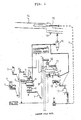
- FIG. 1 illustrates schematically the equipment for producing the solid fuel and equipment for using the solid fuel.
- one batch of tatami waste A that has been weighed by a predetermined method is loaded into a crusher 1 and crushed to obtain a crushed material in which the ratio of a crushed material having a length equal to or less than 5 cm is equal to or more than 80 wt.%.
- the obtained crushed material of the tatami waste A is transported by a conveyor 2.
- an organic powder toner, heavy oil ash
- a mixture of the two components is stored in a hopper 4.
- the crushed material (about 200 kg) of one batch of tatami waste A that is stored in the hopper 4 is loaded together with one batch of oil mud (heavy oil sludge about 200 kg) X into a mixing apparatus (Eirich Mixer, manufactured by Eirich Co.), and stirring and mixing are performed within the predetermined interval (about 4 min).
- a mixing apparatus Eirich Mixer, manufactured by Eirich Co.
- the predetermined amount (about 20 m 3 /min) of air is introduced into the mixing apparatus 5 and the mixing operation is performed, while diluting the combustible gases volatilized from the mixture to a concentration at which neither explosion nor inflammation thereof occurs.
- a combustible gas detector 6 is installed in the mixing apparatus 5 and an operation control panel 7 is provided such that when a concentration of combustible gases above a predetermined level is detected, control is performed to interrupt immediately the mixing operation and introduce CO 2 gas into the mixing apparatus 5.
- the oil mud X is absorbed by the solid material such as the crushed material of tatami waste A mixed therewith and solid fuel is obtained.
- the solid fuel Y discharged from the mixing apparatus 5 is disintegrated in a disintegrator 8 installed downstream of the mixing apparatus 5 and the crushed solid fuel is transported upward by a conveyor 9. Foreign matter is removed in a drum magnetic separator 10, the particle size is adjusted with a trommel 11, and the solid fuel is stored in a storage tank 12.
- the predetermined amount (maximum about 30 m 3 /min) of air is introduced into the storage tank 12 and stored therein, while the combustible gases generated from the solid fuel Y is being diluted to a concentration at which neither explosion nor inflammation thereof occurs.
- the storage tank 12 is provided with a combustible gas detector 6 and the operation control panel 7 is connected so that when a concentration of combustible gases above a predetermined level is detected, control is performed to introduce CO 2 gas into the storage tank 12.
- the solid fuel Y that is stored in such a state is weighed with a weighing machine 13, pumped by air as a replacement for a finely powdered coal that is the main fuel of a cement kiln 14, or together with the finely powdered coal, toward a burner 15, and loaded into the cement kiln 14 from the fuel injection nozzle of the burner 15.
- the solid fuel Y loaded into the cement kiln 14 is completely oombusted by the flame from the burner 15 within a short period before reaching the furnace bottom, and the combustion residue of solid fuel becomes a clinker component. Further, the air that has been used for diluting the combustible gases discharged from the mixing apparatus 5 is guided together with the air that has been used for diluting the combustible gases discharged from the storage tank 12 to a clinker cooler 17 via a bag filter 16. This air is used for cooling the clinker and also as air for combustion in the cement kiln 14.
- the air used for diluting the combustible gases is used as air for combustion. Therefore, effluent gases from handling apparatuses such as mixing apparatus and storage apparatus can be treated safely and effectively. Further, the caloric value of combustible gases can be used effectively.
Landscapes
- Engineering & Computer Science (AREA)
- Mechanical Engineering (AREA)
- General Engineering & Computer Science (AREA)
- Environmental & Geological Engineering (AREA)
- Chemical & Material Sciences (AREA)
- Combustion & Propulsion (AREA)
- Oil, Petroleum & Natural Gas (AREA)
- Life Sciences & Earth Sciences (AREA)
- Sustainable Development (AREA)
- Sustainable Energy (AREA)
- Solid Fuels And Fuel-Associated Substances (AREA)
- Treatment Of Sludge (AREA)
Applications Claiming Priority (2)
| Application Number | Priority Date | Filing Date | Title |
|---|---|---|---|
| JP2006055783 | 2006-03-02 | ||
| PCT/JP2007/054122 WO2007100120A1 (fr) | 2006-03-02 | 2007-02-26 | Procede de manipulation d'une substance a partir de laquelle se volatilise un gaz combustible, procedes de production, de stockage et d'utilisation d'un combustible solide et appareil utilisant un combustible solide |
Publications (1)
| Publication Number | Publication Date |
|---|---|
| EP1990577A1 true EP1990577A1 (fr) | 2008-11-12 |
Family
ID=38459212
Family Applications (1)
| Application Number | Title | Priority Date | Filing Date |
|---|---|---|---|
| EP07737733A Withdrawn EP1990577A1 (fr) | 2006-03-02 | 2007-02-26 | Procede de manipulation d'une substance a partir de laquelle se volatilise un gaz combustible, procedes de production, de stockage et d'utilisation d'un combustible solide et appareil utilisant un combustible solide |
Country Status (6)
| Country | Link |
|---|---|
| US (1) | US8453584B2 (fr) |
| EP (1) | EP1990577A1 (fr) |
| JP (1) | JP4913125B2 (fr) |
| KR (1) | KR101386731B1 (fr) |
| CN (1) | CN101395427B (fr) |
| WO (1) | WO2007100120A1 (fr) |
Families Citing this family (21)
| Publication number | Priority date | Publication date | Assignee | Title |
|---|---|---|---|---|
| KR101386731B1 (ko) * | 2006-03-02 | 2014-04-17 | 다이헤이요 세멘토 가부시키가이샤 | 가연성 가스가 휘발하는 물질의 취급 방법 |
| JP5179037B2 (ja) * | 2006-10-05 | 2013-04-10 | 太平洋セメント株式会社 | 水素発生油泥の混合方法および固体燃料の製造方法 |
| JP5155088B2 (ja) * | 2008-10-06 | 2013-02-27 | 太平洋セメント株式会社 | フロン或いはフロン類似物質を含有する合成樹脂発泡体の処理方法 |
| JP5155087B2 (ja) * | 2008-10-06 | 2013-02-27 | 太平洋セメント株式会社 | フロン或いはフロン類似物質を含有する合成樹脂発泡体の処理方法 |
| JP2010270244A (ja) * | 2009-05-22 | 2010-12-02 | Toa Oil Kogyosho:Kk | 固形燃料の製造システム |
| JP2011093991A (ja) * | 2009-10-28 | 2011-05-12 | Taiheiyo Cement Corp | 低引火点廃油の処理方法および固体燃料 |
| JP5755408B2 (ja) * | 2009-12-07 | 2015-07-29 | 太平洋セメント株式会社 | 固体燃料の製造方法 |
| JP5758083B2 (ja) * | 2010-03-25 | 2015-08-05 | 太平洋セメント株式会社 | 廃油系固体燃料の使用方法 |
| JP5794662B2 (ja) * | 2011-01-13 | 2015-10-14 | 新日鉄住金エンジニアリング株式会社 | 廃棄物溶融処理方法 |
| US9089882B2 (en) | 2011-10-21 | 2015-07-28 | Gregory Boltus | Self-limiting vacuum nozzle and methods for using same |
| JP5956598B2 (ja) | 2011-11-10 | 2016-07-27 | サウジ アラビアン オイル カンパニー | 自己圧密コンクリートを生成するための重油灰の利用 |
| CN104624254B (zh) * | 2013-11-08 | 2017-01-25 | 中核四○四有限公司 | 一种熔盐萃取样品的贮存专用装置 |
| RU2548706C1 (ru) * | 2014-01-20 | 2015-04-20 | Общество с ограниченной ответственностью "ТОХИЛ" | Способ подготовки и сжигания угольного топлива при растопке пылеугольного котла (варианты) |
| US9700186B2 (en) | 2014-01-30 | 2017-07-11 | Vista Outdoor Operations Llc | Portable vacuuming device for collecting and neutralizing flammable residue |
| JP6413894B2 (ja) * | 2015-03-31 | 2018-10-31 | 住友大阪セメント株式会社 | セメント焼成用固体燃料の製造方法及び製造装置 |
| WO2018135660A1 (fr) * | 2017-01-23 | 2018-07-26 | 株式会社Wind-Smile | Procédé et système de production de combustible solide, et combustible solide |
| JP6895057B2 (ja) * | 2017-03-30 | 2021-06-30 | 宇部興産株式会社 | セメントクリンカの製造方法及びセメントの製造方法 |
| CN111282973B (zh) * | 2020-03-20 | 2021-02-19 | 上海道简机电科技有限公司 | 一种全封闭废弃冰箱压缩机回收自动化拆解生产线 |
| JP7467383B2 (ja) * | 2021-03-26 | 2024-04-15 | 株式会社御池鐵工所 | バイオマス燃料用燃焼炉及びボイラシステム並びにバイオマス燃料の燃焼方法 |
| JP7709343B2 (ja) * | 2021-09-03 | 2025-07-16 | Ube三菱セメント株式会社 | セメントクリンカの製造方法、及びセメントクリンカの製造システム |
| JP2024041164A (ja) * | 2022-09-14 | 2024-03-27 | 株式会社トクヤマ | セメントクリンカの製造方法及び製造設備 |
Family Cites Families (33)
| Publication number | Priority date | Publication date | Assignee | Title |
|---|---|---|---|---|
| US1781934A (en) * | 1925-06-08 | 1930-11-18 | Frederick T Snyder | Process of distilling material and cracking oil |
| US1861452A (en) * | 1927-12-05 | 1932-06-07 | U G L Contracting Company | Process of producing coal gas |
| US1954352A (en) * | 1932-03-14 | 1934-04-10 | Milwaukee Electric Railway And | Apparatus for treating pulverized fuel such as coal and the like |
| US2412879A (en) * | 1941-05-31 | 1946-12-17 | Standard Oil Dev Co | Chemical process |
| US3984217A (en) * | 1975-02-14 | 1976-10-05 | American Air Filter Company, Inc. | Wet gas cleaning system |
| JPS5439401A (en) | 1977-09-05 | 1979-03-26 | Masao Kobayashi | Production of solid fuels |
| DE2913666C2 (de) * | 1979-04-05 | 1986-01-02 | Carl Still Gmbh & Co Kg, 4350 Recklinghausen | Verfahren zur Herstellung von Hüttenformkoks |
| US4528917A (en) * | 1983-07-05 | 1985-07-16 | Northwest Iron Fireman, Inc. | Solid fuel burner |
| AU586494B2 (en) * | 1985-06-28 | 1989-07-13 | Aluminum Company Of America | Removing volatile contaminants from scrap metal |
| JPH0665795B2 (ja) | 1988-12-08 | 1994-08-24 | 新王子製紙株式会社 | クラフトパルプ工場の臭気性ガス処理方法 |
| US5174067A (en) * | 1990-10-19 | 1992-12-29 | Shin-Etsu Handotai Co., Ltd. | Automatic wafer lapping apparatus |
| US5117771A (en) * | 1991-08-23 | 1992-06-02 | Vanguard Environmental, Inc. | Method and apparatus to decontaminate soil |
| US5259358A (en) * | 1992-07-14 | 1993-11-09 | Gas Research Institute | Air-fuel ratio control system for catalytic engine exhaust emission control |
| US5250080A (en) * | 1992-10-13 | 1993-10-05 | Corpoven, S.A. | Process for manufacturing a solid fuel |
| US5937652A (en) * | 1992-11-16 | 1999-08-17 | Abdelmalek; Fawzy T. | Process for coal or biomass fuel gasification by carbon dioxide extracted from a boiler flue gas stream |
| US6752581B1 (en) * | 1994-06-10 | 2004-06-22 | Johnson & Johnson Vision Care, Inc. | Apparatus for removing and transporting articles from molds |
| US5720165A (en) * | 1995-09-21 | 1998-02-24 | Bioten Gp | System for burning biomass to produce hot gas |
| US5728271A (en) * | 1996-05-20 | 1998-03-17 | Rti Resource Transforms International Ltd. | Energy efficient liquefaction of biomaterials by thermolysis |
| DE19722408C1 (de) * | 1997-05-28 | 1999-03-25 | Singulus Technologies Ag | Vorrichtung und Verfahren zum getrennten Transportieren von Substraten |
| US5910454A (en) * | 1998-05-29 | 1999-06-08 | Sprules; Rodney K. | Coffee-based solid fuel composition |
| US6553924B2 (en) * | 1998-10-19 | 2003-04-29 | Eco/Technologies, Llc | Co-combustion of waste sludge in municipal waste combustors and other furnaces |
| US6145599A (en) * | 1999-05-22 | 2000-11-14 | Mumme; Christian F. | Anti-combustion safeguard for confined combustibles |
| US6245390B1 (en) * | 1999-09-10 | 2001-06-12 | Viatcheslav Baranovski | High-velocity thermal spray apparatus and method of forming materials |
| US6973883B1 (en) * | 2001-03-22 | 2005-12-13 | The Texas A&M University System | Reburn system with feedlot biomass |
| JP2002323213A (ja) | 2001-04-26 | 2002-11-08 | Nippon Steel Corp | 含油スラッジの焼却方法 |
| US6832485B2 (en) * | 2001-11-26 | 2004-12-21 | Ormat Industries Ltd. | Method of and apparatus for producing power using a reformer and gas turbine unit |
| US6726888B2 (en) * | 2002-01-25 | 2004-04-27 | General Electric Company | Method to decrease emissions of nitrogen oxide and mercury |
| JP3559274B2 (ja) * | 2002-03-22 | 2004-08-25 | 太平洋セメント株式会社 | セメント混和材 |
| KR100842685B1 (ko) | 2002-03-22 | 2008-07-01 | 다이헤이요우 세멘토 가부시키가이샤 | 시멘트 혼화재 |
| US6887389B2 (en) * | 2002-10-23 | 2005-05-03 | Wendell Judd | Method and apparatus for recycling sewage sludge utilizing spent water-softener lime |
| JP4306469B2 (ja) | 2004-01-23 | 2009-08-05 | 株式会社Ihi | 密閉式廃棄物焼却処理設備の不活性ガス封入方法及び装置 |
| KR101386731B1 (ko) * | 2006-03-02 | 2014-04-17 | 다이헤이요 세멘토 가부시키가이샤 | 가연성 가스가 휘발하는 물질의 취급 방법 |
| US8695514B2 (en) * | 2009-05-14 | 2014-04-15 | Alstom Technology Ltd. | Gas leakage reduction system |
-
2007
- 2007-02-26 KR KR1020087021378A patent/KR101386731B1/ko not_active Expired - Fee Related
- 2007-02-26 WO PCT/JP2007/054122 patent/WO2007100120A1/fr not_active Ceased
- 2007-02-26 JP JP2008502879A patent/JP4913125B2/ja active Active
- 2007-02-26 CN CN200780007511.4A patent/CN101395427B/zh not_active Expired - Fee Related
- 2007-02-26 US US12/224,494 patent/US8453584B2/en not_active Expired - Fee Related
- 2007-02-26 EP EP07737733A patent/EP1990577A1/fr not_active Withdrawn
Non-Patent Citations (1)
| Title |
|---|
| See references of WO2007100120A1 * |
Also Published As
| Publication number | Publication date |
|---|---|
| CN101395427B (zh) | 2015-06-17 |
| JP4913125B2 (ja) | 2012-04-11 |
| WO2007100120A1 (fr) | 2007-09-07 |
| US20090031932A1 (en) | 2009-02-05 |
| KR20080106216A (ko) | 2008-12-04 |
| JPWO2007100120A1 (ja) | 2009-07-23 |
| KR101386731B1 (ko) | 2014-04-17 |
| CN101395427A (zh) | 2009-03-25 |
| US8453584B2 (en) | 2013-06-04 |
Similar Documents
| Publication | Publication Date | Title |
|---|---|---|
| US8453584B2 (en) | Method for handling substance from which combustible gas volatilizes, method for producing solid fuel, method for storing solid fuel, method for using solid fuel, and apparatus for using solid fuel | |
| KR101073780B1 (ko) | 저등급탄의 개량장치, 및 유동층연소로 석탄재를 이용한 순환유동층 발전소 전용 저등급탄의 개량방법 | |
| KR100665613B1 (ko) | 연소장치 내에서의 슬러지의 동시연소를 위한 장치 및 방법 | |
| JP5188716B2 (ja) | 固体燃料の製造方法 | |
| JP4319991B2 (ja) | 燃料及びその使用方法 | |
| JP2006169376A (ja) | 燃料及びその使用方法 | |
| US5269234A (en) | Method for processing solid, Hazardous waste material for use as a fuel | |
| CA1305440C (fr) | Methode et appareil de traitement de boues de petrole brut et de matieres analogues | |
| JP5110700B2 (ja) | 可燃性廃棄物の燃料化システム及び燃料化方法 | |
| JP5456341B2 (ja) | 廃油系固体燃料の製造方法及び該廃油系固体燃料の利用方法 | |
| JP5456342B2 (ja) | 廃油系固体燃料の製造方法及び該廃油系固体燃料の利用方法 | |
| JP5179037B2 (ja) | 水素発生油泥の混合方法および固体燃料の製造方法 | |
| JP5110699B2 (ja) | 可燃性廃棄物の燃料化システム及び燃料化方法 | |
| JP5925542B2 (ja) | 廃トナーの燃料化方法 | |
| JP2008169358A (ja) | 固体燃料 | |
| JP2009235144A (ja) | 廃油系固体燃料の製造方法及び該廃油系固体燃料の利用方法 | |
| JP5179038B2 (ja) | 水素発生油泥の処理方法及び固体燃料 | |
| JP2011093991A (ja) | 低引火点廃油の処理方法および固体燃料 | |
| JP5864060B2 (ja) | 固結性を有する可燃性廃液の燃料化方法 | |
| JP2657735B2 (ja) | 流動床燃焼装置への燃焼物の投入方法及び装置 | |
| JP4727454B2 (ja) | 廃畳の計量方法および固体燃料の製造方法 | |
| JPH10287890A (ja) | 粉体固形ハイブリッド燃料及びその製造方法並びにその燃焼方法 | |
| JP2001087740A (ja) | 粒状物質、その製造方法、及びその利用方法 | |
| JP5191749B2 (ja) | 固体燃料の使用方法 | |
| JP5029453B2 (ja) | 埋立灰の輸送方法 |
Legal Events
| Date | Code | Title | Description |
|---|---|---|---|
| PUAI | Public reference made under article 153(3) epc to a published international application that has entered the european phase |
Free format text: ORIGINAL CODE: 0009012 |
|
| 17P | Request for examination filed |
Effective date: 20080924 |
|
| AK | Designated contracting states |
Kind code of ref document: A1 Designated state(s): DE ES FR |
|
| DAX | Request for extension of the european patent (deleted) | ||
| RBV | Designated contracting states (corrected) |
Designated state(s): DE ES FR |
|
| STAA | Information on the status of an ep patent application or granted ep patent |
Free format text: STATUS: THE APPLICATION HAS BEEN WITHDRAWN |
|
| 18W | Application withdrawn |
Effective date: 20091208 |