EP1991020A1 - Terminal de communication radio, procede d'ajustement de fonction de transmission et programme de commande de fonction de transmission utilisee dans le terminal de communication radio - Google Patents
Terminal de communication radio, procede d'ajustement de fonction de transmission et programme de commande de fonction de transmission utilisee dans le terminal de communication radio Download PDFInfo
- Publication number
- EP1991020A1 EP1991020A1 EP07713507A EP07713507A EP1991020A1 EP 1991020 A1 EP1991020 A1 EP 1991020A1 EP 07713507 A EP07713507 A EP 07713507A EP 07713507 A EP07713507 A EP 07713507A EP 1991020 A1 EP1991020 A1 EP 1991020A1
- Authority
- EP
- European Patent Office
- Prior art keywords
- individual channel
- channel establishment
- mobile communication
- completion message
- communication network
- Prior art date
- Legal status (The legal status is an assumption and is not a legal conclusion. Google has not performed a legal analysis and makes no representation as to the accuracy of the status listed.)
- Granted
Links
Images






Classifications
-
- H—ELECTRICITY
- H04—ELECTRIC COMMUNICATION TECHNIQUE
- H04W—WIRELESS COMMUNICATION NETWORKS
- H04W76/00—Connection management
- H04W76/10—Connection setup
- H04W76/11—Allocation or use of connection identifiers
-
- H—ELECTRICITY
- H04—ELECTRIC COMMUNICATION TECHNIQUE
- H04L—TRANSMISSION OF DIGITAL INFORMATION, e.g. TELEGRAPHIC COMMUNICATION
- H04L1/00—Arrangements for detecting or preventing errors in the information received
-
- H—ELECTRICITY
- H04—ELECTRIC COMMUNICATION TECHNIQUE
- H04W—WIRELESS COMMUNICATION NETWORKS
- H04W52/00—Power management, e.g. Transmission Power Control [TPC] or power classes
- H04W52/04—Transmission power control [TPC]
- H04W52/06—TPC algorithms
- H04W52/14—Separate analysis of uplink or downlink
- H04W52/146—Uplink power control
-
- H—ELECTRICITY
- H04—ELECTRIC COMMUNICATION TECHNIQUE
- H04W—WIRELESS COMMUNICATION NETWORKS
- H04W52/00—Power management, e.g. Transmission Power Control [TPC] or power classes
- H04W52/04—Transmission power control [TPC]
- H04W52/18—TPC being performed according to specific parameters
- H04W52/22—TPC being performed according to specific parameters taking into account previous information or commands
- H04W52/221—TPC being performed according to specific parameters taking into account previous information or commands using past power control commands
-
- H—ELECTRICITY
- H04—ELECTRIC COMMUNICATION TECHNIQUE
- H04W—WIRELESS COMMUNICATION NETWORKS
- H04W52/00—Power management, e.g. Transmission Power Control [TPC] or power classes
- H04W52/04—Transmission power control [TPC]
- H04W52/38—TPC being performed in particular situations
- H04W52/48—TPC being performed in particular situations during retransmission after error or non-acknowledgment
-
- H—ELECTRICITY
- H04—ELECTRIC COMMUNICATION TECHNIQUE
- H04W—WIRELESS COMMUNICATION NETWORKS
- H04W52/00—Power management, e.g. Transmission Power Control [TPC] or power classes
- H04W52/04—Transmission power control [TPC]
- H04W52/38—TPC being performed in particular situations
- H04W52/50—TPC being performed in particular situations at the moment of starting communication in a multiple access environment
-
- H—ELECTRICITY
- H04—ELECTRIC COMMUNICATION TECHNIQUE
- H04W—WIRELESS COMMUNICATION NETWORKS
- H04W56/00—Synchronisation arrangements
- H04W56/004—Synchronisation arrangements compensating for timing error of reception due to propagation delay
- H04W56/005—Synchronisation arrangements compensating for timing error of reception due to propagation delay compensating for timing error by adjustment in the receiver
-
- H—ELECTRICITY
- H04—ELECTRIC COMMUNICATION TECHNIQUE
- H04W—WIRELESS COMMUNICATION NETWORKS
- H04W72/00—Local resource management
- H04W72/20—Control channels or signalling for resource management
- H04W72/23—Control channels or signalling for resource management in the downlink direction of a wireless link, i.e. towards a terminal
Definitions
- This invention relates to a wireless communication terminal, a transmission function adjusting method and transmission function control program for use in the wireless communication terminal, and, more particularly, to a wireless communication terminal suitably applicable to cell phones based on the 3GPP (3 rd Generation Partnership Project) standard for corresponding to the specification of third generation mobile communication systems, a transmission function adjusting method and transmission function control program for use in the wireless communication terminal.
- 3GPP 3 rd Generation Partnership Project
- a communication system using a system such as W-CDMA Wideband Code Division Multiple Access
- W-CDMA Wideband Code Division Multiple Access
- This provides services, such as audio communication, packet communication and the like, from a mobile communication network, to wireless communication terminals, such as cell phones and the like.
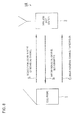
- this kind of communication system is formed of a mobile communication network NW, having a cell phone 1 and a wireless base station 2 which is wirelessly connected to the cell phone 1, as shown in Fig. 8 .
- the mobile communication network NW is formed of the above-described wireless base station 2, a non-illustrative mobile communication control station, visited network mobile communication switching station, gateway mobile communication switching station, and general telephone line, etc.
- a user who uses the cell phone 1 transmits an individual channel establishment request message from the cell phone 1 to the mobile communication network NW, when he/she wants to get the service, such as audio communication, packet communication, or the like (Phase A).
- the mobile communication network NN informs the cell phone 1 of a plurality of set parameters (individual channel establishment parameters) for establishing an individual channel, correspondingly to an individual channel establishment request message A transmitted from the cell phone 1 (Phase B).
- connection is established in the individual channel so as to begin transmission of a predetermined message, using the informed individual channel establishment parameter (Phase C).
- the user of the cell phone 1 is provided with the services, such as the audio communication, packet communication, and the like.
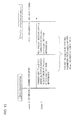
- Fig. 9 is a diagram showing an audio transmission sequence of a layer (hierarchy) level 3 based on 3GPP communication specification, TS25.331, for communication between the cell phone 1 and the mobile communication network NW shown in Fig. 8 .
- control data such as individual identification (measurement Control) and authentication (security Mode Command, security Mode Complete) of the cell phone 1 and the like are transmitted between the cell phone 1 and the mobile communication network NW.
- the second individual channel is established. This second individual channel is maintained while providing the audio communication service, so as to establish the audio communication service.
- the cell phone 1 In the establishment of the first individual channel, the cell phone 1 is informed of a plurality of set parameters for establishing the first individual channel from the mobile communication network NW, using an rrc (radio resource control, wireless resource control) Connection Setup message [1].
- rrc radio resource control, wireless resource control
- the cell phone 1 In the establishment of the second individual channel, the cell phone 1 is informed of a plurality of set parameters for establishing the second individual channel using a radio Bearer Setup message [3] from the mobile communication network NW.
- set parameters correspond to a transmission reception individual channel for audio or packet data.
- transmission with the second individual channel begins, and the second individual channel is established, using the informed plurality of set parameters.
- the cell phone 1 is informed of transmission timing from the mobile communication network NW with the second individual channel, using the already-established first individual channel.
- Fig. 10 is a sequence diagram for explaining operations of the cell phone 1 in the layer level 1 in the term from the deception of the Setup message [1] to transmission of the rrc Connection Setup complete message [2] in Fig. 9 .
- the cell phone 1 sets the set parameters for establishing the first individual channel and included in the received rrc Connection Setup message [1] from the mobile communication network NW, into the layer (Layer) 1.
- the timing for data transmission from the cell phone 1 with the first individual channel is based on the parameters, [PC (Packet Combining) preamble (0 to 70 msec) and SRB (Source Routing Bridging) delay (0 to 70 msec)], in the rrc Connection Setup message, thus is obtained with these two parameters [PC Preamble + SRB delay].
- PC Packet Combining
- SRB Source Routing Bridging
- the time that is obtained based on the parameters [PC Preamble + SRB delay] is the time that is required when receiving data transmitted from the cell phone 1 with the first individual channel on the side of the mobile communication network NW.
- the sub station performs frame synchronization based on a downstream reference signal transmitted from the main station, and transmits an upstream control signal based on this frame synchronization.
- the main station obtains a propagation delay time in a wireless section from the relationship between a downstream control signal and the upstream control signal.
- the sub station transmits an upstream data signal in synchronization with a frame synchronization signal, and the main station receives the upstream data signal at timing in accordance with the propagation delay time.
- the sub station performs frame synchronization based on the upstream reference signal transmitted from the main station, and transmits an upstream control signal based on this frame synchronization.
- the main station obtains the propagation delay time in a wireless section from the relationship between the downstream control signal and the upstream control signal, and gives information about the propagation delay time to the sub station through a downstream channel.
- the sub station transmits an upstream data signal at timing in accordance with the propagation delay time. Then, the main station receives the upstream data signal.
- a mobile station controls transmission power of an upstream individual channel based only on transmission power control information included in a downstream individual channel from a packet transmission base station.
- the cell phone 1 may perform data transmission with the first individual channel.
- Patent document 1 has a different configuration from this invention, because the system is to obtain the propagation delay time in the wireless section using the main station.
- the communication control method disclosed in Patent document 2 differs from the configuration of this invention. According to the method, transmission power of the upstream individual channel is controlled based only on transmission power control information included in the downstream individual channel from the packet transmission base station.
- An object thereof is to provide a wireless communication terminal for reducing the load on a mobile communication network and saving upstream wireless communication resources, a transmission function adjusting method and transmission function control program for use in the wireless communication terminal.
- a wireless communication terminal which transmits an individual channel establishment request message to a mobile communication network, establishes an individual, channel using an individual channel establishment parameter informed in response to the individual channel establishment request message from the mobile communication network, and transmits an individual channel establishment completion message to the mobile communication network based on transmission start timing included in the individual channel establishment parameter, the terminal comprising a transmission start timing adjusting unit which retransmits the individual channel establishment completion message and stores information representing that this retransmission has been done, when a retransmission request message for the individual channel establishment completion message has been transmitted from the mobile communication network, and adds a predetermined delay time to the transmission start timing, when to transmit a next individual channel establishment completion message.
- the transmission start timing adjusting unit includes a storage unit which stores the information representing that the individual channel establishment completion message has been retransmitted, and a delay time setting unit which adds the delay time to the transmission start timing, when to transmit the next individual channel establishment completion message, if the information representing that the individual channel establishment completion message has been retransmitted is stored in the storage unit.
- the delay time setting unit is configured to increate the delay time, correspondingly to number of times the individual channel establishment completion message stored in the storage unit has been retransmitted.
- a wireless communication terminal which transmits an individual Channel establishment request message to a mobile communication network, establishes an individual channel using an individual channel establishment parameter informed in response to the individual channel establishment request message from the mobile communication network, and transmits an individual channel establishment completion message to the mobile communication network based on a transmission power level included in the individual channel establishment parameter, and the terminal comprising a transmission power level adjusting unit which retransmits the individual channel establishment completion message and stores information representing that this retransmission has been done, when a retransmission request message for the individual channel establishment completion message has been transmitted from the mobile communication network, and adds a predetermined additional power level to the transmission power level, when to transmit a next individual channel establishment completion message.
- a transmission function adjusting method for use in a wireless communication terminal which transmits an individual channel establishment request message to a mobile communication network, establishes an individual channel using an individual channel establishment parameter informed in response to the individual channel establishment request message from the mobile communication network, and transmits an individual channel establishment completion message to the mobile communication network based on transmission start timing included in the individual channel establishment parameter, the method comprising: retransmitting the individual channel establishment completion message and storing information representing that this retransmission has been done, when a retransmission request message for the individual channel establishment completion message has been transmitted from the mobile communication network, and adding a predetermined delay time to the transmission start timing, when to transmit a next individual channel establishment completion message.
- the transmission function adjusting method according to claim 5 comprises increasing the delay time, correspondingly to number of times the stored individual channel establishment completion message has been retransmitted.
- a transmission function adjusting method for use in a wireless communication terminal which transmits an individual channel establishment request message to a mobile communication network, establishes an individual channel using an individual channel establishment parameter informed from the mobile communication network, and transmits an individual channel establishment completion message to the mobile communication network based on a transmission power level included in the individual channel establishment parameter, the method comprising: retransmitting the individual channel establishment completion message and storing information representing that this retransmission has been done, when a retransmission request message for the individual channel establishment completion message has been transmitted from the mobile communication network; and adding a predetermined additional power level to the transmission power level, when to transmits a next individual channel establishment completion message.
- a computer readable transmission function control program for controlling a computer to function as the transmission start timing adjusting unit according to claim 1 or 2.
- a computer readable transmission function control program for controlling a computer to function as the transmission power level adjusting unit according to claim 4.
- the transmission start timing adjusting unit retransmits the individual channel establishment completion message and stores information representing that the retransmission has been performed.
- a predetermined delay time is added to the transmission start timing. This results in suppressing the retransmission of the individual channel establishment completion message, after that.
- unnecessary retransmission of the upstream message can be reduced, and data processing in the mobile communication network can be reduced, thus reducing the load on the mobile communication network and saving the upstream wireless resources.
- the delay time setting unit increases the delay time correspondingly to the number of times the individual channel establishment completion message that is stored in the storage unit is retransmitted.
- the transmission power level adjusting unit retransmits the individual channel establishment completion message and stores information representing that the retransmission has been performed.
- a predetermined additional power level is added to the transmission power level.
- a wireless communication terminal which determines that an inappropriate parameter has been received based on a retransmission request message and appropriately adjust transmission timing through an individual data channel or its transmission power, upon notification of an inappropriate individual channel establishment parameter from a mobile communication network, and a transmission function adjusting method and transmission function control program for use in the wireless communication terminal.
- Fig. 1 is a block diagram showing an electrical configuration of main parts of a wireless communication terminal as a first embodiment of this invention.
- the wireless communication terminal of this embodiment is a cell phone 10, and includes a wireless unit 11, an antenna 11a, a base-band unit 12, a controller 13, a display operation unit 14, a ROM (Read Only Memory) 15, and a RAM (Random Access Memory) 16.
- the wireless unit 11 is wirelessly connected to a wireless base station 20 through the antenna 11a, transmits a signal input from the base-band unit 12 to the wireless base station 20 using an electric wave W based on the control of the controller 13, searches for and receives a signal transmitted from the wireless base station 20, and transmits it to the base-band unit 12.
- the wireless base station 20 is connected to a general telephone line network, through a non-illustrative mobile communication control station, visited network mobile communication switching station and gateway mobile communication switching station.
- a mobile communication network NW is composed of the wireless base station 20, the mobile communication control station, the visited network mobile communication switching station, the gateway mobile communication switching station and the general telephone line network.
- the base-band unit 12 executes base-band processing for data specified by the controller 13 and then outputs it to the wireless unit 11, and executes base-band processing for a signal input by the wireless unit 11.
- the display operation unit 14 is formed of, for example, a liquid crystal display unit, a key switch and the like.
- the unit 14 displays each data for the user, and transmits a signal corresponding to the operation contents input by the user to the controller 13, based on the control of the controller 13.
- the controller 13 has a CPU (Central Processing unit) 13a which controls the cell phone 10 entirely.
- the ROM 15 stores a transmission function control program for operating the CPU 13a.
- This controller 13 transmits an individual channel establishment request message to the mobile communication network NW, establishes an individual channel using an individual channel establishment parameter which is informed in response to the individual channel establishment request message from the mobile communication network NW, and transmits an individual, channel establishment completion message to the mobile communication network NW based on transmission start timing included in the individual channel establishment parameter, based on the transmission function control program.
- the controller 13 retransmits the individual channel establishment completion message, and stores information representing this retransmission in the RAM 16.
- the controller 13 When to transmit a next individual channel establishment completion message, if information representing that the individual channel establishment completion message has been retransmitted is stored in the RAM 16, it adds a predetermined delay time to the transmission start timing. This delay time is stored in the ROM 15.
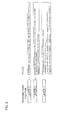
- Fig. 2 is a diagram showing processing functions by layers (hierarchy) included in the controller 13 of the cell phone 10.
- the layers are composed of layer 3, layer 2 and layer 1.
- an rrc Connection Setup message (individual channel establishment parameter, DPCH, Dedicated Physical Channel) transmitted from the mobile communication network NW is interpreted (i.e., demodulated), and the message is given to layer 2.
- layer 2 when establishing an individual channel at the time of the previous communication, determination is made as to whether retransmission of an rrc Connection Setup complete message (an individual channel establishment completion message) has been performed, and a parameter necessary for individual channel setting is informed to layer 1.
- the transmission begins along an individual channel (DPDCH, Dedicated Physical Data Channel) at timing (wait time) of parameters [PC Preamble + SRB delay].
- DPDCH Dedicated Physical Data Channel
- the transmission begins along the individual chancel (DPDCH) at timing of parameters [PC Preamble + SRB delay] + delay] time T1 (wait time), using the delay time T1 stored in the ROM 15.
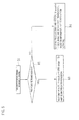
- Fig. 3 is a flowchart for explaining operations of the cell phone 10 having the processing functions shown in Fig. 2 .
- an individual channel establishment request message is transmitted to the mobile communication network NW, an individual channel is established using individual channel, establishment parameters informed in response to the individual channel establishment request message from the mobile communication network NW, and an individual channel establishment completion message is transmitted to the mobile communication network NW based on the transmission start timing included in the individual channel establishment parameters.
- the individual channel establishment completion message Upon transmission of a retransmission request message for the individual channel establishment completion message from the mobile communication network NW, the individual channel establishment completion message is retransmitted, and information representing that the retransmission has been done is stored. Upon transmission of a next individual channel establishment completion message, a predetermined delay time is added to the transmission start timing.
- step A1 an establishment request message for an individual channel is transmitted from the cell phone 10 to the mobile communication network NW.
- step A2 at the previous communication, determination is made as to whether retransmission of an rrc Connection Setup Complete (individual channel establishment completion message) has been performed at the establishment of the individual channel. When the retransmission has been performed (YES), it proceeds to step A3.
- step A3 the predetermined delay time T1 stored in the ROOM 15 is added thereto, and the transmission begins along the individual channel (DPDCH) at the timing of the parameters [PC Preamble + SRB delay] + delay time T1, at transmission timing along the individual channel.
- DPDCH individual channel
- the parameters [PC Preamble + SRB delay] + delay time T1 at transmission timing along the individual channel.
- step A2 when the retransmission is not performed (NO), it proceeds to step A4.
- step A4 transmission begins along the individual channel (DPDCH) at the timing of the parameters [PC Preamble + SRB delay] based on the notification from the mobile communication network NW.
- the individual channel establishment request message is transmitted to the mobile communication network NW from the cell phone 10, and the determination is made as to whether the individual channel establishment completion message has been retransmitted at the establishment of the individual channel, at the time of the previous communication.
- the predetermined delay time T1 is added to the transmission timing with the individual channel, and the transmission begins with the individual channel at the timing of the parameters [PC Preamble + SRB delay] + delay time T1.
- Fig. 4 is a diagram showing processing functions by layers included in the controller 13 of the cell phone 10 as the second embodiment of this invention.
- the controller 13 of this embodiment is configured to increase the delay time to be added to the transmission start timing correspondingly to an "n" number of times the retransmission has been performed, when information representing that the individual channel establishment completion message has been retransmitted is stored in the RAM 16.
- the delay time to be added to the transmission start timing is increased correspondingly to the information representing the number of times the individual channel establishment completion message stored in the RAM 16 has been retransmitted.
- step B3 the delay time to be added to the transmission start timing is increased correspondingly to the "n" number of times the individual channel establishment completion message has been retransmitted, and the transmission begins along the individual channel, (DPDCH) at the timing of the parameters [PC Preamble + SRB delay] + delay time Tn.
- step B4 the same operation as that of step A4 in Fig. 3 can be performed.
- Fig. 6 is a diagram showing processing functions by layers included in the controller 13 of the cell phone 10 as the third embodiment of this invention.
- the controller 13 of this embodiment is configured to adjust the transmission power level to an optimum value by adding a predetermined additional power level to the transmission power level, when transmitting a next individual channel establishment completion message, in the case where information representing that the individual channel establishment completion message has been retransmitted is stored in the RAM 16.
- This predetermined additional power level is stored in the ROM laze That is, as shown in Fig. 6 , in layer 1, if the individual channel establishment completion message is retransmitted in accordance with the determination from .layer 2, and if the parameters [PC Preamble + SRB delay] are not greater than a preset optimum value (Case 2), like the first embodiment, the transmission begins with the individual channel (DPDCH) at the timing (wait time) of the parameters [PC Preamble + SRB delay] + delay time T1, using the delay time T1 stored in the ROM 15.
- DPDCH individual channel
- T1 delay time
- the transmission is performed with the individual channel (DPDCH) with the initial transmission power which is equal to network setting value + additional power.
- the individual channel establishment request message is transmitted to the mobile communication network NW, the individual channel is established using the individual channel establishment parameter informed from the mobile communication network NW, and the individual channel establishment completion message is transmitted to the mobile communication network NW based on the transmission power level included in the individual channel establishment parameter.
- the individual channel establishment completion message When a retransmission request message for the individual channel establishment completion message is transmitted from the mobile communication network NW, the individual channel establishment completion message is retransmitted and information representing that the retransmission has been performed is stored. When a next individual channel establishment completion message is transmitted, a predetermined additional power level is added to the above-described transmission power level.
- Step C1 the same operations as those of step A1, step A2 and step A4 in Fig. 3 are performed in Step C1, step C2 and step C5. If the individual channel establishment completion message is retransmitted in Step C3, and the parameters [PC Preamble + SRB delay] are not greater than the preset optimum value T0 (NO), it proceeds to step C6. Then, like the first embodiment, the transmission begins with the individual channel (DPDCH) at the timing of the parameters [PC Preamble + SRB delay] + delay time T1, using the delay time T1 stored in the ROM 15.
- DPDCH individual channel
- step C4 the transmission is performed with the initial transmission power along the individual channel (DPDCH) which is equal to network setting value + additional power.
- the wireless communication terminal 10 is a cell phone, but may also be a PDA (Personal Digital Assistants), a fixed wireless terminal or the like.
- the delay time Tn is not limited to T1 ⁇ the number of times of the retransmission, and is preferable as long as Tn>T1.
- the second embodiment and the third embodiment may be combined together. As a result of this, the retransmission of the individual channel establishment completion message can further be suppressed.
- This invention is applicable generally to wireless communication terminals, such as a cell phone, a PHS (Personal Handyphone System), a PDA and the like which are diligently connected to the mobile communication network NW and perform data transmission/reception with a participant's side, and is particularly effective when it is used in a point where deterioration occurs in the wireless communication environment with the wireless base station.
- wireless communication terminals such as a cell phone, a PHS (Personal Handyphone System), a PDA and the like which are diligently connected to the mobile communication network NW and perform data transmission/reception with a participant's side, and is particularly effective when it is used in a point where deterioration occurs in the wireless communication environment with the wireless base station.
Landscapes
- Engineering & Computer Science (AREA)
- Computer Networks & Wireless Communication (AREA)
- Signal Processing (AREA)
- Mobile Radio Communication Systems (AREA)
Applications Claiming Priority (2)
| Application Number | Priority Date | Filing Date | Title |
|---|---|---|---|
| JP2006055589 | 2006-03-01 | ||
| PCT/JP2007/000125 WO2007099701A1 (fr) | 2006-03-01 | 2007-02-23 | Terminal de communication radio, procede d'ajustement de fonction de transmission et programme de commande de fonction de transmission utilisee dans le terminal de communication radio |
Publications (3)
| Publication Number | Publication Date |
|---|---|
| EP1991020A1 true EP1991020A1 (fr) | 2008-11-12 |
| EP1991020A4 EP1991020A4 (fr) | 2012-11-21 |
| EP1991020B1 EP1991020B1 (fr) | 2015-04-15 |
Family
ID=38458822
Family Applications (1)
| Application Number | Title | Priority Date | Filing Date |
|---|---|---|---|
| EP07713507.7A Not-in-force EP1991020B1 (fr) | 2006-03-01 | 2007-02-23 | Terminal de communication radio, procede d'ajustement de fonction de transmission et programme de commande de fonction de transmission utilisee dans le terminal de communication radio |
Country Status (5)
| Country | Link |
|---|---|
| US (1) | US8213451B2 (fr) |
| EP (1) | EP1991020B1 (fr) |
| JP (1) | JP4935807B2 (fr) |
| CN (1) | CN101379859B (fr) |
| WO (1) | WO2007099701A1 (fr) |
Cited By (1)
| Publication number | Priority date | Publication date | Assignee | Title |
|---|---|---|---|---|
| WO2012083450A1 (fr) * | 2010-12-21 | 2012-06-28 | Research In Motion Limited | Procédures rach et niveau de puissance pour dispositifs mtc |
Families Citing this family (7)
| Publication number | Priority date | Publication date | Assignee | Title |
|---|---|---|---|---|
| JP5115186B2 (ja) * | 2007-12-27 | 2013-01-09 | 富士通株式会社 | 無線通信システムにおける制御方法 |
| US8000313B1 (en) * | 2008-08-15 | 2011-08-16 | Sprint Spectrum L.P. | Method and system for reducing communication session establishment latency |
| EP2684303A4 (fr) * | 2011-03-09 | 2014-12-31 | Intel Corp | Station de base et procédé de communication pour des communications entre machines |
| US9386584B2 (en) * | 2012-06-11 | 2016-07-05 | Qualcomm Incorporated | Inter-frame spacing duration for sub-1 gigahertz wireless networks |
| US9380539B2 (en) | 2014-07-01 | 2016-06-28 | Qualcomm Incorporated | Techniques for reducing transmission delays in multi-carrier wireless communications |
| JP6851952B2 (ja) * | 2017-10-24 | 2021-03-31 | 株式会社日立製作所 | データ収集装置及びデータ収集方法 |
| JP7712306B2 (ja) * | 2023-01-10 | 2025-07-23 | 日立ヴァンタラ株式会社 | 計算機システム及び輻輳回避方法 |
Family Cites Families (12)
| Publication number | Priority date | Publication date | Assignee | Title |
|---|---|---|---|---|
| JP2821430B2 (ja) * | 1996-06-20 | 1998-11-05 | 日本電気移動通信株式会社 | 無線通信機の送信電力自動制御方式 |
| JP3968191B2 (ja) | 1999-03-06 | 2007-08-29 | 松下電器産業株式会社 | 送受信装置 |
| KR100292951B1 (ko) * | 1999-03-25 | 2001-06-15 | 박종섭 | 이동통신 시스템에서 서비스 반경 확장 장치 및 방법 |
| JP2000115029A (ja) | 1999-09-17 | 2000-04-21 | Hitachi Ltd | スペクトラム拡散通信システム |
| JP4408185B2 (ja) | 2001-06-22 | 2010-02-03 | 富士フイルム株式会社 | 半導体レーザ装置 |
| KR100487245B1 (ko) * | 2001-11-28 | 2005-05-03 | 삼성전자주식회사 | 고속 순방향 패킷 접속 방식을 사용하는 이동 통신시스템에서압축 모드에 따른 전송 불능 구간을 최소화하는장치 및 방법 |
| JP4423836B2 (ja) | 2002-04-03 | 2010-03-03 | 日本電気株式会社 | セルラシステム、通信制御方法及び移動局 |
| US7668092B2 (en) * | 2002-11-21 | 2010-02-23 | Honeywell International Inc. | Data transmission system and method |
| US7801297B2 (en) * | 2003-11-20 | 2010-09-21 | Ntt Docomo, Inc. | Communication device and communication control method |
| US7430436B2 (en) * | 2004-03-17 | 2008-09-30 | Kyocera Corporation | Wireless communication device and transmission power control method of its connection request |
| JP2005277967A (ja) | 2004-03-25 | 2005-10-06 | Kyocera Corp | 無線通信装置及びその接続要求データの送信電力制御方法 |
| DE102004027811B4 (de) * | 2004-06-08 | 2012-08-30 | Infineon Technologies Ag | Kommunikationsanordnung, Teilnehmergerät, Steuervorrichtung, Verfahren zum Steuern eines Kommunikationssystems, Verfahren zum Steuern eines Teilnehmergeräts und Verfahren zum Steuern einer Steuervorrichtung |
-
2007
- 2007-02-23 CN CN2007800043753A patent/CN101379859B/zh not_active Expired - Fee Related
- 2007-02-23 JP JP2008502660A patent/JP4935807B2/ja not_active Expired - Fee Related
- 2007-02-23 EP EP07713507.7A patent/EP1991020B1/fr not_active Not-in-force
- 2007-02-23 WO PCT/JP2007/000125 patent/WO2007099701A1/fr not_active Ceased
- 2007-02-23 US US12/161,881 patent/US8213451B2/en not_active Expired - Fee Related
Cited By (2)
| Publication number | Priority date | Publication date | Assignee | Title |
|---|---|---|---|---|
| WO2012083450A1 (fr) * | 2010-12-21 | 2012-06-28 | Research In Motion Limited | Procédures rach et niveau de puissance pour dispositifs mtc |
| US9007994B2 (en) | 2010-12-21 | 2015-04-14 | Blackberry Limited | RACH procedures and power level for MTC devices |
Also Published As
| Publication number | Publication date |
|---|---|
| CN101379859B (zh) | 2013-10-23 |
| JPWO2007099701A1 (ja) | 2009-07-16 |
| CN101379859A (zh) | 2009-03-04 |
| JP4935807B2 (ja) | 2012-05-23 |
| WO2007099701A1 (fr) | 2007-09-07 |
| EP1991020B1 (fr) | 2015-04-15 |
| US8213451B2 (en) | 2012-07-03 |
| US20090036109A1 (en) | 2009-02-05 |
| EP1991020A4 (fr) | 2012-11-21 |
Similar Documents
| Publication | Publication Date | Title |
|---|---|---|
| US10512031B2 (en) | Signalling in mobile telecommunications | |
| US8213451B2 (en) | Wireless communication terminal, transmission function adjusting method and transmission function control program for use in wireless communication terminal | |
| EP2833601B1 (fr) | Transfert intercellulaire sans coupure entre différents réseaux assistés par un protocole d'application de bout en bout | |
| CN116491166B (zh) | 通信配置的方法和通信装置 | |
| CN111885640A (zh) | 一种控制数据传输方法、网络设备和存储介质 | |
| EP3952596B1 (fr) | Procédé et appareil de transmission d'informations | |
| US11805563B2 (en) | Wireless communication method and base station | |
| US8811978B2 (en) | Method and apparatus for sending measurement report messages from a wireless telecommunications device to a wireless telecommunications network | |
| EP3952564B1 (fr) | Procédé de communication dans un systeme d2d, dispositif de terminal et systeme d2d | |
| KR102838935B1 (ko) | 피어-투-페어 네트워크들에서의 액세스 로드 제어 | |
| US8190197B2 (en) | Portable telephone and communication mode setting method | |
| EP4229958A1 (fr) | Procédés et appareils pour indiquer un ensemble de ressources sur une liaison latérale nr | |
| CN116074847A (zh) | 一种信号传输方法及装置、终端设备 | |
| EP3902350B1 (fr) | Procédé de configuration de groupe de ressources, dispositif, et support d'informations | |
| US9648647B2 (en) | Base station and communication control method | |
| EP4255094B1 (fr) | Procédé et appareil de réinitialisation de configuration et dispositif de terminal | |
| CN112470518A (zh) | 一种数据传输方法、终端设备及网络设备 | |
| US20240244710A1 (en) | Method and apparatus for inactivity timer handling | |
| KR100735775B1 (ko) | 슬립모드 제어기능이 구비된 이동통신단말기시스템 및 그제어방법 | |
| AU2011218705B2 (en) | Method, user agent, application gateway and program for soft handoff across different networks assisted by an end-to-end application protocol |
Legal Events
| Date | Code | Title | Description |
|---|---|---|---|
| PUAI | Public reference made under article 153(3) epc to a published international application that has entered the european phase |
Free format text: ORIGINAL CODE: 0009012 |
|
| 17P | Request for examination filed |
Effective date: 20080716 |
|
| AK | Designated contracting states |
Kind code of ref document: A1 Designated state(s): DE FR GB IT |
|
| RBV | Designated contracting states (corrected) |
Designated state(s): DE FR GB IT |
|
| DAX | Request for extension of the european patent (deleted) | ||
| A4 | Supplementary search report drawn up and despatched |
Effective date: 20121024 |
|
| RIC1 | Information provided on ipc code assigned before grant |
Ipc: H04W 76/02 20090101AFI20121019BHEP |
|
| 17Q | First examination report despatched |
Effective date: 20121207 |
|
| REG | Reference to a national code |
Ref country code: DE Ref legal event code: R079 Ref document number: 602007041051 Country of ref document: DE Free format text: PREVIOUS MAIN CLASS: H04Q0007380000 Ipc: H04W0076020000 |
|
| GRAP | Despatch of communication of intention to grant a patent |
Free format text: ORIGINAL CODE: EPIDOSNIGR1 |
|
| RIC1 | Information provided on ipc code assigned before grant |
Ipc: H04W 52/48 20090101ALN20141014BHEP Ipc: H04W 52/50 20090101ALN20141014BHEP Ipc: H04W 56/00 20090101ALN20141014BHEP Ipc: H04W 52/14 20090101ALN20141014BHEP Ipc: H04W 72/04 20090101ALN20141014BHEP Ipc: H04W 76/02 20090101AFI20141014BHEP Ipc: H04W 52/22 20090101ALN20141014BHEP Ipc: H04L 1/00 20060101ALI20141014BHEP |
|
| INTG | Intention to grant announced |
Effective date: 20141104 |
|
| GRAS | Grant fee paid |
Free format text: ORIGINAL CODE: EPIDOSNIGR3 |
|
| GRAA | (expected) grant |
Free format text: ORIGINAL CODE: 0009210 |
|
| AK | Designated contracting states |
Kind code of ref document: B1 Designated state(s): DE FR GB IT |
|
| REG | Reference to a national code |
Ref country code: GB Ref legal event code: FG4D |
|
| REG | Reference to a national code |
Ref country code: DE Ref legal event code: R096 Ref document number: 602007041051 Country of ref document: DE Effective date: 20150528 |
|
| REG | Reference to a national code |
Ref country code: FR Ref legal event code: PLFP Year of fee payment: 10 |
|
| REG | Reference to a national code |
Ref country code: DE Ref legal event code: R097 Ref document number: 602007041051 Country of ref document: DE |
|
| PLBE | No opposition filed within time limit |
Free format text: ORIGINAL CODE: 0009261 |
|
| STAA | Information on the status of an ep patent application or granted ep patent |
Free format text: STATUS: NO OPPOSITION FILED WITHIN TIME LIMIT |
|
| 26N | No opposition filed |
Effective date: 20160118 |
|
| PG25 | Lapsed in a contracting state [announced via postgrant information from national office to epo] |
Ref country code: IT Free format text: LAPSE BECAUSE OF FAILURE TO SUBMIT A TRANSLATION OF THE DESCRIPTION OR TO PAY THE FEE WITHIN THE PRESCRIBED TIME-LIMIT Effective date: 20150415 |
|
| PGFP | Annual fee paid to national office [announced via postgrant information from national office to epo] |
Ref country code: FR Payment date: 20160108 Year of fee payment: 10 |
|
| REG | Reference to a national code |
Ref country code: DE Ref legal event code: R079 Ref document number: 602007041051 Country of ref document: DE Free format text: PREVIOUS MAIN CLASS: H04W0076020000 Ipc: H04W0076100000 |
|
| REG | Reference to a national code |
Ref country code: FR Ref legal event code: ST Effective date: 20171031 |
|
| PG25 | Lapsed in a contracting state [announced via postgrant information from national office to epo] |
Ref country code: FR Free format text: LAPSE BECAUSE OF NON-PAYMENT OF DUE FEES Effective date: 20170228 |
|
| PGFP | Annual fee paid to national office [announced via postgrant information from national office to epo] |
Ref country code: GB Payment date: 20190227 Year of fee payment: 13 Ref country code: DE Payment date: 20190228 Year of fee payment: 13 |
|
| REG | Reference to a national code |
Ref country code: DE Ref legal event code: R119 Ref document number: 602007041051 Country of ref document: DE |
|
| GBPC | Gb: european patent ceased through non-payment of renewal fee |
Effective date: 20200223 |
|
| PG25 | Lapsed in a contracting state [announced via postgrant information from national office to epo] |
Ref country code: GB Free format text: LAPSE BECAUSE OF NON-PAYMENT OF DUE FEES Effective date: 20200223 Ref country code: DE Free format text: LAPSE BECAUSE OF NON-PAYMENT OF DUE FEES Effective date: 20200901 |