EP1991329B1 - Atomiseur a impact a roue à jet utilisé dans l'atomisation et procede pour preparer une pulverisation finement dispersee d'une boue / d'un liquide - Google Patents
Atomiseur a impact a roue à jet utilisé dans l'atomisation et procede pour preparer une pulverisation finement dispersee d'une boue / d'un liquide Download PDFInfo
- Publication number
- EP1991329B1 EP1991329B1 EP07713407A EP07713407A EP1991329B1 EP 1991329 B1 EP1991329 B1 EP 1991329B1 EP 07713407 A EP07713407 A EP 07713407A EP 07713407 A EP07713407 A EP 07713407A EP 1991329 B1 EP1991329 B1 EP 1991329B1
- Authority
- EP
- European Patent Office
- Prior art keywords
- slurry
- wheel
- alumina
- atomizer
- spray
- Prior art date
- Legal status (The legal status is an assumption and is not a legal conclusion. Google has not performed a legal analysis and makes no representation as to the accuracy of the status listed.)
- Not-in-force
Links
- 239000002002 slurry Substances 0.000 title claims description 150
- 239000007788 liquid Substances 0.000 title claims description 52
- 239000007921 spray Substances 0.000 title claims description 51
- 238000000034 method Methods 0.000 title claims description 48
- 230000008569 process Effects 0.000 title claims description 46
- 238000001694 spray drying Methods 0.000 title description 28
- 238000002360 preparation method Methods 0.000 title description 6
- 239000000843 powder Substances 0.000 claims description 101
- PNEYBMLMFCGWSK-UHFFFAOYSA-N aluminium oxide Inorganic materials [O-2].[O-2].[O-2].[Al+3].[Al+3] PNEYBMLMFCGWSK-UHFFFAOYSA-N 0.000 claims description 73
- 238000001035 drying Methods 0.000 claims description 44
- 239000002245 particle Substances 0.000 claims description 40
- LYCAIKOWRPUZTN-UHFFFAOYSA-N Ethylene glycol Chemical compound OCCO LYCAIKOWRPUZTN-UHFFFAOYSA-N 0.000 claims description 33
- 238000000889 atomisation Methods 0.000 claims description 31
- XLYOFNOQVPJJNP-UHFFFAOYSA-N water Substances O XLYOFNOQVPJJNP-UHFFFAOYSA-N 0.000 claims description 31
- 239000007787 solid Substances 0.000 claims description 21
- 239000000203 mixture Substances 0.000 claims description 16
- 239000000919 ceramic Substances 0.000 claims description 12
- 239000004372 Polyvinyl alcohol Substances 0.000 claims description 11
- 229920002451 polyvinyl alcohol Polymers 0.000 claims description 11
- 229940068984 polyvinyl alcohol Drugs 0.000 claims description 11
- 235000019422 polyvinyl alcohol Nutrition 0.000 claims description 11
- 239000002270 dispersing agent Substances 0.000 claims description 8
- QGZKDVFQNNGYKY-UHFFFAOYSA-O Ammonium Chemical compound [NH4+] QGZKDVFQNNGYKY-UHFFFAOYSA-O 0.000 claims description 7
- 238000004519 manufacturing process Methods 0.000 claims description 7
- 229940070721 polyacrylate Drugs 0.000 claims description 7
- 229920000058 polyacrylate Polymers 0.000 claims description 7
- GWEVSGVZZGPLCZ-UHFFFAOYSA-N Titan oxide Chemical compound O=[Ti]=O GWEVSGVZZGPLCZ-UHFFFAOYSA-N 0.000 claims description 6
- MCMNRKCIXSYSNV-UHFFFAOYSA-N Zirconium dioxide Chemical compound O=[Zr]=O MCMNRKCIXSYSNV-UHFFFAOYSA-N 0.000 claims description 6
- 239000000654 additive Substances 0.000 claims description 6
- 238000005507 spraying Methods 0.000 claims description 6
- VYPSYNLAJGMNEJ-UHFFFAOYSA-N Silicium dioxide Chemical compound O=[Si]=O VYPSYNLAJGMNEJ-UHFFFAOYSA-N 0.000 claims description 5
- 239000011230 binding agent Substances 0.000 claims description 5
- CPLXHLVBOLITMK-UHFFFAOYSA-N Magnesium oxide Chemical compound [Mg]=O CPLXHLVBOLITMK-UHFFFAOYSA-N 0.000 claims description 4
- 230000000996 additive effect Effects 0.000 claims description 4
- 239000004014 plasticizer Substances 0.000 claims description 4
- 238000009987 spinning Methods 0.000 claims description 4
- 239000003599 detergent Substances 0.000 claims description 3
- 239000003814 drug Substances 0.000 claims description 3
- 229940079593 drug Drugs 0.000 claims description 3
- 235000013305 food Nutrition 0.000 claims description 3
- 238000003756 stirring Methods 0.000 claims description 3
- 239000000725 suspension Substances 0.000 claims description 3
- 238000005406 washing Methods 0.000 claims description 3
- 239000003125 aqueous solvent Substances 0.000 claims description 2
- 239000011362 coarse particle Substances 0.000 claims description 2
- 230000008021 deposition Effects 0.000 claims description 2
- 150000002484 inorganic compounds Chemical class 0.000 claims description 2
- 229910010272 inorganic material Inorganic materials 0.000 claims description 2
- 239000000395 magnesium oxide Substances 0.000 claims description 2
- 150000002894 organic compounds Chemical class 0.000 claims description 2
- 239000000377 silicon dioxide Substances 0.000 claims description 2
- 239000011343 solid material Substances 0.000 claims description 2
- 239000006104 solid solution Substances 0.000 claims description 2
- 239000010419 fine particle Substances 0.000 claims 2
- 238000013461 design Methods 0.000 description 17
- 238000009826 distribution Methods 0.000 description 8
- 239000000758 substrate Substances 0.000 description 7
- 239000003921 oil Substances 0.000 description 5
- 230000002093 peripheral effect Effects 0.000 description 5
- 230000008859 change Effects 0.000 description 4
- 238000005056 compaction Methods 0.000 description 4
- 150000001875 compounds Chemical class 0.000 description 4
- 239000010431 corundum Substances 0.000 description 4
- 229910052593 corundum Inorganic materials 0.000 description 4
- 230000000694 effects Effects 0.000 description 4
- 230000009969 flowable effect Effects 0.000 description 4
- 239000000446 fuel Substances 0.000 description 4
- 238000012423 maintenance Methods 0.000 description 4
- 239000000126 substance Substances 0.000 description 4
- 230000004888 barrier function Effects 0.000 description 3
- 239000003054 catalyst Substances 0.000 description 3
- 238000009690 centrifugal atomisation Methods 0.000 description 3
- 239000011248 coating agent Substances 0.000 description 3
- 238000000576 coating method Methods 0.000 description 3
- 230000003628 erosive effect Effects 0.000 description 3
- 238000001125 extrusion Methods 0.000 description 3
- 238000010438 heat treatment Methods 0.000 description 3
- 239000000463 material Substances 0.000 description 3
- 239000011819 refractory material Substances 0.000 description 3
- 239000000243 solution Substances 0.000 description 3
- FAPWRFPIFSIZLT-UHFFFAOYSA-M Sodium chloride Chemical compound [Na+].[Cl-] FAPWRFPIFSIZLT-UHFFFAOYSA-M 0.000 description 2
- JLDSOYXADOWAKB-UHFFFAOYSA-N aluminium nitrate Chemical compound [Al+3].[O-][N+]([O-])=O.[O-][N+]([O-])=O.[O-][N+]([O-])=O JLDSOYXADOWAKB-UHFFFAOYSA-N 0.000 description 2
- 238000005520 cutting process Methods 0.000 description 2
- 238000000280 densification Methods 0.000 description 2
- 239000006185 dispersion Substances 0.000 description 2
- 238000001704 evaporation Methods 0.000 description 2
- 230000008020 evaporation Effects 0.000 description 2
- 238000005469 granulation Methods 0.000 description 2
- 230000003179 granulation Effects 0.000 description 2
- 230000001788 irregular Effects 0.000 description 2
- 239000011344 liquid material Substances 0.000 description 2
- 238000011089 mechanical engineering Methods 0.000 description 2
- 229910052751 metal Inorganic materials 0.000 description 2
- 239000002184 metal Substances 0.000 description 2
- 238000002156 mixing Methods 0.000 description 2
- 239000002243 precursor Substances 0.000 description 2
- 238000012360 testing method Methods 0.000 description 2
- 238000012546 transfer Methods 0.000 description 2
- -1 Ayurvedic Substances 0.000 description 1
- 239000006004 Quartz sand Substances 0.000 description 1
- 239000003082 abrasive agent Substances 0.000 description 1
- 238000005054 agglomeration Methods 0.000 description 1
- 230000002776 aggregation Effects 0.000 description 1
- 238000013019 agitation Methods 0.000 description 1
- 239000004411 aluminium Substances 0.000 description 1
- 229910052782 aluminium Inorganic materials 0.000 description 1
- XAGFODPZIPBFFR-UHFFFAOYSA-N aluminium Chemical compound [Al] XAGFODPZIPBFFR-UHFFFAOYSA-N 0.000 description 1
- WNROFYMDJYEPJX-UHFFFAOYSA-K aluminium hydroxide Chemical compound [OH-].[OH-].[OH-].[Al+3] WNROFYMDJYEPJX-UHFFFAOYSA-K 0.000 description 1
- 229910021502 aluminium hydroxide Inorganic materials 0.000 description 1
- QVGXLLKOCUKJST-UHFFFAOYSA-N atomic oxygen Chemical compound [O] QVGXLLKOCUKJST-UHFFFAOYSA-N 0.000 description 1
- 230000003190 augmentative effect Effects 0.000 description 1
- 230000015572 biosynthetic process Effects 0.000 description 1
- 244000309464 bull Species 0.000 description 1
- 230000000052 comparative effect Effects 0.000 description 1
- 238000011109 contamination Methods 0.000 description 1
- 230000007547 defect Effects 0.000 description 1
- 238000011161 development Methods 0.000 description 1
- LRCFXGAMWKDGLA-UHFFFAOYSA-N dioxosilane;hydrate Chemical compound O.O=[Si]=O LRCFXGAMWKDGLA-UHFFFAOYSA-N 0.000 description 1
- 238000007599 discharging Methods 0.000 description 1
- 230000009977 dual effect Effects 0.000 description 1
- 238000004870 electrical engineering Methods 0.000 description 1
- 238000005265 energy consumption Methods 0.000 description 1
- 238000005516 engineering process Methods 0.000 description 1
- 238000002474 experimental method Methods 0.000 description 1
- 238000011049 filling Methods 0.000 description 1
- 239000012530 fluid Substances 0.000 description 1
- 239000000295 fuel oil Substances 0.000 description 1
- 239000007789 gas Substances 0.000 description 1
- 239000008187 granular material Substances 0.000 description 1
- 238000009776 industrial production Methods 0.000 description 1
- 238000002347 injection Methods 0.000 description 1
- 239000007924 injection Substances 0.000 description 1
- JEIPFZHSYJVQDO-UHFFFAOYSA-N iron(III) oxide Inorganic materials O=[Fe]O[Fe]=O JEIPFZHSYJVQDO-UHFFFAOYSA-N 0.000 description 1
- 229910052760 oxygen Inorganic materials 0.000 description 1
- 239000001301 oxygen Substances 0.000 description 1
- 235000020030 perry Nutrition 0.000 description 1
- 239000011347 resin Substances 0.000 description 1
- 229920005989 resin Polymers 0.000 description 1
- 150000003839 salts Chemical class 0.000 description 1
- 238000000926 separation method Methods 0.000 description 1
- 229960004029 silicic acid Drugs 0.000 description 1
- 239000002893 slag Substances 0.000 description 1
- 239000011780 sodium chloride Substances 0.000 description 1
- 239000002904 solvent Substances 0.000 description 1
- 238000003786 synthesis reaction Methods 0.000 description 1
Images


Classifications
-
- B—PERFORMING OPERATIONS; TRANSPORTING
- B05—SPRAYING OR ATOMISING IN GENERAL; APPLYING FLUENT MATERIALS TO SURFACES, IN GENERAL
- B05B—SPRAYING APPARATUS; ATOMISING APPARATUS; NOZZLES
- B05B3/00—Spraying or sprinkling apparatus with moving outlet elements or moving deflecting elements
- B05B3/02—Spraying or sprinkling apparatus with moving outlet elements or moving deflecting elements with rotating elements
- B05B3/08—Spraying or sprinkling apparatus with moving outlet elements or moving deflecting elements with rotating elements in association with stationary outlet or deflecting elements
-
- B—PERFORMING OPERATIONS; TRANSPORTING
- B01—PHYSICAL OR CHEMICAL PROCESSES OR APPARATUS IN GENERAL
- B01D—SEPARATION
- B01D1/00—Evaporating
- B01D1/16—Evaporating by spraying
- B01D1/18—Evaporating by spraying to obtain dry solids
Definitions
- the present invention relates to design and development of a novel type of atomizer, called 'Jet-wheel impact atomizer' for spray drying of suspended solid-liquid slurry, precursor sol, chemical compounds or salts or their mixtures soluble in liquid solvents by making impact of the slurry / liquid jet at low pressure against a toothed surface of rotating wheel moving at relatively low rpm (rotation per minute).
- the atomizer finds use in the preparation of various flowable ceramic powders, food products, drugs including Ayurvedic, detergent and washing powders, refractories and different chemical compounds.
- the present invention relates to a process for producing free flowing spray dried alumina powder from alumina-water slurry by employing jet-wheel impact atomization.
- the invention describes a novel preparation method of spheroidized alumina grains for achieving free flowing property by working out the composition of alumina-water slurry jet and deciding the diameter and speed of the atomizer wheel..
- the atomization stage in spray drying produces a spray of droplets from liquid/slurry bulk having a high surface to mass ratio.
- the dried product that results from evaporation of the liquid part in the atomized spray can be made to possess the desired particle size distribution through control of the atomization variables.
- centrifugal energy is utilized. This adopts a rapidly moving centrifugal disc/wheel with peripheral speed exceeding 200 m/s.
- the centrifugal force is used to break the slurry/liquid introduced through vaned wheel on disk which is ejected out in the form of thin sheet of liquid.
- nozzle atomization high hydraulic pressure is used to spray slurry/liquid through an orifice.
- the pressure energy within the liquid bulk is converted into kinetic energy of thin moving liquid sheets.
- the sheets break up (i) under the influence of the physical liquid properties and (ii) by the frictional effects with the medium into which the liquid sheet is discharged.
- the medium is air.
- the drawback of this type of atomizers is that they need very high pressure in the range of 27-690 bar. Also in this case due to high pressure the nozzle wears very fast, especially when abrasive materials are used.
- the present invention of jet-wheel impact atomizer uses the simultaneous application of pressure nozzle and centrifugal wheel in one device for spray drying while employing low pressure as well as low wheel speed.
- the free flowing alumina powder finds use in ceramics, electronics, thermal and electrical engineering.
- Powders in general, are characterized by irregular shaped grains. When subjected to stress, these grains mechanically interlock among themselves and prevent the free flow of powder. Free flowing powders of ceramics like alumina, zirconia, titania etc. are required for such applications as compaction, extrusion, plasma and high velocity oxygen (HVO) spray, thermal and electrical barrier coating, catalyst and catalyst support, high temperature components and parts etc. .
- Alumina powder produced in large industrial plants (by Bayer's process) require granulation or spheroidization for filling mould or die uniformly with a view to achieve high densification (>90%) without voids and defects for manufacture of electronic component such as IC substrate and high density sintered products. Once the grains are made rounded or spheroidised, they become easily flowable or free flowing. At stage I of compaction, maximum densification is achieved by free flow property of powder.
- Spheroidization or micro granulation of powder grains is widely done by spray drying of a slurry or sol in a drying chamber. Due to the effect of high velocity in spray and surface tension of the liquid, the slurry jet disintegrates into a large number of minute spherical droplets or atomized particulates which when undergo simultaneous drying at high temperature (300-500°C), produce spheroidised or rounded particles or grains.
- spray dryers there are two types of spray dryers: (i) Pressure nozzle type, (ii) Centrifugal or rotary type. Where as the pressure nozzle type spray dryer uses high slurry pressure (27-690 bar), the centrifugal type spray dryer employs high wheel speed up to 20,000 rpm in industrial practice.
- the jet-wheel impact atomizer based spray dryer gets rid of the requirement of the above high slurry pressure and high wheel speed and operates within 5 bar slurry pressure and its wheel rpm ranges between 6000-14000, thus causing a considerable saving of energy in spray drying process and producing powder of different grain sizes.
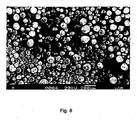
- the present invention describes the preparation of free flowing alumina powder from suspended alumina -water slurry by adopting the jet-wheel impact atomization based spray drying process. Grain spheroidization or rounding has resulted in the free flow property and different particle sizes in alumina powder.
- the process essentially consists of spraying a ceramic slurry through a nozzle at a temperature >100 °C and the liquid content of the sprayed droplets are removed to obtain granular powder.
- the mean particle size is found in the range 1-50 ⁇ m with a sphericity of about 0.8 or higher which is suited for mixing with resin material to form a compound.
- Various prior art references e.g. Patent No. US 3966644 of 1976 , US 4649037 of 1987 , US 4713233 of 1987 , US 5972835 of 1999 describe the spray drying of alumina and other ceramic compounds to produce spherical powders.
- the novelty of the invented process lies in the idea that through impact of a slurry/liquid drop against the spinning wheel moving opposite to the direction of slurry/liquid jet motion, transfer of momentum to slurry/liquid drop can take place up to 2 times (maxm.) that of the original momentum value.
- the slurry/liquid drop can be broken or atomized to thousands of tiny droplets without going to high pressure (29-690 bar in pressure atomization spray dryer) and high wheel speed ( up to 20,000 rpm in centrifugal atomization spray dryer adopted in industrial production).
- high pressure 29-690 bar in pressure atomization spray dryer
- high wheel speed up to 20,000 rpm in centrifugal atomization spray dryer adopted in industrial production.
- the novelty of the process lies in the fact that unlike conventional spray drying (high pressure nozzle and rotary type atomizer based), it does not use high pressure slurry (29-690 bar) and high atomizer wheel speed (which goes up 40,000 rpm) but employs a unique combination of low slurry pressure (1-5 bar ) and low atomizer speed (6000-14000).
- abrasive powder like alumina when used in this new kind of spray dryer (in slurry form), erosion of nozzle and wheel is significantly reduced due to low slurry pressure and low wheel speed.
- Another novelty of the invented process is that besides selecting a suitable slurry composition, the grain/ particle size distribution in the alumina powder can be varied at choice by varying wheel diameter and wheel speed and a typical particle size distribution can be attained either by increased speed with reduced wheel diameter or vice versa.
- Reduced viscosity of the slurry attained by addition of low cost chemical additive (dispersant) such as ammonium poly acrylate causes the small solid particles to homogeneously disperse throughout the volume of liquid such that clogging or chocking of jet orifice does not take place.
- the effect of dispersant and particle size of alumina powder (feed) contribute together to bring down the viscosity of the slurry to the range 2-100 cP, to the streamline flow range value of the carrier liquid, i.e. Water.
- alumina suspended slurry maintained at a low viscosity (2-100 cP) is injected at low pressure on to an atomizer wheel surface in the form of three jets.
- the rotating atomizer wheel disintegrates the slurry jets in to a large number of droplets at the wheel surface and the droplets are dried by hot air circulation (415-420 °C) inside a drying chamber.
- the outlet temperature of drying air is maintained at 95-110 °C.
- Process parameters have been worked out to produce powder with particle size 37.5-105 ⁇ m (>59%) with sphericity more than 0.9.
- the powder is porous and found to be quite flowable (Jenike classification index ffc : 17-18.5).
- the process shows > 80% yield (by mass) and the product is found to exhibit good flowing performance in plasma torch for spray coating on substrate.
- the free flowing alumina powder finds good application in ceramic industry in compaction, extrusion, manufacture of high tech and high density ceramic products, high temperature industrial components and parts, sintered products, refractories and castables. Also it finds wide use in making electronic component such as IC substrate, making cutting tools and wheels for mechanical engineering applications, and for coating thermal and insulating barriers on metal substrates.
- the main objective of the present invention is to develop an atomizer which works by hitting a slurry/lliquid jet projected from outside against a rotating wheel and the slurry hits the toothed surface of wheel tangentially opposite to the direction of wheel motion.
- Another objective of the invention is to develop an atomizer which utilizes the principle of momentum addition in the impact atomization process to make available up to 4 times higher kinetic energy (maximum) (takes place only in the ideal case of elastic collision) compared to conventional rotary atomizers and thus save energy in atomization.
- Yet another objective of this invention is to run the atomizer at lesser rpm and at lesser working pressure (of slurry/liquid) than conventional atomizers.
- Yet another objective of the present invention is to develop an atomizer which is less energy intensive due to its working capability at lesser rpm and lower working pressure of slurry/liquid.
- Yet another objective of the present invention is to develop an atomizer which is safer to operate and needs lesser maintenance.
- Yet another objective of the atomizer is to spray both aqueous and non-aqueous slurry/sol/liquid.
- Yet another objective of the present invention is to provide a process for the preparation of alumina powder which are free flowing, by the jet-wheel impact atomization.
- Yet another objective of the present invention to produce the free flowing powder from a suspended alumina-water slurry.
- Another object of the invention is to produce the powder by using slurry of low viscosity.
- Yet another objective of the process is to produce free flowing powder at low slurry pressure and relatively lower atomizer wheel speed.
- Yet another objective of the invention is to produce the powder at relatively low drying temperature.
- Yet another objective of the present invention is to make agglomeration of alumina grains from slurry by impact atomization technique and produce micro granules or spherical / spheroidal / rounded grains of alumina powder for achieving free flowing characteristics.
- Still another objective of the invention is to produce powder of different particle sizes by varying the wheel speed, wheel diameter and slurry composition.
- Yet another objective is to produce porous alumina powder.
- Yet another objective of the powder is to produce alumina powder of good sphericity.
- Yet another objective of this invention is to produce alumina powder of useful density.
- Yet another objective of the invention is to produce free flowing alumina powder of low moisture content.
- Still another objective is to produce the spheroidised alumina powder without changing the crystallographic phase of the feed powder.
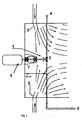
- the present invention provides an atomizer for producing finely dispersed spray of slurry or liquid wherein the said atomizer comprising a plurality of nozzles and a rotary atomization unit comprising an impact rotating wheel (2) having a toothed surface and being rotated through a frequency controlled motor (5), the said nozzles being arranged around the impact wheel such that the tangential velocity of the rotatory wheel having teeth is in direction opposite to the velocity of liquids or slurry jets coming out of the nozzle thus facilitating the production of a finely dispersed spray of slurry.
- the slurry used consisting of a quantity of solid material held in suspension within a liquid carrier.
- liquid carrier used is water or any aqueous or non aqueous solvent or sol including organic, inorganic and Ayurvedic.
- the solid used is powder of ceramic selected from the group consisting of alumina, zirconia, titania, magnesia, silica and their suitable mixtures and solid solutions thereof and any organic or inorganic compound or their combinations, drugs including Ayurvedic , washing and detergent powders, and food products.
- the present invention further provides a process for producing free flowing spray dried alumina powder, the said process comprising the steps of claim 5.
- the additive used in alumina-water slurry is consisting of 0.8-2.5 wt% of poly vinyl alcohol (PVA) as binder, 0.2-3wt% ammonium poly acrylate (APA) as dispersant and 0.1- 0.2wt% ethylene glycol (EG) as plasticizer with respect to wt. of alumina.
- PVA poly vinyl alcohol
- APA ammonium poly acrylate
- EG ethylene glycol
- plurality of nozzles (3) are used to produce slurry jets.
- the plurality of hot air inlets (4) are used in dying chamber to evaporate the water component in sprayed droplets.
- toothed atomizer wheels of about 0.075 0.125 in diameter are used to spray the slurry jet.
- the low slurry pressure 1-5 bar and low atomizer wheel speed 6000-14000 rpm are used to spheroidize alumina powder.
- the density and viscosity of the slurry used is in the range of 1-1.5 g / cm 3 and 2-100 cP, respectively.
- the slurry flow rate used is maintained at 5-27 lit / hour.
- the flow rate of hot air used is in the range of 20-75 m 3 /hour at ⁇ 15 bar pressure for drying the slurry.
- the sphericity of spheroidised, rounded, spherical alumina powder obtained is more than 0.9.
- the porosity of the alumina powder obtained is in the range 24.5-41.48%.
- the size of the alumina grains obtained is in the range of -25 to +300 ⁇ m with more than 59% in the range 37.5-105 ⁇ m.
- drying chamber pressure used is preferably maintained at 1.039-1.049 bar.
- the moisture content in the spray dried powder obtained is in the range 0.4 -1.5 wt%.
- the free flowing alumina powder obtained exhibits a flowability (ffc) in the range of 17-18.
- the flow of spheroidised alumina powder in plasma torch for spray coating showed deposition efficiency of 31- 60%.
- an improved design over the conventional atomizer designs wherein through impact of a slurry/liquid jet against the external surface of a spinning wheel moving opposite to the direction of slurry/liquid jet motion, transfer of momentum to slurry/liquid drop takes place up to 2 times (maxm.) that of the original momentum value by addition of opposite momenta, thus increasing the available kinetic energy for disintegrated of the drop up to 4 times (maxm. value , in case of elastic collision) without going to high nozzle pressure or high wheel rpm.
- an atomizer wheel which is also called the impact wheel, that has toothed surface, rotates at a speed of 6,000-16,000 rpm.
- the slurry jets coming out of a plurality of nozzles (3 numbers) at a low pressure of 1-5 bar hit tangentially on the impact wheel surface that spins in a direction opposite to the motion of the jets.
- the diameter of the atomizer wheel/disk is kept variable (3 values) to attain different peripheral speed for atomization in order to obtain different particle size and handle slurries of different densities. Accordingly, axial distance between the wheel and the nozzles is kept adjustable.
- the powder product generated by jet-wheel atomizer based spray drying is discharged through a screw conveyor from the bottom of drying chamber.
- the features of the present invention are: (a) using lesser working pressure, i.e. 1 to 5 bar, than the standard nozzle atomizers ,(b) using lesser rotating speed of the wheel/disk, i.e., 6,000 - 14,000 rpm, than the conventional industrial rotating atomizers, (c) using both nozzle and rotary atomization simultaneously that facilitates in getting rid of the disadvantages due to high slurry pressure and high speed of rotation of atomizer.
- the present invention provides the design of a jet wheel impact atomizer for spray drying which comprises an atomizer for producing finely dispersed spray of slurry / liquid wherein jets of liquid/slurry coming out of nozzles impact on a rotating wheel having teeth at close / wide pitch on the impact surface and where tangential wheel velocity is in opposite direction to the velocities of liquid/slurry jets coming out of nozzles, employing both nozzle and rotary atomization simultaneously to overcome the disadvantages due to high slurry pressure and high speed of rotation of conventional atomizers and saving energy in atomization due to addition of momenta in impact atomization process and employing less centrifugal force due to lower rpm of atomizer wheel.
- the design steps comprise of calculating/fixing dimensions like (1) nozzle working pressure, 1-5 kg/cm 2 (2) disk/wheel diameter, 0.075m, 0.1 m, 0.125m, (3) nozzle orifice diameter, 0.6 mm or 0.0006 m, (4) number of teeth on disc, 5-15 , (5) height of teeth, 0.005 m, (6) rpm of disc/wheel, 6,000-16,000, (7) provision to change the rotating disc of varying diameter to accommodate various types feed slurry, (8) provision for varying peripheral speed between 6,000 to 16,000 rpm, (9) provision to adjust the nozzle and rotating disk distance with respect to different diameter of rotating wheel/disk.
- a process for producing free flowing spray dried alumina powder has further been developed in this invention. While general alumina powders do not show good flowability due to mechanical interlocking among the irregular shaped grains, the present invention provides a novel method to make free flowing alumina powder by spheroidization of grains employing a new type of spray drying based on jet-wheel impact atomization.
- the novelty of the process lies in the fact that unlike conventional spray drying (high pressure nozzle and rotary type atomizer based), it does not use high pressure slurry (29-690 bar) and high atomizer wheel speed (which goes up 40,000 rpm) but employs a unique combination of low slurry pressure (1-5 bar) and low atomizer speed (6000-14000 rpm).
- abrasive powder like alumina when used in this new kind of spray dryer (in slurry form), erosion of nozzle and wheel is significantly reduced due to low slurry pressure and low wheel speed.
- Another novelty of the invented process is that besides selecting a suitable slurry composition, the grain/ particle size distribution in the alumina powder can be varied at choice by varying wheel diameter and wheel speed and a typical particle size distribution can be attained either by increased speed with reduced wheel diameter or vice versa.
- Reduced viscosity of the slurry attained by addition of low cost chemical additive (dispersant) such as ammonium poly acrylate causes the small solid particles to homogeneously disperse throughout the volume of liquid such that clogging or chocking of jet orifice does not take place.
- the effect of dispersant and particle size of alumina powder (feed) contribute together to bring down the viscosity of the slurry to the range 2-100 cP, to the streamline flow range value of the carrier liquid, i.e. water.
- alumina suspended slurry maintained at a low viscosity (2-100 cP) is injected at low pressure on to an atomizer wheel surface in the form of three jets.
- the rotating atomizer wheel disintegrates the slurry jets in to a large number of droplets at the wheel surface and the droplets are dried by hot air circulation (415-420 °C) inside a drying chamber.
- the outlet temperature of drying air is maintained at 95-110 °C.
- Process parameters have been worked out to produce powder with particle size 37.5-105 ⁇ m (>59%) with sphericity more than 0.9.
- the powder is porous and found to be quite flowable ( ffc :17-18.5 ).
- the process shows > 80% yield (by mass) and the product is found to exhibit good flowing performance in plasma torch for spray coating on substrate .
- the free flowing alumina powder finds good application in ceramic industry in compaction, extrusion, manufacture of high tech and high density ceramic products, high temperature industrial components and parts, sintered products, refractories and castables. Also it finds wide use in making electronic component such as IC substrate, making cutting tools and wheels for mechanical engineering applications, and for coating thermal and insulating barriers on metal substrates.
- the atomizer wheel which is called as impact wheel, has toothed surface.
- the wheel is made to rotate through a frequency controlled motor.
- the rotational speed of the motor can be varied from 6000 to 16000 rpm depending upon the requirement.
- Three atomizer nozzles are arranged around this impact wheel. Slurry, discharged through nozzle orifices in the form of jets, hits tangentially to the exterior surface of wheel .
- the direction of tangential velocity of the wheel is just opposite to the direction of the flow of the slurry jet coming out of nozzle/slurry pipe line.
- For accommodating various types of slurry with varying peripheral speed of the wheel is needed. This is accomplished by varying the wheel or disk diameter.
- the axial distance between the wheel and the nozzle can be adjusted with respect to varying wheel/disk diameter.
- Hot air enters the drying chamber through pipe lines .
- the dried product is discharged through a screw conveyor from the bottom of drying chamber.
- novelties of the present invention are: (a) using lesser working pressure, i.e. 1 to 5 bar, than the standard nozzle atomizers (b) using lesser rotating speed of the wheel /disk, i.e., 6,000 - 14,000 rpm, than the conventional industrial rotating atomizers, (c) using both nozzle and rotary atomization simultaneously that facilitates in getting rid of the disadvantages due to high slurry pressure and high speed of rotation of atomizer.
- alumina-water slurry along with binder, dispersant and plasticizer is prepared by properly stirring and homogenising in a separate container for an hour.
- the slurry composition is designed as follows:
- the slurry is then poured in to the slurry tank having provision for constant agitation to maintain homogeneous suspension of solid.
- the slurry is then passed through online filter and pressurised by a screw pump to send to the common distribution point located near the upper end of the drying chamber. From this point, the slurry is injected into the drying chamber by three nozzles located at 120 ° angle to each other.
- the atomiser wheel (belt driven by the frequency controlled electric motor) suspends in to the drying chamber with the help of a shaft with high speed bearing arrangement.
- the slurry jet is projected in such a way that it hits the atomiser wheel tangentially in opposite direction to the motion of wheel.
- the toothed surface of wheel with proper pitch disintegrates the slurry jet in to large number of droplets.
- the continuous spray of these tiny droplets takes place inside the drying chamber shown in figure.
- the droplets intermix with high temperature dry air (inlet temp. 415-420 °C ) introduced at four different points in the chamber and flow together in a spiral path due to tangential inlet of air to the drying chamber.
- the flow rate of air is maintained at ⁇ 75 m 3 / hour.
- Air pre-heating is done by electrical heating to avoid contamination of product.
- Coarser product of the air slurry settles at the bottom of the drying cone which is discharged through a screw conveyor.
- Finer fraction of this slurry is separated and collected by cyclone separator by utilizing the counter current flow pattern of hot air at he tip of inverted cone of the drying chamber.
- Wet scrubber is used to further isolate and arrest most of the remaining particles left in the effluent before it is finally left to atmosphere.
- the novelty of the process is that it has three variables to control for making suitable variation in grain size of the spheroidized alumna powder: (i) Diameter of atomizer disk which changes velocity of sprayed particle . Three different diameters are employed: 0.075 m, 0.1 m and 0.125 m, (ii) Variable frequency (20-50 Hz) of electric motor which changes rpm of atomizer wheel (6000-16000 ) or the centrifugal force applied (iii) Slurry composition which changes the solid % (20 - 60 wt%) in water.
- the slurry is prepared in a container by homogenising the mixture with an electrically driven stirrer. It is stirred for 1 hour and then poured in to the slurry tank and is allowed to be constantly agitated there by a stirrer. Electrical power is switched on at the control console and the inlet and outlet air flows of the drying chamber are made on. The heater is then switched on to heat the inlet air by electrical means. The temperature of the inlet air and outlet air are monitored through thermocouples. The drying chamber pressure was monitored by a water manometer. After about 30 minutes, when the temperature of the outlet air shows around 70 °C, the atomizer wheel is switched on to rotate at a lower speed by suitable frequency control through the motor.
- the outlet temperature of air attains 95-100 °C and in the meanwhile within this next 15 minutes of time, the atomizer wheel speed is slowly increased to set at the desired value.
- the inlet air temperature remains at around 420 °C .
- the system now gets ready for spraying.
- the screw pump is switched on to pressurise the slurry and the water circulation pump for the wet scrubber is also switched on to sprinkle water in the scrubber chamber.
- 2 bar of slurry pressure is maintained with 0.125 m diameter wheel rotating at a speed of 11,225 rpm.
- the slurry After pressurizing, the slurry is allowed to form the jets by passing through 3 nozzles (0.0006 m orfice), and hits against the toothed surface of the atomizer wheel in the spinning condition.
- the jets hit the wheel surface tangentially opposite to the direction of motion of the wheel.
- the jets are located at 120° angle to each other.
- the atomizer wheel breaks the slurry in to a large number of minute globular drops or droplets.
- the droplets By simultaneous intermixing with the hot air (flow rate 50 m 3 / hour) the droplets are dried and carried away by the swirling motion of air towards the conical bottom end of the drying chamber in a small time.
- Density of the powder is found as follows:
- Free flowing property has been tested and value of linearised flow function (ffc) or flowability is determined by shear testing and is found 18.25 (as per Jenike classification).
- the crystallographic phase of the powder has been determined by XRD and is to found occur as ⁇ - alumina (corundum).
- the phase of the feed solid in slurry and the spray dried solid is observed to be the same.
- Free flowing property has been tested and value of linearised flow function (ffc) is determined by shear testing and found 17.52 (as per Jenike classification).
- the crystallographic phase of the powder determined by XRD is found to occur as ⁇ - alumina (corundum).
- the phase of the feed solid in slurry and the spray dried solid is observed to be the same.
- 30% slurry of the composition in example 2 is sprayed under similar process conditions of the said example except change in wheel rpm and diameter.
- the rpm of the atomizer is maintained at 13,745 and the wheel diameter is 0.075m.
- the crystallographic phase of the powder determined by XRD is found to occur as a - alumina (corundum).
- the phase of the feed solid in slurry and the spray dried solid are observed to be the same.
- 30% slurry of the composition in example 3 is sprayed under similar process conditions of the said example except change in wheel diameter.
- the wheel diameter is maintained 0.125 m (at 13,745 rpm speed).
- the crystallographic phase of the powder determined by XRD is found to occur as ⁇ - alumina (corundum).
- the phase of the feed solid in slurry and the spray dried solid are observed to be the same.
Landscapes
- Chemical & Material Sciences (AREA)
- Chemical Kinetics & Catalysis (AREA)
- Vaporization, Distillation, Condensation, Sublimation, And Cold Traps (AREA)
- Nozzles (AREA)
- Compositions Of Oxide Ceramics (AREA)
Claims (15)
- Atomiseur pour produire une pulvérisation finement dispersée d'une bouillie ou d'un liquide, ledit atomiseur comprenant une pluralité de buses et une unité d'atomisation rotative comprenant une roue rotative à impact (2), caractérisé en ce que ladite roue rotative à impact a une surface dentée et est tournée par un moteur commandé en fréquence (5), lesdites buses étant agencées autour de la roue à impact de telle sorte que la vitesse tangentielle de la roue rotative dentée soit d'un sens opposé à la vitesse des jets de liquide ou bouillie provenant des uses facilitant ainsi la production d'une pulvérisation finement dispersée de bouillie.
- Atomiseur selon la revendication 1, lequel peut utiliser une bouillie consistant en une quantité de matière solide maintenue en suspension dans un support liquide en vue d'une atomisation par impact sur roue à jets.
- Atomiseur selon la revendication 2, lequel peut utiliser de l'eau ou n'importe quel solvant ou sol aqueux ou non aqueux y compris organique, inorganique et ayurvédique comme support liquide.
- Atomiseur selon les revendications 1 à 3, lequel peut utiliser une poudre solide de céramique sélectionnée dans le groupe consistant en alumine, zircone, oxyde de titane, magnésie, silice et les mélanges et solutions solides convenables de ceux-ci et n'importe quel composé organique ou inorganique ou leurs combinaisons, des médicaments y compris ayurvédiques, des poudres lavantes et détergentes, et des produits alimentaires.
- Processus de production d'une poudre d'alumine séchée par atomisation s'écoulant librement, ledit processus comprenant les étapes consistant à :a) préparer une bouillie homogène d'alumine et d'eau consistant en 20 à 60 % de poudre d'alumine avec des additifs, tout en l'agitant,b) verser ladite bouillie homogène d'alumine et d'eau dans une cuve à bouillie et à l'agiter continuellement, caractérisé par le fait de :c) faire en sorte que ladite bouillie liquide forme des jets en appliquant une pression 100 à 500 kPa (1 à 5 bars) par le biais d'une pompe et en la passant à travers des buses pour qu'elle frappe la surface dentée d'une roue d'atomiseur qui tourne dans un sens tel que sa vitesse tangentielle soit opposée à la vitesse des jets de liquide ou de bouillie qui sortent des buses, en présence d'un flux d'air d'entrée et de sortie, à une température d'air d'entrée et de sortie de 400 à 420°C et de 70 à 110°C, respectivement, et pendant que la roue tourne à la vitesse de 6000 à 16000 tr/min. pour obtenir un grand nombre de très petites gouttelettes,d) sécher simultanément ledit grand nombre de très petites gouttelettes en le mélangeant à un flux d'air chaud à l'intérieur de la chambre de séchage et en amenant les gouttelettes séchées résultantes vers l'extrémité inférieure conique de la chambre de séchage par le mouvement d'air tourbillonnant afin d'obtenir la poudre d'alumine sphéroidale ou arrondie ou sphérique,e) laisser les particules grossières reposer à travers un convoyeur à vis et libérer les fractions plus fines des gouttelettes en les aspirant dans un séparateur cyclonique par basculement inverse de l'air à l'extrémité inférieure de la chambre de séchage afin de séparer les particules plus fines au de l'extrémité du cyclone et passer la bouillie aérée de l'effluent restant contenant des particules plus fines à travers un laveur ouvert à l'atmosphère pour emprisonner les fines particules avant de relâcher l'air dans l'atmosphère,
- Processus selon la revendication 5, dans lequel l'additif utilisé dans la bouillie d'alumine et d'eau consiste en 0,8 à 2,5 % en poids d'alcool polyvinylique (PAVA) comme liant, 0,2 à 3 % en poids de polyacrylate d'ammonium (APA) comme dispersant et 0,1 à 0,2 % en poids de glycol éthylène (EG) comme plastifiant relativement au poids de l'alumine.
- Processus selon la revendication 5, dans lequel la pluralité de buses (3) est utilisée pour produire des jets de bouillie, le débit d'écoulement de la bouillie étant de préférence à 5 - 27 litres/heure.
- Processus selon la revendication 5, dans lequel l'air chaud s'écoulant à travers une pluralité d'entrées d'air chaud (4) est utilisé dans la chambre de séchage pour évaporer le composant d'eau dans les gouttelettes pulvérisées, le débit d'écoulement de l'air chaud étant compris de préférence dans la plage de 20 à 75 m2/heure à une pression < 1500 kPa (15 bars) pour sécher la bouillie, et la pression dans la chambre de séchage est maintenue de préférence à 103,9 à 104,9 kPa (1,039 à 1,049 bars).
- Processus selon la revendication 5, dans lequel des roues d'atomiseur dentées d'un diamètre d'environ 0,075 à 0,125 m sont utilisées pulvériser le jet de bouillie.
- Processus selon la revendication 5, dans lequel la bouillie est préparée en utilisant de la d'alumine ayant une d90 = 1,5 à 4,7 µm comme solide en suspension dans la plage de 20 à 60% en poids dans l'eau pour préparer une bouillie dont la densité et la viscosité sont comprises respectivement dans la plage de 1 à 1,5 g/cm3 et 0,002 à 0,1 Pa.s (2 à 100 cP).
- Processus selon la revendication 5, dans lequel le taux hygrométrique dans la poudre séchée par atomisation consistant en les sphères d'alumine obtenues est compris dans la plage de 0,4 à 1,5 % en poids et la porosité desdits sphères d'alumine est de préférence comprise dans la plage de 24,5 à 41,48%.
- Processus selon la revendication 5, dans lequel la taille des sphères d'alumine obtenues est comprise dans la plage de 25 à 300 µm, plus de 59% des sphères étant comprises dans la plage de 37,5 à 105µm.
- Processus selon la revendication 5, dans lequel la densité de la poudre d'alumine à grains sphériques obtenue est la suivante :masse volumique apparente dans la plage de 0,723 à 1,153 g/cm3 ;masse volumique après tassement dans la plage de 0,833 à 1,310 g/cm3;masse volumique de remplissage dans la plage de 18,39 à 29,33 % etmasse volumique frittée jusqu'à 3,81 g/cm3.
- Processus selon la revendication 5, dans lequel la poudre d'alumine sphéroidale s'écoulant librement obtenue présente une aptitude à l'écoulement (ffc) comprise dans la plage de 17 à 18 (indice de Jenike) et la sphéricité des agglomérés d'alumine, sphéroïdaux, arrondis, obtenus est de plus de 0,9.
- Processus selon la revendication 14, dans lequel la poudre employée dans une torche à plasma de revêtement par pulvérisation présentait un rendement de projection de 31 à à 60%.
Applications Claiming Priority (3)
| Application Number | Priority Date | Filing Date | Title |
|---|---|---|---|
| IN475DE2006 | 2006-02-21 | ||
| IN476DE2006 | 2006-02-21 | ||
| PCT/IN2007/000070 WO2007096905A1 (fr) | 2006-02-21 | 2007-02-21 | Atomiseur a impact a roue à jet utilisé dans l'atomisation et procede pour preparer une pulverisation finement dispersee d'une boue / d'un liquide |
Publications (2)
| Publication Number | Publication Date |
|---|---|
| EP1991329A1 EP1991329A1 (fr) | 2008-11-19 |
| EP1991329B1 true EP1991329B1 (fr) | 2012-11-21 |
Family
ID=38171637
Family Applications (1)
| Application Number | Title | Priority Date | Filing Date |
|---|---|---|---|
| EP07713407A Not-in-force EP1991329B1 (fr) | 2006-02-21 | 2007-02-21 | Atomiseur a impact a roue à jet utilisé dans l'atomisation et procede pour preparer une pulverisation finement dispersee d'une boue / d'un liquide |
Country Status (6)
| Country | Link |
|---|---|
| US (1) | US7829041B2 (fr) |
| EP (1) | EP1991329B1 (fr) |
| JP (1) | JP5312953B2 (fr) |
| DK (1) | DK1991329T3 (fr) |
| NO (1) | NO339164B1 (fr) |
| WO (1) | WO2007096905A1 (fr) |
Cited By (1)
| Publication number | Priority date | Publication date | Assignee | Title |
|---|---|---|---|---|
| WO2020053668A1 (fr) * | 2018-09-10 | 2020-03-19 | Tapas Chatterjee | Dispositif et procédé de préparation de poudres séchées par pulvérisation |
Families Citing this family (28)
| Publication number | Priority date | Publication date | Assignee | Title |
|---|---|---|---|---|
| JP2892695B2 (ja) | 1989-08-02 | 1999-05-17 | 尾池工業株式会社 | 透明ハイバリヤープラスチックフイルム |
| JP2925226B2 (ja) | 1990-03-28 | 1999-07-28 | 尾池工業株式会社 | レトルト食品用包装材料 |
| JP3235674B2 (ja) | 1992-04-28 | 2001-12-04 | 東洋紡績株式会社 | マイクロ波殺菌用包装材料 |
| JP3235677B2 (ja) | 1992-06-19 | 2001-12-04 | 東洋紡績株式会社 | 電子レンジ用包装材料 |
| JP3235685B2 (ja) | 1993-01-11 | 2001-12-04 | 東洋紡績株式会社 | 脱酸素剤入り包装用材料 |
| EP1785266A4 (fr) | 2004-09-01 | 2011-03-16 | Konica Minolta Holdings Inc | Corps multicouche de barrière aux gaz et son procédé de production |
| US8940364B2 (en) * | 2008-12-19 | 2015-01-27 | Xurex, Inc. | System, formulation and method for producing ceramic vacuum microspheres |
| US20110250264A1 (en) | 2010-04-09 | 2011-10-13 | Pacira Pharmaceuticals, Inc. | Method for formulating large diameter synthetic membrane vesicles |
| US20130122146A1 (en) * | 2011-11-16 | 2013-05-16 | Decas Botanical Synergies, Llc | Process for Spray Drying Botanical Food |
| DE102013103013A1 (de) * | 2013-03-25 | 2014-09-25 | Maschinenfabrik Gustav Eirich Gmbh & Co. Kg | Verfahren zur Erzeugung eines optimierten Granulats |
| IN2013CH04500A (fr) | 2013-10-04 | 2015-04-10 | Kennametal India Ltd | |
| CN106470811A (zh) * | 2014-07-02 | 2017-03-01 | 康宁股份有限公司 | 用于等离子体熔融的喷涂干燥混合的批料材料 |
| CN106315593A (zh) * | 2016-07-25 | 2017-01-11 | 汪承源 | 一种超微孔纳米SiO2的制法 |
| CA3071906C (fr) * | 2017-07-14 | 2022-03-08 | Vermeer Manufacturing Company | Appareil d'aspiration par hydroexcavation |
| US20190039189A1 (en) * | 2017-08-03 | 2019-02-07 | Honeywell International Inc. | Free flowing potassium aluminum fluoride flux agent |
| CN108339287A (zh) * | 2017-12-12 | 2018-07-31 | 浙江尔乐干燥设备有限公司 | 一种df干悬浮剂专用喷雾干燥设备 |
| EP3536169A1 (fr) * | 2018-03-06 | 2019-09-11 | Silicium Espana Laboratorios, S.L. | Microparticules de composé d'organosilicium et processus de préparation |
| CN108534531B (zh) * | 2018-05-16 | 2024-04-26 | 长沙中瓷新材料科技有限公司 | 一种喷雾干燥系统 |
| CN110817963A (zh) * | 2019-10-23 | 2020-02-21 | 江西铜鼓有色冶金化工有限责任公司 | 一种酸溶渣废料制备偏钨酸铵的方法及系统 |
| CN110759717B (zh) * | 2019-11-11 | 2021-12-07 | 宁波伏尔肯科技股份有限公司 | 一种加热式雾化器用多孔刚玉陶瓷及其制备方法 |
| CN111249759A (zh) * | 2020-03-11 | 2020-06-09 | 黑龙江冰泉多多保健食品有限责任公司 | 一种速溶豆粉喷雾干燥装置 |
| CN112111179B (zh) * | 2020-08-18 | 2021-08-27 | 江苏宇星科技有限公司 | 一种耐热氧化铁黑的生产工艺 |
| CN112587946A (zh) * | 2020-12-14 | 2021-04-02 | 常州鸿石干燥科技有限公司 | 一种双旋转干燥雾化器喷头 |
| CN112387206A (zh) * | 2020-12-14 | 2021-02-23 | 常州鸿石干燥科技有限公司 | 一种气流保护的液动转体干燥雾化器喷头 |
| CN113102161B (zh) * | 2021-04-26 | 2024-03-01 | 般若涅利(北京)装备技术有限公司 | 高粘度电池浆料涂布装置及其涂布方法 |
| CN113830999A (zh) * | 2021-09-29 | 2021-12-24 | 苏州大学 | 一种合成球形石英粉的装置和方法 |
| CN114522432B (zh) * | 2022-02-10 | 2023-11-28 | 江中食疗科技有限公司 | 一种用于特殊膳食冲调谷物加工的喷雾干燥机 |
| CN118491120B (zh) * | 2024-07-19 | 2024-11-26 | 安徽捷胜生物科技股份有限公司 | 一种多粘类芽孢杆菌制剂低温干燥装置 |
Family Cites Families (8)
| Publication number | Priority date | Publication date | Assignee | Title |
|---|---|---|---|---|
| US2698815A (en) * | 1950-06-08 | 1955-01-04 | Instant Drying Corp | Drying method and apparatus |
| DE920598C (de) * | 1950-08-12 | 1954-11-25 | Basf Ag | Zerstaeubungsvorrichtung zur Trocknung von Pasten |
| NL6509294A (fr) * | 1965-07-19 | 1967-01-20 | ||
| DK124222B (da) * | 1968-07-09 | 1972-09-25 | Niro Atomizer As | Forstøvningstørreapparat. |
| US4422900A (en) * | 1981-11-25 | 1983-12-27 | Olin Corporation | Spray drying apparatus for available chlorine-containing compounds |
| US4649037A (en) * | 1985-03-29 | 1987-03-10 | Allied Corporation | Spray-dried inorganic oxides from non-aqueous gels or solutions |
| JP4339943B2 (ja) * | 1998-08-06 | 2009-10-07 | ブラザー工業株式会社 | 画像処理装置 |
| JP2003171181A (ja) * | 2001-11-30 | 2003-06-17 | Bridgestone Corp | 粉体製造方法及び粉体製造装置 |
-
2007
- 2007-02-21 US US11/709,326 patent/US7829041B2/en not_active Expired - Fee Related
- 2007-02-21 JP JP2008555951A patent/JP5312953B2/ja not_active Expired - Fee Related
- 2007-02-21 EP EP07713407A patent/EP1991329B1/fr not_active Not-in-force
- 2007-02-21 DK DK07713407.0T patent/DK1991329T3/da active
- 2007-02-21 WO PCT/IN2007/000070 patent/WO2007096905A1/fr not_active Ceased
-
2008
- 2008-09-19 NO NO20084000A patent/NO339164B1/no not_active IP Right Cessation
Cited By (1)
| Publication number | Priority date | Publication date | Assignee | Title |
|---|---|---|---|---|
| WO2020053668A1 (fr) * | 2018-09-10 | 2020-03-19 | Tapas Chatterjee | Dispositif et procédé de préparation de poudres séchées par pulvérisation |
Also Published As
| Publication number | Publication date |
|---|---|
| US7829041B2 (en) | 2010-11-09 |
| WO2007096905A1 (fr) | 2007-08-30 |
| EP1991329A1 (fr) | 2008-11-19 |
| NO339164B1 (no) | 2016-11-14 |
| US20070205303A1 (en) | 2007-09-06 |
| JP2009527353A (ja) | 2009-07-30 |
| NO20084000L (no) | 2008-11-13 |
| JP5312953B2 (ja) | 2013-10-09 |
| DK1991329T3 (da) | 2013-01-07 |
Similar Documents
| Publication | Publication Date | Title |
|---|---|---|
| EP1991329B1 (fr) | Atomiseur a impact a roue à jet utilisé dans l'atomisation et procede pour preparer une pulverisation finement dispersee d'une boue / d'un liquide | |
| US7387752B2 (en) | Method for producing solid ceramic particles using a spray drying process | |
| JP3284218B2 (ja) | 粉状材料を粒状化する装置及びその方法 | |
| JP5032133B2 (ja) | 造粒方法及び造粒装置 | |
| EP1561508A1 (fr) | Particules fines inorganiques, poudre de matiere premiere inorganique et procede de production correspondant | |
| US5368385A (en) | Continuous solution method and apparatus | |
| CN110545929A (zh) | 用于制备陶瓷颗粒的粘合剂材料 | |
| JP2021536422A (ja) | 無機濾過堆積物を有するハニカム体の製造方法 | |
| CN1275683C (zh) | 制造颗粒状材料的方法 | |
| CN101291885A (zh) | 低热膨胀铸造介质 | |
| US5032377A (en) | Chromium oxide green, a process for its production and its use | |
| US11639314B2 (en) | Porous fired granulated body and method for manufacturing the same | |
| US20250161912A1 (en) | Apparatus for producing spherically granulated sorbent with a polymeric binder | |
| AU685553B2 (en) | Process for producing agglomerates from dusts | |
| JP2003171181A (ja) | 粉体製造方法及び粉体製造装置 | |
| KR20090096220A (ko) | 회전형 다단 분무 건조 장치 및 이를 구비한 건조 챔버 | |
| FI113629B (fi) | Menetelmä ja laitteisto fysikaalisten ja kemiallisten prosessien suorittamiseksi | |
| Andrews | ATOMISER EFFECT | |
| JPH08259304A (ja) | 陶磁器用原料の造粒方法 | |
| CN109396455A (zh) | 一种用于软磁金属粉末的安全、连续、高效、环保的造粒方法 | |
| JPH0739952U (ja) | 遠心式噴霧装置 | |
| JP2011121251A (ja) | セラミック顆粒粉末の調湿方法 |
Legal Events
| Date | Code | Title | Description |
|---|---|---|---|
| PUAI | Public reference made under article 153(3) epc to a published international application that has entered the european phase |
Free format text: ORIGINAL CODE: 0009012 |
|
| 17P | Request for examination filed |
Effective date: 20080918 |
|
| AK | Designated contracting states |
Kind code of ref document: A1 Designated state(s): AT BE BG CH CY CZ DE DK EE ES FI FR GB GR HU IE IS IT LI LT LU LV MC NL PL PT RO SE SI SK TR |
|
| 17Q | First examination report despatched |
Effective date: 20100629 |
|
| GRAP | Despatch of communication of intention to grant a patent |
Free format text: ORIGINAL CODE: EPIDOSNIGR1 |
|
| DAX | Request for extension of the european patent (deleted) | ||
| GRAJ | Information related to disapproval of communication of intention to grant by the applicant or resumption of examination proceedings by the epo deleted |
Free format text: ORIGINAL CODE: EPIDOSDIGR1 |
|
| GRAP | Despatch of communication of intention to grant a patent |
Free format text: ORIGINAL CODE: EPIDOSNIGR1 |
|
| GRAS | Grant fee paid |
Free format text: ORIGINAL CODE: EPIDOSNIGR3 |
|
| GRAA | (expected) grant |
Free format text: ORIGINAL CODE: 0009210 |
|
| AK | Designated contracting states |
Kind code of ref document: B1 Designated state(s): AT BE BG CH CY CZ DE DK EE ES FI FR GB GR HU IE IS IT LI LT LU LV MC NL PL PT RO SE SI SK TR |
|
| REG | Reference to a national code |
Ref country code: GB Ref legal event code: FG4D |
|
| REG | Reference to a national code |
Ref country code: CH Ref legal event code: EP |
|
| REG | Reference to a national code |
Ref country code: AT Ref legal event code: REF Ref document number: 584742 Country of ref document: AT Kind code of ref document: T Effective date: 20121215 |
|
| REG | Reference to a national code |
Ref country code: IE Ref legal event code: FG4D |
|
| REG | Reference to a national code |
Ref country code: DK Ref legal event code: T3 |
|
| REG | Reference to a national code |
Ref country code: DE Ref legal event code: R096 Ref document number: 602007026822 Country of ref document: DE Effective date: 20130117 |
|
| REG | Reference to a national code |
Ref country code: NL Ref legal event code: T3 |
|
| REG | Reference to a national code |
Ref country code: AT Ref legal event code: MK05 Ref document number: 584742 Country of ref document: AT Kind code of ref document: T Effective date: 20121121 |
|
| REG | Reference to a national code |
Ref country code: LT Ref legal event code: MG4D |
|
| PG25 | Lapsed in a contracting state [announced via postgrant information from national office to epo] |
Ref country code: FI Free format text: LAPSE BECAUSE OF FAILURE TO SUBMIT A TRANSLATION OF THE DESCRIPTION OR TO PAY THE FEE WITHIN THE PRESCRIBED TIME-LIMIT Effective date: 20121121 Ref country code: ES Free format text: LAPSE BECAUSE OF FAILURE TO SUBMIT A TRANSLATION OF THE DESCRIPTION OR TO PAY THE FEE WITHIN THE PRESCRIBED TIME-LIMIT Effective date: 20130304 Ref country code: LT Free format text: LAPSE BECAUSE OF FAILURE TO SUBMIT A TRANSLATION OF THE DESCRIPTION OR TO PAY THE FEE WITHIN THE PRESCRIBED TIME-LIMIT Effective date: 20121121 Ref country code: SE Free format text: LAPSE BECAUSE OF FAILURE TO SUBMIT A TRANSLATION OF THE DESCRIPTION OR TO PAY THE FEE WITHIN THE PRESCRIBED TIME-LIMIT Effective date: 20121121 |
|
| PG25 | Lapsed in a contracting state [announced via postgrant information from national office to epo] |
Ref country code: PL Free format text: LAPSE BECAUSE OF FAILURE TO SUBMIT A TRANSLATION OF THE DESCRIPTION OR TO PAY THE FEE WITHIN THE PRESCRIBED TIME-LIMIT Effective date: 20121121 Ref country code: PT Free format text: LAPSE BECAUSE OF FAILURE TO SUBMIT A TRANSLATION OF THE DESCRIPTION OR TO PAY THE FEE WITHIN THE PRESCRIBED TIME-LIMIT Effective date: 20130321 Ref country code: SI Free format text: LAPSE BECAUSE OF FAILURE TO SUBMIT A TRANSLATION OF THE DESCRIPTION OR TO PAY THE FEE WITHIN THE PRESCRIBED TIME-LIMIT Effective date: 20121121 Ref country code: GR Free format text: LAPSE BECAUSE OF FAILURE TO SUBMIT A TRANSLATION OF THE DESCRIPTION OR TO PAY THE FEE WITHIN THE PRESCRIBED TIME-LIMIT Effective date: 20130222 Ref country code: LV Free format text: LAPSE BECAUSE OF FAILURE TO SUBMIT A TRANSLATION OF THE DESCRIPTION OR TO PAY THE FEE WITHIN THE PRESCRIBED TIME-LIMIT Effective date: 20121121 Ref country code: BE Free format text: LAPSE BECAUSE OF FAILURE TO SUBMIT A TRANSLATION OF THE DESCRIPTION OR TO PAY THE FEE WITHIN THE PRESCRIBED TIME-LIMIT Effective date: 20121121 |
|
| PG25 | Lapsed in a contracting state [announced via postgrant information from national office to epo] |
Ref country code: AT Free format text: LAPSE BECAUSE OF FAILURE TO SUBMIT A TRANSLATION OF THE DESCRIPTION OR TO PAY THE FEE WITHIN THE PRESCRIBED TIME-LIMIT Effective date: 20121121 |
|
| PG25 | Lapsed in a contracting state [announced via postgrant information from national office to epo] |
Ref country code: SK Free format text: LAPSE BECAUSE OF FAILURE TO SUBMIT A TRANSLATION OF THE DESCRIPTION OR TO PAY THE FEE WITHIN THE PRESCRIBED TIME-LIMIT Effective date: 20121121 Ref country code: EE Free format text: LAPSE BECAUSE OF FAILURE TO SUBMIT A TRANSLATION OF THE DESCRIPTION OR TO PAY THE FEE WITHIN THE PRESCRIBED TIME-LIMIT Effective date: 20121121 Ref country code: CZ Free format text: LAPSE BECAUSE OF FAILURE TO SUBMIT A TRANSLATION OF THE DESCRIPTION OR TO PAY THE FEE WITHIN THE PRESCRIBED TIME-LIMIT Effective date: 20121121 Ref country code: BG Free format text: LAPSE BECAUSE OF FAILURE TO SUBMIT A TRANSLATION OF THE DESCRIPTION OR TO PAY THE FEE WITHIN THE PRESCRIBED TIME-LIMIT Effective date: 20130221 |
|
| PG25 | Lapsed in a contracting state [announced via postgrant information from national office to epo] |
Ref country code: IT Free format text: LAPSE BECAUSE OF FAILURE TO SUBMIT A TRANSLATION OF THE DESCRIPTION OR TO PAY THE FEE WITHIN THE PRESCRIBED TIME-LIMIT Effective date: 20121121 Ref country code: RO Free format text: LAPSE BECAUSE OF FAILURE TO SUBMIT A TRANSLATION OF THE DESCRIPTION OR TO PAY THE FEE WITHIN THE PRESCRIBED TIME-LIMIT Effective date: 20121121 |
|
| PLBE | No opposition filed within time limit |
Free format text: ORIGINAL CODE: 0009261 |
|
| STAA | Information on the status of an ep patent application or granted ep patent |
Free format text: STATUS: NO OPPOSITION FILED WITHIN TIME LIMIT |
|
| PG25 | Lapsed in a contracting state [announced via postgrant information from national office to epo] |
Ref country code: MC Free format text: LAPSE BECAUSE OF NON-PAYMENT OF DUE FEES Effective date: 20130228 |
|
| REG | Reference to a national code |
Ref country code: CH Ref legal event code: PL |
|
| GBPC | Gb: european patent ceased through non-payment of renewal fee |
Effective date: 20130221 |
|
| 26N | No opposition filed |
Effective date: 20130822 |
|
| PG25 | Lapsed in a contracting state [announced via postgrant information from national office to epo] |
Ref country code: CH Free format text: LAPSE BECAUSE OF NON-PAYMENT OF DUE FEES Effective date: 20130228 Ref country code: LI Free format text: LAPSE BECAUSE OF NON-PAYMENT OF DUE FEES Effective date: 20130228 |
|
| REG | Reference to a national code |
Ref country code: FR Ref legal event code: ST Effective date: 20131031 |
|
| REG | Reference to a national code |
Ref country code: IE Ref legal event code: MM4A |
|
| REG | Reference to a national code |
Ref country code: DE Ref legal event code: R119 Ref document number: 602007026822 Country of ref document: DE Effective date: 20130903 |
|
| REG | Reference to a national code |
Ref country code: DE Ref legal event code: R097 Ref document number: 602007026822 Country of ref document: DE Effective date: 20130822 |
|
| PG25 | Lapsed in a contracting state [announced via postgrant information from national office to epo] |
Ref country code: FR Free format text: LAPSE BECAUSE OF NON-PAYMENT OF DUE FEES Effective date: 20130228 Ref country code: GB Free format text: LAPSE BECAUSE OF NON-PAYMENT OF DUE FEES Effective date: 20130221 Ref country code: IE Free format text: LAPSE BECAUSE OF NON-PAYMENT OF DUE FEES Effective date: 20130221 Ref country code: DE Free format text: LAPSE BECAUSE OF NON-PAYMENT OF DUE FEES Effective date: 20130903 |
|
| PG25 | Lapsed in a contracting state [announced via postgrant information from national office to epo] |
Ref country code: CY Free format text: LAPSE BECAUSE OF FAILURE TO SUBMIT A TRANSLATION OF THE DESCRIPTION OR TO PAY THE FEE WITHIN THE PRESCRIBED TIME-LIMIT Effective date: 20121121 Ref country code: TR Free format text: LAPSE BECAUSE OF FAILURE TO SUBMIT A TRANSLATION OF THE DESCRIPTION OR TO PAY THE FEE WITHIN THE PRESCRIBED TIME-LIMIT Effective date: 20121121 |
|
| PG25 | Lapsed in a contracting state [announced via postgrant information from national office to epo] |
Ref country code: HU Free format text: LAPSE BECAUSE OF FAILURE TO SUBMIT A TRANSLATION OF THE DESCRIPTION OR TO PAY THE FEE WITHIN THE PRESCRIBED TIME-LIMIT; INVALID AB INITIO Effective date: 20070221 Ref country code: LU Free format text: LAPSE BECAUSE OF NON-PAYMENT OF DUE FEES Effective date: 20130221 |
|
| PG25 | Lapsed in a contracting state [announced via postgrant information from national office to epo] |
Ref country code: IS Free format text: LAPSE BECAUSE OF FAILURE TO SUBMIT A TRANSLATION OF THE DESCRIPTION OR TO PAY THE FEE WITHIN THE PRESCRIBED TIME-LIMIT Effective date: 20121121 |
|
| PGFP | Annual fee paid to national office [announced via postgrant information from national office to epo] |
Ref country code: NL Payment date: 20170221 Year of fee payment: 11 Ref country code: DK Payment date: 20170221 Year of fee payment: 11 |
|
| REG | Reference to a national code |
Ref country code: DK Ref legal event code: EBP Effective date: 20180228 |
|
| REG | Reference to a national code |
Ref country code: NL Ref legal event code: MM Effective date: 20180301 |
|
| PG25 | Lapsed in a contracting state [announced via postgrant information from national office to epo] |
Ref country code: NL Free format text: LAPSE BECAUSE OF NON-PAYMENT OF DUE FEES Effective date: 20180301 |
|
| PG25 | Lapsed in a contracting state [announced via postgrant information from national office to epo] |
Ref country code: DK Free format text: LAPSE BECAUSE OF NON-PAYMENT OF DUE FEES Effective date: 20180228 |