EP1994247B1 - Vorrichtung für ein gleitscharnier - Google Patents
Vorrichtung für ein gleitscharnier Download PDFInfo
- Publication number
- EP1994247B1 EP1994247B1 EP07701235.9A EP07701235A EP1994247B1 EP 1994247 B1 EP1994247 B1 EP 1994247B1 EP 07701235 A EP07701235 A EP 07701235A EP 1994247 B1 EP1994247 B1 EP 1994247B1
- Authority
- EP
- European Patent Office
- Prior art keywords
- housing portion
- housing
- lower element
- configuration
- upper element
- Prior art date
- Legal status (The legal status is an assumption and is not a legal conclusion. Google has not performed a legal analysis and makes no representation as to the accuracy of the status listed.)
- Not-in-force
Links
Images


Classifications
-
- H—ELECTRICITY
- H04—ELECTRIC COMMUNICATION TECHNIQUE
- H04B—TRANSMISSION
- H04B1/00—Details of transmission systems, not covered by a single one of groups H04B3/00 - H04B13/00; Details of transmission systems not characterised by the medium used for transmission
- H04B1/38—Transceivers, i.e. devices in which transmitter and receiver form a structural unit and in which at least one part is used for functions of transmitting and receiving
-
- H—ELECTRICITY
- H04—ELECTRIC COMMUNICATION TECHNIQUE
- H04M—TELEPHONIC COMMUNICATION
- H04M1/00—Substation equipment, e.g. for use by subscribers
- H04M1/02—Constructional features of telephone sets
- H04M1/0202—Portable telephone sets, e.g. cordless phones, mobile phones or bar type handsets
- H04M1/0206—Portable telephones comprising a plurality of mechanically joined movable body parts, e.g. hinged housings
- H04M1/0208—Portable telephones comprising a plurality of mechanically joined movable body parts, e.g. hinged housings characterized by the relative motions of the body parts
- H04M1/0235—Slidable or telescopic telephones, i.e. with a relative translation movement of the body parts; Telephones using a combination of translation and other relative motions of the body parts
- H04M1/0237—Sliding mechanism with one degree of freedom
-
- E—FIXED CONSTRUCTIONS
- E05—LOCKS; KEYS; WINDOW OR DOOR FITTINGS; SAFES
- E05F—DEVICES FOR MOVING WINGS INTO OPEN OR CLOSED POSITION; CHECKS FOR WINGS; WING FITTINGS NOT OTHERWISE PROVIDED FOR, CONCERNED WITH THE FUNCTIONING OF THE WING
- E05F17/00—Special devices for shifting a plurality of wings operated simultaneously
- E05F17/002—Special devices for shifting a plurality of wings operated simultaneously for wings which lie one behind the other when closed
-
- E—FIXED CONSTRUCTIONS
- E05—LOCKS; KEYS; WINDOW OR DOOR FITTINGS; SAFES
- E05Y—INDEXING SCHEME ASSOCIATED WITH SUBCLASSES E05D AND E05F, RELATING TO CONSTRUCTION ELEMENTS, ELECTRIC CONTROL, POWER SUPPLY, POWER SIGNAL OR TRANSMISSION, USER INTERFACES, MOUNTING OR COUPLING, DETAILS, ACCESSORIES, AUXILIARY OPERATIONS NOT OTHERWISE PROVIDED FOR, APPLICATION THEREOF
- E05Y2999/00—Subject-matter not otherwise provided for in this subclass
-
- H—ELECTRICITY
- H04—ELECTRIC COMMUNICATION TECHNIQUE
- H04M—TELEPHONIC COMMUNICATION
- H04M1/00—Substation equipment, e.g. for use by subscribers
- H04M1/02—Constructional features of telephone sets
- H04M1/0202—Portable telephone sets, e.g. cordless phones, mobile phones or bar type handsets
- H04M1/0206—Portable telephones comprising a plurality of mechanically joined movable body parts, e.g. hinged housings
- H04M1/0208—Portable telephones comprising a plurality of mechanically joined movable body parts, e.g. hinged housings characterized by the relative motions of the body parts
- H04M1/0214—Foldable telephones, i.e. with body parts pivoting to an open position around an axis parallel to the plane they define in closed position
Definitions
- the present invention relates generally to sliding devices and, more particularly to sliding devices that have a rotating hinge portion.
- Handheld device are continually being reduced in size and improved to meet consumer size, aesthetic, and performance requirements.
- Slider solution mechanisms permit parts of such devices, such as displays or keypads, to be retracted and hidden when not in use. Slider mechanisms can facilitate miniaturization and offer additional freedom to device designers.
- current sliding mechanisms are complex, bulky, heavy, and expensive. Current sliding mechanisms add significantly to the weight of the devices in which they are incorporated. Further, current sliding mechanisms are relatively thick, making it difficult to incorporate them into aesthetically-pleasing designs.
- Known slider solutions have the main display on the outside of the product, however the ergonomics in the open position are not as good as a clam style (i.e. folding type of form factor).
- the known slider solutions have the following disadvantages: there is an inevitable step, resulting in a difference in heights between the top and bottom housing portions. Therefore the user interface and navigation part of the keypad sits above the numeric element making the overall ergonomics of the keypad poor. The difference in height also makes integrating of the styling between the bottom and top module difficult.
- the products tend to look disjointed. Most slider motions are flat so when placed on a desk they sit flat like a bar. This does not support the video and multi media user cases required for the trend toward higher tier 3G and beyond communication devices.
- US patent no. 5,440,629 describes a portable telephone handset construction having a chassis to which is slidably assembled an end closure which is collapsible to a position for protecting a selected portion of the chassis from contact to minimize its contamination by dust and other debris.
- the end closure When fully extended the end closure may represent an earpiece or mouth piece of the handset construction which is capable of angular orientation relative to the chassis so as to assume the normal configuration of the earpiece or mouth piece of a conventional telephone handset.
- the end closures containing the earpiece and the mouth piece are guided during sliding movement relative to the chassis by means of cooperating guide tracks and guide elements.
- Korean patent application no. 10-2005-0061200 describes a body bending apparatus for a slide-type portable device.
- the present disclosure concerns slider mechanisms for components such as those on portable electronic devices including, for example, laptop computers, portable video players, handheld computers, wireless messaging devices, portable game players, GPS mapping devices, pagers, portable dictionaries, personal digital assistants, cellular telephones, and equivalents and combinations thereof.
- the terms “a” or “an” as used herein are defined as one or more than one.
- the term “plurality” as used herein is defined as two or more than two.
- the term “another” as used herein is defined as at least a second or more.
- the terms “including,” “having” and “has” as used herein are defined as comprising (i.e., open language).
- the term “coupled” as used herein is defined as connected, although not necessarily directly.
- the device is an electronic device such as a radiotelephone.
- the radiotelephone described herein is a representation of the type of wireless communication device that may benefit from the present invention.
- the present invention may be applied to any type of hand-held or portable device including, but not limited to, the following devices: radiotelephones, cordless phones, paging devices, personal digital assistants, portable computers, pen-based or keyboard-based handheld devices, remote control units, portable media players (such as an MP3 or DVD player) that have wireless communication capability and the like.
- any reference herein to the radiotelephone 100 should also be considered to apply equally to other portable wireless electronic devices.
- An electronic device has a first housing portion and a second housing portion that slide and tilt relative to each other to result in compact and extended positions, as well as intermediate positions.
- the slide and tilt mechanism includes an upper element having a top and a bottom and an angled portion located at an end of the upper element, the angled portion angled relative to the bottom of the upper element.
- a lower element having a first lower element portion and a second lower element portion coupled together by a joint, the joint allowing the first lower element portion to fold relative to the second lower element portion and relative to the upper element.
- a slide enabling member coupling the upper element to the lower element such that when the upper element and the lower element are in a closed configuration, the upper element prevents the lower element from folding.
- a biasing member biases the lower element to fold, i.e. rotate about the joint when the upper element is slid to an extended position.
- FIG. 1 illustrates a cross section of the device 101 in a compact, closed or retracted configuration 100.
- FIG. 2 illustrates a cross section of the device 101 in the extended and tilted configuration 200.
- the exemplary device 101 which may be a radiotelephone in this case, includes an upper element 102 and a lower element 104.
- both the upper element and the lower element are planalry adjacent.
- the lower element is laterally off-set from the upper element and a portion of the lower element is folded toward the upper element exposing a top surface 134 of the lower element 104.
- the upper element 102 includes a display 106 and various buttons 120, navigation buttons in this embodiment.
- the upper element 102 also includes a tapered portion 130. The tapered portion is angled relative to a first side 132 of the upper element 102.
- a keypad 202 is carried on the top surface 134 of lower element 104.
- the upper element 102 slides, as indicated by arrow 108 with respect to the lower element 104 to expose the top surface 134 and, in this exemplary embodiment, the keypad 202.
- a user can apply manual force in the longitudinal direction of the device 101 to cause the upper element 102 to slide with respect to the lower element 104 thus causing the keypad 202 to extend and tilt in relation to the upper element 102 from the configuration shown in FIG. 1 or to retract from the configuration shown in FIG. 2 .
- the lower element 104 is made up of two portions, a first lower element portion 122 and a second lower element portion 124 which are longitudinally adjacent (i.e. end to end) and coupled together by a joint 126.
- the upper element 102 is shorter than the lower element 104, wherein the lower element extends beyond the first lower element portion 122.
- the lower element in this embodiment, has a end portion that is complementary in shape to the tapered portion 130 of the upper element 102.
- the upper element 102 and the lower element are substantially the same size and have an elongated shape.
- the first lower element portion 122 bends or rotates relative to the second lower element portion 124 about the joint 126 to angle upward toward the upper element 102 when the upper element 102 is slid to the extended configuration 200.
- the joint 126 is positioned at or near the top surface 134 of the lower element 104.
- the joint may be a hinge, such as a barrel and pin hinge, a resilient member such as rubber or plastic, or the like.
- the joint 126 is positioned so that the first lower element portion 122 and the second lower element portion 124 fold in one direction toward the upper element 102.
- a first upper element portion bottom surface 132 slides in contact with a first lower element portion top surface 134.
- the tapered portion 130 comes in contact with the first lower element portion top surface 134 when the tapered portion 130 approaches the joint 126.
- the tapered portion 130 is a follower that interacts with the lower element portion top surface 134 which a portion thereof is a cam.
- the tapered portion 130 allows the first lower element portion 122 to rotate about the joint 126 in a cam / follower motion. Until the tapered portion 130 substantially reaches the joint 126, the upper element 102 prevents the first lower element portion 122 from rotating, thereby holding the first and second lower element portions in the same plane as shown by the configuration in FIG. 1 .
- the distance between the cam surface of the tapered portion 130 and the top surface 134 of the first lower element portion 122 is between 0.1mm and 0.5mm. In one embodiment the distance is 0.3mm.
- the angle of the tapered, which dictates that angle of the first lower element portion 122 may be between zero and ninety degrees relative to the bottom surface 132. In this exemplary embodiment the angle of the tapered portion is 10 degrees relative to the bottom surface 132 in this exemplary embodiment.
- the tapered portion 130 may provide a mechanical stop, stopping the first lower element portion 122 during rotation at the desired angle for the open configuration 200 of the device 101.
- the angle of the tapered portion 130 dictates the angle of the first lower element portion 122 and the keypad202 thereon.
- the tapered portion 130 allows a top surface 140 of the upper element 102, and hence the buttons 120 disposed thereon to be in close proximity to the top surface 142 of the first lower element portion 122.
- the plane of the top surface 140 of the upper element 102 intersects the top surface 142 of the first lower element portion 122. This provides a substantially continuous surface from the top surface 140 of the upper element 102 to the top surface 142 of the first lower element portion 122.
- the keypad 202 is adjacent to the buttons 120 when the device 101 is in the open configuration 200.
- the user may slide a finger from the keypad 202 to the buttons without having to substantially lift the finger up to the top surface of the upper element 102 which would be the distance equal to the thickness of the upper element 102 at the thickest point This is a function of the thickness of the taper portion at the bottom end 144 of the upper element 102.
- the bottom end 144 of the upper element 102 in FIG. 1 is not to scale and is exaggerated for clarity.
- a first biasing member 128 is coupled between the first lower element portion 122 and the second lower element portion 124.
- the biasing member exerts a force on the first lower element portion 122 and the second lower element portion 124, causing the first lower element portion 122 to rotate about the joint 126 relative to the second element portion 124.
- the first biasing member 128 may be an elastic biasing member (such as an expansion spring, a compression spring, or an elastic band), a cam follower mechanism or the like.
- the biasing member applies a constant bias force to urge the first lower element portion 122 and the second lower element portion 124 to fold together.
- a second biasing member may be employed to assist the upper housing when sliding, into the open and closed position creating a bi-stable effect.
- the second biasing member may be an elastic biasing member (such as an expansion spring, a compression spring, or an elastic band) and a cam (such as a slot or track) having a geometry so as to create the bi-stable effect of urging the first housing portion and the second housing portion out of any intermediate position and toward either the compact or extended position.
- the upper housing carries a bearing such as a wheel 150.
- the wheel is located at the tapered portion 130 of the upper housing 102. Instead of the tapered portion 130 engaging the top surface of the first lower element portion 122, the wheel 150 engages the first lower element portion 122 when the housing is near the open configuration 200.
- One wheel 150 is shown however it is understood that a plurality of wheels may be used.
- the wheel contacts the first lower element portion 122 when the device is substantially in the open / extended configuration.
- the wheel starts off in contact with the first lower element portion 122.
- the wheel rolls along the first lower element portion 122 and reduces the friction between the upper element and the first lower element portion 122 when sliding the two elements relative to one another (i.e. closing the device).
- the first lower element comes in contact with the first surface of the upper element and the wheel and the tapered portion 130 separate from the first lower element portion 122.
- the first lower element 122 and the second lower element rotate or unfold to a substantially flat configuration wherein the first lower element portion 122 and the second lower element portion 124 are longitudinally aligned in substantially the same plane as is shown in the closed position 100.
- a bearing surface may take the place of the wheel 150.
- the bearing surface may be a component or coating made of Delrin® other friction reduced surface or the like.
- a wheel 150 and a bearing surface are used in combination with each other.
- an upper housing bearing surface 132 i.e. the bearing surface is the bottom surface
- a first lower element portion 122 bearing surface 134 the first lower element portion top surface 134 is the bearing surface
- come into contact during sliding As the upper element 102 approaches the closed configuration 100, the contact point between the upper element 102 and the first lower element portion 122 transitions from the wheel to the surfaces, e.g. the bearing surfaces, of the upper element 102 and the first lower element portion 122.
- FIG. 1 An exemplary retaining or latching member 152 is illustrated in FIG. 1 .
- the latching member is carried on the first lower element portion 122 adjacent to the joint 126.
- the latching member engages an upper element latching receptacle (not shown).
- an upper element latching receptacle (not shown).
- the latching member engages the upper element latching receptacle.
- a first biasing member 128 urges the first lower element portion 122 to be in contact with the upper element 102, the biasing force of the first biasing member 128 may be overcome by manual force for example, and therefore may cause the two elements to separate.
- the latching member 152 engages the upper element 102 to hold the upper element 102 to the first lower element portion 122 when the device 101 is in the open configuration 200. As the upper element slide, the latching member 152 slides with a void (not shown) of the upper element.
- FIG.3 A cross section of the device showing an exemplary slide enabling member of the device 101 is illustrated in FIG.3 .
- the exemplary slide enabling member provides a mechanism for the upper element 102 to slideably engage the lower element 104.
- the upper element 102 is slidealy engaged to the second lower element portion 124.
- the slide enabling member in this embodiment, comprises a set of rails 302 and a set of tracks 304 that engage the rails.
- the rails 302 are carried on the second lower element portion 124 and the tracks 304 are carried on the upper element 102.
- the upper element portion 102 slides along the rails 302 between the closed configuration 100 and the open configuration 200.
- the lower element 104 includes overlapping portions at adjacent ends of the first lower element portion 122 and the second lower element portion 124.
- the first lower element portion 122 includes a first lower element overlapping portion 402 and the second lower element portion 124 includes a second lower element overlapping portion 404 that overlap in both the closed position and the open position.
- the first lower element overlapping portion 402 and the second lower element overlapping portion 404 enclose the gap that is created when the first lower element portion 122 rotates away from the second lower element portion 124.
- a flexible boot may also be coupled between the first lower element portion 122 and the second lower element portion 124.
- the flexible boot may be rubber or the like or have an accordion shaped form factor that bellows in and out and the two elements rotate relative to one another.
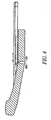
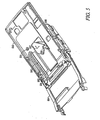
- FIG. 5 One alternative embodiment of the slide and tilt mechanism is illustrated in FIG. 5 having the upper element 502 slideably coupled to a first lower element 504 which hingedly couple to a second lower element 506.
- the upper element 502 is slideably coupled to the first lower element 504 by a rail 505 carried on the upper element 502.
- the upper element includes a slot 508 that is a void which runs longitudinally along the upper element 502.
- a retaining member 510 is carried on the first lower element 504 extending into the slot 508. The top of the retaining member is wider than the slot 508 such that the retaining member 510 will not pass through the slot 508 thereby retaining the upper element 502 to the first lower element 504.
- the retaining member 510 / slot 508 combination prevent the upper element 502 and the first lower element from separating.
- the device comprising a latching member that extends from the first lower element into the slot of the upper element, the latching member slides along the slot retaining the upper member adjacent to the first lower element portion as the upper element is slid from the close configuration to the open configuration.
- the bi-stable biasing member 512 is shown coupled to the upper element 502 and the second lower element 506.
- the bi-stable biasing member 512 is coupled to the upper element 502 by fastener 514 and to the second lower element 506 by fastener 516.
- a method for opening the slide and tilt housing comprises providing a sliding mechanism to allow an upper housing to slide relative to a lower housing, wherein the upper housing is stacked on top of the lower housing.
- the lower housing has first lower housing portion and a second lower housing portion, and the first lower housing portion and a second lower housing portion are coupled together by a hinge.
- the upper housing prevents the first lower housing and the second lower housing form rotating about the hinge when the upper housing is in a closed configuration relative to the lower housing.
- the method further includes providing a rotating mechanism to allow the first lower housing portion to rotate about the hinge to an angled position that is relative to the second lower housing portion and the upper housing when the upper housing is slid to an extended position exposing a keypad of the lower housing.
- the method may also include forming a substantially continuous surface by a upper surface of the lower housing and a upper surface of the upper housing by tilting the lower surface at an angle relative tot eh upper surface.
- the method may include providing a clam like angled flip portion with the angled configuration of the first lower housing portion when the device is in the extended configuration.
- the first lower element portion snaps into place, angled toward the upper element.
Landscapes
- Engineering & Computer Science (AREA)
- Signal Processing (AREA)
- Computer Networks & Wireless Communication (AREA)
- Telephone Set Structure (AREA)
- Casings For Electric Apparatus (AREA)
- Pivots And Pivotal Connections (AREA)
Claims (8)
- Verschiebbares, aufklappbares Gehäuse, welches Folgendes aufweist:einen ersten Gehäuseabschnitt (122);einen zweiten Gehäuseabschnitt (124);einen dritten Gehäuseabschnitt (102) mit einem ersten im Wesentlichen flachen Abschnitt und einem winkelförmigen Abschnitt (130), welcher an einem Ende des dritten Gehäuseabschnitts (102) angeordnet ist, wobei der dritte Gehäuseabschnitt mit dem ersten Gehäuseabschnitt (122) über eine Schiene verschiebbar in Eingriff ist, wobei das verschiebbare, aufklappbare Gehäuse dadurch gekennzeichnet ist, dass:der winkelförmige Abschnitt (130) eine Auflagefläche (150) einschließt, welche derart ausgelegt ist, dass sie mit einer Auflagefläche (134) des ersten Gehäuseabschnitts (122) in Eingriff gelangt, wobei die Auflagefläche (134) durch eine Rolle (154) bereitgestellt wird, welche mit dem dritten Gehäuseabschnitt (102) gekoppelt ist;ein Scharnier (126),welches den esten Gehäuseabschnitt (122) mit dem zweiten Gehäuseabschnitt (124) verbindet; undein Vorspannelement (128), welches zwischen dem ersten Gehäuseabschnitt (122) und dem zweiten Gehäuseabschnitt (124) verbunden ist, um den ersten Gehäuseabschnitt (122) vorzuspannen oder zu beeinflussen, damit sich dieser in zusammengeklappter Anordnung um das Scharnier (126) relativ zu dem zweiten Gehäuseabschnitt (124) dreht, wenn sich der dritte Gehäuseabschnitt (102) in ausgeklappter Anordnung befindet, und wobei der erste Gehäuseabschnitt (122) und der zweite Gehäuseabschnitt (124) in nicht zusammengeklappter Anordnung gehalten werden, wenn sich der dritte Gehäuseabschnitt (102) in geschlossener Anordnung befindet.
- Gehäuse nach Anspruch 1, welches des Weiteren ein Verriegelungsbauteil (152) aufweist, welches derart ausgelegt ist, dass es den dritten Gehäuseabschnitt (102) an dem ersten Gehäuseabschnitt (122) zurückhält, wodurch verhindert wird, dass der erste Gehäuseabschnitt (122) und der zweite Gehäuseabschnitt (124) den Eingriff ineinander lösen, wenn sich das Gehäuse in der geöffneten Anordnung befindet.
- Gehäuse nach Anspruch 1, welches des Weiteren zwei Schienen (302) aufweist, welche auf dem zweiten Gehäuseabschnitt (124) gelagert sind, und den zweiten Gehäuseabschnitt (124) verschiebbar mit dem dritten Gehäuseabschnitt (102) koppeln.
- Gehäuse nach Anspruch 1, wobei der winkelförmige Abschnitt (130) einen mechanischen Anschlag zur Festlegung des Winkels des ersten Gehäuseabschnitts (122, 504) bereitstellt, wenn sich der dritte Gehäuseabschnitt (102, 502) in der aufgeklappten Anordnung befindet.
- Gehäuse nach Anspruch 1, wobei die geschlossene Anordnung den ersten Gehäuseabschnitt (122, 504) aufweist und der zweite Gehäuseabschnitt (124, 506) in Längsrichtung benachbart angeordnet ist.
- Gehäuse nach Anspruch 1, welches des Weiteren ein Rückhalteelement (510) aufweist, welches sich von dem ersten Gehäuseabschnitt (122, 504) in einen Schlitz (508) des dritten Gehäuseabschnitts (102, 502) erstreckt, wobei das Rückhalteelement (510) derart ausgelegt ist, dass es entlang des Schlitzes (508) gleitet, wodurch der dritte Gehäuseabschnitt (102, 502) neben dem ersten Gehäuseabschnitt (122, 504) gehalten wird, während der dritte Gehäuseabschnitt (102, 502) von der geschlossenen Anordnung in die aufgeklappte Anordnung gleitet bzw. verschoben wird.
- Gehäuse nach Anspruch 1, wobei der dritte Gehäuseabschnitt (102, 502) derart ausgelegt ist, dass er in Längsrichtung in die aufgeklappte Anordnung gleitet, und der erste Gehäuseabschnitt (122, 504) aufgrund des Vorspannelements (128) in eine Richtung hin zum dritten Gehäuseabschnitt (102, 504) geneigt ist, wobei ein Abschnitt des ersten Gehäuseabschnitts (122, 504) den winkelförmigen Abschnitt (130) des dritten Gehäuseabschnitts (102, 502) berührt; und
wobei in einer geschlossen Position der dritte Gehäuseabschnitt (102, 502) benachbart zu sowohl dem ersten (122, 504) als auch dem zweiten (124, 506) Gehäuseabschnitt angeordnet ist, wodurch der erste Gehäuseabschnitt (122, 504) und der zweite Gehäuseabschnitt (124, 506) in einer im Wesentlichen planaren Konfiguration gehalten werden. - Gehäuse nach Anspruch 1, welches des Weiteren eine freiliegende Tastatur (202) aufweist, welche auf dem ersten Gehäuseabschnitt (122, 504) betrieben wird, wenn sich der dritte Gehäuseabschnitt in der aufgeklappten Anordnung relativ zu dem ersten (122, 504) und dem zweiten (124, 506) Gehäuseabschnitt befindet.
Applications Claiming Priority (2)
| Application Number | Priority Date | Filing Date | Title |
|---|---|---|---|
| US11/364,373 US7653422B2 (en) | 2006-02-28 | 2006-02-28 | Method and apparatus for a sliding hinge |
| PCT/US2007/060498 WO2007100932A2 (en) | 2006-02-28 | 2007-01-12 | A method and apparatus for a sliding hinge |
Publications (3)
| Publication Number | Publication Date |
|---|---|
| EP1994247A2 EP1994247A2 (de) | 2008-11-26 |
| EP1994247A4 EP1994247A4 (de) | 2011-09-28 |
| EP1994247B1 true EP1994247B1 (de) | 2014-02-26 |
Family
ID=38442663
Family Applications (1)
| Application Number | Title | Priority Date | Filing Date |
|---|---|---|---|
| EP07701235.9A Not-in-force EP1994247B1 (de) | 2006-02-28 | 2007-01-12 | Vorrichtung für ein gleitscharnier |
Country Status (7)
| Country | Link |
|---|---|
| US (1) | US7653422B2 (de) |
| EP (1) | EP1994247B1 (de) |
| KR (1) | KR101323441B1 (de) |
| CN (1) | CN101395331B (de) |
| BR (1) | BRPI0708346B1 (de) |
| RU (1) | RU2429582C2 (de) |
| WO (1) | WO2007100932A2 (de) |
Families Citing this family (25)
| Publication number | Priority date | Publication date | Assignee | Title |
|---|---|---|---|---|
| WO2007114584A1 (en) * | 2006-04-04 | 2007-10-11 | Laird Technologies Map Co., Ltd. | Slide-up opening and closing mechanism for portable terminal |
| KR100833241B1 (ko) * | 2006-04-28 | 2008-05-28 | 삼성전자주식회사 | 슬라이딩-틸트장치 및 이를 채용한 모바일 기기 |
| DE102007041859B4 (de) * | 2006-09-15 | 2011-12-01 | Lg Electronics Inc. | Mobiles Kommunikationsendgerät und Steuerungsverfahren dafür |
| US7986983B2 (en) * | 2007-12-28 | 2011-07-26 | Motorola Mobility, Inc. | Methods and slider form factor devices with continguous surfaces when open |
| US20090170574A1 (en) * | 2007-12-28 | 2009-07-02 | Motorola Inc | Methods and slider form factor devices with contiguous surfaces when open |
| US7991443B2 (en) * | 2008-02-04 | 2011-08-02 | Shin Zu Shing Co., Ltd. | Sliding hinge |
| US8275121B2 (en) * | 2008-03-14 | 2012-09-25 | Sony Ericsson Mobile Communications Ab | Portable communication device having a combined slider and flip hinge assembly |
| JP4665980B2 (ja) * | 2008-03-19 | 2011-04-06 | ソニー株式会社 | 携帯型情報処理装置 |
| KR101474447B1 (ko) * | 2008-07-07 | 2014-12-19 | 엘지전자 주식회사 | 휴대 단말기 |
| JP5117323B2 (ja) * | 2008-08-27 | 2013-01-16 | 本田技研工業株式会社 | 胸部プロテクタ |
| WO2010085057A2 (ko) * | 2009-01-22 | 2010-07-29 | 주식회사 세이텍 | 슬라이딩 모듈 및 이에 사용되는 구동장치 |
| KR101008701B1 (ko) * | 2009-04-16 | 2011-01-17 | 암페놀피닉스 유한회사 | 휴대 기기용 슬라이딩 장치 |
| TW201101963A (en) * | 2009-06-23 | 2011-01-01 | Hon Hai Prec Ind Co Ltd | Electronic device |
| US8364215B2 (en) * | 2009-07-06 | 2013-01-29 | Lg Electronics Inc. | Mobile terminal |
| TW201109886A (en) * | 2009-09-02 | 2011-03-16 | Inventec Appliances Corp | Mobile communication device with ergonomic feature |
| KR101094164B1 (ko) * | 2010-02-11 | 2011-12-14 | 주식회사 팬택 | 단말기 |
| TWM388826U (en) * | 2010-04-30 | 2010-09-11 | Hon Hai Prec Ind Co Ltd | Sliding apparatus |
| CN102252016A (zh) * | 2010-05-20 | 2011-11-23 | 深圳富泰宏精密工业有限公司 | 旋转机构及具有该旋转机构的电子装置 |
| WO2011145260A1 (ja) * | 2010-05-20 | 2011-11-24 | 日本電気株式会社 | 携帯機器 |
| KR101144608B1 (ko) * | 2010-07-23 | 2012-05-11 | 주식회사 다이아벨 | 슬라이딩 장치 및 이를 구비하는 전자기기 |
| CN201781710U (zh) * | 2010-07-30 | 2011-03-30 | 国基电子(上海)有限公司 | 便携式电子装置 |
| IL227894A (en) * | 2013-08-08 | 2017-12-31 | Open Art Ltd | Spring-triggered perception device |
| KR102015398B1 (ko) * | 2014-07-16 | 2019-08-29 | 엘지디스플레이 주식회사 | 접이식 디스플레이 장치 |
| KR20160036231A (ko) * | 2014-09-25 | 2016-04-04 | 엘지전자 주식회사 | 이동 단말기 |
| CN105744780B (zh) * | 2016-04-05 | 2019-05-07 | 北京小米移动软件有限公司 | 遥控器的移动设备固定组件和遥控器 |
Family Cites Families (13)
| Publication number | Priority date | Publication date | Assignee | Title |
|---|---|---|---|---|
| JP3016889B2 (ja) | 1991-02-28 | 2000-03-06 | 日本電気株式会社 | 携帯用電話機 |
| US5440629A (en) * | 1993-07-02 | 1995-08-08 | Gray; Robert R. | Changeable contour construction of wireless telephone |
| JP4637332B2 (ja) * | 2000-08-04 | 2011-02-23 | パナソニック株式会社 | 折り畳み式携帯無線装置 |
| RU18815U1 (ru) * | 2001-03-21 | 2001-07-10 | Чувиков Александр Вячеславович | Лицевая сторона корпуса микротелефонной трубки |
| JP2003298699A (ja) * | 2002-03-29 | 2003-10-17 | Nec Corp | スライド型携帯電話機 |
| KR100484732B1 (ko) * | 2002-11-19 | 2005-04-22 | 삼성전자주식회사 | 슬라이딩 타입 휴대용 무선 단말기 |
| JP2004235897A (ja) | 2003-01-29 | 2004-08-19 | Kato Electrical Mach Co Ltd | 携帯電話機並びにスライド機構 |
| KR100532334B1 (ko) * | 2003-11-26 | 2005-11-29 | 삼성전자주식회사 | 슬라이딩 겸용 폴딩 타입 휴대용 디지털 통신 장치 |
| KR100595635B1 (ko) * | 2003-12-18 | 2006-06-30 | 엘지전자 주식회사 | 슬라이드식 휴대용 단말기의 본체부 절곡장치 |
| KR100539919B1 (ko) * | 2003-12-30 | 2005-12-28 | 삼성전자주식회사 | 힌지 장치 및 그를 구비하는 휴대용 단말기 |
| US20060009255A1 (en) * | 2004-06-29 | 2006-01-12 | Nokia Corporation | Mobile terminal concept with a slide and twist mechanism |
| KR100678578B1 (ko) * | 2004-12-11 | 2007-02-02 | 삼성전자주식회사 | 휴대용 무선단말기의 푸쉬-풀 타입 카메라 모듈 |
| KR100663422B1 (ko) * | 2004-12-21 | 2007-01-02 | 삼성전자주식회사 | 휴대 통신 장치 |
-
2006
- 2006-02-28 US US11/364,373 patent/US7653422B2/en not_active Expired - Fee Related
-
2007
- 2007-01-12 WO PCT/US2007/060498 patent/WO2007100932A2/en not_active Ceased
- 2007-01-12 BR BRPI0708346A patent/BRPI0708346B1/pt not_active IP Right Cessation
- 2007-01-12 RU RU2008138578/12A patent/RU2429582C2/ru not_active IP Right Cessation
- 2007-01-12 CN CN2007800070229A patent/CN101395331B/zh not_active Expired - Fee Related
- 2007-01-12 KR KR1020087020846A patent/KR101323441B1/ko not_active Expired - Fee Related
- 2007-01-12 EP EP07701235.9A patent/EP1994247B1/de not_active Not-in-force
Also Published As
| Publication number | Publication date |
|---|---|
| EP1994247A2 (de) | 2008-11-26 |
| US7653422B2 (en) | 2010-01-26 |
| CN101395331B (zh) | 2013-01-23 |
| US20070199177A1 (en) | 2007-08-30 |
| KR101323441B1 (ko) | 2013-10-29 |
| BRPI0708346A2 (pt) | 2011-05-24 |
| BRPI0708346B1 (pt) | 2020-05-19 |
| RU2429582C2 (ru) | 2011-09-20 |
| WO2007100932B1 (en) | 2008-08-28 |
| CN101395331A (zh) | 2009-03-25 |
| WO2007100932A2 (en) | 2007-09-07 |
| RU2008138578A (ru) | 2010-04-10 |
| EP1994247A4 (de) | 2011-09-28 |
| KR20080114696A (ko) | 2008-12-31 |
| WO2007100932A3 (en) | 2008-07-10 |
Similar Documents
| Publication | Publication Date | Title |
|---|---|---|
| US7653422B2 (en) | Method and apparatus for a sliding hinge | |
| US7599487B2 (en) | Sliding type hinge device and personal portable device using the same | |
| US8180416B2 (en) | Sliding-type mobile communication terminal | |
| JP4169204B2 (ja) | 携帯端末装置 | |
| EP2194693B1 (de) | Tragbare elektronische Vorrichtung | |
| EP1973312B1 (de) | Zusammenklappbare und tragbare elektronische Vorrichtung | |
| EP1806909B1 (de) | Tragbares Kommunikationsendgerät für Spiele und Benutzerschnittstellenvorrichtung dafür | |
| CN101616197B (zh) | 便携式电子装置 | |
| US20090170573A1 (en) | Methods and slider form factor devices with continguous surfaces when open | |
| JP5644939B2 (ja) | スライドアシスト装置 | |
| US8478368B2 (en) | Portable electronic device | |
| KR100693641B1 (ko) | 본체와 슬라이드 커버가 수평하게 펼쳐지는 슬라이드형이동 통신 단말기 | |
| JP4796651B2 (ja) | 携帯用端末の2軸スライド装置 | |
| KR100953173B1 (ko) | 폴더형 휴대 단말기 | |
| CN101742848A (zh) | 便携式电子装置 | |
| CN101742867A (zh) | 电子装置 | |
| KR100998877B1 (ko) | 힌지장치 및 이를 이용한 휴대 단말기 | |
| KR101089238B1 (ko) | 틸팅 가능한 슬라이드 힌지장치 | |
| US8279622B2 (en) | Electronic device | |
| JPH09214587A (ja) | カバー開閉構造 | |
| TWI388264B (zh) | 可攜式電子裝置 | |
| KR20120136616A (ko) | 다중 개폐 가능한 개인휴대단말기 | |
| KR100883452B1 (ko) | 멀티 모드 구조 |
Legal Events
| Date | Code | Title | Description |
|---|---|---|---|
| PUAI | Public reference made under article 153(3) epc to a published international application that has entered the european phase |
Free format text: ORIGINAL CODE: 0009012 |
|
| 17P | Request for examination filed |
Effective date: 20080926 |
|
| AK | Designated contracting states |
Kind code of ref document: A2 Designated state(s): AT BE BG CH CY CZ DE DK EE ES FI FR GB GR HU IE IS IT LI LT LU LV MC NL PL PT RO SE SI SK TR |
|
| AX | Request for extension of the european patent |
Extension state: AL BA HR MK RS |
|
| RAP1 | Party data changed (applicant data changed or rights of an application transferred) |
Owner name: MOTOROLA MOBILITY, INC. |
|
| A4 | Supplementary search report drawn up and despatched |
Effective date: 20110830 |
|
| RIC1 | Information provided on ipc code assigned before grant |
Ipc: E05D 7/10 20060101ALI20110824BHEP Ipc: H04M 1/02 20060101AFI20110824BHEP |
|
| DAX | Request for extension of the european patent (deleted) | ||
| RAP1 | Party data changed (applicant data changed or rights of an application transferred) |
Owner name: MOTOROLA MOBILITY LLC |
|
| REG | Reference to a national code |
Ref country code: DE Ref legal event code: R079 Ref document number: 602007035196 Country of ref document: DE Free format text: PREVIOUS MAIN CLASS: E05D0007100000 Ipc: H04M0001020000 |
|
| GRAP | Despatch of communication of intention to grant a patent |
Free format text: ORIGINAL CODE: EPIDOSNIGR1 |
|
| RIC1 | Information provided on ipc code assigned before grant |
Ipc: H04M 1/02 20060101AFI20130111BHEP Ipc: E05D 7/10 20060101ALI20130111BHEP |
|
| GRAP | Despatch of communication of intention to grant a patent |
Free format text: ORIGINAL CODE: EPIDOSNIGR1 |
|
| INTG | Intention to grant announced |
Effective date: 20130814 |
|
| GRAS | Grant fee paid |
Free format text: ORIGINAL CODE: EPIDOSNIGR3 |
|
| GRAA | (expected) grant |
Free format text: ORIGINAL CODE: 0009210 |
|
| AK | Designated contracting states |
Kind code of ref document: B1 Designated state(s): AT BE BG CH CY CZ DE DK EE ES FI FR GB GR HU IE IS IT LI LT LU LV MC NL PL PT RO SE SI SK TR |
|
| REG | Reference to a national code |
Ref country code: GB Ref legal event code: FG4D |
|
| REG | Reference to a national code |
Ref country code: CH Ref legal event code: EP |
|
| REG | Reference to a national code |
Ref country code: AT Ref legal event code: REF Ref document number: 654154 Country of ref document: AT Kind code of ref document: T Effective date: 20140315 |
|
| REG | Reference to a national code |
Ref country code: DE Ref legal event code: R096 Ref document number: 602007035196 Country of ref document: DE Effective date: 20140403 |
|
| REG | Reference to a national code |
Ref country code: IE Ref legal event code: FG4D |
|
| REG | Reference to a national code |
Ref country code: NL Ref legal event code: VDEP Effective date: 20140226 |
|
| REG | Reference to a national code |
Ref country code: AT Ref legal event code: MK05 Ref document number: 654154 Country of ref document: AT Kind code of ref document: T Effective date: 20140226 |
|
| REG | Reference to a national code |
Ref country code: LT Ref legal event code: MG4D |
|
| PG25 | Lapsed in a contracting state [announced via postgrant information from national office to epo] |
Ref country code: LT Free format text: LAPSE BECAUSE OF FAILURE TO SUBMIT A TRANSLATION OF THE DESCRIPTION OR TO PAY THE FEE WITHIN THE PRESCRIBED TIME-LIMIT Effective date: 20140226 Ref country code: IS Free format text: LAPSE BECAUSE OF FAILURE TO SUBMIT A TRANSLATION OF THE DESCRIPTION OR TO PAY THE FEE WITHIN THE PRESCRIBED TIME-LIMIT Effective date: 20140626 |
|
| PG25 | Lapsed in a contracting state [announced via postgrant information from national office to epo] |
Ref country code: FI Free format text: LAPSE BECAUSE OF FAILURE TO SUBMIT A TRANSLATION OF THE DESCRIPTION OR TO PAY THE FEE WITHIN THE PRESCRIBED TIME-LIMIT Effective date: 20140226 Ref country code: PT Free format text: LAPSE BECAUSE OF FAILURE TO SUBMIT A TRANSLATION OF THE DESCRIPTION OR TO PAY THE FEE WITHIN THE PRESCRIBED TIME-LIMIT Effective date: 20140626 Ref country code: SE Free format text: LAPSE BECAUSE OF FAILURE TO SUBMIT A TRANSLATION OF THE DESCRIPTION OR TO PAY THE FEE WITHIN THE PRESCRIBED TIME-LIMIT Effective date: 20140226 Ref country code: AT Free format text: LAPSE BECAUSE OF FAILURE TO SUBMIT A TRANSLATION OF THE DESCRIPTION OR TO PAY THE FEE WITHIN THE PRESCRIBED TIME-LIMIT Effective date: 20140226 Ref country code: NL Free format text: LAPSE BECAUSE OF FAILURE TO SUBMIT A TRANSLATION OF THE DESCRIPTION OR TO PAY THE FEE WITHIN THE PRESCRIBED TIME-LIMIT Effective date: 20140226 Ref country code: CY Free format text: LAPSE BECAUSE OF FAILURE TO SUBMIT A TRANSLATION OF THE DESCRIPTION OR TO PAY THE FEE WITHIN THE PRESCRIBED TIME-LIMIT Effective date: 20140226 |
|
| PG25 | Lapsed in a contracting state [announced via postgrant information from national office to epo] |
Ref country code: LV Free format text: LAPSE BECAUSE OF FAILURE TO SUBMIT A TRANSLATION OF THE DESCRIPTION OR TO PAY THE FEE WITHIN THE PRESCRIBED TIME-LIMIT Effective date: 20140226 Ref country code: BE Free format text: LAPSE BECAUSE OF FAILURE TO SUBMIT A TRANSLATION OF THE DESCRIPTION OR TO PAY THE FEE WITHIN THE PRESCRIBED TIME-LIMIT Effective date: 20140226 |
|
| PG25 | Lapsed in a contracting state [announced via postgrant information from national office to epo] |
Ref country code: CZ Free format text: LAPSE BECAUSE OF FAILURE TO SUBMIT A TRANSLATION OF THE DESCRIPTION OR TO PAY THE FEE WITHIN THE PRESCRIBED TIME-LIMIT Effective date: 20140226 Ref country code: RO Free format text: LAPSE BECAUSE OF FAILURE TO SUBMIT A TRANSLATION OF THE DESCRIPTION OR TO PAY THE FEE WITHIN THE PRESCRIBED TIME-LIMIT Effective date: 20140226 Ref country code: DK Free format text: LAPSE BECAUSE OF FAILURE TO SUBMIT A TRANSLATION OF THE DESCRIPTION OR TO PAY THE FEE WITHIN THE PRESCRIBED TIME-LIMIT Effective date: 20140226 Ref country code: EE Free format text: LAPSE BECAUSE OF FAILURE TO SUBMIT A TRANSLATION OF THE DESCRIPTION OR TO PAY THE FEE WITHIN THE PRESCRIBED TIME-LIMIT Effective date: 20140226 |
|
| REG | Reference to a national code |
Ref country code: DE Ref legal event code: R097 Ref document number: 602007035196 Country of ref document: DE |
|
| PG25 | Lapsed in a contracting state [announced via postgrant information from national office to epo] |
Ref country code: SK Free format text: LAPSE BECAUSE OF FAILURE TO SUBMIT A TRANSLATION OF THE DESCRIPTION OR TO PAY THE FEE WITHIN THE PRESCRIBED TIME-LIMIT Effective date: 20140226 Ref country code: ES Free format text: LAPSE BECAUSE OF FAILURE TO SUBMIT A TRANSLATION OF THE DESCRIPTION OR TO PAY THE FEE WITHIN THE PRESCRIBED TIME-LIMIT Effective date: 20140226 Ref country code: PL Free format text: LAPSE BECAUSE OF FAILURE TO SUBMIT A TRANSLATION OF THE DESCRIPTION OR TO PAY THE FEE WITHIN THE PRESCRIBED TIME-LIMIT Effective date: 20140226 |
|
| PLBE | No opposition filed within time limit |
Free format text: ORIGINAL CODE: 0009261 |
|
| STAA | Information on the status of an ep patent application or granted ep patent |
Free format text: STATUS: NO OPPOSITION FILED WITHIN TIME LIMIT |
|
| 26N | No opposition filed |
Effective date: 20141127 |
|
| REG | Reference to a national code |
Ref country code: DE Ref legal event code: R097 Ref document number: 602007035196 Country of ref document: DE Effective date: 20141127 |
|
| PG25 | Lapsed in a contracting state [announced via postgrant information from national office to epo] |
Ref country code: IT Free format text: LAPSE BECAUSE OF FAILURE TO SUBMIT A TRANSLATION OF THE DESCRIPTION OR TO PAY THE FEE WITHIN THE PRESCRIBED TIME-LIMIT Effective date: 20140226 |
|
| PG25 | Lapsed in a contracting state [announced via postgrant information from national office to epo] |
Ref country code: SI Free format text: LAPSE BECAUSE OF FAILURE TO SUBMIT A TRANSLATION OF THE DESCRIPTION OR TO PAY THE FEE WITHIN THE PRESCRIBED TIME-LIMIT Effective date: 20140226 |
|
| REG | Reference to a national code |
Ref country code: CH Ref legal event code: PL |
|
| PG25 | Lapsed in a contracting state [announced via postgrant information from national office to epo] |
Ref country code: LU Free format text: LAPSE BECAUSE OF FAILURE TO SUBMIT A TRANSLATION OF THE DESCRIPTION OR TO PAY THE FEE WITHIN THE PRESCRIBED TIME-LIMIT Effective date: 20150112 |
|
| PG25 | Lapsed in a contracting state [announced via postgrant information from national office to epo] |
Ref country code: MC Free format text: LAPSE BECAUSE OF FAILURE TO SUBMIT A TRANSLATION OF THE DESCRIPTION OR TO PAY THE FEE WITHIN THE PRESCRIBED TIME-LIMIT Effective date: 20140226 |
|
| PG25 | Lapsed in a contracting state [announced via postgrant information from national office to epo] |
Ref country code: LI Free format text: LAPSE BECAUSE OF NON-PAYMENT OF DUE FEES Effective date: 20150131 Ref country code: CH Free format text: LAPSE BECAUSE OF NON-PAYMENT OF DUE FEES Effective date: 20150131 |
|
| REG | Reference to a national code |
Ref country code: IE Ref legal event code: MM4A |
|
| REG | Reference to a national code |
Ref country code: FR Ref legal event code: PLFP Year of fee payment: 10 |
|
| PG25 | Lapsed in a contracting state [announced via postgrant information from national office to epo] |
Ref country code: IE Free format text: LAPSE BECAUSE OF NON-PAYMENT OF DUE FEES Effective date: 20150112 |
|
| PG25 | Lapsed in a contracting state [announced via postgrant information from national office to epo] |
Ref country code: GR Free format text: LAPSE BECAUSE OF FAILURE TO SUBMIT A TRANSLATION OF THE DESCRIPTION OR TO PAY THE FEE WITHIN THE PRESCRIBED TIME-LIMIT Effective date: 20140527 |
|
| REG | Reference to a national code |
Ref country code: FR Ref legal event code: PLFP Year of fee payment: 11 |
|
| PG25 | Lapsed in a contracting state [announced via postgrant information from national office to epo] |
Ref country code: BG Free format text: LAPSE BECAUSE OF FAILURE TO SUBMIT A TRANSLATION OF THE DESCRIPTION OR TO PAY THE FEE WITHIN THE PRESCRIBED TIME-LIMIT Effective date: 20140226 Ref country code: HU Free format text: LAPSE BECAUSE OF FAILURE TO SUBMIT A TRANSLATION OF THE DESCRIPTION OR TO PAY THE FEE WITHIN THE PRESCRIBED TIME-LIMIT; INVALID AB INITIO Effective date: 20070112 |
|
| PG25 | Lapsed in a contracting state [announced via postgrant information from national office to epo] |
Ref country code: TR Free format text: LAPSE BECAUSE OF FAILURE TO SUBMIT A TRANSLATION OF THE DESCRIPTION OR TO PAY THE FEE WITHIN THE PRESCRIBED TIME-LIMIT Effective date: 20140226 |
|
| REG | Reference to a national code |
Ref country code: GB Ref legal event code: 732E Free format text: REGISTERED BETWEEN 20170831 AND 20170906 |
|
| REG | Reference to a national code |
Ref country code: FR Ref legal event code: TP Owner name: GOOGLE TECHNOLOGY HOLDINGS LLC, US Effective date: 20171214 |
|
| REG | Reference to a national code |
Ref country code: FR Ref legal event code: PLFP Year of fee payment: 12 |
|
| REG | Reference to a national code |
Ref country code: DE Ref legal event code: R082 Ref document number: 602007035196 Country of ref document: DE Representative=s name: BETTEN & RESCH PATENT- UND RECHTSANWAELTE PART, DE Ref country code: DE Ref legal event code: R081 Ref document number: 602007035196 Country of ref document: DE Owner name: GOOGLE TECHNOLOGY HOLDINGS LLC, MOUNTAIN VIEW, US Free format text: FORMER OWNER: MOTOROLA MOBILITY LLC, LIBERTYVILLE, ILL., US |
|
| PGFP | Annual fee paid to national office [announced via postgrant information from national office to epo] |
Ref country code: AT Payment date: 20190305 Year of fee payment: 7 |
|
| PG25 | Lapsed in a contracting state [announced via postgrant information from national office to epo] |
Ref country code: FR Free format text: LAPSE BECAUSE OF NON-PAYMENT OF DUE FEES Effective date: 20200131 |
|
| P01 | Opt-out of the competence of the unified patent court (upc) registered |
Effective date: 20230512 |
|
| PGFP | Annual fee paid to national office [announced via postgrant information from national office to epo] |
Ref country code: DE Payment date: 20240129 Year of fee payment: 18 Ref country code: GB Payment date: 20240129 Year of fee payment: 18 |
|
| REG | Reference to a national code |
Ref country code: DE Ref legal event code: R119 Ref document number: 602007035196 Country of ref document: DE |
|
| GBPC | Gb: european patent ceased through non-payment of renewal fee |
Effective date: 20250112 |
|
| PG25 | Lapsed in a contracting state [announced via postgrant information from national office to epo] |
Ref country code: DE Free format text: LAPSE BECAUSE OF NON-PAYMENT OF DUE FEES Effective date: 20250801 |
|
| PG25 | Lapsed in a contracting state [announced via postgrant information from national office to epo] |
Ref country code: GB Free format text: LAPSE BECAUSE OF NON-PAYMENT OF DUE FEES Effective date: 20250112 |