EP1994454B1 - Systeme de commande et procede de mise en uvre de fonctions de mission en conformite avec des normes et reglements predetermines - Google Patents
Systeme de commande et procede de mise en uvre de fonctions de mission en conformite avec des normes et reglements predetermines Download PDFInfo
- Publication number
- EP1994454B1 EP1994454B1 EP07717634.5A EP07717634A EP1994454B1 EP 1994454 B1 EP1994454 B1 EP 1994454B1 EP 07717634 A EP07717634 A EP 07717634A EP 1994454 B1 EP1994454 B1 EP 1994454B1
- Authority
- EP
- European Patent Office
- Prior art keywords
- processor
- signal
- mission
- command
- algorithm
- Prior art date
- Legal status (The legal status is an assumption and is not a legal conclusion. Google has not performed a legal analysis and makes no representation as to the accuracy of the status listed.)
- Active
Links
Images

Classifications
-
- G—PHYSICS
- G05—CONTROLLING; REGULATING
- G05D—SYSTEMS FOR CONTROLLING OR REGULATING NON-ELECTRIC VARIABLES
- G05D1/00—Control of position, course, altitude or attitude of land, water, air or space vehicles, e.g. using automatic pilots
- G05D1/0055—Control of position, course, altitude or attitude of land, water, air or space vehicles, e.g. using automatic pilots with safety arrangements
Definitions
- the present invention generally relates to control systems, and more particularly relates to methods and systems implementing mission functions in compliance with predetermined regulations and standards.
- Autonomous systems are particularly convenient for simplifying or minimizing labor intensive operations.
- High reliability systems such as robotic systems, typically require a significant amount of human interaction for proper operation, and reducing the human interaction in such systems is desirable to conserve labor resources or more efficiently use labor resources, for example.
- To decrease the number of human operators associated with the robotic system a certain amount of autonomy may be granted to the system for self-operation.
- autonomous systems generally implement non-deterministic processes which inherently have some unpredictability. By increasing autonomy, an absolute determination of what the system may do next becomes increasingly difficult if not impossible.
- Some control systems are used in programs or vehicles regulated by one or more entities, for example aircraft regulated by the Federal Aviation Administration (FAA).
- FAA Federal Aviation Administration
- the benefit of decreased labor is attractive, but these entities may be unwilling to sacrifice determinism in the control systems in exchange for the benefit of decreased labor.
- human control or override may be asserted in the event of an improper operation of the control system.
- Examples of proposed applications of autonomous systems include, but are not necessarily limited to, unmanned aircraft, space exploration including autonomous assembly in space, unmanned rovers, and autonomous rendezvous and docking of a vehicle, and the like. In the future, these autonomous systems may undergo certification by the National Aeronautics and Space Administration (NASA), one or more military branches, the FAA, and other government entities.
- NSA National Aeronautics and Space Administration
- Non-deterministic systems or systems operating non-deterministic algorithms in human environments e.g., in the presence of one or more humans
- US 2004/267412 A1 discloses a security mechanism which identifies users so as to restrict access and operation to authorised users, such as persons authorised to access and fly a particular aircraft.
- the security mechanism comprises one or more security devices to identify the user attempting to gain access or operate the controller; and one or more monitoring devices to determine whether or not the user identified is authorised to have access or operate the control.
- the present invention provides a system for controlling one or more actuators in a mission, the system comprising:
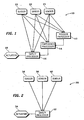
- FIG. 1 is a block diagram of a control system in accordance with an exemplary embodiment of the present invention
- FIG. 2 is a block diagram of a control system in accordance with another exemplary embodiment of the present invention.
- FIG. 3 is a block diagram of time and space processing partitions of the processor shown in FIG. 2 ;
- FIG. 4 is a flow diagram of a method for controlling one or more actuators in accordance with an exemplary embodiment of the present invention.
- the present invention is a control system architecture where lower-level protection algorithms command priority over higher-level commands.
- a control system comprises a first layer for individually running mission and non-critical programs and producing commands during execution of these programs, a second layer for validating the commands generated from the first layer to meet any applicable regulations, and a third layer for validating regulation-compliant commands to human-rated standards.
- the mission layer includes non-deterministic algorithms. Any command that does not comply with the applicable regulations is subsumed or suppressed. Additionally, any regulation-compliant commands that do not meet the human-rated standards are subsumed or suppressed
- FIG. 1 is a block diagram of a control system 10 in accordance with an exemplary embodiment of the present invention.
- the control system 10 comprises a first processor 12, or mission processor, configured to execute one or more mission algorithms and produce a command based on a particular mission algorithm, a second processor 14 having an input coupled to the first processor 12 and configured to execute one or more algorithms based on at least one predetermined regulation (e.g., FAA regulation, military specification, and the like), a third processor 16 having an input coupled to an output of the second processor 14 and configured to execute one or more algorithms based on at least one predetermined standard (e.g., human-rated standards, safety standards, and the like), and one or more actuators 18 coupled to an output of the third processor 16 to receive a command from the third processor 16.
- a predetermined regulation e.g., FAA regulation, military specification, and the like
- a third processor 16 having an input coupled to an output of the second processor 14 and configured to execute one or more algorithms based on at least one predetermined standard (e.g
- the three (3) layers of the control system 10 architecture are separated out into the first, second, and third processors, 12, 14, and 16, respectively.
- the third processor 16 transmits the command to the actuator 18 when the command complies with the predetermined regulations and satisfies the predetermined standards as determined by the second and third processors 14 and 16, respectively.
- the control system 10 is described as controlling specific actuators 18, the control system 10 may be applied to any apparatus or system configured to perform a desired action or task.
- the mission algorithms may range in complexity, such as a single action, a series of tasks, or the accomplishment of a mission goal through multiple actions and/or tasks.
- Each of the processors 12, 14, 16 may additionally be coupled to one or more sensors or input devices 21, 22, and 23.
- Each of the sensors 21, 22, 23 provides an input signal that is received by each processor 12, 14, 16 and may be used during the execution of the respective algorithm.
- the first processor 12 may be coupled to the sensors 21, 22, and 23 and process at least one of the input signals from the sensors 21, 22, and 23 during the execution of a mission algorithm
- the second processor 14 may be coupled to the sensors 21, 22, and 23 and process at least one of the input signals from the sensors 21, 22, and 23 during the execution of an algorithm based on the regulations
- the third processor 16 may be coupled to the sensors 21, 22, and 23 and process at least one of the input signals from the sensors 21, 22, and 23 during execution of an algorithm based on the standards.
- the number and type of sensors 21, 22, 23 may vary for each of the processors 12, 14, and 16 and may vary for the particular mission.
- the first processor 12 may use data from one or more of the sensors 21, 22, 23 to create a command, while the second and third processors 14 and 16 may use the same or different sensors to perform their respective functions.
- the first processor 12 Based on the mission or task of the actuator, the first processor 12 originates commands that implement such mission or task.
- the first processor 12 includes different mission algorithms, selects the corresponding mission algorithm based on the input signals (e.g., from the sensors 21, 22, and 23), and produces a first signal indicating the command based on the type of actuator 18 to be controlled by the control system 10 during execution of the mission algorithm.
- the mission algorithm may result from a variety of sources including, but not necessarily limited to, real-time commands from human operators, planned and scheduled mission tasks, real-time response to environmental conditions while achieving mission goals, and the like.
- the second processor 14 processes the first signal supplied from the first processor 12 via the algorithms based on the predetermined regulations to determine if the command complies with applicable regulations.
- the actuator 18 operates within a space that is governed by the predetermined regulations.
- the predetermined regulations For example, an aircraft is governed by FAA regulations.
- the applicable regulations considered during the execution of the algorithms by the second processor 14 vary based on the type of actuator 18 and may include predefined governmental or industry regulations and other additional regulations (e.g., customer specified requirements or performance requirements).
- a command to fly a border surveillance aircraft autonomously may be regulated to maintain a minimum altitude and respect international borders.
- one or more of the sensors 21, 22, and 23 detect various flight information such as altitude, global position, and the like.
- the second processor 14 determines that the command, as indicated by the first signal from the first processor 12, complies with the regulations (e.g., indicating a compliant command)
- the second processor 14 transmits a second signal to the third processor 16.
- the third processor 16 processes the second signal via the algorithms based on the predetermined standards to determine if the command satisfies such standards.
- the predetermined standards are selected based on preventing contact of the actuator 18 with predefined elements of the space occupied by the actuator 18 (e.g., humans; human-occupied structures, and the like) and thus improve safety.
- the third processor 16 controls all motion of the actuator 18 to prevent contact or undesired contact of the actuator 18 with a predefined element (e.g., a human).
- the sensors 21, 22, and 23 sense the proximity of predefined element to the actuator 18 and may measure the forces involved when the actuator 18 contacts the predefined element.
- the third processor 16 is additionally configured to determine the path of any motion of the actuator 18 and predict the potential contact of the actuator 18 with the human.
- the algorithms executed by the third processor 16 include logic rules to preclude the device from exerting forces than exceed predetermined levels (e.g., to prevent injury) or altogether avoid contact.
- the third processor 16 determines that the command satisfies the predetermined standards, the third processor 16 transmits the command, produced during execution of the mission algorithm, to the actuator 18.
- the processors 12, 14, 16 are cascaded with the commands produced by the mission algorithms running in the first processor 12 and flowing to the second processor 14 running the compliance algorithms. Any commands that meet the applicable compliance criteria flow to the third processor 16 running the safety algorithms.
- the third processor 16 has access to the actuator 18 and transmits commands thereto when the commands meet both the predetermined regulations and the predetermined standards.
- FIG. 2 is a block diagram of a control system 30 in accordance with another exemplary embodiment of the present invention
- FIG. 3 is a block diagram of time and space processing partitions of the processor shown in FIG. 2
- the control system 30 comprises a processor 32, one or more actuators 34 coupled to an output of the processor 32, and one or more sensors 36, 38, and 40 coupled to an input of the processor 32.
- the three (3) layers of the control system architecture are implemented within a single processor 32.
- the three (3) layers may also be implemented with duplicate processors having redundant processing.
- the processor 32 provides a single high-throughput computational platform that may be partitioned into multiple virtual computers. For example, partitioning occurs in four (4) domains of the processor 32: memory space, computation time, input/output (I/O) access, and backplane access.
- Each virtual computer provides a dedicated resource, referred to as a partition, to the associated software application.
- the processor 32 comprises an operating system and middleware 52, one or more partitions 54, 56 (e.g., mission partition 1, ... , mission partition n) communicating with the operating system 52 and configured to operate mission algorithms, a partition 58 communicating with the operating system 52 and configured to operate algorithms based on the predetermined regulations (e.g., compliance partition), a partition 60 configured to operate algorithms based on the predetermined standards (e.g., safety partition), and a partition 62 communicating with the operating system and having an input coupled to the sensors 36, 38, 40 and an output coupled to the actuator(s) 34.
- the processor 32 may additionally include other partitions 64 that process a variety of tasks. For example, an additional partition may be included between the mission partitions 54, 56 and the compliance partition 58 for user commands. In this example, an emergency stop capability may be added using an additional partition.
- Movement of data from the sensors 36, 38, and 40 to the processor 32 and from the processor 32 to the actuator 34 is controlled by the operating system 52. Additionally, data movement between the partitions 54, 56, 58, 60, and 62 is also controlled by a routing function of the operating system 52 (e.g., a routing function hosted in the middleware). Commands produced from the mission algorithms that comply with the predetermined regulations and the predetermined standards (e.g., commands that comply with regulation and safety requirements) are relayed to the actuator 34 (e.g., via the partition 62).
- each partition 54, 56, 58, 60, and 62 is prevented from consuming shared processor resources to the exclusion of any other partition and consuming I/O resources to the exclusion of any other partition.
- the probability of a hardware or software failure unique to a particular partition that adversely affects any other partition is minimized or altogether prevented by the partitioning and controlled movement of data with the operating system 52.
- Using a single processor 32 reduces the number of computation elements and minimizes or eliminates duplicate sensor/access paths, such as the sensor paths and the actuator paths shown in FIG. 1 .
- FIG. 4 is a flow diagram of a method 100 for controlling one or more actuators in accordance with an exemplary embodiment of the present invention.
- a first signal is produced while performing at least a portion of a mission at step 105.
- the first signal represents a command.
- a mission algorithm may be selected based on at least one sensor input to perform the mission.
- a second signal based on the first signal is produced when the command complies with at least one predetermined regulation at step 110.
- the second signal represents a compliant command.
- a compliance algorithm may be run or operated to compare the first signal with the predetermined regulation.
- the command is transmitted to the actuators when the second signal satisfies at least one predetermined standard indicating a safe command at step 115.
- a safety algorithm may be run or operated to compare the second signal with the predetermined standard.
Landscapes
- Engineering & Computer Science (AREA)
- Aviation & Aerospace Engineering (AREA)
- Radar, Positioning & Navigation (AREA)
- Remote Sensing (AREA)
- Physics & Mathematics (AREA)
- General Physics & Mathematics (AREA)
- Automation & Control Theory (AREA)
- Safety Devices In Control Systems (AREA)
Claims (4)
- Système pour commander un ou plusieurs actionneurs au cours d'une mission, le système comprenant :un premier processeur (12) comportant des algorithmes de mission et conçu pour sélectionner un premier algorithme de mission et, en fonction du type d'actionneur à commander par le système lors de l'exécution de l'algorithme de mission sélectionné, pour produire une commande d'actionnement du ou d'au moins un des actionneurs qui met en oeuvre la mission au moyen de l'algorithme de mission sélectionné, le premier processeur générant un premier signal représentant la commande ;un deuxième processeur (14) possédant une entrée couplée audit premier processeur (12) et possédant une sortie, ledit deuxième processeur (14) comportant un algorithme de conformité servant à comparer le premier signal à une prescription de performance prédéfinie, le deuxième processeur étant conçu pour transmettre un deuxième signal si le premier signal est conforme à la prescription de performance prédéfinie ; etun troisième processeur (16) possédant une entrée couplée à ladite sortie dudit deuxième processeur (14) et possédant une sortie conçue pour être couplée à ou aux actionneurs, ledit troisième processeur (16) comportant un algorithme de sécurité servant à comparer le deuxième signal à une norme de sécurité prédéfinie, le troisième processeur étant conçu pour transmettre un troisième signal à ou aux actionneurs en fonction dudit deuxième signal si le deuxième signal est conforme à la norme de sécurité prédéfinie, le troisième signal comportant la commande produite lors de l'exécution de l'algorithme de mission sélectionné.
- Système selon la revendication 1, dans lequel ledit premier processeur est en outre conçu pour :se coupler à un ou plusieurs capteurs, le ou au moins un desdits capteurs étant conçu pour produire un signal d'entrée ; etexécuter ladite au moins une mission en fonction dudit signal d'entrée.
- Système selon la revendication 2, dans lequel ledit deuxième processeur supprime ladite commande si ladite commande n'est pas conforme à une réglementation gouvernementale prédéfinie.
- Système selon la revendication 1, dans lequel ledit troisième processeur supprime ladite commande si ladite commande outrepasse ladite norme de sécurité prédéfinie.
Applications Claiming Priority (2)
| Application Number | Priority Date | Filing Date | Title |
|---|---|---|---|
| US11/359,159 US7515974B2 (en) | 2006-02-21 | 2006-02-21 | Control system and method for compliant control of mission functions |
| PCT/US2007/062420 WO2007098441A1 (fr) | 2006-02-21 | 2007-02-20 | Systeme de commande et procede de mise en œuvre de fonctions de mission en conformite avec des normes et reglements predetermines |
Publications (2)
| Publication Number | Publication Date |
|---|---|
| EP1994454A1 EP1994454A1 (fr) | 2008-11-26 |
| EP1994454B1 true EP1994454B1 (fr) | 2013-07-17 |
Family
ID=38051537
Family Applications (1)
| Application Number | Title | Priority Date | Filing Date |
|---|---|---|---|
| EP07717634.5A Active EP1994454B1 (fr) | 2006-02-21 | 2007-02-20 | Systeme de commande et procede de mise en uvre de fonctions de mission en conformite avec des normes et reglements predetermines |
Country Status (4)
| Country | Link |
|---|---|
| US (1) | US7515974B2 (fr) |
| EP (1) | EP1994454B1 (fr) |
| JP (1) | JP4964902B2 (fr) |
| WO (1) | WO2007098441A1 (fr) |
Families Citing this family (10)
| Publication number | Priority date | Publication date | Assignee | Title |
|---|---|---|---|---|
| US20070288156A1 (en) * | 2006-05-17 | 2007-12-13 | The Boeing Company | Route search planner |
| US20100017026A1 (en) * | 2008-07-21 | 2010-01-21 | Honeywell International Inc. | Robotic system with simulation and mission partitions |
| US20120203419A1 (en) * | 2009-10-23 | 2012-08-09 | Bae Systems Plc | Safety management system |
| EP2317412A1 (fr) * | 2009-10-23 | 2011-05-04 | BAE SYSTEMS plc | Système de gestion sécurisé |
| US8453160B2 (en) * | 2010-03-11 | 2013-05-28 | Honeywell International Inc. | Methods and systems for authorizing an effector command in an integrated modular environment |
| EP2667268A1 (fr) * | 2012-05-24 | 2013-11-27 | Siemens Aktiengesellschaft | Procédé destiné au fonctionnement d'un appareil d'automatisation |
| US10421531B2 (en) * | 2012-11-27 | 2019-09-24 | Bell Helicopter Textron Inc. | Laptop based rapid control laws development |
| PT106723A (pt) * | 2013-01-09 | 2014-07-09 | Far Away Sensing | Sistema e processo de comando remoto de veículos por cópia de orientação espacial compreendendo um subsistema avisador de ordens não executáveis |
| US10943194B2 (en) | 2013-10-25 | 2021-03-09 | The Boeing Company | Product chemical profile system |
| FR3069665B1 (fr) * | 2017-07-31 | 2021-01-08 | Thales Sa | Dispositif de controle pour vehicule sans pilote humain embarque, procede de controle de pilotage d'un vehicule sans pilote humain embarque, vehicule sans pilote humain embarque comportant un tel... |
Citations (1)
| Publication number | Priority date | Publication date | Assignee | Title |
|---|---|---|---|---|
| US20050014499A1 (en) * | 1999-06-29 | 2005-01-20 | Space Data Corporation | Systems and applications of lighter-than-air (LTA) platforms |
Family Cites Families (27)
| Publication number | Priority date | Publication date | Assignee | Title |
|---|---|---|---|---|
| US5134560A (en) * | 1989-10-23 | 1992-07-28 | International Business Machines Corporation | Method and system for generation of manufacturing process plans |
| IL117792A (en) | 1995-05-08 | 2003-10-31 | Rafael Armament Dev Authority | Autonomous command and control unit for mobile platform |
| US6163732A (en) * | 1997-12-11 | 2000-12-19 | Eastman Chemical Company | System, method and computer program products for determining compliance of chemical products to government regulations |
| US6760712B1 (en) * | 1997-12-29 | 2004-07-06 | General Electric Company | Automatic train handling controller |
| US7203491B2 (en) * | 2001-04-18 | 2007-04-10 | Space Data Corporation | Unmanned lighter-than-air safe termination and recovery methods |
| US6453209B1 (en) * | 1999-09-01 | 2002-09-17 | Daimlerchrysler Corporation | Computer-implemented method and apparatus for integrating vehicle manufacturing operations |
| US6912502B1 (en) * | 1999-12-30 | 2005-06-28 | Genworth Financial, Inc., | System and method for compliance management |
| US20020194014A1 (en) * | 2000-04-19 | 2002-12-19 | Starnes Curt R. | Legal and regulatory compliance program and legal resource database architecture |
| US6721644B2 (en) * | 2000-08-02 | 2004-04-13 | Alfred B. Levine | Vehicle drive override subsystem |
| US20020099586A1 (en) * | 2000-11-22 | 2002-07-25 | National Britannia Group Ltd. | Method, system, and computer program product for risk assessment and risk management |
| US7072763B2 (en) * | 2000-11-28 | 2006-07-04 | Arvinmeritor Technology, Llc | Intelligent load distribution system |
| US20030069894A1 (en) * | 2001-09-17 | 2003-04-10 | Darlene Cotter | Computer-based system for assessing compliance with governmental regulations |
| US20040139053A1 (en) * | 2002-01-04 | 2004-07-15 | Haunschild Gregory D. | Online regulatory compliance system and method for facilitating compliance |
| US20030217036A1 (en) * | 2002-05-14 | 2003-11-20 | Argent Regulatory Services, L.L.C. | Online regulatory compliance system and method for facilitating compliance |
| US7003477B2 (en) * | 2002-03-01 | 2006-02-21 | Phillip Zarrow | Certification method for manufacturing process |
| US7548881B2 (en) * | 2002-11-04 | 2009-06-16 | Tradebeam, Inc. | Systems and methods for producing documentary credit and conforming shipping documents |
| US20040216039A1 (en) * | 2003-04-25 | 2004-10-28 | Kathleen Lane | Automated method and collaborative process related to legal and regulatory requirements for document creation and document records management |
| US6792363B1 (en) | 2003-06-17 | 2004-09-14 | Honeywell International, Inc. | System and method for trajectory optimization using adaptive navigation performance estimation |
| US7376494B2 (en) | 2003-06-26 | 2008-05-20 | Michael Arnouse | Apparatus, system and method for aircraft security and anti-hijacking intervention |
| EP1690210A2 (fr) * | 2003-07-07 | 2006-08-16 | Metatomix, Inc. | Surveillance, contrôle et plate-forme d'événements en temps réel |
| US20050071185A1 (en) * | 2003-08-06 | 2005-03-31 | Thompson Bradley Merrill | Regulatory compliance evaluation system and method |
| JP4272494B2 (ja) * | 2003-08-20 | 2009-06-03 | パナソニック株式会社 | 製造プロセスの開発方法 |
| BRPI0415087A (pt) * | 2003-10-06 | 2007-05-29 | Eastman Chem Co | método e sistema para derivar composições quìmicas, e, meio legìvel por computador |
| US7827294B2 (en) * | 2004-05-06 | 2010-11-02 | American Express Travel Related Services Company, Inc. | System and method for dynamic security provisioning of computing resources |
| JP2006131055A (ja) * | 2004-11-04 | 2006-05-25 | Denso Corp | 車両走行制御装置 |
| US8075484B2 (en) * | 2005-03-02 | 2011-12-13 | Martin Moore-Ede | Systems and methods for assessing equipment operator fatigue and using fatigue-risk-informed safety-performance-based systems and methods to replace or supplement prescriptive work-rest regulations |
| US7561951B2 (en) * | 2005-05-06 | 2009-07-14 | Ford Global Technologies Llc | Occupant control system integrated with vehicle dynamics controls |
-
2006
- 2006-02-21 US US11/359,159 patent/US7515974B2/en active Active
-
2007
- 2007-02-20 WO PCT/US2007/062420 patent/WO2007098441A1/fr not_active Ceased
- 2007-02-20 JP JP2008556510A patent/JP4964902B2/ja active Active
- 2007-02-20 EP EP07717634.5A patent/EP1994454B1/fr active Active
Patent Citations (1)
| Publication number | Priority date | Publication date | Assignee | Title |
|---|---|---|---|---|
| US20050014499A1 (en) * | 1999-06-29 | 2005-01-20 | Space Data Corporation | Systems and applications of lighter-than-air (LTA) platforms |
Also Published As
| Publication number | Publication date |
|---|---|
| US7515974B2 (en) | 2009-04-07 |
| US20070198126A1 (en) | 2007-08-23 |
| EP1994454A1 (fr) | 2008-11-26 |
| WO2007098441A1 (fr) | 2007-08-30 |
| JP2009527862A (ja) | 2009-07-30 |
| JP4964902B2 (ja) | 2012-07-04 |
Similar Documents
| Publication | Publication Date | Title |
|---|---|---|
| EP1994454B1 (fr) | Systeme de commande et procede de mise en uvre de fonctions de mission en conformite avec des normes et reglements predetermines | |
| Wang et al. | An adaptive fault-tolerant sliding mode control allocation scheme for multirotor helicopter subject to simultaneous actuator faults | |
| EP3756118B1 (fr) | Détection, localisation et neutralisation de cyberattaque pour véhicules aériens sans pilote | |
| EP1563352B1 (fr) | Architecture de systeme de controle a haute integrite utilisant des plates-formes informatiques a recuperation rapide | |
| US7725215B2 (en) | Distributed and recoverable digital control system | |
| US7714702B2 (en) | Health monitoring system for preventing a hazardous condition | |
| EP2147757A1 (fr) | Système de robotique avec simulation et partitions de mission | |
| Clough | Unmanned aerial vehicles: autonomous control challenges, a researcher's perspective | |
| US8588970B2 (en) | Robotic system with distributed integrated modular avionics across system segments | |
| Maciejowski et al. | Fault tolerant control using Gaussian processes and model predictive control | |
| WO2007018651A1 (fr) | Procede de gestion de redondance d'un systeme de commande numerique distribue et recuperable | |
| Ordoukhanian et al. | Human-systems integration challenges in resilient multi-UAV operation | |
| Zolghadri | Early warning and prediction of flight parameter abnormalities for improved system safety assessment | |
| Swern et al. | The effects of latent faults on highly reliable computer systems | |
| Eşer et al. | Redundancy in Automatic Flight Control System Design for A General Purpose Helicopter | |
| Kopecki | Control computers diagnostics for UAV flight control system | |
| Gorinevsky et al. | Fault tolerance of relative navigation sensing in Docking approach of spacecraft | |
| Lee et al. | Design for a dual-redundant flight control computer using a model predictive voting algorithm | |
| Rawashdeh et al. | A dynamically reconfiguring avionics architecture for UAVs | |
| Atkins et al. | Autonomous flight with CIRCA-II | |
| Erickson et al. | Issues in the design of an executive controller shell for space station automation | |
| Pruett et al. | Hardware-in-the-loop simulation using open control platform | |
| Woodbury et al. | Software-Enabled Smallsat Autonomy: Discussion with Examples | |
| KR20200009866A (ko) | 무인 비행체의 군집 비행 제어 장치 및 방법 | |
| Buttazzo | Application Design Issues |
Legal Events
| Date | Code | Title | Description |
|---|---|---|---|
| PUAI | Public reference made under article 153(3) epc to a published international application that has entered the european phase |
Free format text: ORIGINAL CODE: 0009012 |
|
| 17P | Request for examination filed |
Effective date: 20080819 |
|
| AK | Designated contracting states |
Kind code of ref document: A1 Designated state(s): DE GB IT |
|
| RBV | Designated contracting states (corrected) |
Designated state(s): DE GB IT |
|
| 17Q | First examination report despatched |
Effective date: 20090602 |
|
| DAX | Request for extension of the european patent (deleted) | ||
| GRAP | Despatch of communication of intention to grant a patent |
Free format text: ORIGINAL CODE: EPIDOSNIGR1 |
|
| GRAS | Grant fee paid |
Free format text: ORIGINAL CODE: EPIDOSNIGR3 |
|
| GRAA | (expected) grant |
Free format text: ORIGINAL CODE: 0009210 |
|
| AK | Designated contracting states |
Kind code of ref document: B1 Designated state(s): DE GB IT |
|
| REG | Reference to a national code |
Ref country code: GB Ref legal event code: FG4D |
|
| REG | Reference to a national code |
Ref country code: DE Ref legal event code: R096 Ref document number: 602007031682 Country of ref document: DE Effective date: 20130912 |
|
| PLBE | No opposition filed within time limit |
Free format text: ORIGINAL CODE: 0009261 |
|
| STAA | Information on the status of an ep patent application or granted ep patent |
Free format text: STATUS: NO OPPOSITION FILED WITHIN TIME LIMIT |
|
| 26N | No opposition filed |
Effective date: 20140422 |
|
| REG | Reference to a national code |
Ref country code: DE Ref legal event code: R097 Ref document number: 602007031682 Country of ref document: DE Effective date: 20140422 |
|
| P01 | Opt-out of the competence of the unified patent court (upc) registered |
Effective date: 20230525 |
|
| PGFP | Annual fee paid to national office [announced via postgrant information from national office to epo] |
Ref country code: IT Payment date: 20240222 Year of fee payment: 18 |
|
| PGFP | Annual fee paid to national office [announced via postgrant information from national office to epo] |
Ref country code: DE Payment date: 20250226 Year of fee payment: 19 |
|
| PGFP | Annual fee paid to national office [announced via postgrant information from national office to epo] |
Ref country code: GB Payment date: 20250218 Year of fee payment: 19 |
|
| PG25 | Lapsed in a contracting state [announced via postgrant information from national office to epo] |
Ref country code: IT Free format text: LAPSE BECAUSE OF NON-PAYMENT OF DUE FEES Effective date: 20250220 |