EP1994537B1 - Unité de commande de la température adaptative - Google Patents
Unité de commande de la température adaptative Download PDFInfo
- Publication number
- EP1994537B1 EP1994537B1 EP07758413A EP07758413A EP1994537B1 EP 1994537 B1 EP1994537 B1 EP 1994537B1 EP 07758413 A EP07758413 A EP 07758413A EP 07758413 A EP07758413 A EP 07758413A EP 1994537 B1 EP1994537 B1 EP 1994537B1
- Authority
- EP
- European Patent Office
- Prior art keywords
- electrically
- conductive material
- temperature
- temperature controller
- resistance
- Prior art date
- Legal status (The legal status is an assumption and is not a legal conclusion. Google has not performed a legal analysis and makes no representation as to the accuracy of the status listed.)
- Active
Links
Images



Classifications
-
- G—PHYSICS
- G05—CONTROLLING; REGULATING
- G05D—SYSTEMS FOR CONTROLLING OR REGULATING NON-ELECTRIC VARIABLES
- G05D23/00—Control of temperature
- G05D23/19—Control of temperature characterised by the use of electric means
- G05D23/20—Control of temperature characterised by the use of electric means with sensing elements having variation of electric or magnetic properties with change of temperature
- G05D23/24—Control of temperature characterised by the use of electric means with sensing elements having variation of electric or magnetic properties with change of temperature the sensing element having a resistance varying with temperature, e.g. a thermistor
- G05D23/2401—Control of temperature characterised by the use of electric means with sensing elements having variation of electric or magnetic properties with change of temperature the sensing element having a resistance varying with temperature, e.g. a thermistor using a heating element as a sensing element
-
- G—PHYSICS
- G01—MEASURING; TESTING
- G01N—INVESTIGATING OR ANALYSING MATERIALS BY DETERMINING THEIR CHEMICAL OR PHYSICAL PROPERTIES
- G01N30/00—Investigating or analysing materials by separation into components using adsorption, absorption or similar phenomena or using ion-exchange, e.g. chromatography or field flow fractionation
- G01N30/02—Column chromatography
- G01N30/26—Conditioning of the fluid carrier; Flow patterns
- G01N30/28—Control of physical parameters of the fluid carrier
- G01N30/30—Control of physical parameters of the fluid carrier of temperature
-
- G—PHYSICS
- G05—CONTROLLING; REGULATING
- G05D—SYSTEMS FOR CONTROLLING OR REGULATING NON-ELECTRIC VARIABLES
- G05D23/00—Control of temperature
- G05D23/19—Control of temperature characterised by the use of electric means
- G05D23/1919—Control of temperature characterised by the use of electric means characterised by the type of controller
-
- G—PHYSICS
- G01—MEASURING; TESTING
- G01N—INVESTIGATING OR ANALYSING MATERIALS BY DETERMINING THEIR CHEMICAL OR PHYSICAL PROPERTIES
- G01N30/00—Investigating or analysing materials by separation into components using adsorption, absorption or similar phenomena or using ion-exchange, e.g. chromatography or field flow fractionation
- G01N30/02—Column chromatography
- G01N30/26—Conditioning of the fluid carrier; Flow patterns
- G01N30/28—Control of physical parameters of the fluid carrier
- G01N30/30—Control of physical parameters of the fluid carrier of temperature
- G01N2030/3053—Control of physical parameters of the fluid carrier of temperature using resistive heating
- G01N2030/3061—Control of physical parameters of the fluid carrier of temperature using resistive heating column or associated structural member used as heater
Definitions
- This invention pertains to a device for simultaneously controlling the temperature of a heating element and monitoring its temperature.
- the device pertains to controlling the temperature of a heating element for use in chromatographic analysis including heating of columns, detectors and other components, although it may be used in any system wherein precise heating through a range of temperatures is desired.
- An adaptive temperature controller for use with any electrically-conductive material is disclosed. It is often necessary to maintain portions of test equipment or other items above ambient temperature. This has been accomplished in the prior art with various temperature controllers. It is well known to provide a source of heat that is easily controlled. Most often heat is transferred from a conductive element. In the prior art the temperature of such conductive element was monitored by a separate device, often a Resistance Temperature Detector (RTD). However this requires multiple parts, increasing the space consumed by such equipment, the weight of such equipment, and its cost. Additionally, such systems often were unable to produce rapid temperature changes. Moreover, heating of equipment was not uniform and often was not sufficiently fast.
- RTD Resistance Temperature Detector
- US5,755,670 discloses a system and method for controlling the temperature of a catheter-mounted heater, wherein the surface temperature of the heater is kept within safe physiological limits.
- the system comprises, inter alia, a heater element core temperature monitor, a power monitor (monitoring the power supplied to the heater element) and a surface temperature calculator.
- EP1262649 discloses a power supply control system for controlling the temperature of a heater used in a gas sensors. The control system measures the resistance value of the sensor element and controls the electric power supplied to the heater.
- US5,808,178 discloses a high speed gas chromatography system including, inter alia, a temperature control system that communicates with a computer in order to heat or cool the gas chromatography column.
- WO 91/00131 discloses a system and method for direct resistive heating and temperature measurement. The temperature control is achieved by measuring the resistance of a coating and correlating the resistance with a specific temperature.
- US2005/0205549 discloses a temperature controller of a heating element using a wide range of temperature coefficient of resistance.
- an adaptive temperature controller comprising the features of claim 1.
- the adaptive temperature controller disclosed herein includes a temperature sensor, a device for measuring resistance, an electrically-conductive material, and a power supply, In operation, the controller determines the resistance of the electrically-conductive material at ambient temperature and is able to determine the corresponding resistance of the electrically-conductive material at temperatures within a temperature range and to apply the voltage or current necessary to obtain such resistance.
- the temperature of the electrically-conductive material may be determined by using a temperature sensor or by approximation based on ambient air temperature. As a result, the voltage or power may be instantly varied to produce near infinite control over material temperature.
- temperature controllers are known where a conducive element 250 and a sensor 251 were placed in proximity to or about the component 301 of a system 300 to respectively heat and monitor the temperature of element 301. It is well known to provide a source of heat that is easily controlled. Most often heat is transferred from a conductive element 250 to be subsequently distributed to element 301.
- the conductive element 250 may be placed adjacent ( Figure 1a ) or surrounding ( Figure 1b ) element 301.
- the temperature of conductive element 250 was monitored by a separate sensor 251, often a RTD. This requires multiple parts, increasing the space consumed by such equipment, the weight of such equipment, and its cost.
- An electrically-conductive material 50 may be used to heat a component 101 of a system 100, such as a detector or column in the case of chromatographic analysis, directly or indirectly.
- the component 101 may be a chromatographic column 102 of chromatographic system 100, which includes an analyte injector 103 and a detector 104.
- direct heating depicted in Figure 2a
- the component 101, a column, of the system 100 is composed, at least in part, of electrically-conductive material 50, shown in cross-section in Figure 2b .
- indirect heating depicted in Figure 3a
- the component 101 of the system 100 is contacted by electrically conductive material 50, shown in cross section in Figure 3b .
- the component 101 contacted or encircled may be a detector, a column, or other device.
- component 101 is again a column.
- the temperature to which the electrically-conductive material 50 heats the element, the rate of heating, and the duration of heating at any temperatures, is controlled by adaptive temperature controller 10.
- the adaptive temperature controller may be used in conjunction with any system wherein precise temperature control throughout a range is desired.
- the electrically-conductive material 50 used in conjunction with adaptive temperature controller 10 has a known electrical resistance as a function of temperature.
- Adaptive temperature controller 10 is in electrically conductive communication with electrically- conductive material 50.
- the relationship between resistance and temperature for electrically-conductive material 50 may be obtained by adaptive temperature controller 10 by application of an equation or by interpolation from a table of such data. Since the electrical resistance of an electrically-conductive material 50 is known as a function of temperature, the temperature of the electrically-conductive material 50 can be determined by a dynamic measurement of the electrical resistance of electrically-conductive material 50.
- the temperature of the electrically-conductive material 50 may be determined by contact with a temperature sensor 30 or by approximation based on the ambient air temperature determined from temperature sensor 30.
- the temperature of electrically-conductive material 50 may therefore be controlled by virtue of the current (or voltage or both) applied to electrically-conductive material 50.
- electrically-conductive material 50 is nickel.
- the adaptive temperature controller 10 may be calibrated for use with electrically-conductive material 50 by measurement of the resistance of electrically-conductive material 50 while measuring the corresponding temperature of electrically-conductive material 50 by a temperature sensor 30.
- the scale factor derived by dividing the measured resistance value of electrically- conductive material 50 by the normalized resistance value of the material from which electrically- conductive material 50 is composed at the reference temperature may then be applied to the normalized resistance characteristic to determine the resistance of electrically- conductive material 50 at any particular temperature.
- any length or size of electrically-electrically conductive material 50 may be used for heating. Providing use of any length or size of material is of significance as dimensions of heating materials may vary due to fluctuations in materials and cutting techniques. Moreover, unlike the prior art, separate temperature sensors are unnecessary as temperature may be determined at any time by measurement of the voltage and current applied.
- adaptive temperature controller 10 include a learning step to determine the responsiveness of the resistance, and therefore temperature, of electrically-conductive material 50 to change in current, voltage or power. Determination of responsiveness is important to reduce or eliminate overshoot and/or undershoot of temperature by adaptive temperature controller 10. Having determined the resistance of electrically-conductive material 50 at ambient temperature, adaptive temperature controller 10 may then determine the rate of temperature increase relative to an increase in voltage, current or power. An electrically-conductive material 50 having a large mass will exhibit a lower rate of rise of temperature proportionate to increase in current, voltage or power. Likewise, an electrically-conductive material 50 having a small mass will exhibit a high rate of rise of temperature proportionate to an increase in current, voltage or power.
- the change in temperature is also related to a known thermal coefficient of resistance for the material of which electrically-conductive material 50 is composed.
- the thermal coefficient of resistance may be assumed to be a constant.
- Adaptive temperature controller 10 therefore determines the resulting change in resistance incident to a burst of current, voltage or power applied to electrically-conductive material 50.
- Adaptive temperature controller 10 thereby avoids overshoot or undershoot of the desired temperature of temperature rate change by determining in advance the responsiveness of electrically-conductive material 50 to changes in current, voltage or power.
- adaptive temperature controller 10 may include a look-up table of known materials used for electrically-conductive material 50 at various temperatures and include the appropriate thermal coefficient of resistance at the temperature of electrically-conductive material 50 to determine the associated increase in temperature.
- adaptive temperature controller 10 may record the change in resistance as a function of the change in current throughout operation, thereby mapping the function throughout.
- Adaptive temperature controller 10 may control or maintain one or more electrically conductive materials 50.
- adaptive temperature controller 10 may control an electrically-conductive material 50 to provide varying temperatures to a particular device or over a corresponding period of time, such as stepped or ramped temperature increases.
- adaptive temperature controller 10 may be used in conjunction with a component 101 composed of an electrically-conductive material 50 such as nickel. Once the thermal coefficient of resistance of electrically-conductive material 50 is known, the temperature of component 101 may be controlled, such that the temperature may be increased at a stepped or fixed rate to provide increased separation between compounds having similar boiling points.
- the adaptive temperature controller 10 configured to control the temperature of an electrically-conductive material 50 by determination of resistance and application of power, current or voltage provides several advantages over the prior art, particularly temperature controllers using heater cartridges. As no separate heater cartridge is required intermediate the heating element and the temperature controller, the mass of adaptive temperature controller 10 is less than that of such temperature controllers. Moreover, localized areas of increased or decreased temperature may be avoided as the heat flux is distributed over a large area, rather than emanating from a particular location associated with the heater cartridge. Further, the temperature may be more uniformly distributed since the heat is transferred from the surface rather than from one side associated with a cartridge generated within the electrically-conductive material 50 rather than transferred through a heat- conductive material from an exterior element.
- component 101 is comprised of electrically-conductive material 50
- power for producing heating is supplied by adaptive temperature controller 10 via a pulse- width-modulated switching supply 11 controlled by a microcontroller/microprocessor 12, although other supply control systems known in the art may alternatively be used.
- the current supplied to electrically-conductive material 50 is determined by detecting the voltage drop across a current-sense resistor 60, typically 0.1 Ohms, placed between the pulse-width modulated switching supply and electrically-conductive material 50. Likewise the voltage across electrically-conductive material 50 is detected. Amplifiers to properly scale the detected voltages may be used before the representative signals are passed to analog-to-digital converters. The digitized signals thereby obtained, e.g.
- the relative resistance value is obtained by application of Ohm's Law, namely by dividing the converted voltage value by the converted current value.
- the relative resistance value may be compared against a reference resistance value for temperature control employing the conventional proportional-integral-derivative (PID) control algorithm.
- PID proportional-integral-derivative
- the temperature of electrically-conductive material 50 may also be determined for display or recording by solving the equation relating temperature to resistance well known in the art or interpolating a value from a table.
- the detected signal from the current-sense circuit may be used to control the rate, linear, exponential or otherwise, of temperature change by virtue of controlling for constant current within electrically-conductive material 50.
- an adaptive temperature controller 10 maybe configured to control the temperature of electrically-conductive material 50 and a fan 70 which may induce air flow about component 101. Fan 70 may be used to increase the rate of cooling of electrically-conductive material 50.
- adaptive temperature controller 10 includes a computer terminal 80.
- the computer terminal 80 provides an interface for control via a keyboard 81 and monitor 82.
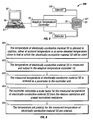
- the computer terminal 80 may be any computer, including a conventional desktop computer or a handheld computer, such as those associated with Palm(R), and electrically conductive material 50 calibration may be accomplished in the following steps, depicted in Figure 7 :
- Step 701 - The material of electrically-conductive material 50 is identified;
- Step 702 - The normalized resistance of electrically-conductive material 50 is accessed by adaptive temperature controller 10;
- Step 703 The temperature of electrically-conductive material 50 is permitted to stabilize at a predetermined temperature, which may be ambient or an elevated temperature close to that at which the electrically-conductive material 50 will be used;
- Step 704 - Adaptive temperature controller 10 supplies at least once a voltage or a current to electrically-conductive material 50 and measures the current or voltage conducted therethrough;
- Step 705 The temperature of electrically-conductive material 50 is measured by a temperature sensor 30;
- Step 706 The temperature of electrically-conductive material 50 is received by adaptive temperature controller 10;
- Step 707 - Adaptive temperature controller 10 determines the resistance of electrically conductive material 50 at the temperature received
- Step 708 - Adaptive temperature controller 10 receives an instruction from the operator or computer terminal 80 to alter the temperature of electrically-conductive material 50 to a particular temperature;
- Step 709 - Adaptive temperature controller 10 determines the voltage associated with the temperature instruction received from the operator or computer terminal 80;
- Step 710 - Adaptive temperature controller 10 causes the voltage, or current associated with the temperature instruction to be applied to electrically-conductive material 50.
- calibration of the electrically-conductive material 50 may be accomplished in the following steps:
- Step 801 The temperature of electrically-conductive material 50 is allowed to stabilize, either at ambient temperature or at some elevated temperature close to that at which the electrically-conductive material 50 will be used;
- Step 802 The temperature of electrically-conductive material 50 is measured and output to the adaptive temperature controller 10;
- Step 803 The measured temperature of electrically-conductive material 50 is entered as a parameter to the controller unit;
- Step 804 The controller calculates a scale factor for the measured temperature of electrically-conductive material 50 from the relative resistance and preset normalized resistance characteristic;
- Step 805 The temperature setpoint(s) for the measured temperature of electrically-conductive material 50 are entered.
Landscapes
- Physics & Mathematics (AREA)
- General Physics & Mathematics (AREA)
- Engineering & Computer Science (AREA)
- Automation & Control Theory (AREA)
- Chemical & Material Sciences (AREA)
- Life Sciences & Earth Sciences (AREA)
- Health & Medical Sciences (AREA)
- Analytical Chemistry (AREA)
- Biochemistry (AREA)
- General Health & Medical Sciences (AREA)
- Immunology (AREA)
- Pathology (AREA)
- Control Of Temperature (AREA)
- Control Of Resistance Heating (AREA)
- Measuring Temperature Or Quantity Of Heat (AREA)
Claims (4)
- Un organe de contrôle de la température adaptatif (10) pour la mesure et le contrôle simultanés de la température destiné à être utilisé avec un matériau électroconducteur (50) pour chauffer un composant de système (101), comprenant :un dispositif capable de mesurer la résistance, ledit dispositif capable de mesurer la résistance étant conçu pour enregistrer la mesure de deux éléments du groupe consistant en la puissance alimentant ledit matériau électroconducteur (50), le courant alimentant ledit matériau électroconducteur (50) et la tension aux bornes dudit matériau électroconducteur (50) ;ledit dispositif capable de mesurer la résistance étant conçu pour déterminer la résistance dudit matériau électroconducteur (50) en appliquant la loi d'Ohm auxdits deux éléments du groupe consistant en la puissance, le courant et la tension ;une alimentation en puissance en communication électrique avec ledit matériau électroconducteur (50) ;ledit matériau électroconducteur (50) étant conçu pour modifier la température sur la base de ladite communication électrique provenant de ladite alimentation en puissance,un dispositif pour contrôler la sortie de ladite alimentation en puissance,ledit dispositif capable de mesurer la résistance étant conçu pour sortir ladite résistance déterminée dudit matériau électroconducteur (50) vers ledit dispositif pour contrôler la sortie de ladite alimentation en puissance ;ledit dispositif pour contrôler la sortie de ladite alimentation en puissance étant conçu pour contrôler la température dudit matériau électroconducteur (50) en contrôlant la sortie de ladite alimentation en puissance d'un élément du groupe consistant en la puissance, la tension et le courant.caractérisé par :un capteur de température (30)conçu pour déterminer la température dudit matériau électroconducteur (50) et conçu pour sortir la température déterminée dudit matériau électroconducteur (50) vers ledit dispositif pour contrôler la sortie de ladite alimentation en puissance, etdans lequel ledit dispositif pour contrôler la sortie de ladite alimentation en puissance est conçu pour déterminer le coefficient thermique de la résistance dudit matériau électroconducteur (50) sur la base de la modification de la sortie dudit dispositif capable de mesurer la résistance et la sortie dudit capteur de température (30) résultant d'une salve de courant, de tension ou de puissance appliqués sur le matériau électroconducteur (50)..
- Un organe de contrôle de la température adaptatif (10) selon la revendication 1, comprenant en outre une alimentation de commutation modulée en largeur d'impulsions (11) contrôlée par un microcontrôleur / microprocesseur (12).
- Un organe de contrôle de la température adaptatif (10) selon la revendication 1 ou la revendication 2, comprenant en outre un ventilateur (70) pour provoquer un flux d'air autour dudit composant (101).
- Un organe de contrôle de la température adaptatif (10) selon la revendication 1, la revendication 2 ou la revendication 3, ledit organe de contrôle de température adaptatif (10) étant conçu pour communiquer avec un ordinateur.
Applications Claiming Priority (2)
| Application Number | Priority Date | Filing Date | Title |
|---|---|---|---|
| US76723606P | 2006-03-13 | 2006-03-13 | |
| PCT/US2007/063861 WO2007106803A2 (fr) | 2006-03-13 | 2007-03-13 | Unité de commande de la température adaptative |
Publications (3)
| Publication Number | Publication Date |
|---|---|
| EP1994537A2 EP1994537A2 (fr) | 2008-11-26 |
| EP1994537A4 EP1994537A4 (fr) | 2010-04-14 |
| EP1994537B1 true EP1994537B1 (fr) | 2012-09-19 |
Family
ID=38510226
Family Applications (1)
| Application Number | Title | Priority Date | Filing Date |
|---|---|---|---|
| EP07758413A Active EP1994537B1 (fr) | 2006-03-13 | 2007-03-13 | Unité de commande de la température adaptative |
Country Status (6)
| Country | Link |
|---|---|
| US (1) | US7442902B2 (fr) |
| EP (1) | EP1994537B1 (fr) |
| JP (1) | JP5358789B2 (fr) |
| CN (1) | CN101485229B (fr) |
| CA (1) | CA2645167C (fr) |
| WO (1) | WO2007106803A2 (fr) |
Families Citing this family (14)
| Publication number | Priority date | Publication date | Assignee | Title |
|---|---|---|---|---|
| US8642931B2 (en) * | 2006-03-13 | 2014-02-04 | Valco Instruments Company, L.P. | Adaptive temperature controller |
| GB2446414A (en) * | 2007-02-06 | 2008-08-13 | Thorn Security | A Detector |
| US8117895B2 (en) * | 2008-06-12 | 2012-02-21 | Northern Alberta Institute Of Technology | Gas chromatography capillary devices and methods |
| DE102008059751A1 (de) * | 2008-12-01 | 2010-06-02 | Voss Automotive Gmbh | Verfahren und Heizsystem zum Beheizen eines Fluid-Leitungssystems insbesondere in einem Kraftfahrzeug |
| US20110106476A1 (en) * | 2009-11-04 | 2011-05-05 | Gm Global Technology Operations, Inc. | Methods and systems for thermistor temperature processing |
| US9289002B2 (en) | 2010-06-02 | 2016-03-22 | National Pasteurized Eggs, Inc. | Shell egg pasteurization method |
| US20130180405A1 (en) * | 2012-01-13 | 2013-07-18 | Ron W. Currie | Gas Chromatography Capillary Devices and Methods |
| US20160238456A1 (en) * | 2015-02-12 | 2016-08-18 | Rosemount Aerospace Inc. | Air temperature sensor and fabrication |
| US9400511B1 (en) * | 2016-01-07 | 2016-07-26 | International Business Machines Corporation | Methods and control systems of resistance adjustment of resistors |
| US10448458B2 (en) * | 2016-10-21 | 2019-10-15 | Watlow Electric Manufacturing Company | Electric heaters with low drift resistance feedback |
| US10324069B2 (en) | 2017-02-24 | 2019-06-18 | Valco Instruments Company, L.P. | Chromatographic system temperature control system |
| US12050210B2 (en) * | 2019-02-27 | 2024-07-30 | Hitachi High-Tech Corporation | Analysis apparatus column oven |
| US20230384170A1 (en) * | 2022-05-25 | 2023-11-30 | Taiwan Semiconductor Manufacturing Company, Ltd. | Temperature sensing based on metal rails with different thermal-resistance coefficients |
| CN115337551A (zh) * | 2022-08-31 | 2022-11-15 | 北京翌光科技有限公司 | 一种智能美容仪及其控制方法 |
Family Cites Families (20)
| Publication number | Priority date | Publication date | Assignee | Title |
|---|---|---|---|---|
| JPS6046727B2 (ja) * | 1978-06-08 | 1985-10-17 | 松下電器産業株式会社 | 正抵抗温度係数発熱体の温度制御装置 |
| JPH032912A (ja) * | 1989-05-30 | 1991-01-09 | Tokyo Erekutoron Kyushu Kk | 温度制御方法 |
| WO1991000131A1 (fr) * | 1989-06-27 | 1991-01-10 | University Of Florida | Mesure du chauffage direct par resistance et de la temperature de colonnes capillaires revetues de metal dans la chromatographie en phase gazeuse, et techniques de separation s'y rapportant |
| US5105067A (en) * | 1989-09-08 | 1992-04-14 | Environwear, Inc. | Electronic control system and method for cold weather garment |
| US5553622A (en) * | 1991-01-29 | 1996-09-10 | Mckown; Russell C. | System and method for controlling the temperature of a catheter-mounted heater |
| JPH0527849A (ja) * | 1991-07-23 | 1993-02-05 | Oki Electric Ind Co Ltd | 温度管理装置 |
| JPH0796170A (ja) * | 1993-09-09 | 1995-04-11 | Tokyo Electron Ltd | 熱処理装置の温度制御方法 |
| JPH07153550A (ja) * | 1993-12-02 | 1995-06-16 | Chubu Electric Power Co Inc | 電気ヒ−タの温度制御方法 |
| JPH0830125A (ja) * | 1994-07-12 | 1996-02-02 | Canon Inc | 加熱装置及び画像形成装置 |
| DE69637079T2 (de) * | 1995-10-16 | 2008-01-24 | Thermo Orion Inc., Beverly | Hochgeschwindigkeitschromatographie |
| US5793022A (en) * | 1996-09-12 | 1998-08-11 | Applied Materials, Inc. | Adaptive temperture controller and method of operation |
| US6519546B1 (en) * | 1996-11-07 | 2003-02-11 | Rosemount Inc. | Auto correcting temperature transmitter with resistance based sensor |
| US5828567A (en) * | 1996-11-07 | 1998-10-27 | Rosemount Inc. | Diagnostics for resistance based transmitter |
| JP3152898B2 (ja) * | 1998-02-27 | 2001-04-03 | 京セラ株式会社 | 窒化アルミニウム質セラミックヒータ |
| US6252209B1 (en) * | 1999-01-21 | 2001-06-26 | Andigilog, Inc. | Adaptive temperature control circuit with PWM output |
| JP2000339039A (ja) * | 1999-05-25 | 2000-12-08 | Tokyo Electron Ltd | 加熱手段の温度制御方法、その装置及び熱処理装置 |
| JP3829575B2 (ja) * | 2000-03-15 | 2006-10-04 | オムロン株式会社 | 温度調節器および熱処理装置 |
| JP3843880B2 (ja) * | 2001-05-31 | 2006-11-08 | 株式会社デンソー | ガス濃度センサのヒータ制御装置 |
| JP2003303780A (ja) * | 2002-04-11 | 2003-10-24 | Ulvac Japan Ltd | 触媒体の温度制御方法 |
| US7256371B2 (en) * | 2004-03-22 | 2007-08-14 | Integrated Electronic Solutions Pty Ltd. | Temperature control method for positive temperature coefficient type heating element |
-
2007
- 2007-03-13 EP EP07758413A patent/EP1994537B1/fr active Active
- 2007-03-13 JP JP2009500584A patent/JP5358789B2/ja active Active
- 2007-03-13 CA CA002645167A patent/CA2645167C/fr not_active Expired - Fee Related
- 2007-03-13 CN CN2007800088773A patent/CN101485229B/zh not_active Expired - Fee Related
- 2007-03-13 WO PCT/US2007/063861 patent/WO2007106803A2/fr not_active Ceased
- 2007-03-13 US US11/685,325 patent/US7442902B2/en active Active
Non-Patent Citations (2)
| Title |
|---|
| D H GALVAN: "Effect of silver in Y1Ba2Cu3O7-x samples", JOURNAL OF MATERIALS SCIENCE, vol. 29, no. 10, 1994, Heidelberg, ALLEMAGNE, pages 2713 - 2718, ISSN: 0022-2461 * |
| ZHENWEN WANG: "accurate modelling of thin film resistor up to 40Ghz", ESSDERC 2002 : 32ND EUROPEAN SOLID-STATE DEVICE RESEARCH CONFERENCE, 24 September 2002 (2002-09-24) - 26 September 2002 (2002-09-26), Firenze, pages 307 - 310, ISBN: 88-900847-8-2 * |
Also Published As
| Publication number | Publication date |
|---|---|
| CN101485229B (zh) | 2011-11-23 |
| JP5358789B2 (ja) | 2013-12-04 |
| WO2007106803A2 (fr) | 2007-09-20 |
| CN101485229A (zh) | 2009-07-15 |
| CA2645167C (fr) | 2009-09-08 |
| WO2007106803A3 (fr) | 2008-11-20 |
| EP1994537A4 (fr) | 2010-04-14 |
| JP2009530719A (ja) | 2009-08-27 |
| CA2645167A1 (fr) | 2007-09-20 |
| US20070210285A1 (en) | 2007-09-13 |
| HK1131851A1 (zh) | 2010-02-05 |
| US7442902B2 (en) | 2008-10-28 |
| EP1994537A2 (fr) | 2008-11-26 |
Similar Documents
| Publication | Publication Date | Title |
|---|---|---|
| EP1994537B1 (fr) | Unité de commande de la température adaptative | |
| CA2740869C (fr) | Unite de commande de temperature adaptative | |
| EP3658867B1 (fr) | Système de capteur et ensemble capteur-dispositif de chauffage intégré pour mesurer et commander les performances d'un système de chauffage | |
| US10502721B2 (en) | Chromatographic system temperature control system | |
| HK1131851B (en) | Adaptive temperature controller | |
| HK40114918A (en) | Chromatographic system temperature control system |
Legal Events
| Date | Code | Title | Description |
|---|---|---|---|
| PUAI | Public reference made under article 153(3) epc to a published international application that has entered the european phase |
Free format text: ORIGINAL CODE: 0009012 |
|
| 17P | Request for examination filed |
Effective date: 20080910 |
|
| AK | Designated contracting states |
Kind code of ref document: A2 Designated state(s): AT BE BG CH CY CZ DE DK EE ES FI FR GB GR HU IE IS IT LI LT LU LV MC MT NL PL PT RO SE SI SK TR |
|
| AX | Request for extension of the european patent |
Extension state: AL BA HR MK RS |
|
| R17D | Deferred search report published (corrected) |
Effective date: 20081120 |
|
| A4 | Supplementary search report drawn up and despatched |
Effective date: 20100312 |
|
| RIC1 | Information provided on ipc code assigned before grant |
Ipc: H01B 1/04 20060101ALI20100308BHEP Ipc: G01N 30/86 20060101ALI20100308BHEP Ipc: G01R 27/14 20060101ALI20100308BHEP Ipc: G05D 23/24 20060101AFI20100308BHEP |
|
| 17Q | First examination report despatched |
Effective date: 20101215 |
|
| REG | Reference to a national code |
Ref country code: DE Ref legal event code: R079 Ref document number: 602007025581 Country of ref document: DE Free format text: PREVIOUS MAIN CLASS: H01B0001040000 Ipc: G05D0023240000 |
|
| GRAP | Despatch of communication of intention to grant a patent |
Free format text: ORIGINAL CODE: EPIDOSNIGR1 |
|
| DAX | Request for extension of the european patent (deleted) | ||
| RAP1 | Party data changed (applicant data changed or rights of an application transferred) |
Owner name: VALCO INSTRUMENTS CO., INC. |
|
| RIC1 | Information provided on ipc code assigned before grant |
Ipc: H01B 1/04 20060101ALI20120302BHEP Ipc: G01N 30/30 20060101ALI20120302BHEP Ipc: G01N 30/86 20060101ALI20120302BHEP Ipc: G01R 27/14 20060101ALI20120302BHEP Ipc: G05D 23/24 20060101AFI20120302BHEP |
|
| GRAS | Grant fee paid |
Free format text: ORIGINAL CODE: EPIDOSNIGR3 |
|
| GRAA | (expected) grant |
Free format text: ORIGINAL CODE: 0009210 |
|
| RAP1 | Party data changed (applicant data changed or rights of an application transferred) |
Owner name: VALCO INSTRUMENTS COMPANY, L.P. |
|
| AK | Designated contracting states |
Kind code of ref document: B1 Designated state(s): AT BE BG CH CY CZ DE DK EE ES FI FR GB GR HU IE IS IT LI LT LU LV MC MT NL PL PT RO SE SI SK TR |
|
| REG | Reference to a national code |
Ref country code: GB Ref legal event code: FG4D |
|
| REG | Reference to a national code |
Ref country code: CH Ref legal event code: EP |
|
| REG | Reference to a national code |
Ref country code: IE Ref legal event code: FG4D |
|
| REG | Reference to a national code |
Ref country code: AT Ref legal event code: REF Ref document number: 576316 Country of ref document: AT Kind code of ref document: T Effective date: 20121015 |
|
| REG | Reference to a national code |
Ref country code: CH Ref legal event code: NV Representative=s name: MURGITROYD & COMPANY |
|
| REG | Reference to a national code |
Ref country code: DE Ref legal event code: R096 Ref document number: 602007025581 Country of ref document: DE Effective date: 20121115 |
|
| REG | Reference to a national code |
Ref country code: SE Ref legal event code: TRGR |
|
| PG25 | Lapsed in a contracting state [announced via postgrant information from national office to epo] |
Ref country code: CY Free format text: LAPSE BECAUSE OF FAILURE TO SUBMIT A TRANSLATION OF THE DESCRIPTION OR TO PAY THE FEE WITHIN THE PRESCRIBED TIME-LIMIT Effective date: 20120919 Ref country code: LT Free format text: LAPSE BECAUSE OF FAILURE TO SUBMIT A TRANSLATION OF THE DESCRIPTION OR TO PAY THE FEE WITHIN THE PRESCRIBED TIME-LIMIT Effective date: 20120919 Ref country code: FI Free format text: LAPSE BECAUSE OF FAILURE TO SUBMIT A TRANSLATION OF THE DESCRIPTION OR TO PAY THE FEE WITHIN THE PRESCRIBED TIME-LIMIT Effective date: 20120919 |
|
| REG | Reference to a national code |
Ref country code: NL Ref legal event code: VDEP Effective date: 20120919 |
|
| REG | Reference to a national code |
Ref country code: AT Ref legal event code: MK05 Ref document number: 576316 Country of ref document: AT Kind code of ref document: T Effective date: 20120919 |
|
| REG | Reference to a national code |
Ref country code: LT Ref legal event code: MG4D Effective date: 20120919 |
|
| PG25 | Lapsed in a contracting state [announced via postgrant information from national office to epo] |
Ref country code: LV Free format text: LAPSE BECAUSE OF FAILURE TO SUBMIT A TRANSLATION OF THE DESCRIPTION OR TO PAY THE FEE WITHIN THE PRESCRIBED TIME-LIMIT Effective date: 20120919 Ref country code: GR Free format text: LAPSE BECAUSE OF FAILURE TO SUBMIT A TRANSLATION OF THE DESCRIPTION OR TO PAY THE FEE WITHIN THE PRESCRIBED TIME-LIMIT Effective date: 20121220 Ref country code: SI Free format text: LAPSE BECAUSE OF FAILURE TO SUBMIT A TRANSLATION OF THE DESCRIPTION OR TO PAY THE FEE WITHIN THE PRESCRIBED TIME-LIMIT Effective date: 20120919 |
|
| PG25 | Lapsed in a contracting state [announced via postgrant information from national office to epo] |
Ref country code: CZ Free format text: LAPSE BECAUSE OF FAILURE TO SUBMIT A TRANSLATION OF THE DESCRIPTION OR TO PAY THE FEE WITHIN THE PRESCRIBED TIME-LIMIT Effective date: 20120919 Ref country code: IS Free format text: LAPSE BECAUSE OF FAILURE TO SUBMIT A TRANSLATION OF THE DESCRIPTION OR TO PAY THE FEE WITHIN THE PRESCRIBED TIME-LIMIT Effective date: 20130119 Ref country code: ES Free format text: LAPSE BECAUSE OF FAILURE TO SUBMIT A TRANSLATION OF THE DESCRIPTION OR TO PAY THE FEE WITHIN THE PRESCRIBED TIME-LIMIT Effective date: 20121230 Ref country code: EE Free format text: LAPSE BECAUSE OF FAILURE TO SUBMIT A TRANSLATION OF THE DESCRIPTION OR TO PAY THE FEE WITHIN THE PRESCRIBED TIME-LIMIT Effective date: 20120919 Ref country code: NL Free format text: LAPSE BECAUSE OF FAILURE TO SUBMIT A TRANSLATION OF THE DESCRIPTION OR TO PAY THE FEE WITHIN THE PRESCRIBED TIME-LIMIT Effective date: 20120919 Ref country code: RO Free format text: LAPSE BECAUSE OF FAILURE TO SUBMIT A TRANSLATION OF THE DESCRIPTION OR TO PAY THE FEE WITHIN THE PRESCRIBED TIME-LIMIT Effective date: 20120919 |
|
| PG25 | Lapsed in a contracting state [announced via postgrant information from national office to epo] |
Ref country code: PL Free format text: LAPSE BECAUSE OF FAILURE TO SUBMIT A TRANSLATION OF THE DESCRIPTION OR TO PAY THE FEE WITHIN THE PRESCRIBED TIME-LIMIT Effective date: 20120919 Ref country code: PT Free format text: LAPSE BECAUSE OF FAILURE TO SUBMIT A TRANSLATION OF THE DESCRIPTION OR TO PAY THE FEE WITHIN THE PRESCRIBED TIME-LIMIT Effective date: 20130121 Ref country code: SK Free format text: LAPSE BECAUSE OF FAILURE TO SUBMIT A TRANSLATION OF THE DESCRIPTION OR TO PAY THE FEE WITHIN THE PRESCRIBED TIME-LIMIT Effective date: 20120919 |
|
| PG25 | Lapsed in a contracting state [announced via postgrant information from national office to epo] |
Ref country code: AT Free format text: LAPSE BECAUSE OF FAILURE TO SUBMIT A TRANSLATION OF THE DESCRIPTION OR TO PAY THE FEE WITHIN THE PRESCRIBED TIME-LIMIT Effective date: 20120919 |
|
| PLBE | No opposition filed within time limit |
Free format text: ORIGINAL CODE: 0009261 |
|
| STAA | Information on the status of an ep patent application or granted ep patent |
Free format text: STATUS: NO OPPOSITION FILED WITHIN TIME LIMIT |
|
| PG25 | Lapsed in a contracting state [announced via postgrant information from national office to epo] |
Ref country code: BG Free format text: LAPSE BECAUSE OF FAILURE TO SUBMIT A TRANSLATION OF THE DESCRIPTION OR TO PAY THE FEE WITHIN THE PRESCRIBED TIME-LIMIT Effective date: 20121219 Ref country code: DK Free format text: LAPSE BECAUSE OF FAILURE TO SUBMIT A TRANSLATION OF THE DESCRIPTION OR TO PAY THE FEE WITHIN THE PRESCRIBED TIME-LIMIT Effective date: 20120919 |
|
| 26N | No opposition filed |
Effective date: 20130620 |
|
| REG | Reference to a national code |
Ref country code: DE Ref legal event code: R097 Ref document number: 602007025581 Country of ref document: DE Effective date: 20130620 |
|
| PG25 | Lapsed in a contracting state [announced via postgrant information from national office to epo] |
Ref country code: MC Free format text: LAPSE BECAUSE OF NON-PAYMENT OF DUE FEES Effective date: 20130331 |
|
| REG | Reference to a national code |
Ref country code: IE Ref legal event code: MM4A |
|
| PG25 | Lapsed in a contracting state [announced via postgrant information from national office to epo] |
Ref country code: IE Free format text: LAPSE BECAUSE OF NON-PAYMENT OF DUE FEES Effective date: 20130313 |
|
| PG25 | Lapsed in a contracting state [announced via postgrant information from national office to epo] |
Ref country code: MT Free format text: LAPSE BECAUSE OF FAILURE TO SUBMIT A TRANSLATION OF THE DESCRIPTION OR TO PAY THE FEE WITHIN THE PRESCRIBED TIME-LIMIT Effective date: 20120919 |
|
| PG25 | Lapsed in a contracting state [announced via postgrant information from national office to epo] |
Ref country code: TR Free format text: LAPSE BECAUSE OF FAILURE TO SUBMIT A TRANSLATION OF THE DESCRIPTION OR TO PAY THE FEE WITHIN THE PRESCRIBED TIME-LIMIT Effective date: 20120919 |
|
| PG25 | Lapsed in a contracting state [announced via postgrant information from national office to epo] |
Ref country code: HU Free format text: LAPSE BECAUSE OF FAILURE TO SUBMIT A TRANSLATION OF THE DESCRIPTION OR TO PAY THE FEE WITHIN THE PRESCRIBED TIME-LIMIT; INVALID AB INITIO Effective date: 20070313 Ref country code: LU Free format text: LAPSE BECAUSE OF NON-PAYMENT OF DUE FEES Effective date: 20130313 |
|
| REG | Reference to a national code |
Ref country code: FR Ref legal event code: PLFP Year of fee payment: 10 |
|
| REG | Reference to a national code |
Ref country code: FR Ref legal event code: PLFP Year of fee payment: 11 |
|
| REG | Reference to a national code |
Ref country code: FR Ref legal event code: PLFP Year of fee payment: 12 |
|
| PGFP | Annual fee paid to national office [announced via postgrant information from national office to epo] |
Ref country code: SE Payment date: 20200310 Year of fee payment: 14 Ref country code: GB Payment date: 20200304 Year of fee payment: 14 |
|
| PGFP | Annual fee paid to national office [announced via postgrant information from national office to epo] |
Ref country code: BE Payment date: 20200226 Year of fee payment: 14 |
|
| PGFP | Annual fee paid to national office [announced via postgrant information from national office to epo] |
Ref country code: FR Payment date: 20200227 Year of fee payment: 14 |
|
| GBPC | Gb: european patent ceased through non-payment of renewal fee |
Effective date: 20210313 |
|
| REG | Reference to a national code |
Ref country code: BE Ref legal event code: MM Effective date: 20210331 |
|
| PG25 | Lapsed in a contracting state [announced via postgrant information from national office to epo] |
Ref country code: SE Free format text: LAPSE BECAUSE OF NON-PAYMENT OF DUE FEES Effective date: 20210314 Ref country code: GB Free format text: LAPSE BECAUSE OF NON-PAYMENT OF DUE FEES Effective date: 20210313 Ref country code: FR Free format text: LAPSE BECAUSE OF NON-PAYMENT OF DUE FEES Effective date: 20210331 |
|
| REG | Reference to a national code |
Ref country code: DE Ref legal event code: R081 Ref document number: 602007025581 Country of ref document: DE Owner name: VALCO INSTRUMENTS COMPANY, INC., HOUSTON, US Free format text: FORMER OWNER: VALCO INSTRUMENTS COMPANY, L.P., HOUSTON, TEX., US Ref country code: DE Ref legal event code: R082 Ref document number: 602007025581 Country of ref document: DE Representative=s name: HGF EUROPE LLP, DE |
|
| PG25 | Lapsed in a contracting state [announced via postgrant information from national office to epo] |
Ref country code: BE Free format text: LAPSE BECAUSE OF NON-PAYMENT OF DUE FEES Effective date: 20210331 |
|
| PGFP | Annual fee paid to national office [announced via postgrant information from national office to epo] |
Ref country code: DE Payment date: 20250319 Year of fee payment: 19 |
|
| PGFP | Annual fee paid to national office [announced via postgrant information from national office to epo] |
Ref country code: IT Payment date: 20250326 Year of fee payment: 19 |
|
| PGFP | Annual fee paid to national office [announced via postgrant information from national office to epo] |
Ref country code: CH Payment date: 20250402 Year of fee payment: 19 |