EP1995689A2 - Procédé et système destinés à charger un compte - Google Patents
Procédé et système destinés à charger un compte Download PDFInfo
- Publication number
- EP1995689A2 EP1995689A2 EP07702266A EP07702266A EP1995689A2 EP 1995689 A2 EP1995689 A2 EP 1995689A2 EP 07702266 A EP07702266 A EP 07702266A EP 07702266 A EP07702266 A EP 07702266A EP 1995689 A2 EP1995689 A2 EP 1995689A2
- Authority
- EP
- European Patent Office
- Prior art keywords
- charging
- user
- account
- payment
- amount
- Prior art date
- Legal status (The legal status is an assumption and is not a legal conclusion. Google has not performed a legal analysis and makes no representation as to the accuracy of the status listed.)
- Withdrawn
Links
Images

Classifications
-
- G—PHYSICS
- G06—COMPUTING OR CALCULATING; COUNTING
- G06Q—INFORMATION AND COMMUNICATION TECHNOLOGY [ICT] SPECIALLY ADAPTED FOR ADMINISTRATIVE, COMMERCIAL, FINANCIAL, MANAGERIAL OR SUPERVISORY PURPOSES; SYSTEMS OR METHODS SPECIALLY ADAPTED FOR ADMINISTRATIVE, COMMERCIAL, FINANCIAL, MANAGERIAL OR SUPERVISORY PURPOSES, NOT OTHERWISE PROVIDED FOR
- G06Q20/00—Payment architectures, schemes or protocols
- G06Q20/38—Payment protocols; Details thereof
- G06Q20/386—Payment protocols; Details thereof using messaging services or messaging apps
-
- G—PHYSICS
- G06—COMPUTING OR CALCULATING; COUNTING
- G06Q—INFORMATION AND COMMUNICATION TECHNOLOGY [ICT] SPECIALLY ADAPTED FOR ADMINISTRATIVE, COMMERCIAL, FINANCIAL, MANAGERIAL OR SUPERVISORY PURPOSES; SYSTEMS OR METHODS SPECIALLY ADAPTED FOR ADMINISTRATIVE, COMMERCIAL, FINANCIAL, MANAGERIAL OR SUPERVISORY PURPOSES, NOT OTHERWISE PROVIDED FOR
- G06Q20/00—Payment architectures, schemes or protocols
- G06Q20/38—Payment protocols; Details thereof
- G06Q20/42—Confirmation, e.g. check or permission by the legal debtor of payment
-
- G—PHYSICS
- G06—COMPUTING OR CALCULATING; COUNTING
- G06Q—INFORMATION AND COMMUNICATION TECHNOLOGY [ICT] SPECIALLY ADAPTED FOR ADMINISTRATIVE, COMMERCIAL, FINANCIAL, MANAGERIAL OR SUPERVISORY PURPOSES; SYSTEMS OR METHODS SPECIALLY ADAPTED FOR ADMINISTRATIVE, COMMERCIAL, FINANCIAL, MANAGERIAL OR SUPERVISORY PURPOSES, NOT OTHERWISE PROVIDED FOR
- G06Q20/00—Payment architectures, schemes or protocols
- G06Q20/08—Payment architectures
- G06Q20/10—Payment architectures specially adapted for electronic funds transfer [EFT] systems; specially adapted for home banking systems
-
- G—PHYSICS
- G06—COMPUTING OR CALCULATING; COUNTING
- G06Q—INFORMATION AND COMMUNICATION TECHNOLOGY [ICT] SPECIALLY ADAPTED FOR ADMINISTRATIVE, COMMERCIAL, FINANCIAL, MANAGERIAL OR SUPERVISORY PURPOSES; SYSTEMS OR METHODS SPECIALLY ADAPTED FOR ADMINISTRATIVE, COMMERCIAL, FINANCIAL, MANAGERIAL OR SUPERVISORY PURPOSES, NOT OTHERWISE PROVIDED FOR
- G06Q20/00—Payment architectures, schemes or protocols
- G06Q20/38—Payment protocols; Details thereof
- G06Q20/382—Payment protocols; Details thereof insuring higher security of transaction
-
- G—PHYSICS
- G06—COMPUTING OR CALCULATING; COUNTING
- G06Q—INFORMATION AND COMMUNICATION TECHNOLOGY [ICT] SPECIALLY ADAPTED FOR ADMINISTRATIVE, COMMERCIAL, FINANCIAL, MANAGERIAL OR SUPERVISORY PURPOSES; SYSTEMS OR METHODS SPECIALLY ADAPTED FOR ADMINISTRATIVE, COMMERCIAL, FINANCIAL, MANAGERIAL OR SUPERVISORY PURPOSES, NOT OTHERWISE PROVIDED FOR
- G06Q30/00—Commerce
- G06Q30/04—Billing or invoicing
-
- G—PHYSICS
- G06—COMPUTING OR CALCULATING; COUNTING
- G06Q—INFORMATION AND COMMUNICATION TECHNOLOGY [ICT] SPECIALLY ADAPTED FOR ADMINISTRATIVE, COMMERCIAL, FINANCIAL, MANAGERIAL OR SUPERVISORY PURPOSES; SYSTEMS OR METHODS SPECIALLY ADAPTED FOR ADMINISTRATIVE, COMMERCIAL, FINANCIAL, MANAGERIAL OR SUPERVISORY PURPOSES, NOT OTHERWISE PROVIDED FOR
- G06Q40/00—Finance; Insurance; Tax strategies; Processing of corporate or income taxes
- G06Q40/04—Trading; Exchange, e.g. stocks, commodities, derivatives or currency exchange
-
- G—PHYSICS
- G06—COMPUTING OR CALCULATING; COUNTING
- G06Q—INFORMATION AND COMMUNICATION TECHNOLOGY [ICT] SPECIALLY ADAPTED FOR ADMINISTRATIVE, COMMERCIAL, FINANCIAL, MANAGERIAL OR SUPERVISORY PURPOSES; SYSTEMS OR METHODS SPECIALLY ADAPTED FOR ADMINISTRATIVE, COMMERCIAL, FINANCIAL, MANAGERIAL OR SUPERVISORY PURPOSES, NOT OTHERWISE PROVIDED FOR
- G06Q40/00—Finance; Insurance; Tax strategies; Processing of corporate or income taxes
- G06Q40/12—Accounting
-
- H—ELECTRICITY
- H04—ELECTRIC COMMUNICATION TECHNIQUE
- H04M—TELEPHONIC COMMUNICATION
- H04M17/00—Prepayment of wireline communication systems, wireless communication systems or telephone systems
Definitions
- the present invention relates to the fields of network resource data processing, and particularly to methods and systems for charging an account over a network.
- a part of the e-commerce account charging process may first use a conventional currency to exchange for an electronic currency of an online bank, and then use the bank's electronic currency to exchange for an appointed virtual currency.
- the public edition of online banking has low security and low maximum exchange limit
- the professional edition of online banking requires the client end to install digital certificates and has complicated activation and operation processes, and further because of the complicated procedures of the above-described charging process, the method is used by only very few Internet users and has not become popular.
- the present invention aims to solve the technical problem of providing a convenient and fast account charging method and system which fully utilizes the Internet resources and increases the charging efficiency.
- An account charging method used for charging a user account over a network, includes:
- the account charging method further includes establishing an online charging store which provides charging information and user information.
- the account charging method further includes sending identifying information of the second user to the first user after the second user has determined the charging amount through the online charging store.
- the account charging method further includes notifying the second user upon receiving the second user's charging amount sent by the first user.
- the account charging method further includes receiving a notification message indicating that the second user has made payment.
- the account charging method further includes: setting a time limit for confirmation after receiving notification message indicating that the second user has made payment; determining whether a confirmation message or a cancellation message of the first user's receiving the payment has been received within the time limit, and if not, assuming that the confirmation message of the first user's receiving the payment has been received.
- the account charging method further includes setting a time limit for payment after receiving the charging amount sent by the first user; determining whether a confirmation message or a cancellation message of the second user's making the payment has been received within the time limit for payment, and if not, terminating charging process.
- the charging amount is an amount of an electronic business account, an amount of a communication account, or an amount of a user score account. That is, the user account being charged can be an electronic business account, an amount of a communication account, or an amount of a user score account.
- the present invention further provides an account charging system used for charging a user account over a network.
- Account charging system includes an account module and a charger module.
- the account module is used for establishing an intermediary account, and for receiving and managing charging information including receiving and saving a second user's charging amount sent from a first user; and the charging module is used for controlling account charging process, including, upon receiving a confirmation message confirming that the first user has received payment, transferring the said charging amount saved in the intermediary account to a charge account of the second user.
- the charging module's controlling account charging process further includes: recording the charging amount confirmed by the second user; and notifying the first user and providing information of the charge account of the second user.
- the system further includes a user module used for storing user identifying information, which information is passed on when the first user sends the charging amount and when the first user sends a confirmation message confirming receiving payment.
- a user module used for storing user identifying information, which information is passed on when the first user sends the charging amount and when the first user sends a confirmation message confirming receiving payment.
- the invention facilitates and expedites a charging process, and thereby improves the account charging efficiency, fully utilizes network resources, and greatly reduces the cost of account charging.
- the present invention may also set time limits in the charging process in order to expedite the charging process and further increase the processing efficiency.
- the intermediary account of the invention can ensure the security and integrity of the account charging process, and significantly reduce the cost of account charging, thus eliminates one of the bottlenecks of electronic business and online trading, increases network usage efficiency, and takes full advantages of speed, convenience and low cost of online transactions.
- the present invention can eliminate the current bottleneck of too few online banking users and low maximum payment limits of the public edition of online banking, make the account charging easier for users, and enables mass users to charge their accounts without having to activate online banking and without any limitation to maximum amount of payment.
- the present system may automatically control and advance the account charging process, and enable users who are familiar with online banking payments to provide, using the present system, a reliable charging venue to users who are unfamiliar with online banking, thus allow users unfamiliar with online banking to more conveniently and safely charge their accounts.
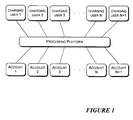
- FIG. 1 illustrates an existing technology processing a large flow of cash or remittance for charging an account.
- FIG. 2 shows a flow chart of an account charging method in accordance with the present invention.
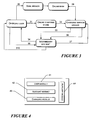
- FIG. 3 shows a flow chart of an exemplary embodiment of the account charging method in accordance with the present invention.
- FIG. 4 a schematic diagram of a system for charging an account in accordance with the present invention.
- the core of the present invention is to establish an intermediary account in the network, and take advantage of the third-party intermediate credit of the intermediary account to ensure security for both parties when an account charging user purchases a service of a charging vendor; and to increase account charging efficiency and increase the utilization of network resources using a computer system to control and expedite the charging process.
- FIG. 2 shows a flow chart of an account charging method in accordance with the present invention.
- An account used for charging may include an electronic business account, a communication account, a user score account or any other type of a rechargeable account.
- the conventional currency and the charging amount of the account may have any type of a conversion relationship therebetween, such as an equal or unequal conversion.
- the conventional currency may include any currency presently in circulation, such as RMB and US dollar.
- the account charging method of the present invention is not limited to using a conventional currency to charge, but is also suitable for using other virtual currencies or electronic currencies to complete the account charging process. Because the conventional currency and the charging amount of the account may have any type of a conversion relationship therebetween, the charging system of the present invention may have management authorities over the account being charged. That is, the present invention may be used in a charging process for charging a self-owned account.
- Step S21 establishes an intermediary account.
- the intermediary account is a special account under the control of the charging system, over which account neither the first user nor the second user has independent authorities.
- the first user is generally a charging vendor or a seller (hereinafter a charging vendor is used for illustration), while the second user is generally a charging user or a buyer (hereinafter a charging user is used for illustration).
- the intermediary account is used for receiving and temporarily storing a charging amount.
- the charging amount is first stored in the intermediary account in order to ensure the security of the charging user, such that the charging user is assured to obtain the charging amount after making a payment.
- the charging amount is not directly paid to the charging user, but rather is transferred to the charging user's account after the charging vendor has confirmed that the corresponding payment has been received. The security and the interests of both parties in the charging process are thus guaranteed.
- a step S20 may be added to establish an online charging store in the charging system to provide charging information and user information.
- the online charging store may be used for verifying user identification, displaying user information and providing charging information, etc.
- the intermediary account receives the charging amount sent from the charging vendor.
- the charging vendor and the charging user determine therebetween a corresponding charging amount.
- the charging vendor sends the corresponding charging amount to the intermediary account, having learned of the account number that needs to be charged by the charging user and other identity information of the charging user.
- the present invention does not limit the charging vendor and the charging user to any particular method used to determine the charging amount, the account number to be charged and identity information, but allows the two parties to either communicate on their own or to use notices sent by the charging system.
- FIG. 2 illustrates a step S210 in which the charging system sends the charge account information of the charging user to the charging vendor after the charging user has determined the charging amount. This participation of the charging system from the beginning of the charging process may enable the charging system to better manage and control the charging process.
- the charging system may send only system's internal identifying information of the charging user to the charging vendor. Because the intermediary account and the account being charged are managed by the same system, it is only necessary to tell the system's internal identifying information of the charging user to the charging vendor. The charging vendor then sends the charging amount and the identifying information to the intermediary account, which in turn may identify the charging user corresponding to the charging amount using the identifying information. This ensures the security of the charge account information.
- Step S23 receives a confirmation message confirming that the charging vendor has received payment.
- the intermediary account in the charging system receives the charging amount sent by the charging vendor, and starts to wait for a confirmation message confirming that the charging vendor has received the corresponding payment.
- the charging system upon receiving the charging amount from the charging vendor, may send a notice message to the charging user and wait for a feedback message from the charging user.
- the charging user may make a payment or deliver an equivalent using the network, a bank branch, remittance, or cash, etc.
- the charging user may notify the charging vendor of having made the payment and provide relevant information for the charging vendor to verify the payment.
- the charging user may notify the charging system instead, such that, after the charging system has received the notice that the charging user has made the payment, the charging system then notifies the charging vendor to verify. This may reinforce the charging system's management and control over the entire charging process.
- the step S23 may further set a time limit for confirmation after receiving a notification message indicating that the charging user has made the payment; and determine whether a confirmation message or a cancellation message of the charging vendor's receiving the payment has been received within the time limit. If a confirmation message has been received within the time limit, the process may proceed to the next step. If a cancellation message has been received within the time limit to indicate that the charging process is not accepted by the charging user and/or the charging vendor, the system may directly terminate the charging process or notify the parties and wait for further negotiations of both parties. If no message has been received, the system may conclude that, as a protection to the time interests of the charging user, the charging vendor has received the payment made by the charging user. This step may be used to prevent an unexpected situation where the charging vendor fails to send a confirmation message for a long time. Using the set time limits, the system may better control the progress of the charging process and ensure the security of both parties in the charging process.
- the system may also do without setting the time limits, but rather keep waiting for the confirmation message to confirm that the charging vendor has received the payment.
- the above preferred step is only used for reinforcing the charging system's management and control over the charging process.
- Step S23 may also set a time limit for payment after receiving the charging amount sent by the charging vendor; and determine whether a confirmation message or a cancellation message of the charging user's making the payment has been received within the time limit for payment, and if not, terminate the charging process.
- This step is a further improvement of the basic step where the charging system requires the charging user to send a notice of having made the payment. That is, after receiving the charging amount sent by the charging vendor, the system sets a time limit for payment and prompts the charging user to make the payment within the time limit and send a notice of having made the payment to speed up the charging process. If the notice that the charging user has made payment is received within the time limits for payment, the charging process may proceed to the next step. If no message has been received within the time limits, it indicates that it is difficult to continue the charging process, so the charging process may be terminated in order to reduce the waste of resources and increase the resource utilization efficiency of the charging system.
- Step S24 transfers the charging amount, which is stored in the intermediary account and sent by the charging vendor, to the account of the charging user.
- the charging system may transfer the charging amount stored in the intermediary account and sent by the charging vendor to the account of the charging user, thereby complete the entire account charging process.
- the present invention may receive and store data of the reciprocal comments and evaluation of the two parties. Furthermore, the present invention may generate the system's own comments and evaluation of the two parties, as the charging system controls and advances the whole charging process. For example, the charging system may provide a negative comment to a party who has surpassed the time limits and failed to observe the obligation in the charging process. Such comments may cover issues such as failure to deposit a sufficient amount into the charging system's funds account within a provided time limit, and not receiving a confirmation of product delivery within a provided time limit, etc.
- the account being charged and the intermediary account may reside in the same charging system. That is, the present invention may be used to provide a charging service to charge a self-owned account. Of course, the present invention may also serve as an independent intermediary system and simultaneously provide account charging service to multiple accounts controlled by other systems.
- FIG. 3 shows a flow chart of an exemplary embodiment of the account charging method in accordance with the present invention, illustrating a process in which a charging user purchases charging service of a charging service vendor through an online charging store to charge an account of the charging user.
- the charging user determines a corresponding charging amount (face value) at an online charging store of the charging service vendor.
- the parties may log on the charging system to start a charging process.
- the charging system may require ID verification of the parties.
- the charging system notifies the charging service vendor and provides the charging system's internal identifying information or name of the charging user.
- the notification may be accomplished using instant messaging to deliver trading alerts or alerts by mail, etc.
- the charging service vendor sends a corresponding charging amount into intermediary account provided by the charging system.
- the intermediary account is a special account controlled by the charging system.
- the charging service vendor and the charging user do not have independent authorizations over the intermediary account.
- the charging system notifies the charging user that it has received the charging amount, and now waits for the charging user to complete payment to the charging service vendor.
- This notification may be accomplished using instant messaging to deliver trading alerts or alerts by mail, etc.
- the charging user makes a payment to the charging service vendor using any method acceptable by the charging service vendor.
- the charging user may make a remittance at a bank branch to a bank account appointed by the charging service vendor, make a remittance at the postal office, make a remittance to the bank account announced by the online charging store, and may also choose to make a deposit at an online charging store in the same city or pay cash in person to complete the charging process and save the cost for sending remittance to a different location.
- the charging user notifies the charging system that the payment has been sent to the charging service vendor, and provides payment information such as the amount of payment, the remittance bank, remittance time, and the bank account number receiving the remittance, for verification by the charging service vendor.
- the charging system notifies the charging service vendor that the charging user has sent the payment.
- the notification may be accomplished using instant messaging to deliver trading alerts or alerts by mail, etc.
- the charging service vendor verifies the payment of the charging user through an online bank or other venues.
- the charging service vendor may log on to its own online bank to verify, and if in question, may use tools such as instant messaging to verify with the charging user.
- charging service vendors have an online bank account established and are familiar with the online banking procedures, they may quickly log on their online bank for verification.
- the charging service vendor sends confirmation to the charging system to confirm that the payment by the charging user has been received. After the charging service vendor has verified the payment, it logs on the charging system and notifies the charging system that the payment has been received and gives consent to charging to the account of the charging user.
- the charging system charges the charging user's account.
- a corresponding charging amount in the intermediary account is transferred to the charging user's account to complete the charging process.
- FIG. 4 a schematic diagram of a system for charging an account in accordance with the present invention, including the following components:
- User module 41 used for storing user identifying information, such as e-mail, contact information, ID information and pass code etc., primarily for identifying the user.
- Account module 42 used for establishing an intermediary account and for managing charging amount information, including, for example, corresponding relationship between the charging amount (such as the charging amount of a second user received from the first user and stored in the intermediary account) and the account being charged, history information, etc.
- Charging module 43 used for controlling account charging process, including, upon receiving a confirmation message confirming that the first user has received payment, transferring the charging amount saved in the intermediary account to a charge account of the second user. Controlling the account charging process may also include saving user information related to charging, such as the charging time, the charging type, the charging amount, user information, and the status and conditions of the charging process.
- Controlling the account charging process may further include recording the charging amount confirmed by the second user; and notifying the first user and providing the charge account information of the second user. That is, the charging module 43 may enter into the charging procedure as early as possible and provide the charge account information of the second user to the first user.
- the identifying information of the second user is passed on when the first user sends the charging amount.
- the account module 42 inquires the user module 41 about the second user which corresponds to the passed identification information. Likewise, having recognized the corresponding second user, the identifying information of the second user is also passed on when the first user sends a confirmation message confirming receiving payment.
- an actual account charging system may further include certain auxiliary components, such as client management module, online charging store module, and marketing module, etc., which may all belong to auxiliary module 44 used for providing functions such as online charging store, client management and/or marketing.
- auxiliary module 44 used for providing functions such as online charging store, client management and/or marketing.
Landscapes
- Business, Economics & Management (AREA)
- Accounting & Taxation (AREA)
- Engineering & Computer Science (AREA)
- Finance (AREA)
- Physics & Mathematics (AREA)
- Theoretical Computer Science (AREA)
- General Physics & Mathematics (AREA)
- Strategic Management (AREA)
- General Business, Economics & Management (AREA)
- Development Economics (AREA)
- Economics (AREA)
- Marketing (AREA)
- Technology Law (AREA)
- Computer Security & Cryptography (AREA)
- Computer Networks & Wireless Communication (AREA)
- Signal Processing (AREA)
- Financial Or Insurance-Related Operations Such As Payment And Settlement (AREA)
- Management, Administration, Business Operations System, And Electronic Commerce (AREA)
Applications Claiming Priority (2)
| Application Number | Priority Date | Filing Date | Title |
|---|---|---|---|
| CNA2006100578680A CN1811814A (zh) | 2006-03-01 | 2006-03-01 | 一种账户充值的方法和系统 |
| PCT/CN2007/000374 WO2007098673A2 (fr) | 2006-03-01 | 2007-02-02 | Procédé et système destinés à charger un compte |
Publications (2)
| Publication Number | Publication Date |
|---|---|
| EP1995689A2 true EP1995689A2 (fr) | 2008-11-26 |
| EP1995689A4 EP1995689A4 (fr) | 2012-01-25 |
Family
ID=36844723
Family Applications (1)
| Application Number | Title | Priority Date | Filing Date |
|---|---|---|---|
| EP20070702266 Withdrawn EP1995689A4 (fr) | 2006-03-01 | 2007-02-02 | Procédé et système destinés à charger un compte |
Country Status (5)
| Country | Link |
|---|---|
| US (2) | US8793169B2 (fr) |
| EP (1) | EP1995689A4 (fr) |
| JP (1) | JP5264510B2 (fr) |
| CN (1) | CN1811814A (fr) |
| WO (1) | WO2007098673A2 (fr) |
Families Citing this family (12)
| Publication number | Priority date | Publication date | Assignee | Title |
|---|---|---|---|---|
| US8874477B2 (en) | 2005-10-04 | 2014-10-28 | Steven Mark Hoffberg | Multifactorial optimization system and method |
| WO2008017913A2 (fr) * | 2006-08-07 | 2008-02-14 | Nokia Corporation | Connexion d'un premier et d'un deuxième dispositifs |
| CN1932866B (zh) * | 2006-09-30 | 2015-07-22 | 飞天诚信科技股份有限公司 | 一种网络软件的付费方法及其系统 |
| CN101667275A (zh) * | 2008-09-04 | 2010-03-10 | 阿里巴巴集团控股有限公司 | 一种离线充值方法及系统 |
| CN101944255A (zh) * | 2010-09-02 | 2011-01-12 | 苏州泽佑科技有限公司 | 一种综合缴费管理系统的账户充值操作 |
| US11164164B2 (en) | 2014-05-15 | 2021-11-02 | Uphold Global Foundation | System and method for converting cryptocurrency to virtual assets whose value is substantiated by a reserve of assets |
| CN104463568B (zh) * | 2014-10-27 | 2017-08-25 | 北京金和软件股份有限公司 | 一种虚拟币的充值方法 |
| CN108734452B (zh) * | 2017-04-13 | 2021-08-17 | 创新先进技术有限公司 | 互联网资源转移方法、转账方法及装置 |
| CN108876497B (zh) * | 2017-05-11 | 2022-03-29 | 腾讯科技(深圳)有限公司 | 资源转移方法、装置及第三方服务器 |
| CN110322234A (zh) * | 2018-03-28 | 2019-10-11 | 武汉斗鱼网络科技有限公司 | 一种充值方法、装置、服务器及介质 |
| CN108985729A (zh) * | 2018-06-29 | 2018-12-11 | 联动优势电子商务有限公司 | 一种账户充值的方法及装置 |
| US20210297404A1 (en) * | 2020-03-20 | 2021-09-23 | Avaya Management L.P. | Methods and systems of enabling user authentication validation |
Family Cites Families (8)
| Publication number | Priority date | Publication date | Assignee | Title |
|---|---|---|---|---|
| US5897621A (en) * | 1996-06-14 | 1999-04-27 | Cybercash, Inc. | System and method for multi-currency transactions |
| US6311171B1 (en) * | 1997-07-11 | 2001-10-30 | Ericsson Inc. | Symmetrically-secured electronic communication system |
| JP3654801B2 (ja) * | 1999-09-27 | 2005-06-02 | 株式会社みずほコーポレート銀行 | 電子取引方法および電子取引システム |
| US7426492B1 (en) * | 1999-11-05 | 2008-09-16 | American Express Travel Related Services Company, Inc. | Systems and methods for facilitating commercial transactions between parties residing at remote locations |
| JP2003233765A (ja) | 2002-02-07 | 2003-08-22 | Financialeyes Co Ltd | 取引支援サーバ、取引支援システム、取引支援方法、およびプログラム |
| CN1466368A (zh) | 2002-07-02 | 2004-01-07 | 深圳市莫比克通信技术有限公司 | 无线缴费和预付费充值销售的方法及其系统 |
| CN1570984A (zh) | 2004-04-26 | 2005-01-26 | 陶敏 | 银行卡消费通信网账户充值系统和方法 |
| JP2006040114A (ja) * | 2004-07-29 | 2006-02-09 | Ntt Comware Corp | 入金消込装置及び方法、ならびに、コンピュータプログラム |
-
2006
- 2006-03-01 CN CNA2006100578680A patent/CN1811814A/zh active Pending
-
2007
- 2007-02-02 US US12/281,106 patent/US8793169B2/en active Active
- 2007-02-02 EP EP20070702266 patent/EP1995689A4/fr not_active Withdrawn
- 2007-02-02 JP JP2008556635A patent/JP5264510B2/ja active Active
- 2007-02-02 WO PCT/CN2007/000374 patent/WO2007098673A2/fr not_active Ceased
-
2014
- 2014-07-15 US US14/332,079 patent/US20150012438A1/en not_active Abandoned
Non-Patent Citations (1)
| Title |
|---|
| The only identifiable technical aspects of the claimed invention relate to the use of conventional, general-purpose data processing technology for processing data of an inherently non-technical nature. The information technology employed is considered to have been generally known as it was widely available to everyone at the date of filing/priority of the present application. The notoriety of such prior art cannot reasonably be contested. Accordingly, no documentary evidence is found to be required. For further details see the Notice from the European Patent Office dated 1 October 2007 (OJ 11/2007; p592-593) and the accompanying Opinion. * |
Also Published As
| Publication number | Publication date |
|---|---|
| US20150012438A1 (en) | 2015-01-08 |
| WO2007098673A2 (fr) | 2007-09-07 |
| JP2009528602A (ja) | 2009-08-06 |
| US20090228378A1 (en) | 2009-09-10 |
| EP1995689A4 (fr) | 2012-01-25 |
| CN1811814A (zh) | 2006-08-02 |
| US8793169B2 (en) | 2014-07-29 |
| JP5264510B2 (ja) | 2013-08-14 |
| WO2007098673A8 (fr) | 2009-08-20 |
Similar Documents
| Publication | Publication Date | Title |
|---|---|---|
| US8793169B2 (en) | Method and system to charge an account | |
| US6848613B2 (en) | System and method for the security of payment transactions | |
| KR100194486B1 (ko) | 컴퓨터화된 거래 처리 방법 및 장치 | |
| JP5334394B2 (ja) | 決済処理方法、決済処理システム、及び決済処理用プログラム | |
| US8200260B2 (en) | Systems and methods for processing purchase transactions between mobile phones | |
| US20080162348A1 (en) | Electronic-Purse Transaction Method and System | |
| AU2019101569A4 (en) | Network transaction method and device based on privilege separation control | |
| CN103186852A (zh) | 网络交易的支付方法、装置及系统 | |
| EP2478478A1 (fr) | Système de stockage et de transfert d'actifs pour porte-monnaie électroniques | |
| CN111861700A (zh) | 一种账户来账监管方法和装置 | |
| CN100485727C (zh) | 实现个人电子支票卡的系统和方法 | |
| CN101071492A (zh) | 一种基于手机银行的手机缴费方法及系统 | |
| CN113168650A (zh) | 银行间自动转账的方法及实施该方法的系统 | |
| CN101329795B (zh) | 实现银行卡代理授权的系统及方法 | |
| JP2001357214A (ja) | 仮想銀行における送金方法ならびにシステムおよび同方法がプログラムされ記録された記録媒体 | |
| CN101118629A (zh) | 一种银行电子支付安全系统及其处理方法 | |
| CN111681010A (zh) | 一种交易验证方法及装置 | |
| KR20040033696A (ko) | 에스크로 서비스 시스템 및 그 방법과 그 방법에 대한컴퓨터 프로그램 소스를 저장한 기록매체 | |
| CN110852866A (zh) | 用于对多个资源进行管理的方法、装置和存储介质 | |
| KR20020078319A (ko) | 인스턴트 메신저를 이용한 전자지갑 서비스 제공 방법 | |
| EP2357597A1 (fr) | Procédé et système pour la réalisation de transactions de paiements électronique | |
| JP2022011103A (ja) | 仮想通貨を用いたエスクロー処理方法、システムおよびプログラム | |
| US20090228393A1 (en) | Method for the quasi real-time preparation and consecutive execution of a financial transaction | |
| EP1825635B1 (fr) | Méthode et système de communication de données légales dans un réseau de télécommunication | |
| CN116012006B (zh) | 一种基于数字货币的支付方法、平台及支付系统 |
Legal Events
| Date | Code | Title | Description |
|---|---|---|---|
| PUAI | Public reference made under article 153(3) epc to a published international application that has entered the european phase |
Free format text: ORIGINAL CODE: 0009012 |
|
| 17P | Request for examination filed |
Effective date: 20080828 |
|
| AK | Designated contracting states |
Kind code of ref document: A2 Designated state(s): AT BE BG CH CY CZ DE DK EE ES FI FR GB GR HU IE IS IT LI LT LU LV MC NL PL PT RO SE SI SK TR |
|
| AX | Request for extension of the european patent |
Extension state: AL BA HR MK RS |
|
| R17D | Deferred search report published (corrected) |
Effective date: 20070907 |
|
| A4 | Supplementary search report drawn up and despatched |
Effective date: 20111227 |
|
| RIC1 | Information provided on ipc code assigned before grant |
Ipc: G06Q 30/00 20120101AFI20111220BHEP |
|
| DAX | Request for extension of the european patent (deleted) | ||
| 17Q | First examination report despatched |
Effective date: 20160307 |
|
| STAA | Information on the status of an ep patent application or granted ep patent |
Free format text: STATUS: THE APPLICATION IS DEEMED TO BE WITHDRAWN |
|
| 18D | Application deemed to be withdrawn |
Effective date: 20160719 |