EP1996590B1 - Spiroindolinonderivate - Google Patents
Spiroindolinonderivate Download PDFInfo
- Publication number
- EP1996590B1 EP1996590B1 EP07712430A EP07712430A EP1996590B1 EP 1996590 B1 EP1996590 B1 EP 1996590B1 EP 07712430 A EP07712430 A EP 07712430A EP 07712430 A EP07712430 A EP 07712430A EP 1996590 B1 EP1996590 B1 EP 1996590B1
- Authority
- EP
- European Patent Office
- Prior art keywords
- chloro
- indole
- piperidine
- spiro
- chlorophenyl
- Prior art date
- Legal status (The legal status is an assumption and is not a legal conclusion. Google has not performed a legal analysis and makes no representation as to the accuracy of the status listed.)
- Not-in-force
Links
- 0 CC([C@@](C)C(N[C@@]1C*)=O)[C@@]11c2cc(*)c(*)cc2CC1=* Chemical compound CC([C@@](C)C(N[C@@]1C*)=O)[C@@]11c2cc(*)c(*)cc2CC1=* 0.000 description 15
- YUGYSEBEOONZDA-SZNLFEMRSA-N C/C=C(/N=C/c1c(C)cccc1)\O[Si+](C)(C)C Chemical compound C/C=C(/N=C/c1c(C)cccc1)\O[Si+](C)(C)C YUGYSEBEOONZDA-SZNLFEMRSA-N 0.000 description 1
- DWIDFGVWBWYURL-MTGYRBNBSA-N CC(/C=C\C)/[O]=C(/[C@H](CN(CC(F)=O)C(C1)=O)[C@@H]1c1cccc(Cl)c1)\Nc1cc(Cl)ccc1 Chemical compound CC(/C=C\C)/[O]=C(/[C@H](CN(CC(F)=O)C(C1)=O)[C@@H]1c1cccc(Cl)c1)\Nc1cc(Cl)ccc1 DWIDFGVWBWYURL-MTGYRBNBSA-N 0.000 description 1
- UQLVEVPZESVJHJ-XYOKQWHBSA-N CC(C)(C)C(/C=N/C(O[S+](C)C)=C)=C Chemical compound CC(C)(C)C(/C=N/C(O[S+](C)C)=C)=C UQLVEVPZESVJHJ-XYOKQWHBSA-N 0.000 description 1
- DDRVUWVOPOMBIF-GRLQROSYSA-O CC(C)(C)OC(CN([C@@H](C([C@@H](C1)c2cccc(Cl)c2)C(N(COCC[SH+](C)(C)C)c2cccc(Cl)c2)=O)c2cc(F)ccc2C)C1=O)=O Chemical compound CC(C)(C)OC(CN([C@@H](C([C@@H](C1)c2cccc(Cl)c2)C(N(COCC[SH+](C)(C)C)c2cccc(Cl)c2)=O)c2cc(F)ccc2C)C1=O)=O DDRVUWVOPOMBIF-GRLQROSYSA-O 0.000 description 1
- MMFIRQRTNJKVPW-BINOZBIOSA-N CC(C)(C)OC(N/C=C/N(C(Cc(ccc(C)c1)c1N(COCCS(C)(C)C)C(C[C@H](C1)c2cc(F)ccc2C)=O)c2cc(N)ccc2)C1=O)=O Chemical compound CC(C)(C)OC(N/C=C/N(C(Cc(ccc(C)c1)c1N(COCCS(C)(C)C)C(C[C@H](C1)c2cc(F)ccc2C)=O)c2cc(N)ccc2)C1=O)=O MMFIRQRTNJKVPW-BINOZBIOSA-N 0.000 description 1
- QRUUTPUFANMDIP-UHFFFAOYSA-N CC(C)(C)[Si+](C)(C)OCCOc(c(C=O)c1F)ccc1Cl Chemical compound CC(C)(C)[Si+](C)(C)OCCOc(c(C=O)c1F)ccc1Cl QRUUTPUFANMDIP-UHFFFAOYSA-N 0.000 description 1
- MCGSDKVOKTWDRB-UHFFFAOYSA-N CC(C)c1cc(Cl)ccc1 Chemical compound CC(C)c1cc(Cl)ccc1 MCGSDKVOKTWDRB-UHFFFAOYSA-N 0.000 description 1
- JKTLCSILQMAZAC-GZTJUZNOSA-N CC(OCCOc1ccc(C)cc1/C=N/C(O[S+](C)C)=C)=O Chemical compound CC(OCCOc1ccc(C)cc1/C=N/C(O[S+](C)C)=C)=O JKTLCSILQMAZAC-GZTJUZNOSA-N 0.000 description 1
- BAQMTGCFCUHIET-SCWSEQNSSA-N CC([C@H]([C@@]([C@@H](C1)c2cccc(Cl)c2)(c(c(N2)c3)ccc3Br)C2=O)NC1=O)=C Chemical compound CC([C@H]([C@@]([C@@H](C1)c2cccc(Cl)c2)(c(c(N2)c3)ccc3Br)C2=O)NC1=O)=C BAQMTGCFCUHIET-SCWSEQNSSA-N 0.000 description 1
- WMFQIFKXVIYGOL-OFAXGOBFSA-N CCC([C@@](C)([C@@]([C@@H](C1)c2cccc(Cl)c2)(c(ccc(Br)c2)c2N2)C2=O)NC1=O)=C Chemical compound CCC([C@@](C)([C@@]([C@@H](C1)c2cccc(Cl)c2)(c(ccc(Br)c2)c2N2)C2=O)NC1=O)=C WMFQIFKXVIYGOL-OFAXGOBFSA-N 0.000 description 1
- DXRMMSOADLWASG-ULCAYFMJSA-N CCC1([C@H]([C@H]([C@@H](C2)c3cccc(Cl)c3)C(N(COCC[Si+](C)(C)C)c3cc(Cl)ccc3)=O)NC2=O)OC1C Chemical compound CCC1([C@H]([C@H]([C@@H](C2)c3cccc(Cl)c3)C(N(COCC[Si+](C)(C)C)c3cc(Cl)ccc3)=O)NC2=O)OC1C DXRMMSOADLWASG-ULCAYFMJSA-N 0.000 description 1
- JPAXJOMDKQZXRW-ARLHGKGLSA-N CCCC(C)N(C[C@@H](CCC1)C(Nc2cc(Cl)ccc2)=O)C1=O Chemical compound CCCC(C)N(C[C@@H](CCC1)C(Nc2cc(Cl)ccc2)=O)C1=O JPAXJOMDKQZXRW-ARLHGKGLSA-N 0.000 description 1
- AZJFFGWAOMTVNB-QPBYVCLMSA-N CCCOc(c([C@H]([C@@](C(C1)c2cc(Cl)ccc2)(c(c(N2)c3)ccc3Cl)C2=O)NC1=O)c1F)ccc1F Chemical compound CCCOc(c([C@H]([C@@](C(C1)c2cc(Cl)ccc2)(c(c(N2)c3)ccc3Cl)C2=O)NC1=O)c1F)ccc1F AZJFFGWAOMTVNB-QPBYVCLMSA-N 0.000 description 1
- CEPQBBFNORZBRH-ZWKOTPCHSA-N CCN(C[C@H]([C@@H](C1)c2cc(Cl)ccc2)C(Nc2cc(N)ccc2)=O)C1=O Chemical compound CCN(C[C@H]([C@@H](C1)c2cc(Cl)ccc2)C(Nc2cc(N)ccc2)=O)C1=O CEPQBBFNORZBRH-ZWKOTPCHSA-N 0.000 description 1
- NMDWGTBQSOREQS-UHFFFAOYSA-N CC[Si+](C)(C)OCCOc(cc1)cc(F)c1Cl Chemical compound CC[Si+](C)(C)OCCOc(cc1)cc(F)c1Cl NMDWGTBQSOREQS-UHFFFAOYSA-N 0.000 description 1
- OSCABPQYXHKYJW-LFXFHBMYSA-N CCc(cc1[C@H]([C@@](C(C2)c3cc(Cl)ccc3)(c(c(N3)c4)ccc4Cl)C3=O)NC2=O)ccc1OCCO Chemical compound CCc(cc1[C@H]([C@@](C(C2)c3cc(Cl)ccc3)(c(c(N3)c4)ccc4Cl)C3=O)NC2=O)ccc1OCCO OSCABPQYXHKYJW-LFXFHBMYSA-N 0.000 description 1
- LDHZMVBARPIFOB-ZKMPZPQNSA-N CCc1c([C@H]([C@H]([C@@H](C2)c3cccc(Cl)c3)C(Nc3cccc(Cl)c3)=O)NC2=O)cccc1 Chemical compound CCc1c([C@H]([C@H]([C@@H](C2)c3cccc(Cl)c3)C(Nc3cccc(Cl)c3)=O)NC2=O)cccc1 LDHZMVBARPIFOB-ZKMPZPQNSA-N 0.000 description 1
- GEUAQHGGLQVDIN-YRNVUSSQSA-N COCC(/C=N/C(O[Si](C)(C)C)=C)=C Chemical compound COCC(/C=N/C(O[Si](C)(C)C)=C)=C GEUAQHGGLQVDIN-YRNVUSSQSA-N 0.000 description 1
- DWQSMBBAQKHKMI-AWEZNQCLSA-O C[SH+](C)(C)CCOCN(C([C@@H](CC1)CNC1=O)=O)c1cccc(Cl)c1 Chemical compound C[SH+](C)(C)CCOCN(C([C@@H](CC1)CNC1=O)=O)c1cccc(Cl)c1 DWQSMBBAQKHKMI-AWEZNQCLSA-O 0.000 description 1
- AWDTYLFFEPKPHO-LXBDKUERSA-N Cc(c([C@H]([C@@]([C@@H](C1)c2cc(Cl)c[s]2)(c(c(N2)c3)ccc3Cl)C2=O)NC1=O)c1)ccc1F Chemical compound Cc(c([C@H]([C@@]([C@@H](C1)c2cc(Cl)c[s]2)(c(c(N2)c3)ccc3Cl)C2=O)NC1=O)c1)ccc1F AWDTYLFFEPKPHO-LXBDKUERSA-N 0.000 description 1
- OONFGMSBIGBNOB-BDTAHNRFSA-N Cc(cc1)c([C@H](C(CC2)C(Nc3cc(Cl)cc(-c(cccc4)c4Cl)c3)=O)N(CCCN3CCOCC3)C2=O)cc1F Chemical compound Cc(cc1)c([C@H](C(CC2)C(Nc3cc(Cl)cc(-c(cccc4)c4Cl)c3)=O)N(CCCN3CCOCC3)C2=O)cc1F OONFGMSBIGBNOB-BDTAHNRFSA-N 0.000 description 1
- UVJHOHVDELUDLO-JKFKMHIGSA-N Cc(cc1)c([C@H]([C@H]([C@@H](C2)c3cc(Cl)ccc3)C(Nc3cc(Cl)ccc3)=O)NC2=O)c(F)c1F Chemical compound Cc(cc1)c([C@H]([C@H]([C@@H](C2)c3cc(Cl)ccc3)C(Nc3cc(Cl)ccc3)=O)NC2=O)c(F)c1F UVJHOHVDELUDLO-JKFKMHIGSA-N 0.000 description 1
- WHALSZDZJWEACV-DMTNHVFBSA-N Cc(cc1C)c([C@H]([C@H]([C@@H](C2)[IH]Cc3cc(Cl)ccc3)C(Nc3cc(Cl)ccc3)=O)NC2=O)cc1F Chemical compound Cc(cc1C)c([C@H]([C@H]([C@@H](C2)[IH]Cc3cc(Cl)ccc3)C(Nc3cc(Cl)ccc3)=O)NC2=O)cc1F WHALSZDZJWEACV-DMTNHVFBSA-N 0.000 description 1
- SXCOCVYHPDUBDE-UCGXPXSYSA-N Cc1c([C@H]([C@H]([C@@H](C2)c3cccc(Cl)c3)C(Nc3cc(Cl)ccc3)=O)N(CC(O)=O)C2=O)cccc1 Chemical compound Cc1c([C@H]([C@H]([C@@H](C2)c3cccc(Cl)c3)C(Nc3cc(Cl)ccc3)=O)N(CC(O)=O)C2=O)cccc1 SXCOCVYHPDUBDE-UCGXPXSYSA-N 0.000 description 1
- PAYRUJLWNCNPSJ-UHFFFAOYSA-N Nc1ccccc1 Chemical compound Nc1ccccc1 PAYRUJLWNCNPSJ-UHFFFAOYSA-N 0.000 description 1
- BTPBTXBVUTVJEK-NTUHNPAUSA-N O=C(/C(/c1c2)=C/c3cccc(Cl)c3)Nc1ccc2F Chemical compound O=C(/C(/c1c2)=C/c3cccc(Cl)c3)Nc1ccc2F BTPBTXBVUTVJEK-NTUHNPAUSA-N 0.000 description 1
- NNSGHCVFPJQEPH-ILWGZMRPSA-N O=C([C@@H]([C@@H](C1)c2cc(Cl)ccc2)[C@@H](C2=CCCC2)NC1=O)Nc1cc(Cl)ccc1 Chemical compound O=C([C@@H]([C@@H](C1)c2cc(Cl)ccc2)[C@@H](C2=CCCC2)NC1=O)Nc1cc(Cl)ccc1 NNSGHCVFPJQEPH-ILWGZMRPSA-N 0.000 description 1
- IGJSQUZCBDFSDK-ILWGZMRPSA-N O=C([C@@H]([C@@H](C1)c2cc(Cl)ccc2)[C@@H](C2CCCC2)NC1=O)Nc1cc(Cl)ccc1 Chemical compound O=C([C@@H]([C@@H](C1)c2cc(Cl)ccc2)[C@@H](C2CCCC2)NC1=O)Nc1cc(Cl)ccc1 IGJSQUZCBDFSDK-ILWGZMRPSA-N 0.000 description 1
- ZCSPQZIXZOGIKE-GFOWMXPYSA-N O=C([C@H](CN(C(C1)=O)C2=CC=CC=[I]2)C1c1cc(Cl)ccc1)Nc1cc(Cl)ccc1 Chemical compound O=C([C@H](CN(C(C1)=O)C2=CC=CC=[I]2)C1c1cc(Cl)ccc1)Nc1cc(Cl)ccc1 ZCSPQZIXZOGIKE-GFOWMXPYSA-N 0.000 description 1
- WSYJSZSMHCJQSI-KHMOSXFSSA-N OCCOc(c([C@H]([C@@]([C@@H](C1)c2cc(Cl)ccc2)(c(c(N2)c3)ccc3Cl)C2=O)NC1=O)c1)ccc1Br Chemical compound OCCOc(c([C@H]([C@@]([C@@H](C1)c2cc(Cl)ccc2)(c(c(N2)c3)ccc3Cl)C2=O)NC1=O)c1)ccc1Br WSYJSZSMHCJQSI-KHMOSXFSSA-N 0.000 description 1
Classifications
-
- C—CHEMISTRY; METALLURGY
- C07—ORGANIC CHEMISTRY
- C07D—HETEROCYCLIC COMPOUNDS
- C07D471/00—Heterocyclic compounds containing nitrogen atoms as the only ring hetero atoms in the condensed system, at least one ring being a six-membered ring with one nitrogen atom, not provided for by groups C07D451/00 - C07D463/00
- C07D471/02—Heterocyclic compounds containing nitrogen atoms as the only ring hetero atoms in the condensed system, at least one ring being a six-membered ring with one nitrogen atom, not provided for by groups C07D451/00 - C07D463/00 in which the condensed system contains two hetero rings
- C07D471/10—Spiro-condensed systems
-
- A—HUMAN NECESSITIES
- A61—MEDICAL OR VETERINARY SCIENCE; HYGIENE
- A61P—SPECIFIC THERAPEUTIC ACTIVITY OF CHEMICAL COMPOUNDS OR MEDICINAL PREPARATIONS
- A61P35/00—Antineoplastic agents
-
- A—HUMAN NECESSITIES
- A61—MEDICAL OR VETERINARY SCIENCE; HYGIENE
- A61P—SPECIFIC THERAPEUTIC ACTIVITY OF CHEMICAL COMPOUNDS OR MEDICINAL PREPARATIONS
- A61P35/00—Antineoplastic agents
- A61P35/04—Antineoplastic agents specific for metastasis
-
- C—CHEMISTRY; METALLURGY
- C07—ORGANIC CHEMISTRY
- C07D—HETEROCYCLIC COMPOUNDS
- C07D471/00—Heterocyclic compounds containing nitrogen atoms as the only ring hetero atoms in the condensed system, at least one ring being a six-membered ring with one nitrogen atom, not provided for by groups C07D451/00 - C07D463/00
- C07D471/12—Heterocyclic compounds containing nitrogen atoms as the only ring hetero atoms in the condensed system, at least one ring being a six-membered ring with one nitrogen atom, not provided for by groups C07D451/00 - C07D463/00 in which the condensed system contains three hetero rings
- C07D471/20—Spiro-condensed systems
Definitions
- the present invention relates to spiroindolinone derivatives of the formula and pharmaceutically acceptable salts and esters thereof, wherein R 1 , R 2 , R 3 , R 4 , R 5 , R 6 , R 7 and R 8 , are as herein described.
- the compounds have utility as antiproliferative agents, especially, as anticancer agents.
- p53 is a tumor suppresser protein that plays a central role in protection against development of cancer. It guards cellular integrity and prevents the propagation of permanently damaged clones of cells by the induction of growth arrest or apoptosis.
- p53 is a transcription factor that can activate a panel of genes implicated in the regulation of cell cycle and apoptosis.
- p53 is a potent cell cycle inhibitor which is tightly regulated by MDM2 at the cellular level. MDM2 and p53 form a feedback control loop. MDM2 can bind p53 and inhibit its ability to transactivate p53-regulated genes. In addition, MDM2 mediates the ubiquitin-dependent degradation of p53.
- MDM2 can activate the expression of the MDM2 gene, thus raising the cellular level of MDM2 protein.
- This feedback control loop insures that both MDM2 and p53 are kept at a low level in normal proliferating cells.
- MDM2 is also a cofactor for E2F, which plays a central role in cell cycle regulation.
- MDM2 The ratio of MDM2 to p53 (E2F) is dysregulated in many cancers. Frequently occurring molecular defects in the p16INK4/p19ARF locus, for instance, have been shown to affect MDM2 protein degradation. Inhibition of MDM2-p53 interaction in tumor cells with wild-type p53 should lead to accumulation of p53, cell cycle arrest and/or apoptosis. MDM2 antagonists, therefore, can offer a novel approach to cancer therapy as single agents or in combination with a broad spectrum of other antitumor therapies. The feasibility of this strategy has been shown by the use of different macromolecular tools for inhibition of MDM2-p53 interaction (e.g. antibodies, antisense oligonucleotides, peptides). MDM2 also binds E2F through a conserved binding region as p53 and activates E2F-dependent transcription of cyclin A, suggesting that MDM2 antagonists might have effects in p53 mutant cells.
- the present invention provides spiroindolinone derivatives which are small molecule inhibitors of the MDM2-p53 interaction.
- compounds of the present invention are shown to inhibit the interaction of MDM2 protein with a p53-like peptide.
- these compounds demonstrate mechanistic activity. Incubation of cancer cells with wild-type p53 leads to accumulation of p53 protein, induction of p53-regulated p21 gene, and cell cycle arrest in G1 and G2 phase, resulting in potent antiproliferative activity against wild-type p53 cells in vitro. In contrast, these activities were not observed in cancer cells with mutant p53 at comparable compound concentrations. Therefore, the activity of MDM2 antagonists is likely linked to its mechanism of action. These compounds can be potent and selective anticancer agents.
- the present invention relates to 3,3'-spiroindolinones of the formula wherein X is selected from the group consisting of hydrogen, halogen, cyano, nitro, ethynyl, cyclopropyl, methyl, ethyl, isopropyl, methoxy and vinyl; Y is hydrogen or fluorine; R 4 and R 5 are hydrogen or lower alkyl having from 1 to 8 carbon atoms; one of R 1 and R 8 is selected from the group consisting of lower alkyl having from 1 to 8 carbon atoms, substituted lower alkyl having from 1 to 8 carbon atoms, lower alkenyl having from 2 to 8 carbon atoms, substituted lower alkenyl having from 2 to 8 carbon atoms, aryl, substituted aryl, heteroaryl which heteroaryl is an aromatic heterocyclic ring system containing up to two rings, substituted heteroaryl which heteroaryl is an aromatic heterocyclic ring system containing up to two rings, heterocycle which heterocycle is
- Preferred are compounds of formula I having a stereochemical structure as shown as formula II wherein X is hydrogen, halogen, cyano, nitro, ethynyl, cyclopropyl, methyl, ethyl, isopropyl, methoxy, and vinyl; Y is hydrogen or fluorine; R 1 is hydrogen; R 2 is hydrogen, lower alkyl having from 1 to 8 carbon atoms or substituted lower alkyl having from 1 to 8 carbon atoms; R 4 and R 5 are hydrogen or lower alkyl having from 1 to 8 carbon atoms; R 6 is hydrogen, cyano, or lower alkyl having from 1 to 8 carbon atoms; R 3 is O, S or NNH(C O)OR 9 ; R 7 /R 8 is independently selected from the group consisting of lower alkyl having from 1 to 8 carbon atoms, substituted lower alkyl having from 1 to 8 carbon atoms, lower alkenyl having from 2 to 8 carbon atoms, substituted lower alkenyl having from
- R 8 is independently selected from the group consisting of lower alkyl having from 1 to 8 carbon atoms, substituted lower alkyl having from 1 to 8 carbon atoms, lower alkenyl having from 2 to 8 carbon atoms, substituted lower alkenyl having from 2 to 8 carbon atoms, aryl, substituted aryl, heteroaryl which heteroaryl is an aromatic heterocyclic ring system containing up to two rings, substituted heteroaryl which heteroaryl is an aromatic heterocyclic ring system containing up to two rings, cycloalkyl, substituted cycloalkyl, cycloalkenyl and substituted cycloalkenyl; and R 2 is hydrogen, lower alkyl having from 1 to 8 carbon atoms, substituted lower alkyl having from 1 to 8 carbon atoms, lower alkenyl having from 2 to 8 carbon atoms, aryl, substituted aryl, heteroaryl which heteroaryl is an aromatic heterocyclic ring system containing up to two rings, substituted heteroaryl
- X is -Cl or -Br; Y is hydrogen; R 1 is hydrogen; R 4 and R 5 are both hydrogen; R 6 is hydrogen; R 3 is O; R 7 is a substituted phenyl or substituted heteroaryl with the substituted phenyl or substituted heteroaryl selected from group consisting of: ; and R 8 is selected from the group consisting of : wherein R 1 ' is hydrogen, methyl, ethyl, propyl, isopropyl, -CF 3 , -F, -CHF 2 , or -CH 2 F; R 2 ' is hydrogen, methyl, ethyl, propyl, isopropyl, -CF 3 , -F, -CHF 2 , or -CH 2 F; R 3 ' is hydrogen, -F, -CF 3 ,-CH2 F , methyl, ethyl, propyl ,isopropyl, cyclopropy
- X is selected from the group consisting of hydrogen, halogen, cyano, nitro, ethynyl, cyclopropyl, methyl, ethyl, isopropyl, methoxy, and vinyl;
- Y is hydrogen or fluorine;
- R 1 is hydrogen;
- R 2 is hydrogen, lower alkyl having from 1 to 8 carbon atoms or substituted lower alkyl having from 1 to 8 carbon atoms;
- R 4 and R 5 are hydrogen or lower alkyl having from 1 to 8 carbon atoms;
- R 6 is hydrogen, cyano or lower alkyl having from 1 to 8 carbon atoms;
- R 7 /R 8 is independently selected from the group consisting of lower alkyl having from 1 to 8 carbon atoms, substituted lower alkyl having from 1 to 8 carbon atoms, lower alkenyl having from 2 to 8 carbon atoms, substituted lower
- X is -Cl or -Br;
- Y is hydrogen;
- R 1 is hydrogen;
- R 2 is hydrogen, lower alkyl having from 1 to 8 carbon atoms or substituted lower alkyl having from 1 to 8 carbon atoms;
- R 4 and R 5 are both hydrogen;
- R 6 is hydrogen;
- R 3 is O;
- R 8 is a substituted phenyl with the substituted phenyl selected from group consisting of and R 7 is selected from the group consisting of lower alkyl having from 1 to 8 carbon atoms, substituted lower alkyl having from 1 to 8 carbon atoms, lower alkenyl having from 2 to 8 carbon atoms, substituted lower alkenyl having from 2 to 8 carbon atoms, aryl, substituted aryl, heteroaryl which heteroaryl is an aromatic heterocyclic ring system containing up to two rings, substituted heteroaryl which heteroaryl is an aromatic heterocyclic ring system containing up to two rings, heterocycle which heterocycle is
- X is -Cl
- Y; R 1 ; R 2 ; R 4 ; R 5 and R 6 are hydrogen
- R 3 is oxygen
- R 7 and R 8 are phenyl groups, which are each independently unsubstituted or 1, 2 or 3 times substituted by lower alkyl having from 1 to 8 carbon atoms, lower-alkenyl having from 2 to 8 carbon atoms, lower-alkynyl having from 2 to 6 carbon atoms, dioxo-lower-alkylene having from 1 to 8 carbon atoms (forming e.g.
- a benzodioxyl group halogen, hydroxy, -CN, -CF 3 , -NH 2 , -N(H, lower-alkyl having from 1 to 8 carbon atoms), N(lower-alkyl having from 1 to 8 carbon atoms) 2 , aminocarbonyl, carboxy, -NO 2 , lower-alkoxy having from 1 to 8 carbon atoms, thio-lower-alkoxy having from 1 to 8 carbon atoms, lower-alkylsulfonyl having from 1 to 8 carbon atoms, aminosulfonyl, lower-alkyl (having from 1 to 8 carbon atoms)carbonyl, lower-alkyl (having from 1 to 8 carbon atoms)carbonyloxy, lower-alkoxy(having from 1 to 8 carbon atoms)carbonyl, lower-alkyl(having from 1 to 8 carbon atoms)carbonyl-NH, fluoro-lower-alkyl having from 1 to 8
- X is -Cl
- Y; R 1 ; R 2 ; R 4 ; R 5 and R 6 are hydrogen
- R 3 is oxygen
- R 7 and R 8 are phenyl groups, which are each independently unsubstituted or 1, 2 or 3 times substituted by a substituent independently selected from halogen, C 2-4 -alkynyl or -O-(C 1-4 alkyl), and said C 2-4 -alkynyl or -O-(C 1-4 alkyl) groups are unsubstituted or once substituted by hydroxyl or -N(C 1-4 alkyl)-S(O) 2 -CH 3 .
- preferred compounds are those of the formula
- the various groups may be substituted by 1-5 or, preferably, 1-3 substituents independently selected from the group consisting of lower alkyl having from 1 to 8 carbon atoms, lower-alkenyl having from 2 to 8 carbon atoms, lower-alkynyl having from 2 to 6 carbon atoms, dioxo-lower-alkylene having from 1 to 8 carbon atoms (forming e.g.
- a benzodioxyl group halogen, hydroxy, -CN, -CF 3 , -NH 2 , -N(H, lower-alkyl having from 1 to 8 carbon atoms), N(lower-alkyl having from 1 to 8 carbon atoms) 2 , aminocarbonyl, carboxy, -NO 2 , lower-alkoxy having from 1 to 8 carbon atoms, thio-lower-alkoxy having from 1 to 8 carbon atoms, lower-alkylsulfonyl having from 1 to 8 carbon atoms, aminosulfonyl, lower-alkyl (having from 1 to 8 carbon atoms)carbonyl, lower-alkyl(having from 1 to 8 carbon atoms)carbonyloxy, lower-alkoxy(having from 1 to 8 carbon atoms)carbonyl, lower-alkyl(having from 1 to 8 carbon atoms)carbonyl-NH, fluoro-lower-alkyl having from 1 to 8
- Preferred substituents for the aryl, heteroaryl and heterocycle rings are halogen, lower alkoxy having from 1 to 8 carbon atoms, lower alkyl having from 1 to 8 carbon atoms and amino.
- alkyl, alkenyl, alkynyl or similar groups are linked with both ends to the same moiety, cyclic structures may result, where two hydrogens of said moiety are being replaced by the two ends of the alkyl, alkenyl, alkynyl or similar group, thus creating cyclic structures, such as, tetralin, macrocycles or spiro compounds.
- alkyl refers to straight- or branched-chain saturated hydrocarbon groups having from 1 to about 20 carbon atoms. In certain embodiments, alkyl substituents may be lower alkyl substituents.
- the term “lower alkyl” refers to alkyl groups having from 1 to 8 carbon atoms, and in certain embodiments from 1 to 4 carbon atoms. Preferably the term “lower alkyl” refers to C1-4 alkyl. Examples of alkyl groups include, but are not limited to, methyl, ethyl, n-propyl, i-propyl, n-butyl, s-butyl, t-butyl, n-pentyl, and s-pentyl.
- cycloalkyl is intended to refer to any stable monocyclic or polycyclic system which consists of carbon atoms only, any ring of which being saturated
- cycloalkenyl is intended to refer to any stable monocyclic or polycyclic system which consists of carbon atoms only, with at least one ring thereof being partially unsaturated.
- cycloalkyls include, but are not limited to, cyclopropyl, cyclobutyl, cyclopentyl, cyclohexyl, cycloheptyl, adamantyl, cyclooctyl, bicycloalkyls, including bicyclooctanes such as [2.2.2]bicyclooctane or [3.3.0]bicyclooctane, bicyclononanes such as [4.3.0]bicyclononane, and bicyclodecanes such as [4.4.0]bicyclodecane (decalin), or spiro compounds.
- cycloalkenyls include, but are not limited to, cyclopentenyl or cyclohexenyl.
- alkenyl as used herein means an unsaturated straight-chain or branched aliphatic hydrocarbon group containing one double bond and having 2 to 8, preferably 2 to 6 carbon atoms.
- alkenyl group examples include vinyl (ethenyl), allyl, isopropenyl, 1-propenyl, 2-methyl-1-propenyl, 1-butenyl, 2-butenyl, 3-butenyl, 2-ethyl-1-butenyl, 3-methyl-2-butenyl, 1-pentenyl, 2-pentenyl, 3-pentenyl, 4-pentenyl, 4-methyl-3-pentenyl, 1-hexenyl, 2-hexenyl, 3-hexenyl, 4-hexenyl and 5-hexenyl.
- alkynyl as used herein means an unsaturated straight-chain or branched aliphatic hydrocarbon group containing one triple bond and having 2 to 6, preferably 2 to 4 carbon atoms.
- alkynyl group examples include ethynyl, 1-propynyl, 2-propynyl, 1-butynyl, 2-butynyl, 3-butynyl, 1-pentynyl, 2-pentynyl, 3-pentynyl, 4-pentynyl, 1-hexynyl, 2-hexynyl, 3-hexynyl, 4-hexynyl and 5-hexynyl.
- halogen as used in the definitions means fluorine, chlorine, iodine or bromine, preferably fluorine and chlorine.
- Aryl means a monovalent, monocyclic or bicyclic, aromatic carbocyclic hydrocarbon radical, preferably a 6-10 member aromatic ring system.
- Preferred aryl groups include, but are not limited to, phenyl, naphthyl, tolyl, and xylyl.
- Heteroaryl means an aromatic heterocyclic ring system containing up to two rings.
- Preferred heteroaryl groups include, but are not limited to, thienyl, furyl, indolyl, pyrrolyl, pyridinyl, pyrazinyl, oxazolyl, thiaxolyl, quinolinyl, pyrimidinyl, imidazole and tetrazolyl.
- aryl or heteroaryl which are bicyclic it should be understood that one ring may be aryl while the other is heteroaryl and both being substituted or unsubstituted.
- Heterocycle means a substituted or unsubstituted 5 to 8 membered, mono- or bicyclic, aromatic or non-aromatic hydrocarbon, wherein 1 to 3 carbon atoms are replaced by a hetero atom selected from nitrogen,oxygen or sulfur atom. Examples include pyrrolidin-2-yl; pyrrolidin-3-yl; piperidinyl; morpholin-4-yl and the like.
- Hetero atom means an atom selected from N, O and S.
- Alkoxy, alkoxyl or lower alkoxy refers to any of the above lower alkyl groups attached to an oxygen atom.
- Typical lower alkoxy groups include methoxy, ethoxy, isopropoxy or propoxy, butyloxy and the like.
- Further included within the meaning of alkoxy are multiple alkoxy side chains, e.g. ethoxy ethoxy, methoxy ethoxy, methoxy ethoxy ethoxy and the like and substituted alkoxy side chains, e.g., dimethylamino ethoxy, diethylamino ethoxy, dimethoxy-phosphoryl methoxy and the like.
- “Pharmaceutically acceptable,” such as pharmaceutically acceptable carrier, excipient, etc., means pharmacologically acceptable and substantially non-toxic to the subject to which the particular compound is administered.
- “Pharmaceutically acceptable salt” refers to conventional acid-addition salts or base-addition salts that retain the biological effectiveness and properties of the compounds of the present invention and are formed from suitable non-toxic organic or inorganic acids or organic or inorganic bases.
- Sample acid-addition salts include those derived from inorganic acids such as hydrochloric acid, hydrobromic acid, hydroiodic acid, sulfuric acid, sulfamic acid, phosphoric acid and nitric acid, and those derived from organic acids such as p-toluenesulfonic acid, salicylic acid, methanesulfonic acid, oxalic acid, succinic acid, citric acid, malic acid, lactic acid, fumaric acid, trifluoro acetic acid and the like.
- Sample base-addition salts include those derived from ammonium, potassium, sodium and, quaternary ammonium hydroxides, such as for example, tetramethyl ammonium hydroxide.
- Chemical modification of a pharmaceutical compound (i.e. drug) into a saft is a technique well known to pharmaceutical chemists to obtain improved physical and chemical stability, hygroscopicity, flowability and solubility of compounds. See, e.g., Ansel et al., Pharmaceutical Dosage Forms and Drug Delivery Systems (6th Ed. 1995) at pp. 196 and 1456-1457 .
- the compounds of formulas I or II or III as well as their salts have at least one asymmetric carbon atom and therefore may be present as racemic mixtures or different stereoisomers.
- the various isomers can be isolated by known separation methods, e.g., chromatography.
- the invention includes all stereoisomers.
- the compounds of the present invention are useful in the treatment or control of cell proliferative disorders, in particular oncological disorders. These compounds and formulations containing said compounds may be useful in the treatment or control of solid tumors, such as, for example, breast, colon, lung and prostate tumors.
- a therapeutically effective amount of a compound in accordance with this invention means an amount of compound that is effective to prevent, alleviate or ameliorate symptoms of disease or prolong the survival of the subject being treated. Determination of a therapeutically effective amount is within the skill in the art.
- the therapeutically effective amount or dosage of a compound according to this invention can vary within wide limits and may be determined in a manner known in the art. Such dosage will be adjusted to the individual requirements in each particular case including the specific compound(s) being administered, the route of administration, the condition being treated, as well as the patient being treated. In general, in the case of oral or parenteral administration to adult humans weighing approximately 70 Kg, a daily dosage of about 10 mg to about 10,000 mg, preferably from about 200 mg to about 1,000 mg, should be appropriate, although the upper limit may be exceeded when indicated. The daily dosage can be administered as a single dose or in divided doses, or for parenteral administration, it may be given as continuous infusion.
- Formulations of the present invention include those suitable for oral, nasal, topical (including buccal and sublingual), rectal, vaginal and/or parenteral administration.
- the formulations may conveniently be presented in unit dosage form and may be prepared by any methods well known in the art of pharmacy.
- the amount of active ingredient which can be combined with a carrier material to produce a single dosage form will vary depending upon the host being treated, as well as the particular mode of administration.
- the amount of active ingredient which can be combined with a carrier material to produce a single dosage form will generally be that amount of a formula I or II or III compound which produces a therapeutic effect. Generally, out of one hundred percent, this amount will range from about 1 percent to about ninety-nine percent of active ingredient, preferably from about 5 percent to about 70 percent, most preferably from about 10 percent to about 30 percent.
- Methods of preparing these formulations or compositions include the step of bringing into association a compound of the present invention with the carrier and, optionally, one or more accessory ingredients.
- the formulations are prepared by uniformly and intimately bringing into association a compound of the present invention with liquid carriers, or finely divided solid carriers, or both, and then, if necessary, shaping the product.
- Formulations of the invention suitable for oral administration may be in the form of capsules, cachets, sachets, pills, tablets, lozenges (using a flavored basis, usually sucrose and acacia or tragacanth), powders, granules, or as a solution or a suspension in an aqueous or non-aqueous liquid, or as an oil-in-water or water-in-oil liquid emulsion, or as an elixir or syrup, or as pastilles (using an inert base, such as gelatin and glycerin, or sucrose and acacia) and/or as mouth washes and the like, each containing a predetermined amount of a compound of the present invention as an active ingredient.
- a compound of the present invention may also be administered as a bolus, electuary or paste.
- Effective amount means an amount that is effective to prevent, alleviate or ameliorate symptoms of disease or prolong the survival of the subject being treated.
- IC 50 refers to the concentration of a particular compound required to inhibit 50% of a specific measured activity. IC 50 can be measured, inter alia, as is described subsequently.
- “Pharmaceutically acceptable ester” refers to a conventionally esterified compound of formulas I or II or III having a carboxyl group or hydroxy group, which esters retain the biological effectiveness and properties of the compounds of formulas I and are cleaved in vivo (in the organism) to the corresponding active carboxylic acid or alcohol respectively.
- an appropriately selected aldehyde I can be reacted with lithium hexamethyldisilamide, chlorotrialkylsilane and a selectively substituted acyl chloride in a one-pot, multi-steps manner to generate 2-aza-1,3-butadiene II (Scheme I) and can be used as a crude product.
- Scheme I 2-aza-1,3-butadiene II
- Ghosez, L. and others have reported the preparation of 2-aza-1,3-butadienes and their use in aza Diels-Alder reaction to form heterocycle (Ref: Tetrahedron 1995, 11021 ; J. Am. Chem. Soc. 1999, 2617 ; and literatures cited therein).
- the appropriately selected aldehyde I are either commercially available or can be synthesized by well-established multiple literature methods.
- Oxindole III can be reacted with an appropriately substituted aldehyde or ketone in the presence of base under heated condition in either a protic like methanol, ethanol or an aprotic solvent like toluene, o-xylene to give intermediate IV.
- the commonly used base is either pyrrolidine or piperidine.
- Intermediate IV can then be reacted with 2-aza-1,3-butadiene II in toluene or o-xylene under heating from about 110 °C to 160 °C and anhydrous condition to afford a racemic mixture of spiroindolinone V and V ' as the major products shown together with other minor stereoisomers.
- 6-substituted or 5,6-disubstituted oxindole III starting materials are either commercially available or prepared according to literature methods, for examples, Kraynack, E. A.; Dalgard, J. E.; Gaeta, F. C. A. Tetrahedron Letters, 1998, 39, 7679 - 7682 , EP153818 for 5-fluro-6-chlorooxindole, etc
- intermediate IV can be prepared alternatively from Isatin VI and reagent VII.
- R 6 is cyano and R 7 is a substituted aryl, heteroaryl which heteroaryl is an aromatic heterocyclic ring system containing up to two rings
- Isatin VI can react with various R 7 substituted cyanide VII in the presence ofa base like DBU in methanol under heated condition to form IV (Scheme 3).
- 6-substituted or 5,6-disubstituted isatin VI starting materials are either commercially available or prepared according to literature methods
- Intermediate IV can be protected to give intermediate VIII.
- the protective group can be attached by using ethyl chloroformate, di-tert-butyl dicarbonate, SEM-Cl, benzyl bromide, and a base like 4-(dimethylamine)pyridine (DMAP), triethylamine, NaH, or LiH according to well established literature procedures. Examples of protective group formation and their deprotection have been described and reviewed comprehensively by Greene, T.W. et al in "Protective Groups in Organic Synthesis, 2nd Edition. John Wiley & Sons Inc.
- intermediate VIII can be reacted with a selected 2-aza-butadiene II prepared in Scheme 1 in toluene or o-xylene under heating from 110 °C to 160 °C and anhydrous condition to form intermediate IX and IX' as the major products shown as a racemic mixture of two enantiomers together with other minor stereoisomers (Scheme 4).
- Intermediate IX can be converted into V by a deprotection reaction (Scheme 5).
- a useful Pg can be ethyl carbamate, tert-butyl carbamate (BOC), or trimethylsilylethoxymethyl (SEM).
- Ethyl carbamate can be removed easily by treatment of IX with a base like NaOH in methanol or ethanol at room temperature.
- tert-butyl carbamate (BOC) can be readily removed by treatment of IX with trifluoroacetic acid at room temperature.
- Deprotection of trimethylsilylethoxymethyl (SEM) can be achieved by treatment with trifluoroacetic acid in dichloromethane at room temperature first, followed by heating with diisopropylethylamine in methanol.
- R 8 is selected from a certain group such as lower alkyl having from 1 to 8 carbon atoms, substituted lower alkyl having from 1 to 8 carbon atoms, cycloalkyl, substituted cycloalkyl, alternative synthetic methods can be used to gain access to compounds V or intermediate IX.
- the compounds of V or intermediate IX with R 8 selected from a related lower alkenyl having from 2 to 8 carbon atoms, or substituted alkenyl having from 2 to 8 carbon atoms, or cycloalkenyl, or substituted cycloalkenyl would be prepared first according to the methods in scheme 2 or scheme 4, followed by a catalytic hydrogenation reaction to give those V or IX with a R 8 as the corresponding lower alkyl having from 1 to 8 carbon atoms, or substituted lower alkyl having from 1 to 8 carbon atoms, or cycloalkyl, or substituted cycloalkyl.
- a useful protective group Pg here can be ethyl carbamate, or tert-butyl carbamate (BOC) (Scheme 6).
- the protective group can be attached by using ethyl chloroformate, or di-tert-butyl dicarbonate, and a base like 4-(dimethylamine)pyridine (DMAP) in dichloromethane at room or lowered temperature similar to the transformation from IV to VIII in Scheme 4.
- DMAP 4-(dimethylamine)pyridine
- N-alkylate intermediate X can be prepared from IX.
- a subsequent reaction to remove protective group (Pg) leads to various R 2 derivatized compound XI (Scheme 7).
- R 2 can be functionalized with other substituting group.
- intermediate X with -(CH 2 ) n Cl can be reacted with HNR 10 R 11 in neat or a solvent like isopropanol under heated condition, followed by treatment of trifluoroacetic acid and diisopropylamine to give compounds XI with R 2 as -(CH 2 ) n NR 10 R 11
- R 10 or R 11 is independently selected from the group consisting of hydrogen, lower alkyl having from 1 to 8 carbon atoms, substituted lower alkyl having from 1 to 8 carbon atoms, lower alkoxy having from 1 to 8 carbon atoms, substituted lower alkoxy having from 1 to 8 carbon atoms, cycloalkyl, substituted cycloalkyl, heterocycle which heterocycle is a 5 to 8 membered, mono- or bicyclic, aromatic or non-aromatic hydrocarbon, wherein 1 to 3 carbon atoms are replaced by a heteroatom selected from nitrogen, oxygen or sulphur atom, substituted heterocycle which heterocycle is a 5 to 8 membered, mono- or bicyclic, aromatic or non-aromatic hydrocarbon, wherein 1 to 3 carbon atoms are replaced by a heteroatom selected from nitrogen, oxygen or sulphur atom, or R 10 and R 11 may be linked to form a heterocycle which heterocycle is a 5 to 8 membered, mono- or bicyclic, aromatic or non
- compound XI can be selectively converted into thioamide analogue XII bv using Lawesson reagent or other similarly related reagents (Scheme 8)
- thioamide compound XIII can also be a useful intermediate to prepare various R 3 derivatized analogues.
- R 9 is lower alkyl having from 1 to 8 carbon atoms or substituted lower alkyl having from 1 to 8 carbon atoms
- 6-chlorooxindole (0.88 g, 5 mmol) was reacted with 2,2-dimethyl-propionaldehyde (0.43 g, 5 mmol) (Aldrich), pyrrolidine (0.36 g, 5 mmol) in methanol to give a mixture of E-and Z-6-Chloro-3-(2,2-dimethyl-propylidene)-1,3-dihydro-indol-2-one.
- 6-chlorooxindole (0.85 g, 4.8 mmol) was reacted with 2-methyl-propionaldehyde (0.42 g, 5.8 mmol) (Aldrich), pyrrolidine (0.41 g, 5.8 mmol) in methanol (40 mL) to give a mixture of E/Z-6-chloro-3-isobutylidene -1,3-dihydro-indol-2-one as a brown foam (Yield 1.0 g, 100%).
- 6-chlorooxindole (1.16 g, 6.59 mmol) was reacted with cyclopentanecarbaldehyde (0.77 g, 7.85 mmol) (Wiley) and piperidine (0.67 g, 7.85 mmol) in methanol to give a mixture of E-and Z-6-Chloro-3-cyclopentylmethylene-1,3-dihydro-indol-2-one as a brown oil (Yield 0.8 g, 49 %).
- E/Z-6-chloro-3-cyclopentylmethylene-1,3-dihydro-indol-2-one (0.8 g, 3.2 mmol) was reacted with ethyl chloroformate (0.46 mL, 4.9 mmol) and triethylamine (0.9 mL, 6.4 mmol) in dichloromethane to give E/Z-6-chloro-3-cyclopentylmethylene-2-oxo-2,3-dihydro-indole-1-carboxylic acid ethyl ester as brown oil (Yield 0.6 g, 58%).
- racemic (2'S, 3S, 4'R)-6-chloro-2'-(3-chlorophenyl)-4'-cyclopentyl-2,3-dihydro-2,6'-dioxo spiro[indole-3,3'-piperidine]-1-carboxylic acid ethyl ester (0.26 g, 0.52 mmol) was reacted with NaOH (37 mg, 0.93 mmol) in methanol to give racemic (2'S, 3S, 4'R)-6-chloro-2'-(3-chlorophenyl)-4'-cyclopentyl spiro[3H-indole-3,3'-piperidine]-2,6'(1H)-dione as a white solid (Yield 0.13 g, 59%).
- 6-chlorooxindole (2 g, 11.4 mmol) was reacted with cyclohexanecarbaldehyde (1.53 g, 13.6 mmol) (Aldrich) and piperidine (1.35 mL, 13.6 mmol) in methanol to give a mixture of E-and Z-6-chloro-3-cyclohexylmethylene-1,3-dihydro-indol-2-one as a brown solid (Yield 2.71 g, 91 %).
- E/Z -6-chloro-3-cyclohexylmethylene-1,3-dihydro-indol-2-one (2.71 g, 10.4 mmol) was reacted with ethyl chloroformate (1.47 mL, 15.6 mmol) and triethylamine (2.89 mL, 20.7 mmol) in dichloromethane to give E/Z -6-chloro-3-cyclohexylmethylene-2-oxo-2,3-dihydro-indole-1-carboxylic acid ethyl ester as a brown solid (Yield 3.3 g, 95%).
- racemic (2'S, 3S, 4'R)-6-chloro-2'-(3-chlorophenyl)-4'-cyclohexyl-2,3-dihydro-2,6'-dioxo spiro[indole-3,3'-piperidine]-1-carboxylic acid ethyl ester (0.2 g, 0.39 mmol) was reacted with NaOH (28 mg, 0.70 mmol) in methanol to give racemic (2'S, 3S, 4'R)-6-chloro-2'-(3-chlorophenyl)-4'-cyclohexyl spiro[3H-indole-3,3'-piperidine]-2,6'(1H)-dione as a white solid (Yield 0.05 g, 29%).
- E/Z-6-chloro-3-cyclohexylmethylene-2-oxo-2,3-dihydro-indole-1-carboxylic acid ethyl ester (0.40 g, 1.20 mmol) prepared in example 6b was reacted with 1-(4-chlorophenyl)-3-trimethylsilyoxy-2-aza-1,3-butadiene prepared in example 7a, in toluene to give racemic (2'S, 3S, 4'R)-6-chloro-2'-(4-chlorophenyl)-4'-cyclohexyl-2,3-dihydro-2,6'-dioxo spiro[indole-3,3'-piperidine]-1-carboxylic acid ethyl ester as a white solid (Yield 0.45 g, 72%).
- racemic (2'S, 3S, 4'R)-6-chloro-2'-(4-chlorophenyl)-4'-cyclohexyl-2,3-dihydro-2,6'-dioxo spiro[indole-3,3'-piperidine]-1-carboxylic acid ethyl ester (0.4 g, 0.78 mmol) was reacted with NaOH (56 mg, 1.4 mmol) in methanol to give racemic (2'S, 3S, 4'R)-6-chloro-2'-(4-chlorophenyl)-4'-cyclohexyl spiro[3H-indole-3,3'-piperidine]-2,6'(1H)-dione as a white solid (Yield 0.15 g, 44%).
- E/Z-6-chloro-3-(3-chloro-benzylidene)-2-oxo-2,3-dihydro-indole-1-carboxylic acid ethyl ester (0.3 g, 0.83 mmol) prepared in example 4b was reacted with 1-(4-chlorophenyl)-3-trimethylsilyoxy-2-aza-1,3-butadiene prepared in example 7a, in toluene to give racemic (2'R, 3R, 4'S)-6-chloro-2'-(4-chlorophenyl)-4'-(3-chlorophenyl)-2,3-dihydro-2,6'-dioxo spiro[indole-3,3'-piperidine]-1-carboxylic acid ethyl ester as a yellow solid (Yield 0.45 g, 72%).
- racemic (2'R, 3R, 4'S)-6-chloro-2'-(4-chlorophenyl)-4'-(3-chlorophenyl)-2,3-dihydro-2,6'-dioxo spiro[indole-3,3'-piperidine]-1-carboxylic acid ethyl ester (0.45g, 0.83 mmol) was reacted with NaOH (60 mg, 1.49 mmol) in methanol to give racemic (2'R, 3R, 4'S)-6-chloro-2'-(4-chlorophenyl)-4'-(3-chlorophenyl) spiro[3H-indole-3,3'-piperidine]-2,6'(1H)-dione as a white solid (Yield 0.2 g, 51%).
- 6-chlorooxindole (2 g, 11.4 mmol) was reacted with 4-chloro-benzaldehyde (1.91 g, 13.6 mmol)(1.53 g, 13.6 mmol) (Aldrich) and piperidine (1.34 mL, 13.6 mmol) in methanol to give a mixture of E-and Z-6-chloro-3-(4-chloro-benzylidene)-1,3-dihydro-indol-2-one as a yellow solid (Yield: 3.3 g, 100%).
- E/Z -6-chloro-3-(4-chloro-benzylidene)-1,3-dihydro-indol-2-one ( 3.3 g, 11.3 mmol) was reacted with ethyl chloroformate (1.62 mL, 17.0 mmol) and triethylamine (3.16 mL, 22.6 mmol) in dichloromethane to give E/Z-6-chloro-3-(4-chloro-benzylidene)-2-oxo-2,3-dihydro-indole-1-carboxylic acid ethyl ester as a yellow solid (Yield 3.0 g, 73%).
- E/Z-6-chloro-3-(4-chloro-benzylidene)-2-oxo-2,3-dihydro-indole-1-carboxylic acid ethyl ester (0.35 g, 0.97 mmol) prepared in example 9b was reacted with 1-(3-chlorophenyl)-3-trimethylsilyoxy-2-aza-1,3-butadiene prepared in example 1 b, in toluene to give racemic (2'S, 3S, 4'R)-6-chloro-2'-(3-chlorophenyl)-4'-(4-chlorophenyl)-2,3-dihydro-2,6'-dioxo spiro[indole-3,3'-piperidine]-1-carboxylic acid ethyl ester as a yellow solid (Yield 0.5 g, 95%).
- racemic (2'S, 3S, 4'R)-6-chloro-2'-(3-chlorophenyl)-4'-(4-chlorophenyl)-2,3-dihydro-2,6'-dioxo spiro[indole-3,3'-piperidine]-1-carboxylic acid ethyl ester 0.5 g, 0.92 mmol
- NaOH 67 mg, 1.67 mmol
- 3-methylbenzaldehyde (1.30 g, 10.5 mmol) (Matrix) was used as the starting material in place of 3-chloro-benzaldehyde to react with 1,1,1,3,3,3-hexamethyldisilazane (2.18 mL, 10.5 mmol), n-butyllithium (2.5 M, 4.2 mL, 10.5 mmol), trimethylsilyl chloride (1.33 mL, 10.5 mmol), triethylamine (1.9 mL, 13.6 mmol) and acetyl chloride (0.97 mL, 13.6 mmol) to give 1-(3-methylphenyl)-3-trimethylsilyoxy-2-aza-1,3-butadiene as a yellow gum and used for the next step without further purification.
- E/Z-6-chloro-3-(3-chloro-benzylidene)-2-oxo-2,3-dihydro-indole-1-carboxylic acid ethyl ester (0.4 g, 1.10 mmol) prepared in example 4b was reacted with 1-(3-methylphenyl)-3-trimethylsilyoxy-2-aza-1,3-butadiene prepared in example 10a, in toluene to give racemic (2'R, 3R, 4'S)-6-chloro-4'-(3-chlorophenyl)-2,3-dihydro-2'-(3-methylphenyl)-2,6'-dioxo spiro[indole-3,3'-piperidine]-1-carboxylic acid ethyl ester as a yellow oil (Yield 0.5 g, 86%).
- racemic (2'R, 3R, 4'S)-6-chloro-4'-(3-chlorophenyl)-2,3-dihydro-2'-(3-methylphenyl)-2,6'-dioxo spiro[indole-3,3'-piperidine]-1-carboxylic acid ethyl ester (0.5 g, 0.96 mmol) was reacted with NaOH (69 mg, 1.72 mmol) in methanol to give racemic (2'R, 3R, 4'S)-6-chloro-4'-(3-chlorophenyl)-2'-(3-methylphenyl) spiro[3H-indole-3,3'-piperidine]-2,6'(1H)-dione as a white solid (Yield 0.15 g, 35%).
- 3-fluorobenzaldehyde (1.11 mL, 10.5 mmol) (Fluka) was used as the starting material in place of 3-chloro-benzaldehyde to react with 1,1,1,3,3,3-hexamethyldisilazane (2.18 mL, 10.5 mmol), n -butyllithium (2.5 M, 4.2 mL, 10.5 mmol), trimethylsilyl chloride (1.33 mL, 10.5 mmol), triethylamine (1.9 mL, 13.6 mmol) and acetyl chloride (0.97 mL, 13.6 mmol) to give 1-(3-fluorophenyl)-3-trimethylsilyoxy-2-aza-1,3-butadiene as a yellow gum and used for the next step without further purification.
- racemic (2'R, 3R, 4'S)-6-chloro-4'-(3-chlorophenyl)-2'-(3-fluorophenyl)-2,3-dihydro-2,6'-dioxo spiro[indole-3,3'-piperidine]-1-carboxylic acid ethyl ester (0.35g, 0.66 mmol) was reacted with NaOH (48 mg, 1.19 mmol) to give racemic (2'R, 3R, 4'S)-6-chloro-4'-(3-chlorophenyl)-2'-(3-fluorophenyl) spiro[3H-indole-3,3'-piperidine]-2,6'(1H)-dione as a white solid (Yield 0.15 g, 50%).
- 6-chlorooxindole 1.0 g, 5.7 mmol
- benzaldehyde 0.6 g, 5.7 mmol
- pyrrolidine 0.4 g, 5.7 mmol
- E/Z-3-benzylidene-6-chloro-1,3-dihydro-indol-2-one (1.5 g, 5.87 mmol) was reacted with ethyl chloroformate (0.83 mL, 8.8 mmol) and triethylamine (1.64 mL, 12 mmol) in dichloromethane to give E/Z-3-benzylidene-6-chloro-2-oxo-2,3-dihydro-indole-1-carboxylic acid ethyl ester as a yellow solid (Yield 2.0 g, 100%).
- propionyl chloride (1.2 g, 13.mmol) (Aldrich) was used as the starting material in place of acetyl chloride to react with 1,1,3,3,3-hexamethyldisilazane (1.61 g, 10 mmol), n-butyllithium (2.5 M, 4 mL, 10 mmol), 3-chloro-benzaldehyde (1.4 g, 10 mmol) (Aldrich), trimethylsilyl chloride (1.1 g, 10 mmol) and triethylamine (1.36 g, 13 mmol) to give 1-(3-chlorophenyl)-4-methyl-3-trimethylsilyoxy-2-aza-1,3-butadiene as a yellow gum and used for the next step without further purification.
- benzaldehyde (1.06 g, 10 mmol) (Aldrich) was used as the starting material in place of 3-chlorobenzaldehyde to react with 1,1,3,3,3-hexamethyldisilazane (1.6 mL, 10 mmol), n-butyllithium (2.5 M, 4 mL, 10 mmol), trimethylsilyl chloride (1.08 mL, 10 mmol), triethylamine (1.31 mL, 13 mmol) and acetyl chloride (1.02 g, 13 mmol) to give 1-phenyl-3-trimethylsilyoxy-2-aza-1,3-butadiene as a yellow gum and used for the next step without further purification.
- the reaction mixture was filtered through a short pad of celite gel and washed with ethyl acetate. The filtrate was concentrated. The residue was dissolved in ethanol (20 mL) and NaOH (0.2 g, 5 mmol) was added, followed by the addition of a couple drops of H 2 O. After the reaction mixture was stirred at room temperature for 1 h, the mixture was concentrated. The residue was partitioned between ethyl acetate and 1 N of HCl solution. The organic layer was separated and concentrated.
- 3-methoxybenzaldehyde (1.3 g, 9.5 mmol) (Aldrich) was used as the starting material in place of 3-chloro-benzaldehyde to react with 1,1,1,3,3,3-hexamethyldisilazane (1.53 g, 9.5 mmol), n-butyllithium (2.5 M, 3.8 mL, 9.5 mmol), trimethylsilyl chloride (1.2 mL, 9.5 mmol), triethylamine (1.72 mL, 12.4 mmol) and acetyl chloride (0.88 mL, 12.4 mmol) to give 1-(3-methoxyphenyl)-3-trimethylsilyoxy-2-aza-1,3-butadiene as a yellow gum and used for the next step without further purification.
- E/Z-6-chloro-3-(3-chloro-benzylidene)-2-oxo-2,3-dihydro-indole-1-carboxylic acid ethyl ester (0.31 g, 0.85 mmol) prepared in example 4b was reacted with 1-(2-chlorophenyl)-3-trimethylsilyoxy-2-aza-1,3-butadiene (2.1 g, 8.27 mmol) prepared in example 16a, in toluene to give racemic (2'R, 3R, 4'S)-6-chloro-2'-(2-chlorophenyl)-4'-(3-chlorophenyl)-2,3-dihydro-2,6'-dioxo spiro[indole-3,3'-piperidine]-1-carboxylic acid ethyl ester as a yellow gum (Yield 0.31 g, 67%).
- racemic (2'R, 3R, 4'S)-6-chloro-2'-(2-chlorophenyl)-4'-(3-chlorophenyl)-2,3-dihydro-2,6'-dioxo spiro[indole-3,3'-piperidine]-1-carboxylic acid ethyl ester 0.3 g, 0.55 mmol
- NaOH 2N, 5 mL, 10 mmol
- 2-methylbenzaldehyde (1.2 g, 10 mmol) (Aldrich) was used as the starting material in place of 3-chloro-benzaldehyde to react with 1,1,1,3,3,3-hexamethyldisilazane (1.62 g, 10 mmol), n-butyllithium (2.5 M, 4 mL, 10 mmol), trimethylsilyl chloride (1.1 g, 10 mmol), triethylamine (1.3 g, 13 mmol) and acetyl chloride (1.0 g, 13 mmol) to give 1-(2-methylphenyl)-3-trimethylsilyoxy-2-aza-1,3-butadiene as a yellow gum and used for the next step without further purification.
- racemic (2'R, 3R, 4'S)-6-chloro-4'-(3-chlorophenyl)-2,3-dihydro-2'-(2-methylphenyl)-2,6'-dioxo spiro[indole-3,3'-piperidine]-1-carboxylic acid ethyl ester (0.4 g, 0.76 mmol) was reacted with 2 N of NaOH solution (10 mL, 20 mmol) in methanol to give racemic (2'R, 3R, 4'S)-6-chloro-4'-(3-chlorophenyl)-2'-(2-methylphenyl) spiro[3H-indole-3,3'-piperidine]-2,6'(1H)-dione (Yield 0.24 g, 70%).
- 2-ethylbenzaldehyde (1.6 g, 11.8 mmol) (Aldrich) was used as the starting material in place of 3-chloro-benzaldehyde to react with 1,1,1,3,3,3-hexamethyldisilazane (1.96 g, 11.8 mmol), n -butyllithium (2.5 M, 4.7 mL, 11.8 mmol), trimethylsilyl chloride (1.50 mL, 11.8 mmol), triethylamine (2.13 mL, 15.3 mmol) and acetyl chloride (1.09 mL, 15.3 mmol) to give 1-(2-ethylphenyl)-3-trimethylsilyoxy-2-aza-1,3-butadiene as a yellow gum and used for the next step without further purification.
- 2-methylbenzaldehyde (1.2 g, 10 mmol) (Aldrich) was used as the starting material in place of 3-chloro-benzaldehyde to react with 1,1,1,3,3,3-hexamethyldisilazane (1.61 g, 10 mmol), n-butyllithium (2.5 M, 4 mL, 10 mmol), trimethylsilyl chloride (1.1 g, 10 mmol), triethylamine (1.4 g, 13 mmol) and propionyl chloride (1.2 g, 13 mmol) to give 4-methyl-1-(2-methylphenyl)-3-trimethylsilyoxy-2-aza-1,3-butadiene as a yellow gum and used for the next step without further purification
- E/Z-6-chloro-3-(3-chloro-benzylidene)-2-oxo-2,3-dihydro-indole-1-carboxylic acid ethyl ester (0.36 g, 0.99 mmol) prepared in example 4b was reacted with 4-methyl-1-(2-methylphenyl)-3-trimethylsilyoxy-2-aza-1,3-butadiene) prepared in example 19a in toluene and then 2 N of NaOH solution (4 mL, 8 mmol) in methanol to give racemic (2'R, 3R, 4'S, 5'S)-6-chloro-4'-(3-chlorophenyl)-5'-methyl-2'-(2-methylphenyl) spiro[3H-indole-3,3'-piperidine]-2,6'(1H)-dione as a white solid (Yield 0.26 g, 56%).
- 2-isopropylbenzaldehyde (1.5 g, 10 mmol) (Aldrich) was used as the starting material in place of 3-chloro-benzaldehyde to react with 1,1,1,3,3,3-hexamethyldisilazane (1.61 g, 10 mmol), n-butyllithium (2.5 M, 4 mL, 10 mmol), trimethylsilyl chloride (1.1 g, 10 mmol), triethylamine (1.3 g, 13 mmol) and acetyl chloride (1.0 g, 13 mmol) to give 1-(2-isopropylphenyl)-3-trimethylsilyoxy-2-aza-1,3-butadiene as a yellow gum and used for the next step without further purification.
- 2-bromobenzaldehyde (1.85 g, 10 mmol) (Aldrich) was used as the starting material in place of 3-chloro-benzaldehyde to react with 1,1,1,3,3,3-hexamethyldisilazane (1.62 g, 10 mmol), n -butyllithium (2.5 M, 4 mL, 10 mmol), trimethylsilyl chloride (1.1 g, 10 mmol), triethylamine (1.3 g, 13 mmol) and acetyl chloride (1.0 g, 13 mmol) to give 1-(2-bromophenyl)-3-trimethylsilyoxy-2-aza-1,3-butadiene as a yellow gum and used for the next step without further purification.
- E/Z-6-chloro-3-(3-chloro-benzylidene)-2-oxo-2,3-dihydro-indole-1-carboxylic acid ethyl ester (0.4 g, 1.1 mmol) prepared in example 4b was reacted with 1-(2-bromophenyl)-3-trimethylsilyoxy-2-aza-1,3-butadiene (3.0 g, 10 mmol) prepared in example 22a, in toluene to give racemic (2'R, 3R, 4'S)-2'-(2-bromophenyl)-6-chloro-4'-(3-chlorophenyl)-2,3-dihydro-2,6'-dioxo spiro[indole-3,3'-piperidine]-1-carboxylic acid ethyl ester (0.45 g, 69%).
- racemic (2'R, 3R, 4'S)-2'-(2-bromophenyl)-6-chloro-4'-(3-chlorophenyl)-2,3-dihydro-2,6'-dioxo spiro[indole-3,3'-piperidine]-1-carboxylic acid ethyl ester (0.45 g, 0.76 mmol) was reacted with NaOH in methanol (2N, 5 mL, 10 mmol) to give racemic (2'R, 3R, 4'S)-2'-(2-bromophenyl)-6-chloro-4'-(3-chlorophenyl) spiro[3H-indole-3,3'-piperidine]-2,6'(1H)-dione as a white solid (Yield 0.25 g, 64%).
- 3-cyanobenzaldehyde (1.2 g, 10 mmol) (Aldrich) was used as the starting material in place of 3-chloro-benzaldehyde to react with 1,1,1,3,3,3-hexamethyldisilazane (1.62 g, 10 mmol), n-butyllithium (2.5 M, 4 mL, 10 mmol), trimethylsilyl chloride (1.1 g, 10 mmol), triethylamine (1.3 g, 13 mmol) and acetyl chloride (1.0 g, 13 mmol) to give 1-(3-cyanophenyl)-3-trimethylsilyoxy-2-aza-1,3-butadiene as a yellow gum and used for the next step without further purification.
- E/Z-6-chloro-3-(3-chloro-benzylidene)-2-oxo-2,3-dihydro-indole-1-carboxylic acid tert -butyl ester (1 g, 2.6 mmol) prepared in example 24a was reacted with 1-(2-methylphenyl)-3-trimethylsilyoxy-2-aza-1,3-butadiene (3.3 g, 14.1 mmol) prepared in example 17a, in toluene to give racemic (2'R, 3R, 4'S)-6-chloro-4'-(3-chlorophenyl)-2,3-dihydro-2'-(2-methylphenyl)-2,6'-dioxo spiro[indole-3,3'-piperidine]-1-carboxylic acid tert- butyl ester as a white foam (Yield: 0.92 g, 65%).
- the reaction mixture was warmed up to room temperature and stirred at room temperature for 3 h.
- the mixture was diluted with ethyl acetate, and then washed with saturated NH 4 Cl solution.
- the aqueous layer was extracted with ethyl acetate and the combined organic layer was dried over MgSO 4 .
- Trifluoroacetic acid (5 mL) was added to a solution of racemic (2'R, 3R, 4'S)-6-chloro-4'-(3-chlorophenyl)-2,3-dihydro-1'-methyl-2'-(2-methylphenyl)-2,6'-dioxo spiro[indole-3,3'-piperidine]-1-carboxylic acid tert -butyl ester (0.20 g, 0.35 mmol) prepared in example 24c in dichloromethane (10 mL). The mixture was stirred at room temperature for 1 h. The solvent was evaporated in vacuo. To this residue was added saturated NaHCO 3 solution, and extracted with ethyl acetate.
- 3-fluoro-2-methylbenzaldehyde (1.4 g, 10 mmol) (Aldrich) was used as the starting material in place of 3-chloro-benzaldehyde to react with 1,1,3,3,3-hexamethyldisilazane (1.62 g, 10 mmol), n-butyllithium (2.5 M, 4 mL, 10 mmol), trimethylsilyl chloride (1.1 g, 10 mmol), triethylamine (1.4 g, 13 mmol) and acetyl chloride (1.0 g, 13 mmol) to give 1-(3-fluoro-2-methyl-phenyl)-3-trimethylsilyoxy-2-aza-1,3-butadiene as a yellow gum and used for the next step without further purification.
- racemic (2'R, 3R, 4'S)-6-chloro-4'-(3-chlorophenyl)-2'-(3-fluoro-2-methyl-phenyl)-2,3-dihydro-2,6'-dioxo spiro[indole-3,3'-piperidine]-1-carboxylic acid ethyl ester (0.35 g, 0.65 mmol) was reacted with NaOH (2N, 5 mL, 10 mmol) in methanol to give racemic (2'R, 3R, 4'S)-6-chloro-4'-(3-chlorophenyl)-2'-(3-fluoro-2-methyl-phenyl) spiro[3H-indole-3,3'-piperidine]-2,6'(1H)-dione as a white solid (Yield 0.25 g, 83%).
- racemic (2'R, 3R, 4'S)-6-chloro-4'-(3-chlorophenyl)-2,3-dihydro-2'-(2-methylphenyl-2,6'-dioxo spiro[indole-3,3'-piperidine]-1-carboxylic acid tert -butyl ester (0.3 g, 0.54 mmol) prepared in example 24b was reacted with LiH (86 mg, 10.9 mmol) (Aldrich) and iodoethane (2 mL, 25 mmol) in N,N-dimethyl-formamide to give racemic (2'R, 3R, 4'S)-6-chloro-4'-(3-chlorophenyl)-1'-ethyl-2,3-dihydro-2'-(2-methylphenyl)-2,6'-dioxo spiro[indole-3,
- 2,6-dimethylbenzaldehyde (1.3 g, 10 mmol) (Aldrich) was used as the starting material in place of 3-chloro-benzaldehyde to react with 1,1,3,3,3-hexamethyldisilazane (1.61 g, 10 mmol), n -butyllithium (2.5 M, 4 mL, 10 mmol), trimethylsilyl chloride (1.1 g, 10 mmol), triethylamine (1.4 g, 13 mmol) and acetyl chloride (1.0 g, 13 mmol) to give 1-(2,6-dimethylphenyl)-3-trimethylsilyoxy-2-aza-1,3-butadiene as an orange oil and used for the next step without further purification.
- E/Z-6-chloro-3-(3-chloro-benzylidene)-2-oxo-2,3-dihydro-indole-1-carboxylic acid ethyl ester (0.3 g, 0.83 mmol) prepared in example 4b was reacted with 1-(2,3-dimethylphenyl)-3-trimethylsilyoxy-2-aza-1,3-butadiene (2.4 g, 9.72 mmol) prepared in example 28a in toluene and then NaOH (0.2 g, 5 mmol) in methanol to give racemic (2'R, 3R, 4'S)-6-chloro-4'-(3-chlorophenyl)-2'-(2,3-dimethylphenyl) spiro[3H-indole-3,3'-piperidine]-2,6'(1H)-dione (Yield 0.20 g, 53%).
- racemic (2'R, 3R, 4'S)-6-chloro-4'-(3-chlorophenyl)-1'-[(fluorocarbonyl)-methyl]-2'-(2-methylphenyl) spiro[3H-indole-3,3'-piperidine]-2,6'(1H)-dione (0.12 g, 0.23 mmol) prepard in example 34a was reacted with cyclopropylamine (0.1 g, 1.8 mmol) (Aldrich), N-methylmorpholine (48 mg, 0.47 mmol) and 4-dimethylaminopyridine (2 mg, 0.017 mmol) in tetrahydrofuran to give racemic (2'R, 3R, 4'S)-6-chloro-4'-(3-chlorophenyl)-1'-[(cyclopropylamino)-carbonyl-methyl]-2'-(2-methylphen
- racemic (2'R, 3R, 4'S)-6-chloro-4'-(3-chlorophenyl)-1'-[(fluorocarbonyl)-methyl]-2'-(2-methylphenyl) spiro[3H-indole-3,3'-piperidine]-2,6'(1H)-dione (0.12 g, 0.23 mmol) prepard in example 34a was reacted with 4-amino-piperidine-1-carboxylic acid tert -butyl ester (0.1 g, 0.5 mmol) (Aldrich), N-methylmorpholine (48 mg, 0.47 mmol) and 4-dimethylaminopyridine (2 mg, 0.017 mmol) in tetrahydrofuran to give racemic (2'R, 3R, 4'S)-6-chloro-[[2-[6-chloro-4'-(3-chlorophenyl
- the reaction mixture was filtered through a short pad of celite gel and washed with ethyl acetate. The filtrate was concentrated. The residue was dissolved in dichloromethane (20 mL) and trifluoroactic acid (15 mL) was added. After the reaction mixture was stirred at room temperature for 1 h, the mixture was concentrated. The residue was partitioned between saturated NaHCO 3 solution and ethyl acetate. The aqueous layer was extracted with ethyl acetate. The combined organic layer was dried over Na 2 SO 4 and concentrated.
- naphthalene-1-carbaldehyde (1.6 g, 10 mmol) (Lancaster) was used as the starting material in place of 3-chloro-benzaldehyde to react with 1,1,1,3,3,3-hexamethyldisilazane (1.6 g, 10 mmol), n -butyllithium (2.5 M, 4 mL, 10 mmol), trimethylsilyl chloride (1.1 g, 10 mmol), triethylamine (1.4 g, 13 mmol) and acetyl chloride (1.0 g, 13 mmol) to give 1-(1-naphthalenyl)-3-trimethylsilyoxy-2-aza-1,3-butadiene as a yellow gum and used for the next step without further purification.
- pyridine-3-carbaldehyde (1.1 g, 10 mmol) (Aldrich) was used as the starting material in place of 3-chloro-benzaldehyde to react with 1,1,1,3,3,3-hexamethyldisilazane (1.6 g, 10 mmol), n -butyllithium (2.5 M, 4 mL, 10 mmol), trimethylsilyl chloride (1.1 g, 10 mmol), triethylamine (1.4 g, 13 mmol) and acetyl chloride (1.0 g, 13 mmol) to give 1-(3-pyridinyl)-3-trimethylsilyoxy-2-aza-1,3-butadiene as a yellow gum and used for the next step without further purification.
- 2,3-difluoro-6-methoxy-benzaldehyde (1.8 g, 10 mmol) (Apollo) was used as the starting material in place of 3-chloro-benzaldehyde to react with 1,1,1,3,3,3-hexamethyldisilazane (1.6 g, 10 mmol), n -butyllithium (2.5 M, 4 mL, 10 mmol), trimethylsilyl chloride (1.1 g, 10 mmol), triethylamine (1.4 g, 13 mmol) and acetyl chloride (1.0 g, 13 mmol) to give 1-(2,3-difluoro-6-methoxyphenyl)-3-trimethylsilyoxy-2-aza-1,3-butadiene as an orange gum and used for the next step without further purification.
- 1,1,1,3,3,3-hexamethyldisilazane 1.6 g, 10 mmol
- n -butyllithium 2.5
- 1-cyclohexene-1-carboxaldehyde (1.1 g, 10 mmol) (Aldrich) was used as the starting material in place of 3-chloro-benzaldehyde to react with 1,1,1,3,3,3-hexamethyldisilazane (1.6 g, 10 mmol), n -butyllithium (2.5 M, 4 mL, 10 mmol), trimethylsilyl chloride (1.1 g, 10 mmol), triethylamine (1.4 g, 13 mmol) and acetyl chloride (1.0 g, 13 mmol) to give 1-(1-cyclohexenyl)-3-trimethylsilyoxy-2-aza-1,3-butadiene as an off-white gum and used for the next step without further purification.
- racemic (2'R, 3R, 4'S)-6-chloro-4'-(3-chlorophenyl)-2'-(3, 4-difluorophenyl)- 6'-thioxo spiro[3H-indole-3,3'-piperidine]-2(1H)-one (0.24 g, 0.49 mmol) prepard in example 48 was reacted with ethyl carbazate (0.1 g, 0.99 mmol), mercuric acetate (0.24 g, 0.76 mmol) and triethylamine (0.1 g, 0.99 mmol) in tetrahydrofuran (20 mL) to give racemic (2'R, 3R, 4'S)-[6-chloro-4'-(3-chlorophenyl)-2'-(3, 4-difluorophenyl)-2,3-dihydro-2-oxospiro[
- 2,3-difluoro-6-methylbenzaldehyde (1.56 g, 10 mmol) prepared in example 52a was used as the starting material in place of 3-chloro-benzaldehyde to react with 1,1,1,3,3,3-hexamethyldisilazane (1.6 g, 10 mmol), n -butyllithium (2.5 M, 4 mL, 10 mmol), trimethylsilyl chloride (1.1 g, 10 mmol), triethylamine (1.4 g, 13 mmol) and acetyl chloride (1.0 g, 13 mmol) to give 1-(2, 3-difluoro-6-methylphenyl)-3-trimethylsilyoxy-2-aza-1,3-butadiene as an orange gum and used for the next step without further purification.
- 6-chloro-5-fluoro-1,3-dihydro-indol-2-one (0.25 g, 1.35 mmol, prepared in procedure described in EP153818 ) was reacted with 3-chloro-benzaldehyde (0.34 g, 2.44 mmol) and pyrolidine (0.19 g, 2.68 mmol) in methanol to give a mixture of E-and Z-6-chloro-3-(3-chloro-benzylidene)-5-fluoro-1,3-dihydro-indol-2-one as a yellow solid.
- E/Z-6-chloro-3-(3-chloro-benzylidene)-5-fluoro-1,3-dihydro-indol-2-one (0.45 g, 1.46 mmol) was reacted with di- tert -butyl-dicarbonate (0.4 g, 1.83 mmol) (Aldrich), triethyl amine (0.5 g, 4.95 mmol) and 4-dimethylaminopyridine (5 mg) in dichloromethane (30 mL) to give E/Z-6-chloro-3-(3-chloro-benzylidene)-5-fluoro-2-oxo-2,3-dihydro-indole-1-carboxylic acid tert -butyl ester as a yellow solid (Yield: 0.6 g, 100% ).
- racemic (2'R, 3R,4'S)-6-chloro-4'-(3-chlorophenyl)-2'-(5-fluoro-2-methylphenyl)-1'-(hydroxycarbonyl-methyl) spiro[3H-indole-3,3'-piperidine]-2,6'(1H)-dione (0.1 g, 0.19 mmol) prepared in example 55d was reacted with cyanuric fluoride (51 mg, 0.38 mmol) (Alfa) and pyridine (45 mg, 0.57 mmol) in dichloromethane to give racemic (2'R, 3R, 4'S)-6-chloro-4'-(3-chlorophenyl)-1'-fluorocarbonylmethyl-2'-(5-fluoro-2-methylphenyl) spiro[3H-indole-3,3'-piperidine]-2,6'(1
- racemic (2'R, 3R, 4'S)-6-chloro-4'-(3-chlorophenyl)-1'-[(fluorocarbonyl)-methyl]-2'-(5-fluoro-2-methylphenyl) spiro[3H-indole-3,3'-piperidine]-2,6'(1H)-dione (0.1 g, 0.18 mmol) prepard in example 57a was reacted with 1-methyl-piperidin-4-ylamine (0.1 g, 0.88 mmol), N-methylmorpholine (0.1 g, 0.99 mmol) and 4-dimethylaminopyridine (1 mg, 0.008 mmol) in tetrahydrofuran to give racemic (2'R, 3R, 4'S)-6-chloro-4'-(3-chlorophenyl)-2'-(5-fluoro-2-methylphenyl)-1'-[(1
- racemic (2'R, 3R, 4'S)-6-chloro-4'-(3-chlorophenyl)-1'-fluorocarbonylmethyl-2'-(5-fluoro-2-methylphenyl) spiro[3H-indole-3,3'-piperidine]-2,6'(1H)-dione (0.1 g, 0.18 mmol) prepard in example 57a was reacted with 4-amino-piperidine-1-carboxylic acid tert-butyl ester (0.1 g, 0.50 mmol), N-methylmorpholine (0.1 g, 0.99 mmol) and 4-dimethylaminopyridine (2 mg, 0.017 mmol) in tetrahydrofuran to give racemic (2'R, 3R, 4'S)-1'-[1-tert-butoxycarbonyl-piperidin-4-yl)aminocarbonyl-methyl]
- the reaction mixture was stirred at room temperature for 4 h.
- the reaction mixture was concentrated and the residue was partitioned between ethyl acetate and saturated NaHCO 3 solution.
- the organic layer was separated and concentrated.
- the residue was redissolved in methanol (10 mL).
- To the resulting solution was added N,N'-diisopropylethylamine (2 mL, 11.0 mmol) and the crude was heated at 100 °C for 1 h.
- 2-isopropyl-5-methyl-2-hexenal (1.54 g, 10 mmol) (Aldrich) was used as the starting material in place of 3-chloro-benzaidehyde to react with 1,1,1,3,3,3-hexamethyldisilazane (1.6 g, 10 mmol), n -butyllithium (2.5 M, 4 mL, 10 mmol), trimethylsilyl chloride (1.1 g, 10 mmol), triethylamine (1.4 g, 13 mmol) and acetyl chloride (1.0 g, 13 mmol) to give 1-(1-isopropyl-4-methyl-1-pentenyl)-3-trimethylsilyoxy-2-aza-1,3-butadiene and used for the next step without further purification.
- 1,2-difluoro-4-isopropoxy-benzene (5.77 g, 33.5 mmol) prepared in example 62a was reacted with lithium diisopropyl amine (20.5 mL, 1.8 M in THF, 36.9 mmol), N,N-dimethylformamide (3.11 mL, 40.2 mmol) and quenched with acetic acid (8.0 g, 134 mmol) in tetrahydrofuran to give 2,3-difluoro-6-isopropoxy-benzaldehyde as a white crystal (Yield: 6.02 g, 89.9%).
- 2,3-difluoro-6-isopropoxy-benzaldehyde (2.0 g, 10 mmol) prepared in example 62b was used as the starting material in place of 3-chloro-benzaldehyde to react with 1,1,1,3,3,3-hexamethyldisilazane (1.6 g, 10 mmol), n -butyllithium (2.5 M, 4 mL, 10 mmol), trimethylsilyl chloride (1.1 g, 10 mmol), triethylamine (1.4 g, 13 mmol) and acetyl chloride (1.0 g, 13 mmol) to give 1-(2,3-difluoro-6-isopropoxy-phenyl)-3-trimethylsilyoxy-2-aza-1,3-butadiene as yellow oil and used for the next step without further purification.
- 3-formyl-benzoic acid methyl ester (1.5 g, 10 mmol) (Acros) was used as the starting material in place of 3-chloro-benzaldehyde to react with 1,1,1,3,3,3-hexamethyldisilazane (1.6 g, 10 mmol), n -butyllithium (2.5 M, 4 mL, 10 mmol), trimethylsilyl chloride (1.1 g, 10 mmol), triethylamine (1.4 g, 13 mmol) and acetyl chloride (1.0 g, 13 mmol) to give 1-(3-methoxycarboxyl-phenyl)-3-trimethylsilyoxy-2-aza-1,3-butadiene as yellow gum and used for the next step without further purification.
- 2-methyl-but-2-enal (0.84 g, 10 mmol) (EASTMAN) was used as the starting material in place of 3-chloro-benzaldehyde to react with 1,1,1,3,3,3-hexamethyldisilazane (1.6 g, 10 mmol), n -butyllithium (2.5 M, 4 mL, 10 mmol), trimethylsilyl chloride (1.1 g, 10 mmol), triethylamine (1.4 g, 13 mmol) and acetyl chloride (1.0 g, 13 mmol) to give 1-(1-methyl-propenyl)-3-trimethylsilyoxy-2-aza-1,3-butadiene and used for the next step without further purification.
- EASTMAN 2-methyl-but-2-enal (0.84 g, 10 mmol)
- 2-methyl-pent-2-enal 2.0 g, 20 mmol (Aldrich) was used as the starting material in place of 3-chloro-benzaldehyde to react with 1,1,1,3,3,3-hexamethyldisilazane (3.2 g, 20 mmol), n- butyllithium (2.5 M, 8 mL, 20 mmol), trimethylsilyl chloride (2.2 g, 20 mmol), triethylamine (2.7 g, 26 mmol) and acetyl chloride (2.0 g, 26 mmol) to give 1-(1-methyl-but-1-enyl)-3-trimethylsilyoxy-2-aza-1,3-butadiene and used for the next step without further purification.
- 2-ethyllidene-hexanal (1.1 g, 8.68 mmol) (Aldrich) was used as the starting material in place of 3-chloro-benzaldehyde to react with 1,1,1,3,3,3-hexamethyldisilazane (1.6 g, 10 mmol), n -butyllithium (2.5 M, 4 mL, 10 mmol), trimethylsilyl chloride (1.1 g, 10 mmol), triethylamine (2.7 g, 13 mmol) and acetyl chloride (1.0 g, 26 mmol) to give 1-(1-ethylidene-pentyl)-3-trimethylsilyoxy-2-aza-1,3-butadiene and used for the next step without further purification.
- racemic (2'R, 3R, 4'S)-6-chloro-4'-(3-chlorophenyl)-2' (2,3-difluoro-6-isopropoxy-phenyl) spiro[3H-indole-3,3'-piperidine]-2,6'(1H)-dione (0.45 g, 0.85 mmol) prepared in example 62d was reacted with 2,4-bis-(4-methoxyphenyl)-1,3-dithia-2,4-diphosphetane 2,4-disulfide (0.6 g, 1.8 mmol) in toluene to give racemic (2'R, 3R, 4'S)-6-chloro-4'-(3-chlorophenyl)-2'-(2,3-difluoro-6-isopropoxy-phenyl)-6'-thioxo spiro[3H-indo
- racemic (2'R, 3R, 4'S)-6-chloro-4'-(3-chlorophenyl)-2'-(2,3-difluoro-6-isopropoxy-phenyl)-6'-thioxo spiro[3H-indole-3,3'-piperidine]-2(1H)-one (0.30 g, 0.55 mmol) prepard in example 75 was reacted with ethyl carbazate (0.3 g, 2.97 mmol), mercuric acetate (0.30 g, 0.95 mmol) and triethylamine (0.1 g, 0.99 mmol) in tetrahydrofuran (40 mL) to give racemic (2'R, 3R, 4'S)-[6-chloro-4'-(3-chlorophenyl)-2'-(2,3-difluoro-6-isopropoxy-phenyl)-2
- E-2-isopropyl-but-2-enal prepared in example 79 b (2.2 g, 20 mmol) was used as the starting material in place of 3-chloro-benzaldehyde to react with 1,1,1.3,3,3-hexamethyldisilazane (3.2 g, 20 mmol), n -butyllithium (2.5 M, 4 mL, 20 mmol), trimethylsilyl chloride (2.2 g, 20 mmol), triethylamine (2.72 g, 26 mmol) and acetyl chloride (2 g, 26 mmol) to give 1-(1-isopropyl-propenyl)-3-trimethylsilyoxy-2-aza-1,3-butadiene and used for the next step without further purification.
- ethylacrolein (2.1 g, 22 mmol) (TCl-US) was used as the starting material in place of 3-chloro-benzaldehyde to react with 1,1,1,3,3,3-hexamethyldisilazane (3.2 g, 20 mmol), n- butyllithium (2.5 M, 8 mL, 20 mmol), trimethylsilyl chloride (2.2 g, 20 mmol), triethylamine (2.9 g, 27 mmol) and acetyl chloride (2 g, 27 mmol) to give 1-(1-methylene-propyl)-3-trimethylsilyoxy-2-aza-1,3-butadiene and used for the next step without further purification.
- E/Z-6-chloro-3-(3-chloro-benzylidene)-2-oxo-2,3-dihydro-indole-1-carboxylic acid tert -butyl ester prepared in example 24a (0.42 g, 1.1 mmol) was reacted with 1-(1-methylene-propyl)-3-trimethylsilyoxy-2-aza-1,3-butadiene (3.2 g, 16.2 mmol) prepared in example 80a in toluene and then trifluoroacetic acid (10 mL) in dichloromethane to give racemic (2'R, 3R, 4'S)-6-chloro-4'-(3-chlorophenyl)-2'-(1-methylene-propyl) spiro[3H-indole-3,3'-piperidine]-2,6'(1H)-dione as a white solid (0.31 g,
- E/Z-6-chloro-3-(3-chloro-benzylidene)-1-(2-trimethylsilanyl-ethoxymethyl)-1,3-dihydro-indole-2-one (5.4 g, 12.8 mmol) prepared in example 55a was reacted with 1-(1-ethyl-propenyl)-3-trimethylsilyoxy-2-aza-1,3-butadiene (20 g, 95 mmol) prepared in example 66a in toluene (200 mL) to give racemic (2'R, 3R, 4'S)-6-chloro-4'-(3-chloro-phenyl)-2'-(1-ethyl-propenyl)-2,3-dihydro-2,6'-dioxo spiro[indole-3,3'-piperidine]-1-methoxyethyl trimethylsilane as a white gum (
- racemic (2'R, 3R, 4'S)-6-chloro-4'-(3-chlorophenyl)- 2'-(1-ethyl-propenyl)-1'-fluorocarbonylmethyl-spiro[3H-indole-3,3'-piperidine]-2,6'(1H)-dione (0.12 g, 0.24 mmol) prepard in example 82a was reacted with 2-amino-2-methyl-propan-1-ol (73 mg, 0.82 mmol), N-methylmorpholine (0.2 g, 1.98 mmol) and 4-dimethylaminopyridine (2 mg, 0.016 mmol) in tetrahydrofuran to give racemic racemic (2'R, 3R, 4'S)-6-chloro-4'-(3-chlorophenyl)-2'-(1-ethyl-propenyl)-1'-[(
- 3-methyl-2-methylene-butyraldehyde prepared in example 84b (1.3 g, 13 mmol) was used as the starting material in place of 3-chloro-benzaldehyde to react with 1,1,1,3,3,3-hexamethyldisilazane (1.6 g, 10 mmol), n -butyllithium (2.5 M, 4 mL, 10 mmol), trimethylsilyl chloride (1.1 g, 10 mmol), triethylamine (1.36 g, 13 mmol) and acetyl chloride (1.02 g, 13 mmol) to give 1-(2-methyl-1-methylene-propyl)-3-trimethylsilyoxy-2-aza-1,3-butadiene and used for the next step without further purification.
Landscapes
- Organic Chemistry (AREA)
- Chemical & Material Sciences (AREA)
- Health & Medical Sciences (AREA)
- Pharmacology & Pharmacy (AREA)
- General Chemical & Material Sciences (AREA)
- Medicinal Chemistry (AREA)
- Nuclear Medicine, Radiotherapy & Molecular Imaging (AREA)
- Chemical Kinetics & Catalysis (AREA)
- Life Sciences & Earth Sciences (AREA)
- Animal Behavior & Ethology (AREA)
- General Health & Medical Sciences (AREA)
- Public Health (AREA)
- Veterinary Medicine (AREA)
- Oncology (AREA)
- Pharmaceuticals Containing Other Organic And Inorganic Compounds (AREA)
- Nitrogen Condensed Heterocyclic Rings (AREA)
Claims (38)
- Verbindung der Formel

X ausgewählt ist aus der Gruppe bestehend aus Wasserstoff, Halogen, Cyano, Nitro, Ethinyl, Cyclopropyl, Methyl, Ethyl, Isopropyl, Methoxy und Vinyl;
Y Wasserstoff oder Fluor ist;
R4 und R5 Wasserstoff oder Niederalkyl mit von 1 bis 8 Kohlenstoffatomen sind;
einer von R1 und R8 ausgewählt ist aus der Gruppe bestehend aus Niederalkyl mit von 1 bis 8 Kohlenstoffatomen, substituiertem Niederalkyl mit von 1 bis 8 Kohlenstoffatomen, Niederalkenyl mit von 2 bis 8 Kohlenstoffatomen, substituiertem Niederalkenyl mit von 2 bis 8 Kohlenstoffatomen, Aryl, substituiertem Aryl, Heteroaryl, welches Heteroaryl ein aromatisches heterocyclisches Ringsystem ist, das bis zu zwei Ringe enthält, substituiertem Heteroaryl, welches Heteroaryl ein aromatisches heterocyclisches Ringsystem ist, das bis zu zwei Ringe enthält, Heterocyclus, welcher Heterocyclus ein 5- bis 8-gliedriger, mono- oder bicyclischer, aromatischer oder nicht-aromatischer Kohlenwasserstoff ist, worin 1 bis 3 Kohlenstoffatome durch ein Heteroatom ausgewählt aus Stickstoff-, Sauerstoff- oder Schwefelatom ersetzt sind, substituiertem Heterocyclus, welcher Heterocyclus ein 5- bis 8-gliedriger, mono- oder bicyclischer, aromatischer oder nicht-aromatischer Kohlenwasserstoff ist, worin 1 bis 3 Kohlenstoffatome durch ein Heteroatom ausgewählt aus Stickstoff-, Sauerstoff- oder Schwefelatom ersetzt sind, Cycloalkyl, substituiertem Cycloalkyl, Cycloalkenyl und substituiertem Cycloalkenyl und der andere Wasserstoff ist;
einer von R6 und R7 ausgewählt ist aus der Gruppe bestehend aus Niederalkyl mit von 1 bis 8 Kohlenstoffatomen, substituiertem Niederalkyl mit von 1 bis 8 Kohlenstoffatomen, Niederalkenyl mit von 2 bis 8 Kohlenstoffatomen, substituiertem Niederalkenyl mit von 2 bis 8 Kohlenstoffatomen, Aryl, substituiertem Aryl, Heteroaryl, welches Heteroaryl ein aromatisches heterocyclisches Ringsystem ist, das bis zu zwei Ringe enthält, substituiertem Heteroaryl, welches Heteroaryl ein aromatisches heterocyclisches Ringsystem ist, das bis zu zwei Ringe enthält, Heterocyclus, welcher Heterocyclus ein 5- bis 8-gliedriger, mono- oder bicyclischer, aromatischer oder nicht-aromatischer Kohlenwasserstoff ist, Worin 1 bis 3 Kohlenstoffatome durch ein Heteroatom ausgewählt aus Stickstoff-, Sauerstoff- oder Schwefelatom ersetzt sind, substituiertem Heterocyclus, welcher Heterocyclus ein 5- bis 8-gliedriger, mono- oder bicyclischer, aromatischer oder nicht-aromatischer Kohlenwasserstoff ist, worin 1 bis 3 Kohlenstoffatome durch ein Heteroatom ausgewählt aus Stickstoff-, Sauerstoff- oder Schwefelatom ersetzt sind, Cycloalkyl, substituiertem Cycloalkyl, Cycloalkenyl und substituiertem Cycloalkenyl und der andere Wasserstoff, Cyano oder Niederalkyl mit von 1 bis 8 Kohlenstoffatomen ist;
R2 ausgewählt ist aus der Gruppe bestehend aus Wasserstoff, Niederalkyl mit von 1 bis 8 Kohlenstoffatomen und substituiertem Niederalkyl mit von 1 bis 8 Kohlenstoffatomen;
R3 ausgewählt ist aus der Gruppe bestehend aus Sauerstoff, Schwefel und NNH(C=O)OR9;
R9 Niederalkyl mit von 1 bis 8 Kohlenstoffatomen oder substituiertes Niederalkyl mit von 1 bis 8 Kohlenstoffatomen ist;
und die pharmazeutisch akzeptablen Salze und Ester davon. - Verbindung nach Anspruch 1 der Formel

X Wasserstoff, Halogen, Cyano, Nitro, Ethinyl, Cyclopropyl, Methyl, Ethyl, Isopropyl, Methoxy und Vinyl ist;
Y Wasserstoff oder Fluor ist;
R1 Wasserstoff ist;
R2 Wasserstoff, Niederalkyl mit von 1 bis 8 Kohlenstoffatomen oder substituiertes Niederalkyl mit von 1 bis 8 Kohlenstoffatomen ist;
R4 und R5 Wasserstoff oder Niederalkyl mit von 1 bis 8 Kohlenstoffatomen sind;
R6 Wasserstoff, Cyano oder Niederalkyl mit von 1 bis 8 Kohlenstoffatomen ist;
R3 O, S oder NNH(C=O)OR9 ist;
R7/R8 unabhängig voneinander ausgewählt ist aus der Gruppe bestehend aus Niederalkyl mit von 1 bis 8 Kohlenstoffatomen, substituiertem Niederalkyl mit von 1 bis 8 Kohlenstoffatomen, Niederalkenyl mit von 2 bis 8 Kohlenstoffatomen, substituiertem Niederalkenyl mit von 2 bis 8 Kohlenstoffatomen, Aryl, substituiertem Aryl, Heteroaryl, welches Heteroaryl ein aromatisches heterocyclisches Ringsystem ist, das bis zu zwei Ringe enthält, substituiertem Heteroaryl, welches Heteroaryl ein aromatisches heterocyclisches Ringsystem ist, das bis zu zwei Ringe enthält, Heterocyclus, welcher Heterocyclus ein 5- bis 8-gliedriger, mono- oder bicyclischer, aromatischer oder nicht-aromatischer Kohlenwasserstoff ist, worin 1 bis 3 Kohlenstoffatome durch ein Heteroatom ausgewählt aus Stickstoff-, Sauerstoff- oder Schwefelatom ersetzt sind, substituiertem
Heterocyclus, welcher Heterocyclus ein 5- bis 8-gliedriger, mono- oder bicyclischer, aromatischer oder nicht-aromatischer Kohlenwasserstoff ist, worin 1 bis 3 Kohlenstoffatome durch ein Heteroatom ausgewählt aus Stickstoff-, Sauerstoff- oder Schwefelatom ersetzt sind, Cycloalkyl, substituiertem Cycloalkyl, Cycloalkenyl und substituiertem Cycloalkenyl;
R9 Niederalkyl mit von 1 bis 8 Kohlenstoffatomen oder substituiertes Niederalkyl mit von 1 bis 8 Kohlenstoffatomen ist;
und die pharmazeutisch akzeptablen Salze und Ester davon. - Verbindung nach Anspruch 2, worin
X Chlor oder Brom ist;
Y Wasserstoff ist;
R1 Wasserstoff ist;
R4 und R5 beide Wasserstoff sind;
R6 Wasserstoff ist;
R3 O ist;
R7 ein substituiertes Phenyl oder substituiertes Heteroaryl ist, wobei das substituierte Phenyl oder substituierte Heteroaryl ausgewählt ist aus der Gruppe bestehend aus
mit der Maßgabe, dass wenn R2 Niederalkyl mit von 1 bis 8 Kohlenstoffatomen oder substituiertes Niederalkyl mit von 1 bis 8 Kohlenstoffatomen ist, R8 ausgewählt ist aus Niederalkenyl mit von 2 bis 8 Kohlenstoffatomen, substituiertem Niederalkenyl mit von 2 bis 8 Kohlenstoffatomen, Aryl, substituiertem Aryl, Heteroaryl, welches Heteroaryl ein aromatisches heterocyclisches Ringsystem ist, das bis zu zwei Ringe enthält, substituiertem Heteroaryl, welches Heteroaryl ein aromatisches heterocyclisches Ringsystem ist, das bis zu zwei Ringe enthält, Cycloalkyl, substituiertem Cycloalkyl, Cycloalkenyl oder substituiertem Cycloalkenyl. - Verbindung nach Anspruch 3, worin
X -Cl oder -Br ist;
Y Wasserstoff ist;
R1 Wasserstoff ist;
R4 und R5 beide Wasserstoff sind;
R6 Wasserstoff ist;
R3 O ist;
R7 ein substituiertes Phenyl oder substituiertes Heteroaryl ist, wobei das substituierte Phenyl oder substituierte Heteroaryl ausgewählt ist aus der Gruppe bestehend aus
R8 ausgewählt ist aus der Gruppe bestehend aus
R1' Wasserstoff, Methyl, Ethyl, Propyl, Isopropyl, -CF3, -F, -CHF2 oder -CH2F ist;
R2' Wasserstoff, Methyl, Ethyl, Propyl, Isopropyl, -CF3, -F, -CHF2 oder -CH2F ist;
R3' Wasserstoff, -F, -CF3, -CH2F, Methyl, Ethyl, Propyl, Isopropyl, cyclopropyl, tert-Butyl oder sec-Butyl ist;
R4' Wasserstoff, -F, -Cl, -Br, -I, Methyl, Ethyl, Cyclopropyl, Cyano, Methoxy oder Ethinyl ist;
R5' Wasserstoff, -F oder Methyl ist;
R6' ausgewählt ist aus der Gruppe bestehend aus Wasserstoff, Halogen, Hydroxy, Cyano, Niederalkyl mit von 1 bis 8 Kohlenstoffatomen, substituiertem Niederalkyl mit von 1 bis 8 Kohlenstoffatomen, Niederalkoxy mit von 1 bis 8 Kohlenstoffatomen, substituiertem Niederalkoxy mit von 1 bis 8 Kohlenstoffatomen, Niederalkinyl mit von 2 bis 6 Kohlenstoffatomen, substituiertem Niederalkinyl mit von 2 bis 6 Kohlenstoffatomen;
R7' Wasserstoff, -F oder Methyl ist;
R8' Wasserstoff, -F, Methyl, Ethyl, Propyl, Isopropyl, tert-Butyl oder sec-Butyl ist;
R9' Wasserstoff, Hydroxyl oder -F ist;
R10' Wasserstoff oder -F ist;
R11' Wasserstoff oder Methyl ist;
R12' Wasserstoff oder Methyl ist;
R2 Wasserstoff, Niederalkyl mit von 1 bis 8 Kohlenstoffatomen oder substituiertes Niederalkyl mit von 1 bis 8 Kohlenstoffatomen ist;
mit der Maßgabe, dass wenn R2 Niederalkyl mit von 1 bis 8 Kohlenstoffatomen oder substituiertes Niederalkyl mit von 1 bis 8 Kohlenstoffatomen ist, R8 ausgewählt ist aus der Gruppe bestehend aus
- Verbindung nach Anspruch 1 der Formel

X ausgewählt ist aus der Gruppe bestehend aus Wasserstoff, Halogen, Cyano, Nitro, Ethinyl, Cyclopropyl, Methyl, Ethyl, Isopropyl, Methoxy und Vinyl;
Y Wasserstoff oder Fluor ist;
R1 Wasserstoff ist;
R2 Wasserstoff, Niederalkyl mit von 1 bis 8 Kohlenstoffatomen oder substituiertes Niederalkyl mit von 1 bis 8 Kohlenstoffatomen ist;
R4 und R5 Wasserstoff oder Niederalkyl mit von 1 bis 8 Kohlenstoffatomen sind;
R6 Wasserstoff, Cyano oder Niederalkyl mit von 1 bis 8 Kohlenstoffatomen ist;
R3 O, S oder NNH(C=O)OR9 ist;
R7/R8 unabhängig voneinander ausgewählt ist aus der Gruppe bestehend aus Niederalkyl mit von 1 bis 8 Kohlenstoffatomen, substituiertem Niederalkyl mit von 1 bis 8 Kohlenstoffatomen, Niederalkenyl mit von 2 bis 8 Kohlenstoffatomen, substituiertem Niederalkenyl mit von 2 bis 8 Kohlenstoffatomen, Aryl, substituiertem Aryl, Heteroaryl, welches Heteroaryl ein aromatisches heterocyclisches Ringsystem ist, das bis zu zwei Ringe enthält, substituiertem Heteroaryl, welches Heteroaryl ein aromatisches heterocyclisches Ringsystem ist, das bis zu zwei Ringe enthält, Heterocyclus, welcher Heterocyclus ein 5- bis 8-gliedriger, mono- oder bicyclischer, aromatischer oder nicht-aromatischer Kohlenwasserstoff ist, worin 1 bis 3 Kohlenstoffatome durch ein Heteroatom ausgewählt aus Stickstoff-, Sauerstoff- oder Schwefelatom ersetzt sind, substituiertem Heterocyclus, welcher Heterocyclus ein 5- bis 8-gliedriger, mono- oder bicyclischer, aromatischer oder nicht-aromatischer Kohlenwasserstoff ist, worin 1 bis 3 Kohlenstoffatome durch ein Heteroatom ausgewählt aus Stickstoff-, Sauerstoff- oder Schwefelatom ersetzt sind, Cycloalkyl, substituiertem Cycloalkyl, Cycloalkenyl oder substituiertem Cycloalkenyl; und
R9 Niederalkyl mit von 1 bis 8 Kohlenstoffatomen oder substituiertes Niederalkyl mit von 1 bis 8 Kohlenstoffatomen ist;
und die pharmazeutisch akzeptablen Salze und Ester davon. - Verbindung nach Anspruch 5 worin
X -Cl oder -Br ist;
Y Wasserstoff ist;
R1 Wasserstoff ist;
R2 Wasserstoff, Niederalkyl mit von 1 bis 8 Kohlenstoffatomen oder substituiertes Niederalkyl mit von 1 bis 8 Kohlenstoffatomen ist;
R4 und R5 beide Wasserstoff sind;
R8 Wasserstoff ist;
R3 O ist;
R8 ein substituiertes Phenyl ist, wobei das substituierte Phenyl ausgewählt ist aus der Gruppe bestehend aus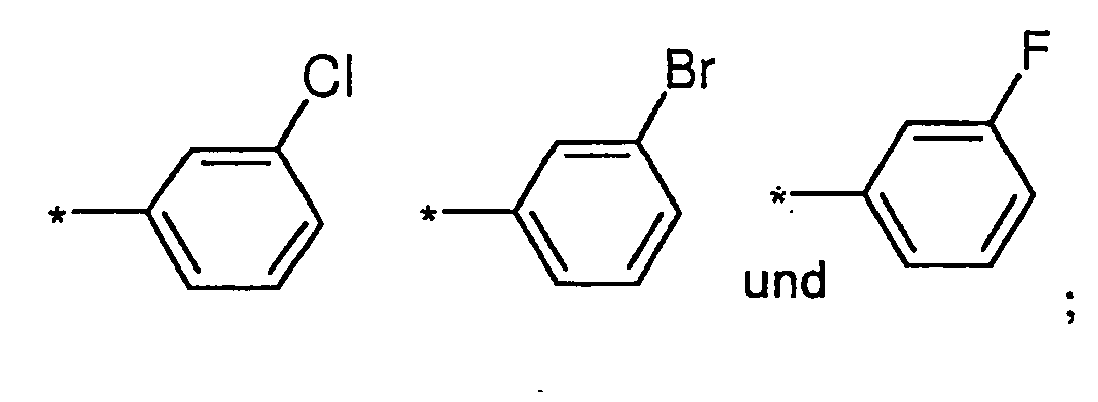
R7 ausgewählt ist aus der Gruppe bestehend aus Niederalkyl mit von 1 bis 8 Kohlenstoffatomen, substituiertem Niederalkyl mit von 1 bis 8 Kohlenstoffatomen, Niederalkenyl mit von 2 bis 8 Kohlenstoffatomen, substituiertem Niederalkenyl mit von 2 bis 8 Kohlenstoffatomen, Aryl, substituiertem Aryl, Heteroaryl, welches Heteroaryl ein aromatisches heterocyclisches Ringsystem ist, das bis zu zwei Ringe enthält, substituiertem Heteroaryl, welches Heteroaryl ein aromatisches heterocyclisches Ringsystem ist, das bis zu zwei Ringe enthält, Heterocyclus, welcher Heterocyclus ein 5- bis 8-gliedriger, mono- oder bicyclischer, aromatischer oder nicht-aromatischer Kohlenwasserstoff ist, worin 1 bis 3 Kohlenstoffatome durch ein Heteroatom ausgewählt aus Stickstoff-, Sauerstoff- oder Schwefelatom ersetzt sind, substituiertem Heterocyclus, welcher Heterocyclus ein 5- bis 8-gliedriger, mono- oder bicyclischer, aromatischer oder nicht-aromatischer Kohlenwasserstoff ist, worin 1 bis 3 Kohlenstoffatome durch ein Heteroatom ausgewählt aus Stickstoff-, Sauerstoff- oder Schwefelatom ersetzt sind, Cycloalkyl, substituiertem Cycloalkyl, Cycloalkenyl oder substituiertem Cycloalkenyl. - Verbindung der Formel I, II oder III nach Ansprüchen 1, 2 oder 5 worin
X -Cl ist;
Y; R1; R2; R4; R5 und R6 Wasserstoff sind;
R3 Sauerstoff ist; und
R7 und R8 Phenylgruppen sind, die jede unabhängig voneinander unsubstituiert oder 1, 2 oder 3 mal substituiert sind mit
Niederalkyl mit von 1 bis 8 Kohlenstoffatomen, Niederalkenyl mit von 2 bis 8 Kohlenstoffatomen, Niederalkinyl mit von 2 bis 6 Kohlenstoffatomen, Dioxo-Niederalkenyl mit von 1 bis 8 Kohlenstoffatomen (Bilden z.B. einer Benzodioxylgruppe), Halogen, Hydroxy, -CN, -CF3, -NH2, -N(H, Niederalkyl mit von 1 bis 8 Kohlenstoffatomen), N(Niederalkyl mit von 1 bis 8 Kohlenstoffatomen)2, Aminocarbonyl, Carboxy, -NO2, Niederalkoxy mit von 1 bis 8 Kohlenstöffatomen, Thio-Niederalkoxy mit von 1 bis 8 Kohlenstoffatomen, Niederalkylsulfonyl mit von 1 bis 8 Kohlenstoffatomen, Aminosulfonyl, Niederalkyl(mit von 1 bis 8 Kohlenstoffatomen)carbonyl, Niederalkyl(mit von 1 bis 8 Kohlenstoffatomen)carbonyloxy, Niederalkoxy(mit von 1 bis 8 Kohlenstoffatomen)carbonyl, Niederalkyl(mit von 1 bis 8 Kohlenstoffatomen)carbonyl-NH, Fluor-Niederalkyl mit von 1 bis 8 Kohlenstoffatomen, Fluor-Niederalkoxy mit von 1 bis 8 Kohlenstoffatomen, Niederalkoxy(mit von 1 bis 8 Kohlenstoffatomen)carbonyl-Niederalkoxy (mit von 1 bis 8 Kohlenstoffatomen), Carboxy-Niederalkoxy (mit von 1 bis 8 Kohlenstoffatomen), Carbamoyl-Niederalkoxy (mit von 1 bis 8 Kohlenstoffatomen), Hydroxy-Niederalkoxy (mit von 1 bis 8 Kohlenstoffatomen), -NH2-Niederalkoxy mit von 1 bis 8 Kohlenstoffatomen, -N(H, Niederalkyl mit von 1 bis 8 Kohlenstoffatomen)-Niederalkoxy mit von 1 bis 8 Kohlenstoffatomen, -N(Niederalkyl mit von 1 bis 8 Kohlenstoffatomen)2-Niederalkoxy mit von 1 bis 8 Kohlenstoffatomen, Benzyloxy-Niederalkoxy(mit von 1 bis 8 Kohlenstoffatomen), Mono- oder Di-(Niederalkyl mit von 1 bis 8 Kohlenstoffatomen) substituiertem Aminosulfonyl und Niederalkyl mit von 1 bis 8 Kohlenstoffatomen, das gegebenenfalls mit Halogen, Hydroxy, -NH2, -N(H, Niederalkyl mit von 1 bis 8 Kohlenstoffatomen) oder -N(Niederalkyl mit von 1 bis 8 Kohlenstoffatomen)2 substituiert sein kann. - Verbindung der Formel I, II oder III nach Ansprüchen 1 , 2 oder 5 worin
X -Cl ist;
Y; R1; R2; R4; R5 und R6 Wasserstoff sind;
R3 Sauerstoff ist; und
R7 und R8 Phenylgruppen sind, die jede unabhängig voneinander unsubstituiert oder 1, 2 oder 3 mal substituiert sind mit einem Substituenten unabhängig voneinander ausgewählt aus
Halogen, C2-4-Alkinyl oder -O-(C1-4 Alkyl) und
wobei die C2-4-Alkinyl- oder -O-(C1-4 Alkyl)gruppen unsubstituiert oder einmal substituiert sind mit Hydroxyl oder -N(C1-4 Alkyl)-S(O)2-CH3. - Verbindung nach Anspruch 1 ausgewählt aus der Gruppe bestehend aus(2'S, 3S, 4'S)-6-Chlor-2'-(3-chlorphenyl)-4'-(2,2-dimethylpropyl) spiro[3H-indol-3,3'-piperidin]-2,6'(1H)-dion,(2'SR, 3S, 4'R)-4'-(tert-Butyl)-6-chlor-2'-(3-chlorphenyl) spiro[3H-indol-3,3'-piperidin]-2,6'(1H)-dion,(2'S, 3S, 4'R)-6-Chlor-2'-(3-chlorphenyl)-4'-isopropyl spiro[3H-indol-3,3'-piperidin]-2,6'(1H)-dion,racemischem (2'R, 3R, 4'S)-6-Chlor-2',4'-bis(3-chlorphenyl) spiro[3H-indol-3,3'-piperidin]-2,6'(1H)-dion,chiralem (2'R, 3R, 4'S)-6-Chlor-2',4'-bis(3-chlorphenyl) spiro[3H-indol-3,3'-piperidin]-2,6'(1H)-dion,racemischem (2'S, 3S, 4'R)-6-Chlor-2'-(3-chlorphenyl)-4'-cyclopentyl spiro[3H-indol-3,3'-piperidin]-2,6'(1H)-dion,racemischem (2'S, 3S, 4'R)-6-Chlor-2'-(3-chlorphenyl)-4'-cyclohexyl spiro[3H-indol-3,3'-piperidin]-2,6'(1H)-dion,racemischem (2'S, 3S, 4'R)-6-Chlor-2'-(4-chlorphenyl)-4'-cyclohexyl spiro[3H-indol-3,3'-piperidin]-2,6'(1H)-dion,racemischem (2'R, 3R, 4'S)-6-Chlor-2'-(4-chlorphenyl)-4'-(3-chlorphenyl) spiro[3H-indol-3,3'-piperidin]-2,6'(1H)-dion undracemischem (2'S, 3S, 4'R)-6-Chlor-2'-(3-chlorphenyl)-4'-(4-chlorphenyl) spiro[3H-indol-3,3'-piperidin]-2,6'(1H)-dion.
- Verbindung nach Anspruch 1 ausgewählt aus der Gruppe bestehend ausracemischem (2'R, 3R, 4'S)-6-Chlor-4'-(3-chlorphenyl)-2'-(3-methylphenyl) spiro[3H-indol-3,3'-piperidin]-2,6'(1H)-dion,racemischem (2'R, 3R, 4'S)-6-Chlor-4'-(3-chlorphenyl)-2'-(3-fluorphenyl) spiro[3H-indol-3,3'-piperidin]-2,6'(1H)-dion,racemischem (2'S, 3S, 4'R)-6-Chlor-2'-(3-chlorphenyl)-4'-phenyl spiro[3H-indol-`3,3'-piperidin]-2,6'(1H)-dion,racemischem (2'S, 3S, 4'R, 5'R)-6-Chlor-2'-(3-chlorphenyl)-5'-methyl-4'-phenyl spiro[3H-indol-3,3'-piperidin]-2,6'(1H)-dion,racemischem (2'R, 3R, 4'S)-6-Chlor-4'-(3-chlorphenyl)-2'-phenyl spiro[3H-indol-3,3'-piperidin]-2,6'(1H)-dion,chiralem (2'R, 3R, 4'S)-6-Chlor-4'-(3-chlorphenyl)-2'-phenyl spiro[3H-indol-3,3'-piperidin]-2,6'(1H)-dion,racemischem (2'R, 3R, 4'S)-6-Chlor-4'-(3-chlorphenyl)-2'-(3-methoxyphenyl) spiro[3H-indol-3,3'-piperidin]-2,6'(1H)-dion,racemischem (2'R, 3R, 4'S)-6-Chlor-2'-(2-chlorphenyl)-4'-(3-chlorphenyl) spiro[3H-indol-3,3'-piperidin]-2,6'(1H)-dion,chiralem (2'R, 3R, 4'S)-6-Chlor-2'-(2-chlorphenyl)-4'-(3-chlorphenyl) spiro[3H-indol-3,3'-piperidin]-2,6'(1H)-dion undracemischem (2'R, 3R, 4'S)-6-Chlor-4'-(3-chlorphenyl)-2'-(2-methylphenyl) spiro[3H-indol-3,3'-piperidin]-2,6'(1H)-dion.
- Verbindung nach Anspruch 1 ausgewählt aus der Gruppe bestehend auschiralem (2'R, 3R, 4'S)-6-Chlor-4'-(3-chlorphenyl)-2'-(2-methylphenyl) spiro[3H-indol-3,3'-piperidin]-2,6'(1H)-dion,racemischem (2'R, 3R, 4'S)-6-Chlor-4'-(3-chlorphenyl)-2'-(2-ethylphenyl) spiro[3H-indol-3,3'-piperidin]-2,6'(1H)-dion,chiralem (2'R, 3R, 4'S)-6-Chlor-4'-(3-chlorphenyl)-2'-(2-ethylphenyl) spiro[3H-indol-3,3'-piperidin]-2,6'(1H)-dion,racemischem (2'R, 3R, 4'S, 5'S)-6-Chlor-4'-(3-chlorphenyl)-5'-methyl-2'-(2-methylphenyl) spiro[3H-indol-3,3'-piperidin]-2,6'(1H)-dion,racemischem (2'R, 3R, 4'S, 5'S)-6-Chlor-2',4'-bis(3-chlorphenyl)-5'-methyl spiro[3H-indol-3,3'-piperidin]-2,6'(1H)-dion,racemischem (2'R, 3R, 4'S)-6-Chlor-4'-(3-chlorphenyl)-2'-(2-isopropylphenyl) spiro[3H-indol-3,3'-piperidin]-2,6'(1H)-dion,chiralem (2'R, 3R, 4'S)-6-Chlor-4'-(3-chlorphenyl)-2'-(2-isopropylphenyl) spiro[3H-indol-3,3'-piperidin]-2,6'(1H)-dion,racemischem (2'R, 3R, 4'S)-2'-(2-Bromphenyl)-6-chlor-4'-(3-chlorphenyl) spiro[3H-indol-3,3'-piperidin]-2,6'(1H)-dion,chiralem (2'R, 3R, 4'S)-2'-(2-Bromphenyl)-6-chlor-4'-(3-chlorphenyf) spiro[3H-indol-3,3'-piperidin]-2,6'(1H)-dion undracemischem (2'R, 3R, 4'S)-6-Chlor-4'-(3-chlorphenyl)-2'-(3-cyanophenyl) spiro[3H-indol-3,3'-piperidin]-2,6'(1H)-dion.
- Verbindung nach Anspruch 1 ausgewählt aus der Gruppe bestehend ausracemischem (2'R, 3R, 4'S)-6-Chlor-4'-(3-chlorphenyl)-1'-methyl-2'-(2-methylphenyl) spiro[3H-indol-3,3'-piperidin]-2,6'(1H)-dion,chiralem (2'R, 3R, 4'S)-6-Chlor-4'-(3-chlorphenyl)-1'-methyl-2'-(2-methylphenyl) spiro[3H-indol-3,3'-piperidin]-2,6'(1H)-dion,racemischem (2'R, 3R, 4'S)-6-Chlor-4'-(3-chlorphenyl)-2'-(3-fluor-2-methylphenyl) spiro[3H-indol-3,3'-piperidin]-2,6'(1H)-dion,chiralem (2'R, 3R, 4'S)-6-Chlor-4'-(3-chlorphenyl)-2'-(3-fluor-2-methylphenyl) spiro[3H-indol-3,3'-piperidin]-2,6'(1H)-dion,racemischem (2'R, 3R, 4'S)-6-Chlor-4'-(3-chlorphenyl)-1'-ethyl-2'-(2-methylphenyl) spiro[3H-indol-3,3'-piperidin]-2,6'(1H)-dion,chiralem (2'R, 3R, 4'S)-6-Chlor-4'-(3-chlorphenyl)-1'-ethyl-2'-(2-methylphenyl) spiro[3H-indol-3,3'-piperidin]-2,6'(1H)-dion,racemischem (2'R, 3R, 4'S)-6-Chlor-4'-(3-chlorphenyl)-2'-(2,6-dimethylphenyl) spiro[3H-indol-3,3'-piperidin]-2,6'(1H)-dion,racemischem (2'R, 3R, 4'S)-6-Chlor-4'-(3-chlorphenyl)-2'-(2,3-dimethylphenyl) spiro[3H-indol-3,3'-piperidin]-2,6'(1H)-dion,racemischem (2'R, 3R, 4'S)-6-Chlor-4'-(3-chlorphenyl)-1'-[(methoxycarbonyl) methyl]-2'-(2-methylphenyl) spiro[3H-indol-3,3'-piperidin]-2,6'(1H)-dion undracemischem (2'S, 3R)-6-Chlor-2'-(3-chlorphenyl)-4'-isopropyl-6'-thioxo spiro[3H-indol-3,3'-piperidin]-2(1H)-on.
- Verbindung nach Anspruch 1 ausgewählt aus der Gruppe bestehend ausracemischem (2'R, 3R, 4'S)-6-Chlor-4'-(3-chlorphenyl)-1'-[(hydroxycarbonyl)-methyl]-2'-(2-methylphenyl) spiro[3H-indol-3,3'-piperidin]-2,6'(1H)-dion,racemischem (2'R, 3R, 4'S)-6-Chlor-4'-(3-chlorphenyl)-2'-[2-(trifluormethyl)-phenyl] spiro[3H-indol-3,3'-piperidin]-2,6'(1H)-dion,racemischem (2'R, 3R, 4'S)-6-Chlor-4'-(3-chlorphenyl)-6'-thioxo-2'-[2-(trifluormethyl)-phenyl] spiro[3H-indol-3,3'-piperidin]-2(1H)-on,racemischem (2'R, 3R, 4'S)-6-Chlor-4'-(3-chlorphenyl)-2'-(2-methylphenyl) -1'-[2-(4- morpholinyl)-carbonyl-methyl] spiro[3H-indol-3,3'-piperidin]-2,6'(1H)-dion,chiralem (2'R, 3R, 4'S)-6-Chlor-4'-(3-chlorphenyl)-2'-(2-methylphenyl)-1'-[2-(4- morpholinyl)-carbonyl-methyl] spiro[3H-indol-3,3'-piperidin]-2,6'(1H)-dion,racemischem (2'R, 3R, 4'S)-6-Chlor-4'-(3-chlorphenyl)-2'-[5-fluor-2-(trifluormethyl)-phenyl] spiro[3H-indol-3,3'-piperidin]-2,6'(1H)-dion,racemischem (2'R, 3R, 4'S)-6-Chlor-4'-(3-chlorphenyl)-2'-(5-fluor-2-methylphenyl) spiro[3H-indol-3,3'-piperidin]-2,6'(1H)-dion,chiralem (2'R, 3R, 4'S)-6-Chlor-4'-(3-chlorphenyl)-2'-(5-fluor-2-methylphenyl) spiro[3H-indol-3,3'-piperidin]-2,6'(1H)-dion,racemischem (2'R, 3R, 4'S)-6-Chlor-4'-(3-chlorphenyl)-1'-[(cyclopropylamino)-carbonyl-methyl]-2'-(2-methylphenyl) spiro[3H-indol-3,3'-piperidin]-2,6'(1H)-dion undracemischem (2'R, 3R, 4'S)-6-Chlor-[[2-[6-chlor-4'-(3-chlorphenyl)-2,3-dihydro-2'-(2-methylphenyl)-2,6-dioxospiro[3H-indol-3,3'-piperidin]-1-yl]-1-oxoethyl]-amino]-piperidin carbonsäure tert-butylester.
- Verbindung nach Anspruch 1 ausgewählt aus der Gruppe bestehend ausracemischem (2'R, 3R, 4'S)-6-Chlor-4'-(3-chlorphenyl)-2'-(5-fluor-2-methylphenyl)-6'-thioxo spiro[3H-indol-3,3'-piperidin]-2(1H)-on,racemischem (2'R, 3R, 4'S)-[6-Chlor-4'-(3-chlorphenyl)-2,3-dihydro-2'-[2-(trifluormethyl)phenyl)]-2-oxospiro[3H-indol-3,3'-piperidin]-6-ylen]-hydrazin-carbonsäureethylester,racemischem (2'R, 3R, 4'S)-6-Chlor-4'-(3-chlorphenyl)-2'-(2,4-difluorphenyl) spiro[3H-indol-3,3'-piperidin]-2,6'(1H)-dion,racemischem (2'R, 3R, 4'S)-6-Chlor-4'-(3-chlorphenyl)-2'-(5-fluor-2-methoxyphenyl) spiro[3H-indol-3,3'-piperidin]-2,6'(1H)-dion,racemischem (2'R, 3R, 4'S)-6-Chlor-4'-(3-chlorphenyl)-2'-(1-naphthalenyl) spiro[3H-indol-3,3'-piperidin]-2,6'(1H)-dion,racemischem (2'R, 3R, 4'S)-6-Chlor-4'-(3-chlorphenyl)-2'-(3-pyridinyl) spiro[3H-indot-3,3'-piperidin]-2,6'(1H)-dion,racemischem (2'R, 3R, 4'S)-6-Chlor-4'-(3-chlorphenyl)-2'-(2, 3-difluor-6-methoxyphenyl) spiro[3H-indol-3,3'-piperidin]-2,6'(1H)-dion,racemischem (2'R, 3R, 4'S)-6-Chlor-4'-(3-chlorphenyl)-2'-(3,4-difluorphenyl) spiro[3H-indol-3,3'-piperidin]-2,6'(1H)-dion,racemischem (2'R, 3R, 4'S)-6-Chlor-4'-(3-chlorphenyl)-2'-(1-cyclohexenyl) spiro[3H-indol-3,3'-piperidin]-2,6'(1H)-dion undracemischem (2'R, 3R, 4'S)-6-Chlor-4'-(3-chlorphenyl)-2'-(3,4-difluorphenyl)-6'-thioxo spiro[3H-indol-3,3'-piperidin]-2(1H)-on.
- Verbindung nach Anspruch 1 ausgewählt aus der Gruppe bestehend ausracemischem (2'R, 3R, 4'S)-[6-Chlor-4'-(3-chlorphenyl)-2'-(3,4-difluorphenyl)-2,3-dihydro-2-oxospiro[3H-indol-3,3'-piperidin]-6-ylen] hydrazin-carbonsäureethylester,racemischem (2'R, 3R, 4'S)-2'-(1,3-Benzodioxol-4-yl)-6-chlor-4'-(3-chlorphenyl) spiro[3H-indol-3,3'-piperidin]-2,6'(1H)-dion,racemischem (2'R, 3R, 4'S)-[6-Chlor-4'-(3-chlorphenyl)-2'-(5-fluor-2-methylphenyl)-2,3-dihydro-2-oxospiro[3H-indol-3,3'-piperidin]-6-ylen] hydrazin-carbonsäureethylester,racemischem (2'R, 3R, 4'S)-6-Chlor-4'-(3-chlorphenyl)-2'-(2,3-difluor-6-methylphenyl) spiro[3H-indol-3,3'-piperidin]-2,6'(1H)-dion,racemischem (2'R, 3R, 4'S)-6-Chlor-4'-(3-chlorphenyl)-5-fluor-2'-(5-fluor-2-methylphenyl) spiro[3H-indol-3,3'-piperidin]-2,6'(1H)-dion,racemischem (2'R, 3R, 4'S)-6-Chlor-4'-(3-chlorphenyl)-2'-(2,3-difluor-6-methylphenyl)-6'-thioxo spiro[3H-indol-3,3'-piperidin]-2(1H)-on,racemischem (2'R, 3R, 4'S)-6-Chlor-4'-(3-chlorphenyl)-2'-(5-fluor-2-methylphenyl)-1'-hydroxycarbonylmethyl spiro[3H-indol-3,3'-piperidin]-2,6'(1H)-dion,racemischem (2'R, 3R, 4'S)-6-Chlor-4'-(3-chlorphenyl)-2'-(5-fluor-2-methylphenyl)-1'-methyl spiro[3H-Indol-3,3'-piperidin]-2,6'(1H)-dion,chiralem (2'R, 3R, 4'S)-6-Chlor-4'-(3-chlorphenyl)-2'-(5-fluor-2-methylphenyl)-1'-methyl spiro[3H-indol-3,3'-piperidin]-2,6'(1H)-dion undracemischem (2'R, 3R, 4'S)-6-Chlor-4'-(3-chlorphenyl)-1'-fluorcarbonylmethyl-2'-(5-fluor-2-methylphenyl) spiro[3H-indol-3,3'-piperidin]-2,6'(1H)-dion.
- Verbindung nach Anspruch 1 ausgewählt aus der Gruppe bestehend ausracemischem (2'R, 3R, 4'S)-6-Chlor-4'-(3-chlorphenyl)-2'-(5-fluor-2-methylphenyl)-1'-[(1-methyl-piperidin-4-yl)aminocarbonyl)-methyl] spiro[3H-indol-3,3'-piperidin]-2,6'(1H)-dion,chiralem (2'R, 3R, 4'S)-6-Chlor-4'-(3-chlorphenyl)-2'-(5-fluor-2-methylphenyl)-1'-[(1-methyl-piperidin-4-yl)aminocarbonyl)-methyl] spiro[3H-indol-3,3'-piperidin]-2,6'(1H)-dion,racemischem (2'R, 3R, 4'S)-1'-[1-tert-Butoxycarbonyl-piperidin-4-yl)aminocarbonyl-methyl] 6-chlor-4'-(3-chlorphenyl)-2'-(5-fluor-2-methylphenyl) spiro[3H-indol-3,3'-piperidin]-2,6'(1H)-dion,racemischem (2'R, 3R, 4'S)-6-Chlor-4'-(3-chlorphenyl)-2'-(5-fluor-2-methylphenyl)-1'-[(piperidin-4-yl)aminocarbonyl-methyl] spiro[3H-indol-3,3'-piperidin]-2,6'(1H)-dion,chiralem (2'R, 3R, 4'S)-6-Chlor-4'-(3-chlorphenyl)-2'-(5-fluor-2-methylphenyl)-1'-[(piperidin-4-yl)aminocarbonyl-methyl] spiro[3H-indol-3,3'-piperidin]-2,6'(1H)-dion,racemischem (2'R, 3R, 4'S)-6-Chlor-4'-(3-chlorphenyl)-2'-(5-fluor-2-methylphenyl)-1'-(3-morpholin-4-yl-propyl) spiro[3H-indol-3,3'-piperidin]-2,6'(1H)-dion,chiralem (2'R, 3R, 4'S)-6-Chlor-4'-(3-chlorphenyl)-2'-(5-fluor-2-methylphenyl)-1'-(3-morpholin-4-yl-propyl) spiro[3H-indol-3,3'-piperidin]-2,6'(1H)-dion,racemischem (2'R, 3R, 4'S)-6-Chlor-4'-(3-chlorphenyl)-2'-(1-isopropyl-4-methyl-pent-1-enyl) spiro[3H-indol-3,3'-piperidin]-2,6'(1H)-dion,racemischem (2'R, 3R, 4'S)-6-Chlor-4'-(3-chlorphenyl)-2'-(2,3-difluor-6-isopropoxy-phenyl) spiro[3H-indol-3,3'-piperidin]-2,6'(1H)-dion undchiralem (2'R, 3R, 4'S)-6-Chlor-4'-(3-chlorphenyl)-2'-(2,3-difluor-6-isopropoxy-phenyl) spiro[3H-indol-3,3-piperidin]-2,6'(1H)-dion.
- Verbindung nach Anspruch 1 ausgewählt aus der Gruppe bestehend ausracemischem (2'R, 3R, 4'S)-6-Chlor-4'-(3-chlorphenyl)-2'-(5-fluor-2-methylphenyl)-1'-(3-pyrrolidin-1-yl-propyl) spiro[3H-indol-3,3'-piperidin]-2,6'(1H)-dion,racemischem (2'R, 3R, 4'S)-6-Chlor-4'-(3-chlorphenyl)-2'-(3-methoxycarbonyl-phenyl) spiro[3H-indol-3,3'-piperidin]-2,6'(1H)-dion, racemischem (2'R, 3R, 4'S)-1'-[3-(4-Acetyl-piperazin-1-yl)-propyl]-6-chlor-4'-(3-chlorphenyl)-2'-(5-fluor-2-methylphenyl) spiro[3H-indol-3,3'-piperidin]-2,6'(1H)-dion,racemischem (2'R, 3R, 4'S)-6-Chlor-4'-(3-chlorphenyl)-2'-(1-ethyl-propenyl) spiro[3H-indol-3,3'-piperidin]-2,6'(1H)-dion,chiralem (2'R, 3R, 4'S)-6-Chlor-4'-(3-chlorphenyl)-2'-(1-ethyl-propenyl) spiro[3H-indol-3,3'-piperidin]-2,6'(1H)-dion,racemischem (2'R, 3R, 4'S)-6-Chlor-4'-(3-chlorphenyl)-1'-[3-(1,1-dioxo-thiomorpholin-4-yl)-propyl]-2'-(5-fluor-2-methylphenyl)- spiro[3H-indol-3,3'-piperidin]-2,6'(1H)-dion,chiralem (2'R, 3R, 4'S)-6-Chlor-4'-(3-chlorphenyl)-1'-[3-(1,1-dioxo-thiomorpholin-4-yl)-propyl]-2'-(5-fluor-2-methylphenyl)- spiro[3H-indol-3,3'-piperidin]-2,6'(1H)-dion,racemischem (2'R, 3R, 4'S)-6-Chlor-4'-(3-chlorphenyl)-2'-(2,5-dimethyl-phenyl) spiro[3H-indol-3,3'-piperidin]-2,6'(1H)-dion,chiralem (2'R, 3R, 4'S)-6-Chlor-4'-(3-chlorphenyl)-2'-(2,5-dimethyl-phenyl) spiro[3H-indol-3,3'-piperidin]-2,6'(1H)-dion undracemischem (2'R, 3R, 4'S)-6-Chlor-4'-(3-chlorphenyl)-2'-(2,5-dimethyl-2H-pyrazol-3-yl) spiro[3H-indol-3,3'-piperidin]-2,6'(1H)-dion.
- Verbindung nach Anspruch 1 ausgewählt aus der Gruppe bestehend ausracemischem (2'R, 3R, 4'S)-6-Chlor-4'-(3-chlorphenyl)-2'-(1-methyl-propenyl) spiro[3H-indol-3,3'-piperidin]-2,6'(1H)-dion,racemischem (2'R, 3R, 4'S)-6-Chlor-4'-(3-chlorphenyl)-2'-(1-methyl-but-1-enyl) spiro[3H-indol-3,3'-piperidin]-2,6'(1H)-dion,racemischem (2'R, 3R, 4'S)-6-Chlor-4'-(3-chlorphenyl)-2'-(1-ethyl-propyl) spiro[3H-indol-3,3'-piperidin]-2,6'(1H)-dion,chiralem (2'R, 3R, 4'S)-6-Chlor-4'-(3-chlorphenyl)-2'-(1-ethyl-propyl) spiro[3H-indol-3,3'-piperidin]-2,6'(1H)-dion,racemischem (2'R, 3R, 4'S)-6-Chlor-4'-(3-chlorphenyl)-2'-(2,3-difluor-6-isopropoxy-phenyl)-1'-(3-morpholin-4-yl-propyl) spiro[3H-indol-3,3'-piperidin]-2,6'(1H)-dion,chiralem (2'R, 3R, 4'S)-6-Chlor-4'-(3-chlorphenyl)-2'-(2,3-difluor-6-isopropoxy-phenyl)-1'-(3-morpholin-4-yl-propyl) spiro[3H-indol-3,3'-piperidin]-2,6'(1H)-dion,racemischem (2'R, 3R, 4'S)-6-Chlor-4'-(3-chlorphenyl)-2'-(1-ethyliden-pentyl) spiro[3H-indol-3,3'-piperidin]-2,6'(1H)-dion,racemischem (2'R, 3R, 4'S)-6-Chlor-4'-(3-chlorphenyl)-2'-(2,3-difluor-6-isopropoxy-phenyl)-6'-thioxo spiro[3H-indol-3,3'-piperidin]-2(1H)-on,racemischem (2'R, 3R, 4'S)-[6-Chlor-4'-(3-chlorphenyl)-2'-(2,3-difluor-6-isopropoxy-phenyl)-2,3-dihydro-2-oxospiro[3H-indol-3,3'-piperidin]-6-ylen] hydrazin-carbonsäureethylester undracemischem (2'R, 3R, 4'S)-6-Chlor-4'-(3-chlorphenyl)-2'-(cyclopent-1-enyl) spiro[3H-indol-3,3'-piperidin]-2,6'(1H)-dion.
- Verbindung nach Anspruch 1 ausgewählt aus der Gruppe bestehend ausracemischem (2'R, 3R, 4'S)-6-Chlor-4'-(3-chlorphenyl)-2'-cyclopentyl spiro[3H-indol-3,3'-piperidin]-2,6'(1H)-dion,chiralem (2'R, 3R, 4'S)-6-Chlor-4'-(3-chlorphenyl)-2'-cyclopentyl spiro[3H-indot-3,3'-piperidin]-2,6'(1H)-dion,racemischem (2'R, 3R, 4'S)-6-Chlor-4'-(3-chlorphenyl)-2'-(1-isopropyl-propenyl) spiro[3H-indol-3,3'-piperidin]-2,6'(1H)-dion,chiralem (2'R, 3R, 4'S)-6-Chlor-4'-(3-chlorphenyl)-2'-(1-isopropyl-propenyl) spiro[3H-indol-3,3'-piperidin]-2,6'(1H)-dion,racemischem (2'R, 3R, 4'S)-6-Chlor-4'-(3-chlorphenyl)-2'-(1-methylen-propyl) spiro[3H-indol-3,3'-piperidin]-2,6'(1H)-dion,chiralem (2'R, 3R, 4'S)-6-Chlor-4'-(3-chlorphenyl)-2'-(1-methylen-propyl) spiro[3H-indol-3,3'-piperidin]-2,6'(1H)-dion,racemischem (2'R, 3R, 4'S)-6-Chlor-4'-(3-chlorphenyl)-2'-(1-ethyl-propenyl)-1'- hydroxycarbonylmethyl-spiro[3H-indol-3,3'-piperidin]-2,6'(1H)-dion,racemischem (2'R, 3R, 4'S)-6-Chlor-4'-(3-chlorphenyl)-2'-(1-ethyl-propenyl)-1'-[(2-hydroxy-1,1-dimethylethyl)aminocarbonyl-methyl] spiro[3H-indol-3,3'-piperidin]-2,6'(1H)-dion,chiralem (2'R, 3R, 4'S) -6-Chlor-4'-(3-chlorphenyl)-2'-(1-ethyl-propenyl)-1'-[(2- Hydroxy-1,1-dimethylethy)aminocarbonyl-methyl] spiro[3H-indol-3,3'-piperidin]-2,6'(1H)-dion undracemischem (2'R, 3R, 4'S)-6-Chlor-4'-(3-chlorphenyl)-2'-(1-ethyl-propenyl)-1'-(3- morpholin-4-yl-propyl) spiro[3H-indol-3,3'-piperidin]-2,6'(1H)-dion.
- Verbindung nach Anspruch 1 ausgewählt aus der Gruppe bestehend auschiralem (2'R, 3R, 4'S)-6-Chlor-4'-(3-chlorphenyl)-2'-(1-ethyl-propenyl)-1'-(3-morpholin-4-yl-propyl) spiro[3H-indol-3,3'-piperidin]-2,6'(1H)-dion, racemischem (2'R, 3R, 4'S)-6-Chlor-4'-(3-chlorphenyl)-2'-(2-methyl-1-methylen-propyl) spiro[3H-indol-3,3'-piperidin]-2,6'(1H)-dion,racemischem (2'R, 3R, 4'S)-6-Chlor-4'-(3-chlorphenyl)-2'-(2,2-dimethyl-1-methylen-propyl) spiro[3H-indol-3,3'-piperidin]-2,6'(1H)-dion,racemischem (2'R, 3R, 4'S)-6-Chlor-4'-(3-chlorphenyl)-2'-(1-ethyl-propenyl)-1'-[(2- morpholin-4-yl-ethyl)aminocarbonyl-methyl] spiro[3H-indol-3,3'-piperidin]-2,6'(1H)-dion,racemischem (2'R, 3R, 4'S)-6-Chlor-4'-(3-chlorphenyl)-2'-isopropenyl spiro[3H-indol-3,3'-piperidin]-2,6'(1H)-dion,chiralem (2'R, 3R, 4'S)-6-Chlor-4'-(3-chlorphenyl)-2'-isopropenyl spiro[3H-indol-3,3'-piperidin]-2,6'(1H)-dion,racemischem (2'R, 3R, 4'S)-6-Chlor-4'-(3-chlorphenyl)-2'-(1-methylen-butyl) spiro[3H-indol-3,3'-piperidin]-2,6'(1H)-dion,chiralem (2'R, 3R, 4'S)-6-Chlor-4'-(3-chlorphenyl)-2'-(1-methylen-butyl) spiro[3H-indol-3,3'-piperidin]-2,6'(1H)-dion,racemischem (2'R, 3R, 4'S)-6-Chlor-4'-(3-chlorphenyl)-2'-(3-methyl-1-methylen-butyl) spiro[3H-indol-3,3'-piperidin]-2,6'(1H)-dion undchiralem (2'R, 3R, 4'S)-6-Chlor-4'-(3-chlorphenyl)-2'-(3-methyl-1-methylen-butyl) spiro[3H-indol-3,3'-piperidin]-2,6'(1H)-dion.
- Verbindung nach Anspruch 1 ausgewählt aus der Gruppe bestehend ausracemischem (2'R, 3R, 4'S)-6-Chlor-4'-(3-chlorphenyl)-2'-(1-methylen-butyl)-6'-thioxo spiro[3H-indol-3,3'-piperidin]-2(1H)-on,racemischem (2'R, 3R, 4'S)-6-Chlor-4'-(3-chlorphenyl)-2'-(4-ethoxy-1,2-difluor-phenyl) spiro[3H-indol-3,3'-piperidin]-2,6'(1H)-dion,chiralem (2'R, 3R, 4'S)-6-Chlor-4'-(3-chlorphenyl)-2'-(4-ethoxy-1,2-difluorphenyl)spiro[3H-indol-3,3'-piperidin]-2,6'(1H)-dion,racemischem (2'R, 3R, 4'S)-6-Chlor-4'-(3-chlor-5-methoxycarbonyl-phenyl)-2'-(1-methylen-propyl) spiro[3H-indol-3,3'-piperidin]-2,6'(1H)-dion,racemischem (2'R, 3R, 4'S)-6-Chlor-4'-(3-chlor-5-hydroxycarbonyl-phenyl)-2'-(1-methylen-propyl) spiro[3H-indol-3,3'-piperidin]-2,6'(1H)-dion,racemischem (2'R, 3R, 4'S)-6-Chlor-4'-(3-chlor-5-fluorcarbonyl-phenyl)-2'-(1-methylen-propyl) spiro[3H-indol-3,3'-piperidin]-2,6'(1H)-dion,racemischem (2'R, 3R, 4'S)-6-Chlor-4'-[3-chlor-5-(4-methansulfonyl-piperazin-1-carbonyl)-phenyl]-2'-(1-methylen-propyl) spiro[3H-indol-3,3'-piperidin]-2,6'(1H)-dion,racemischem (2'R, 3R, 4'S)-6-Chlor-4'-(3-chlorphenyl)-2'-(1-ethyl-propenyl)-1'-methyl spiro[3H-indol-3,3'-piperidin]-2,6'(1H)-dion,chiralem (2'R, 3R, 4'S)-6-Chlor-4'-(3-chlorphenyl)-2'-(1-ethyl-propenyl)-1'-methyl spiro[3H-indol-3,3'-piperidin]-2,6'(1H)-dion,racemischem (2'R, 3R, 4'S)-6-Chlor-4'-(3-chlorphenyl)-2'-isopropyl spiro[3H-indol-3,3'-piperidin]-2,6'(1H)-dion undchiralem (2'R, 3R, 4'S)-6-Chlor-4'-(3-chlorphenyl)-2'-isopropyl spiro[3H-indol-3,3'-piperidin]-2,6'(1H)-dion.
- Verbindung nach Anspruch 1 ausgewählt aus der Gruppe bestehend ausracemischem (2'R, 3R, 4'S)-6-Chlor-4'-(3-chlorphenyl)-2'-(1-methylen-propyl)-1'-methyl spiro[3H-indol-3,3'-piperidin]-2,6'(1H)-dion,chiralem (2'R, 3R, 4'S)-6-Chlor-4'-(3-chlorphenyl)-2'-(1-methylen-propyl)-1'-methyl spiro[3H-indol-3,3'-piperidin]-2,6'(1H)-dion,racemischem (2'R, 3R, 4'S)-2'-sec-Butyl-6-chlor-4'-(3-chlorphenyl) spiro[3H-indol-3,3'-piperidin]-2,6'(1H)-dion,racemischem (2'R, 3R, 4'S)-6-Chlor-4'-(3-chlorphenyl)-2'-(1-hydroxymethyl-vinyl)- spiro[3H-indol-3,3'-piperidin]-2,6'(1H)-dion,racemischem (2'R, 3R, 4'S)-6-Chlor-4'-(3-chlorphenyl)-2'-(1-methoxymethyl-vinyl) spiro[3H-indol-3,3'-piperidin]-2,6'(1H)-dion,racemischem (2'R, 3R, 4'S)-6-Chlor-4'-(3-chlorphenyl)-2'-[2,3-difluor-6-(2-methoxy-ethoxy)-phenyl] spiro[3H-indol-3,3'-piperidin]-2,6'(1H)-dion,chiralem (2'R, 3R, 4'S)-6-Chlor-4'-(3-chlorphenyl)-2'-[2,3-difluor-6-(2-methoxy-ethoxy)-phenyl] spiro[3H-indol-3,3'-piperidin]-2,6'(1H)-dion,racemischem (2'R, 3R, 4'S)-6-Chlor-4'-(3-chlorphenyl)-2'-(1,2-dimethyl-propenyl) spiro[3H-indol-3,3'-piperidin]-2,6'(1H)-dion,racemischem (2'R, 3R, 4'S)-6-Chlor-4'-(3-chlorphenyl)-2'-propionyl spiro[3H-indol-3,3'-piperidin]-2,6'(1H)-dion undracemischem (2'R, 3R, 4'S)-6-Chlor-4'-(3-chlorphenyl)-2'-(2,3-difluor-6-propoxy-phenyl) spiro[3H-indol-3,3'-piperidin]-2,6'(1H)-dion.
- Verbindung nach Anspruch 1 ausgewählt aus der Gruppe bestehend auschiralem (2'R, 3R, 4'S)-6-Chlor-4'-(3-chlorphenyl)-2'-(2,3-difluor-6-propoxy-phenyl) spiro[3H-indol-3,3'-piperidin]-2,6'(1H)-dion,racemischem (2'R, 3R, 4'S)-6-Chlor-4'-(3-chlorphenyl)-2'-(1-cyclopropyl-vinyl) spiro[3H-indol-3,3'-piperidin]-2,6'(1H)-dion,racemischem (2'R, 3R, 4'S)-6-Chlor-4'-(3-chlorphenyl)-1'-hydroxycarbonylmethyl-2'-(1-methylen-propyl) spiro[3H-indol-3,3'-piperidin]-2,6'(1H)-dion,racemischem (2'R, 3R, 4'S)-6-Chlor-4'-(3-chlorphenyl)-2'-(1-methylen-propyl)-1'-[(1-methansulfonyl-piperidin-4-yl)aminocarbonyl-methyl] spiro[3H-indol-3,3'-piperidin]-2,6'(1H)-dion,racemischem (2'R, 3R, 4'S)-6-Chlor-4'-(3-chlorphenyl)-2'-(1-methylen-propyl)-1'- (aminocarbonyl-methyl) spiro[3H-indol-3,3'-piperidin]-2,6'(1H)-dion,chiralem (2'R, 3R, 4'S)-6-Chlor-4'-(3-chlorphenyl)-2'-(1-methylen-propyl)-1'-(aminocarbonyl-methyl) spiro[3H-indol-3,3'-piperidin]-2,6'(1H)-dion,racemischem (2'R, 3R, 4'S)-6-Chlor-4'-(3-chlorphenyl)-2'-(1-ethyl-2-methyl-propenyl) spiro[3H-indol-3,3'-piperidin]-2,6'(1H)-dion,racemischem (2'R, 3R, 4'S)-6-Chlor-4'-(3-chlorphenyl)-2'-[2,3-difluor-6-(2-hydroxy- ethoxy)-phenyl] spiro[3H-indol-3,3'-piperidin]-2,6'(1H)-dion,chiralem (2'R, 3R, 4'S)-6-Chlor-4'-(3-chlorphenyl)-2'-[2,3-difluor-6-(2-hydroxy-ethoxy)-phenyl] spiro[3H-indol-3,3'-piperidin]-2,6'(1H)-dion undracemischem (2'R, 3R, 4'S)-6-Chlor-4'-(3-chlorphenyl)-2'-(2,3-difluor-6-hydroxy-phenyl) spiro[3H-indol-3,3'-piperidin]-2,6'(1H)-dion.
- Verbindung nach Anspruch 1 ausgewählt aus der Gruppe bestehend ausracemischem (2'R, 3R, 4'S)-6-Chlor-4'-(3-chlorphenyl)-2'-(1-ethyl-1-hydroxypropyl) spiro[3H-indol-3,3'-piperidin]-2,6'(1H)-dion,racemischem (2'R, 3R, 4'S)-6-Chlor-4'-(3-chlorphenyl)-2'-(1-ethyl-3-methyl-oxiranyl) spiro[3H-indol-3,3'-piperidin]-2,6'(1H)-dion,racemischem (2'R, 3R, 4'S)-6-Chlor-4'-(3-chlorphenyl)-2'-(1-fluor-2-methyl-propenyl) spiro[3H-indol-3,3'-piperidin]-2,6'(1H)-dion,racemischem (2'R, 3R, 4'S)-6-Chlor-4'-(3-chlorphenyl)-2'-isobutyryl spiro[3H-indol-3,3'-piperidin]-2,6'(1H)-dion,racemischem (2'R, 3R, 4'S)-6-Chlor-4'-(3-chlorphenyl)-2'-isopropenyl-1'-hydroxycarbonylmethyl spiro[3H-indol-3,3'-piperidin]-2,6'(1H)-dion,racemischem (2'R, 3R, 4'S)-1'-(Aminocarbonyl-methyl)-6-chlor-4'-(3-chlorphenyl)-2'- isopropenyl spiro[3H-indol-3,3'-piperidin]-2,6'(1H)-dion,racemischem (2'R, 3R, 4'S)-6-Chlor-4'-(3-chlorphenyl)-1'-(cyclopropylaminocarbonyl-methyl)-2'-isopropenyl spiro[3H-indol-3,3'-piperidin]-2,6'(1H)-dion,racemischem (2'R, 3R, 4'S)-6-Chlor-4'-(3-chlorphenyl)-2'-isopropenyl-1'-[(1-methyl- piperidin-4-yl)aminocarbonyl-methyl] spiro[3H-indol-3,3' piperidin]-2,6'(1H)-dion,racemischem (2'R, 3R, 4'S)-6-Chlor-4'-(3-chlorphenyl)-2'-isopropenyl-1'-[(1-methylsulfonyl-piperidin-4-yl)aminocarbonyl-methyl] spiro[3H-indol-3,3' piperidin]-2,6'(1H)-dion undracemischem (2'R, 3R, 4'S)-6-Chlor-4'-(3-chlorphenyl)-1'-[(2-hydroxyethyl)aminocarbonyl-methyl]-2'-isopropenyl-spiro[3H-indol-3,3'-piperidin]-2,6'(1H)-dion.
- Verbindung nach Anspruch 1 ausgewählt aus der Gruppe bestehend ausracemischem (2'R, 3R, 4'S)-6-Chlor-4'-(3-chlorphenyl)-1'-[(2-hydroxy-1,1-dimethyl- ethyl)aminocarbonyl-methyl]-2'-isopropenyl-spiro[3H-indol-3,3'-piperidin]-2,6'(1H)-dion,racemischem (2'R, 3R, 4'R)-6-Chlor-4'-(3-chlor-phenyl)-4'-cyano-2'-(1-methylen-propyl) spiro[3H-indol-3,3'-piperidin]-2,6'(1H)-dion,racemischem (2'R, 3R, 4'S)-1'-[3-(4-Acetylamino-piperidin-1-yl)-propyl]-6-chlor-4'-(3-chlorphenyl)-2'-isopropenyl spiro[3H-indol-3,3' piperidin]-2,6'(1H)-dion,racemischem (2'R, 3R, 4'S)-4'-(3-Chlor-phenyl)-6'-cyano-2'-(1-methylen-propyl) spiro[3H-indol-3,3'-piperidin]-2,6'(1H)-dion,racemischem (2'R, 3R, 4'S)-4'-(3-Chlor-phenyl)-6-cyano-2'-(5-fluor-2-methylphenyl) spiro[3H-indol-3,3'-piperidin]-2,6'(1H)-dion,racemischem (2'R, 3R, 4'S)-1'-[3-(4-Acetyl-piperazin-1-yl)-propyl]-6-chlor-4'-(3-chlorphenyl)-2'-isopropenyl spiro[3H-indol-3,3'-piperidin]-2,6'(1H)-dion,racemischem (2'R, 3R, 4'S)-6-Chlor-4'-(3-chlorphenyl)-2'-isopropenyl-1'-(3-piperidin-1-yl-propyl) spiro[3H-indol-3,3' piperidin]-2,6'(1H)-dion,racemischem (2'R, 3R, 4'S)-2'-[2-(2-Acetoxy-ethoxy)-5-methyl-phenyl]-6-chlor-4'-(3-chlorphenyl) spiro[3H-indol-3,3'-piperidin]-2,6'(1H)-dion,racemischem (2'R, 3R, 4'S)-6-Chlor-4'-(3-chlorphenyl)-2'-[6-(2-hydroxy-ethoxy)-3-methyl-phenyl] spiro[3H-indol-3,3'-piperidin]-2,6'(1H)-dion undracemischem (2'R, 3R, 4'S)-6-Chlor-4'-(3-chlorphenyl)-2'-[5-cyclopropyl-2-(2-hydroxy-ethoxy)-phenyl] spiro[3H-indol-3,3'-piperidin]-2,6'(1H)-dion.
- Verbindung nach Anspruch 1 ausgewählt aus der Gruppe bestehend ausracemischem (2'R, 3R, 4'S)-6-Chlor-2'-[5-chlor-2-(2-hydroxy-ethoxy)-phenyl]-4'-(3-chlorphenyl) spiro[3H-indol-3,3'-piperidin]-2,6'(1H)-dion,racemischem (2'R, 3R, 4'S)-6-Chlor-2'-[3-chlor-2-fluor-6-(2-hydroxy-ethoxy)-phenyl]-4'-(3-chlorphenyl) spiro[3H-indol-3,3'-piperidin]-2,6'(1H)-dion,racemischem (2'R, 3R, 4'S)-6-Chlor-4'-(3,5-difluor-phenyl)-2'-(1-methylen-propyl) spiro[3H-indol-3,3'-piperidin]-2,6'(1H)-dion,racemischem (2'R, 3R, 4'S)-6-Chlor-4'-(3-cyano-phenyl)-2'-(1-methylen-propyl) spiro[3H-indol-3,3'-piperidin]-2,6'(1H)-dion,racemischem (2'R, 3R, 4'S)-4'-(3-Brom-phenyl)-6-chlor-2'-(1-methylen-propyl) spiro[3H-indol-3,3'-piperidin]-2,6'(1H)-dion,racemischem (2'R, 3R, 4'S)-6-Chlor-4'-(3-methoxy-phenyl)-2'-(1-methylen-propyl) spiro[3H-indol-3,3'-piperidin]-2,6'(1H)-dion,racemischem (2'R, 3R, 4'S)-6-Chlor-4'-(5-fluor-2-methyl-phenyl)-2'-(1-methylen-propyl) spiro[3H-indol-3,3'-piperidin]-2,6'(1H)-dion,racemischem (2'R, 3R, 4'S)-6-Chlor-4'-(3-fluor-phenyl)-2'-(1-methylen-propyl) spiro[3H-indol-3,3'-piperidin]-2,6'(1H)-dion,racemischem (2'R, 3R, 4'S)-6-Chlor-2'-(1-methylen-propyl)-4'-m-tolyl spiro[3H-indol-3,3'-piperidin]-2,6'(1H)-dion undracemischem (2'R, 3R, 4'S)-6-Chlor-2'-(1-methylen-propyl)-4'-o-tolyl spiro[3H-indol-3,3'-piperidin]-2,6'(1H)-dion.
- Verbindung nach Anspruch 1 ausgewählt aus der Gruppe bestehend ausracemischem (2'R, 3R, 4'S)-6-Chlor-2'-(1-methylen-propyl)-4'-thiophen-3-yl spiro[3H-indol-3,3'-piperidin]-2,6'(1H)-dion,racemischem (2'R, 3R, 4'S)-6-Chlor-4'-(3,5-dichlor-phenyl)-2'-(1-methylen-propyl) spiro[3H-indol-3,3'-piperidin]-2,6'(1H)-dion,racemischem (2'R, 3R, 4'S)-6-Chlor-4'-(5-chlor-2-trifluormethyl-phenyl)-2'-(1-methylen-propyl) spiro[3H-indol-3,3'-piperidin]-2,6'(1H)-dion,racemischem (2'R, 3R, 4'S)-4'-(3-Brom-phenyl)-6-chlor-2'-isopropenyl spiro[3H-indol-3,3'-piperidin]-2,6'(1H)-dion,racemischem (2'S, 3S, 4'R)-6-Chlor-2'-(3-chlorphenyl)-4'-(5-fluor-2-methylphenyl)- spiro[3H-indol-3,3'-piperidin]-2,6'(1H)-dion,racemischem (2'S, 3S, 4'R)-6-Chlor-2'-(3-chlorphenyl)-4'-(5-fluor-2-methylphenyl)-1'-hydroxycarbonylmethyl-spiro[3H-indol-3,3'-piperidin]-2,6'(1H)-dion,racemischem (2'S, 3S, 4'R)-6-Chlor-2'-(3-chlorphenyl)-4'-(5-fluor-2-methylphenyl)-1'-(methylamino-carbonyl-methyl) spiro[3H-indol-3,3'-piperidin]-2,6'(1H)-dion,racemischem (2'S, 3S, 4'R)-6-Chlor-2'-(3-chlorphenyl)-1'-(dimethylaminocarbonyl-methyl) -4'-(5-fluor-2-methyl-phenyl)- spiro[3H-indol-3,3'-piperidin]-2,6'(1H)-dion,racemischem (2'S, 3S, 4'R)-1'-[(4-Aminocarbonyl-piperidin-1-yl)carbonyl-methyl]-6-chlor-2'-(3-chlorphenyl)-4'-(5-fluor-2-methyl-phenyl) spiro[3H-indol-3,3'-piperidin]-2,6'(1H)-dion undracemischem (2'S, 3S, 4'R)-1'-[(3-Aminocarbonyl-piperidin-1-yl)carbonyl-methyl]-6-chlor-2'-(3-chlorphenyl)-4'-(5-fluor-2-methyl-phenyl)- spiro[3H-indol-3,3'-piperidin]-2,6'(1H)-dion.
- Verbindung nach Anspruch 1 ausgewählt aus der Gruppe bestehend ausracemischem (2'S, 3S, 4'R)-1'-(Aminocarbonyl-methyl)-6-chlor-2'-(3-chlorphenyl)-4'-(5-fluor-2-methyl-phenyl) spiro[3H-indol-3,3'-piperidin]-2,6'(1H)-dion,racemischem (2'S, 3S, 4'R)-6-Chlor-2'-(3-chlorphenyl)-1'-(dimethylaminopropyl)-4'-(5-fluor-2-methyl-phenyl)- spiro[3H-indol-3,3'-piperidin]-2,6'(1H)-dion,racemischem (2'S, 3S, 4'R)-6-Chlor-4'-(3-chlorphenyl)-2'-(5-fluor-2-methylphenyl)-1'-[(1-methansulfonyl-piperidin-4-yl)carbonylamino-ethyl] spiro[3H-indol-3,3'-piperidin]-2,6'(1H)-dion,racemischem (2'R, 3R, 4'S)-6-Chlor-4'-[2-(4-chlor-thiophenyl)]-2'-(5-fluor-2-methylphenyl)-spiro[3H-indol-3,3'-piperidin]-2,6'(1H)-dion,racemischem (2'R, 3R, 4'S)-6-Chlor-4'-[2-(5-chlor-thiophenyl)]-2'-(5-fluor-2-methylphenyl)-spiro[3H-indol-3,3'-piperidin]-2,6'(1H)-dion,racemischem (2'R, 3R, 4'S)-6-Chlor-4'-(2,2-dimethylpropyl)-2'-(5-fluor-2-methylphenyl)-spiro[3H-indol-3,3'-piperidin]-2,6'(1H)-dion,racemischem (2'R, 3R, 4'S)-6-Brom-4'-(3-chlorphenyl)-2'-(2-methylphenyl) spiro[3H-indol-3,3'-piperidin]-2,6'(1H)-dion,racemischem (2'R, 3R, 4'S)-6-Brom-4'-(3-chlorphenyl)-2'-(5-fluor-2-methylphenyl) spiro[3H-indol-3,3'-piperidin]-2,6'(1H)-dion,chiralem (2'R, 3R, 4'S)-6-Chlor-4'-(3-chlorphenyl)-2'-(5-fluor-2-methylphenyl) spiro[3H-indol-3,3'-piperidin]-2,6'(1H)-dion undracemischem (2'R, 3R, 4'S)-6-Brom-4'-(3-chlorphenyl)-2'-(2,5-dichlorphenyl) spiro[3H-indol-3,3'-piperidin]-2,6'(1H)-dion.
- Verbindung nach Anspruch 1 ausgewählt aus der Gruppe bestehend ausracemischem (2'R, 3R, 4'S)-6-Brom-4'-(3-chlorphenyl)-2'-(5-chlor-2-methylphenyl) spiro[3H-indol-3,3'-piperidin]-2,6'(1H)-dion,racemischem (2'R, 3R, 4'S)-6-Brom-4'-(3-chlorphenyl)-2'-(1-methylen-propyl)- spiro[3H-indol-3,3'-piperidin]-2,6'(1H)-dion,chiralem (2'R, 3R, 4'S)-6-Brom-4'-(3-chlorphenyl)-2'-(1-methylen-propyl)-spiro[3H-indol-3,3'-piperidin]-2,6'(1H)-dion,chiralem (2R, 3R, 4'S)-6-Brom-4'-(3-chlorphenyl)-2'-(1-ethyl-cyclopropyl) spiro[3H-indol-3,3'-piperidin]-2,6'(1H)-dion,racemischem (2'R,3R,4'S)-6-Cyclopropyl-4'-(3-chlorphenyl)-2'-(1-ethyl-cyclopropyl)- spiro[3H-indol-3,3'-piperidin]-2,6'(1H)-dion,racemischem (2'R, 3R, 4'S) 2'-[2-(4-Aminocarbonyl-piperidin-1-yl)methyl-5-fluor-phenyl)-6-chlor-4'-(3-chlorphenyl)-spiro[3H-indol-3,3'-piperidin]-2,6'(1H)-dion,racemischem (2'R, 3R, 4'S)-6-Chlor-4'-(3-chlorphenyl)-2'-[5-fluor-2-(4-methansulfonyl-piperazin-1-yl)methyl-phenyl]-spiro[3H-indol-3,3'-piperidin]-2,6'(1H)-dion,
racemischem (2'R, 3R, 4'S)-6-Chlor-4'-(3-chlorphenyl)-2'-{5-fluor-2-[(1-methansulfonyl-piperidin-4-yl)carbonylamino-methyl]-phenyl}-spiro[3H-indol-3,3'-piperidin]-2,6'(1H)-dion,
chiralem (2'R, 3R, 4'S)-4'-(3-Chlorphenyl)-6-fluor-2'-(5-fluor-2-methylphenyl) spiro[3H-indol-3,3'-piperidin]-2,6'(1H)-dion und
racemischem (2'R, 3R, 4'S)-4'-(3-Chlorphenyl)-2'-(5-fluor-2-methylphenyl)-6-methoxy spiro[3H-indol-3,3'-piperidin]-2,6'(1H)-dion. - Verbindung nach Anspruch 1 ausgewählt aus der Gruppe bestehend ausracemischem (2'R, 3R, 4'S)-4'-(3-Chlorphenyl)-2'-(5-fluor-2-methylphenyl) spiro[3H-indol-3,3'-piperidin]-2,6'(1H)-dion,racemischem (2'R, 3R, 4'S)-4'-(3-Chlorphenyl)-5-fluor-2'-(5-fluor-2-methylphenyl) spiro[3H-indol-3,3'-piperidin]-2,6'(1H)-dion,chiralem (2'R, 3R, 4'S)-6-Chlor-4'-(3-chlor-phenyl)-2'-(1-methyl-cyclopropyl) spiro[3H-indol-3,3'-piperidin]-2,6'(1H)-dion,racemischem (2'R, 3R, 4'S)-6-Brom-4'-(3-chlorphenyl)-2'-isopropenyl spiro[3H-indol-3,3'-piperidin]-2,6'(1H)-dion,chiralem (2'R, 3R, 4'S)-6-Brom-4'-(3-chlor-phenyl)-2'-(1-methyl-cyclopropyl) spiro[3H-indol-3,3'-piperidin]-2,6'(1H)-dion,racemischem (2'R, 3R, 4'S)-4'-(3-Chlorphenyl)-6-ethinyl-2'-isopropenyl spiro[3H-indol-3,3'-piperidin]-2,6'(1H)-dion,chiralem (2'R, 3'R, 4'S)-6-Chlor-4'-(3-chlorphenyl)-2'-(5-fluor-2-methylphenyl)-1'-[(1-methylsulphonyl-4-piperidinyl)aminocarbonyl-methyl] spiro[3H-indol-3,3'-piperidin]-2,6'(1H)-dion,chiralem (2'R,3'R,4'S)-6-Chlor-4'-(3-chlorphenyl)-2'-(5-fluor-2-methylphenyl)-1'-{[4-(1,1-dioxido-2-isothiazolidinyl)ethyl]piperazinyl-carbonyl-methyl} spiro[3H-indol-3,3'-piperidin]-2,6'(1H)-dion,chiralem (2'R,3'R,4'S)-6-Chlor-4'-(3-chlorphenyl)-2'-(5-fluor-2-methylphenyl)-1'-{[3-(methylsulphonyl)propyl]piperazinyl-carbonyl-methyl}spiro[3H-indol-3,3'-piperidin]-2,6'(1H)-dion undracemischem (2'R, 3R, 4'S)-2'-(2-Brom-5-fluorphenyl) 6-chlor-4'-(3-chlorphenyl) spiro[3H-indol-3,3'-piperidin]-2,6'(1H)-dion.
- Verbindung nach Anspruch 1 ausgewählt aus der Gruppe bestehend ausracemischem (2'R, 3R, 4'S)-2'-6-Chlor-4'-(3-chlorphenyl)-(2-ethinyl-5-fluorphenyl) spiro[3H-indol-3,3'-piperidin]-2,6'(1H)-dion,racemischem (2'R, 3R, 4'S)-2'-6-Chlor-4'-(3-chlorphenyl)-{5-fluor-2-[3-(methansulfonyl-methyl-amino)-prop-1-inyl-phenyl] spiro[3H-indol-3,3'-piperidin]-2,6'(1H)-dion,racemischem (2'R, 3R, 4'S)-2'-[5-Brom-2-(2-hydroxy-ethoxy)-phenyl]-6-chlor-4'-(3-chlorphenyl) spiro[3H-indol-3,3'-piperidin]-2,6'(1H)-dion,racemischem (2'R, 3R, 4'S)-6-Chlor-4'-(3-chlorphenyl)-2'-[5-ethinyl-2-(2-hydroxy-ethoxy)-phenyl] spiro[3H-indol-3,3'-piperidin]-2,6'(1H)-dion,chiralem (2'R, 3R, 4'S)-6-Chlor-4'-(3-chlorphenyl)-2'-[5-ethinyl-2-(2-hydroxy-ethoxy)-phenyl] spiro[3H-indol-3,3'-piperidin]-2,6'(1H)-dion,racemischem (2'R, 3R, 4'S)-2'-[3-Brom-2-fluor-6-(2-hydroxy-ethoxy)-phenyl]-6-chlor-4'-(3-chlorphenyl) spiro[3H-indol-3,3'-piperidin]-2,6'(1H)-dion,racemischem (2'R, 3R, 4'S)-6-Chlor-4'-(3-chlorphenyl)-2'-[2-fluor-6-(2-hydroxy-ethoxy)-3-trimethylsilanyleth inyl-phenyl] spiro[3H-indol-3,3'-piperidin]-2,6'(1H)-dion,racemischem (2'R, 3R, 4'S)-6-Chlor-4'-(3-chlorphenyl)-2'-[3-ethinyl-2-fluor-6-(2-hydroxy-ethoxy)-phenyl] spiro[3H-indol-3,3'-piperidin]-2,6'(1H)-dion undracemischem (2'R, 3R, 4'S)-6-Chlor-4'-(3-chlorphenyl)-2'-[5-ethyl-2-(2-hydroxy-ethoxy)-phenyl] spiro[3H-indol-3,3'-piperidin]-2,6'(1H)-dion.
- Pharmazeutische Formulierung, umfassend eine Verbindung der Formel

X ausgewählt ist aus der Gruppe bestehend aus Wasserstoff, Halogen, Cyano, Nitro, Ethinyl, Cyclopropyl, Methyl, Ethyl, Isopropyl, Methoxy und Vinyl;
Y Wasserstoff oder Fluor ist;
R4 und R5 Wasserstoff oder Niederalkyl mit von 1 bis 8 Kohlenstoffatomen sind;
einer von R1 und R8 ausgewählt ist aus der Gruppe bestehend aus Niederalkyl mit von 1 bis 8 Kohlenstoffatomen, substituiertem Niederalkyl mit von 1 bis 8 Kohlenstoffatomen, Niederalkenyl mit von 2 bis 8 Kohlenstoffatomen, substituiertem Niederalkenyl mit von 2 bis 8 Kohlenstoffatomen, Aryl, substituiertem Aryl, Heteroaryl, welches Heteroaryl ein aromatisches heterocyclisches Ringsystem ist, das bis zu zwei Ringe enthält, substituiertem Heteroaryl, welches Heteroaryl ein aromatisches heterocyclisches Ringsystem ist, das bis zu zwei Ringe enthält, Heterocyclus, welcher Heterocyclus ein 5- bis 8-gliedriger, mono- oder bicyclischer, aromatischer oder nicht-aromatischer Kohlenwasserstoff ist, worin 1 bis 3 Kohlenstoffatome durch ein Heteroatom ausgewählt aus Stickstoff-, Sauerstoff- oder Schwefelatom ersetzt sind, substituiertem Heterocyclus, welcher Heterocyclus ein 5- bis 8-gliedriger, mono- oder bicyclischer, aromatischer oder nicht-aromatischer Kohlenwasserstoff ist, worin 1 bis 3 Kohlenstoffatome durch ein Heteroatom ausgewählt aus Stickstoff-, Sauerstoff- oder Schwefelatom ersetzt sind, Cycloalkyl, substituiertem Cycloalkyl, Cycloalkenyl und substituiertem Cycloalkenyl und der andere Wasserstoff ist;
einer von R6 und R7 ausgewählt ist aus der Gruppe bestehend aus Niederalkyl mit von 1 bis 8 Kohlenstoffatomen, substituiertem Niederalkyl mit von 1 bis 8 Kohlenstoffatomen, Niederalkenyl mit von 2 bis 8 Kohlenstoffatomen, substituiertem Niederalkenyl mit von 2 bis 8 Kohlenstoffatomen, Aryl, substituiertem Aryl, Heteroaryl, welches Heteroaryl ein aromatisches heterocyclisches Ringsystem ist, das bis zu zwei Ringe enthält, substituiertem Heteroaryl, welches Heteroaryl ein aromatisches heterocyclisches Ringsystem ist, das bis zu zwei Ringe enthält, Heterocyclus, welcher Heterocyclus ein 5- bis 8-gliedriger, mono- oder bicyclischer, aromatischer oder nicht-aromatischer Kohlenwasserstoff ist, worin 1 bis 3 Kohlenstoffatome durch ein Heteroatom ausgewählt aus Stickstoff-, Sauerstoff- oder Schwefelatom ersetzt sind, substituiertem Heterocyclus, welcher Heterocyclus ein 5- bis 8-gliedriger, mono- oder bicyclischer, aromatischer oder nicht-aromatischer Kohlenwasserstoff ist, worin 1 bis 3 Kohlenstoffatome durch ein Heteroatom ausgewählt aus Stickstoff-, Sauerstoff- oder Schwefelatom ersetzt sind, Cycloalkyl, substituiertem Cycloalkyl, Cycloalkenyl und substituiertem Cycloalkenyl und der andere Wasserstoff, Cyano oder Niederalkyl mit von 1 bis 8 Kohlenstoffatomen ist;
R2 ausgewählt ist aus der Gruppe bestehend aus Wasserstoff, Niederalkyl mit von 1 bis 8 Kohlenstoffatomen und substituiertem Niederalkyl mit von 1 bis 8 Kohlenstoffatomen;
R3 ausgewählt ist aus der Gruppe bestehend aus Sauerstoff, Schwefel und NNH(C=O)OR9;
R9 Niederalkyl mit von 1 bis 8 Kohlenstoffatomen oder substituiertes Niederalkyl mit von 1 bis 8 Kohlenstoffatomen ist;
und die pharmazeutisch akzeptablen Salze und Ester davon zusammen mit einem pharmazeutisch akzeptablen Träger oder Hilsstoff. - Pharmazeutische Formulierung nach Anspruch 32 zur Behandlung von Krebs, bevorzugt festen Tumoren, stärker bevorzugt Brust-, Colon-, Lungen- und Prostatatumoren.
- Verbindungen nach Ansprüchen 1 bis 31 zur Verwendung als Arzneimittel.
- Verbindungen nach Ansprüchen 1 bis 31 zur Verwendung als Arzneimittel zur Behandlung von Krebs, bevorzugt festen Tumoren, stärker bevorzugt Brust-, Colon-, Lungen- und Prostatatumoren.
- Verwendung einer Verbindung nach Ansprüchen 1 bis 31 zur Herstellung von Arzneimitteln zur Behandlung von Krebs, bevorzugt festen Tumoren, stärker bevorzugt Brust-, Colon-, Lungen- und Prostatatumoren.
- Verfahren zur Herstellung einer Verbindung der Formel

X ausgewählt ist aus der Gruppe bestehend aus Wasserstoff, Halogen, Cyano, Nitro, Cyclopropyl, Methyl, Ethyl und Isopropyl;
Y Wasserstoff oder Fluor ist;
R1 Wasserstoff ist;
R4 und R5 Wasserstoff oder Niederalkyl mit von 1 bis 8 Kohlenstoffatomen sind;
R8 ausgewählt ist aus der Gruppe bestehend aus Niederalkyl mit von 1 bis 8 Kohlenstoffatomen, substituiertem Niederalkyl mit von 1 bis 8 Kohlenstoffatomen, Niederalkenyl mit von 2 bis 8 Kohlenstoffatomen, substituiertem Niederalkenyl mit von 2 bis 8 Kohlenstoffatomen, Aryl, substituiertem Aryl, Heteroaryl, welches Heteroaryl ein aromatisches heterocyclisches Ringsystem ist, das bis zu zwei Ringe enthält, substituiertem Heteroaryl, welches Heteroaryl ein aromatisches heterocyclisches Ringsystem ist, das bis zu zwei Ringe enthält, Heterocyclus, welcher Heterocyclus ein 5- bis 8-gliedriger, mono- oder bicyclischer, aromatischer oder nicht-aromatischer Kohlenwasserstoff ist, worin 1 bis 3 Kohlenstoffatome durch ein Heteroatom ausgewählt aus Stickstoff-, Sauerstoff- oder Schwefelatom ersetzt sind, substituiertem Heterocyclus, welcher Heterocyclus ein 5- bis 8-gliedriger, mono- oder bicyclischer, aromatischer oder nicht-aromatischer Kohlenwasserstoff ist, worin 1 bis 3 Kohlenstoffatome durch ein Heteroatom ausgewählt aus Stickstoff-, Sauerstoff- oder Schwefelatom ersetzt sind, Cycloalkyl, substituiertem Cycloalkyl, Cycloalkenyl und substituiertem Cycloalkenyl;
einer von R6 und R7 ausgewählt sind aus der Gruppe bestehend aus Niederalkyl mit von 1 bis 8 Kohlenstoffatomen, substituiertem Niederalkyl mit von 1 bis 8 Kohlenstoffatomen, Niederalkenyl mit von 2 bis 8 Kohlenstoffatomen, substituiertem Niederalkenyl mit von 2 bis 8 Kohlenstoffatomen, Aryl, substituiertem Aryl, Heteroaryl, welches Heteroaryl ein aromatisches heterocyclisches Ringsystem ist, das bis zu zwei Ringe enthält, substituiertem Heteroaryl, welches Heteroaryl ein aromatisches heterocyclisches Ringsystem ist, das bis zu zwei Ringe enthält, Heterocyclus, welcher Heterocyclus ein 5- bis 8-gliedriger, mono- oder bicyclischer, aromatischer oder nicht-aromatischer Kohlenwasserstoff ist, worin 1 bis 3 Kohlenstoffatome durch ein Heteroatom ausgewählt aus Stickstoff-, Sauerstoff- oder Schwefelatom ersetzt sind, substituiertem Heterocyclus, welcher Heterocyclus ein 5- bis 8-gliedriger, mono- oder bicyclischer, aromatischer oder nicht-aromatischer Kohlenwasserstoff ist, worin 1 bis 3 Kohlenstoffatome durch ein Heteroatom ausgewählt aus Stickstoff-, Sauerstoff- oder Schwefelatom ersetzt sind, Cycloalkyl, substituiertem Cycloalkyl, Cycloalkenyl und substituiertem Cycloalkenyl und der andere Wasserstoff, Cyano oder Niederalkyl mit von 1 bis 8 Kohlenstoffatomen ist;
welches Umsetzen einer Verbindung der Formel

- Verfahren zur Herstellung einer Verbindung der Formel

X ausgewählt ist aus der Gruppe bestehend aus Wasserstoff, Halogen, Cyano, Nitro, Cyclopropyl, Methyl, Ethyl und Isopropyl;
Y Wasserstoff oder Fluor ist;
R1 Wasserstoff ist;
R4 und R5 Wasserstoff oder Niederalkyl mit von 1 bis 8 Kohlenstoffatomen sind;
R8 ausgewählt ist aus der Gruppe bestehend aus Niederalkyl mit von 1 bis 8 Kohlenstoffatomen, substituiertem Niederalkyl mit von 1 bis 8 Kohlenstoffatomen, Niederalkenyl mit von 2 bis 8 Kohlenstoffatomen, substituiertem Niederalkenyl mit von 2 bis 8 Kohlenstoffatomen, Aryl, substituiertem Aryl, Heteroaryl, welches Heteroaryl ein aromatisches heterocyclisches Ringsystem ist, das bis zu zwei Ringe enthält, substituiertem Heteroaryl, welches Heteroaryl ein aromatisches heterocyclisches Ringsystem ist, das bis zu zwei Ringe enthält, Heterocyclus, welcher Heterocyclus ein 5- bis 8-gliedriger, mono- oder bicyclischer, aromatischer oder nicht-aromatischer Kohlenwasserstoff ist, worin 1 bis 3 Kohlenstoffatome durch ein Heteroatom ausgewählt aus Stickstoff-, Sauerstoff- oder Schwefelatom ersetzt sind, substituiertem Heterocyclus, welcher Heterocyclus ein 5- bis 8-gliedriger, mono- oder bicyclischer, aromatischer oder nicht-aromatischer Kohlenwasserstoff ist, worin 1 bis 3 Kohlenstoffatome durch ein Heteroatom ausgewählt aus Stickstoff-, Sauerstoff- oder Schwefelatom ersetzt sind, Cycloalkyl, substituiertem Cycloalkyl, Cycloalkenyl und substituiertem Cycloalkenyl; einer von R6 und R7 ausgewählt sind aus der Gruppe bestehend aus Niederalkyl mit von 1 bis 8 Kohlenstoffatomen, substituiertem Niederalkyl mit von 1 bis 8 Kohlenstoffatomen, Niederalkenyl mit von 2 bis 8 Kohlenstoffatomen, substituiertem Niederalkenyl mit von 2 bis 8 Kohlenstoffatomen, Aryl, substituiertem Aryl, Heteroaryl, welches Heteroaryl ein aromatisches heterocyclisches Ringsystem ist, das bis zu zwei Ringe enthält, substituiertem Heteroaryl, welches Heteroaryl ein aromatisches heterocyclisches Ringsystem ist, das bis zu zwei Ringe enthält, Heterocyclus, welcher Heterocyclus ein 5- bis 8-gliedriger, mono- oder bicyclischer, aromatischer oder nicht-aromatischer Kohlenwasserstoff ist, worin 1 bis 3 Kohlenstoffatome durch ein Heteroatom ausgewählt aus Stickstoff-, Sauerstoff- oder Schwefelatom ersetzt sind, substituiertem Heterocyclus, welcher Heterocyclus ein 5- bis 8-gliedriger, mono- oder bicyclischer, aromatischer oder nicht-aromatischer Kohlenwasserstoff ist, worin 1 bis 3 Kohlenstoffatome durch ein Heteroatom ausgewählt aus Stickstoff-, Sauerstoff- oder Schwefelatom ersetzt sind, Cycloalkyl, substituiertem Cycloalkyl, Cycloalkenyl und substituiertem Cycloalkenyl und der andere Wasserstoff, Cyano oder Niederalkyl mit von 1 bis 8 Kohlenstoffatomen ist;
welches Umsetzen einer Verbindung der Formel

die danach mit einer Verbindung der Formel
Applications Claiming Priority (3)
| Application Number | Priority Date | Filing Date | Title |
|---|---|---|---|
| US78195806P | 2006-03-13 | 2006-03-13 | |
| US88175607P | 2007-01-22 | 2007-01-22 | |
| PCT/EP2007/052038 WO2007104664A1 (en) | 2006-03-13 | 2007-03-05 | Spiroindolinone derivatives |
Publications (2)
| Publication Number | Publication Date |
|---|---|
| EP1996590A1 EP1996590A1 (de) | 2008-12-03 |
| EP1996590B1 true EP1996590B1 (de) | 2010-10-06 |
Family
ID=38179455
Family Applications (1)
| Application Number | Title | Priority Date | Filing Date |
|---|---|---|---|
| EP07712430A Not-in-force EP1996590B1 (de) | 2006-03-13 | 2007-03-05 | Spiroindolinonderivate |
Country Status (15)
| Country | Link |
|---|---|
| US (1) | US20070213341A1 (de) |
| EP (1) | EP1996590B1 (de) |
| JP (1) | JP5038337B2 (de) |
| KR (1) | KR101131031B1 (de) |
| AR (1) | AR059957A1 (de) |
| AT (1) | ATE483711T1 (de) |
| AU (1) | AU2007224505B2 (de) |
| BR (1) | BRPI0709605A2 (de) |
| CA (1) | CA2645062A1 (de) |
| DE (1) | DE602007009650D1 (de) |
| IL (1) | IL193641A0 (de) |
| NO (1) | NO20083726L (de) |
| RU (1) | RU2435771C2 (de) |
| TW (1) | TW200801000A (de) |
| WO (1) | WO2007104664A1 (de) |
Families Citing this family (39)
| Publication number | Priority date | Publication date | Assignee | Title |
|---|---|---|---|---|
| ES2320955B1 (es) * | 2007-03-02 | 2010-03-16 | Laboratorios Almirall S.A. | Nuevos derivados de 3-((1,2,4)triazolo(4,3-a)piridin-7-il)benzamida. |
| ES2329639B1 (es) | 2007-04-26 | 2010-09-23 | Laboratorios Almirall S.A. | Nuevos derivados de 4,8-difenilpoliazanaftaleno. |
| US7553833B2 (en) * | 2007-05-17 | 2009-06-30 | Hoffmann-La Roche Inc. | 3,3-spiroindolinone derivatives |
| US8134001B2 (en) * | 2007-12-14 | 2012-03-13 | Hoffmann-La Roche Inc. | Spiroindolinone derivatives |
| US7776875B2 (en) * | 2007-12-19 | 2010-08-17 | Hoffman-La Roche Inc. | Spiroindolinone derivatives |
| US7723372B2 (en) * | 2008-03-19 | 2010-05-25 | Hoffman-La Roche Inc. | Spiroindolinone derivatives |
| EP2108641A1 (de) | 2008-04-11 | 2009-10-14 | Laboratorios Almirall, S.A. | Neue substituierte Spiro[Cycloalkyl-1,3'-indo]-2'(1'H)-on-Derivate und ihre Verwendung als p38 mitogen-activated Kinase Inhibitoren |
| EP2113503A1 (de) * | 2008-04-28 | 2009-11-04 | Laboratorios Almirall, S.A. | Neue substituierte Indolin-2-on- Derivate und ihre Verwendung als p39 mitogen-activated Kinase Inhibitoren |
| KR100915320B1 (ko) | 2008-09-29 | 2009-09-03 | (주)메디룬 | 생리통완화를 위한 휴대용 조합자극기 |
| US20100190814A1 (en) * | 2009-01-26 | 2010-07-29 | Li Chen | Spiroindolinone derivative prodrugs |
| US7928233B2 (en) | 2009-02-10 | 2011-04-19 | Hoffmann-La Roche Inc. | Spiroindolinone pyridine derivatives |
| US8217051B2 (en) | 2009-02-17 | 2012-07-10 | Hoffmann-La Roche Inc. | Spiroindolinone derivatives |
| US8076482B2 (en) | 2009-04-23 | 2011-12-13 | Hoffmann-La Roche Inc. | 3,3′-spiroindolinone derivatives |
| NZ598165A (en) | 2009-07-31 | 2013-05-31 | Global Alliance For Tb Drug Dev | Nitroimidazooxazine and nitroimidazooxazole analogues and their uses |
| US8088815B2 (en) | 2009-12-02 | 2012-01-03 | Hoffman-La Roche Inc. | Spiroindolinone pyrrolidines |
| US8288431B2 (en) | 2010-02-17 | 2012-10-16 | Hoffmann-La Roche Inc. | Substituted spiroindolinones |
| US8217044B2 (en) | 2010-04-28 | 2012-07-10 | Hoffmann-La Roche Inc. | Spiroindolinone pyrrolidines |
| JO2998B1 (ar) | 2010-06-04 | 2016-09-05 | Amgen Inc | مشتقات بيبيريدينون كمثبطات mdm2 لعلاج السرطان |
| US9962459B2 (en) * | 2010-07-02 | 2018-05-08 | Basf Se | Ultrathin fluid-absorbent cores |
| TR201807311T4 (tr) * | 2011-03-10 | 2018-06-21 | Daiichi Sankyo Co Ltd | Dispiropirolidin derivesi. |
| MX352672B (es) | 2011-09-27 | 2017-12-04 | Amgen Inc | Compuestos heterocíclicos como inhibidores de mdm2 para el tratamiento del cáncer. |
| TWI586668B (zh) | 2012-09-06 | 2017-06-11 | 第一三共股份有限公司 | 二螺吡咯啶衍生物之結晶 |
| WO2014100065A1 (en) | 2012-12-20 | 2014-06-26 | Merck Sharp & Dohme Corp. | Substituted imidazopyridines as hdm2 inhibitors |
| US11407721B2 (en) | 2013-02-19 | 2022-08-09 | Amgen Inc. | CIS-morpholinone and other compounds as MDM2 inhibitors for the treatment of cancer |
| WO2014134201A1 (en) | 2013-02-28 | 2014-09-04 | Amgen Inc. | A benzoic acid derivative mdm2 inhibitor for the treatment of cancer |
| WO2014151863A1 (en) | 2013-03-14 | 2014-09-25 | Amgen Inc. | Heteroaryl acid morpholinone compounds as mdm2 inhibitors for the treatment of cancer |
| MA53572A1 (fr) | 2013-06-10 | 2021-10-29 | Amgen Inc | Procédés de production et formes cristallines d'un inhibiteur mdm2 |
| WO2016001376A1 (en) | 2014-07-03 | 2016-01-07 | Boehringer Ingelheim International Gmbh | New spiro[3h-indole-3,2´-pyrrolidin]-2(1h)-one compounds and derivatives as mdm2-p53 inhibitors |
| JP6591532B2 (ja) | 2014-08-21 | 2019-10-16 | ベーリンガー インゲルハイム インターナショナル ゲゼルシャフト ミット ベシュレンクテル ハフツング | MDM2−p53阻害剤としての新しいスピロ[3H−インドール−3,2’−ピロリジン]−2(1H)−オン化合物および誘導体 |
| JP6564449B2 (ja) | 2015-02-20 | 2019-08-21 | 第一三共株式会社 | がんの併用治療法 |
| KR20170134462A (ko) | 2015-04-13 | 2017-12-06 | 다이이찌 산쿄 가부시키가이샤 | Mdm2 저해제와 btk 저해제의 병용 치료법 |
| HUE054985T2 (hu) | 2015-10-09 | 2021-11-29 | Boehringer Ingelheim Int | Spiro[3H-indol-3,2'-pirrolidin]-2(1H)-on vegyületek és számrazékok, mint MDM2-P53 inhibitorok |
| CN109152843A (zh) | 2016-05-20 | 2019-01-04 | 豪夫迈·罗氏有限公司 | Protac抗体缀合物及其使用方法 |
| US20190240210A1 (en) | 2016-10-17 | 2019-08-08 | Daiichi Sankyo Company, Limited | Treatment Method by Combined Use of MDM2 Inhibitor and DNA Methyltransferase Inhibitor |
| EP3511334A1 (de) * | 2018-01-16 | 2019-07-17 | Adamed sp. z o.o. | 1,2,3',5'-tetrahydro-2'h-spiro[indol-3,1'-pyrrolo[3,4-c]pyrrol] -2,3'-dion-verbindungen als therapeutische mittel, die tp53 aktivieren |
| KR20210008328A (ko) | 2018-03-07 | 2021-01-21 | 수부 랩스, 인크. | 열 섬유의 자극을 통한 통증 완화 개선을 위한 시스템 및 방법 |
| WO2022183006A1 (en) | 2021-02-25 | 2022-09-01 | Mayo Foundation For Medical Education And Research | Compounds for programmable protein degradation and methods of use for the disease treatment |
| WO2023056069A1 (en) | 2021-09-30 | 2023-04-06 | Angiex, Inc. | Degrader-antibody conjugates and methods of using same |
| WO2024240858A1 (en) | 2023-05-23 | 2024-11-28 | Valerio Therapeutics | Protac molecules directed against dna damage repair system and uses thereof |
Family Cites Families (3)
| Publication number | Priority date | Publication date | Assignee | Title |
|---|---|---|---|---|
| SK282166B6 (sk) * | 1992-12-11 | 2001-11-06 | Merck & Co., Inc. | Spiropiperidínové deriváty, spôsob ich výroby a farmaceutický prostriedok s ich obsahom |
| JP2003505388A (ja) * | 1999-07-21 | 2003-02-12 | アストラゼネカ・アクチエボラーグ | 新規化合物 |
| DE602007011902D1 (de) * | 2006-03-13 | 2011-02-24 | Hoffmann La Roche | Spiroindolinon-derivate |
-
2007
- 2007-03-01 US US11/712,883 patent/US20070213341A1/en not_active Abandoned
- 2007-03-05 EP EP07712430A patent/EP1996590B1/de not_active Not-in-force
- 2007-03-05 WO PCT/EP2007/052038 patent/WO2007104664A1/en not_active Ceased
- 2007-03-05 AT AT07712430T patent/ATE483711T1/de active
- 2007-03-05 JP JP2008558774A patent/JP5038337B2/ja not_active Expired - Fee Related
- 2007-03-05 DE DE602007009650T patent/DE602007009650D1/de active Active
- 2007-03-05 BR BRPI0709605-4A patent/BRPI0709605A2/pt not_active IP Right Cessation
- 2007-03-05 CA CA002645062A patent/CA2645062A1/en not_active Abandoned
- 2007-03-05 AU AU2007224505A patent/AU2007224505B2/en not_active Ceased
- 2007-03-05 RU RU2008140386/04A patent/RU2435771C2/ru not_active IP Right Cessation
- 2007-03-05 KR KR1020087022284A patent/KR101131031B1/ko not_active Expired - Fee Related
- 2007-03-09 AR ARP070100987A patent/AR059957A1/es not_active Application Discontinuation
- 2007-03-09 TW TW096108227A patent/TW200801000A/zh unknown
-
2008
- 2008-08-21 IL IL193641A patent/IL193641A0/en unknown
- 2008-08-29 NO NO20083726A patent/NO20083726L/no not_active Application Discontinuation
Also Published As
| Publication number | Publication date |
|---|---|
| ATE483711T1 (de) | 2010-10-15 |
| KR101131031B1 (ko) | 2012-04-12 |
| US20070213341A1 (en) | 2007-09-13 |
| EP1996590A1 (de) | 2008-12-03 |
| JP5038337B2 (ja) | 2012-10-03 |
| NO20083726L (no) | 2008-11-25 |
| RU2008140386A (ru) | 2010-04-20 |
| CA2645062A1 (en) | 2007-09-20 |
| DE602007009650D1 (de) | 2010-11-18 |
| AU2007224505A1 (en) | 2007-09-20 |
| KR20080095279A (ko) | 2008-10-28 |
| IL193641A0 (en) | 2009-05-04 |
| WO2007104664A1 (en) | 2007-09-20 |
| TW200801000A (en) | 2008-01-01 |
| JP2009529566A (ja) | 2009-08-20 |
| AU2007224505B2 (en) | 2012-05-03 |
| RU2435771C2 (ru) | 2011-12-10 |
| AR059957A1 (es) | 2008-05-14 |
| BRPI0709605A2 (pt) | 2011-07-19 |
Similar Documents
| Publication | Publication Date | Title |
|---|---|---|
| EP1996591B1 (de) | Spiroindolinon-derivate | |
| KR101131031B1 (ko) | 스피로인돌리논 유도체 | |
| EP2235017B1 (de) | Spiroindolinonderivate als antikrebsmittel | |
| EP2229396B1 (de) | Spiroindolinon-derivate | |
| EP2158205B1 (de) | 3,3-spiroindolinionderivate als antikrebsmittel | |
| EP2507243B1 (de) | Spiroindolinon-pyrrolidine | |
| EP2534132B1 (de) | Substituierte pyrrolidin-2-carboxamide | |
| EP1812005B1 (de) | Lactam-verbindungen und ihre verwendung als pharmazeutika | |
| US7495007B2 (en) | Spiroindolinone derivatives | |
| EP2066318B1 (de) | Oxindolderivate als antikrebsmittel | |
| EP2152714B1 (de) | SPIROINDOLINON-DERIVATE ALS MDM2-p53 INHIBITOREN | |
| EP2265583B1 (de) | Spiroindolinon-derivate | |
| EP0607439A1 (de) | Stickstoff enthaltende hydrocyclische verbindungen | |
| EP2298775A1 (de) | Diazabizyklen mit Wirkung auf das zentrale Nervensystem | |
| EP4137484A1 (de) | Tricyclische verbindungen als egfr-hemmer | |
| CA2751767A1 (en) | 3,3'-spiroindolinone derivatives as anticancer agents | |
| EP2697232B1 (de) | 6,7-dihydroimidazo[2, 1 - b][1, 3]oxazinbakterizide | |
| EP1930320A1 (de) | Neues kondensiertes pyrrolderivat | |
| CN101400680B (zh) | 螺吲哚满酮衍生物 | |
| EP2880036B1 (de) | Piperazin[1,2-a-]indol-1-one und [1,4-]diazepin[1,2-a-]indol-1-on | |
| US20080188506A1 (en) | Spiroindolinone derivatives | |
| EP3237403B1 (de) | Neuartige heterocyclische verbindungen und verwendung davon in der medizin und in der kosmetik | |
| HK1118540A (en) | Novel fused pyrrole derivative | |
| HK1173138A (en) | Lactam compounds and their use as pharmaceuticals | |
| HK1112741A (en) | Nitrogen-containing heterocyclic compound |
Legal Events
| Date | Code | Title | Description |
|---|---|---|---|
| PUAI | Public reference made under article 153(3) epc to a published international application that has entered the european phase |
Free format text: ORIGINAL CODE: 0009012 |
|
| 17P | Request for examination filed |
Effective date: 20081013 |
|
| AK | Designated contracting states |
Kind code of ref document: A1 Designated state(s): AT BE BG CH CY CZ DE DK EE ES FI FR GB GR HU IE IS IT LI LT LU LV MC MT NL PL PT RO SE SI SK TR |
|
| RIN1 | Information on inventor provided before grant (corrected) |
Inventor name: LIU, JIN-JUN Inventor name: YANG, SONG Inventor name: CHEN, LI Inventor name: DING, QINGJIE Inventor name: ZHANG, ZHUMING |
|
| 17Q | First examination report despatched |
Effective date: 20090303 |
|
| GRAP | Despatch of communication of intention to grant a patent |
Free format text: ORIGINAL CODE: EPIDOSNIGR1 |
|
| GRAJ | Information related to disapproval of communication of intention to grant by the applicant or resumption of examination proceedings by the epo deleted |
Free format text: ORIGINAL CODE: EPIDOSDIGR1 |
|
| R17C | First examination report despatched (corrected) |
Effective date: 20090306 |
|
| DAX | Request for extension of the european patent (deleted) | ||
| GRAP | Despatch of communication of intention to grant a patent |
Free format text: ORIGINAL CODE: EPIDOSNIGR1 |
|
| GRAJ | Information related to disapproval of communication of intention to grant by the applicant or resumption of examination proceedings by the epo deleted |
Free format text: ORIGINAL CODE: EPIDOSDIGR1 |
|
| GRAP | Despatch of communication of intention to grant a patent |
Free format text: ORIGINAL CODE: EPIDOSNIGR1 |
|
| GRAS | Grant fee paid |
Free format text: ORIGINAL CODE: EPIDOSNIGR3 |
|
| GRAA | (expected) grant |
Free format text: ORIGINAL CODE: 0009210 |
|
| AK | Designated contracting states |
Kind code of ref document: B1 Designated state(s): AT BE BG CH CY CZ DE DK EE ES FI FR GB GR HU IE IS IT LI LT LU LV MC MT NL PL PT RO SE SI SK TR |
|
| REG | Reference to a national code |
Ref country code: GB Ref legal event code: FG4D |
|
| REG | Reference to a national code |
Ref country code: CH Ref legal event code: EP |
|
| REG | Reference to a national code |
Ref country code: IE Ref legal event code: FG4D |
|
| REF | Corresponds to: |
Ref document number: 602007009650 Country of ref document: DE Date of ref document: 20101118 Kind code of ref document: P |
|
| REG | Reference to a national code |
Ref country code: SE Ref legal event code: TRGR |
|
| REG | Reference to a national code |
Ref country code: NL Ref legal event code: T3 |
|
| REG | Reference to a national code |
Ref country code: ES Ref legal event code: FG2A Effective date: 20110112 |
|
| PG25 | Lapsed in a contracting state [announced via postgrant information from national office to epo] |
Ref country code: SI Free format text: LAPSE BECAUSE OF FAILURE TO SUBMIT A TRANSLATION OF THE DESCRIPTION OR TO PAY THE FEE WITHIN THE PRESCRIBED TIME-LIMIT Effective date: 20101006 |
|
| LTIE | Lt: invalidation of european patent or patent extension |
Effective date: 20101006 |
|
| REG | Reference to a national code |
Ref country code: HU Ref legal event code: AG4A Ref document number: E009744 Country of ref document: HU |
|
| PG25 | Lapsed in a contracting state [announced via postgrant information from national office to epo] |
Ref country code: LT Free format text: LAPSE BECAUSE OF FAILURE TO SUBMIT A TRANSLATION OF THE DESCRIPTION OR TO PAY THE FEE WITHIN THE PRESCRIBED TIME-LIMIT Effective date: 20101006 |
|
| PG25 | Lapsed in a contracting state [announced via postgrant information from national office to epo] |
Ref country code: LV Free format text: LAPSE BECAUSE OF FAILURE TO SUBMIT A TRANSLATION OF THE DESCRIPTION OR TO PAY THE FEE WITHIN THE PRESCRIBED TIME-LIMIT Effective date: 20101006 Ref country code: IS Free format text: LAPSE BECAUSE OF FAILURE TO SUBMIT A TRANSLATION OF THE DESCRIPTION OR TO PAY THE FEE WITHIN THE PRESCRIBED TIME-LIMIT Effective date: 20110206 Ref country code: BG Free format text: LAPSE BECAUSE OF FAILURE TO SUBMIT A TRANSLATION OF THE DESCRIPTION OR TO PAY THE FEE WITHIN THE PRESCRIBED TIME-LIMIT Effective date: 20110106 Ref country code: PT Free format text: LAPSE BECAUSE OF FAILURE TO SUBMIT A TRANSLATION OF THE DESCRIPTION OR TO PAY THE FEE WITHIN THE PRESCRIBED TIME-LIMIT Effective date: 20110207 |
|
| PG25 | Lapsed in a contracting state [announced via postgrant information from national office to epo] |
Ref country code: GR Free format text: LAPSE BECAUSE OF FAILURE TO SUBMIT A TRANSLATION OF THE DESCRIPTION OR TO PAY THE FEE WITHIN THE PRESCRIBED TIME-LIMIT Effective date: 20110107 |
|
| PG25 | Lapsed in a contracting state [announced via postgrant information from national office to epo] |
Ref country code: CZ Free format text: LAPSE BECAUSE OF FAILURE TO SUBMIT A TRANSLATION OF THE DESCRIPTION OR TO PAY THE FEE WITHIN THE PRESCRIBED TIME-LIMIT Effective date: 20101006 Ref country code: EE Free format text: LAPSE BECAUSE OF FAILURE TO SUBMIT A TRANSLATION OF THE DESCRIPTION OR TO PAY THE FEE WITHIN THE PRESCRIBED TIME-LIMIT Effective date: 20101006 |
|
| PLBE | No opposition filed within time limit |
Free format text: ORIGINAL CODE: 0009261 |
|
| STAA | Information on the status of an ep patent application or granted ep patent |
Free format text: STATUS: NO OPPOSITION FILED WITHIN TIME LIMIT |
|
| PG25 | Lapsed in a contracting state [announced via postgrant information from national office to epo] |
Ref country code: PL Free format text: LAPSE BECAUSE OF FAILURE TO SUBMIT A TRANSLATION OF THE DESCRIPTION OR TO PAY THE FEE WITHIN THE PRESCRIBED TIME-LIMIT Effective date: 20101006 Ref country code: SK Free format text: LAPSE BECAUSE OF FAILURE TO SUBMIT A TRANSLATION OF THE DESCRIPTION OR TO PAY THE FEE WITHIN THE PRESCRIBED TIME-LIMIT Effective date: 20101006 Ref country code: RO Free format text: LAPSE BECAUSE OF FAILURE TO SUBMIT A TRANSLATION OF THE DESCRIPTION OR TO PAY THE FEE WITHIN THE PRESCRIBED TIME-LIMIT Effective date: 20101006 Ref country code: DK Free format text: LAPSE BECAUSE OF FAILURE TO SUBMIT A TRANSLATION OF THE DESCRIPTION OR TO PAY THE FEE WITHIN THE PRESCRIBED TIME-LIMIT Effective date: 20101006 |
|
| 26N | No opposition filed |
Effective date: 20110707 |
|
| PG25 | Lapsed in a contracting state [announced via postgrant information from national office to epo] |
Ref country code: MC Free format text: LAPSE BECAUSE OF NON-PAYMENT OF DUE FEES Effective date: 20110331 |
|
| REG | Reference to a national code |
Ref country code: DE Ref legal event code: R097 Ref document number: 602007009650 Country of ref document: DE Effective date: 20110707 |
|
| PG25 | Lapsed in a contracting state [announced via postgrant information from national office to epo] |
Ref country code: MT Free format text: LAPSE BECAUSE OF FAILURE TO SUBMIT A TRANSLATION OF THE DESCRIPTION OR TO PAY THE FEE WITHIN THE PRESCRIBED TIME-LIMIT Effective date: 20101006 |
|
| PGFP | Annual fee paid to national office [announced via postgrant information from national office to epo] |
Ref country code: FR Payment date: 20120328 Year of fee payment: 6 Ref country code: IE Payment date: 20120228 Year of fee payment: 6 Ref country code: HU Payment date: 20120229 Year of fee payment: 6 Ref country code: CH Payment date: 20120126 Year of fee payment: 6 |
|
| PGFP | Annual fee paid to national office [announced via postgrant information from national office to epo] |
Ref country code: IT Payment date: 20120319 Year of fee payment: 6 Ref country code: FI Payment date: 20120307 Year of fee payment: 6 Ref country code: GB Payment date: 20120227 Year of fee payment: 6 Ref country code: SE Payment date: 20120307 Year of fee payment: 6 Ref country code: BE Payment date: 20120328 Year of fee payment: 6 |
|
| PGFP | Annual fee paid to national office [announced via postgrant information from national office to epo] |
Ref country code: DE Payment date: 20120330 Year of fee payment: 6 Ref country code: NL Payment date: 20120322 Year of fee payment: 6 |
|
| PGFP | Annual fee paid to national office [announced via postgrant information from national office to epo] |
Ref country code: AT Payment date: 20120228 Year of fee payment: 6 |
|
| PG25 | Lapsed in a contracting state [announced via postgrant information from national office to epo] |
Ref country code: LU Free format text: LAPSE BECAUSE OF NON-PAYMENT OF DUE FEES Effective date: 20110305 Ref country code: CY Free format text: LAPSE BECAUSE OF FAILURE TO SUBMIT A TRANSLATION OF THE DESCRIPTION OR TO PAY THE FEE WITHIN THE PRESCRIBED TIME-LIMIT Effective date: 20101006 |
|
| PGFP | Annual fee paid to national office [announced via postgrant information from national office to epo] |
Ref country code: ES Payment date: 20120322 Year of fee payment: 6 |
|
| BERE | Be: lapsed |
Owner name: F. HOFFMANN-LA ROCHE A.G. Effective date: 20130331 |
|
| PG25 | Lapsed in a contracting state [announced via postgrant information from national office to epo] |
Ref country code: TR Free format text: LAPSE BECAUSE OF FAILURE TO SUBMIT A TRANSLATION OF THE DESCRIPTION OR TO PAY THE FEE WITHIN THE PRESCRIBED TIME-LIMIT Effective date: 20101006 |
|
| REG | Reference to a national code |
Ref country code: NL Ref legal event code: V1 Effective date: 20131001 |
|
| REG | Reference to a national code |
Ref country code: SE Ref legal event code: EUG |
|
| PG25 | Lapsed in a contracting state [announced via postgrant information from national office to epo] |
Ref country code: SE Free format text: LAPSE BECAUSE OF NON-PAYMENT OF DUE FEES Effective date: 20130306 Ref country code: FI Free format text: LAPSE BECAUSE OF NON-PAYMENT OF DUE FEES Effective date: 20130305 |
|
| REG | Reference to a national code |
Ref country code: CH Ref legal event code: PL |
|
| REG | Reference to a national code |
Ref country code: AT Ref legal event code: MM01 Ref document number: 483711 Country of ref document: AT Kind code of ref document: T Effective date: 20130305 |
|
| GBPC | Gb: european patent ceased through non-payment of renewal fee |
Effective date: 20130305 |
|
| REG | Reference to a national code |
Ref country code: FR Ref legal event code: ST Effective date: 20131129 |
|
| REG | Reference to a national code |
Ref country code: IE Ref legal event code: MM4A |
|
| REG | Reference to a national code |
Ref country code: DE Ref legal event code: R119 Ref document number: 602007009650 Country of ref document: DE Effective date: 20131001 |
|
| PG25 | Lapsed in a contracting state [announced via postgrant information from national office to epo] |
Ref country code: AT Free format text: LAPSE BECAUSE OF NON-PAYMENT OF DUE FEES Effective date: 20130305 Ref country code: GB Free format text: LAPSE BECAUSE OF NON-PAYMENT OF DUE FEES Effective date: 20130305 Ref country code: FR Free format text: LAPSE BECAUSE OF NON-PAYMENT OF DUE FEES Effective date: 20130402 Ref country code: LI Free format text: LAPSE BECAUSE OF NON-PAYMENT OF DUE FEES Effective date: 20130331 Ref country code: IE Free format text: LAPSE BECAUSE OF NON-PAYMENT OF DUE FEES Effective date: 20130305 Ref country code: CH Free format text: LAPSE BECAUSE OF NON-PAYMENT OF DUE FEES Effective date: 20130331 Ref country code: BE Free format text: LAPSE BECAUSE OF NON-PAYMENT OF DUE FEES Effective date: 20130331 Ref country code: DE Free format text: LAPSE BECAUSE OF NON-PAYMENT OF DUE FEES Effective date: 20131001 |
|
| PG25 | Lapsed in a contracting state [announced via postgrant information from national office to epo] |
Ref country code: HU Free format text: LAPSE BECAUSE OF NON-PAYMENT OF DUE FEES Effective date: 20130306 Ref country code: IT Free format text: LAPSE BECAUSE OF NON-PAYMENT OF DUE FEES Effective date: 20130305 Ref country code: NL Free format text: LAPSE BECAUSE OF NON-PAYMENT OF DUE FEES Effective date: 20131001 |
|
| REG | Reference to a national code |
Ref country code: ES Ref legal event code: FD2A Effective date: 20140606 |
|
| PG25 | Lapsed in a contracting state [announced via postgrant information from national office to epo] |
Ref country code: ES Free format text: LAPSE BECAUSE OF NON-PAYMENT OF DUE FEES Effective date: 20130306 |