EP1997509A1 - Prozess zur Bereitstellung eines temperaturstabilen Muskelrelaxans auf der Basis der neurotoxischen Komponente von Botulintoxin - Google Patents
Prozess zur Bereitstellung eines temperaturstabilen Muskelrelaxans auf der Basis der neurotoxischen Komponente von Botulintoxin Download PDFInfo
- Publication number
- EP1997509A1 EP1997509A1 EP07010912A EP07010912A EP1997509A1 EP 1997509 A1 EP1997509 A1 EP 1997509A1 EP 07010912 A EP07010912 A EP 07010912A EP 07010912 A EP07010912 A EP 07010912A EP 1997509 A1 EP1997509 A1 EP 1997509A1
- Authority
- EP
- European Patent Office
- Prior art keywords
- muscle relaxant
- neurotoxic component
- days
- process according
- temperature
- Prior art date
- Legal status (The legal status is an assumption and is not a legal conclusion. Google has not performed a legal analysis and makes no representation as to the accuracy of the status listed.)
- Withdrawn
Links
- 231100000189 neurotoxic Toxicity 0.000 title claims abstract description 48
- 230000002887 neurotoxic effect Effects 0.000 title claims abstract description 48
- 108030001720 Bontoxilysin Proteins 0.000 title claims abstract description 38
- 239000003158 myorelaxant agent Substances 0.000 title claims abstract description 36
- 229940053031 botulinum toxin Drugs 0.000 title claims abstract description 31
- 238000000034 method Methods 0.000 title claims abstract description 19
- 239000000203 mixture Substances 0.000 claims abstract description 33
- 102000004169 proteins and genes Human genes 0.000 claims abstract description 17
- 108090000623 proteins and genes Proteins 0.000 claims abstract description 17
- 230000000536 complexating effect Effects 0.000 claims abstract description 10
- 239000007787 solid Substances 0.000 claims abstract description 6
- 238000003860 storage Methods 0.000 claims description 19
- 239000003381 stabilizer Substances 0.000 claims description 10
- 102000008100 Human Serum Albumin Human genes 0.000 claims description 9
- 108091006905 Human Serum Albumin Proteins 0.000 claims description 9
- CZMRCDWAGMRECN-UGDNZRGBSA-N Sucrose Chemical compound O[C@H]1[C@H](O)[C@@H](CO)O[C@@]1(CO)O[C@@H]1[C@H](O)[C@@H](O)[C@H](O)[C@@H](CO)O1 CZMRCDWAGMRECN-UGDNZRGBSA-N 0.000 claims description 8
- 229930006000 Sucrose Natural products 0.000 claims description 8
- 239000002577 cryoprotective agent Substances 0.000 claims description 8
- 239000005720 sucrose Substances 0.000 claims description 8
- 108010057266 Type A Botulinum Toxins Proteins 0.000 claims description 7
- 229940094657 botulinum toxin type a Drugs 0.000 claims description 4
- 238000004519 manufacturing process Methods 0.000 claims description 4
- 239000006174 pH buffer Substances 0.000 claims description 4
- 239000000546 pharmaceutical excipient Substances 0.000 claims description 4
- 238000001816 cooling Methods 0.000 claims description 3
- 230000000063 preceeding effect Effects 0.000 claims 8
- -1 respectively Substances 0.000 claims 1
- 108010024001 incobotulinumtoxinA Proteins 0.000 description 17
- 229940018272 xeomin Drugs 0.000 description 17
- 230000004071 biological effect Effects 0.000 description 12
- 239000000243 solution Substances 0.000 description 7
- 231100000765 toxin Toxicity 0.000 description 7
- 239000003053 toxin Substances 0.000 description 7
- 108700012359 toxins Proteins 0.000 description 7
- 239000003814 drug Substances 0.000 description 6
- 239000008194 pharmaceutical composition Substances 0.000 description 5
- 229920000036 polyvinylpyrrolidone Polymers 0.000 description 5
- 239000001267 polyvinylpyrrolidone Substances 0.000 description 5
- 235000013855 polyvinylpyrrolidone Nutrition 0.000 description 5
- 101710138657 Neurotoxin Proteins 0.000 description 4
- 239000002202 Polyethylene glycol Substances 0.000 description 4
- 238000003556 assay Methods 0.000 description 4
- 239000002581 neurotoxin Substances 0.000 description 4
- 231100000618 neurotoxin Toxicity 0.000 description 4
- 229920001223 polyethylene glycol Polymers 0.000 description 4
- 229920001184 polypeptide Polymers 0.000 description 4
- 102000004196 processed proteins & peptides Human genes 0.000 description 4
- 108090000765 processed proteins & peptides Proteins 0.000 description 4
- 239000007974 sodium acetate buffer Substances 0.000 description 4
- 230000002588 toxic effect Effects 0.000 description 4
- KIUKXJAPPMFGSW-DNGZLQJQSA-N (2S,3S,4S,5R,6R)-6-[(2S,3R,4R,5S,6R)-3-Acetamido-2-[(2S,3S,4R,5R,6R)-6-[(2R,3R,4R,5S,6R)-3-acetamido-2,5-dihydroxy-6-(hydroxymethyl)oxan-4-yl]oxy-2-carboxy-4,5-dihydroxyoxan-3-yl]oxy-5-hydroxy-6-(hydroxymethyl)oxan-4-yl]oxy-3,4,5-trihydroxyoxane-2-carboxylic acid Chemical compound CC(=O)N[C@H]1[C@H](O)O[C@H](CO)[C@@H](O)[C@@H]1O[C@H]1[C@H](O)[C@@H](O)[C@H](O[C@H]2[C@@H]([C@@H](O[C@H]3[C@@H]([C@@H](O)[C@H](O)[C@H](O3)C(O)=O)O)[C@H](O)[C@@H](CO)O2)NC(C)=O)[C@@H](C(O)=O)O1 KIUKXJAPPMFGSW-DNGZLQJQSA-N 0.000 description 3
- 241000193403 Clostridium Species 0.000 description 3
- 230000000052 comparative effect Effects 0.000 description 3
- 229920002674 hyaluronan Polymers 0.000 description 3
- 229960003160 hyaluronic acid Drugs 0.000 description 3
- 150000005846 sugar alcohols Polymers 0.000 description 3
- 231100000331 toxic Toxicity 0.000 description 3
- 108010077805 Bacterial Proteins Proteins 0.000 description 2
- FBPFZTCFMRRESA-KVTDHHQDSA-N D-Mannitol Chemical compound OC[C@@H](O)[C@@H](O)[C@H](O)[C@H](O)CO FBPFZTCFMRRESA-KVTDHHQDSA-N 0.000 description 2
- SQUHHTBVTRBESD-UHFFFAOYSA-N Hexa-Ac-myo-Inositol Natural products CC(=O)OC1C(OC(C)=O)C(OC(C)=O)C(OC(C)=O)C(OC(C)=O)C1OC(C)=O SQUHHTBVTRBESD-UHFFFAOYSA-N 0.000 description 2
- 229930195725 Mannitol Natural products 0.000 description 2
- 150000001298 alcohols Chemical class 0.000 description 2
- 239000007864 aqueous solution Substances 0.000 description 2
- 231100001103 botulinum neurotoxin Toxicity 0.000 description 2
- 230000001627 detrimental effect Effects 0.000 description 2
- 208000037265 diseases, disorders, signs and symptoms Diseases 0.000 description 2
- CDAISMWEOUEBRE-GPIVLXJGSA-N inositol Chemical compound O[C@H]1[C@H](O)[C@@H](O)[C@H](O)[C@H](O)[C@@H]1O CDAISMWEOUEBRE-GPIVLXJGSA-N 0.000 description 2
- 229960000367 inositol Drugs 0.000 description 2
- 239000000594 mannitol Substances 0.000 description 2
- 235000010355 mannitol Nutrition 0.000 description 2
- 210000003205 muscle Anatomy 0.000 description 2
- CDAISMWEOUEBRE-UHFFFAOYSA-N scyllo-inosotol Natural products OC1C(O)C(O)C(O)C(O)C1O CDAISMWEOUEBRE-UHFFFAOYSA-N 0.000 description 2
- 239000000126 substance Substances 0.000 description 2
- 231100000419 toxicity Toxicity 0.000 description 2
- 230000001988 toxicity Effects 0.000 description 2
- HDTRYLNUVZCQOY-UHFFFAOYSA-N α-D-glucopyranosyl-α-D-glucopyranoside Natural products OC1C(O)C(O)C(CO)OC1OC1C(O)C(O)C(O)C(CO)O1 HDTRYLNUVZCQOY-UHFFFAOYSA-N 0.000 description 1
- DBTMGCOVALSLOR-UHFFFAOYSA-N 32-alpha-galactosyl-3-alpha-galactosyl-galactose Natural products OC1C(O)C(O)C(CO)OC1OC1C(O)C(OC2C(C(CO)OC(O)C2O)O)OC(CO)C1O DBTMGCOVALSLOR-UHFFFAOYSA-N 0.000 description 1
- 102000009027 Albumins Human genes 0.000 description 1
- 108010088751 Albumins Proteins 0.000 description 1
- 101710117542 Botulinum neurotoxin type A Proteins 0.000 description 1
- 241001112695 Clostridiales Species 0.000 description 1
- 241000193155 Clostridium botulinum Species 0.000 description 1
- RXVWSYJTUUKTEA-UHFFFAOYSA-N D-maltotriose Natural products OC1C(O)C(OC(C(O)CO)C(O)C(O)C=O)OC(CO)C1OC1C(O)C(O)C(O)C(CO)O1 RXVWSYJTUUKTEA-UHFFFAOYSA-N 0.000 description 1
- 238000002965 ELISA Methods 0.000 description 1
- 108010010803 Gelatin Proteins 0.000 description 1
- 241000282412 Homo Species 0.000 description 1
- 101000963974 Hydrophis stokesii Alpha-elapitoxin-Ast2b Proteins 0.000 description 1
- XQFRJNBWHJMXHO-RRKCRQDMSA-N IDUR Chemical compound C1[C@H](O)[C@@H](CO)O[C@H]1N1C(=O)NC(=O)C(I)=C1 XQFRJNBWHJMXHO-RRKCRQDMSA-N 0.000 description 1
- 101000964025 Naja naja Long neurotoxin 3 Proteins 0.000 description 1
- 101000822778 Naja naja Long neurotoxin 4 Proteins 0.000 description 1
- 101000822797 Naja naja Long neurotoxin 5 Proteins 0.000 description 1
- 206010058667 Oral toxicity Diseases 0.000 description 1
- 206010043376 Tetanus Diseases 0.000 description 1
- 108010055044 Tetanus Toxin Proteins 0.000 description 1
- 101710182223 Toxin B Proteins 0.000 description 1
- HDTRYLNUVZCQOY-WSWWMNSNSA-N Trehalose Natural products O[C@@H]1[C@@H](O)[C@@H](O)[C@@H](CO)O[C@@H]1O[C@@H]1[C@H](O)[C@@H](O)[C@@H](O)[C@@H](CO)O1 HDTRYLNUVZCQOY-WSWWMNSNSA-N 0.000 description 1
- 108010079650 abobotulinumtoxinA Proteins 0.000 description 1
- 239000002253 acid Substances 0.000 description 1
- 239000004480 active ingredient Substances 0.000 description 1
- 230000001476 alcoholic effect Effects 0.000 description 1
- HDTRYLNUVZCQOY-LIZSDCNHSA-N alpha,alpha-trehalose Chemical compound O[C@@H]1[C@@H](O)[C@H](O)[C@@H](CO)O[C@@H]1O[C@@H]1[C@H](O)[C@@H](O)[C@H](O)[C@@H](CO)O1 HDTRYLNUVZCQOY-LIZSDCNHSA-N 0.000 description 1
- 238000004458 analytical method Methods 0.000 description 1
- 230000001580 bacterial effect Effects 0.000 description 1
- 206010005159 blepharospasm Diseases 0.000 description 1
- 230000000744 blepharospasm Effects 0.000 description 1
- 229940089093 botox Drugs 0.000 description 1
- 230000015556 catabolic process Effects 0.000 description 1
- 230000001713 cholinergic effect Effects 0.000 description 1
- 239000008139 complexing agent Substances 0.000 description 1
- 150000001875 compounds Chemical class 0.000 description 1
- 238000006731 degradation reaction Methods 0.000 description 1
- 230000037430 deletion Effects 0.000 description 1
- 238000012217 deletion Methods 0.000 description 1
- 201000010099 disease Diseases 0.000 description 1
- 229940098753 dysport Drugs 0.000 description 1
- 230000000694 effects Effects 0.000 description 1
- 230000007613 environmental effect Effects 0.000 description 1
- 238000004108 freeze drying Methods 0.000 description 1
- 210000001035 gastrointestinal tract Anatomy 0.000 description 1
- 229920000159 gelatin Polymers 0.000 description 1
- 239000008273 gelatin Substances 0.000 description 1
- 235000019322 gelatine Nutrition 0.000 description 1
- 235000011852 gelatine desserts Nutrition 0.000 description 1
- 239000000185 hemagglutinin Substances 0.000 description 1
- 229960004716 idoxuridine Drugs 0.000 description 1
- 230000002779 inactivation Effects 0.000 description 1
- 231100000566 intoxication Toxicity 0.000 description 1
- 230000035987 intoxication Effects 0.000 description 1
- 238000007918 intramuscular administration Methods 0.000 description 1
- 239000008176 lyophilized powder Substances 0.000 description 1
- FYGDTMLNYKFZSV-UHFFFAOYSA-N mannotriose Natural products OC1C(O)C(O)C(CO)OC1OC1C(CO)OC(OC2C(OC(O)C(O)C2O)CO)C(O)C1O FYGDTMLNYKFZSV-UHFFFAOYSA-N 0.000 description 1
- 230000010534 mechanism of action Effects 0.000 description 1
- 230000034217 membrane fusion Effects 0.000 description 1
- 229940035363 muscle relaxants Drugs 0.000 description 1
- 230000035772 mutation Effects 0.000 description 1
- 210000005036 nerve Anatomy 0.000 description 1
- 231100000252 nontoxic Toxicity 0.000 description 1
- 230000003000 nontoxic effect Effects 0.000 description 1
- 231100000418 oral toxicity Toxicity 0.000 description 1
- 230000000144 pharmacologic effect Effects 0.000 description 1
- 239000002504 physiological saline solution Substances 0.000 description 1
- 238000002360 preparation method Methods 0.000 description 1
- 230000003518 presynaptic effect Effects 0.000 description 1
- 230000002797 proteolythic effect Effects 0.000 description 1
- 108010074523 rimabotulinumtoxinB Proteins 0.000 description 1
- 108010010958 snake venom neurotoxin F Proteins 0.000 description 1
- 230000006641 stabilisation Effects 0.000 description 1
- 238000011105 stabilization Methods 0.000 description 1
- 230000000087 stabilizing effect Effects 0.000 description 1
- 229940124597 therapeutic agent Drugs 0.000 description 1
- 230000001225 therapeutic effect Effects 0.000 description 1
- 231100000563 toxic property Toxicity 0.000 description 1
- FYGDTMLNYKFZSV-BYLHFPJWSA-N β-1,4-galactotrioside Chemical compound O[C@@H]1[C@@H](O)[C@H](O)[C@@H](CO)O[C@H]1O[C@@H]1[C@H](CO)O[C@@H](O[C@@H]2[C@@H](O[C@@H](O)[C@H](O)[C@H]2O)CO)[C@H](O)[C@H]1O FYGDTMLNYKFZSV-BYLHFPJWSA-N 0.000 description 1
Images

Classifications
-
- A—HUMAN NECESSITIES
- A61—MEDICAL OR VETERINARY SCIENCE; HYGIENE
- A61K—PREPARATIONS FOR MEDICAL, DENTAL OR TOILETRY PURPOSES
- A61K9/00—Medicinal preparations characterised by special physical form
- A61K9/0012—Galenical forms characterised by the site of application
- A61K9/0019—Injectable compositions; Intramuscular, intravenous, arterial, subcutaneous administration; Compositions to be administered through the skin in an invasive manner
-
- A—HUMAN NECESSITIES
- A61—MEDICAL OR VETERINARY SCIENCE; HYGIENE
- A61K—PREPARATIONS FOR MEDICAL, DENTAL OR TOILETRY PURPOSES
- A61K38/00—Medicinal preparations containing peptides
- A61K38/16—Peptides having more than 20 amino acids; Gastrins; Somatostatins; Melanotropins; Derivatives thereof
- A61K38/43—Enzymes; Proenzymes; Derivatives thereof
- A61K38/46—Hydrolases (3)
- A61K38/48—Hydrolases (3) acting on peptide bonds (3.4)
- A61K38/4886—Metalloendopeptidases (3.4.24), e.g. collagenase
- A61K38/4893—Botulinum neurotoxin (3.4.24.69)
-
- A—HUMAN NECESSITIES
- A61—MEDICAL OR VETERINARY SCIENCE; HYGIENE
- A61K—PREPARATIONS FOR MEDICAL, DENTAL OR TOILETRY PURPOSES
- A61K9/00—Medicinal preparations characterised by special physical form
- A61K9/14—Particulate form, e.g. powders, Processes for size reducing of pure drugs or the resulting products, Pure drug nanoparticles
- A61K9/19—Particulate form, e.g. powders, Processes for size reducing of pure drugs or the resulting products, Pure drug nanoparticles lyophilised, i.e. freeze-dried, solutions or dispersions
Definitions
- the present invention provides a process for providing a muscle relaxant at a temperature above 20°C, wherein said muscle relaxant is a solid dry composition comprising the neurotoxic component of botulinum toxin free of complexing proteins.
- Botulinum toxin is produced by the bacterium Clostridium. There are seven antigenically distinct serotypes of botulinum toxin, namely botulinum toxin A, B, C, D, E, F and G. Botulinum toxins are released from lysed Clostridium cultures generally in the form of a complex, i.e. the sub-unit responsible for the toxic properties of the Botulinum toxin (the so-called "neurotoxic component"), is associated with other bacterial proteins, which together form a toxin complex. The molecular weight of this complex may vary from about 300,000 to about 900,000 Da. The complexing proteins are, for example, various hemagglutinins.
- the proteins of this toxin complex are not toxic themselves but are believed to provide stability to the neurotoxic component and are responsible for oral toxicity in botulinum intoxications.
- the neurotoxic component in its isolated and pure form i.e. devoid of any complexing Clostridium proteins, is acid labile and does not resist the aggressive environment in the gastrointestinal tract.
- the neurotoxic component of the botulinum toxin complex is initially formed as a single polypeptide chain, having in the case of serotype A a molecular weight of approximately 150 kDa. In other serotypes the neurotoxic component has been observed to vary between about 145 and about 170 kDa, depending on the bacterial source.
- serotype A for example, proteolytic processing of the polypeptide results in an activated polypeptide in the form of a dichain polypeptide consisting of a heavy chain and a light chain, which are linked by a disulfide bond.
- the heavy chain mediates binding to pre-synaptic cholinergic nerve terminals and internalization of the toxin into the cell.
- the light chain is believed to be responsible for the toxic effects, acting as zink-endopeptidase and cleaving specific proteins responsible for membrane fusion (SNARE complex) (see e.g. Montecucco C., Shiavo G., Rosetto O: The mechanism of action of tetanus and botulinum neurotoxins. Arch Toxicol. 1996; 18 (Suppl.): 342-354 )).
- neurotoxic subunit of the Botulinum toxin complex is referred herein as the "neurotoxic component” or the “neurotoxic component free of complexing proteins”.
- botulinum toxin or “botulinum toxins” as used throughout the present applicaton, refer to the neurotoxic component devoid of any other clostridial proteins, but also to the “botulinum toxin complex”:
- the term “botulinum toxin” is used herein in cases when no discrimination between the complex or the neurotoxic component is necessary or desired.
- the complex usually contains additional, so-called “non-toxic” proteins, which we will refer to as “complexing proteins” or "bacterial proteins”.
- Botulinum toxin serotype A was approved for human use in the United States in 1989 for the treatment of strabism, blepharospasm, and other disorders. It is commercially available as Botulinum toxin A protein complex, for example, under the tradename BOTOX (Allergan Inc) or under the tradename DYSPORT (Ipsen Ltd). For therapeutic application the complex is injected directly into the muscle to be treated. At physiological pH, the toxin is released from the protein complex and the desired pharmacological effect takes place.
- a pharmaceutical composition comprising the neurotoxic component of botulinum toxin type A in isolated form is commercially available in Germany from Merz Pharmaceuticals GmbH under the trademark Xeomin ® .
- the production of the neurotoxic component of botulinum toxin type A and B are described, for example, in the international patent application WO 00/74703 .
- composition Before administering it to a patient, typically intramuscular directly into the affected muscle, said composition is dissolved in physiological saline solution.
- compositions and dosing of the medicament on the basis of botulinum toxin and in regard to the composition, dosing and frequency of administration of the medicament on the basis of the neurotoxic component of botulinum toxin, reference is made to US 60/817 756 .
- the complexing proteins In addition to the above-recited function of the complexing proteins it has been speculated that they also protect the neurotoxic component of the Botulinum toxin complex from harsh environmental conditions, and that the neurotxic component as such is highly susceptible to degradation and/or inactivation, especially when subjected to short-term temperature stress, such as storage and/or transport in warm to hot climate or during summer in general.
- the present invention relates to a process for providing a muscle relaxant at temperatures above 20°C, wherein said muscle relaxant is a solid dry composition comprising the neurotoxic component of botulinum toxin free of complexing proteins, preferably said process involves storage and/or transport.
- said provision is a step within a process for preparing said muscle relaxant, more preferably a step carried out after the proteins including the neurotoxic component of botulinum toxin have been dried.
- the present invention relates to a process for providing a muscle relaxant at temperatures above 20°C, wherein said muscle relaxant is a solid dry composition comprising the neurotoxic component of botulinum toxin free of complexing agents.
- the term "providing” includes any kind of provision of the muscle relaxant defined herein, in particular storage, transport, or a step within the preparation of said muscle relaxant.
- the term “providing” also includes steps wherein the muscle relaxant is subjected to a rise in temperature thereof from the frozen (-20°C) state to a temperature of above 20°C.
- all forms of the neurotoxin component of botulinum toxin, in particular the various serotypes are to be used.
- modified and/or recombinantly produced neurotoxic components of botulinum toxins including the respective mutations, deletions, etc. are also within the scope of the present invention.
- suitable mutants reference is made to WO 2006/027207 A1 and WO 2006/114308 A1 , which is fully incorporated by reference herein.
- mixtures of various serotypes in the form the neurotoxic component and/or recombinant forms thereof, e.g. mixtures of botulinum neurotoxins of types A and B.
- the neurotoxic component referred to herein may be part of a composition.
- This composition may contain the neurotoxic component as the sole active component or may contain additional pharmaceutically active components.
- said composition comprises the neurotoxic component of Botulinum toxin type A. More preferably, said compostion is a lyophilisate of the neurotoxic component of botulinum toxin, even more preferably the composition further comprises sucrose and/or human serum albumin, still more preferably the ratio of human serum albumin to sucrose is about 1:5. In one embodiment, the composition is Xeomin®.
- composition may comprise additional components such as a pH buffer, excipient, cryoprotectant and/or stabilizer.
- pH buffer refers to a chemical substance being capable to adjust the pH value of a composition, solution and the like to a certain value or to a certain pH range.
- Stabilizing means that the neurotoxic component in a reconstituted or aqueous solution pharmaceutical composition has greater than about 20%, 30%, 40%, 50%, 60%, 70%, 80%, 90%, and up to about 100% of the toxicity that the biologically active neurotoxic component had prior to being incorporated into the pharmaceutical composition.
- “Cryoprotectant” refers to excipients which result in the neurotoxic component in a reconstituted or aqueous solution pharmaceutical composition has greater than about 20%, 30%, 40%, 50%, 60%, 70%, 80%, 90%, and up to about 100% of the toxicity that the biologically active neurotoxic component had prior to being freeze-dried in the pharmaceutical composition.
- stabilizers examples are gelatin or albumin, preferably of human origin or obtained from a recombinant source.
- the stabilizers may be modified by chemical means or by recombinant genetics.
- alcohols e.g., inositol, mannitol, as cryoprotectant excipients to stabilize the neurotoxic component during lyophilization.
- the stabilizer may be a non--proteinaceous stabilizing agent comprising hyaluronic acid or polyvinylpyrrolidone or polyethyleneglycol or a mixture of two or more thereof.
- hyaluronic acid or polyvinylpyrrolidone or polyethyleneglycol or a mixture of two or more thereof.
- Such composition is considered to be a safer composition possessing remarkable stability.
- the composition may comprise the neurotoxic component and a hyaluronic acid or a polyvinylpyrrolidone or a polyethleneglycol, such composition being optionally pH stabilized by a suitable pH buffer, in particular by a sodium acetate buffer, and / or a cryoprotectant polyalcohol.
- the neurotoxic component has a biological activity of 50 to 250 LD 50 units per ng neurotoxic component, as determined in a mouse LD 50 assay. More preferably, the neurotoxic component has a biological activity of about 150 LD 50 .
- the composition may contain a polyalcohol as cryoprotectant.
- polyalcohols examples include, e.g., inositol, mannitol and other non-reducing alcohols.
- compositions do not comprise a proteinaceous stabilizer, preferably do not contain trehalose or maltotriose or related sugar or polyhydroxy compounds which are sometimes used as cryoprotectants.
- the polyvinylpyrrolidone when present in the instant composition is preferably combined with the instant neurotoxic component in such a quantity to provide a reconstituted solution comprising 10 to 500 mg, especially 100 mg polyvinylpyrrolidone per ml in a 200 U/ml botulinum toxin solution. More preferably, the resulting solution also contains a 1-100 mM, especially 10 mM sodium acetate buffer.
- the polyethyleneglycol in the composition is preferably combined with the instant neurotoxic component in such a quantity to provide a reconstituted solution comprising 10 to 500 mg, especially 100 mg polyethyleneglycol per ml in a 200 U/ml botulinum toxin solution. More preferably, the resulting solution also contains a 1-100 mM, especially 10 mM sodium acetate buffer.
- the neurotoxic component is formulated together with a hyaluronic acid stabilizer or a polyvinylpyrrolidone stabilizer or a polyethyleneglycol stabilizer.
- the composition may contain a sodium acetate buffer system and/or an alcoholic cryoprotectant.
- the above referenced provision of the muscle relaxant involves storage and/or transport of the same, or is a step within a process for preparing said muscle relaxant, more preferably a step carried out after the proteins including the neurotoxic component of botulinum toxin have been dried, at elevated temperatures, respectively.
- elevated temperatures temperatures above 20°C, preferably above 25°C, more preferably 30°C are meant. In exceptional cases, i.e.
- the term "elevated temperatures” refers to temperatures above 0°C, preferably above 4°C, more preferably above 10°C, and most preferably to the above recited temperature ranges of above 20, 25 and 30°C, respectively.
- the muscle relaxant is subjected to a temperature lying in the range of above 30°C and up to 70°C for a time period not exceeding 90 days.
- the time period for which the muscle relaxant is subjected to the respective temperature can be any time interval between a few minutes and 90 days.
- the time period will not be less than 10 minutes.
- Typical time periods within the present invention are therefore, 10 minutes, 30 minutes, 1 hour, 3 hours, 4 hours, 5 hours, 6 hours, 7 hours, 8 hours, 1 days, 2 days, 3 days, 4 days, 5 days, 6 days, 7 days, 8 days, 9 days, 10 days, 2 weeks, 3 weeks, 1 month, 2 months, 3 months (90 days). Needless to say, that the time periods mentioned above are only typical examples and the actual time periods may be longer or shorter and include any interval between the numerical values given above.
- the temperature typically a lower limit of a temperature of above 20°C is envisioned by the person skilled in the art.
- the upper temperature to which the muscle relaxant/composition is subjected is preferably not above 70°C. This is, the temperatures to which the muscle relaxant is subjected preferably lie in a range of above 20°C and up to 70°C.
- the muscle relaxant is subjected to a temperature above 20°C, or above 25°C, or above 30°C, or above 35°C, or above 40°C, or above 45°C, or above 50°C, or above 60°C, or above 65°C, to up to 70°C, respectively.
- any specific temperature between the given values of above 20°C and up to 70°C as well as respective temperature intervals which may be the result of the environment at which the muscle relaxant is provided, preferably transported and/or stored, lies within the present invention.
- the muscle relaxant is subjected to a temperature above 30°C and up to 70°C for a time period not exceeding 90 days, more preferably to a temperature above 30°C and up to 70°C for a time period ranging from 10 minutes to 90 days, more preferably at a temperature of between 40 and 60°C and a time period ranging from 10 minutes to 90 days.
- the time period ranges from 10 minutes to 30 days, while the temperature ranges from above 30°C to up to 70°C, preferably from 40°C to 60°C, more preferably from 50°C to 60°C.
- the temperature lies in the range of between 65°C and 70°C and the time period for which the muscle relaxant is subjected to said temperature lies in the range of from 10 minutes to 10 days, preferably from 10 minutes to 3 days.
- the present invention Due to the findings on which the present invention is based, it is now possible to provide a muscle relaxant as outlined above without using a device for artificial cooling. This finding is particularly important for the transportation and/or storage of such a muscle relaxant. Furthermore, the invention is particularly relevant in an environment of elevated temperature, possibly together with an increased humidity.
- Xeomin® is a lyophilized powder containing botulinum neurotoxin type A (150 kD) as active ingredient.
- the toxin is present in nicked double chain form, i.e. it contains a heavy and a light chain.
- the toxin is obtained from Clostridium botulinum cultures (strain ATCC 3205). It has been purified to such a degree that it is free of any complexing proteins.
- Xeomin® further comprises human serum albumin and sucrose.
- Samples of Xeomin® (unopened vials not reconstituted) were stored at temperatures of 60°C for 30 days (example 1), at 70°C for 10 days ( Fig. 2 ) and 80°C for 10 days (comparative example 3), respectively.
- the storage was conducted using qualified incubators with narrow temperature tolerance ( ⁇ 2°C). The samples were consecutively removed from the incubators in daily intervals and stored at 5°C until analysis.
- the biological activity by using the well-known mouse LD 50 assay the content of the neurotoxic component in pg/vial x 10, the sucrose content (in %) and the HSA content (in %) were determined, respectively.
- the above-mentioned methods were carried out in accordance with the requirements laid down in the European Pharmacopeia.
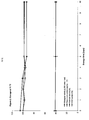
- Xeomin® was stored for up to 1 month at a temperature of 60°C. The results are shown in Fig. 1 .
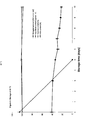
- Xeomin® is stored at a temperature of 70°C for a period of up to 10 days. The results are shown in Fig. 2 .
- the quality of Xeomin® is not significantly affected by storage at 70°C over a period of up to 10 days. Again, the biological activity, the neurotoxin concentration as well as the HSA and sucrose content show no significant variation over time. Taken together, the example demonstrates that the quality of Xeomin® is not significantly affected by the storage at 70°C for up to 10 days.
- Xeomin® is subjected to storage at 80°C for a period of up to 10 days.
- a rapid decrease of the biological activity (LD 50 assay) can be observed.
- the neurotoxin is completely inactivated within 5 days, with a further reduction of activity during the first 3 days of storage.
- This example shows that at least temperatures of 80°C have a detrimental effect on the stability of a muscle relaxant on the basis of the neurotoxic component of botulinum toxin already after a relatively short period of time.
Landscapes
- Health & Medical Sciences (AREA)
- Life Sciences & Earth Sciences (AREA)
- General Health & Medical Sciences (AREA)
- Veterinary Medicine (AREA)
- Pharmacology & Pharmacy (AREA)
- Epidemiology (AREA)
- Chemical & Material Sciences (AREA)
- Animal Behavior & Ethology (AREA)
- Medicinal Chemistry (AREA)
- Public Health (AREA)
- Engineering & Computer Science (AREA)
- Bioinformatics & Cheminformatics (AREA)
- Dermatology (AREA)
- Gastroenterology & Hepatology (AREA)
- Immunology (AREA)
- Proteomics, Peptides & Aminoacids (AREA)
- Medicines That Contain Protein Lipid Enzymes And Other Medicines (AREA)
- Medicinal Preparation (AREA)
- Pharmaceuticals Containing Other Organic And Inorganic Compounds (AREA)
Priority Applications (31)
| Application Number | Priority Date | Filing Date | Title |
|---|---|---|---|
| EP07010912A EP1997509A1 (de) | 2007-06-01 | 2007-06-01 | Prozess zur Bereitstellung eines temperaturstabilen Muskelrelaxans auf der Basis der neurotoxischen Komponente von Botulintoxin |
| CN200880018442A CN101687018A (zh) | 2007-06-01 | 2008-05-28 | 基于肉毒毒素的神经毒成分供应温度-稳定性固体肌肉松弛剂的方法 |
| CA002686637A CA2686637A1 (en) | 2007-06-01 | 2008-05-28 | Process for providing a temperature - stable muscle relaxant on the basis of the neurotoxic component of botulinum toxin in solid form |
| JP2010509730A JP2010528999A (ja) | 2007-06-01 | 2008-05-28 | ボツリヌストキシンの神経毒成分に基づいた、温度安定な筋弛緩薬を固体形態で供給する方法 |
| MX2009012570A MX2009012570A (es) | 2007-06-01 | 2008-05-28 | Proceso para proveer un relajante muscular estable a la temperatura a base del componente neurotoxico de la toxina botulinica en forma solida. |
| AU2008256419A AU2008256419A1 (en) | 2007-06-01 | 2008-05-28 | Process for providing a temperature - stable muscle relaxant on the basis of the neurotoxic component of botulinum toxin |
| PCT/EP2008/004253 WO2008145358A1 (en) | 2007-06-01 | 2008-05-28 | Process for providing a temperature - stable muscle relaxant on the basis of the neurotoxic component of botulinum toxin in solid form |
| MX2009012990A MX2009012990A (es) | 2007-06-01 | 2008-05-28 | Proceso para proporcionar un relajante muscular estable a la temperatura sobre la base del componente neurotoxico de toxina botulinica. |
| AU2008256418A AU2008256418A1 (en) | 2007-06-01 | 2008-05-28 | Process for providing a temperature - stable muscle relaxant on the basis of the neurotoxic component of botulinum toxin in solid form |
| KR1020097026298A KR20100020971A (ko) | 2007-06-01 | 2008-05-28 | 고형 보툴리늄 톡신의 신경독 성분에 기초한 온도-안정한 근육 이완제를 제공하는 방법 |
| CN200880018452A CN101720331A (zh) | 2007-06-01 | 2008-05-28 | 基于肉毒毒素的神经毒成分供应温度-稳定性肌肉松弛剂的方法 |
| KR1020097026300A KR20100020972A (ko) | 2007-06-01 | 2008-05-28 | 보툴리늄 톡신의 신경독 성분에 기초한 온도-안정한 근육 이완제를 제공하는 방법 |
| PCT/EP2008/004254 WO2008145359A1 (en) | 2007-06-01 | 2008-05-28 | Process for providing a temperature - stable muscle relaxant on the basis of the neurotoxic component of botulinum toxin |
| CA002686642A CA2686642A1 (en) | 2007-06-01 | 2008-05-28 | Process for providing a temperature - stable muscle relaxant on the basis of the neurotoxic component of botulinum toxin |
| EP08758836A EP2170375A1 (de) | 2007-06-01 | 2008-05-28 | Verfahren zur bereitstellung eines temperaturstabilen muskelrelaxans auf basis der neurotoxischen komponente von botulinumtoxin in fester form |
| RU2009149694/15A RU2009149694A (ru) | 2007-06-01 | 2008-05-28 | Способ предоставления устойчивого к температуре миорелаксанта на основе нейротоксичного компонента ботулинического токсина |
| BRPI0812245-8A2A BRPI0812245A2 (pt) | 2007-06-01 | 2008-05-28 | Método para provisão de um relaxante muscular termoestável com base no componente neurotóxico da toxina botulínica na forma sólida |
| JP2010509731A JP2010529000A (ja) | 2007-06-01 | 2008-05-28 | ボツリヌス毒素の神経毒成分をベースにした温度に安定な筋弛緩薬の提供方法 |
| EP08758837A EP2164861A1 (de) | 2007-06-01 | 2008-05-28 | Verfahren zur bereitstellung eines temperaturstabilen muskelentspannenden mittels auf basis der neurotoxischen komponente von botulinum-toxin |
| BRPI0812322-5A2A BRPI0812322A2 (pt) | 2007-06-01 | 2008-05-28 | Método para provisão de um relaxante muscular termoestável com base no componente neurotóxico da toxina botulínica |
| RU2009149604/15A RU2009149604A (ru) | 2007-06-01 | 2008-05-28 | Способ предоставления устойчивого к температуре миорелаксанта на основе нейротоксичного компонента ботулинического токсина в твердой форме |
| US12/154,983 US20090028906A1 (en) | 2007-06-01 | 2008-05-29 | Process for providing a temperature-stable muscle relaxant on the basis of the neurotoxic component of botulinum toxin in a solid form |
| US12/154,982 US20090010965A1 (en) | 2007-06-01 | 2008-05-29 | Process for providing a temperature-stable muscle relaxant on the basis of the neurotoxic component of botulinum toxin |
| TW097120349A TW200914039A (en) | 2007-06-01 | 2008-05-30 | Process for providing a temperature-stable muscle relaxant on the basis of the neurotoxic component of botulinum toxin in solid form |
| ARP080102286A AR066782A1 (es) | 2007-06-01 | 2008-05-30 | Proceso para proporcionar un relajante muscular estable a la temperatura a base del componente neurotoxico de la oxina botulinica en forma solida |
| TW097120348A TW200902050A (en) | 2007-06-01 | 2008-05-30 | Process for providing a temperature-stable muscle relaxant on the basis of the neurotoxic component of botulinum toxin |
| ARP080102287A AR066783A1 (es) | 2007-06-01 | 2008-05-30 | Proceso para proporcionar un relajante muscular estable a la temperatura a base del componente neurotoxico de toxina botulinica |
| ZA2009/07874A ZA200907874B (en) | 2007-06-01 | 2009-11-10 | Process for providing a temperature-stable muscle relaxant on the basis of the neurotoxic component of botulinum in solid form |
| ZA2009/07875A ZA200907875B (en) | 2007-06-01 | 2009-11-10 | Process for providing a temperature-stable muscle relaxant on the basis of the neurotoxic component of botulinum toxin |
| IL202130A IL202130A0 (en) | 2007-06-01 | 2009-11-15 | Process for providing a temperature-stable muscle relaxant on the basis of the neurotoxic component of botulinum toxin in solid form |
| IL202129A IL202129A0 (en) | 2007-06-01 | 2009-11-15 | Process for providing a temperature-stable muscle relaxant on the basis of the neurotoxic component of botulinum toxin |
Applications Claiming Priority (1)
| Application Number | Priority Date | Filing Date | Title |
|---|---|---|---|
| EP07010912A EP1997509A1 (de) | 2007-06-01 | 2007-06-01 | Prozess zur Bereitstellung eines temperaturstabilen Muskelrelaxans auf der Basis der neurotoxischen Komponente von Botulintoxin |
Publications (1)
| Publication Number | Publication Date |
|---|---|
| EP1997509A1 true EP1997509A1 (de) | 2008-12-03 |
Family
ID=38456556
Family Applications (1)
| Application Number | Title | Priority Date | Filing Date |
|---|---|---|---|
| EP07010912A Withdrawn EP1997509A1 (de) | 2007-06-01 | 2007-06-01 | Prozess zur Bereitstellung eines temperaturstabilen Muskelrelaxans auf der Basis der neurotoxischen Komponente von Botulintoxin |
Country Status (2)
| Country | Link |
|---|---|
| EP (1) | EP1997509A1 (de) |
| RU (1) | RU2009149694A (de) |
Cited By (3)
| Publication number | Priority date | Publication date | Assignee | Title |
|---|---|---|---|---|
| EP2161033A1 (de) | 2008-09-09 | 2010-03-10 | Susanne Dr. Grafe | Chemisch denervierender Wirkstoff zur Erzeugung der zeitweisen Unempfindlichkeit in einem Wirbel (z.B. beim Menschen) |
| US20170340823A1 (en) * | 2014-12-23 | 2017-11-30 | Merz Pharma Gmbh & Co. Kgaa | Botulinum toxin prefilled container |
| US20180015225A1 (en) * | 2015-02-03 | 2018-01-18 | Merz Pharma Gmbh & Co. Kg | Botulinum toxin prefilled container |
Citations (2)
| Publication number | Priority date | Publication date | Assignee | Title |
|---|---|---|---|---|
| US5756468A (en) * | 1994-10-13 | 1998-05-26 | Wisconsin Alumni Research Foundation | Pharmaceutical compositions of botulinum toxin or botulinum neurotoxin and methods of preparation |
| US20070026019A1 (en) * | 2005-08-01 | 2007-02-01 | Allergan, Inc. | Botulinum toxin compositions |
-
2007
- 2007-06-01 EP EP07010912A patent/EP1997509A1/de not_active Withdrawn
-
2008
- 2008-05-28 RU RU2009149694/15A patent/RU2009149694A/ru not_active Application Discontinuation
Patent Citations (2)
| Publication number | Priority date | Publication date | Assignee | Title |
|---|---|---|---|---|
| US5756468A (en) * | 1994-10-13 | 1998-05-26 | Wisconsin Alumni Research Foundation | Pharmaceutical compositions of botulinum toxin or botulinum neurotoxin and methods of preparation |
| US20070026019A1 (en) * | 2005-08-01 | 2007-02-01 | Allergan, Inc. | Botulinum toxin compositions |
Non-Patent Citations (2)
| Title |
|---|
| "78. Kongress der Deutschen Gesellschaft für Neurologie", MED REVIEW, no. 11, 21 September 2005 (2005-09-21) - 24 September 2005 (2005-09-24), Wiesbaden, pages 1 - 26, XP002449911, Retrieved from the Internet <URL:http://www.medreports.de/medpdf05/mreview11_05.pdf> [retrieved on 20070907] * |
| DRESSLER D ET AL: "Xeomin (R): Perspectives of a novel therapeutic botulinum toxin preparation", AKTUELLE NEUROLOGIE, vol. 33, no. 3, April 2006 (2006-04-01), pages 138 - 141, XP009089183, ISSN: 0302-4350 * |
Cited By (8)
| Publication number | Priority date | Publication date | Assignee | Title |
|---|---|---|---|---|
| EP2161033A1 (de) | 2008-09-09 | 2010-03-10 | Susanne Dr. Grafe | Chemisch denervierender Wirkstoff zur Erzeugung der zeitweisen Unempfindlichkeit in einem Wirbel (z.B. beim Menschen) |
| US20170340823A1 (en) * | 2014-12-23 | 2017-11-30 | Merz Pharma Gmbh & Co. Kgaa | Botulinum toxin prefilled container |
| US10549042B2 (en) * | 2014-12-23 | 2020-02-04 | Merz Pharma Gmbh & Co. Kgaa | Botulinum toxin prefilled glass syringe |
| US11167090B2 (en) | 2014-12-23 | 2021-11-09 | Merz Pharma Gmbh & Co. Kgaa | Botulinum toxin prefilled container |
| US12434002B2 (en) | 2014-12-23 | 2025-10-07 | Merz Pharma Gmbh & Co. Kgaa | Botulinum toxin prefilled container |
| US20180015225A1 (en) * | 2015-02-03 | 2018-01-18 | Merz Pharma Gmbh & Co. Kg | Botulinum toxin prefilled container |
| US10406290B2 (en) * | 2015-02-03 | 2019-09-10 | Merz Pharma Gmbh & Co. Kgaa | Botulinum toxin prefilled plastic syringe |
| US12324903B2 (en) | 2015-02-03 | 2025-06-10 | Merz Pharma Gmbh & Co. Kgaa | Botulinum toxin prefilled plastic syringe |
Also Published As
| Publication number | Publication date |
|---|---|
| RU2009149694A (ru) | 2011-07-20 |
Similar Documents
| Publication | Publication Date | Title |
|---|---|---|
| US20090028906A1 (en) | Process for providing a temperature-stable muscle relaxant on the basis of the neurotoxic component of botulinum toxin in a solid form | |
| US10105421B2 (en) | Therapeutic composition with a botulinum neurotoxin | |
| EP1997509A1 (de) | Prozess zur Bereitstellung eines temperaturstabilen Muskelrelaxans auf der Basis der neurotoxischen Komponente von Botulintoxin | |
| EP2048156A1 (de) | Prozess zur Bereitstellung eines temperaturstabilen Muskelrelaxans auf der Basis der neurotoxischen Komponente von Botulintoxin | |
| CN101204377A (zh) | 一种治疗用a型肉毒毒素冻干粉针剂新型冻干保护剂配方 | |
| HK1141717A (en) | Process for providing a temperature-stable muscle relaxant on the basis of the neurotoxic component of botulinum toxin | |
| HK1144691A (en) | Process for providing a temperature - stable muscle relaxant on the basis of the neurotoxic component of botulinum toxin |
Legal Events
| Date | Code | Title | Description |
|---|---|---|---|
| PUAI | Public reference made under article 153(3) epc to a published international application that has entered the european phase |
Free format text: ORIGINAL CODE: 0009012 |
|
| AK | Designated contracting states |
Kind code of ref document: A1 Designated state(s): AT BE BG CH CY CZ DE DK EE ES FI FR GB GR HU IE IS IT LI LT LU LV MC MT NL PL PT RO SE SI SK TR |
|
| AX | Request for extension of the european patent |
Extension state: AL BA HR MK RS |
|
| AKX | Designation fees paid | ||
| STAA | Information on the status of an ep patent application or granted ep patent |
Free format text: STATUS: THE APPLICATION IS DEEMED TO BE WITHDRAWN |
|
| 18D | Application deemed to be withdrawn |
Effective date: 20090604 |
|
| REG | Reference to a national code |
Ref country code: DE Ref legal event code: 8566 |