EP1998496B1 - Procédé et système permettant d'améliorer la qualité de communication fondée sur le protocole de distribution d'étiquette - Google Patents
Procédé et système permettant d'améliorer la qualité de communication fondée sur le protocole de distribution d'étiquette Download PDFInfo
- Publication number
- EP1998496B1 EP1998496B1 EP07702256A EP07702256A EP1998496B1 EP 1998496 B1 EP1998496 B1 EP 1998496B1 EP 07702256 A EP07702256 A EP 07702256A EP 07702256 A EP07702256 A EP 07702256A EP 1998496 B1 EP1998496 B1 EP 1998496B1
- Authority
- EP
- European Patent Office
- Prior art keywords
- upstream node
- lsp
- node
- multicast lsp
- multicast
- Prior art date
- Legal status (The legal status is an assumption and is not a legal conclusion. Google has not performed a legal analysis and makes no representation as to the accuracy of the status listed.)
- Active
Links
Images


Classifications
-
- H—ELECTRICITY
- H04—ELECTRIC COMMUNICATION TECHNIQUE
- H04L—TRANSMISSION OF DIGITAL INFORMATION, e.g. TELEGRAPHIC COMMUNICATION
- H04L45/00—Routing or path finding of packets in data switching networks
- H04L45/16—Multipoint routing
-
- H—ELECTRICITY
- H04—ELECTRIC COMMUNICATION TECHNIQUE
- H04L—TRANSMISSION OF DIGITAL INFORMATION, e.g. TELEGRAPHIC COMMUNICATION
- H04L45/00—Routing or path finding of packets in data switching networks
- H04L45/02—Topology update or discovery
-
- H—ELECTRICITY
- H04—ELECTRIC COMMUNICATION TECHNIQUE
- H04L—TRANSMISSION OF DIGITAL INFORMATION, e.g. TELEGRAPHIC COMMUNICATION
- H04L45/00—Routing or path finding of packets in data switching networks
- H04L45/02—Topology update or discovery
- H04L45/023—Delayed use of routing table updates
-
- H—ELECTRICITY
- H04—ELECTRIC COMMUNICATION TECHNIQUE
- H04L—TRANSMISSION OF DIGITAL INFORMATION, e.g. TELEGRAPHIC COMMUNICATION
- H04L45/00—Routing or path finding of packets in data switching networks
- H04L45/28—Routing or path finding of packets in data switching networks using route fault recovery
-
- H—ELECTRICITY
- H04—ELECTRIC COMMUNICATION TECHNIQUE
- H04L—TRANSMISSION OF DIGITAL INFORMATION, e.g. TELEGRAPHIC COMMUNICATION
- H04L45/00—Routing or path finding of packets in data switching networks
- H04L45/50—Routing or path finding of packets in data switching networks using label swapping, e.g. multi-protocol label switch [MPLS]
Definitions
- the present invention relates to a communication field, and more particularly to setting up a communication path.
- Multicast technology is a one-to-many multiparty communication technology. Being different from a commonly used unicast technology, the multicast technology reduces the replication of data content by setting up an optimized multicast forwarding path, thereby greatly reducing the network resources occupied in the multiparty communication.
- MPLS multiple protocol label switch
- LDP label distribution protocol
- MPLS is usually adapted to forward unicast IP packets.
- P2MP point-to-multipoint label switching path
- MP2MP multipoint-to-multipoint
- the forwarding paths P2MP LSP and MP2MP LSP are set up through the LDP technology.
- the P2MP LSP is set up according to a unicast routing protocol, and usually follows an optimized path principle.
- the LDP needs to determine a new optimized multicast LSP according to a route changing protocol, then sends a mapping request to a new upstream node, and sends a withdraw message to the former upstream node (which was the optimized one in the past but not the optimized one now).
- the multicast LSP becomes the optimized multicast LSP again.
- the method for adjusting the upstream node when the P2MP LSP forwarding path is set up is the same as that for adjusting the upstream node when the MP2MP forwarding path is set up.
- the P2MP is taken as an example herein, and the processing procedures thereof are shown in FIG. 1 .
- a packet is forwarded from node R1 to R4 through R2, from R4 to R5 and R6, and from R6 to R7.
- the node R4 finds out that the upstream node R2 thereof is no longer in the optimized route, and the node R3 becomes the upstream node in the optimized route. At this time, the node R4 sends a mapping message to the node R3, and sends a withdraw message to the node R2.
- the node R3 continues to send the mapping request to the former upstream node R1 thereof.
- the node R2 withdraws the label binding with the node R4, and at the same time, continues to send the withdraw request to the upstream node R1 since it does not have any downstream node.
- Document D1 (XP019000298) describes a label reclamation.
- an LSR receives a Label Withdraw from a downstream LSR
- the corresponding outgoing LSP branch is removed.
- Sending a Label withdraw is normally triggered by the removal of a (S, G) or (*.G) multicast routing table (MRT) entry, for which a label binding has been distributed.
- MRT multicast routing table
- the LSR will send a Label Withdraw to its upstream LSR (see section 4.3).
- multicast dense mode as an example, when the first packet from source S to destination G is received by an LSR, an (S, G) entry is created in the MRT.
- the (S, G) forwarding state is associated with an activity timer, which is used to remove inactive (S, G) entries, i.e. flows with no traffic during a specified amount of time.
- a label binding destruction is triggered in two cases: either when receiving/emitting a Prune (S, G) or when the activity timer expires (see section 2.1).
- Document D2 (XP015039845) describes methods for building a P2MP LSP tree or an MP2MP tree (see sections 9 and 10).
- Document D3 (XP015043154) describes dynamic establishment and maintenance of P2MP TE LSP, e.g. advertising a label, adding a new leaf, prune a leaf (see sections 7.1.1).
- the disclosure is directed to a method and a system for improving the quality of communication based on a label distribution protocol, which are suitable for avoiding or reducing an interruption of a data stream in multicast LSP reconstruction procedures, so that losing of data packets caused by the multicast LSP adjustment can be reduced greatly.
- An embodiment of the disclosure provides a method for improving the quality of communication based on a label distribution protocol, which includes the following steps.
- a label switching router calculates and sets up a new optimized multicast label switching path (LSP) according to the label distribution protocol (LDP) when the LSR finds out a change of a route to an ingress node.
- the LSR sends a mapping request to an upstream node in the new optimized multicast LSP and starts a timer.
- the LSR determines whether a data stream sent from the upstream node in the new optimized multicast LSP is received.
- the LSR sends a withdraw request to an upstream node in a former optimized multicast LSP if the data stream sent from the upstream node in the new optimized multicast LSP is received.
- the LSR determines whether the set time of the timer is reached if the data stream sent from the upstream node in the new optimized multicast LSP is not received.
- the LSR sends a withdraw request to the upstream node in the former optimized multicast LSP if the set time of the timer is reached.
- the LSR proceeds to the step of determining whether the data stream sent from the upstream node in the new optimized multicast LSP is received if the set time of the timer is not reached.
- An embodiment of the disclosure provides a system for improving the quality of communication based on a label distribution protocol, which includes a label switching router (LSR).
- LSR label switching router
- the LSR includes:
- the local LSR finds out the change of the route at the upstream node in the multicast LSP, it calculates and sets up the new optimized multicast LSP route according to the LDP and delays to send the withdraw request to the upstream node in the former multicast LSP.
- the interruption of the data stream in the multicast LSP reconstruction procedures can be avoided or reduced, so that the losing of data packets caused by the multicast LSP adjustment is reduced greatly, and the quality of communication of the multicast is improved.
- An embodiment of the disclosure provides a method for improving the quality of communication based on a label distribution protocol.
- an LSR in a multicast LSP or called a local LSR, finds out a change of a route at an upstream node due to a certain reason, it does not immediately send a withdraw message to an upstream node in a former multicast LSP, but delay to send the withdraw message and/or send the withdraw message by a data stream triggering mode in order to avoid or reduce the interruption time of the data stream,, thereby reducing the losing of packets.
- a first embodiment of the disclosure in which once a new optimized multicast LSP is set up, the data stream reaches the local LSP via the new multicast LSP, and then triggers the local LSR to send a withdraw message to the upstream node thereof in the former optimized multicast LSP, so as to withdraw the corresponding unnecessary multicast LSP.
- the detailed implementing procedure includes the following steps.
- Step I when the local LSR finds out a change of a route at an upstream node in a multicast LSP, it calculates and sets up a new optimized multicast LSP according to the LDP.
- Step 2 a mapping request is sent to an upstream node in the new optimized multicast LSP.
- the upstream node in the local LSR When an upstream node in the local LSR is an intermediate node, and it is confirmed that a mapping relation is not yet established between the upstream node in the local LSR and the upstream node in the new optimized multicast LSP, the upstream node in the local LSR continues to send the mapping request to an upstream node thereof, until it reaches an ingress node. After the mapping is successfully established, the data stream reaches the local LSR via the new optimized multicast LSP. After receiving the data stream sent from the upstream node in the new optimized multicast LSP, the local LSR sends the withdraw request to the upstream node in the former multicast LSP.
- the detailed implementing procedures thereof are listed as follows.
- Step 3 it is determined whether the data stream sent from the upstream node in the new optimized multicast LSP is received or not. If the data stream is received, the process proceeds to Step 4, that is, the withdraw request is sent to the upstream node in the former optimized multicast LSP; otherwise, the process proceeds to Step 3.
- the upstream node when receiving the withdraw request sent from the downstream node, the upstream node first determines whether merely one downstream node thereof exists or not. If merely one downstream node exists, the upstream node directly responds a withdraw request response to the downstream node thereof, and withdraws the multicast LSP between the upstream node and the downstream node thereof. Then, the upstream node determines whether the upstream node itself is an intermediate node or an ingress node. If it is confirmed to be the intermediate node, the upstream node continues to send the withdraw request to the upstream node thereof in the former multicast LSP; and if it is an ingress node, the step ends. Through such processing, the unnecessary link can be withdrawn timely.
- the upstream node directly responds the withdraw request response to the downstream nodes thereof, withdraws the multicast LSP between the upstream node and the downstream nodes thereof, and ends the operation, without sending the withdraw request to the upstream node thereof.
- the P2MP LSP is taken as an example below to describe the implementing procedures according to a first embodiment of the disclosure, as shown in FIG. 3 .
- the data stream is forwarded from the ingress node, for example, the node R1, to the node R4 through the node R2, then from the node R4 to the node R5 and the node R6, and from the node R6 to the node R7.
- the LSR finds out the change of the route at the upstream node thereof, the LSR sends the mapping request to the new upstream node R3.
- the event triggers the node R4 to send the withdraw message to the former upstream node R2, so as to withdraw the unnecessary P2MP LSP.
- the P2MP LSP adjustment procedure is finished.
- the multicast LSP without data streams may also exist.
- the mapping massage is sent to the upstream node in the new optimized multicast LSP.
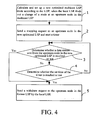
- a timer is started. If a data stream sent from the upstream node in the new optimized multicast LSP is received before a set time of the timer is reached, the withdraw request is sent to the upstream node in the former optimized multicast LSP. If no data stream is received from the optimized multicast LSP after the set time of the timer is exceeded, the withdraw request is also sent to the upstream node in the former optimized multicast LSP.
- the processing flow thereof is as shown in FIG. 4 .
- Step 1 when the local LSR finds out the change of the route at the upstream node in the multicast LSP, it calculates and sets up a new optimized multicast LSP according to the LDP.
- Step 2 the mapping request is sent to the upstream node in the new optimized multicast LSP, and the timer is started.
- the upstream node in the local LSR When the upstream node in the local LSR is the intermediate node, and it is confirmed that the mapping relation is not yet established between the upstream node in the local LSR and an upstream node thereof, the upstream node in the local LSR continues to send the mapping request to the upstream node thereof in the multicast LSP, until it reaches the ingress node. After the mapping is successfully established, the data stream reaches the local LSR via the new optimized multicast LSP. When receiving the data stream sent from the upstream node in the new optimized multicast LSP, the local LSR sends the withdraw request to the upstream node in the former multicast LSP.
- the local LSR does not receive any data stream sent from the upstream node in the new optimized multicast LSP when the set time of the timer is reached, the local LSP still sends the withdraw request to the upstream node in the former multicast LSP.
- the detailed implementing procedures thereof are listed as follows.
- Step 3 it is determined whether the data stream sent from the upstream node in the new optimized multicast LSP is received or not. If the data stream is received, the process proceeds to Step 5, that is, the withdraw request is sent to the upstream node in the former optimized multicast LSP; otherwise, the process proceeds to Step 4.
- Step 4 it is determined whether the set time of the timer is reached or not. If the set time of the timer is reached, the process proceeds to Step 5, that is, the withdraw request is sent to the upstream node in the former optimized multicast LSP; otherwise, the process proceeds to Step 3.
- the upstream node when receiving the withdraw request sent from the downstream node, the upstream node first determines whether merely one downstream node thereof exists or not. If merely one downstream node exists, the upstream node directly responds a withdraw request response to the downstream node thereof, and withdraws the multicast LSP between the upstream node and the downstream node thereof. Then, the upstream node determines whether the upstream node itself is an intermediate node or an ingress node. If the upstream node is confirmed to be the intermediate node, it continues to send the withdraw request to the upstream node in the former multicast LSP, and if it is an ingress node, the step ends.
- the upstream node directly responds the withdraw request response to the downstream nodes thereof, withdraws the multicast LSP between the upstream node and the downstream nodes thereof, and ends the operation, without sending the withdraw request to the upstream node thereof.
- a method for controlling the local LSR node to delay to send the withdraw request to the upstream node in the former optimized LSP merely through using the timer is described, and the implementing procedures thereof are listed as follows.
- the local LSR finds out the change of the route at the upstream node in the multicast LSP, it calculates and sets up the new optimized multicast LSP according to the LDP. Then, the mapping request is sent to the upstream node in the new optimized multicast LSP, and the timer is started. When it is confirmed that a set threshold of the timer is reached, the withdraw request is sent to the upstream node in the former optimized multicast LSP.
- the multicast LSP in the above embodiment may be a P2MP LSP, and may also be an MP2MP LSP.
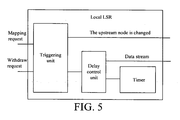
- the system includes a label switching router (LSR), and the LSR includes a triggering unit, a timer, a delay control unit, and a withdraw request sending unit.
- LSR label switching router
- the triggering unit is adapted to trigger the LSR node to send the mapping request to the upstream node in the new optimized LSP, and send the withdraw request to the upstream node in the former multicast LSP.
- the timer is adapted to begin to count time once the setting up of the new optimized multicast LSP is finished, and provide the time information to the delay control unit in response to reaching the set threshold.
- the delay control unit is adapted to control the triggering unit to send the withdraw request to the upstream node in the former multicast LSP according to a triggering result of the triggering unit and/or the delay information provided by the timer.
- the delay control unit controls the triggering unit to send the withdraw request to the upstream node in the former multicast LSP according to the triggering result of the triggering unit and/or the delay information, it can delay and control the triggering unit to send the withdraw request to the upstream node in the former multicast LSP.
- the delay control unit further includes a first data stream triggering unit, adapted to control, after receiving a data stream sent from the upstream node in the new optimized multicast LSP, the triggering unit to send the withdraw request to the upstream node in the former multicast LSP.
- the delay control unit further includes a second data stream triggering unit.
- the second data stream triggering unit is adapted to control the triggering unit to send the withdraw request to the upstream node in the former multicast LSP in a manner of working together with the timer.
- the detailed working manner lies in that, after the timer is started, the second data stream triggering unit waits for the data stream sent from the upstream node in the new optimized multicast LSP to trigger to send the withdraw request to the upstream node in the former multicast LSP, and directly sends the withdraw request to the upstream node in the former multicast LSP when no data stream is sent from the upstream node in the new optimized multicast LSP after the set threshold of the timer is exceeded.
- the withdraw request is not immediately sent to the former upstream node during the process of reconstructing the new multicast LSP, and thus, the former multicast LSP is maintained during a certain time period, and the data stream is continuously forwarded via the former multicast LSP. It can be known that, through the disclosure, the interruption of the data stream in the multicast LSP reconstruction procedures can be avoided or reduced, so that the losing of data packets caused by the multicast LSP adjustment is reduced greatly, and the quality of communication of the multicast is improved.
Landscapes
- Engineering & Computer Science (AREA)
- Computer Networks & Wireless Communication (AREA)
- Signal Processing (AREA)
- Data Exchanges In Wide-Area Networks (AREA)
- Communication Control (AREA)
Claims (5)
- Procédé d'amélioration de la qualité de communication fondé sur un protocole de distribution d'étiquettes, LDP, caractérisé par les étapes suivantes :quand un routeur de commutation d'étiquette, LSR, local détecte un changement de route vers un noeud d'entrée, le calcul et l'établissement, par le LSR local, d'un nouveau chemin de commutation d'étiquette, LSP, multidiffusion optimisé, en fonction du LDP ;l'envoi d'une demande de mise en correspondance à un noeud amont dans le nouveau LSP multidiffusion optimisé et le démarrage d'un temporisateur ;le fait de déterminer si un train de données envoyé depuis le noeud amont dans le nouveau LSP multidiffusion optimisé est reçu ou non ;l'envoi d'une demande de retrait à un noeud amont dans un LSP multidiffusion optimisé précédent si le train de données envoyé par le noeud amont dans le nouveau LSP multidiffusion optimisé est reçu ;le fait de déterminer si le temps de consigne du temporisateur est atteint ou non si le train de données envoyé par le noeud amont dans le nouveau LSP multidiffusion optimisé n'est pas reçu ;l'envoi d'une demande de retrait au noeud amont dans le LSP multidiffusion optimisé précédent si le temps de consigne du temporisateur est atteint ; etle passage à l'étape consistant à déterminer si le train de données envoyé par le noeud amont dans le nouveau LSP multidiffusion optimisé est reçu ou non si le temps de consigne du temporisateur n'est pas atteint.
- Procédé selon la revendication 1, dans lequel après l'envoi de la demande de mise en correspondance au noeud amont dans le nouveau LSP multidiffusion optimisé, le procédé comprend en outre :la continuation de l'envoi, par le noeud amont dans le LSR local, d'une demande de mise en correspondance à un noeud amont de celui-ci, quand le noeud amont dans le LSR local est un noeud intermédiaire et s'il est confirmé qu'une relation de mise en correspondance n'est pas encore établie entre le noeud amont dans le LSR local et le noeud amont de celui-ci dans le LSP multidiffusion.
- Procédé selon la revendication 1 ou 2, comprenant en outre après l'envoi de la demande de retrait au noeud amont dans le LSP multidiffusion optimisé précédent :le fait de déterminer, par le noeud amont dans le LSP multidiffusion précédent recevant la demande de retrait, si un seul noeud aval de celui-ci existe ;si un seul noeud aval existe, le fait de répondre avec une réponse de demande de retrait au noeud aval de celui-ci et le retrait du LSP multidiffusion entre le noeud amont et le noeud aval de celui-ci ;le fait de déterminer, par le noeud amont dans le LSP multidiffusion précédent recevant la demande de retrait, si le noeud amont lui-même est un noeud intermédiaire ou un noeud d'entrée ;s'il s'agit d'un noeud intermédiaire, la continuation de l'envoi de la demande de retrait à un noeud amont dans le LSP multidiffusion précédent ;s'il s'agit d'un noeud d'entrée, le fait de mettre fin à l'étape ; etsi le noeud amont dans le LSP multidiffusion précédent recevant la demande de retrait détermine qu'il n'existe pas qu'un seul noeud aval de celui-ci, le fait de répondre avec la réponse de demande de retrait aux noeuds aval de celui-ci, le retrait du LSP multidiffusion entre le noeud amont et les noeuds aval de celui-ci, et le fait de mettre fin à l'opération.
- Procédé selon l'une quelconque des revendications 1 à 3, dans lequel le LSP multidiffusion comprend :un LSP point-multipoint, LSP P2MP, ou un LSP multipoint-multipoint, LSP MP2MP.
- Système d'amélioration de la qualité de communication fondé sur un protocole de distribution d'étiquettes, comprenant un routeur de commutation d'étiquette, LSR, caractérisé en ce que le LSR comprend :une unité de déclenchement, adaptée pour déclencher le LSR afin qu'il envoie une demande de mise en correspondance à un noeud amont dans un nouveau chemin de commutation d'étiquette, LSP, optimisé, quand le LSR détecte un changement de route vers un noeud d'entrée, et envoyer une demande de retrait à un noeud amont dans un LSP multidiffusion précédent ;une unité de commande de retard, adaptée pour commander l'unité de déclenchement afin qu'elle envoie la demande de retrait au noeud amont dans le LSP multidiffusion précédent en fonction d'un résultat de déclenchement de l'unité de déclenchement et/ou d'informations de retard fournies par un temporisateur ;le temporisateur, adapté pour commencer à compter le temps une fois que l'établissement du nouveau LSP multidiffusion optimisé est terminé, et fournir les informations de temps à l'unité de commande de retard en réponse à l'atteinte d'un seuil de consigne ; etdans lequel l'unité de commande de retard comprend une unité de déclenchement de train de données, adaptée pour attendre un train de données envoyé par le noeud amont dans le nouveau LSP multidiffusion optimisé afin de déclencher l'envoi de la demande de retrait au noeud amont dans le LSP multidiffusion précédent, et envoyer directement la demande de retrait au noeud amont dans le LSP multidiffusion précédent quand aucun train de données n'est envoyé par le noeud amont dans le nouveau LSP multidiffusion optimisé après le dépassement du seuil de consigne du temporisateur.
Applications Claiming Priority (2)
| Application Number | Priority Date | Filing Date | Title |
|---|---|---|---|
| CN2006100649830A CN101043436B (zh) | 2006-03-20 | 2006-03-20 | 基于标签分配协议提高通信质量的方法 |
| PCT/CN2007/000364 WO2007107071A1 (fr) | 2006-03-20 | 2007-02-02 | Procédé et système permettant d'améliorer la qualité de communication fondée sur le protocole de distribution d'étiquette |
Publications (3)
| Publication Number | Publication Date |
|---|---|
| EP1998496A1 EP1998496A1 (fr) | 2008-12-03 |
| EP1998496A4 EP1998496A4 (fr) | 2009-09-30 |
| EP1998496B1 true EP1998496B1 (fr) | 2011-04-13 |
Family
ID=38522017
Family Applications (1)
| Application Number | Title | Priority Date | Filing Date |
|---|---|---|---|
| EP07702256A Active EP1998496B1 (fr) | 2006-03-20 | 2007-02-02 | Procédé et système permettant d'améliorer la qualité de communication fondée sur le protocole de distribution d'étiquette |
Country Status (7)
| Country | Link |
|---|---|
| US (1) | US7876755B2 (fr) |
| EP (1) | EP1998496B1 (fr) |
| CN (1) | CN101043436B (fr) |
| AT (1) | ATE505873T1 (fr) |
| DE (1) | DE602007013881D1 (fr) |
| ES (1) | ES2361688T3 (fr) |
| WO (1) | WO2007107071A1 (fr) |
Families Citing this family (9)
| Publication number | Priority date | Publication date | Assignee | Title |
|---|---|---|---|---|
| JP4885819B2 (ja) * | 2007-10-22 | 2012-02-29 | 富士通株式会社 | 通信装置 |
| CN101150524B (zh) * | 2007-11-12 | 2010-06-09 | 杭州华三通信技术有限公司 | 组播流量恢复方法及接入设备 |
| CN101741714B (zh) * | 2008-11-19 | 2012-04-04 | 华为技术有限公司 | 路径调整方法、节点装置和半双工网络系统 |
| US7991883B1 (en) * | 2008-12-15 | 2011-08-02 | Adobe Systems Incorporated | Server communication in a multi-tier server architecture |
| US8392530B1 (en) | 2008-12-18 | 2013-03-05 | Adobe Systems Incorporated | Media streaming in a multi-tier client-server architecture |
| US9258210B2 (en) | 2013-10-01 | 2016-02-09 | Juniper Networks, Inc. | Dynamic area filtering for link-state routing protocols |
| CN106506365A (zh) * | 2015-09-07 | 2017-03-15 | 中兴通讯股份有限公司 | 一种实现mbb的方法和装置 |
| EP3329957B1 (fr) | 2016-12-01 | 2024-08-21 | Delta Med S.p.A. | Cathéter intraveineux avec fonction anti-hémorragique |
| CN107018201B (zh) * | 2017-04-20 | 2019-12-31 | 北京中科睿芯科技有限公司 | 数据流架构中利用关键路径信息进行指令动态迁移的方法 |
Family Cites Families (6)
| Publication number | Priority date | Publication date | Assignee | Title |
|---|---|---|---|---|
| US6374303B1 (en) * | 1997-11-17 | 2002-04-16 | Lucent Technologies, Inc. | Explicit route and multicast tree setup using label distribution |
| US6643279B1 (en) * | 1998-09-01 | 2003-11-04 | Nec Corporation | Handoff control for point to multipoint connections in mobile ATM networks |
| US6895441B1 (en) * | 2001-07-30 | 2005-05-17 | Atrica Ireland Ltd. | Path rerouting mechanism utilizing multiple link bandwidth allocations |
| US8036139B2 (en) * | 2002-10-28 | 2011-10-11 | Cisco Technology, Inc. | Internal BGP downloader |
| DE60303763T2 (de) * | 2002-12-11 | 2006-08-17 | Nippon Telegraph And Telephone Corp. | Verfahren und Vorrichtung zur Berechnung von Mehrfachsendungsleitwegen |
| JP3991958B2 (ja) * | 2003-08-22 | 2007-10-17 | 日本電信電話株式会社 | マルチキャスト迂回経路設定方法及びラベルスイッチングルータ及びマルチキャスト迂回経路設定プログラム |
-
2006
- 2006-03-20 CN CN2006100649830A patent/CN101043436B/zh not_active Expired - Lifetime
-
2007
- 2007-02-02 DE DE602007013881T patent/DE602007013881D1/de active Active
- 2007-02-02 ES ES07702256T patent/ES2361688T3/es active Active
- 2007-02-02 AT AT07702256T patent/ATE505873T1/de not_active IP Right Cessation
- 2007-02-02 WO PCT/CN2007/000364 patent/WO2007107071A1/fr not_active Ceased
- 2007-02-02 EP EP07702256A patent/EP1998496B1/fr active Active
-
2008
- 2008-09-17 US US12/212,300 patent/US7876755B2/en active Active
Also Published As
| Publication number | Publication date |
|---|---|
| EP1998496A1 (fr) | 2008-12-03 |
| US20090028148A1 (en) | 2009-01-29 |
| DE602007013881D1 (de) | 2011-05-26 |
| US7876755B2 (en) | 2011-01-25 |
| CN101043436A (zh) | 2007-09-26 |
| ES2361688T3 (es) | 2011-06-21 |
| WO2007107071A1 (fr) | 2007-09-27 |
| EP1998496A4 (fr) | 2009-09-30 |
| CN101043436B (zh) | 2012-06-20 |
| ATE505873T1 (de) | 2011-04-15 |
Similar Documents
| Publication | Publication Date | Title |
|---|---|---|
| EP1998496B1 (fr) | Procédé et système permettant d'améliorer la qualité de communication fondée sur le protocole de distribution d'étiquette | |
| US10833989B2 (en) | Methods, apparatus, and articles of manufacture to provide a multicast virtual private network (MVPN) | |
| EP2371093B1 (fr) | Procédé et système pour la commutation de chemins de multidiffusion, réseau correspondant et produit-programme informatique | |
| CN101335695B (zh) | 点到多点标签交换路径的头节点保护方法、装置和设备 | |
| US7826348B2 (en) | Multicast fast reroute | |
| CN101094175B (zh) | 一种组播流量保护方法、装置及系统 | |
| CN104067573B (zh) | 一种基于点到点的多播标签分发协议的网络节点 | |
| US20170289217A1 (en) | Selectively signaling selective tunnels in multicast vpns | |
| CN101247210B (zh) | 一种基于组播源发现协议实现组播转发树的方法 | |
| WO2010111956A1 (fr) | Procédé et système de convergence de trajet de relais multidiffusion | |
| EP2918052B1 (fr) | Procédé et appareil permettant de configurer un groupe de multidiffusion | |
| CN101453414B (zh) | 点到多点标签交换路径的头节点保护方法、系统和设备 | |
| EP1976198A1 (fr) | Procédé d'allocation d'étiquette, de remise d'étiquette, et routeur de commutation d'étiquette | |
| EP2093932B1 (fr) | Procédé et dispositif de diffusion multidestinataire | |
| CN101515897B (zh) | 基于标签分发协议的消息发送、接收方法及装置 | |
| CN101617511A (zh) | 保护方案 | |
| WO2012136062A1 (fr) | Procédé de commutation de chemin de diffusion groupée et routeur | |
| KR100440587B1 (ko) | 멀티프로토콜 레이블 스위칭 망에서의 멀티캐스트서비스방법 |
Legal Events
| Date | Code | Title | Description |
|---|---|---|---|
| PUAI | Public reference made under article 153(3) epc to a published international application that has entered the european phase |
Free format text: ORIGINAL CODE: 0009012 |
|
| 17P | Request for examination filed |
Effective date: 20080912 |
|
| AK | Designated contracting states |
Kind code of ref document: A1 Designated state(s): AT BE BG CH CY CZ DE DK EE ES FI FR GB GR HU IE IS IT LI LT LU LV MC NL PL PT RO SE SI SK TR |
|
| A4 | Supplementary search report drawn up and despatched |
Effective date: 20090828 |
|
| 17Q | First examination report despatched |
Effective date: 20090929 |
|
| RIC1 | Information provided on ipc code assigned before grant |
Ipc: H04L 12/56 20060101ALI20100929BHEP Ipc: H04L 12/18 20060101AFI20100929BHEP |
|
| GRAP | Despatch of communication of intention to grant a patent |
Free format text: ORIGINAL CODE: EPIDOSNIGR1 |
|
| DAX | Request for extension of the european patent (deleted) | ||
| GRAS | Grant fee paid |
Free format text: ORIGINAL CODE: EPIDOSNIGR3 |
|
| GRAA | (expected) grant |
Free format text: ORIGINAL CODE: 0009210 |
|
| AK | Designated contracting states |
Kind code of ref document: B1 Designated state(s): AT BE BG CH CY CZ DE DK EE ES FI FR GB GR HU IE IS IT LI LT LU LV MC NL PL PT RO SE SI SK TR |
|
| REG | Reference to a national code |
Ref country code: GB Ref legal event code: FG4D |
|
| REG | Reference to a national code |
Ref country code: CH Ref legal event code: EP |
|
| REG | Reference to a national code |
Ref country code: IE Ref legal event code: FG4D |
|
| REF | Corresponds to: |
Ref document number: 602007013881 Country of ref document: DE Date of ref document: 20110526 Kind code of ref document: P |
|
| REG | Reference to a national code |
Ref country code: DE Ref legal event code: R096 Ref document number: 602007013881 Country of ref document: DE Effective date: 20110526 |
|
| REG | Reference to a national code |
Ref country code: NL Ref legal event code: T3 |
|
| REG | Reference to a national code |
Ref country code: ES Ref legal event code: FG2A Ref document number: 2361688 Country of ref document: ES Kind code of ref document: T3 Effective date: 20110621 |
|
| LTIE | Lt: invalidation of european patent or patent extension |
Effective date: 20110413 |
|
| PG25 | Lapsed in a contracting state [announced via postgrant information from national office to epo] |
Ref country code: PT Free format text: LAPSE BECAUSE OF FAILURE TO SUBMIT A TRANSLATION OF THE DESCRIPTION OR TO PAY THE FEE WITHIN THE PRESCRIBED TIME-LIMIT Effective date: 20110816 Ref country code: SE Free format text: LAPSE BECAUSE OF FAILURE TO SUBMIT A TRANSLATION OF THE DESCRIPTION OR TO PAY THE FEE WITHIN THE PRESCRIBED TIME-LIMIT Effective date: 20110413 Ref country code: LT Free format text: LAPSE BECAUSE OF FAILURE TO SUBMIT A TRANSLATION OF THE DESCRIPTION OR TO PAY THE FEE WITHIN THE PRESCRIBED TIME-LIMIT Effective date: 20110413 |
|
| PG25 | Lapsed in a contracting state [announced via postgrant information from national office to epo] |
Ref country code: LV Free format text: LAPSE BECAUSE OF FAILURE TO SUBMIT A TRANSLATION OF THE DESCRIPTION OR TO PAY THE FEE WITHIN THE PRESCRIBED TIME-LIMIT Effective date: 20110413 Ref country code: CY Free format text: LAPSE BECAUSE OF FAILURE TO SUBMIT A TRANSLATION OF THE DESCRIPTION OR TO PAY THE FEE WITHIN THE PRESCRIBED TIME-LIMIT Effective date: 20110413 Ref country code: SI Free format text: LAPSE BECAUSE OF FAILURE TO SUBMIT A TRANSLATION OF THE DESCRIPTION OR TO PAY THE FEE WITHIN THE PRESCRIBED TIME-LIMIT Effective date: 20110413 Ref country code: FI Free format text: LAPSE BECAUSE OF FAILURE TO SUBMIT A TRANSLATION OF THE DESCRIPTION OR TO PAY THE FEE WITHIN THE PRESCRIBED TIME-LIMIT Effective date: 20110413 Ref country code: BE Free format text: LAPSE BECAUSE OF FAILURE TO SUBMIT A TRANSLATION OF THE DESCRIPTION OR TO PAY THE FEE WITHIN THE PRESCRIBED TIME-LIMIT Effective date: 20110413 Ref country code: GR Free format text: LAPSE BECAUSE OF FAILURE TO SUBMIT A TRANSLATION OF THE DESCRIPTION OR TO PAY THE FEE WITHIN THE PRESCRIBED TIME-LIMIT Effective date: 20110714 Ref country code: AT Free format text: LAPSE BECAUSE OF FAILURE TO SUBMIT A TRANSLATION OF THE DESCRIPTION OR TO PAY THE FEE WITHIN THE PRESCRIBED TIME-LIMIT Effective date: 20110413 Ref country code: IS Free format text: LAPSE BECAUSE OF FAILURE TO SUBMIT A TRANSLATION OF THE DESCRIPTION OR TO PAY THE FEE WITHIN THE PRESCRIBED TIME-LIMIT Effective date: 20110813 |
|
| PG25 | Lapsed in a contracting state [announced via postgrant information from national office to epo] |
Ref country code: CZ Free format text: LAPSE BECAUSE OF FAILURE TO SUBMIT A TRANSLATION OF THE DESCRIPTION OR TO PAY THE FEE WITHIN THE PRESCRIBED TIME-LIMIT Effective date: 20110413 Ref country code: EE Free format text: LAPSE BECAUSE OF FAILURE TO SUBMIT A TRANSLATION OF THE DESCRIPTION OR TO PAY THE FEE WITHIN THE PRESCRIBED TIME-LIMIT Effective date: 20110413 |
|
| PLBE | No opposition filed within time limit |
Free format text: ORIGINAL CODE: 0009261 |
|
| STAA | Information on the status of an ep patent application or granted ep patent |
Free format text: STATUS: NO OPPOSITION FILED WITHIN TIME LIMIT |
|
| PG25 | Lapsed in a contracting state [announced via postgrant information from national office to epo] |
Ref country code: DK Free format text: LAPSE BECAUSE OF FAILURE TO SUBMIT A TRANSLATION OF THE DESCRIPTION OR TO PAY THE FEE WITHIN THE PRESCRIBED TIME-LIMIT Effective date: 20110413 Ref country code: PL Free format text: LAPSE BECAUSE OF FAILURE TO SUBMIT A TRANSLATION OF THE DESCRIPTION OR TO PAY THE FEE WITHIN THE PRESCRIBED TIME-LIMIT Effective date: 20110413 Ref country code: SK Free format text: LAPSE BECAUSE OF FAILURE TO SUBMIT A TRANSLATION OF THE DESCRIPTION OR TO PAY THE FEE WITHIN THE PRESCRIBED TIME-LIMIT Effective date: 20110413 Ref country code: RO Free format text: LAPSE BECAUSE OF FAILURE TO SUBMIT A TRANSLATION OF THE DESCRIPTION OR TO PAY THE FEE WITHIN THE PRESCRIBED TIME-LIMIT Effective date: 20110413 |
|
| 26N | No opposition filed |
Effective date: 20120116 |
|
| REG | Reference to a national code |
Ref country code: DE Ref legal event code: R097 Ref document number: 602007013881 Country of ref document: DE Effective date: 20120116 |
|
| PG25 | Lapsed in a contracting state [announced via postgrant information from national office to epo] |
Ref country code: MC Free format text: LAPSE BECAUSE OF NON-PAYMENT OF DUE FEES Effective date: 20120229 |
|
| REG | Reference to a national code |
Ref country code: CH Ref legal event code: PL |
|
| PG25 | Lapsed in a contracting state [announced via postgrant information from national office to epo] |
Ref country code: CH Free format text: LAPSE BECAUSE OF NON-PAYMENT OF DUE FEES Effective date: 20120229 Ref country code: LI Free format text: LAPSE BECAUSE OF NON-PAYMENT OF DUE FEES Effective date: 20120229 |
|
| REG | Reference to a national code |
Ref country code: IE Ref legal event code: MM4A |
|
| PG25 | Lapsed in a contracting state [announced via postgrant information from national office to epo] |
Ref country code: IE Free format text: LAPSE BECAUSE OF NON-PAYMENT OF DUE FEES Effective date: 20120202 |
|
| PG25 | Lapsed in a contracting state [announced via postgrant information from national office to epo] |
Ref country code: BG Free format text: LAPSE BECAUSE OF FAILURE TO SUBMIT A TRANSLATION OF THE DESCRIPTION OR TO PAY THE FEE WITHIN THE PRESCRIBED TIME-LIMIT Effective date: 20110713 |
|
| PG25 | Lapsed in a contracting state [announced via postgrant information from national office to epo] |
Ref country code: TR Free format text: LAPSE BECAUSE OF FAILURE TO SUBMIT A TRANSLATION OF THE DESCRIPTION OR TO PAY THE FEE WITHIN THE PRESCRIBED TIME-LIMIT Effective date: 20110413 |
|
| PG25 | Lapsed in a contracting state [announced via postgrant information from national office to epo] |
Ref country code: LU Free format text: LAPSE BECAUSE OF NON-PAYMENT OF DUE FEES Effective date: 20120202 |
|
| PG25 | Lapsed in a contracting state [announced via postgrant information from national office to epo] |
Ref country code: HU Free format text: LAPSE BECAUSE OF FAILURE TO SUBMIT A TRANSLATION OF THE DESCRIPTION OR TO PAY THE FEE WITHIN THE PRESCRIBED TIME-LIMIT Effective date: 20070202 |
|
| REG | Reference to a national code |
Ref country code: FR Ref legal event code: PLFP Year of fee payment: 10 |
|
| REG | Reference to a national code |
Ref country code: FR Ref legal event code: PLFP Year of fee payment: 11 |
|
| REG | Reference to a national code |
Ref country code: FR Ref legal event code: PLFP Year of fee payment: 12 |
|
| P01 | Opt-out of the competence of the unified patent court (upc) registered |
Effective date: 20230524 |
|
| PGFP | Annual fee paid to national office [announced via postgrant information from national office to epo] |
Ref country code: FR Payment date: 20251231 Year of fee payment: 20 |
|
| PGFP | Annual fee paid to national office [announced via postgrant information from national office to epo] |
Ref country code: NL Payment date: 20260106 Year of fee payment: 20 |
|
| PGFP | Annual fee paid to national office [announced via postgrant information from national office to epo] |
Ref country code: GB Payment date: 20260106 Year of fee payment: 20 |
|
| PGFP | Annual fee paid to national office [announced via postgrant information from national office to epo] |
Ref country code: ES Payment date: 20260310 Year of fee payment: 20 |
|
| PGFP | Annual fee paid to national office [announced via postgrant information from national office to epo] |
Ref country code: DE Payment date: 20251230 Year of fee payment: 20 |
|
| PGFP | Annual fee paid to national office [announced via postgrant information from national office to epo] |
Ref country code: IT Payment date: 20260122 Year of fee payment: 20 |