EP2000916B1 - Information sharing terminal, information sharing method - Google Patents
Information sharing terminal, information sharing method Download PDFInfo
- Publication number
- EP2000916B1 EP2000916B1 EP07715189A EP07715189A EP2000916B1 EP 2000916 B1 EP2000916 B1 EP 2000916B1 EP 07715189 A EP07715189 A EP 07715189A EP 07715189 A EP07715189 A EP 07715189A EP 2000916 B1 EP2000916 B1 EP 2000916B1
- Authority
- EP
- European Patent Office
- Prior art keywords
- screen
- poc
- rule
- communications
- incoming call
- Prior art date
- Legal status (The legal status is an assumption and is not a legal conclusion. Google has not performed a legal analysis and makes no representation as to the accuracy of the status listed.)
- Not-in-force
Links
- 238000000034 method Methods 0.000 title claims description 8
- 238000004891 communication Methods 0.000 claims description 76
- 238000000638 solvent extraction Methods 0.000 claims description 22
- 230000003213 activating effect Effects 0.000 claims description 7
- 238000005192 partition Methods 0.000 description 5
- 230000001413 cellular effect Effects 0.000 description 3
- 238000012545 processing Methods 0.000 description 2
- 238000012546 transfer Methods 0.000 description 2
- 230000004913 activation Effects 0.000 description 1
- 238000013475 authorization Methods 0.000 description 1
- 230000005540 biological transmission Effects 0.000 description 1
- 230000001419 dependent effect Effects 0.000 description 1
- 239000004973 liquid crystal related substance Substances 0.000 description 1
- 230000003287 optical effect Effects 0.000 description 1
- 230000000007 visual effect Effects 0.000 description 1
Images



Classifications
-
- H—ELECTRICITY
- H04—ELECTRIC COMMUNICATION TECHNIQUE
- H04M—TELEPHONIC COMMUNICATION
- H04M1/00—Substation equipment, e.g. for use by subscribers
- H04M1/72—Mobile telephones; Cordless telephones, i.e. devices for establishing wireless links to base stations without route selection
- H04M1/724—User interfaces specially adapted for cordless or mobile telephones
- H04M1/72403—User interfaces specially adapted for cordless or mobile telephones with means for local support of applications that increase the functionality
- H04M1/72409—User interfaces specially adapted for cordless or mobile telephones with means for local support of applications that increase the functionality by interfacing with external accessories
- H04M1/72412—User interfaces specially adapted for cordless or mobile telephones with means for local support of applications that increase the functionality by interfacing with external accessories using two-way short-range wireless interfaces
-
- H—ELECTRICITY
- H04—ELECTRIC COMMUNICATION TECHNIQUE
- H04L—TRANSMISSION OF DIGITAL INFORMATION, e.g. TELEGRAPHIC COMMUNICATION
- H04L12/00—Data switching networks
- H04L12/02—Details
- H04L12/16—Arrangements for providing special services to substations
- H04L12/18—Arrangements for providing special services to substations for broadcast or conference, e.g. multicast
- H04L12/1813—Arrangements for providing special services to substations for broadcast or conference, e.g. multicast for computer conferences, e.g. chat rooms
- H04L12/1822—Conducting the conference, e.g. admission, detection, selection or grouping of participants, correlating users to one or more conference sessions, prioritising transmission
-
- H—ELECTRICITY
- H04—ELECTRIC COMMUNICATION TECHNIQUE
- H04L—TRANSMISSION OF DIGITAL INFORMATION, e.g. TELEGRAPHIC COMMUNICATION
- H04L12/00—Data switching networks
- H04L12/02—Details
- H04L12/16—Arrangements for providing special services to substations
- H04L12/18—Arrangements for providing special services to substations for broadcast or conference, e.g. multicast
- H04L12/189—Arrangements for providing special services to substations for broadcast or conference, e.g. multicast in combination with wireless systems
-
- H—ELECTRICITY
- H04—ELECTRIC COMMUNICATION TECHNIQUE
- H04L—TRANSMISSION OF DIGITAL INFORMATION, e.g. TELEGRAPHIC COMMUNICATION
- H04L65/00—Network arrangements, protocols or services for supporting real-time applications in data packet communication
- H04L65/40—Support for services or applications
- H04L65/4061—Push-to services, e.g. push-to-talk or push-to-video
-
- H—ELECTRICITY
- H03—ELECTRONIC CIRCUITRY
- H03K—PULSE TECHNIQUE
- H03K5/00—Manipulating of pulses not covered by one of the other main groups of this subclass
- H03K5/153—Arrangements in which a pulse is delivered at the instant when a predetermined characteristic of an input signal is present or at a fixed time interval after this instant
- H03K5/1532—Peak detectors
-
- H—ELECTRICITY
- H04—ELECTRIC COMMUNICATION TECHNIQUE
- H04M—TELEPHONIC COMMUNICATION
- H04M1/00—Substation equipment, e.g. for use by subscribers
- H04M1/72—Mobile telephones; Cordless telephones, i.e. devices for establishing wireless links to base stations without route selection
- H04M1/724—User interfaces specially adapted for cordless or mobile telephones
- H04M1/72403—User interfaces specially adapted for cordless or mobile telephones with means for local support of applications that increase the functionality
- H04M1/7243—User interfaces specially adapted for cordless or mobile telephones with means for local support of applications that increase the functionality with interactive means for internal management of messages
- H04M1/72436—User interfaces specially adapted for cordless or mobile telephones with means for local support of applications that increase the functionality with interactive means for internal management of messages for text messaging, e.g. short messaging services [SMS] or e-mails
-
- H—ELECTRICITY
- H04—ELECTRIC COMMUNICATION TECHNIQUE
- H04M—TELEPHONIC COMMUNICATION
- H04M1/00—Substation equipment, e.g. for use by subscribers
- H04M1/72—Mobile telephones; Cordless telephones, i.e. devices for establishing wireless links to base stations without route selection
- H04M1/724—User interfaces specially adapted for cordless or mobile telephones
- H04M1/72403—User interfaces specially adapted for cordless or mobile telephones with means for local support of applications that increase the functionality
- H04M1/72445—User interfaces specially adapted for cordless or mobile telephones with means for local support of applications that increase the functionality for supporting Internet browser applications
-
- H—ELECTRICITY
- H04—ELECTRIC COMMUNICATION TECHNIQUE
- H04M—TELEPHONIC COMMUNICATION
- H04M1/00—Substation equipment, e.g. for use by subscribers
- H04M1/72—Mobile telephones; Cordless telephones, i.e. devices for establishing wireless links to base stations without route selection
- H04M1/724—User interfaces specially adapted for cordless or mobile telephones
- H04M1/72469—User interfaces specially adapted for cordless or mobile telephones for operating the device by selecting functions from two or more displayed items, e.g. menus or icons
-
- H—ELECTRICITY
- H04—ELECTRIC COMMUNICATION TECHNIQUE
- H04M—TELEPHONIC COMMUNICATION
- H04M2250/00—Details of telephonic subscriber devices
- H04M2250/16—Details of telephonic subscriber devices including more than one display unit
-
- H—ELECTRICITY
- H04—ELECTRIC COMMUNICATION TECHNIQUE
- H04M—TELEPHONIC COMMUNICATION
- H04M2250/00—Details of telephonic subscriber devices
- H04M2250/62—Details of telephonic subscriber devices user interface aspects of conference calls
-
- H—ELECTRICITY
- H04—ELECTRIC COMMUNICATION TECHNIQUE
- H04M—TELEPHONIC COMMUNICATION
- H04M3/00—Automatic or semi-automatic exchanges
- H04M3/42—Systems providing special services or facilities to subscribers
- H04M3/56—Arrangements for connecting several subscribers to a common circuit, i.e. affording conference facilities
Definitions
- the present invention relates to a technique to share information with members performing PoC (Push to talk over Cellular) communications using mobile terminals.
- PoC Push to talk over Cellular
- a technique has been proposed to move a cursor to any desired position on a display screen with fewer and easy operations without any special hardware, by partitioning an LCD by a screen partitioning unit into a plurality of screens, and selecting one desired screen by a screen selection unit from the partitioned screens and narrowing the range to the target position in the LCD before performing movement in one dot unit (for example; see JP-2002-014773 A (Patent Document 1)).
- EP-A-1 569 473 describes a Push to Talk over Cellular (PoC) communication system wherein display items are displayed on a visual display.
- the display items indicate which PoC group session(s) is currently being processed.
- This document discloses the selection, via some switching means, of the display items corresponding to the PoC group session(s) which is to be processed, and the PoC group session currently being processed is highlighted. A portion of the screen being used for indicating any currently received PoC session invitation is also described.
- the present invention has bee developed in view of the above-described problem. It is therefore an object of the present invention to share information in one of the partitioned screens of a terminal device with members performing PoC communications.
- the present invention provides a terminal device as defined in independ claim 1.
- Another aspect of the invention is a method as defined in independent claim 4. Further embodiments of the invention are specified in the appended dependent claims.
- a terminal device in an information sharing system includes: a mobile terminal 31, a key input object screen switching button 32, a PoC communicating screen 33 partitioned by a screen dual-partitioning device 22, an i-mode (registered trademark) screen 34, a rule setting device 21, and a key input object screen switching device 23.
- the screen dual-partitioning device 22 and the rule setting device 21 configure a screen activating unit which partitions the screen of the mobile terminal 31 into a plurality of screens and activates them, corresponding to PoC communications.
- the key input object screen switching device 23 configures a switching selector unit which switches between the plurality of activated screens and selects one.
- the rule setting device 21 sets rules for PoC communications beforehand, and as shown in Fig.
- the screen dual-partitioning device 22 activates, according to the rules set by the rule setting device 21, the i-mode (registered trademark) screen when keys of the keyboard not to be used during PoC communications are manipulated, and an e-mail screen when one button (key) is pushed for a while, together with the PoC communicating screen.
- rules to be set by the rule setting device 21 are not limited to those described above.
- active system activate i-mode (registered trademark) during PoC communications).
- PoC ush to talk over Cellular
- i-mode registered trademark
- PoC is a system in which a push to talk system capable of switching between a plurality of calls by operating buttons is realized on mobile terminals such as mobile phones.
- keys of the keyboard or the like to be used for button operations to switch between the calls those not to be used during PoC communications are used.
- the calls to be switched during PoC communications is limited to two in the exemplary embodiment, the number of calls is not limited to this example.
- the user A using the mobile terminal 31 is participating in a meeting over PoC communications.
- the user A is currently performing PoC communications, the user remembers that he/she has to make a bank transfer immediately via a web site of i-mode (registered trademark).
- the user has to check the presence states of the members performing PoC communications in the meeting using the PoC communications. Further, in the meeting, the user has to make instructions to the members as required.
- the user A uses the screen dual-partitioning device 22 to partition the screen of the mobile phone into the PoC communicating screen 33 and the i-mode (registered trademark) screen 34, and activates the partitioned screen 33 and 34 in parallel.
- the i-mode registered trademark
- the PoC communicating screen 33 which is a screen of the meeting and the i-mode (registered trademark) screen 34 are activated and displayed on the screen of the mobile terminal 31, as shown in Fig. 1 for example.
- the presence statuses of the members performing PoC communications, which has been displayed, is currently displayed as shown in Fig. 1 for example, and the user can also perform communications through i-mode (registered trademark) using the i-mode (registered trademark) screen 34.
- the button 32 of the mobile terminal 31 As a button for operating the key input object screen switching device 23, the button 32 of the mobile terminal 31 is set.
- the key input object screen switching device 23 is activated by operating this button 32, and a screen to which information is input by using keys of the keyboard is set to either one of the partitioned screens 33 and 34. More specifically, when the user A sets to switch to "up", that is, the PoC communicating screen 33, by the key input object screen switching button 32 for operating the key input object screen switching device 23, input of information using the key input device (keyboard, etc.) of the mobile terminal 31 will be performed to the PoC communicating screen 33.
- i-mode registered trademark
- the key input object screen switching button 32 input of information using the key input device (keyboard, etc.) of the mobile terminal 31 will be performed to the i-mode (registered trademark) screen 34.
- i-mode registered trademark
- the user A can process processing not related to the meeting in parallel while participating in the meeting.
- the embodiment is capable of satisfying the user's needs to perform i-mode (registered trademark) or e-mail editing while checking the presence statuses of the group members performing PoC communications. Further, in the case that the user himself/herself does not need to speak but has to wail for another member's comments during PoC communications, it is possible to avoid the screen of the mobile phone being occupied only for checking the presence statuses of the members. Instead, a plurality of calls can be processed in parallel. Further, for an effective key operation being required because of the number of keys being limited on a mobile phone, it is possible to effectively input information into a screen being switched in PoC communications by using keys not required for the PoC communications.
- i-mode registered trademark
- e-mail editing while checking the presence statuses of the group members performing PoC communications.
- a plurality of users A, B, and C perform PoC communications one another, and the screen of the mobile terminal 31 is divided into the PoC communication screen 33 and the i-mode (registered trademark) screen 34.
- the user C is capable of easily notifying the users A and B performing the PoC communications of information on a site that the user C desires to share with all other members (users A and B) by sharing the site screen of page C of i-mode (registered trademark) displayed on the i-mode (registered trademark) screen 34 of the mobile terminal C of the user C.
- the screen dual-partitioning device 22 may be configured to activate a plurality of screens displayed on the mobile terminals 31 held by members performing PoC communications on one screen. More specifically, by simultaneously displaying, on the partitioned i-mode (registered trademark) screen 34 of the terminal A of the user A, the site screen of a page C of i-mode (registered trademark) displayed on the i-mode (registered trademark) screen 34 of the mobile terminal C of the user C and the site screen of a page B of i-mode (registered trademark) displayed on the i-mode (registered trademark) screen 34 of the terminal B of the user B, the user A can easily acquire information of a plurality of members. Further, by giving operational authorization, the i-mode (registered trademark) screen 34 on the terminal C of the user C or on the terminal B of the user B may be operated from the terminal A of the user A.
- the screen dual-partitioning device 22 may be configured to reflect the screen function settings, displayed on the mobile terminal 31 held by a communication counterpart, on the screen function settings of the mobile terminal of his/her own. More specifically, by displaying the setting screen of a machine answering function displayed on the i-mode (registered trademark) screen 34 of the terminal A, owned by the mother, on the i-mode (registered trademark) screen 34 on the terminal B owned by her son, the setting screen of the machine answering function may be shared with the members performing PoC communications so as to set the machine answering function of the i-mode (registered trademark) screen 34 on the mother's terminal A from the son's terminal B. If this function is realized as a service which can be used only between terminals made by the same manufacturer, this may promote selecting terminals made by the same manufacturer by all family members.
- a terminal device in an information sharing system of the exemplary embodiment includes a mobile terminal 51, a key input object screen switching button 43, a PoC communicating screen 52 which is partitioned by a screen dual-partitioning device 42, a new e-mail screen 53, and a rule setting device 41.
- the screen dual-partitioning device 42 and the rule setting device 41 configure a screen activating unit which partitions the screen of the mobile terminal 51 into a plurality of screens corresponding to PoC communications and activates them.
- the key input object screen switching device 43 configures a switching selector unit which switches between the plurality of activated screens and selects one.
- the screen dual-partitioning device 42 and the rule setting device 41 are set such that the screen is partitioned into two screens when an e-mail is received and the new e-mail is opened, according to Rule 1.
- rules set by the screen dual-partitioning device 42 and the rule setting device 41 are not limited to Rule 1 mentioned above.
- the screen activating units (41, 42) keeps one of the partitioned screens in an activated state, and when PoC communications begin, the remaining partitioned screen is activated by interrupting the one screen.
- a user B uses the rule setting device 41 to partition the screen into two screens when receiving an e-mail during PoC communications so as to enable the user to view and edit the new e-mail while displaying the PoC communication screen, and sets Rule 1 from those shown in Fig. 1 for example.
- the screen of the mobile terminal 51 is automatically partitioned into a PoC communicating screen 52 and a new e-mail screen 53 by means of a screen dual-partitioning device 42.
- the PoC communicating screen 52 displays the presence statuses of the members performing the PoC communications which have been displayed.
- the new e-mail screen 53 is displayed on a part of the PoC communicating screen by interrupting the PoC communicating screen 52, and the content of a new e-mail is displayed on the new e-mail screen 53.
- the user B switches the key input object screen from the PoC communicating screen 52 to the new e-mail screen 53 by means of the key input object screen switching button 43, and replies to the e-mail using the new e-mail screen 53.
- a terminal device of an information sharing system includes a mobile terminal 71, a PoC communicating screen 72 and an incoming call display screen 73 which are partitioned by a screen dual-partitioning device 62, and a rule setting device 61.
- the screen dual-partitioning device 62 and the rule setting device 61 configure a screen activation unit which partitions the screen of the mobile terminal 71 into a plurality of screens and activates them corresponding to PoC communications.
- the rule setting device 61 sets rules for PoC communications beforehand. More specifically, the rule setting device sets, as Rule 1, whether or not to notify an incoming call (sets "YES” or "NO"), and as Rule 2, voice settings during PoC communications when a talk button is pushed, for example.
- the rule setting device 61 sets the voice during PoC communications to mute as Rule 2-1, sets to reduce (halve for example) the volume of the voice during PoC communications as Rule 2-2, and sets to record the voice during PoC communications as Rule 2-3.
- the rules to be set by the rule setting device 21 are not limited to those described above.
- the push button for calling of the mobile terminal 71 configures a switch selector unit for switching between a plurality of activated screens and selecting one.
- a user C sets "YES" to Rule 1, that is, notifying an incoming call when a call is incoming during PoC communications, and sets Rule 2-3 of the voice setting rule 2 during PoC communications when a talk button is pushed so as to be in a state of recording voices during PoC communications, by means of the rule setting device 61.
- the user C using the mobile terminal 71 is in a meeting using PoC communications. In this situation, it assumes that a call is incoming.
- the screen of the mobile terminal 71 is automatically partitioned into a PoC communicating screen 72 and an incoming call display screen 73 by means of the screen dual-partitioning device 62, and activated.
- the PoC communicating screen 72 displays presence statuses, which have been displayed, of the members performing PoC communications, and the incoming call display screen 73 displays that a call is incoming.
- the user C answers the phone by pushing the talk button.
- the user C has set to record the voices during the PoC communications according to Rule 2, the voices during the PoC communications are being recorded.
- the user C is capable of preparing the minutes by playing back the recorded contents of the meeting during the PoC communications after the call that the user answered by pushing the talk button ends.
- a screen may be partitioned into not only upper and lower parts but also right and left parts. Although the screen is partitioned into two parts in the exemplary embodiment, the screen may be partitioned into three or more parts.
- a trigger to switch the multi-screen not only a touch to a hinge portion of a mobile terminal, but also a touch to a liquid crystal panel part having a touch sensor, a command input through an external cable having a remote control function, and a voice input to a microphone (including keyword voices and sound input other than voice) in a waiting state of a voice recognizing function may be used.
- processing to realize functions of the mobile terminal 31, the mobile terminal 51 and the mobile terminal 71 may be performed by installing a program to realize the functions of the respective terminals so as to execute the functions. Further, the program may be transmitted to another computer system via computer readable recording media such as CD-ROM and optical magnetic discs or by transmission waves via transmitting media such as the Internet and telephone networks.
Landscapes
- Engineering & Computer Science (AREA)
- Computer Networks & Wireless Communication (AREA)
- Signal Processing (AREA)
- Multimedia (AREA)
- General Engineering & Computer Science (AREA)
- Human Computer Interaction (AREA)
- Telephonic Communication Services (AREA)
- Information Transfer Between Computers (AREA)
- Mobile Radio Communication Systems (AREA)
- Telephone Function (AREA)
- User Interface Of Digital Computer (AREA)
Description
- The present invention relates to a technique to share information with members performing PoC (Push to talk over Cellular) communications using mobile terminals.
- Conventionally, in mobile terminals such as mobile phones, it is basically required to always check presence statuses of the members and to listen to the dialogues of the members during PoC communications.
- In order to perform general operations of a mobile phone such as e-mail editing and site viewing while checking presence statuses of the members, it has been required to use a multitask function or the like to perform operation by switching one screen. For example, when a meeting was being held through PoC communications, it was impossible to edit an e-mail while constantly checking presence statuses of the member participating in the meeting.
- A technique has been proposed to move a cursor to any desired position on a display screen with fewer and easy operations without any special hardware, by partitioning an LCD by a screen partitioning unit into a plurality of screens, and selecting one desired screen by a screen selection unit from the partitioned screens and narrowing the range to the target position in the LCD before performing movement in one dot unit (for example; see
JP-2002-014773 A - However, there has been a problem even though the above-described conventional example was applied to the screen of a terminal device.
- As it has been impossible to share one of the partitioned screens of a terminal device with the members performing PoC communications, performing various communications among the members smoothly has been difficult.
- The disclosure
EP-A-1 569 473 describes a Push to Talk over Cellular (PoC) communication system wherein display items are displayed on a visual display. The display items indicate which PoC group session(s) is currently being processed. This document discloses the selection, via some switching means, of the display items corresponding to the PoC group session(s) which is to be processed, and the PoC group session currently being processed is highlighted. A portion of the screen being used for indicating any currently received PoC session invitation is also described. - The present invention has bee developed in view of the above-described problem. It is therefore an object of the present invention to share information in one of the partitioned screens of a terminal device with members performing PoC communications.
- In order to solve the problem, the present invention provides a terminal device as defined in
independ claim 1. - Another aspect of the invention is a method as defined in
independent claim 4. Further embodiments of the invention are specified in the appended dependent claims. -
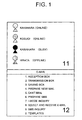
Fig. 1 is an illustration showing presence statuses of the members performing PoC communications according to an exemplary embodiment; -
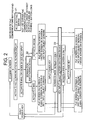
Fig. 2 is a flowchart showing the operation of the first exemplary embodiment; -
Fig. 3 is an illustration showing the configuration of a mobile terminal according to the first exemplary embodiment ; -
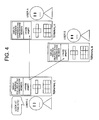
Fig. 4 is an illustration showing an exemplary configuration of sharing a screen according to the first exemplary embodiment; -
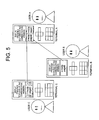
Fig. 5 is an illustration showing an exemplary configuration of sharing a screen according to the first exemplary embodiment; -
Fig. 6 is an illustration showing an exemplary configuration of sharing a screen according to the first exemplary embodiment; -
Fig. 7 is a flowchart showing the operation of the second exemplary embodiment; -
Fig. 8 is an illustration showing the configuration of a mobile terminal according to the second exemplary embodiment; -
Fig. 9 is a flowchart showing the operation of an exemplary embodiment of the invention, and -
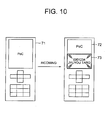
Fig. 10 is an illustration showing the configuration of a mobile terminal according to the exemplary embodiment of the invention. - Hereinafter, a first exemplary embodiment will be described in detail with reference to the drawings.
- Referring to
Figs. 2 and3 , a terminal device in an information sharing system according to the exemplary embodiment includes: amobile terminal 31, a key input objectscreen switching button 32, aPoC communicating screen 33 partitioned by a screen dual-partitioning device 22, an i-mode (registered trademark)screen 34, arule setting device 21, and a key input objectscreen switching device 23. - In this configuration, the screen dual-
partitioning device 22 and therule setting device 21 configure a screen activating unit which partitions the screen of themobile terminal 31 into a plurality of screens and activates them, corresponding to PoC communications. The key input objectscreen switching device 23 configures a switching selector unit which switches between the plurality of activated screens and selects one. In this case, therule setting device 21 sets rules for PoC communications beforehand, and as shown inFig. 3 , the screen dual-partitioning device 22 activates, according to the rules set by therule setting device 21, the i-mode (registered trademark) screen when keys of the keyboard not to be used during PoC communications are manipulated, and an e-mail screen when one button (key) is pushed for a while, together with the PoC communicating screen. Note that rules to be set by therule setting device 21 are not limited to those described above. - Next, operation of the exemplary embodiment will be described (active system: activate i-mode (registered trademark) during PoC communications).
- First, it assumes that a user A who often uses PoC (Push to talk over Cellular) communications in business and private sets a rule by means of the
rule setting device 21 such that i-mode (registered trademark) is activated by pushing the button of a numerical key "1" of the keyboard or the like during PoC communications. Here, PoC is a system in which a push to talk system capable of switching between a plurality of calls by operating buttons is realized on mobile terminals such as mobile phones. For keys of the keyboard or the like to be used for button operations to switch between the calls, those not to be used during PoC communications are used. Although the calls to be switched during PoC communications is limited to two in the exemplary embodiment, the number of calls is not limited to this example. - Now, the user A using the
mobile terminal 31 is participating in a meeting over PoC communications. Although the user A is currently performing PoC communications, the user remembers that he/she has to make a bank transfer immediately via a web site of i-mode (registered trademark). - However, the user has to check the presence states of the members performing PoC communications in the meeting using the PoC communications. Further, in the meeting, the user has to make instructions to the members as required.
- As such, the user A uses the screen dual-
partitioning device 22 to partition the screen of the mobile phone into thePoC communicating screen 33 and the i-mode (registered trademark)screen 34, and activates thepartitioned screen - When the screen of the
mobile terminal 31 is partitioned into two and activated by the screen dual-partitioning device 22, thePoC communicating screen 33 which is a screen of the meeting and the i-mode (registered trademark)screen 34 are activated and displayed on the screen of themobile terminal 31, as shown inFig. 1 for example. On thePoC communicating screen 33, the presence statuses of the members performing PoC communications, which has been displayed, is currently displayed as shown inFig. 1 for example, and the user can also perform communications through i-mode (registered trademark) using the i-mode (registered trademark)screen 34. - As a button for operating the key input object
screen switching device 23, thebutton 32 of themobile terminal 31 is set. The key input objectscreen switching device 23 is activated by operating thisbutton 32, and a screen to which information is input by using keys of the keyboard is set to either one of thepartitioned screens PoC communicating screen 33, by the key input objectscreen switching button 32 for operating the key input objectscreen switching device 23, input of information using the key input device (keyboard, etc.) of themobile terminal 31 will be performed to thePoC communicating screen 33. - If the user A sets to switch to "down", that is, i-mode (registered trademark)
screen 34, by the key input objectscreen switching button 32, input of information using the key input device (keyboard, etc.) of themobile terminal 31 will be performed to the i-mode (registered trademark)screen 34. In this case, it is possible to input necessary information on a web site for bank transfer of i-mode (registered trademark), for example. - By separating objects of key input for the
PoC communicating screen 33 and for the i-mode (registered trademark)screen 34 by means of the key input objectscreen switching button 32, the user A can process processing not related to the meeting in parallel while participating in the meeting. - Thereby, the embodiment is capable of satisfying the user's needs to perform i-mode (registered trademark) or e-mail editing while checking the presence statuses of the group members performing PoC communications. Further, in the case that the user himself/herself does not need to speak but has to wail for another member's comments during PoC communications, it is possible to avoid the screen of the mobile phone being occupied only for checking the presence statuses of the members. Instead, a plurality of calls can be processed in parallel. Further, for an effective key operation being required because of the number of keys being limited on a mobile phone, it is possible to effectively input information into a screen being switched in PoC communications by using keys not required for the PoC communications.
- Further, as shown in
Fig. 4 , a plurality of users A, B, and C perform PoC communications one another, and the screen of themobile terminal 31 is divided into thePoC communication screen 33 and the i-mode (registered trademark)screen 34. Then, the user C is capable of easily notifying the users A and B performing the PoC communications of information on a site that the user C desires to share with all other members (users A and B) by sharing the site screen of page C of i-mode (registered trademark) displayed on the i-mode (registered trademark)screen 34 of the mobile terminal C of the user C. - Further, as shown in
Fig. 5 , the screen dual-partitioning device 22 may be configured to activate a plurality of screens displayed on themobile terminals 31 held by members performing PoC communications on one screen. More specifically, by simultaneously displaying, on the partitioned i-mode (registered trademark)screen 34 of the terminal A of the user A, the site screen of a page C of i-mode (registered trademark) displayed on the i-mode (registered trademark)screen 34 of the mobile terminal C of the user C and the site screen of a page B of i-mode (registered trademark) displayed on the i-mode (registered trademark)screen 34 of the terminal B of the user B, the user A can easily acquire information of a plurality of members. Further, by giving operational authorization, the i-mode (registered trademark)screen 34 on the terminal C of the user C or on the terminal B of the user B may be operated from the terminal A of the user A. - Further, as shown in
Fig. 6 , the screen dual-partitioning device 22 may be configured to reflect the screen function settings, displayed on themobile terminal 31 held by a communication counterpart, on the screen function settings of the mobile terminal of his/her own. More specifically, by displaying the setting screen of a machine answering function displayed on the i-mode (registered trademark)screen 34 of the terminal A, owned by the mother, on the i-mode (registered trademark)screen 34 on the terminal B owned by her son, the setting screen of the machine answering function may be shared with the members performing PoC communications so as to set the machine answering function of the i-mode (registered trademark)screen 34 on the mother's terminal A from the son's terminal B. If this function is realized as a service which can be used only between terminals made by the same manufacturer, this may promote selecting terminals made by the same manufacturer by all family members. - Next, a second exemplary embodiment will be described.
- Referring to
Figs. 7 and8 , a terminal device in an information sharing system of the exemplary embodiment includes amobile terminal 51, a key input objectscreen switching button 43, aPoC communicating screen 52 which is partitioned by a screen dual-partitioning device 42, anew e-mail screen 53, and arule setting device 41. - In this configuration, the screen dual-
partitioning device 42 and therule setting device 41 configure a screen activating unit which partitions the screen of themobile terminal 51 into a plurality of screens corresponding to PoC communications and activates them. The key input objectscreen switching device 43 configures a switching selector unit which switches between the plurality of activated screens and selects one. In this case, it assumes that the screen dual-partitioningdevice 42 and therule setting device 41 are set such that the screen is partitioned into two screens when an e-mail is received and the new e-mail is opened, according toRule 1. However, rules set by the screen dual-partitioningdevice 42 and therule setting device 41 are not limited toRule 1 mentioned above. - The screen activating units (41, 42) keeps one of the partitioned screens in an activated state, and when PoC communications begin, the remaining partitioned screen is activated by interrupting the one screen.
- Next, operation of the exemplary embodiment will be described (passive system: receive e-mail during PoC communications).
- First, a user B uses the
rule setting device 41 to partition the screen into two screens when receiving an e-mail during PoC communications so as to enable the user to view and edit the new e-mail while displaying the PoC communication screen, and setsRule 1 from those shown inFig. 1 for example. - It assumes that the user B using the
mobile terminal 51 is now in a meeting using PoC communications, and is receiving an e-mail. - As set by the
rule setting device 41, the screen of themobile terminal 51 is automatically partitioned into aPoC communicating screen 52 and anew e-mail screen 53 by means of a screen dual-partitioningdevice 42. - The
PoC communicating screen 52 displays the presence statuses of the members performing the PoC communications which have been displayed. Thenew e-mail screen 53 is displayed on a part of the PoC communicating screen by interrupting thePoC communicating screen 52, and the content of a new e-mail is displayed on thenew e-mail screen 53. - In this case, it assumes that the content of the e-mail requires an immediate response and also, it is required to carefully monitor the
PoC communicating screen 52 so as to keep checking the presence statuses of the members performing the PoC communications. Further, it also assumes that an instruction must be given to the members as required. - The user B switches the key input object screen from the
PoC communicating screen 52 to thenew e-mail screen 53 by means of the key input objectscreen switching button 43, and replies to the e-mail using thenew e-mail screen 53. - Next, an exemplary embodiment of the invention will be described.
- Referring to
Figs. 9 and10 , a terminal device of an information sharing system according to the exemplary embodiment includes amobile terminal 71, aPoC communicating screen 72 and an incomingcall display screen 73 which are partitioned by a screen dual-partitioningdevice 62, and arule setting device 61. - In this configuration, the screen dual-partitioning
device 62 and therule setting device 61 configure a screen activation unit which partitions the screen of themobile terminal 71 into a plurality of screens and activates them corresponding to PoC communications. In this case, therule setting device 61 sets rules for PoC communications beforehand. More specifically, the rule setting device sets, asRule 1, whether or not to notify an incoming call (sets "YES" or "NO"), and asRule 2, voice settings during PoC communications when a talk button is pushed, for example. Therule setting device 61 sets the voice during PoC communications to mute as Rule 2-1, sets to reduce (halve for example) the volume of the voice during PoC communications as Rule 2-2, and sets to record the voice during PoC communications as Rule 2-3. However, the rules to be set by therule setting device 21 are not limited to those described above. Note that in the exemplary embodiment, the push button for calling of themobile terminal 71 configures a switch selector unit for switching between a plurality of activated screens and selecting one. - Next, operation of the exemplary embodiment will be described (passive system: call incoming during PoC communications).
- First, a user C sets "YES" to
Rule 1, that is, notifying an incoming call when a call is incoming during PoC communications, and sets Rule 2-3 of thevoice setting rule 2 during PoC communications when a talk button is pushed so as to be in a state of recording voices during PoC communications, by means of therule setting device 61. - Now, the user C using the
mobile terminal 71 is in a meeting using PoC communications. In this situation, it assumes that a call is incoming. - As set by the
rule setting device 61, the screen of themobile terminal 71 is automatically partitioned into aPoC communicating screen 72 and an incomingcall display screen 73 by means of the screen dual-partitioningdevice 62, and activated. - The
PoC communicating screen 72 displays presence statuses, which have been displayed, of the members performing PoC communications, and the incomingcall display screen 73 displays that a call is incoming. - In this state, it assumes that when the user looks at the incoming
call display screen 73, a call from an important business partner is incoming, whereas the user is in a meeting using PoC communications, and is required to take minutes of the meeting held through the PoC communications. - The user C answers the phone by pushing the talk button. As the user C has set to record the voices during the PoC communications according to
Rule 2, the voices during the PoC communications are being recorded. As such, the user C is capable of preparing the minutes by playing back the recorded contents of the meeting during the PoC communications after the call that the user answered by pushing the talk button ends. - Note that a screen may be partitioned into not only upper and lower parts but also right and left parts. Although the screen is partitioned into two parts in the exemplary embodiment, the screen may be partitioned into three or more parts.
- As a trigger to switch the multi-screen, not only a touch to a hinge portion of a mobile terminal, but also a touch to a liquid crystal panel part having a touch sensor, a command input through an external cable having a remote control function, and a voice input to a microphone (including keyword voices and sound input other than voice) in a waiting state of a voice recognizing function may be used.
- The exemplary embodiments described above are preferred exemplary embodiments of the invention, which can be modified in various ways within the scope of the subject matter of the present invention. For instance, processing to realize functions of the
mobile terminal 31, themobile terminal 51 and themobile terminal 71 may be performed by installing a program to realize the functions of the respective terminals so as to execute the functions. Further, the program may be transmitted to another computer system via computer readable recording media such as CD-ROM and optical magnetic discs or by transmission waves via transmitting media such as the Internet and telephone networks.
Claims (6)
- A terminal device corresponding to Push-to-talk-over-Cellular communications called PoC communications hereinafter, comprising:a rule setting device (61) for setting a rule for the PoC communications beforehand;a screen dual-partitioning device (62) for partitioning, corresponding to the PoC communications, a screen of a mobile terminal at least into a PoC communicating screen (72) and an incoming call display screen (73), and activating the PoC communicating screen and the incoming call display screen while keeping them displayed on the screen of the mobile terminal in parallel, said partitioning and said activating being carried out based on said rule; andswitching selector means for switching between the PoC communicating screen and the incoming call display screen and selecting one while keeping the PoC communicating screen and the incoming call display screen displayed in parallel.
- The terminal device according to claim 1, wherein the rule setting device sets as the rules for the PoC communications:Rule 1 for determining whether or not to notify an incoming call; andRule 2 for setting voice settings during PoC communications when a talk button is being pushed.
- The terminal device according to claim 2, wherein the rule setting device sets as the Rule 2:Rule 2-1 for setting voice during PoC communications to mute;Rule 2-2 for reducing volume of the voice during PoC communications said partitioning and said activating being carried out based on said rule; and; andRule 2-3 for recording the voice during PoC communications.
- An information sharing method for sharing information by performing Push-to-talk-over-Cellular communications, called PoC communications hereinafter, comprising:setting a rule for the PoC communications beforehand;based on the set rule, partitioning, corresponding to the PoC communications, a screen of a mobile terminal at least into a PoC communicating screen (72) and an incoming call display screen (73), and activating the PoC communicating screen and the incoming call display screen while keeping them displayed on the screen of the mobile terminal in parallel; andswitching between the PoC communicating screen and the incoming call display screen and selecting one while keeping the PoC communicating screen and the incoming call display screen displayed in parallel.
- The information sharing method according to claim 4, wherein the rules for the PoC communications includes:Rule 1 for determining whether or not an incoming call is notified, andRule 2 for setting voice setting during PoC communications when a communication button is being pushed.
- The information sharing method according to claim 5, wherein the Rule 2 includes:Rule 2-1 for setting voice during PoC communications to mute,Rule 2-2 for reducing volume of the voice during PoC communications, andRule 2-3 for recording the voice during PoC communications.
Applications Claiming Priority (2)
| Application Number | Priority Date | Filing Date | Title |
|---|---|---|---|
| JP2006062642 | 2006-03-08 | ||
| PCT/JP2007/054156 WO2007102453A1 (en) | 2006-03-08 | 2007-03-05 | Information sharing system, information sharing method, terminal device and program |
Publications (3)
| Publication Number | Publication Date |
|---|---|
| EP2000916A1 EP2000916A1 (en) | 2008-12-10 |
| EP2000916A4 EP2000916A4 (en) | 2009-12-23 |
| EP2000916B1 true EP2000916B1 (en) | 2012-12-19 |
Family
ID=38474881
Family Applications (1)
| Application Number | Title | Priority Date | Filing Date |
|---|---|---|---|
| EP07715189A Not-in-force EP2000916B1 (en) | 2006-03-08 | 2007-03-05 | Information sharing terminal, information sharing method |
Country Status (5)
| Country | Link |
|---|---|
| US (2) | US20090061950A1 (en) |
| EP (1) | EP2000916B1 (en) |
| JP (2) | JP5754874B2 (en) |
| CN (2) | CN102256016B (en) |
| WO (1) | WO2007102453A1 (en) |
Families Citing this family (23)
| Publication number | Priority date | Publication date | Assignee | Title |
|---|---|---|---|---|
| US9146585B2 (en) | 2010-10-01 | 2015-09-29 | Z124 | Dual-screen view in response to rotation |
| JP5140364B2 (en) * | 2007-09-28 | 2013-02-06 | 京セラ株式会社 | Mobile terminal, display switching method, display switching program |
| KR101548958B1 (en) * | 2008-09-18 | 2015-09-01 | 삼성전자주식회사 | Method and apparatus for controlling touch screen operation of a portable terminal |
| US8914462B2 (en) * | 2009-04-14 | 2014-12-16 | Lg Electronics Inc. | Terminal and controlling method thereof |
| US20100309094A1 (en) * | 2009-06-08 | 2010-12-09 | Castleman Mark | Methos and apparatus for remote interaction using a partitioned display |
| US20100311393A1 (en) * | 2009-06-08 | 2010-12-09 | Castleman Mark | Methods and apparatus for distributing, storing, and replaying directives within a network |
| WO2010144430A1 (en) * | 2009-06-08 | 2010-12-16 | Swakker Llc | Methods and apparatus for remote interaction using a partitioned display |
| US8286084B2 (en) | 2009-06-08 | 2012-10-09 | Swakker Llc | Methods and apparatus for remote interaction using a partitioned display |
| US20100310193A1 (en) * | 2009-06-08 | 2010-12-09 | Castleman Mark | Methods and apparatus for selecting and/or displaying images of perspective views of an object at a communication device |
| US20100313249A1 (en) * | 2009-06-08 | 2010-12-09 | Castleman Mark | Methods and apparatus for distributing, storing, and replaying directives within a network |
| US20100313244A1 (en) * | 2009-06-08 | 2010-12-09 | Castleman Mark | Methods and apparatus for distributing, storing, and replaying directives within a network |
| KR101285474B1 (en) * | 2009-06-16 | 2013-07-12 | 인텔 코오퍼레이션 | Camera Applications on Handheld Devices |
| CN102123208A (en) * | 2011-03-22 | 2011-07-13 | 深圳桑菲消费通信有限公司 | Method for supporting display of a plurality of sub display screens on mobile phone display screen |
| US9351237B2 (en) | 2011-09-27 | 2016-05-24 | Z124 | Displaying of charging status on dual screen device |
| JP5858860B2 (en) * | 2012-04-25 | 2016-02-10 | 京セラ株式会社 | Mobile phone |
| WO2014023432A1 (en) * | 2012-08-09 | 2014-02-13 | Livestudies Srl | Apparatus and method for a collaborative environment using distributed touch sensitive surfaces |
| KR102013338B1 (en) * | 2013-02-04 | 2019-08-22 | 삼성전자 주식회사 | Sharing Method of Service Page and Electronic Device operating the same |
| CN103200333A (en) * | 2013-04-22 | 2013-07-10 | 任峰 | Method for switching speech channels through gestures |
| JP5815613B2 (en) * | 2013-08-01 | 2015-11-17 | 株式会社オプティム | User terminal, screen sharing method, user terminal program |
| JP6263787B2 (en) * | 2013-09-10 | 2018-01-24 | シャープ株式会社 | Information processing apparatus, display control method, and program |
| KR101943989B1 (en) | 2015-06-05 | 2019-01-30 | 삼성전자주식회사 | Method, server and terminal for transmitting and receiving data |
| CN119828929A (en) * | 2020-08-21 | 2025-04-15 | 荣耀终端股份有限公司 | Split screen display method and electronic equipment |
| KR102642214B1 (en) * | 2022-07-13 | 2024-03-04 | (주)제이코어 | Method for providing push-to-talk communication service and apparatus therefor |
Family Cites Families (29)
| Publication number | Priority date | Publication date | Assignee | Title |
|---|---|---|---|---|
| US5689641A (en) * | 1993-10-01 | 1997-11-18 | Vicor, Inc. | Multimedia collaboration system arrangement for routing compressed AV signal through a participant site without decompressing the AV signal |
| JP2947108B2 (en) | 1995-01-24 | 1999-09-13 | 日本電気株式会社 | Cooperative work interface controller |
| JPH10283293A (en) * | 1997-03-31 | 1998-10-23 | Nec Corp | Application sharing system and machine-readable record medium recording program |
| US7054660B2 (en) * | 2000-05-04 | 2006-05-30 | Paperless Interactive Newspaper, Llc | Multimedia broadcasting, broadcast services for cell phone and other users and modified SIM card and related means for enabling such broadcast reception |
| JP4543496B2 (en) * | 2000-05-10 | 2010-09-15 | ソニー株式会社 | Communications system |
| JP2002014773A (en) | 2000-06-28 | 2002-01-18 | Toshiba Corp | Portable information terminal |
| US20020006804A1 (en) * | 2000-07-12 | 2002-01-17 | Hiromu Mukai | Communication terminal and communication system |
| US20020085030A1 (en) * | 2000-12-29 | 2002-07-04 | Jamal Ghani | Graphical user interface for an interactive collaboration system |
| US20020186257A1 (en) * | 2001-06-08 | 2002-12-12 | Cadiz Jonathan J. | System and process for providing dynamic communication access and information awareness in an interactive peripheral display |
| JP2003030121A (en) * | 2001-07-17 | 2003-01-31 | Hitachi Commun Syst Inc | Web sharing system and communication terminal in web sharing system |
| JP3879980B2 (en) * | 2002-01-15 | 2007-02-14 | ソニー株式会社 | Portable information processing apparatus and operation screen display control method |
| WO2003077553A1 (en) * | 2002-03-08 | 2003-09-18 | Mitsubishi Denki Kabushiki Kaisha | Mobile communication device, display control method for mobile communication device, and its program |
| WO2003077098A1 (en) * | 2002-03-08 | 2003-09-18 | Mitsubishi Denki Kabushiki Kaisha | Mobile communication device, display control method of mobile communication device, and program therefor |
| US7188140B1 (en) * | 2002-03-13 | 2007-03-06 | At&T Corp. | System and method for providing enhanced persistent communications |
| US7234117B2 (en) * | 2002-08-28 | 2007-06-19 | Microsoft Corporation | System and method for shared integrated online social interaction |
| JP4016388B2 (en) * | 2003-01-21 | 2007-12-05 | 日本電気株式会社 | Mobile phone terminal with videophone function |
| JP2005130133A (en) * | 2003-10-22 | 2005-05-19 | Sanyo Electric Co Ltd | Mobile phone |
| JP2005184366A (en) * | 2003-12-18 | 2005-07-07 | Sharp Corp | Terminal device |
| JP2005197945A (en) | 2004-01-06 | 2005-07-21 | Tietech Co Ltd | Video conference system |
| EP1569473B1 (en) * | 2004-02-27 | 2009-02-25 | Research In Motion Limited | Methods and apparatus for facilitating concurrent push-to-talk over cellular (POC) group communication sessions |
| JP2004274787A (en) * | 2004-04-26 | 2004-09-30 | Matsushita Electric Ind Co Ltd | Image communication device |
| US7277726B2 (en) * | 2004-05-03 | 2007-10-02 | Motorola, Inc. | Controlling wireless mobile devices from a remote device |
| JP2006020286A (en) * | 2004-06-02 | 2006-01-19 | Matsushita Electric Ind Co Ltd | Mobile terminal device |
| KR100641233B1 (en) | 2004-07-28 | 2006-11-02 | 엘지전자 주식회사 | Method for managing talk burst of push-to-talk service |
| DE102004053597B4 (en) * | 2004-11-05 | 2008-05-29 | Infineon Technologies Ag | A method for automatically generating and / or controlling a telecommunications conference with a plurality of subscribers, telecommunication conference terminal and telecommunication conference server |
| KR100664179B1 (en) * | 2004-11-16 | 2007-01-04 | 엘지전자 주식회사 | Device for processing warning message of mobile communication terminal and method thereof |
| US8285785B2 (en) * | 2004-11-19 | 2012-10-09 | Nokia Corporation | Method, apparatus and computer program product providing graphical user interface that facilitates management of multiple simultaneous communication sessions |
| KR100761276B1 (en) * | 2005-04-11 | 2007-09-28 | 엘지전자 주식회사 | APPARATUS AND METHOD FOR CONTROLLING SIMULTANEOUS SESSION FOR PoC SERVICE |
| US8832569B2 (en) * | 2006-01-25 | 2014-09-09 | International Business Machines Corporation | Scrolling chat for participation in multiple instant messaging conversations |
-
2007
- 2007-03-05 WO PCT/JP2007/054156 patent/WO2007102453A1/en not_active Ceased
- 2007-03-05 JP JP2008503839A patent/JP5754874B2/en not_active Expired - Fee Related
- 2007-03-05 US US12/281,509 patent/US20090061950A1/en not_active Abandoned
- 2007-03-05 EP EP07715189A patent/EP2000916B1/en not_active Not-in-force
- 2007-03-05 CN CN201110201545.5A patent/CN102256016B/en not_active Expired - Fee Related
- 2007-03-05 CN CN2007800081312A patent/CN101395589B/en not_active Expired - Fee Related
-
2012
- 2012-01-10 US US13/347,348 patent/US8923833B2/en not_active Expired - Fee Related
-
2013
- 2013-10-23 JP JP2013219902A patent/JP5921514B2/en not_active Expired - Fee Related
Also Published As
| Publication number | Publication date |
|---|---|
| CN101395589A (en) | 2009-03-25 |
| EP2000916A4 (en) | 2009-12-23 |
| JP5921514B2 (en) | 2016-05-24 |
| WO2007102453A1 (en) | 2007-09-13 |
| US20120105309A1 (en) | 2012-05-03 |
| JPWO2007102453A1 (en) | 2009-07-23 |
| JP2014078947A (en) | 2014-05-01 |
| CN102256016B (en) | 2014-12-03 |
| EP2000916A1 (en) | 2008-12-10 |
| US20090061950A1 (en) | 2009-03-05 |
| CN102256016A (en) | 2011-11-23 |
| US8923833B2 (en) | 2014-12-30 |
| JP5754874B2 (en) | 2015-07-29 |
| CN101395589B (en) | 2011-08-31 |
Similar Documents
| Publication | Publication Date | Title |
|---|---|---|
| US8923833B2 (en) | Information sharing system, information sharing method, terminal device and program | |
| EP1986432B1 (en) | Mobile communication device capable of storing video chatting log and operating method thereof | |
| KR100966504B1 (en) | A method, apparatus and computer program product for providing a graphical user interface that facilitates the management of multiple concurrent communication sessions. | |
| KR20060127986A (en) | User interface for cellular telephone group calls | |
| EP2698974A1 (en) | Method for handling call receiving and an electronic device thereof | |
| KR20090126516A (en) | Apparatus and method for providing speed dial function using recent call list in mobile communication terminal | |
| JP6957047B2 (en) | Mobile terminals and methods for receiving calls while the application is running | |
| EP2169927B1 (en) | Communication method and communication device thereof | |
| KR101394283B1 (en) | Portable terminal having bluetooth module and method for bluetooth communication thereof | |
| JP6027127B2 (en) | Apparatus and method for portable terminal using interactive application with notification function | |
| KR101741121B1 (en) | Automatic response system | |
| EP1657890B1 (en) | Apparatus and method for processing alert message of mobile communication terminal | |
| US20060105794A1 (en) | Push to view system for telephone communications | |
| EP1921833B1 (en) | Electronic communication device and method for operating telephone book list of electronic communication device | |
| KR100715794B1 (en) | How to manage call list in mobile communication terminal | |
| KR20090012950A (en) | Application sharing method and device | |
| JP2576630B2 (en) | Key telephone equipment | |
| JP2025168216A (en) | Virtual space control system and virtual space control method | |
| Vanderheiden | Impact of digital miniaturization and networked topologies on access to next generation telecommunication by people with visual disabilities | |
| EP3291521B1 (en) | Telephone switching device and method, and program | |
| JP2025123609A (en) | Virtual space control system and virtual space control method | |
| KR20050024070A (en) | Method for reviewing messages by counterpart | |
| KR20080077841A (en) | Mobile communication terminal | |
| JP2000341418A (en) | Conference call system | |
| JP2004023292A (en) | Line connection control device |
Legal Events
| Date | Code | Title | Description |
|---|---|---|---|
| PUAI | Public reference made under article 153(3) epc to a published international application that has entered the european phase |
Free format text: ORIGINAL CODE: 0009012 |
|
| 17P | Request for examination filed |
Effective date: 20080924 |
|
| AK | Designated contracting states |
Kind code of ref document: A1 Designated state(s): DE FR GB IT |
|
| DAX | Request for extension of the european patent (deleted) | ||
| RBV | Designated contracting states (corrected) |
Designated state(s): DE FR GB IT |
|
| A4 | Supplementary search report drawn up and despatched |
Effective date: 20091123 |
|
| 17Q | First examination report despatched |
Effective date: 20100528 |
|
| GRAP | Despatch of communication of intention to grant a patent |
Free format text: ORIGINAL CODE: EPIDOSNIGR1 |
|
| RTI1 | Title (correction) |
Free format text: INFORMATION SHARING TERMINAL, INFORMATION SHARING METHOD |
|
| GRAC | Information related to communication of intention to grant a patent modified |
Free format text: ORIGINAL CODE: EPIDOSCIGR1 |
|
| GRAJ | Information related to disapproval of communication of intention to grant by the applicant or resumption of examination proceedings by the epo deleted |
Free format text: ORIGINAL CODE: EPIDOSDIGR1 |
|
| GRAP | Despatch of communication of intention to grant a patent |
Free format text: ORIGINAL CODE: EPIDOSNIGR1 |
|
| GRAJ | Information related to disapproval of communication of intention to grant by the applicant or resumption of examination proceedings by the epo deleted |
Free format text: ORIGINAL CODE: EPIDOSDIGR1 |
|
| GRAP | Despatch of communication of intention to grant a patent |
Free format text: ORIGINAL CODE: EPIDOSNIGR1 |
|
| GRAS | Grant fee paid |
Free format text: ORIGINAL CODE: EPIDOSNIGR3 |
|
| GRAP | Despatch of communication of intention to grant a patent |
Free format text: ORIGINAL CODE: EPIDOSNIGR1 |
|
| GRAA | (expected) grant |
Free format text: ORIGINAL CODE: 0009210 |
|
| AK | Designated contracting states |
Kind code of ref document: B1 Designated state(s): DE FR GB IT |
|
| REG | Reference to a national code |
Ref country code: GB Ref legal event code: FG4D |
|
| REG | Reference to a national code |
Ref country code: DE Ref legal event code: R096 Ref document number: 602007027457 Country of ref document: DE Effective date: 20130207 |
|
| PLBE | No opposition filed within time limit |
Free format text: ORIGINAL CODE: 0009261 |
|
| STAA | Information on the status of an ep patent application or granted ep patent |
Free format text: STATUS: NO OPPOSITION FILED WITHIN TIME LIMIT |
|
| 26N | No opposition filed |
Effective date: 20130920 |
|
| PG25 | Lapsed in a contracting state [announced via postgrant information from national office to epo] |
Ref country code: IT Free format text: LAPSE BECAUSE OF FAILURE TO SUBMIT A TRANSLATION OF THE DESCRIPTION OR TO PAY THE FEE WITHIN THE PRESCRIBED TIME-LIMIT Effective date: 20121219 |
|
| REG | Reference to a national code |
Ref country code: DE Ref legal event code: R097 Ref document number: 602007027457 Country of ref document: DE Effective date: 20130920 |
|
| REG | Reference to a national code |
Ref country code: GB Ref legal event code: 732E Free format text: REGISTERED BETWEEN 20141023 AND 20141029 |
|
| REG | Reference to a national code |
Ref country code: FR Ref legal event code: TP Owner name: LENOVO INNOVATIONS LIMITED (HONG KONG), HK Effective date: 20141119 |
|
| REG | Reference to a national code |
Ref country code: FR Ref legal event code: PLFP Year of fee payment: 10 |
|
| PGFP | Annual fee paid to national office [announced via postgrant information from national office to epo] |
Ref country code: FR Payment date: 20160208 Year of fee payment: 10 |
|
| PGFP | Annual fee paid to national office [announced via postgrant information from national office to epo] |
Ref country code: DE Payment date: 20170228 Year of fee payment: 11 |
|
| PGFP | Annual fee paid to national office [announced via postgrant information from national office to epo] |
Ref country code: GB Payment date: 20170301 Year of fee payment: 11 |
|
| REG | Reference to a national code |
Ref country code: FR Ref legal event code: ST Effective date: 20171130 |
|
| PG25 | Lapsed in a contracting state [announced via postgrant information from national office to epo] |
Ref country code: FR Free format text: LAPSE BECAUSE OF NON-PAYMENT OF DUE FEES Effective date: 20170331 |
|
| REG | Reference to a national code |
Ref country code: DE Ref legal event code: R119 Ref document number: 602007027457 Country of ref document: DE |
|
| GBPC | Gb: european patent ceased through non-payment of renewal fee |
Effective date: 20180305 |
|
| PG25 | Lapsed in a contracting state [announced via postgrant information from national office to epo] |
Ref country code: DE Free format text: LAPSE BECAUSE OF NON-PAYMENT OF DUE FEES Effective date: 20181002 |
|
| PG25 | Lapsed in a contracting state [announced via postgrant information from national office to epo] |
Ref country code: GB Free format text: LAPSE BECAUSE OF NON-PAYMENT OF DUE FEES Effective date: 20180305 |