EP2003143A1 - Cell-proliferation inhibiting VPg proteins, fragments or analogs thereof and their applications - Google Patents
Cell-proliferation inhibiting VPg proteins, fragments or analogs thereof and their applications Download PDFInfo
- Publication number
- EP2003143A1 EP2003143A1 EP07290740A EP07290740A EP2003143A1 EP 2003143 A1 EP2003143 A1 EP 2003143A1 EP 07290740 A EP07290740 A EP 07290740A EP 07290740 A EP07290740 A EP 07290740A EP 2003143 A1 EP2003143 A1 EP 2003143A1
- Authority
- EP
- European Patent Office
- Prior art keywords
- protein
- seq
- vpg
- fragment
- analog
- Prior art date
- Legal status (The legal status is an assumption and is not a legal conclusion. Google has not performed a legal analysis and makes no representation as to the accuracy of the status listed.)
- Withdrawn
Links
- 101800001092 Protein 3B Proteins 0.000 title claims abstract description 132
- 101800003106 VPg Proteins 0.000 title claims abstract description 132
- 101800001476 Viral genome-linked protein Proteins 0.000 title claims abstract description 132
- 101800001133 Viral protein genome-linked Proteins 0.000 title claims abstract description 132
- 239000012634 fragment Substances 0.000 title claims abstract description 57
- 230000004663 cell proliferation Effects 0.000 title abstract description 10
- 230000002401 inhibitory effect Effects 0.000 title abstract description 6
- 101001082110 Acanthamoeba polyphaga mimivirus Eukaryotic translation initiation factor 4E homolog Proteins 0.000 claims abstract description 13
- 108090000623 proteins and genes Proteins 0.000 claims description 67
- 102000004169 proteins and genes Human genes 0.000 claims description 64
- FWMNVWWHGCHHJJ-SKKKGAJSSA-N 4-amino-1-[(2r)-6-amino-2-[[(2r)-2-[[(2r)-2-[[(2r)-2-amino-3-phenylpropanoyl]amino]-3-phenylpropanoyl]amino]-4-methylpentanoyl]amino]hexanoyl]piperidine-4-carboxylic acid Chemical compound C([C@H](C(=O)N[C@H](CC(C)C)C(=O)N[C@H](CCCCN)C(=O)N1CCC(N)(CC1)C(O)=O)NC(=O)[C@H](N)CC=1C=CC=CC=1)C1=CC=CC=C1 FWMNVWWHGCHHJJ-SKKKGAJSSA-N 0.000 claims description 33
- 206010028980 Neoplasm Diseases 0.000 claims description 31
- 150000007523 nucleic acids Chemical class 0.000 claims description 27
- 150000001413 amino acids Chemical class 0.000 claims description 22
- 201000011510 cancer Diseases 0.000 claims description 17
- 230000003993 interaction Effects 0.000 claims description 15
- 239000013598 vector Substances 0.000 claims description 15
- 230000027455 binding Effects 0.000 claims description 12
- 238000000034 method Methods 0.000 claims description 12
- ROHFNLRQFUQHCH-YFKPBYRVSA-N L-leucine Chemical compound CC(C)C[C@H](N)C(O)=O ROHFNLRQFUQHCH-YFKPBYRVSA-N 0.000 claims description 11
- COLNVLDHVKWLRT-QMMMGPOBSA-N L-phenylalanine Chemical compound OC(=O)[C@@H](N)CC1=CC=CC=C1 COLNVLDHVKWLRT-QMMMGPOBSA-N 0.000 claims description 11
- 108020004707 nucleic acids Proteins 0.000 claims description 11
- 102000039446 nucleic acids Human genes 0.000 claims description 11
- 150000001875 compounds Chemical class 0.000 claims description 10
- 206010018338 Glioma Diseases 0.000 claims description 9
- 241000124008 Mammalia Species 0.000 claims description 9
- 239000000203 mixture Substances 0.000 claims description 9
- 208000032612 Glial tumor Diseases 0.000 claims description 8
- 239000003814 drug Substances 0.000 claims description 8
- COLNVLDHVKWLRT-UHFFFAOYSA-N phenylalanine Natural products OC(=O)C(N)CC1=CC=CC=C1 COLNVLDHVKWLRT-UHFFFAOYSA-N 0.000 claims description 8
- 206010009944 Colon cancer Diseases 0.000 claims description 6
- ROHFNLRQFUQHCH-UHFFFAOYSA-N Leucine Natural products CC(C)CC(N)C(O)=O ROHFNLRQFUQHCH-UHFFFAOYSA-N 0.000 claims description 6
- 230000001747 exhibiting effect Effects 0.000 claims description 6
- -1 cationic lipid Chemical class 0.000 claims description 5
- 239000003937 drug carrier Substances 0.000 claims description 5
- 201000001441 melanoma Diseases 0.000 claims description 5
- OUYCCCASQSFEME-UHFFFAOYSA-N tyrosine Natural products OC(=O)C(N)CC1=CC=C(O)C=C1 OUYCCCASQSFEME-UHFFFAOYSA-N 0.000 claims description 5
- 101001082109 Danio rerio Eukaryotic translation initiation factor 4E-1B Proteins 0.000 claims description 4
- FFEARJCKVFRZRR-BYPYZUCNSA-N L-methionine Chemical compound CSCC[C@H](N)C(O)=O FFEARJCKVFRZRR-BYPYZUCNSA-N 0.000 claims description 4
- 208000029742 colonic neoplasm Diseases 0.000 claims description 4
- 238000004519 manufacturing process Methods 0.000 claims description 4
- 229930182817 methionine Natural products 0.000 claims description 4
- 230000003278 mimic effect Effects 0.000 claims description 4
- 239000008194 pharmaceutical composition Substances 0.000 claims description 3
- 239000002246 antineoplastic agent Substances 0.000 claims description 2
- 238000002360 preparation method Methods 0.000 claims description 2
- 238000012216 screening Methods 0.000 claims description 2
- 125000001493 tyrosinyl group Chemical group [H]OC1=C([H])C([H])=C(C([H])=C1[H])C([H])([H])C([H])(N([H])[H])C(*)=O 0.000 claims description 2
- 210000004027 cell Anatomy 0.000 description 98
- 235000018102 proteins Nutrition 0.000 description 46
- 241000723762 Potato virus Y Species 0.000 description 33
- 108010044843 Peptide Initiation Factors Proteins 0.000 description 27
- 102000005877 Peptide Initiation Factors Human genes 0.000 description 27
- 241000238631 Hexapoda Species 0.000 description 25
- 125000003275 alpha amino acid group Chemical group 0.000 description 21
- 108090000765 processed proteins & peptides Proteins 0.000 description 19
- FAPWRFPIFSIZLT-UHFFFAOYSA-M Sodium chloride Chemical compound [Na+].[Cl-] FAPWRFPIFSIZLT-UHFFFAOYSA-M 0.000 description 18
- 235000001014 amino acid Nutrition 0.000 description 18
- 229940024606 amino acid Drugs 0.000 description 18
- 210000000805 cytoplasm Anatomy 0.000 description 18
- 239000004475 Arginine Substances 0.000 description 17
- ODKSFYDXXFIFQN-UHFFFAOYSA-N arginine Natural products OC(=O)C(N)CCCNC(N)=N ODKSFYDXXFIFQN-UHFFFAOYSA-N 0.000 description 17
- 241000701447 unidentified baculovirus Species 0.000 description 16
- 108091028043 Nucleic acid sequence Proteins 0.000 description 15
- 241000700605 Viruses Species 0.000 description 15
- 210000004940 nucleus Anatomy 0.000 description 13
- PEDCQBHIVMGVHV-UHFFFAOYSA-N Glycerine Chemical compound OCC(O)CO PEDCQBHIVMGVHV-UHFFFAOYSA-N 0.000 description 12
- 208000037265 diseases, disorders, signs and symptoms Diseases 0.000 description 12
- 230000014509 gene expression Effects 0.000 description 12
- 208000015181 infectious disease Diseases 0.000 description 12
- 241000196324 Embryophyta Species 0.000 description 11
- 108060004795 Methyltransferase Proteins 0.000 description 11
- 230000001965 increasing effect Effects 0.000 description 11
- DHMQDGOQFOQNFH-UHFFFAOYSA-N Glycine Chemical compound NCC(O)=O DHMQDGOQFOQNFH-UHFFFAOYSA-N 0.000 description 10
- 239000000872 buffer Substances 0.000 description 10
- 101001082055 Homo sapiens Eukaryotic translation initiation factor 4E Proteins 0.000 description 9
- 102000004196 processed proteins & peptides Human genes 0.000 description 9
- 241000699670 Mus sp. Species 0.000 description 8
- 210000005260 human cell Anatomy 0.000 description 8
- 238000000338 in vitro Methods 0.000 description 8
- 201000010099 disease Diseases 0.000 description 7
- 230000004807 localization Effects 0.000 description 7
- 108020004999 messenger RNA Proteins 0.000 description 7
- 239000011780 sodium chloride Substances 0.000 description 7
- 241000699666 Mus <mouse, genus> Species 0.000 description 6
- 241000710078 Potyvirus Species 0.000 description 6
- 238000004624 confocal microscopy Methods 0.000 description 6
- 230000000694 effects Effects 0.000 description 6
- 239000004471 Glycine Substances 0.000 description 5
- 241000724005 Lettuce mosaic virus Species 0.000 description 5
- 241000723838 Turnip mosaic virus Species 0.000 description 5
- 125000000539 amino acid group Chemical group 0.000 description 5
- 230000030833 cell death Effects 0.000 description 5
- UQLDLKMNUJERMK-UHFFFAOYSA-L di(octadecanoyloxy)lead Chemical compound [Pb+2].CCCCCCCCCCCCCCCCCC([O-])=O.CCCCCCCCCCCCCCCCCC([O-])=O UQLDLKMNUJERMK-UHFFFAOYSA-L 0.000 description 5
- 208000035475 disorder Diseases 0.000 description 5
- 238000002474 experimental method Methods 0.000 description 5
- 238000011534 incubation Methods 0.000 description 5
- 108091032973 (ribonucleotides)n+m Proteins 0.000 description 4
- KCXVZYZYPLLWCC-UHFFFAOYSA-N EDTA Chemical compound OC(=O)CN(CC(O)=O)CCN(CC(O)=O)CC(O)=O KCXVZYZYPLLWCC-UHFFFAOYSA-N 0.000 description 4
- 241000206602 Eukaryota Species 0.000 description 4
- OUYCCCASQSFEME-QMMMGPOBSA-N L-tyrosine Chemical compound OC(=O)[C@@H](N)CC1=CC=C(O)C=C1 OUYCCCASQSFEME-QMMMGPOBSA-N 0.000 description 4
- 229930006000 Sucrose Natural products 0.000 description 4
- CZMRCDWAGMRECN-UGDNZRGBSA-N Sucrose Chemical compound O[C@H]1[C@H](O)[C@@H](CO)O[C@@]1(CO)O[C@@H]1[C@H](O)[C@@H](O)[C@H](O)[C@@H](CO)O1 CZMRCDWAGMRECN-UGDNZRGBSA-N 0.000 description 4
- 239000007983 Tris buffer Substances 0.000 description 4
- 230000030570 cellular localization Effects 0.000 description 4
- 238000005119 centrifugation Methods 0.000 description 4
- 230000003292 diminished effect Effects 0.000 description 4
- ZDXPYRJPNDTMRX-UHFFFAOYSA-N glutamine Natural products OC(=O)C(N)CCC(N)=O ZDXPYRJPNDTMRX-UHFFFAOYSA-N 0.000 description 4
- 230000035755 proliferation Effects 0.000 description 4
- 230000001105 regulatory effect Effects 0.000 description 4
- 210000002966 serum Anatomy 0.000 description 4
- ATHGHQPFGPMSJY-UHFFFAOYSA-N spermidine Chemical compound NCCCCNCCCN ATHGHQPFGPMSJY-UHFFFAOYSA-N 0.000 description 4
- PFNFFQXMRSDOHW-UHFFFAOYSA-N spermine Chemical compound NCCCNCCCCNCCCN PFNFFQXMRSDOHW-UHFFFAOYSA-N 0.000 description 4
- 239000005720 sucrose Substances 0.000 description 4
- 230000014616 translation Effects 0.000 description 4
- LENZDBCJOHFCAS-UHFFFAOYSA-N tris Chemical compound OCC(N)(CO)CO LENZDBCJOHFCAS-UHFFFAOYSA-N 0.000 description 4
- MTCFGRXMJLQNBG-REOHCLBHSA-N (2S)-2-Amino-3-hydroxypropansäure Chemical compound OC[C@H](N)C(O)=O MTCFGRXMJLQNBG-REOHCLBHSA-N 0.000 description 3
- CSCPPACGZOOCGX-UHFFFAOYSA-N Acetone Chemical compound CC(C)=O CSCPPACGZOOCGX-UHFFFAOYSA-N 0.000 description 3
- WHUUTDBJXJRKMK-UHFFFAOYSA-N Glutamic acid Natural products OC(=O)C(N)CCC(O)=O WHUUTDBJXJRKMK-UHFFFAOYSA-N 0.000 description 3
- AYFVYJQAPQTCCC-GBXIJSLDSA-N L-threonine Chemical compound C[C@@H](O)[C@H](N)C(O)=O AYFVYJQAPQTCCC-GBXIJSLDSA-N 0.000 description 3
- KDXKERNSBIXSRK-UHFFFAOYSA-N Lysine Natural products NCCCCC(N)C(O)=O KDXKERNSBIXSRK-UHFFFAOYSA-N 0.000 description 3
- 239000004472 Lysine Substances 0.000 description 3
- 241000283973 Oryctolagus cuniculus Species 0.000 description 3
- MTCFGRXMJLQNBG-UHFFFAOYSA-N Serine Natural products OCC(N)C(O)=O MTCFGRXMJLQNBG-UHFFFAOYSA-N 0.000 description 3
- AYFVYJQAPQTCCC-UHFFFAOYSA-N Threonine Natural products CC(O)C(N)C(O)=O AYFVYJQAPQTCCC-UHFFFAOYSA-N 0.000 description 3
- 239000004473 Threonine Substances 0.000 description 3
- 241000255993 Trichoplusia ni Species 0.000 description 3
- 230000001413 cellular effect Effects 0.000 description 3
- 230000001086 cytosolic effect Effects 0.000 description 3
- 239000013604 expression vector Substances 0.000 description 3
- 235000013922 glutamic acid Nutrition 0.000 description 3
- 239000004220 glutamic acid Substances 0.000 description 3
- 210000000442 hair follicle cell Anatomy 0.000 description 3
- RAXXELZNTBOGNW-UHFFFAOYSA-N imidazole Natural products C1=CNC=N1 RAXXELZNTBOGNW-UHFFFAOYSA-N 0.000 description 3
- 239000002609 medium Substances 0.000 description 3
- 239000002773 nucleotide Substances 0.000 description 3
- 125000003729 nucleotide group Chemical group 0.000 description 3
- 238000001243 protein synthesis Methods 0.000 description 3
- 230000002441 reversible effect Effects 0.000 description 3
- 238000010561 standard procedure Methods 0.000 description 3
- 239000000725 suspension Substances 0.000 description 3
- 238000001262 western blot Methods 0.000 description 3
- DCXYFEDJOCDNAF-UHFFFAOYSA-N Asparagine Natural products OC(=O)C(N)CC(N)=O DCXYFEDJOCDNAF-UHFFFAOYSA-N 0.000 description 2
- IJGRMHOSHXDMSA-UHFFFAOYSA-N Atomic nitrogen Chemical compound N#N IJGRMHOSHXDMSA-UHFFFAOYSA-N 0.000 description 2
- 241000201370 Autographa californica nucleopolyhedrovirus Species 0.000 description 2
- 238000011740 C57BL/6 mouse Methods 0.000 description 2
- 108010051109 Cell-Penetrating Peptides Proteins 0.000 description 2
- 102000020313 Cell-Penetrating Peptides Human genes 0.000 description 2
- 241000710070 Clover yellow vein virus Species 0.000 description 2
- 238000002965 ELISA Methods 0.000 description 2
- 241000588724 Escherichia coli Species 0.000 description 2
- 241000714201 Feline calicivirus Species 0.000 description 2
- HTTJABKRGRZYRN-UHFFFAOYSA-N Heparin Chemical compound OC1C(NC(=O)C)C(O)OC(COS(O)(=O)=O)C1OC1C(OS(O)(=O)=O)C(O)C(OC2C(C(OS(O)(=O)=O)C(OC3C(C(O)C(O)C(O3)C(O)=O)OS(O)(=O)=O)C(CO)O2)NS(O)(=O)=O)C(C(O)=O)O1 HTTJABKRGRZYRN-UHFFFAOYSA-N 0.000 description 2
- XUJNEKJLAYXESH-REOHCLBHSA-N L-Cysteine Chemical compound SC[C@H](N)C(O)=O XUJNEKJLAYXESH-REOHCLBHSA-N 0.000 description 2
- ONIBWKKTOPOVIA-BYPYZUCNSA-N L-Proline Chemical compound OC(=O)[C@@H]1CCCN1 ONIBWKKTOPOVIA-BYPYZUCNSA-N 0.000 description 2
- QNAYBMKLOCPYGJ-REOHCLBHSA-N L-alanine Chemical compound C[C@H](N)C(O)=O QNAYBMKLOCPYGJ-REOHCLBHSA-N 0.000 description 2
- DCXYFEDJOCDNAF-REOHCLBHSA-N L-asparagine Chemical compound OC(=O)[C@@H](N)CC(N)=O DCXYFEDJOCDNAF-REOHCLBHSA-N 0.000 description 2
- CKLJMWTZIZZHCS-REOHCLBHSA-N L-aspartic acid Chemical compound OC(=O)[C@@H](N)CC(O)=O CKLJMWTZIZZHCS-REOHCLBHSA-N 0.000 description 2
- HNDVDQJCIGZPNO-YFKPBYRVSA-N L-histidine Chemical compound OC(=O)[C@@H](N)CC1=CN=CN1 HNDVDQJCIGZPNO-YFKPBYRVSA-N 0.000 description 2
- AGPKZVBTJJNPAG-WHFBIAKZSA-N L-isoleucine Chemical compound CC[C@H](C)[C@H](N)C(O)=O AGPKZVBTJJNPAG-WHFBIAKZSA-N 0.000 description 2
- QIVBCDIJIAJPQS-VIFPVBQESA-N L-tryptophane Chemical compound C1=CC=C2C(C[C@H](N)C(O)=O)=CNC2=C1 QIVBCDIJIAJPQS-VIFPVBQESA-N 0.000 description 2
- KZSNJWFQEVHDMF-BYPYZUCNSA-N L-valine Chemical compound CC(C)[C@H](N)C(O)=O KZSNJWFQEVHDMF-BYPYZUCNSA-N 0.000 description 2
- 241001635205 Lordsdale virus Species 0.000 description 2
- TWRXJAOTZQYOKJ-UHFFFAOYSA-L Magnesium chloride Chemical compound [Mg+2].[Cl-].[Cl-] TWRXJAOTZQYOKJ-UHFFFAOYSA-L 0.000 description 2
- 206010064912 Malignant transformation Diseases 0.000 description 2
- 206010027476 Metastases Diseases 0.000 description 2
- 241001105894 Murine norovirus Species 0.000 description 2
- 229910019142 PO4 Inorganic materials 0.000 description 2
- 101710182846 Polyhedrin Proteins 0.000 description 2
- 241001533393 Potyviridae Species 0.000 description 2
- ONIBWKKTOPOVIA-UHFFFAOYSA-N Proline Natural products OC(=O)C1CCCN1 ONIBWKKTOPOVIA-UHFFFAOYSA-N 0.000 description 2
- 108091000106 RNA cap binding Proteins 0.000 description 2
- 102000028391 RNA cap binding Human genes 0.000 description 2
- 102000007056 Recombinant Fusion Proteins Human genes 0.000 description 2
- 108010008281 Recombinant Fusion Proteins Proteins 0.000 description 2
- 240000004808 Saccharomyces cerevisiae Species 0.000 description 2
- 241000723792 Tobacco etch virus Species 0.000 description 2
- 101500019500 Tobacco etch virus Viral genome-linked protein Proteins 0.000 description 2
- 241000723790 Tobacco vein mottling virus Species 0.000 description 2
- 101500019579 Tobacco vein mottling virus Viral genome-linked protein Proteins 0.000 description 2
- GLNADSQYFUSGOU-GPTZEZBUSA-J Trypan blue Chemical compound [Na+].[Na+].[Na+].[Na+].C1=C(S([O-])(=O)=O)C=C2C=C(S([O-])(=O)=O)C(/N=N/C3=CC=C(C=C3C)C=3C=C(C(=CC=3)\N=N\C=3C(=CC4=CC(=CC(N)=C4C=3O)S([O-])(=O)=O)S([O-])(=O)=O)C)=C(O)C2=C1N GLNADSQYFUSGOU-GPTZEZBUSA-J 0.000 description 2
- QIVBCDIJIAJPQS-UHFFFAOYSA-N Tryptophan Natural products C1=CC=C2C(CC(N)C(O)=O)=CNC2=C1 QIVBCDIJIAJPQS-UHFFFAOYSA-N 0.000 description 2
- KZSNJWFQEVHDMF-UHFFFAOYSA-N Valine Natural products CC(C)C(N)C(O)=O KZSNJWFQEVHDMF-UHFFFAOYSA-N 0.000 description 2
- 235000004279 alanine Nutrition 0.000 description 2
- 235000009582 asparagine Nutrition 0.000 description 2
- 229960001230 asparagine Drugs 0.000 description 2
- 235000003704 aspartic acid Nutrition 0.000 description 2
- 238000003556 assay Methods 0.000 description 2
- OQFSQFPPLPISGP-UHFFFAOYSA-N beta-carboxyaspartic acid Natural products OC(=O)C(N)C(C(O)=O)C(O)=O OQFSQFPPLPISGP-UHFFFAOYSA-N 0.000 description 2
- 239000011230 binding agent Substances 0.000 description 2
- 239000000969 carrier Substances 0.000 description 2
- 210000003855 cell nucleus Anatomy 0.000 description 2
- 230000008859 change Effects 0.000 description 2
- 238000012512 characterization method Methods 0.000 description 2
- 239000003795 chemical substances by application Substances 0.000 description 2
- 210000004978 chinese hamster ovary cell Anatomy 0.000 description 2
- 230000002759 chromosomal effect Effects 0.000 description 2
- 238000000576 coating method Methods 0.000 description 2
- 239000002299 complementary DNA Substances 0.000 description 2
- XUJNEKJLAYXESH-UHFFFAOYSA-N cysteine Natural products SCC(N)C(O)=O XUJNEKJLAYXESH-UHFFFAOYSA-N 0.000 description 2
- 235000018417 cysteine Nutrition 0.000 description 2
- 230000007423 decrease Effects 0.000 description 2
- 238000000326 densiometry Methods 0.000 description 2
- 238000010494 dissociation reaction Methods 0.000 description 2
- 230000005593 dissociations Effects 0.000 description 2
- 238000009826 distribution Methods 0.000 description 2
- 229940079593 drug Drugs 0.000 description 2
- 238000001035 drying Methods 0.000 description 2
- 238000004520 electroporation Methods 0.000 description 2
- 239000003623 enhancer Substances 0.000 description 2
- 230000007717 exclusion Effects 0.000 description 2
- 239000000284 extract Substances 0.000 description 2
- MHMNJMPURVTYEJ-UHFFFAOYSA-N fluorescein-5-isothiocyanate Chemical compound O1C(=O)C2=CC(N=C=S)=CC=C2C21C1=CC=C(O)C=C1OC1=CC(O)=CC=C21 MHMNJMPURVTYEJ-UHFFFAOYSA-N 0.000 description 2
- 230000012010 growth Effects 0.000 description 2
- 229960002897 heparin Drugs 0.000 description 2
- 229920000669 heparin Polymers 0.000 description 2
- HNDVDQJCIGZPNO-UHFFFAOYSA-N histidine Natural products OC(=O)C(N)CC1=CN=CN1 HNDVDQJCIGZPNO-UHFFFAOYSA-N 0.000 description 2
- 238000001727 in vivo Methods 0.000 description 2
- 230000005764 inhibitory process Effects 0.000 description 2
- AGPKZVBTJJNPAG-UHFFFAOYSA-N isoleucine Natural products CCC(C)C(N)C(O)=O AGPKZVBTJJNPAG-UHFFFAOYSA-N 0.000 description 2
- 229960000310 isoleucine Drugs 0.000 description 2
- 230000014759 maintenance of location Effects 0.000 description 2
- 230000036212 malign transformation Effects 0.000 description 2
- 230000017095 negative regulation of cell growth Effects 0.000 description 2
- 230000035407 negative regulation of cell proliferation Effects 0.000 description 2
- YBYRMVIVWMBXKQ-UHFFFAOYSA-N phenylmethanesulfonyl fluoride Chemical compound FS(=O)(=O)CC1=CC=CC=C1 YBYRMVIVWMBXKQ-UHFFFAOYSA-N 0.000 description 2
- NBIIXXVUZAFLBC-UHFFFAOYSA-K phosphate Chemical compound [O-]P([O-])([O-])=O NBIIXXVUZAFLBC-UHFFFAOYSA-K 0.000 description 2
- 239000010452 phosphate Substances 0.000 description 2
- 239000008363 phosphate buffer Substances 0.000 description 2
- 239000013612 plasmid Substances 0.000 description 2
- 239000000843 powder Substances 0.000 description 2
- 238000012545 processing Methods 0.000 description 2
- XJMOSONTPMZWPB-UHFFFAOYSA-M propidium iodide Chemical compound [I-].[I-].C12=CC(N)=CC=C2C2=CC=C(N)C=C2[N+](CCC[N+](C)(CC)CC)=C1C1=CC=CC=C1 XJMOSONTPMZWPB-UHFFFAOYSA-M 0.000 description 2
- 230000010076 replication Effects 0.000 description 2
- 239000012679 serum free medium Substances 0.000 description 2
- 238000002415 sodium dodecyl sulfate polyacrylamide gel electrophoresis Methods 0.000 description 2
- 239000000243 solution Substances 0.000 description 2
- 229940063673 spermidine Drugs 0.000 description 2
- 229940063675 spermine Drugs 0.000 description 2
- UCSJYZPVAKXKNQ-HZYVHMACSA-N streptomycin Chemical compound CN[C@H]1[C@H](O)[C@@H](O)[C@H](CO)O[C@H]1O[C@@H]1[C@](C=O)(O)[C@H](C)O[C@H]1O[C@@H]1[C@@H](NC(N)=N)[C@H](O)[C@@H](NC(N)=N)[C@H](O)[C@H]1O UCSJYZPVAKXKNQ-HZYVHMACSA-N 0.000 description 2
- 238000006467 substitution reaction Methods 0.000 description 2
- 208000024891 symptom Diseases 0.000 description 2
- MPLHNVLQVRSVEE-UHFFFAOYSA-N texas red Chemical compound [O-]S(=O)(=O)C1=CC(S(Cl)(=O)=O)=CC=C1C(C1=CC=2CCCN3CCCC(C=23)=C1O1)=C2C1=C(CCC1)C3=[N+]1CCCC3=C2 MPLHNVLQVRSVEE-UHFFFAOYSA-N 0.000 description 2
- 230000002103 transcriptional effect Effects 0.000 description 2
- 239000004474 valine Substances 0.000 description 2
- 238000005406 washing Methods 0.000 description 2
- 208000036762 Acute promyelocytic leukaemia Diseases 0.000 description 1
- 229920000936 Agarose Polymers 0.000 description 1
- APKFDSVGJQXUKY-KKGHZKTASA-N Amphotericin-B Natural products O[C@H]1[C@@H](N)[C@H](O)[C@@H](C)O[C@H]1O[C@H]1C=CC=CC=CC=CC=CC=CC=C[C@H](C)[C@@H](O)[C@@H](C)[C@H](C)OC(=O)C[C@H](O)C[C@H](O)CC[C@@H](O)[C@H](O)C[C@H](O)C[C@](O)(C[C@H](O)[C@H]2C(O)=O)O[C@H]2C1 APKFDSVGJQXUKY-KKGHZKTASA-N 0.000 description 1
- 206010002091 Anaesthesia Diseases 0.000 description 1
- 108700042778 Antimicrobial Peptides Proteins 0.000 description 1
- 102000044503 Antimicrobial Peptides Human genes 0.000 description 1
- 210000003771 C cell Anatomy 0.000 description 1
- 241000714198 Caliciviridae Species 0.000 description 1
- BVKZGUZCCUSVTD-UHFFFAOYSA-L Carbonate Chemical compound [O-]C([O-])=O BVKZGUZCCUSVTD-UHFFFAOYSA-L 0.000 description 1
- 108020004638 Circular DNA Proteins 0.000 description 1
- 108091028075 Circular RNA Proteins 0.000 description 1
- 150000008574 D-amino acids Chemical class 0.000 description 1
- 238000001712 DNA sequencing Methods 0.000 description 1
- 206010059866 Drug resistance Diseases 0.000 description 1
- 239000006144 Dulbecco’s modified Eagle's medium Substances 0.000 description 1
- 239000006145 Eagle's minimal essential medium Substances 0.000 description 1
- 108010067770 Endopeptidase K Proteins 0.000 description 1
- 101710091919 Eukaryotic translation initiation factor 4G Proteins 0.000 description 1
- 102000003974 Fibroblast growth factor 2 Human genes 0.000 description 1
- 108090000379 Fibroblast growth factor 2 Proteins 0.000 description 1
- 108700007698 Genetic Terminator Regions Proteins 0.000 description 1
- 229930182566 Gentamicin Natural products 0.000 description 1
- CEAZRRDELHUEMR-URQXQFDESA-N Gentamicin Chemical compound O1[C@H](C(C)NC)CC[C@@H](N)[C@H]1O[C@H]1[C@H](O)[C@@H](O[C@@H]2[C@@H]([C@@H](NC)[C@@](C)(O)CO2)O)[C@H](N)C[C@@H]1N CEAZRRDELHUEMR-URQXQFDESA-N 0.000 description 1
- WQZGKKKJIJFFOK-GASJEMHNSA-N Glucose Chemical compound OC[C@H]1OC(O)[C@H](O)[C@@H](O)[C@@H]1O WQZGKKKJIJFFOK-GASJEMHNSA-N 0.000 description 1
- 108010015899 Glycopeptides Proteins 0.000 description 1
- 102000002068 Glycopeptides Human genes 0.000 description 1
- 241000282412 Homo Species 0.000 description 1
- 102000008100 Human Serum Albumin Human genes 0.000 description 1
- 108091006905 Human Serum Albumin Proteins 0.000 description 1
- 150000008575 L-amino acids Chemical group 0.000 description 1
- ODKSFYDXXFIFQN-BYPYZUCNSA-P L-argininium(2+) Chemical compound NC(=[NH2+])NCCC[C@H]([NH3+])C(O)=O ODKSFYDXXFIFQN-BYPYZUCNSA-P 0.000 description 1
- ZDXPYRJPNDTMRX-VKHMYHEASA-N L-glutamine Chemical compound OC(=O)[C@@H](N)CCC(N)=O ZDXPYRJPNDTMRX-VKHMYHEASA-N 0.000 description 1
- KDXKERNSBIXSRK-YFKPBYRVSA-N L-lysine Chemical compound NCCCC[C@H](N)C(O)=O KDXKERNSBIXSRK-YFKPBYRVSA-N 0.000 description 1
- 125000000393 L-methionino group Chemical group [H]OC(=O)[C@@]([H])(N([H])[*])C([H])([H])C(SC([H])([H])[H])([H])[H] 0.000 description 1
- GDBQQVLCIARPGH-UHFFFAOYSA-N Leupeptin Natural products CC(C)CC(NC(C)=O)C(=O)NC(CC(C)C)C(=O)NC(C=O)CCCN=C(N)N GDBQQVLCIARPGH-UHFFFAOYSA-N 0.000 description 1
- 108010028921 Lipopeptides Proteins 0.000 description 1
- 241001465754 Metazoa Species 0.000 description 1
- 101100368144 Mus musculus Synb gene Proteins 0.000 description 1
- 206010029260 Neuroblastoma Diseases 0.000 description 1
- 208000015914 Non-Hodgkin lymphomas Diseases 0.000 description 1
- 238000000636 Northern blotting Methods 0.000 description 1
- 101100338491 Oryza sativa subsp. japonica HCT1 gene Proteins 0.000 description 1
- 229930182555 Penicillin Natural products 0.000 description 1
- JGSARLDLIJGVTE-MBNYWOFBSA-N Penicillin G Chemical compound N([C@H]1[C@H]2SC([C@@H](N2C1=O)C(O)=O)(C)C)C(=O)CC1=CC=CC=C1 JGSARLDLIJGVTE-MBNYWOFBSA-N 0.000 description 1
- 229920001213 Polysorbate 20 Polymers 0.000 description 1
- 101900106897 Potato virus Y Viral genome-linked protein Proteins 0.000 description 1
- 101710130262 Probable Vpr-like protein Proteins 0.000 description 1
- 229940124158 Protease/peptidase inhibitor Drugs 0.000 description 1
- 102000001708 Protein Isoforms Human genes 0.000 description 1
- 108010029485 Protein Isoforms Proteins 0.000 description 1
- 101710149951 Protein Tat Proteins 0.000 description 1
- 108020005067 RNA Splice Sites Proteins 0.000 description 1
- 101100495309 Saccharomyces cerevisiae (strain ATCC 204508 / S288c) CDH1 gene Proteins 0.000 description 1
- 229920002684 Sepharose Polymers 0.000 description 1
- 244000061456 Solanum tuberosum Species 0.000 description 1
- 235000002595 Solanum tuberosum Nutrition 0.000 description 1
- 208000005718 Stomach Neoplasms Diseases 0.000 description 1
- 108010076818 TEV protease Proteins 0.000 description 1
- 101710192266 Tegument protein VP22 Proteins 0.000 description 1
- 108090000631 Trypsin Proteins 0.000 description 1
- 102000004142 Trypsin Human genes 0.000 description 1
- 208000007097 Urinary Bladder Neoplasms Diseases 0.000 description 1
- 241000251539 Vertebrata <Metazoa> Species 0.000 description 1
- 230000002159 abnormal effect Effects 0.000 description 1
- 238000002835 absorbance Methods 0.000 description 1
- 239000003070 absorption delaying agent Substances 0.000 description 1
- 239000002253 acid Substances 0.000 description 1
- 239000013543 active substance Substances 0.000 description 1
- 238000012382 advanced drug delivery Methods 0.000 description 1
- APKFDSVGJQXUKY-INPOYWNPSA-N amphotericin B Chemical compound O[C@H]1[C@@H](N)[C@H](O)[C@@H](C)O[C@H]1O[C@H]1/C=C/C=C/C=C/C=C/C=C/C=C/C=C/[C@H](C)[C@@H](O)[C@@H](C)[C@H](C)OC(=O)C[C@H](O)C[C@H](O)CC[C@@H](O)[C@H](O)C[C@H](O)C[C@](O)(C[C@H](O)[C@H]2C(O)=O)O[C@H]2C1 APKFDSVGJQXUKY-INPOYWNPSA-N 0.000 description 1
- 229960003942 amphotericin b Drugs 0.000 description 1
- 238000001949 anaesthesia Methods 0.000 description 1
- 230000037005 anaesthesia Effects 0.000 description 1
- 238000004458 analytical method Methods 0.000 description 1
- 239000003242 anti bacterial agent Substances 0.000 description 1
- 230000000844 anti-bacterial effect Effects 0.000 description 1
- 230000001093 anti-cancer Effects 0.000 description 1
- 230000000259 anti-tumor effect Effects 0.000 description 1
- 238000011319 anticancer therapy Methods 0.000 description 1
- 229940121375 antifungal agent Drugs 0.000 description 1
- 239000003429 antifungal agent Substances 0.000 description 1
- 239000000427 antigen Substances 0.000 description 1
- 108091007433 antigens Proteins 0.000 description 1
- 102000036639 antigens Human genes 0.000 description 1
- 125000003118 aryl group Chemical group 0.000 description 1
- 230000001580 bacterial effect Effects 0.000 description 1
- 230000015572 biosynthetic process Effects 0.000 description 1
- 210000004556 brain Anatomy 0.000 description 1
- 210000000481 breast Anatomy 0.000 description 1
- 238000004364 calculation method Methods 0.000 description 1
- 230000009702 cancer cell proliferation Effects 0.000 description 1
- 150000001720 carbohydrates Chemical class 0.000 description 1
- 235000014633 carbohydrates Nutrition 0.000 description 1
- 125000002091 cationic group Chemical group 0.000 description 1
- 230000010261 cell growth Effects 0.000 description 1
- 230000004700 cellular uptake Effects 0.000 description 1
- KAFGYXORACVKTE-UEDJBKKJSA-N chembl503567 Chemical compound C([C@H]1C(=O)N[C@H]2CSSC[C@H](NC(=O)[C@H](CC=3C=CC=CC=3)NC(=O)[C@H](CCCNC(N)=N)NC(=O)[C@H](CCCNC(N)=N)NC(=O)[C@H](CCCNC(N)=N)NC2=O)C(=O)N[C@H](C(=O)N[C@@H](CSSC[C@@H](C(N1)=O)NC(=O)[C@@H](NC(=O)[C@H](CCCNC(N)=N)NC(=O)CNC(=O)CNC(=O)[C@@H](N)CCCNC(N)=N)CC(C)C)C(=O)N[C@@H](C(C)C)C(=O)NCC(=O)N[C@@H](CCCNC(N)=N)C(O)=O)C(C)C)C1=CC=C(O)C=C1 KAFGYXORACVKTE-UEDJBKKJSA-N 0.000 description 1
- 238000006243 chemical reaction Methods 0.000 description 1
- 239000003153 chemical reaction reagent Substances 0.000 description 1
- 239000011248 coating agent Substances 0.000 description 1
- 210000001072 colon Anatomy 0.000 description 1
- 238000012875 competitive assay Methods 0.000 description 1
- 238000004590 computer program Methods 0.000 description 1
- ATDGTVJJHBUTRL-UHFFFAOYSA-N cyanogen bromide Chemical compound BrC#N ATDGTVJJHBUTRL-UHFFFAOYSA-N 0.000 description 1
- 230000021040 cytoplasmic transport Effects 0.000 description 1
- 231100000433 cytotoxic Toxicity 0.000 description 1
- 230000001472 cytotoxic effect Effects 0.000 description 1
- 230000006378 damage Effects 0.000 description 1
- 230000003247 decreasing effect Effects 0.000 description 1
- 230000001419 dependent effect Effects 0.000 description 1
- 238000001514 detection method Methods 0.000 description 1
- 238000011161 development Methods 0.000 description 1
- 230000004069 differentiation Effects 0.000 description 1
- 239000003085 diluting agent Substances 0.000 description 1
- 239000002612 dispersion medium Substances 0.000 description 1
- 230000009977 dual effect Effects 0.000 description 1
- 238000005516 engineering process Methods 0.000 description 1
- DEFVIWRASFVYLL-UHFFFAOYSA-N ethylene glycol bis(2-aminoethyl)tetraacetic acid Chemical compound OC(=O)CN(CC(O)=O)CCOCCOCCN(CC(O)=O)CC(O)=O DEFVIWRASFVYLL-UHFFFAOYSA-N 0.000 description 1
- 210000003527 eukaryotic cell Anatomy 0.000 description 1
- 239000011536 extraction buffer Substances 0.000 description 1
- 239000012909 foetal bovine serum Substances 0.000 description 1
- 238000005194 fractionation Methods 0.000 description 1
- 230000008014 freezing Effects 0.000 description 1
- 238000007710 freezing Methods 0.000 description 1
- 230000006870 function Effects 0.000 description 1
- 230000004927 fusion Effects 0.000 description 1
- 229960002518 gentamicin Drugs 0.000 description 1
- 208000005017 glioblastoma Diseases 0.000 description 1
- 230000005484 gravity Effects 0.000 description 1
- 210000003128 head Anatomy 0.000 description 1
- 208000014829 head and neck neoplasm Diseases 0.000 description 1
- 230000010661 induction of programmed cell death Effects 0.000 description 1
- 230000001939 inductive effect Effects 0.000 description 1
- 230000000977 initiatory effect Effects 0.000 description 1
- 238000003780 insertion Methods 0.000 description 1
- 230000037431 insertion Effects 0.000 description 1
- 230000003834 intracellular effect Effects 0.000 description 1
- 239000007928 intraperitoneal injection Substances 0.000 description 1
- 230000009545 invasion Effects 0.000 description 1
- 239000007951 isotonicity adjuster Substances 0.000 description 1
- 208000032839 leukemia Diseases 0.000 description 1
- GDBQQVLCIARPGH-ULQDDVLXSA-N leupeptin Chemical compound CC(C)C[C@H](NC(C)=O)C(=O)N[C@@H](CC(C)C)C(=O)N[C@H](C=O)CCCN=C(N)N GDBQQVLCIARPGH-ULQDDVLXSA-N 0.000 description 1
- 108010052968 leupeptin Proteins 0.000 description 1
- 150000002632 lipids Chemical class 0.000 description 1
- 239000002502 liposome Substances 0.000 description 1
- 239000007788 liquid Substances 0.000 description 1
- 210000004185 liver Anatomy 0.000 description 1
- 230000033001 locomotion Effects 0.000 description 1
- 210000004072 lung Anatomy 0.000 description 1
- 210000004324 lymphatic system Anatomy 0.000 description 1
- 239000012139 lysis buffer Substances 0.000 description 1
- 229910001629 magnesium chloride Inorganic materials 0.000 description 1
- 210000004962 mammalian cell Anatomy 0.000 description 1
- 239000000463 material Substances 0.000 description 1
- 239000011159 matrix material Substances 0.000 description 1
- 238000005259 measurement Methods 0.000 description 1
- 230000010534 mechanism of action Effects 0.000 description 1
- 230000009401 metastasis Effects 0.000 description 1
- 208000037819 metastatic cancer Diseases 0.000 description 1
- 208000011575 metastatic malignant neoplasm Diseases 0.000 description 1
- 235000013336 milk Nutrition 0.000 description 1
- 239000008267 milk Substances 0.000 description 1
- 210000004080 milk Anatomy 0.000 description 1
- 230000004048 modification Effects 0.000 description 1
- 238000012986 modification Methods 0.000 description 1
- 108091005601 modified peptides Proteins 0.000 description 1
- 238000010369 molecular cloning Methods 0.000 description 1
- 229940126619 mouse monoclonal antibody Drugs 0.000 description 1
- 210000003739 neck Anatomy 0.000 description 1
- 229910052757 nitrogen Inorganic materials 0.000 description 1
- 239000002687 nonaqueous vehicle Substances 0.000 description 1
- 239000000346 nonvolatile oil Substances 0.000 description 1
- 230000006849 nucleocytoplasmic transport Effects 0.000 description 1
- 230000002611 ovarian Effects 0.000 description 1
- 230000002018 overexpression Effects 0.000 description 1
- 239000008188 pellet Substances 0.000 description 1
- MCYTYTUNNNZWOK-LCLOTLQISA-N penetratin Chemical compound C([C@H](NC(=O)[C@H](CC=1C2=CC=CC=C2NC=1)NC(=O)[C@H]([C@@H](C)CC)NC(=O)[C@H](CCCCN)NC(=O)[C@@H](NC(=O)[C@H](CCC(N)=O)NC(=O)[C@@H](N)CCCNC(N)=N)[C@@H](C)CC)C(=O)N[C@@H](CCC(N)=O)C(=O)N[C@@H](CC(N)=O)C(=O)N[C@@H](CCCNC(N)=N)C(=O)N[C@@H](CCCNC(N)=N)C(=O)N[C@@H](CCSC)C(=O)N[C@@H](CCCCN)C(=O)N[C@@H](CC=1C2=CC=CC=C2NC=1)C(=O)N[C@@H](CCCCN)C(=O)N[C@@H](CCCCN)C(N)=O)C1=CC=CC=C1 MCYTYTUNNNZWOK-LCLOTLQISA-N 0.000 description 1
- 108010043655 penetratin Proteins 0.000 description 1
- 229940049954 penicillin Drugs 0.000 description 1
- 239000000137 peptide hydrolase inhibitor Substances 0.000 description 1
- 150000002978 peroxides Chemical class 0.000 description 1
- 238000002264 polyacrylamide gel electrophoresis Methods 0.000 description 1
- 230000008488 polyadenylation Effects 0.000 description 1
- 239000000256 polyoxyethylene sorbitan monolaurate Substances 0.000 description 1
- 235000010486 polyoxyethylene sorbitan monolaurate Nutrition 0.000 description 1
- 239000003910 polypeptide antibiotic agent Substances 0.000 description 1
- 125000002924 primary amino group Chemical group [H]N([H])* 0.000 description 1
- 230000003651 pro-proliferative effect Effects 0.000 description 1
- 230000008569 process Effects 0.000 description 1
- 239000000047 product Substances 0.000 description 1
- 210000002307 prostate Anatomy 0.000 description 1
- 238000000159 protein binding assay Methods 0.000 description 1
- 230000026447 protein localization Effects 0.000 description 1
- 238000000746 purification Methods 0.000 description 1
- 238000010188 recombinant method Methods 0.000 description 1
- 230000009467 reduction Effects 0.000 description 1
- 230000003362 replicative effect Effects 0.000 description 1
- 239000011347 resin Substances 0.000 description 1
- 229920005989 resin Polymers 0.000 description 1
- 230000000717 retained effect Effects 0.000 description 1
- 238000012552 review Methods 0.000 description 1
- 238000005096 rolling process Methods 0.000 description 1
- 229940069575 rompun Drugs 0.000 description 1
- 239000001488 sodium phosphate Substances 0.000 description 1
- 229910000162 sodium phosphate Inorganic materials 0.000 description 1
- 239000002904 solvent Substances 0.000 description 1
- 241000894007 species Species 0.000 description 1
- 230000007480 spreading Effects 0.000 description 1
- 238000003892 spreading Methods 0.000 description 1
- 230000000087 stabilizing effect Effects 0.000 description 1
- 238000010186 staining Methods 0.000 description 1
- 210000002784 stomach Anatomy 0.000 description 1
- 229960005322 streptomycin Drugs 0.000 description 1
- 239000000758 substrate Substances 0.000 description 1
- 239000012134 supernatant fraction Substances 0.000 description 1
- 238000010257 thawing Methods 0.000 description 1
- 238000002560 therapeutic procedure Methods 0.000 description 1
- 210000001519 tissue Anatomy 0.000 description 1
- 231100000331 toxic Toxicity 0.000 description 1
- 230000002588 toxic effect Effects 0.000 description 1
- 238000010361 transduction Methods 0.000 description 1
- 230000026683 transduction Effects 0.000 description 1
- 238000013519 translation Methods 0.000 description 1
- 230000032258 transport Effects 0.000 description 1
- 238000011282 treatment Methods 0.000 description 1
- RYFMWSXOAZQYPI-UHFFFAOYSA-K trisodium phosphate Chemical compound [Na+].[Na+].[Na+].[O-]P([O-])([O-])=O RYFMWSXOAZQYPI-UHFFFAOYSA-K 0.000 description 1
- 239000012588 trypsin Substances 0.000 description 1
- 230000004614 tumor growth Effects 0.000 description 1
- 241000701161 unidentified adenovirus Species 0.000 description 1
- 241001529453 unidentified herpesvirus Species 0.000 description 1
- 241001430294 unidentified retrovirus Species 0.000 description 1
- 230000029812 viral genome replication Effects 0.000 description 1
- 239000013603 viral vector Substances 0.000 description 1
- XLYOFNOQVPJJNP-UHFFFAOYSA-N water Substances O XLYOFNOQVPJJNP-UHFFFAOYSA-N 0.000 description 1
- QYEFBJRXKKSABU-UHFFFAOYSA-N xylazine hydrochloride Chemical compound Cl.CC1=CC=CC(C)=C1NC1=NCCCS1 QYEFBJRXKKSABU-UHFFFAOYSA-N 0.000 description 1
- DGVVWUTYPXICAM-UHFFFAOYSA-N β‐Mercaptoethanol Chemical compound OCCS DGVVWUTYPXICAM-UHFFFAOYSA-N 0.000 description 1
Images


Classifications
-
- C—CHEMISTRY; METALLURGY
- C07—ORGANIC CHEMISTRY
- C07K—PEPTIDES
- C07K14/00—Peptides having more than 20 amino acids; Gastrins; Somatostatins; Melanotropins; Derivatives thereof
- C07K14/005—Peptides having more than 20 amino acids; Gastrins; Somatostatins; Melanotropins; Derivatives thereof from viruses
-
- A—HUMAN NECESSITIES
- A61—MEDICAL OR VETERINARY SCIENCE; HYGIENE
- A61P—SPECIFIC THERAPEUTIC ACTIVITY OF CHEMICAL COMPOUNDS OR MEDICINAL PREPARATIONS
- A61P35/00—Antineoplastic agents
-
- A—HUMAN NECESSITIES
- A61—MEDICAL OR VETERINARY SCIENCE; HYGIENE
- A61P—SPECIFIC THERAPEUTIC ACTIVITY OF CHEMICAL COMPOUNDS OR MEDICINAL PREPARATIONS
- A61P35/00—Antineoplastic agents
- A61P35/02—Antineoplastic agents specific for leukemia
-
- A—HUMAN NECESSITIES
- A61—MEDICAL OR VETERINARY SCIENCE; HYGIENE
- A61P—SPECIFIC THERAPEUTIC ACTIVITY OF CHEMICAL COMPOUNDS OR MEDICINAL PREPARATIONS
- A61P35/00—Antineoplastic agents
- A61P35/04—Antineoplastic agents specific for metastasis
-
- A—HUMAN NECESSITIES
- A61—MEDICAL OR VETERINARY SCIENCE; HYGIENE
- A61P—SPECIFIC THERAPEUTIC ACTIVITY OF CHEMICAL COMPOUNDS OR MEDICINAL PREPARATIONS
- A61P43/00—Drugs for specific purposes, not provided for in groups A61P1/00-A61P41/00
-
- A—HUMAN NECESSITIES
- A61—MEDICAL OR VETERINARY SCIENCE; HYGIENE
- A61K—PREPARATIONS FOR MEDICAL, DENTAL OR TOILETRY PURPOSES
- A61K38/00—Medicinal preparations containing peptides
-
- C—CHEMISTRY; METALLURGY
- C07—ORGANIC CHEMISTRY
- C07K—PEPTIDES
- C07K2319/00—Fusion polypeptide
- C07K2319/20—Fusion polypeptide containing a tag with affinity for a non-protein ligand
- C07K2319/23—Fusion polypeptide containing a tag with affinity for a non-protein ligand containing a GST-tag
-
- C—CHEMISTRY; METALLURGY
- C12—BIOCHEMISTRY; BEER; SPIRITS; WINE; VINEGAR; MICROBIOLOGY; ENZYMOLOGY; MUTATION OR GENETIC ENGINEERING
- C12N—MICROORGANISMS OR ENZYMES; COMPOSITIONS THEREOF; PROPAGATING, PRESERVING, OR MAINTAINING MICROORGANISMS; MUTATION OR GENETIC ENGINEERING; CULTURE MEDIA
- C12N2710/00—MICROORGANISMS OR ENZYMES; COMPOSITIONS THEREOF; PROPAGATING, PRESERVING, OR MAINTAINING MICROORGANISMS; MUTATION OR GENETIC ENGINEERING; CULTURE MEDIA dsDNA viruses
- C12N2710/00011—Details
- C12N2710/14011—Baculoviridae
- C12N2710/14111—Nucleopolyhedrovirus, e.g. autographa californica nucleopolyhedrovirus
- C12N2710/14141—Use of virus, viral particle or viral elements as a vector
- C12N2710/14143—Use of virus, viral particle or viral elements as a vector viral genome or elements thereof as genetic vector
-
- C—CHEMISTRY; METALLURGY
- C12—BIOCHEMISTRY; BEER; SPIRITS; WINE; VINEGAR; MICROBIOLOGY; ENZYMOLOGY; MUTATION OR GENETIC ENGINEERING
- C12N—MICROORGANISMS OR ENZYMES; COMPOSITIONS THEREOF; PROPAGATING, PRESERVING, OR MAINTAINING MICROORGANISMS; MUTATION OR GENETIC ENGINEERING; CULTURE MEDIA
- C12N2770/00—MICROORGANISMS OR ENZYMES; COMPOSITIONS THEREOF; PROPAGATING, PRESERVING, OR MAINTAINING MICROORGANISMS; MUTATION OR GENETIC ENGINEERING; CULTURE MEDIA ssRNA viruses positive-sense
- C12N2770/00011—Details
- C12N2770/34011—Potyviridae
- C12N2770/34022—New viral proteins or individual genes, new structural or functional aspects of known viral proteins or genes
Definitions
- the present invention relates to the field of cell proliferation-inhibiting proteins. More particularly, the invention relates to a protein comprising or consisting of a VPg protein, fragments thereof or analogs thereof, that are cytotoxic to eukaryotic cells, and/or inhibit the cell proliferation. The invention also relates to medical uses of such a protein, fragments thereof or analogs thereof.
- Eukaryotic initiation factor eIF4E is a mRNA 5' cap-binding protein, which both attaches mRNA and binds the eIF4G component of the eIF4F initiation complex.
- a significant fraction of eIF4E (up to nearly 70%) localizes to the nucleus (Lejbkowicz et al., 1992). It has been shown that nuclear eIF4E is involved in the nucleocytoplasmic transport of certain messenger RNAs (Lejbkowicz et al., 1992; Rosenwald et al., 1995; Rousseau et al., 1996; Lai and Borden, 2000).
- WO 00/78803 describes eIF4E-binding peptides useful in therapy, and particularly for the induction of programmed cell death, presumably by disrupting the formation of the eIF4F complex. All these peptides comprise the amino acid sequence (motif) YxxxxL ⁇ (wherein x is any amino acid and ⁇ is Leu, Met or Phe), required for binding human eIF4E (accession number NP_001959 in the GENBANK database, April 15, 2007 version).
- Potato virus Y is the type member of the Potyvirus genus, belonging to the Potyviridae family, the largest and economically most important group of plant viruses.
- Potyviruses have a so-called genome-linked VPg protein (hereinafter referred to as VPg protein or VPg) covalently attached to the 5' end of their linear nucleic acid genomes.
- the potyvirus VPg protein is implicated in virus protein synthesis, long-distance movement in plant tissue and virus replication (Lellis et al., 2002; Schaad et al., 2002; Fellers et al., 1998).
- the genomic RNA interacts with the host cellular machinery to initiate protein synthesis.
- the VPg protein seems to play an important role in this early event, because removal of VPg protein with proteinase K from the genomic RNA abolishes RNA infectivity and, in addition, decreases its translation efficiency in vitro (Leonard et al., 2000; Herbert et al., 1997).
- the amino acid sequence of the potato virus Y genome-linked protein VPg corresponds to the amino acid residues 336 to 523 of the amino acid sequence identified under accession number CAA82642 in the GENBANK database (November 14, 2006 version). It is reproduced herein as SEQ ID NO: 2.
- VPg protein encoded by certain vertebrate viruses of the Caliciviridae family such as the feline calcivirus (FCV), the lordsdale virus (LDV)) or the recently discovered murine norovirus (MNV-1) interact with the cap-binding protein eIF4E (Goodfellow et al., 2005; Chaudhry et al., 2006).
- the Inventors have observed that, in presence of potato virus Y VPg protein, the nuclear pool of eIF4E was dramatically depleted in human cells.
- the Inventors have shown that the VPg protein immobilizes human initiation factor eIF4E in the cytoplasm, which results, contrary to what was observed previously in insect cells, in the inhibition of cell proliferation, leading to cell death.
- the present invention relates to an isolated and purified protein comprising or consisting of a VPg protein or a fragment thereof of at least 8 amino acids or an analog thereof:
- a “subject” refers to a mammal, preferably a human.
- the characterization of the binding (or interaction) of a protein, a fragment thereof or an analog thereof according to the present invention to an eukaryotic (e.g., insect), preferably a mammal and more preferably a human eIF4E can be performed by an ELISA-based binding assay as described in Grzela et al. (2006).
- the dissociation constant between said protein, fragment thereof or analog thereof and said eIF4E is between about 5 nM and about 450 nM.
- Dissociation constant (or affinity) measurements may be made using methods known to those skilled in the art, including using the method described in Grzela et al. (2006).
- this characterization may be combined with the in vitro determination of the change in cellular localization of eIF4E (immobilization of eIF4E in the cytoplasm) in the presence of a protein, a fragment thereof or an analog thereof of the present invention, in eukaryotic, preferably mammal and more preferably human cells.
- the in vitro determination of the change in cellular localization of eIF4E in the presence of a protein, a fragment thereof or an analog thereof of the present invention can be performed in insect cells ( e.g., High Five ( Trichoplusia ni ) cells), since these cells are a good predictive model for said determination in human cells. This determination can be performed as in Example 3 or 4 below.
- protein and peptide may be used interchangeably herein. They are well known in the art and refer to a polymeric form of amino acids of any length. The terms also refer to a protein or peptide comprising chemically or biochemically modified amino acids, as well as a protein or peptide having modified peptide backbones, e.g. a protein or peptide containing one or more modifications to L-amino acid side-chains (for example D-amino acids), or to the alpha-amino acid backbone.
- L-amino acid side-chains for example D-amino acids
- a VPg protein refers usually to a virus-encoded protein covalently attached to the 5' end of the linear nucleic genome of said virus, and also comprises according to the present invention:
- said VPg protein consists of about 188 to 193 amino acid residues and includes the amino acid motif NMYG.
- the VPg protein is the potato virus Y-encoded VPg protein of SEQ ID NO: 2.
- plant virus refers to a virus capable of spreading through a plant and particularly of infecting at least one type of plant cells.
- the VPg protein analog is an analog of PVY VPg protein of SEQ ID NO: 2, exhibiting at least 20%, and by order of increasing preference, at least 25%, 30%, 35%, 40%, 45%, 50%, 55%, 60%, 65%, 70%, 75%, 80%, 85%, 90%, 95%, 98% or 99% sequence identity, or at least 45%, and by order of increasing preference, at least 50%, 55%, 60%, 65%, 70%, 75%, 80%, 85%, 90%, 95%, 98% or 99% sequence similarity with the full-length of PVY VPg protein of SEQ ID NO: 2, provided that said VPg protein analog still has the ability to bind an eukaryote (e.g., insect) initiation factor eIF4E, preferably a mammal initiation factor eIF4E and more preferably a human initiation factor eIF4E as described above.
- eukaryote e.g., insect
- VPg protein analogs are VPg proteins encoded by other plant virus than the PVY, preferably belonging to the Potyviridae family, more preferably to the Potyvirus genus, such as the tobacco etch virus (TEV) (SEQ ID NO: 4), the clover yellow vein virus (CIYVV) (accession number NP_734169.I in the GENBANK database, March 30, 2006, version, reproduced herein as SEQ ID NO: 6), the tobacco vein mottling virus (TVMV) (accession number NP_734333.1 in the GENBANK database, March 30, 2006, version, reproduced herein as SEQ ID NO: 8), the turnip mosaic virus (TuMV) (SEQ ID NO: 10), the lettuce mosaic virus (LMV) (accession number NP_734159.1 in the GENBANK database, March 30, 2006, version, reproduced herein as SEQ ID NO: 12).
- TMV tobacco etch virus
- CMVVV clover yellow vein virus
- the fragment of a protein as defined above is a fragment of a VPg protein or a fragment of a protein analog of a VPg protein as defined here above, comprising or consisting of at least 8, and by order of increasing preference at least 10, 15, 20, 25, 26 or 42 contiguous amino acids residues of said VPg protein or said analog thereof, but that retains the ability to bind an eukaryote (e.g., insect) initiation factor eIF4E, preferably a mammal initiation factor eIF4E and more preferably a human initiation factor eIF4E, as described above.
- eukaryote e.g., insect
- the fragment as defined above comprises or consists of at least 8, and by order of increasing preference at least 10, 15, 20, 25, 26 or 42 contiguous amino acids residues of the amino acid sequence of any of the VPg protein as defined here above, preferably of SEQ ID NO: 2, 4, 6, 8, 10 or 12.
- the fragment of PVY VPg comprises or consists of the amino acid sequence located:
- the fragment comprises or consists of at least 8, and by order of increasing preference at least 10, 15, 20, 25 or 26 contiguous amino acids residues of the amino acid sequence SEQ ID NO: 16.
- the fragment of the VPg protein consists of an analog of SEQ ID NO: 16 exhibiting at least 60 %, and by order of increasing preference, at least 65%, 70%, 75%, 80%, 85%, 90%, 95%, 98% or 99% sequence identity, or at least 80 %, and by order of increasing preference, at least 85%, 90%, 95%, 98% or 99% sequence similarity with the full-length of amino acid sequence of SEQ ID NO: 16.
- the fragment of the VPg protein consists of an analog of SEQ ID NO: 18 exhibiting at least 60%, and by order of increasing preference, at least 65%, 70%, 75%, 80%, 85%, 90%, 95%, 98% or 99% sequence identity, or at least 80%, and by order of increasing preference, at least 85%, 90%, 95%, 98% or 99% sequence similarity with the full-length of amino acid sequence of SEQ ID NO: 18.
- analog is intended to encompass any form of PVY VPg protein (SEQ ID NO: 2) or a fragment thereof (e.g., SEQ ID NO: 16 or SEQ ID NO: 18) as defined here above, wherein one or more of the amino acids within the amino acid sequence has been replaced with an alternative amino acid and/or wherein one or more of the amino acids has been deleted or wherein one or more additional amino acids has been added to the peptide chain or amino acid sequences of PVY VPg protein or a fragment thereof, provided that said analog still has the ability to bind an eukaryote (e.g., insect) initiation factor eIF4E, preferably a mammal initiation factor eIF4E and more preferably a human initiation factor eIF4E, as described above.
- eukaryote e.g., insect
- similarity refers to a comparison of the amino acid residues of two peptides wherein conservative amino acid residue substitutions are permitted, i.e. amino acid residues that share the same charge and the same polarity are considered similar. The conservative changes do not significantly alter the binding characteristics of the resulting peptide.
- conservative amino acid residue substitutions are permitted, i.e. amino acid residues that share the same charge and the same polarity are considered similar. The conservative changes do not significantly alter the binding characteristics of the resulting peptide.
- sequence similarity values provided herein are determined as described above in reference to calculation of sequence identity.
- the protein, fragment thereof or analog thereof as defined here above may comprise an amino acid sequence facilitating cellular uptake.
- amino acid sequences known as Cell Penetrating Peptides, are well known in the art; See CELL PENETRATING PEPTIDES: PROCESSES AND APPLICATIONS, edited by Ulo Langel (2002 ); or Advanced Drug Delivery Reviews, 2005, 57:489-660 ).
- HIV-1 Human Immunodeficency Virus type 1 (HIV-1) protein Tat or fragment thereof (Ruben et al., 1989), the herpes virus tegument protein VP22 (Elliott and O'Hare, 1997), Penetratin (Derossi et al., 1996), protegrin 1 antimicrobial peptide SynB (Kokryakov et al., 1993) and the basic fibroblast growth factor (Jans, 1994).
- HMV-1 Human Immunodeficency Virus type 1
- VP22 herpes virus tegument protein VP22
- Penetratin Derossi et al., 1996)
- protegrin 1 antimicrobial peptide SynB Kerryakov et al., 1993
- basic fibroblast growth factor Jans, 1994.
- a second aspect of the present invention relates to the use of a protein, a fragment thereof or an analog thereof as defined here above for the manufacture of a medicament for treating cancer, preferably glioma, melanoma or a colon cancer, in which the initiation factor eIF4E is expressed or over-expressed, in a subject.
- the present invention provides an isolated nucleic acid sequence encoding a protein, a fragment thereof or an analog thereof as defined above.
- the nucleic acid sequence of the invention can be synthesized using standard techniques. Techniques for nucleic acid manipulation are known in the art ( See, for example, in Sambrook J. et al. (2000) Molecular Cloning: A Laboratory Manual ).
- the nucleic acid sequence comprises or consists of the nucleic acid sequences SEQ ID NO: 1 (residues 1007 to 1570 of the nucleotide sequence identified under accession number Z29526 in the GENBANK database (November 14, 2006 version) encoding PVY VPg protein), or SEQ ID NO: 3, 5, 7, 9, 11, 13, 15, 17, 19 or 21.
- the present invention also provides a recombinant vector for the expression of a protein, a fragment thereof or an analog thereof as defined above.
- the recombinant vector comprises at least one nucleic acid sequence encoding a protein, a fragment thereof or an analog thereof as defined above, operably linked to at least one regulatory sequence.
- a vector is intended to mean a nucleic acid molecule capable of transporting another nucleic acid.
- a vector which can be used in the present invention includes, but is not limited to, a viral vector (e.g., retrovirus, adenovirus, baculovirus), a plasmid, a RNA vector or a linear or circular DNA or RNA molecule which may consist of a chromosomal, non chromosomal, semi-synthetic or synthetic nucleic acid.
- a viral vector e.g., retrovirus, adenovirus, baculovirus
- operably linked is intended to mean that the nucleotide sequence is linked to a regulatory sequence in a manner which allows expression of the nucleotide sequence.
- regulatory sequence includes promoters, enhancers and transcriptional or translational control elements. Such regulatory sequences are also known in the art.
- expression vectors may include an origin of replication or autonomously replicating sequence (ARS) and expression control sequences, a promoter, an enhancer and necessary processing information sites, such as ribosome-binding sites, RNA splice sites, polyadenylation sites, transcriptional and translational terminator sequences, and mRNA stabilizing sequences.
- ARS autonomously replicating sequence
- Such vectors may be prepared by means of standard recombinant techniques well known in the art and discussed, for example, in Sambrook et al., 2000.
- the present invention also relates to the use of at least one recombinant vector expressing a nucleic acid encoding a protein, a fragment thereof or an analog thereof as defined above, for the preparation of a medicament for preventing or treating cancer.
- the expression vector according to the present invention can also be used to transfect or infect cells to thereby produce a protein, a fragment thereof or an analog thereof as defined above.
- the present invention further relates to a host cell transfected to express a protein, a fragment thereof or an analog thereof as defined above.
- the host cell can be transfected with the nucleic acid or the vector of the present invention.
- the host cell may be any procaryotic or eucaryotic cell.
- a protein, a fragment thereof or an analog thereof as defined above may be expressed in bacterial cells such as E. coli, insect cells, yeast, mammalian cells such as Chinese hamster ovary cells (CHO) or human cells such as HeLa or 293 or any transformed cell line.
- the present invention provides a pharmaceutical composition
- a pharmaceutical composition comprising a protein, a fragment thereof or an analog thereof or a recombinant vector as defined here above and a pharmaceutically acceptable carrier.
- the composition according to the present invention is useful for treating cancer, preferably glioma, melanoma or a colon cancer, in which the initiation factor eIF4E is expressed or over-expressed, in a subject.
- pharmaceutically acceptable carrier is intended to include any and all solvents, dispersion media liposomes, coatings, antibacterial and antifungal agents, isotonic and absorption delaying agents, and the like, compatible with pharmaceutical administration. Suitable carriers are described in the most recent edition of Remington's Pharmaceutical Sciences, a standard reference text in the field. Preferred examples of such carriers or diluents include, but are not limited to, water, saline, Ringer's solutions, dextrose solution, and 5% human serum albumin. Cationic lipids and non-aqueous vehicles such as fixed oils may also be used. The use of such media and agents for pharmaceutically active substances is well known in the art. Except insofar as any conventional media or agent is incompatible with a protein, a fragment thereof or an analog thereof as defined hereabove, use thereof in the composition of the present invention is contemplated.
- the pharmaceutically acceptable carrier is preferably a cationic lipid.
- the present invention comprises a method of inhibiting cancer cell proliferation, characterized in that said method comprises the step of treating a subject in need thereof with a composition comprising a protein, a fragment thereof or an analog thereof as defined here above.
- inhibiting refers to slowing, decreasing, delaying, preventing or abolishing cell proliferation.
- cell proliferation refers to the rate at which a group of cells divides. The number of cells growing can be easily quantified by one skilled in the art.
- cancer refers to any of a number of diseases that are characterized by uncontrolled, abnormal proliferation of cells, the ability of affected cells to spread locally or through the bloodstream and lymphatic system to other parts of the body ( i.e., metastases), as well as any of a number of characteristic structural and/or molecular features.
- diseases are breast, colorectal, liver, lung (such as small cell, non-small cell), bronchic, prostate, ovarian, brain, pancreatic, colon, head and neck, stomach and bladder cancers, non-Hodgkin's lymphomas, melanomas, leukaemias, neuroblastomas, gliomas, or glioblastomas.
- a “cancer cell” is understood as a cell having specific structural properties, which can lack differentiation and be capable of invasion and metastasis.
- the cancer cells express or over-express the initiation factor eIF4E.
- Cancer cells expressing eIF4E can be identified by methods known in the art, e.g., by DNA sequencing, or by Northern blot, or by immunochemistry using anti-eIF4E antibodies.
- over-express means that the gene encoding eIF4E protein is expressed at a level above which is expressed by a normal (i.e., non cancer cell) quiescent eukaryotic, mammal or human cell, resulting in the production in a cancer cell of eIF4E in an amount exceeding that normally produced in said normal cell.
- the normal range of expression or production can be determined by routine methods as by assaying the eIF4E protein, its mRNA, or its gene.
- treating includes the administration of the protein, a fragment thereof or an analog thereof as defined here above, or a composition of the present invention, to a patient who has a disease or disorder (e.g., cancer or metastatic cancer), a symptom of disease or disorder or a predisposition toward a disease or disorder, with the purpose to cure, heal, alleviate, relieve, alter, remedy, ameliorate, improve or affect the disease or disorder, the symptoms of the disease or disorder, or the predisposition toward disease.
- a disease or disorder e.g., cancer or metastatic cancer
- the present invention relates to the use of an isolated and purified initiation factor eIF4E to screen for compounds (e.g., drugs) that mimic the binding specificity of a VPg protein, preferably the VPg protein of SEQ ID NO: 2, with eIF4E.
- compounds e.g., drugs
- the present invention relates to a method of screening for compounds (e.g., drugs) which mimic the binding specificity of a VPg protein, preferably of SEQ ID NO: 2, 4, 6, 8, 10 or 12, and more preferably of SEQ ID NO: 2, with the initiation factor eIF4E (preferably the human eIF4E), comprising the steps of i) contacting an isolated and purified eIF4E with a candidate compound and a protein, a fragment thereof or an analog thereof according to the present invention (e.g., SEQ ID NO: 2) and ii) detecting if this candidate compound inhibits the binding (or interaction) between eIF4E and said protein, a fragment thereof or an analog thereof.
- Standard methods are available in the art to carry out competitive binding assays.
- the detection of the binding (or interaction) of a peptide compound with eIF4E can be carried out as described in Grzela et al. (2006).
- Candidate compounds include peptides such as soluble peptides, lipids, carbohydrates, lipopeptides, glycopeptides, and small organic and inorganic molecules.
- the invention further comprises other features which will emerge from the following description, which refers to examples illustrating the present invention, as well as to the appended figures.
- Trichoplusia ni High-Five insect ( Trichoplusia ni ) cells grown in suspension were cultured in Express Five SFM medium (Invitrogen) with gentamicin (50 mg/ml) and amphotericin B (0.25 mg/ml).
- HeLa cells were grown in EMEM supplemented with 10% FSB, 2mM glutamine (Gibco), penicillin (50 IU/ml) and streptomycin (50 ⁇ g/ml).
- HCT116 cells (HCT116 wt and HCT116 p53-/-) were grown in McCoy's 5A medium (Cambrex) containing 10% FSB.
- GL26 cells (mouse glioma) were grown in DMEM supplemented with 10% FSB.
- Antibodies Anti-his mouse monoclonal antibody (MMS-156P) was purchased from BabCO (Berkeley, CA, USA). Anti-eIF4E mouse monoclonal (P-2; sc-9976) was from Santa Cruz Biotechnology (Santa Cruz, CA, USA). It recognizes mouse, rat, human and porcine eIF4E. Anti-eIF4E rabbit polyclonal antibody against human eIF4E (purchased from Jackson ImmunoResearch Laboratories) was kind gift of Nahum Sonenberg (McGill University, Montreal Canada).
- Anti-VPg rabbit polyclonal antibody was prepared in Elevage Scientifique des Dombes (Chatillon, France), using as antigen PVY hisVPg expressed in baculovirus (described below) and was affinity purified to VPg as follows. First an acetone powder obtained from 1 g of non-infected insect cells was used to remove cross-reacting antibodies from serum. Cell powder was added to the anti-VPg rabbit serum up to final concentration of 1%, and stored on ice overnight with gentle rolling. After centrifugation at 10 000 g for 10 min at 4° C, supernatant fraction was applied to CNBr-activated Sepharose 4B (purchased from Amersham Bioscience) containing VPg protein immobilized according to the manufacturers instructions. Bound antibody was eluted with 100 mM glycine pH 2.4 directly into tubes containing 30 ⁇ l of 3 M Tris, pH 8.8 and 20 ⁇ l 5 M NaCl.
- VPg gene of potato virus Y (strain O, accession number Z29526 in GENBANK database) was synthesized by PCR using plasmid pPVY15 (available under accession number Z29526 in GENBANK database, November 14, 2006 version) as template, with the forward primer 5' GGGGGGGATCCATGGGGAAAATAAA-3' (SEQ ID NO: 23) and the reverse primer 5' CCCCCAGATCTCTCTATTATTCATGCTCC-3' (SEQ ID NO: 24, permitting the expression of the protein with the accession number CAA82642 in the GENBANK database.
- VPg cDNA was inserted into pFastBac HTb (purchased from Invitrogen, Carlsbad, CA, USA) under the control of polyhedrin promotor (SEQ ID NO: 25) of AcMNPV (O'Reilly et al., 1992) and the recombinant baculovirus expressing his-tagged VPg was constructed using bacmid technology (purchased from Gibco BRL).
- the High Five (Trichoplusia ni) cells in suspension were infected with the recombinant baculovirus at MOI of 5 pfu/cells. Portion (100 ml) of recombinant baculovirus-infected HF cells was collected at 72h p.i.
- Fusion tag was removed from VPg with TEV protease for 48 h incubation at 10°C.
- the resulting products were purified on 5 ml Hi-Trap Heparin column (purchased from Amersham Pharmacia). Proteins were applied on the column in 100 mM NaCl in 50 mM phosphate, pH 7.0, washed with the same buffer until the OD 280 reached stable level and then eluted in the gradient of NaCl in 50 mM phosphate, pH 7.0 (from 100 mM to 1 M). The fractions containing full-length hisVPg were collected, diluted and fractionated on 5 ml 15 S-Source column (purchased from Amersham Pharmacia) under conditions used for Hi-Trap Heparin column.
- His-tagged domain II of HCV helicase was expressed in HF cells after infection with the appropriate baculovirus at MOI 5 and purified as described (Boguszewska-Chachulska et al., 2004). All steps were analyzed on 12% SDS-PAGE by staining with CBB, using Precision Plus Protein Dual Colour (purchased from Bio-Rad) and BenchMark Prestained Protein Ladder (purchased from Invitrogen) as molecular weight standards.
- T. ni High Five ( T. ni ) cells at the concentration 2x 10 6 cells/ml were infected with the baculoviruses expressing VPg protein or hisVPg, or domain II of HCV helicase or empty bacmid, at MOI 5. The infected cells were collected at the indicated times p.i. by centrifugations at 2000 rpm for 10 min. The pellets were washed twice in PBS and resuspended in four times the packed cell volume of hypotonic buffer (10 mM Tris, pH 7.9, 10 mM KCl, 3 mM DTT, 0.1 mM EDTA, 0.1 mM EGTA, 0.75 mM spermidine, 15 mM spermine).
- hypotonic buffer 10 mM Tris, pH 7.9, 10 mM KCl, 3 mM DTT, 0.1 mM EDTA, 0.1 mM EGTA, 0.75 mM spermidine, 15
- the cells were allowed to swell on ice for 30 min and checked with phase microscope for complete breakage. Then a 1/10 volume of restoration buffer (50 mM Tris, pH 7.9, 0.75 mM spermidine, 0.15 mM spermine, 10 mM KCI, 0.2 mM EDTA, 3 mM DTT, 67.7% sucrose) was added and the homogenate was layered over a 1 ml of sucrose cushion (30% sucrose in hypotonic buffer) and centrifuged in cold for 20 min at 3000 rpm.
- restoration buffer 50 mM Tris, pH 7.9, 0.75 mM spermidine, 0.15 mM spermine, 10 mM KCI, 0.2 mM EDTA, 3 mM DTT, 67.7% sucrose
- the pelleted nuclei were resuspended in four times the packed cell volume of nuclear extraction buffer (50 mM Tris, pH 7.5, 0.42 mM KCI, 6 mM DTT, 0.1 mM EDTA, 10% sucrose, 5 mM MgCl 2 20% glycerol, 0.5 mM PMSF, 3 mg leupeptin per ml).
- the nuclei were then lysed by gentle rocking at 4°C for 30 min at 4°C. Cytoplasmic and nuclear fractions were run on 15% SDS-PAGE followed by Western blot with anti-eIF4E antibody using ECL system with X-ray film. Densitometry of eIF4E bands was performed using GelDoc 2000 (purchased from BioRad) with Quantity One software.
- T. ni High Five ( T. ni ) cells in suspension (2X10 5 cells/ml) were infected with 10 MOI of baculoviruses expressing either hisVPg, or his-tagged domain II of HCV helicase or empty bacmid. Cells were collected at 48 h p.i by centrifugation at 3000 rpm, 5 min, 4°C, followed by two washes with 500 ⁇ l of PBS. Cells were fixed in cold 2% PFA, left for 10 min at RT, washed two times with 500 ⁇ l of PBS and resuspended in 300 ⁇ l of PBS.
- Portions of 100 ⁇ l of fixed cells were applied onto clean round coverslips and allowed to attach while drying in a lamina flow hood.
- Next day cover slips were put into wells of 24-wells plate and rehydrated at room temperature with 500 ⁇ l portions of PBS. After PBS removal, cells were permeabilized for 10 min with cold 0.1% Trition X-100 in PBS, rinsed twice with PBS and blocked with 5% serum in PBS for 30 min at RT.
- HCT116 cells in McCoy's 5A medium purchased from Cambrex
- FBS FBS
- a density of 5 x 10 4 cells per well were seeded in 24-well plates at a density of 5 x 10 4 cells per well.
- the cells were transfected with Pro-Ject Tm in triplicate. After indicated time, cells in each well were detached with trypsin/EDTA (purchased from Gibco) and counted by Trypan Blue exclusion.
- Example 2 In vitro interaction assay of human eIF4E with PVY VPg protein and fragments thereof
- Peptides SEQ ID NO: 2 (VPg), SEQ ID NO: 14 (VPg2), SEQ ID NO: 16 (VPg4), SEQ ID NO: 20 (VPg1) and SEQ ID NO: 22 (VPg3) were obtained by expression in E. coli as GST-fusion proteins.
- GST-fusion proteins were produced by standard methods from cDNA sequences (encoding VPg, VPg1, VPg2, VPg3 or VPg4) cloned into vector pGEX-4T-1 (purchased from Amersham Biosciences).
- ELISA technique was used for measuring the peptide's interaction with eIF4E immobilised in wells of 96-well dish. The interaction was monitored with an anti-GST antibody.
- Human eIF4E 100ng in the coating buffer (0.1 M carbonate buffer, pH 9.6) was applied to 96-wells micro titer plate for overnight at 4°C. Excess eIF4E was removed and the wells were blocked with 5% milk in the PBST buffer for 1 h at 37°C. The plate was rinsed three times with PBST and incubated with increasing quantity of the various GST-fusions peptides in PBST, for 1 h at RT. After two PBST washes the incubation with anti-GST HRP- conjugated antibody (1:5000) (purchased from Amersham Biosciences) was carried out for 30 min at 37°C. After three PBST washes the reaction was developed with peroxides substrate and the absorbance was measured at 490 nm. Non-specific interactions of GST protein and anti-GST antibody with the GST-fusion peptides were substracted.
- Example 3 In vitro cellular localisation of eIF4E and PVY VPg protein (SEQ ID NO: 2) in insect cells
- Insect cells have been infected with baculovirus containing VPg gene of PVY (SEQ ID NO: 1). Confocal microscopy analysis revealed that the initiation factor elF4E which localized at the beginning of infection in both constructs, the nucleus and the cytoplasm ( Figure 2 , 12hpi), at 60 hpi timepoint was observed at the cell periphery ( Figure 2 , left columns). VPg was observed only in the cytoplasm throughthout the infection ( Figure 2 , VPg column).
- Example 4 In vitro cellular localization of eIF4E and PVY VPg protein in HeLa cells
- HCT1 16 human colon carcinoma
- PVY VPg SEQ ID NO: 2
- ProJect Tm The proliferation of fast dividing HCT1 16 (human colon carcinoma) cells in the presence of PVY VPg (SEQ ID NO: 2) delivered to cell interior with ProJect Tm was measured in vitro. As early as 4 hours after VPg delivery (2 ⁇ g/10 4 cells), approximately half of the cells stopped dividing. This effect diminished with time and the cells recovered nearly normal growth rate 76 hrs after VPg delivery (see Figure 6A ), probably due to VPg processing and destruction. The same type of experiment was repeated with double amount of Pro-Ject Tm , which permits higher amount of protein to be delivered. In this case 4 hrs after VPg application, up to 70% of cells were dead (see Figure 6B ).
- VPg The interaction of VPg with the eukaryotic initiation factor eIF4E results in the immobilization of the initation factor in the cytoplasm which leads to inhibition of cell growth followed by cell death. It is conceivable that the decrease of the eIF4E nuclear pool caused by interaction with VPg is accompanied by inhibition of the cytoplasmic transport of the messenger RNA of the pro-proliferative proteins, leading to the inhibition of cell growth with ensuing cell death.
- Example 6 Efficacy of PVY VPg protein on cell proliferation in vivo
- VPg and buffer treated mice were anaesthetized by intraperitoneal injection of 250 ⁇ l of a solution containing 400 ⁇ l of Imalgen 1000, 2% Rompun (both from Centravet, Lapalisse, France) and 0.9% NaCl. Electroporation conditions were the following: 5 x 100 ⁇ sec pulses of the 800 volts from electro square porator T820 (BTX, San Diego, CA, U.S.A), at 1 Hz frequency. The delay between pulses was one second. The animals were kept warm (37°C) until they recovered from anaesthesia. The volume of the tumours was measured in mm 3 every 2 or 3 days by slide calliper and compared with normally growing glioma tumors of the control untreated group of mice.
- Results are shown in Figure 7 .
- Administration of VPg slowed down the growth of the tumours in comparison with control groups. This shows that VPg has an inhibitory effect on tumour proliferation.
Landscapes
- Health & Medical Sciences (AREA)
- Chemical & Material Sciences (AREA)
- Life Sciences & Earth Sciences (AREA)
- Organic Chemistry (AREA)
- Medicinal Chemistry (AREA)
- General Health & Medical Sciences (AREA)
- General Chemical & Material Sciences (AREA)
- Public Health (AREA)
- Veterinary Medicine (AREA)
- Pharmacology & Pharmacy (AREA)
- Chemical Kinetics & Catalysis (AREA)
- Animal Behavior & Ethology (AREA)
- Nuclear Medicine, Radiotherapy & Molecular Imaging (AREA)
- Oncology (AREA)
- Genetics & Genomics (AREA)
- Molecular Biology (AREA)
- Proteomics, Peptides & Aminoacids (AREA)
- Virology (AREA)
- Gastroenterology & Hepatology (AREA)
- Biochemistry (AREA)
- Biophysics (AREA)
- Bioinformatics & Cheminformatics (AREA)
- Engineering & Computer Science (AREA)
- Hematology (AREA)
- Peptides Or Proteins (AREA)
- Micro-Organisms Or Cultivation Processes Thereof (AREA)
- Medicines That Contain Protein Lipid Enzymes And Other Medicines (AREA)
- Preparation Of Compounds By Using Micro-Organisms (AREA)
- Investigating Or Analysing Biological Materials (AREA)
- Medicinal Preparation (AREA)
- Pharmaceuticals Containing Other Organic And Inorganic Compounds (AREA)
- Medicines Containing Material From Animals Or Micro-Organisms (AREA)
Abstract
Use of VPg proteins, fragments or analogs thereof having the ability to bind an eukaryotic initiation factor eIF4E, for inhibiting cell-proliferation.
Description
- The present invention relates to the field of cell proliferation-inhibiting proteins. More particularly, the invention relates to a protein comprising or consisting of a VPg protein, fragments thereof or analogs thereof, that are cytotoxic to eukaryotic cells, and/or inhibit the cell proliferation. The invention also relates to medical uses of such a protein, fragments thereof or analogs thereof.
- Eukaryotic initiation factor eIF4E is a mRNA 5' cap-binding protein, which both attaches mRNA and binds the eIF4G component of the eIF4F initiation complex. A significant fraction of eIF4E (up to nearly 70%) localizes to the nucleus (Lejbkowicz et al., 1992). It has been shown that nuclear eIF4E is involved in the nucleocytoplasmic transport of certain messenger RNAs (Lejbkowicz et al., 1992; Rosenwald et al., 1995; Rousseau et al., 1996; Lai and Borden, 2000). It has been demonstrated that the unchecked over-expression of eIF4E can cause cell growth and malignant transformation, whereas reduction of the eIF4E level can reverse the transformed phenotype (reviewed in Sonenberg and Gingras, 1998). Furthermore, in humans, some tumor types exhibit elevated levels of eIF4E (Ruggero and Pandolfi, 2003). It appears that at high eIF4E levels there is increased cytoplasmic level of proteins involved in the malignant transformation, due to the increase in the eIF4E-dependent transport of the appropriate mRNAs to the cytoplasm (Shantz and Pegg, 1994; Rousseau et al., 1996; Lai and Borden, 2000).
- International Application No.
WO 00/78803 - Thus, there is an interest in the development of adequate eIF4E binding agents for use in anti-cancer therapy. There is also a need to find eIF4E binding agents possessing a distinct mechanism of action from that described above, to overcome drug resistances for instance.
- Potato virus Y (PVY) is the type member of the Potyvirus genus, belonging to the Potyviridae family, the largest and economically most important group of plant viruses. Potyviruses have a so-called genome-linked VPg protein (hereinafter referred to as VPg protein or VPg) covalently attached to the 5' end of their linear nucleic acid genomes. The potyvirus VPg protein is implicated in virus protein synthesis, long-distance movement in plant tissue and virus replication (Lellis et al., 2002; Schaad et al., 2002; Fellers et al., 1998). Early after potyvirus infection, the genomic RNA interacts with the host cellular machinery to initiate protein synthesis. The VPg protein seems to play an important role in this early event, because removal of VPg protein with proteinase K from the genomic RNA abolishes RNA infectivity and, in addition, decreases its translation efficiency in vitro (Leonard et al., 2000; Herbert et al., 1997). The amino acid sequence of the potato virus Y genome-linked protein VPg corresponds to the amino acid residues 336 to 523 of the amino acid sequence identified under accession number CAA82642 in the GENBANK database (November 14, 2006 version). It is reproduced herein as SEQ ID NO: 2.
- Recent studies have reported an interaction between the VPg protein of certain potyviruses (turnip mosaic virus, lettuce mosaic virus, tobacco vein mottling virus, potato virus Y) and the plant initiation factor eIF4E (Wittmann et al., 1997; Duprat et al., 2002; Kang et al., 2005; Grzela et al., 2006). It has also been shown that the VPg protein encoded by certain vertebrate viruses of the Caliciviridae family, such as the feline calcivirus (FCV), the lordsdale virus (LDV)) or the recently discovered murine norovirus (MNV-1) interact with the cap-binding protein eIF4E (Goodfellow et al., 2005; Chaudhry et al., 2006).
- Grzela et al. (2006) have found that the interaction between PVY VPg protein and eIF4E seems to have rather low species specificity since it was also observed with yeast as well as with the insect (S. frigiperda) eIF4Es. The authors have also described that the VPg/eIF4E interaction results in some inhibition of cell-free protein synthesis in insect cells, but without leading to insect cell death. However, the PVY VPg primary amino acid sequence does not exhibit the eIF4E-binding motif YxxxxLØ described above.
- Now, the Inventors have observed that, in presence of potato virus Y VPg protein, the nuclear pool of eIF4E was dramatically depleted in human cells. Thus and surprisingly, the Inventors have shown that the VPg protein immobilizes human initiation factor eIF4E in the cytoplasm, which results, contrary to what was observed previously in insect cells, in the inhibition of cell proliferation, leading to cell death.
- Therefore, in a first aspect, the present invention relates to an isolated and purified protein comprising or consisting of a VPg protein or a fragment thereof of at least 8 amino acids or an analog thereof:
- (i) having the ability to bind an eukaryote initiation factor eIF4E, preferably a mammal initiation factor eIF4E and more preferably a human initiation factor eIF4E, and
- (ii) said protein, fragment thereof or analog thereof not comprising the amino acid motif YxxxxLØ, wherein x is any amino acid, Y is tyrosine (Tyr), L is leucine (Leu) and Ø is leucine (Leu), methionine (Met) or phenylalanine (Phe), as a medicament, preferably as an anti-cancer agent, or for use in treating cancer, preferably glioma, melanoma or a colon cancer, in which the cancer cells express, preferably over-express, the initiation factor eIF4E, in a subject.
- A "subject" refers to a mammal, preferably a human.
- The characterization of the binding (or interaction) of a protein, a fragment thereof or an analog thereof according to the present invention to an eukaryotic (e.g., insect), preferably a mammal and more preferably a human eIF4E can be performed by an ELISA-based binding assay as described in Grzela et al. (2006). Advantageously, the dissociation constant between said protein, fragment thereof or analog thereof and said eIF4E is between about 5 nM and about 450 nM. Dissociation constant (or affinity) measurements may be made using methods known to those skilled in the art, including using the method described in Grzela et al. (2006). Optionally, this characterization may be combined with the in vitro determination of the change in cellular localization of eIF4E (immobilization of eIF4E in the cytoplasm) in the presence of a protein, a fragment thereof or an analog thereof of the present invention, in eukaryotic, preferably mammal and more preferably human cells. By way of example, the in vitro determination of the change in cellular localization of eIF4E in the presence of a protein, a fragment thereof or an analog thereof of the present invention can be performed in insect cells (e.g., High Five (Trichoplusia ni) cells), since these cells are a good predictive model for said determination in human cells. This determination can be performed as in Example 3 or 4 below.
- The terms "protein" and "peptide" may be used interchangeably herein. They are well known in the art and refer to a polymeric form of amino acids of any length. The terms also refer to a protein or peptide comprising chemically or biochemically modified amino acids, as well as a protein or peptide having modified peptide backbones, e.g. a protein or peptide containing one or more modifications to L-amino acid side-chains (for example D-amino acids), or to the alpha-amino acid backbone.
- A VPg protein, according to the present invention, refers usually to a virus-encoded protein covalently attached to the 5' end of the linear nucleic genome of said virus, and also comprises according to the present invention:
- an isolated plant virus-encoded VPg protein,
- a recombinant VPg protein of a plant virus, or
- a synthetic VPg protein of a plant virus.
- Preferably, said VPg protein consists of about 188 to 193 amino acid residues and includes the amino acid motif NMYG.
- In a preferred embodiment, the VPg protein is the potato virus Y-encoded VPg protein of SEQ ID NO: 2.
- The term "plant virus" refers to a virus capable of spreading through a plant and particularly of infecting at least one type of plant cells.
- In another embodiment of the present invention, the VPg protein analog is an analog of PVY VPg protein of SEQ ID NO: 2, exhibiting at least 20%, and by order of increasing preference, at least 25%, 30%, 35%, 40%, 45%, 50%, 55%, 60%, 65%, 70%, 75%, 80%, 85%, 90%, 95%, 98% or 99% sequence identity, or at least 45%, and by order of increasing preference, at least 50%, 55%, 60%, 65%, 70%, 75%, 80%, 85%, 90%, 95%, 98% or 99% sequence similarity with the full-length of PVY VPg protein of SEQ ID NO: 2, provided that said VPg protein analog still has the ability to bind an eukaryote (e.g., insect) initiation factor eIF4E, preferably a mammal initiation factor eIF4E and more preferably a human initiation factor eIF4E as described above.
- Examples of VPg protein analogs are VPg proteins encoded by other plant virus than the PVY, preferably belonging to the Potyviridae family, more preferably to the Potyvirus genus, such as the tobacco etch virus (TEV) (SEQ ID NO: 4), the clover yellow vein virus (CIYVV) (accession number NP_734169.I in the GENBANK database, March 30, 2006, version, reproduced herein as SEQ ID NO: 6), the tobacco vein mottling virus (TVMV) (accession number NP_734333.1 in the GENBANK database, March 30, 2006, version, reproduced herein as SEQ ID NO: 8), the turnip mosaic virus (TuMV) (SEQ ID NO: 10), the lettuce mosaic virus (LMV) (accession number NP_734159.1 in the GENBANK database, March 30, 2006, version, reproduced herein as SEQ ID NO: 12).
- According to another embodiment of the present invention, the fragment of a protein as defined above is a fragment of a VPg protein or a fragment of a protein analog of a VPg protein as defined here above, comprising or consisting of at least 8, and by order of increasing preference at least 10, 15, 20, 25, 26 or 42 contiguous amino acids residues of said VPg protein or said analog thereof, but that retains the ability to bind an eukaryote (e.g., insect) initiation factor eIF4E, preferably a mammal initiation factor eIF4E and more preferably a human initiation factor eIF4E, as described above.
- By way of example, the fragment as defined above comprises or consists of at least 8, and by order of increasing preference at least 10, 15, 20, 25, 26 or 42 contiguous amino acids residues of the amino acid sequence of any of the VPg protein as defined here above, preferably of SEQ ID NO: 2, 4, 6, 8, 10 or 12.
- In another preferred embodiment of the present invention, the fragment of PVY VPg (SEQ ID NO: 2) comprises or consists of the amino acid sequence located:
- between the arginine (Arg) at position 41 and the arginine (Arg) at position 94 (also named VPg2; SEQ ID NO: 14) of SEQ ID NO: 2, or
- between the arginine (Arg) at position 41 and the glycine (Gly) at position 82 (also named
VPg 4; SEQ ID NO: 16) of SEQ ID NO: 2, - between the arginine (Arg) at position 41 and the phenylalanine (Phe) at position 66 (also named VPg5; SEQ ID NO: 18) of SEQ ID NO: 2,
- between the arginine (Arg) at position 41 and the arginine (Arg) at position 59 (also named VPg1; SEQ ID NO: 20) of SEQ ID NO: 2, or
- between the phenylalanine (Phe) at
position 60 and the arginine (Arg) at position 94 (also named VPg3; SEQ ID NO: 22) of SEQ ID NO: 2. - In another embodiment, the fragment comprises or consists of at least 8, and by order of increasing preference at least 10, 15, 20, 25 or 26 contiguous amino acids residues of the amino acid sequence SEQ ID NO: 16.
- In another embodiment, the fragment of the VPg protein consists of an analog of SEQ ID NO: 16 exhibiting at least 60 %, and by order of increasing preference, at least 65%, 70%, 75%, 80%, 85%, 90%, 95%, 98% or 99% sequence identity, or at least 80 %, and by order of increasing preference, at least 85%, 90%, 95%, 98% or 99% sequence similarity with the full-length of amino acid sequence of SEQ ID NO: 16.
- In another embodiment, the fragment of the VPg protein consists of an analog of SEQ ID NO: 18 exhibiting at least 60%, and by order of increasing preference, at least 65%, 70%, 75%, 80%, 85%, 90%, 95%, 98% or 99% sequence identity, or at least 80%, and by order of increasing preference, at least 85%, 90%, 95%, 98% or 99% sequence similarity with the full-length of amino acid sequence of SEQ ID NO: 18.
- The term "analog" is intended to encompass any form of PVY VPg protein (SEQ ID NO: 2) or a fragment thereof (e.g., SEQ ID NO: 16 or SEQ ID NO: 18) as defined here above, wherein one or more of the amino acids within the amino acid sequence has been replaced with an alternative amino acid and/or wherein one or more of the amino acids has been deleted or wherein one or more additional amino acids has been added to the peptide chain or amino acid sequences of PVY VPg protein or a fragment thereof, provided that said analog still has the ability to bind an eukaryote (e.g., insect) initiation factor eIF4E, preferably a mammal initiation factor eIF4E and more preferably a human initiation factor eIF4E, as described above.
- Many suitable computer programs for calculating the "identity" between two amino acid sequences are generally known in the art, such as BLAST program (http://www.ncbi.nlm.nih.gov/BLAST/) choosing the scoring matrix BLOSUM62.
- The term "similarity" refers to a comparison of the amino acid residues of two peptides wherein conservative amino acid residue substitutions are permitted, i.e. amino acid residues that share the same charge and the same polarity are considered similar. The conservative changes do not significantly alter the binding characteristics of the resulting peptide. The following is one example of various groupings of amino acids:
- Amino acids with nonpolar R group
- Alanine, Valine, Leucine, Isoleucine, Proline, Plenylalanine, Tryptophan, Methionine.
- Amino acids with uncharged polar R groups
- Glycine, Serine, Threonine, Cysteine, Tyrosine, Asparagine, Glutamine.
- Amino acids with charged polar R groups (negatively charged at pH 6.0)
- Asapartic acid, Glutamic acid
- Basic amino acids (positively charged at pH 6.0)
- Lysine, Arginine, Histidine (at pH 6.0)
- Particularly preferred conservative substitutions are:
- Lysine for Arginine and vice versa such that a positive charge may be maintained;
- Glutamic acid for Aspartic acid and vice versa such that a negative charge may be maintained;
- Serine for Threonine such that a free -OH can be maintained;
- Tyrosine for Phenylalanine such that the aromatic character of the residue can be maintained; and
- Glutamine for Asparagine such that a free -NH2 can be maintained.
- The sequence similarity values provided herein are determined as described above in reference to calculation of sequence identity.
- Optionally, the protein, fragment thereof or analog thereof as defined here above may comprise an amino acid sequence facilitating cellular uptake. Such amino acid sequences, known as Cell Penetrating Peptides, are well known in the art; See CELL PENETRATING PEPTIDES: PROCESSES AND APPLICATIONS, edited by Ulo Langel (2002); or Advanced Drug Delivery Reviews, 2005, 57:489-660). These include the Human Immunodeficency Virus type 1 (HIV-1) protein Tat or fragment thereof (Ruben et al., 1989), the herpes virus tegument protein VP22 (Elliott and O'Hare, 1997), Penetratin (Derossi et al., 1996),
protegrin 1 antimicrobial peptide SynB (Kokryakov et al., 1993) and the basic fibroblast growth factor (Jans, 1994). - A second aspect of the present invention relates to the use of a protein, a fragment thereof or an analog thereof as defined here above for the manufacture of a medicament for treating cancer, preferably glioma, melanoma or a colon cancer, in which the initiation factor eIF4E is expressed or over-expressed, in a subject.
- In a third aspect, the present invention provides an isolated nucleic acid sequence encoding a protein, a fragment thereof or an analog thereof as defined above. The nucleic acid sequence of the invention can be synthesized using standard techniques. Techniques for nucleic acid manipulation are known in the art (See, for example, in Sambrook J. et al. (2000) Molecular Cloning: A Laboratory Manual). By way of example, the nucleic acid sequence comprises or consists of the nucleic acid sequences SEQ ID NO: 1 (residues 1007 to 1570 of the nucleotide sequence identified under accession number Z29526 in the GENBANK database (November 14, 2006 version) encoding PVY VPg protein), or SEQ ID NO: 3, 5, 7, 9, 11, 13, 15, 17, 19 or 21.
- The present invention also provides a recombinant vector for the expression of a protein, a fragment thereof or an analog thereof as defined above. The recombinant vector comprises at least one nucleic acid sequence encoding a protein, a fragment thereof or an analog thereof as defined above, operably linked to at least one regulatory sequence.
- The term "vector" is intended to mean a nucleic acid molecule capable of transporting another nucleic acid. By way of example, a vector which can be used in the present invention includes, but is not limited to, a viral vector (e.g., retrovirus, adenovirus, baculovirus), a plasmid, a RNA vector or a linear or circular DNA or RNA molecule which may consist of a chromosomal, non chromosomal, semi-synthetic or synthetic nucleic acid. Large numbers of suitable vectors are known to those of skill in the art and commercially available. Preferred vectors are those capable of autonomous replication (episomal vector) and/or expression of nucleic acids to which they are operably linked (expression vectors).
- The term "operably linked" is intended to mean that the nucleotide sequence is linked to a regulatory sequence in a manner which allows expression of the nucleotide sequence.
- The term "regulatory sequence" includes promoters, enhancers and transcriptional or translational control elements. Such regulatory sequences are also known in the art.
- By way of example, expression vectors may include an origin of replication or autonomously replicating sequence (ARS) and expression control sequences, a promoter, an enhancer and necessary processing information sites, such as ribosome-binding sites, RNA splice sites, polyadenylation sites, transcriptional and translational terminator sequences, and mRNA stabilizing sequences. Such vectors may be prepared by means of standard recombinant techniques well known in the art and discussed, for example, in Sambrook et al., 2000.
- The present invention also relates to the use of at least one recombinant vector expressing a nucleic acid encoding a protein, a fragment thereof or an analog thereof as defined above, for the preparation of a medicament for preventing or treating cancer.
- The expression vector according to the present invention can also be used to transfect or infect cells to thereby produce a protein, a fragment thereof or an analog thereof as defined above.
- The present invention further relates to a host cell transfected to express a protein, a fragment thereof or an analog thereof as defined above. The host cell can be transfected with the nucleic acid or the vector of the present invention. The host cell may be any procaryotic or eucaryotic cell. For example, a protein, a fragment thereof or an analog thereof as defined above may be expressed in bacterial cells such as E. coli, insect cells, yeast, mammalian cells such as Chinese hamster ovary cells (CHO) or human cells such as HeLa or 293 or any transformed cell line.
- In another aspect, the present invention provides a pharmaceutical composition comprising a protein, a fragment thereof or an analog thereof or a recombinant vector as defined here above and a pharmaceutically acceptable carrier. The composition according to the present invention is useful for treating cancer, preferably glioma, melanoma or a colon cancer, in which the initiation factor eIF4E is expressed or over-expressed, in a subject.
- As used herein, "pharmaceutically acceptable carrier" is intended to include any and all solvents, dispersion media liposomes, coatings, antibacterial and antifungal agents, isotonic and absorption delaying agents, and the like, compatible with pharmaceutical administration. Suitable carriers are described in the most recent edition of Remington's Pharmaceutical Sciences, a standard reference text in the field. Preferred examples of such carriers or diluents include, but are not limited to, water, saline, Ringer's solutions, dextrose solution, and 5% human serum albumin. Cationic lipids and non-aqueous vehicles such as fixed oils may also be used. The use of such media and agents for pharmaceutically active substances is well known in the art. Except insofar as any conventional media or agent is incompatible with a protein, a fragment thereof or an analog thereof as defined hereabove, use thereof in the composition of the present invention is contemplated.
- By way of example, when the pharmaceutical composition comprises a protein, a fragment thereof or an analog thereof, then the pharmaceutically acceptable carrier is preferably a cationic lipid.
- In yet another aspect, the present invention comprises a method of inhibiting cancer cell proliferation, characterized in that said method comprises the step of treating a subject in need thereof with a composition comprising a protein, a fragment thereof or an analog thereof as defined here above.
- The term "inhibiting" refers to slowing, decreasing, delaying, preventing or abolishing cell proliferation.
- The term "cell proliferation" refers to the rate at which a group of cells divides. The number of cells growing can be easily quantified by one skilled in the art.
- The term "cancer" refers to any of a number of diseases that are characterized by uncontrolled, abnormal proliferation of cells, the ability of affected cells to spread locally or through the bloodstream and lymphatic system to other parts of the body (i.e., metastases), as well as any of a number of characteristic structural and/or molecular features. Examples of cancers are breast, colorectal, liver, lung (such as small cell, non-small cell), bronchic, prostate, ovarian, brain, pancreatic, colon, head and neck, stomach and bladder cancers, non-Hodgkin's lymphomas, melanomas, leukaemias, neuroblastomas, gliomas, or glioblastomas.
- A "cancer cell" is understood as a cell having specific structural properties, which can lack differentiation and be capable of invasion and metastasis. Preferably, the cancer cells express or over-express the initiation factor eIF4E. Cancer cells expressing eIF4E can be identified by methods known in the art, e.g., by DNA sequencing, or by Northern blot, or by immunochemistry using anti-eIF4E antibodies.
- The term "over-express" means that the gene encoding eIF4E protein is expressed at a level above which is expressed by a normal (i.e., non cancer cell) quiescent eukaryotic, mammal or human cell, resulting in the production in a cancer cell of eIF4E in an amount exceeding that normally produced in said normal cell. The normal range of expression or production can be determined by routine methods as by assaying the eIF4E protein, its mRNA, or its gene.
- The term "treating" includes the administration of the protein, a fragment thereof or an analog thereof as defined here above, or a composition of the present invention, to a patient who has a disease or disorder (e.g., cancer or metastatic cancer), a symptom of disease or disorder or a predisposition toward a disease or disorder, with the purpose to cure, heal, alleviate, relieve, alter, remedy, ameliorate, improve or affect the disease or disorder, the symptoms of the disease or disorder, or the predisposition toward disease.
- In another aspect, the present invention relates to the use of an isolated and purified initiation factor eIF4E to screen for compounds (e.g., drugs) that mimic the binding specificity of a VPg protein, preferably the VPg protein of SEQ ID NO: 2, with eIF4E.
- In another aspect the present invention relates to a method of screening for compounds (e.g., drugs) which mimic the binding specificity of a VPg protein, preferably of SEQ ID NO: 2, 4, 6, 8, 10 or 12, and more preferably of SEQ ID NO: 2, with the initiation factor eIF4E (preferably the human eIF4E), comprising the steps of i) contacting an isolated and purified eIF4E with a candidate compound and a protein, a fragment thereof or an analog thereof according to the present invention (e.g., SEQ ID NO: 2) and ii) detecting if this candidate compound inhibits the binding (or interaction) between eIF4E and said protein, a fragment thereof or an analog thereof. Standard methods are available in the art to carry out competitive binding assays. In addition, the detection of the binding (or interaction) of a peptide compound with eIF4E can be carried out as described in Grzela et al. (2006).
- Candidate compounds include peptides such as soluble peptides, lipids, carbohydrates, lipopeptides, glycopeptides, and small organic and inorganic molecules.
- The Table 1 below sums up the nucleic acid and peptide sequences used in the present description.
SEQ ID NO: Description of the sequence 1 nucleic acid sequence encoding PVY VPg protein 2 PVY VPg protein 3 nucleic acid sequence encoding TEV VPg protein 4 TEV VPg protein 5 nucleic acid sequence encoding ClYVV VPg protein 6 C1YVV VPg protein 7 nucleic acid sequence encoding TVMV VPg protein 8 TVMV VPg protein 9 nucleic acid sequence encoding TuMV VPg protein 10 TuMV VPg protein 11 nucleic acid sequence encoding LMV VPg protein 12 LMV VPg protein 13 nucleic acid sequence encoding VPg2 14 VPg2: amino acid sequence located between the arginine (Arg) at position 41 and the arginine (Arg) at position 94 of SEQ ID NO: 2 15 nucleic acid sequence encoding VPg4 16 VPg4: amino acid sequence located between the arginine (Arg) at position 41 and the glycine (Gly) at position 82 of SEQ ID NO: 2 17 nucleic acid sequence encoding VPg5 18 VPg5: amino acid sequence located between the arginine (Arg) at position 41 and the phenylalanine (Phe) at position 66 of SEQ ID NO: 2 19 nucleic acid sequence encoding VPg1 20 VPg1: amino acid sequence located between the arginine (Arg) at position 41 and the arginine (Arg) at position 59 of SEQ ID NO: 2 21 nucleic acid sequence encoding VPg3 22 VPg3: amino acid sequence located between the phenylalanine (Phe) at position 60 and the arginine (Arg) at position 94 of SEQ ID NO: 2 23 PVY VPg gene forward primer 24 PVY VPg gene reverse primer 25 polyhedrin promotor of AcMNPV - In addition to the preceding features, the invention further comprises other features which will emerge from the following description, which refers to examples illustrating the present invention, as well as to the appended figures.
-
Figure 1 : Interaction assay between human eIF4E and PVY VPg protein or fragments thereof (VPg1 to VPg4). -
Figure 2 : Effect of VPg protein (SEQ ID NO: 2) expression on localization of native elF4E in insect cells. VPg was expressed in insect cells and distribution of native eIF4E (left column) and recombinant VPg (VP column) was analyzed by confocal microscopy at the indicated timepoints post infection. The blow-ups of some cells are shown in the right column. -
Figure 3 : Cytoplasmic retention of native elF4E is specific to VPg protein (SEQ ID NO: 2). Insect cells have been infected with bacmid (null baculovirus, left column), domain II of HCV helicase (middle column) and VPg (right column). Insect cells were analyzed by confocal microscopy at the indicated timepoints post infection. -
Figure 4 : elF4E expression in fractionated insect cells. Insect cells infected atMOI 10 with appropriate baculoviruses were collected at indicated timepoints post infection, nuclei were separated from the cytoplasm and the subcellular extracts were analysed by SDS/PAGE and Western blot. The expression of the recombinant proteins is shown on the far right lower panel. -
Figure 5 : Effect of PVY VPg protein on human eIF4E localisation. HeLa cells were transduced with VPg in the presence of Pro-JectTm (purchased from Pierce) and analysed for presence of VPg and eIF4E by confocal miscroscopy (Figure 1B ). InFigure 1A the HeLa cells were not transduced. -
Figure 6 : Effect of PVY VPg protein on human cell proliferation. Fast-proliferating HCT116 cells have been transduced with VPg using Pro-JectTm, recovered at indicated timepoints (Figure 2A: 4 , 28, 52 and 72 hrs;Figure 2B: 4 h but with double amount of Pro-JectTm compared toFigure 2A ) and counted by Trypan Blue exclusion. -
Figure 7 : Antitumour efficacy of PVY VPg protein in mice carrying GL26 (mouse glioma) tumors. 0 = tumour volume measured at the beginning of the experiments. no treatment, 1 = tumour volume measured 3 days later. Control = untreated mice. Buffer = mice electroporated with 0.9% NaCl. VPg = mice electroporated with 25 µg VPg in 0.9% NaCl. The same sign at theday time 0 and time 1 (fold 1 means no increase in tumour size). - High-Five insect (Trichoplusia ni) cells grown in suspension were cultured in Express Five SFM medium (Invitrogen) with gentamicin (50 mg/ml) and amphotericin B (0.25 mg/ml).
- HeLa cells were grown in EMEM supplemented with 10% FSB, 2mM glutamine (Gibco), penicillin (50 IU/ml) and streptomycin (50 µg/ml).
- HCT116 cells (HCT116 wt and HCT116 p53-/-) were grown in McCoy's 5A medium (Cambrex) containing 10% FSB.
- GL26 cells (mouse glioma) were grown in DMEM supplemented with 10% FSB.
- Antibodies. Anti-his mouse monoclonal antibody (MMS-156P) was purchased from BabCO (Berkeley, CA, USA). Anti-eIF4E mouse monoclonal (P-2; sc-9976) was from Santa Cruz Biotechnology (Santa Cruz, CA, USA). It recognizes mouse, rat, human and porcine eIF4E. Anti-eIF4E rabbit polyclonal antibody against human eIF4E (purchased from Jackson ImmunoResearch Laboratories) was kind gift of Nahum Sonenberg (McGill University, Montreal Canada).
- Anti-VPg rabbit polyclonal antibody was prepared in Elevage Scientifique des Dombes (Chatillon, France), using as antigen PVY hisVPg expressed in baculovirus (described below) and was affinity purified to VPg as follows. First an acetone powder obtained from 1 g of non-infected insect cells was used to remove cross-reacting antibodies from serum. Cell powder was added to the anti-VPg rabbit serum up to final concentration of 1%, and stored on ice overnight with gentle rolling. After centrifugation at 10 000 g for 10 min at 4° C, supernatant fraction was applied to CNBr-activated Sepharose 4B (purchased from Amersham Bioscience) containing VPg protein immobilized according to the manufacturers instructions. Bound antibody was eluted with 100 mM glycine pH 2.4 directly into tubes containing 30 µl of 3 M Tris, pH 8.8 and 20 µl 5 M NaCl.
- Recombinant protein expression and purification. VPg gene of potato virus Y (strain O, accession number Z29526 in GENBANK database) was synthesized by PCR using plasmid pPVY15 (available under accession number Z29526 in GENBANK database, November 14, 2006 version) as template, with the forward primer 5' GGGGGGGATCCATGGGGAAAATAAA-3' (SEQ ID NO: 23) and the reverse primer 5' CCCCCAGATCTCTATTATTCATGCTCC-3' (SEQ ID NO: 24, permitting the expression of the protein with the accession number CAA82642 in the GENBANK database. VPg cDNA was inserted into pFastBac HTb (purchased from Invitrogen, Carlsbad, CA, USA) under the control of polyhedrin promotor (SEQ ID NO: 25) of AcMNPV (O'Reilly et al., 1992) and the recombinant baculovirus expressing his-tagged VPg was constructed using bacmid technology (purchased from Gibco BRL). The High Five (Trichoplusia ni) cells in suspension were infected with the recombinant baculovirus at MOI of 5 pfu/cells. Portion (100 ml) of recombinant baculovirus-infected HF cells was collected at 72h p.i. suspended in 10 ml of 50 mM phosphate buffer, pH 7.0, containing 300 mM NaCl, 6 mM ß-mercaptoethanol, 5% glycerol, 0.5
% Tween 20 and protease inhibitor cocktail (Complete, purchased from Roche) and lysed by five cycles of freezing in liquid nitrogen and thawing at 37°C. After clearing the extract was passed by gravity through 1 ml of Ni-NTA agarose resin (purchased from Qiagen), equilibrated with 5 ml of lysis buffer. Bound proteins were eluted 5 x 500 µl of 250 mM imidazole in the 50 mM phosphate buffer, pH 7.0, containing 300 mM NaCl. Fusion tag was removed from VPg with TEV protease for 48 h incubation at 10°C. The resulting products were purified on 5 ml Hi-Trap Heparin column (purchased from Amersham Pharmacia). Proteins were applied on the column in 100 mM NaCl in 50 mM phosphate, pH 7.0, washed with the same buffer until the OD280 reached stable level and then eluted in the gradient of NaCl in 50 mM phosphate, pH 7.0 (from 100 mM to 1 M). The fractions containing full-length hisVPg were collected, diluted and fractionated on 5 ml 15 S-Source column (purchased from Amersham Pharmacia) under conditions used for Hi-Trap Heparin column. His-tagged domain II of HCV helicase was expressed in HF cells after infection with the appropriate baculovirus at MOI 5 and purified as described (Boguszewska-Chachulska et al., 2004). All steps were analyzed on 12% SDS-PAGE by staining with CBB, using Precision Plus Protein Dual Colour (purchased from Bio-Rad) and BenchMark Prestained Protein Ladder (purchased from Invitrogen) as molecular weight standards. - Cell fractionation. High Five (T. ni) cells at the
concentration 2x 10⁶ cells/ml were infected with the baculoviruses expressing VPg protein or hisVPg, or domain II of HCV helicase or empty bacmid, at MOI 5. The infected cells were collected at the indicated times p.i. by centrifugations at 2000 rpm for 10 min. The pellets were washed twice in PBS and resuspended in four times the packed cell volume of hypotonic buffer (10 mM Tris, pH 7.9, 10 mM KCl, 3 mM DTT, 0.1 mM EDTA, 0.1 mM EGTA, 0.75 mM spermidine, 15 mM spermine). The cells were allowed to swell on ice for 30 min and checked with phase microscope for complete breakage. Then a 1/10 volume of restoration buffer (50 mM Tris, pH 7.9, 0.75 mM spermidine, 0.15 mM spermine, 10 mM KCI, 0.2 mM EDTA, 3 mM DTT, 67.7% sucrose) was added and the homogenate was layered over a 1 ml of sucrose cushion (30% sucrose in hypotonic buffer) and centrifuged in cold for 20 min at 3000 rpm. The pelleted nuclei were resuspended in four times the packed cell volume of nuclear extraction buffer (50 mM Tris, pH 7.5, 0.42 mM KCI, 6 mM DTT, 0.1 mM EDTA, 10% sucrose, 5mM MgCl 2 20% glycerol, 0.5 mM PMSF, 3 mg leupeptin per ml). The nuclei were then lysed by gentle rocking at 4°C for 30 min at 4°C. Cytoplasmic and nuclear fractions were run on 15% SDS-PAGE followed by Western blot with anti-eIF4E antibody using ECL system with X-ray film. Densitometry of eIF4E bands was performed using GelDoc 2000 (purchased from BioRad) with Quantity One software. - Cell transduction with VPg protein. Pro-JectTm Reagent (purchased from Pierce) (equivalent of 5% of initial amount) was combined with the purified VPg (0.1-2 µg/well) in 20 mM sodium phosphate, pH 7.0, containing 150 mM NaCl or in PBS according to the manufacturer instructions. Serum-free medium was added to the VPg/Pro-JectTm mixture up to 250 µl final volume. HeLa cells (105/well of 24-well dish) prewashed with serum-free medium were treated with such portion of delivery mixture while half of it was applied to HCT116 cells (104/well of 24-well dish). After indicated periods of incubation at 37°C cells were used for studies on protein localization (confocal microscopy) and on proliferation.
- Localization of eIE4E and VPg in insect cells by confocal microscopy. High Five (T. ni) cells in suspension (2X10⁵ cells/ml) were infected with 10 MOI of baculoviruses expressing either hisVPg, or his-tagged domain II of HCV helicase or empty bacmid. Cells were collected at 48 h p.i by centrifugation at 3000 rpm, 5 min, 4°C, followed by two washes with 500 µl of PBS. Cells were fixed in cold 2% PFA, left for 10 min at RT, washed two times with 500 µl of PBS and resuspended in 300 µl of PBS. Portions of 100 µl of fixed cells were applied onto clean round coverslips and allowed to attach while drying in a lamina flow hood. Next day cover slips were put into wells of 24-wells plate and rehydrated at room temperature with 500 µl portions of PBS. After PBS removal, cells were permeabilized for 10 min with cold 0.1% Trition X-100 in PBS, rinsed twice with PBS and blocked with 5% serum in PBS for 30 min at RT.
Alter 2 washes with PBS cells were incubated for 1 h at RT with primary antibodies (anti-his or anti-human elF4E) diluted 1/100 in PBS, followed by washing and 1h incubation with secondary antibody (anti-rabbit FITC or anti-mouse Texas Red) (Jackson ImmunoResearch Laboratories) diluted 1:100 in PBS. Nuclei were stained with propidium iodide diluted in PBS (0.2-1 µg/ml). Alter three PBS rinses cover slips were mounted with 50% glycerol. Images were collected with BioRad MRC-600/Nikon Optiphot laser scanning confocal microscope. - Localization of eIF4E, VPg protein and PML in human cells by confocal microscopy . HeLa cells seeded on cover slips at about 60 % confluency were washed 3 times with PBS and fixed in 2% cold PFA. Cells were infected with 10 MOI of baculoviruses expressing either hisVPg, or his-tagged
domain 2 of HCV helicase or empty bacmid. Cells were collected at 48 h p.i by centrifugation at 3000 rpm, 5 min, 4°C, followed by two washes with 500 µl of PBS. Cells were fixed in cold 2% PFA, left for 10 min at Room Temperature, washed two times with 500 µl of PBS and resuspended in 300 µl of PBS. Portions of 100 µl of fixed cells were applied onto clean round coverslips and allowed to attach while drying in a lamina flow hood. Next day cover slips were put into wells of 24-wells plate and rehydrated min at room temperature with 500 µl portions of PBS. After PBS removal, cells were permeabilized for 10 min with cold 0.1% Trition X-100 in PBS, rinsed twice with PBS and blocked with 5% serum in PBS for 30 min at RT. After 2 washes with PBS cells were incubated for 1 h at room-temperature with primary antibodies (purified polyclonal anti-VPg-, anti-eIF4E (MAb) and anti-PML (MAb) antibodies) diluted 1/100 in PBS, followed by washing and 1 h incubation with secondary antibody (anti-rabbit FITC or anti-mouse Texas Red) (purchased from Jackson ImmunoResearch Laboratories) diluted 1:100 in PBS. Nuclei were stained with propidium iodide diluted in PBS (0.2-1 µg/ml). After three PBS rinses cover slips were mounted with 50% glycerol. Images were collected with BioRad MRC-600/Nikon Optiphot laser scanning confocal microscope. - Effect of VPg protein on cell proliferation. HCT116 cells in McCoy's 5A medium (purchased from Cambrex) containing 10% FBS were seeded in 24-well plates at a density of 5 x 10⁴ cells per well. On the next day the cells were transfected with Pro-JectTm in triplicate. After indicated time, cells in each well were detached with trypsin/EDTA (purchased from Gibco) and counted by Trypan Blue exclusion.
- Peptides SEQ ID NO: 2 (VPg), SEQ ID NO: 14 (VPg2), SEQ ID NO: 16 (VPg4), SEQ ID NO: 20 (VPg1) and SEQ ID NO: 22 (VPg3) were obtained by expression in E. coli as GST-fusion proteins. GST-fusion proteins were produced by standard methods from cDNA sequences (encoding VPg, VPg1, VPg2, VPg3 or VPg4) cloned into vector pGEX-4T-1 (purchased from Amersham Biosciences).
- ELISA technique was used for measuring the peptide's interaction with eIF4E immobilised in wells of 96-well dish. The interaction was monitored with an anti-GST antibody.
- Human eIF4E, 100ng in the coating buffer (0.1 M carbonate buffer, pH 9.6) was applied to 96-wells micro titer plate for overnight at 4°C. Excess eIF4E was removed and the wells were blocked with 5% milk in the PBST buffer for 1 h at 37°C. The plate was rinsed three times with PBST and incubated with increasing quantity of the various GST-fusions peptides in PBST, for 1 h at RT. After two PBST washes the incubation with anti-GST HRP- conjugated antibody (1:5000) (purchased from Amersham Biosciences) was carried out for 30 min at 37°C. After three PBST washes the reaction was developed with peroxides substrate and the absorbance was measured at 490 nm. Non-specific interactions of GST protein and anti-GST antibody with the GST-fusion peptides were substracted.
- Results are shown in
Figure 1 . Among the peptides tested, it appeared that SEQ ID NO: 22 (VPg3) is the weaker interactor. SEQ ID NO: 20 (VPg1) and SEQ ID NO: 14 (VPg2) show approximately similar level of interaction, which is not far from VPg itself. The best eIF4E-interacting peptide seems to be SEQ ID NO: 16 (VPg4), which, at higher concentration functions better than PVY VPg protein itself (SEQ ID NO: 2). - Insect cells have been infected with baculovirus containing VPg gene of PVY (SEQ ID NO: 1). Confocal microscopy analysis revealed that the initiation factor elF4E which localized at the beginning of infection in both compartiments, the nucleus and the cytoplasm (
Figure 2 , 12hpi), at 60 hpi timepoint was observed at the cell periphery (Figure 2 , left columns). VPg was observed only in the cytoplasm throughthout the infection (Figure 2 , VPg column). Merged images showed significant fraction of the elF4E in the nucleus at the beginning of infection but which diminished in the course of infection; at 24hpi, the elF4E was visible in the cytoplasm and just at the nucleus periphery and at 60hpi was observed in the cytoplasm only; showing significant overlap with the VPg. - To find out if the observed fluctuations in the elF4E localization are specifically due to the presence of VPg, it was investigated the localization of eIF4E upon insect cells infection by baculovirus null (bacmid) which is a virus of origin, before insertion of the foreign gene, and also upon infection with baculovirus expressing non-relevant protein, the domain II of HCV helicase or VPg (
Figure 3 ). In non-infected insect cells elF4E was observed in both cellular compartments (the most upper panel). At 12 hpi cells infected with all three kinds of virus behaved similarly, whereas al 60hpi only cells expressing VPg showed elF4E retention in the cytoplasm (Figure 3 , lowest panel). To obtain more quantitative data, the cell nucleus was separated from the cytoplasm, and elF4E quantity in both compartiments was assessed by Western blot (Figure 4 ) followed by densitometry (Table 2 below).Table 2: eIF4E distribution in insect cell cytoplasm and nucleus Hours p.i. baculovirus elF4E in eIF4E in cytoplasm (%) nucleus (%) HF cells none 48.49 51.51 12h bacmid 46.5 53.5 HCV helicase domain 51.54 48.46 VPg 55.5 44.5 hisVPg 53.45 46.55 24h bacmid 57.83 42.17 HCV helicase domain 63.05 36.95 VPg 84.74 15.26 hisVPg 81.3 18.7 36h bacmid 59.2 40.8 HCV helicase domain 62.5 37.5 VPg 87.1 12.9 hisVPg 83.33 16.67 48h bacmid 55.99 44.01 HCV helicase domain 57.9 42.1 VPg 73.9 26.1 hisVPg 74.07 25.93 - Cells infected with the baculovirus expressing his-tagged form of VPg were included in the experiment. In both non infected as well as cells infected for 12h, comparable level of eIF4E were present in the cytoplasm and the nucleus. The nuclear pool of the initiation factor diminished somewhat in the course of infection with bacmid and with helicase-expressing virus. However, upon expression of both VPg forms the nuclear pool of the elF4E was severely depleted; at 36hpi the nuclear pool of e1F4E accounted for 13% only of total cellular factor (down from 51-53%).
- These experiments demonstrated that (1) VPg expressed alone in the baculovirus system remains in the cytoplasm; (2) in the presence of VPg, elF4E is retained in the cytoplasm, resulting in the depletion of the initiation factor nuclear pool, but no inhibition of cell proliferation or cell death was observed probably because the insects cells contains several eIF4E isoforms.
- In order to know if VPg protein of plant virus is able to interact with human eIF4E, and resulting in the depletion of the nuclear pool of the initiation factor, several tranfection experiments were undertaken under various conditions. However, no cells expressing VPg could be recovered, suggesting toxic effect of VPg on human cells. Therefore the PVY VPg (SEQ ID NO: 2) was directly translocated into HeLa cell with Pro-JectTm (purchased from Pierce), a cationic lipid mixture which allows intracellular delivery of proteins (see
Figure 5B ). VPg was localized in the cytoplasm and affected strongly localization of native eIF4E. The initiation factor in control HeLa cells was observed in cytoplasm and nucleus. In the presence of VPg the level of eIF4E diminished significantly in the nucleus and overlapped to large extent with the cytoplasm-localized VPg. - The proliferation of fast dividing HCT1 16 (human colon carcinoma) cells in the presence of PVY VPg (SEQ ID NO: 2) delivered to cell interior with ProJectTm was measured in vitro. As early as 4 hours after VPg delivery (2 µg/104 cells), approximately half of the cells stopped dividing. This effect diminished with time and the cells recovered nearly
normal growth rate 76 hrs after VPg delivery (seeFigure 6A ), probably due to VPg processing and destruction. The same type of experiment was repeated with double amount of Pro-JectTm, which permits higher amount of protein to be delivered. In thiscase 4 hrs after VPg application, up to 70% of cells were dead (seeFigure 6B ). - The interaction of VPg with the eukaryotic initiation factor eIF4E results in the immobilization of the initation factor in the cytoplasm which leads to inhibition of cell growth followed by cell death. It is conceivable that the decrease of the eIF4E nuclear pool caused by interaction with VPg is accompanied by inhibition of the cytoplasmic transport of the messenger RNA of the pro-proliferative proteins, leading to the inhibition of cell growth with ensuing cell death.
- To study anticancer effect of PVY VPg protein (SEQ ID NO: 2), in vivo experiences have been undertaken. C57BL/6 mice were inoculated with GL26 cells inducing the mouse glioma tumours. GL26 tumours were established by injecting portions of 0.5x 10⁶ GL26 cells in 100 µl foetal bovine serum into the right quadriceps of the adult female C57BL/6 mice. About two weeks later, during the exponential phase of tumour growth, the VPg (25 µg in 0.9% NaCl) or 0.9% NaCl (50µl) (buffer) were administered by electroporation to 2 groups of 5 mice, leaving the control group of mice untreated. VPg and buffer treated mice were anaesthetized by intraperitoneal injection of 250 µl of a solution containing 400 µl of
Imalgen - Results are shown in
Figure 7 . Administration of VPg slowed down the growth of the tumours in comparison with control groups. This shows that VPg has an inhibitory effect on tumour proliferation. -
- Boguszewska-Chachulska AM, Krawczyk M, Stankiewicz A, Gozdek A, Haenni AL, Strokovskaya L. (2004) Direct fluorometric measurement of hepatitis C virus helicase activity. FEBS Lett. 567:253-6.
- Chaudhry Y, Nayak A, Bordeleau ME, Tanaka J, Pelletier J, Belsham GJ, Roberts LO, Goodfellow IG. (2006) Caliciviruses differ in their functional requirements for eIF4F components. J. Biol Chem. 281:25315-25.
- Derossi D, Calvet S, Trembleau A, Brunissen A, Chassaing G, Prochiantz A. (1996) Cell internalization of the third helix of the Antennapedia homeodomain is receptor-independent. J. Biol Chem. 271:18188-93.
- Duprat A, Caranta C, Revers F, Menand B, Browning KS, Robaglia C. (2002) The Arabidopsis eukaryotic initiation factor (iso)4E is dispensable for plant growth but required for susceptibility to potyviruses. Plant J. 32:927-34.
- Elliott G and O'Hare P. (1997) Intercellular trafficking and protein delivery by a herpesvirus structural protein. Cell 88:223-33.
- Fellers, J, Wan J, Hong Y, Collins GB, and Hunt AG. (1998). In vitro interactions between a potyvirus-encoded, genome-linked protein and RNA-dependent RNA polymerase. J. Gen. Virol. 79:2043-2049.
- Goodfellow I, Chaudhry Y, Gioldasi I, Gerondopoulos A, Natoni A, Labrie L, Laliberte JF, Roberts L. (2005) Calicivirus translation initiation requires an interaction between VPg and eIF4E. EMBO Rep. 6: 968-972.
- Grzela R, Strokovska L, Andrieu JP, Dublet B, Zagorski W, Chroboczek J. (2006) Potyvirus terminal protein VPg, effector of host eukaryotic initiation factor eIF4E Biochimie 88:887-96.
- Herbert TP, Brierley I, Brown TD. (1997) Identification of a protein linked to the genomic and subgenomic mRNAs of feline calicivirus and its role in translation. J. Gen Virol. 78 :1033-40.
- Jans DA. (1994) Nuclear signaling pathways for peptide ligands and their membrane receptors? Faseb J. 8 :841-847
- Kang BC, Yeam I, Frantz JD, Murphy JF, Jahn MM. (2005) The pvrl locus in Capsicum encodes a translation initiation factor eIF4E that interacts with Tobacco etch virus VPg. Plant J. 42:392-405.
- Lai HK, Borden KL, (2000) The promyelocytic leukemia (PML) protein suppresses cyclin D1 protein production by altering the nuclear cytoplasmic distribution of cyclin D1 mRNA. Oncogene 19:1623-34.
- Lejbkowicz F, Goyer C, Darveau A, Neron S, Lemieux R, Sonenberg N. (1992) A fraction of the mRNA 5' cap-binding protein, eukaryotic initiation factor 4E, localizes to the nucleus. Proc Natl Acad Sci U S A. 89:9612-6.
- Lellis AD, Kasschau KD, Whitham SA, Carrington JC. (2002) Loss-of-susceptibility mutants of Arabidopsis thaliana reveal an essential role for eIF(iso)4E during potyvirus infection. Curr Biol. 12:1046-51
- Leonard S, Plante D, Wittmann S, Daigneault N, Fortin MG, Laliberte JF. (2000) Complex formation between potyvirus VPg and translation eukaryotic initiation factor 4E correlates with virus infectivity. J Virol. 74:7730-7.
- Kokryakov VN, Harwig SS, Panyutich EA, Shevchenko AA, Aleshina GM, Shamova OV, Korneva HA, Lehrer RI. (1993) Protegrins: leukocyte antimicrobial peptides that combine features of corticostatic defensins and tachyplesins. FEBS Lett. 327:231-6.
- O'Reilly DR, Miller LK and Luckow VA. (1992) Baculovirus Expression Vectors: A Laboratory Manual. (New York, N.Y.: W.H. Freemean and Company).
- Rosenwald IB, Kaspar R, Rousseau D, Gehrke L, Leboulch P, Chen JJ, Schmidt EV, Sonenberg N, London IM. (1995) Eukaryotic translation initiation factor 4E regulates expression of .
- Rousseau D, Kaspar R, Rosenwald I, Gehrke L, Sonenberg N. (1996) Translation initiation of ornithine decarboxylase and nucleocytoplasmic transport of cyclin D1 mRNA are increased in cells overexpressing eukaryotic initiation factor 4E. Proc Natl Acad Sci U S A. 93:1065-70.
- Ruben S, Perkins A, Purcell R, Joung K, Sia R, Burghoff R, Haseltine WA, Rosen CA. (1989) Structural and functional characterization of human immunodeficiency virus tat protein. J. Virol. 63:1-8.
- Ruggero D and Pandolfi PP. (2003) Does the ribosome translate cancer? Nat. Rev. Cancer. 3:179-92.
- Schaad MC, Lellis AD, and Carrington JC. (1997) VPg of tobacco etch potyvirus is a host genotype-specific determinant for long-distance movement. J. Virol. 71:8624-8631.
- Shantz LM, Pegg AE. (1994) Overproduction of ornithine decarboxylase caused by relief of translational repression s associated with neoplastic transformation. Cancer Res. 54:2313-6.
- Sonenberg N, Gingras AC. (1998) The mRNA 5' cap-binding protein eIF4E and control of cell growth. Curr Opin Cell Biol. 10:268-75.
- Wittmann S, Chatel H, Fortin MG, Laliberte JF. (1997) Interaction of the viral protein genome linked of turnip mosaic potyvirus with the translational eukaryotic initiation factor (iso) 4E of Arabidopsis thaliana using the yeast two-hybrid system. Virology. 234:84-92.


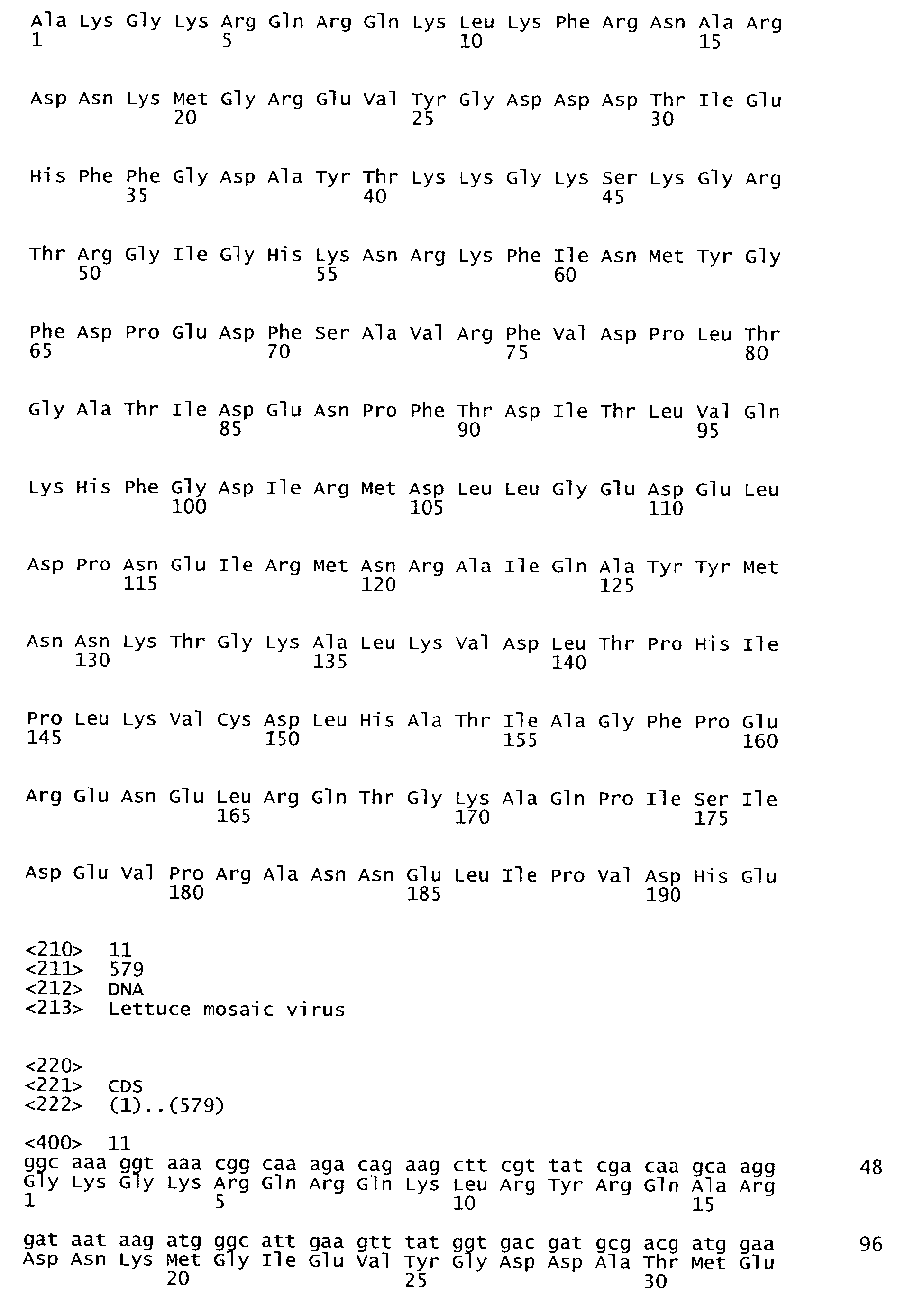
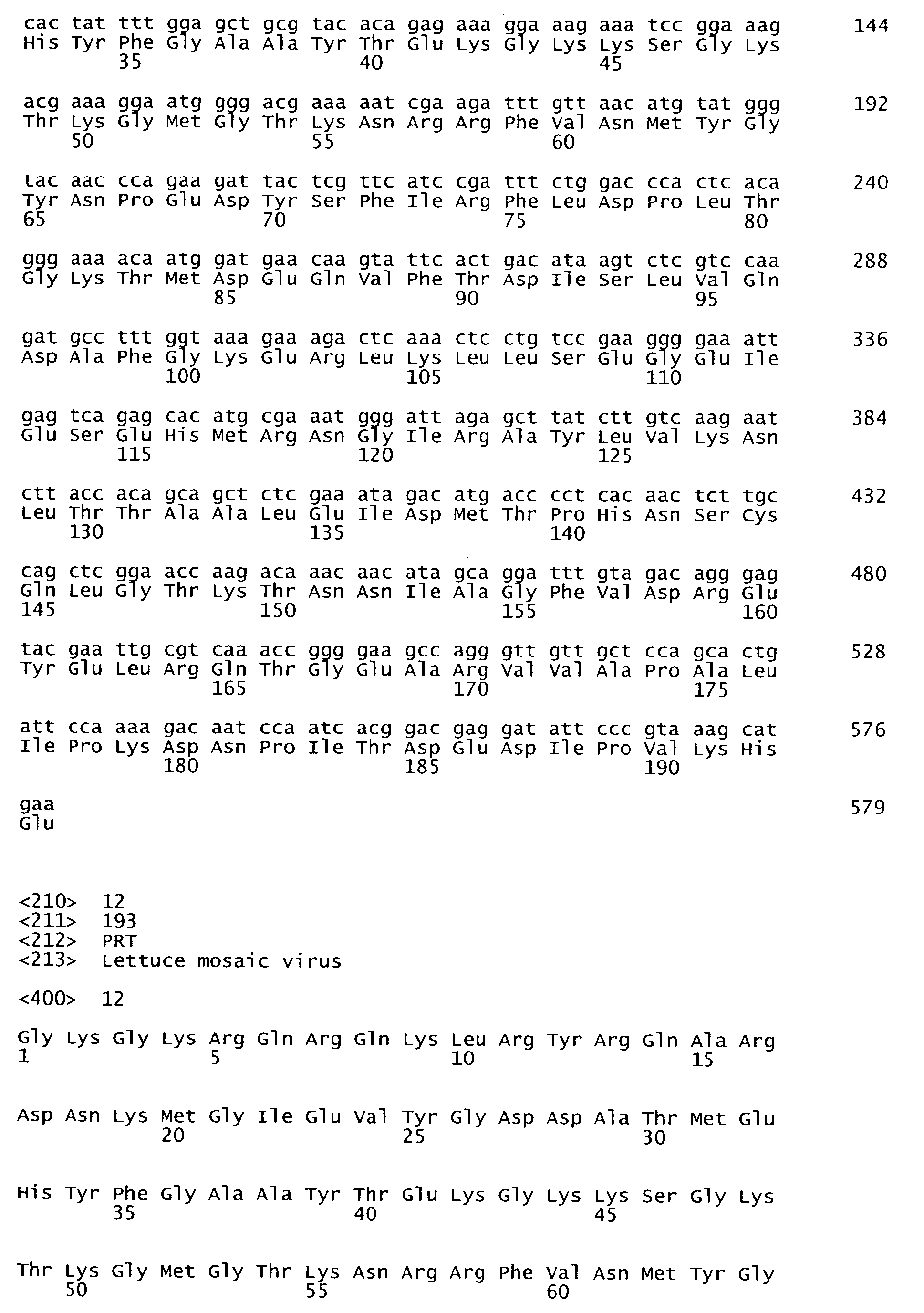


| Glycine | 75 |
| Alanine | 89 |
| Serine | 105 |
| Proline | 115 |
| Valine | 117 |
| Threonine | 119 |
| Cysteine | 121 |
| Leucine | 131 |
| Isoleucine | 131 |
| Asaparagine | 132 |
| Aspartic acid | 133 |
| Glutamine | 146 |
| Lysine | 146 |
| Glutamic acid | 147 |
| Methionine | 149 |
| Histidine (at pH 6.0) | 155 |
| Phenylalanine | 165 |
| Arginine | 174 |
| Tyrosine | 181 |
| Tryptophan | 204 |
Claims (20)
- An isolated and purified protein comprising or consisting of a VPg protein or a fragment thereof of at least 8 amino acids or an analog thereof:(i) having the ability to bind an eukaryotic initiation factor eIF4E, preferably a mammal initiation factor eIF4E and more preferably a human initiation factor eIF4E,(ii) said VPg protein, fragment thereof or analog thereof not comprising the amino acid motif YxxxxLØ, wherein x is any amino acid, Y is tyrosine (Tyr), L is leucine (Leu) and Ø is leucine (Leu), methionine (Met) or phenylalanine (Phe),as a medicament.
- The protein according to claim 1, characterized in that it consists of the VPg protein of SEQ ID NO: 2
- The protein according to claim 1, characterized in that it consists of a VPg protein analog exhibiting at least 20% sequence identity, or at least 45%, sequence similarity with the full-length of SEQ ID NO: 2.
- The protein according to claim 3, characterized in that said protein analog is selected from the group consisting of SEQ ID NO: 4, SEQ ID NO: 6, SEQ ID NO: 8, SEQ ID NO: 10 or SEQ ID NO: 12.
- A fragment of a protein according to any of claims 1 to 4, characterized in that it comprises or consists of at least 8 contiguous amino acids of said VPg proteins.
- The fragment of a protein according to claim 5, characterized in that said fragment is selected from the group consisting of SEQ ID NO: 14, SEQ ID NO: 16, SEQ ID NO: 18, SEQ ID NO: 20 or SEQ ID NO: 22.
- The fragment of a protein according to claim 6, characterized in it consists of an analog of the fragment defined by SEQ ID NO: 16, exhibiting at least 60% sequence identity, or at least 80%, sequence similarity with the full-length of SEQ ID NO: 16.
- The fragment of a protein according to claim 6, characterized in that it consists of an analog of the fragment defined by SEQ ID NO: 18, exhibiting at least 60% sequence identity, or at least 80%, sequence similarity with the full-length of SEQ ID NO: 18.
- The fragment of a protein according to claim 5, characterized in that the it comprises or consists of at least 8, 10, 15, 20, 25 or 26 contiguous amino acids of SEQ ID NO: 16.
- The protein, fragment thereof or analog thereof according to any of claims 1 to 9, as an anti-cancer agent.
- The protein, fragment thereof or analog thereof according to any of claims 1 to 9 for use in treating cancer, preferably glioma, melanoma or a colon cancer, in which the cancer cells express the initiation factor eIF4E.
- Use of a protein, fragment thereof or analog thereof according to any of claims 1 to 9 for the manufacture of a medicament for treating cancer, in which the initiation factor eIF4E is expressed.
- Method of screening for compounds which mimic the binding specificity of the VPg protein, preferably a VPg protein of SEQ ID NO: 2 with an isolated and purified initiation factor eIF4E of a subject, characterized in that it comprises the steps of i) contacting said eIF4E with a candidate compound and a protein, fragment thereof or analog thereof according to claims 1 to 9, and ii) detecting if the candidate compound inhibits the interaction between eIF4E and said protein, fragment thereof or analog thereof.
- Use of a recombinant vector expressing a nucleic acid encoding a protein, fragment thereof or analog thereof according to any of claims 1 to 9, for the preparation of a medicament for preventing or treating cancer.
- Use according to claim 14, characterized in that the nucleic acid is selected from the group consisting of SEQ ID NO: 1, 3, 5, 7, 9, 11, 13, 15, 17, 19 or 21.
- A pharmaceutical composition comprising a protein, fragment thereof or analog thereof according to any of claims 1 to 9 or a recombinant vector according to claim 14 or 15, and a pharmaceutically acceptable carrier.
- The composition according to claim 16, characterized in that the pharmaceutically acceptable carrier is a cationic lipid.
- The composition according to claims 16 or 17 for use in treating cancer, in which the initiation factor eIF4E is expressed.
- Host cell transfected to express a protein, fragment thereof or analog thereof according to any of claims 1 to 9.
- Use of an isolated and purified initiation factor eIF4E to screen compounds that mimic the binding specificity of the VPg protein of SEQ ID NO: 2 with said eIF4E.
Priority Applications (7)
| Application Number | Priority Date | Filing Date | Title |
|---|---|---|---|
| EP07290740A EP2003143A1 (en) | 2007-06-13 | 2007-06-13 | Cell-proliferation inhibiting VPg proteins, fragments or analogs thereof and their applications |
| JP2010511744A JP2010530743A (en) | 2007-06-13 | 2008-06-13 | Cell growth inhibiting VPg protein, fragments or analogs thereof, and applications thereof |
| PCT/IB2008/002594 WO2008152527A2 (en) | 2007-06-13 | 2008-06-13 | Cell-proliferation inhibiting vpg proteins, fragments or analogs thereof and their applications. |
| PL08807203T PL2170934T3 (en) | 2007-06-13 | 2008-06-13 | Cell-proliferation inhibiting vpg proteins or fragments thereof |
| US12/664,240 US8324150B2 (en) | 2007-06-13 | 2008-06-13 | Cell-proliferation inhibiting VPg proteins, fragments or analogs thereof and their applications |
| CA002692019A CA2692019A1 (en) | 2007-06-13 | 2008-06-13 | Cell-proliferation inhibiting vpg proteins, fragments or analogs thereof and their applications |
| EP08807203.8A EP2170934B1 (en) | 2007-06-13 | 2008-06-13 | Cell-proliferation inhibiting vpg proteins or fragments thereof |
Applications Claiming Priority (1)
| Application Number | Priority Date | Filing Date | Title |
|---|---|---|---|
| EP07290740A EP2003143A1 (en) | 2007-06-13 | 2007-06-13 | Cell-proliferation inhibiting VPg proteins, fragments or analogs thereof and their applications |
Publications (1)
| Publication Number | Publication Date |
|---|---|
| EP2003143A1 true EP2003143A1 (en) | 2008-12-17 |
Family
ID=38462497
Family Applications (2)
| Application Number | Title | Priority Date | Filing Date |
|---|---|---|---|
| EP07290740A Withdrawn EP2003143A1 (en) | 2007-06-13 | 2007-06-13 | Cell-proliferation inhibiting VPg proteins, fragments or analogs thereof and their applications |
| EP08807203.8A Not-in-force EP2170934B1 (en) | 2007-06-13 | 2008-06-13 | Cell-proliferation inhibiting vpg proteins or fragments thereof |
Family Applications After (1)
| Application Number | Title | Priority Date | Filing Date |
|---|---|---|---|
| EP08807203.8A Not-in-force EP2170934B1 (en) | 2007-06-13 | 2008-06-13 | Cell-proliferation inhibiting vpg proteins or fragments thereof |
Country Status (6)
| Country | Link |
|---|---|
| US (1) | US8324150B2 (en) |
| EP (2) | EP2003143A1 (en) |
| JP (1) | JP2010530743A (en) |
| CA (1) | CA2692019A1 (en) |
| PL (1) | PL2170934T3 (en) |
| WO (1) | WO2008152527A2 (en) |
Cited By (2)
| Publication number | Priority date | Publication date | Assignee | Title |
|---|---|---|---|---|
| CN103642805A (en) * | 2013-11-14 | 2014-03-19 | 北京农业生物技术研究中心 | High resistance TuMV RNA and RNAi carrier for coding RNA |
| CN115851820A (en) * | 2022-12-19 | 2023-03-28 | 内蒙古农业大学 | Application of tobacco vein mottle virus |
Citations (2)
| Publication number | Priority date | Publication date | Assignee | Title |
|---|---|---|---|---|
| US5589612A (en) * | 1992-07-09 | 1996-12-31 | Monsanto Company | Virus resistant plants transformed with a PVY protease gene |
| WO2001040490A2 (en) * | 1999-12-02 | 2001-06-07 | Institut National De La Recherche Scientifique | Eukaryotic initiation factor 4e inhibitors and their use as herbicides |
Family Cites Families (1)
| Publication number | Priority date | Publication date | Assignee | Title |
|---|---|---|---|---|
| AU2003299666A1 (en) * | 2002-12-17 | 2004-07-22 | Cornell Research Foundation, Inc. | RECESSIVE PLANT VIRAL RESISTANCE RESULTS FROM MUTATIONS IN TRANSLATION INITIATION FACTOR eIF4E |
-
2007
- 2007-06-13 EP EP07290740A patent/EP2003143A1/en not_active Withdrawn
-
2008
- 2008-06-13 WO PCT/IB2008/002594 patent/WO2008152527A2/en not_active Ceased
- 2008-06-13 PL PL08807203T patent/PL2170934T3/en unknown
- 2008-06-13 US US12/664,240 patent/US8324150B2/en not_active Expired - Fee Related
- 2008-06-13 CA CA002692019A patent/CA2692019A1/en not_active Abandoned
- 2008-06-13 JP JP2010511744A patent/JP2010530743A/en active Pending
- 2008-06-13 EP EP08807203.8A patent/EP2170934B1/en not_active Not-in-force
Patent Citations (2)
| Publication number | Priority date | Publication date | Assignee | Title |
|---|---|---|---|---|
| US5589612A (en) * | 1992-07-09 | 1996-12-31 | Monsanto Company | Virus resistant plants transformed with a PVY protease gene |
| WO2001040490A2 (en) * | 1999-12-02 | 2001-06-07 | Institut National De La Recherche Scientifique | Eukaryotic initiation factor 4e inhibitors and their use as herbicides |
Non-Patent Citations (3)
| Title |
|---|
| DATABASE EMBL/GENBANK/DDBJ 24 January 1994 (1994-01-24), WELNICKI, M.A. AND BAULCOMBE, D.C.: "Potato virus Y ; 6K2 gene", XP002450612, retrieved from EBI Database accession no. Z29526 * |
| DATABASE UNIPROTKB/TREMBL 1 November 1996 (1996-11-01), WELNICKI, M.A. AND BAULCOMBE, D.C.: "The nucleotide sequence of the central fragment of potato virus Y encoding 6K2 and vPg proteins", XP002450611, retrieved from EBI Database accession no. Q85258 * |
| GRZELA R ET AL: "Potyvirus terminal protein VPg, effector of host eukaryotic initiation factor eIF4E", BIOCHIMIE (PARIS), vol. 88, no. 7, July 2006 (2006-07-01), pages 887 - 896, XP005595433, ISSN: 0300-9084 * |
Cited By (3)
| Publication number | Priority date | Publication date | Assignee | Title |
|---|---|---|---|---|
| CN103642805A (en) * | 2013-11-14 | 2014-03-19 | 北京农业生物技术研究中心 | High resistance TuMV RNA and RNAi carrier for coding RNA |
| CN103642805B (en) * | 2013-11-14 | 2016-03-16 | 北京农业生物技术研究中心 | The RNA of a kind of high resistance TuMV and the RNAi carrier of this RNA of coding |
| CN115851820A (en) * | 2022-12-19 | 2023-03-28 | 内蒙古农业大学 | Application of tobacco vein mottle virus |
Also Published As
| Publication number | Publication date |
|---|---|
| CA2692019A1 (en) | 2008-12-18 |
| EP2170934A2 (en) | 2010-04-07 |
| US20100160234A1 (en) | 2010-06-24 |
| WO2008152527A3 (en) | 2009-06-25 |
| WO2008152527A2 (en) | 2008-12-18 |
| JP2010530743A (en) | 2010-09-16 |
| US8324150B2 (en) | 2012-12-04 |
| PL2170934T3 (en) | 2015-07-31 |
| EP2170934B1 (en) | 2015-01-21 |
Similar Documents
| Publication | Publication Date | Title |
|---|---|---|
| JP6740340B2 (en) | Oncolytic adenoviruses with mutations in immunodominant adenovirus epitopes and their use in cancer treatment | |
| US9260493B2 (en) | Transducible delivery of nucleic acids using modified dsRNA binding domains | |
| JP5911481B2 (en) | Anticancer fusion protein | |
| Liang et al. | Vimentin binding is critical for infection by the virulent strain of Japanese encephalitis virus | |
| CN105008535B (en) | Desmoglein 2 (DSG2) binding proteins and uses thereof | |
| CN107041146A (en) | Desmoglein 2 (DSG2) binding proteins and uses thereof | |
| US20150158914A1 (en) | Peptides, constructs and uses therefor | |
| MX2013012242A (en) | Anticancer fusion protein. | |
| EP2170934B1 (en) | Cell-proliferation inhibiting vpg proteins or fragments thereof | |
| US20070173443A1 (en) | C-Terminal P53 Palindromic Peptide That Induces Apoptosis Of Cells With Aberrant P53 And Uses Thereof | |
| JP5188400B2 (en) | Nonstructural fusion protein of hepatitis C virus | |
| ES2502966T3 (en) | Compositions and methods to inhibit viral adhesion | |
| Yan et al. | Mapping of the interacting domains of hepatitis C virus core protein and the double-stranded RNA-activated protein kinase PKR | |
| ES2700749T3 (en) | Use of a genetically modified infectious measles virus with enhanced proapoptotic properties (MV-deltaC virus) in cancer therapy | |
| CN105555796B (en) | Use of inhibitory peptides for the treatment of inflammatory diseases | |
| Hsieh et al. | Tumor regression by expression of high physiological levels of EBV latent membrane protein 1 | |
| Ebert | Targeted activation of the innate immune system and programmed cell death mechanisms as therapeutic approaches for the treatment of liver infections | |
| Franz et al. | DNA and protein interactions of the small subunit of herpes simplex virus type 1 DNA polymerase | |
| JP2022125115A (en) | exosome-targeted DNA vaccine | |
| KR20150130669A (en) | Pharmaceutical composition for prevention and treatment for Hepatitis C containing Abi1 expression or activity inhibitor | |
| WO2013045658A1 (en) | Immunotherapy composition and regimen for treating hepatitis c virus infection | |
| HK1130664B (en) | Hepatitis c virus non structural fusion protein | |
| HK1178908B (en) | Anticancer fusion protein | |
| WO2007121576A1 (en) | Methods of inducing apoptosis of cancerous cells using apoptin derivatives |
Legal Events
| Date | Code | Title | Description |
|---|---|---|---|
| PUAI | Public reference made under article 153(3) epc to a published international application that has entered the european phase |
Free format text: ORIGINAL CODE: 0009012 |
|
| AK | Designated contracting states |
Kind code of ref document: A1 Designated state(s): AT BE BG CH CY CZ DE DK EE ES FI FR GB GR HU IE IS IT LI LT LU LV MC MT NL PL PT RO SE SI SK TR |
|
| AX | Request for extension of the european patent |
Extension state: AL BA HR MK RS |
|
| AKX | Designation fees paid | ||
| REG | Reference to a national code |
Ref country code: DE Ref legal event code: 8566 |
|
| STAA | Information on the status of an ep patent application or granted ep patent |
Free format text: STATUS: THE APPLICATION IS DEEMED TO BE WITHDRAWN |
|
| 18D | Application deemed to be withdrawn |
Effective date: 20090618 |