EP2003888A2 - Verfahren zum Einstellen von Konfigurationen gemäß einem externen AV-Geräts oder Programminformation und Anzeigevorrichtung damit - Google Patents
Verfahren zum Einstellen von Konfigurationen gemäß einem externen AV-Geräts oder Programminformation und Anzeigevorrichtung damit Download PDFInfo
- Publication number
- EP2003888A2 EP2003888A2 EP08153593A EP08153593A EP2003888A2 EP 2003888 A2 EP2003888 A2 EP 2003888A2 EP 08153593 A EP08153593 A EP 08153593A EP 08153593 A EP08153593 A EP 08153593A EP 2003888 A2 EP2003888 A2 EP 2003888A2
- Authority
- EP
- European Patent Office
- Prior art keywords
- setting values
- configuration setting
- video
- display apparatus
- memory
- Prior art date
- Legal status (The legal status is an assumption and is not a legal conclusion. Google has not performed a legal analysis and makes no representation as to the accuracy of the status listed.)
- Withdrawn
Links
Images




Classifications
-
- H—ELECTRICITY
- H04—ELECTRIC COMMUNICATION TECHNIQUE
- H04N—PICTORIAL COMMUNICATION, e.g. TELEVISION
- H04N5/00—Details of television systems
- H04N5/44—Receiver circuitry for the reception of television signals according to analogue transmission standards
-
- H—ELECTRICITY
- H04—ELECTRIC COMMUNICATION TECHNIQUE
- H04N—PICTORIAL COMMUNICATION, e.g. TELEVISION
- H04N21/00—Selective content distribution, e.g. interactive television or video on demand [VOD]
- H04N21/40—Client devices specifically adapted for the reception of or interaction with content, e.g. set-top-box [STB]; Operations thereof
- H04N21/43—Processing of content or additional data, e.g. demultiplexing additional data from a digital video stream; Elementary client operations, e.g. monitoring of home network or synchronising decoder's clock; Client middleware
- H04N21/431—Generation of visual interfaces for content selection or interaction; Content or additional data rendering
- H04N21/4312—Generation of visual interfaces for content selection or interaction; Content or additional data rendering involving specific graphical features, e.g. screen layout, special fonts or colors, blinking icons, highlights or animations
-
- H—ELECTRICITY
- H04—ELECTRIC COMMUNICATION TECHNIQUE
- H04N—PICTORIAL COMMUNICATION, e.g. TELEVISION
- H04N21/00—Selective content distribution, e.g. interactive television or video on demand [VOD]
- H04N21/40—Client devices specifically adapted for the reception of or interaction with content, e.g. set-top-box [STB]; Operations thereof
- H04N21/43—Processing of content or additional data, e.g. demultiplexing additional data from a digital video stream; Elementary client operations, e.g. monitoring of home network or synchronising decoder's clock; Client middleware
- H04N21/431—Generation of visual interfaces for content selection or interaction; Content or additional data rendering
- H04N21/4312—Generation of visual interfaces for content selection or interaction; Content or additional data rendering involving specific graphical features, e.g. screen layout, special fonts or colors, blinking icons, highlights or animations
- H04N21/4314—Generation of visual interfaces for content selection or interaction; Content or additional data rendering involving specific graphical features, e.g. screen layout, special fonts or colors, blinking icons, highlights or animations for fitting data in a restricted space on the screen, e.g. EPG data in a rectangular grid
-
- H—ELECTRICITY
- H04—ELECTRIC COMMUNICATION TECHNIQUE
- H04N—PICTORIAL COMMUNICATION, e.g. TELEVISION
- H04N21/00—Selective content distribution, e.g. interactive television or video on demand [VOD]
- H04N21/40—Client devices specifically adapted for the reception of or interaction with content, e.g. set-top-box [STB]; Operations thereof
- H04N21/43—Processing of content or additional data, e.g. demultiplexing additional data from a digital video stream; Elementary client operations, e.g. monitoring of home network or synchronising decoder's clock; Client middleware
- H04N21/438—Interfacing the downstream path of the transmission network originating from a server, e.g. retrieving encoded video stream packets from an IP network
- H04N21/4383—Accessing a communication channel
-
- H—ELECTRICITY
- H04—ELECTRIC COMMUNICATION TECHNIQUE
- H04N—PICTORIAL COMMUNICATION, e.g. TELEVISION
- H04N21/00—Selective content distribution, e.g. interactive television or video on demand [VOD]
- H04N21/40—Client devices specifically adapted for the reception of or interaction with content, e.g. set-top-box [STB]; Operations thereof
- H04N21/43—Processing of content or additional data, e.g. demultiplexing additional data from a digital video stream; Elementary client operations, e.g. monitoring of home network or synchronising decoder's clock; Client middleware
- H04N21/442—Monitoring of processes or resources, e.g. detecting the failure of a recording device, monitoring the downstream bandwidth, the number of times a movie has been viewed, the storage space available from the internal hard disk
- H04N21/4424—Monitoring of the internal components or processes of the client device, e.g. CPU or memory load, processing speed, timer, counter or percentage of the hard disk space used
-
- H—ELECTRICITY
- H04—ELECTRIC COMMUNICATION TECHNIQUE
- H04N—PICTORIAL COMMUNICATION, e.g. TELEVISION
- H04N21/00—Selective content distribution, e.g. interactive television or video on demand [VOD]
- H04N21/40—Client devices specifically adapted for the reception of or interaction with content, e.g. set-top-box [STB]; Operations thereof
- H04N21/43—Processing of content or additional data, e.g. demultiplexing additional data from a digital video stream; Elementary client operations, e.g. monitoring of home network or synchronising decoder's clock; Client middleware
- H04N21/443—OS processes, e.g. booting an STB, implementing a Java virtual machine in an STB or power management in an STB
- H04N21/4432—Powering on the client, e.g. bootstrap loading using setup parameters being stored locally or received from the server
-
- H—ELECTRICITY
- H04—ELECTRIC COMMUNICATION TECHNIQUE
- H04N—PICTORIAL COMMUNICATION, e.g. TELEVISION
- H04N21/00—Selective content distribution, e.g. interactive television or video on demand [VOD]
- H04N21/40—Client devices specifically adapted for the reception of or interaction with content, e.g. set-top-box [STB]; Operations thereof
- H04N21/47—End-user applications
-
- H—ELECTRICITY
- H04—ELECTRIC COMMUNICATION TECHNIQUE
- H04N—PICTORIAL COMMUNICATION, e.g. TELEVISION
- H04N21/00—Selective content distribution, e.g. interactive television or video on demand [VOD]
- H04N21/40—Client devices specifically adapted for the reception of or interaction with content, e.g. set-top-box [STB]; Operations thereof
- H04N21/47—End-user applications
- H04N21/482—End-user interface for programme selection
-
- H—ELECTRICITY
- H04—ELECTRIC COMMUNICATION TECHNIQUE
- H04N—PICTORIAL COMMUNICATION, e.g. TELEVISION
- H04N21/00—Selective content distribution, e.g. interactive television or video on demand [VOD]
- H04N21/40—Client devices specifically adapted for the reception of or interaction with content, e.g. set-top-box [STB]; Operations thereof
- H04N21/47—End-user applications
- H04N21/485—End-user interface for client configuration
-
- H—ELECTRICITY
- H04—ELECTRIC COMMUNICATION TECHNIQUE
- H04N—PICTORIAL COMMUNICATION, e.g. TELEVISION
- H04N21/00—Selective content distribution, e.g. interactive television or video on demand [VOD]
- H04N21/40—Client devices specifically adapted for the reception of or interaction with content, e.g. set-top-box [STB]; Operations thereof
- H04N21/47—End-user applications
- H04N21/485—End-user interface for client configuration
- H04N21/4854—End-user interface for client configuration for modifying image parameters, e.g. image brightness, contrast
-
- H—ELECTRICITY
- H04—ELECTRIC COMMUNICATION TECHNIQUE
- H04N—PICTORIAL COMMUNICATION, e.g. TELEVISION
- H04N5/00—Details of television systems
- H04N5/44—Receiver circuitry for the reception of television signals according to analogue transmission standards
- H04N5/445—Receiver circuitry for the reception of television signals according to analogue transmission standards for displaying additional information
- H04N5/45—Picture in picture, e.g. displaying simultaneously another television channel in a region of the screen
-
- H—ELECTRICITY
- H04—ELECTRIC COMMUNICATION TECHNIQUE
- H04N—PICTORIAL COMMUNICATION, e.g. TELEVISION
- H04N7/00—Television systems
- H04N7/16—Analogue secrecy systems; Analogue subscription systems
- H04N7/162—Authorising the user terminal, e.g. by paying; Registering the use of a subscription channel, e.g. billing
- H04N7/163—Authorising the user terminal, e.g. by paying; Registering the use of a subscription channel, e.g. billing by receiver means only
-
- H—ELECTRICITY
- H04—ELECTRIC COMMUNICATION TECHNIQUE
- H04N—PICTORIAL COMMUNICATION, e.g. TELEVISION
- H04N17/00—Diagnosis, testing or measuring for television systems or their details
- H04N17/04—Diagnosis, testing or measuring for television systems or their details for receivers
- H04N17/045—Self-contained testing apparatus
-
- H—ELECTRICITY
- H04—ELECTRIC COMMUNICATION TECHNIQUE
- H04N—PICTORIAL COMMUNICATION, e.g. TELEVISION
- H04N5/00—Details of television systems
- H04N5/14—Picture signal circuitry for video frequency region
- H04N5/20—Circuitry for controlling amplitude response
Definitions
- Apparatuses and methods consistent with the present invention relate to broadcast receiving apparatus and a method for setting configurations thereof, and more particularly, to automatically setting configurations according to external device or program information.
- TV is one type of broadcast receiving apparatus. TV operates in connection with a variety of external devices.
- TV operates according to configurations either set at the factory, or set by a user after purchase.
- each external device has its own characteristics.
- a (Digital Versatile Disc) DVD player from A company may produce a relatively dark image
- a DVD player from a B company may produce a relatively loud sound.
- a user has to decrease brightness if he uses a DVD player of A company, or decrease sound volume if he uses a DVD player of B company.
- Such characteristics also vary according to broadcast programs. For example, a user may want to increase sound volume when he changes the program from a soap opera to a music program.
- Exemplary embodiments of the present invention overcome the above disadvantages and other disadvantages not described above. Also, the present invention is not required to overcome the disadvantages described above, and an exemplary embodiment of the present invention may not overcome any of the problems described above.
- the present invention provides a broadcast receiving apparatus and a configuration setting method thereof, which is capable of setting configurations automatically according to device or program information, and enabling a user to set configurations more intuitively.
- a method for setting configurations including checking device information of an active audio/visual (AV) device, reading configuration setting values corresponding to the device information from a memory, and changing configurations of a display apparatus according to the configuration setting values.
- AV active audio/visual
- the method may further include adjusting the configuration setting values corresponding to the external AV device, and storing the device information and the adjusted configuration setting values corresponding to the external AV device to the memory.
- the adjusting may include splitting a display screen into at least two subscreens, and displaying a before video, corresponding to a video before adjustments to the configuration setting values, on a first subscreen of the at least two subscreens and displaying an after video, corresponding to a video after adjustments to the configuration setting values, on a second subscreen of the at least two subscreens.
- the adjusting may include returning to the configuration setting values without the adjustment, in response to a cancel command received from a user.
- the changing may include changing to a predefined configuration setting value if there are no corresponding configuration setting values.
- the configuration setting values may include one of screen brightness, contrast, color, sharpness, volume, and aspect ratio.
- the display apparatus may be a television (TV).
- TV television
- the display apparatus and the AV device may be connected with each other in compliance with High-Definition Multimedia Interface - Consumer Electronics Control (HDMI-CEC) standard.
- HDMI-CEC High-Definition Multimedia Interface - Consumer Electronics Control
- a display apparatus including an interface connected with an audio/visual device for communication, a memory which stores device information and configuration setting values therein, and a control unit which controls receiving of device information from an active external AV device, reading of configuration setting values corresponding to the device information from the memory, and changing of output configurations of the display apparatus according to the configuration setting values.
- the control unit may adjust configuration setting values corresponding to the external AV device, and store the device information and the adjusted configuration setting values of the external AV device to the memory.
- the control unit may control a TV function block to split a display screen into at least two subscreens, and display a before video, corresponding to a video before adjustments to the configuration setting values, on a first subscreen of the at least two subscreens and display an after video, corresponding to a video after adjustments to the configuration setting values, on a second subscreen of the at least two subscreens.
- the control unit may control the TV function block to return to the unadjusted configuration setting values in response to a cancel command from a user.
- the control unit may change according to a predefined configuration setting value if there is no corresponding configuration setting values.
- the set values may include one of screen brightness, contrast, color, sharpness, volume, and aspect ratio.
- the display apparatus and the AV device may be connected with each other in compliance with HDMI-CEC standard.
- a method for setting configurations including checking program information of an output program, reading out configuration setting values corresponding to the program information from a memory, and changing output configurations of a display according to the configuration setting values.
- the method may further include adjusting the configuration setting values of the program, and storing the program information and the adjusted configuration setting values to the memory.
- the adjusting may include splitting a display screen into at least two subscreens, and displaying a before video, corresponding to a video before adjustments to the configuration setting values, on a first subscreen of the at least two subscreens and displaying an after video, corresponding to a video after adjustments to the configuration setting values, on a second subscreen of the at least two subscreens.
- a display apparatus including a memory which stores program information and configuration setting values, and a control unit which controls checking of program information of an output program, reading of configuration setting values corresponding to the program information from a memory, and changing output configurations of a display apparatus according to the configuration setting values.
- the control unit may adjust the configuration setting values of the program and store the program information and the adjusted configuration setting values to the memory.
- the control unit may split a display screen into at least two subscreens, and display a before video, corresponding to a video before adjustments to the configuration setting values, on a first subscreen of the at least two subscreens and display an after video, corresponding to a video after adjustments to the configuration setting values, on a second subscreen of the at least two subscreens.
- a display apparatus including an interface connected with an audio/visual (AV) device for communication, a memory which stores device information and configuration setting values, a switching unit which changes a video output path, and a control unit which controls receiving of device information of an active external AV device through the interface, reading of configuration setting values corresponding to the device information from the memory, and changing of the video output path according to the configuration setting values.
- AV audio/visual
- the video output path may include a first path that includes a video quality compensation process, and a second path that excludes the video quality compensation process.
- the control unit may change the video output path to first or second path according to the configuration setting values.
- the external AV device may include a game player, and the control unit may change the video output path to the second path.
- FIG. 1 illustrates an audio/visual (AV) system according to an exemplary embodiment of the present invention.
- an AV system may include a TV 110, a first AV device 120, a second AV device 130, and a third AV device 140, with all the devices being connected for mutual communication.
- the first to third AV devices 120, 130, 140 provide the TV 110 with a broadcast program through a cable that conforms to the HDMI-CEC interface standard.
- the first AV device 120 is connected with the TV 110 as an external input 1
- the second AV device 130 is connected as an external input 2
- a third AV device 140 is connected as an external input 3. Accordingly, a user determines an output source for the TV 110 by selecting one from among the external inputs 1 to 3.
- the first AV device 120 is the active source to provide the TV 110 with video and sound to output.
- the second AV device 130 is the active source to provide the TV 110 with video and sound to output.
- the TV 110 will output video and sound provide from the third AV device 140 if external input 3 is selected.
- FIG. 2 is a detailed block diagram of the TV 110 illustrated in FIG. 1 .
- the TV 110 may include a function block 210, an interface unit 220, a TV control unit 230, a memory 240, and an input unit 250.
- the function block 210 performs functions such as output and other additional functions under the control of the TV control unit 230 which will be explained in detail below.
- the function block 210 may include a broadcast receiving unit 212, a broadcast processing unit 214, and a broadcast output unit 216.
- the broadcast receiving unit 212 receives a broadcast program from the first, second and third AV devices 120, 130, 140 and decodes the received program.
- the broadcast processing unit 214 performs video signal processing of a broadcast program received at the broadcast receiving unit 212 or an image coming in through the interface unit 220 through video decoding, scaling, brightness adjustment, sharpness adjustment, or contrast adjustment, and also performs audio signal processing such as audio decoding, left/right balance adjustment, stereo setting, or equalizer adjustment.
- the broadcast output unit 216 displays an image output from the broadcast processing unit 214 on a video output element such as a display, while outputting an audio through an audio output element such as a speaker.
- the interface unit 220 is connected to the external first, second and third AV devices 120, 130, 140 for communication.
- the input unit 250 receives an externally input user selection through a front manipulation button or a remote controller (not illustrated), or receives a command for other broadcast manipulations.
- the memory unit 240 stores TV configuration set values.
- the configuration set values may vary by device model, or even by broadcast program genre.
- FIGS. 3A and 3B tabulated form of configuration set values according to the device models and program genre, which are stored at the memory unit 240.
- the configuration set values may include adjustments of black/white contrast, brightness, color, sharpness, and volume.
- the TV control unit 230 controls the operation of the function block 210, including reception at the broadcast receiving unit 212, processing at the broadcast processing unit 214, and outputting at the broadcast output unit 216.
- the configurations for operation of the function block 210 are set according to the configuration set values stored at the memory 240.
- the control operation of the TV control unit 230 will be explained below in greater detail with reference to FIG. 4 .
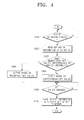
- FIG. 4 is a flowchart provided to explain a method for setting configurations of a TV according to an AV device according to an exemplary embodiment of the present invention.
- the TV control unit 230 determines whether an active source has changed.
- an active source It is determined that an active source has changed, if an externally connected AV device is attempting an operation, or if video and audio sources being received at the TV have changed.
- the active source is determined to have changed, if a user newly connects external devices such as DVD player, or selects previously connected AV devices such as DVD player as an external input using a remote controller or a front button.
- the first AV device 120 is the active source if a user selects external input 1 upon turning on TV.
- the TV control unit 230 reads out device information of the first AV device 120, that is, the active AV device.
- Reading out device information may be implemented in a variety of manners, and one of these methods will be explained below as an example.
- the TV control unit 230 may first extract manufacture information and device model of the first AV device 120 through the interface unit 220, and then acquire device information by combining the extracted information. For example, if manufacturer A of the first AV device 120 is company A, and if the first AV device is a DVD player, the device information of the first AV device 120 may read "company A_DVD.”
- the TV control unit 230 searches the set values of the memory unit 240 to find the set values corresponding to the device information.
- FIG. 3A particularly illustrates set values of the memory unit 240 that correspond to the device information.
- the TV control unit 230 controls the operation of the function block 210, including in particular, broadcast reception at the broadcast receiving unit 212, processing at the broadcast processing unit 214, and outputting at the broadcast output unit 216.
- black/white contrast is adjusted to 64, brightness to 32, color to 32, and sharpness to 45, and sound volume is adjusted to 20.
- the video and audio are then output from the active source accordingly.
- the TV control unit 230 outputs preset configuration set values and controls operational configuration of the function block 210.
- the preset configuration set values may be set at the factory by the manufacturer of TV 110, or set as a user desires.
- Changing screen settings may implement a generally adopted way in which changed values are directly applied to the current screen, as such adjustments are made regarding factors such as white/black contrast or brightness.
- an exemplary embodiment of the present invention may desirably adopt a method which will be explained in detail below.
- FIGS. 6A and 6B illustrate a method for changing set values according to an exemplary embodiment of the present invention.
- FIG. 6A illustrates a screen divided in half, displaying a video from the TV 110 on a left half, and a video from an active external device on a right half.
- FIG. 6B illustrates a screen which is also divided in half, displaying the same video on both left and right halves, in which a video in the left half is output through the TV 110 and a video in the right half being output through an external device.
- screen is divided into left and right halves, so that the left half of the screen displays adjustment-applied video and the right half of the screen displays the video before the adjustment.
- the TV control unit 230 controls the function block 210 to increase brightness 10 and output a resultant video.
- the TV control unit 230 sends out a control signal to the active external device through the interface unit 220 to decrease the brightness by 10 degrees and output a resultant video.
- the left half of the screen outputs a video as adjusted by a user
- the right half outputs a video before the adjustment.
- a user can recognize the differences between videos before and after adjustments easily, and thus can adjust screen settings in a more intuitive and easier way.
- the user may return to the previous video, if he does not like the video applying the user-setting adjustments.
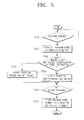
- FIG. 5 is a flowchart provided to explain a method for setting configurations of TV according to program information according to an exemplary embodiment of the present invention.
- the TV control unit 230 determines whether a program has changed.
- a program has changed if different video or audio is received at a TV. For example, a program may be determined to have changed, if a user has just turned on TV or changed channel.
- the TV control unit 230 reads out genre information of a changed program.
- Reading the genre information may be implemented in a variety of methods, but genre information may desirably be read through an electronic program guide (EPG).
- EPG electronic program guide
- the TV control unit 230 searches the memory unit 240 for set values that correspond to the genre information.
- FIG. 3B tabulates configuration set values stored to the memory unit 240 in connection with the genre information.
- the TV control unit 230 controls the configurations for operation of the function block 210, including the reception of the broadcast receiving unit 212, processing of the broadcast processing unit 214, and outputting of the broadcast output unit 216 so that an output from an active source has a video having black/white contrast of 64, brightness of 32, color of 32, and sharpness of 45, and an audio has sound volume of 20.
- the TV control unit 230 outputs preset configuration set values and controls operational configurations of the function block 210.
- the preset configuration set values may be set at the factory by a manufacturer of TV 110, or set by a user as he desires.
- updated screen set values are automatically stored to a memory upon being changed according to the above exemplary embodiments of the present invention, alternatively, the updated set values may controlled to be stored to the memory only upon receiving an approval from a user.
- configuration set values implement black/white contrast, brightness, color, sharpness and sound volume, these are used only for the exemplary purpose and should not be construed as limiting.
- the technical concept of the present invention may well be applied to when part of the above configuration set values is used, or when other set values such as aspect ratio, language, producing country are additionally used.
- each broadcast program may have configuration set value, or configuration set values may apply differently according to attributes other than program genre.
- display apparatuses other than the TV exemplified above may also be applied, if the display apparatuses can display video thereon. These may include monitor, personal multimedia player (PMP), or the like.
- PMP personal multimedia player
- DVD player was embodied as a device to provide audio and video information to TV, this is one of examples and therefore, should not be understood as limiting.
- the technical concept of the present invention may equally be applied to cases where other types of AV devices, such as game player or settop box, are connected.
- TV and AV devices are connected according to HDMI-CEC standard, this is one of examples, and other alternatives are possible.
- the TV and AV device may be connected through an interface which is capable of transmitting control signals.
- the display apparatus includes an interface 710, a memory 730, and a control unit 720.
- the interface 710 is connected with an AV device for communication.
- the memory 730 stores device information and set values.
- the control unit 720 controls reception of device information from an external active AV device, reading set values corresponding to the device information from the memory 730, and changing output configurations of the display apparatus according to the read set values.
- a display apparatus checks device information of an external active AV device.
- the display apparatus reads out set values corresponding to the device information from the memory 730, and at operation S830, changes output configurations according to the set values.
- the display apparatus includes a memory 910 and a control unit 920.
- the memory 910 stores program information and set values.
- the control unit 920 controls checking of program information of a program being output, reading of set values corresponding to program information from the memory 910, and changing of output configurations of the display apparatus according to the set values.
- a display apparatus checks program information of a program being output.
- the display apparatus reads out set values corresponding to the program information from the memory 910, and at operation S1030, changes output configurations of the display apparatus according to the set values.
- configurations may be set automatically, according to device or program information.
- FIGS. 11 and 12 an example where a game player is connected with a display apparatus will be explained below.
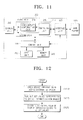
- FIG. 11 is a block diagram of a display apparatus which is connected with a game player 1100 according to another exemplary embodiment of the present invention.
- the game player 1100 is connected with a TV 110 employed as a display apparatus.
- the display unit 260 displays a video output from the function block 210 on a screen.
- the switching unit 219 switches a video signal input to the interface unit 220 so that the signal is transmitted to first or second path.
- the function block 210 includes a video quality compensation chip 218 which improves video quality through the adjustments of color, brightness or the like.
- the video quality compensation chip 218 takes somewhat longer period of time and causes delays in the output of video and subsequent failure of synchronization between video and audio.
- the game player 1100 in particular, would be affected by the delay of image output severely.
- users generally do not demand high video quality for a game player.
- the game player 1100 may not adopt the video quality compensation chip 218 to avoid the delay of video output.
- the TV 110 may output video through the first path that includes the video quality compensation chip 218 to display video from AV devices except a game player 1100.
- the TV 110 may then output video through the second path that excludes the video quality compensation chip 218 to display video from the game player 1100.
- a "game mode" may be set and stored in the memory 240 in association with a connection with the game player 1100, to thus cause the second path to be selected as a path to output video.
- game player 1100 is described as an example of an external AV device in the exemplary embodiment explained above, other AV devices may equally be implemented.
- a video output path includes or excludes the video quality compensation chip 218 in the exemplary embodiment explained above, one will understand that other video output paths are also possible.
- FIG. 12 is a flowchart a flowchart provided to explain the process of changing an image output path upon connecting to a game player device, according to yet another exemplary embodiment of the present invention.
- the display apparatus checks device information of an active external A/V device.
- the TV control unit 230 may check whether or not the active external device is the game player 1100.
- the display apparatus reads out set values that correspond to the device information.
- the TV control unit 230 may read out "game mode" as a set value that corresponds to the game player 1100.
- the set value of "game mode” may include the information that indicates that the second path is taken as a path to output video.
- the display apparatus changes video output path according to the set value.
- the TV control unit 230 may control the switching unit 219 to change the video output path to the second path according to the set value of "game mode.” As a result, video signal is output to the display unit 260 through the second path.
- configuration set values are set automatically, according to device or program information.
- a user of a broadcast receiving apparatus is freed from inconvenience of having to find and set the configurations suitable for an AV device or a program by himself.
- the user is enabled to compare the screen before and after the configurations change, and therefore, more intuitive manipulation is provided in changing or canceling the settings.
- delay of video output in a game play mode can be prevented, because the video signal is sent directly, instead of being transmitted via a video quality compensation chip.
Landscapes
- Engineering & Computer Science (AREA)
- Multimedia (AREA)
- Signal Processing (AREA)
- Human Computer Interaction (AREA)
- Computer Networks & Wireless Communication (AREA)
- Databases & Information Systems (AREA)
- Computer Security & Cryptography (AREA)
- General Engineering & Computer Science (AREA)
- Software Systems (AREA)
- Two-Way Televisions, Distribution Of Moving Picture Or The Like (AREA)
- Controls And Circuits For Display Device (AREA)
- Television Receiver Circuits (AREA)
Applications Claiming Priority (1)
| Application Number | Priority Date | Filing Date | Title |
|---|---|---|---|
| KR1020070058394A KR20080110079A (ko) | 2007-06-14 | 2007-06-14 | 외부 av 기기 정보 또는 프로그램 정보에 따라 환경을설정하는 환경설정방법 및 디스플레이 장치 |
Publications (2)
| Publication Number | Publication Date |
|---|---|
| EP2003888A2 true EP2003888A2 (de) | 2008-12-17 |
| EP2003888A3 EP2003888A3 (de) | 2010-10-20 |
Family
ID=39768674
Family Applications (1)
| Application Number | Title | Priority Date | Filing Date |
|---|---|---|---|
| EP08153593A Withdrawn EP2003888A3 (de) | 2007-06-14 | 2008-03-28 | Verfahren zum Einstellen von Konfigurationen gemäß einem externen AV-Geräts oder Programminformation und Anzeigevorrichtung damit |
Country Status (3)
| Country | Link |
|---|---|
| US (1) | US20080309822A1 (de) |
| EP (1) | EP2003888A3 (de) |
| KR (1) | KR20080110079A (de) |
Cited By (3)
| Publication number | Priority date | Publication date | Assignee | Title |
|---|---|---|---|---|
| WO2012089473A1 (en) * | 2010-12-29 | 2012-07-05 | Arcelik Anonim Sirketi | A display device that can receive image from an external source |
| WO2011055278A3 (en) * | 2009-11-06 | 2012-11-29 | Koninklijke Philips Electronics N.V. | A method and apparatus for rendering a multimedia item with a plurality of modalities |
| WO2015037864A1 (en) | 2013-09-12 | 2015-03-19 | Samsung Electronics Co., Ltd. | Electronic device and control method thereof |
Families Citing this family (10)
| Publication number | Priority date | Publication date | Assignee | Title |
|---|---|---|---|---|
| JP5444797B2 (ja) * | 2009-04-10 | 2014-03-19 | ソニー株式会社 | 送信装置、表示装置および画像表示システム |
| JP5972013B2 (ja) * | 2011-06-30 | 2016-08-17 | キヤノン株式会社 | 表示装置及びその制御方法 |
| EP2611206A3 (de) * | 2011-12-27 | 2014-01-22 | Samsung Electronics Co., Ltd. | Anzeigevorrichtung und zugehöriges Steuerungsverfahren |
| KR101450819B1 (ko) * | 2012-06-08 | 2014-10-14 | 디지털시스 주식회사 | 보조 디스플레이 장치의 화면 출력 설정 자동 구성장치 |
| US8990446B2 (en) * | 2012-10-04 | 2015-03-24 | Sony Computer Entertainment America, LLC | Method and apparatus for decreasing presentation latency |
| KR102344021B1 (ko) * | 2015-12-23 | 2021-12-28 | 삼성전자주식회사 | 디바이스를 제어하는 방법 및 장치 |
| KR102438199B1 (ko) * | 2015-12-24 | 2022-08-30 | 삼성전자주식회사 | 디스플레이 장치 및 디스플레이 장치의 설정 값을 변경하는 방법 |
| CN107783433B (zh) * | 2016-08-30 | 2020-06-05 | 中国电信股份有限公司 | 一种物联网终端控制方法、装置以及物联网系统 |
| US10867603B2 (en) * | 2018-10-24 | 2020-12-15 | Sony Corporation | Audio-video reproduction device setup using interview-based voice control |
| CN115499711A (zh) * | 2021-06-18 | 2022-12-20 | 明基智能科技(上海)有限公司 | 模式切换方法及显示设备 |
Citations (1)
| Publication number | Priority date | Publication date | Assignee | Title |
|---|---|---|---|---|
| US20050264705A1 (en) | 2004-05-31 | 2005-12-01 | Kabushiki Kaisha Toshiba | Broadcast receiving apparatus and method having volume control |
Family Cites Families (10)
| Publication number | Priority date | Publication date | Assignee | Title |
|---|---|---|---|---|
| KR19980076752A (ko) * | 1997-04-14 | 1998-11-16 | 윤종용 | 화면 및 음향을 자동으로 전환하기 위한 방송 신호 수신 방법 및 수신 장치 |
| JP2001326875A (ja) * | 2000-05-16 | 2001-11-22 | Sony Corp | 画像処理装置および画像処理方法、並びに記録媒体 |
| US20050120383A1 (en) * | 2003-12-02 | 2005-06-02 | Ozaki Arthur H. | System for saving settings of an audiovisual system |
| US7391809B2 (en) * | 2003-12-30 | 2008-06-24 | Microsoft Corporation | Scalable video transcoding |
| JP4491715B2 (ja) * | 2004-06-22 | 2010-06-30 | ソニー株式会社 | 画質調整装置 |
| KR100819736B1 (ko) * | 2004-12-21 | 2008-04-07 | 삼성전자주식회사 | 영상신호처리회로 및 이를 포함하는 디스플레이장치 |
| US20060242669A1 (en) * | 2005-04-20 | 2006-10-26 | Jupiter Systems | Display node for use in an audiovisual signal routing and distribution system |
| JP4670494B2 (ja) * | 2005-06-13 | 2011-04-13 | 株式会社日立製作所 | 表示装置及び表示画質設定方法 |
| KR100704665B1 (ko) * | 2005-06-20 | 2007-04-09 | 삼성전자주식회사 | 디스플레이장치 및 그 제어방법 |
| US8607144B2 (en) * | 2007-01-08 | 2013-12-10 | Apple Inc. | Monitor configuration for media device |
-
2007
- 2007-06-14 KR KR1020070058394A patent/KR20080110079A/ko not_active Ceased
-
2008
- 2008-01-17 US US12/015,611 patent/US20080309822A1/en not_active Abandoned
- 2008-03-28 EP EP08153593A patent/EP2003888A3/de not_active Withdrawn
Patent Citations (1)
| Publication number | Priority date | Publication date | Assignee | Title |
|---|---|---|---|---|
| US20050264705A1 (en) | 2004-05-31 | 2005-12-01 | Kabushiki Kaisha Toshiba | Broadcast receiving apparatus and method having volume control |
Cited By (5)
| Publication number | Priority date | Publication date | Assignee | Title |
|---|---|---|---|---|
| WO2011055278A3 (en) * | 2009-11-06 | 2012-11-29 | Koninklijke Philips Electronics N.V. | A method and apparatus for rendering a multimedia item with a plurality of modalities |
| CN103026703A (zh) * | 2009-11-06 | 2013-04-03 | Tp视觉控股有限公司 | 一种用于利用多个模态呈现多媒体项的方法和装置 |
| WO2012089473A1 (en) * | 2010-12-29 | 2012-07-05 | Arcelik Anonim Sirketi | A display device that can receive image from an external source |
| WO2015037864A1 (en) | 2013-09-12 | 2015-03-19 | Samsung Electronics Co., Ltd. | Electronic device and control method thereof |
| EP3028470A4 (de) * | 2013-09-12 | 2017-03-08 | Samsung Electronics Co., Ltd. | Elektronische vorrichtung und steuerungsverfahren dafür |
Also Published As
| Publication number | Publication date |
|---|---|
| EP2003888A3 (de) | 2010-10-20 |
| US20080309822A1 (en) | 2008-12-18 |
| KR20080110079A (ko) | 2008-12-18 |
Similar Documents
| Publication | Publication Date | Title |
|---|---|---|
| EP2003888A2 (de) | Verfahren zum Einstellen von Konfigurationen gemäß einem externen AV-Geräts oder Programminformation und Anzeigevorrichtung damit | |
| CN100568936C (zh) | 影像声音输出装置以及外部扬声器控制装置 | |
| US9055265B2 (en) | Accessibility improvement for hearing impaired | |
| US20090249420A1 (en) | Method for configuring video apparatus according to video system and content, and video apparatus and server applying the same | |
| WO2021042655A1 (zh) | 一种音画同步处理方法及显示设备 | |
| US9473818B2 (en) | Television receiver, method of controlling the receiver, and network construction device | |
| WO2011118838A1 (ja) | 表示装置、制御装置、テレビジョン受像機、表示装置の制御方法、プログラム及び記録媒体 | |
| US20100053471A1 (en) | Television apparatus and method for controlling the same | |
| KR101358325B1 (ko) | 외부로부터 수신된 환경 설정 값에 따라 환경을 설정하는방송수신장치 및 그의 환경설정방법 | |
| JP2009027601A (ja) | 表示システム | |
| US11962865B2 (en) | Display apparatus and process method for display apparatus | |
| JP2009094610A (ja) | テレビジョン受信機及びテレビゲームシステム | |
| KR20110056391A (ko) | 텔레비전 통합 서라운드 사운드 시스템에 대한 시스템 및 방법 | |
| KR20080065336A (ko) | Hdmi-cec 기능을 구비한 영상표시기기 및 그제어방법 | |
| JP5506239B2 (ja) | 映像処理装置、制御方法及びプログラム | |
| US20090201422A1 (en) | Automatic input change based on remote control mode change | |
| US20050280744A1 (en) | Broadcast receiving apparatus having combined mode set-up function and method thereof | |
| JP2004032226A (ja) | 音量調整装置と該装置を備えたテレビジョン受像装置 | |
| KR101067775B1 (ko) | 티브이의 우퍼 제어장치 및 방법 | |
| KR20050057729A (ko) | Pip모드시 주화면과 부화면의 개별 제어방법 | |
| KR100731386B1 (ko) | 화질 조정 장치 및 방법 | |
| JP2011075990A (ja) | 映像表示装置 | |
| JP2014143724A (ja) | 映像信号処理装置 | |
| KR20050062201A (ko) | 방송 수신기의 프로그램 장르별 영상 및 음성 자동 설정방법 | |
| KR20090017121A (ko) | 시청환경 설정 장치 및 방법 |
Legal Events
| Date | Code | Title | Description |
|---|---|---|---|
| PUAI | Public reference made under article 153(3) epc to a published international application that has entered the european phase |
Free format text: ORIGINAL CODE: 0009012 |
|
| AK | Designated contracting states |
Kind code of ref document: A2 Designated state(s): AT BE BG CH CY CZ DE DK EE ES FI FR GB GR HR HU IE IS IT LI LT LU LV MC MT NL NO PL PT RO SE SI SK TR |
|
| AX | Request for extension of the european patent |
Extension state: AL BA MK RS |
|
| PUAL | Search report despatched |
Free format text: ORIGINAL CODE: 0009013 |
|
| AK | Designated contracting states |
Kind code of ref document: A3 Designated state(s): AT BE BG CH CY CZ DE DK EE ES FI FR GB GR HR HU IE IS IT LI LT LU LV MC MT NL NO PL PT RO SE SI SK TR |
|
| AX | Request for extension of the european patent |
Extension state: AL BA MK RS |
|
| 17P | Request for examination filed |
Effective date: 20110420 |
|
| AKX | Designation fees paid |
Designated state(s): DE GB NL |
|
| RAP1 | Party data changed (applicant data changed or rights of an application transferred) |
Owner name: SAMSUNG ELECTRONICS CO., LTD. |
|
| 17Q | First examination report despatched |
Effective date: 20130305 |
|
| STAA | Information on the status of an ep patent application or granted ep patent |
Free format text: STATUS: THE APPLICATION IS DEEMED TO BE WITHDRAWN |
|
| 18D | Application deemed to be withdrawn |
Effective date: 20130716 |