EP2005996A2 - Immunotherapeutic combination for the treatment of tumors - Google Patents
Immunotherapeutic combination for the treatment of tumors Download PDFInfo
- Publication number
- EP2005996A2 EP2005996A2 EP08161862A EP08161862A EP2005996A2 EP 2005996 A2 EP2005996 A2 EP 2005996A2 EP 08161862 A EP08161862 A EP 08161862A EP 08161862 A EP08161862 A EP 08161862A EP 2005996 A2 EP2005996 A2 EP 2005996A2
- Authority
- EP
- European Patent Office
- Prior art keywords
- egf
- receptor
- rtk
- vaccine
- treatment
- Prior art date
- Legal status (The legal status is an assumption and is not a legal conclusion. Google has not performed a legal analysis and makes no representation as to the accuracy of the status listed.)
- Withdrawn
Links
Images



Classifications
-
- A—HUMAN NECESSITIES
- A61—MEDICAL OR VETERINARY SCIENCE; HYGIENE
- A61K—PREPARATIONS FOR MEDICAL, DENTAL OR TOILETRY PURPOSES
- A61K39/00—Medicinal preparations containing antigens or antibodies
- A61K39/395—Antibodies; Immunoglobulins; Immune serum, e.g. antilymphocytic serum
-
- A—HUMAN NECESSITIES
- A61—MEDICAL OR VETERINARY SCIENCE; HYGIENE
- A61K—PREPARATIONS FOR MEDICAL, DENTAL OR TOILETRY PURPOSES
- A61K39/00—Medicinal preparations containing antigens or antibodies
- A61K39/0005—Vertebrate antigens
- A61K39/0011—Cancer antigens
- A61K39/001102—Receptors, cell surface antigens or cell surface determinants
-
- A—HUMAN NECESSITIES
- A61—MEDICAL OR VETERINARY SCIENCE; HYGIENE
- A61K—PREPARATIONS FOR MEDICAL, DENTAL OR TOILETRY PURPOSES
- A61K39/00—Medicinal preparations containing antigens or antibodies
- A61K39/0005—Vertebrate antigens
- A61K39/0011—Cancer antigens
- A61K39/001102—Receptors, cell surface antigens or cell surface determinants
- A61K39/001103—Receptors for growth factors
- A61K39/001104—Epidermal growth factor receptors [EGFR]
-
- A—HUMAN NECESSITIES
- A61—MEDICAL OR VETERINARY SCIENCE; HYGIENE
- A61K—PREPARATIONS FOR MEDICAL, DENTAL OR TOILETRY PURPOSES
- A61K39/00—Medicinal preparations containing antigens or antibodies
- A61K39/0005—Vertebrate antigens
- A61K39/0011—Cancer antigens
- A61K39/00113—Growth factors
- A61K39/001131—Epidermal growth factor [EGF]
-
- A—HUMAN NECESSITIES
- A61—MEDICAL OR VETERINARY SCIENCE; HYGIENE
- A61K—PREPARATIONS FOR MEDICAL, DENTAL OR TOILETRY PURPOSES
- A61K39/00—Medicinal preparations containing antigens or antibodies
- A61K39/0005—Vertebrate antigens
- A61K39/0011—Cancer antigens
- A61K39/00113—Growth factors
- A61K39/001134—Transforming growth factor [TGF]
-
- A—HUMAN NECESSITIES
- A61—MEDICAL OR VETERINARY SCIENCE; HYGIENE
- A61K—PREPARATIONS FOR MEDICAL, DENTAL OR TOILETRY PURPOSES
- A61K39/00—Medicinal preparations containing antigens or antibodies
- A61K39/395—Antibodies; Immunoglobulins; Immune serum, e.g. antilymphocytic serum
- A61K39/39533—Antibodies; Immunoglobulins; Immune serum, e.g. antilymphocytic serum against materials from animals
- A61K39/39541—Antibodies; Immunoglobulins; Immune serum, e.g. antilymphocytic serum against materials from animals against normal tissues, cells
-
- A—HUMAN NECESSITIES
- A61—MEDICAL OR VETERINARY SCIENCE; HYGIENE
- A61K—PREPARATIONS FOR MEDICAL, DENTAL OR TOILETRY PURPOSES
- A61K39/00—Medicinal preparations containing antigens or antibodies
- A61K39/395—Antibodies; Immunoglobulins; Immune serum, e.g. antilymphocytic serum
- A61K39/39533—Antibodies; Immunoglobulins; Immune serum, e.g. antilymphocytic serum against materials from animals
- A61K39/39558—Antibodies; Immunoglobulins; Immune serum, e.g. antilymphocytic serum against materials from animals against tumor tissues, cells, antigens
-
- A—HUMAN NECESSITIES
- A61—MEDICAL OR VETERINARY SCIENCE; HYGIENE
- A61P—SPECIFIC THERAPEUTIC ACTIVITY OF CHEMICAL COMPOUNDS OR MEDICINAL PREPARATIONS
- A61P35/00—Antineoplastic agents
-
- A—HUMAN NECESSITIES
- A61—MEDICAL OR VETERINARY SCIENCE; HYGIENE
- A61P—SPECIFIC THERAPEUTIC ACTIVITY OF CHEMICAL COMPOUNDS OR MEDICINAL PREPARATIONS
- A61P37/00—Drugs for immunological or allergic disorders
- A61P37/02—Immunomodulators
- A61P37/04—Immunostimulants
-
- C—CHEMISTRY; METALLURGY
- C07—ORGANIC CHEMISTRY
- C07K—PEPTIDES
- C07K14/00—Peptides having more than 20 amino acids; Gastrins; Somatostatins; Melanotropins; Derivatives thereof
- C07K14/435—Peptides having more than 20 amino acids; Gastrins; Somatostatins; Melanotropins; Derivatives thereof from animals; from humans
- C07K14/705—Receptors; Cell surface antigens; Cell surface determinants
- C07K14/71—Receptors; Cell surface antigens; Cell surface determinants for growth factors; for growth regulators
-
- C—CHEMISTRY; METALLURGY
- C07—ORGANIC CHEMISTRY
- C07K—PEPTIDES
- C07K16/00—Immunoglobulins [IG], e.g. monoclonal or polyclonal antibodies
- C07K16/18—Immunoglobulins [IG], e.g. monoclonal or polyclonal antibodies against material from animals or humans
- C07K16/22—Immunoglobulins [IG], e.g. monoclonal or polyclonal antibodies against material from animals or humans against growth factors ; against growth regulators
-
- C—CHEMISTRY; METALLURGY
- C07—ORGANIC CHEMISTRY
- C07K—PEPTIDES
- C07K16/00—Immunoglobulins [IG], e.g. monoclonal or polyclonal antibodies
- C07K16/18—Immunoglobulins [IG], e.g. monoclonal or polyclonal antibodies against material from animals or humans
- C07K16/28—Immunoglobulins [IG], e.g. monoclonal or polyclonal antibodies against material from animals or humans against receptors, cell surface antigens or cell surface determinants
- C07K16/2863—Immunoglobulins [IG], e.g. monoclonal or polyclonal antibodies against material from animals or humans against receptors, cell surface antigens or cell surface determinants against receptors for growth factors, growth regulators
-
- A—HUMAN NECESSITIES
- A61—MEDICAL OR VETERINARY SCIENCE; HYGIENE
- A61K—PREPARATIONS FOR MEDICAL, DENTAL OR TOILETRY PURPOSES
- A61K39/00—Medicinal preparations containing antigens or antibodies
- A61K2039/505—Medicinal preparations containing antigens or antibodies comprising antibodies
-
- A—HUMAN NECESSITIES
- A61—MEDICAL OR VETERINARY SCIENCE; HYGIENE
- A61K—PREPARATIONS FOR MEDICAL, DENTAL OR TOILETRY PURPOSES
- A61K39/00—Medicinal preparations containing antigens or antibodies
- A61K2039/555—Medicinal preparations containing antigens or antibodies characterised by a specific combination antigen/adjuvant
- A61K2039/55505—Inorganic adjuvants
-
- A—HUMAN NECESSITIES
- A61—MEDICAL OR VETERINARY SCIENCE; HYGIENE
- A61K—PREPARATIONS FOR MEDICAL, DENTAL OR TOILETRY PURPOSES
- A61K39/00—Medicinal preparations containing antigens or antibodies
- A61K2039/555—Medicinal preparations containing antigens or antibodies characterised by a specific combination antigen/adjuvant
- A61K2039/55511—Organic adjuvants
- A61K2039/55566—Emulsions, e.g. Freund's adjuvant, MF59
-
- A—HUMAN NECESSITIES
- A61—MEDICAL OR VETERINARY SCIENCE; HYGIENE
- A61K—PREPARATIONS FOR MEDICAL, DENTAL OR TOILETRY PURPOSES
- A61K39/00—Medicinal preparations containing antigens or antibodies
- A61K2039/60—Medicinal preparations containing antigens or antibodies characteristics by the carrier linked to the antigen
- A61K2039/6031—Proteins
- A61K2039/6068—Other bacterial proteins, e.g. OMP
-
- A—HUMAN NECESSITIES
- A61—MEDICAL OR VETERINARY SCIENCE; HYGIENE
- A61K—PREPARATIONS FOR MEDICAL, DENTAL OR TOILETRY PURPOSES
- A61K38/00—Medicinal preparations containing peptides
Definitions
- This invention relates to immunology, and especially to cancer immunotherapy; and particularly provides immunotherapeutic combinations and treatment methods inducing a low growth rate and/or removing tumoral cells.
- EGF-R EGF receptor
- ligands The system of the EGF receptor (EGF-R) and its ligands constitutes a molecular complex whose interaction regulates in a specific way cellular growth and its impact has been demonstrated in the uncontrolled growth of tumors of epithelial cell origin.
- EGF-R activation is deregulated , due to growth factor over-production, because of the high rate of synthesis and/or receptor mutations.
- the EGF-R is a transmembrane glycoprotein with 1186 amino acids and 170 kD molecular weight that it is broadly expressed in normal tissues. It has been implicated in several stages of embryogenic development.
- Overexpression of the receptor occurs in some types of cancers, mainly of epithelial origin, which has been a target for cancer immunotherapy. Such is the case for breast, bladder, ovary, uterine, colon, lung, brain, prostate and head and neck tumors.
- EGF-R expression has proven to be an indication of bad prognosis in breast cancer ( Pérez R et al. (1984) Breast Cancer and Treatment 4:189-193 ). While the role of EGFR and its ligands in tumor growth is not yet known, there are suggestions that EGF-R expression in tumor cells induces a mechanism for autocrine stimulation that leads to uncontrolled proliferation of those cells ( Schlessinger J et al. (1983) Crit Rev Biochem 14 (2):93-111 ).
- the main ligands of this system are the Epidermal Growth Factor (EGF) and the Transforming Growth Factor alpha type (TGFalpha).
- EGF Epidermal Growth Factor
- TGFalpha Transforming Growth Factor alpha type
- ligands belonging to the EGF superfamily like: amphireguline (AR), crypto-I (CR1), Heparin Growth Factor, betacellulin, epiregulin, and others.
- EGF is a 53 amino acid polypeptide with a molecular weight of 6045Da, which is mitogenic for cells of epithelial origin. Its action is mainly paracrine through its binding to EGF-R.
- TGF alpha is a 50 amino acid polypeptide able to compete with EGF for binding to EGF-R.
- Anti-EGF antibodies are not able to recognize TGF alpha ( Todaro G J et al. (1976), Nature 264:26-31 ), meaning that both growth factors are two immunologically different entities.
- the EGFR - ligand system has been the target of passive immunotherapy (PI) using monoclonal antibodies(Mab) against EGF-R, in native form, associated with drugs, toxins, or radioactive isotopes ( Vollmar AM et al. (1987) J Cell Physiol 131:418-425 ) in tumors with high expression of this receptor. These antibodies have been selected by their capacity to inhibit the binding of EGF to it receptor (neutralizing antibodies).
- IOR-R3 Mab ( EP586002B1 ), specific against the EGF-R, has demonstrated that the specific binding of the IOR-R3 to the receptor inhibits EGF/EGF-R binding, with subsequent inhibition of EGFR autophosphorylation.
- passive immunotherapy with IOR-R3 inhibited the growth of human tumor cells in nude mice, and it has reduced the rate of tumor growth in some patients in clinical trials.
- This system has also been target of specific active cancer immunotherapy.
- One example is the use of a vaccine composed one of the main ligands of EGF-R, EGF, coupled to a carrier protein ( US 5,894,018 ).
- This vaccine is able to induce a specific antibody response against autologus EGF, to inhibit EGF/EGF-R binding, thus blocking proliferation mechanisms induced by this binding.
- Pre-clinical studies have shown that mice immunized with autologus EGF coupled to a carrier protein and administered with a useful adjuvant, increases survival of mice transplanted with Ehrlich Ascitic Tumor (EAT) cells ( González G et al. (1996), Vaccine Research 5(4):233-243 ; González G et al (1997) Vaccine Research 6(2):91-100 ).
- EAT Ehrlich Ascitic Tumor
- the present invention intends the use of combined immunotherapies, directed against the receptors with tyrosine kinase activity (RTK) and against their ligands, in order to potentiate the effect observed when applying in an independent way the different immunotherapies forms described in the state of the art, directed against only one of the components of the receptor/ligand system.
- RTK tyrosine kinase activity
- the invention refers to an immunotherapeutic combination for the treatment of tumors, where its effect is on cells whose growth is dependent of the system of receptors RTK, and it comprises the administration in a simultaneous or sequential way of A + C; or A + D; or B + C; or B + D wherein A, B, C and D are:
- the monoclonal antibody against the receptor RTK is an antibody against the receptor of the Epidermal Growth Factor, R-EGF, and more specifically it is the antibody humanized against the EGF-R, the hR3, deposited with access number 951110101 in ECACC, England.
- the antibody against the ligand of the receptor RTK can be an antibody against the EGF or against the TGF alpha.
- the invention refers a immunotherapeutic combination with a vaccine comprising the EGF-R, EGF, TGF alpha, or a conjugated of these molecules with the protein p64K of Neisseria meningitis.
- it refers to a method for the control of the growth and/or proliferation of cells whose growth is dependent on the receptor RTK system, comprising the treatment with the therapeutic combinations of the invention, which can be applied simultaneous or sequential, and the administration of the components of the combination could be in any order.
- the present invention is related to immunotherapeutic combinations and treatment methods to inhibit growth of tumor cells to eliminate those cells, based on the blockade of RTK receptors and its ligands.
- This blockade can be achieved, among other approaches, using combination, simultaneous or sequential, of active immunotherapies (therapeutic vaccines) and passive immunotherapies (Mab) directed to growth factors (i.e.EGF, TGFa) and its receptors (i.e.EGF-R).
- the blockade of growth factors or of their receptors causes inhibition of cellular proliferation.
- simultaneous blockade of ligands and/or receptors potentiate the inhibition effect on cellular proliferation.
- This therapeutic concept is of great importance for treatment of malignant tumors, which are fundamentally caused by an increase in the rate of cellular proliferation.
- Immunotherapeutic combinations are described that cause the blockade of RTK receptors and/or their ligands, by means of active and passive immunotherapeutical combinations.
- the referred procedures can be applied to patients with tumors of epithelial origin that over-express EGF-R, in different clinical stages.
- the combination of active and passive immunotherapy can be simultaneous or sequential, independent of the therapeutic procedure used in patients with advanced disease, or as adjuvant therapy.
- the proposed therapeutic combination is passive immunotherapy with Mab that recognizes the RTK receptor and/or Mab that recognizes ligands of this receptor, in combination with an onco-specific therapy of choice, as first line therapy, followed by active immunotherapy using vaccines directed against the ligands of the receptor and/or to the receptor, to maintain the theraputic effect.
- the proposed therapeutical combinations are; passive immunotherapy with Mab that recognize either, the RTK receptor and/or its ligands with active immunotherapy using vaccines directed to the receptor's ligands or to the receptor itself.
- passive immunotherapy with Mab that recognize either, the RTK receptor or its ligands as attack therapy followed by active immunotherapy with vaccines directed to the receptor's ligands or to the receptor itself, as maintenance treatment.
- PROCEDURE 1 Therapeutic combination including passive immunotherapy with Mab that recognize the RTK receptor (i.e.EGF-R) and/or the receptor's ligands (i.e.EGF, TGF alpha), followed by active therapy with vaccines directed to the receptor and/or its ligands, to be applied in patients with advanced stage epithelial tumors.
- RTK receptor i.e.EGF-R
- the receptor's ligands i.e.EGF, TGF alpha
- the first treatment step will be passive immunotherapy with Mab that recognizes the RTK receptor (i.e.EGF-R), with the property of inhibiting this receptor and/or Mab that recognize the receptors ligands (i.e. EGF, TGF alpha).
- This will be an acute therapy aimed at the goal of tumor remission, and can be used together with the established onco-specific treatment for this stage of disease.
- anti-EGF-R receptor blocking antibodies
- ligand blocking antibodies i.e.anti-EGF , anti-TGF alpha
- the procedure consists of administration to patients in advanced stages of tumors of epithelial origin, of between 4 and 20 doses , ranging between 100 and 400 mg of a Mab that recognizes and inhibits EGF-R, and/or MAb that recognizes the receptor's ligands.
- the time between doses will be between 6 to 10 days.
- the complete treatment can last between 1 to 24 months, concomitant with the established onco-especific therapy.
- the treatment will continue up to partial or complete tumor regression or up to the point where an adverse reaction occurs that requires treatment cessation.
- immunization schedules will be initiated with vaccines directed against EGF-R or its ligands (i.e.EGF , TGFalpha) coupled to a carrier protein (i.e.P64K Neisseria meningitides recombinant protein) and administered in an adequate adjuvant i.e alum (between 1 and 2 mg/dose) or Montanide ISA 51 (between 0.6 and 1.2 ml/dose).
- EGF-R or its ligands i.e.EGF , TGFalpha
- a carrier protein i.e.P64K Neisseria meningitides recombinant protein
- Montanide ISA 51 between 0.6 and 1.2 ml/dose.
- Each dose contains between 50 and 800 ug of active ingredient (receptor or ligand) coupled to the carrier protein, in a final volume of between 0.6 and 5 mL.
- the immunization schedule is 5 to 8 initial immunizations for response induction, given every
- Immunizations can be preceded by administration of cyclophosphamide , between 100 and 500 mg/m 2 of body weight, administered 2 to 4 days before the 1 rst immunization.
- Vaccines can be formulated in any other vaccine vehicle (i.e.liposomes, DNA vaccines, viral vectors).
- Vaccines can be formulated as independent products or as a unique vaccine formulation.
- blood will be extracted from patients in order to measure biochemical blood markers and specific antibody titers against the ligand or receptor to which the vaccine is directed. Extractions will be done weekly or monthly.
- PROCEDURE 2 Immunotherapeutic combination including passive immunotherapy with Mab that recognizes a RTK receptor (i.e.EGF-R) and/or it ligands (i.e. EGF, TGF alpha) together with active immunotherapy with vaccines directed against the receptor and/or its ligands, as adjuvant treatment.
- RTK receptor i.e.EGF-R
- ligands i.e. EGF, TGF alpha
- Patients with tumors of epithelial origin are amenable to this treatment, that consists of between 4 to 20 doses, ranging between 100 and 400 mg, of Mab recognizing and inhibiting RTK receptors and/or it ligands.
- the time between doses will be between 6 to 10 days and the treatment can last between 1 to 24 months.
- the treatment will continue until partial or complete tumor regression or up to the point where an adverse reaction occurs that requires treatment cessation.
- Concomitant immunizations will be administered with vaccines according to the schedule described in procedure #1.
- Immunotherapeutic combination including passive immunotherapy with Mab recognizing RTK receptors (i.e.EGF-R) and/or its ligands (i.e. EGF, TGF alpha), followed by active immunotherapy with vaccines directed against the receptor and/or it ligands, to be applied as adjuvant therapy.
- RTK receptors i.e.EGF-R
- EGF, TGF alpha ligands
- the goal of this treatment is to use acute therapy to obtain tumor remission, via initial passive immunotherary with Mab recognizing and inhibiting RTK receptors (i.e.EGF-R) and/or Mab recognizing its ligands (i.e. EGF, TGF alpha).
- RTK receptors i.e.EGF-R
- Mab recognizing its ligands i.e. EGF, TGF alpha
- active immunotherapy will be initiated using vaccines inducing blocking antibodies against the receptor (i.e.EGF-R) or it ligands (i.e.EGF, TGF alpha).
- the aim of the 2 nd treatment is to obtain a longer period of freedom from disease, to avoid the appearance of new metastates.
- the procedure consists of administration to patients at advanced stages of cancer of epithelial origin, from 4 to 20 doses of between 100 and 400 mg of Mab that recognizes and inhibits the EGF-R and/or its ligands.
- the time between doses will be between 6 to 10 days and the treatment duration can be between 1 to 24 months.
- the treatment will continue until partial or complete tumor regression, or until any adverse reaction occurs that requires treatment cessation.
- immunization schedules will begin with vaccines directed against the EGF-R or some EGF-R ligand (i.e. EGF, TGF alpha), according to the schedule described in procedure #1.
- EGF EGF-R ligand
- Example 1 Immunization schedule with EGF vaccine in cancer patients, using alum as adjuvant.
- Patient 1.1 was included in the trial with a diagnosis of metastasic epidermoid carcinoma of the lung, with progressive disease, and not eligible for any other onco-specific treatment.
- the patient was immunized following a schedule of 5 initial dose of the vaccine, containing 50ug of EGF and 2 mg alum, administered on days 1, 7, 14, 21 and 51.
- Blood extraction was performed on days 0, 15, 30, 45, 60 and monthly thereafter for blood biochemical measurements and for EGF-specific antibodies.
- Antibody titers were measured by means of an ELISA test, antibody titers being determined as the maximal sera dilution that gives a positive result in the ELISA test. (O.D values equal or higher 2 times the blank).
- Re-immunization was performed using the same vaccine dose when a decrease in antibody titers was detected.
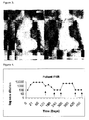
- Patient MMG developed an anti-EGF antibody response with maximum titers up to 1:8000. The kinetics of the antibody response is shown in figure 1 .
- Example 2 Immunization schedule with EGF vaccine in cancer patients, using Montanide ISA 51 as adjuvant.
- Patient 2.1 was included in the trial with a diagnosis of epidermoid carcinoma of the lung, with progressive disease, being ineligible for any other onco-specific treatment.
- the patient was immunized according to a schedule of 5 initial doses of the vaccine containing 50ug of EGF in 0.6 mL total volume, emulsified with 0.6 mL of Montanide ISA 51 immediately before use, and administered on days 1, 7, 14, 21 and 51.
- Blood extractions were performed on days 0, 15, 30, 45, 60 and monthly thereafter for blood biochemical measurements and measurement of specific anti-EGF antibodies.
- the antibody titers were measured by means of an ELISA test, antibody titers being determined as the maximal sera dilution that gives a positive result in the ELISA test. (O.D values equal or higher 2 times the blank).
- Re-immunization was performed using the same vaccine dose when a decrease in antibody titers was detected.
- Patient AMG developed an anti-EGF antibody response with maximum titers of up to 1: 32000, with kinetics of response shown in figure 2 .
- the patient After the beginning of the vaccination schedule, the patient showed stabilization of disease for 12months, at which point clinical and radiological tumor regression was diagnosed.
- Example 3 Immunization schedule in cancer patients, with EGF vaccine, using alum as adjuvant and low dose cyclophosphamide pre-treatment.
- Patient 3.1 FNR
- Patient 3.1 FNR was included in the trial with a diagnosis of epidermoid carcinoma of the lung, with progressive disease, being ineligible for any other onco-specific treatment.
- the patient was treated with cyclophosphamide (100 mg/m 2 of body surface), 3 days before the first immunization of the EGF Vaccine.
- the vaccination schedule was 5 doses of the vaccine composition, containing 50 ug of EGF and 2 mg of alum, administered on days 1, 7, 14, 21 and 51.
- Blood extractions were performed on days 0, 15, 30, 45, 60 and then monthly for blood chemistry and specific anti-EGF antibody determinations.
- Antibody titers were measured by means of an ELISA test, antibody titers being determined as the maximal sera dilution that gives a positive result in the ELISA test. (O.D values equal or higher 2 times the blank).
- Re-immunization was performed using the same vaccine dose, when a decrease in antibody titers was detected.
- the patient developed an anti-EGF antibody response with maximum titers up to 1:8000, as shown in figure 4 .
- Example 4 Immunization schedule with EGF vaccine in cancer patients, using Montanide ISA 51 as adjuvant and cyclophosphamide pre-treatment.
- the patient was treated with cyclophosphamide (100 mg/m 2 of body surface), 3 days before the first immunization of the EGF Vaccine.
- the vaccination schedule was 5 doses of the vaccine composition, containing 50 ug of EGF in 0.6 mL total volume, emulsified with 0.6 mL of Montanide ISA 51 immediately before use, administered on days 1, 7, 14, 21 and 51.
- Blood extractions were performed on days 0, 15, 30, 45, 60 and then monthly for blood chemistry and specific anti-EGF antibody determinations.
- Antibody titers were measured by means of an ELISA test, antibody titers being determined as the maximal sera dilution that gives a positive result in the ELISA test. (O.D values equal or higher 2 times the blank).
- Re-immunization was performed, using the same vaccine dose, when a decrease in antibody titers was detected.
- Patient JPG developed an anti-EGF antibody response with maximum titers up to 1:400000, as shown in figure 5 .
- Example 5 Inmunogenicity of EGF vaccination and its relationship to disease stabilization in patients with cancer.
- NSCLC Non Small Cell Lung cancer
- the other 10 patients were immunized with 5 doses of the vaccine composition containing 50 ug of EGF, in a total volume of 0.6 mis, emulsified with the same volume (0.6 mL) of Montanide ISA 51.
- Antibody titers were measured by means of an ELISA test, with antibody titers determined as the maximal sera dilution that gives a positive result in the ELISA test. (O.D values equal or higher 2 times the blank).
- Chart 1 Relationship of antibody responses and clinical and radiological disease stabilization. % of patients Disease stabilization for at least 3 months after beginning treatment. GAR 50% 87.5% BAR 50% 11.1%
- Example 6 Immunogenicity of EGF vaccination and relationship to survival of cancer patient subjected to this treatment.
- Patient RML diagnosed with stage IV language base epidermoid carcinoma, was included in the clinical trial using the combination of radiotherapy (RTP) and IOR-R3.
- the patient received 200 mg of Mab once a week for 6 weeks.
- the accumulated dose of Mab was 1200mg and the total radiation dose was 60 Gy.
- Patient EPG diagnosed with stage III tonsil epidermoid carcinoma with cervical adenopathies, was included in the clinical trial using the combination of radiotherapy (RTP) and IOR-R3.
- RTP radiotherapy
- IOR-R3 The patient received 200mg of Mab once a week for 6 weeks and a total radiation dose of 64 Gy.
- Patient CHA diagnosed with a stage IV tonsil tumor, with bilateral cervical adenopathies, was included in the clinical trial using a combination of radiotherapy (RTP) and IOR- R3.
- the patient received 400 mg of Mab once a week for 6 weeks, for an accumulated dose of 2400 mg. Concomitantly, the patient received a total radiation dose of 64Gy.
- this patient When concluding the treatment this patient was in complete remission of the primary tumor and the loco-regional metastasis ( figure 9 ). The response was maintained for 12 months.
- Example 10 Evaluation, in nude mice, of passive therapy using a combination of anti-EGF-R antibody (IOR-R3) and an anti-EGF-R ligand monoclonal (EGF-1).
- Example 11 Schedule of combined Mab IOR-R3 / EGF vaccine treatments in patients with advanced stage tumors:
- Patient ARP diagnosed with epidermoid carcinoma of the head and neck, received sequential treatment of Mab IOR-R3 and EGF Vaccine.
- the patient received 200 mg of Mab once a week for 6 weeks, in combination with a total of 30 doses of radiotherapy , 5 doses per week for 6 weeks, for an accumulated radiation dose of 60 Gy.
- An immunization schedule with the EGF Vaccine began one month after conclusion of the treatment with the Mab.
- the patient received 5 doses of 50 ug of EGF conjugated to protein P64k, in a total volume of 0.6 mis, emulsified with 0.6 ml of Montanide ISA 51 immediately before use.
- the immunizations were carried out on days 1,7,14,21 and 51.
- the patient remains in the follow-up period.
- Example 12 Schedule of combined Mab IOR-R3 / EGF vaccine treatments in patients with advanced stages tumors:
- Patient MRM diagnosed with epidermoid carcinoma of the lung, was subjected to surgical intervention. One month after the surgery the patient began a combined treatment of passive immunotherapy with Mab IOR-R3 concomitantly with the EGF vaccine.
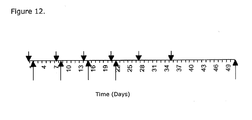
- Figure 12 details the schedule of dose intervals. The patient is in follow up.
Landscapes
- Health & Medical Sciences (AREA)
- Life Sciences & Earth Sciences (AREA)
- Chemical & Material Sciences (AREA)
- Medicinal Chemistry (AREA)
- Immunology (AREA)
- General Health & Medical Sciences (AREA)
- Pharmacology & Pharmacy (AREA)
- Veterinary Medicine (AREA)
- Public Health (AREA)
- Animal Behavior & Ethology (AREA)
- Microbiology (AREA)
- Epidemiology (AREA)
- Mycology (AREA)
- Organic Chemistry (AREA)
- Oncology (AREA)
- Engineering & Computer Science (AREA)
- Cell Biology (AREA)
- Bioinformatics & Cheminformatics (AREA)
- Dermatology (AREA)
- Proteomics, Peptides & Aminoacids (AREA)
- Biochemistry (AREA)
- Biophysics (AREA)
- Genetics & Genomics (AREA)
- Molecular Biology (AREA)
- Biomedical Technology (AREA)
- Gastroenterology & Hepatology (AREA)
- Zoology (AREA)
- Chemical Kinetics & Catalysis (AREA)
- General Chemical & Material Sciences (AREA)
- Nuclear Medicine, Radiotherapy & Molecular Imaging (AREA)
- Toxicology (AREA)
- Medicines Containing Antibodies Or Antigens For Use As Internal Diagnostic Agents (AREA)
- Medicines That Contain Protein Lipid Enzymes And Other Medicines (AREA)
- Medicines Containing Material From Animals Or Micro-Organisms (AREA)
- Pharmaceuticals Containing Other Organic And Inorganic Compounds (AREA)
Abstract
Description
- This invention relates to immunology, and especially to cancer immunotherapy; and particularly provides immunotherapeutic combinations and treatment methods inducing a low growth rate and/or removing tumoral cells.
- The system of the EGF receptor (EGF-R) and its ligands constitutes a molecular complex whose interaction regulates in a specific way cellular growth and its impact has been demonstrated in the uncontrolled growth of tumors of epithelial cell origin. During tumorigenesis the paracrine and autocrine control of EGF-R activation is deregulated , due to growth factor over-production, because of the high rate of synthesis and/or receptor mutations.
- The EGF-R is a transmembrane glycoprotein with 1186 amino acids and 170 kD molecular weight that it is broadly expressed in normal tissues. It has been implicated in several stages of embryogenic development.
- The binding of its specific ligands, EGF or TGF-alpha, induces receptor dimerization, as well as heterodimerization with other members of the ErbB family, like HER-2 (Cohen BD et al. (1996) J Biol Chem 271:7620-7629). The binding of ligand to receptors releases a cascade of intracellular signals (Ullrich TO and Schlessinger J (1990) Cell 61:203-212) that drives cellular growth and differentiation. Overexpression of the receptor occurs in some types of cancers, mainly of epithelial origin, which has been a target for cancer immunotherapy. Such is the case for breast, bladder, ovary, uterine, colon, lung, brain, prostate and head and neck tumors. EGF-R expression has proven to be an indication of bad prognosis in breast cancer (Pérez R et al. (1984) Breast Cancer and Treatment 4:189-193). While the role of EGFR and its ligands in tumor growth is not yet known, there are suggestions that EGF-R expression in tumor cells induces a mechanism for autocrine stimulation that leads to uncontrolled proliferation of those cells (Schlessinger J et al. (1983) Crit Rev Biochem 14 (2):93-111).
- The main ligands of this system are the Epidermal Growth Factor (EGF) and the Transforming Growth Factor alpha type (TGFalpha). There are other ligands belonging to the EGF superfamily, like: amphireguline (AR), crypto-I (CR1), Heparin Growth Factor, betacellulin, epiregulin, and others.
- EGF is a 53 amino acid polypeptide with a molecular weight of 6045Da, which is mitogenic for cells of epithelial origin. Its action is mainly paracrine through its binding to EGF-R.
- TGF alpha is a 50 amino acid polypeptide able to compete with EGF for binding to EGF-R. Anti-EGF antibodies are not able to recognize TGF alpha (Todaro G J et al. (1976), Nature 264:26-31), meaning that both growth factors are two immunologically different entities.
- The EGFR - ligand system has been the target of passive immunotherapy (PI) using monoclonal antibodies(Mab) against EGF-R, in native form, associated with drugs, toxins, or radioactive isotopes (Vollmar AM et al. (1987) J Cell Physiol 131:418-425) in tumors with high expression of this receptor. These antibodies have been selected by their capacity to inhibit the binding of EGF to it receptor (neutralizing antibodies). Several clinical trials with Mabs are being carried out and some have shown promising results as it is the case of Phase II clinical trials with the Mab C225 in breast , pancreatic and renal cancer, in addition to Phase III trials in head and neck cancer (Mendelsohn, J et al. (1999) American Society of Clinical Oncology Meeting). Other Phase II clinical trials showing good results have been carried out with the Mab IOR-R3 in lung tumors (Crombet T et al . (2000) Cancer Biotherapy and Biopharmaceutical, manuscript accepted for publication).
- Passive immunotherapy with the IOR-R3 Mab (
EP586002B1 US 5,894,018 ). This vaccine is able to induce a specific antibody response against autologus EGF, to inhibit EGF/EGF-R binding, thus blocking proliferation mechanisms induced by this binding. Pre-clinical studies have shown that mice immunized with autologus EGF coupled to a carrier protein and administered with a useful adjuvant, increases survival of mice transplanted with Ehrlich Ascitic Tumor (EAT) cells (González G et al. (1996), Vaccine Research 5(4):233-243; González G et al (1997) Vaccine Research 6(2):91-100). - Results from a Phase I clinical trial have been reported for a vaccine containing human recombinant EGF, demonstrating the immunogenicity and safety of vaccination (González G et al (1998), Annals of Oncology 9:1-5).
- The present invention intends the use of combined immunotherapies, directed against the receptors with tyrosine kinase activity (RTK) and against their ligands, in order to potentiate the effect observed when applying in an independent way the different immunotherapies forms described in the state of the art, directed against only one of the components of the receptor/ligand system. This potentiation is justified for the combined blockade of both, ligands and receptor, in a treatment method that includes both active principles.
- Particularly the invention refers to an immunotherapeutic combination for the treatment of tumors, where its effect is on cells whose growth is dependent of the system of receptors RTK, and it comprises the administration in a simultaneous or sequential way of A + C; or A + D; or B + C; or B + D wherein A, B, C and D are:
- A. - An antibody against a receptor RTK;
- B. - An antibody against the ligand(s) of the receptor RTK;
- C. - A vaccine comprising a receptor RTK, which induces antibodies against said receptor RTK;
- D. - A vaccine comprising the ligand(s) of a receptor RTK, which induces antibodies against said ligand(s);
- In a preferred embodiment of the invention, the monoclonal antibody against the receptor RTK is an antibody against the receptor of the Epidermal Growth Factor, R-EGF, and more specifically it is the antibody humanized against the EGF-R, the hR3, deposited with access number 951110101 in ECACC, England.
- In another embodiment of the invention the antibody against the ligand of the receptor RTK can be an antibody against the EGF or against the TGF alpha.
- Also the invention refers a immunotherapeutic combination with a vaccine comprising the EGF-R, EGF, TGF alpha, or a conjugated of these molecules with the protein p64K of Neisseria meningitis.
- Thus, in another aspect of the present invention, it refers to a method for the control of the growth and/or proliferation of cells whose growth is dependent on the receptor RTK system, comprising the treatment with the therapeutic combinations of the invention, which can be applied simultaneous or sequential, and the administration of the components of the combination could be in any order.
- The present invention is related to immunotherapeutic combinations and treatment methods to inhibit growth of tumor cells to eliminate those cells, based on the blockade of RTK receptors and its ligands. This blockade can be achieved, among other approaches, using combination, simultaneous or sequential, of active immunotherapies (therapeutic vaccines) and passive immunotherapies (Mab) directed to growth factors (i.e.EGF, TGFa) and its receptors (i.e.EGF-R).
- The blockade of growth factors or of their receptors causes inhibition of cellular proliferation. In this invention we show that simultaneous blockade of ligands and/or receptors potentiate the inhibition effect on cellular proliferation. This therapeutic concept is of great importance for treatment of malignant tumors, which are fundamentally caused by an increase in the rate of cellular proliferation.
- Immunotherapeutic combinations are described that cause the blockade of RTK receptors and/or their ligands, by means of active and passive immunotherapeutical combinations.
- The referred procedures can be applied to patients with tumors of epithelial origin that over-express EGF-R, in different clinical stages.
- The combination of active and passive immunotherapy can be simultaneous or sequential, independent of the therapeutic procedure used in patients with advanced disease, or as adjuvant therapy.
- In cases of advanced disease, the proposed therapeutic combination is passive immunotherapy with Mab that recognizes the RTK receptor and/or Mab that recognizes ligands of this receptor, in combination with an onco-specific therapy of choice, as first line therapy, followed by active immunotherapy using vaccines directed against the ligands of the receptor and/or to the receptor, to maintain the theraputic effect.
- In cases of adjuvant therapy the proposed therapeutical combinations are; passive immunotherapy with Mab that recognize either, the RTK receptor and/or its ligands with active immunotherapy using vaccines directed to the receptor's ligands or to the receptor itself. Or passive immunotherapy with Mab that recognize either, the RTK receptor or its ligands as attack therapy, followed by active immunotherapy with vaccines directed to the receptor's ligands or to the receptor itself, as maintenance treatment.
- The invention is explained in the procedures presented below.
- This will be administered to patients with advanced cancer who are not eligible for any other onco-specific therapy.
- The first treatment step will be passive immunotherapy with Mab that recognizes the RTK receptor (i.e.EGF-R), with the property of inhibiting this receptor and/or Mab that recognize the receptors ligands (i.e. EGF, TGF alpha). This will be an acute therapy aimed at the goal of tumor remission, and can be used together with the established onco-specific treatment for this stage of disease.
- This will be followed by active immunotherapy using vaccines that induce receptor blocking antibodies (i.e:anti-EGF-R) and/or ligand blocking antibodies (i.e.anti-EGF , anti-TGF alpha), with the objective of maintaining disease stabilization for longer periods, to avoid new metastates.
- The procedure consists of administration to patients in advanced stages of tumors of epithelial origin, of between 4 and 20 doses , ranging between 100 and 400 mg of a Mab that recognizes and inhibits EGF-R, and/or MAb that recognizes the receptor's ligands. The time between doses will be between 6 to 10 days. The complete treatment can last between 1 to 24 months, concomitant with the established onco-especific therapy. The treatment will continue up to partial or complete tumor regression or up to the point where an adverse reaction occurs that requires treatment cessation.
- Between 1 and 4 weeks after this treatment, immunization schedules will be initiated with vaccines directed against EGF-R or its ligands (i.e.EGF , TGFalpha) coupled to a carrier protein (i.e.P64K Neisseria meningitides recombinant protein) and administered in an adequate adjuvant i.e alum (between 1 and 2 mg/dose) or Montanide ISA 51 (between 0.6 and 1.2 ml/dose). Each dose contains between 50 and 800 ug of active ingredient (receptor or ligand) coupled to the carrier protein, in a final volume of between 0.6 and 5 mL. The immunization schedule is 5 to 8 initial immunizations for response induction, given every 7 to 14 days. Immunizations can be preceded by administration of cyclophosphamide , between 100 and 500 mg/m2 of body weight, administered 2 to 4 days before the 1rst immunization. Vaccines can be formulated in any other vaccine vehicle (i.e.liposomes, DNA vaccines, viral vectors).
- Vaccines can be formulated as independent products or as a unique vaccine formulation.
- In this period, blood will be extracted from patients in order to measure biochemical blood markers and specific antibody titers against the ligand or receptor to which the vaccine is directed. Extractions will be done weekly or monthly.
- Subsequently, re-immunizations will be done if antibody titers decrease, every 1 to 4 months for a period of 1 to 2 years.
- Passive treatment with Mab recognizing a RTK receptor (i.e.EGF-R) inhibiting its activity and/or Mab recognizing receptor's ligands (i.e.EGF, TGF alpha), together with an active treatment with vaccines that induces an antibody response that blocks the receptor and/or its ligands, will be administered to patients immediately after diagnosis and/or surgical treatment.
- Those treatments, administered together, will have a synergistic effect, enabling a higher percentage of regression and/or clinical disease stabilization.
- Patients with tumors of epithelial origin are amenable to this treatment, that consists of between 4 to 20 doses, ranging between 100 and 400 mg, of Mab recognizing and inhibiting RTK receptors and/or it ligands. The time between doses will be between 6 to 10 days and the treatment can last between 1 to 24 months. The treatment will continue until partial or complete tumor regression or up to the point where an adverse reaction occurs that requires treatment cessation.
- Concomitant immunizations will be administered with vaccines according to the schedule described in
procedure # 1. - This will be applied to patients immediately after diagnosis and/or surgical treatment.
- The goal of this treatment is to use acute therapy to obtain tumor remission, via initial passive immunotherary with Mab recognizing and inhibiting RTK receptors (i.e.EGF-R) and/or Mab recognizing its ligands (i.e. EGF, TGF alpha).Subsequently, active immunotherapy will be initiated using vaccines inducing blocking antibodies against the receptor (i.e.EGF-R) or it ligands (i.e.EGF, TGF alpha). The aim of the 2nd treatment is to obtain a longer period of freedom from disease, to avoid the appearance of new metastates.
- The procedure consists of administration to patients at advanced stages of cancer of epithelial origin, from 4 to 20 doses of between 100 and 400 mg of Mab that recognizes and inhibits the EGF-R and/or its ligands. The time between doses will be between 6 to 10 days and the treatment duration can be between 1 to 24 months. The treatment will continue until partial or complete tumor regression, or until any adverse reaction occurs that requires treatment cessation.
- Between 1 to 4 weeks after the end of treatment, immunization schedules will begin with vaccines directed against the EGF-R or some EGF-R ligand (i.e. EGF, TGF alpha), according to the schedule described in
procedure # 1. - With the main goal of demonstrating immunogenicity and safety of EGF, a clinical trial was performed in which 10 patients were immunized with an EGF Vaccine (
US 5,894,018 ), using P64K as carrier protein and alum as adjuvant,. - Patient 1.1 (MMG) was included in the trial with a diagnosis of metastasic epidermoid carcinoma of the lung, with progressive disease, and not eligible for any other onco-specific treatment.
- The patient was immunized following a schedule of 5 initial dose of the vaccine, containing 50ug of EGF and 2 mg alum, administered on
days - Blood extraction was performed on
days - Antibody titers were measured by means of an ELISA test, antibody titers being determined as the maximal sera dilution that gives a positive result in the ELISA test. (O.D values equal or higher 2 times the blank).
- Re-immunization was performed using the same vaccine dose when a decrease in antibody titers was detected.
- Patient MMG developed an anti-EGF antibody response with maximum titers up to 1:8000. The kinetics of the antibody response is shown in
figure 1 . - After the beginning of the vaccination schedule the patient showed clinical and radiological stabilization of disease for 15 months. The patient died 23.2 months after the first vaccination.
- With the main goal of demonstrating immunogenicity and safety of EGF using P64K as a carrier protein and Montanide ISA 51 as an adjuvant, a clinical trial was performed in which 10 patients were immunized.
- Patient 2.1 (AMG) was included in the trial with a diagnosis of epidermoid carcinoma of the lung, with progressive disease, being ineligible for any other onco-specific treatment.
- The patient was immunized according to a schedule of 5 initial doses of the vaccine containing 50ug of EGF in 0.6 mL total volume, emulsified with 0.6 mL of Montanide ISA 51 immediately before use, and administered on
days - Blood extractions were performed on
days - The antibody titers were measured by means of an ELISA test, antibody titers being determined as the maximal sera dilution that gives a positive result in the ELISA test. (O.D values equal or higher 2 times the blank).
- Re-immunization was performed using the same vaccine dose when a decrease in antibody titers was detected.
- Patient AMG developed an anti-EGF antibody response with maximum titers of up to 1: 32000, with kinetics of response shown in
figure 2 . - After the beginning of the vaccination schedule, the patient showed stabilization of disease for 12months, at which point clinical and radiological tumor regression was diagnosed.
- On the 14th month after the beginning of vaccination, a 2nd primary tumor appeared. The patient died 18 months after inclusion from a surgical complication of this 2nd tumor.
- A clinical trial was carried out in which 10 patients were immunized with the main goal of demonstrating immunogenicity and safety of the EGF Vaccine using P64K as carrier protein and alum as adjuvant after cyclophosphamide pre-treatment.
- Patient 3.1, FNR, was included in the trial with a diagnosis of epidermoid carcinoma of the lung, with progressive disease, being ineligible for any other onco-specific treatment.
- The patient was treated with cyclophosphamide (100 mg/m2 of body surface), 3 days before the first immunization of the EGF Vaccine. The vaccination schedule was 5 doses of the vaccine composition, containing 50 ug of EGF and 2 mg of alum, administered on
days - Blood extractions were performed on
days - Antibody titers were measured by means of an ELISA test, antibody titers being determined as the maximal sera dilution that gives a positive result in the ELISA test. (O.D values equal or higher 2 times the blank).
- Re-immunization was performed using the same vaccine dose, when a decrease in antibody titers was detected.
- The patient developed an anti-EGF antibody response with maximum titers up to 1:8000, as shown in
figure 4 . - After the beginning of the vaccination schedule, the patient showed disease stabilization for 19 months.
- A clinical trial was carried out in which 10 patients were immunized with the main goal of demonstrating immunogenicity and safety of the EGF Vaccine, using P64K as carrier protein and and Montanide ISA 51 as adjuvant after cyclophosphamide pre-treatment. Patient 4.1, JPG, was included in the trial with a diagnosis of non-small cell lung adenocarcinoma, with progressive disease, being ineligible for any other onco-specific treatment.
- The patient was treated with cyclophosphamide (100 mg/m2 of body surface), 3 days before the first immunization of the EGF Vaccine. The vaccination schedule was 5 doses of the vaccine composition, containing 50 ug of EGF in 0.6 mL total volume, emulsified with 0.6 mL of Montanide ISA 51 immediately before use, administered on
days - Blood extractions were performed on
days - Antibody titers were measured by means of an ELISA test, antibody titers being determined as the maximal sera dilution that gives a positive result in the ELISA test. (O.D values equal or higher 2 times the blank).
- Re-immunization was performed, using the same vaccine dose, when a decrease in antibody titers was detected.
- Patient JPG developed an anti-EGF antibody response with maximum titers up to 1:400000, as shown in
figure 5 . - After the beginning of the vaccination schedule the patient showed disease stabilization for 6 months.
- A Phase I trial in 20 patients was performed in which patients were randomized to one of two groups using different adjuvants..
- Ten patients at stages III or IV of Non Small Cell Lung cancer (NSCLC), were treated with 5 initial doses of vaccine composition containing 50ug of EGF and 2 mg of alum, administered on
days - The other 10 patients (NSCLC, stages III or IV), were immunized with 5 doses of the vaccine composition containing 50 ug of EGF, in a total volume of 0.6 mis, emulsified with the same volume (0.6 mL) of Montanide ISA 51.
- Antibody titers were measured by means of an ELISA test, with antibody titers determined as the maximal sera dilution that gives a positive result in the ELISA test. (O.D values equal or higher 2 times the blank).
- In this trial, 50% of patients developed an anti-EGF antibody response with antibody titers of 1:4000 or higher (, Good Antibody Responders, GAR group) and 50% antibody titers below 1:4000 (Bad Antibody Responders, BAR group).
- in the GAR group, 87.5% of patients showed clinical and radiological disease stabilization for at least3 months after the beginning of treatment.
- In the BAR group, only 11,1% of patients showed this stabilization profile (Table 1).
- These data demonstrate the relationship between anti-EGF antibody levels and tumor stabilization.
- Chart 1: Relationship of antibody responses and clinical and radiological disease stabilization.
% of patients Disease stabilization for at least 3 months after beginning treatment. GAR 50% 87.5 % BAR 50% 11.1% - Forty stage III/IV NSCLC patients were treated, in groups of 10, with the schedules detailed in examples 1,2,3 and 4.
- They were characterized as GAR and BAR according to criteria exposed in example 6.
- Of the total of patients treated with the previously described schedules, 50% turned out to be GAR and 50% BAR.
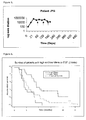
- When survival patterns were compared between GAR and BAR patients, a statistically significant difference was observed, with a mean survival of 9.1 months for GAR and a mean survival of 4.5 months for BAR (p <0.02). This result is showed in
figure 6 . - Patient RML, diagnosed with stage IV language base epidermoid carcinoma, was included in the clinical trial using the combination of radiotherapy (RTP) and IOR-R3. The patient received 200 mg of Mab once a week for 6 weeks. The accumulated dose of Mab was 1200mg and the total radiation dose was 60 Gy.
- When the combination therapy was complete the patient showed complete remission of the primary tumor and its metastases (
figure 7 ). This response was maintained for more than 13 months. - Patient EPG, diagnosed with stage III tonsil epidermoid carcinoma with cervical adenopathies, was included in the clinical trial using the combination of radiotherapy (RTP) and IOR-R3. The patient received 200mg of Mab once a week for 6 weeks and a total radiation dose of 64 Gy.
- After treatment, this patient showed complete remission of the tumor lesion (
figure 8 ). The response was maintained for more than 13 months. - Patient CHA, diagnosed with a stage IV tonsil tumor, with bilateral cervical adenopathies, was included in the clinical trial using a combination of radiotherapy (RTP) and IOR- R3. The patient received 400 mg of Mab once a week for 6 weeks, for an accumulated dose of 2400 mg. Concomitantly, the patient received a total radiation dose of 64Gy.
- When concluding the treatment this patient was in complete remission of the primary tumor and the loco-regional metastasis (
figure 9 ). The response was maintained for 12 months. - Evaluation of the anti-tumor effect in relation to the administered doses. This experiment also simulates the possible effect of combined administration of the anti-EGF-R Mab and an EGF vaccine. The vaccine causes an anti-EGF antibody response with the same effect of passive administration of Mab with that specificity, with the additional advantage that, the achieved antibody response can be maintained over time, as shown in examples 1, 2, 3 and 4 (kinetics of anti-EGF antibody titers in immunized patients)
- Seven different groups of athymic mice, with NMRI genetic origin (outbred population), were immunized with:
- Group 1:10 doses of 0.5 mg of the EGF-1 Mab, intraperitoneal route, daily frequency.
- Group 2: 10 doses of 1 mg of the EGF-1 Mab, intraperitoneal route, daily frequency.
- Group 3: 10 doses of 0.5 mg of the IOR-R3 Mab, intraperitoneal route, daily requency.
- Group 4: 10 doses of 1 mg of the IOR-R3 Mab, intraperitoneal route, daily frequency.
- Group 5: 10 doses of Phosphate Buffered Saline (PBS), intraperitoneal route, daily frequency (negative control).
- Group 6: 10 doses of 0.5m g EGF-1 Mab combined with 0.5 mg IOR-R3 Mab, intraperitoneal route, daily frequency.
- Group 7: 10 doses of 1m g EGF-1 Mab combined with 1 mg IOR-R3 Mab, intraperitoneal route, daily frequency.
- On the day of initiation of treatment with Mabs mice were transplanted with 1 x 10⁶ H125 human tumor cells. This cell line over-expresses the EGF-R.
- Results are shown in
Figures 10 and 11 . The anti-tumor effect was potentiated when both treatments were combined, increasing with increased doses. - Patient ARP, diagnosed with epidermoid carcinoma of the head and neck, received sequential treatment of Mab IOR-R3 and EGF Vaccine.
- The patient received 200 mg of Mab once a week for 6 weeks, in combination with a total of 30 doses of radiotherapy , 5 doses per week for 6 weeks, for an accumulated radiation dose of 60 Gy.
- When concluding the treatment, the patient was in complete remission of the primary tumor.
- An immunization schedule with the EGF Vaccine began one month after conclusion of the treatment with the Mab. The patient received 5 doses of 50 ug of EGF conjugated to protein P64k, in a total volume of 0.6 mis, emulsified with 0.6 ml of Montanide ISA 51 immediately before use. The immunizations were carried out on
days - The patient remains in the follow-up period.
- Patient MRM, diagnosed with epidermoid carcinoma of the lung, was subjected to surgical intervention. One month after the surgery the patient began a combined treatment of passive immunotherapy with Mab IOR-R3 concomitantly with the EGF vaccine.
-
Figure 12 details the schedule of dose intervals. The patient is in follow up. -
-
Figure 1 : Kinetics of anti-EGF antibody response in patient MMG, immunized as detailed in example 1. Arrows indicate times of re-immunizations. -
Figure 2 : Kinetics of anti-EGF antibody response in patient AMC, immunized as detailed in example 2. Arrows indicate times of re-immunizations. -
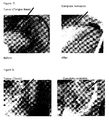
Figure 3 : Tumor regression observed in patient AMC. The tumor mass is seen on the left at the start of treatment. On the right of the figure it can be seen that 12 months after the start of treatment the tumor mass disappeared. -
Figure 4 : Kinetics of anti-EGF antibody response in patient FNR, immunized as detailed in example 3. Arrows indicate times of re-immunizations. -
Figure 5 : Kinetics of anti-EGF antibody response in patient JPG, immunized as detailed in example 4. Arrows indicate times of re-immunizations. -
Figure 6 : Kaplan-Maier survival curves of groups of patients with high anti-EGF antibody response (GAR) and with low anti-EGF antibody responses (BAR), as well as that of a historical control group.
As can be seen, GAR is associated with a significant increase in survival compared with either BAR or with historical controls. -
Figure 7 : Graphic demonstration of tumor remission in patient RML, treated as detailed in example 7. -
Figure 8 : Graphic demonstration of tumor regression in patient EPG, treated as detailed in example 8. -
Figure 9 : Graphic demonstration of the tumor in patient CHA, treated as detailed in example 9. -
Figure 10 : Groups of mice immunized with 0.5 mg of both Mabs IOR-R3 and EGF-1, and with the combination of 0.5 mg of IOR-R3 + 0.5 mg of EGF1, as detailed in example 10. A synergistic effect on decreased tumor growth was observed in the group treated with the combination of both Mabs. -
Figure 11 : Groups of mice immunized with 1 mg of both Mabs IOR-R3 and EGF-1, and with the combination of 1 mg of IOR-R3 + 1 mg of EGF1, as detailed in example 10. A synergistic effect on decreased tumor growth was observed in the group treated with the combination of both Mabs. -
Figure 12 : Combined treatment of Mab IOR-R3 and the EGF Vaccine: - Arrows above the time axis indicate the day of Mab administration (
days days
Claims (14)
- Immunotherapeutic combination for the treatment of tumors whose effect is on cells whose growth is dependent of the system of receptors RTK, and it comprises the administration in a simultaneous or sequential way of A + B; or A + C; or A + D; or B + C; or B + D; or C + D, where A, B, C and D are:A. - An antibody against a receptor RTK;B. - An antibody against the ligand(s) of the receptor RTK;C. - A vaccine comprising a receptor RTK, which induces antibodies against said receptor RTK;D. - A vaccine comprising the ligand(s) of a receptor RTK, which induces antibodies against said ligand(s);a. - An antibody against a RTK receptor.b. - A vaccine in which the active principle is the RTK receptor, and that induces antibodies against this receptor.
- Immunotherapeutic combination according to claim 1 where the antibody against a receptor RTK is an antibody against the EGF receptor.
- Immunotherapeutic combination according to claim 2 where antibody against the EGF receptor is a humanized antibody.
- Immunotherapeutic combination according to claim 3 where the humanized antibody against the EGF receptor is IOR R3, deposited with accession number 951110101 en ECACC, Inglaterra.
- Immunotherapeutic combination according to claim 1 where the antibody against the ligand(s) of the receptor RTK is an antibody against EGF.
- Immunotherapeutic combination according to claim 1 where the antibody against the ligand(s) of the receptor RTK is an antibody against TGF alpha.
- Immunotherapeutic combination according to claims 1-6 wherein the vaccine comprises the EGF receptor.
- Immunotherapeutic combination according to claims 1-6 wherein the vaccine comprises the EGF.
- Immunotherapeutic combination according to claim 8 wherein the vaccine comprises conjugated proteins EGF and P64K from Neisseria meningitidis.
- Immunotherapeutic combination according to claims 1-6 wherein the vaccine comprises the TGF alpha.
- Immunotherapeutic combination according to claim 10 wherein the vaccine comprises conjugated proteins TGF alpha and P64K from Neisseria meningitidis.
- A method to control growth and/or proliferation of cells whose growth is dependent on the interaction between a receptor and its ligand, in the receptor tyrosine kinase (RTK) system, this method including the treatment with one of the therapeutic combinations defined in any one of the preceding claims 1-11.
- A method according to claim 12 that includes the simultaneous or sequential administration of the therapeutic combinations defined in any one of the preceding claims 1-11.
- A method according to claim 13 that includes administration of the therapeutic combinations defined in any one of the preceding claims 1-11 in any order.
Applications Claiming Priority (2)
| Application Number | Priority Date | Filing Date | Title |
|---|---|---|---|
| CU20000287A CU22979A1 (en) | 2000-12-08 | 2000-12-08 | IMMUNOTHERAPEUTIC COMBINATION FOR THE TREATMENT OF TUMORS OVER-EXPRESSING RECEPTORS WITH KINASE ACTIVITY IN TYPOSINE WASTE |
| EP01999388A EP1350521B1 (en) | 2000-12-08 | 2001-12-06 | Immunotherapeutic combinations for the treatment of tumors |
Related Parent Applications (2)
| Application Number | Title | Priority Date | Filing Date |
|---|---|---|---|
| EP01999388A Division EP1350521B1 (en) | 2000-12-08 | 2001-12-06 | Immunotherapeutic combinations for the treatment of tumors |
| EP01999388.0 Division | 2001-12-06 |
Publications (2)
| Publication Number | Publication Date |
|---|---|
| EP2005996A2 true EP2005996A2 (en) | 2008-12-24 |
| EP2005996A3 EP2005996A3 (en) | 2012-01-25 |
Family
ID=40261022
Family Applications (2)
| Application Number | Title | Priority Date | Filing Date |
|---|---|---|---|
| EP08161862A Withdrawn EP2005996A3 (en) | 2000-12-08 | 2001-12-06 | Immunotherapeutic combination for the treatment of tumors |
| EP01999388A Expired - Lifetime EP1350521B1 (en) | 2000-12-08 | 2001-12-06 | Immunotherapeutic combinations for the treatment of tumors |
Family Applications After (1)
| Application Number | Title | Priority Date | Filing Date |
|---|---|---|---|
| EP01999388A Expired - Lifetime EP1350521B1 (en) | 2000-12-08 | 2001-12-06 | Immunotherapeutic combinations for the treatment of tumors |
Country Status (25)
| Country | Link |
|---|---|
| US (2) | US20020160014A1 (en) |
| EP (2) | EP2005996A3 (en) |
| JP (2) | JP2005519023A (en) |
| KR (1) | KR20030064416A (en) |
| CN (1) | CN1326566C (en) |
| AR (1) | AR031641A1 (en) |
| AT (1) | ATE403438T1 (en) |
| AU (2) | AU2002221521B2 (en) |
| BR (1) | BR0116010A (en) |
| CA (1) | CA2431199C (en) |
| CU (1) | CU22979A1 (en) |
| CY (1) | CY1108474T1 (en) |
| DE (1) | DE60135248D1 (en) |
| DK (1) | DK1350521T3 (en) |
| EA (1) | EA007381B1 (en) |
| ES (1) | ES2311036T3 (en) |
| MX (1) | MXPA03005030A (en) |
| MY (1) | MY138833A (en) |
| NZ (1) | NZ526284A (en) |
| PE (1) | PE20020695A1 (en) |
| PT (1) | PT1350521E (en) |
| SI (1) | SI1350521T1 (en) |
| UY (1) | UY27058A1 (en) |
| WO (1) | WO2002045747A1 (en) |
| ZA (1) | ZA200304415B (en) |
Cited By (1)
| Publication number | Priority date | Publication date | Assignee | Title |
|---|---|---|---|---|
| US8642035B2 (en) | 2008-01-17 | 2014-02-04 | Irm Llc | Anti-TrkB antibodies |
Families Citing this family (11)
| Publication number | Priority date | Publication date | Assignee | Title |
|---|---|---|---|---|
| US7507724B2 (en) * | 2001-01-16 | 2009-03-24 | Sloan-Kettering Institute For Cancer Research | Therapy-enhancing glucan |
| EP1493445A1 (en) * | 2003-07-04 | 2005-01-05 | Max-Planck-Gesellschaft zur Förderung der Wissenschaften e.V. | Inhibition of stress-induced ligand-dependent EGFR activation |
| CU23297A1 (en) * | 2004-11-16 | 2008-07-24 | Ct De Inmunologa A Molecular | IMMUNOTHERAPY / 00UTICAL FORMULATIONS FOR THE INDUCTION OF BLOCKING AUTHORTIC BODIES OF THE INTERLEUCINE-2 UNION TO ITS RECEIVER. ITS USE IN THE TREATMENT OF CÃ NCER |
| US20090053221A1 (en) * | 2006-01-17 | 2009-02-26 | Cheung Nai-Kong V | Immune response enhancing glucan |
| US8323644B2 (en) * | 2006-01-17 | 2012-12-04 | Sloan-Kettering Institute For Cancer Research | Therapy-enhancing glucan |
| NZ601022A (en) * | 2006-10-12 | 2014-09-26 | Chugai Pharmaceutical Co Ltd | Diagnosis and treatment of cancer using anti-ereg antibody |
| CU23652A1 (en) * | 2007-06-29 | 2011-05-27 | Centro Inmunologia Molecular | HOMOGENOUS VACCINE COMPOSITION FOR THE TREATMENT OF CANCER AND ITS METHOD OF OBTAINING |
| EP2436397B1 (en) | 2009-05-29 | 2017-05-10 | Chugai Seiyaku Kabushiki Kaisha | Pharmaceutical composition containing antagonist of egf family ligand as component |
| WO2012018260A1 (en) * | 2010-08-05 | 2012-02-09 | Universiteit Utrecht Holding B.V. | Epidermal growth factor receptor targeted immune therapy |
| TWI593705B (en) | 2011-12-28 | 2017-08-01 | Chugai Pharmaceutical Co Ltd | Humanized anti-epiregulin antibody and cancer therapeutic agent containing the antibody as an active ingredient |
| AU2018222735B2 (en) * | 2017-02-17 | 2023-04-27 | George Todaro | Use of TGF alpha for the treatment of diseases and disorders |
Citations (2)
| Publication number | Priority date | Publication date | Assignee | Title |
|---|---|---|---|---|
| US5894018A (en) | 1993-12-09 | 1999-04-13 | Centro De Immunologia Molecular | Vaccine composition comprising autologous epidermal growth factor or a fragment or a derivative thereof having anti-tumor activity and use thereof in the therapy of malignant diseases |
| EP0586002B1 (en) | 1992-08-18 | 2000-01-19 | CENTRO de IMMUNOLOGIA MOLECULAR | Monoclonal antibodies recognizing the epidermal growth factor receptor, cells and methods for their production and compositions containing them |
Family Cites Families (12)
| Publication number | Priority date | Publication date | Assignee | Title |
|---|---|---|---|---|
| CU22545A1 (en) * | 1994-11-18 | 1999-03-31 | Centro Inmunologia Molecular | OBTAINING A CHEMICAL AND HUMANIZED ANTIBODY AGAINST THE RECEPTOR OF THE EPIDERMAL GROWTH FACTOR FOR DIAGNOSTIC AND THERAPEUTIC USE |
| JPH01221326A (en) * | 1988-02-29 | 1989-09-04 | Toyo Jozo Co Ltd | Cytotoxic agent against malignant tumorous cell |
| US5705157A (en) * | 1989-07-27 | 1998-01-06 | The Trustees Of The University Of Pennsylvania | Methods of treating cancerous cells with anti-receptor antibodies |
| CA2137639C (en) * | 1993-12-09 | 1999-01-26 | Agustin B. L. Davila | Vaccine composition comprising autologous epidermal growth factor or a fragment or a derivate thereof having anti-tumor activity and use thereof in the therapy of malignant diseases |
| CU22615A1 (en) * | 1994-06-30 | 2000-02-10 | Centro Inmunologia Molecular | PROCEDURE FOR OBTAINING LESS IMMUNOGENIC MONOCLONAL ANTIBODIES. MONOCLONAL ANTIBODIES OBTAINED |
| CA2287872C (en) * | 1997-05-12 | 2010-07-27 | Aphton Corporation | Immunogenic compositions to the cck-b/gastrin receptor and methods for the treatment of tumors |
| US20030219380A1 (en) * | 1997-11-07 | 2003-11-27 | Annie Fong | Method of determining an efficacious dose of a drug |
| WO1999057981A1 (en) * | 1998-05-08 | 1999-11-18 | Sloan-Kettering Institute For Cancer Research | Compositions and methods for active vaccination |
| WO1999060023A1 (en) * | 1998-05-15 | 1999-11-25 | Imclone Systems Incorporated | Treatment of human tumors with radiation and inhibitors of growth factor receptor tyrosine kinases |
| US6498181B1 (en) * | 1999-01-06 | 2002-12-24 | Maxim Pharmaceuticals | Synergistic tumorcidal response induced by histamine |
| US6783761B2 (en) * | 2000-05-05 | 2004-08-31 | Aphton Corporation | Chimeric peptide immunogens |
| CU23077A1 (en) * | 2000-12-06 | 2005-08-17 | Centro Inmunologia Molecular | VACCINE COMPOSITION CONTAINING TRANSFORMING GROWTH FACTOR (TGF-ALFA). ITS USE IN MALIGNAL DISEASE THERAPY |
-
2000
- 2000-12-08 CU CU20000287A patent/CU22979A1/en unknown
-
2001
- 2001-11-29 PE PE2001001203A patent/PE20020695A1/en not_active Application Discontinuation
- 2001-12-05 MY MYPI20015556A patent/MY138833A/en unknown
- 2001-12-06 BR BR0116010-9A patent/BR0116010A/en not_active IP Right Cessation
- 2001-12-06 EP EP08161862A patent/EP2005996A3/en not_active Withdrawn
- 2001-12-06 AU AU2002221521A patent/AU2002221521B2/en not_active Ceased
- 2001-12-06 PT PT01999388T patent/PT1350521E/en unknown
- 2001-12-06 AU AU2152102A patent/AU2152102A/en active Pending
- 2001-12-06 NZ NZ526284A patent/NZ526284A/en not_active IP Right Cessation
- 2001-12-06 UY UY27058A patent/UY27058A1/en unknown
- 2001-12-06 DK DK01999388T patent/DK1350521T3/en active
- 2001-12-06 KR KR10-2003-7007630A patent/KR20030064416A/en not_active Ceased
- 2001-12-06 MX MXPA03005030A patent/MXPA03005030A/en active IP Right Grant
- 2001-12-06 AT AT01999388T patent/ATE403438T1/en active
- 2001-12-06 CA CA2431199A patent/CA2431199C/en not_active Expired - Fee Related
- 2001-12-06 EP EP01999388A patent/EP1350521B1/en not_active Expired - Lifetime
- 2001-12-06 EA EA200300646A patent/EA007381B1/en not_active IP Right Cessation
- 2001-12-06 CN CNB018216854A patent/CN1326566C/en not_active Expired - Fee Related
- 2001-12-06 ES ES01999388T patent/ES2311036T3/en not_active Expired - Lifetime
- 2001-12-06 WO PCT/CU2001/000012 patent/WO2002045747A1/en not_active Ceased
- 2001-12-06 SI SI200130873T patent/SI1350521T1/en unknown
- 2001-12-06 JP JP2002547530A patent/JP2005519023A/en active Pending
- 2001-12-06 DE DE60135248T patent/DE60135248D1/en not_active Expired - Lifetime
- 2001-12-07 US US10/005,341 patent/US20020160014A1/en not_active Abandoned
- 2001-12-07 AR ARP010105686A patent/AR031641A1/en not_active Application Discontinuation
-
2003
- 2003-06-05 ZA ZA200304415A patent/ZA200304415B/en unknown
-
2006
- 2006-04-20 US US11/407,103 patent/US7744871B2/en not_active Expired - Lifetime
-
2008
- 2008-11-03 CY CY20081101242T patent/CY1108474T1/en unknown
-
2010
- 2010-03-23 JP JP2010066088A patent/JP2010150286A/en not_active Abandoned
Patent Citations (2)
| Publication number | Priority date | Publication date | Assignee | Title |
|---|---|---|---|---|
| EP0586002B1 (en) | 1992-08-18 | 2000-01-19 | CENTRO de IMMUNOLOGIA MOLECULAR | Monoclonal antibodies recognizing the epidermal growth factor receptor, cells and methods for their production and compositions containing them |
| US5894018A (en) | 1993-12-09 | 1999-04-13 | Centro De Immunologia Molecular | Vaccine composition comprising autologous epidermal growth factor or a fragment or a derivative thereof having anti-tumor activity and use thereof in the therapy of malignant diseases |
Non-Patent Citations (11)
| Title |
|---|
| COHEN BD ET AL., J BIOL CHEM, vol. 271, 1996, pages 7620 - 7629 |
| CROMBET T ET AL., CANCER BIOTHERAPY AND BIOPHARMACEUTICAL, 2000 |
| GONZAIEZ G ET AL., ANNALS OF ONCOLOGY, vol. 9, 1998, pages 1 - 5 |
| GONZAIEZ G ET AL., VACCINE RESEARCH, vol. 5, no. 4, 1996, pages 233 - 243 |
| GONZAIEZ G ET AL., VACCINE RESEARCH, vol. 6, no. 2, 1997, pages 91 - 100 |
| MENDELSOHN, J ET AL., AMERICAN SOCIETY OF CLINICAL ONCOLOGY MEETING, 1999 |
| PEREZ R ET AL., BREAST CANCER AND TREATMENT, vol. 4, 1984, pages 189 - 193 |
| SCHLESSINGER J ET AL., CRIT REV BIOCHEM, vol. 14, no. 2, 1983, pages 93 - 111 |
| TODARO G J ET AL., NATURE, vol. 264, 1976, pages 26 - 31 |
| ULLRICH TO; SCHIESSINGER J, CELL, vol. 61, 1990, pages 203 - 212 |
| VOLLMAR AM ET AL., J CELL PHYSIOL, vol. 131, 1987, pages 418 - 425 |
Cited By (1)
| Publication number | Priority date | Publication date | Assignee | Title |
|---|---|---|---|---|
| US8642035B2 (en) | 2008-01-17 | 2014-02-04 | Irm Llc | Anti-TrkB antibodies |
Also Published As
Similar Documents
| Publication | Publication Date | Title |
|---|---|---|
| JP2010150286A (en) | Immunotherapy combined use for treatment of tumor | |
| US20090269364A1 (en) | Her-2/neu multi-peptide vaccine | |
| RU2473560C2 (en) | Combined chemotherapy and immunotherapy | |
| US20190275132A1 (en) | Divalent vaccine compositions and the use thereof for treating tumors | |
| CN120530124A (en) | TROP2 immunogenic peptide | |
| HK1073244B (en) | Immunotherapeutic kit for the treatment of tumors | |
| Alpízar et al. | HER1-ECD vaccination dispenses with emulsification to elicit HER1-specific anti-proliferative effects | |
| Sánchez et al. | HER1 Vaccine: An autologous EGFR vaccine candidate to treat epithelial tumors | |
| Beatriz et al. | 114 POSTER Effective inhibition of the EGF/EGFR binding by anti-EGF antibodies increased survival of advanced NSCLC patients treated with the EGF cancer vaccine | |
| Amato et al. | 113 POSTER Phase II trial to assess the activity of MVA5T4 (Trovax®) alone versus MVA5T4 plus granulocyte macrophage colony-stimulating factor (GM-CSF) in patients (pts) with progressive hormone refractory prostate cancer (HRPC) | |
| Gérard et al. | 115 POSTER Enhanced growth inhibition of HER-2/neu overexpressing tumor cells by combining HER-2/neu specific polyclonal antibodies and other HER-2/neu targeting treatments | |
| Fang et al. | Humoral immunity responses against EGFR-positive tumor cells induced by xenogeneic EGFR expressed in the yeast Pichia pastoris | |
| NZ716579B2 (en) | Divalent vaccine compositions and the use thereof for treating tumours | |
| WO2012018260A1 (en) | Epidermal growth factor receptor targeted immune therapy |
Legal Events
| Date | Code | Title | Description |
|---|---|---|---|
| PUAI | Public reference made under article 153(3) epc to a published international application that has entered the european phase |
Free format text: ORIGINAL CODE: 0009012 |
|
| 17P | Request for examination filed |
Effective date: 20080811 |
|
| AC | Divisional application: reference to earlier application |
Ref document number: 1350521 Country of ref document: EP Kind code of ref document: P |
|
| AK | Designated contracting states |
Kind code of ref document: A2 Designated state(s): AT BE CH CY DE DK ES FI FR GB GR IE IT LI LU MC NL PT SE TR |
|
| AX | Request for extension of the european patent |
Extension state: AL LT LV MK RO SI |
|
| PUAL | Search report despatched |
Free format text: ORIGINAL CODE: 0009013 |
|
| RIC1 | Information provided on ipc code assigned before grant |
Ipc: A61K 39/395 20060101ALI20111213BHEP Ipc: A61P 35/00 20060101AFI20111213BHEP |
|
| AK | Designated contracting states |
Kind code of ref document: A3 Designated state(s): AT BE CH CY DE DK ES FI FR GB GR IE IT LI LU MC NL PT SE TR |
|
| AX | Request for extension of the european patent |
Extension state: AL LT LV MK RO SI |
|
| AKX | Designation fees paid |
Designated state(s): AT BE CH CY DE DK ES FI FR GB GR IE IT LI LU MC NL PT SE TR |
|
| STAA | Information on the status of an ep patent application or granted ep patent |
Free format text: STATUS: THE APPLICATION IS DEEMED TO BE WITHDRAWN |
|
| 18D | Application deemed to be withdrawn |
Effective date: 20120726 |