EP2006388A1 - Produits de recombinaison dýacide nucléique destiné à la désactivation et mutagenèse conditionnelle de gènes - Google Patents
Produits de recombinaison dýacide nucléique destiné à la désactivation et mutagenèse conditionnelle de gènes Download PDFInfo
- Publication number
- EP2006388A1 EP2006388A1 EP07110607A EP07110607A EP2006388A1 EP 2006388 A1 EP2006388 A1 EP 2006388A1 EP 07110607 A EP07110607 A EP 07110607A EP 07110607 A EP07110607 A EP 07110607A EP 2006388 A1 EP2006388 A1 EP 2006388A1
- Authority
- EP
- European Patent Office
- Prior art keywords
- nucleic acid
- nmd
- gene
- intron
- die
- Prior art date
- Legal status (The legal status is an assumption and is not a legal conclusion. Google has not performed a legal analysis and makes no representation as to the accuracy of the status listed.)
- Withdrawn
Links
Images







Classifications
-
- C—CHEMISTRY; METALLURGY
- C12—BIOCHEMISTRY; BEER; SPIRITS; WINE; VINEGAR; MICROBIOLOGY; ENZYMOLOGY; MUTATION OR GENETIC ENGINEERING
- C12N—MICROORGANISMS OR ENZYMES; COMPOSITIONS THEREOF; PROPAGATING, PRESERVING, OR MAINTAINING MICROORGANISMS; MUTATION OR GENETIC ENGINEERING; CULTURE MEDIA
- C12N15/00—Mutation or genetic engineering; DNA or RNA concerning genetic engineering, vectors, e.g. plasmids, or their isolation, preparation or purification; Use of hosts therefor
- C12N15/09—Recombinant DNA-technology
- C12N15/87—Introduction of foreign genetic material using processes not otherwise provided for, e.g. co-transformation
- C12N15/90—Stable introduction of foreign DNA into chromosome
- C12N15/902—Stable introduction of foreign DNA into chromosome using homologous recombination
- C12N15/907—Stable introduction of foreign DNA into chromosome using homologous recombination in mammalian cells
-
- C—CHEMISTRY; METALLURGY
- C12—BIOCHEMISTRY; BEER; SPIRITS; WINE; VINEGAR; MICROBIOLOGY; ENZYMOLOGY; MUTATION OR GENETIC ENGINEERING
- C12N—MICROORGANISMS OR ENZYMES; COMPOSITIONS THEREOF; PROPAGATING, PRESERVING, OR MAINTAINING MICROORGANISMS; MUTATION OR GENETIC ENGINEERING; CULTURE MEDIA
- C12N2799/00—Uses of viruses
- C12N2799/02—Uses of viruses as vector
- C12N2799/021—Uses of viruses as vector for the expression of a heterologous nucleic acid
- C12N2799/027—Uses of viruses as vector for the expression of a heterologous nucleic acid where the vector is derived from a retrovirus
-
- C—CHEMISTRY; METALLURGY
- C12—BIOCHEMISTRY; BEER; SPIRITS; WINE; VINEGAR; MICROBIOLOGY; ENZYMOLOGY; MUTATION OR GENETIC ENGINEERING
- C12N—MICROORGANISMS OR ENZYMES; COMPOSITIONS THEREOF; PROPAGATING, PRESERVING, OR MAINTAINING MICROORGANISMS; MUTATION OR GENETIC ENGINEERING; CULTURE MEDIA
- C12N2800/00—Nucleic acids vectors
- C12N2800/30—Vector systems comprising sequences for excision in presence of a recombinase, e.g. loxP or FRT
-
- C—CHEMISTRY; METALLURGY
- C12—BIOCHEMISTRY; BEER; SPIRITS; WINE; VINEGAR; MICROBIOLOGY; ENZYMOLOGY; MUTATION OR GENETIC ENGINEERING
- C12N—MICROORGANISMS OR ENZYMES; COMPOSITIONS THEREOF; PROPAGATING, PRESERVING, OR MAINTAINING MICROORGANISMS; MUTATION OR GENETIC ENGINEERING; CULTURE MEDIA
- C12N2800/00—Nucleic acids vectors
- C12N2800/90—Vectors containing a transposable element
-
- C—CHEMISTRY; METALLURGY
- C12—BIOCHEMISTRY; BEER; SPIRITS; WINE; VINEGAR; MICROBIOLOGY; ENZYMOLOGY; MUTATION OR GENETIC ENGINEERING
- C12N—MICROORGANISMS OR ENZYMES; COMPOSITIONS THEREOF; PROPAGATING, PRESERVING, OR MAINTAINING MICROORGANISMS; MUTATION OR GENETIC ENGINEERING; CULTURE MEDIA
- C12N2830/00—Vector systems having a special element relevant for transcription
- C12N2830/50—Vector systems having a special element relevant for transcription regulating RNA stability, not being an intron, e.g. poly A signal
-
- C—CHEMISTRY; METALLURGY
- C12—BIOCHEMISTRY; BEER; SPIRITS; WINE; VINEGAR; MICROBIOLOGY; ENZYMOLOGY; MUTATION OR GENETIC ENGINEERING
- C12N—MICROORGANISMS OR ENZYMES; COMPOSITIONS THEREOF; PROPAGATING, PRESERVING, OR MAINTAINING MICROORGANISMS; MUTATION OR GENETIC ENGINEERING; CULTURE MEDIA
- C12N2840/00—Vectors comprising a special translation-regulating system
- C12N2840/44—Vectors comprising a special translation-regulating system being a specific part of the splice mechanism, e.g. donor, acceptor
-
- C—CHEMISTRY; METALLURGY
- C12—BIOCHEMISTRY; BEER; SPIRITS; WINE; VINEGAR; MICROBIOLOGY; ENZYMOLOGY; MUTATION OR GENETIC ENGINEERING
- C12N—MICROORGANISMS OR ENZYMES; COMPOSITIONS THEREOF; PROPAGATING, PRESERVING, OR MAINTAINING MICROORGANISMS; MUTATION OR GENETIC ENGINEERING; CULTURE MEDIA
- C12N2840/00—Vectors comprising a special translation-regulating system
- C12N2840/44—Vectors comprising a special translation-regulating system being a specific part of the splice mechanism, e.g. donor, acceptor
- C12N2840/445—Vectors comprising a special translation-regulating system being a specific part of the splice mechanism, e.g. donor, acceptor for trans-splicing, e.g. polypyrimidine tract, branch point splicing
Definitions
- the present invention relates to nucleic acid constructs which can be used for mutagenesis of genes or their alleles in eukaryotes, preferably for gene inactivation.
- This inactivation is preferably conditional ie the inactivation of a target gene can be triggered controlled in target cells. Alternatively, an affected gene can first be inactivated and later conditionally reactivated.
- the invention provides several conditional to change the activity state of genes. In this case, the invention relates to the inactivation of the gene activity in that a primary transcript is changed so that it is degraded and from this less or substantially no translation product is formed, so that the activity of the gene product is reduced or eliminated.
- gene inactivation is used herein.
- the term "gene” may be a single gene, eg in a haploid genome, a single allele of a gene in di- or polyploid genomes, as well as several or all alleles present in a genome For example, when an allele according to the invention is homozygous in a diploid organism.
- nucleic acid constructs according to the invention can be carried out selectively in introns or exons of specific genes (targeted mutagenesis) or randomly in any genes (random or non-directed mutagenesis).
- the invention relates to the production of eukaryotes, for example yeast, plant and animal cells or plant or animal organisms in which after insertion of a nucleic acid construct according to the invention at least one gene is inactivated or inactivated or reactivated after inactivation.
- this concerns the inactivation of genes in non-human embryonic stem cells (ES cells) capable of or capable of forming a complete organism and non-human animals produced therefrom, e.g. non-human mammals containing genetically engineered genes.
- ES cells non-human embryonic stem cells
- the invention provides nucleic acid constructs for the targeted mutagenesis of genes which can be inserted into specific target genes with targeted sequence accuracy by means of homologous recombination.
- a variant of this first embodiment provides the invention nucleic acid constructs and genes containing them, which can be used for complete gene inactivation
- nucleic acid constructs according to the invention can be used for conditional gene inactivation, so that genes containing these nucleic acid constructs are conditionally inactivatable.
- nucleic acid constructs according to the invention in a third variant of the first embodiment can also be used for the conditional reactivation of previously inactivated eukaryotic genes.
- a fourth variant of this embodiment provides nucleic acid constructs according to the invention which enable a multiple conditional change of activity of a gene.
- nucleic acid constructs according to the invention for complete or conditional inactivation can also be used for inactivating splice variants of eukaryotic genes and for reactivating previously inactivated splice variants.
- nucleic acid constructs according to the invention can be used to generate completely hypomorphic or conditional hypomorphic alleles or mutations or hypomorphic phenotypic cells and non-human animals produced therefrom which have conditionally hypomorphic alleles. In such organisms or cells having a hypomorphic phenotype, the expression of the target gene or a splice variant of the target gene is reduced by a certain proportion, but not completely inhibited.
- the invention relates to the use of the nucleic acid constructs as gene traps for undirected mutagenesis, in particular in connection with the production of non-human mammals having completely inactivated, conditionally inactivatable or initially inactivated, conditionally reactivatable genes or genes whose activity is multiple conditionally can be changed.
- nucleic acid constructs according to the invention are also suitable for inactivating genes which are only weakly or non-expressed in ES cells or which are essential during embryogenesis.
- nucleic acid constructs according to the invention when using the nucleic acid constructs according to the invention as gene alleles, they can be used in a first variant of this embodiment as part of a more extensive nucleic acid construct, or in a second variant themselves can be used directly as gene allele.
- the invention relates to the use of nucleic acid constructs according to the invention as constituents of retroviral vectors intended for undirected mutagenesis of eukaryotic genes, in particular in connection with the production of non-human mammals and other animals, as well as plants which are completely inactivated, conditionally inactivatable or initially inactivated Conditionally reactivatable Have genes or genes whose activity can be multiple conditionally changed.
- the invention provides for the use of nucleic acid constructs according to the invention as part of more extensive nucleic acid constructs which can be used in eukaryotes as transposons.
- the present invention relates to the use of nucleic acid constructs for gene therapy, with which a targeted inactivation of individual genes or their alleles is possible.
- Nucleic acid constructs according to the invention are preferably provided for inactivating dominant, disease-causing alleles in patients who are heterozygous for this allele.
- the invention provides nucleic acid constructs which act as prokaryotic transposons and are preferably provided as part of transposomes for the production of libraries of more extensive nucleic acid constructs which are used for targeted mutagenesis in eukaryotes, preferably in murine embryonic stem cells (ES cells) can.
- ES cells murine embryonic stem cells
- nucleic acid constructs according to the invention are designed such that they can be inactivated by recombinase-mediated single or multiple inversion or by recombinase-mediated deletion or reactivation of a target gene are simply or repeatedly suitable.
- inactivation of genes in eukaryotes can be achieved by targeted or by random mutagenesis.
- Targeted mutagenesis is based on homologous recombination of a nucleic acid construct in a particular locus. From the targeted mutagenesis methods are to be distinguished in which the inactivation of eukaryotic genes based on the non-directional, so random insertion of nucleic acid constructs.
- these are nucleic acid constructs that are transfected into cells and act as so-called gene traps.
- methods are known in which stably integrated into the genome of a cell or an organism nucleic acid constructs act as transposons, which are mobilized in the presence of a suitable transposase and after integration into another gene inactivate this.
- conditional gene inactivation methods based on targeted mutagenesis rely on the deletion of whole exons in vivo, particularly those that encode functional domains of the target gene, and / or its first exon, which is required for the initiation of transcription.
- the disadvantage here is that after the deletion, translation of defective proteins may occur, which still have residual activity or cause other unpredictable effects.
- exons are deleted whose flanking introns are in different phases, i.e., they interrupt one codon each at a different position. This has the consequence that the splicing leads to a deletion of the exon to a shift of the reading frame and thus it no longer comes to the expression of a functional gene product.
- Cells are genetically engineered to contain flanked exoxes that are flanked by loxP, which are subsequently deleted in vivo , so that a maximum of one incomplete mRNA can be generated that would result in a truncated or absent translational product.
- these problems can be circumvented by using the so-called "targeted trapping" strategy in which portions of nucleic acid constructs originally intended for use as gene traps (see below) in vivo are selectively inserted into cloned genomic fragments of a target gene, which then be inserted into the genome of a murine ES cell by homologous recombination in the locus in question.
- a disadvantage of "targeted trapping” is the necessity of considering the intron phase of the intron, in which a corresponding construct is to be introduced, so that corresponding constructs must be provided for each of the three possible intron phases.
- repetitive sequences eg B1, B2 and LINE elements as well as sections of repeats of individual di- or trinucleotides
- the sequences intended for insertion can make cloning by homologous recombination considerably more difficult or impossible, since the For homologous recombination intended areas of the construct to be inserted in this case are homologous to several target sequences.
- Nucleic Acids Res 33 (5): e52 describe suitable nucleic acid constructs produced by transposition in bacteria for the production of conditional mouse mutants by means of homologous recombination in ES cells.
- a disadvantage of these methods is that two independent transposase reactions must be carried out so that a region of the target gene to be deleted is flanked terminally by recognition sites for a recombinase suitable in vivo for the deletion. Since the reactions are undirected, clones must first be identified after the first reaction, which are suitable for the second reaction.
- the second reaction Since the second reaction must insert the necessary for the deletion of the region of the gene second recognition site for a recombinase in a suitable position and in the correct orientation, even after the second reaction, a complex analysis is necessary and at least half of the reaction products, namely second recognition site in the wrong orientation, is not useful. Moreover, only those constructs can be used in which the deletion of exons flanked by the transposase reaction with recombinase recognition sites predicted lead to inactivation of the target gene.
- nucleic acid constructs which can be used in embryonic stem cells (ES cells) as gene allele. Since the intronic regions of eukaryotic genes are longer than the exon regions, the probability of hitting the intron region of a eukaryotic gene by inserting an externally supplied nucleic acid is statistically greater than the probability of hitting one of the exons. Therefore, gene traps are designed to inactivate after insertion into an intron of a gene by making the gene part of the corresponding primary transcript and, after processing, the same part of the mature transcript. It is also necessary for the effectiveness of a gene trap that it does not disrupt the reading frame in the mature transcript.
- the target gene When using known nucleic acid constructs that act as gene allene due to the generation of a fusion protein encoded by portions of the target gene and the reporter / selection marker gene contained in the nucleic acid construct, the target gene is often not completely inactivated such that the mutagenesis becomes so-called hypomorphic Mutants that do not have a clear phenotype.
- nucleic acids With the majority of the known vectors used as gene traps, only the insertion into genes expressed in ES cells can be identified since the expression of such nucleic acids depends on the activity of the endogenous promoter of the target gene. Thus, they can not be used directly for the selection of transformed cells in which the insertion into an inactive gene has taken place, since these nucleic acid constructs lack the complement of at least one active functional element of the eukaryotic target gene for their own complete activity.
- Known gene traps also have the disadvantage that they prefer certain loci for insertion, while others are not met or with such low frequency that they are not represented in the corresponding cell banks. For mutagenesis of such genes, therefore, only the targeted mutagenesis by homologous recombination remains.
- the known nucleic acid constructs intended as ES cells for gene cells are initially not suitable for the targeted mutagenesis of a particular gene, but can be used when used as part of more extensive nucleic acid constructs for targeted gene inactivation ("targeted trapping") by means of homologous recombination ( Skarnes WC, (2005): Two ways to trap a gene in mice. Proc Natl Acad USA 102 (37): 13001-13002 ) .
- nucleic acid constructs provided as gene traps are not suitable for the production of mutants in which a gene can be conditionally inactivated.
- Nucleic Acids Res 33 (2): e14 describe a nucleic acid construct useful as a gene which allows conditional inactivation of a target eukaryotic gene by insertion of a nucleic acid cassette that can be oriented by inversion in the direction of transcription.
- This cassette contains a splice acceptor, an IRES (internal ribosome entry site), an open reading frame for green fluorescent protein (GFP) as a reporter gene, and a polyA signal.
- IRES internal ribosome entry site
- GFP green fluorescent protein
- the IRES element allows the activity of the expression cassette independently of the reading frame, but usually results in a weaker translation than a conventional initiation codon.
- This system by Xin et al. contains a resistance gene with its own promoter, which represents a complete expression cassette except for a missing polyA signal. Therefore, this resistance gene is only active when integrated into an intron upstream of a eukaryotic polyA signal.
- the insertion of this construct does not necessarily inactivate the affected allele, for example, when the insertion takes place between two alternatively used polyA sequences.
- an appropriate subtype of the target gene may be expressed from the corresponding bi-cistronic transcripts in addition to GFP encoded by the second cistron. In these cases, therefore, no or no complete effect would be expected as Genevaalle, ie the target gene would not or only partially inactivated
- Inactivation of a target gene occurs after insertion into an intron of the gene by splicing the selection marker exon in frame to the upstream exon. Because of its design as a gene trap, the target gene is initially inactive and can be converted by the action of a first recombinase into a conditional allele which can later be inactivated again by the action of the second recombinase.
- the size of the cassette of greater than 2 kb is disadvantageous, as well as the number of necessary recognition sequences for recombinases containing mutations in the so-called spacer sequences.
- this selection gene is carried out by the Cre recombinase-mediated deletion, which is the inactivating element of the gene Geneva and is expressed by a gene after insertion of the nucleic acid construct.
- suitable selection media can be selected against transformants expressing thymidine kinase, ie against those that express no Cre recombinase.
- the differentiation of the surviving cells can be induced, for example, by retinoic acid.
- clones can be selected, for example, by adding puromycin, which have translated cre recombinase in the course of differentiation and, due to the coupling with the gene of the Cre recombinase, the eukaryotic target gene.
- the nucleic acid construct used instead of a conventional selection marker contains the open reading frame for cre recombinase as the actual gene trap, the activation of which leads to the expression of the selection marker (puro ⁇ TK) in the pink26 locus.
- a disadvantage of this method is that the Cre construct used as gene trap can only develop its activity in cells which already contain the selection marker gene expression cassette. Corresponding cells are so far only available from a mouse strain, so that extensive backcrossings of animals obtained from these cells are necessary for work in another genetic background.
- nucleic acid constructs that are used as gene loci have, in the majority, all of the following disadvantages: In each case constructs for all three possible intron phases and reading frames are required in order to ensure inactivation of any desired target gene. Moreover, they are only effective if the insertion is in the proper orientation.
- the majority of known nucleic acid constructs known as the use of gene trap allele depends on the activity of the target gene in order to obtain a phenotypically detectable effect.
- Another disadvantage of conventional constructs is that the RT-PCR used to detect the place of integration can only identify the intron in which the integration took place without the exact location within the relevant intron being able to be determined with exact sequence.
- the majority of the known nucleic acid constructs which can be used as gene allele are not suitable for conditional gene inactivation.
- nucleic acid constructs based on retroviral vectors for gene inactivation have also been developed (by Melchner et al. (1989): Identification of cellular promoters by using a retrovirus promoter trap. J Virol 63 (8): 3227-3233 ). These consist in principle of gene traps flanked by "long terminal repeats" (LTRs) and other viral elements used to package a corresponding RNA, to reverse transcribe it in the target cell, and to insert the resulting DNA in the genome of the target cell are necessary. Retroviral vectors have the same advantages and disadvantages as they are based on gene traps ( Stanford WL et al. (2001): Gene-trap mutagenesis: past, present and beyond.
- LTRs long terminal repeats
- eukaryotic genes may be inactivated in vivo by means of transposition of suitable cassettes ( Bestor TH (2005): Transposons reanimated in mice. Cell 122 (3): 322-325 ). These are synthetic transposons (eg sleeping beauty and piggybac ( Bestor TH (2005): Transposons reanimated in mice. Cell 122 (3): 322-325 ) as well as frog prince ( Miskey C (2003): The Frog Prince: a reconstructed transposon from Rana pipiens with high transpositional activity in vertebrate cells.
- nucleic Acids Res 31 (23): 6873-81 .) in which a proportion of recognition sequences for a transposase corresponding to a gene trap is flanked.
- Corresponding constructs are initially stably inserted in the genome of the target organism. Later, the transposon in the genome gets through Mobilized expression of the appropriate transposase, for example by mating with a mouse line expressing the corresponding transposase. As a result, the transposon inserts in a different position of the genome. If the insertion takes place in a gene, this is inactivated, provided that the insertion takes place in the appropriate orientation.
- the insertion of a mobilized transposon is preferably carried out on the same chromosome near the locus in which the transposon was originally located. This can be detrimental, for example, if the mutagenesis of all the genes of an organism is desired, but offers advantages if several adjacent genes must be examined, for example, in cases where a particular phenotype can be genetically assigned to a particular chromosome region, an identification of the phenotype causative gene is not possible with genetic methods.
- a major disadvantage of the use of transposons is that so far no nucleic acid cassettes have been described for use in transposons that would allow conditional mutagenesis, so far so that only genes can be examined whose inactivation does not lead to an embryonic lethal phenotype.
- transposons for gene activation since corresponding systems are also available for organisms other than the mouse, eg for the rat ( Kitada K (2007): Transposon-tagged mutagenesis in the rat. Nat Methods 4 (2): 131-133 ).
- nucleic acid constructs and methods according to the invention are to be made available with which genes in eukaryotic cells are completely or preferably conditionally inactivated, wherein the inactivation of the target gene is complete or proportionate, so that the target gene or an alternative splicing product in the target cells completely inactive or only partially inactive, resulting in a complete or hypomorphic phenotype.
- Target cells are, for example, yeast, plant and animal cells.
- nucleic acid constructs for inactivation preferably for conditional inactivation
- the invention aims at nucleic acid constructs which allow a conditional reactivation of enable previously inactivated target genes, as well as nucleic acid constructs that allow multiple activity changes of a gene.
- the invention provides nucleic acid cassettes as part of nucleic acid constructs for targeted mutagenesis by homologous recombination.
- nucleic acid cassettes according to the invention can be used for the production of more extensive constructs for targeted mutagenesis by means of conventional cloning strategies by restriction and ligation, by cloning by homologous recombination in bacteria and by transposition in vivo and in vitro .
- nucleic acid constructs useful as undigested mutagenesis as nucleic acid constructs as well as nucleic acid constructs based on retroviral vectors or in the form of transposons, wherein the nucleic acid constructs are preferably also suitable for inactivating essential genes for embryogenesis in an organism which inhibit embryogenesis has passed through these genes are conditionally inactivated. It is further preferred that the nucleic acid constructs intended for undirected mutagenesis are suitable for reactivating previously inactivated genes or for allowing a multiple conditional activity change of affected genes.
- a further object of the invention is to provide nucleic acid constructs and methods which make it possible to generate libraries of nucleic acid constructs which are suitable for the targeted mutagenesis of eukaryotic genes.
- Corresponding libraries should contain genomic subfragments and represent as far as possible all genes contained in the genome, so that they can be used to produce completely inactivated, conditionally inactivatable and conditionally reactivatable alleles or alleles with multiple conditionally variable activity state.
- a further object of the present invention is to provide eukaryotic cells ex vivo or non-human organisms which have inactivated, conditionally inactivatable or inactivated and conditionally reactivatable genes or genes whose condition of activity can be conditionally changed several times, such as experimental animals.
- Such experimental animals are, for example, rodents, mice and rats, or Pigs, sheep or cows.
- inventive nucleic acid constructs in other non-human eukaryotes is provided, for. B. in fish, but also eg in plants.
- the object is to provide nucleic acid constructs and methods by which target genes can be inactivated in essentially any non-human embryonic stem (ES) cell, in particular also target genes for those phenotypes that are specific to a particular genetic Background be pronounced.
- ES embryonic stem
- the invention aims to provide nucleic acid constructs and methods by which eukaryotic cells can be gene-treated by selectively inactivating a dominant mutant allele in heterozygous cells.
- animal for example, human cultured cells should also be provided ex vivo , for example primed cultures obtained from a biopsy in which a particular mutant allele of a target gene is inactivated.
- Such cells with inactivated target gene can be used for (re-) transplantation to the donor.
- the invention provides nucleic acid constructs, cells containing them and non-human organisms, such as animals and plants, as well as methods which solve the above objects.
- the invention is based on the observation that at least mRNA is essentially only synthesized by a eukaryotic cell if its pre-mRNA is correctly processable. Proper processing of pre-mRNA requires that it does not contain premature stop codons located within the open reading frame of pre-mRNA within non-terminal exon. Currently, it is believed that a cellular correcting mechanism during a presumed first round of translation, also referred to as pioneer translation, is responsible for causing such premature stop codons to trigger the degradation of the transcript. This phenomenon is referred to as nonsense-mediated RNA degradation or nonsense mediated RNA degradation (NMD).
- NMD is triggered when a stop codon within an exon is located more than 50 nucleotides upstream of the splice donor site of the particular exon.
- Known exceptions to this rule are so far only immunoglobulin genes and T-cell receptor genes, in which a much smaller distance (8 to 10 bp or smaller) between a premature stop codon and the downstream splice donor site of the exon is sufficient to induce NMD ( Chan WK et al. (2007): An alternative branch of the nonsense-mediated decay pathway. EMBO J26 (7): 1820-1830 ).
- premature stop codons does not occur in all eukaryotes according to the rule described, where a stop codon located more than 50 bp upstream of a splice donor site in a non-terminal exon is recognized as a premature stop codon.
- detection in yeast after splicing is via the distance of a stop codon to the polyadenylation site of the transcript.
- a premature stop codon in a non-terminal exon also leads here to the NMD, since this has a NMD triggering signal acting distance to the polyadenylation site.
- Natural substrates for NMD are pre-mRNAs synthesized by appropriately mutated alleles, as well as incorrect splicing products containing an appropriately localized premature stop codon within a non-terminal exon open-reading exon.
- All embodiments of the invention are based on the insertion of an NMD mediating exon together with flanking intron sequences essential for the functionality of the exon into a eukaryotic gene.
- This insertion can take place in an intron, which is divided into two introns.
- insertion into an exon may occur, eg in genes with only one exon, by flanking the NMD mediating exon with complete introns.
- the exon of the target gene is divided into two exons, the target gene is thus after this manipulation of three exons.
- nucleic acid constructs according to the invention are provided for the targeted insertion into a specific gene by means of homologous recombination and embodiments which are based on random insertion of nucleic acid constructs according to the invention into any genes.
- nucleic acid constructs according to the invention are carried out as gene traps, retroviral vectors or transposons.
- nucleic acid constructs are provided which can be specifically integrated by means of homologous recombination into an intron of a target gene and are therefore suitable for the inactivation of at least one intron-containing gene, for example those eukaryotic cells or organisms.
- the nucleic acid construct comprises an exon having at least one preforming stop codon in the reading frame of the target gene and adjacent intron portions which, together with the intron sequences of the target gene upstream and downstream of the insertion point, form complete, functional introns such that the premature stop codon of the additionally introduced into the target gene exons when splicing the primary transcript is detected and the transcript of NMD is supplied.
- the intron sequences in 5 'and 3' of the exons, respectively may be segments lacking in 5 'and 3', respectively, the functional elements of complete introns necessary for splicing.
- the invention provides nucleic acid constructs suitable for targeted insertion by homologous recombination into an exon of a target gene.
- This is e.g. advantageous for intron-free target genes.
- Corresponding constructs have an exon flanked by complete introns with at least one premature stop codon.
- the insertion point into an exon of the target gene is chosen such that the intronic portions of the splice donor site at the 5 'end and the intronic portions of the splice acceptor site at the 3' end of the construct together with the exon sequences upstream and downstream of the insertion point yield functional splice sites. This splits an original exon of the target gene into two functional exons and introduces the mutant exon flanked by introns and containing at least one premature stop codon as an additional exon.
- the immediate result of the premature stop codon contained in the introduced exon is the NMD of the primary transcript and thus the inactivation of the gene into which a nucleic acid construct of the invention has been introduced.
- the invention provides nucleic acid constructs which are suitable for the conditional change of the activity state of genes.
- the conditionality is made by including the exon containing the premature stop codon and flanked by intron portions of at least one pair of recombinase recognition sequences.
- the interaction with the specific recombinase results from the inversion of the introduced exon to its location in the other strand of an affected DNA molecule.
- the recognition sequences can also be used to delete sequences located therebetween.
- the NMD mediating exon according to the invention is initially in the non-codogenic strand in the intron of a gene, so that it is expressed normally. The inversion then leads to the arrangement of the exon in the codogenic DNA strand, so that the premature stop codon leads to the NMD of the transcripts of the gene concerned.
- the exon according to the invention is initially located in the codogenic strand in the intron of a gene.
- the premature stop codon in the exon according to the invention leads to the NMD of the transcripts of the gene concerned.
- the inversion then leads to the arrangement of the exon in the non-codogenic DNA strand, so that the transcripts of the gene concerned no longer contain the NMD mediating signal and are expressed normally. It is also contemplated according to the invention to effect this reactivation of a gene, instead of by inversion of an NMD cassette and transfer of the NMD-mediating signals into the non-codogenic strand, alternatively by recombinase-mediated deletion of the NMD cassette.
- the invention provides nucleic acid constructs which are flanked by recognition sequences of different recombinases and allow multiple inversions or, initially, one or more inversions and a subsequent deletion of the NMD cassettes. This allows the targeted production of mutants in which the activity state of a target gene is repeatedly variable.
- the invention relates to nucleic acid constructs which can be used as gene traps.
- the nucleic acid constructs according to the invention that can be used as gene libraries offer the advantage that they are integrated into the host genome independently of homologous recombination and are therefore suitable for inactivating many different genes.
- a nucleic acid construct according to the invention as a gene trap, its properties are again utilized in that genes in which it is integrated are conditionally inactivatable or conditionally reactivatable, or the activity state of an affected gene can be changed several times.
- nucleic acid construct according to the invention which was initially inserted in a non-effective orientation into a gene, can subsequently be converted into the effective orientation.
- nucleic acid constructs according to the invention are independent of the intron phase, so that only one construct is needed instead of three constructs for the three possible intron phases in conventional methods.
- known gene traps act by introducing a non-functional nucleic acid construct into a target cell which is complemented by insertion into a suitable locus, such that integration into the gene of a target cell in the correct orientation and position results in complementation of the missing function , Complementation with a functional element of the target genome results in production of the activity of the gene trap construct, for example, expression of a resistance marker or reporter gene.
- constructs used as promoter traps lack a corresponding promoter region that is complemented by the random insertion of the construct past a genomic promoter so that the inserted reporter or resistance marker gene can be expressed.
- gene traps of the invention also include nucleic acid constructs lacking at least one functional element for detectable activity. Such functional elements may e.g. Promoters, enhancers or polyadenylation sequences.
- a reporter gene and / or selection marker gene is part of an exon that is bounded at its 5 'end by a splice acceptor and at its 3' end by a polyadenylation signal and thus acts as a terminal exon.
- the invention provides that the described exon is flanked by identically oriented recognition sequences for a recombinase, so that it can be deleted in vivo .
- an NMD cassette is located downstream of the 3 'recombinase recognition sequence deletion sequence of the reporter gene / selection marker gene.
- the NMD cassette is a minimal NMD cassette without flanking recombinase recognition sequences, with the NMD-mediated exon in the same strand as the reporter gene coding sequence.
- the invention provides flanking the NMD cassette with recognition sequences for a further recombinase, which enable an irreversible inversion of the NMD cassette.
- a target gene inactivated by a reporter gene / resistance marker gene into a conditionally inactivatable or conditionally activatable allele by the deletion of the reporter gene / resistance marker gene.
- first a reporter gene and / or selection marker gene acts as gene trap, which must be fused in the open reading frame of a target gene so that expression of the reporter gene and / or selection marker gene occurs. It is therefore necessary and according to the invention intended to carry out the exon containing a reporter gene and / or resistance marker gene in three independent nucleic acid constructs in each case one of the three possible intron phases.
- the determination of the place of integration of constructs in which initially a reporter gene / selection marker gene acts as a gene trap can be carried out by means of RT-PCR.
- the NMD cassette itself acts as a gene trap when it has been inserted into an intron of a gene and is located in the codogenic strand of the gene.
- the present invention preferred presence of stop codons in all three reading frames of the contained in the NMD cassette exon compared to conventional gene traps has the advantage that because of the independence of intron phases not three independent constructs but only one universal construct is needed.
- the NMD cassette in appropriate nucleic acid constructs with recognition sequences for at least one recombinase, which permit a single irreversible inversion of the NMD cassette.
- the NMD cassette can be flanked with recognition sequences for multiple recombinases, each one unique, i. allow by the same recombinase non-reversible inversion of the NMD cassette.
- This flanking with recognition sequences for one or more recombinases offers the advantage according to the invention that the orientation of the NMD cassette can be changed after insertion into the genome, so that initially ineffective NMD cassettes can be subsequently brought into the effective orientation, or at Use of recognition sequences of several recombinases, the activity state of a hit allele can be easily or repeatedly changed. Therefore, the invention provides to use corresponding nucleic acid constructs for the production of inactivated alleles, conditionally inactivatable and conditionally reactive alleles.
- the NMD cassette itself acts as a gene trap
- those selection marker genes are preferred for which both in eukaryotes and in prokaryotes can be selected, for example the Kanamycinresistenzgen.
- the invention preferably provides for the selection marker gene to be provided with a prokaryotic and a eukaryotic promoter and also with a eukaryotic polyadenylation signal and a prokaryotic termination signal.
- a compound of the selection marker gene is provided with a prokaryotic origin of replication, so that DNA fragments containing the NMD cassette and the selection marker gene after circularization in suitable prokaryotes, eg E. coli K12 strains, increased (plasmid rescue) and can be used to identify the respective insertion point by means of sequencing.
- nucleic acid constructs according to the invention designed as gene traps, are preferably designed such that the inactivation of the target gene takes place solely as a function of the orientation of the NMD cassette, which can be modified by means of suitable recombinases, the invention envisages conditionally inactivating genes with these gene traps whose activity is essential for embryogenesis and therefore can not be studied with conventional gene traps.
- the invention relates to nucleic acid constructs for retroviral gene transfer.
- the invention provides a preferably doubly invertible NMD cassette which is coupled to a resistance gene flanked by recognition sequences for a recombinase, at least in 5 'with a retroviral packaging signal, a primer binding site for a primer for To connect the reverse transcriptase serving tRNA, as well as a 5 'long terminal repeat or repeat unit ("long terminal repeat").
- the construct is limited at least by a polypurine segment and a 3' "long terminal repeat".
- the execution as self-inactivating retroviral vectors is preferred in which the "long terminal repeats" are converted in the course of the reverse transcription into non-functional forms.
- the invention provides nucleic acid constructs as part of synthetic eukaryotic transposons.
- detection sequences for a transposase suitable for use in eukaryotic cells include NMD cassettes as well as these flanking recognition sequences for recombinases and resistance genes contained in corresponding constructs, thus forming a synthetic transposon.
- This transposon is first targeted or randomly inserted into the genome of eukaryotic cells, such as murine ES cells. By expression of the specific transposase in the cells, the transposon containing the NMD cassette is mobilized and transposed at another locus in the genome.
- transposition of the NMD cassette is not in ES cells but in progeny of mice made therefrom by mating them with mice having a suitable transposase allele.
- nucleic acid constructs according to the invention as a substrate for eukaryotic transposases is also provided in all non-human eukaryotic organisms which have splices of pre-mRNA and NMD. These are, above all, experimental animals, such as rats and zebrafish, but also plants and unicellular eukaryotes.
- a selectable in eukaryotes and prokaryotes resistance gene is preferred, for example a Neomycinresistenzkassette containing in addition to the necessary for eukaryotic expression sequences in addition regulatory sequences for expression in prokaryotes so that in these with kanamycin for the presence of the cassette can be selected.
- a compound of the resistance gene having a prokaryotic origin of replication is preferred.
- the methods also include randomly fragmenting the entire DNA and isolating such fragments that at least partially contain the nucleic acid construct of the invention. Subsequently, by means of ligation a circularization of resulting fragments.
- these fragments contain the preferred combination of bifunctional resistance gene and prokaryotic origin of replication, they form plasmids that can be propagated in bacteria. The remaining circular fragments do not contain these elements and therefore can not confer resistance after transformation into bacteria and can not be replicated.
- the genomic fragments can then be sequenced with primers which hybridize within the sequences according to the invention.
- the insertion points can be determined by PCR methods known to the person skilled in the art, for example by ligating oligonucleotide anchors to fragments of the genomic DNA and carrying out a PCR with primers, one of which hybridizes within the anchor and the other primer within the cassette according to the invention.
- the invention relates to eukaryotic cells, preferably ES cells, genetically engineered to contain the nucleic acid constructs of the invention whereby target genes are inactivated, conditionally inactivatable, or upon initiation of inactivation are inactivated by interaction with a recombinase, in addition cells containing nucleic acid constructs according to the invention and thereby initially inactivated, conditionally reactivatable target genes and cells containing target genes whose activity state is repeatedly changed by inventive nucleic acid constructs.
- the invention relates to organisms produced from these cells, for example plants and animals, such as non-human mammals, e.g. Rodents, preferably mice, which were produced from the ES cells treated with nucleic acid constructs according to the invention.
- Such organisms therefore have inactivated genes, conditionally inactivatable genes, inactivated conditionally reactivatable genes, or genes whose activity state is conditionally changeable.
- the invention provides nucleic acid constructs and methods for gene therapy of dominant hereditary diseases such.
- nucleic acid constructs are provided which can be used for gene therapy, in particular in humans or animals, with which a heterozygous dominant dominant allele is so changeable that it is completely inactivated and only the other, non-mutated allele is expressed.
- animal cells for example of human origin, which contain an inactivated target gene ex vivo by contacting with nucleic acid constructs according to the invention, wherein a used resistance marker or reporter gene has been eliminated after selection.
- target cells for gene therapy are, for example, somatic cells, progenitor cells or adult stem cells.
- a particular application of gene therapy are dominant hereditary diseases such as epidermolyses, z. B. dominant inherited forms of epidermolysis bullosa simplex.
- Particularly preferred for gene therapy are constructs described with respect to use as gene trap.
- nucleic acid constructs according to the invention serve as substrate for prokaryotic transposases in vitro or in vivo for producing individual vectors for targeted mutagenesis in eukaryotes or for the production of libraries of such vectors.
- recognition sequences for a suitable transposase include NMD cassettes as well as these flanking recognition sequences for recombinases and resistance genes optionally contained in these constructs and form a synthetic transposon. Incubation of such a transposon with the appropriate transposase forms a DNA-protein complex called a transposome. After mixing a transposome thus produced with a suitable target DNA, for example a vector containing a cloned genomic fragment of the mouse genome, the random insertion of the transposon according to the invention into the target DNA takes place under suitable conditions. After stopping the reaction, appropriate vectors can be transformed for propagation into competent E.
- the resistance gene associated with the NMD cassette can be used to select for clones containing vectors into which the transposon has been inserted.
- the products of transposition can then be determined, in which the insertion of the NMD cassette was carried out so that they are suitable as vectors for targeted gene inactivation.
- a transposome of a nucleic acid construct according to the invention and the suitable specific transposase is likewise first formed in vitro .
- the transposome is transformed into E. coli , which also contain a vector containing a cloned genomic fragment of, for example, the mouse genome.
- the insertion of the transposon containing an NMD cassette takes place in vivo.
- the resistance gene associated with the NMD cassette can in turn select for clones containing vectors into which the transposon has been inserted.
- the vectors may then be identified where the insertion of the NMD cassette was done so that the vectors are suitable for use in targeted gene inactivation. These are all vectors, at which was inserted into an intron of a gene located in the cloned genomic fragment.
- nucleic acid constructs according to the invention as substrate for prokaryotic transposases
- corresponding constructs can be coupled with a prokaryotic origin of replication which allows a smaller fragment to be subcloned directly from a larger fragment into which a transposon according to the invention has been inserted, in which the NMD cassette is still flanked by genomic fragments.
- nucleic acid constructs according to the invention which serve as substrate for prokaryotic transposases are provided for the production of libraries of vectors which can be used for the targeted mutagenesis of eukaryotic genes.
- the transposition according to the first-mentioned variant of the embodiment of nucleic acid constructs according to the invention can be carried out as a substrate for transposases in vitro with a mixture of vectors which contain subgenomic fragments of the target organism.
- BACs artificial bacterial chromosomes
- the result is a library of vectors that can be used for directed mutagenesis by homologous recombination in the target organism, eg a murine ES cell.
- NMD cassette the combination of these minimal necessary functional elements corresponding to their function for mediating nonsense-mediated RNA degradation.
- the NMD cassettes of the present invention preferably contain at least one functional exon having a splice acceptor site at its 5 'end and a splice donor site at its 3' end, the length of this exon being preferably at least 50 nucleotides.
- the exon preferably contains at least one stop codon, more preferably one in each possible reading frame, preferably at least 50 nucleotides upstream of the splice donor site of the exon.
- the stop codons UAA and UAG are preferred in mammalian cells, since the third (UGA) does not act as a stop codon under certain conditions, but encodes a selenocysteine.
- the exon contained in an NMD cassette may have a number of nucleotides not divisible by 3, which is not a multiple of 3, but a multiple of 3 plus 1 nucleotide or plus 2 nucleotides.
- the non-finely divisible 3 number of nucleotides of the exon produces a shift in the intron phase so that a stop codon encoded by a downstream exon can be generated in a transcript if there is a corresponding triplet (UAA, UAG, or UGA) in the resulting reading frame , However, this only becomes effective if the exon contained in the NMD cassette contains no stop codon.
- the splice acceptor site and the splice donor site are designated in their positions by the nucleotide, each of which forms a constituent of the exon as the first or last nucleotide and is therefore contained in a processed mRNA.
- flanking first intron portion is preferably located which preferably includes the functional elements of a 3' end of an intron.
- these are the intronic portions of the splice acceptor site that defines the 5'-end of the NMD-mediating exon, a branch point necessary for lichen formation upon splicing, which is preferably located 10 to 50 nucleotides in 5 'of the splice acceptor site, and polypyrimidine portion of 10 to 50 nucleotides long located between branching point and splice acceptor.
- branch point which preferably contain no further splice acceptor sites, branch points or polypyrimidines and also no splice donor site.
- additional sequences preferably have a length which, upon insertion of the NMD cassette immediately downstream adjacent to a splice donor site of a target gene, is sufficient to allow lariatization between that splice donor site and the branch point contained in the nucleic acid construct. In this case, a length of 10 to 200 nucleotides is preferred.
- flanking second intron segment is preferably arranged which preferably includes the functional elements of a 5' end of an intron. These are essentially the intronic portions of the splice donor site that defines the 3 'end of the NVD mediating exon. In 3 'of these are preferably no further splice donor sites and also no elements from the 3' end of an intron.
- the additional sequences provided in 3 'of the intronic portions of the splice donor site preferably have a length sufficient to allow lariatization between the splice donor site contained in the NMD cassette and the branch point adjacent in the target gene upon insertion of the NMD cassette immediately upstream adjacent to a branch point of a target gene.
- a length of 10 to 200 nucleotides is preferred.
- flanking first and second intron segments upon integration into the intron of a target gene, replace or supplement its intron region such that the construct replaces an exon of the target gene or introduces an additional exon.
- the first and second intron portions of the NMD cassette form the sequences of the NMD cassette adjacent to it original introns of the target gene complete functional introns.
- the exon contained in the NMD cassette will gain splicing functionality by being able to form splicing devices with the splice donor or splice acceptor sites of the target gene adjacent to the integration site at 5 'and 3', respectively.
- the exon of the NMD cassette in the codogenic strand is contained in the spliced transcript.
- the NMD cassettes contain strong splice acceptor and splice donor sites, as well as a highly efficient branching point in 5 'from the splice acceptor site, more preferably in 3' adjacent thereto a polypyrimidine stretch. This combination results in high exon functionality of the exon contained in the NMD cassette because it conforms to the arrangement for splicing necessary elements of constitutive exons that are substantially free of alternative splicing.
- Complete inactivation of all endogenous splice variants of a gene can be achieved by incorporating an NMD cassette of the invention into an intron or exon of the target gene contained in each of the alternative transcripts.
- nucleic acid constructs according to the invention are used, in which at least one of splice acceptor and Splice donor site and the branch point in 5'von the splice acceptor site have a lower activity, that are weaker.
- the polypyrimidine section may also contain less well base paired nucleotides with the RNAs contained in the spliceosome.
- the invention preferably contemplates the flanking of NMD cassettes and other components contained in more extensive nucleic acid constructs, e.g. a resistance gene with recognition sequences for recombinases and integrases.
- the invention thereby prefers the use of recombinase recognition sequences for the conditional manipulation of NMD cassettes, while integrase recognition sequences are preferred as an alternative to recombinase recognition sequences for the manipulation of resistance genes and other elements that are not part of the minimal necessary functional elements of the NMD cassette.
- the minimal necessary functional elements of the NMD cassette are flanked on both sides by differently oriented recognition sequences for a recombinase so that interaction with the specific recombinase for this leads to inversion of the orientation of the NMD cassette within its insertion site.
- the presence of flanking recombinase recognition sequences produces the conditional activability of the NMD cassette when integrated into the non-codogenic strand of the target gene, or the conditional inactivability of the NMD cassette when integrated into the codogenic strand of the target gene is.
- the inversion of the NMD cassette is achieved when the recognition sequences are in opposite directions, i. in different orientations, are arranged so that they allow an inversion of the exons arranged between them.
- the interaction with the recombinase leads to the deletion of the exon. Therefore, alternatively or in addition to opposite recognition sequences, the exon of the NMD cassette or the entire NMD cassette may be bordered for the deletion of rectified recognition sequences.
- activation of the NMD cassette refers to the interaction of a specific recombinase with the recognition sequences flanking the NMD cassette, resulting in inversion of the NMD cassette such that the exon contained in the NMD enters the codogenic strand of the NMD cassette Target gene arrives.
- Inactivation of the NMD cassette is the interaction of a specific recombinase which removes the exon contained in the NMD cassette from the codogenic strand of the target gene, either by inversion, thereby rendering the exon non-codogenic Strand, or by deletion of the bordered by the recognition sequences fragment.
- a recombinase and / or integrase may, depending on the nature and / or orientation of the recognition sequences, lead to inversion or deletion of the intervening DNA segments, e.g. the NMD cassette and / or a resistance gene can be used.
- the inversion of the NMD cassette causes the inactivation of the gene by degradation of the RNA synthesized therefrom, when the functional elements of the NMD cassette are located after inversion in the codogenic strand of the target gene, or the re-activation of the target gene, if the functional elements the NMD cassette was originally integrated into the non-codogenic strand of the target gene.
- the functional elements of the NMD cassette are initially located in the non-codogenic strand of the target gene.
- the orientation of the NMD cassette is reversed by the interaction with the recombinase, i. inverted so that the functional elements contained in the NMD cassette are placed in the codogenic strand of the target gene, so that the splice acceptor site and the splice donor site of the exon contained in the NMD cassette with the splice donor or splice acceptor sites of the adjacent exons of the target gene functional splicing apparatus and splicing the NMD-mediated exon flanking introns from the transcript.
- the at least one stop codon preferably one of the three stop codons, acts as a premature stop codon in the NMD-mediating exon, so that the transcript is supplied to the NMD.
- a transcript is generated from which, by splicing between the original eukaryotic splice acceptor and splice donor sites of the target gene, the regions of the original eukaryotic intron, including the NMD cassette integrated therein, are removed.
- an unmodified mRNA is obtained because the elements of the NMD cassette required for splicing are present in the non-codogenic strand of the target cell.
- recognition sequences flank the NMD cassette and act as the element which, responsive to the trigger, namely the presence of the specific recombinase, activates or inactivates the NMD cassette.
- the interaction of the recognition sequences with that specific for this recombinase leads to an irreversible by the same recombinase inversion of the NMD cassette or to their deletion.
- the inversion of the NMD cassette depending on the arrangement of its functional elements before the interaction in the codogenic or non-codogenic strand of the target gene, leads to their arrangement in the respective complementary strand and correspondingly to the re-activation or inactivation of the target gene.
- an active NMD cassette by the recombinase leads to the re-activation of the previously inactivated target gene.
- the presence of the second specific recombinase leads specifically to a further irreversible by the same recombinase inversion or deletion of the intervening NMD cassette.
- Such second recognition sequences flanking the minimal NMD cassette bilaterally may in turn consist of third, fourth and further pairs of other specific recognition sequences flanking for recombinases, which can also be used independently of each other for an irreversible inversion of the intervening sequences or for their deletion.
- pairwise nested sequences which has also become known as the so-called flex switch ( Branda CS and Dymecki SM (2004): Talking about a revolution: The impact of site-specific recombinases on genetic analysis in mice. Dev Cell 6 (1): 7-28 ).
- the NMD cassette according to the invention is flanked by a first pair of specific recognition sequences for a recombinase and additionally flanked on both sides by at least one further pair of recognition sequences for at least one further specific recombinase, the NMD cassette can be replaced at least by the presence of the specific recombinase invert twice, or first invert once and finally delete them with a corresponding orientation of the further pair of recognition sequences. If the NMD cassette according to the invention is present in the non-codogenic strand after insertion into the target gene, its first inversion by means of a first recombinase can be used to inactivate the target gene.
- This inactivation of the target gene can be reversed by re-inverted by the second recombinase, the cassette and gets back into the non-codogenic strand or by deleting the NMD cassette by means of the second recombinase. With both methods, the activity of the target gene can be restored in a controlled manner.
- the NMD cassette may be present in the codogenic strand of the target gene and inactivate it.
- inversion by means of a first Recombinase enters the NMD cassette into the non-codogenic strand, so that as a result the target gene is re-activated.
- Another pair of second recombinase recognition sequences may then be used to re-inactivate the target gene by inverting the NMD cassette by means of the second recombinase into its active orientation.
- an NMD cassette can be inverted repeatedly when flanked by other pairs of recognition sequences for additional recombinases that use recombinant recognition sequences other than the first and second recombinase. The result is a multi-invertible NMD cassette that can be used to repeatedly alter the activity state of a gene, with the number of possible inversions equal to the number of pairs of recognition sequences.
- Suitable recognition sequences for recombinase are those sequences which, in interaction with the specific recombinase, lead to reversible, preferably irreversible, inversion of the NMD cassette.
- Suitable recognition sequences for recombinases are mutually directed lox-, rectified frt and rox sequences and recognition sequences for phiC31 integrase, preferably irreversibly invertible sequences, for example mutually directed mutant loxP or frt sequences (lox66 in combination with 1ox71, or frtLE in combination frtRE, as described in Branda and Dymecki ( Branda CS and Dymecki SM (2004): Talking about a revolution: The impact of site-specific recombinases on genetic analysis in mice. Dev Cell 6 (1): 7-28 ).
- it is intended to produce the irreversibility of a recombinase reaction by arranging its recognition sequences as a flex switch.
- the construct may have additional intron portions, namely a third intron portion having at its 5 'end the intronic portions of a splice donor site positioned in 5' of the first intron portion.
- the other additional intron segment is the fourth intron segment, positioned at the 3 'end of the second intron segment.
- This fourth intron portion has at its 3 'end the intronic portions of a splice acceptor site, as well as 5' thereof the polypyrimidine portion necessary for the action of a splice acceptor and a branching point.
- the additional third and fourth intron sections, with the adjacent first and second intron sections, respectively, form complete functional introns flanking the NMD mediating exon.
- corresponding constructs in so-called proteas splice sites Dibb NJ, Newman AJ. (1989): Evidence that introns arose at proto-splice sites.
- EMBO J 8 (7): 2015-2021 in exons, which together with the intronic portions of the splice donor and acceptor sites contained in corresponding constructs Complete functional splice sites result.
- protease splice sites preferably have the nucleotide sequence CMAGR, wherein the indication of the sequence according to the IUPAC convention takes place (M stands for the alternative presence of nucleotides A or C and R is G or A).
- M stands for the alternative presence of nucleotides A or C and R is G or A.
- corresponding constructs are intended to be inserted into intronless one-exon genes, which are converted by the cleavage of the endogenous exon and the insertion of the NMD mediating exon into a gene with three exons.
- the third and fourth intron sections are necessary if the construct is to be used for integration into an exon of a target gene to produce a complete intron at 5 'from the splice acceptor site and 3' from the splice donor site of the NMD cassette, respectively. This is achieved by forming the ends of these intron segments in combination with the exon sequences flanking the insertion point, a functional splice donor and a functional splice acceptor site, respectively.
- an exon in the genome of the target cell is subdivided into two functional exons flanking the NMD cassette and the exon contained in the NMD cassette by insertion of the NMD cassette flanked on both sides by a complete intron are separated by complete, functional introns.
- flank nucleic acid constructs intended for insertion into introns and those to be inserted into exons with sequences of the respective target gene which are homologous to the sequences flanking the chosen insertion point in the target gene.
- NMD cassettes coupled with a selection marker gene, with a selectable marker gene linked to a prokaryotic origin of replication, with a reporter gene or the combinations of selection marker and reporter genes described above, are provided with synthetic or natural sequences that do not Splice signals to flank to prevent loss of functionally important elements by random integration of appropriate constructs into the genome of the target cell.
- Reporter genes which are preferentially coupled to the NMD cassette are e.g. the genes for ⁇ -galactosidase, GFP, eGFP and other fluorescent gene products.
- a selection marker and a reporter gene may be coupled, in particular by being linked in a bicistronic expression cassette in which the 3 'cistron is translatable from an IRES (internal ribosome entry site). Furthermore, fusion proteins of a selection marker and a reporter gene may be coupled to an NMD cassette.
- Embodiments known to the person skilled in the art as self-inactivating retroviral vectors are preferred which result in the loss of the U3 region of the LTRs and the packaging signal ( ⁇ ) after integration into the genome so that the inserted sequence can not be mobilized again ( Logan AC (2002): Advances in lentiviral vector design for genemodification of hematopoietic stem cells. Curr Opin Biotechnol 13 (5): 429-436 )
- Retroviral gene transfer has the advantage over transfection of gene traps that the efficiencies achieved are much higher than those of transfection methods.
- virus particles which contain RNA nucleic acid constructs according to the invention are first transfected into packaging cell lines which express the proteins necessary for the production of the virus particles.
- the RNA transcribed by the construct according to the invention is packed together with the proteins required for reverse transcription and insertion into viral coat proteins and released from the packaging cells as virus particles.
- the virus particles can then be used to transduce the nucleic acids into eukaryotic cells.
- the recombinase-mediated deletion of the selection marker gene allows the NMD cassette to be used to conditionally control the gene being targeted.
- nucleic acid constructs according to the invention are provided in which the selection marker gene is designed as an exon and only confers resistance when it is spliced in the correct reading frame to an exon of an endogenous gene of the target cell.
- Nucleic acid constructs according to the invention are preferably provided for the retroviral gene transfer, in which the transcription of the selection marker gene is carried out by its own promoter and the NMD cassette itself is the only gene-activating element. In this case, the exact place of insertion by means of plasmid Rescue or appropriate PCR methods are determined to identify the clones in which the insertion into an intron occurred.
- the invention provides, on the one hand, the same nucleic acid constructs intended for homologous recombination into an intron or an exon of a target gene.
- nucleic acid constructs according to the invention which are designed as gene traps or retroviral vectors can be used for therapy.
- the invention provides, in addition to the conventional cloning of restriction fragments and the ET cloning based on homologous recombination in E.coli, the production of homologs Recombination in eukaryotic target genes to suitable vectors by undirected transposon mutagenesis in vitro and in vivo .
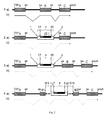
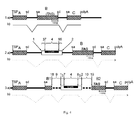
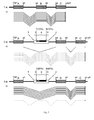
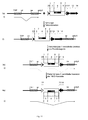
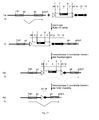
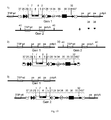
- Primary transcripts whose processing results in splicing into translatable mRNA are shown as a solid line, while transcripts fed for degradation are shown as thin dotted lines.
- the arrowhead at the end of the transcripts indicates the direction of transcription.
- Introns that are spliced from a primary transcript are shown angled down in the primary transcripts.
- the horizontal regions of the primary transcripts represent the exons that make up the mature mRNA.
- Recognition sequences for recombinases and integrases are shown in the Figures as arrowheads within DNA, with oppositely directed arrowheads suggesting the possibility of inversion of interposed DNA segments and rectified arrowheads deletion potential upon interaction with the specific recombinase or integrase.
- Proportional black and white arrowheads indicate that the recognition sequences are mutants for which the interaction with the specific recombinase occurs only once, i. is irreversibly possible and the pair of recognition sequences then no longer react with the recombinase or integrase. After irreversible inversion, the pair of arrowheads for the respective recognition sequences are completely black and the other white.
- the majority of the methods shown schematically here are preferably carried out for generating genetically manipulated animals in such a way that the insertion of the nucleic acid construct into ES cells is carried out, wherein transformants are identified or selected by means of a selection marker gene.
- the selection marker gene still in cell culture, for example in the stage of ES cells, by presence the deleted for the selection marker genes framing recognition sequences specific recombinase.
- the result of the deletion of this selection marker gene is shown in the examples.
- the selection marker gene can be deleted in vivo by mating animals containing a corresponding nucleic acid construct with animals that express the specific recombinase in their germ cells so that it deletes in the fertilized egg cell.
- a tissue can be differentiated or an animal can be produced.
- the orientation of the NMD cassette in the target gene can be altered by means of the recombinase activity, or it can subsequently be deleted and removed from the target gene.
- the activity of the recombinase specific for the recognition sequences may be e.g. by pairing with animal strains expressing these recombinases, preferably tissue-specific and / or inducible, or by viral gene transfer.
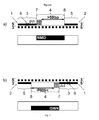
- FIGS. 1a ) and 1c) and 3a) and 3c the structure of NMD cassettes according to the invention is shown in detail as double-stranded DNA.
- Figures 1b ) and 1d) and 3b) and 3d) introduced simplified schematic representations of NMD cassettes use.
- the upper strand represents the codogenic strand and is shown as a solid line.
- the complementary non-codogenic complementary strand is represented as a broken line.
- the Figures 1b ) and 1d) and 3b) and 3d) show a simplified representation of an NMD cassette, which is used in the remaining figures.
- the NMD cassette is displayed as a white rectangle.
- the area marked with "NMD" represents the exon (4), the left and right white areas the intron sections (3) and (5).
- the solid white area in the other half represents the opposite strand.
- the NMD cassette When the black area is located in the upper half and readably marked as "NMD", the NMD cassette is in its active orientation, ie, located in the codogenic strand of a target gene ( Figures 1b ) and 3b )), while the inactive orientation of the NMD cassette shows the designation NMD on the head and from right to left and the lower half, ie the non-codogenic strand blackens ( Figures 1d) and 3d)).
- FIG. 1 is shown schematically the structure of an NMD cassette according to the invention, which is not flanked by recognition sequences for recombinases.
- the construct has a first intron segment (3), an exon (4), followed by a second intron segment (5) from 5 'to 3'.
- the exon (4) is bounded by a splice acceptor site (7) and a splice donor site (8)
- the first intron section (3) arranged in the 5 'of the exon (4) has a schematically represented branching point (6) and a polypyrimidine section (PP) located between the branching point (6) and the exon (4), both at the splicing reaction during participate in the maturation of the mRNA.
- the invention provides that the intron section (3) has no splice donor site at its 5 'end (1). It is also preferred that between the 5 'end (1) and the branching point (6) there are no functional splicing sequences, e.g. has no functional splice acceptor, splice donor sites, branch point and polypyrimidine sequence, or at least in the case of their presence, e.g.
- the intron section (3) thus contains only the functional parts of the 3 'end of an intron, and thus does not represent a complete intron.
- the intron section (3) can be intronic splice enhancers or silencers. (dampers), which do not themselves cause splicing, but affect the splicing of nearby exons.
- Such elements are provided according to the invention for optimizing NMD cassettes.
- the intron portion (3) may be of natural origin or synthetic and contains at least the intronic portions of the splice acceptor site (7) at the 3 'end, and a preferred 10 to 50 bp pyrimidine rich sequence at 5' from the splice acceptor site (7) (PP ), as well as in 5 'direction adjacent the branching point (6).
- the branching point (6) may preferably be spaced 10 to 40 bp or farther from 5 'from the splice acceptor site (7) be, more preferably 30 bp.
- the intron portion (3) preferably comprises at least 10 to 100 bp, so that lariat formation in the splicing operation can be from the splice donor site of an upstream located exon of a target gene to the splice acceptor site (7).
- the second intron segment (5) adjoining the exon (4) in 3 ' comprises at least the intronic portions of a splice donor site (8), preferably at least 10 to 100 bp of an intron, which may be of synthetic or natural origin, so that the sequence of the intron segment (FIG. 5) has a sufficient length to form a lariat upon splicing from the splice donor site (8) to the splice acceptor site of a downstream exon.
- the second intron segment (5) has neither a branch point nor a polypyrimidine segment or a splice acceptor site at its 3 'end (2), ie contains only the functional portions of the 5' end of an intron and likewise does not represent a complete intron It is also preferred that it between the splice donor site (8) at the 5 'end and its 3' end (2) no further functional sequences for splicing, eg has no functional splice acceptor, splice donor sites, branch point and polypyrimidine sequence, or those in the case of their presence, e.g. in the form of cryptic splice donor and acceptor sites, are arranged so that they can not be used for splicing.
- the intron portion (5) may contain intronic splice enhancers or silencers, which themselves do not mediate splicing but affect splicing of nearby exons.
- intronic splice enhancers or silencers which themselves do not mediate splicing but affect splicing of nearby exons.
- Such elements are provided according to the invention for optimizing NMD cassettes.
- the intron portion (5) preferably comprises at least 10 to 100 bp, such that lariatation during splicing occurs from the splice donor site (8) of the NMD mediating exon of a target gene to the splice acceptor site of a target gene adjacent in 3' can occur when the insertion of the construct according to the invention in the immediate vicinity upstream of the branch point of the adjacent exons in 3 '.
- the first and / or second intron sections (3) and (5) may be identical to regions from the target gene, for example to allow homologous recombination, as in the case where only one Exon of a target gene should be replaced by a NMD mediating exon (4), but the remaining sequences of the gene should remain unchanged.
- the exon (4) is bounded by the splice acceptor site (7) and the splice donor site (8).
- the exon (4) has at least one stop codon (STOP), shown here as the preferred embodiment with three stop codons, one in each reading frame, the stop codons preferably being located near the splice acceptor site (7) of the exon (4) and the stop codon furthest in 3 'is preferably at least 50 bp from the splice donor site (8).
- the distance between the splice acceptor site (7) and the stop codon furthest in the 5 'direction is not limited.
- the exon (4) preferably has a minimum size of 50 to 55 bp, more preferably 60 to 100 bp, more preferably a larger number of bp.
- the preferred form of NMD cassette is defined to include the first (3) and second intron sections (5) with the described sequence elements necessary for splicing.
- nucleic acid constructs which have only one region of the exon (4) and introduce at least one stop codon into an exon of the target gene.
- the NMD cassette according to the invention can be produced in a target gene whose first and second intron sections originate from the target gene itself. Therefore, even those NMD cassettes are considered to be included in a target gene, even if the construct for their preparation did not include the preferred complete NMD cassette.
- the NMD-mediating exon (4) can be derived essentially from a natural exon, derived therefrom, or of purely synthetic origin.
- the exon (4) may include splicing enhancer or silencer to optimize its functionality.
- nucleic acid constructs containing NMD cassettes contain, in addition to the exon (4), further exons neither in the same strand nor in the opposite strand.
- the NMD mediating exon (4) will only be effective in a target gene if the NMD cassette is integrated into the genomic DNA of the target cell in a manner that recognizes it as a functional exon and becomes part of the mature mRNA of the target gene.
- This is referred to as the active orientation of an NMD cassette in which its functional elements are located in the codogenic strand of the DNA of the target cell.
- the active orientation of NMD cassettes is schematically shown in FIGS. 1a) and 1b ) as well as 3a) and 3b).
- the inactive orientation is shown in Figures 1c) and 1d) and 3c) and 3d).
- the non-coding strand in FIGS. 1a ) and 1c) and 3a) and 3c) are shown as a broken line, in FIG Figures 1b ) and 1d) as well as 3b) and 3d) proportionately as a continuous white portion against the exon (4) shown in black and marked with "NMD" no splicing functional sequences, eg no functional splice acceptor, splice donor sites, branching points and polypyrimidine sequences, or such , in the case of their presence, eg in the form of cryptic splice donor and acceptor sites, are arranged so that they can not be used for splicing.
- NMD no splicing functional sequences, eg no functional splice acceptor, splice donor sites, branching points and polypyrimidine sequences, or such , in the case of their presence, eg in the form of cryptic splice donor and acceptor sites, are arranged so that they can not be used for s
- sequences of an NMD cassette contained in a target gene do not affect the splicing of its transcripts when the NMD cassette is in its inactive orientation and the NMD-mediating exon is located in the non-codogenic strand of the target gene.
- FIG. 2 shows the various ways in which a NMD cassette in the preferred embodiment with three stop codons can be inserted into a gene for its inactivation and represents the mode of action of the NMD-mediating exon.
- Figure 2.2.a shows schematically how the exon (B) is replaced by insertion of an NMD cassette according to the invention by the exon (4) contained in the NMD cassette.
- the exon (4) can be derived from (B) (B ') and also the intron sections (3) and (5) can be identical to the corresponding regions of the gene.
- the NMD cassette according to the invention is arranged in the codogenic strand of the gene.
- the primary transcript shown in 2.2b) contains the horizontally displayed exon (4) with the associated splice acceptor and splice donor sites (7) and (8), so that the splicing of the pre-mRNA leads to the mature mRNA has at least one stop codon of the exon (4) in the reading frame, which is recognized as a premature Terminationskodon and leads to the degradation of the mRNA.
- Figure 2.3.a shows the preferred embodiment in which the inserted construct of inventive NMD cassette of exon (4) with flanking first and second intron sections (3) and (5) is integrated in an intron of the target gene, the first and second intron sections (3 ) and (5) can replace homologous portions of the intron of the target gene or be introduced as additional intronic sequences into the intron of the target gene.
- the target gene contains the exon (4) as an additional exon.
- the transcribed pre-mRNA in Figure 2.3b the exon (4) with its splice acceptor (7) and splice donor site (8) resulting in splicing into a transcript in which the exon (4) is completely contained and therefore undergoes NMD.
- Figure 2.4a shows the situation that a nucleic acid construct according to the invention is integrated into an exon (B) of a target gene.
- Nucleic acid constructs according to the invention contain, in addition to the exon (4) and first and second intron sections (3), (5) contained in the NMD cassette, additional flanking intron sections (9) and (10) shown as a broken line.
- the additional third intron section (9), located in 5 'from the first intron section or the minimal NMD cassette, has the intronic parts of a splice donor site at the 5' end (not shown here, see (16) in FIG FIG. 9 )) on.
- the additional fourth intron portion (10), located in 3 'of the second intron portion and the minimal NMD cassette respectively, has at its 3' end the intronic portions of a splice acceptor site (not shown here, see (17) in FIG. 9 ) and 5 'from the splice acceptor site, a functional polypyrimidine segment and 5' thereof a functional branching point. Together with the insertion point flanking exon sequences, preferably a protease splice site (not shown here, see (15) in FIG.
- the intronic portions of the splice sites at the 5 'end of the intron portion (9) and at the 3' end of the intron portion (10) form a functional splice donor site (18) and a splice acceptor site (19), respectively.
- the first intron segment (3) and the third intron segment (9) or the second intron segment (5) and the fourth intron segment (10) thus form complete functional introns flanking the exon (4) in 5 'and 3', respectively divide the original exon (B) of the target gene into two functional exons (B1) and (B2).
- the primary transcript ( Figure 2.4b )) of such a modified target gene contains as additional sequence the complete NMD cassette, wherein the first and second In each case, the intron region (3) and (5) is flanked by the additional third and fourth intron sections (9) and (10). This results in the intron sections (3) and (9) being spliced between the splice donor site (18) located at the 3 'end of the exon generated by the insertion (B1) and the splice acceptor site (7) of the exon (4) Connected intron be removed.
- the splice donor site (8) at the 3 'end of the exon (4) reacts with the splice acceptor site (19) at the 5' end of the insertion-generated exon (B2), so that the intron sections (5) and (10) as well splicing a contiguous intron from the primary transcript.
- the at least one stop codon contained in exon (4) enters the reading frame is recognized as a premature stop codon and causes the NMD of the transcript.
- FIG. 3 shows accordingly FIG. 1 ) schematically illustrates the embodiment of the NMD cassette in which the exon (4) additionally or in place of the at least one stop codon has a number of nucleotides, not divisible by 3, characterized by (L / 3 ⁇ N) for shifting the intron phase of the target gene , 3a) shows the active orientation in the codogenic strand in double-stranded representation, under 3c) the inactive orientation.
- the FIGS. 3b ) and 3d) show the same cassette in their active or inactive orientation in the schematic form.
- FIG. 4 is schematically the operation of the NMD cassette according to the invention in the embodiment according to FIG. 3 ) in which the exon (4), in alternative to the preferred embodiment, does not contain a stop codon but has a number of nucleotides that is a multiple of 3 plus 1 or plus 2 additional nucleotides.
- a prerequisite for the application of this embodiment is that a downstream of an exon (4) introduced into the target gene with a number of nucleotides not divisible by 3 and without the preferably provided at least one stop codon, a triplet in one of the downstream exons of the target gene selected from TAA, TAG or TGA, more than 50 bp 5 'from the next splice donor site, which gets into the reading frame due to the displacement of the intron phase caused by exon (4).
- Figure 4.1a schematically shows an unchanged target gene with the exons (A), (B) and (C) whose primary transcript is shown in 4.1b).
- the mature mRNA contains only the horizontally displayed exons contained in the primary transcript.
- the exon (B) contains the base sequence TAG, indicated in parentheses, preferably more than 50 bp apart from the splice donor site (sd) of the exon (B).
- the sequence TAG is not in the reading frame and therefore does not act as a stop codon.
- An exon (4) in an NMD cassette with a number of nucleotides not divisible by 3 and without the preferred at least one stop codon according to the invention can replace an endogenous exon of the target gene (not shown) or as described in US Pat Figure 4.2a ) are introduced as an additional exon into an intron of the target gene, or used in conjunction with the additional intron sections (9) and (10) for insertion into an exon of the target gene ( Figure 4.3a )).
- FIG 4.2 it is shown how an integrated NMD cassette according to the invention, which contains an exon (4) with a not divisible by three number of nucleotides and in the illustrated embodiment not according to the invention preferred stop codon, into the intron between the exons (A) and (B ), wherein the first (3) and second intron portion (5) of the NMD cassette coupled to the exon (4) are linked to the intron regions of the target gene derived from the intron between exons (A) and (B)
- the pre-mRNA which is shown in 4.2b), is processed by splicing into an mRNA, which has only the horizontally drawn exons, and therein the base sequence TAG of the genomic exon (B), due to by not through 3 divisible number of nucleotides in exon (4) caused shift of the intron phase is now in the reading frame and acts as a premature stop codon (bold and italics indicated). Since this premature stop codon is preferably more than 50 bp from the splice donor site (sd) of the exon (B).
- the NMD mediating exon (4) is flanked by a third (9) and a fourth (10) broken line intronic portion, in addition to the first (3) and second intron portions (5) regarding FIG. 2 explained.
- the intronic portions of a splice donor or splice acceptor moiety (not shown) located at the 5 'end of intron portion (9) and at the 3' end of intron portion (10) together with the sequences flanking the insertion point in exon (B) give a functional Splice donor site (18) and a functional splice acceptor site (19), whereby the exon (B) is divided into the exons (B1) and (B2).
- the intron regions (9) and (3) as well as (5) and (10) thus act as complete introns connecting the NMD mediating exon (4) with the newly generated exons (B1) and (B2).
- FIG. 5 shows the embodiment of the present invention in which the degradation of the transcript mediated by the NMD cassette does not occur as in Figs Figures 2.2a) to 2.4b) as well as in the FIGS. 4.2a) to 4.3b shown, is complete, but only proportionally.
- the exon (4) is a constitutive exon is designed to come in the FIG. 5 ) alternatively spliced forms of exon (4) are used.
- the fractional degradation of mRNA caused by alternatively spliced forms of exon (4) will then result in hypomorphic mutants in relation to the translation product unless other post-transcriptional processes abrogate the effect caused by the proportionate degradation of the mRNA.
- the NMD cassette according to the invention is preferably modified such that the splice acceptor site (7) and / or the splice donor site (8) contained in it are selected to be functionally weaker, so that exon (4) is not proportionately as a functional exon acts and is therefore cut during splicing together with the flanking introns from the primary transcript, so that the exon (4) is no longer contained in a proportion of the mRNA.
- This situation is schematic in the FIGS. 5.2) and 5.3 ).
- Figure 5.1a shows a gene that is not subject to alternative splicing, therefore all its transcripts are processed into mature mRNA ( Figure 5.1b )).
- Figure 5.2a the splice acceptor site (7) and the splice donor site (8) are marked with (10%) to indicate the reduction of NMD cassette mediated degradation of mRNA to approximately 10%.
- the functionality of the splice acceptor and splice donor sites (7 (10%)) and (8 (10%)) is reduced by about 90% over a fully functional splice acceptor and / or splice donor site, leading to alternative splicing of the transcripts leads, as shown schematically under 5.2b). It shows Fig.
- the solid line shows the transcripts in which the splice acceptor and splice donor sites used (7 (10%)) and (8 (10%)) do not react.
- the exon (4) of the NMD cassette is not recognized as such and is completely removed from the transcript together with the flanking introns so that it is not subject to NMD and can be used to translate the gene product.
- Figure 5.3a shows the situation in which functional elements of the NMD cassette participating in the splicing process are less limited in functionality than in Figure 5.2a ).
- splice acceptor and splice donor sites (7 (90%)) and (8 (90%)
- a reduction in the functionality of NMD cassette sequence elements involved in the splicing process results in 10% that only 10% of the primary transcripts contain the NMD mediating exon (4) and therefore undergo degradation, while the remaining 90% of the primary transcripts are processed so that the exon (4), along with the introns flanking it, is spliced out of the transcript due to the reduced functionality of the splicing process elements of the NMD cassette.
- Transcripts from which exon (4) is spliced off contain no premature stop codon according to the invention and can therefore be processed into the mature mRNA which is available for translation ( Figure 5.3b ).
- functional elements of the reduced functionality functionality of the NMD cassette may be obtained from natural genes that undergo alternative splicing, such as splice acceptor and splice donor sites of reduced functionality from genes in which a non-terminal exon is derived from a proportion of the primary Transcripts are removed by processing and are not included in a proportion of the mature mRNA.
- alternative splicing such as splice acceptor and splice donor sites of reduced functionality from genes in which a non-terminal exon is derived from a proportion of the primary Transcripts are removed by processing and are not included in a proportion of the mature mRNA.
- branching points and polypyrimidine segments of reduced functionality may also be used to prepare alternative NMD mediating exons of the invention.
- the invention for the preparation of alternatively spliced NMD mediating exons envisages the use of so-called splice silencers, which may be part of an NMD mediating exon as exonic splice silencers, or intronic splice silencers can be located according to the invention nucleic acid constructs.
- the constructs can be used for the partial or complete inactivation of individual splice variants of a target gene. This is schematically in FIG. 6 ) is shown schematically by the example of complete inactivation of a splice variant of a gene.
- Figure 6.1a shows the example of a gene with alternatively used 3'-terminal exons (B) and (C), which are each defined by a specific splice acceptor site (sa1) or (sa2) and a separate polyadenylation signal (polyA1) or (polyA2).
- sa1 or sa2 a specific splice acceptor site
- polyA1 or polyA2 a separate polyadenylation signal
- sd polyadenylation signal
- the alternative transcripts of the unchanged gene are shown schematically in FIG Figure 6.1b) and 6.1c) each containing the common exon (A) and one of the exons (B) or (C).
- FIG 6.2a illustrate how an exon (4) according to the invention including flanking first (3) and second intron portions (5) of an NMD cassette is integrated into the intron of the target gene located between the alternatively spliced exons (B) and (C).
- the solid line schematically shows the primary transcript containing the alternative exon (B) located at 5 '.
- This primary transcript is processed by excising the angled intron sections into an mRNA containing only exons (A) and (B), the latter with its specific polyA sequence.
- the alternative primary transcript is shown in which the NMD mediating exon (4) according to the invention is contained. During splicing, the premature stop codon contained in exon (4) is recognized and corresponding transcripts are supplied to the NMD. As a result, only the gene product encoded by the mRNA containing the exons (A) and (B) is synthesized.
- FIGS. 7) to 9 show the possibilities of how NMD cassettes according to the invention can be introduced into target genes of a eukaryotic organism. It involves the replacement of an endogenous exon by an NMD mediating exon according to the invention, the insertion of an NMD cassette according to the invention into an intron and the insertion of an NMD cassette according to the invention into an exon of a target gene. While insertion into an intron may be targeted by homologous recombination or by chance in the form of a gene trap or a transposon, site directed mutagenesis by means of homologous is intended to replace an endogenous exon by an NMD mediating exon, as well as insertion of an NMD cassette into an exon Recombination preferred.
- FIGS. 7) to 9 ) initially only methods for the direct production of complete gene inactivation are shown. However, the same methods can also be used for constructing conditional mutants with constructs containing recognition sequences for recombinases according to the invention.
- FIG. 7 shows a possible procedure for generating an NMD-mediating exon in a gene of a target cell, wherein the exon (4) according to the invention is naturally occurring in replaces the exogenous exon (B).
- the nucleic acid construct used for genetic manipulation comprises a selection marker gene (13), for example a resistance gene, which is more preferably flanked by homologous recognition sequences for a recombinase or integrase (14), with which the selection marker gene can be selectively removed from the genome ,
- the generation of the NMD cassette according to the invention in the target gene takes place here by the creation of a premature stop codon (12) within a natural exon by homologous recombination of a DNA fragment having sufficient homology and length for recombination with the natural gene, as well as an altered, Sequence segment TAG (12) derived in this case from the codon GAG (11) of the exon (B), at a distance of at least 50 bp from the splice donor site (8).
- premature stop codons can also be generated by exchanging two, three or more nucleotides or inserting one to three additional nucleotides.
- the DNA fragment to be introduced into the target cell is coupled to a selection marker gene as in Figure 7.2) as a resistance gene (13) exemplified.
- a selection marker gene as in Figure 7.2
- the resistance marker gene (13) can be selectively removed from the insertion site by means of the flanking recognition sequences for an integrase or recombinase (14), after which a single recognition sequence (14) remains in the locus.
- the premature stop codon contained in the thus generated exon (B ') is recognized during the processing of corresponding transcripts, which leads to the degradation of the same by means of NMD. This is schematically in Figure 7.3b) shown.
- FIG. 8 schematically illustrates the inventive preferred insertion of an NMD cassette according to the invention into an intron of a gene of a target cell.
- the insertion can specifically by homologous recombination, or be the result of random insertion, as occurs with the use of gene traps and transposons.
- the insertion into an intron of a target gene is performed in mouse ES cells for complete gene inactivation.
- the NMD cassette which according to the preferred embodiment of the invention is linked to a resistance gene (13) flanked on both sides by recognition sequences (14) for a recombinase or integrase, these regions are flanked with DNA fragments (not shown) which are homologous to the sequences of the target gene present upstream or downstream of the desired insertion point, respectively.
- the insertion of the nucleic acid construct according to the invention from the NMD cassette and the adjacent selection marker gene (13) into an intron of the target gene takes place.
- selection marker genes (13) instead of a resistance gene such as the neomycin resistance gene, it is also possible to use those which permit positive and / or negative selection, for example fusion proteins of a puromycin resistance gene with the herpes simplex thymidine kinase gene (positive selection with puromycin, Negative selection with ganciclovir) or an expression cassette for hypoxanthine-guanosine-phosphoribosyl-transferase (HPRT) for which in ES cells without functional endogenous HPRT gene positive with 6-thioguanosine and negative with HAT medium are selected.
- fusion proteins of a puromycin resistance gene with the herpes simplex thymidine kinase gene positive selection with puromycin, Negative selection with ganciclovir
- HPRT hypoxanthine-guanosine-phosphoribosyl-transferase
- transformants can be selected and enriched so that it is possible to isolate individual clones and examine for the presence of the desired mutation.
- Figure 8.2 shows the organization of a mutant allele of the target gene after insertion of the NMD cassette.
- Figure 4 shows that the mature mRNA of the target gene with intron-integrated NMD cassette contains the NMD mediating exon (4) while the full introns coming from the intron sections (3) and (4) of the NMD cassette and from the intron sections (3 ) and (4) flanking regions of the intron into which the insertion occurred are formed when splicing out of the Transcript will be removed.
- the processed RNA contains a premature stop codon, preferably three, one for each reading frame, and / or exhibits a shift in the intron phase, each resulting in degradation of the mRNA by NMD.
- FIG. 9 shows how an NMD cassette according to the invention is used for the complete inactivation of a target gene by insertion into an exon.
- the presentation refers to the preferred one-exon genes for this application, which are characterized by the lack of introns.
- insertion into an exon can also take place in genes which have two or more exons and thus also introns, for example in cases in which introns contain essential regulatory elements and an insertion of an NMD cassette would lead to inactivation of these elements.
- FIG. 9 1a shows how the transcription start point (TSP) gene is transcribed to its polyadenylation signal to obtain the primary transcript shown under b).
- the insertion of the construct preferably takes place in a proteas splice site (15) located in the coding sequence of the gene, which sequence has the sequence CMAGR.
- the construct contains, in addition to the NMD cassette according to the invention, with first intron section (3), exon (4) and intron section (5) in 5 ', a third flanking intron section (9), and in 3' a flanking fourth intron section (10). Between the second intron section (5) and the fourth intron section (10) is located a resistance marker gene (13) bordered by rectified recognition sequences (14).
- the 5 'end of the construct is formed by the intronic portions of a splice donor site (16) of the third intron segment (9), the 3' end of the intronic portions of a splice acceptor site (17) of the fourth intron segment (10).
- the corresponding primary transcript contains the sequences of the two exons (A1) and (A2) derived from the original exon (A), the NMD - mediating exon (4) and the flanking, complete intron - forming, first and third (3, 9) and second and fourth (5, 10) intron sections and the remaining recognition sequence (14) of the recombinase, by means of which the selection marker gene (13) was eliminated.
- the premature stop codon in exon (4) is recognized by the NMD machinery and the transcript of degradation is delivered.
- the invention provides the conditional inactivation of genes, the conditional reactivation of previously inactivated genes as well as the multiple conditional change of the activity state of genes by means of inventive NMD cassettes.
- inventive NMD cassettes The necessary procedures are described in the following FIGS. 10) to 15 ) shown schematically. In each case, only the case of an inserted into an intron NMD cassette is shown.
- the invention also provides these applications for the cases in which an endogenous exon is replaced by an exon according to the invention, or an NMD cassette is inserted into an exon of a gene, since both methods such as those in the FIGS. 7 ) and 9 ) are also based on flanking an NMD-mediating exon of the invention by complete functional introns.
- the methods for conditionally changing the state of activity of genes are as described in the FIGS. 10) to 15 ) is preferred for use in the endogenous genes of a target organism.
- the invention also provides for use in non-endogenous genes that have been inserted as transgenes into the genome of the target organism.
- FIGS. 10) to 15 only the preferred insertion of cassettes according to the invention into introns of genes is shown by homologous recombination.
- FIGS. (10) to (15 ) method for the conditional change of the activity state of eukaryotic genes by using recombinases are also for genes in which NMD cassettes according to the invention have been randomly inserted, for example in the form of gene traps, retroviral vectors and transposons containing NMD cassettes.
- FIGS. 10) to 15 Orientation of the construct shown in the item 2) in the coding or non-coding strand of the target gene after homologous recombination is inventively given by the arrangement to the target gene homologous DNA sections flanking the NMD cassette and the associated resistance gene.
- the orientation of the NMD cassette in the corresponding constructs is in the FIGS. 10) to 15 ) in each case on the right under point 1).
- the immediate result is an inactivated or unaffected target gene.
- this is deleted after selection manipulated target cells by activity of the recombinase 1, which is specific for the flanking recognition sequences (14).
- the invention firstly provides the recombinase-mediated inversion of an NMD cassette according to the invention, whereby its functional elements enter the respective complementary strand of the target gene.
- the invention provides, as an alternative, the recombinase-mediated deletion of the NMD cassette to reactivate the target gene.
- the invention prefers the inversion and deletion of NMD cassettes of the invention in vivo in genes to which they have been inserted.
- the invention also provides the inversion into the bacteria expressing recombinase and in vitro by contacting with the specific recombinase. This is advantageous, for example, when a nucleic acid construct for introducing an NMD cassette into a genomic locus by means of homologous recombination does not contain the cassette in the required orientation
- the representation of the conditional embodiments of the invention in the FIGS. 10) to 15 takes place in each case on a gene consisting of two exons, which is shown in each case under point 1a) on the left.
- the corresponding transcript can be found under point 1b).
- To the right is shown the construct used for mutagenesis.
- Under point 2) is the genomic organization of the target gene after insertion of the for mutagenesis used construct shown.
- Point 3a) in each case shows the genomic organization of the target gene after recombinase- or integrase-mediated deletion of the resistance gene contained in the nucleic acid constructs used for the mutagenesis (13).
- the transcript is transcribed, which is transcribed by the mutated gene. Transcripts that are processed into mature mRNA are shown by solid lines. The NMD underlying transcripts are shown with dotted lines.
- FIG. 10 shows a gene with two exons and 1b) its primary transcript, and under 2) the same gene after insertion of an NMD cassette according to the invention flanking recognition sequences for a recombinase (20, 21) and with a resistance gene as Selection marker gene (13) flanked by recognition sequences for another recombinase or integrase (14).
- the NMD cassette is first integrated into the target gene in its inactive orientation, ie the functional elements are located in the non-codogenic strand of the gene so that they can not participate in the splicing process of the primary transcript.
- the gene is therefore initially transcribed and spliced normal and the gene product expressed.
- the construct will each have terminal flanking DNA sequence segments (not shown) that are homologous to portions of the gene adjacent to the desired insertion site and of sufficient length to facilitate homologous recombination to enable.
- the resistance gene is so completely provided with regulatory elements that it can express its phenotype regardless of the place of insertion and can be used for the selection of genetically manipulated cells.
- the NMD cassette is flanked by recognition sequences for a recombinase (20, 21) which, according to the preferred embodiment, are arranged to allow a one-time, ie irreversible, inversion upon interaction with their specific recombinase.
- the irreversibility of the inversion can be realized by using mutants of natural recognition sequences for recombinases, for example mutants of loxP or FRT, in which the inversion causes the recognition sequences to be changed so that they no longer belong together the recombinase can be used. This is indicated by the black and white representation of the recognition sequences.
- the differently colored inner part of the arrowheads corresponds to the portions of the recognition sequences participating in the inversion and recombining with the outer portions of the respective other recognition sequences to recognition sequences with altered base sequence.
- the selection marker gene (13) it is preferable to delete the selection marker gene (13) by the presence of recombinase or integrase specific for the latter flanking recognition sequences (14).
- the result of deletion of the selection marker gene (13) is shown in 3a), wherein the primary transcript between the exons of the original target gene as part of the intron sequence contains the NMD cassette in its inactive orientation.
- 3b) shows how the NMD cassette is spliced out of the primary transcript as part of the intron, whereby the mature mRNA of the target gene remains unchanged and leads to the expression of the gene product.
- an NMD cassette flanked by recognition sequences (20, 21) and coupled to a resistance marker gene 13 is inserted into a target gene in such a way that the functional elements of the NMD cassette are located in the codogenic strand of the target gene ( Figure 11.2) ).
- the presence of the recombinase or integrase for the recognition sequences (14) flanking the resistance marker gene (13) is used for its deletion.
- Figure 11.3a shows that the presence of the NMD mediating exon (4) in the codogenic strand of the gene results in its immediate inactivation, since the premature stop codon contained in exon (4) resembles that in Figure 11.3b) displayed NMD triggers.
- Figure 11.4) shows that the presence of the NMD cassette flanking recognition sequences (20, 21) specific recombinase 2 leads to the inversion of the NMD cassette and thus to their inactive orientation and to the arrangement of their functional elements in the non-codogenic strand of the gene. As a result, the inversion of the NMD cassette results in the in FIG. 11 ), thus reactivating a gene previously inactivated by an NMD cassette.
- FIG. 12 Another embodiment for the conditional reactivation of eukaryotic genes is in FIG. 12 ).
- the initial inactivation of the target gene takes place by arranging the functional elements of an NMD cassette with identically oriented recognition sequences for a recombinase (24) flanked in the codogenic strand of the target gene ( Figure 12.3a) ), whereby the transcripts of the mutated gene are subject to NMD ( Figure 12.3b) ,
- the presence of the recombinase 2 leads to the deletion of the NMD cassette flanked by the recognition sequences (24) for these recombinase recognition sequences, according to which a recognition sequence (24) remains in the intron of the target gene ( Figure 13.4a) ).
- the deletion of the NMD cassette has the advantage that only short sequence sections of the introduced nucleic acid construct remain in the genome of the target cell.
- the deletion offers the significant advantage that it can also be used for recombinases for which no detection sequences suitable for a single irreversible inversion are available, such as. the recombinase.
- FIGS. 13) to 15 show in training in the FIGS. 10) to 12 ), the use of nucleic acid constructs according to the invention for the multi-conditional change of the activity state of eukaryotic genes.
- the genes can be active first, ie before the application of a recombinase, ie that the functional elements of the NMD cassette are in the non-codogenic strand of the gene, or inactivated by the presence of the functional elements of an NMD cassette in the codogenic strand of the gene.
- the multiple conditionality of NMD cassettes is preferably achieved by flanking the NMD cassette adjacent to a pair of first recombinase recognition sequences (20, 21) with additional pairs of recognition sequences for one or more other recombinases.
- the invention provides for the production of multiple conditionality by means of recombinase-mediated inversion and deletion optionally further other arrangements of recognition sequences for recombinases, which are not shown here.
- the arrangement may be such that only one recognition sequence for a recombinase is present on one side of the NMD cassette and the second recognition sequence for this first recombinase on the other side of the NMD cassette is flanked by recognition sequences for a second other recombinase.
- Another proposed alternative to conditionality is the use of a "flex switch", which is also not shown.
- FIG. 13 schematically shows how a construct comprising an NMD cassette in inactive orientation with flanking two pairs of recognition sequences (20, 21) and (25, 26), each once for irreversible inversion, and a resistance marker gene (13 ) flanked by deletion-appropriate recombinase recognition sequences (14) into which the intron of a target gene is inserted. Under 13.2) the genomic organization of the target gene is shown after homologous recombination of the construct.
- the processing of the primary transcript shown under 3b) leads to a mature transcript unchanged from that of 1b), since the inserted sequences are not recognized by the splicing apparatus due to their orientation and be removed as parts of the natural intron.
- the NMD cassette In the presence of the recombinase 2 specific for the recognition sequences (25, 26) flanking the NMD cassette and the recognition sequences (20, 21) for the recombinase 3, the NMD cassette together with the recognition sequences flanking it (20, 21) inverted. This places the functional elements of the NMD cassette in the coding strand ( Figure 13.4a ), and the processed transcript includes the NMD mediating exon (4). The premature stop codon contained in exon (4) is recognized during processing of the transcript so that it is subject to degradation.
- FIG. 14 schematically illustrates the use of the NMD cassette according to the invention in the development of the invention, in which, in addition to the flanking recognition sequences (20, 21) provided for inversion, a further pair of flanking recognition sequences for another recombinase (29) is included, due to their same orientation in the presence of the recombinase leads to the deletion of the NMD cassette.
- the inserted NMD cassette is first arranged in its inactive orientation in the intron of the target gene ( Figure 14.3a) ) so that the primary transcript is processed by splicing into an unmodified mRNA compared to the wild-type mRNA.
- recombinase 2 which is specific for the differentially oriented recognition sequences (20, 21) provided for inversion, leads to the inversion of the NMD cassette in order to ensure its arrangement in the coding strand of the target gene ( Figure 14.4a) ) and the NMD of the transcript ( Figure 14.4b) ).
- recombinase 3 which is specific for the identically oriented recognition sequences (29), leads to the deletion of the NMD cassette ( Figure 14.5a) ) and thus reactivating the gene, which in turn expresses an unchanged mRNA compared to the wild-type mRNA ( Figure 14.5b) ).
- FIG. 15 shows a multi-conditional embodiment of the invention, in which unlike the in FIG. 13 ) and 14 ) initially conditionally inactivatable Genes a gene after insertion of the construct is initially inactivated and then reactivated and subsequently optionally can be inactivated again.
- This is achieved by inserting the NMD cassette into the intron of the target gene in such a way that it is arranged in its active orientation ( Figure 15.2) ) That is, the functional elements of the NMD cassette are in the codogenic strand of the gene.
- the resistance gene (13) is first deleted by the presence of the recombinase 1 specific for its flanking recognition sequences (14). After the deletion of the resistance gene ( Figure 15.3a ), the gene is inactivated due to the presence of the functional elements of the NMD cassette in its codogenic strand and does not express mature mRNA ( Figure 15.3b) )
- the NMD cassette In the presence of the recombinase 2, which is specific for the recognition sequences (20, 21), the NMD cassette is inverted in its inactive orientation, so that the functional elements of the NMD cassette are no longer in the codogenic strand of the gene ( Figure 15.4a) ) and splicing occurs only between the two endogenous exons of the target gene ( Figure 15.4b ), resulting in a mature transcript unchanged from the wild-type mRNA.
- the NMD cassette is inverted again in the target gene so that the functional elements of the NMD cassette reenter the codogenic strand of the target gene ( Figure 15.5a ) and inactivate it by recognizing the premature stop codon of the exon (4) in the RNA and delivering the transcript to the NMD.
- the invention provides for the use of NMD cassettes in nucleic acid constructs acting as gene traps. This offers the advantage that even genes in target cells can be mutated with NMD cassettes which have no or insufficient ability for homologous recombination.
- embodiments of NMD cassettes according to the invention as gene traps offer the advantage that it is also possible to mutate unknown genes.
- nucleic acid constructs are provided, which, as in FIG. 16 ), in addition to the NMD cassette have an incomplete selection marker and / or reporter gene, the functionality of which is produced only after insertion into a gene when portions of the gene hit complete the selection marker and / or reporter gene.
- expression of a selection marker and / or reporter gene designed as a 3'-terminal exon occurs as an exon trap when the gene trap has been inserted downstream of a splice donor site of an exon. Accordingly applies to promoter and polyA traps, which are not shown here.
- the invention provides for the NMD cassette, on the one hand, to prevent hypomorphic mutations of a gene which has not been completely inactivated by the selection marker and / or reporter gene by deletion of the selection marker gene. and / or completely inactivate reporter gene by placing the NMD cassette in an operative position.
- the NMD cassette is intended to convert a gene completely or partially inactivated by a selection marker and / or reporter gene into a multi-conditional form.
- a disadvantage of this embodiment is that in the case of the preferred variant as an exon trap, three independent constructs are required, which contain the selection marker and / or reporter gene in each case one of the three possible intron phases.
- Nucleic acid constructs corresponding to this embodiment are, in addition to the use as gene traps, also intended for so-called "targeted trapping", in which a nucleic acid construct initially provided as gene trap is flanked with sequences which are homologous to regions of a gene in the genome of a target organism into which the cassette homologous recombination is to be introduced. Since the genomic organization of a locus mutated by targeted trapping with a nucleic acid construct of this embodiment results in the organization of a locus into which a corresponding gene trap has been inserted, targeted trapping is not specifically illustrated here.
- an NMD cassette according to the invention itself acts as Genevaalle. Since in this case no endogenous functions of the target gene are used for the expression of the selection marker gene
- the invention provides a compound of the NMD cassette with a complete expression cassette for a selection marker gene, which is preferably selectable in eukaryotes and prokaryotes.
- the independent expression of the selection marker gene offers the advantage that it can also be used to make genes that are inactive in the cells in which the insertion takes place.
- the NMD cassette is independent of the intron phase, all cells with alleles in which an NMD cassette has been inserted in the preferred embodiment with three stop codons in each reading frame into an intron of a gene.
- a disadvantage of this embodiment is that even cells are selected in which an NMD cassette was inserted into intergenic regions.
- 20% of the mammalian genome consists of introns and the NMD cassette can be converted to its active orientation by recombinases, every fifth cell in this embodiment is useful for the production of conditionally inactivatable and conditionally reactive alleles.
- the invention provides the flanking of acting as Geneva all constructs with additional sequences of natural or synthetic origin, which do not contain splice signals or other regulatory sequences such as promoters or polyA signals. These sequences are designed to protect the actual gene library from loss of elements, as random sequences are often lost upon random insertion into the genomic DNA. Since these protective sequences are insignificant in terms of the inactivation of a target gene, they are included in the Figures 16 ) and 17 ) not shown.
- the invention provides for introducing nucleic acid constructs according to the invention, which are designed as gene traps, into target cells by means of transfection.
- target cells are preferably murine ES cells into which the nucleic acid constructs according to the invention are preferably transfected by means of electroporation.
- target cells can also be cells of other organisms from which non-human complete organisms can be produced.
- FIG. 16 Figure 1 shows an embodiment of the invention in which the NMD cassette is used as part of a construct used as a gene trap.
- the NMD cassette is coupled to a reporter gene and / or selection marker gene (30). Since in the preferred variant of this embodiment a fused ⁇ -galactosidase / neomycin resistance gene is provided, this is referred to below as the reporter / selection gene.
- the reporter / selection gene is preferably flanked by recognition sequences (14) for a recombinase which can be used to delete the reporter / selection gene (30).
- the NMD cassette according to the invention offers the advantage that it can be targeted in its active ( Figure 16.1a) ) or inactive ( Figure 16.4a) ) Can be coupled to the reporter / selection gene (30) and, accordingly, after insertion into a randomly struck gene, still referred to as a target gene in the context of this invention, depends thereon.
- the target gene is in each case converted into a form whose activity state can be changed twice conditionally (( FIG. 3a ) and Figure 6a)).
- the reporter / selection gene (30) is designed as a 3'-terminal exon.
- it has the elements necessary for the function of a splice acceptor at the 5 'end. These are in 5 ' ⁇ 3' direction at least one branch point, a Polypyrimidinabêt and a splice acceptor site. For simplicity, these elements are summarized as (31).
- the reporter / selection gene is designed to be C-terminally fused to the peptide encoded by the exons located upstream of the gene. Therefore, the invention looks for this Embodiment three independent nucleic acid constructs in which the reporter / selection gene is in each case in a different intron phase
- the transformants undergo functional complementation of the missing element in the reporter / selection gene (30), in the case shown, to translate a fusion protein encoded by an mRNA selected from upstream of inserted gene-isolated localized exons of the target gene and the reporter / selection gene (30) containing 3'-terminal exon after correct splicing arises.
- the corresponding transcripts are in Figure 16.2b) and 16.5b) shown.
- Such transformants can be distinguished on the basis of the activity of the reporter / selection gene (30) from those in which the construct is not integrated in the appropriate reading frame and consequently, for example, no fusion protein is translated, as well as transformants in which the construct is inactive Gene is integrated in the wrong orientation, in non-transcribed regions of an otherwise active gene, or in intergenic regions.
- the invention also provides that the mRNA encoding the fusion protein used for selection is used for identifying the insertion site by means of suitable PCR methods known to the person skilled in the art.
- the invention provides for a complete inactivation of such target genes by means of the NMD cassette.
- the invention it is preferred according to the invention to delete the sections of the construct used as gene allele which are necessary for the expression of the reporter / selection gene (30) after insertion by the presence of the recombinase 1 flanking the recognition region (14) flanking this region.
- the coding sequences of the reporter / selection gene (30) are the 5 'of which are localized elements necessary for splicing the exon (31), and located in 3' of the coding sequences 3'-UTR (33) and the polyA signal (32) deleted.
- the deletion of the reporter / selection gene in the target gene causes the target gene to be reactivated or, in the case of hypomorphic mutants, to return to full activity, each expressing a mature mRNA which is indistinguishable from that of the wild-type gene is ( Figure 16.6b ).
- genes mutated using a gene of the described embodiment correspond, after deletion of the reporter / selection marker gene, genes into which a doubly invertible NMD cassette has been introduced by homologous recombination ( FIG. 13 ) and FIG. 15 )). Because the other possible uses of double invertible NMD cassettes are based on the Figures 13 ) and 15 ), this is not shown here.
- the NMD cassette directly acts as an inactivating element, ie independent of incomplete reporter / selection genes, as provided in the other embodiment of gene traps.
- a selection marker gene is used which contains all the regulatory elements necessary for its expression.
- the invention provides for selection marker genes with which both in eukaryotes and in prokaryotes can be selected, for example the neomycin / kanamycin resistance gene.
- a prokaryotic termination signal (not shown) and a eukaryotic 3' UTR (33) connect to the resistance gene bounded in 3 'by a eukaryotic polyA signal (32).
- the bifunctional resistance gene it is also preferred in this embodiment to couple the bifunctional resistance gene to a prokaryotic replication origin (34).
- a genomic fragment containing a gene of this embodiment can be cloned into bacteria by "Plasmid Rescue" and the point of insertion can be identified by sequencing the plasmid.
- the invention provides to use in this way isolated genomic fragments containing a gene trap in the intron of a gene to generate additional mutants with a different genetic background.
- a genomic fragment propagated in bacteria and containing a gene trap in an intron of a gene is linearized again and homologously recombined in the same locus of another target cell.
- the mutation can be introduced into another genetic background, e.g.
- this method can be used to eliminate the mutation from cells that have the ability to contribute to the germ line, e.g. a differentiated ES cell clone to transfer to cells that still possess this ability.
- FIGS. 17.1a) and 17.4a) show the preferred flanking of the components of the bifunctional resistance gene (35, 36, 33, 32) and the replication origin (34) coupled thereto with identically oriented recognition sequences for a first recombinase intended for the deletion of the resistance gene and the origin of replication.
- invertible NMD cassettes coupled to the bifunctional resistance gene are preferred.
- execution of the NMD cassette with three stop codons in the NMD-mediating exon (4), one each in each of the three possible reading frames and each at least 50 bp from the splice donor site of the exon (4), is preferred since this embodiment is for inactivation all genes with at least one intron is suitable.
- the NMD mediating exon (4) is located in the same strand as the coding sequences of the resistance gene (36). Alternatively, the two elements may also be located in different strands (not shown). To enable inversion of the NMD cassette, it is flanked by recombinase recognition sequences. It is in the FIGS. 17.1a) and 17.4a) shown flanking with two pairs of recognition sequences (20 and 21 and 25 and 26), each allowing only an irreversible inversion is preferred. Other embodiments of the flanking with recognition sequences for recombinase, eg for only one inversion or for an inversion and one deletion, are not shown.
- FIGS. 17.2a) and 17.5a) show the genomic organization of target genes after insertion of gene traps of the preferred embodiment.
- the genomic organization depends on the orientation in which the gene gene was inserted into the target gene. Since the expression of the resistance gene, indicated by the arrows under ( Figure 17.2b) ) or via ( Figure 17.5b) ) the in Figure 17.2a) and the coding sequence of the resistance gene (36) and its 3 'UTR (33), regardless of whether the gene strain was inserted in an intron of a gene, clones must first be identified in which the insertion is not in intergenic regions or in Exons occurred. Since the mammalian genome consists of 20% introns, every fifth clone becomes a gene trap of the in FIG. 17 ) in an intron, which can be identified by means of the PCR methods known to the person skilled in the art or by means of the "plasmid rescue" described above.
- the NMD mediating exon (4) acts after recombinase mediated deletion of the resistance gene whose result in Figure 17.3a) immediately inactivating the target gene, since one of the stop codons contained in the NMD cassette enters the reading frame of the gene and triggers the NMD of its transcripts ( Figure 17.3b ).
- FIGS. 17.5a) to 17.6b) illustrate the case in which the same nucleic acid construct was inserted into the target gene in opposite orientation, with the NMD-mediating exon (4) contained in the NMD cassette being in the non-codogenic strand of the target gene after insertion ( Figure 17.4a) ). Because of the inactive orientation of the NMD cassette expresses the target gene mature transcripts ( Figure 17.6b) ), which are indistinguishable from those of the wild type gene used in the Figures 17.1b) and 17.4b) are shown.
- the preferred dual invertibility of the NMD cassette in gene traps of the type described herein offers the advantage according to the invention that in case the NMD mediating exon (4) is in the coding strand of the target gene after insertion and the target gene is directly inactivated ( Figure 17.3a) ), the gene conditional, eg reactivate only in a certain tissue and / or at any given time.
- the gene can be converted by inversion by means of one of the recognition sites (20 and 21) or (25 and 26) specific recombinase in a conditionally inactivatable form that can be used, the gene conditional, eg only inactivate in a particular tissue and / or at a particular time.
- a gene that, as in Figure 17.6a) represented, the NMD-mediating exon (4) of the gene trap in the non-codogenic strand be used directly as a conditionally inactivatable gene.
- the gene By inverting the NMD cassette by means of one of the recognition sites (20 and 21) or (25 and 26) specific recombinases, the gene can be inactivated, this inactivation conditionally can be reversed by means of the other recombinase.
- the various possibilities offered by the multiple inversion of an acting as Genfalle NMD cassette is not shown here because the in the FIGS.
- the invention provides, instead of the use of gene traps, the introduction of nucleic acid constructs according to the invention by means of retroviral gene transfer.
- Corresponding nucleic acid constructs are used to package in packaging cells an RNA transcribed from the construct together with the viral proteins necessary for the reverse transcription and for the insertion into the genome of a cell into virus coat proteins.
- the virus particles thus prepared are intended to transduce the target cells. After the virus contained in the virus particles RNA is released in the target cell, it is reverse transcribed and the resulting DNA fragment is randomly inserted into the genome of the target cell.
- a preferably doubly invertible NMD cassette coupled to a resistance gene (13) flanked by recognition sequences for a recombinase (14), at least in 5 'with a retroviral packaging signal ( ⁇ ) of a retrovirus, a primer binding site (PBS, "primer binding site") for hybridizing a primer for the reverse transcriptase serving tRNA, as well as a 5 '"long terminal repeat"(5'LTR) to connect.
- PBS primer binding site
- 5'LTR 5 '"long terminal repeat
- the construct is bounded by at least one polypurine segment (PPT) and a 3' long terminal repeat (3'LTR).
- the execution as self-inactivating retroviral vectors is preferred in which the "long terminal repeats" are converted in the course of reverse transcription into non-functional forms (iLTR), so that after insertion into a target gene ( Figure 18.2) ) can no longer be used by a reverse transcriptase and mobilization with insertion in another locus can be ruled out.
- iLTR non-functional forms
- the insertion point can be determined by means of suitable PCR methods. It applies as for the in FIG. 17 ) gene clones are found to cause an intron of one gene in every fifth cell due to the 20% portion of the introns on the genome.
- the genomic organization of the locus corresponds to that in Figure 17.3a) for the insertion of gene traps.
- the reverse orientation of retroviral constructs in a target gene corresponds to that in Figure 17.6a) gene trap situation, ie the gene is not inactivated, and is not shown here.
- the activity state of a gene into which a retroviral NMD construct according to the invention has been inserted can be conditionally altered.
- the two-way inversion of a NMD cassette provided in the preferred embodiment is disclosed in US Pat Figures 13 ) and 15 ) for both orientations and is therefore not shown here.
- the invention provides for the use of NMD cassettes in transposons. Suitable for this are all embodiments of the NMD cassette, preferably those in connection with a selection marker and / or reporter gene, as they are known for gene traps in the Figures 16 ) and 17 ) are shown.
- the NMD cassette and associated with her recombinase recognition sequences and the adjacent resistance gene are shown.
- the recognition sequences for the transposases “sleeping beauty” and “frog prince” are preferred.
- the construct outside of the transposase recognition sequences (37) can be flanked by further sequences (not shown), eg with regions homologous to a target gene, if the insertion is to be targeted , or in the case of random insertion in the form of a gene trap, with sequences serving merely to protect the functionally important elements, since random sequences can be lost in the random insertion into the genomic DNA.
- the invention envisages mobilizing nucleic acid constructs designed as eukaryotic transposons in vivo by expressing the specific transposase (38) and converting it from one locus (gene 1) into another (gene 2) ( Figure 19.1) ) by bringing the required transposase to presence in cells, for example by transfection of a transposase expression plasmid, in mice, for example, by pairing with a mouse line expressing the transposase in the germ line.
- the presence of the transposase leads to the excision of the entire NMD construct ( Figure 19.2 ), which is subsequently inserted into another locus (gene 2) ( Figure 19.3 ).
- Cells or animals in which the NMD has been inserted by the transposase into another gene can by re-expression of the transposase as a substrate for the transfer of the NMD cassette into additional genes.
- a resistance gene (36) with a bifunctional promoter (35) as well as pro- and eukaryotic transcription termination signals (32, 33) and a prokaryotic origin of replication the insertion point can be effected by means of plasmid rescue.
- suitable PCR methods can be used for this.
- a transposon according to the invention contains, in addition to an NMD cassette, a reporter / selection gene as for gene traps in FIG. 16 ), identification of cells in which a transposon has been inserted into an active gene can first be made by detecting reporter / selection gene expression.
- the disadvantage here is that the insertion must take place in the correct intron phase, which is why the invention for this embodiment of transposon containing NMD cassettes each provides a construct with a reporter / selection gene in one of the three possible intron phases.
- NMD cassettes according to the invention Since the effect of NMD cassettes according to the invention is independent of the intron phase having an intron into which an NMD cassette is inserted, and the NMD cassette can be linked to a deletable selection marker gene, a single cloning step for the production of vectors for the generation of completely inactivated, conditionally inactivatable or reactivatable genes and genes with multiple conditionally modifiable activity sufficient.
- NMD cassettes offer the advantage that their effect is essentially independent of which intron of a gene and in which position in an intron they are inserted.
- the invention NMD cassettes see in addition to the conventional cloning of restriction fragments and based on homologous recombination in E. coli ET cloning the production of suitable for homologous recombination in eukaryotic target genes vectors also the random transposase mediated insertion of NMD cassettes cloned genomic fragments.
- the invention also provides for using NMD cassette according to the invention for the direct sub-cloning of vectors suitable for homologous recombination into eukaryotic target genes from larger cloned fragments, for example from genomic fragments cloned in BACs.
- libraries of vectors suitable for homologous recombination in eukaryotes are to be prepared from mixtures of cloned or uncloned genomic fragments.
- the NMD cassette in the preferred embodiment offers the advantage according to the invention that its orientation can be changed in vitro, in bacteria or after homologous recombination in the target cell, if the questions so require.
- FIG.1 a construct according to the invention for the production of a vector for the targeted mutagenesis in eukaryotes is shown. It contains the minimal NMD cassette containing the NMD mediating exon (4) with a stop codon according to the invention in each of the three reading frames and the flanking intron sequences (3) and (5).
- the NMD cassette is flanked by recognition sequences (20 and 21 and 25 and 26) for two independent recombinases (20), each allowing irreversible inversion of the NMD cassette.
- the NMD cassette is coupled to a bifunctional resistance gene consisting of a prokaryotic and eukaryotic active promoter cassette (35), the coding sequence of the resistance gene (36) and a eukaryotic 3 'UTR (33), a eukaryotic polyA signal (32) and a prokaryotic transcription termination signal (not shown).
- a prokaryotic and eukaryotic active promoter cassette 35
- the coding sequence of the resistance gene 3
- a eukaryotic 3 'UTR 33
- a eukaryotic polyA signal 3
- prokaryotic transcription termination signal not shown.
- Preferred is a kanamycin / neomycin resistance cassette.
- the construct of recognition sequences (37) for a prokaryotic transposase (38) is limited. Preference is given to "19 bp mosaic end sequences ", which are recognized by the transposase EZ-TN5 Together, the elements form a synthetic transposon.
- transposase 38
- binds to its recognition sites 37) ( Figure 20.2)
- transposome forms.
- the plasmid is shown in whose genomic insert (39), which has been cloned into the restriction sites (40) and (41), the transposon is inserted.
- the plasmid also includes a prokaryotic replication origin (34) and a resistance gene (42) other than the (36) contained in the transposon, eg, the ampicillin resistance mediating ⁇ -lactamase gene.
- the target vector and the transposome are mixed in a ratio that prefers one insertion per plasmid and incubated.
- the transposon contained in the transposom is randomly inserted by the transposase into the target vector.
- the reaction products are transformed into suitable E. Coli strains and selected according to the resistance gene (36) contained in the transposon.
- the plasmids are then isolated from surviving clones and the respective insertion point of the NMD cassette is determined by means of sequencing. Among them are those with a probability dependent on the size of the vector and on the sum of the length of introns of the gene of interest, those in which the NMD cassette is located in an intron of the gene of interest ( Figure 20.4 ) and which are therefore suitable for the targeted mutagenesis of the gene in the target cell, for example murine ES cells. If the cloned fragment contains several genes, this method can be used to identify independent vectors for the targeted mutagenesis of these genes.
- the resulting vector is then linearized at one of the restriction sites (40) into which the insert has been cloned, and transfected into the target cells, for example murine ES cells ( Figure 20.5) ).
- the invention also provides for the cloning of suitable for targeted mutagenesis in eukaryotes vectors from larger, for example cloned in BACs, fragments and mixtures of cloned genomic fragments, such as BAC libraries, or non-cloned genomic fragments before.
- the invention provides nucleic acid constructs which, in addition to those described in Figure 20.1) illustrated elements containing a with the elements of the resistance gene (35, 36, 33, 32) connected prokaryotic replication origin (34) flanked together with these of the recognition sequences (14) for a recombinase so that it together in the presence of the specific recombinase with the resistance gene is removed from the construct.
- Figure 21.1 a shows a corresponding transposome that has already bound the (37) specific (38) transposase for the recognition sites.
- Figure 21.1a) and 21.1b) For example, two different genes (gene 1 and gene 2) of a target eukaryotic organism are shown that are collectively on a cloned fragment, independently cloned into different plasmids, or can be on non-cloned genomic fragments.
- FIGS. 21.2a) and 21.2b) show the result of transposition, as in FIG. 21 ) is performed. Both genes contain the transposon according to the invention in one of its introns.
- the entire DNA of the reaction is purified and subsequently cut with a restriction enzyme for which no interfaces (40) are present in the transposon according to the invention.
- the vectors are linearized with the same restriction enzyme (40) that is used to generate the in Figure 21.3a) and b) fragments used was used.
- the genomic sequences associated with the NMD cassette have the same sequence and orientation therein as in the genome from which the genomic DNA was originally derived.
- transposons are introduced into the bacterium containing the transposase (38) specific for the transposase recognition sequences (37), which contain a genomic fragment cloned into a vector.
- a prokaryotic transposon according to the invention can also be introduced without the transposase into bacteria which contain a genomic fragment cloned into a vector and express the specific transposase simultaneously.
- Example 1 Inactivation of murine ⁇ 7 integrin gene
- nucleic acid constructs according to the invention in vivo could be detected by introducing an NMD-mediated exon (4) which contains a premature stop codon into the ⁇ 7-integrin gene of the mouse ( FIG. 22 ).
- the exon (4) according to the invention replaces the endogenous exon 14 (XIV) of the gene.
- the endogenous exon 14 (XIV) was used, in which a triplet (TAG) acting as a premature stop codon was generated 87 bp upstream of the splice donor site of the exon.
- TAG triplet
- the flanking introns remained unchanged in this experiment, ie, the inventively provided elements splice acceptor (7) and splice donor site (8), flanking intron sections (3) and (5), polypyrimidine (PP) and branch point (6) are identical to the corresponding Elements in the murine ⁇ 7 integrin gene.
- the NMD cassette was additionally coupled to a neo-resistance gene as a selection marker gene (13) flanked by flp recombinase recognition sequences (14).
- the schematic structure of the vector for homologous recombination in the murine ⁇ 7 integrin locus is in FIG. 22 ).
- the NMD mediating exon was generated by PCR using a cloned genomic fragment of murine ⁇ 7 integrin as a template.
- the primers used were oligonucleotides corresponding to the wild-type sequence and primers, which correspond to the sequences of exon 14 (XIV) except for the introduced stop codon.
- two PCR products were first amplified, one of which contained parts of exon 13 (XIII) with a SpHI restriction site located therein, the entire intron 13, and parts of exon 14 (XIV) at the 3 'end Containing mutation.
- the second product contained the mutated exon 14 (XIV) at its 5 'end as well as portions of the 14th intron with a Bgl II restriction site located therein.
- an amplificate comprising these was prepared from the abovementioned products.
- the ends of the PCR product were removed and the resulting fragment used to replace the corresponding fragment in a cloned SalI fragment of the murine ⁇ 7 integrin gene.
- NVD mediating exon (4) into the murine genome
- 30 ⁇ g of the construct was linearized with XhoI and then transfected into embryonic stem cells (IB10) by electroporation. These electroporated ES cells were subsequently exposed to neo-resistant, growth-inhibited embryonic mouse fibroblasts seeded and subjected to selection with G418 two days after transfection to select for clones that stably incorporated the construct into their genome.
- homologously recombined ES cell clones were identified in which the sequences of the described vector replace the wild-type sequences in one allele of the ⁇ 7-interfering ES cell by isolating genomic DNA from them, digested with the restriction enzyme KpnI, separated on an agarose gel and with a specific probe was hybridized in Southern blot. This probe hybridizes outside the 3 'end of the sequences used to make the transfected construct and identifies the wild-type (WT) fragment of 8.8 kb (WT). Figure 22.1) ) and homologous recombination of the vector, a 10.7 kb fragment (hr), which in Figure 22.3 ) is shown. It was possible to identify ES cell clones with homologously recombined ⁇ 7-integrin gene (not shown).
- mice Homologously recombined clones in which the resistance gene neo was successfully removed were used to generate corresponding chimeric mice by blastocyst injection. From the chimeras obtained, a mouse line was established by pairing with wild-type mice stably integrating the premature stop codon in exon 14 (XIV) of the ⁇ 7 integrin gene. The mating of heterozygous animals of this line was used to generate animals bearing this mutation in both alleles.
- XIV premature stop codon in exon 14
- the results of the FACS analysis are in FIG. 23a ).
- the fluorescence caused by the ⁇ 7-integrin antibody is in each case plotted on the X-axis, a control fluorescence for DNA on the Y-axis.
- the area where ⁇ 7 integrin positive cells are located is boxed.
- the level of background staining in the channel in which the ⁇ 7 integrin-specific fluorescence was measured can be seen from the points within the framed area of the control animals' chart (- / -).
- Wild type mice show normal expression of the ⁇ 7 integrin on the surface of the lymphocytes.
- Heterozygous animals had approximately the same expression.
- nucleic acid constructs according to the invention can be used for inactivating eukaryotic genes in vivo .
- the invention prefers the use of non-alternatively spliced exons in NMD cassettes. Therefore, genes were searched for which show little or no alternative splicing in mice and humans. Excluded from further use were those exons which had interfering splice signals in the non-coding strand for the intended applications.
- candidate exons along with flanking intron sequences corresponding to preferred intron sections (3) and (5), were amplified to give three premature stop codons in the inventive position were introduced into the exon.
- ClaI restriction sites were generated at each end of the PCR product by the primers. The PCR products were first ligated into a TA cloning vector and the identity of the product verified by sequencing.
- the PCR products were then cloned into the intron of a luciferase reporter gene vector such that the NMD mediating exon was located in the same strand as the exons of the luciferase gene.
- the vectors were then transiently transfected into A293 cells and reporter gene activity determined 24 hours later.
- One of the tested NMD cassettes caused complete inactivation of the reporter gene (data not shown).
- This cassette, designated NMD4 contains an 87 bp 3 'terminal portion of intron 22 (3), an exon 23 (4) modified according to the invention with three stop codons, and 114 bp of the 5' end of intron 23 of the human retinoblastoma gene (RB1). ,
- the sequence is referred to as SEQ ID NO: 2.
- the invention also provides for those which cause only a partial inactivation of genes in order to be able to selectively produce hypomorphic mutants.
- NMD cassettes which completely inactivate genes
- the invention also provides for those which cause only a partial inactivation of genes in order to be able to selectively produce hypomorphic mutants.
- SEQ ID NO: 3 From exon 14 and flanking intron sequences of murine integrin gene, a universally usable NMD Cassette with premade stop codons in all three reading frames, the sequence of which is designated as SEQ ID NO: 3 becomes.
- the itgb7 NMD cassette is flanked by PstI restriction sites.
- Example 3 Control of the activity of a target gene by inversion of NMD cassettes contained therein
- the reporter gene vector pCMVluc-lambda In2-m2A was used which contains a luciferase gene from Photinus pyralis which is split into two exons with an intron from the mouse lambda2 gene.
- an additional polylinker was cloned with a PstI and a ClaI restriction site Figure 24.1a) , Into the PstI site was cloned the NMD1 cassette containing mutant exon 14 of murine ⁇ 7 integrin gene and the flanking intron regions in both orientations.
- Luc-NMD1 and Luc-1DMN The resulting vectors are referred to herein as Luc-NMD1 and Luc-1DMN, where LucNMD1 contains the NMD-mediating exon in the coding strand of the luciferase gene ( Figure 24.2a) ), and Luc1DMN carries the same in the noncoding strand ( Figure 24.3a) ).
- the NMD4 cassette with mutant exon 23 and flanking intron sequences was also cloned in both orientations into the ClaI site of the reporter gene vector.
- the resulting vectors are referred to here as LucNMD4 ( Figure 25.1a) ) and Luc4DMN ( Figure 25.2a ), the former carrying the NVD mediating exon in the coding strand and the other having it in the non-coding strand.
- the vectors Luc-NMD1, Luc-1DMN, Luc-NMD4 and Luc-4DMN were transiently transfected into cells of line A293.
- the source vector without NMD cassette was used.
- a second plasmid was co-transfected containing a Renilla reniformis luciferase gene which can be measured independently of the Photinus luciferase.
- the vector Luc1DMN ie, the non-codogenic strand of the mutant exon 14 of the murine ⁇ 7-integrin gene, was linked to the coding strand of the reporter gene with respect to the wild-type reporter gene vector pCMVluc-lambda In2-m2A ( Figure 24.1) ) did not detect a significant decrease in the reporter gene activity ( Figure 24.3) ).
- NMD cassettes are in principle suitable for minimizing the expression of eukaryotic genes.
- the 20% residual activity is due to alternative splicing, in which the NMD-mediating exon is spliced out of the primary transcript, since transcripts containing the NMD cassette exon are due to the three in this exon even if the corresponding transcripts were not subject to NMD, stop codons could not encode a functional mature luciferase protein.
- nucleic acid construct is suitable for the production of vectors for the targeted gene inactivation, was carried out according to the in FIG. 20 ).
- a PsHAI fragment was isolated from the vector flanked at the ends of 19ME recognition sequences for the EZ-TN5 transposase and the NMD cassette flanked by recognition sequences for Cre and flp recombinase and that with recognition sequences for phiC31 integrase flanked resistance gene contains. This fragment was incubated with recombinant EZ-ZTn5 transposase to form transposomes.
- the transposomes thus formed were then mixed with a plasmid containing ampicillin resistance gene (42) containing a 6 kb cloned genomic fragment of the murine HPRT gene (39). After termination of the transposome reaction, the reaction products were transformed into E. coli and selected on agar plates containing kanamycin and ampicillin as antibiotics. The clones were isolated from clones growing on them and the respective insertion points of the transposons and their orientation were determined by means of restriction digestion (not shown) and sequencing.
- the determined insertion points of the transposons and their respective orientation in 14 individual plasmids are in FIG. 26 ).
- the pBueHPRT vector consists of the black-cloned pBluescript II cloning vector with ampicillin resistance (bla) and a ColEl origin of replication (ColEl ori) which has, between its KpnI and SacI sites, a black-line genomic fragment from the murine HPRT Gene with the 2nd and 3rd exon of the gene (exon 2, exon 3).
- the arrowhead of the dotted line represents the direction of transcription of the HPRT gene.
- Inserted transposons according to the invention are marked with NMD and an arrow, the arrow direction indicating the 5 ' ⁇ 3' direction of the NMD mediating exon (4).
- Transposons inserted in such a way that the NMD-mediating exon (4) is located in the same strand as the exons of the HPRT gene (exon 2, exon 3) are shown outside the line representing the HPRT fragment. Transposons inserted in the opposite orientation are shown within this line. Transposons that insert within the pBluscript portion of the vector are indicated by asterisks (*).
- the lower observed number of insertions into the vector portion is due to the fact that insertions into the ⁇ -lactamase gene (bla) and into the ColE1 origin of replication (ColE1 ori) lead to the loss of the resistance or the replication ability. Both result in bacteria that have taken such hit by the transposon plasmids can not grow in the presence of ampicillin, and clones are not detectable.
- the remaining four plasmids contained the transposon in the reverse orientation, in which the NMD mediating exon (4) is part of the same strand as the two exons of the HPRT gene. Accordingly, these vectors can be used to first directly convert an HPRT allele into ES cells into an inactivated, conditionally reactivatable form, as described in US Pat FIG. 15 ) has been described. According to the in the Figures 13 ) and 15 ) in both cases, a first conditional change in the activity state of the HPRT gene can be followed by a second one.
Landscapes
- Life Sciences & Earth Sciences (AREA)
- Health & Medical Sciences (AREA)
- Genetics & Genomics (AREA)
- Engineering & Computer Science (AREA)
- Wood Science & Technology (AREA)
- Chemical & Material Sciences (AREA)
- Organic Chemistry (AREA)
- Molecular Biology (AREA)
- Biomedical Technology (AREA)
- Zoology (AREA)
- Biotechnology (AREA)
- General Engineering & Computer Science (AREA)
- Bioinformatics & Cheminformatics (AREA)
- Plant Pathology (AREA)
- Microbiology (AREA)
- Cell Biology (AREA)
- Biophysics (AREA)
- Mycology (AREA)
- Biochemistry (AREA)
- General Health & Medical Sciences (AREA)
- Physics & Mathematics (AREA)
- Micro-Organisms Or Cultivation Processes Thereof (AREA)
Priority Applications (2)
| Application Number | Priority Date | Filing Date | Title |
|---|---|---|---|
| EP07110607A EP2006388A1 (fr) | 2007-06-19 | 2007-06-19 | Produits de recombinaison dýacide nucléique destiné à la désactivation et mutagenèse conditionnelle de gènes |
| PCT/EP2008/057533 WO2008155306A1 (fr) | 2007-06-19 | 2008-06-16 | Constructions d'acide nucléique pour l'inactivation et la mutagenèse conditionnelle de gènes |
Applications Claiming Priority (1)
| Application Number | Priority Date | Filing Date | Title |
|---|---|---|---|
| EP07110607A EP2006388A1 (fr) | 2007-06-19 | 2007-06-19 | Produits de recombinaison dýacide nucléique destiné à la désactivation et mutagenèse conditionnelle de gènes |
Publications (1)
| Publication Number | Publication Date |
|---|---|
| EP2006388A1 true EP2006388A1 (fr) | 2008-12-24 |
Family
ID=38669958
Family Applications (1)
| Application Number | Title | Priority Date | Filing Date |
|---|---|---|---|
| EP07110607A Withdrawn EP2006388A1 (fr) | 2007-06-19 | 2007-06-19 | Produits de recombinaison dýacide nucléique destiné à la désactivation et mutagenèse conditionnelle de gènes |
Country Status (2)
| Country | Link |
|---|---|
| EP (1) | EP2006388A1 (fr) |
| WO (1) | WO2008155306A1 (fr) |
Cited By (2)
| Publication number | Priority date | Publication date | Assignee | Title |
|---|---|---|---|---|
| EP2383339A1 (fr) * | 2010-04-27 | 2011-11-02 | Harald Von Melchner | Piégeage de gènes pour thérapie génique |
| EP3498833A1 (fr) * | 2011-09-21 | 2019-06-19 | Sangamo Therapeutics, Inc. | Procédés et compositions de régulation de l'expression d'un transgène |
Families Citing this family (1)
| Publication number | Priority date | Publication date | Assignee | Title |
|---|---|---|---|---|
| WO2016191618A1 (fr) * | 2015-05-27 | 2016-12-01 | Jianbiao Zheng | Procédés d'insertion de codes à barres moléculaires |
Citations (2)
| Publication number | Priority date | Publication date | Assignee | Title |
|---|---|---|---|---|
| EP0750044A2 (fr) * | 1991-11-05 | 1996-12-27 | Transkaryotic Therapies, Inc. | Constructions d'ADN et leur utilisation dans la transfection par recombinaison homologue de cellules |
| US20050129669A1 (en) * | 1999-06-21 | 2005-06-16 | Transkaryotic Therapies, Inc., A Massachusetts Corporation | DNA construct for effecting homologous recombination and uses thereof |
-
2007
- 2007-06-19 EP EP07110607A patent/EP2006388A1/fr not_active Withdrawn
-
2008
- 2008-06-16 WO PCT/EP2008/057533 patent/WO2008155306A1/fr not_active Ceased
Patent Citations (2)
| Publication number | Priority date | Publication date | Assignee | Title |
|---|---|---|---|---|
| EP0750044A2 (fr) * | 1991-11-05 | 1996-12-27 | Transkaryotic Therapies, Inc. | Constructions d'ADN et leur utilisation dans la transfection par recombinaison homologue de cellules |
| US20050129669A1 (en) * | 1999-06-21 | 2005-06-16 | Transkaryotic Therapies, Inc., A Massachusetts Corporation | DNA construct for effecting homologous recombination and uses thereof |
Non-Patent Citations (3)
| Title |
|---|
| BRANDA C S ET AL: "Talking about a revolution: The impact of site-specific recombinase on genetic analyses in mice", DEVELOPMENTAL CELL, CELL PRESS, CAMBRIDGE, MA, US, vol. 6, no. 1, January 2004 (2004-01-01), pages 7 - 28, XP002994211, ISSN: 1097-4172 * |
| STANFORD W L ET AL: "GENE-TRAP MUTAGENESIS: PAST, PRESENT AND BEYOND", NATURE REVIEWS GENETICS, MACMILLAN MAGAZINES, GB, vol. 2, no. 10, October 2001 (2001-10-01), pages 756 - 768, XP008004402 * |
| XIN HONG-BO ET AL: "Gene trap and gene inversion methods for conditional gene inactivation in the mouse", NUCLEIC ACIDS RESEARCH, vol. 33, no. 2, 2005, XP009092626, ISSN: 0305-1048 * |
Cited By (5)
| Publication number | Priority date | Publication date | Assignee | Title |
|---|---|---|---|---|
| EP2383339A1 (fr) * | 2010-04-27 | 2011-11-02 | Harald Von Melchner | Piégeage de gènes pour thérapie génique |
| WO2011135002A1 (fr) * | 2010-04-27 | 2011-11-03 | Harald Von Melchner | Piégeage de gènes aux fins de thérapie génique |
| EP3498833A1 (fr) * | 2011-09-21 | 2019-06-19 | Sangamo Therapeutics, Inc. | Procédés et compositions de régulation de l'expression d'un transgène |
| US11639504B2 (en) | 2011-09-21 | 2023-05-02 | Sangamo Therapeutics, Inc. | Methods and compositions for regulation of transgene expression |
| US11859190B2 (en) | 2011-09-21 | 2024-01-02 | Sangamo Therapeutics, Inc. | Methods and compositions for regulation of transgene expression |
Also Published As
| Publication number | Publication date |
|---|---|
| WO2008155306A1 (fr) | 2008-12-24 |
Similar Documents
| Publication | Publication Date | Title |
|---|---|---|
| DE60208014T2 (de) | Verfahren zur herstellung einer stabilen inversion einer dna-sequenz durch ortsspezifische rekombination und dna-vektoren und transgene zellen davon | |
| Beard et al. | Efficient method to generate single‐copy transgenic mice by site‐specific integration in embryonic stem cells | |
| DE69433034T2 (de) | Expression von heterologen genen nach einem ziel-expressionsprofil | |
| Wu et al. | A protocol for constructing gene targeting vectors: generating knockout mice for the cadherin family and beyond | |
| DE69024440T2 (de) | Verfahren zum spezifischen ersetzen einer genkopie, die sich in einem rezeptorengenom befindet, durch genintegration | |
| DE69927046T2 (de) | Vektoren für die gen-mutagenese und die entdeckung von genen durch 'gene-trapping' | |
| EP2099289B1 (fr) | Humanisation d'animaux | |
| DE60226335T2 (de) | Aviäres expressionssystem für fremdproteine | |
| DE60036297T2 (de) | Bedingtes 'gene trapping'-konstrukt zur unterbrechung von genen | |
| EP2907875A1 (fr) | Nouveau procédé pour introduire de nombreux gènes dans un chromosome artificiel mammifère | |
| DE19720839B4 (de) | Baukastenprinzip-Technologie zur Herstellung von langen, exakten DNA-Konstrukten in vitro, insbesondere für die Herstellung von Konstrukten zur Erzeugung von künstlichen Chromosomen (MAC, mammalian artificial chromosome) aus zwei stabil klonierten DNA-Komponenten und der ditelomerische Vektor-Prototyp PTAT | |
| US6143566A (en) | Methods of performing homologous recombination based modification of nucleic acids in recombination deficient cells and use of the modified nucleic acid products thereof | |
| EP0942999B1 (fr) | Piege a genes obtenu par recombinaison pour identifier et isoler des genes | |
| Rülicke et al. | Germ line transformation of mammals by pronuclear microinjection | |
| EP3652320B1 (fr) | Matériaux et procédés pour un knock-in ciblé efficace ou un remplacement de gène | |
| EP2006388A1 (fr) | Produits de recombinaison dýacide nucléique destiné à la désactivation et mutagenèse conditionnelle de gènes | |
| US7625755B2 (en) | Conditional knockout method for gene trapping and gene targeting using an inducible gene silencer | |
| WO2001005962A1 (fr) | Recombinaison homologue conditionnelle de grands segments d'insertion de vecteur genomiques | |
| Tian et al. | Conditional and inducible gene recombineering in the mouse inner ear | |
| US6821759B1 (en) | Methods of performing homologous recombination based modification of nucleic acids in recombination deficient cells and use of the modified nucleic acid products thereof | |
| AU730859B2 (en) | Methods of preforming homologous recombination based modification of nucleic acids in recombination deficient cells and use of the modified nucleic acid products thereof | |
| Puttini et al. | Development of a targeted transgenesis strategy in highly differentiated cells: a powerful tool for functional genomic analysis | |
| DE19946173B4 (de) | Expression der bovinen Acetyl-Coenzym A Carboxylase α | |
| WO2004097042A1 (fr) | Procede de selection de siarn | |
| DE19956513A1 (de) | Resolvase-katalysierte, Sequenz-spezifische DNA-Rekombination in eukaryotischen Zellen |
Legal Events
| Date | Code | Title | Description |
|---|---|---|---|
| PUAI | Public reference made under article 153(3) epc to a published international application that has entered the european phase |
Free format text: ORIGINAL CODE: 0009012 |
|
| AK | Designated contracting states |
Kind code of ref document: A1 Designated state(s): AT BE BG CH CY CZ DE DK EE ES FI FR GB GR HU IE IS IT LI LT LU LV MC MT NL PL PT RO SE SI SK TR |
|
| AX | Request for extension of the european patent |
Extension state: AL BA HR MK RS |
|
| AKX | Designation fees paid | ||
| STAA | Information on the status of an ep patent application or granted ep patent |
Free format text: STATUS: THE APPLICATION IS DEEMED TO BE WITHDRAWN |
|
| 18D | Application deemed to be withdrawn |
Effective date: 20090625 |
|
| REG | Reference to a national code |
Ref country code: DE Ref legal event code: 8566 |