EP2006392A1 - TESTVERFAHREN FÜR MORBUS ALZHEIMER MIT TESTEN DER ABBAUGESCHWINDIGKEIT VON beta-AMYLOID IM BLUT UND DIAGNOSTISCHES REAGENS - Google Patents
TESTVERFAHREN FÜR MORBUS ALZHEIMER MIT TESTEN DER ABBAUGESCHWINDIGKEIT VON beta-AMYLOID IM BLUT UND DIAGNOSTISCHES REAGENS Download PDFInfo
- Publication number
- EP2006392A1 EP2006392A1 EP07741099A EP07741099A EP2006392A1 EP 2006392 A1 EP2006392 A1 EP 2006392A1 EP 07741099 A EP07741099 A EP 07741099A EP 07741099 A EP07741099 A EP 07741099A EP 2006392 A1 EP2006392 A1 EP 2006392A1
- Authority
- EP
- European Patent Office
- Prior art keywords
- antibody
- peptide
- blood sample
- blood
- added
- Prior art date
- Legal status (The legal status is an assumption and is not a legal conclusion. Google has not performed a legal analysis and makes no representation as to the accuracy of the status listed.)
- Granted
Links
Images


Classifications
-
- G—PHYSICS
- G01—MEASURING; TESTING
- G01N—INVESTIGATING OR ANALYSING MATERIALS BY DETERMINING THEIR CHEMICAL OR PHYSICAL PROPERTIES
- G01N33/00—Investigating or analysing materials by specific methods not covered by groups G01N1/00 - G01N31/00
- G01N33/48—Biological material, e.g. blood, urine; Haemocytometers
- G01N33/50—Chemical analysis of biological material, e.g. blood, urine; Testing involving biospecific ligand binding methods; Immunological testing
- G01N33/68—Chemical analysis of biological material, e.g. blood, urine; Testing involving biospecific ligand binding methods; Immunological testing involving proteins, peptides or amino acids
- G01N33/6893—Chemical analysis of biological material, e.g. blood, urine; Testing involving biospecific ligand binding methods; Immunological testing involving proteins, peptides or amino acids related to diseases not provided for elsewhere
- G01N33/6896—Neurological disorders, e.g. Alzheimer's disease
-
- C—CHEMISTRY; METALLURGY
- C12—BIOCHEMISTRY; BEER; SPIRITS; WINE; VINEGAR; MICROBIOLOGY; ENZYMOLOGY; MUTATION OR GENETIC ENGINEERING
- C12Q—MEASURING OR TESTING PROCESSES INVOLVING ENZYMES, NUCLEIC ACIDS OR MICROORGANISMS; COMPOSITIONS OR TEST PAPERS THEREFOR; PROCESSES OF PREPARING SUCH COMPOSITIONS; CONDITION-RESPONSIVE CONTROL IN MICROBIOLOGICAL OR ENZYMOLOGICAL PROCESSES
- C12Q1/00—Measuring or testing processes involving enzymes, nucleic acids or microorganisms; Compositions therefor; Processes of preparing such compositions
- C12Q1/34—Measuring or testing processes involving enzymes, nucleic acids or microorganisms; Compositions therefor; Processes of preparing such compositions involving hydrolase
- C12Q1/37—Measuring or testing processes involving enzymes, nucleic acids or microorganisms; Compositions therefor; Processes of preparing such compositions involving hydrolase involving peptidase or proteinase
-
- G—PHYSICS
- G01—MEASURING; TESTING
- G01N—INVESTIGATING OR ANALYSING MATERIALS BY DETERMINING THEIR CHEMICAL OR PHYSICAL PROPERTIES
- G01N2333/00—Assays involving biological materials from specific organisms or of a specific nature
- G01N2333/435—Assays involving biological materials from specific organisms or of a specific nature from animals; from humans
- G01N2333/46—Assays involving biological materials from specific organisms or of a specific nature from animals; from humans from vertebrates
- G01N2333/47—Assays involving proteins of known structure or function as defined in the subgroups
- G01N2333/4701—Details
- G01N2333/4709—Amyloid plaque core protein
-
- G—PHYSICS
- G01—MEASURING; TESTING
- G01N—INVESTIGATING OR ANALYSING MATERIALS BY DETERMINING THEIR CHEMICAL OR PHYSICAL PROPERTIES
- G01N2800/00—Detection or diagnosis of diseases
- G01N2800/28—Neurological disorders
- G01N2800/2814—Dementia; Cognitive disorders
- G01N2800/2821—Alzheimer
Definitions
- the present invention relates to a method for testing a disease in which ⁇ -amyloid is involved, such as Alzheimer's disease, by measuring the degradation rate of ⁇ -amyloid in a blood sample.
- a ⁇ ⁇ -amyloid
- AD Alzheimer's disease
- a ⁇ is produced by a ⁇ -secretase which cleaves a ⁇ -position of an N-terminal site of a precursor protein thereof (APP) and by a ⁇ -secretase which cleaves an APP-C-terminal site which is present in a cell membrane.
- a ⁇ molecular species are known to have various molecular weight sizes. The best-known species of those in connection with neurotoxicity are A ⁇ species composed of 42 amino acids (hereinafter, referred to as "A ⁇ 1-42").
- a ⁇ 1-42 has a nature which readily forms fibers. It is known that A ⁇ 1-42 is deposited in the early stages of AD to form an amyloid plaque. A ⁇ 1-42 is considered to be one of the substances which causes onset of AD. As described above, there has been an increase of research on the amyloidogenic process of A ⁇ and the relationship between A ⁇ and onset of AD. On the other hand, in recent years, a degradation route of A ⁇ produced is being clarified gradually. In particular, a group of Saidou et al.
- Non-Patent Documents 1 to 3 Although A ⁇ is considered to be produced in the brain and transfer into blood via spinal fluid, it is unknown that the degradation of A ⁇ in a part including blood other than brain tissues, including the presence or absence of a degradation route and a degrading enzyme.
- the present invention resides in that a method for measuring a degradation rate of an A ⁇ peptide added to a blood sample is applied to the diagnosis of AD.
- the inventor of the present invention has investigated whether or not the presence or absence of degradation and metabolism of an A ⁇ peptide in human serum could be measured with a view to resolving the above-mentioned problems.
- an A ⁇ 1-42 synthetic peptide was added to human serum, and the residual amount of A ⁇ 1-42 was measured with time.
- the measurement was performed by a double antibody sandwich immunoassay based on the electrochemiluminescence method (Non-Patent Document 9) in which an antibody specific to the N-terminal site of A ⁇ 1-42 was used as a primary antibody and an antibody specific to the C-terminal site of A ⁇ 1-42 was used as a secondary antibody.
- This method is a measurement system where it is possible to measure a full-length A ⁇ 1-42 but impossible to measure A ⁇ 1-42 fragments produced by degradation. From the measurement results, it was confirmed that the measurement value of the added A ⁇ 1-42 synthetic peptide decreases with the passage of time. Further, it was confirmed that, when the A ⁇ 1-42 synthetic peptide was added to serum, decrease in the measurement value of the A ⁇ 1-42 synthetic peptide with the passage of time was significantly suppressed by adding in advance a protease inhibitor capable of inhibiting the activity of the enzyme into the serum.
- the method of testing Alzheimer's disease of the present invention is characterized by comprising measuring the A ⁇ -degrading activity in a blood sample.
- a method of measuring the A ⁇ -degrading activity include a method involving: adding an A ⁇ peptide in a blood sample; measuring the activity to degrade the peptide after a lapse of a predetermined time; and comparing the measured degrading activity with that of blood of normal subjects.
- the A ⁇ peptide to be added to a sample is not particularly limited as long as it is a peptide which includes a site to be cleaved where the A ⁇ peptide in a living body is cleaved by a degradative enzyme such as neprilysin, and is preferably an A ⁇ peptide 1-42.
- the method of measuring the residual amount of the added A ⁇ peptide is not particularly limited as long as it can quantify the peptide, and there are preferably used an immunoassay which exhibits excellent sensitivity and ease of use, particularly preferably a double antibody sandwich immunoassay in which an antibody which recognizes the N-terminal site of the peptide and an antibody which recognizes the C-terminal site of the peptide. It is preferable that the above-mentioned blood sample is serum or plasma.
- the AD diagnostic reagent of the present invention comprises, as essential components, an A ⁇ peptide added to the blood sample, an antibody which recognizes the N-terminal site of the A ⁇ peptide, and an antibody which recognizes the C-terminal site of the A ⁇ peptide, and is characterized in that the activity of an A ⁇ peptide-degrading enzyme in a blood sample is measured by measuring the residual amount of the A ⁇ peptide added to the blood sample.
- the diagnostic reagent has a constitution which varies according to the immunoassay used and the type of the added A ⁇ peptide.
- the reagent may include, as components, an immobilized antibody which recognizes the N-terminal site of A ⁇ 1-42 and an antibody which recognizes the C-terminal site of N ⁇ 1-42 and is labeled with a labeling substance.
- the reagent may include, as components, an immobilized antibody which recognizes the C-terminal site of A ⁇ 1-42 and an antibody which recognizes the N-terminal site of A ⁇ 1-42 and is labeled with a labeling substance.
- the antibody which recognizes the C-terminal site of A ⁇ 1-42 is not particularly limited, but it is preferably 21F12.
- both polyclonal antibodies and monoclonal antibodies can be used for the above-mentioned antibodies in the testing methods and reagents of the present invention.
- the antibody which recognizes the C-terminal site of A ⁇ 1-42 is preferably an antibody highly specific to A ⁇ 1-42 but not particularly limited to that.
- the above-mentioned blood sample is serum or plasma, but the sample may be whole blood.
- the labeling substance include fluorescent substances, enzymes, pigments, and luminescent substances and is not particularly limited, but a ruthenium complex is preferable.
- the support for immobilization is not particularly limited, and it is preferably magnetic beads.
- the method of measuring the residual amount of an added A ⁇ peptide is not limited to the above-mentioned double antibody sandwich immunoassay.
- the essence of the present invention resides in that the A ⁇ -degrading activity of a composition in a blood sample can be measured. That is, it is a method of testing AD by measuring the activity or amount of a protease in a blood sample.
- the specific point of the present invention is that AD can be diagnosed by measuring the degradation rate of an A ⁇ peptide added to a blood sample, i.e., the activity of an A ⁇ -degrading enzyme in blood.
- Another method of measuring the activity of an A ⁇ -degrading enzyme in blood is a method in which there is used an A ⁇ peptide labeled with a radioisotope, a fluorescent substance, or the like.
- the method comprises; labeling a specific site of A ⁇ with a fluorescent substance, adding the peptide to a blood sample, and analyzing the sample by an HPLC analyzer equipped with a fluorescence detector after a lapse of a predetermined time to measure the time to elute the fluorescent substance.
- Degradation of an A ⁇ peptide can be measured by detecting a peak of a fluorescence-labeled A ⁇ peptide fragment, which is detected at an elution time different from that of a peak of an undegraded fluorescence-labeled A ⁇ peptide.
- the present invention enables AD to be diagnosed by determining the degradation degree of an A ⁇ synthetic peptide added to a blood sample by using the double antibody sandwich immunoassay in which an antibody which specifically recognizes an A ⁇ peptide is used to confirm the strength of the A ⁇ peptide-degrading activity of an enzyme. According to the present invention, it is possible to diagnose AD in a blood sample such as plasma and serum.
- a case is described below, where using serum as a blood sample and an A ⁇ 1-42 synthetic peptide as an A ⁇ peptide to be added to the serum sample, a double antibody sandwich immunoassay is adopted as a method of quantifying the peptide.
- a mixture obtained by adding an A ⁇ 1-42 synthetic peptide to a serum sample is incubated at 25°C, and a predetermined amount of the mixture is separated. Then, the residual amount of the A ⁇ 1-42 synthetic peptide is measured by the double antibody sandwich immunoassay to calculate the peptide-degrading activity in the serum sample. The resultant value is compared with the degradation activity in serum of a normal subject to test the presence or absence of morbidity of AD.
- an antibody that is immobilized to magnetic beads and is specific to the N-terminal site of A ⁇ 1-42 and an antibody that is labeled with a ruthenium complex and is specific to the C-terminal site are used, and the procedure should be carried out in accordance with a conventional method. That is, the separated sample is reacted with magnetic beads immobilized with an antibody to bind to an A ⁇ 1-42 synthetic peptide, followed by washing (BF separation). Subsequently, a labeled secondary antibody is reacted therewith to bind to the A ⁇ 1-42 synthetic peptide bound to the magnetic beads, and washing is performed.
- the ruthenium complex which is a labeling substance bound to the magnetic beads, is allowed to emit light by applying thereto electrical energy under the presence of tryptophyl amine, whereby the amount of the ruthenium complex is measured by intensity of luminescence.
- the method of measuring the residual amount of the added N ⁇ 1-42 synthetic peptide is not particularly limited as long as the A ⁇ 1-42 amount can be determined, and a method other than immunological methods may be employed.
- the antibodies to be used in the double antibody sandwich immunoassay can be either monoclonal antibodies or polyclonal antibodies as long as they are an antibody specific to the N-terminal site of A ⁇ 1-42 and an antibody specific to the C-terminal site of A ⁇ 1-42.
- the antibody which recognizes the N-terminal site of A ⁇ 1-42 is not limited to an antibody which recognizes the most N-terminal site, and commercially-available examples thereof include a 3D6 antibody that is an antibody which recognizes an amino acid 1-5 site of A ⁇ 1-42 (manufactured by Innogenetics NV), a 6E10 antibody that is an antibody which recognizes an amino acid 10-16 site (manufactured by Chemicon International, Inc.), and a 4G8 antibody which recognizes an amino acid 17-24 site (manufactured by Chemicon International, Inc.).
- the antibody which recognizes the C-terminal site of A ⁇ 1-42 include: 21F12 (manufactured by Innogenetics NV) and 8G7 (manufactured by Nanotools GmbH) which are mouse monoclonal antibodies; and AB5078P (manufactured by Chemicon International, Inc.) which is a rabbit polyclonal antibody. It is also possible to employ a method of measuring the degradation rate of an A ⁇ 1-40 synthetic peptide in a blood sample by the double antibody sandwich immunoassay system in which there are used an antibody which recognizes the C-terminal site of A ⁇ 1-40 and an antibody which recognizes the N-terminal site thereof.
- an A ⁇ synthetic peptide to be added to a blood sample is not particularly limited as long as the peptide is long enough to be degraded in blood, and it includes a peptide other than the A ⁇ 1-42 synthetic peptide.
- an immunoassay is employed as a method of measuring the peptide
- the length of a peptide can be selected appropriately in view of the specificity or the like of a recognition site of an antibody to be used.
- an A ⁇ 1-42 synthetic peptide to be used as a substrate may be any of peptides manufactured by different manufacturers as long as the peptide has the same amino acid sequence as that of A ⁇ 1-42 from the human.
- the peptides can be synthesized by the usual method such as a solid phase synthetic method.
- Materials for a support to immobilize the antibody may be glass, plastic (for example, polystyrene, polyamide, polyethylene, or polypropylene), metal, or the like.
- the support may take a form of a cup, a flat plate, particles, or the like with no particular limitation. It is preferable that the materials be magnetic microbeads (magnetic beads).
- the immobilization of the antibody onto the support is performed according to the usual method. In a case where the magnetic beads are used as the support, the following process is preferable; magnetic beads and the antibody are reacted in a buffer solution, after that, the magnetic beads are treated with a blocking agent, and preserved in the blocking agent until they are used.
- the labeling substance to be used in the present invention is not limited to an enzyme, a luminous substance, a fluorescent substance, an isotope, and a ruthenium complex is preferable.
- the method of preparing the labeling antibody is carried out in accordance with the usual methods. For example, the antibody and a ruthenium complex (Origen TAG-NHS Ester, manufactured by Igen Co.) are reacted in a buffer solution, and then, 2M of glycine is added thereto to cause further reaction. After that, the preparation can be achieved by purifying the labeled antibody by gel filtration column chromatography.
- a diagnostic reagent (kit) based on the double antibody sandwich immunoassay of the present invention comprises, as essential components, an antibody specific to the N-terminal site of A ⁇ 1-42, an antibody specific to the C-terminal site thereof, and an A ⁇ 1-42 synthetic peptide.
- the reagent may be freely accompanied by a buffer, a measurement tool, or the like for the reaction.
- an A ⁇ synthetic peptide to be added to a sample can be selected appropriately depending on the specificity of an antibody to be used.
- the antibodies used in the present invention can be prepared using the usual methods.
- the preparation of a monoclonal antibody involves using a peptide which retains the C-terminal site of A ⁇ 1-42 as antigen, producing a composite thereof with a carrier protein as required, and inoculating the composite into an animal to immunize it.
- the antibody forming cells obtained from the spleen or lymph nodes of the above-mentioned immunized animal are fused with myeloma cells and prepared by selecting the hybridomas which produce antibodies which exhibit strong specificity to the C-terminal site of A ⁇ 1-42.
- the procedure should be carried out in accordance with the existing known methods.
- a ⁇ 1-42 can also be used as the immunogen, but since the target antibodies are antibodies which are specific to the C-terminal site of A ⁇ 1-42, peptides each of which retains the C-terminal site of A ⁇ 1-42, such as A ⁇ 33-42, can be selected appropriately.
- a composite of the immunogen and a carrier protein is used for the antigen, and the composite can be prepared using various condensing agents, such as glutaraldehyde, carbodiimide, and maleimide active esters.
- Bovine serum albumin, thyroglobulin, hemocyanin, and the like can be used for the carrier protein and methods involving coupling in a proportion of 1 to 5 times are generally used.
- the animal which is immunized with the immunogen may be a mouse, a guinea pig or the like and the inoculation can be carried out subcutaneously, intramuscularly, or intraperitoneally.
- the immunogen may be administered as a mixture with complete Freund's adjuvant or incomplete Freund's adjuvant, and the administration is generally carried out once per 2 to 5 weeks.
- the antibody producing cells obtained from the spleen or lymph nodes of the immunized animal are formed into fused cells with myeloma cells and isolated as hybridomas.
- Myeloma cells originating from mice, rats, humans, or the like, can be used for the myeloma cells, and cells originating from the same species as the antibody producing cells are preferable, but there are cases where cells originating from different species can be used.
- the cell fusion operation can be carried out using such a known method as the Köhler and Milstein method (Non-Patent Document 10).
- Köhler and Milstein method Non-Patent Document 10
- polyethylene glycol, Sendai virus or the like as fusion promoting agents.
- the cell fusion can be carried out generally by reacting the antibody producing cells and the myeloma cells in a ratio of about 1:1 to 1:10 for a period of about 1 to 10 minutes using a concentration of about 20 to 50% of polyethylene glycol (average molecular weight 1,000 to 4,000) at a temperature of 20 to 40°C, and preferably of 30 to 37°C.
- the screening for the hybridomas which produce antibodies which have specificity to the C-terminal site of A ⁇ 1-42 can be carried out using various immunochemical methods.
- the ELISA method the Western Blot method, or the competitive method can be employed.
- antibodies which react with A ⁇ 1-42 and do not react with A ⁇ 1-40 can be selected by using the A ⁇ 1-42 peptide and the A ⁇ 1-40 peptide.
- Cloning is then carried out by means of the limiting dilution method, for example, from the wells which have been selected in this way and the target clones can be obtained.
- the selection and growth of the hybridomas is carried out in an animal cell culture medium (RPMI1640, for example) to which HAT (hypoxanthine, aminopterin, and thymidine) has been added and which contains from 10 to 20% bovine fetal serum.
- HAT hypoxanthine, aminopterin, and thymidine
- the clones obtained in this way are transplanted into the abdominal cavities of a BALB/C mouse to which Britstan has been administered beforehand, and abdominal fluid which contains a high concentration of the monoclonal antibody is collected after 10 to 14 days and this can be used as the raw material for antibody purification. Further, the clones can be cultured and the culture liquid can be used as the raw material for antibody purification.
- the recovery of the monoclonal antibodies should be achieved using a known method for the purification of immunoglobulins. For example, it can be achieved by means such as ammonium sulfate fractionation, PEG fractionation, and ethanol fractionation, using an anion exchange material, or using affinity chromatography. Polyclonal antibodies can also be prepared using the usual methods.
- Polyclonal antibodies can be obtained through purification by the methods described above with measuring the antibody potency after appropriate collection of blood and using the serum with the high potency as the raw material for the purification of the antibody.
- a method of diagnosing AD by measuring the degradation rate of an A ⁇ synthetic peptide added to a blood sample (plasma, serum) based on the double antibody sandwich immunoassay, which is one of the present invention, is excellent and usable for AD diagnosis in a blood sample.
- An in vitro diagnostic reagent to be used for AD diagnosis in which a blood sample is used has not been developed, and no report has been made on an attempt to diagnose AD by measuring the degradation degree of A ⁇ 1-42 with focusing an A ⁇ -degrading enzyme in blood. Therefore, the inventor of the present invention first discovered that the method of the present invention is useful for AD diagnosis.
- the present invention proves that the clinical availability in blood samples of AD patients and normal subjects by measuring degradation of an A ⁇ peptide and enables diagnosis in a blood sample for AD.
- a method of measuring an A ⁇ -degrading enzyme may be employed, and the present invention may be used for diagnosis of a disease caused by A ⁇ or the like.
- a 3D6 mouse monoclonal antibody (manufactured by Innogenetics NV) which was an antibody which recognizes a 1-5 amino acid site of A ⁇ 1-42 was used as a primary antibody
- a 21F12 mouse monoclonal antibody (manufactured by Innogenetics NV) which was a C-terminal site recognition antibody of A ⁇ 1-42 was labeled with a ruthenium complex and used as a secondary antibody.
- a 3D6 mouse monoclonal antibody was diluted to an antibody concentration of 1 mg/mL with a 10 mmol/L potassium phosphate buffer solution (pH 7.8), and 0.5 mL of the antibody was mixed with 0.5 mL of magnetic beads (DYNABEADS M-450 Epoxy, manufactured by Dynal Co.) having a concentration of 30 mg/mL.
- the liquid mixture was stirred for 16 hours at 25°C so that the antibody was bound to the magnetic beads. Then, only the liquid solution was removed from the magnetic bead solution to remove free antibodies which had not been bound to the magnetic beads and remained in the liquid solution.
- a 21F12 mouse monoclonal antibody (manufactured by Innogenetics NV) was diluted to an antibody concentration of I mg/mL with a 10 mmol/L potassium phosphate buffer solution (pH 7.8). Then, 17.6 ⁇ l of a 10 mg/mL ruthenium complex (Origen TAG-NHS Ester, manufactured by Igen Co.) was added to 0.5 mL of the 1 mg/mL antibody, and the mixture was stirred for 30 minutes at 25°C. After that, 30 ⁇ L of 2 mol/L glycine was added thereto, and the mixture was stirred for 30 minutes at 25°C.
- ruthenium complex Origen TAG-NHS Ester, manufactured by Igen Co.
- the ruthenium-labeled antibody solution was applied to gel filtration column chromatography (Sephadex G-25, manufactured by Amersham Biosciences K.K.) packed into a glass tube of diameter 1 cm and height 30 cm, and the ruthenium-labeled antibodies were isolated from the non-labeled ruthenium and purified. Elution was carried out with a 10 mmol/L potassium phosphate buffer solution (pH 6.0).
- reaction cups The required number of 500 ⁇ L polystyrene cups (hereinafter, referred to as "reaction cups”) were prepared, and 200 ⁇ L of a reaction solution containing 50 mmol/L MOPS, 1% (w/v) Block Ace (manufactured by Dainippon Pharmaceutical Co., Ltd.), 0.15 mol/L NaCl, 0.01% (w/v) Tween 20, 10 mmol/L EDTA2Na, and 0.1 % CHAPS (pH 7.2) (hereinafter, referred to as "reaction solution”) was poured into each of the reaction cups.
- reaction solution a reaction solution containing 50 mmol/L MOPS, 1% (w/v) Block Ace (manufactured by Dainippon Pharmaceutical Co., Ltd.), 0.15 mol/L NaCl, 0.01% (w/v) Tween 20, 10 mmol/L EDTA2Na, and 0.1 % CHAPS (pH 7.2)
- the double antibody sandwich immunoassay was confirmed to be a measurement system which enabled specific detection of only a full-length A ⁇ 1-42 peptide but disabled detection of an A ⁇ fragment.
- Example 2 Test for confirming degradation of A ⁇ 1-42 synthetic peptide by enzyme in serum: Serum of a normal subject was dispensed into two microtubes (Immuno Ware Micro Tubes manufactured by Pierce, hereinafter, referred to as "microtubes") in an amount of 90 ⁇ L each. Then, 9 ⁇ L of protease inhibitor cocktail (manufactured by Roche Diagnostics K. K.) was added to one of the two microtubes (hereinafter, referred to as "inhibitor-added sample”), while 9 ⁇ L of sterilized water was added to the other microtube (hereinafter, referred to as “inhibitor-free sample”). Then, the tubes were incubated at 25°C.
- protease inhibitor cocktail manufactured by Roche Diagnostics K. K.
- pre-measurement diluted sample 200 ⁇ L of a reaction solution in a microtube
- Table 2 The results of the measurement of ECL luminescence intensities are shown in Table 2.
- Table 2 the measured values for the samples are shown as relative ratios taking the measured values immediately after preparation of the samples to be 100%.
- Fig. 2 is a graph showing the relative ratios.
- the serum to which the A ⁇ 1-42 synthetic peptide had been added after the addition of the protease inhibitor provided results that the reduction in the measured value with the passage of time had clearly been suppressed. Therefore, it is considered that the measured values were reduced with the passage of time in the double antibody sandwich immunoassay system which enabled detection of only a full-length A ⁇ 1-42 peptide, because the serum contains an enzyme capable of degrading A ⁇ 1-42 and the added A ⁇ 1-42 synthetic peptide is degraded by the enzyme into fragments with the passage of time.
- serum of each of 30 AD patients and serum of each of 30 normal subjects were dispensed in an amount of 100 ⁇ L each.
- 1 ⁇ L of a 400 ng/mL A ⁇ 1-42 synthetic peptide was added to the dispensed samples.
- a standard substance was prepared by adding 1 ⁇ L of a 400 ng/mL A ⁇ 1-42 synthetic peptide to 100 ⁇ L of a reaction solution instead of a serum sample.
- the A ⁇ 1-42 synthetic peptide-added serum and standard substance were incubated at 25°C for 20 hours.
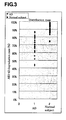
- the measurement results of ECL luminescence intensities of the AD patients are shown in Table 3, and the measurement results of ECL luminescence intensities of the normal subjects are shown in Table 4.
- Tables 3 and 4 the relative ratio of a luminescence intensity of each sample is represented as a residual rate regarding the luminescence intensity of the standard substance as 100%.
- the tables show the degradation rates of A ⁇ 1-42 (%), calculated from the residual rates.
- Tables 3 and 4 show average values of the degradation rates for the AD patients and normal subjects, respectively.
- Fig. 3 is a graph showing the A ⁇ 1-42 degradation rates of the AD patients and normal subjects.
- the A ⁇ 1-42 degradation rates of the group of normal subjects were confirmed to be higher than those of the group of AD patients. This suggests that the ability to degrade A ⁇ 1-42 in blood of the group of normal subjects is higher than that of the group of AD patients.
- Example 2 Comparison of degradation rate of A ⁇ 1-42 in serum of an AD patient and a normal subject by electrochemiluminescence double antibody immunoassay in which a 6E10 antibody and a 21F12 antibody are used:
- a 6E10 mouse monoclonal antibody (manufactured by Chemicon International, Inc.) which recognizes a 10-16 amino acid site of A ⁇ 1-42 was used as a primary antibody
- a 21F12 mouse monoclonal antibody (manufactured by Innogenetics NV) which recognizes the C-terminal site of A ⁇ 1-42 and was labeled with ruthenium complex used as a secondary antibody.
- the method of preparing 6E10 antibody-binding magnetic beads, method of preparing the 21F12 antibody labeled with ruthenium complex, and method of double antibody sandwich immunoassay were the same as those in Experimental Example 1. The results are shown in Tables 5 and 6 and Fig. 4 .
- the A ⁇ 1-42 degradation rates of the group of normal subject were confirmed to be higher than those of the group of AD patients.
- the method of the present invention which enables measurement of an A ⁇ 1-42-degrading enzyme activity in blood, can be used for diagnosis of Alzheimer's disease in a blood sample (serum, plasma).
Landscapes
- Life Sciences & Earth Sciences (AREA)
- Health & Medical Sciences (AREA)
- Engineering & Computer Science (AREA)
- Chemical & Material Sciences (AREA)
- Molecular Biology (AREA)
- Immunology (AREA)
- Proteomics, Peptides & Aminoacids (AREA)
- Organic Chemistry (AREA)
- Biomedical Technology (AREA)
- Zoology (AREA)
- Hematology (AREA)
- Microbiology (AREA)
- Biochemistry (AREA)
- Urology & Nephrology (AREA)
- Wood Science & Technology (AREA)
- Biotechnology (AREA)
- General Health & Medical Sciences (AREA)
- Physics & Mathematics (AREA)
- Analytical Chemistry (AREA)
- Cell Biology (AREA)
- Medicinal Chemistry (AREA)
- General Physics & Mathematics (AREA)
- Pathology (AREA)
- Biophysics (AREA)
- Food Science & Technology (AREA)
- Neurosurgery (AREA)
- Neurology (AREA)
- Bioinformatics & Cheminformatics (AREA)
- General Engineering & Computer Science (AREA)
- Genetics & Genomics (AREA)
- Peptides Or Proteins (AREA)
- Measuring Or Testing Involving Enzymes Or Micro-Organisms (AREA)
- Investigating Or Analysing Materials By The Use Of Chemical Reactions (AREA)
Applications Claiming Priority (2)
| Application Number | Priority Date | Filing Date | Title |
|---|---|---|---|
| JP2006110881 | 2006-04-13 | ||
| PCT/JP2007/057663 WO2007119685A1 (ja) | 2006-04-13 | 2007-04-05 | β-アミロイドの血中分解速度測定によるアルツハイマー病の検定方法及び診断試薬 |
Publications (3)
| Publication Number | Publication Date |
|---|---|
| EP2006392A1 true EP2006392A1 (de) | 2008-12-24 |
| EP2006392A4 EP2006392A4 (de) | 2010-08-11 |
| EP2006392B1 EP2006392B1 (de) | 2013-03-27 |
Family
ID=38609445
Family Applications (1)
| Application Number | Title | Priority Date | Filing Date |
|---|---|---|---|
| EP07741099A Not-in-force EP2006392B1 (de) | 2006-04-13 | 2007-04-05 | TESTVERFAHREN FÜR MORBUS ALZHEIMER MIT TESTEN DER ABBAUGESCHWINDIGKEIT VON beta-AMYLOID IM BLUT UND DIAGNOSTISCHES REAGENS |
Country Status (5)
| Country | Link |
|---|---|
| US (2) | US20090291453A1 (de) |
| EP (1) | EP2006392B1 (de) |
| JP (1) | JP4790013B2 (de) |
| ES (1) | ES2409058T3 (de) |
| WO (1) | WO2007119685A1 (de) |
Cited By (1)
| Publication number | Priority date | Publication date | Assignee | Title |
|---|---|---|---|---|
| RU2484471C1 (ru) * | 2011-11-29 | 2013-06-10 | Закрытое акционерное общество Научно-производственная фирма "ФЛАВИТ" | Способ диагностики амилоидоза при болезни альцгеймера |
Families Citing this family (13)
| Publication number | Priority date | Publication date | Assignee | Title |
|---|---|---|---|---|
| DE10303974A1 (de) | 2003-01-31 | 2004-08-05 | Abbott Gmbh & Co. Kg | Amyloid-β(1-42)-Oligomere, Verfahren zu deren Herstellung und deren Verwendung |
| PL1976877T5 (pl) | 2005-11-30 | 2017-09-29 | Abbvie Inc | Przeciwciała monoklonalne przeciwko białku amyloidu beta oraz ich zastosowania |
| RU2442793C2 (ru) | 2005-11-30 | 2012-02-20 | Эбботт Лэборетриз | АНТИТЕЛА ПРОТИВ ГЛОБУЛОМЕРА Аβ, ИХ АНТИГЕНСВЯЗЫВАЮЩИЕ ЧАСТИ, СООТВЕТСТВУЮЩИЕ ГИБРИДОМЫ, НУКЛЕИНОВЫЕ КИСЛОТЫ, ВЕКТОРЫ, КЛЕТКИ-ХОЗЯЕВА, СПОСОБЫ ПОЛУЧЕНИЯ УКАЗАННЫХ АНТИТЕЛ, КОМПОЗИЦИИ, СОДЕРЖАЩИЕ УКАЗАННЫЕ АНТИТЕЛА, ПРИМЕНЕНИЯ УКАЗАННЫХ АНТИТЕЛ И СПОСОБЫ ИСПОЛЬЗОВАНИЯ УКАЗАННЫХ АНТИТЕЛ |
| US8455626B2 (en) | 2006-11-30 | 2013-06-04 | Abbott Laboratories | Aβ conformer selective anti-aβ globulomer monoclonal antibodies |
| US8895004B2 (en) | 2007-02-27 | 2014-11-25 | AbbVie Deutschland GmbH & Co. KG | Method for the treatment of amyloidoses |
| WO2011130377A2 (en) | 2010-04-15 | 2011-10-20 | Abbott Laboratories | Amyloid-beta binding proteins |
| US9062101B2 (en) | 2010-08-14 | 2015-06-23 | AbbVie Deutschland GmbH & Co. KG | Amyloid-beta binding proteins |
| WO2019167128A1 (ja) * | 2018-02-27 | 2019-09-06 | 株式会社 島津製作所 | サンドイッチ型免疫測定法 |
| US20210155680A1 (en) * | 2018-02-27 | 2021-05-27 | Shimadzu Corporation | ANTIBODY THAT SPECIFICALLY RECOGNIZES N TERMINUS OF APP669-x, AND IMMUNOASSAY METHOD |
| JP7205691B2 (ja) * | 2019-01-23 | 2023-01-17 | ウシオ電機株式会社 | 抗イヌプロカルシトニン抗体及びこれを用いた検査用キット |
| CN113597429A (zh) * | 2019-03-01 | 2021-11-02 | 株式会社岛津制作所 | App669-711测定方法及测定用试剂盒 |
| CN116908465A (zh) * | 2023-06-09 | 2023-10-20 | 融智生物科技(青岛)有限公司 | 一种保护β-淀粉样蛋白的组合物及其应用 |
| WO2026071006A1 (ja) * | 2024-09-30 | 2026-04-02 | 富士フイルム株式会社 | アミロイドβ前駆体タンパク質由来の被検物質を検出する方法、キレート剤の影響を低減する方法、緩衝液試薬及び試薬キット |
Family Cites Families (3)
| Publication number | Priority date | Publication date | Assignee | Title |
|---|---|---|---|---|
| CA2086165A1 (en) * | 1992-04-09 | 1993-10-10 | Paul P. Tamburini | Diagnostic assay for alzheimer's disease based on the proteolysis of alzheimer's precursor protein |
| EP1480041A1 (de) * | 2003-05-22 | 2004-11-24 | Innogenetics N.V. | Verfahren zur Voraussage, zur Diagnose und zur vergleichenden Diagnose von Alzheimer |
| BRPI0516674A (pt) * | 2004-10-28 | 2008-09-16 | Sanko Junyaku Kk | método de análise de mal de alzheimer e reagente de diagnóstico |
-
2007
- 2007-04-05 EP EP07741099A patent/EP2006392B1/de not_active Not-in-force
- 2007-04-05 WO PCT/JP2007/057663 patent/WO2007119685A1/ja not_active Ceased
- 2007-04-05 JP JP2008510925A patent/JP4790013B2/ja not_active Expired - Fee Related
- 2007-04-05 US US12/226,148 patent/US20090291453A1/en not_active Abandoned
- 2007-04-05 ES ES07741099T patent/ES2409058T3/es active Active
-
2011
- 2011-06-17 US US13/162,969 patent/US20110244495A1/en not_active Abandoned
Non-Patent Citations (2)
| Title |
|---|
| No further relevant documents disclosed * |
| See also references of WO2007119685A1 * |
Cited By (1)
| Publication number | Priority date | Publication date | Assignee | Title |
|---|---|---|---|---|
| RU2484471C1 (ru) * | 2011-11-29 | 2013-06-10 | Закрытое акционерное общество Научно-производственная фирма "ФЛАВИТ" | Способ диагностики амилоидоза при болезни альцгеймера |
Also Published As
| Publication number | Publication date |
|---|---|
| ES2409058T3 (es) | 2013-06-24 |
| JP4790013B2 (ja) | 2011-10-12 |
| JPWO2007119685A1 (ja) | 2009-08-27 |
| WO2007119685A1 (ja) | 2007-10-25 |
| US20110244495A1 (en) | 2011-10-06 |
| US20090291453A1 (en) | 2009-11-26 |
| EP2006392A4 (de) | 2010-08-11 |
| EP2006392B1 (de) | 2013-03-27 |
Similar Documents
| Publication | Publication Date | Title |
|---|---|---|
| EP2006392B1 (de) | TESTVERFAHREN FÜR MORBUS ALZHEIMER MIT TESTEN DER ABBAUGESCHWINDIGKEIT VON beta-AMYLOID IM BLUT UND DIAGNOSTISCHES REAGENS | |
| US20080199879A1 (en) | Method of Assaying Alzheimer's Disease and Diagnostic Reagent | |
| US9939452B2 (en) | N-11 truncated amyloid-beta monoclonal antibodies, compositions, methods and uses | |
| EP0783104A1 (de) | Test für lössliches amyloid Vorläuferprotein | |
| US6962793B2 (en) | Methods for detecting Alzheimers disease | |
| JP3517652B2 (ja) | 中枢神経系の損傷を検出するためのアッセイ | |
| US8399207B2 (en) | Monoclonal antibodies against osteopontin | |
| CA2642648A1 (en) | Detection of anthrax pathogenicity factors | |
| WO2011109112A2 (en) | Method of detecting tau protein and tau fragments in serum | |
| US20170097352A1 (en) | Immunoglobulin-bound extracellular vesicles and uses thereof | |
| US9458210B2 (en) | Antibody reacting with native Cochlin-tomoprotein (CTP) and method for measuring CTP using same | |
| US8263356B2 (en) | Antibodies and methods for predicting dental caries | |
| JP5798679B2 (ja) | ヒト肝−カルボキシルエステラーゼ1を特異的に認識するモノクローナル抗体、前記抗体を生産するハイブリドーマ細胞株及びその用途 | |
| US8426180B2 (en) | Use of carbamoyl phosphate synthetase 1 (CPS) as a humoral biomarker for the diagnosis of tumour diseases and chronic inflammatory intestinal diseases | |
| HK1106289A (en) | Method of examining alzheimer s disease and diagnostic reagent | |
| JP2014520825A (ja) | モノクローナル抗体に対して特異的なβ−アミロイドx−37およびその使用 | |
| JP5231954B2 (ja) | アルブミン測定試薬 | |
| US20220137071A1 (en) | Method and kit for measuring app669-711 | |
| HK1126797A (en) | N-11 truncated amyloid-beta monoclonal antibodies, compositions, methods and uses | |
| HK1081647B (en) | N-11 truncated amyloid-beta monoclonal antibodies, compositions, methods and uses |
Legal Events
| Date | Code | Title | Description |
|---|---|---|---|
| PUAI | Public reference made under article 153(3) epc to a published international application that has entered the european phase |
Free format text: ORIGINAL CODE: 0009012 |
|
| 17P | Request for examination filed |
Effective date: 20081009 |
|
| AK | Designated contracting states |
Kind code of ref document: A1 Designated state(s): AT BE BG CH CY CZ DE DK EE ES FI FR GB GR HU IE IS IT LI LT LU LV MC MT NL PL PT RO SE SI SK TR |
|
| A4 | Supplementary search report drawn up and despatched |
Effective date: 20100713 |
|
| 17Q | First examination report despatched |
Effective date: 20110725 |
|
| RAP1 | Party data changed (applicant data changed or rights of an application transferred) |
Owner name: EIDIA CO., LTD. |
|
| DAX | Request for extension of the european patent (deleted) | ||
| REG | Reference to a national code |
Ref country code: DE Ref legal event code: R079 Ref document number: 602007029334 Country of ref document: DE Free format text: PREVIOUS MAIN CLASS: C12Q0001370000 Ipc: G01N0033680000 |
|
| RIC1 | Information provided on ipc code assigned before grant |
Ipc: C12Q 1/37 20060101ALI20120918BHEP Ipc: G01N 33/68 20060101AFI20120918BHEP |
|
| GRAP | Despatch of communication of intention to grant a patent |
Free format text: ORIGINAL CODE: EPIDOSNIGR1 |
|
| GRAS | Grant fee paid |
Free format text: ORIGINAL CODE: EPIDOSNIGR3 |
|
| GRAA | (expected) grant |
Free format text: ORIGINAL CODE: 0009210 |
|
| AK | Designated contracting states |
Kind code of ref document: B1 Designated state(s): AT BE BG CH CY CZ DE DK EE ES FI FR GB GR HU IE IS IT LI LT LU LV MC MT NL PL PT RO SE SI SK TR |
|
| REG | Reference to a national code |
Ref country code: GB Ref legal event code: FG4D |
|
| REG | Reference to a national code |
Ref country code: CH Ref legal event code: EP |
|
| REG | Reference to a national code |
Ref country code: AT Ref legal event code: REF Ref document number: 603719 Country of ref document: AT Kind code of ref document: T Effective date: 20130415 |
|
| REG | Reference to a national code |
Ref country code: IE Ref legal event code: FG4D |
|
| REG | Reference to a national code |
Ref country code: DE Ref legal event code: R096 Ref document number: 602007029334 Country of ref document: DE Effective date: 20130523 |
|
| REG | Reference to a national code |
Ref country code: ES Ref legal event code: FG2A Ref document number: 2409058 Country of ref document: ES Kind code of ref document: T3 Effective date: 20130624 |
|
| PG25 | Lapsed in a contracting state [announced via postgrant information from national office to epo] |
Ref country code: BG Free format text: LAPSE BECAUSE OF FAILURE TO SUBMIT A TRANSLATION OF THE DESCRIPTION OR TO PAY THE FEE WITHIN THE PRESCRIBED TIME-LIMIT Effective date: 20130627 Ref country code: SE Free format text: LAPSE BECAUSE OF FAILURE TO SUBMIT A TRANSLATION OF THE DESCRIPTION OR TO PAY THE FEE WITHIN THE PRESCRIBED TIME-LIMIT Effective date: 20130327 Ref country code: LT Free format text: LAPSE BECAUSE OF FAILURE TO SUBMIT A TRANSLATION OF THE DESCRIPTION OR TO PAY THE FEE WITHIN THE PRESCRIBED TIME-LIMIT Effective date: 20130327 |
|
| PGFP | Annual fee paid to national office [announced via postgrant information from national office to epo] |
Ref country code: GB Payment date: 20130418 Year of fee payment: 7 Ref country code: DE Payment date: 20130419 Year of fee payment: 7 |
|
| REG | Reference to a national code |
Ref country code: AT Ref legal event code: MK05 Ref document number: 603719 Country of ref document: AT Kind code of ref document: T Effective date: 20130327 |
|
| REG | Reference to a national code |
Ref country code: LT Ref legal event code: MG4D |
|
| PG25 | Lapsed in a contracting state [announced via postgrant information from national office to epo] |
Ref country code: GR Free format text: LAPSE BECAUSE OF FAILURE TO SUBMIT A TRANSLATION OF THE DESCRIPTION OR TO PAY THE FEE WITHIN THE PRESCRIBED TIME-LIMIT Effective date: 20130628 Ref country code: FI Free format text: LAPSE BECAUSE OF FAILURE TO SUBMIT A TRANSLATION OF THE DESCRIPTION OR TO PAY THE FEE WITHIN THE PRESCRIBED TIME-LIMIT Effective date: 20130327 Ref country code: LV Free format text: LAPSE BECAUSE OF FAILURE TO SUBMIT A TRANSLATION OF THE DESCRIPTION OR TO PAY THE FEE WITHIN THE PRESCRIBED TIME-LIMIT Effective date: 20130327 Ref country code: SI Free format text: LAPSE BECAUSE OF FAILURE TO SUBMIT A TRANSLATION OF THE DESCRIPTION OR TO PAY THE FEE WITHIN THE PRESCRIBED TIME-LIMIT Effective date: 20130327 |
|
| PGFP | Annual fee paid to national office [announced via postgrant information from national office to epo] |
Ref country code: IT Payment date: 20130419 Year of fee payment: 7 Ref country code: FR Payment date: 20130515 Year of fee payment: 7 |
|
| REG | Reference to a national code |
Ref country code: NL Ref legal event code: VDEP Effective date: 20130327 |
|
| PG25 | Lapsed in a contracting state [announced via postgrant information from national office to epo] |
Ref country code: BE Free format text: LAPSE BECAUSE OF FAILURE TO SUBMIT A TRANSLATION OF THE DESCRIPTION OR TO PAY THE FEE WITHIN THE PRESCRIBED TIME-LIMIT Effective date: 20130327 |
|
| PG25 | Lapsed in a contracting state [announced via postgrant information from national office to epo] |
Ref country code: EE Free format text: LAPSE BECAUSE OF FAILURE TO SUBMIT A TRANSLATION OF THE DESCRIPTION OR TO PAY THE FEE WITHIN THE PRESCRIBED TIME-LIMIT Effective date: 20130327 Ref country code: AT Free format text: LAPSE BECAUSE OF FAILURE TO SUBMIT A TRANSLATION OF THE DESCRIPTION OR TO PAY THE FEE WITHIN THE PRESCRIBED TIME-LIMIT Effective date: 20130327 Ref country code: CZ Free format text: LAPSE BECAUSE OF FAILURE TO SUBMIT A TRANSLATION OF THE DESCRIPTION OR TO PAY THE FEE WITHIN THE PRESCRIBED TIME-LIMIT Effective date: 20130327 Ref country code: IS Free format text: LAPSE BECAUSE OF FAILURE TO SUBMIT A TRANSLATION OF THE DESCRIPTION OR TO PAY THE FEE WITHIN THE PRESCRIBED TIME-LIMIT Effective date: 20130727 Ref country code: PT Free format text: LAPSE BECAUSE OF FAILURE TO SUBMIT A TRANSLATION OF THE DESCRIPTION OR TO PAY THE FEE WITHIN THE PRESCRIBED TIME-LIMIT Effective date: 20130729 Ref country code: NL Free format text: LAPSE BECAUSE OF FAILURE TO SUBMIT A TRANSLATION OF THE DESCRIPTION OR TO PAY THE FEE WITHIN THE PRESCRIBED TIME-LIMIT Effective date: 20130327 Ref country code: RO Free format text: LAPSE BECAUSE OF FAILURE TO SUBMIT A TRANSLATION OF THE DESCRIPTION OR TO PAY THE FEE WITHIN THE PRESCRIBED TIME-LIMIT Effective date: 20130327 Ref country code: SK Free format text: LAPSE BECAUSE OF FAILURE TO SUBMIT A TRANSLATION OF THE DESCRIPTION OR TO PAY THE FEE WITHIN THE PRESCRIBED TIME-LIMIT Effective date: 20130327 |
|
| PG25 | Lapsed in a contracting state [announced via postgrant information from national office to epo] |
Ref country code: PL Free format text: LAPSE BECAUSE OF FAILURE TO SUBMIT A TRANSLATION OF THE DESCRIPTION OR TO PAY THE FEE WITHIN THE PRESCRIBED TIME-LIMIT Effective date: 20130327 Ref country code: CY Free format text: LAPSE BECAUSE OF FAILURE TO SUBMIT A TRANSLATION OF THE DESCRIPTION OR TO PAY THE FEE WITHIN THE PRESCRIBED TIME-LIMIT Effective date: 20130327 |
|
| REG | Reference to a national code |
Ref country code: CH Ref legal event code: PL |
|
| PG25 | Lapsed in a contracting state [announced via postgrant information from national office to epo] |
Ref country code: MC Free format text: LAPSE BECAUSE OF FAILURE TO SUBMIT A TRANSLATION OF THE DESCRIPTION OR TO PAY THE FEE WITHIN THE PRESCRIBED TIME-LIMIT Effective date: 20130327 |
|
| REG | Reference to a national code |
Ref country code: IE Ref legal event code: MM4A |
|
| PG25 | Lapsed in a contracting state [announced via postgrant information from national office to epo] |
Ref country code: DK Free format text: LAPSE BECAUSE OF FAILURE TO SUBMIT A TRANSLATION OF THE DESCRIPTION OR TO PAY THE FEE WITHIN THE PRESCRIBED TIME-LIMIT Effective date: 20130327 Ref country code: CH Free format text: LAPSE BECAUSE OF NON-PAYMENT OF DUE FEES Effective date: 20130430 Ref country code: LI Free format text: LAPSE BECAUSE OF NON-PAYMENT OF DUE FEES Effective date: 20130430 |
|
| PLBE | No opposition filed within time limit |
Free format text: ORIGINAL CODE: 0009261 |
|
| STAA | Information on the status of an ep patent application or granted ep patent |
Free format text: STATUS: NO OPPOSITION FILED WITHIN TIME LIMIT |
|
| 26N | No opposition filed |
Effective date: 20140103 |
|
| REG | Reference to a national code |
Ref country code: DE Ref legal event code: R097 Ref document number: 602007029334 Country of ref document: DE Effective date: 20140103 |
|
| PG25 | Lapsed in a contracting state [announced via postgrant information from national office to epo] |
Ref country code: IE Free format text: LAPSE BECAUSE OF NON-PAYMENT OF DUE FEES Effective date: 20130405 |
|
| REG | Reference to a national code |
Ref country code: DE Ref legal event code: R119 Ref document number: 602007029334 Country of ref document: DE |
|
| GBPC | Gb: european patent ceased through non-payment of renewal fee |
Effective date: 20140405 |
|
| REG | Reference to a national code |
Ref country code: DE Ref legal event code: R119 Ref document number: 602007029334 Country of ref document: DE Effective date: 20141101 |
|
| REG | Reference to a national code |
Ref country code: FR Ref legal event code: ST Effective date: 20141231 |
|
| PG25 | Lapsed in a contracting state [announced via postgrant information from national office to epo] |
Ref country code: GB Free format text: LAPSE BECAUSE OF NON-PAYMENT OF DUE FEES Effective date: 20140405 Ref country code: DE Free format text: LAPSE BECAUSE OF NON-PAYMENT OF DUE FEES Effective date: 20141101 |
|
| PG25 | Lapsed in a contracting state [announced via postgrant information from national office to epo] |
Ref country code: MT Free format text: LAPSE BECAUSE OF FAILURE TO SUBMIT A TRANSLATION OF THE DESCRIPTION OR TO PAY THE FEE WITHIN THE PRESCRIBED TIME-LIMIT Effective date: 20130327 Ref country code: FR Free format text: LAPSE BECAUSE OF NON-PAYMENT OF DUE FEES Effective date: 20140430 |
|
| PG25 | Lapsed in a contracting state [announced via postgrant information from national office to epo] |
Ref country code: IT Free format text: LAPSE BECAUSE OF NON-PAYMENT OF DUE FEES Effective date: 20140405 |
|
| PG25 | Lapsed in a contracting state [announced via postgrant information from national office to epo] |
Ref country code: TR Free format text: LAPSE BECAUSE OF FAILURE TO SUBMIT A TRANSLATION OF THE DESCRIPTION OR TO PAY THE FEE WITHIN THE PRESCRIBED TIME-LIMIT Effective date: 20130327 |
|
| PG25 | Lapsed in a contracting state [announced via postgrant information from national office to epo] |
Ref country code: LU Free format text: LAPSE BECAUSE OF NON-PAYMENT OF DUE FEES Effective date: 20130405 Ref country code: HU Free format text: LAPSE BECAUSE OF FAILURE TO SUBMIT A TRANSLATION OF THE DESCRIPTION OR TO PAY THE FEE WITHIN THE PRESCRIBED TIME-LIMIT; INVALID AB INITIO Effective date: 20070405 |
|
| PG25 | Lapsed in a contracting state [announced via postgrant information from national office to epo] |
Ref country code: ES Free format text: LAPSE BECAUSE OF NON-PAYMENT OF DUE FEES Effective date: 20140406 |