EP2006393A2 - Verfahren zur analyse von nukleinsäuren - Google Patents
Verfahren zur analyse von nukleinsäuren Download PDFInfo
- Publication number
- EP2006393A2 EP2006393A2 EP07730387A EP07730387A EP2006393A2 EP 2006393 A2 EP2006393 A2 EP 2006393A2 EP 07730387 A EP07730387 A EP 07730387A EP 07730387 A EP07730387 A EP 07730387A EP 2006393 A2 EP2006393 A2 EP 2006393A2
- Authority
- EP
- European Patent Office
- Prior art keywords
- dna
- nucleic acids
- labeling
- sample
- analyzing nucleic
- Prior art date
- Legal status (The legal status is an assumption and is not a legal conclusion. Google has not performed a legal analysis and makes no representation as to the accuracy of the status listed.)
- Granted
Links
Images


Classifications
-
- C—CHEMISTRY; METALLURGY
- C12—BIOCHEMISTRY; BEER; SPIRITS; WINE; VINEGAR; MICROBIOLOGY; ENZYMOLOGY; MUTATION OR GENETIC ENGINEERING
- C12Q—MEASURING OR TESTING PROCESSES INVOLVING ENZYMES, NUCLEIC ACIDS OR MICROORGANISMS; COMPOSITIONS OR TEST PAPERS THEREFOR; PROCESSES OF PREPARING SUCH COMPOSITIONS; CONDITION-RESPONSIVE CONTROL IN MICROBIOLOGICAL OR ENZYMOLOGICAL PROCESSES
- C12Q1/00—Measuring or testing processes involving enzymes, nucleic acids or microorganisms; Compositions therefor; Processes of preparing such compositions
- C12Q1/68—Measuring or testing processes involving enzymes, nucleic acids or microorganisms; Compositions therefor; Processes of preparing such compositions involving nucleic acids
- C12Q1/6813—Hybridisation assays
- C12Q1/6827—Hybridisation assays for detection of mutation or polymorphism
- C12Q1/683—Hybridisation assays for detection of mutation or polymorphism involving restriction enzymes, e.g. restriction fragment length polymorphism [RFLP]
-
- C—CHEMISTRY; METALLURGY
- C12—BIOCHEMISTRY; BEER; SPIRITS; WINE; VINEGAR; MICROBIOLOGY; ENZYMOLOGY; MUTATION OR GENETIC ENGINEERING
- C12Q—MEASURING OR TESTING PROCESSES INVOLVING ENZYMES, NUCLEIC ACIDS OR MICROORGANISMS; COMPOSITIONS OR TEST PAPERS THEREFOR; PROCESSES OF PREPARING SUCH COMPOSITIONS; CONDITION-RESPONSIVE CONTROL IN MICROBIOLOGICAL OR ENZYMOLOGICAL PROCESSES
- C12Q1/00—Measuring or testing processes involving enzymes, nucleic acids or microorganisms; Compositions therefor; Processes of preparing such compositions
- C12Q1/68—Measuring or testing processes involving enzymes, nucleic acids or microorganisms; Compositions therefor; Processes of preparing such compositions involving nucleic acids
- C12Q1/6844—Nucleic acid amplification reactions
- C12Q1/6858—Allele-specific amplification
-
- C—CHEMISTRY; METALLURGY
- C12—BIOCHEMISTRY; BEER; SPIRITS; WINE; VINEGAR; MICROBIOLOGY; ENZYMOLOGY; MUTATION OR GENETIC ENGINEERING
- C12Q—MEASURING OR TESTING PROCESSES INVOLVING ENZYMES, NUCLEIC ACIDS OR MICROORGANISMS; COMPOSITIONS OR TEST PAPERS THEREFOR; PROCESSES OF PREPARING SUCH COMPOSITIONS; CONDITION-RESPONSIVE CONTROL IN MICROBIOLOGICAL OR ENZYMOLOGICAL PROCESSES
- C12Q1/00—Measuring or testing processes involving enzymes, nucleic acids or microorganisms; Compositions therefor; Processes of preparing such compositions
- C12Q1/68—Measuring or testing processes involving enzymes, nucleic acids or microorganisms; Compositions therefor; Processes of preparing such compositions involving nucleic acids
- C12Q1/6844—Nucleic acid amplification reactions
- C12Q1/6853—Nucleic acid amplification reactions using modified primers or templates
- C12Q1/6855—Ligating adaptors
Definitions
- the present invention relates to the field of molecular biology.
- the object of the present invention is a method of analyzing nucleic acids that can be used to determine the presence of variations in the genome of an organism, as regards both the sequence and the number of copies of a gene.
- CGH comparative genomic hybridization
- DNA microarrays also called DNA chips
- DNA chips DNA microarrays
- DNA microarray technology has applications in the fields of transcriptomics, genetics, and epigenetics. Accordingly, different protocols have been developed for labeling RNA and DNA samples in order to be able to perform bulk parallel analyses.
- RNA or DNA differences in signal intensity distribution should be observed when hybridizing to DNA microarrays according to whether the hybridized sample is RNA or DNA.
- genes are expressed differentially, so that the various species of RNA found in a sample of total RNA can exhibit differences in expression levels of up to 4 orders of magnitude.
- the hybridization signals of labeled RNA or aRNA samples cover a similar range of signal intensities (i.e. some 4 orders of magnitude) for probes on the microarray surface.
- the prevalence of the various DNA fragments in a genomic DNA sample is identical, and it would therefore be expected for the variation in signal intensity between the different probes on the microarray surface to be substantially smaller and to be restricted to small variations in the labeling efficiency of the various DNA fragments or to variations in the hybridization efficiency between the various labeled fragments and the probes on the microarray surface.
- This research group extracted genomic DNA from human samples using Trizol (Invitrogen, USA) as the extraction reagent, in addition to phenol/chloroform purifications. 10 ng of this DNA was amplified by PCR using ⁇ 29 polymerase. Thereafter, this amplified DNA was digested with two restriction enzymes, Alul and Rsal, with an incubation time of 2 h at 37°C. The samples were labeled with 6 ⁇ g of DNA digested and purified with the Bioprime Labeling Kit (Invitrogen, USA), adding a nucleotide labeled with Cy3 or Cy5 fluorophore, following the steps recommended by said company.
- the labeled samples were denatured at 100°C for 1.5 min and incubated at 37°C for 30 min.
- the samples were hybridized in accordance with the recommendations of Agilent Technologies, incubating the reference sample and the test sample on the microarray overnight at 65°C.
- the microarrays were then washed in accordance with the Agilent protocol and scanned using an Agilent 2565AA DNA microarray scanner.
- the probes used as controls are: ITGB3BP, EXO1, FLJ22116, IF2, CPS1, ST3GALVI, FLJ20432, HPS3, ARHH, SPP1, DKFZp762K2015, CENPE, CCNA2, ESM1, NLN, KIAA0372, LOX, RAD50, RAB6KIFL, FLJ20364, FLJ20624, SERPINE1, FLJ11785, FLJ11785, LOXL2, WRN, RAD54B, CML66, HAS2, MGC5254, MLANA, COL13A1, AD24, LMO2, CD69, LOC51290, FLJ21908, MGC5585, KNTC1, TNFRSF11B, MGC5302, BAZ1A, AND-1, HIF1A, IFI27, FANCA, BRCA1, PMAIP1, HMCS, STCH, SERPIND1, and NSBP1. All these probes are repeated 10 times. Table 1 Green channel Red channel Relative
- RNA polymerase a method for the analysis of genomic DNA, comprising DNA fractionation, adapter binding, and a step involving in vitro transcription of the samples using RNA polymerase.
- a set of RNA fragments is generated, with these RNA fragments being equivalent to the DNA fragments to be analyzed and being the ones to be hybridized to the DNA microarray oligonucleotides in order to carry out the analysis.
- the labeling of the samples may optionally be performed at this stage.
- the method according to the present invention makes it possible to significantly reduce the variability in the signal intensities of the analyzed samples.
- Figure 1 shows a diagram of an example of the steps constituting the method of the invention.
- Fragmentation of a sample of genomic DNA can be carried out by chemical methods, such as, for example, treatment with hydrochloric acid, sodium hydroxide, hydrazine, etc.; by physical methods, including treatment with ionizing radiation, sonication, etc.; or by enzymatic methods, such as, for example, digestion with endonucleases, such as restriction enzymes.
- fragmentation is accomplished by digestion with at least one restriction enzyme.
- fragmentation is accomplished by digestion with two restriction enzymes.
- the method of the present invention can be used for analyzing any sample of genomic DNA isolated from any organism wherein the study of the presence of variations in the genome is desired.
- Said method can be applied, among other things, to the bulk analysis of single-feature polymorphisms (SFP), comparative genomic hybridization (CGH), which makes it possible to determine the deletion of a gene or a fragment thereof, or the presence of two or more copies of a gene or fragments thereof, genetic mapping on the basis of analyses of individuals or by bulked segregant analysis, identification of single nucleotide polymorphisms (SNP), localization of transposons, chromatin immunoprecipitation (ChiP-on-chip), etc.
- SFP single-feature polymorphisms
- CGH comparative genomic hybridization
- SNP single nucleotide polymorphisms
- ChiP-on-chip chromatin immunoprecipitation
- microarray or DNA microarray refers to a collection of multiple oligonucleotides immobilized on a solid substrate, wherein each oligonucleotide is immobilized in a known position, such that each of the multiple oligonucleotides can be detected separately.
- the substrate may be solid or porous, planar or not planar, unitary or distributed.
- DNA microarrays on which the hybridization and detection are accomplished by the method of the present invention can be manufactured with oligonucleotides deposited by any process or with oligonucleotides synthesized in situ photolithography or by any other process.
- probe refers to the oligonucleotides immobilized on the solid substrate with which hybridization of the nucleic acids to be analyzed takes place.
- detection of the hybridized fragments is accomplished on the basis of the direct quantification of the amount of hybridized sample on the DNA probes contained in the DNA microarray.
- Said direct quantification can be accomplished using techniques that include, but are not limited to, atomic force microscopy (AFM), scanning tunneling microscopy (STM), or scanning electron microscopy (SEM); electrochemical methods, such as measurement of impedance, voltage, or current; optical methods, such as confocal and nonconfocal microscopy, infrared microscopy, detection of fluorescence, luminescence, chemiluminescence, or absorbance, reflectance, or transmittance detection, and, in general, any surface analysis technique.
- AFM atomic force microscopy
- STM scanning tunneling microscopy
- SEM scanning electron microscopy
- electrochemical methods such as measurement of impedance, voltage, or current
- optical methods such as confocal and nonconfocal microscopy, infrared microscopy, detection of fluorescence, luminescence,
- detection of the hybridized fragments is accomplished by detection of labeling elements incorporated in the fragments to be analyzed.
- the labeling takes place during the in vitro transcription step by the incorporation of nucleotide analogs containing directly-detectable labeling, such as fluorophores, nucleotide analogs incorporating labeling that can be visualized indirectly in a subsequent reaction, such as biotin or haptenes, or any other type of direct or indirect nucleic acid labeling known to a person skilled in the art.
- the labeling can be performed using Cy3-UTP, Cy5-UTP, or fluorescein-UTP for direct labeling, or biotin-UTP for indirect labeling.
- the expression functional promoter sequence refers to a nucleotide sequence that can be recognized by an RNA polymerase and from which transcription can be initiated.
- each RNA polymerase recognizes a specific sequence, for which reason the functional promoter sequence included in the adapters is chosen according to the RNA polymerase being used.
- RNA polymerase include, but are not limited to, T7 RNA polymerase, T3 RNA polymerase, and SP6 RNA polymerase.
- the present invention is based on improving the methods of analyzing nucleic acids by the use of DNA microarrays to study variations in the genome of an organism that are in use at the present time. It was observed that when the preparation of DNA is associated with a step comprising in vitro transcription of PCR-amplified DNA fragments using an RNA polymerase, the signal to hybridize to the probes contained in the DNA microarray was stronger and more homogeneous than when DNA fragments obtained or labeled by other means were hybridized directly. Given that other supposedly random labeling methods result in a very substantial skewing of the efficacy of labeling and/or hybridization of the various labeled fragments, this result was unexpected, and indeed the reasons why the present invention reduces or eliminates this skewing are at present unknown.
- the reference parameter used was the signal intensity scatter of the analyzed samples versus the signal intensity scatter of the hybridization controls.
- the relative percentage scatter of the signal intensities was calculated as the ratio between the standard deviation of the set of values and the mean of said values.
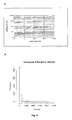
- the intensity values obtained from hybridization to each probe in the microarray is usually represented in a logarithmic scatter plot representing the values from the first sample on the x-axis and the corresponding values for the second sample on the y-axis.
- the plot diagonal is represented by those points at which a given probe presents the same value for both samples.
- the points should ideally be located on the diagonal. It is observed experimentally, however, that a certain scatter of the points with respect to the diagonal occurs (i.e. a scatter perpendicular to the diagonal), or, therefore, a scatter of the ratio between the intensity values of two identical samples. This scatter is indicative of the degree of reproducibility of the data from one sample for each probe, and associated with it is a given standard deviation, calculated on the basis of the ratio between the signals from the two samples for the various probes on the surface.
- the hybridization signals for each of the probes are distributed along the diagonal (or parallel to the diagonal), said distribution being intrinsic to the signal intensity in a sample.
- This scatter reflects the variation in the detection efficiency of the various fragments in a sample, which is given by the variation in the efficiency of the protocol for the preparation of the various nucleic acid fragments for hybridization (including labeling, if applicable) combined with the variation in the efficiency of hybridization of the various nucleic acid fragments on the surface.
- This distribution along the entire signal intensity range has associated with it a relative standard deviation, defined as the ratio between the standard deviation of the intensities of the probes of a sample divided by the average of the intensities of all the probes for this sample.
- the relative standard deviation of the intensities can be calculated for the set of all the probes of the sample, or for a set of repeat probes acting as controls.
- the ratio between the standard deviation of the intensities of the sample divided by the ratio of the standard deviation of the intensities of the controls will therefore reflect the contribution of the variation in the efficiency of the protocol for the preparation of the various nucleic acid fragments for hybridization (including labeling, if applicable) and of the variation in the efficiency of hybridization of the various nucleic acid fragments on the surface to the total signal intensity scatter of a sample.
- the present invention describes a protocol for the preparation of nucleic acid fragments which reduces the scatter of signal intensities from a sample obtained by their hybridization to DNA microarrays.
- hybridization to DNA microarrays and detection fulfills the requirement that, when all the analyzed fragments in the original nucleic acid were present in the same number of copies, the ratio between the relative scatter of the signal intensities of the probes of the sample and the relative scatter of the signal intensities of the controls is less than 4, preferably less than 3, more preferably less than 2, more preferably still less than 1.5.
- One of the ways of controling the intensity of the hybridization signals along the diagonal is by varying the quantity of hybridized sample, such that the greater the quantity of hybridized sample, the greater the signal. In this way the maximum and minimum signals can be adjusted so that they are included within the detection range of the scanner.
- varying the quantity of sample applied does not affect the signal distribution profile: increasing the sample quantity in order to raise the intensity of low-intensity signals or signals that are below the detection threshold defined by the noise level of the analysis, will have the consequence that high-intensity signals will pass into the saturation region.
- Applying the method of analysis of the present invention results in a homogenization of the signal intensities of the probes of a sample, but also in an increase in the average signal intensity, and therefore improves the signal-to-noise ratio in the analyses.
- the sample hybridized to the DNA microarray is made up of RNA, which has certain advantages with respect to other methods. Firstly, the RNA-DNA interaction is stronger than the DNA-DNA interaction, which may be one reason for the observed increase in the average signal intensity. Secondly, the single-chained RNA does not have any competition from complementary molecules present in solution for hybridization to the probes on the microarray surface, resulting in a greater degree of hybridization to the probes contained in the DNA microarray surface.
- the present invention provides a new method of analyzing nucleic acids for the identification of variations in complex genomes with better sensitivity, signal-to-noise ratio, and reproducibility than protocols currently used.
- Genomic DNA was extracted from a species of yeast, Saccharomyces cerevisiae.
- Cells of the yeast culture were precipitated by centrifuging, resuspended in 600 ⁇ L of DNA extraction solution (100 mM Tris-HCl; 50 mM EDTA pH 8); 40 ⁇ l of 20% SDS was then added and the whole was mixed well and incubated for 10 min at 65°C; next, 200 ⁇ L of cold potassium acetate was added and incubation continued for 15 min on ice.
- the mixture was then centrifuged in a microcentrifuge at 4°C and 16000 rpm for 15 min, and 600 ⁇ L of isopropanol was added to 400 ⁇ L of supernatant.
- the DNA was precipitated by centrifuging at 16000 rpm for 15 min, after which the precipitate was washed with 200 ⁇ L of 70% ethanol and left to dry. The precipitate was dissolved in 100 ⁇ L of TE.
- Total genomic DNA (2 ⁇ g) was digested with Sacl (Fermentas, Lithuania) and Msel (New England Biolabs, USA) in an incubation time of 3 h at 37°C.
- Sacl Fermentas, Lithuania
- Msel New England Biolabs, USA
- the Sacl/Msel fragments were amplified by PCR using two specific primers, based on the sequence of the adapters, each at a concentration of 200 nM, in a reaction with 1x Taq buffer, 1.5 nM of MgCl 2 , 200 nM of dNTP, and 1.
- U of Taq polymerase Fermentas, Lithuania
- one of the primers, the one specific for the Sacl adapter was labeled.
- the incorporation of the labeling was done as DNA amplification progressed in the PCR.
- the PCR was performed in duplicate, in parallel, such that in one case the primer contained one molecule of the fluorochrome Cy3 on the 5' end, while in the other case it contained the fluorochrome Cy5.
- This hybridization consisted in overnight incubation at 60°C in a hybridization oven and subsequent washing with solutions 6 x SSC, 0.005% Triton (Agilent, USA) at ambient temperature, and 0.1 x SSC, 0.005% Triton (Agilent, USA) at 4°C to remove excess unhybridized transcripts with the microarray oligonucleotides.
- the microarray was then dried by centrifuging at 2000 rpm for 7 min and, finally, the intensity signals of each oligonucleotide in the microarray were detected with the Axon 4000B scanner.
- Genomic DNA was extracted from a species of yeast, Saccharomyces cerevisiae.
- Cells of the yeast culture were precipitated by centrifuging, resuspended in 600 ⁇ L of DNA extraction solution (100 mM Tris-HCl; 50 mM EDTA pH 8); 40 ⁇ L of 20% SDS was then added and the whole was mixed well and incubated for 10 min at 65°C; next, 200 ⁇ L of cold potassium acetate was added and incubation continued for 15 min on ice.
- the mixture was then centrifuged in a microcentrifuge at 4°C and 16000 rpm for 15 min, and 600 ⁇ L of isopropanol was added to 400 ⁇ L of supernatant.
- the DNA was precipitated by centrifuging at 16000 rpm for 15 min, the precipitate was washed with 200 ⁇ L of 70% ethanol, and left to dry. The precipitate was dissolved in 100 ⁇ L of TE.
- Total genomic DNA (2 ⁇ g) was digested with Sacl (Fermentas, Lithuania) and Msel (New England Biolabs, USA) in an incubation time of 3 h at 37°C.
- Sacl Fermentas, Lithuania
- Msel New England Biolabs, USA
- the Sacl/Msel fragments were amplified by PCR using two specific primers, based on the sequence of the adapters, each at a concentration of 200 nM, in a reaction with 1x Taq buffer, 1.5 nM of MgCl 2 , 200 nM of dNTP, and 1U of Taq polymerase (Fermentas, Lithuania), using the following cycle program: 2 min at 72°C; 2 min at 94°C; 34 cycles of 30 sec at 94°, 30 sec at 56°C, 90 sec at 72°C, and 10 min at 72°C.
- PCR-amplified DNA 2.5 ⁇ g was used to carry out the in vitro transcription to RNA from a promoter sequence contained in the Sacl adapter by the addition of 40 U of T7 RNA polymerase (Ambion, USA) and 7.5 mM of rNTPs, the sample being incubated overnight at 37°C. This reaction was performed in duplicate, in parallel, with Cy3-dUTP or Cy5-dUTP (Perkin-Elmer, USA) as labeled nucleotides. After transcription, the DNA was removed by treatment with 2 U of DNase I (Ambion, USA) at 37°C for 30 min. The labeled products were purified using MEGAclearTM columns (Ambion, USA).
- RNA 0.75 ⁇ g of Cy3-labeled sample RNA was combined with 0.75 ⁇ g of Cy5-labeled sample RNA for hybridization to the microarray oligonucleotides.
- To this RNA mixture was added 100 ⁇ L of 2X hybridization solution (Agilent, USA) and loaded onto the chip as recommended by Agilent Technologies. Hybridization was accomplished overnight at 60°C in a hybridization oven. The microarray was then washed with solutions 6 x SSC, 0.005% Triton (Agilent, USA) at ambient temperature, and 0.1 x SSC, 0.005 Triton (Agilent, USA) at 4°C to remove excess unhybridized transcripts. Next, the chip was dried by centrifuging at 2000 rpm for 7 min and, finally, the intensity signals of each oligonucleotide in the microarray were detected with the Axon 4000B scanner.
- Genomic DNA was extracted from the rice species Oryza sativa sp. japonica Nipponbare. Plant leaf tissue frozen in liquid nitrogen was homogenized in a Mixer Mill (Retsch GmbH, Germany). The lysate resulting from the homogenization was resuspended in 600 ⁇ L of DNA extraction solution (100 mM Tris-HCl; 50 mM EDTA pH 8); 40 ⁇ L of 20% SDS was then added and the whole was mixed well and incubated for 10 min at 65 °C; next, 200 ⁇ L of cold potassium acetate was added and incubation continued for 15 min on ice.
- DNA extraction solution 100 mM Tris-HCl; 50 mM EDTA pH 8
- SDS 20% SDS
- the mixture was then centrifuged in a microcentrifuge at 4°C and 16000 rpm for 15 min, and 600 ⁇ L of isopropanol was added to 400 ⁇ L of supernatant.
- the DNA was precipitated by centrifuging at 16000 rpm for 15 min, the precipitate was washed with 200 ⁇ L of 70% ethanol, and left to dry. The precipitate was dissolved in 100 ⁇ L of TE.
- Total genomic DNA (2 ⁇ g) was digested with Sacl (Fermentas, Lithuania) and Msel (New England Biolabs, USA) in an incubation time of 3 h at 37°C.
- Sacl Fermentas, Lithuania
- Msel New England Biolabs, USA
- the Sacl/Msel fragments were amplified by PCR using two specific primers, based on the adapter sequence, each at a concentration of 200 nM, in a reaction with 1 x Taq buffer, 1.5 nM of MgCl 2 , 200 nM of dNTP, and 1 U of Taq polymerase (Fermentas, Lithuania), using the following cycle program: 2 min at 72°C; 2 min at 94°C; 34 cycles of 30 sec at 94°, 30 sec at 56°C, 90 sec at 72°C, and 10 min at 72°C.
- PCR-amplified DNA 2.5 ⁇ g was used to carry out the in vitro transcription to RNA from a promoter sequence contained in the Sacl adapter by the addition of 40 U of T7 RNA polymerase (Ambion, USA) and 7.5 mM of rNTPs, the samples being incubated overnight at 37°C. This reaction was performed in duplicate, in parallel, with Cy3-dUTP or else Cy5-dUTP (Perkin-Elmer, USA) as labeled nucleotides. After transcription, the DNA was removed by treatment with 2 U of DNase I (Ambion, USA) at 37°C for 30 min. The labeled products were purified using MEGAclearTM columns (Ambion, USA).
- RNA 0.75 ⁇ g of Cy3-labeled sample RNA was combined with 0.75 ⁇ g of Cy5-labeled sample RNA for hybridization to the microarray oligonucleotides.
- To this RNA mixture was added 100 ⁇ L of 2X hybridization solution (Agilent, USA) and loaded onto the chip as recommended by Agilent Technologies. Hybridization took place overnight at 60°C in a hybridization oven.
- the microarray was then washed with solutions 6 x SSC, 0.005% Triton (Agilent, USA) at ambient temperature, and 0.1 x SSC, 0.005% Triton (Agilent, USA) at 4°C to remove excess unhybridized transcripts.
- the chip was then dried by centrifuging at 2000 rpm for 7 min and, finally, the intensity signals of each oligonucleotide in the microarray were detected with the Axon 4000B scanner.
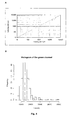
- Figure 4A The data obtained from reading the signal intensities for each of the fluorophores were represented graphically, as shown in Figure 4A .
- the signals were again grouped in the upper part of the plot diagonal, indicating the small degree of scattering of same.
- Figure 4B shows the histogram of the signal intensity distribution in the green channel (corresponding to the Cy3 labeling), wherein a normal distribution can be observed, with most points lying in a central position within the intensity range (around 18000-19000 units of intensity), with the remaining points lying symmetrically arranged above and below this central position.
- the oligonucleotides ORY_C1_X80, ORY_C2_X70, ORY_C3_Z80, and ORY_C3_Z80 repeated 223 times on the microarray surface were used as internal controls.
Landscapes
- Chemical & Material Sciences (AREA)
- Life Sciences & Earth Sciences (AREA)
- Organic Chemistry (AREA)
- Engineering & Computer Science (AREA)
- Zoology (AREA)
- Wood Science & Technology (AREA)
- Proteomics, Peptides & Aminoacids (AREA)
- Health & Medical Sciences (AREA)
- Biophysics (AREA)
- General Engineering & Computer Science (AREA)
- Immunology (AREA)
- Microbiology (AREA)
- Molecular Biology (AREA)
- Analytical Chemistry (AREA)
- Physics & Mathematics (AREA)
- Genetics & Genomics (AREA)
- Biochemistry (AREA)
- Bioinformatics & Cheminformatics (AREA)
- Biotechnology (AREA)
- General Health & Medical Sciences (AREA)
- Chemical Kinetics & Catalysis (AREA)
- Measuring Or Testing Involving Enzymes Or Micro-Organisms (AREA)
Applications Claiming Priority (2)
| Application Number | Priority Date | Filing Date | Title |
|---|---|---|---|
| ES200600703A ES2301342B1 (es) | 2006-03-14 | 2006-03-14 | "metodo de analisis de acidos nucleicos". |
| PCT/ES2007/000146 WO2007104816A2 (es) | 2006-03-14 | 2007-03-13 | Método de análisis de ácidos nucleicos |
Publications (3)
| Publication Number | Publication Date |
|---|---|
| EP2006393A2 true EP2006393A2 (de) | 2008-12-24 |
| EP2006393A4 EP2006393A4 (de) | 2009-11-18 |
| EP2006393B1 EP2006393B1 (de) | 2011-05-18 |
Family
ID=38509838
Family Applications (1)
| Application Number | Title | Priority Date | Filing Date |
|---|---|---|---|
| EP07730387A Not-in-force EP2006393B1 (de) | 2006-03-14 | 2007-03-13 | Verfahren zur analyse von nukleinsäuren |
Country Status (7)
| Country | Link |
|---|---|
| US (1) | US20090181387A1 (de) |
| EP (1) | EP2006393B1 (de) |
| JP (1) | JP2009529864A (de) |
| AT (1) | ATE510029T1 (de) |
| AU (1) | AU2007226485A1 (de) |
| ES (2) | ES2301342B1 (de) |
| WO (1) | WO2007104816A2 (de) |
Families Citing this family (8)
| Publication number | Priority date | Publication date | Assignee | Title |
|---|---|---|---|---|
| EP2140028B1 (de) * | 2007-03-30 | 2011-09-21 | Oryzon Genomics, S.A. | Nukleinsäureanalyseverfahren zur analyse des methylierungsmusters von cpg-inseln in unterschiedlichen proben |
| US20100331195A1 (en) * | 2007-10-04 | 2010-12-30 | William Andregg | Sequencing Nucleic Acid Polymers with Electron Microscopy |
| WO2009115313A1 (en) * | 2008-03-19 | 2009-09-24 | Oryzon Genomics, S.A. | Method and composition for methylation analysis |
| IT1392539B1 (it) * | 2008-12-17 | 2012-03-09 | Fond Parco Tecnologico Padano | Microarray per l'identificazione della presenza o assenza di ogm in campioni comprendenti materiale vegetale. |
| DK2414547T3 (da) | 2009-04-02 | 2014-06-16 | Fluidigm Corp | Multiprimer-amplifikationsmetode til stregkodning af målnukleinsyrer |
| US9074204B2 (en) | 2011-05-20 | 2015-07-07 | Fluidigm Corporation | Nucleic acid encoding reactions |
| US9840732B2 (en) | 2012-05-21 | 2017-12-12 | Fluidigm Corporation | Single-particle analysis of particle populations |
| CN108603224B (zh) | 2015-12-16 | 2022-06-28 | 富鲁达公司 | 高水平多路复用扩增 |
Family Cites Families (10)
| Publication number | Priority date | Publication date | Assignee | Title |
|---|---|---|---|---|
| HU223760B1 (hu) * | 1991-09-24 | 2005-01-28 | Keygene N.V. | Szelektív restrikciós fragmentumsokszorosítás, általános módszer DNS-fingerprint analízisére |
| EP0804618B1 (de) * | 1994-11-28 | 1999-01-27 | E.I. Du Pont De Nemours And Company | Mikrosatelliteverbindung für detektion genetisches polymorphismen |
| CA2266750A1 (en) * | 1996-09-18 | 1998-03-26 | The General Hospital Corporation | Cleaved amplified rflp detection methods |
| US6287825B1 (en) * | 1998-09-18 | 2001-09-11 | Molecular Staging Inc. | Methods for reducing the complexity of DNA sequences |
| EP1109938B1 (de) * | 1998-09-18 | 2002-02-27 | Micromet AG | Dns amplifizierung aus einzelnen zellen |
| EP1129219B1 (de) * | 1998-11-09 | 2004-08-18 | Methexis Genomics N.V. | Analyse von "amplikons" erhalten durch restriktionsendonukleasen |
| CA2366374C (en) * | 1999-04-09 | 2009-09-22 | Keygene N.V. | Method for the detection and/or analysis, by means of primer extension techniques, of single nucleotide polymorphisms in restriction fragments, in particular in amplified restriction fragments generated using aflp |
| CA2450215A1 (en) * | 2001-08-16 | 2003-02-27 | Curagen Corporation | Method of labelling crnas for probing oligo-based microarrays |
| EP1606417A2 (de) * | 2003-03-07 | 2005-12-21 | Rubicon Genomics Inc. | In-vitro-dna-immortalisierung und gesamtgenomamplifikation unter verwendung von aus willkürlich fragmentierter dna erzeugten bibliotheken |
| US20050147975A1 (en) * | 2003-12-24 | 2005-07-07 | Schembri Carol T. | Methods and compositions for amplification of genomic DNA |
-
2006
- 2006-03-14 ES ES200600703A patent/ES2301342B1/es not_active Expired - Fee Related
-
2007
- 2007-03-13 AU AU2007226485A patent/AU2007226485A1/en not_active Abandoned
- 2007-03-13 ES ES07730387T patent/ES2387113T3/es active Active
- 2007-03-13 US US12/225,008 patent/US20090181387A1/en not_active Abandoned
- 2007-03-13 AT AT07730387T patent/ATE510029T1/de not_active IP Right Cessation
- 2007-03-13 JP JP2008558835A patent/JP2009529864A/ja active Pending
- 2007-03-13 WO PCT/ES2007/000146 patent/WO2007104816A2/es not_active Ceased
- 2007-03-13 EP EP07730387A patent/EP2006393B1/de not_active Not-in-force
Also Published As
| Publication number | Publication date |
|---|---|
| ES2387113T3 (es) | 2012-09-13 |
| JP2009529864A (ja) | 2009-08-27 |
| ATE510029T1 (de) | 2011-06-15 |
| WO2007104816A3 (es) | 2007-11-01 |
| ES2301342A1 (es) | 2008-06-16 |
| EP2006393B1 (de) | 2011-05-18 |
| AU2007226485A1 (en) | 2007-09-20 |
| ES2301342B1 (es) | 2009-05-01 |
| US20090181387A1 (en) | 2009-07-16 |
| EP2006393A4 (de) | 2009-11-18 |
| WO2007104816A2 (es) | 2007-09-20 |
Similar Documents
| Publication | Publication Date | Title |
|---|---|---|
| EP2006393B1 (de) | Verfahren zur analyse von nukleinsäuren | |
| Fan et al. | Highly parallel genomic assays | |
| Zilberman et al. | Genome-wide analysis of DNA methylation patterns | |
| AU753505B2 (en) | Probe arrays and methods of using probe arrays for distinguishing DNA | |
| EP3207134B1 (de) | Kontiguitätserhaltende transposition | |
| CN101641449B (zh) | 用于多态性的高通量鉴定和检测的策略 | |
| Schulman et al. | The application of LTR retrotransposons as molecular markers in plants | |
| US20100240549A1 (en) | Specific amplification of tumor specific dna sequences | |
| JP2003523211A (ja) | Dnaプローブの中のシトシン−メチル化の検出方法 | |
| US8759035B2 (en) | Methods for determination of haplotype dissection | |
| KR20040105744A (ko) | 게놈 변이의 신속한 분석법 | |
| WO2014101655A1 (zh) | 一种高通量核酸分析方法及其应用 | |
| EP2599879A1 (de) | Quantitatives PKR-basiertes Verfahren zur Prognose der Wirksamkeit einer Targetanreicherung für die Sequenzierung der nächsten Generation unter Verwendung von repetitiven DNA-Elementen (Linien/Sinen) als Negativkontrollen | |
| US8124336B2 (en) | Methods and compositions for reducing the complexity of a nucleic acid sample | |
| JP2003525041A (ja) | Dna−プローブの中のシトシン−メチル化の検出方法 | |
| WO2009109753A2 (en) | Multiplex selection and sequencing | |
| US20130095474A1 (en) | Design of stem-loop probes and utilization in snp genotyping | |
| JP2022544779A (ja) | ポリヌクレオチド分子の集団を生成するための方法 | |
| US20070148636A1 (en) | Method, compositions and kits for preparation of nucleic acids | |
| Mediga et al. | Transcriptomics: An Emerging Tool (Approach) For Plant Disease Management | |
| WO2001083822A2 (en) | Use of representations of dna for genetic analysis | |
| Kieser et al. | Select methods for microbial forensic nucleic acid analysis of trace and uncultivable specimens | |
| Wan et al. | Preservation of gene expression ratios among multiple complex cDNAs after PCR amplification: application to differential gene expression studies | |
| Laurell et al. | Comparative analysis of a 3′ end tag PCR and a linear RNA amplification approach for microarray analysis | |
| Rauch et al. | Methods for Assessing DNA Cytosine Modifications Genome-Wide |
Legal Events
| Date | Code | Title | Description |
|---|---|---|---|
| PUAI | Public reference made under article 153(3) epc to a published international application that has entered the european phase |
Free format text: ORIGINAL CODE: 0009012 |
|
| 17P | Request for examination filed |
Effective date: 20081013 |
|
| AK | Designated contracting states |
Kind code of ref document: A2 Designated state(s): AT BE BG CH CY CZ DE DK EE ES FI FR GB GR HU IE IS IT LI LT LU LV MC MT NL PL PT RO SE SI SK TR |
|
| A4 | Supplementary search report drawn up and despatched |
Effective date: 20091016 |
|
| 17Q | First examination report despatched |
Effective date: 20100209 |
|
| GRAP | Despatch of communication of intention to grant a patent |
Free format text: ORIGINAL CODE: EPIDOSNIGR1 |
|
| DAX | Request for extension of the european patent (deleted) | ||
| RAP1 | Party data changed (applicant data changed or rights of an application transferred) |
Owner name: ORYZON GENOMICS, S.A. |
|
| GRAS | Grant fee paid |
Free format text: ORIGINAL CODE: EPIDOSNIGR3 |
|
| GRAA | (expected) grant |
Free format text: ORIGINAL CODE: 0009210 |
|
| REG | Reference to a national code |
Ref country code: GB Ref legal event code: FG4D |
|
| REG | Reference to a national code |
Ref country code: CH Ref legal event code: EP |
|
| RAP2 | Party data changed (patent owner data changed or rights of a patent transferred) |
Owner name: ORYZON GENOMICS, S.A. |
|
| REG | Reference to a national code |
Ref country code: IE Ref legal event code: FG4D |
|
| REG | Reference to a national code |
Ref country code: DE Ref legal event code: R096 Ref document number: 602007014663 Country of ref document: DE Effective date: 20110630 |
|
| REG | Reference to a national code |
Ref country code: NL Ref legal event code: VDEP Effective date: 20110518 |
|
| PG25 | Lapsed in a contracting state [announced via postgrant information from national office to epo] |
Ref country code: PT Free format text: LAPSE BECAUSE OF FAILURE TO SUBMIT A TRANSLATION OF THE DESCRIPTION OR TO PAY THE FEE WITHIN THE PRESCRIBED TIME-LIMIT Effective date: 20110919 Ref country code: LT Free format text: LAPSE BECAUSE OF FAILURE TO SUBMIT A TRANSLATION OF THE DESCRIPTION OR TO PAY THE FEE WITHIN THE PRESCRIBED TIME-LIMIT Effective date: 20110518 Ref country code: SE Free format text: LAPSE BECAUSE OF FAILURE TO SUBMIT A TRANSLATION OF THE DESCRIPTION OR TO PAY THE FEE WITHIN THE PRESCRIBED TIME-LIMIT Effective date: 20110518 |
|
| REG | Reference to a national code |
Ref country code: CH Ref legal event code: NV Representative=s name: VOSSIUS & PARTNER |
|
| PG25 | Lapsed in a contracting state [announced via postgrant information from national office to epo] |
Ref country code: AT Free format text: LAPSE BECAUSE OF FAILURE TO SUBMIT A TRANSLATION OF THE DESCRIPTION OR TO PAY THE FEE WITHIN THE PRESCRIBED TIME-LIMIT Effective date: 20110518 Ref country code: FI Free format text: LAPSE BECAUSE OF FAILURE TO SUBMIT A TRANSLATION OF THE DESCRIPTION OR TO PAY THE FEE WITHIN THE PRESCRIBED TIME-LIMIT Effective date: 20110518 Ref country code: IS Free format text: LAPSE BECAUSE OF FAILURE TO SUBMIT A TRANSLATION OF THE DESCRIPTION OR TO PAY THE FEE WITHIN THE PRESCRIBED TIME-LIMIT Effective date: 20110918 Ref country code: ES Free format text: LAPSE BECAUSE OF FAILURE TO SUBMIT A TRANSLATION OF THE DESCRIPTION OR TO PAY THE FEE WITHIN THE PRESCRIBED TIME-LIMIT Effective date: 20110829 Ref country code: BE Free format text: LAPSE BECAUSE OF FAILURE TO SUBMIT A TRANSLATION OF THE DESCRIPTION OR TO PAY THE FEE WITHIN THE PRESCRIBED TIME-LIMIT Effective date: 20110518 Ref country code: GR Free format text: LAPSE BECAUSE OF FAILURE TO SUBMIT A TRANSLATION OF THE DESCRIPTION OR TO PAY THE FEE WITHIN THE PRESCRIBED TIME-LIMIT Effective date: 20110819 Ref country code: LV Free format text: LAPSE BECAUSE OF FAILURE TO SUBMIT A TRANSLATION OF THE DESCRIPTION OR TO PAY THE FEE WITHIN THE PRESCRIBED TIME-LIMIT Effective date: 20110518 Ref country code: SI Free format text: LAPSE BECAUSE OF FAILURE TO SUBMIT A TRANSLATION OF THE DESCRIPTION OR TO PAY THE FEE WITHIN THE PRESCRIBED TIME-LIMIT Effective date: 20110518 Ref country code: CY Free format text: LAPSE BECAUSE OF FAILURE TO SUBMIT A TRANSLATION OF THE DESCRIPTION OR TO PAY THE FEE WITHIN THE PRESCRIBED TIME-LIMIT Effective date: 20110518 |
|
| PG25 | Lapsed in a contracting state [announced via postgrant information from national office to epo] |
Ref country code: NL Free format text: LAPSE BECAUSE OF FAILURE TO SUBMIT A TRANSLATION OF THE DESCRIPTION OR TO PAY THE FEE WITHIN THE PRESCRIBED TIME-LIMIT Effective date: 20110518 |
|
| PG25 | Lapsed in a contracting state [announced via postgrant information from national office to epo] |
Ref country code: EE Free format text: LAPSE BECAUSE OF FAILURE TO SUBMIT A TRANSLATION OF THE DESCRIPTION OR TO PAY THE FEE WITHIN THE PRESCRIBED TIME-LIMIT Effective date: 20110518 Ref country code: CZ Free format text: LAPSE BECAUSE OF FAILURE TO SUBMIT A TRANSLATION OF THE DESCRIPTION OR TO PAY THE FEE WITHIN THE PRESCRIBED TIME-LIMIT Effective date: 20110518 |
|
| PG25 | Lapsed in a contracting state [announced via postgrant information from national office to epo] |
Ref country code: PL Free format text: LAPSE BECAUSE OF FAILURE TO SUBMIT A TRANSLATION OF THE DESCRIPTION OR TO PAY THE FEE WITHIN THE PRESCRIBED TIME-LIMIT Effective date: 20110518 Ref country code: DK Free format text: LAPSE BECAUSE OF FAILURE TO SUBMIT A TRANSLATION OF THE DESCRIPTION OR TO PAY THE FEE WITHIN THE PRESCRIBED TIME-LIMIT Effective date: 20110518 Ref country code: SK Free format text: LAPSE BECAUSE OF FAILURE TO SUBMIT A TRANSLATION OF THE DESCRIPTION OR TO PAY THE FEE WITHIN THE PRESCRIBED TIME-LIMIT Effective date: 20110518 Ref country code: RO Free format text: LAPSE BECAUSE OF FAILURE TO SUBMIT A TRANSLATION OF THE DESCRIPTION OR TO PAY THE FEE WITHIN THE PRESCRIBED TIME-LIMIT Effective date: 20110518 |
|
| PLBE | No opposition filed within time limit |
Free format text: ORIGINAL CODE: 0009261 |
|
| STAA | Information on the status of an ep patent application or granted ep patent |
Free format text: STATUS: NO OPPOSITION FILED WITHIN TIME LIMIT |
|
| 26N | No opposition filed |
Effective date: 20120221 |
|
| PGFP | Annual fee paid to national office [announced via postgrant information from national office to epo] |
Ref country code: CH Payment date: 20120330 Year of fee payment: 6 |
|
| REG | Reference to a national code |
Ref country code: DE Ref legal event code: R097 Ref document number: 602007014663 Country of ref document: DE Effective date: 20120221 |
|
| PGFP | Annual fee paid to national office [announced via postgrant information from national office to epo] |
Ref country code: IT Payment date: 20120326 Year of fee payment: 6 Ref country code: GB Payment date: 20120314 Year of fee payment: 6 |
|
| PGFP | Annual fee paid to national office [announced via postgrant information from national office to epo] |
Ref country code: DE Payment date: 20120430 Year of fee payment: 6 |
|
| PGFP | Annual fee paid to national office [announced via postgrant information from national office to epo] |
Ref country code: FR Payment date: 20120413 Year of fee payment: 6 |
|
| REG | Reference to a national code |
Ref country code: ES Ref legal event code: NE2A Effective date: 20120831 |
|
| REG | Reference to a national code |
Ref country code: ES Ref legal event code: FG2A Ref document number: 2387113 Country of ref document: ES Kind code of ref document: T3 Effective date: 20120913 |
|
| PG25 | Lapsed in a contracting state [announced via postgrant information from national office to epo] |
Ref country code: MC Free format text: LAPSE BECAUSE OF NON-PAYMENT OF DUE FEES Effective date: 20120331 |
|
| PGRI | Patent reinstated in contracting state [announced from national office to epo] |
Ref country code: ES Effective date: 20120831 |
|
| REG | Reference to a national code |
Ref country code: IE Ref legal event code: MM4A |
|
| PG25 | Lapsed in a contracting state [announced via postgrant information from national office to epo] |
Ref country code: IE Free format text: LAPSE BECAUSE OF NON-PAYMENT OF DUE FEES Effective date: 20120313 |
|
| PG25 | Lapsed in a contracting state [announced via postgrant information from national office to epo] |
Ref country code: BG Free format text: LAPSE BECAUSE OF FAILURE TO SUBMIT A TRANSLATION OF THE DESCRIPTION OR TO PAY THE FEE WITHIN THE PRESCRIBED TIME-LIMIT Effective date: 20110818 |
|
| PG25 | Lapsed in a contracting state [announced via postgrant information from national office to epo] |
Ref country code: MT Free format text: LAPSE BECAUSE OF FAILURE TO SUBMIT A TRANSLATION OF THE DESCRIPTION OR TO PAY THE FEE WITHIN THE PRESCRIBED TIME-LIMIT Effective date: 20110518 |
|
| REG | Reference to a national code |
Ref country code: ES Ref legal event code: FD2A Effective date: 20131022 |
|
| REG | Reference to a national code |
Ref country code: CH Ref legal event code: PL |
|
| GBPC | Gb: european patent ceased through non-payment of renewal fee |
Effective date: 20130313 |
|
| REG | Reference to a national code |
Ref country code: FR Ref legal event code: ST Effective date: 20131129 |
|
| REG | Reference to a national code |
Ref country code: DE Ref legal event code: R119 Ref document number: 602007014663 Country of ref document: DE Effective date: 20131001 |
|
| PG25 | Lapsed in a contracting state [announced via postgrant information from national office to epo] |
Ref country code: FR Free format text: LAPSE BECAUSE OF NON-PAYMENT OF DUE FEES Effective date: 20130402 Ref country code: CH Free format text: LAPSE BECAUSE OF NON-PAYMENT OF DUE FEES Effective date: 20130331 Ref country code: GB Free format text: LAPSE BECAUSE OF NON-PAYMENT OF DUE FEES Effective date: 20130313 Ref country code: LI Free format text: LAPSE BECAUSE OF NON-PAYMENT OF DUE FEES Effective date: 20130331 Ref country code: DE Free format text: LAPSE BECAUSE OF NON-PAYMENT OF DUE FEES Effective date: 20131001 |
|
| PG25 | Lapsed in a contracting state [announced via postgrant information from national office to epo] |
Ref country code: IT Free format text: LAPSE BECAUSE OF NON-PAYMENT OF DUE FEES Effective date: 20130313 |
|
| PG25 | Lapsed in a contracting state [announced via postgrant information from national office to epo] |
Ref country code: TR Free format text: LAPSE BECAUSE OF FAILURE TO SUBMIT A TRANSLATION OF THE DESCRIPTION OR TO PAY THE FEE WITHIN THE PRESCRIBED TIME-LIMIT Effective date: 20110518 |
|
| PG25 | Lapsed in a contracting state [announced via postgrant information from national office to epo] |
Ref country code: LU Free format text: LAPSE BECAUSE OF NON-PAYMENT OF DUE FEES Effective date: 20120313 |
|
| PGRI | Patent reinstated in contracting state [announced from national office to epo] |
Ref country code: ES Effective date: 20120831 |
|
| PG25 | Lapsed in a contracting state [announced via postgrant information from national office to epo] |
Ref country code: HU Free format text: LAPSE BECAUSE OF FAILURE TO SUBMIT A TRANSLATION OF THE DESCRIPTION OR TO PAY THE FEE WITHIN THE PRESCRIBED TIME-LIMIT Effective date: 20070313 |