EP2006771A2 - Erkennungsverlust bei der Kommunikation mit Peripheriegeräten - Google Patents
Erkennungsverlust bei der Kommunikation mit Peripheriegeräten Download PDFInfo
- Publication number
- EP2006771A2 EP2006771A2 EP08251721A EP08251721A EP2006771A2 EP 2006771 A2 EP2006771 A2 EP 2006771A2 EP 08251721 A EP08251721 A EP 08251721A EP 08251721 A EP08251721 A EP 08251721A EP 2006771 A2 EP2006771 A2 EP 2006771A2
- Authority
- EP
- European Patent Office
- Prior art keywords
- peripheral
- persistent store
- peripherals
- communication
- computer system
- Prior art date
- Legal status (The legal status is an assumption and is not a legal conclusion. Google has not performed a legal analysis and makes no representation as to the accuracy of the status listed.)
- Withdrawn
Links
Images



Classifications
-
- G—PHYSICS
- G06—COMPUTING OR CALCULATING; COUNTING
- G06F—ELECTRIC DIGITAL DATA PROCESSING
- G06F11/00—Error detection; Error correction; Monitoring
- G06F11/07—Responding to the occurrence of a fault, e.g. fault tolerance
-
- G—PHYSICS
- G06—COMPUTING OR CALCULATING; COUNTING
- G06F—ELECTRIC DIGITAL DATA PROCESSING
- G06F11/00—Error detection; Error correction; Monitoring
- G06F11/07—Responding to the occurrence of a fault, e.g. fault tolerance
- G06F11/0703—Error or fault processing not based on redundancy, i.e. by taking additional measures to deal with the error or fault not making use of redundancy in operation, in hardware, or in data representation
- G06F11/0706—Error or fault processing not based on redundancy, i.e. by taking additional measures to deal with the error or fault not making use of redundancy in operation, in hardware, or in data representation the processing taking place on a specific hardware platform or in a specific software environment
- G06F11/0745—Error or fault processing not based on redundancy, i.e. by taking additional measures to deal with the error or fault not making use of redundancy in operation, in hardware, or in data representation the processing taking place on a specific hardware platform or in a specific software environment in an input/output transactions management context
-
- G—PHYSICS
- G06—COMPUTING OR CALCULATING; COUNTING
- G06F—ELECTRIC DIGITAL DATA PROCESSING
- G06F11/00—Error detection; Error correction; Monitoring
- G06F11/07—Responding to the occurrence of a fault, e.g. fault tolerance
- G06F11/0703—Error or fault processing not based on redundancy, i.e. by taking additional measures to deal with the error or fault not making use of redundancy in operation, in hardware, or in data representation
- G06F11/0751—Error or fault detection not based on redundancy
-
- G—PHYSICS
- G06—COMPUTING OR CALCULATING; COUNTING
- G06F—ELECTRIC DIGITAL DATA PROCESSING
- G06F9/00—Arrangements for program control, e.g. control units
- G06F9/06—Arrangements for program control, e.g. control units using stored programs, i.e. using an internal store of processing equipment to receive or retain programs
- G06F9/44—Arrangements for executing specific programs
- G06F9/4401—Bootstrapping
- G06F9/4411—Configuring for operating with peripheral devices; Loading of device drivers
- G06F9/4413—Plug-and-play [PnP]
Definitions
- PCs personal computers
- plug and play operating systems are advantageous for personal computers (PCs) and the like where several peripherals may be used at one time and it is often required to add, remove or replace those peripherals.
- PCs personal computers
- plug and play operating systems are disadvantageous and may actually cause problems. For example, it may be required to detect loss of communication between such computer systems and associated peripherals.
- Computer systems having operating systems that provide plug and play functionality for peripheral devices such as printers, web cameras, keyboards, mice and the like are known. These allow peripheral devices to be connected to the computer system in an ad hoc manner. However, if communication between a peripheral and such a computer system is lost during a time period when that computer system is shut down, no indication of this loss is given by the plug and play operating system.
- a method is described here for issuing error messages if communication between a peripheral and a computer system is lost.
- a persistent store is used to keep a record of peripherals in communication with the computer and this record is compared with detected information about presence of peripherals.
- the error messages may optionally be transferred to a remote management system via a communications network.
- FIG. 1 is a flow diagram of a method at computer having an operating system with plug and play functionality.
- the operating system monitors for peripheral devices (block 11). If no peripheral devices are detected no action is taken (block 12) apart from continuing to monitor for peripherals at block 11. If one or more peripherals are detected the operating system loads appropriate software drivers (block 13) and informs any client software applications running on the computer (block 14). The operating system continues to monitor for peripheral devices. If a peripheral device is detected as having come into communication with the computer, or as having lost communication with the computer, then software drivers are loaded or unloaded as appropriate (block 17) and client applications are informed. If no changes to peripheral devices are detected no action is taken (block 16) apart from continuing to monitor for peripheral devices.
- plug and play operating systems may be problematic in certain situations where it is required to detect loss or absence of communication with one or more peripherals. For example, this may be for error detection, security, maintenance, inventory management, equipment management or other reasons.
- the plug and play operating system method described with respect to FIG. 1 is able to detect loss of communication with a peripheral during operation of the operating system.
- software applications running at the computer system and which use the peripherals may also detect loss of communication with any of those peripherals during operation of the software.
- communication with a peripheral is lost during a time in which the operating system is not active (for example, when the computer is switched off) then this loss goes undetected. Previously this problem has been ignored or non-plug and play operating systems have been used.
- peripherals of the computer may be lost for a variety of reasons. For example, power supply failure at the peripheral, peripheral firmware corruption, broken communication cable, loss of wireless communication link between the peripheral and the computer, unauthorized tampering at the peripheral, malfunction at the peripheral or other reasons.
- the computer may be arranged to control a self-service apparatus such as an automated teller machine (ATM), self-service kiosk or other unattended apparatus.
- ATM automated teller machine
- peripheral devices typically are integral with or in communication with the computer.
- these may be cash dispensers, receipt printers, pin pads, card readers, keyboards, bar code scanners, displays, etc.
- security may be breached and/or loss of functionality may carry on for a substantial length of time resulting in loss of profits, customer loyalty etc.
- a customer or operator needs to report the error manually and a maintenance engineer needs to be called to rectify the problem. This is time consuming and expensive.
- FIG. 2 shows a computer 20 and a plurality of peripherals 21 connected to that computer either using physical connections or wireless or other links.
- the computer 20 is in communication with a remote management system 30 via a communications network 29 of any suitable type.
- One or more other computers 27 with associated peripherals 28 are also in communication with the remote management system 30.
- the computers 20, 27 may be part of unattended apparatus such as ATMs.
- Each computer comprises at least, an operating system 22, a plurality of device drivers 25, one or more client applications 23 arranged to use the peripherals 21, an interface 26 for communicating with the peripherals and other functionality as known for a conventional computer system.
- the computer also comprises software 31 for detecting loss of communication with peripherals and optionally also, software 32 for interaction with the remote management system.
- a persistent store 24 is also provided at the computer such as a hard disk, NVRAM or other suitable type of persistent memory.
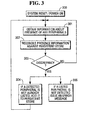
- the computer 20 is powered on or reset at block 300.
- the operating system 22 of the computer 20 becomes active and obtains information about presence of any peripherals 21 that are in communication with the computer 20. This is illustrated at block 301 of FIG. 3 .
- the computer 20 accesses the persistent store 24 and reconciles the detected peripheral presence information against that persistent store 24 (see block 302 of FIG. 3 ).
- the persistent store may comprise details of peripherals which it is expected to be present. For example, this persistent store may have been pre-configured during installation of the computer. Alternatively, the persistent store is initially empty when the computer is powered on for the first time. In that case, entries are made in the persistent store as described below.
- a detected peripheral is not already listed in the persistent store, it is added to the persistent store (block 304). In this way, plug and play functionality is at least partially provided because, if a peripheral is added, that peripheral is detected and the persistent store updated.
- the operating system loads any software drivers as appropriate and informs client applications of the availability of the peripheral as described above with reference to FIG. 1 .
- the operating system continues to monitor for peripherals and the method repeats as indicated in FIG. 3 .
- a peripheral is listed in the persistent store but is not detected (block 305) then an error message or other alert is issued.
- the error message may optionally be sent to the remote management system 30 via the communications network 29 using the remote management system interface 32.
- the remote management system (and/ or the local computer 20) may be arranged to trigger automated maintenance applications to remotely investigate and attempt to repair the problem. Alternatively, an operator may be requested to attend the site and investigate the problem.
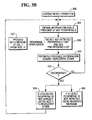
- FIG. 3B shows an example method which is the same as that of FIG. 3 except that provision is made to use the general plug-and-play method of FIG. 1 for some types of peripherals.
- a pre-specified list is formed and stored at the local computer 20 or at any other accessible location in the communications network 29.
- This pre-specified list is of peripherals for which "one-way" plug and play is to be implemented.
- peripherals may be cash dispensers, pin pads, printers of an ATM where it is required to detect loss of communication in all situations.
- a selection is made (block 306) to pick out those peripherals which are in a pre-specified list.
- the method proceeds (blocks 302, 303, 304, 305) for those selected peripherals following the method of FIG. 3 which can be said to provide a "one-way" plug and play system. For any remaining peripherals the method proceeds from FIG. 1 block 13 (see block 307 of FIG. 3B ) and this provides general plug-and-play for those peripherals.
- the pre-specified list of peripherals for which one-way plug and play is required may be pre-configured by an operator and stored at a memory which is persistent and which may or may not be the same persistent store used in the one-way plug and play system.
- the method described with respect to FIGs. 3 and 3B may be implemented using software provided at the local computer 20 or provided at a node in the communications network 29, at the remote management system 30 or at any other suitable location.
- software 31 is provided at the local computer 20 for this purpose. That software may be provided in the form of a software layer between the operating system 22 and the client application(s) 23.
- the operating system 22 may be a conventional plug and play operating system of a PC.
- software 31 may be integral with the operating system 22.
- the persistent store 24 may be provided at the local computer 20 or at any other location accessible to the software 31.
- that location may be at the remote management system 30 or at a node in the communications network 29.
- FIG. 4 is a flow diagram of a method of intentionally removing a peripheral from a computer system.
- the computer system is provided with a pre-configured persistent store as at block 400.
- the persistent store comprises information about all peripherals which it is expected to be in communication with the computer system. If a peripheral device is removed for a valid reason block 401 then the persistent store is reconfigured at block 402 using a maintenance application.
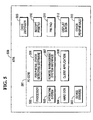
- the computer is a personal computer (PC) 501 integral with an ATM 500 comprising a plurality of peripherals 513 such as cash dispensers 509, pin pads 511, receipt printers 510, display screens 512 and the like. Any suitable combination of peripherals may be used.
- the personal computer 501 comprises a processor 502, operating system 503, a persistent store such as a hard disk 504, one or more device drivers 505 for driving the peripherals, peripheral error detecting software 506 as described above, remote management system interface software 507 and one or more client applications 508.
- Peripherals may be added to the ATM at any time and these will be detected by the operating system 503 as described above with reference to FIG. 5 . However, if communication with a peripheral is lost an error message is issued as described above with reference to FIG. 3 , no matter whether that communication is lost during operation of the ATM or during shut down of the ATM.
- 'computer' is used herein to refer to any device with processing capability such that it can execute instructions. Those skilled in the art will realize that such processing capabilities are incorporated into many different devices and therefore the term 'computer' includes PCs, servers, mobile telephones, personal digital assistants and many other devices.
- the methods described herein may be performed by software in machine readable form on a storage medium.
- the software can be suitable for execution on a parallel processor or a serial processor such that the method steps may be carried out in any suitable order, or simultaneously.
- a remote computer may store an example of the process described as software.
- a local or terminal computer may access the remote computer and download a part or all of the software to run the program.
- the local computer may download pieces of the software as needed, or execute some software instructions at the local terminal and some at the remote computer (or computer network).
- a dedicated circuit such as a DSP, programmable logic array, or the like.
Landscapes
- Engineering & Computer Science (AREA)
- Theoretical Computer Science (AREA)
- Physics & Mathematics (AREA)
- General Engineering & Computer Science (AREA)
- General Physics & Mathematics (AREA)
- Quality & Reliability (AREA)
- Software Systems (AREA)
- Computer Security & Cryptography (AREA)
- Computer And Data Communications (AREA)
- Debugging And Monitoring (AREA)
Applications Claiming Priority (1)
| Application Number | Priority Date | Filing Date | Title |
|---|---|---|---|
| US11/809,105 US20080301326A1 (en) | 2007-05-31 | 2007-05-31 | Detecting loss of communication with peripherals |
Publications (2)
| Publication Number | Publication Date |
|---|---|
| EP2006771A2 true EP2006771A2 (de) | 2008-12-24 |
| EP2006771A3 EP2006771A3 (de) | 2012-01-04 |
Family
ID=39937641
Family Applications (1)
| Application Number | Title | Priority Date | Filing Date |
|---|---|---|---|
| EP08251721A Withdrawn EP2006771A3 (de) | 2007-05-31 | 2008-05-15 | Erkennungsverlust bei der Kommunikation mit Peripheriegeräten |
Country Status (2)
| Country | Link |
|---|---|
| US (1) | US20080301326A1 (de) |
| EP (1) | EP2006771A3 (de) |
Families Citing this family (4)
| Publication number | Priority date | Publication date | Assignee | Title |
|---|---|---|---|---|
| US8732602B2 (en) * | 2009-03-27 | 2014-05-20 | Schneider Electric It Corporation | System and method for altering a user interface of a power device |
| JP5479176B2 (ja) * | 2010-03-19 | 2014-04-23 | 株式会社Pfu | サーバ装置、周辺装置管理方法およびプログラム |
| KR101864593B1 (ko) * | 2011-10-18 | 2018-06-11 | 에이치피프린팅코리아 주식회사 | 스캔 작업을 수행하는 사용자 단말 장치와 서버 장치, 이들을 포함하는 스캔 시스템 및 그 스캔 수행 방법들 |
| US10002007B2 (en) * | 2014-05-29 | 2018-06-19 | Ncr Corporation | Operating system (OS) independent device drivers |
Citations (2)
| Publication number | Priority date | Publication date | Assignee | Title |
|---|---|---|---|---|
| US20030126317A1 (en) * | 2001-12-31 | 2003-07-03 | Icp Electronics Inc. | Peripheral monitoring device and computer system having the same |
| US20040210897A1 (en) * | 1999-12-09 | 2004-10-21 | Microsoft Corporation | Automatic detection and installation of client peripheral devices by a server |
Family Cites Families (7)
| Publication number | Priority date | Publication date | Assignee | Title |
|---|---|---|---|---|
| US5787246A (en) * | 1994-05-27 | 1998-07-28 | Microsoft Corporation | System for configuring devices for a computer system |
| TW444165B (en) * | 1998-05-12 | 2001-07-01 | Primax Electronics Ltd | Hot plug and play universal serial bus switch device and control method |
| US6925513B1 (en) * | 1999-05-04 | 2005-08-02 | Apple Computer, Inc. | USB device notification |
| US6854052B2 (en) * | 2001-04-18 | 2005-02-08 | International Business Machines Corporation | Method to validate system configuration |
| US6993681B2 (en) * | 2002-04-15 | 2006-01-31 | General Electric Corporation | Remote administration in a distributed system |
| US8151280B2 (en) * | 2003-10-27 | 2012-04-03 | Microsoft Corporation | Simple and dynamic configuration of network devices |
| US7904760B2 (en) * | 2005-07-06 | 2011-03-08 | Cisco Technology, Inc. | Method and system for using presence information in error notification |
-
2007
- 2007-05-31 US US11/809,105 patent/US20080301326A1/en not_active Abandoned
-
2008
- 2008-05-15 EP EP08251721A patent/EP2006771A3/de not_active Withdrawn
Patent Citations (2)
| Publication number | Priority date | Publication date | Assignee | Title |
|---|---|---|---|---|
| US20040210897A1 (en) * | 1999-12-09 | 2004-10-21 | Microsoft Corporation | Automatic detection and installation of client peripheral devices by a server |
| US20030126317A1 (en) * | 2001-12-31 | 2003-07-03 | Icp Electronics Inc. | Peripheral monitoring device and computer system having the same |
Also Published As
| Publication number | Publication date |
|---|---|
| US20080301326A1 (en) | 2008-12-04 |
| EP2006771A3 (de) | 2012-01-04 |
Similar Documents
| Publication | Publication Date | Title |
|---|---|---|
| US20080235546A1 (en) | System and method for detecting a work status of a computer system | |
| US20150088577A1 (en) | IT Asset Management System | |
| JP4201291B2 (ja) | 電子値札による商品価格同期装置及び商品価格同期方法 | |
| US8983862B2 (en) | Initiating a service call for a hardware malfunction in a point of sale system | |
| WO2008068126A1 (en) | Communication and filtering of events among peer controllers in the same spatial region of a sensor network | |
| US20090199044A1 (en) | Device self-maintenance | |
| US20200028737A1 (en) | Method and device for upgrading module firmware of pos machine | |
| EP2704078A1 (de) | Sicherheitsmodul und Verfahren zur Sicherung von Bezahlungsinformationen | |
| US20140281527A1 (en) | Detecting Fraud Using Operational Parameters for a Peripheral | |
| US20240370330A1 (en) | Method for managing server in information technology asset management system | |
| US20080301326A1 (en) | Detecting loss of communication with peripherals | |
| CN103412519A (zh) | 远端周边的控制系统、方法及其远端服务器 | |
| US20110296330A1 (en) | Method and apparatus for providing industrial plant information | |
| US8572294B2 (en) | Device start up system and method | |
| US7558702B2 (en) | Computer apparatus, start-up controlling method, and storage medium | |
| CN106485849B (zh) | 用于自助服务终端技术状况监控和报警的方法和系统 | |
| US20240356796A1 (en) | System for monitoring servers totally | |
| JP2008117078A (ja) | ユーザ装置、サーバ、アップグレードサービスシステム、その方法およびプログラム | |
| US12254324B2 (en) | Operation-specific device configuration | |
| KR20200004514A (ko) | Pci-e 인터페이스를 이용한 컴퓨터 장애진단 시스템 | |
| US10817397B2 (en) | Dynamic device detection and enhanced device management | |
| US12288077B2 (en) | Multi-boot architecture for electronic interaction device | |
| US20230236924A1 (en) | Monitoring device and monitoring method | |
| CA2799879A1 (en) | Retail peripheral management system | |
| CN115248759A (zh) | 基于电子纸的显示设备的节点故障可视化 |
Legal Events
| Date | Code | Title | Description |
|---|---|---|---|
| PUAI | Public reference made under article 153(3) epc to a published international application that has entered the european phase |
Free format text: ORIGINAL CODE: 0009012 |
|
| AK | Designated contracting states |
Kind code of ref document: A2 Designated state(s): AT BE BG CH CY CZ DE DK EE ES FI FR GB GR HR HU IE IS IT LI LT LU LV MC MT NL NO PL PT RO SE SI SK TR |
|
| AX | Request for extension of the european patent |
Extension state: AL BA MK RS |
|
| RAP1 | Party data changed (applicant data changed or rights of an application transferred) |
Owner name: NCR INTERNATIONAL, INC. |
|
| PUAL | Search report despatched |
Free format text: ORIGINAL CODE: 0009013 |
|
| AK | Designated contracting states |
Kind code of ref document: A3 Designated state(s): AT BE BG CH CY CZ DE DK EE ES FI FR GB GR HR HU IE IS IT LI LT LU LV MC MT NL NO PL PT RO SE SI SK TR |
|
| AX | Request for extension of the european patent |
Extension state: AL BA MK RS |
|
| RIC1 | Information provided on ipc code assigned before grant |
Ipc: G06F 9/445 20060101ALI20111125BHEP Ipc: G06F 11/14 20060101ALI20111125BHEP Ipc: G06F 11/07 20060101AFI20111125BHEP |
|
| 17P | Request for examination filed |
Effective date: 20120704 |
|
| AKX | Designation fees paid |
Designated state(s): DE ES FR GB HU IT |
|
| 17Q | First examination report despatched |
Effective date: 20120928 |
|
| STAA | Information on the status of an ep patent application or granted ep patent |
Free format text: STATUS: THE APPLICATION HAS BEEN WITHDRAWN |
|
| 18W | Application withdrawn |
Effective date: 20130415 |