EP2007068A9 - Verfahren zur verwaltung von einrichtungen in einem benutzernetzwerk und verwaltungsentität eines benutzernetzwerks - Google Patents
Verfahren zur verwaltung von einrichtungen in einem benutzernetzwerk und verwaltungsentität eines benutzernetzwerks Download PDFInfo
- Publication number
- EP2007068A9 EP2007068A9 EP07720327A EP07720327A EP2007068A9 EP 2007068 A9 EP2007068 A9 EP 2007068A9 EP 07720327 A EP07720327 A EP 07720327A EP 07720327 A EP07720327 A EP 07720327A EP 2007068 A9 EP2007068 A9 EP 2007068A9
- Authority
- EP
- European Patent Office
- Prior art keywords
- pan
- management
- devices
- stand
- network
- Prior art date
- Legal status (The legal status is an assumption and is not a legal conclusion. Google has not performed a legal analysis and makes no representation as to the accuracy of the status listed.)
- Withdrawn
Links
- 238000000034 method Methods 0.000 title claims abstract description 86
- 230000008569 process Effects 0.000 claims abstract description 30
- 229920002239 polyacrylonitrile Polymers 0.000 claims abstract 45
- 201000006292 polyarteritis nodosa Diseases 0.000 claims abstract 45
- 230000001960 triggered effect Effects 0.000 claims description 3
- 238000004891 communication Methods 0.000 abstract description 13
- 101001128135 Homo sapiens NACHT, LRR and PYD domains-containing protein 4 Proteins 0.000 description 6
- 101000982939 Homo sapiens PAN2-PAN3 deadenylation complex catalytic subunit PAN2 Proteins 0.000 description 6
- 101000742934 Homo sapiens Retinol dehydrogenase 14 Proteins 0.000 description 6
- 102100031898 NACHT, LRR and PYD domains-containing protein 4 Human genes 0.000 description 6
- 101001128138 Homo sapiens NACHT, LRR and PYD domains-containing protein 2 Proteins 0.000 description 4
- 102100031897 NACHT, LRR and PYD domains-containing protein 2 Human genes 0.000 description 4
- 230000003213 activating effect Effects 0.000 description 3
- 230000008859 change Effects 0.000 description 3
- 238000005516 engineering process Methods 0.000 description 3
- 238000012545 processing Methods 0.000 description 3
- 238000004904 shortening Methods 0.000 description 2
- 238000011161 development Methods 0.000 description 1
- 238000012423 maintenance Methods 0.000 description 1
- 230000007246 mechanism Effects 0.000 description 1
- 238000012986 modification Methods 0.000 description 1
- 230000004048 modification Effects 0.000 description 1
- 230000003252 repetitive effect Effects 0.000 description 1
Images







Classifications
-
- H—ELECTRICITY
- H04—ELECTRIC COMMUNICATION TECHNIQUE
- H04W—WIRELESS COMMUNICATION NETWORKS
- H04W4/00—Services specially adapted for wireless communication networks; Facilities therefor
- H04W4/02—Services making use of location information
-
- H—ELECTRICITY
- H04—ELECTRIC COMMUNICATION TECHNIQUE
- H04L—TRANSMISSION OF DIGITAL INFORMATION, e.g. TELEGRAPHIC COMMUNICATION
- H04L41/00—Arrangements for maintenance, administration or management of data switching networks, e.g. of packet switching networks
- H04L41/12—Discovery or management of network topologies
-
- H—ELECTRICITY
- H04—ELECTRIC COMMUNICATION TECHNIQUE
- H04W—WIRELESS COMMUNICATION NETWORKS
- H04W4/00—Services specially adapted for wireless communication networks; Facilities therefor
- H04W4/02—Services making use of location information
- H04W4/023—Services making use of location information using mutual or relative location information between multiple location based services [LBS] targets or of distance thresholds
-
- H—ELECTRICITY
- H04—ELECTRIC COMMUNICATION TECHNIQUE
- H04W—WIRELESS COMMUNICATION NETWORKS
- H04W64/00—Locating users or terminals or network equipment for network management purposes, e.g. mobility management
- H04W64/006—Locating users or terminals or network equipment for network management purposes, e.g. mobility management with additional information processing, e.g. for direction or speed determination
-
- H—ELECTRICITY
- H04—ELECTRIC COMMUNICATION TECHNIQUE
- H04L—TRANSMISSION OF DIGITAL INFORMATION, e.g. TELEGRAPHIC COMMUNICATION
- H04L12/00—Data switching networks
- H04L12/28—Data switching networks characterised by path configuration, e.g. LAN [Local Area Networks] or WAN [Wide Area Networks]
- H04L12/2854—Wide area networks, e.g. public data networks
- H04L12/2856—Access arrangements, e.g. Internet access
-
- H—ELECTRICITY
- H04—ELECTRIC COMMUNICATION TECHNIQUE
- H04W—WIRELESS COMMUNICATION NETWORKS
- H04W4/00—Services specially adapted for wireless communication networks; Facilities therefor
- H04W4/50—Service provisioning or reconfiguring
-
- H—ELECTRICITY
- H04—ELECTRIC COMMUNICATION TECHNIQUE
- H04W—WIRELESS COMMUNICATION NETWORKS
- H04W60/00—Affiliation to network, e.g. registration; Terminating affiliation with the network, e.g. de-registration
-
- H—ELECTRICITY
- H04—ELECTRIC COMMUNICATION TECHNIQUE
- H04W—WIRELESS COMMUNICATION NETWORKS
- H04W60/00—Affiliation to network, e.g. registration; Terminating affiliation with the network, e.g. de-registration
- H04W60/06—De-registration or detaching
-
- H—ELECTRICITY
- H04—ELECTRIC COMMUNICATION TECHNIQUE
- H04W—WIRELESS COMMUNICATION NETWORKS
- H04W84/00—Network topologies
- H04W84/18—Self-organising networks, e.g. ad-hoc networks or sensor networks
Definitions
- This invention relates to the communication technology field, and in particular, to a method for managing devices in a user network and a management entity in a user network.
- a user network consists of multiple stand-alone devices of the same user or multiple Personal Area Networks (PANs) composed of devices.
- PANs Personal Area Networks
- the user can perform unified management and maintenance for stand-alone devices or PANs of the user regardless of their location and the access mode.
- communication can be performed between stand-alone devices or PANs in a user network.
- a user network not only contains stand-alone devices and PANs, but also contains a network management entity.
- a "stand-alone device” is a device that belongs to no PAN, for example, a mobile phone that belongs to no PAN;
- a PAN is a network made up of nearby ordinary devices which are connected through wired or wireless connection technologies such as Bluetooth, for example, an office network made up of ordinary devices in an office such as PC, printers and scanners;
- a network management entity is a logic entity that manages all devices and PANs in a user network, and can be located on a server of an operator (user) and controlled by the user through a management device.
- the network management entity manages the stand-alone devices and PANs in the user network.
- the management operations include: registering, unregistering, activating and deactivating a device; and identifying and authenticating an identity.
- the registration information of a device includes a network ID, a network address, and a neighbor list. To join a user network, each device needs to be registered; to exit a user network, the device needs to be unregistered. Once registered, a device has a unique identity and a unique location in the user network.
- a user network not only contains a network management entity, but also has a device containing an access network identification module in each PAN, and this device serves as a management device.
- This management device is adapted to coordinate and control communication between other ordinary devices in the PAN, and serves as a unique interface for communication between an ordinary device in the PAN and an outside device or network. The control information and the data information sent from the network management entity to each ordinary device in the PAN need to be conveyed by the management device.
- a management device contains an access network identification module such as UMTS Subscriber Identity Module (USIM), and can access other networks such as Public Lands Mobile Network (PLMN) to use the services available from the network. Other ordinary devices in the PAN can use such services only through a management device.
- USIM UMTS Subscriber Identity Module
- PLMN Public Lands Mobile Network
- An access network identification module is generally a detachable physical entity.
- An ordinary device becomes a management device after an access network identification module is attached to it; a management device becomes an ordinary device after the access network identification module is detached from it.
- the access network identification module does not work until being activated. After the access network identification module on a management device is deactivated, the management device becomes an ordinary device. In a PAN, it is possible that access network identification modules are installed on multiple devices, but only the access network identification module on the management device is active.
- a device can join or exit a PAN; and a PAN can combine with another PAN or break down into several PANs. Such processes lead to change of the network architecture, and hence need change of the registration information of relevant devices.
- the device in a user network may be a mobile device or a fixed device. Therefore, a user network must support mobility of devices, so that communication is still normal after each device moves to another location.
- each PAN to be combined in order to combine the PANs into a new PAN in a user network, each PAN to be combined must be split first, and then the devices in each PAN are added into the new PAN; in order to split a PAN in a user network, all devices in the PAN must be unregistered first. Moreover, a user network is unable to identify the relative location of each PAN, so the user has to participate in the whole process of combining the PANs.
- the PANs can be combined in the procedure as described hereinafter.
- Step 210 The user judges whether such PANs can be combined in view of the factors such as whether they belong to the same type of short-distance wireless communication network. If the PANs can be combined, the procedure goes to step 220; otherwise, the operation is finished.
- Step 220 The user specifies a device containing an access network identification module as a management device, and activates the access network identification function of the management device.
- Step 230 By deactivating or detaching the access network identification module, the user disables the access network identification function of other management devices in the PANs to be combined.
- Step 240 The user interrupts the network service that is used by the ordinary devices in such PANs through the management device.
- Step 250 Except the specified management device, the user unregisters the ordinary devices in the PANs involved in the combining process so that they become stand-alone ordinary devices.
- Step 260 The user registers the stand-alone ordinary devices into the new PAN, during which the network management entity assigns new network addresses and a new binding table to such devices.
- Step 270 The user recovers the network services of the devices interrupted previously.
- the method for combining a stand-alone device and a PAN in a user network requires the user to actively discover the PAN and the stand-alone device that need to be combined, and to specify a management device for the new combined PAN.
- a management device is specified, the user needs to disable the access network identification function of all management devices except the specified management device, and interrupt the network service being used in the PAN.
- the user needs to unregister the devices in the PAN involved in the combining process and the stand-alone devices except the specified management device, so that the devices become stand-alone ordinary devices; and then the user adds the stand-alone ordinary devices into the new PAN one by one by means of registration.
- the user registers such devices again through a management entity, assigns new network addresses and a new binding table to the devices, and recovers the network services of the devices interrupted previously.
- a PAN in a user network is split in the procedure as described hereinafter.
- Step 310 First, the user judges whether the separate ordinary devices can form a stand-alone PAN, that is, checks for existence of any ordinary device that can be changed into a management device (for example, checks for existence of any ordinary device that carries an inactive access network identification module or contains an interface for installing the module). If such an ordinary device exists, the procedure goes to step 320; otherwise, the operation is finished.
- a management device for example, checks for existence of any ordinary device that carries an inactive access network identification module or contains an interface for installing the module.
- Step 320 By activating the access network identification module of the ordinary device or by installing an access network identification module onto the ordinary device and activating it, the user specifies a management device for the new PAN.
- Step 330 The user unregisters the ordinary device that needs to be split in the existing PAN so that the ordinary device becomes a stand-alone ordinary device.
- Step 340 The user interrupts the network service being used by the unregistered ordinary device.
- Step 350 The user adds the unregistered ordinary devices into the new PAN again by means of registration, during which the network management entity assigns new network addresses and a new binding table to such devices.
- Step 360 The user recovers the network services of the devices interrupted previously.
- the method of splitting a PAN from a management device in the PAN requires the user to actively discover the PAN that needs to be split, specify a device among the ordinary devices in the PAN, install an access network identification module for the specified device, activate the module, and specify the device as a management device of the split PAN. After re-registering the device and assigning a new network address and a new binding table to the device, the user recovers the network service of the device interrupted previously.
- the user network is unable to identify each PAN or the relative location of the stand-alone device automatically, and unable to control or manage the combining or splitting process of a PAN, and all operations need to be performed by the user manually, which is rather inconvenient.
- the subjective judgment made by the user is usually inaccurate and unpunctual.
- the ordinary device quits the PAN without being detected by the user in time, and communication is interrupted.
- the relevant devices Since the user network provides no mechanism of updating registration information of the PAN, the relevant devices need to be unregistered and then registered again after the PAN that covers the devices is changed. Consequently, the processing delay is increased, and the network resources are consumed by inefficient repetitive operations. To get re-registered, the relevant devices must interrupt all services in the existing PAN first, and then are re-registered and restarted, which leads to low efficiency of the services in the user network.
- the user network does not support combining or splitting of PANs, so the relevant services are unavailable from the user network, which restricts the service capabilities of the PAN.
- the present invention provides a method for managing devices and a management entity in a user network, wherein the management entity knows the location of each management object in the user network, and performs combining and splitting of stand-alone devices and/or PANs in the user network based on the location information, without requiring manual combining/splitting operations of the user.
- the management entity of the user network obtains the information about the location of the managed PAN and/or stand-alone devices, and, based on the location information, checks for existence of any PAN and/or stand-alone device that can be combined or split. If any such device exists, the management entity performs the combining or splitting operation according to the combining or splitting mode preset or selected by the user.
- the combining or splitting operation is not decided subjectively by the user. Therefore, the communication between PANs and/or stand-alone devices in the user network is maintained more accurately, reliably and efficiently, the workload of the user is relieved, and the user is facilitated.
- the user can reserve the network registration information of some relevant devices as required, and update the network registration information of other devices directly, thus shortening the processing delay, improving the working efficiency of the network management entity and saving the storage space. Moreover, through switching of the service access point, the continuity of the network service is guaranteed.
- Figure 1 shows the user network in the prior art.
- Figure 2 shows the process of combining two PANs in a user network according to the prior art.
- Figure 3 shows the process of splitting a PAN in a user network according to the prior art.
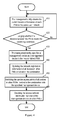
- Figure 4 shows the process of managing devices in a user network according to the first embodiment of the present invention.
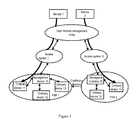
- Figure 5 shows the architecture in the method of managing devices in a user network before combining PANs according to the first embodiment of the present invention.
- Figure 6 shows the first type of architecture in the method of managing devices in a user network after combining PANs according to the first embodiment of the present invention.
- Figure 7 shows the second type of architecture in the method of managing devices in a user network after combining PANs according to the first embodiment of the present invention.
- Figure 8 shows the process of managing devices in a user network according to the second embodiment of the present invention.
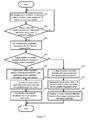
- Figure 9 shows the process of managing devices in a user network according to the third embodiment of the present invention.
- Figure 10 shows the architecture in the method of managing devices in a user network before combining the PAN with the stand-alone device according to the third embodiment of the present invention.
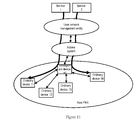
- Figure 11 shows the first type of architecture in the method of managing devices in a user network after combining a PAN with a stand-alone device according to the third embodiment of the present invention.
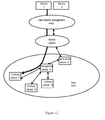
- Figure 12 shows the second type of architecture in the method of managing devices in a user network after combining a PAN with a stand-alone device according to the third embodiment of the present invention.
- Figure 13 shows the process of managing devices in a user network according to the fourth embodiment of the present invention.
- Figure 14 shows the process of managing devices in a user network according to the fifth embodiment of the present invention.
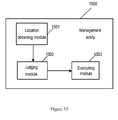
- Figure 15 shows the system architecture of a user network management entity according to the sixth embodiment of the present invention.
- Step 410 The management entity obtains the information about the current location of each management object in the same user network.
- the management object includes a stand-alone device and a PAN, both being capable of identifying access networks in the user network; the PAN further includes a management device and other ordinary devices capable of identifying access networks.
- a management entity can obtain or update the information about the location of each stand-alone device, PAN, and the devices in a PAN; alternatively, the location information may be reported by each stand-alone device or PAN or each device in the PAN automatically; depending on the specific service requirements and service capabilities of the user network, the obtained location information may be an actual location of the device such as actual physical location, or a relative location in the user network such as a relative location using a device in the user network as a reference point, so long as the network management entity can calculate out the distance between the PANs through the location information.
- Step 420 The management entity judges whether the PANs are suitable for combining according to the preset conditions, namely, judges whether the distance between the PANs meets the preset conditions of combining.
- the management entity may calculate out the distance between the PANs according to the obtained location information, and judges whether the distance between the PANs meets the preset conditions of combining, or further judges whether each PAN meets the basic conditions required for network combination, for example, whether they belong to the same type of short-distance wireless communication network; if the distance between two or more PANs meets the preset conditions of combining and such PANs meet the basic conditions of network combination, the procedure goes to step 430 to combine the PANs, or else the procedure goes back to step 410, in which the management entity continues to obtain and update the current location information of each management object in the user network.
- the management entity obtains the location information of the management object automatically, and accurately determines whether the distance between the management devices meets the preset conditions of combining. Therefore, the combining or splitting operation is no longer decided by subjectively by the user; the communication between PANs in the user network is maintained more reliably and efficiently; the workload of the user is relieved, and the user is facilitated.
- Step 430 The management entity specifies a management device as a management device in the new combined PAN; specifically, the distance between two or more PANs meets the preset conditions of combining, so the management entity can combine them into a new PAN.
- the management entity specifies a management device as a management device in the new combined PAN; if the user network presets the mode of combining the PANs, the management entity can specify a management device as a management device in the new combined PAN among the PANs involved in the combining in the preset mode; conversely, if the user network never presets the mode of combining PAN, the management device asks for advice of the user first, for example, the management device can provide the user with the name and the attributes of the PANs to be combined and the reasons for combining so that the user knows the state of the PANs and the service being used by the PANs.
- the management device specifies the corresponding management device as a management device in the new combined PAN according to the feedback.
- the management entity judges whether the distance between PAN1 and PAN2 meets the preset conditions of combining according to the location of each PAN in the user network.
- the management device can specify a management device 10 in the PAN1 as a management device in the new PAN according to the preset combining mode.
- Step 440 The management entity updates the network registration information of the specified management device, and updates the network registration information of the devices in the PANs involved in the combination, except the PAN previously containing the specified management device.
- the network registration information includes at least one item of: device identity, network address and neighbor list.
- the management entity updates the network registration information of the management device 10 in PAN1, and updates the network registration information of the devices in PAN2.
- the management entity reserves the network registration information of some devices in the PAN previously containing the specified management device, thus shortening the processing delay, improving the working efficiency of the network management entity and saving the storage space.
- Step 450 The management entity switches the service access points of all devices in other PANs involved in the combination to the specified management device, so that all devices combined into the new PAN access the service network through the specified management device directly or indirectly.
- the management entity switches the access point of the management device 20 in PAN2 onto the management device of the new PAN, namely, management device 10.
- the ordinary devices 14 and 15 connected with the management device 20 do not access the service network through the management device 20 any longer, but access the service network indirectly through the management device 1; or the management entity connects the management device 20 and the ordinary devices 14 and 15 in PAN2 onto the management device 10, so that they access the service network through the management device 10 directly; in this process, the ordinary device 14 is using network service 2, so the management entity needs to perform service redirection regardless of the method applied.
- the management entity does not need to interrupt the service in use in the process of combining the PAN, thus ensuring continuity of network services.
- Step 460 The management entity disables the access network identification function of the management device in other PANs involved in the combination, so that all devices in the new PAN can access the service network only through the specified management device, and finally finish combining the PANs.
- the management entity disables the access network identification function of the management device 20 in PAN2, and changes the management device into an ordinary device so that all devices in the new PAN can access the service network only through management device 10.
- the method for managing devices in a user network includes the steps as described hereinafter.
- Step 810 similar to step 410.
- Step 820 The management entity judges whether each PAN is suitable for splitting according to the preset conditions, namely, judges whether the distance between an ordinary device and other devices in each PAN meets the preset conditions of splitting.
- the management entity calculates out the distance between an ordinary device and the management device in each PAN according to the obtained location information, and judges whether the distance between the ordinary device and the management device in the PAN meets the preset conditions of splitting, or further judges whether the ordinary device far away from the management device in the PAN can be split out to form a new PAN, for example, checks existence of at least one ordinary device that can be changed into a management device among all ordinary devices far away from the management device; if the PAN meets the preset conditions of splitting, and the ordinary devices that need to be split out include the ordinary devices that can be changed to management devices, the procedure goes to step 830; otherwise, the procedure goes back to step 810, in which the management entity continues to obtain and update the current location information of each management object in the user network periodically or conditionally.
- Step 830 Among the ordinary devices that meet the splitting conditions, the management entity specifies an ordinary device as a management device in the new PAN generated after splitting.
- the specified ordinary device meet the basic conditions of changing into a management device, including the support of adding the access network identification function; if the user network presets a mode of splitting the PAN, the management entity specifies an ordinary device as a management device in the new PAN generated after splitting according to the presetting; if the user network does not preset a mode of splitting the PAN, the management entity asks for advice of the user, for example, the management entity can provide the user with the name and attributes of the PAN to be split and the reasons of splitting.
- the management device specifies the corresponding ordinary device as a management device in the new PAN generated after splitting according to the feedback.
- Step 840 The management entity updates the network registration information of all devices in the new PAN.
- the network registration information includes a device identity, a network address, and a neighbor list.
- Step 850 The management entity adds the access network identification function to the specified ordinary device so that the ordinary device has the functions required as a management device and becomes a management device.
- Step 860 The management device switches the service access point of the ordinary device in the new PAN to the specified management device, so that all devices in the new PAN access the service network through a specified management device. If the ordinary device involved in the switching is using a network service in the switching process, the management entity further performs service redirection to ensure continuity of the network service.
- Step 901 similar to step 410.
- Step 902 According to the obtained location information, the management entity judges whether the distance between the managed PAN and the stand-alone device meets the combining conditions; if the conditions are met, the procedure goes to step 903; otherwise, the procedure goes back to step 901 in which the management entity continues to obtain and update the current location information of each management object in the user network periodically or conditionally.
- Step 903 According to the preset combining scheme or as required by the user, the management device specifies a management device for the new combined PAN.
- a management device has the access network identification function, so the specified management device is generally a management device in the combined PAN or a stand-alone device involved in the combination. As shown in Figure 10 , the distance between the PAN and the stand-alone device 15 meets the combining conditions, so the management entity combines them into a new PAN.
- the management entity specifies a management device for the new PAN generated after combination.
- the specified management device may be management device 10 or stand-alone device 15.
- Step 904 The management entity judges whether the specified management entity is a management device in the combined PAN. If so, the procedure goes to step 905; or else step 908. Specific to the previous case, the management entity judges whether the specified device is management device 1 in the combined PAN1. If so, the procedure goes to step 905; or else step 908.
- Step 905 If the specified management device is a management device in the combined PAN, the management entity updates the network registration information of the management devices in the combined PAN, and updates the network registration information of the combined stand-alone devices, in which the network registration information includes device identity, network address and neighbor list.
- Step 906 The management device switches the service access point of the stand-alone device to the specified management device, so that the stand-alone device accesses the service network through the specified management device. If the stand-alone device is using a network service in the combining process, the management entity further performs service redirection. Specific to the previous case, as shown in Figure 11 , the management entity switches the service access point of the stand-alone device 15 to the specified management device 10, so that the stand-alone device 15 can access the service network through the management device 10.
- Step 907 By disabling the access network identification function of the stand-alone device, the management entity changes the stand-alone device 15 into an ordinary device, and the combining process is finished. Specific to the previous case, the management entity disables the access network identification function of the stand-alone device 15 so that the stand-alone device becomes an ordinary device.
- step 904 if the management entity determines that the specified management device is a combined stand-alone device, the procedure goes to step 908, and the management entity updates the network registration information of all devices and stand-alone devices in the combined PAN.
- Step 909 The management entity switches the service access points of all devices in the PAN before combination onto the specified management device, so that all devices in the PAN before combination access the service network directly or indirectly through the specified management device. If the device in the PAN involved in the combination is using a network service in the combining process, the management entity further performs service redirection.
- the management entity can change the service access points of all devices in the PAN indirectly by changing the service access point of the management device 10, so that all devices in the PAN access the service network indirectly through the stand-alone device 15, as shown in Figure 12 ; alternatively, the management entity can switch the service access points of all devices in the PAN onto the stand-alone device 15 respectively, so that all devices in the PAN access the service network directly through the stand-alone device 15.
- Step 910 By disabling the access network identification function of the management device in the PAN before combination, the management entity changes the management device into an ordinary device. Specific to the previous case, the management entity disables the access network identification function of the management device 10 in the PAN and changes it into an ordinary device.
- the method for managing devices in a user network includes the steps as described hereinafter.
- Step 1301 similar to step 410.
- Step 1302 According to the obtained location information, the management entity judges whether the distance between the management device in the managed PAN and other ordinary devices meets the splitting conditions; if the splitting conditions are met, the procedure goes to step 1303; otherwise, the procedure goes back to step 1301 in which the management entity continues to obtain and update the current location information of each management object in the user network periodically or conditionally.
- Step 1303 The management entity updates the network registration information of the management device that meets the splitting conditions, so that the management device becomes a stand-alone device.
- the network registration information includes a device identity, a network address, and a neighbor list.
- Step 1304 The management entity specifies a management device for the split PAN. Specifically, the management entity specifies an ordinary device as a management device in the split PAN among the ordinary devices in the original PAN. This device meets the conditions of being changed into a management device, including support of adding the access network identification function.
- Step 1305 The management entity updates the network registration information of all devices in the split PAN.
- the network registration information includes a device identity, a network address, and a neighbor list.
- Step 1306 The management entity adds the access network identification function to the specified ordinary device so that the ordinary device is changed to a management device.
- Step 1307 The management entity switches the service access point of the ordinary device in the split PAN onto the specified management device, so that all ordinary devices in the split PAN access the service network through a specified management device. If the ordinary device involved in the switching is using a network service in the switching process, the management entity further performs service redirection to ensure continuity of the network service.
- the method for managing devices in a user network includes the steps as described hereinafter.
- Step 1401 similar to step 410.
- Step 1402 According to the obtained location information, the management entity judges whether the distance between the managed stand-alone devices meets the combining conditions; if the combining conditions are met, the procedure goes to step 1403; otherwise, the procedure goes back to step 1401 in which the management entity continues to obtain and update the current location information of each management object in the user network periodically or conditionally.
- Step 1403 The management entity specifies a combined stand-alone device as a management device in the new combined PAN.
- Step 1404 The management entity updates the network registration information of all combined stand-alone devices.
- the network registration information includes a device identity, a network address, and a neighbor list.
- Step 1405 The management device switches the service access points of other stand-alone devices involved in the combination onto the specified management device, so that the combined stand-alone devices can access the service network through the specified management device. If the stand-alone device involved in the combination is using a network service in the combining process, the management entity further performs service redirection to ensure continuity of the network service.
- Step 1406 The management entity disables the access network identification function of other stand-alone devices.
- Step 1601 similar to step 410.
- Step 1602 The management entity judges whether the distance between an ordinary device and the management device in each PAN meets the preset conditions of splitting.
- the management entity calculates out the distance between an ordinary device and the management device in each PAN according to the obtained location information, and judges whether the distance between the ordinary device and the management device in the PAN meets the preset conditions of splitting, and further judges whether the ordinary device far away from the management device in the PAN can be changed to a stand-alone device. If the PAN meets the preset splitting conditions and the ordinary device that needs to be split out can be changed into a stand-alone device, the procedure goes to step 1603; otherwise, the procedure goes back to step 1601, in which the management entity continues to obtain and update the current location information of each management object in the user network periodically or conditionally.
- Step 1603 The management entity updates the network registration information of the management device in the original PAN.
- the network registration information includes a device identity, a network address, and a neighbor list.
- Step 1604 The management entity adds the access network identification function to the split ordinary device, and updates the network registration information of the device so that the ordinary device becomes a stand-alone device.
- step 1603 and step 1604 are uncertain; step 1604 may occur before step 1603 or concur with 1603.
- Step 1701 similar to step 1601.
- Step 1702 The management entity judges whether the distance between the devices in the PAN meets the preset conditions of splitting.
- the management entity calculates out the distance between all devices according to the obtained location information, judges whether the distance between the devices in the PAN meets the preset conditions of splitting, and further judges whether the device to be split can be changed to a stand-alone device. If the PAN meets the preset splitting conditions and the device that needs to be split out can be changed into a stand-alone device, the procedure goes to step 1703; otherwise, the procedure goes back to step 1701, in which the management entity continues to obtain and update the current location information of each management object in the user network periodically or conditionally.
- Step 1703 The management entity updates the network registration information of all devices in the original PAN.
- the network registration information includes a device identity, a network address, and a neighbor list.
- Step 1704 The management entity adds the access network identification function to the split devices so that the devices become stand-alone devices.
- the user network management entity 1500 contains (i) a location obtaining module 1501 adapted to obtain the information about the location of each management object in the user network; (ii) a judging module 1502, adapted to judge whether the management object meets the preset conditions of combining or splitting; and (iii) an executing module 1503, adapted to instruct the management object to execute the combining or splitting operation according to the judgment results of the judging module.
- a management entity 1500 can obtain the location information such as distance between management objects in a user network through a location obtaining module 1501; afterward, the judging module 1502 judges whether the distance between the management objects meets the preset conditions of combining or splitting according to the current location information of the management objects obtained by the location obtaining module 1501. If the conditions are met, the management entity instructs the management object that meets the conditions to perform the corresponding combining or splitting operation through the executing module 1503.
- Management objects include stand-alone devices and PANs in the same user network; and a PAN may be a management device with the access network identification function or other ordinary device.
Landscapes
- Engineering & Computer Science (AREA)
- Computer Networks & Wireless Communication (AREA)
- Signal Processing (AREA)
- Mobile Radio Communication Systems (AREA)
- Small-Scale Networks (AREA)
- Data Exchanges In Wide-Area Networks (AREA)
Applications Claiming Priority (2)
| Application Number | Priority Date | Filing Date | Title |
|---|---|---|---|
| CN2006100254821A CN101051924B (zh) | 2006-04-06 | 2006-04-06 | 用户网络的设备管理方法及用户网络管理实体 |
| PCT/CN2007/000706 WO2007115466A1 (en) | 2006-04-06 | 2007-03-05 | The method of managing devices in user network and the managing entity of user network |
Publications (3)
| Publication Number | Publication Date |
|---|---|
| EP2007068A2 EP2007068A2 (de) | 2008-12-24 |
| EP2007068A9 true EP2007068A9 (de) | 2009-07-15 |
| EP2007068A4 EP2007068A4 (de) | 2010-02-17 |
Family
ID=38580693
Family Applications (1)
| Application Number | Title | Priority Date | Filing Date |
|---|---|---|---|
| EP07720327A Withdrawn EP2007068A4 (de) | 2006-04-06 | 2007-03-05 | Verfahren zur verwaltung von einrichtungen in einem benutzernetzwerk und verwaltungsentität eines benutzernetzwerks |
Country Status (4)
| Country | Link |
|---|---|
| US (1) | US20090043876A1 (de) |
| EP (1) | EP2007068A4 (de) |
| CN (1) | CN101051924B (de) |
| WO (1) | WO2007115466A1 (de) |
Families Citing this family (19)
| Publication number | Priority date | Publication date | Assignee | Title |
|---|---|---|---|---|
| EP2092763B1 (de) | 2006-10-23 | 2019-03-27 | T-Mobile USA, Inc. | System und verfahren zur verwaltung der funktionalität und konfiguration von zugangspunkten |
| US8619545B2 (en) | 2008-07-17 | 2013-12-31 | T-Mobile Usa, Inc. | System and method for selectively provisioning telecommunications services between an access point and a telecommunications network based on landline telephone detection |
| US8885635B2 (en) * | 2008-07-17 | 2014-11-11 | T-Mobile Usa, Inc. | System and method for selectively provisioning telecommunications services between an access point and a telecommunications network using a subscriber identifier |
| US8320344B2 (en) | 2009-02-27 | 2012-11-27 | T-Mobile Usa, Inc. | System and method for provisioning telecommunications services between an access point and a telecommunications network and providing a missing information notification |
| US8484457B2 (en) | 2009-03-10 | 2013-07-09 | T-Mobile Usa, Inc. | Method of securely pairing devices with an access point for an IP-based wireless network |
| CN102083199B (zh) * | 2009-11-26 | 2013-09-11 | 华为终端有限公司 | 个人网组件呼叫方法及相关设备 |
| CN102202285B (zh) * | 2010-03-24 | 2014-01-22 | 华为终端有限公司 | 一种融合的个人网的管理方法、装置和系统 |
| CN102792641B (zh) * | 2010-03-31 | 2015-07-29 | 日本电气株式会社 | 通信设备和设置方法 |
| JP2011232961A (ja) * | 2010-04-27 | 2011-11-17 | Onkyo Corp | コンテンツ特定装置およびそのプログラム |
| WO2011134157A1 (zh) * | 2010-04-29 | 2011-11-03 | 华为技术有限公司 | 个人网络元素注册方法、设备和系统 |
| CN102238485A (zh) * | 2010-04-30 | 2011-11-09 | 中兴通讯股份有限公司 | 一种管理业务组的方法及系统 |
| CN102546320B (zh) * | 2010-12-30 | 2015-10-28 | 中兴通讯股份有限公司 | 个人网络合并方法、装置及系统 |
| CN102761462A (zh) * | 2011-04-25 | 2012-10-31 | 中兴通讯股份有限公司 | 个人网的合并方法及装置、个人网的拆分方法及装置 |
| CN102905228A (zh) * | 2011-07-29 | 2013-01-30 | 中兴通讯股份有限公司 | 业务组建立方法及装置 |
| CN104884143A (zh) * | 2013-06-17 | 2015-09-02 | 华为技术有限公司 | 网络管理方法和设备 |
| CN104348524B (zh) * | 2013-07-26 | 2017-07-07 | 施耐德电气(澳大利亚)有限公司 | 一种绑定方法、中心设备以及外围设备 |
| TWI526960B (zh) * | 2013-12-23 | 2016-03-21 | 財團法人工業技術研究院 | 媒合裝置與網路服務的方法與系統 |
| US11050612B2 (en) * | 2019-02-13 | 2021-06-29 | Hewlett Packard Enterprise Development Lp | Authorization of cloud-managed network devices |
| CN115913369A (zh) * | 2021-09-30 | 2023-04-04 | 上海诺基亚贝尔股份有限公司 | 无源光网络中的通信方法和设备以及计算机可读介质 |
Family Cites Families (13)
| Publication number | Priority date | Publication date | Assignee | Title |
|---|---|---|---|---|
| US5878232A (en) * | 1996-12-27 | 1999-03-02 | Compaq Computer Corporation | Dynamic reconfiguration of network device's virtual LANs using the root identifiers and root ports determined by a spanning tree procedure |
| US7039033B2 (en) * | 2001-05-07 | 2006-05-02 | Ixi Mobile (Israel) Ltd. | System, device and computer readable medium for providing a managed wireless network using short-range radio signals |
| DE50210223D1 (de) * | 2001-08-03 | 2007-07-12 | Siemens Ag | Verfahren zur Bildung eines Ad-hoc-Netzwerkes |
| US7089298B2 (en) * | 2001-08-20 | 2006-08-08 | Nokia Corporation | Naming distribution method for ad hoc networks |
| US6888811B2 (en) * | 2001-09-24 | 2005-05-03 | Motorola, Inc. | Communication system for location sensitive information and method therefor |
| US20030078002A1 (en) * | 2001-10-24 | 2003-04-24 | Raghunandan Sanjeev | Method for wireless link reestablishment |
| EP1488593A1 (de) * | 2002-03-14 | 2004-12-22 | Koninklijke Philips Electronics N.V. | Verfahren und system zur mehrwegkommunikation |
| US6909721B2 (en) * | 2002-10-31 | 2005-06-21 | Nokia Corporation | Device detection and service discovery system and method for a mobile ad hoc communications network |
| NO322710B1 (no) * | 2003-04-29 | 2006-11-27 | Telenor Asa | En grensesnittanordning med apne og lukkede innretninger for kommunikasjon av tjenester i et personlig nettverk. |
| EP1494394A1 (de) * | 2003-06-30 | 2005-01-05 | Sony International (Europe) GmbH | Abstandsbezogener Dienstmechanismus zur Bestimmung der Verfügbarkeit von Ferndiensten in drahtlosen Personal-Area-Netzen |
| CN1315336C (zh) * | 2003-08-26 | 2007-05-09 | 华为技术有限公司 | 基于定位信息的越区切换方法 |
| JP4574193B2 (ja) * | 2004-03-04 | 2010-11-04 | 株式会社エヌ・ティ・ティ・ドコモ | 移動通信ネットワークシステム及びモビリティ管理装置 |
| US7630323B2 (en) * | 2004-03-11 | 2009-12-08 | Symbol Technologies, Inc. | Self-configuring wireless personal area network |
-
2006
- 2006-04-06 CN CN2006100254821A patent/CN101051924B/zh not_active Expired - Lifetime
-
2007
- 2007-03-05 WO PCT/CN2007/000706 patent/WO2007115466A1/zh not_active Ceased
- 2007-03-05 EP EP07720327A patent/EP2007068A4/de not_active Withdrawn
-
2008
- 2008-10-06 US US12/246,084 patent/US20090043876A1/en not_active Abandoned
Also Published As
| Publication number | Publication date |
|---|---|
| CN101051924A (zh) | 2007-10-10 |
| CN101051924B (zh) | 2011-05-18 |
| WO2007115466A1 (en) | 2007-10-18 |
| EP2007068A2 (de) | 2008-12-24 |
| US20090043876A1 (en) | 2009-02-12 |
| EP2007068A4 (de) | 2010-02-17 |
Similar Documents
| Publication | Publication Date | Title |
|---|---|---|
| EP2007068A9 (de) | Verfahren zur verwaltung von einrichtungen in einem benutzernetzwerk und verwaltungsentität eines benutzernetzwerks | |
| US8874167B2 (en) | Method and system for multi-standby operation for a multi-SIM multi-standby communication device | |
| US8830971B1 (en) | Control of maximum number of concurrent local device connections for a mobile hotspot | |
| CN1853436A (zh) | 在无线广域网与无线局域网之间的切换 | |
| CN101626599B (zh) | 用于在无线多通信设备中的共享资源管理的技术 | |
| CN1897729B (zh) | 切换不同通信网之间分组业务呼叫的双模移动终端和方法 | |
| US8509128B2 (en) | High level instruction convergence function | |
| CN105792319B (zh) | 一种多模双卡终端的接入模式切换方法及相关设备 | |
| US20070223408A1 (en) | Method and Apparatus for Intelligent Seamless Network Switching | |
| CN108377516B (zh) | 一种确定寻呼区域的方法、接入网节点及核心网节点 | |
| US11044729B2 (en) | Function scheduling method, device, and system | |
| CN103228017A (zh) | 一种多模终端的模式间切换方法 | |
| KR20130097556A (ko) | 다중 모드 단말 및 이의 동작 모드 제어 장치와 방법 | |
| US20130148596A1 (en) | Resource management system and method of centralized base station in mobile communication network | |
| JP2006270910A (ja) | ソフトウェア無線携帯電話通信システム及びソフトウェア無線携帯電話端末 | |
| WO2021255166A1 (en) | Cellular telecommunications network | |
| EP1821562A2 (de) | Mobiles Endgerät, Ressourcenzuteilungsmanager und Verfahren zur Kommunikationssteuerung | |
| CN102256257B (zh) | 基于感知技术的切换方法及系统 | |
| CN115918159B (zh) | 蜂窝电信网络 | |
| JP2012147122A (ja) | 通信端末および通信制御方法 | |
| EP1696685B1 (de) | Funkkommunikationssystem | |
| CN107295602B (zh) | 一种控制WiFi网络连接优先级的系统及其实现方法 | |
| US8615269B2 (en) | Managing method and device for configuring base stations | |
| CN105827786B (zh) | 双待终端的多模互操作方法及装置 | |
| KR20130064388A (ko) | 디지털 장치 핸드오버 장치 및 방법 |
Legal Events
| Date | Code | Title | Description |
|---|---|---|---|
| PUAI | Public reference made under article 153(3) epc to a published international application that has entered the european phase |
Free format text: ORIGINAL CODE: 0009012 |
|
| PUAB | Information related to the publication of an a document modified or deleted |
Free format text: ORIGINAL CODE: 0009199EPPU |
|
| 17P | Request for examination filed |
Effective date: 20081008 |
|
| AK | Designated contracting states |
Kind code of ref document: A2 Designated state(s): AT BE BG CH CY CZ DE DK EE ES FI FR GB GR HU IE IS IT LI LT LU LV MC MT NL PL PT RO SE SI SK TR |
|
| RIN1 | Information on inventor provided before grant (corrected) |
Inventor name: ZHANG, LING Inventor name: ZHONG, YONGFENG Inventor name: LIU, LING |
|
| A4 | Supplementary search report drawn up and despatched |
Effective date: 20100119 |
|
| STAA | Information on the status of an ep patent application or granted ep patent |
Free format text: STATUS: THE APPLICATION HAS BEEN WITHDRAWN |
|
| 18W | Application withdrawn |
Effective date: 20100330 |