EP2007204B1 - Schädlings-repellens, das geranylaceton enthält - Google Patents
Schädlings-repellens, das geranylaceton enthält Download PDFInfo
- Publication number
- EP2007204B1 EP2007204B1 EP07712821.3A EP07712821A EP2007204B1 EP 2007204 B1 EP2007204 B1 EP 2007204B1 EP 07712821 A EP07712821 A EP 07712821A EP 2007204 B1 EP2007204 B1 EP 2007204B1
- Authority
- EP
- European Patent Office
- Prior art keywords
- composition
- geranylacetone
- methyl
- weight
- hepten
- Prior art date
- Legal status (The legal status is an assumption and is not a legal conclusion. Google has not performed a legal analysis and makes no representation as to the accuracy of the status listed.)
- Not-in-force
Links
Images


Classifications
-
- A—HUMAN NECESSITIES
- A01—AGRICULTURE; FORESTRY; ANIMAL HUSBANDRY; HUNTING; TRAPPING; FISHING
- A01N—PRESERVATION OF BODIES OF HUMANS OR ANIMALS OR PLANTS OR PARTS THEREOF; BIOCIDES, e.g. AS DISINFECTANTS, AS PESTICIDES OR AS HERBICIDES; PEST REPELLANTS OR ATTRACTANTS; PLANT GROWTH REGULATORS
- A01N49/00—Biocides, pest repellants or attractants, or plant growth regulators, containing compounds containing the group, wherein m+n>=1, both X together may also mean —Y— or a direct carbon-to-carbon bond, and the carbon atoms marked with an asterisk are not part of any ring system other than that which may be formed by the atoms X, the carbon atoms in square brackets being part of any acyclic or cyclic structure, or the group, wherein A means a carbon atom or Y, n>=0, and not more than one of these carbon atoms being a member of the same ring system, e.g. juvenile insect hormones or mimics thereof
-
- A—HUMAN NECESSITIES
- A01—AGRICULTURE; FORESTRY; ANIMAL HUSBANDRY; HUNTING; TRAPPING; FISHING
- A01N—PRESERVATION OF BODIES OF HUMANS OR ANIMALS OR PLANTS OR PARTS THEREOF; BIOCIDES, e.g. AS DISINFECTANTS, AS PESTICIDES OR AS HERBICIDES; PEST REPELLANTS OR ATTRACTANTS; PLANT GROWTH REGULATORS
- A01N35/00—Biocides, pest repellants or attractants, or plant growth regulators containing organic compounds containing a carbon atom having two bonds to hetero atoms with at the most one bond to halogen, e.g. aldehyde radical
- A01N35/02—Biocides, pest repellants or attractants, or plant growth regulators containing organic compounds containing a carbon atom having two bonds to hetero atoms with at the most one bond to halogen, e.g. aldehyde radical containing aliphatically bound aldehyde or keto groups, or thio analogues thereof; Derivatives thereof, e.g. acetals
Definitions
- the present invention relates generally to methods and materials for use in repelling, or avoiding attracting, biting insects.
- compositions which are said to generally repel or attract (for example to traps) biting insects.
- These include US 3,668,226 ; GB 899,289 ; US 6,444,216 ; US 6,660,775 ; WO 03/009688 ; abstract for JP2002308706 ; abstract for JP10117657 ; abstract for JP10139602 ; US 4,560,551 ; WO 02/13607 ; US 6,203,786 ; abstract for JP11060421 ; abstract for JP7126110 ; GB 925,243 ; abstract for JP20002363006 ; abstract for JP1019004 ; WO 02/71840 ; abstract for JP9030906 ; US 6,660,288 .
- WO2005/096824 concerns compositions and procedures for manipulating the behaviour of codling moth larvae.
- the composition may include geranylacetone.
- Japanese patent application publication JP20030284924 relates to an insect-pest repllent containing compounds such as geranylacetone.
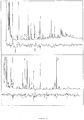
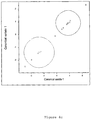
- the inventors first established differential attractiveness for the yellow fever mosquito, Ae. aegypti, within a group of human volunteers and then collected volatile extracts from their bodies using a novel collection technique. Electrophysiological recordings from the antennae of Ae. aegypti and C. introctatus, revealed 23 active compounds, which were identified and quantified. Several chemicals were found to be produced in greater amounts by unattractive individuals and these were further investigated as set out in the Examples below.
- composition of the invention as described below, which could for example be applied to a subject or environment.
- the invention provides a composition which comprises geranylacetone as an active ingredient plus a further active ingredient which is 6-methyl-hepten-2-one wherein the 6-methyl-5-hepten-2-one and geranylacetone are present in a weight ratio of about 1:1.
- This may be used in a method of inhibiting the activity of an insect pest against a subject, the method comprising applying to a subject the composition of the invention, as described below.
- the subject to whom the composition is applied will generally be a species which is a normal host target for the insect pest, and would (in the absence of the composition) otherwise be targeted or attract the insect pest.
- Subjects to be treated with compounds of the present invention could in principle be human or animal subjects (e. g., dogs, cats, horses, cattle). Preferably the subject is a human subject.
- the insect pest is preferably a haematophagous insect e.g. of the family Ceratopogonidae (preferably the genus Culicoides ), or family Culicidae.
- the pest is an insect selected from Table 1.
- Biting midges belong to the genus Culicoides of the family Ceratopogonidae; they are the smallest of the bloodsucking insects and are common pests in the UK, NE United States (where they are called punkies, sand flies, and no-see-ums) and many other places around the world.
- composition will be applied in an amount effective to inhibit the activity of an insect pest against the subject, for example by comparison with the same subject without the composition as determined by standard field methods (such as are used in the Example below; see Ref 18) after any of 1, 5, or 30 minutes.
- compositions of the invention can be used to inhibit attraction towards subjects (for example as demonstrated by significant reduction in upwind flight activity towards the subject).
- Compositions in the field demonstrated repellency based on a World Health Organisation protocol for testing repellents.
- compositions of the invention can be used to negatively affect host-seeking behaviour by insect pests e.g. reduce the attraction to a subject, or increase the repulsion from the subject, and the terms "inhibition of activity” or "repellent” or the like as used herein will be understood by those skilled in the art accordingly.
- Geranylacetone is alternatively known as 6,10-dimethyl-5,9-undecadien-2-one (cis and trans); 5,9-Undecadien-2-one; 6,10-dimethyl-, trans-Geranylacetone; Nerylacetone; Dihydropseudoionone; 6,10-Dimethyl-undeca-5,9-dien-2-one.
- compositions of the invention include geranylacetone and 6-methyl-5-hepten-2-one.
- Such compositions of the invention may also include one or more further compounds selected from the list consisting of: octanal; decanal; nonanal.
- 6-Methyl -5-hepten-2-one is alternatively known as 6-Methylhept-5-en-2-one; Sulcatone; 5-Hepten-2-one, 6-methyl-; 6-Methyl-5-heptene-2-one; 2-Methyl-2-hepten-6-one; - Methyl hept-5-en-2-one; Methylheptenone; 2-Methyl-6-oxo-2-heptene; 2-Oxo-6-methylhept-5-ene.
- compositions of the invention also include one or more further compounds selected from the list consisting of: benzaldehyde; naphthalene; acetophenone; (E)-2-octenal).
- compositions of the present invention have been shown to be present in higher amounts in the skin of 'unattractive' individuals. They may optionally be added to the compositions of the present invention.
- compositions may optionally exclude ingredients such as one or more of: limonene, m-Cymene, 1-alpha-terpineol, beta-cyclocitral, nerol, carvacrol, beta-ionone, nerolidol, and in particular Methyl isothiocyanate.
- the compositions may exclude ingredients such as one or more of: heptanoic acid, tetradecanoic acid, 3-methyl-1-butanol, 4-ethylpentone.
- compositions of the present invention comprise geranylacetone in the composition in a concentration of at least about 0.0001% by weight.
- the carrier may be from 0.1 % to 99.9999% by weight of the total composition.
- compositions of the invention comprise: Geranylacetone: 0.0001 - 10% more preferably: 0.001 - 10%
- compositions comprise one or more further additive compounds selected from the list consisting of: Octanal 0.00001 - 1% Nonanal 0.1 - 10% Decanal 0.0001 - 10% plus optional further active ingredients, additives, and a carrier as discussed hereinafter in order to make 100%.
- %' in this context means g/100g (solid compositions, total weight) or g/100 ml (liquids or ointments, total volume).
- such concentrations of ingredients may be employed for inhibition of flight towards a target.
- compositions of the present invention may in certain embodiments comprise: Geranylacetone: 0.0001-10% and optionally : Decanal 0.0001 - 0.1 %
- Compositions of the present invention may comprise: Geranylacetone: 0.001% to 1% and 6-Methyl-5-hepten-2-one: 0.001% and 1% and optionally one or more further compounds selected from the list consisting of: Decanal: 1% Octanal: 0.01%
- compositions have been shown to be effective against biting midges in field trials.
- a preferred mixture for use in the compositions of the present invention will comprise Geranylacetone plus at least two, three, four, or five of the preferred additive compounds described above.
- compositions of the present invention are as follows:
- compositions of the present invention is as follows:
- compositions of the invention comprising 6-Methyl-5-hepten-2-one and Geranylacetone these are in a weight ratio of about 1:1.
- compositions of the present invention may be formulated as ointments or solutions which contain the active ingredients disclosed herein.
- geranylacetone preferably in the form of any composition of the invention (as described herein), in the preparation of an inhibitory formulation for treatment of a subject for inhibiting the activity of an insect pest against the subject.
- the composition is for topical application to the subject.
- the formulation may take the form of a spray formulation or a cream or lotion formulation.
- compositions of the present invention may be employed with such solid and/or liquid dispersible carrier vehicles as described herein or as otherwise known in the art, and/or with other known compatible active agents, if desired, in the form of particular dosage preparations for specific application made therefrom, such as solutions, emulsions, suspensions, powders, pastes, and granules as described herein or as otherwise known in the art which are thus ready for use.
- the formulation may include antioxidants and UV absorbers.
- Liquid formulations may be aqueous-based or non-aqueous(i. e., organic solvents such as ethanol as used in the Examples below), or combinations thereof, and may be employed as foams, gels, suspensions, emulsions, microemulsions or emulsifiable concentrates or the like.
- the ingredients may include rheological agents, surfactants, emulsifiers, dispersants or polymers.
- volatile silicon fluids to impart mildness and water repellency to insect repellent compositions.
- volatile silicon fluids are available commercially.
- Dow Corning uses commercial designations of 244, 245, 246, 344 and 345, which are mixtures of polydimethylcyclosiloxanes (cyclomethicones) and are composed of tetramers (e.g. cyclotetrasiloxane, octamethylcyclotetrasiloxane), pentamers (e.g. cyclopentasiloxane, decamethylcyclopentasiloxane), and hexamers (e.g.
- cyclohexasiloxane dodecamethylcyclohexasiloxane
- Mixtures of the various silicone fluids, either with other silicone fluids or non-silicon containing substances, are used in a variety of cosmetic preparations to impart special properties, to include water repellency and skin protection.
- the formulations may be a solid mixture which releases a vapour having the same composition of active ingredient or ingredients as the solid mixture. Agents to promote sublimation of active ingredients to achieve this are described in GB 925,243 .
- the present invention also provides a topical formulation, which can be used for inhibiting the activity of an insect pest against a subject, which formulation comprises:
- the present invention also provides an article of manufacture comprising:
- Insect repellent compositions are available commercially in aerosol form and aerosol technologies are well known in the art. Consumers find aerosol compositions easy to administer to both the skin and to clothing. Further, aerosol compositions help consumers avoid the inconvenience of having to apply and spread the insect repellent with the hands.
- US 6,969,521 relates to cosmetically-acceptable aerosol vehicles to disperse and deliver the insect repellent active, the vehicle having a volatile organic compound component.
- subjects may be directly or indirectly treated, such as by applying the formulation to the skin of the subject, or by applying the formulation to an article worn by or otherwise protecting the subject.
- Preferred examples may include a slow-release badge worn on clothing; arm, wrist or ankle bands; accessories including pendants, necklaces, bracelets.
- the formulation may be applied to netting or screening that protects a subject, particularly a sleeping subject.
- compositions of the invention may be formulated in paints with a conventional microencapsulation technology.
- the repellent compounds are suitably applied by any method known in the art including, for example, spraying, pouring, dipping, in the form of concentrated liquids, solutions, suspensions, sprays, powders, pellets, briquettes, bricks and the like, formulated to deliver a repellent effective concentration of the repellent compound. It will be recognized that the concentration, applied amount and frequency of application will vary with the subject and locus of application, e. g., to the skin or hair of a human.
- the invention may be used by applying the insect repellent formulation to achieve a topical dose of any given active ingredient of between about 0.0025ug/cm2 to 100 ug/cm2, more preferably 0.25ug/cm2 to 25 ug/cm2.
- a topical dose of any given active ingredient of between about 0.0025ug/cm2 to 100 ug/cm2, more preferably 0.25ug/cm2 to 25 ug/cm2.
- One preferred final concentration is around 10 ug/cm2 based on the application of around 1 ml to a forearm of approximately 400 cm2, this can be achieved by a concentration of around:
- compositions of the present invention when using the formulations of the present invention, subjects may not be directly treated.
- the compositions may be used or applied to an environment (e.g. a pre-defined region, which may or may not be contained) from which it is desired to repel pests (or mask the attractiveness of the environment to pests).
- the formulation may be applied to netting or screening that protects a subject.
- it may be provided direct to an environment e.g. by spraying or by use of compositions of apparatus adapted to deliver a repellent effective concentration of the repellent compound.
- the invention provides a non-therapeutic method of repelling an insect pest from an environment or preventing attraction to an environment (e.g. by masking the attractiveness if a subject therein), the method comprising applying to the environment a composition of the present invention.
- the compositions may be any of those discussed above or below.
- Application to an environment may be achieved by conventional means which include (by way of example only): candles, coils, slow release dispensers, (e.g. electric and non-electric vaporisers), electric and non-electric oil burners, electric 'plug-in' diffusers.
- slow release dispensers e.g. electric and non-electric vaporisers
- electric and non-electric oil burners electric 'plug-in' diffusers.
- Numerous such dispensers for volatile substances are very well known to those skilled in the art e.g. for dispensing incense, perfume, medicaments, insecticides, insect repellents, disinfectants, or fumigants.
- the volatile substance may be formulated as a gel for slow release e.g. with a gelling agent selected from the group consisting of dibenzyllidene sorbital acetal, gellan gum and polyacrylic acid polymers. Any such known dispenser or formulation may be applied analogously in the present invention.
- any such dispenser comprising (and adapted to dispense) a composition of the present invention (optionally in the form of a gel) provides a further aspect of the present invention, as does a method of dispensing a composition of the present invention comprising use of any such dispenser.
- One preferred dispenser is an electrostatic chemical dispenser such as is available from Aerstream Technology Limited (Wallingford, UK). In such a system droplets are electrostatically charged such that they may pervade an environment longer than aerosols.
- Aerstream Technology Limited Willingford, UK.
- droplets are electrostatically charged such that they may pervade an environment longer than aerosols.
- One such system is described in International Patent Application WO03/000431 .
- an electrostatic chemical dispenser for use with the present invention may comprise
- each electrode is adjacent to a dielectric, wherein the electrodes are connected in an electrical circuit to enable a potential difference to be applied between the spray electrode and the discharge electrode to atomise the liquid and to generate charge carriers of a first polarity in the proximity of the spray electrode and ions of a second polarity in the proximity of the discharge electrode, and wherein some of the first polarity charge carriers deposit on the dielectric adjacent to the spray electrode and some of the second polarity ions deposit on the dielectric adjacent to the discharge electrode so that the atomised liquid is repelled from the dielectric adjacent to the spray electrode and electrically discharged by second polarity ions that are repelled by the dielectric adjacent to the discharge electrode.
- Example 1- defining attractive and unattractive volunteers
- Example 2 obtaining volatile chemicals from volunteers
- a novel system was devised for obtaining volatile chemicals from whole bodies. This involved placing each volunteer (and the standard (Y01)) from the attractive and unattractive groups in an aluminiumised plastic bag (Lifesystems TM), with the head outside, under positive pressure from clean air and withdrawing air that had passed over the body, to be entrained through a small column of absorbent polymer. This provided samples, the same batch of which could be used for multiple behavioural, electrophysiological and chemical analysis.
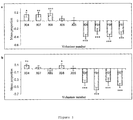
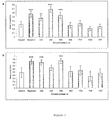
- volatiles were extracted from the polymer and assayed again using the Y-tube olfactometer against an air control and standard volunteer (Y01), all with added CO 2 ( Fig. 2 ).
- volatile extracts of human volunteers were shown to exhibit similar attractiveness or unattractiveness to the direct human skin emanations, with extracts from the standard (Y01), X04, X07 and X09 being significantly attractive, and those from X06, Y04, Y05 and Y07 as unattractive as the air control.
- Tables 3a and 3b show ratio of these compounds from “attractive” volunteers and “unattractive” volunteers.
- Geranylacetone was effective at all concentrations tested and with a typical dose response of increasing efficacy with increasing concentration.
- Human-derived compounds (6-methyl-5-hepten-2-one and geranylacetone) were tested for repellency against Anopheles gambiae and Culex quinquefasciatus mosquitoes in laboratory-based repellency tests using an established protocol (Omolo et al., 2004).
- the mosquitoes were laboratory-reared using standard conditions at ICIPE, Duduville. 5-7 day old female mosquitoes that had been starved for 18h but previously fed on 6% glucose solution were used. Eighteen cages (50x50x50cm) were used with 25 female mosquitoes in each. Six human volunteers with no or little allergic reaction to bites were selected.
- Each compound was tested at concentrations ranging from 0.0001% to 10%.
- Mixture 1 and mixture 3 were then incorporated into a formulation which consisted of emulsifying wax NF, Petroleum jelly and liquid paraffin in a 1.2:2.8:1 ratio. These formulated mixtures were then tested using the above methodology and were repeated after 2, 4, 6 and 8 hours to give PE over time.
- DEET gave better repellency than the single compounds giving 100% repellency at 1% and 10% (Tables 5-7). However, the greatest repellency against this species was given by mixture 3, which achieved 100% repellency at concentrations of 1% and 10%.
- Mixture 1 and 3 gave 100% repellency at a concentration of 10%. At lower concentrations, mixture 1 gave greater repellency than mixture 3 with 84% and 77% repellency achieved respectively at a concentration of 1 %. Both formulated mixtures gave 100% repellency at the start of the experiment, and this decreased slightly to 89% for mixture 1 and to 99% for mixture 3 after 2 hours (Tables 17 and 18).
- Compound Attractive Unattractive Benzaldehyde 1 1 6-MHO 2.020595 1.55218 Octanal 0.541551 0.529534
- Nonanal 6.510643 2.906716 Naphthalene 0.875217 0.979441
- Decanal 1.821094 1.468768 Geranylacetone 5.130115 1.108576
- Table 3b Ratios of 6-methyl-5-heaten-2-one to geranylacetone The table shows the ratio in one unattractive volunteer and the ratios for the mean absolute amounts of the attractive and unattractive group of volunteers.
- Dose- response repellency of Mixture 2 1:3:1:0.5:0.5 of 6MHO:Octanal:Nonanal:Decanal:Geranylacetone tested against An. gambiae % Conc. 0.001 0.01 0.1 1 10 Mean % P.E ⁇ SE -3.47 ⁇ 6.4 16.50+5.1 26.93 ⁇ 3.7 59.48 ⁇ 3.1 100.00 ⁇ 0 Table 10.
- Dose- response repellency of Mixture 3 1:1 of 6MHO:Geranylacetone tested against An. gambiae % Conc.
- Dose- response repellency of formulated Mixture 3 1:1 of 6MHO: Geranylacetone (10% concentration) tested against An . gambiae over 8 hours. Duration (hrs) 0H 2H 4H 6H 8H Mean % P.E ⁇ S.E 100 ⁇ 0 98.48 ⁇ 1.51 64.26 ⁇ 6.15 38.82 ⁇ 4.31 30.83 ⁇ 6.96 Table 13. Dose- response repellency of formulated DEET (10% concentration) tested against An. gambiae over 8 hours. Duration (hrs) 0H 2H 4H 6H 8H Mean % P.E ⁇ S.E 100 ⁇ 0 100 ⁇ 0 100 ⁇ 0 100 ⁇ 0 94.35 ⁇ 1.02 Table 14.
- Dose- response repellency of Mixture 3 1:1 of 6MHO: Geranylacetone (at 10% concentration) tested against Culex guinguefasciatus Conc. 0.001 0.01 0.1 1 10 Mean % P.E ⁇ S.E 11.27 ⁇ 1.86 20.83 ⁇ 2.26 55.64 ⁇ 5.81 77.00 ⁇ 4.53 100 ⁇ 0 Table 19.
- Dose- response repellency of formulated Mixture 1 1:1:1:1:1 of 6MHO:Octanal:Nonanal:Decanal:Geranylacetone (at 10% concentration) tested against Culex quinguefasciatus over 8 hours.
Landscapes
- Life Sciences & Earth Sciences (AREA)
- Wood Science & Technology (AREA)
- Plant Pathology (AREA)
- Health & Medical Sciences (AREA)
- Engineering & Computer Science (AREA)
- Dentistry (AREA)
- General Health & Medical Sciences (AREA)
- Agronomy & Crop Science (AREA)
- Zoology (AREA)
- Environmental Sciences (AREA)
- Insects & Arthropods (AREA)
- Pest Control & Pesticides (AREA)
- Agricultural Chemicals And Associated Chemicals (AREA)
- Acyclic And Carbocyclic Compounds In Medicinal Compositions (AREA)
Claims (22)
- Zusammensetzung, die Geranylaceton als Wirkstoff sowie einen weiteren Wirkstoff umfasst, der 6-Methylhepten-2-on ist, wobei das 6-Methylhepten-2-on und das Geranylaceton in einem Gewichtsverhältnis von etwa 1:1 vorliegen.
- Zusammensetzung nach Anspruch 1, die weiters einen Träger umfasst.
- Zusammensetzung nach Anspruch 1 oder Anspruch 2, wobei die Zusammensetzung Octanal als weiteren Wirkstoff umfasst.
- Zusammensetzung nach einem der vorangegangenen Ansprüche, wobei die Zusammensetzung im Wesentlichen aus Geranylaceton in Kombination mit den anderen Wirkstoffen besteht.
- Zusammensetzung nach einem der vorangegangenen Ansprüche, die Geranylaceton in 0,00001 Gew.-% bis 10 Gew.-% und 6-Methyl-5-hepten-2-on in 0,001 Gew.-% bis 1 Gew.-% umfasst.
- Zusammensetzung nach Anspruch 5, die Octanal: 0,001 Gew.-% bis 0,1 Gew.-%, 0,005 Gew.-% bis 0,05 Gew.-% oder etwa 0,01 Gew.-% umfasst.
- Zusammensetzung nach Anspruch 6, wobei die Zusammensetzung Folgendes umfasst:Geranylaceton in 0,001 Gew.-% bis 1 Gew.-% und 6-Methyl-5-hepten-2-on in 0,001 Gew.-% bis 1 Gew.-%.
- Zusammensetzung nach einem der vorangegangenen Ansprüche, die weiters einen Wirkstoff umfasst, der aus der aus Folgendem bestehenden Liste ausgewählt ist: Nonanal in 0,1 Gew.-% bis 10 Gew.-%; Decanal in 0,0001 Gew.-% bis 10 Gew.-%.
- Zusammensetzung nach einem der vorangegangenen Ansprüche, die weiters einen Wirkstoff umfasst, der aus der aus Folgendem bestehenden Liste ausgewählt ist: Benzaldehyd; Naphthalin; Acetophenon; (E)-2-Octenal.
- Zusammensetzung nach einem der vorangegangenen Ansprüche, wobei die Zusammensetzung Geranylaceton sowie zumindest zwei, drei oder vier der weiteren Wirkstoffe umfasst.
- Zusammensetzung nach Anspruch 1, wobei die Zusammensetzung ein Gemisch umfasst, das aus der aus Folgendem bestehenden Liste ausgewählt ist:1 Gew.-% 6-Methyl-5-hepten-2-on, 1 Gew.-% Gernylaceton, 0,01 Gew.-% Octanal in Ethanol; oder1 Gew.-% 6-Methyl-5-hepten-2-on, 1 Gew.-% Geranylaceton in Ethanol.
- Formulierung, die eine Salbe, ein Feststoff oder eine Lösung, angepasst an topische Anwendung, ist und Folgendes umfasst:(i) einen dermatologisch annehmbaren Träger; und(ii) eine Zusammensetzung nach einem der Ansprüche 1 bis 11.
- Fertigartikel, der eines der beiden Folgenden ist:(i) ein Aerosol oder ein anderes Sprühmittel, umfassend eine topische Formulierung nach Anspruch 12, die für die topische Verabreichung der Formulierung geeignet ist; oder(ii) ein Gegenstand zum Tragen oder einer, der ein Individuum anderweitig schützt, wobei der Gegenstand eine Zusammensetzung nach einem der Ansprüche 1 bis 11 umfasst.
- Abgabevorrichtung zum Vertreiben von Schädlingen aus einer Umgebung, wobei die Abgabevorrichtung eine Zusammensetzung nach einem der Ansprüche 1 bis 11 umfasst.
- Abgabevorrichtung nach Anspruch 14, die aus der aus Folgendem bestehenden Liste ausgewählt ist: einer Kerze, einer Spule, einer Abgabevorrichtung mit langsamer Freisetzung, einer Duftlampe, einem elektrischen Diffusor.
- Nichttherapeutisches Verfahren zum Vertreiben eines hämatophagen Insektenschädlings oder von Zecken aus einer Umgebung oder zur Prävention der Anziehung an eine Umgebung, wobei das Verfahren des Anwenden einer Zusammensetzung nach einem der Ansprüche 1 bis 11 auf die Umgebung umfasst.
- Verfahren nach Anspruch 16, wobei das Verfahren das Bereitstellen einer Abgabevorrichtung nach Anspruch 14 oder Anspruch 15 in der Umgebung umfasst, damit die Zusammensetzung daraus verteilt wird.
- Nichttherapeutisches Verfahren zum Hemmen der Aktivität eines hämatophagen Insektenschädlings oder einer Zecke gegen ein Individuum, wobei das Verfahren das Anwenden einer Zusammensetzung nach einem der Ansprüche 1 bis 11 auf das Individuum umfasst.
- Verfahren nach Anspruch 18, wobei das Individuum ein menschliches Individuum ist.
- Verfahren nach Anspruch 18 oder Anspruch 19, wobei der hämatophage Insektenschädling der Familie der Ceratopogonidae oder der Familie der Culicidae angehört.
- Verfahren nach einem der Ansprüche 18 bis 20, wobei der hämatophage Insektenschädling aus der aus Folgendem bestehenden Liste ausgewählt ist: Mitglieder des Artenkomplex Culex pipiens; Aedes aegypti; Anopheles stephensi; Mitglieder des Artenkomplex Anopheles gambiae; Culicoides impunctatus; Culicoides molestus; Lutzomyia-Spezies; Phlebotominae-Spezies; Mücken.
- Verfahren nach einem der Ansprüche 18 bis 21, wobei die Behandlung das Aufbringen der Zusammensetzung umfasst, um eine topische Dosis jedes der Wirkstoffe von 0,0025 µg/cm2 bis 100 µg/cm2 oder 0,25 µg/cm2 bis 25 µg/cm2 zu erzielen.
Applications Claiming Priority (2)
| Application Number | Priority Date | Filing Date | Title |
|---|---|---|---|
| US77910906P | 2006-03-03 | 2006-03-03 | |
| PCT/GB2007/000742 WO2007099347A2 (en) | 2006-03-03 | 2007-03-02 | Pest repellent comprising geranylacetone |
Publications (2)
| Publication Number | Publication Date |
|---|---|
| EP2007204A2 EP2007204A2 (de) | 2008-12-31 |
| EP2007204B1 true EP2007204B1 (de) | 2017-05-17 |
Family
ID=38308769
Family Applications (1)
| Application Number | Title | Priority Date | Filing Date |
|---|---|---|---|
| EP07712821.3A Not-in-force EP2007204B1 (de) | 2006-03-03 | 2007-03-02 | Schädlings-repellens, das geranylaceton enthält |
Country Status (11)
| Country | Link |
|---|---|
| US (1) | US9326520B2 (de) |
| EP (1) | EP2007204B1 (de) |
| AU (1) | AU2007220306B2 (de) |
| BR (1) | BRPI0708552A2 (de) |
| CA (1) | CA2644549A1 (de) |
| DK (1) | DK2007204T3 (de) |
| ES (1) | ES2632642T3 (de) |
| MY (1) | MY147482A (de) |
| NZ (1) | NZ570920A (de) |
| WO (1) | WO2007099347A2 (de) |
| ZA (1) | ZA200808452B (de) |
Families Citing this family (6)
| Publication number | Priority date | Publication date | Assignee | Title |
|---|---|---|---|---|
| US8551510B2 (en) * | 2009-04-28 | 2013-10-08 | Bedoukian Research, Inc. | Bed bug control and repellency |
| FR2969494B1 (fr) * | 2010-12-22 | 2013-11-08 | Expanscience Lab | Extrait de parties aeriennes de gynandropsis gynandra ou cleome gynandra et compositions cosmetiques, dermatologiques le comprenant |
| US20150084751A1 (en) * | 2013-02-15 | 2015-03-26 | Norvel C. Crawford | Pest repellant device for vehicles |
| US11849727B2 (en) | 2013-11-13 | 2023-12-26 | Bedoukian Research, Inc. | Synergistic formulations for control and repellency of biting arthropods |
| US12290070B2 (en) | 2018-04-13 | 2025-05-06 | Molecular Attraction Ab | Mosquito aggregation composition |
| GB201818904D0 (en) * | 2018-11-20 | 2019-01-02 | Active Scent Ab | New formulations and methods |
Family Cites Families (30)
| Publication number | Priority date | Publication date | Assignee | Title |
|---|---|---|---|---|
| CH375558A (de) | 1957-09-07 | 1964-02-29 | Merck Ag E | Insektenabwehrmittel |
| NL249503A (de) | 1959-03-19 | |||
| NL263377A (de) | 1960-04-22 | |||
| US3668226A (en) | 1970-02-26 | 1972-06-06 | Us Army | Straight chain aliphatic carboxylic acid monoesters of 1,3-dihydroxy-2-propanone |
| US4560551A (en) | 1983-06-01 | 1985-12-24 | Pierce Aldona M | Beetle attractant |
| US5205065A (en) | 1991-01-18 | 1993-04-27 | International Flavors & Fragrances, Inc. | Use of ketone, alcohol and schiff base-containing compositions for repelling blood feeding arthropods and apparatus for determining repellency and attractancy of semio-chemicals against and for blood feeding arthropods |
| US5327675A (en) | 1992-05-22 | 1994-07-12 | International Flavors & Fragrances Inc. | Use of alkyl cyclopentanone and phenyl alkanol derivative-containing compositions for repelling blood feeding arthropods and apparatus for determining repellency and attractancy of semiochemicals against and for blood feeding arthropods |
| JP3463201B2 (ja) | 1993-11-02 | 2003-11-05 | エステー化学株式会社 | 繊維害虫の成虫忌避剤および繊維害虫の成虫忌避方法 |
| US5738863A (en) | 1994-04-12 | 1998-04-14 | Sackin; Bradley M. | Honey bee repellent composition comprising tea tree oil |
| JP3175099B2 (ja) | 1996-07-01 | 2001-06-11 | 株式会社山武 | 電空変換器 |
| JPH10117657A (ja) | 1996-10-16 | 1998-05-12 | Masashi Fujii | ダニ類の誘引物質 |
| JPH10139602A (ja) | 1996-11-14 | 1998-05-26 | Nof Corp | 害虫忌避剤 |
| DE69817595T2 (de) | 1997-06-30 | 2004-04-22 | Reifenraht, William G., Richmond | Natürliches insekten- und arthropodenvertreibungsmittel |
| JPH1160421A (ja) | 1997-08-26 | 1999-03-02 | Shigeharu Inoue | 害虫駆除剤 |
| US6203786B1 (en) | 1998-07-10 | 2001-03-20 | The Research Foundation Of State University Of New York | Pine shoot beetle attractant compositions |
| GR990100213A (el) | 1999-06-24 | 2001-02-28 | Θηκη με δακοαπωθητικο περιεχομενο | |
| US6524605B1 (en) * | 1999-08-06 | 2003-02-25 | Iowa State University Research Foundation, Inc. | Biorational repellents obtained from terpenoids for use against arthropods |
| DE10034396A1 (de) | 2000-07-14 | 2002-01-31 | Bayer Ag | Zusammensetzungen zur Abschreckung kriechender Insekten |
| US6479046B2 (en) | 2000-08-17 | 2002-11-12 | Joseph C. Dickens | Attractants and repellants for colorado potato beetle |
| JP4971569B2 (ja) | 2001-02-06 | 2012-07-11 | 積水化学工業株式会社 | ダニ類駆除方法 |
| US6843985B2 (en) | 2001-02-28 | 2005-01-18 | The United States Of America As Represented By The Secretary Of Agriculture | Control of parasitic mites of honey bees |
| US6437001B1 (en) | 2001-03-14 | 2002-08-20 | North Carolina State University | Method of repelling insects |
| JP2002363006A (ja) | 2001-06-05 | 2002-12-18 | Nippon Eisei Center:Kk | 防腐防虫剤組成物 |
| GB0115355D0 (en) * | 2001-06-22 | 2001-08-15 | Pirrie Alastair | Vaporization system |
| US6574913B2 (en) | 2001-07-26 | 2003-06-10 | Takacs Stephen J. | Semiochemical and sonic signals for monitoring and control of clothes moths |
| US6660775B2 (en) | 2002-02-19 | 2003-12-09 | Biosensory, Inc. | Method and compositions for inhibiting the scent tracking ability of biting midges |
| GB0207894D0 (en) * | 2002-04-05 | 2002-05-15 | Univ Aberdeen | Chemicals for sea lice monitoring and control |
| JP4059702B2 (ja) | 2002-05-01 | 2008-03-12 | 株式会社サムソン | ボイラの水管壁用水管 |
| JP4368635B2 (ja) * | 2003-08-01 | 2009-11-18 | 株式会社クラレ | 害虫の防除方法および防除剤 |
| WO2005096824A1 (en) * | 2004-04-06 | 2005-10-20 | Gerhard Gries | Synthetic aggregation pheromone for manipulating the behaviour of codling moth, cydia pomonella, larvae |
-
2007
- 2007-03-02 DK DK07712821.3T patent/DK2007204T3/en active
- 2007-03-02 AU AU2007220306A patent/AU2007220306B2/en not_active Ceased
- 2007-03-02 MY MYPI20083383A patent/MY147482A/en unknown
- 2007-03-02 NZ NZ570920A patent/NZ570920A/en not_active IP Right Cessation
- 2007-03-02 ES ES07712821.3T patent/ES2632642T3/es active Active
- 2007-03-02 CA CA002644549A patent/CA2644549A1/en not_active Abandoned
- 2007-03-02 WO PCT/GB2007/000742 patent/WO2007099347A2/en not_active Ceased
- 2007-03-02 US US12/224,682 patent/US9326520B2/en not_active Expired - Fee Related
- 2007-03-02 EP EP07712821.3A patent/EP2007204B1/de not_active Not-in-force
- 2007-03-02 BR BRPI0708552-4A patent/BRPI0708552A2/pt not_active IP Right Cessation
-
2008
- 2008-10-03 ZA ZA2008/08452A patent/ZA200808452B/en unknown
Also Published As
| Publication number | Publication date |
|---|---|
| WO2007099347A3 (en) | 2008-01-31 |
| EP2007204A2 (de) | 2008-12-31 |
| MY147482A (en) | 2012-12-14 |
| CA2644549A1 (en) | 2007-09-07 |
| DK2007204T3 (en) | 2017-07-24 |
| WO2007099347A2 (en) | 2007-09-07 |
| NZ570920A (en) | 2011-09-30 |
| ZA200808452B (en) | 2010-02-24 |
| ES2632642T3 (es) | 2017-09-14 |
| BRPI0708552A2 (pt) | 2011-05-31 |
| US20090306217A1 (en) | 2009-12-10 |
| US9326520B2 (en) | 2016-05-03 |
| AU2007220306A1 (en) | 2007-09-07 |
| AU2007220306B2 (en) | 2013-02-07 |
Similar Documents
| Publication | Publication Date | Title |
|---|---|---|
| US20240349735A1 (en) | Arthropod control compositions and methods | |
| Rajkumar et al. | Repellent activity of selected plant essential oils against the malarial fever mosquito Anopheles stephensi | |
| EP3238542B1 (de) | Zusammensetzung und verfahren zur läusebekämpfung | |
| Khater et al. | Commercial mosquito repellents and their safety concerns | |
| US20230174457A1 (en) | Insect repellent compounds and compositions, and methods thereof | |
| KR20150056537A (ko) | 곤충의 유인 및 기피를 위한 조성물 및 방법 | |
| WO2010117740A2 (en) | Enhanced formulations, compositions and methods for pest control | |
| AU8380598A (en) | Natural insect and arthropod repellent | |
| US9326520B2 (en) | Pest repellent comprising geranylacetone | |
| AU2008264810A1 (en) | Insect-repellent formulations | |
| WO2005000019A2 (en) | Compounds to affect insect behaviour and to enhance insecticides | |
| US7988985B2 (en) | Pest repellent compositions and methods | |
| CN107205382B (zh) | 昆虫驱避剂 | |
| AU2003283331B8 (en) | Acetals as insect repellant agents | |
| Puccetti et al. | IR3535 (ethyl butylacetylaminopropionate) | |
| WO2007148105A2 (en) | Insect repellent formulation | |
| WO2004010783A1 (en) | Insect repellant | |
| JP2021070672A (ja) | 害虫忌避剤 | |
| HK1129271A (en) | Pest repellent comprising geranylacetone | |
| HK1129271B (en) | Pest repellent comprising geranylacetone | |
| US20100197786A1 (en) | Insect-repellent formulations | |
| Aldar et al. | Mosquito Repellent, Prevention is better than cure | |
| US20100249232A1 (en) | Mosquito repellent | |
| RU2214093C2 (ru) | Средство борьбы с кератофагами | |
| US11064704B2 (en) | Natural product formulations with improved residual insect repellent/deterrent activity |
Legal Events
| Date | Code | Title | Description |
|---|---|---|---|
| PUAI | Public reference made under article 153(3) epc to a published international application that has entered the european phase |
Free format text: ORIGINAL CODE: 0009012 |
|
| 17P | Request for examination filed |
Effective date: 20081001 |
|
| AK | Designated contracting states |
Kind code of ref document: A2 Designated state(s): AT BE BG CH CY CZ DE DK EE ES FI FR GB GR HU IE IS IT LI LT LU LV MC MT NL PL PT RO SE SI SK TR |
|
| AX | Request for extension of the european patent |
Extension state: AL BA HR MK RS |
|
| RAP1 | Party data changed (applicant data changed or rights of an application transferred) |
Owner name: ROTHAMSTED RESEARCH LIMITED Owner name: THE UNIVERSITY COURT OF THE UNIVERSITY OF ABERDEEN |
|
| RAP1 | Party data changed (applicant data changed or rights of an application transferred) |
Owner name: THE UNIVERSITY COURT OF THE UNIVERSITY OF ABERDEEN Owner name: ROTHAMSTED RESEARCH LIMITED |
|
| REG | Reference to a national code |
Ref country code: HK Ref legal event code: DE Ref document number: 1129271 Country of ref document: HK |
|
| 17Q | First examination report despatched |
Effective date: 20100906 |
|
| R17C | First examination report despatched (corrected) |
Effective date: 20100909 |
|
| DAX | Request for extension of the european patent (deleted) | ||
| GRAP | Despatch of communication of intention to grant a patent |
Free format text: ORIGINAL CODE: EPIDOSNIGR1 |
|
| INTG | Intention to grant announced |
Effective date: 20160323 |
|
| GRAJ | Information related to disapproval of communication of intention to grant by the applicant or resumption of examination proceedings by the epo deleted |
Free format text: ORIGINAL CODE: EPIDOSDIGR1 |
|
| GRAP | Despatch of communication of intention to grant a patent |
Free format text: ORIGINAL CODE: EPIDOSNIGR1 |
|
| INTC | Intention to grant announced (deleted) | ||
| INTG | Intention to grant announced |
Effective date: 20161209 |
|
| GRAS | Grant fee paid |
Free format text: ORIGINAL CODE: EPIDOSNIGR3 |
|
| GRAA | (expected) grant |
Free format text: ORIGINAL CODE: 0009210 |
|
| AK | Designated contracting states |
Kind code of ref document: B1 Designated state(s): AT BE BG CH CY CZ DE DK EE ES FI FR GB GR HU IE IS IT LI LT LU LV MC MT NL PL PT RO SE SI SK TR |
|
| REG | Reference to a national code |
Ref country code: GB Ref legal event code: FG4D |
|
| REG | Reference to a national code |
Ref country code: CH Ref legal event code: EP |
|
| REG | Reference to a national code |
Ref country code: IE Ref legal event code: FG4D |
|
| REG | Reference to a national code |
Ref country code: AT Ref legal event code: REF Ref document number: 893611 Country of ref document: AT Kind code of ref document: T Effective date: 20170615 |
|
| REG | Reference to a national code |
Ref country code: DE Ref legal event code: R096 Ref document number: 602007051024 Country of ref document: DE |
|
| REG | Reference to a national code |
Ref country code: DK Ref legal event code: T3 Effective date: 20170712 |
|
| REG | Reference to a national code |
Ref country code: SE Ref legal event code: TRGR |
|
| REG | Reference to a national code |
Ref country code: NL Ref legal event code: FP |
|
| REG | Reference to a national code |
Ref country code: ES Ref legal event code: FG2A Ref document number: 2632642 Country of ref document: ES Kind code of ref document: T3 Effective date: 20170914 |
|
| REG | Reference to a national code |
Ref country code: LT Ref legal event code: MG4D |
|
| REG | Reference to a national code |
Ref country code: AT Ref legal event code: MK05 Ref document number: 893611 Country of ref document: AT Kind code of ref document: T Effective date: 20170517 |
|
| PG25 | Lapsed in a contracting state [announced via postgrant information from national office to epo] |
Ref country code: FI Free format text: LAPSE BECAUSE OF FAILURE TO SUBMIT A TRANSLATION OF THE DESCRIPTION OR TO PAY THE FEE WITHIN THE PRESCRIBED TIME-LIMIT Effective date: 20170517 Ref country code: LT Free format text: LAPSE BECAUSE OF FAILURE TO SUBMIT A TRANSLATION OF THE DESCRIPTION OR TO PAY THE FEE WITHIN THE PRESCRIBED TIME-LIMIT Effective date: 20170517 Ref country code: AT Free format text: LAPSE BECAUSE OF FAILURE TO SUBMIT A TRANSLATION OF THE DESCRIPTION OR TO PAY THE FEE WITHIN THE PRESCRIBED TIME-LIMIT Effective date: 20170517 |
|
| REG | Reference to a national code |
Ref country code: GR Ref legal event code: EP Ref document number: 20170402015 Country of ref document: GR Effective date: 20171122 |
|
| PG25 | Lapsed in a contracting state [announced via postgrant information from national office to epo] |
Ref country code: BG Free format text: LAPSE BECAUSE OF FAILURE TO SUBMIT A TRANSLATION OF THE DESCRIPTION OR TO PAY THE FEE WITHIN THE PRESCRIBED TIME-LIMIT Effective date: 20170817 Ref country code: PL Free format text: LAPSE BECAUSE OF FAILURE TO SUBMIT A TRANSLATION OF THE DESCRIPTION OR TO PAY THE FEE WITHIN THE PRESCRIBED TIME-LIMIT Effective date: 20170517 Ref country code: LV Free format text: LAPSE BECAUSE OF FAILURE TO SUBMIT A TRANSLATION OF THE DESCRIPTION OR TO PAY THE FEE WITHIN THE PRESCRIBED TIME-LIMIT Effective date: 20170517 Ref country code: IS Free format text: LAPSE BECAUSE OF FAILURE TO SUBMIT A TRANSLATION OF THE DESCRIPTION OR TO PAY THE FEE WITHIN THE PRESCRIBED TIME-LIMIT Effective date: 20170917 |
|
| PG25 | Lapsed in a contracting state [announced via postgrant information from national office to epo] |
Ref country code: CZ Free format text: LAPSE BECAUSE OF FAILURE TO SUBMIT A TRANSLATION OF THE DESCRIPTION OR TO PAY THE FEE WITHIN THE PRESCRIBED TIME-LIMIT Effective date: 20170517 Ref country code: EE Free format text: LAPSE BECAUSE OF FAILURE TO SUBMIT A TRANSLATION OF THE DESCRIPTION OR TO PAY THE FEE WITHIN THE PRESCRIBED TIME-LIMIT Effective date: 20170517 Ref country code: SK Free format text: LAPSE BECAUSE OF FAILURE TO SUBMIT A TRANSLATION OF THE DESCRIPTION OR TO PAY THE FEE WITHIN THE PRESCRIBED TIME-LIMIT Effective date: 20170517 Ref country code: RO Free format text: LAPSE BECAUSE OF FAILURE TO SUBMIT A TRANSLATION OF THE DESCRIPTION OR TO PAY THE FEE WITHIN THE PRESCRIBED TIME-LIMIT Effective date: 20170517 |
|
| REG | Reference to a national code |
Ref country code: DE Ref legal event code: R097 Ref document number: 602007051024 Country of ref document: DE |
|
| PLBE | No opposition filed within time limit |
Free format text: ORIGINAL CODE: 0009261 |
|
| STAA | Information on the status of an ep patent application or granted ep patent |
Free format text: STATUS: NO OPPOSITION FILED WITHIN TIME LIMIT |
|
| 26N | No opposition filed |
Effective date: 20180220 |
|
| REG | Reference to a national code |
Ref country code: HK Ref legal event code: GR Ref document number: 1129271 Country of ref document: HK |
|
| PG25 | Lapsed in a contracting state [announced via postgrant information from national office to epo] |
Ref country code: SI Free format text: LAPSE BECAUSE OF FAILURE TO SUBMIT A TRANSLATION OF THE DESCRIPTION OR TO PAY THE FEE WITHIN THE PRESCRIBED TIME-LIMIT Effective date: 20170517 |
|
| REG | Reference to a national code |
Ref country code: DE Ref legal event code: R119 Ref document number: 602007051024 Country of ref document: DE |
|
| REG | Reference to a national code |
Ref country code: DK Ref legal event code: EBP Effective date: 20180331 |
|
| PG25 | Lapsed in a contracting state [announced via postgrant information from national office to epo] |
Ref country code: SE Free format text: LAPSE BECAUSE OF NON-PAYMENT OF DUE FEES Effective date: 20180303 |
|
| REG | Reference to a national code |
Ref country code: CH Ref legal event code: PL |
|
| REG | Reference to a national code |
Ref country code: NL Ref legal event code: MM Effective date: 20180401 |
|
| GBPC | Gb: european patent ceased through non-payment of renewal fee |
Effective date: 20180302 |
|
| PG25 | Lapsed in a contracting state [announced via postgrant information from national office to epo] |
Ref country code: MC Free format text: LAPSE BECAUSE OF FAILURE TO SUBMIT A TRANSLATION OF THE DESCRIPTION OR TO PAY THE FEE WITHIN THE PRESCRIBED TIME-LIMIT Effective date: 20170517 |
|
| REG | Reference to a national code |
Ref country code: BE Ref legal event code: MM Effective date: 20180331 |
|
| REG | Reference to a national code |
Ref country code: IE Ref legal event code: MM4A |
|
| PG25 | Lapsed in a contracting state [announced via postgrant information from national office to epo] |
Ref country code: LU Free format text: LAPSE BECAUSE OF NON-PAYMENT OF DUE FEES Effective date: 20180302 Ref country code: NL Free format text: LAPSE BECAUSE OF NON-PAYMENT OF DUE FEES Effective date: 20180401 |
|
| PG25 | Lapsed in a contracting state [announced via postgrant information from national office to epo] |
Ref country code: IE Free format text: LAPSE BECAUSE OF NON-PAYMENT OF DUE FEES Effective date: 20180302 Ref country code: GR Free format text: LAPSE BECAUSE OF NON-PAYMENT OF DUE FEES Effective date: 20181003 Ref country code: DE Free format text: LAPSE BECAUSE OF NON-PAYMENT OF DUE FEES Effective date: 20181002 |
|
| PG25 | Lapsed in a contracting state [announced via postgrant information from national office to epo] |
Ref country code: IT Free format text: LAPSE BECAUSE OF NON-PAYMENT OF DUE FEES Effective date: 20180302 Ref country code: BE Free format text: LAPSE BECAUSE OF NON-PAYMENT OF DUE FEES Effective date: 20180331 Ref country code: LI Free format text: LAPSE BECAUSE OF NON-PAYMENT OF DUE FEES Effective date: 20180331 Ref country code: GB Free format text: LAPSE BECAUSE OF NON-PAYMENT OF DUE FEES Effective date: 20180302 Ref country code: CH Free format text: LAPSE BECAUSE OF NON-PAYMENT OF DUE FEES Effective date: 20180331 |
|
| PG25 | Lapsed in a contracting state [announced via postgrant information from national office to epo] |
Ref country code: FR Free format text: LAPSE BECAUSE OF NON-PAYMENT OF DUE FEES Effective date: 20180331 |
|
| PG25 | Lapsed in a contracting state [announced via postgrant information from national office to epo] |
Ref country code: DK Free format text: LAPSE BECAUSE OF NON-PAYMENT OF DUE FEES Effective date: 20180331 |
|
| REG | Reference to a national code |
Ref country code: ES Ref legal event code: FD2A Effective date: 20190904 |
|
| PG25 | Lapsed in a contracting state [announced via postgrant information from national office to epo] |
Ref country code: ES Free format text: LAPSE BECAUSE OF NON-PAYMENT OF DUE FEES Effective date: 20180303 |
|
| PG25 | Lapsed in a contracting state [announced via postgrant information from national office to epo] |
Ref country code: MT Free format text: LAPSE BECAUSE OF NON-PAYMENT OF DUE FEES Effective date: 20180302 |
|
| PG25 | Lapsed in a contracting state [announced via postgrant information from national office to epo] |
Ref country code: TR Free format text: LAPSE BECAUSE OF FAILURE TO SUBMIT A TRANSLATION OF THE DESCRIPTION OR TO PAY THE FEE WITHIN THE PRESCRIBED TIME-LIMIT Effective date: 20170517 |
|
| PG25 | Lapsed in a contracting state [announced via postgrant information from national office to epo] |
Ref country code: PT Free format text: LAPSE BECAUSE OF FAILURE TO SUBMIT A TRANSLATION OF THE DESCRIPTION OR TO PAY THE FEE WITHIN THE PRESCRIBED TIME-LIMIT Effective date: 20170517 Ref country code: HU Free format text: LAPSE BECAUSE OF FAILURE TO SUBMIT A TRANSLATION OF THE DESCRIPTION OR TO PAY THE FEE WITHIN THE PRESCRIBED TIME-LIMIT; INVALID AB INITIO Effective date: 20070302 |
|
| PG25 | Lapsed in a contracting state [announced via postgrant information from national office to epo] |
Ref country code: CY Free format text: LAPSE BECAUSE OF FAILURE TO SUBMIT A TRANSLATION OF THE DESCRIPTION OR TO PAY THE FEE WITHIN THE PRESCRIBED TIME-LIMIT Effective date: 20170517 |