EP2007282B1 - Method for diagnosing adhd and related behavioral disorders - Google Patents
Method for diagnosing adhd and related behavioral disorders Download PDFInfo
- Publication number
- EP2007282B1 EP2007282B1 EP07754632A EP07754632A EP2007282B1 EP 2007282 B1 EP2007282 B1 EP 2007282B1 EP 07754632 A EP07754632 A EP 07754632A EP 07754632 A EP07754632 A EP 07754632A EP 2007282 B1 EP2007282 B1 EP 2007282B1
- Authority
- EP
- European Patent Office
- Prior art keywords
- subject
- movements
- spikes
- medicament
- disorder
- Prior art date
- Legal status (The legal status is an assumption and is not a legal conclusion. Google has not performed a legal analysis and makes no representation as to the accuracy of the status listed.)
- Not-in-force
Links
Images

Classifications
-
- A—HUMAN NECESSITIES
- A61—MEDICAL OR VETERINARY SCIENCE; HYGIENE
- A61B—DIAGNOSIS; SURGERY; IDENTIFICATION
- A61B5/00—Measuring for diagnostic purposes; Identification of persons
- A61B5/16—Devices for psychotechnics; Testing reaction times ; Devices for evaluating the psychological state
- A61B5/168—Evaluating attention deficit, hyperactivity
-
- A—HUMAN NECESSITIES
- A61—MEDICAL OR VETERINARY SCIENCE; HYGIENE
- A61B—DIAGNOSIS; SURGERY; IDENTIFICATION
- A61B5/00—Measuring for diagnostic purposes; Identification of persons
- A61B5/103—Measuring devices for testing the shape, pattern, colour, size or movement of the body or parts thereof, for diagnostic purposes
- A61B5/11—Measuring movement of the entire body or parts thereof, e.g. head or hand tremor or mobility of a limb
- A61B5/1126—Measuring movement of the entire body or parts thereof, e.g. head or hand tremor or mobility of a limb using a particular sensing technique
- A61B5/1128—Measuring movement of the entire body or parts thereof, e.g. head or hand tremor or mobility of a limb using a particular sensing technique using image analysis
-
- A—HUMAN NECESSITIES
- A61—MEDICAL OR VETERINARY SCIENCE; HYGIENE
- A61B—DIAGNOSIS; SURGERY; IDENTIFICATION
- A61B5/00—Measuring for diagnostic purposes; Identification of persons
- A61B5/72—Signal processing specially adapted for physiological signals or for diagnostic purposes
- A61B5/7271—Specific aspects of physiological measurement analysis
- A61B5/7282—Event detection, e.g. detecting unique waveforms indicative of a medical condition
-
- A—HUMAN NECESSITIES
- A61—MEDICAL OR VETERINARY SCIENCE; HYGIENE
- A61B—DIAGNOSIS; SURGERY; IDENTIFICATION
- A61B5/00—Measuring for diagnostic purposes; Identification of persons
- A61B5/103—Measuring devices for testing the shape, pattern, colour, size or movement of the body or parts thereof, for diagnostic purposes
- A61B5/11—Measuring movement of the entire body or parts thereof, e.g. head or hand tremor or mobility of a limb
Definitions
- the invention relates to methods and systems for the diagnosis of ADHD and related disorders.
- ADHD Attention-Deficit/Hyperactivity Disorder
- ADHD children Using precisely quantified movements, ADHD children have been shown to be 3-4 fold more active than controls. Teicher et al., J. Am. Acad. Child Adolsec. Psychiatry 35:334 (1996 ). However, the precise nature of their hyperactivity is unknown.
- US 2003/233032 provides methods for diagnosing the presence, type, or severity of a dementia in a human subject.
- the methods involve using a computer-based system to assess impairment of certain cognitive and motor functions that are indicative of Alzheimer's disease and other forms of dementia.
- WO2006029021 provides methods for determining the attentional state of a subject. These methods are useful for diagnosing subjects with a psychological or behavioral disorder. The invention also features methods for determining the effect of a therapy on the attentional state of a subject.
- the invention features methods and systems for the diagnosis of ADHD and related disorders.
- the methods and systems of the invention can also be used to ascertain how much benefit an individual would derive from a particular therapy.
- the invention features a method of diagnosing a disorder selected from ADHD and related disorders.
- the method includes the steps of:
- the invention features a method of diagnosing a disorder selected from ADHD and related disorders.
- the method includes the steps of: (i) using a motion analysis device to record movements of the subject; (ii) calculating the number of spikes in the movements; and (iii) on the basis of the number, determining whether the subject has the disorder.
- the invention also features a method of diagnosing a disorder selected from ADHD and related disorders in a subject.
- the method includes the steps of: (i) using a motion analysis device to record movements of the subject; (ii) calculating the time intervals between spikes in the movements; and (iii) on the basis of the time intervals, determining whether the subject has the disorder.
- the invention features a method for assessing the efficacy of a medicament for the treatment of a disorder selected from ADHD and related disorders in a subject diagnosed with the disorder by (a) administering the medicament to the subject; (b) using a motion analysis device to record movements of the subject while medicated; (c) calculating the power spectral density of the oscillations in the movements; and (d) on the basis of the spectral density, determining whether the symptoms of the disorder are ameliorated by the medicament.
- the method can further include the steps of (e) prior to step (a), using a motion analysis device to record movements of the subject while unmedicated; (f) calculating the power spectral density of the oscillations in the movements; and (g) on the basis of the spectral density for step (c) and the spectral density for step (f), determining whether the symptoms of the disorder are ameliorated by the medicament.
- the invention features a method for assessing the efficacy of a medicament for the treatment of a disorder selected from ADHD and related disorders in a subject diagnosed with the disorder by (a) administering the medicament to the subject; (b) using a motion analysis device to record movements of the subject while medicated; (c) calculating the number of spikes in the movements; and (d) on the basis of the number, determining whether the symptoms of the disorder are ameliorated by the medicament.
- the method can further include the steps of (e) prior to step (a), using a motion analysis device to record movements of the subject while unmedicated; (f) calculating the number of spikes in the movements; and (g) on the basis of the number for step (c) and the number for step (f), determining whether the symptoms of the disorder are ameliorated by the medicament.
- the invention further features a method for assessing the efficacy of a medicament for the treatment of a disorder selected from ADHD and related disorders in a subject diagnosed with the disorder by (a) administering the medicament to the subject; (b) using a motion analysis device to record movements of the subject while medicated; (c) calculating the time intervals between spikes in the movements; and (d) on the basis of the time intervals, determining whether the symptoms of the disorder are ameliorated by the medicament.
- the method can further include the steps of (e) prior to step (a), using a motion analysis device to record movements of the subject while unmedicated; (f) calculating the time intervals between spikes in the movements; and (g) on the basis of the time intervals for step (c) and the time intervals for step (f), determining whether the symptoms of the disorder are ameliorated by the medicament.
- the method further includes continuous performance testing of the subject while recording the movements.
- the method includes measuring the activity of the subject using an infrared motion analysis system by tracking the movements of the subject's head, leg, elbow, shoulder, hand, or foot using a camera.
- the number of spikes or the interval between spikes is calculated for two or more different amplitudes.
- the invention also features a system for diagnosing a disorder selected from ADHD and related disorders in a subject.
- the system includes: (i) a motion analysis device; (ii) a device for receiving and storing motion data; and (iii) a processor provided with a computer program for analyzing the motion data to calculate the power spectral density of the oscillations.
- the invention further features a system for diagnosing a disorder selected from ADHD and related disorders in a subject.
- the system includes: (i) a motion analysis device; (ii) a device for receiving and storing motion data; and (iii) a processor provided with a computer program for analyzing the motion data to calculate the number of spikes in the motion.
- the invention features a system for diagnosing a disorder selected from ADHD and related disorders in a subject.
- the system includes: (i) a motion analysis device; (ii) a device for receiving and storing motion data; and (iii) a processor provided with a computer program for analyzing the motion data to calculate the time intervals between spikes in the motion.
- the motion analysis device includes a camera for measuring the activity of a subject using infrared light.
- a spike threshold can be set at an amplitude of greater than 1 mm/sec, 2 mm/sec, 3 mm/sec, 4 mm/sec, 5 mm/sec, 6 mm/sec, 7 mm/sec, or even 8 mm/sec.
- the disorder is ADD, ADHD, or Hyperkinetic Disorder.
- ADHD or a related disorder refers to disorders characterized by developmentally inappropriate degrees of inattention, overactivity, and impulsivity, such as Attention Deficit Hyperactivity Disorder - combined subtype, Attention Deficit Hyperactivity Disorder - predominantly hyperactive-impulsive subtype, Attention Deficit Hyperactivity Disorder - predominantly inattentive subtype, Attention Deficit Disorder with or without hyperactivity, Hyperkinetic Disorder, oppositional defiant disorder and conduct disorder.
- Attention Deficit Hyperactivity Disorder is a disorder characterized by inattention, impulsiveness, and hyperactivity. This disorder can impair social function, learning and/or development and is therefore now recognized as a serious problem. It is further recognized that many children with ADHD go on to develop other comorbid conditions or social problems in adulthood.
- ADHD is diagnosed if any one of the three main clinical features, inattention, over-activity, and impulsiveness, persists in two or more situations, e.g. in both a home and school environment ( American Psychiatric Association. Diagnostic and Statistical Manual of Mental Disorders, Fourth Edition (DSM-IV) Washington D.C.; American Psychiatric Association, 1994 ).
- a diagnosis of Hyperkinetic Disorder is made only if all three of the main clinical features (inattention, over-activity and impulsiveness) have been present from an early age, persist in more than one situation (e.g. home and school) and impair function ( The ICD-10 Classification of Mental and Behavioural Disorders: Diagnostic Criteria for Research. Geneva: World Health Organisation, 1993: 155-7 ).
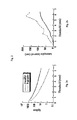
- the term "spike” refers to a burst in the rate of movement in a subject that exceeds a threshold amplitude (e.g., 1 mm/sec). Spikes can be measured across the test period using any suitable time scale from milliseconds to minutes, preferably seconds, and amplitudes set to scale from a maximum value in the reference range to a suitable minimum of about 2 x the baseline. Desirably, the spike amplitude is in the range of 1 mm/sec to 8 mm/sec (see Figure 3 for exemplary time series data). The 'spike' continues until the movement falls back below the threshold amplitude level, ending the spike.
- a threshold amplitude e.g. 1 mm/sec
- the spike doesn't end unless the movement remains below the threshold amplitude level for a set minimum amount of time (e.g., 240 msec to 1 sec).
- a set minimum amount of time e.g., 240 msec to 1 sec.
- Such analysis can be accomplished using a variety of techniques, such as wavelet analysis, or by requiring the spike train to remain below threshold for a minimum time period.
- a characteristic signature of ADHD and related disorders has been found in the movements of subjects suffering from such disorders.
- the invention exploits the relationship between the spectral density of multisecond oscillations, number of spikes, and/or the intervals between spikes and ADHD to provide methods and system for the diagnosis of ADHD and related disorders.
- the methods and systems of the invention can also be used to ascertain how much benefit an individual would derive from a particular therapeutic regimen (see Example 1).
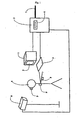
- the system includes a motion analysis device 8 that is connected to the computer 3 and positioned so as to record the movements of the subject 4.
- a motion analysis device 8 that is connected to the computer 3 and positioned so as to record the movements of the subject 4.
- Any video camera or other motion-sensing device capable of detecting the movements of the subject 4 can be used.
- the motion analysis device 8 can be an infrared motion analysis system that includes a high-resolution CCD infrared video camera, an infrared strobe, and a video processor that provides hardware analysis of the video signal and outputs data to the computer 3 .
- Such infrared motion analysis systems are known in the art, and are specifically designed to detect and record the precise vertical and horizontal position of small, light-weight infrared reflective markers 9 .
- markers 9 are attached to the subject 4 at various points, such as the head, shoulders, and elbows. As the subject 4 moves these portions of his or her body, the IR motion analysis system detects changes in the positions of the markers 9 and relays this information to the computer 3 . Successive marker coordinates can be stored in the computer 3 and analyzed.
- the computer 3 can be a stand-alone personal computer, preferably with high computational capacity microprocessors. Alternatively, a minicomputer or mainframe computer can be used.
- the computer 3 can have a disc drive 6 into which the software that analyzes the subject's input's and/or movement patterns is loaded.
- the computer 3 has a connection 7 to a network of computers, such as a global computer network. This allows the computer 3 to exchange data with other computers connected to the network.
- the computer network is a local area network, a wide area network, an intranet, or an extranet.
- a subject may be tested not only in a clinical setting, but also at a remote location, such as the home, school, or workplace, thereby eliminating the inconvenience of traveling long distances for testing.
- the system may also include a monitor 1 that is a capable of displaying visual images on a screen 5.
- the monitor 1 is attached to a computer 3 and is positioned in proximity to a subject 4 , so that the subject 4 may view the images displayed on the monitor screen 5 .
- the computer 3 can be programmed to display a desired sequence of images, to which the subject 4 is instructed to respond by activating an input device 2 that is also attached to the computer 3 and is controllable by the subject 4 .
- the input device 2 can be, for example, a standard computer keyboard, a hand-held plunger switch, or a large, easy-to-hit switch several (2-3) inches in length. When activated, the input device 2 sends the subject's inputs to the computer 3 which stores and analyzes the incidents of device activation.
- a motion detection system is used to track the movement of the head an/or lower extremities of the individual being tested.
- Any video camera or other motion-sensing device capable of detecting the movements of the test subject can be used.
- the motion analysis device can be an infrared motion analysis system (e.g., Qualisys, Glastonbury, CT) that includes a high-resolution CCD infrared video camera, an infrared strobe, and a video processor that provides hardware analysis of the video signal and outputs data to a computer.
- infrared motion analysis systems are known in the art, and are specifically designed to detect and record the precise vertical and horizontal position of small, light-weight infrared reflective markers.
- the IR motion analysis system detects changes in the positions of the markers and relays this information to a computer. Successive marker coordinates can be stored in the computer and analyzed.
- the camera is positioned in front of the subject, who is preferably in a seated position.
- the camera is also desirably positioned in such a manner that it can capture movements of the reflective markers in three dimensions, including movements towards and away from the display device.
- the motion analysis device can also include a second camera that can be used in combination with the first camera to better differentiate three dimensional movement.
- the first camera can be used to track the movement of the subject's legs and/or feet or a second camera can be used to track the movement of the subject's lower extremities while the first camera tracks upper body movements.
- visible light and standard video camera are used to measure the movement of a subject, or an accelerometer is used.
- Movement patterns can be analyzed using procedures described by Teicher et al., J. Am. Acad. Child Adolsec. Psychiatry 35:334 (1996 ), which are based on the concept of microevents.
- a new microevent begins whenever the marker moves more than a predetermined distance from the location of the previous microevent, and is defined by its position and duration.
- Exemplary data showing the head motion of a subject is provided in Figure 3 .
- a threshold amplitude level is set (e.g., 1 mm/sec) and the number of spikes in the movements and/or the interval between spikes in the movements is calculated.
- an effective treatment is one which reduces the number of spikes, and lengthens the average interspike interval across the different threshold values.
- the methods of the invention are used to create a curve of 'spike' numbers versus threshold amplitude, which is then compared to a normative database to ascertain whether the individual's profile deviates significantly from normal subjects.
- the comparison can be made using neural network techniques, or by using a variety of statistical techniques, such as logistic regression analysis, cluster analysis, discriminant analysis, or optimal data analysis, to see if the individuals profile better resembles normal or ADHD.
- the movement time series can be analyzed using a mathematical techniques such as Fourier Transform, Wigner-Wille Transform, or wavelet analysis to decompose time series from time domain into frequency domain.
- a mathematical technique such as Fourier Transform, Wigner-Wille Transform, or wavelet analysis to decompose time series from time domain into frequency domain.
- the amount of spectral power can be calculated for the oscillations in the movements.
- the spectral power is calculated within a low-frequency (multisecond oscillation) domain (e.g., between 0.01 and 0.5 Hz).
- Spectral power can also be used to assess the efficacy of a therapeutic regimen.
- An effective treatment is one which reduces the low frequency motion of the subject.
- the subject is, desirably, engaged in a continuous performance test (CPT) while the motor activity of the subject is monitored.
- CPT continuous performance test
- subject's visual attention can be tested by displaying a series of visual stimuli, to which the subject is instructed to respond.
- the stimuli are of two types, and the subject is instructed to respond to only one of them.
- Data are collected for each stimulus presented including the type of stimulus, whether or not the subject responded, and if so, how long the subject took to respond.
- the continuous performance attention test has been in use since the mid 50's ( Rosvold et al., J. consulting and Clinical Psychology 20:343 (1956 )), with computerized versions available in the 1970's ( Greenberg, Psychopharmacol. Bull. 23:279 (1987 )).
- the CPT results can include measuring errors of commission, errors of omission, and mean correct reaction time with standard deviation. More sophisticated CPT measures, derived from signal detection theory can include a calculation of stimulus sensitivity (d') (see, for example, Nuechterlein, J. Abnorm. Psychol. 92:4 (1983 )).
- Analysis of the CPT results can also include assessing the pattern or fluctuation in attentional states by a subject during a test period. This approach is described in U.S. Patent No. 6,685,652 .
- the methods of the invention may be used alone, together, or in conjunction with other well-known psychological tests for determining attention or reaction time. Testing of the subject's performance may be conducted with or without providing corrective feedback to the subject during performance of the CPT.
- the methods and systems of the invention can provide information on the efficacy of any particular therapy in an individual. For example, using the methods of the invention it can be possible to determine how a subject would respond to any of the different long acting stimulant preparations (e.g., ConcertaTM 18, 36, and 54 mg; Metadate CDTM 20, 40, 60 mg; Ritalin-LATM 10-60 mg) or combinations, such as Ritalin-LATM 40 mg taken at 8 am and RitalinTM immediate release 15 mg taken at 4 PM. These assessments are made based upon the degree of improvement in a subject's motor activity and, optionally, performance on CPT testing.
- the different long acting stimulant preparations e.g., ConcertaTM 18, 36, and 54 mg; Metadate CDTM 20, 40, 60 mg; Ritalin-LATM 10-60 mg
- combinations such as Ritalin-LATM 40 mg taken at 8 am and RitalinTM immediate release 15 mg taken at 4 PM.
- a test subject fails to show substantial benefits on one class of stimulants (i.e., methylphenidate versus amphetamine derivatives, such as dextroamphetamine or Adderall), the subject can be tested on a separate day on a drug from the other class of stimulants.
- methylphenidate versus amphetamine derivatives such as dextroamphetamine or Adderall
- Clinical research has shown that patients with ADHD often respond better to one class of stimulants than another, and that a significant number of patients with ADHD will have a very beneficial response to one class of agents but will fail to respond to the other class, or will have side-effects on only one class (see, for example, Elia et al., Psychiatry Res. 36:141 (1991 )).
- Example 1 Motor Activity in ADHD Children with and without Methylphenidate Therapy.
Landscapes
- Health & Medical Sciences (AREA)
- Life Sciences & Earth Sciences (AREA)
- Engineering & Computer Science (AREA)
- Surgery (AREA)
- Animal Behavior & Ethology (AREA)
- Public Health (AREA)
- General Health & Medical Sciences (AREA)
- Physics & Mathematics (AREA)
- Veterinary Medicine (AREA)
- Biophysics (AREA)
- Pathology (AREA)
- Biomedical Technology (AREA)
- Heart & Thoracic Surgery (AREA)
- Medical Informatics (AREA)
- Molecular Biology (AREA)
- Developmental Disabilities (AREA)
- Psychiatry (AREA)
- Computer Vision & Pattern Recognition (AREA)
- Physiology (AREA)
- Psychology (AREA)
- Educational Technology (AREA)
- Hospice & Palliative Care (AREA)
- Child & Adolescent Psychology (AREA)
- Social Psychology (AREA)
- Nuclear Medicine, Radiotherapy & Molecular Imaging (AREA)
- Oral & Maxillofacial Surgery (AREA)
- Dentistry (AREA)
- Radiology & Medical Imaging (AREA)
- Artificial Intelligence (AREA)
- Signal Processing (AREA)
- Measurement Of The Respiration, Hearing Ability, Form, And Blood Characteristics Of Living Organisms (AREA)
- Investigating Or Analysing Biological Materials (AREA)
Applications Claiming Priority (2)
| Application Number | Priority Date | Filing Date | Title |
|---|---|---|---|
| US78894606P | 2006-04-04 | 2006-04-04 | |
| PCT/US2007/008135 WO2007114901A2 (en) | 2006-04-04 | 2007-04-04 | Method for diagnosing adhd and related behavioral disorders |
Publications (3)
| Publication Number | Publication Date |
|---|---|
| EP2007282A2 EP2007282A2 (en) | 2008-12-31 |
| EP2007282A4 EP2007282A4 (en) | 2010-03-31 |
| EP2007282B1 true EP2007282B1 (en) | 2013-01-23 |
Family
ID=38564128
Family Applications (1)
| Application Number | Title | Priority Date | Filing Date |
|---|---|---|---|
| EP07754632A Not-in-force EP2007282B1 (en) | 2006-04-04 | 2007-04-04 | Method for diagnosing adhd and related behavioral disorders |
Country Status (4)
| Country | Link |
|---|---|
| US (2) | US8469901B2 (da) |
| EP (1) | EP2007282B1 (da) |
| DK (1) | DK2007282T3 (da) |
| WO (1) | WO2007114901A2 (da) |
Families Citing this family (30)
| Publication number | Priority date | Publication date | Assignee | Title |
|---|---|---|---|---|
| US20110060248A1 (en) * | 2008-03-18 | 2011-03-10 | Tomotoshi Ishida | Physical configuration detector, physical configuration detecting program, and physical configuration detecting method |
| EP2364443B1 (en) | 2008-10-08 | 2014-01-08 | The McLean Hospital Corporation | Systems and methods for measuring the magnitude of attention and motor activity disturbance in a subject |
| US20100228158A1 (en) * | 2009-03-05 | 2010-09-09 | Searete Llc, A Limited Liability Corporation Of The State Of Delaware | Postural information system and method including device level determining of subject advisory information based on subject status information and postural influencer status information |
| US20100225490A1 (en) * | 2009-03-05 | 2010-09-09 | Leuthardt Eric C | Postural information system and method including central determining of subject advisory information based on subject status information and postural influencer status information |
| US20100228488A1 (en) * | 2009-03-05 | 2010-09-09 | Searete Llc, A Limited Liability Corporation Of The State Of Delaware | Postural information system and method |
| US20100228495A1 (en) * | 2009-03-05 | 2010-09-09 | Searete Llc, A Limited Liability Corporation Of The State Of Delaware | Postural information system and method including determining subject advisory information based on prior determined subject advisory information |
| US9024976B2 (en) * | 2009-03-05 | 2015-05-05 | The Invention Science Fund I, Llc | Postural information system and method |
| US20100228153A1 (en) * | 2009-03-05 | 2010-09-09 | Searete Llc, A Limited Liability Corporation Of The State Of Delaware | Postural information system and method |
| US20100228493A1 (en) * | 2009-03-05 | 2010-09-09 | Searete Llc, A Limited Liability Corporation Of The State Of Delaware | Postural information system and method including direction generation based on collection of subject advisory information |
| US20100228494A1 (en) * | 2009-03-05 | 2010-09-09 | Searete Llc, A Limited Liability Corporation Of The State Of Delaware | Postural information system and method including determining subject advisory information based on prior determined subject advisory information |
| US20100228154A1 (en) * | 2009-03-05 | 2010-09-09 | Searete Llc, A Limited Liability Corporation Of The State Of Delaware | Postural information system and method including determining response to subject advisory information |
| US20100225491A1 (en) * | 2009-03-05 | 2010-09-09 | Searete Llc, A Limited Liability Corporation Of The State Of Delaware | Postural information system and method |
| US20100228490A1 (en) * | 2009-03-05 | 2010-09-09 | Searete Llc, A Limited Liability Corporation Of The State Of Delaware | Postural information system and method |
| US20100228159A1 (en) * | 2009-03-05 | 2010-09-09 | Searete Llc, A Limited Liability Corporation Of The State Of Delaware | Postural information system and method |
| US20100225474A1 (en) * | 2009-03-05 | 2010-09-09 | Searete Llc, A Limited Liability Corporation Of The State Of Delaware | Postural information system and method |
| US20100225473A1 (en) * | 2009-03-05 | 2010-09-09 | Searete Llc, A Limited Liability Corporation Of The State Of Delaware | Postural information system and method |
| US20100271200A1 (en) * | 2009-03-05 | 2010-10-28 | Searete Llc, A Limited Liability Corporation Of The State Of Delaware | Postural information system and method including determining response to subject advisory information |
| US20100228492A1 (en) * | 2009-03-05 | 2010-09-09 | Searete Llc, A Limited Liability Corporation Of State Of Delaware | Postural information system and method including direction generation based on collection of subject advisory information |
| US20100228487A1 (en) * | 2009-03-05 | 2010-09-09 | Searete Llc, A Limited Liability Corporation Of The State Of Delaware | Postural information system and method |
| WO2011062890A1 (en) | 2009-11-18 | 2011-05-26 | The Mclean Hospital Corporation | Method for diagnosing adhd and related behavioral disorders |
| US8900165B2 (en) * | 2010-03-01 | 2014-12-02 | University Of Maryland, College Park | Balance training system |
| US8771206B2 (en) * | 2011-08-19 | 2014-07-08 | Accenture Global Services Limited | Interactive virtual care |
| US9014614B2 (en) | 2011-10-20 | 2015-04-21 | Cogcubed Corporation | Cognitive assessment and treatment platform utilizing a distributed tangible-graphical user interface device |
| JP6494903B2 (ja) * | 2013-02-14 | 2019-04-03 | ソニー株式会社 | 分析システム、分析プログラム及び分析方法 |
| US10278633B1 (en) | 2014-06-23 | 2019-05-07 | Corman Attention Technologies, LLC | Systems and methods for assisting diagnosing and/or titrating medication for predetermined conditions and assessing the effectiveness of medication prescribed for a predetermined condition |
| CN104127186A (zh) * | 2014-07-31 | 2014-11-05 | 李风华 | 注意缺陷多动障碍客观评测系统 |
| CN105147297A (zh) * | 2015-07-29 | 2015-12-16 | 昌晓军 | 一种新型的儿童多动行为矫治系统 |
| JP6747172B2 (ja) * | 2016-08-24 | 2020-08-26 | 株式会社Jvcケンウッド | 診断支援装置、診断支援方法、及びコンピュータプログラム |
| CN106419938B (zh) * | 2016-11-28 | 2019-11-08 | 中国科学院心理研究所 | 一种基于运动能量释放估算的注意缺陷多动障碍(adhd)检测系统 |
| CN119157541A (zh) * | 2023-09-21 | 2024-12-20 | 重庆金赛星医疗科技有限公司 | 注意缺陷与多动障碍辅助诊断系统 |
Family Cites Families (10)
| Publication number | Priority date | Publication date | Assignee | Title |
|---|---|---|---|---|
| US6554439B1 (en) * | 2000-05-15 | 2003-04-29 | The Mclean Hospital | Illumination apparatus for simulating dynamic light conditions |
| CA2410041C (en) * | 2000-05-17 | 2013-07-09 | The Mclean Hospital Corporation | Method for determining fluctuation in attentional state and overall attentional state |
| US7942828B2 (en) | 2000-05-17 | 2011-05-17 | The Mclean Hospital Corporation | Method for determining fluctuation in attentional state and overall attentional state |
| AU2002226088A1 (en) * | 2000-10-27 | 2002-05-06 | The Mclean Hospital Corporation | Enhanced diagnosis of psychiatric disorders with heartbeat data |
| US6475161B2 (en) * | 2001-03-29 | 2002-11-05 | The Mclean Hospital Corporation | Methods for diagnosing Alzheimer's disease and other forms of dementia |
| AU2003215376A1 (en) * | 2002-02-22 | 2003-09-09 | The Mclean Hospital Corporation | Methods for diagnosing akathisia |
| AU2003217652A1 (en) * | 2002-02-22 | 2003-09-09 | The Mclean Hospital Corporation | Methods for continuous performance testing |
| US7117108B2 (en) * | 2003-05-28 | 2006-10-03 | Paul Ernest Rapp | System and method for categorical analysis of time dependent dynamic processes |
| JP2008510580A (ja) | 2004-08-24 | 2008-04-10 | ザ マクレーン ホスピタル コーポレーション | 聴覚注意および覚醒度を査定するための方法 |
| WO2006029021A2 (en) * | 2004-09-02 | 2006-03-16 | The Mclean Hospital Corporation | Method for the diagnosis of attention-deficit/hyperactivity disorder |
-
2007
- 2007-04-04 WO PCT/US2007/008135 patent/WO2007114901A2/en not_active Ceased
- 2007-04-04 DK DK07754632.3T patent/DK2007282T3/da active
- 2007-04-04 US US11/732,526 patent/US8469901B2/en not_active Expired - Fee Related
- 2007-04-04 EP EP07754632A patent/EP2007282B1/en not_active Not-in-force
-
2013
- 2013-06-19 US US13/921,764 patent/US9005142B2/en not_active Expired - Fee Related
Also Published As
| Publication number | Publication date |
|---|---|
| US8469901B2 (en) | 2013-06-25 |
| WO2007114901A9 (en) | 2007-11-29 |
| WO2007114901A2 (en) | 2007-10-11 |
| US20080021351A1 (en) | 2008-01-24 |
| US9005142B2 (en) | 2015-04-14 |
| EP2007282A4 (en) | 2010-03-31 |
| WO2007114901A3 (en) | 2008-05-08 |
| US20140058290A1 (en) | 2014-02-27 |
| DK2007282T3 (da) | 2013-05-06 |
| EP2007282A2 (en) | 2008-12-31 |
Similar Documents
| Publication | Publication Date | Title |
|---|---|---|
| EP2007282B1 (en) | Method for diagnosing adhd and related behavioral disorders | |
| EP2501284B1 (en) | Method for diagnosing adhd and related behavioral disorders | |
| Castellanos et al. | Executive function oculomotor tasks in girls with ADHD | |
| AU2014240105B2 (en) | Multi-modal pharmaco-diagnostic assessment of brain health | |
| EP2708888B1 (en) | Systems and methods for measuring the magnitude of attention and motor actvity disturbance in a subject | |
| CA2884371C (en) | Method and system of rapid screening for mild traumatic brain injury (mtbi) and other cognitive impairment | |
| US20060058590A1 (en) | Method and system for assaying agitation | |
| Iacono et al. | Features that distinguish the smooth-pursuit eye-tracking performance of schizophrenic, affective-disorder, and normal individuals. | |
| Cantero et al. | Nightcap: a reliable system for determining sleep onset latency | |
| US6994670B2 (en) | Methods for diagnosing akathisia | |
| US20090005648A1 (en) | Method for the Diagnosis of Attention-Deficit/Hyperactivity Disorder | |
| WO2016040647A2 (en) | Method and apparatus for monitoring eye tremor | |
| Lu et al. | Pediatric sleep movements: a review of methodologies, normative data, disease associations, and research gaps | |
| AU2021106394A4 (en) | A technology-based system for the management and detection of ADHD and other behavioural disorders. | |
| HK1169797A (en) | Method for diagnosing adhd and related behavioral disorders | |
| HK1169797B (en) | Method for diagnosing adhd and related behavioral disorders | |
| Sleepiness | Technology to Detect | |
| Pivik | tttttttttttS 0000 TTTTTT | |
| HK1156105B (en) | Systems and methods for measuring the magnitude of attention and motor activity disturbance in a subject |
Legal Events
| Date | Code | Title | Description |
|---|---|---|---|
| PUAI | Public reference made under article 153(3) epc to a published international application that has entered the european phase |
Free format text: ORIGINAL CODE: 0009012 |
|
| 17P | Request for examination filed |
Effective date: 20081031 |
|
| AK | Designated contracting states |
Kind code of ref document: A2 Designated state(s): AT BE BG CH CY CZ DE DK EE ES FI FR GB GR HU IE IS IT LI LT LU LV MC MT NL PL PT RO SE SI SK TR |
|
| AX | Request for extension of the european patent |
Extension state: AL BA HR MK RS |
|
| A4 | Supplementary search report drawn up and despatched |
Effective date: 20100226 |
|
| 17Q | First examination report despatched |
Effective date: 20100614 |
|
| DAX | Request for extension of the european patent (deleted) | ||
| GRAP | Despatch of communication of intention to grant a patent |
Free format text: ORIGINAL CODE: EPIDOSNIGR1 |
|
| GRAS | Grant fee paid |
Free format text: ORIGINAL CODE: EPIDOSNIGR3 |
|
| GRAA | (expected) grant |
Free format text: ORIGINAL CODE: 0009210 |
|
| AK | Designated contracting states |
Kind code of ref document: B1 Designated state(s): AT BE BG CH CY CZ DE DK EE ES FI FR GB GR HU IE IS IT LI LT LU LV MC MT NL PL PT RO SE SI SK TR |
|
| REG | Reference to a national code |
Ref country code: GB Ref legal event code: FG4D |
|
| REG | Reference to a national code |
Ref country code: CH Ref legal event code: EP |
|
| REG | Reference to a national code |
Ref country code: AT Ref legal event code: REF Ref document number: 594518 Country of ref document: AT Kind code of ref document: T Effective date: 20130215 Ref country code: CH Ref legal event code: EP |
|
| REG | Reference to a national code |
Ref country code: IE Ref legal event code: FG4D |
|
| REG | Reference to a national code |
Ref country code: DE Ref legal event code: R096 Ref document number: 602007028229 Country of ref document: DE Effective date: 20130321 |
|
| REG | Reference to a national code |
Ref country code: CH Ref legal event code: NV Representative=s name: RENTSCH PARTNER AG, CH |
|
| REG | Reference to a national code |
Ref country code: DK Ref legal event code: T3 |
|
| REG | Reference to a national code |
Ref country code: SE Ref legal event code: TRGR |
|
| REG | Reference to a national code |
Ref country code: NL Ref legal event code: T3 |
|
| REG | Reference to a national code |
Ref country code: AT Ref legal event code: MK05 Ref document number: 594518 Country of ref document: AT Kind code of ref document: T Effective date: 20130123 |
|
| REG | Reference to a national code |
Ref country code: LT Ref legal event code: MG4D |
|
| PG25 | Lapsed in a contracting state [announced via postgrant information from national office to epo] |
Ref country code: AT Free format text: LAPSE BECAUSE OF FAILURE TO SUBMIT A TRANSLATION OF THE DESCRIPTION OR TO PAY THE FEE WITHIN THE PRESCRIBED TIME-LIMIT Effective date: 20130123 Ref country code: LT Free format text: LAPSE BECAUSE OF FAILURE TO SUBMIT A TRANSLATION OF THE DESCRIPTION OR TO PAY THE FEE WITHIN THE PRESCRIBED TIME-LIMIT Effective date: 20130123 Ref country code: BE Free format text: LAPSE BECAUSE OF FAILURE TO SUBMIT A TRANSLATION OF THE DESCRIPTION OR TO PAY THE FEE WITHIN THE PRESCRIBED TIME-LIMIT Effective date: 20130123 Ref country code: IS Free format text: LAPSE BECAUSE OF FAILURE TO SUBMIT A TRANSLATION OF THE DESCRIPTION OR TO PAY THE FEE WITHIN THE PRESCRIBED TIME-LIMIT Effective date: 20130523 Ref country code: BG Free format text: LAPSE BECAUSE OF FAILURE TO SUBMIT A TRANSLATION OF THE DESCRIPTION OR TO PAY THE FEE WITHIN THE PRESCRIBED TIME-LIMIT Effective date: 20130423 Ref country code: ES Free format text: LAPSE BECAUSE OF FAILURE TO SUBMIT A TRANSLATION OF THE DESCRIPTION OR TO PAY THE FEE WITHIN THE PRESCRIBED TIME-LIMIT Effective date: 20130504 |
|
| PG25 | Lapsed in a contracting state [announced via postgrant information from national office to epo] |
Ref country code: LV Free format text: LAPSE BECAUSE OF FAILURE TO SUBMIT A TRANSLATION OF THE DESCRIPTION OR TO PAY THE FEE WITHIN THE PRESCRIBED TIME-LIMIT Effective date: 20130123 Ref country code: PT Free format text: LAPSE BECAUSE OF FAILURE TO SUBMIT A TRANSLATION OF THE DESCRIPTION OR TO PAY THE FEE WITHIN THE PRESCRIBED TIME-LIMIT Effective date: 20130523 Ref country code: GR Free format text: LAPSE BECAUSE OF FAILURE TO SUBMIT A TRANSLATION OF THE DESCRIPTION OR TO PAY THE FEE WITHIN THE PRESCRIBED TIME-LIMIT Effective date: 20130424 Ref country code: FI Free format text: LAPSE BECAUSE OF FAILURE TO SUBMIT A TRANSLATION OF THE DESCRIPTION OR TO PAY THE FEE WITHIN THE PRESCRIBED TIME-LIMIT Effective date: 20130123 Ref country code: PL Free format text: LAPSE BECAUSE OF FAILURE TO SUBMIT A TRANSLATION OF THE DESCRIPTION OR TO PAY THE FEE WITHIN THE PRESCRIBED TIME-LIMIT Effective date: 20130123 Ref country code: SI Free format text: LAPSE BECAUSE OF FAILURE TO SUBMIT A TRANSLATION OF THE DESCRIPTION OR TO PAY THE FEE WITHIN THE PRESCRIBED TIME-LIMIT Effective date: 20130123 |
|
| PG25 | Lapsed in a contracting state [announced via postgrant information from national office to epo] |
Ref country code: CZ Free format text: LAPSE BECAUSE OF FAILURE TO SUBMIT A TRANSLATION OF THE DESCRIPTION OR TO PAY THE FEE WITHIN THE PRESCRIBED TIME-LIMIT Effective date: 20130123 Ref country code: SK Free format text: LAPSE BECAUSE OF FAILURE TO SUBMIT A TRANSLATION OF THE DESCRIPTION OR TO PAY THE FEE WITHIN THE PRESCRIBED TIME-LIMIT Effective date: 20130123 Ref country code: EE Free format text: LAPSE BECAUSE OF FAILURE TO SUBMIT A TRANSLATION OF THE DESCRIPTION OR TO PAY THE FEE WITHIN THE PRESCRIBED TIME-LIMIT Effective date: 20130123 Ref country code: RO Free format text: LAPSE BECAUSE OF FAILURE TO SUBMIT A TRANSLATION OF THE DESCRIPTION OR TO PAY THE FEE WITHIN THE PRESCRIBED TIME-LIMIT Effective date: 20130123 |
|
| PG25 | Lapsed in a contracting state [announced via postgrant information from national office to epo] |
Ref country code: MC Free format text: LAPSE BECAUSE OF FAILURE TO SUBMIT A TRANSLATION OF THE DESCRIPTION OR TO PAY THE FEE WITHIN THE PRESCRIBED TIME-LIMIT Effective date: 20130123 Ref country code: CY Free format text: LAPSE BECAUSE OF FAILURE TO SUBMIT A TRANSLATION OF THE DESCRIPTION OR TO PAY THE FEE WITHIN THE PRESCRIBED TIME-LIMIT Effective date: 20130123 |
|
| PLBE | No opposition filed within time limit |
Free format text: ORIGINAL CODE: 0009261 |
|
| STAA | Information on the status of an ep patent application or granted ep patent |
Free format text: STATUS: NO OPPOSITION FILED WITHIN TIME LIMIT |
|
| 26N | No opposition filed |
Effective date: 20131024 |
|
| REG | Reference to a national code |
Ref country code: DE Ref legal event code: R097 Ref document number: 602007028229 Country of ref document: DE Effective date: 20131024 |
|
| PG25 | Lapsed in a contracting state [announced via postgrant information from national office to epo] |
Ref country code: MT Free format text: LAPSE BECAUSE OF FAILURE TO SUBMIT A TRANSLATION OF THE DESCRIPTION OR TO PAY THE FEE WITHIN THE PRESCRIBED TIME-LIMIT Effective date: 20130123 |
|
| PG25 | Lapsed in a contracting state [announced via postgrant information from national office to epo] |
Ref country code: TR Free format text: LAPSE BECAUSE OF FAILURE TO SUBMIT A TRANSLATION OF THE DESCRIPTION OR TO PAY THE FEE WITHIN THE PRESCRIBED TIME-LIMIT Effective date: 20130123 |
|
| PG25 | Lapsed in a contracting state [announced via postgrant information from national office to epo] |
Ref country code: LU Free format text: LAPSE BECAUSE OF NON-PAYMENT OF DUE FEES Effective date: 20130404 Ref country code: HU Free format text: LAPSE BECAUSE OF FAILURE TO SUBMIT A TRANSLATION OF THE DESCRIPTION OR TO PAY THE FEE WITHIN THE PRESCRIBED TIME-LIMIT; INVALID AB INITIO Effective date: 20070404 |
|
| REG | Reference to a national code |
Ref country code: FR Ref legal event code: PLFP Year of fee payment: 10 |
|
| REG | Reference to a national code |
Ref country code: FR Ref legal event code: PLFP Year of fee payment: 11 |
|
| REG | Reference to a national code |
Ref country code: CH Ref legal event code: PCAR Free format text: NEW ADDRESS: BELLERIVESTRASSE 203 POSTFACH, 8034 ZUERICH (CH) |
|
| REG | Reference to a national code |
Ref country code: FR Ref legal event code: PLFP Year of fee payment: 12 |
|
| PGFP | Annual fee paid to national office [announced via postgrant information from national office to epo] |
Ref country code: NL Payment date: 20200426 Year of fee payment: 14 Ref country code: IE Payment date: 20200427 Year of fee payment: 14 Ref country code: DK Payment date: 20200430 Year of fee payment: 14 Ref country code: FR Payment date: 20200427 Year of fee payment: 14 Ref country code: CH Payment date: 20200504 Year of fee payment: 14 Ref country code: DE Payment date: 20200429 Year of fee payment: 14 |
|
| PGFP | Annual fee paid to national office [announced via postgrant information from national office to epo] |
Ref country code: IT Payment date: 20200423 Year of fee payment: 14 Ref country code: GB Payment date: 20200427 Year of fee payment: 14 Ref country code: SE Payment date: 20200429 Year of fee payment: 14 |
|
| REG | Reference to a national code |
Ref country code: DE Ref legal event code: R119 Ref document number: 602007028229 Country of ref document: DE |
|
| REG | Reference to a national code |
Ref country code: DK Ref legal event code: EBP Effective date: 20210430 |
|
| REG | Reference to a national code |
Ref country code: SE Ref legal event code: EUG |
|
| REG | Reference to a national code |
Ref country code: NL Ref legal event code: MM Effective date: 20210501 |
|
| GBPC | Gb: european patent ceased through non-payment of renewal fee |
Effective date: 20210404 |
|
| PG25 | Lapsed in a contracting state [announced via postgrant information from national office to epo] |
Ref country code: LI Free format text: LAPSE BECAUSE OF NON-PAYMENT OF DUE FEES Effective date: 20210430 Ref country code: CH Free format text: LAPSE BECAUSE OF NON-PAYMENT OF DUE FEES Effective date: 20210430 Ref country code: SE Free format text: LAPSE BECAUSE OF NON-PAYMENT OF DUE FEES Effective date: 20210405 Ref country code: DE Free format text: LAPSE BECAUSE OF NON-PAYMENT OF DUE FEES Effective date: 20211103 Ref country code: GB Free format text: LAPSE BECAUSE OF NON-PAYMENT OF DUE FEES Effective date: 20210404 Ref country code: FR Free format text: LAPSE BECAUSE OF NON-PAYMENT OF DUE FEES Effective date: 20210430 |
|
| PG25 | Lapsed in a contracting state [announced via postgrant information from national office to epo] |
Ref country code: NL Free format text: LAPSE BECAUSE OF NON-PAYMENT OF DUE FEES Effective date: 20210501 |
|
| PG25 | Lapsed in a contracting state [announced via postgrant information from national office to epo] |
Ref country code: IE Free format text: LAPSE BECAUSE OF NON-PAYMENT OF DUE FEES Effective date: 20210404 Ref country code: DK Free format text: LAPSE BECAUSE OF NON-PAYMENT OF DUE FEES Effective date: 20210430 |
|
| PG25 | Lapsed in a contracting state [announced via postgrant information from national office to epo] |
Ref country code: IT Free format text: LAPSE BECAUSE OF NON-PAYMENT OF DUE FEES Effective date: 20200404 |
|
| PG25 | Lapsed in a contracting state [announced via postgrant information from national office to epo] |
Ref country code: IT Free format text: LAPSE BECAUSE OF NON-PAYMENT OF DUE FEES Effective date: 20210404 |