EP2007680B1 - Verwendung von zirconiumoxidnitrid-katalysatoren zur zersetzung von ammoniak - Google Patents
Verwendung von zirconiumoxidnitrid-katalysatoren zur zersetzung von ammoniak Download PDFInfo
- Publication number
- EP2007680B1 EP2007680B1 EP07711945A EP07711945A EP2007680B1 EP 2007680 B1 EP2007680 B1 EP 2007680B1 EP 07711945 A EP07711945 A EP 07711945A EP 07711945 A EP07711945 A EP 07711945A EP 2007680 B1 EP2007680 B1 EP 2007680B1
- Authority
- EP
- European Patent Office
- Prior art keywords
- ammonia
- zron
- catalyst
- phase
- decomposition
- Prior art date
- Legal status (The legal status is an assumption and is not a legal conclusion. Google has not performed a legal analysis and makes no representation as to the accuracy of the status listed.)
- Not-in-force
Links
Images



Classifications
-
- B—PERFORMING OPERATIONS; TRANSPORTING
- B01—PHYSICAL OR CHEMICAL PROCESSES OR APPARATUS IN GENERAL
- B01J—CHEMICAL OR PHYSICAL PROCESSES, e.g. CATALYSIS OR COLLOID CHEMISTRY; THEIR RELEVANT APPARATUS
- B01J27/00—Catalysts comprising the elements or compounds of halogens, sulfur, selenium, tellurium, phosphorus or nitrogen; Catalysts comprising carbon compounds
- B01J27/24—Nitrogen compounds
-
- B—PERFORMING OPERATIONS; TRANSPORTING
- B01—PHYSICAL OR CHEMICAL PROCESSES OR APPARATUS IN GENERAL
- B01J—CHEMICAL OR PHYSICAL PROCESSES, e.g. CATALYSIS OR COLLOID CHEMISTRY; THEIR RELEVANT APPARATUS
- B01J37/00—Processes, in general, for preparing catalysts; Processes, in general, for activation of catalysts
- B01J37/08—Heat treatment
-
- C—CHEMISTRY; METALLURGY
- C01—INORGANIC CHEMISTRY
- C01B—NON-METALLIC ELEMENTS; COMPOUNDS THEREOF; METALLOIDS OR COMPOUNDS THEREOF NOT COVERED BY SUBCLASS C01C
- C01B21/00—Nitrogen; Compounds thereof
- C01B21/082—Compounds containing nitrogen and non-metals and optionally metals
- C01B21/0821—Oxynitrides of metals, boron or silicon
-
- C—CHEMISTRY; METALLURGY
- C01—INORGANIC CHEMISTRY
- C01B—NON-METALLIC ELEMENTS; COMPOUNDS THEREOF; METALLOIDS OR COMPOUNDS THEREOF NOT COVERED BY SUBCLASS C01C
- C01B3/00—Hydrogen; Gaseous mixtures containing hydrogen; Separation of hydrogen from mixtures containing it; Purification of hydrogen; Reversible storage of hydrogen
- C01B3/02—Production of hydrogen; Production of gaseous mixtures containing hydrogen
- C01B3/04—Production of hydrogen; Production of gaseous mixtures containing hydrogen by decomposition of inorganic compounds
- C01B3/047—Decomposition of ammonia
-
- C—CHEMISTRY; METALLURGY
- C01—INORGANIC CHEMISTRY
- C01C—AMMONIA; CYANOGEN; COMPOUNDS THEREOF
- C01C1/00—Ammonia; Compounds thereof
- C01C1/02—Preparation, purification or separation of ammonia
- C01C1/04—Preparation of ammonia by synthesis
- C01C1/0405—Preparation of ammonia by synthesis from N2 and H2 in presence of a catalyst
- C01C1/0411—Preparation of ammonia by synthesis from N2 and H2 in presence of a catalyst characterised by the catalyst
-
- B—PERFORMING OPERATIONS; TRANSPORTING
- B01—PHYSICAL OR CHEMICAL PROCESSES OR APPARATUS IN GENERAL
- B01J—CHEMICAL OR PHYSICAL PROCESSES, e.g. CATALYSIS OR COLLOID CHEMISTRY; THEIR RELEVANT APPARATUS
- B01J2235/00—Indexing scheme associated with group B01J35/00, related to the analysis techniques used to determine the catalysts form or properties
-
- B—PERFORMING OPERATIONS; TRANSPORTING
- B01—PHYSICAL OR CHEMICAL PROCESSES OR APPARATUS IN GENERAL
- B01J—CHEMICAL OR PHYSICAL PROCESSES, e.g. CATALYSIS OR COLLOID CHEMISTRY; THEIR RELEVANT APPARATUS
- B01J2235/00—Indexing scheme associated with group B01J35/00, related to the analysis techniques used to determine the catalysts form or properties
- B01J2235/15—X-ray diffraction
-
- B—PERFORMING OPERATIONS; TRANSPORTING
- B01—PHYSICAL OR CHEMICAL PROCESSES OR APPARATUS IN GENERAL
- B01J—CHEMICAL OR PHYSICAL PROCESSES, e.g. CATALYSIS OR COLLOID CHEMISTRY; THEIR RELEVANT APPARATUS
- B01J35/00—Catalysts, in general, characterised by their form or physical properties
- B01J35/60—Catalysts, in general, characterised by their form or physical properties characterised by their surface properties or porosity
- B01J35/61—Surface area
- B01J35/612—Surface area less than 10 m2/g
-
- C—CHEMISTRY; METALLURGY
- C01—INORGANIC CHEMISTRY
- C01P—INDEXING SCHEME RELATING TO STRUCTURAL AND PHYSICAL ASPECTS OF SOLID INORGANIC COMPOUNDS
- C01P2002/00—Crystal-structural characteristics
- C01P2002/70—Crystal-structural characteristics defined by measured X-ray, neutron or electron diffraction data
- C01P2002/72—Crystal-structural characteristics defined by measured X-ray, neutron or electron diffraction data by d-values or two theta-values, e.g. as X-ray diagram
-
- C—CHEMISTRY; METALLURGY
- C01—INORGANIC CHEMISTRY
- C01P—INDEXING SCHEME RELATING TO STRUCTURAL AND PHYSICAL ASPECTS OF SOLID INORGANIC COMPOUNDS
- C01P2006/00—Physical properties of inorganic compounds
- C01P2006/32—Thermal properties
- C01P2006/33—Phase transition temperatures
-
- Y—GENERAL TAGGING OF NEW TECHNOLOGICAL DEVELOPMENTS; GENERAL TAGGING OF CROSS-SECTIONAL TECHNOLOGIES SPANNING OVER SEVERAL SECTIONS OF THE IPC; TECHNICAL SUBJECTS COVERED BY FORMER USPC CROSS-REFERENCE ART COLLECTIONS [XRACs] AND DIGESTS
- Y02—TECHNOLOGIES OR APPLICATIONS FOR MITIGATION OR ADAPTATION AGAINST CLIMATE CHANGE
- Y02E—REDUCTION OF GREENHOUSE GAS [GHG] EMISSIONS, RELATED TO ENERGY GENERATION, TRANSMISSION OR DISTRIBUTION
- Y02E60/00—Enabling technologies; Technologies with a potential or indirect contribution to GHG emissions mitigation
- Y02E60/30—Hydrogen technology
- Y02E60/36—Hydrogen production from non-carbon containing sources, e.g. by water electrolysis
-
- Y—GENERAL TAGGING OF NEW TECHNOLOGICAL DEVELOPMENTS; GENERAL TAGGING OF CROSS-SECTIONAL TECHNOLOGIES SPANNING OVER SEVERAL SECTIONS OF THE IPC; TECHNICAL SUBJECTS COVERED BY FORMER USPC CROSS-REFERENCE ART COLLECTIONS [XRACs] AND DIGESTS
- Y02—TECHNOLOGIES OR APPLICATIONS FOR MITIGATION OR ADAPTATION AGAINST CLIMATE CHANGE
- Y02P—CLIMATE CHANGE MITIGATION TECHNOLOGIES IN THE PRODUCTION OR PROCESSING OF GOODS
- Y02P20/00—Technologies relating to chemical industry
- Y02P20/50—Improvements relating to the production of bulk chemicals
- Y02P20/52—Improvements relating to the production of bulk chemicals using catalysts, e.g. selective catalysts
Definitions
- the present invention refers to the use of metal oxynitrides, e.g. zirconium oxynitrides as catalysts, particularly in the decomposition of ammonia.
- Hydrogen constitutes one of the promising candidates as an energy carrier in the quest for a replacement of fossil fuels particularly in mobile applications.
- the future use of hydrogen to generate power in one of the various available types of fuel cells appears to be commonly agreed on.
- the proper way of storing hydrogen is still being debated.
- small hydrogen containing molecules can be employed as hydrogen carriers in an on-board reforming process.
- the reforming of fossil fuels is economically and ecologically questionable at best.
- methanol for instance, can be obtained from biomaterials or from methanol synthesis plants being operated at remote locations where hydrogen is available, for instance, from solar energy plants.
- methanol is often regarded as being a suitable replacement for fossil fuels.
- carbon containing hydrogen storage molecules the major disadvantage of using carbon containing hydrogen storage molecules is the formation of carbon monoxide during the reforming process. Because the latter acts as a fuel cell poison, it needs to be removed in down-stream gas purification units, which reduces the overall efficiency of the reforming process.
- steam reforming of carbon-containing hydrogen sources results in the formation of carbon dioxide which posses additional ecological concerns.
- ammonia can be used as a hydrogen carrier.
- ammonia synthesis is a well-understood, large-scale industrial process that also can be operated at any place where inexpensive hydrogen is available.
- the subsequent production of hydrogen by decomposition of ammonia is a particularly clean process that yields only hydrogen and nitrogen.
- many of the known metal catalysts for ammonia decomposition produce significant amounts of hydrazine during ammonia decomposition.
- any hydrazine formed would have to be removed in a subsequent gas purification unit.
- new catalysts need to be developed that possess high catalytic active in ammonia decomposition without formation of hydrazine.
- GB 1 126 813A refers to solid solutions of transition metal nitrides and oxinitrides and methods of their preparation.
- WO 03/053 913 A1 relates to processes for the oxidative conversion of hydrocarbons to nitriles, and to metallo-oxynitride catalysts useful for performing said ammoxidation.
- Nitrogen-conducting zirconium oxynitrides are known in the art [1,2]. Here we describe first catalysis studies linking the catalytic behavior in the decomposition of ammonia to the onset of nitrogen mobility in the bulk structure of a zirconium oxynitride catalyst.
- a first aspect of the present invention refers to the use of a metal oxynitride as a catalyst for the decomposition of ammonia.
- the metal oxynitride is preferably a compound with nitrogen conducting properties, such as zirconium oxynitride, tantal oxynitride and niobium oxynitride and combinations thereof. Especially preferred is zirconium oxynitride.
- the ammonia decomposition may be carried out in any suitable reactor system, e.g. an ammonia fuel cell such as disclosed in US 2004/0253492 .
- the catalyst may be in any suitable form, e.g. in form of particles, pellets etc.
- the catalyst may also be supported on a carrier.
- the reaction is preferably carried out at a temperature of at least about 300°C, more preferably of at least about 500°C, e.g. between 300°C and 750°C.
- the metal oxynitride catalyst may be prepared by conventional means, e.g. by heating and optionally compressing the respective metal oxide, e.g. ZrO 2 under a nitrogen atmosphere at elevated temperatures of e.g. about 1900°C. Further, suitable catalysts may be prepared by ammonolysis of metal salts and related precursors.
- the metal oxynitride catalyst of the invention preferably comprises a nitrogen conducting metal oxynitride phase.
- a zirconium oxynitride catalyst preferably comprises a nitrogen conducting zirconium oxynitride phase such as ⁇ " zirconium oxynitride phase which may have a composition of e.g. Zr 7 O 9.5 N 3 and may additionally contain a nitrogen-free zirconium oxide phase, e.g. monoclinic ZrO 2 .
- the preferred ⁇ " zirconium oxynitride phase may be generated by heating a zirconium oxynitride precursor, e.g. a ⁇ ' zirconium oxynitride phase, e.g.
- an ammonia decomposition reaction with a zirconium oxynitride catalyst may be carried out without formation of substantial amounts of hydrazine.
- metal oxynitride catalysts allows the use of ammonia decomposition reactors without further hydrazine removal means.
- a further aspect of the present invention refers to a method for the catalytic decomposition of ammonia which is carried out with a metal oxynitride catalyst as described above.
- Still a further aspect of the invention refers to an ammonia fuel cell for the catalytic decomposition of ammonia comprising an ammonia inlet; at least one reactor zone comprising a metal oxynitride catalyst and an hydrogen outlet.
- Zirconium oxynitride pellets were prepared from isostatically pressed commercial zirconia powder nitrided at 1900°C in nitrogen atmosphere for 2 h (graphite heated resistance furnace), resulting in a mixture of nitrogen-free monoclinic ZrO 2 and the ß"-type of zirconium oxynitride phases ( ⁇ Zr 7 O 9.5 N 3 ) [7]. Subsequently, the material was quenched from a vertical tube furnace from 1300°C (nitrogen atmosphere) in water. X-ray analysis after quenching shows a reduced amount of monoclinic zirconia and the metastable ß'-phase of zirconium oxynitride ( ⁇ Zr 7 O 11 N 2 ).
- the amount of ammonia and helium in the feed was adjusted by massflow controllers (Bronkhorst). This arrangement permits setting different ammonia partial pressures at different flow rates, resulting in different contact times.
- the massflow controller for ammonia needed a special seal and a reliable pressure reducer of particular precision in order to properly adjust small flow rates of ammonia.
- the PFTR reactor was mounted int a heating block (brass, 80 mm in diameter, 150 mm length), equipped with six high temperature heating cartridges of 220 Watt and heated to the desired to the desired temperature.
- the heating block is prepared to accommodate three reactors, enabling measurements with three catalysts under the same conditions within one test series.
- One reactor loaded with glass beads served as a blank reactor to determine the thermal and reactor contribution to the conversion of ammonia.
- the second reactor was filled with an iron oxide catalyst (1 g Fe 3 O 4 (magnetite) + 1mol% K 2 CO 3 + 4 mol% Al 2 O 3 ) which acted as a conventional reference catalyst for ammonia synthesis [8].
- the third reactor was filled with the zirconium oxynitride catalyst (4 g zirconia oxynitride (0,3 - 1 mm particles and a BET surface area below - 1 m 2 /g). Glass beads were placed above and below the catalyst bed to ensure that the feed gases and the catalyst powder possess the same preset temperature in the reaction zone.
- XPS X-ray photoelectron spectroscopy
- XPS measurements were performed in a modified LIS/SPECS EA200 MCD system equipped with facilities for XPS (Mg K ⁇ 1253.6 eV, 168 W power) and UPS (He I 21.22 eV, He II 40.82 eV).
- XPS X-ray photoelectron spectroscopy
- a fixed analyser pass energy of 48 eV was used resulting in a resolution of 0.97 eV FWHM of the Ag 3d 5/2 intensity.
- the base pressure of the UHV analysis chamber amounted to 10 -10 mbar.
- the ZrON catalyst was deposited on a stainless steel sample holder with minimized exposure to air. The sample was heated to the corresponding measuring temperatures at a rate of 1 K/s. Quantitative data analysis was performed by subtracting a Shirley background [9] and using empirical cross sections [10].
- X-ray analysis of the as-prepared material shows a mixture of monoclinic zirconia and the metastable ß'-phase of zirconium oxynitride ( ⁇ Zr 7 O 11 N 2 ) ( Figure 1 ).
- This material was used for catalysis testing and characterization and is referred to as ZrON in the following.
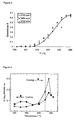
- the conversion of ammonia as a function of temperature measured during ammonia decomposition (feed 4100 ppm NH 3 ) on a conventional iron catalyst (mostly Fe 3 O 4 ), the ZrON catalyst (heating and cooling), and the blank reactor (glass beads) is depicted in Figure 2 .
- the iron oxide catalyst showed an onset of activity in the decomposition of ammonia at -340°C.
- the ß" ZrON phase contains a larger amount of nitrogen ions in the lattice than the ⁇ 'phrase, accompanied by an increased amount of vacancies in the oxygen sublattice [5].
- the phase demixing requires an increased mobility of nitrogen ions in the ZrON structure to enable migration of nitrogen ions and the formation of ⁇ " ZrON and ZrO 2 . Therefore, the change from the ⁇ ' to the ⁇ " ZrON phase is a suitable indicator for the onset of nitrogen ion conductivity in the ZrON catalyst studied.
- the electronic structure of the surface of the ZrON catalyst as a function of temperature was studied by X-ray photoelectron spectroscopy (XPS).
- XPS X-ray photoelectron spectroscopy
- the Zr 3d doublet exhibited only minor changes in shape and position during heating and cooling.
- a detailed peak profile analysis revealed a characteristic broadening of the Zr 3d peak at ⁇ 550°C and a shift in binding energy ( Figure 4 ).
- the corresponding change in the electronic structure of the ZrON catalyst coincides with the onset of catalytic activity ( Figure 2 ) and nitrogen ion mobility of ⁇ " ZrON ( Figure 1 ).
- the increasing and decreasing Zr 3d peak broadening observed as a function of temperature indicates a differential charging and a transition state of the ZrON surface structure that accompanies the phase change from ⁇ ' ZrON to the characteristically ordered ⁇ " ZrON phase together with an increased amount of monoclinic ZrO 2 .
- the resulting surface structure of the ⁇ " ZrON phase persists ( Figure 4 ) and retains its catalytic activity even at temperatures below 560°C ( Figure 2 ).
- a quantitative analysis of the XPS data revealed an increasing amount of nitrogen at the surface of the ZrON material after heating to 600°C ( ⁇ 8 wt-%).
- the dynamic behavior of the surface of the ZrON catalyst under reaction conditions accompanies the phase change in the ZrON material at ⁇ 550°C.
- the formation of the nitrogen rich ⁇ " ZrON phase is particularly detectable at the surface confirming the assumption of nitrogen mobility and ⁇ " phase formation as prerequisites for activity of ZrON in ammonia decomposition.
- the zirconium oxynitride studied showed a remarkable catalytic activity in the decomposition of ammonia.
- the ZrON catalysts exhibited no formation of hydrazine during extended time on stream. While the as-prepared ⁇ ' phase of ZrON shows only little activity, a sudden increase in activity at ⁇ 550°C coincides with the onset of nitrogen ion conductivity in the material and the phase change to the nitrogen rich ⁇ " ZrON phase.
- the dramatic change in activity is also correlated to a rapid change in the electronic structure of the surface that accompanies the formation of the more active ⁇ " ZrON phase.
Landscapes
- Chemical & Material Sciences (AREA)
- Organic Chemistry (AREA)
- Chemical Kinetics & Catalysis (AREA)
- Engineering & Computer Science (AREA)
- Materials Engineering (AREA)
- Inorganic Chemistry (AREA)
- General Health & Medical Sciences (AREA)
- Combustion & Propulsion (AREA)
- Health & Medical Sciences (AREA)
- Physics & Mathematics (AREA)
- Thermal Sciences (AREA)
- Analytical Chemistry (AREA)
- Catalysts (AREA)
Claims (8)
- Verwendung von einem Metalloxynitrid als ein Katalysator zur Zersetzung von Ammoniak für die Herstellung von Wasserstoff.
- Verwendung nach Anspruch 1, wobei die Zersetzung bei einer Temperatur von mindestens 300°C durchgeführt wird.
- Verwendung nach Anspruch 1 oder 2, wobei der Katalysator eine Stickstoff-leitende Metalloxynitridphase umfasst.
- Verwendung nach einem der Ansprüche 1-3, wobei der Katalysator ein Zirkoniumoxynitrid ist.
- Verwendung nach Anspruch 4, wobei der Katalysator eine β"-Zirkoniumoxynitridphase umfasst.
- Verwendung nach einem der Ansprüche 1-5, wobei eine Ammoniakzersetzung ohne Bildung von Hydrazin durchgeführt wird.
- Verfahren zur katalytischen Zersetzung von Ammoniak für die Herstellung von Wasserstoff, welches mit einem Metalloxynitrid-Katalysator durchgeführt wird.
- Ammoniak-Brennstoffzelle zur katalytischen Zersetzung von Ammoniak umfassend:(a) ein Ammoniak-Einlass;(b) mindestens eine Reaktorzone umfassend einen Metalloxynitrid-Katalysator und(c) ein Wasserstoff-Auslass.
Priority Applications (1)
| Application Number | Priority Date | Filing Date | Title |
|---|---|---|---|
| EP07711945A EP2007680B1 (de) | 2006-03-14 | 2007-03-14 | Verwendung von zirconiumoxidnitrid-katalysatoren zur zersetzung von ammoniak |
Applications Claiming Priority (3)
| Application Number | Priority Date | Filing Date | Title |
|---|---|---|---|
| EP06005209 | 2006-03-14 | ||
| PCT/EP2007/002262 WO2007104554A1 (en) | 2006-03-14 | 2007-03-14 | Use of zirconium oxynitride catalysts for ammonia decomposition |
| EP07711945A EP2007680B1 (de) | 2006-03-14 | 2007-03-14 | Verwendung von zirconiumoxidnitrid-katalysatoren zur zersetzung von ammoniak |
Publications (2)
| Publication Number | Publication Date |
|---|---|
| EP2007680A1 EP2007680A1 (de) | 2008-12-31 |
| EP2007680B1 true EP2007680B1 (de) | 2012-08-15 |
Family
ID=36790968
Family Applications (1)
| Application Number | Title | Priority Date | Filing Date |
|---|---|---|---|
| EP07711945A Not-in-force EP2007680B1 (de) | 2006-03-14 | 2007-03-14 | Verwendung von zirconiumoxidnitrid-katalysatoren zur zersetzung von ammoniak |
Country Status (2)
| Country | Link |
|---|---|
| EP (1) | EP2007680B1 (de) |
| WO (1) | WO2007104554A1 (de) |
Cited By (1)
| Publication number | Priority date | Publication date | Assignee | Title |
|---|---|---|---|---|
| DE102020002755A1 (de) | 2020-05-09 | 2021-11-11 | Sven Nefigmann | Kohlendioxidneutrale Biokonverteranlagen zur Herstellung von Biogas mit Wasserstoff und aktivierten Kohlemassen in der Gärflüssigkeit der Biokonverter |
Families Citing this family (1)
| Publication number | Priority date | Publication date | Assignee | Title |
|---|---|---|---|---|
| EP3448803B1 (de) * | 2016-04-26 | 2023-07-12 | Topsoe A/S | Ammoniakdissoziation durch verwendung von induktiver erwärmung |
Family Cites Families (4)
| Publication number | Priority date | Publication date | Assignee | Title |
|---|---|---|---|---|
| FR1429307A (fr) | 1964-11-27 | 1966-02-25 | Centre Nat Rech Scient | Procédé de préparation des solutions solides de nitrures et d'oxynitrures de certains métaux de transition et nouvelles solutions solides desdits nitrures et oxynitrures |
| US3730774A (en) | 1967-06-01 | 1973-05-01 | Gen Electric | Ammonia fuel cell with iridium catalyst and method of using the cell |
| WO2003053913A1 (en) | 2001-12-21 | 2003-07-03 | Universite Catholique De Louvain | Ammoxidation of hydrocarbons and hydrogenated metallo oxynitride catalysts therefor |
| US7157166B2 (en) | 2003-06-13 | 2007-01-02 | Hrl Laboratories, Llc | Ammonia fuel cell |
-
2007
- 2007-03-14 EP EP07711945A patent/EP2007680B1/de not_active Not-in-force
- 2007-03-14 WO PCT/EP2007/002262 patent/WO2007104554A1/en not_active Ceased
Cited By (3)
| Publication number | Priority date | Publication date | Assignee | Title |
|---|---|---|---|---|
| DE102020002755A1 (de) | 2020-05-09 | 2021-11-11 | Sven Nefigmann | Kohlendioxidneutrale Biokonverteranlagen zur Herstellung von Biogas mit Wasserstoff und aktivierten Kohlemassen in der Gärflüssigkeit der Biokonverter |
| WO2021228428A1 (de) | 2020-05-09 | 2021-11-18 | Sven Nefigmann | Kohlendioxidneutrale biokonverteranlagen zur herstellung von biogas mit wasserstoff und aktivierten kohlemassen in der gärflüssigkeit der biokonverter |
| DE102020002755B4 (de) | 2020-05-09 | 2023-02-09 | Nefigmann GmbH | Kohlendioxidneutrale Biokonverteranlagen zur Herstellung von Biogas mit Wasserstoff und aktivierten Kohlemassen in der Gärflüssigkeit der Biokonverter |
Also Published As
| Publication number | Publication date |
|---|---|
| EP2007680A1 (de) | 2008-12-31 |
| WO2007104554A1 (en) | 2007-09-20 |
Similar Documents
| Publication | Publication Date | Title |
|---|---|---|
| Galván et al. | Reverse water-gas shift reaction at the Cu/ZnO interface: Influence of the Cu/Zn ratio on structure-activity correlations | |
| Mateos-Pedrero et al. | CuO/ZnO catalysts for methanol steam reforming: The role of the support polarity ratio and surface area | |
| Mckay et al. | The influence of phase and morphology of molybdenum nitrides on ammonia synthesis activity and reduction characteristics | |
| Song et al. | Effect of synthesis parameters on the catalytic activity of Co–ZrO 2 for bio-ethanol steam reforming | |
| JP6257767B2 (ja) | アンモニア合成及びアンモニア分解のための触媒 | |
| Gasser et al. | Hydrogenation of carbon dioxide over copper—zirconia catalysts prepared by in-situ activation of amorphous copper—zirconium alloy | |
| Li et al. | Ce1-xFexO2-δ catalysts for catalytic methane combustion: Role of oxygen vacancy and structural dependence | |
| Levasseur et al. | Methanol oxidation on LaBO3 (B= Co, Mn, Fe) perovskite-type catalysts prepared by reactive grinding | |
| Moon et al. | Molybdenum carbide water–gas shift catalyst for fuel cell-powered vehicles applications | |
| US20090203519A1 (en) | Non-porous catalysts for co2 sequestration through dry reforming | |
| Boningari et al. | Low-temperature selective catalytic reduction of NO with NH3 over V/ZrO2 prepared by flame-assisted spray pyrolysis: Structural and catalytic properties | |
| Jha et al. | Chromium free high temperature water–gas shift catalyst for the production of hydrogen from waste derived synthesis gas | |
| Lisboa et al. | Investigation of Ni/Ce–ZrO2 catalysts in the autothermal reforming of methane | |
| Cheng et al. | Effect of calcination temperature on the performance of hexaaluminate supported CeO2 for chemical looping dry reforming | |
| Aramouni et al. | Molybdenum and nickel-molybdenum nitride catalysts supported on MgO-Al2O3 for the dry reforming of methane | |
| Perret et al. | Synthesis, characterisation and hydrogenation performance of ternary nitride catalysts | |
| Iftikhar et al. | LaNixFe1− xO3 as flexible oxygen or carbon carriers for tunable syngas production and CO2 utilization | |
| Chen et al. | Taming NO oxidation efficiency by γ-MnO 2 morphology regulation | |
| Li et al. | Methane decomposition and catalyst regeneration in a cyclic mode over supported Co and Ni catalysts | |
| Cardenas-Lizana et al. | β-Molybdenum nitride: synthesis mechanism and catalytic response in the gas phase hydrogenation of p-chloronitrobenzene | |
| Yu et al. | Structural, surface, and catalytic properties of a new bimetallic V-Mo oxynitride catalyst for hydrodenitrogenation | |
| Damma et al. | Ce/Cr and Ce/Co modified ferrite catalysts for high temperature water-gas shift reaction at elevated pressures | |
| Soerijanto et al. | The impact of nitrogen mobility on the activity of zirconium oxynitride catalysts for ammonia decomposition | |
| Gavrikov et al. | Supercritical fluid-assisted modification combined with the resynthesis of SmCoO 3 as an effective tool to enhance the long-term performance of SmCoO 3-derived catalysts for the dry reforming of methane to syngas | |
| Nie et al. | Single Cu sites in synergy with Cu2O nanoparticles on rutile TiO2 for selective nitroarene hydrogenation |
Legal Events
| Date | Code | Title | Description |
|---|---|---|---|
| PUAI | Public reference made under article 153(3) epc to a published international application that has entered the european phase |
Free format text: ORIGINAL CODE: 0009012 |
|
| 17P | Request for examination filed |
Effective date: 20081008 |
|
| AK | Designated contracting states |
Kind code of ref document: A1 Designated state(s): AT BE BG CH CY CZ DE DK EE ES FI FR GB GR HU IE IS IT LI LT LU LV MC MT NL PL PT RO SE SI SK TR |
|
| AX | Request for extension of the european patent |
Extension state: AL BA HR MK RS |
|
| RIN1 | Information on inventor provided before grant (corrected) |
Inventor name: SCHLOEGL, ROBERT Inventor name: SOERIJANTO, HARY Inventor name: SCHOMAECKER, REINHARD Inventor name: ROEDEL, CHRISTOPH Inventor name: WILD, UTE C/O ANTJE WILD Inventor name: LERCH, MARTIN Inventor name: RESSLER, THORSTEN |
|
| 17Q | First examination report despatched |
Effective date: 20090130 |
|
| GRAP | Despatch of communication of intention to grant a patent |
Free format text: ORIGINAL CODE: EPIDOSNIGR1 |
|
| GRAS | Grant fee paid |
Free format text: ORIGINAL CODE: EPIDOSNIGR3 |
|
| GRAA | (expected) grant |
Free format text: ORIGINAL CODE: 0009210 |
|
| DAX | Request for extension of the european patent (deleted) | ||
| AK | Designated contracting states |
Kind code of ref document: B1 Designated state(s): AT BE BG CH CY CZ DE DK EE ES FI FR GB GR HU IE IS IT LI LT LU LV MC MT NL PL PT RO SE SI SK TR |
|
| REG | Reference to a national code |
Ref country code: GB Ref legal event code: FG4D Ref country code: CH Ref legal event code: EP Ref country code: AT Ref legal event code: REF Ref document number: 570716 Country of ref document: AT Kind code of ref document: T Effective date: 20120815 |
|
| RIN1 | Information on inventor provided before grant (corrected) |
Inventor name: SOERIJANTO, HARY Inventor name: ROEDEL, CHRISTOPH Inventor name: SCHOMAECKER, REINHARD Inventor name: RESSLER, THORSTEN Inventor name: LERCH, MARTIN Inventor name: SCHLOEGL, ROBERT Inventor name: WILD, UTE C/O ANTJE WILD |
|
| REG | Reference to a national code |
Ref country code: IE Ref legal event code: FG4D |
|
| REG | Reference to a national code |
Ref country code: DE Ref legal event code: R096 Ref document number: 602007024757 Country of ref document: DE Effective date: 20121018 |
|
| REG | Reference to a national code |
Ref country code: NL Ref legal event code: VDEP Effective date: 20120815 |
|
| REG | Reference to a national code |
Ref country code: AT Ref legal event code: MK05 Ref document number: 570716 Country of ref document: AT Kind code of ref document: T Effective date: 20120815 |
|
| PG25 | Lapsed in a contracting state [announced via postgrant information from national office to epo] |
Ref country code: LT Free format text: LAPSE BECAUSE OF FAILURE TO SUBMIT A TRANSLATION OF THE DESCRIPTION OR TO PAY THE FEE WITHIN THE PRESCRIBED TIME-LIMIT Effective date: 20120815 Ref country code: CY Free format text: LAPSE BECAUSE OF FAILURE TO SUBMIT A TRANSLATION OF THE DESCRIPTION OR TO PAY THE FEE WITHIN THE PRESCRIBED TIME-LIMIT Effective date: 20120815 Ref country code: AT Free format text: LAPSE BECAUSE OF FAILURE TO SUBMIT A TRANSLATION OF THE DESCRIPTION OR TO PAY THE FEE WITHIN THE PRESCRIBED TIME-LIMIT Effective date: 20120815 Ref country code: IS Free format text: LAPSE BECAUSE OF FAILURE TO SUBMIT A TRANSLATION OF THE DESCRIPTION OR TO PAY THE FEE WITHIN THE PRESCRIBED TIME-LIMIT Effective date: 20121215 Ref country code: FI Free format text: LAPSE BECAUSE OF FAILURE TO SUBMIT A TRANSLATION OF THE DESCRIPTION OR TO PAY THE FEE WITHIN THE PRESCRIBED TIME-LIMIT Effective date: 20120815 |
|
| PG25 | Lapsed in a contracting state [announced via postgrant information from national office to epo] |
Ref country code: LV Free format text: LAPSE BECAUSE OF FAILURE TO SUBMIT A TRANSLATION OF THE DESCRIPTION OR TO PAY THE FEE WITHIN THE PRESCRIBED TIME-LIMIT Effective date: 20120815 Ref country code: PT Free format text: LAPSE BECAUSE OF FAILURE TO SUBMIT A TRANSLATION OF THE DESCRIPTION OR TO PAY THE FEE WITHIN THE PRESCRIBED TIME-LIMIT Effective date: 20121217 Ref country code: PL Free format text: LAPSE BECAUSE OF FAILURE TO SUBMIT A TRANSLATION OF THE DESCRIPTION OR TO PAY THE FEE WITHIN THE PRESCRIBED TIME-LIMIT Effective date: 20120815 Ref country code: GR Free format text: LAPSE BECAUSE OF FAILURE TO SUBMIT A TRANSLATION OF THE DESCRIPTION OR TO PAY THE FEE WITHIN THE PRESCRIBED TIME-LIMIT Effective date: 20121116 Ref country code: SI Free format text: LAPSE BECAUSE OF FAILURE TO SUBMIT A TRANSLATION OF THE DESCRIPTION OR TO PAY THE FEE WITHIN THE PRESCRIBED TIME-LIMIT Effective date: 20120815 Ref country code: BE Free format text: LAPSE BECAUSE OF FAILURE TO SUBMIT A TRANSLATION OF THE DESCRIPTION OR TO PAY THE FEE WITHIN THE PRESCRIBED TIME-LIMIT Effective date: 20120815 Ref country code: SE Free format text: LAPSE BECAUSE OF FAILURE TO SUBMIT A TRANSLATION OF THE DESCRIPTION OR TO PAY THE FEE WITHIN THE PRESCRIBED TIME-LIMIT Effective date: 20120815 |
|
| PG25 | Lapsed in a contracting state [announced via postgrant information from national office to epo] |
Ref country code: NL Free format text: LAPSE BECAUSE OF FAILURE TO SUBMIT A TRANSLATION OF THE DESCRIPTION OR TO PAY THE FEE WITHIN THE PRESCRIBED TIME-LIMIT Effective date: 20120815 |
|
| PG25 | Lapsed in a contracting state [announced via postgrant information from national office to epo] |
Ref country code: EE Free format text: LAPSE BECAUSE OF FAILURE TO SUBMIT A TRANSLATION OF THE DESCRIPTION OR TO PAY THE FEE WITHIN THE PRESCRIBED TIME-LIMIT Effective date: 20120815 Ref country code: RO Free format text: LAPSE BECAUSE OF FAILURE TO SUBMIT A TRANSLATION OF THE DESCRIPTION OR TO PAY THE FEE WITHIN THE PRESCRIBED TIME-LIMIT Effective date: 20120815 Ref country code: CZ Free format text: LAPSE BECAUSE OF FAILURE TO SUBMIT A TRANSLATION OF THE DESCRIPTION OR TO PAY THE FEE WITHIN THE PRESCRIBED TIME-LIMIT Effective date: 20120815 Ref country code: DK Free format text: LAPSE BECAUSE OF FAILURE TO SUBMIT A TRANSLATION OF THE DESCRIPTION OR TO PAY THE FEE WITHIN THE PRESCRIBED TIME-LIMIT Effective date: 20120815 |
|
| PGFP | Annual fee paid to national office [announced via postgrant information from national office to epo] |
Ref country code: DE Payment date: 20130131 Year of fee payment: 7 Ref country code: GB Payment date: 20130321 Year of fee payment: 7 Ref country code: FR Payment date: 20130408 Year of fee payment: 7 |
|
| PG25 | Lapsed in a contracting state [announced via postgrant information from national office to epo] |
Ref country code: IT Free format text: LAPSE BECAUSE OF FAILURE TO SUBMIT A TRANSLATION OF THE DESCRIPTION OR TO PAY THE FEE WITHIN THE PRESCRIBED TIME-LIMIT Effective date: 20120815 Ref country code: SK Free format text: LAPSE BECAUSE OF FAILURE TO SUBMIT A TRANSLATION OF THE DESCRIPTION OR TO PAY THE FEE WITHIN THE PRESCRIBED TIME-LIMIT Effective date: 20120815 |
|
| PLBE | No opposition filed within time limit |
Free format text: ORIGINAL CODE: 0009261 |
|
| STAA | Information on the status of an ep patent application or granted ep patent |
Free format text: STATUS: NO OPPOSITION FILED WITHIN TIME LIMIT |
|
| 26N | No opposition filed |
Effective date: 20130516 |
|
| PG25 | Lapsed in a contracting state [announced via postgrant information from national office to epo] |
Ref country code: BG Free format text: LAPSE BECAUSE OF FAILURE TO SUBMIT A TRANSLATION OF THE DESCRIPTION OR TO PAY THE FEE WITHIN THE PRESCRIBED TIME-LIMIT Effective date: 20121115 |
|
| REG | Reference to a national code |
Ref country code: DE Ref legal event code: R097 Ref document number: 602007024757 Country of ref document: DE Effective date: 20130516 |
|
| PG25 | Lapsed in a contracting state [announced via postgrant information from national office to epo] |
Ref country code: MC Free format text: LAPSE BECAUSE OF NON-PAYMENT OF DUE FEES Effective date: 20130331 Ref country code: ES Free format text: LAPSE BECAUSE OF FAILURE TO SUBMIT A TRANSLATION OF THE DESCRIPTION OR TO PAY THE FEE WITHIN THE PRESCRIBED TIME-LIMIT Effective date: 20121126 |
|
| REG | Reference to a national code |
Ref country code: CH Ref legal event code: PL |
|
| REG | Reference to a national code |
Ref country code: IE Ref legal event code: MM4A |
|
| PG25 | Lapsed in a contracting state [announced via postgrant information from national office to epo] |
Ref country code: LI Free format text: LAPSE BECAUSE OF NON-PAYMENT OF DUE FEES Effective date: 20130331 Ref country code: IE Free format text: LAPSE BECAUSE OF NON-PAYMENT OF DUE FEES Effective date: 20130314 Ref country code: CH Free format text: LAPSE BECAUSE OF NON-PAYMENT OF DUE FEES Effective date: 20130331 |
|
| PG25 | Lapsed in a contracting state [announced via postgrant information from national office to epo] |
Ref country code: MT Free format text: LAPSE BECAUSE OF FAILURE TO SUBMIT A TRANSLATION OF THE DESCRIPTION OR TO PAY THE FEE WITHIN THE PRESCRIBED TIME-LIMIT Effective date: 20120815 |
|
| REG | Reference to a national code |
Ref country code: DE Ref legal event code: R119 Ref document number: 602007024757 Country of ref document: DE |
|
| GBPC | Gb: european patent ceased through non-payment of renewal fee |
Effective date: 20140314 |
|
| REG | Reference to a national code |
Ref country code: FR Ref legal event code: ST Effective date: 20141128 |
|
| REG | Reference to a national code |
Ref country code: DE Ref legal event code: R119 Ref document number: 602007024757 Country of ref document: DE Effective date: 20141001 |
|
| PG25 | Lapsed in a contracting state [announced via postgrant information from national office to epo] |
Ref country code: FR Free format text: LAPSE BECAUSE OF NON-PAYMENT OF DUE FEES Effective date: 20140331 Ref country code: DE Free format text: LAPSE BECAUSE OF NON-PAYMENT OF DUE FEES Effective date: 20141001 Ref country code: GB Free format text: LAPSE BECAUSE OF NON-PAYMENT OF DUE FEES Effective date: 20140314 |
|
| PG25 | Lapsed in a contracting state [announced via postgrant information from national office to epo] |
Ref country code: TR Free format text: LAPSE BECAUSE OF FAILURE TO SUBMIT A TRANSLATION OF THE DESCRIPTION OR TO PAY THE FEE WITHIN THE PRESCRIBED TIME-LIMIT Effective date: 20120815 |
|
| PG25 | Lapsed in a contracting state [announced via postgrant information from national office to epo] |
Ref country code: LU Free format text: LAPSE BECAUSE OF NON-PAYMENT OF DUE FEES Effective date: 20130314 Ref country code: HU Free format text: LAPSE BECAUSE OF FAILURE TO SUBMIT A TRANSLATION OF THE DESCRIPTION OR TO PAY THE FEE WITHIN THE PRESCRIBED TIME-LIMIT; INVALID AB INITIO Effective date: 20070314 |