EP2007681B1 - Verwendung von ultrafeinem natriumbicarbonatpulver zur herstellung eines treibmittels - Google Patents
Verwendung von ultrafeinem natriumbicarbonatpulver zur herstellung eines treibmittels Download PDFInfo
- Publication number
- EP2007681B1 EP2007681B1 EP07719419.9A EP07719419A EP2007681B1 EP 2007681 B1 EP2007681 B1 EP 2007681B1 EP 07719419 A EP07719419 A EP 07719419A EP 2007681 B1 EP2007681 B1 EP 2007681B1
- Authority
- EP
- European Patent Office
- Prior art keywords
- sodium bicarbonate
- ultra
- fine
- particle size
- drying
- Prior art date
- Legal status (The legal status is an assumption and is not a legal conclusion. Google has not performed a legal analysis and makes no representation as to the accuracy of the status listed.)
- Not-in-force
Links
- UIIMBOGNXHQVGW-UHFFFAOYSA-M Sodium bicarbonate Chemical compound [Na+].OC([O-])=O UIIMBOGNXHQVGW-UHFFFAOYSA-M 0.000 title claims abstract description 142
- 229910000030 sodium bicarbonate Inorganic materials 0.000 title claims abstract description 70
- 235000017557 sodium bicarbonate Nutrition 0.000 title claims abstract description 61
- 239000000843 powder Substances 0.000 title claims abstract description 34
- 239000004088 foaming agent Substances 0.000 title claims description 5
- 238000002360 preparation method Methods 0.000 title claims description 3
- 239000002245 particle Substances 0.000 claims abstract description 60
- FAPWRFPIFSIZLT-UHFFFAOYSA-M Sodium chloride Chemical compound [Na+].[Cl-] FAPWRFPIFSIZLT-UHFFFAOYSA-M 0.000 claims abstract description 41
- ATRRKUHOCOJYRX-UHFFFAOYSA-N Ammonium bicarbonate Chemical compound [NH4+].OC([O-])=O ATRRKUHOCOJYRX-UHFFFAOYSA-N 0.000 claims abstract description 20
- 229910000013 Ammonium bicarbonate Inorganic materials 0.000 claims abstract description 18
- 235000012538 ammonium bicarbonate Nutrition 0.000 claims abstract description 18
- 239000001099 ammonium carbonate Substances 0.000 claims abstract description 18
- 239000011780 sodium chloride Substances 0.000 claims abstract description 16
- 238000002156 mixing Methods 0.000 claims abstract description 11
- 238000006243 chemical reaction Methods 0.000 claims abstract description 9
- 238000001035 drying Methods 0.000 claims description 11
- 238000001694 spray drying Methods 0.000 claims description 9
- 238000003756 stirring Methods 0.000 claims description 5
- 239000007864 aqueous solution Substances 0.000 claims description 4
- 238000004108 freeze drying Methods 0.000 claims description 4
- 238000001291 vacuum drying Methods 0.000 claims description 2
- 238000003828 vacuum filtration Methods 0.000 claims description 2
- 239000012258 stirred mixture Substances 0.000 claims 2
- 238000009826 distribution Methods 0.000 abstract description 21
- 238000000034 method Methods 0.000 abstract description 17
- 239000002002 slurry Substances 0.000 abstract description 11
- 229920005989 resin Polymers 0.000 abstract description 6
- 239000011347 resin Substances 0.000 abstract description 6
- 239000004604 Blowing Agent Substances 0.000 abstract description 4
- 238000013019 agitation Methods 0.000 abstract description 3
- 238000001914 filtration Methods 0.000 abstract description 3
- 229920005992 thermoplastic resin Polymers 0.000 abstract 1
- 239000000243 solution Substances 0.000 description 24
- CDBYLPFSWZWCQE-UHFFFAOYSA-L Sodium Carbonate Chemical compound [Na+].[Na+].[O-]C([O-])=O CDBYLPFSWZWCQE-UHFFFAOYSA-L 0.000 description 15
- XLYOFNOQVPJJNP-UHFFFAOYSA-N water Substances O XLYOFNOQVPJJNP-UHFFFAOYSA-N 0.000 description 12
- 229910001868 water Inorganic materials 0.000 description 12
- 239000002244 precipitate Substances 0.000 description 11
- CURLTUGMZLYLDI-UHFFFAOYSA-N Carbon dioxide Chemical compound O=C=O CURLTUGMZLYLDI-UHFFFAOYSA-N 0.000 description 10
- RYYVLZVUVIJVGH-UHFFFAOYSA-N caffeine Chemical compound CN1C(=O)N(C)C(=O)C2=C1N=CN2C RYYVLZVUVIJVGH-UHFFFAOYSA-N 0.000 description 7
- 239000006260 foam Substances 0.000 description 7
- 229920003023 plastic Polymers 0.000 description 7
- 239000004033 plastic Substances 0.000 description 7
- 239000012047 saturated solution Substances 0.000 description 7
- 210000004027 cell Anatomy 0.000 description 6
- 239000013078 crystal Substances 0.000 description 6
- 229910000029 sodium carbonate Inorganic materials 0.000 description 6
- VGGSQFUCUMXWEO-UHFFFAOYSA-N Ethene Chemical compound C=C VGGSQFUCUMXWEO-UHFFFAOYSA-N 0.000 description 5
- 239000001569 carbon dioxide Substances 0.000 description 5
- 229910002092 carbon dioxide Inorganic materials 0.000 description 5
- 238000005187 foaming Methods 0.000 description 5
- 229920001684 low density polyethylene Polymers 0.000 description 5
- 239000004702 low-density polyethylene Substances 0.000 description 5
- 238000004519 manufacturing process Methods 0.000 description 5
- VBICKXHEKHSIBG-UHFFFAOYSA-N 1-monostearoylglycerol Chemical compound CCCCCCCCCCCCCCCCCC(=O)OCC(O)CO VBICKXHEKHSIBG-UHFFFAOYSA-N 0.000 description 4
- QGZKDVFQNNGYKY-UHFFFAOYSA-N Ammonia Chemical compound N QGZKDVFQNNGYKY-UHFFFAOYSA-N 0.000 description 4
- NLXLAEXVIDQMFP-UHFFFAOYSA-N Ammonia chloride Chemical compound [NH4+].[Cl-] NLXLAEXVIDQMFP-UHFFFAOYSA-N 0.000 description 4
- OKKJLVBELUTLKV-UHFFFAOYSA-N Methanol Chemical compound OC OKKJLVBELUTLKV-UHFFFAOYSA-N 0.000 description 4
- 238000009621 Solvay process Methods 0.000 description 4
- 229920001971 elastomer Polymers 0.000 description 4
- 239000000463 material Substances 0.000 description 4
- 239000005060 rubber Substances 0.000 description 4
- CSCPPACGZOOCGX-UHFFFAOYSA-N Acetone Chemical compound CC(C)=O CSCPPACGZOOCGX-UHFFFAOYSA-N 0.000 description 3
- LFQSCWFLJHTTHZ-UHFFFAOYSA-N Ethanol Chemical compound CCO LFQSCWFLJHTTHZ-UHFFFAOYSA-N 0.000 description 3
- ZMXDDKWLCZADIW-UHFFFAOYSA-N N,N-Dimethylformamide Chemical compound CN(C)C=O ZMXDDKWLCZADIW-UHFFFAOYSA-N 0.000 description 3
- 241001625808 Trona Species 0.000 description 3
- 230000015572 biosynthetic process Effects 0.000 description 3
- 239000003795 chemical substances by application Substances 0.000 description 3
- KRKNYBCHXYNGOX-UHFFFAOYSA-N citric acid Chemical compound OC(=O)CC(O)(C(O)=O)CC(O)=O KRKNYBCHXYNGOX-UHFFFAOYSA-N 0.000 description 3
- 230000000694 effects Effects 0.000 description 3
- 239000000376 reactant Substances 0.000 description 3
- 230000035484 reaction time Effects 0.000 description 3
- 150000003839 salts Chemical class 0.000 description 3
- 238000004626 scanning electron microscopy Methods 0.000 description 3
- 239000007921 spray Substances 0.000 description 3
- 239000004594 Masterbatch (MB) Substances 0.000 description 2
- WYURNTSHIVDZCO-UHFFFAOYSA-N Tetrahydrofuran Chemical compound C1CCOC1 WYURNTSHIVDZCO-UHFFFAOYSA-N 0.000 description 2
- 238000010521 absorption reaction Methods 0.000 description 2
- 229910021529 ammonia Inorganic materials 0.000 description 2
- 235000019270 ammonium chloride Nutrition 0.000 description 2
- 238000007664 blowing Methods 0.000 description 2
- 239000000378 calcium silicate Substances 0.000 description 2
- 229910052918 calcium silicate Inorganic materials 0.000 description 2
- OYACROKNLOSFPA-UHFFFAOYSA-N calcium;dioxido(oxo)silane Chemical compound [Ca+2].[O-][Si]([O-])=O OYACROKNLOSFPA-UHFFFAOYSA-N 0.000 description 2
- 239000007795 chemical reaction product Substances 0.000 description 2
- 238000002425 crystallisation Methods 0.000 description 2
- 230000008025 crystallization Effects 0.000 description 2
- 239000005038 ethylene vinyl acetate Substances 0.000 description 2
- YQEMORVAKMFKLG-UHFFFAOYSA-N glycerine monostearate Natural products CCCCCCCCCCCCCCCCCC(=O)OC(CO)CO YQEMORVAKMFKLG-UHFFFAOYSA-N 0.000 description 2
- SVUQHVRAGMNPLW-UHFFFAOYSA-N glycerol monostearate Natural products CCCCCCCCCCCCCCCCC(=O)OCC(O)CO SVUQHVRAGMNPLW-UHFFFAOYSA-N 0.000 description 2
- 229920005669 high impact polystyrene Polymers 0.000 description 2
- 239000004797 high-impact polystyrene Substances 0.000 description 2
- 229910052500 inorganic mineral Inorganic materials 0.000 description 2
- 235000010755 mineral Nutrition 0.000 description 2
- 239000011707 mineral Substances 0.000 description 2
- 238000005065 mining Methods 0.000 description 2
- 239000003960 organic solvent Substances 0.000 description 2
- 238000000643 oven drying Methods 0.000 description 2
- 230000002572 peristaltic effect Effects 0.000 description 2
- 238000001556 precipitation Methods 0.000 description 2
- 230000033458 reproduction Effects 0.000 description 2
- 229920006395 saturated elastomer Polymers 0.000 description 2
- 238000000926 separation method Methods 0.000 description 2
- BVKZGUZCCUSVTD-UHFFFAOYSA-M Bicarbonate Chemical class OC([O-])=O BVKZGUZCCUSVTD-UHFFFAOYSA-M 0.000 description 1
- 239000004698 Polyethylene Substances 0.000 description 1
- 239000004793 Polystyrene Substances 0.000 description 1
- 239000004115 Sodium Silicate Substances 0.000 description 1
- UIIMBOGNXHQVGW-DEQYMQKBSA-M Sodium bicarbonate-14C Chemical compound [Na+].O[14C]([O-])=O UIIMBOGNXHQVGW-DEQYMQKBSA-M 0.000 description 1
- DQXBYHZEEUGOBF-UHFFFAOYSA-N but-3-enoic acid;ethene Chemical compound C=C.OC(=O)CC=C DQXBYHZEEUGOBF-UHFFFAOYSA-N 0.000 description 1
- CJZGTCYPCWQAJB-UHFFFAOYSA-L calcium stearate Chemical compound [Ca+2].CCCCCCCCCCCCCCCCCC([O-])=O.CCCCCCCCCCCCCCCCCC([O-])=O CJZGTCYPCWQAJB-UHFFFAOYSA-L 0.000 description 1
- 235000013539 calcium stearate Nutrition 0.000 description 1
- 239000008116 calcium stearate Substances 0.000 description 1
- 230000001413 cellular effect Effects 0.000 description 1
- 230000002708 enhancing effect Effects 0.000 description 1
- 230000001747 exhibiting effect Effects 0.000 description 1
- 239000000706 filtrate Substances 0.000 description 1
- 210000000497 foam cell Anatomy 0.000 description 1
- 235000010855 food raising agent Nutrition 0.000 description 1
- 238000009472 formulation Methods 0.000 description 1
- 239000013538 functional additive Substances 0.000 description 1
- 238000000227 grinding Methods 0.000 description 1
- XLYOFNOQVPJJNP-ZSJDYOACSA-N heavy water Substances [2H]O[2H] XLYOFNOQVPJJNP-ZSJDYOACSA-N 0.000 description 1
- 229920001903 high density polyethylene Polymers 0.000 description 1
- 239000004700 high-density polyethylene Substances 0.000 description 1
- 239000012535 impurity Substances 0.000 description 1
- 239000004615 ingredient Substances 0.000 description 1
- 238000009413 insulation Methods 0.000 description 1
- 239000013067 intermediate product Substances 0.000 description 1
- 229920000092 linear low density polyethylene Polymers 0.000 description 1
- 239000004707 linear low-density polyethylene Substances 0.000 description 1
- 239000007788 liquid Substances 0.000 description 1
- 239000000155 melt Substances 0.000 description 1
- QSHDDOUJBYECFT-UHFFFAOYSA-N mercury Chemical compound [Hg] QSHDDOUJBYECFT-UHFFFAOYSA-N 0.000 description 1
- 229910052753 mercury Inorganic materials 0.000 description 1
- VUZPPFZMUPKLLV-UHFFFAOYSA-N methane;hydrate Chemical compound C.O VUZPPFZMUPKLLV-UHFFFAOYSA-N 0.000 description 1
- 239000000203 mixture Substances 0.000 description 1
- HWPKGOGLCKPRLZ-UHFFFAOYSA-M monosodium citrate Chemical compound [Na+].OC(=O)CC(O)(C([O-])=O)CC(O)=O HWPKGOGLCKPRLZ-UHFFFAOYSA-M 0.000 description 1
- 235000018342 monosodium citrate Nutrition 0.000 description 1
- 239000002524 monosodium citrate Substances 0.000 description 1
- 229920001200 poly(ethylene-vinyl acetate) Polymers 0.000 description 1
- -1 polyethylene Polymers 0.000 description 1
- 229920000573 polyethylene Polymers 0.000 description 1
- 229920002223 polystyrene Polymers 0.000 description 1
- 239000002994 raw material Substances 0.000 description 1
- 239000011541 reaction mixture Substances 0.000 description 1
- 229910000031 sodium sesquicarbonate Inorganic materials 0.000 description 1
- 235000018341 sodium sesquicarbonate Nutrition 0.000 description 1
- NTHWMYGWWRZVTN-UHFFFAOYSA-N sodium silicate Chemical compound [Na+].[Na+].[O-][Si]([O-])=O NTHWMYGWWRZVTN-UHFFFAOYSA-N 0.000 description 1
- 229910052911 sodium silicate Inorganic materials 0.000 description 1
- 239000000126 substance Substances 0.000 description 1
- 239000004094 surface-active agent Substances 0.000 description 1
- 238000003786 synthesis reaction Methods 0.000 description 1
- YLQBMQCUIZJEEH-UHFFFAOYSA-N tetrahydrofuran Natural products C=1C=COC=1 YLQBMQCUIZJEEH-UHFFFAOYSA-N 0.000 description 1
- WCTAGTRAWPDFQO-UHFFFAOYSA-K trisodium;hydrogen carbonate;carbonate Chemical compound [Na+].[Na+].[Na+].OC([O-])=O.[O-]C([O-])=O WCTAGTRAWPDFQO-UHFFFAOYSA-K 0.000 description 1
- 239000011882 ultra-fine particle Substances 0.000 description 1
- 238000009777 vacuum freeze-drying Methods 0.000 description 1
- 230000004580 weight loss Effects 0.000 description 1
Images



Classifications
-
- C—CHEMISTRY; METALLURGY
- C01—INORGANIC CHEMISTRY
- C01D—COMPOUNDS OF ALKALI METALS, i.e. LITHIUM, SODIUM, POTASSIUM, RUBIDIUM, CAESIUM, OR FRANCIUM
- C01D7/00—Carbonates of sodium, potassium or alkali metals in general
- C01D7/18—Preparation by the ammonia-soda process
-
- C—CHEMISTRY; METALLURGY
- C01—INORGANIC CHEMISTRY
- C01D—COMPOUNDS OF ALKALI METALS, i.e. LITHIUM, SODIUM, POTASSIUM, RUBIDIUM, CAESIUM, OR FRANCIUM
- C01D7/00—Carbonates of sodium, potassium or alkali metals in general
- C01D7/02—Preparation by double decomposition
-
- C—CHEMISTRY; METALLURGY
- C01—INORGANIC CHEMISTRY
- C01D—COMPOUNDS OF ALKALI METALS, i.e. LITHIUM, SODIUM, POTASSIUM, RUBIDIUM, CAESIUM, OR FRANCIUM
- C01D7/00—Carbonates of sodium, potassium or alkali metals in general
- C01D7/38—Preparation in the form of granules, pieces or other shaped products
- C01D7/40—Influencing the crystallisation process
-
- C—CHEMISTRY; METALLURGY
- C01—INORGANIC CHEMISTRY
- C01P—INDEXING SCHEME RELATING TO STRUCTURAL AND PHYSICAL ASPECTS OF SOLID INORGANIC COMPOUNDS
- C01P2004/00—Particle morphology
- C01P2004/51—Particles with a specific particle size distribution
-
- C—CHEMISTRY; METALLURGY
- C01—INORGANIC CHEMISTRY
- C01P—INDEXING SCHEME RELATING TO STRUCTURAL AND PHYSICAL ASPECTS OF SOLID INORGANIC COMPOUNDS
- C01P2004/00—Particle morphology
- C01P2004/60—Particles characterised by their size
- C01P2004/61—Micrometer sized, i.e. from 1-100 micrometer
-
- C—CHEMISTRY; METALLURGY
- C01—INORGANIC CHEMISTRY
- C01P—INDEXING SCHEME RELATING TO STRUCTURAL AND PHYSICAL ASPECTS OF SOLID INORGANIC COMPOUNDS
- C01P2004/00—Particle morphology
- C01P2004/60—Particles characterised by their size
- C01P2004/62—Submicrometer sized, i.e. from 0.1-1 micrometer
Definitions
- This invention relates to a process for preparing ultra-fine sodium bicarbonate (i.e. having an average particle size of less than about 5 microns), which exhibits a narrow particle size distribution.
- Ultra-fine sodium bicarbonate powder made according to the method of the present invention is particularly useful as an ingredient in foaming (blowing) agents for polymeric materials such as polyethylene and other plastic or rubber materials where its small particle size and narrow particle size distribution are conducive to the production of small and uniform foam cell size in the foamed plastic.
- Sodium bicarbonate commonly known as baking soda, is traditionally used as a leavening agent in the food industry. It is also widely used in household, personal care and industrial applications. There are two typical industrial processes for manufacturing sodium bicarbonate; the Solvay process and Trona ore mining.
- Sodium bicarbonate is an intermediate product of the Solvay process, whose targeted end product is sodium carbonate.
- Ammonia and carbon dioxide are sparged through a saturated sodium chloride solution to form a solution containing ammonium bicarbonate.
- This ammonium bicarbonate is then reacted with sodium chloride to form ammonium chloride and sodium bicarbonate.
- Ammonium chloride is very soluble, and the much less soluble sodium bicarbonate is precipitated and crystallized, if the temperature is kept below 15°C.
- the precipitated sodium bicarbonate is filtered off, heat is applied to decompose it and sodium carbonate is obtained as the desired end product.
- a second manufacturing process is based on Trona ore, a sodium sesquicarbonate mineral ore (Na 2 CO 3 ⁇ NaHCO 3 ⁇ 2H 2 O), mined mostly in Wyoming, USA.
- the ore is first crushed and screened. It is then calcined to raw sodium carbonate, carbon dioxide and water. The sodium carbonate is dissolved and filtered to eliminate impurities. Carbon dioxide is bubbled into the saturated pure sodium carbonate solution and the sodium bicarbonate precipitates out to be collected and dried.
- Trona ore mining is the most dominant process for producing sodium bicarbonate in North America because it is cheaper to mine the ore than to synthesize NaHCO 3 from other raw materials.
- Foaming plastics and rubbers is a known industrial application of sodium bicarbonate. After NaHCO 3 is added into melted plastics or rubber material, it decomposes releasing carbon dioxide The formation of gas bubbles results in a cellular foam structure.
- Very fine or ultrafine sodium bicarbonate powders have been prepared by a number of methods.
- U.S. Patent 5,411,750 (Lajoie et al. ) describes the precipitation of sodium bicarbonate from aqueous solution by the gradual addition of a water-miscible organic solvent such as CH 3 OH. This is claimed to produce sodium bicarbonate powder having an average particle size less than about 1 micron, but with a broad particle size distribution, between about 0.1 and 1 micron.
- U.S. Patent No. 6,352,653 (Hirano et al. ) is said to produce sodium bicarbonate having a volume-based mean particle diameter of from 1 to 9 microns.
- This sodium bicarbonate powder is obtained by grinding NaHCO 3 using an impact-type grinder equipped with an air classifier, which classifies particles discharged from the grinder and returning large particles to the grinder.
- ultra-fine sodium bicarbonate having a relatively narrow particle size distribution and desired crystal shape can be obtained by the controlled reaction of sodium chloride and ammonium bicarbonate in aqueous solution, under selected conditions of concentration, temperature and rate of agitation.
- the synthetic process is essentially a variation on the Solvay process.
- Ammonium bicarbonate itself is used as a reactant rather than the separate introduction of ammonia and carbon dioxide as sources of ammonization and carbonation.
- the ammonium bicarbonate is added to a sodium chloride solution under controlled temperature and agitation.
- the resulting sodium bicarbonate is precipitated out of the solution as slurry.
- the precipitate can be dried using a vacuum oven, freeze drying or spray-drying to form ultra-fine particulate sodium bicarbonate with advantageous characteristics as a plastics foaming agent.
- Sodium bicarbonate prepared can be formulated into blowing agent master batch by adding other functional additives and minerals such as citric acid and surfactants.
- the blowing agent is used for the foaming of plastics such as LDPE, LLDPE, HDPE, EVA, GPPS (General Purpose Polystyrene) and HIPS (High impact polystyrene) to produce foams exhibiting ultra-fine cell structure and narrow size distribution.
- the sodium chloride and ammonium bicarbonate solutions which are reacted together can each be saturated or unsaturated. Different concentrations result in differences in the precipitated sodium bicarbonate particle size and particle size distribution, as well as in its crystal shape.
- the solubility of sodium chloride in water at 0°C is 35.9g/100ml while that of ammonium bicarbonate is 11.9g/100ml.
- the solubility of sodium bicarbonate at 0°C is only 6.9g/100 ml.
- the reaction temperature should be kept below 30°C, with optimal results below 15°C.
- Stirring speeds can vary from Speed 1 to Speed 6 on a home blender.
- a KitchenWorksTM Model CB5700, Byupe B12 was employed in the experimental Examples herein presented with settings from lowest (Speed 1) to mxaimum (Speed 6). Reaction times range from 20 to 60 seconds.
- calcium silicate may then be added to act as a flow enhancing and anti-caking agent for the later-precipitated NaHCO 3 powder.
- This use of calcium silicate is conventional in preparing of formulated edible salts.
- GMS glycol monostearate
- a crystallization controlling agent to facilitate formation of sodium bicarbonates of smaller particle size such as GMS (glycerol monostearate).
- organic solvents including methanol, ethanol, acetone, N,N-dimethylformamide, tetrahydrofuran etc., may optionally be added at this stage in this synthesis to control the size and size distribution of the bicarbonates.
- a sodium bicarbonate slurry is removed from the reaction mixture by filtration and dried. Drying methods which may be used in this invention include vacuum drying, freeze drying and spray drying. Spray drying has been found to exhibit the highest drying efficiency. Spray drying can be conducted at temperatures from 60°C to 120°C.
- the dry NaHCO 3 powder obtained can be post ground by an air mill to break apart any aggregates or agglomerates of the ultra-fine particles formed in the crystallization/drying process.
- reaction conditions reaction time, stirring intensity, reactant levels and reaction temperature
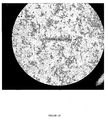
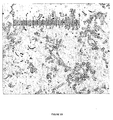
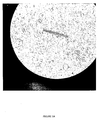
- a single drop of the precipitated slurry was sampled onto microscope slide and examined at 10 X 40 magnification. A digital photo was taken. The photo was analyzed using Image ProPlusTM software, an image analysis software to measure the particle size and particle size distribution. The resulting particles exhibited an average size of 1.94 microns and a particle size distribution (one standard deviation) of 1.04 microns, i.e. 53.6% of the mean particle size.
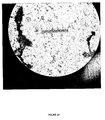
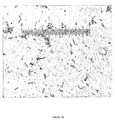
- One drop of the precipitated slurry was sampled as above and examined at and made into a 10 X 40 magnification. A digital photo was taken. The photo was again analyzed by Image ProPlus. The resulting particles were found to have an average size of 0.69 microns and a particle size distribution of 0.40 microns, i.e. 58.0% of the mean particle size.
- reaction conditions reaction time, stirring intensity, reactant solution concentration and reaction temperature
- a saturated solution of sodium chloride was kept at 30°C. 10 grams of ammonium bicarbonate was added to the saturated sodium chloride solution with intensive mixing (blender Speed 6) for 60 seconds. The precipitate was vacuum-filtered.
- Example # Salt (g) Salt Type Ammonium Bicarbonate (g) Mixer Speed Mixer Time (s) Temp (°C) Shape Average Size ( ⁇ m) Standard Deviation ( ⁇ m)/% at average 1(a) 40 pure 10 1 20 30 --- 1.94 1.04/53.6 1(b) 40 edible* 20 1 20 5 --- 0.69 0.4/58.0 2(a) 20 pure 20 1 20 5 filament 1.93 0.73/37.8 2(b) 20 pure 10 6 60 5 needle 0.8 0.32/40.0 2(c) 40 pure 10 6 60 30 cubic 1.42 1.31/92.0 2(d) 40 edible* 10 1 20 5 spherical 1.32 0.66/50.0 * contains - 2% sodium silicate, routinely added as a flow-aid in commercially available NaCl
- Example 1 As in Example 1 (a) above, 40 grams of edible sodium chloride was dissolved in 100 ml of water to make a saturated solution. The solution temperature was kept at 5°C. 20 grams of ammonium bicarbonate was added to the saturated sodium chloride solution with intensive mixing (blender Speed 1) for 20 seconds.
- a precipitate of NaHCO 3 was prepared according to the method of Example 1 (b).
- the solution was filtered using a centrifuge at 8000 rpm for 10 minutes.
- the precipitate was dried using a freeze dryer under a vacuum at -50°C for 150 hours and a dry NaHCO 3 powder was obtained.
- the dry powder was sampled and a 10 X 40 magnification photograph was analyzed by Image ProPlus.
- the resulting particles have an average size of 1.34 microns and a particle size distribution of 0.38 microns (i.e. standard deviation 28% of mean particle size).
- a precipitate of NaHCO 3 was prepared according to the method of Example 1 (b).
- the dry powder was sampled and observed using scanning electron microscopy.
- the resulting particles were asymmetrical in shape and of an average size of 2.55 microns, analyzed by laser diffraction.
- the sodium bicarbonate slurry produced was dried using the fluidized bed technique. Subsequent drying was carried out by a spray drying technique. A 0.5% concentration of sodium bicarbonate in water was prepared and placed in the spray drier. The inlet temperature to the spray drier was set at 120°C and the outlet temperature measured at 73°C. The air flowrate to the system was set at 439 L/hr. The peristaltic pump was set at 3 mL/min, and the aspirator was set at 100% to maximize the separation rate.
- the dry powder was sampled and observed using scanning electron microscopy.
- the resulting particles were spherical in shape.
- the particle size of the dry powder was analyzed via a laser diffraction mechanism, and the NaHCO 3 particles were found to have an average size of 2.47 microns.
- Spray drying was also carried out using a 0.2% concentration of synthesized sodium bicarbonate in water.
- the inlet temperature to the spray drier was set at 120°C and the outlet temperature measured at 55°C - 70°C.
- the air flowrate to the system was set at 439 Uhr.
- the peristaltic pump was set at ⁇ 5 mL/min, and the aspirator was set at 100% to maximize the separation rate of the cyclone.
- the dry powder was sampled and observed using scanning electron microscopy.
- the resulting particles were spherical in shape.
- the particle size of the dry powder analyzed via a laser diffraction mechanism was an average size of 1.94 microns.
- a foaming agent was prepared by blending 6.5 grams of a sodium bicarbonate powder, 6.5 grams of monosodium citrate, 2.6 grams of calcium stearate (Blachford) and 49.4 grams of ethylene vinyl acetate (EVA) resin (Atevar 2030TM), These components were melt-mixed using a Brabender mixer at 100°C for 1.5 minutes. The melt was cold pressed and cut into pieces. In each test, the blowing agent masterbatch was used for foaming an LDPE resin (Nova LFY-819A, Melt Index 0.75 g/10min, Density 0.920 g/cm 3 ) at a 4% letdown ratio.
- EVA ethylene vinyl acetate
- the sodium bicarbonate used was a commercial grade (Church & Dwight USP Grade 5).
- the foamed LDPE resin which result had a average cell size 98.1 microns and bulk density of 0.25 g/cm 3 .
- Example 2(a) Sodium bicarbonate prepared according to the method of Example 2(a) was used to produce foam with an average cell size of 26.6 microns and bulk density of 0.626 g/cm 3 .
- Example 2 the sodium bicarbonate used was prepared according to Example 2(b).
- foamed LDPE resin was produced with an average cell size of 22.7 microns and foam bulk density of 0.604 g/cm 3 .
- Example 2(c) Sodium bicarbonate according to the procedure of Example 2(c) was used to produce the blowing.
- the foamed LDPE resin exhibited an average cell size of 79.6 microns and foam bulk density of 0.764 g/cm 3 .
- the sodium bicarbonate was produced according to Example 1(d). Foam with an average cell size of 60.9 microns and foam bulk density of 0.747 g/cm 3 was made.
Landscapes
- Chemical & Material Sciences (AREA)
- Organic Chemistry (AREA)
- Engineering & Computer Science (AREA)
- Materials Engineering (AREA)
- Inorganic Chemistry (AREA)
- Medicinal Preparation (AREA)
Claims (6)
- Verwendung von ultrafeinem Natriumbicarbonatpulver zur Herstellung eines Treibmittels, wobei das Pulver eine mittlere Teilchengröße von weniger als 2 Mikron mit einer Standardabweichung der Teilchengröße von weniger als der mittleren Teilchengröße aufweist, wobei das ultrafeine Natriumbicarbonatpulver hergestellt wurde durch die Schritte:Bereitstellen wässriger Lösungen von Natriumchlorid und Ammoniumbicarbonat;Mischen der beiden wässrigen Lösungen in einem Rührgefäß und Rühren bei hoher Geschwindigkeit über einen Zeitraum von 20 bis 60 Sekunden bei einer Reaktionstemperatur unter 30°C;Abtrennen von ausgefälltem Natriumbicarbonat von dem gerührten Gemisch; undTrocknen des Natriumbicarbonats, um ein ultrafeines Pulver herzustellen.
- Verwendung von ultrafeinem Natriumbicarbonatpulver nach Anspruch 1, wobei die Reaktionstemperatur unter 15°C liegt.
- Verwendung von ultrafeinem Natriumbicarbonatpulver nach Anspruch 1 oder Anspruch 2, wobei das ausgefällte Natriumbicarbonat von dem gerührten Gemisch durch Vakuumfiltration abgetrennt wird.
- Verwendung von ultrafeinem Natriumbicarbonatpulver nach einem der Ansprüche 1 bis 3, wobei der Schritt des Trocknens des Natriumbicarbonats, um ein ultrafeines Pulver herzustellen, Vakuumtrocknen umfasst.
- Verwendung von ultrafeinem Natriumbicarbonatpulver nach einem der Ansprüche 1 bis 3, wobei der Schritt des Trocknens des Natriumbicarbonats, um ein ultrafeines Pulver herzustellen, Gefriertrocknen umfasst.
- Verwendung von ultrafeinem Natriumbicarbonatpulver nach einem der Ansprüche 1 bis 3, wobei der Schritt des Trocknens des Natriumbicarbonats, um ein ultrafeines Pulver herzustellen, Sprühtrocknen umfasst.
Applications Claiming Priority (2)
| Application Number | Priority Date | Filing Date | Title |
|---|---|---|---|
| US78538506P | 2006-03-24 | 2006-03-24 | |
| PCT/CA2007/000485 WO2007109885A1 (en) | 2006-03-24 | 2007-03-26 | Process for preparing ultra-fine sodium bicarbonate powder |
Publications (3)
| Publication Number | Publication Date |
|---|---|
| EP2007681A1 EP2007681A1 (de) | 2008-12-31 |
| EP2007681A4 EP2007681A4 (de) | 2011-04-27 |
| EP2007681B1 true EP2007681B1 (de) | 2014-01-29 |
Family
ID=38540748
Family Applications (1)
| Application Number | Title | Priority Date | Filing Date |
|---|---|---|---|
| EP07719419.9A Not-in-force EP2007681B1 (de) | 2006-03-24 | 2007-03-26 | Verwendung von ultrafeinem natriumbicarbonatpulver zur herstellung eines treibmittels |
Country Status (4)
| Country | Link |
|---|---|
| US (1) | US20070286790A1 (de) |
| EP (1) | EP2007681B1 (de) |
| CA (1) | CA2681009C (de) |
| WO (1) | WO2007109885A1 (de) |
Families Citing this family (3)
| Publication number | Priority date | Publication date | Assignee | Title |
|---|---|---|---|---|
| US8361361B2 (en) * | 2006-03-24 | 2013-01-29 | Ingenia Polymers Corp. | Foaming agents for thermoplastic resins and method of preparing same |
| US9051188B2 (en) | 2011-06-01 | 2015-06-09 | Solvay Chemicals, Inc. | Sodium bicarbonate product with excellent flowability and its method of manufacture |
| CN104903237B (zh) * | 2012-12-21 | 2019-02-22 | 索尔维公司 | 通过雾化制造的碳酸氢钠颗粒 |
Family Cites Families (8)
| Publication number | Priority date | Publication date | Assignee | Title |
|---|---|---|---|---|
| GB462132A (en) * | 1935-09-03 | 1937-03-03 | Ig Farbenindustrie Ag | Improvements in the manufacture, production and recovery of ammonium chloride and sodium bicarbonate |
| DE1567934B1 (de) * | 1966-10-28 | 1970-08-27 | Solvay Werke Gmbh | Verfahren zur Herstellung von Natriumbicarbonat und Natriumcarbonat |
| US5275794A (en) * | 1991-11-20 | 1994-01-04 | Luna Raymundo R | Process for producing sodium bicarbonate from natural soda salts |
| US5411750A (en) * | 1993-04-27 | 1995-05-02 | Church & Dwight Co., Inc. | Ultrafine sodium bicarbonate powder |
| US5482701A (en) * | 1993-05-03 | 1996-01-09 | Church & Dwight Co., Inc. | Microporous alkali metal bicarbonate |
| US6352653B1 (en) * | 1998-11-26 | 2002-03-05 | Asahi Glass Company Ltd. | Acid component-removing agent, method for producing it and method for removing acid components |
| US6767931B2 (en) * | 2000-07-20 | 2004-07-27 | Dow Global Technologies Inc. | Foam compositions from blend of alkenyl aromatic polymers and alpha-olefin/vinyl or vinylidene aromatic interpolymers |
| US7435426B2 (en) * | 2001-03-22 | 2008-10-14 | Church & Dwight Co., Inc. | Micron sized bicarbonate particles and slurrys containing the same |
-
2007
- 2007-03-26 EP EP07719419.9A patent/EP2007681B1/de not_active Not-in-force
- 2007-03-26 WO PCT/CA2007/000485 patent/WO2007109885A1/en not_active Ceased
- 2007-03-26 US US11/728,559 patent/US20070286790A1/en not_active Abandoned
- 2007-03-26 CA CA2681009A patent/CA2681009C/en not_active Expired - Fee Related
Non-Patent Citations (1)
| Title |
|---|
| "Ullmann's Encyclopedia of Industrial Chemistry", 15 June 2000, WILEY-VCH VERLAG GMBH & CO. KGAA, Weinheim, Germany, ISBN: 978-3-52-730673-2, article HEINZ WEBER ET AL: "Foamed Plastics", XP055063588, DOI: 10.1002/14356007.a11_435 * |
Also Published As
| Publication number | Publication date |
|---|---|
| US20070286790A1 (en) | 2007-12-13 |
| CA2681009C (en) | 2014-02-25 |
| CA2681009A1 (en) | 2007-10-04 |
| WO2007109885A1 (en) | 2007-10-04 |
| EP2007681A1 (de) | 2008-12-31 |
| EP2007681A4 (de) | 2011-04-27 |
Similar Documents
| Publication | Publication Date | Title |
|---|---|---|
| JP3910503B2 (ja) | 塩基性炭酸マグネシウムの製造方法 | |
| JP2003306325A (ja) | 塩基性炭酸マグネシウム及びその製造方法、並びに該塩基性炭酸マグネシウムを含有する組成物又は構造体 | |
| CA2681009C (en) | Process for preparing ultra-fine sodium bicarbonate powder | |
| US11326233B2 (en) | Manufacturing method of iron soap | |
| MXNL06000070A (es) | Proceso para fabricacion de hidroxido de magnesio nanometrico, monodisperso y estable y producto obtenido. | |
| CN110104666B (zh) | 基于水热碳化反应制备无水碳酸镁的方法 | |
| US8361361B2 (en) | Foaming agents for thermoplastic resins and method of preparing same | |
| JP5114822B2 (ja) | 耐固結性重曹及びその製造方法 | |
| CN103517878B (zh) | 过渡金属化合物颗粒以及制造方法 | |
| CN103717532B (zh) | 具有优异流动性的碳酸氢钠产品及其制造方法 | |
| US5759507A (en) | Process for production of dense soda ash from soda ash fines | |
| US7514060B2 (en) | Porous potassium carbonate having special pore structure and method for its production | |
| JP4061902B2 (ja) | 多孔質炭酸カリウムの製造方法 | |
| CN115043421A (zh) | 一种蹴鞠球状沉淀碳酸钙及其制备方法 | |
| CA1326345C (en) | Nonpigmentary titanium dioxide powders | |
| JPH06102542B2 (ja) | 球状粒子炭酸カルシウムの製造方法 | |
| JP4845324B2 (ja) | マルチトール含蜜結晶およびその製造方法 | |
| JPS6389418A (ja) | 多孔質球状塩基性炭酸マグネシウムの製造方法 | |
| JP2007001796A (ja) | 炭酸ストロンチウム微粒子の製造方法 | |
| JPH02160618A (ja) | 重炭酸ソーダの製造方法 | |
| JP2003073117A (ja) | 炭酸カルシウム多孔質粒子、及びその製造方法 | |
| CN114423713A (zh) | 制备含氧锌化合物微球的方法 | |
| KR20260003495A (ko) | 용융 공정을 통한 칼슘 함유 소금의 제조 방법 | |
| KR100715400B1 (ko) | 나노미터 크기의 소듐세스퀴카보네이트 분말 제조방법 | |
| JP2011126741A (ja) | バテライト型炭酸カルシウムの製造方法 |
Legal Events
| Date | Code | Title | Description |
|---|---|---|---|
| PUAI | Public reference made under article 153(3) epc to a published international application that has entered the european phase |
Free format text: ORIGINAL CODE: 0009012 |
|
| 17P | Request for examination filed |
Effective date: 20081023 |
|
| AK | Designated contracting states |
Kind code of ref document: A1 Designated state(s): AT BE BG CH CY CZ DE DK EE ES FI FR GB GR HU IE IS IT LI LT LU LV MC MT NL PL PT RO SE SI SK TR |
|
| AX | Request for extension of the european patent |
Extension state: AL BA HR MK RS |
|
| A4 | Supplementary search report drawn up and despatched |
Effective date: 20110329 |
|
| RIC1 | Information provided on ipc code assigned before grant |
Ipc: C01D 7/02 20060101ALI20110323BHEP Ipc: B01J 2/02 20060101ALI20110323BHEP Ipc: C01D 7/38 20060101ALI20110323BHEP Ipc: B01D 37/00 20060101ALI20110323BHEP Ipc: C01D 7/40 20060101ALI20110323BHEP Ipc: C01D 7/18 20060101AFI20071105BHEP Ipc: B01D 9/02 20060101ALI20110323BHEP |
|
| 17Q | First examination report despatched |
Effective date: 20120704 |
|
| DAX | Request for extension of the european patent (deleted) | ||
| GRAP | Despatch of communication of intention to grant a patent |
Free format text: ORIGINAL CODE: EPIDOSNIGR1 |
|
| INTG | Intention to grant announced |
Effective date: 20130624 |
|
| GRAS | Grant fee paid |
Free format text: ORIGINAL CODE: EPIDOSNIGR3 |
|
| GRAA | (expected) grant |
Free format text: ORIGINAL CODE: 0009210 |
|
| AK | Designated contracting states |
Kind code of ref document: B1 Designated state(s): AT BE BG CH CY CZ DE DK EE ES FI FR GB GR HU IE IS IT LI LT LU LV MC MT NL PL PT RO SE SI SK TR |
|
| REG | Reference to a national code |
Ref country code: GB Ref legal event code: FG4D |
|
| REG | Reference to a national code |
Ref country code: CH Ref legal event code: EP |
|
| REG | Reference to a national code |
Ref country code: AT Ref legal event code: REF Ref document number: 651473 Country of ref document: AT Kind code of ref document: T Effective date: 20140215 |
|
| REG | Reference to a national code |
Ref country code: IE Ref legal event code: FG4D |
|
| REG | Reference to a national code |
Ref country code: DE Ref legal event code: R096 Ref document number: 602007034991 Country of ref document: DE Effective date: 20140306 |
|
| REG | Reference to a national code |
Ref country code: AT Ref legal event code: MK05 Ref document number: 651473 Country of ref document: AT Kind code of ref document: T Effective date: 20140129 |
|
| REG | Reference to a national code |
Ref country code: NL Ref legal event code: VDEP Effective date: 20140129 |
|
| REG | Reference to a national code |
Ref country code: LT Ref legal event code: MG4D |
|
| PG25 | Lapsed in a contracting state [announced via postgrant information from national office to epo] |
Ref country code: IS Free format text: LAPSE BECAUSE OF FAILURE TO SUBMIT A TRANSLATION OF THE DESCRIPTION OR TO PAY THE FEE WITHIN THE PRESCRIBED TIME-LIMIT Effective date: 20140529 Ref country code: LT Free format text: LAPSE BECAUSE OF FAILURE TO SUBMIT A TRANSLATION OF THE DESCRIPTION OR TO PAY THE FEE WITHIN THE PRESCRIBED TIME-LIMIT Effective date: 20140129 |
|
| PG25 | Lapsed in a contracting state [announced via postgrant information from national office to epo] |
Ref country code: PT Free format text: LAPSE BECAUSE OF FAILURE TO SUBMIT A TRANSLATION OF THE DESCRIPTION OR TO PAY THE FEE WITHIN THE PRESCRIBED TIME-LIMIT Effective date: 20140529 Ref country code: ES Free format text: LAPSE BECAUSE OF FAILURE TO SUBMIT A TRANSLATION OF THE DESCRIPTION OR TO PAY THE FEE WITHIN THE PRESCRIBED TIME-LIMIT Effective date: 20140129 Ref country code: FI Free format text: LAPSE BECAUSE OF FAILURE TO SUBMIT A TRANSLATION OF THE DESCRIPTION OR TO PAY THE FEE WITHIN THE PRESCRIBED TIME-LIMIT Effective date: 20140129 Ref country code: AT Free format text: LAPSE BECAUSE OF FAILURE TO SUBMIT A TRANSLATION OF THE DESCRIPTION OR TO PAY THE FEE WITHIN THE PRESCRIBED TIME-LIMIT Effective date: 20140129 Ref country code: NL Free format text: LAPSE BECAUSE OF FAILURE TO SUBMIT A TRANSLATION OF THE DESCRIPTION OR TO PAY THE FEE WITHIN THE PRESCRIBED TIME-LIMIT Effective date: 20140129 Ref country code: SE Free format text: LAPSE BECAUSE OF FAILURE TO SUBMIT A TRANSLATION OF THE DESCRIPTION OR TO PAY THE FEE WITHIN THE PRESCRIBED TIME-LIMIT Effective date: 20140129 Ref country code: CY Free format text: LAPSE BECAUSE OF FAILURE TO SUBMIT A TRANSLATION OF THE DESCRIPTION OR TO PAY THE FEE WITHIN THE PRESCRIBED TIME-LIMIT Effective date: 20140129 |
|
| PG25 | Lapsed in a contracting state [announced via postgrant information from national office to epo] |
Ref country code: LV Free format text: LAPSE BECAUSE OF FAILURE TO SUBMIT A TRANSLATION OF THE DESCRIPTION OR TO PAY THE FEE WITHIN THE PRESCRIBED TIME-LIMIT Effective date: 20140129 Ref country code: BE Free format text: LAPSE BECAUSE OF FAILURE TO SUBMIT A TRANSLATION OF THE DESCRIPTION OR TO PAY THE FEE WITHIN THE PRESCRIBED TIME-LIMIT Effective date: 20140129 |
|
| REG | Reference to a national code |
Ref country code: DE Ref legal event code: R097 Ref document number: 602007034991 Country of ref document: DE |
|
| PG25 | Lapsed in a contracting state [announced via postgrant information from national office to epo] |
Ref country code: RO Free format text: LAPSE BECAUSE OF FAILURE TO SUBMIT A TRANSLATION OF THE DESCRIPTION OR TO PAY THE FEE WITHIN THE PRESCRIBED TIME-LIMIT Effective date: 20140129 Ref country code: LU Free format text: LAPSE BECAUSE OF FAILURE TO SUBMIT A TRANSLATION OF THE DESCRIPTION OR TO PAY THE FEE WITHIN THE PRESCRIBED TIME-LIMIT Effective date: 20140326 Ref country code: DK Free format text: LAPSE BECAUSE OF FAILURE TO SUBMIT A TRANSLATION OF THE DESCRIPTION OR TO PAY THE FEE WITHIN THE PRESCRIBED TIME-LIMIT Effective date: 20140129 Ref country code: CZ Free format text: LAPSE BECAUSE OF FAILURE TO SUBMIT A TRANSLATION OF THE DESCRIPTION OR TO PAY THE FEE WITHIN THE PRESCRIBED TIME-LIMIT Effective date: 20140129 Ref country code: EE Free format text: LAPSE BECAUSE OF FAILURE TO SUBMIT A TRANSLATION OF THE DESCRIPTION OR TO PAY THE FEE WITHIN THE PRESCRIBED TIME-LIMIT Effective date: 20140129 |
|
| REG | Reference to a national code |
Ref country code: CH Ref legal event code: PL |
|
| PG25 | Lapsed in a contracting state [announced via postgrant information from national office to epo] |
Ref country code: SK Free format text: LAPSE BECAUSE OF FAILURE TO SUBMIT A TRANSLATION OF THE DESCRIPTION OR TO PAY THE FEE WITHIN THE PRESCRIBED TIME-LIMIT Effective date: 20140129 Ref country code: PL Free format text: LAPSE BECAUSE OF FAILURE TO SUBMIT A TRANSLATION OF THE DESCRIPTION OR TO PAY THE FEE WITHIN THE PRESCRIBED TIME-LIMIT Effective date: 20140129 |
|
| PLBE | No opposition filed within time limit |
Free format text: ORIGINAL CODE: 0009261 |
|
| STAA | Information on the status of an ep patent application or granted ep patent |
Free format text: STATUS: NO OPPOSITION FILED WITHIN TIME LIMIT |
|
| REG | Reference to a national code |
Ref country code: FR Ref legal event code: ST Effective date: 20141128 |
|
| REG | Reference to a national code |
Ref country code: IE Ref legal event code: MM4A |
|
| 26N | No opposition filed |
Effective date: 20141030 |
|
| PG25 | Lapsed in a contracting state [announced via postgrant information from national office to epo] |
Ref country code: IE Free format text: LAPSE BECAUSE OF NON-PAYMENT OF DUE FEES Effective date: 20140326 Ref country code: FR Free format text: LAPSE BECAUSE OF NON-PAYMENT OF DUE FEES Effective date: 20140331 Ref country code: CH Free format text: LAPSE BECAUSE OF NON-PAYMENT OF DUE FEES Effective date: 20140331 Ref country code: LI Free format text: LAPSE BECAUSE OF NON-PAYMENT OF DUE FEES Effective date: 20140331 |
|
| REG | Reference to a national code |
Ref country code: DE Ref legal event code: R097 Ref document number: 602007034991 Country of ref document: DE Effective date: 20141030 |
|
| PG25 | Lapsed in a contracting state [announced via postgrant information from national office to epo] |
Ref country code: SI Free format text: LAPSE BECAUSE OF FAILURE TO SUBMIT A TRANSLATION OF THE DESCRIPTION OR TO PAY THE FEE WITHIN THE PRESCRIBED TIME-LIMIT Effective date: 20140129 |
|
| PG25 | Lapsed in a contracting state [announced via postgrant information from national office to epo] |
Ref country code: MT Free format text: LAPSE BECAUSE OF FAILURE TO SUBMIT A TRANSLATION OF THE DESCRIPTION OR TO PAY THE FEE WITHIN THE PRESCRIBED TIME-LIMIT Effective date: 20140129 |
|
| PG25 | Lapsed in a contracting state [announced via postgrant information from national office to epo] |
Ref country code: BG Free format text: LAPSE BECAUSE OF FAILURE TO SUBMIT A TRANSLATION OF THE DESCRIPTION OR TO PAY THE FEE WITHIN THE PRESCRIBED TIME-LIMIT Effective date: 20140129 Ref country code: MC Free format text: LAPSE BECAUSE OF FAILURE TO SUBMIT A TRANSLATION OF THE DESCRIPTION OR TO PAY THE FEE WITHIN THE PRESCRIBED TIME-LIMIT Effective date: 20140129 |
|
| PG25 | Lapsed in a contracting state [announced via postgrant information from national office to epo] |
Ref country code: GR Free format text: LAPSE BECAUSE OF FAILURE TO SUBMIT A TRANSLATION OF THE DESCRIPTION OR TO PAY THE FEE WITHIN THE PRESCRIBED TIME-LIMIT Effective date: 20140430 Ref country code: IT Free format text: LAPSE BECAUSE OF FAILURE TO SUBMIT A TRANSLATION OF THE DESCRIPTION OR TO PAY THE FEE WITHIN THE PRESCRIBED TIME-LIMIT Effective date: 20140129 |
|
| PG25 | Lapsed in a contracting state [announced via postgrant information from national office to epo] |
Ref country code: TR Free format text: LAPSE BECAUSE OF FAILURE TO SUBMIT A TRANSLATION OF THE DESCRIPTION OR TO PAY THE FEE WITHIN THE PRESCRIBED TIME-LIMIT Effective date: 20140129 Ref country code: HU Free format text: LAPSE BECAUSE OF FAILURE TO SUBMIT A TRANSLATION OF THE DESCRIPTION OR TO PAY THE FEE WITHIN THE PRESCRIBED TIME-LIMIT; INVALID AB INITIO Effective date: 20070326 |
|
| PGFP | Annual fee paid to national office [announced via postgrant information from national office to epo] |
Ref country code: GB Payment date: 20170330 Year of fee payment: 11 |
|
| PGFP | Annual fee paid to national office [announced via postgrant information from national office to epo] |
Ref country code: DE Payment date: 20170531 Year of fee payment: 11 |
|
| REG | Reference to a national code |
Ref country code: DE Ref legal event code: R119 Ref document number: 602007034991 Country of ref document: DE |
|
| GBPC | Gb: european patent ceased through non-payment of renewal fee |
Effective date: 20180326 |
|
| PG25 | Lapsed in a contracting state [announced via postgrant information from national office to epo] |
Ref country code: DE Free format text: LAPSE BECAUSE OF NON-PAYMENT OF DUE FEES Effective date: 20181002 |
|
| PG25 | Lapsed in a contracting state [announced via postgrant information from national office to epo] |
Ref country code: GB Free format text: LAPSE BECAUSE OF NON-PAYMENT OF DUE FEES Effective date: 20180326 |