EP2009081A1 - Formulation qui forme des couches de protection à la surface d'un métal et procédé pour préparer cette formulation - Google Patents
Formulation qui forme des couches de protection à la surface d'un métal et procédé pour préparer cette formulation Download PDFInfo
- Publication number
- EP2009081A1 EP2009081A1 EP07720565A EP07720565A EP2009081A1 EP 2009081 A1 EP2009081 A1 EP 2009081A1 EP 07720565 A EP07720565 A EP 07720565A EP 07720565 A EP07720565 A EP 07720565A EP 2009081 A1 EP2009081 A1 EP 2009081A1
- Authority
- EP
- European Patent Office
- Prior art keywords
- formulation
- protective layer
- test
- carbonization
- graphitization
- Prior art date
- Legal status (The legal status is an assumption and is not a legal conclusion. Google has not performed a legal analysis and makes no representation as to the accuracy of the status listed.)
- Granted
Links
Images



Classifications
-
- C—CHEMISTRY; METALLURGY
- C10—PETROLEUM, GAS OR COKE INDUSTRIES; TECHNICAL GASES CONTAINING CARBON MONOXIDE; FUELS; LUBRICANTS; PEAT
- C10M—LUBRICATING COMPOSITIONS; USE OF CHEMICAL SUBSTANCES EITHER ALONE OR AS LUBRICATING INGREDIENTS IN A LUBRICATING COMPOSITION
- C10M177/00—Special methods of preparation of lubricating compositions; Chemical modification by after-treatment of components or of the whole of a lubricating composition, not covered by other classes
-
- C—CHEMISTRY; METALLURGY
- C10—PETROLEUM, GAS OR COKE INDUSTRIES; TECHNICAL GASES CONTAINING CARBON MONOXIDE; FUELS; LUBRICANTS; PEAT
- C10M—LUBRICATING COMPOSITIONS; USE OF CHEMICAL SUBSTANCES EITHER ALONE OR AS LUBRICATING INGREDIENTS IN A LUBRICATING COMPOSITION
- C10M125/00—Lubricating compositions characterised by the additive being an inorganic material
-
- C—CHEMISTRY; METALLURGY
- C10—PETROLEUM, GAS OR COKE INDUSTRIES; TECHNICAL GASES CONTAINING CARBON MONOXIDE; FUELS; LUBRICANTS; PEAT
- C10M—LUBRICATING COMPOSITIONS; USE OF CHEMICAL SUBSTANCES EITHER ALONE OR AS LUBRICATING INGREDIENTS IN A LUBRICATING COMPOSITION
- C10M125/00—Lubricating compositions characterised by the additive being an inorganic material
- C10M125/02—Carbon; Graphite
-
- C—CHEMISTRY; METALLURGY
- C10—PETROLEUM, GAS OR COKE INDUSTRIES; TECHNICAL GASES CONTAINING CARBON MONOXIDE; FUELS; LUBRICANTS; PEAT
- C10M—LUBRICATING COMPOSITIONS; USE OF CHEMICAL SUBSTANCES EITHER ALONE OR AS LUBRICATING INGREDIENTS IN A LUBRICATING COMPOSITION
- C10M125/00—Lubricating compositions characterised by the additive being an inorganic material
- C10M125/26—Compounds containing silicon or boron, e.g. silica, sand
-
- C—CHEMISTRY; METALLURGY
- C10—PETROLEUM, GAS OR COKE INDUSTRIES; TECHNICAL GASES CONTAINING CARBON MONOXIDE; FUELS; LUBRICANTS; PEAT
- C10M—LUBRICATING COMPOSITIONS; USE OF CHEMICAL SUBSTANCES EITHER ALONE OR AS LUBRICATING INGREDIENTS IN A LUBRICATING COMPOSITION
- C10M125/00—Lubricating compositions characterised by the additive being an inorganic material
- C10M125/26—Compounds containing silicon or boron, e.g. silica, sand
- C10M125/30—Clay
-
- B—PERFORMING OPERATIONS; TRANSPORTING
- B82—NANOTECHNOLOGY
- B82Y—SPECIFIC USES OR APPLICATIONS OF NANOSTRUCTURES; MEASUREMENT OR ANALYSIS OF NANOSTRUCTURES; MANUFACTURE OR TREATMENT OF NANOSTRUCTURES
- B82Y30/00—Nanotechnology for materials or surface science, e.g. nanocomposites
-
- C—CHEMISTRY; METALLURGY
- C10—PETROLEUM, GAS OR COKE INDUSTRIES; TECHNICAL GASES CONTAINING CARBON MONOXIDE; FUELS; LUBRICANTS; PEAT
- C10M—LUBRICATING COMPOSITIONS; USE OF CHEMICAL SUBSTANCES EITHER ALONE OR AS LUBRICATING INGREDIENTS IN A LUBRICATING COMPOSITION
- C10M2201/00—Inorganic compounds or elements as ingredients in lubricant compositions
- C10M2201/06—Metal compounds
- C10M2201/062—Oxides; Hydroxides; Carbonates or bicarbonates
-
- C—CHEMISTRY; METALLURGY
- C10—PETROLEUM, GAS OR COKE INDUSTRIES; TECHNICAL GASES CONTAINING CARBON MONOXIDE; FUELS; LUBRICANTS; PEAT
- C10M—LUBRICATING COMPOSITIONS; USE OF CHEMICAL SUBSTANCES EITHER ALONE OR AS LUBRICATING INGREDIENTS IN A LUBRICATING COMPOSITION
- C10M2201/00—Inorganic compounds or elements as ingredients in lubricant compositions
- C10M2201/08—Inorganic acids or salts thereof
- C10M2201/081—Inorganic acids or salts thereof containing halogen
-
- C—CHEMISTRY; METALLURGY
- C10—PETROLEUM, GAS OR COKE INDUSTRIES; TECHNICAL GASES CONTAINING CARBON MONOXIDE; FUELS; LUBRICANTS; PEAT
- C10M—LUBRICATING COMPOSITIONS; USE OF CHEMICAL SUBSTANCES EITHER ALONE OR AS LUBRICATING INGREDIENTS IN A LUBRICATING COMPOSITION
- C10M2201/00—Inorganic compounds or elements as ingredients in lubricant compositions
- C10M2201/10—Compounds containing silicon
- C10M2201/102—Silicates
-
- C—CHEMISTRY; METALLURGY
- C10—PETROLEUM, GAS OR COKE INDUSTRIES; TECHNICAL GASES CONTAINING CARBON MONOXIDE; FUELS; LUBRICANTS; PEAT
- C10M—LUBRICATING COMPOSITIONS; USE OF CHEMICAL SUBSTANCES EITHER ALONE OR AS LUBRICATING INGREDIENTS IN A LUBRICATING COMPOSITION
- C10M2201/00—Inorganic compounds or elements as ingredients in lubricant compositions
- C10M2201/10—Compounds containing silicon
- C10M2201/102—Silicates
- C10M2201/103—Clays; Mica; Zeolites
-
- C—CHEMISTRY; METALLURGY
- C10—PETROLEUM, GAS OR COKE INDUSTRIES; TECHNICAL GASES CONTAINING CARBON MONOXIDE; FUELS; LUBRICANTS; PEAT
- C10M—LUBRICATING COMPOSITIONS; USE OF CHEMICAL SUBSTANCES EITHER ALONE OR AS LUBRICATING INGREDIENTS IN A LUBRICATING COMPOSITION
- C10M2227/00—Organic non-macromolecular compounds containing atoms of elements not provided for in groups C10M2203/00, C10M2207/00, C10M2211/00, C10M2215/00, C10M2219/00 or C10M2223/00 as ingredients in lubricant compositions
- C10M2227/09—Complexes with metals
-
- C—CHEMISTRY; METALLURGY
- C10—PETROLEUM, GAS OR COKE INDUSTRIES; TECHNICAL GASES CONTAINING CARBON MONOXIDE; FUELS; LUBRICANTS; PEAT
- C10N—INDEXING SCHEME ASSOCIATED WITH SUBCLASS C10M RELATING TO LUBRICATING COMPOSITIONS
- C10N2030/00—Specified physical or chemical properties which is improved by the additive characterising the lubricating composition, e.g. multifunctional additives
- C10N2030/06—Oiliness; Film-strength; Anti-wear; Resistance to extreme pressure
-
- C—CHEMISTRY; METALLURGY
- C10—PETROLEUM, GAS OR COKE INDUSTRIES; TECHNICAL GASES CONTAINING CARBON MONOXIDE; FUELS; LUBRICANTS; PEAT
- C10N—INDEXING SCHEME ASSOCIATED WITH SUBCLASS C10M RELATING TO LUBRICATING COMPOSITIONS
- C10N2030/00—Specified physical or chemical properties which is improved by the additive characterising the lubricating composition, e.g. multifunctional additives
- C10N2030/50—Emission or smoke controlling properties
-
- C—CHEMISTRY; METALLURGY
- C10—PETROLEUM, GAS OR COKE INDUSTRIES; TECHNICAL GASES CONTAINING CARBON MONOXIDE; FUELS; LUBRICANTS; PEAT
- C10N—INDEXING SCHEME ASSOCIATED WITH SUBCLASS C10M RELATING TO LUBRICATING COMPOSITIONS
- C10N2040/00—Specified use or application for which the lubricating composition is intended
- C10N2040/25—Internal-combustion engines
-
- C—CHEMISTRY; METALLURGY
- C10—PETROLEUM, GAS OR COKE INDUSTRIES; TECHNICAL GASES CONTAINING CARBON MONOXIDE; FUELS; LUBRICANTS; PEAT
- C10N—INDEXING SCHEME ASSOCIATED WITH SUBCLASS C10M RELATING TO LUBRICATING COMPOSITIONS
- C10N2070/00—Specific manufacturing methods for lubricant compositions
Definitions
- the present invention relates to a formulation which creates protection layers on metal surface and method for preparing the same.
- the friction surface of machine parts generally could be strengthened by the following three approaches: 1) strengthening the surface of parts by pre-treatment, including heat treatment strengthening methods such as carburizing, sulfurizing and carbonitriding, film-deposition techniques such as TiN film and DLC film, and mechanical strengthening methods such as shot peening and knurl; 2) surface repairing and regenerating techniques for the worn surface of machine parts, including thermal spraying, brush plating and other surface repairing and regenerating techniques; and 3) in-situ alloying the surfaces of friction pairs by using a lubricant as carrier to convey a formulation with special repairing function into the friction contact regions of machine parts wherein a mechno-chemical reaction (tribo-chemical reaction) among the formulation, the surfaces of friction pairs and third bodies such as wear debris occurs.
- heat treatment strengthening methods such as carburizing, sulfurizing and carbonitriding, film-deposition techniques such as TiN film and DLC film, and mechanical strengthening methods such as shot peening and knurl
- the above approaches 1) and 2) are off-line strengthening techniques and have some inherent disadvantages, such as complex procedure, long processing time and high cost.
- the approach 3) is currently a hot spot in the anti-wear field.
- the currently used products for the approach 3) are not stable in performance and thereby not being widely applied, since the phase structure and mechanical properties of the generated anti-wear layer are still unknown.
- the present invention provides a formulation for generating on a frictional or worn metal surface a protective layer with a high hardness of cermets and an elastic modulus of high quality alloy steel to overcome the drawbacks of methods used in the current anti-wear and repairing fields, such as complex procedure, long processing time and high cost of the methods, as well as unknown phase structure and unstable mechanical performance of the anti-wear and repairing layers generated by the methods.
- the present invention further provides a method for preparing the formulation.
- the present invention provides a formulation for generating a protective layer on a metal surface, comprising the following components in weight parts: Lamellar hydroxyl silicate powder 45-99; Surface modifier 1-50; Catalyst for carbonization and graphitization 0.05-6.
- the above mentioned formulation comprises the following components in weight parts: Lamellar hydroxyl silicate powder 60-99; Surface modifier 3-20; Catalyst for carbonization and graphitization 0.05-3.
- the above mentioned formulation comprises the following components in weight parts: Lamellar hydroxyl silicate powder 75-99; Surface modifier 7-12; Catalyst for carbonization and graphitization 1-2.
- the mentioned lamellar hydroxyl silicate powder is powder of magnesium silicate hydroxide ore.
- the mentioned powder of magnesium silicate hydroxide ore is one of the powders of serpentine, talcum, sepiolite and actinolite ore, or a combination thereof.
- the mentioned surface modifier is a titanate coupling agent or a silane coupling agent, or a combination thereof.
- the mentioned titanate coupling agent is NDZ-131 or NDZ-133 titanate coupling agent.
- the mentioned silane coupling agent is HD-22 silane coupling agent.
- NDZ-131 and NDZ-133 are two titanate coupling agents produced by Tsingdao Haida Chemistry Co., Ltd, and both are mono-alkoxy fatty-acid titanate coupling agents.
- HD-22 is a trade name of a silane coupling agent, and is also produced by Tsingdao Haida Chemistry Co., Ltd.
- the catalyst for carbonization and graphitization is one of elementary elements, oxides and chlorides of the Group VIIIA elements in the Periodic Table of Elements (Fe, Co, Ni, Ru, Rh, Pd, Os, Ir, Pt), or a combination thereof.
- the oxides and chlorides of the Group VIIIA elements can be purchased from Shanghai Jiushan Chemistry Co., Ltd.
- the formulation for generating a protective layer on a metal surface can be used for repairing and protecting metal surface of an iron-containing material.
- the present invention further provides a method for preparing the formulation, comprising the following steps:
- the present invention also provides a lubricant containing the formulation.
- the present invention further provides a method of using the formulation, comprising: directly adding the formulation in form of uniform powder in a mass ratio of 0.1-5 ⁇ to a lubricant.
- the lubricant is a lubricating oil or grease.
- the basic lubricant is a colorless and transparent basic oil of trademark 100N or 150N, a lithium-based grease, or a calcium-based grease.
- the formulation can be used by the following specific methods:
- the formulation for generating a protective layer on a frictional and worn metal surface can in-situ form a nanometer crystal layer for antifriction and wear-resistance on the frictional and worn metal surface, in which the protective layer possesses both a high surface hardness of cermets and an elastic modulus of high quality alloy steel.
- the action mechanism of the formulation for generating a protective layer on a metal surface is as follows.
- the powder of natural lamellar hydroxyl silicate ore as the main component of the formulation is readily cleaved and broken, and releases hydroxyl group and O 2- to form active free water.
- the third body particles generated by cleaving and breaking the powder mechanically polish the friction surfaces, and the active O 2- and free water oxidize surface asperities to generate metal oxides/metal bonds far weaker than metal bonds thereby performing oxidative polishing to the frictional surfaces.
- the oxidative mechanical polishing is the first action to form a nanometer protective layer on the surfaces of friction pairs.
- Serpentine with Mg 6 Si 4 O 10 (OH) 8 as main component is used as an example and its action process is shown as follows.
- iron-based metal friction pairs and the auto-repairing components in lubricant provide a site and catalysis species for carbonization and graphitization of lubricant basic oil.
- the components include the elements for constituting the most active catalyst for acid/alkali catalytic reactions, and the elements for constituting the most active catalyst for redox reactions.
- the lubricant containing auto-repairing formulation has a higher extent of carbonization than akin lubricants, and can generate a large amount of nanometer carbonaceous particles with high activity.
- the highly active nanometer carbonaceous particles in the oil phase react with ferrites to form Fe 3 C phase and graphite particles.
- the carbonization and graphitization of lubricant are the second action mechanism for generating nanometer crystal protective layer on the surfaces of friction pairs.
- the process of this mechanism is illustrated as follows. Fe 2 O 3 + C ⁇ Fe + CO ⁇ CO 2 Fe + C ⁇ Fe 3 C Fe 3 C ⁇ Fe ⁇ + C (easy graphitization) ⁇ graphite
- the fresh metal surface with high chemical activity and the oil phase containing a large amount of nanometer iron oxides, iron carbides and carbonaceous particles constitute a reaction system for the generation of a repairing and protective layer.
- the energy released during the friction generates electric field and weak magnetic field on the surfaces of friction pairs, which allow the enriching of the particles in the oil on the surfaces, firstly the aggregation in the surface valley.
- the movement of surface asperities caused by the relative motion of friction pairs generates shear and pressing stresses on these particles and induces the mechanical alloying thereof.
- the continue collision of surface asperities renders the surface asperities unstable and also results in the mechanical alloying of the surface asperities.
- the nanometer crystal structure layer generated in the valley by mechanical alloying continuously grows to even and repair the surface until the valley are fully filled up and then grows on the whole friction surface to form a repairing and protective layer, thereby achieving the repairing.
- the mechanical alloying is the third and final action mechanism for generating nanometer crystal protective layer on the surface of friction pairs.
- Fig. 1 gives a photo of the test specimen assembly on Falex Tribotester and a specimen's draft showing the dimensions of the specimens.
- the contact area between the upper and lower specimens is 506 mm 2 .
- the test load is ranged from 0.1MPa to 0.44MPa, and the average linear speed is 1-7m/s.
- Fig.2 and Fig.3 show the protective layers generated on 45 # steel and cast iron substrates subjected to Falex testing for 400 and 80 hours, respectively.
- the main components of the repairing formulation are powders of serpentine (Mg 6 Si 4 O 10 (OH) 8 ) and sepiolite (Mg 8 Si 12 O 30 (OH) 4 (OH 2 ) 4 ⁇ 8H 2 O).
- the used lubricant is a blend of API SD/CC SAE 15W-40 engine oil containing the repairing formulation, the amount of the repairing formulation is 5wt ⁇ , and oil-immerging lubrication is adopted.
- the X-ray photoelectron spectroscopy (XPS) analyses of the protective layer indicate that Fe, C and O are the main elements constituting the protective layer.
- XPS X-ray photoelectron spectroscopy
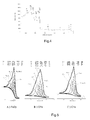
- Fig.6 displays the high-resolution transmission electron microscopy (HRTEM) image of the intact crystal system in the protective layer, from which three kinds of nanometer crystals, i.e., Fe 3 C, Fe 3 O 4 and FeOOH, could be clearly discerned.
- HRTEM transmission electron microscopy
- Table 1 shows the comparison of surface micro-hardness of the 45 # steel lower specimen before and after testing
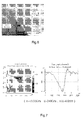
- Table 2 shows the comparison of cross section nano-hardness between the substrate and the protective layer of the 45 # steel lower specimen. It can be seen that the surface micro-hardness and the cross section nano-hardness of the protective layer are greatly elevated by 2.6 times of the surface hardness of 45 # steel and 3.6 times of the substrate hardness of 45 # steel, respectively.
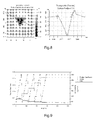
- the AFM images and the depth curves of the representative nano-hardness indentations on the protective layer and the 45 # steel substrate are shown in Fig.7 and Fig.8 .
- Table 1 Comparison of surface micro-hardness of 45 # steel lower specimen before and after Falex test Measurement positions 1 2 3 4 5 6 7 8 Average Micro-hardness Hv 100g Before test 234 290 301 299 290 321 331 321 298 After test 970 707 757 734 748 720 864 738 780
- Table 2 Comparison of nano-hardness between the protective layer and the substrate of 45 # steel lower specimen after Falex test Measurement positions 1 2 3 4 Average Nano-hardness Hv 20mN Substrate 353.30 321.20 338.18 387.44 350.03 Protective layer 1177.06 1389.45 1383.45 1149.85 1274.95
- the test for confirming the generation of protective layer and its anti-abrasion and anti-seizure properties was conducted on a simulated test rig of Journal Bearing of Horizontal Shaft Type Pump.
- the shaft specimen and the bearing specimen were made of 45 # steel and Babbitt alloy, respectively.
- the principle sketch of the constructed bearing tester is shown in Fig.10 .
- the lubricant is a blend of API SD/CC SAE 15W-40 engine oil containing the repairing formulation.
- the main components of the repairing formulation are powders of serpentine (Mg 6 Si 4 O 10 (OH) 8 ) and sepiolite (Mg 8 Si 12 O 30 (OH) 4 (OH 2 ) 4 ⁇ 8H 2 O).
- the amount of the repairing formulation is 5wt ⁇ , and the oil-immerging lubrication manner is adopted.
- the test parameters are listed in Table 3.
- Table 3 Bearing simulation test parameters Test Period Running in Normal test Normal Load on bearing surface (N) 18.74 38.34 Average bearing pressure (MPa) 0.33 0.70 Rotation speed (rpm) 1800 1800 Average line speed (m/sec) 11.3 11.3 Temperature (°C) Room Room Test Time (h) 3 24
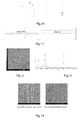
- Fig.11 shows the typical 2D surface topography images of the shaft specimen before and after test.
- Fig.12 shows the SEM secondary electronic image of the cross section of 45 # steel shaft after a 27-hour bearing test. It is clearly seen that the protective layer of about 2 ⁇ m thickness has been formed on the friction surface of 45 # steel, in which the protective layer grows along the pearlite skeleton of substrate and adheres closely to the substrate without a clearly distinguishable physical boundary.
- Fig.13 shows the EDX spectra of the protective layer, which clearly indicates that the protective layer consists of three elements, i.e., Fe, C and O.
- the C content in the protective layer is much higher than that in 45 # steel due to the generation of C element by pyrolysis of carrier oil in lubricant.
- the O content in the protective layer is also very high which is derived from the cleavage fracture of serpentine (Mg 6 Si 4 O 10 (OH) 8 ) and talc (Mg 3 (Si 4 O 10 )(OH) 2 ).
- abrasive material 400mg 100 ⁇ 125 ⁇ m corundum (Al 2 O 3 ) powder is admixed with 3.3g SiC abrasive paste (trademark is W.15, and the SiC particle size is 1 ⁇ 1.5 ⁇ m) to obtain an abrasive material.
- the abrasive material is added into SD/CC SAE 15W-40 oil without the repairing formulation, and the anti-abrasion test is conducted on the simulated bearing test rig.
- Fig.14 gives the SEM secondary electronic images of 45 # steel shaft surfaces after the anti-abrasion test, in which a) is the image of the shaft surface without the protective layer, and b) is the image of the shaft surface with the protective layer.
- the shaft surface without the protective layer exhibits much severe defeature than the shaft surface with the protective layer.
- the wear scar depths measured by Talysurf-5 Profilometer indicate that the depths of abrasive wear scars on the surface without and with the protective layer are 46.59 ⁇ m and 15.01 ⁇ m, respectively.
- the wear volume of the former is three times larger than that of the later.
- Fig. 15 shows the carrying capacity curves of friction pairs with and without protective layer until seizure occurring. Obviously, the seizure resistance of the friction pairs with the protective layer is about 2.5 times higher than that without the layer.
- Fig. 16 gives the SEM secondary electronic images of 45 # steel shaft surfaces after the anti-seizure test, in which a) is the image of the shaft surface without the protective layer, and b) is the image of the shaft surface with the protective layer. Obviously, the shaft surface without the protective layer exhibits much severe defeature than the shaft surface with the protective layer.
- Example 1 The formulation used in Example 1 is as follows (weight parts): Serpentine (Mg 6 Si 4 O 10 (OH) 8 ) 99; NDZ-131 mono-alkoxy fatty-acid titanate coupling agent 12; Nanometer Ni catalyst for carbonization and graphitization 1; Nanometer Co catalyst for carbonization and graphitization 1.
- Serpentine and NDZ-131 mono-alkoxy fatty-acid titanate coupling agent were ground together in a high-energy ball mill (XQM2 type Planetary High-Energy Ball Mill) for 10 hours at 800rpm until the particle-diameter was between 10nm and 1 ⁇ m. Then the powdery nanometer Ni and Co catalysts for carbonization and graphitization (produced by Gaosida Nanometer Material Apparatus Co., Ltd., Siping City, Jilin province) were added and continuously ground for 30min to obtain a formulation with auto-repairing function useful in lubricants.
- XQM2 type Planetary High-Energy Ball Mill XQM2 type Planetary High-Energy Ball Mill
- the obtained formulation was added in a mass ratio of 0.5 ⁇ to a lubricant (ZZT-Kinetic Oil (Miaomei), Bolingaoke (Beijing) Petrochemical Co., Ltd.), and the obtained lubricant was compared with a SF level gasoline engine oil in a Jetta automotive engine in terms of fuel consumption and emission.
- the conditions were as follows. 1. Test car: 4 cylinders engine with a displacement of 1.6L equipped with ternary catalyst; the cylinder pressure was about 8.2 after over 130,000 kilometer driving. 2. Basic data of fuel consumption and emission were obtained after the car loading with the SF level gasoline engine oil ran for 200km strictly in accordance with test specification; the cylinder pressure has never been improved. 3.
- Example 2 The formulation used in Example 2 is as follows (weight parts): Serpentine (Mg 6 Si 4 O 10 (OH) 8 ) 50; Talc (Mg 3 (Si 4 O 10 )(OH) 2 ) 25 NDZ-133 mono-alkoxy fatty-acid titanate coupling agent 12; Nanometer PdO catalyst for carbonization and graphitization 0.5; Nanometer Pt catalyst for carbonization and graphitization 0.5.
- Serpentine and talc particles and NDZ-133 mono-alkoxy fatty-acid titanate coupling agent were ground together in a high-energy ball mill for 10 hours at 800rpm until the particle-diameter was between 10nm and 1 ⁇ m. Then powdery nanometer PdO and Pt catalysts for carbonization and graphitization were added and continuously ground for 30min to obtain a formulation with auto-repairing function useful in lubricants.
- the obtained formulation was added in a mass ratio of 1 ⁇ to API SD/CC SAE 15W-40 engine oil.
- the test was conducted on a simulated test rig of Journal Bearing of Horizontal Shaft Type Pump.
- the shaft specimen and the bearing specimen were made of 45 # steel and Babbitt alloy respectively.
- the principle sketch of the constructed bearing tester is shown in Fig.10.
- Fig.12 shows the SEM secondary electronic image of the cross section of 45 # steel shaft after a 27-hour bearing test. It is clearly seen that the protective layer of about 2 ⁇ m thickness has been formed which grows along the pearlite skeleton of substrate and adheres closely to the substrate without a clearly distinguishable physical boundary.
- Fig.13 shows the EDX spectra of the protective layer indicating that the layer consists of Fe, C and O elements.
- the protective layer exhibits excellent anti-abrasion and anti-seizure properties as shown in Fig.14-16 .
- Example 3 The formulation used in Example 3 is as follows (weight parts): Serpentine (Mg 6 Si 4 O 10 (OH) 8 ) 70; Sepiolite (Mg 8 Si 12 O 30 (OH) 4 (OH 2 ) 4 ⁇ 8H 2 O) 29 HD-22 silane coupling agent 7; RhCl 3 catalyst for carbonization and graphitization 1; RuO 2 catalyst for carbonization and graphitization 1.
- Serpentine and sepiolite particles and HD-22 silane coupling agent were ground together in a high-energy ball mill for 10 hours at 800rpm, until the particle-diameter was between 10nm and 1 ⁇ m. Then powdery RhCl 3 and RuO 2 catalyst for carbonization and graphitization were added and continuously ground for 30min to obtain a formulation with auto-repairing function useful in lubricants.
- the obtained formulation was admixed in a mass ratio of 5 ⁇ to API SD/CC SAE 15W-40 engine oil.
- the surface contact friction test was conducted on a Falex Tribotester. 45 # steel and cast iron were used as materials for two specimens, and oil-immerging lubrication was adopted. The test time for 45 # frication pairs was 400 hours, and the test time for the cast iron was 80 hours. SEM results confirmed that protective layers were formed on both 45 # steel and cast iron specimens as shown in Fig.2 and Fig.3 , respectively.
- the protective layers were further analyzed by XPS, nano-indentor, AFM, and HRTEM.
- the protective layer was constituted with three elements: Fe, C and O, which mainly existed in forms of Fe 3 C, Fe 3 O 4 , Fe 2 O 3 , as well as -OH and other alloy forms of Fe and C and formed nanometer crystal system as shown in Figs.4, 5 and 6 .
- the protective layer exhibits a high "ceramic" hardness and still retains the elastic properties of super alloy steel as well as excellent tribological property of superlubricity, as shown in Figs.7 , 8 and 9 .
- Example 4 The formulation used in Example 4 is as follows (weight parts): Serpentine (Mg 6 Si 4 O 10 (OH) 8 ) 50; Actinolite (Ca 2 (Mg, Fe) 5 Si 8 O 22 (OH) 2 ) 25 HD-22 silane coupling agent 7; Nanometer Ni catalyst for carbonization and graphitization 1; Nanometer Fe catalyst for carbonization and graphitization 1.
- Serpentine and actinolite particles and HD-22 silane coupling agent were ground together in a high-energy ball mill for 10 hours at 800rpm, until the particle-diameter was between 10nm and 1 ⁇ m. Then powdery Ni and Fe catalysts for carbonization and graphitization were added and continuously ground for 30min to obtain a formulation with auto-repairing function useful in lubricants.
- Fig.17 is SEM image of the cross section of the lower specimen after Falex test, which shows that the protective layer is about 2-3 ⁇ m thick on the substrate surface with a microstructure quite different from the substrate.
- Fig.18 gives the EDX spectra of the protective layer and the cast iron substrate, which indicate that the element distribution of the protective layer characterizes in a significant increase of both C content and O content in comparison with the substrate.
- the Fe/C of substrate is 0.43 in comparison with 0.14 in the protective layer.
- Example 5 The formulation used in Example 5 is as follows (weight parts): Serpentine (Mg 6 Si 4 O 10 (OH) 8 ) 75; NDZ-133 mono-alkoxy fatty-acid titanate coupling agent 6; NDZ-131 mono-alkoxy fatty-acid titanate coupling agent 6; IrO 2 catalyst for carbonization and graphitization 2.
- Serpentine particles and NDZ-133 and NDZ-131 coupling agents were ground together in a high-energy ball mill for 10 hours at 800rpm, until the particle-diameter was between 10nm and 1 ⁇ m. Then powdery IrO 2 catalyst for carbonization and graphitization were added and continuously ground for 30min to obtain a formulation with auto-repairing function useful in lubricants.
- the obtained formulation was added in a mass ratio of 5 ⁇ to API SD/CC SAE 15W-40 engine oil, and the surface contact friction test was conducted on a Falex Tribotester.
- the test specimen was of cast iron, and oil-immerging lubrication was adopted. The test was performed for 7 cycles, 24 hours for each cycle, totaling 148 hours.
- Fig.19 is the SEM of the cross section of the lower specimen, which shows that the protective layer of about 3 ⁇ m thickness formed on the specimen surface.
- Example 6 The formulation used in Example 6 is as follows (weight parts): Talc (Mg 3 (Si 4 O 10 )(OH) 2 ) 99; HD-22 silane coupling agent 10; NDZ-131 mono-alkoxy fatty-acid titanate coupling agent 10; RuCl catalyst for graphitization 3.
- Talc particles and HD-22 and NDZ-131 coupling agents were ground together in a high-energy ball mill for 10 hours at 800rpm, until the particle-diameter was between 10nm and 1 ⁇ m. Then powdery RuCl catalyst for graphitization was added and continuously ground for 30min to obtain a formulation with auto-repairing function useful in lubricants.
- the obtained formulation was added in a mass ratio of 3.5 ⁇ to API SD/CC SAE 15W-40 engine oil, and the surface contact friction test was conducted on a Falex Tribotester.
- the test specimen was of 45 # steel, and oil-immerging lubrication was adopted. The test was performed for 6 cycles, 24 hours for each cycle, totaling 144 hours.
- Fig.20 is the SEM image of the cross section of the lower specimen, which shows that the protective layer of about 2 ⁇ m thickness was formed on the surface.
- Example 7 The formulation used in Example 7 is as follows (weight parts): Sepiolite (Mg 8 Si 12 O 30 (OH) 4 (OH 2 ) 4 ⁇ 8H 2 O) 60; NDZ-131 mono-alkoxy fatty-acid titanate coupling agent 3; Nanometer Ni catalyst for carbonization and graphitization 0.025; Nanometer Co catalyst for carbonization and graphitization 0.025.
- Sepiolite particles and NDZ-131 coupling agent were ground together in a high-energy ball mill for 10 hours at 800rpm, until the particle-diameter was between 10nm and 1 ⁇ m. Then powdery Ni and Co catalysts for carbonization and graphitization were added and continuously ground for 30min to obtain a formulation with auto-repairing function useful in lubricants.
- the obtained formulation was added in a mass ratio of 5 ⁇ to API SD/CC SAE 15W-40 engine oil, and the surface contact friction test was conducted on a Falex Tribotester.
- the test specimen was of 45 # steel, and oil-immerging lubrication was adopted. The test was performed for 4 cycles, 24 hours for each cycle, totaling 96 hours.
- the SEM image of the cross section of the lower specimen shows that the protective layer is about 0.5-1 ⁇ m thick on the surface.
- the formulation used in the Example 8 is as follows (weight parts): Actinolite (Ca 2 (Mg, Fe) 5 Si 8 O 22 (OH) 2 ) 60 HD-22 silane coupling agent 20; Nanometer Fe catalyst for carbonization and graphitization 3.
- Actinolite particles and HD-22 silane coupling agent were ground together in a high-energy ball mill for 10 hours at 800rpm, until the particle-diameter was between 10nm and 1 ⁇ m. Then powdery Fe catalyst for carbonization and graphitization was added and continuously ground for 30min to obtain a formulation with auto-repairing function useful in lubricants.
- the obtained formulation was added in a mass ratio of 4 ⁇ to API SD/CC SAE 15W-40 engine oil, and the surface contact friction test was conducted on a Falex Tribotester.
- the test specimen was of 45 # steel adopting immerging lubrication. The test was performed for 4 cycles, 24 hours for each cycle, totaling 96 hours.
- the SEM image of the cross section of the lower specimen shows that the protective layer is about 1 ⁇ m thick on the surface.
- Example 9 The formulation used in Example 9 is as follows (weight parts): Serpentine (Mg 6 Si 4 O 10 (OH) 8 ) 50; Talc (Mg 3 (Si 4 O 10 )(OH) 2 49 NDZ-133 mono-alkoxy fatty-acid titanate coupling agent 50; Nanometer Ni catalyst for carbonization and graphitization 1.5; RuO 2 compound catalyst for carbonization and graphitization 1.5;
- Serpentine and talc particles and NDZ-133 coupling agent were ground together in a high-energy ball mill for 10 hours at 800rpm, until the particle-diameter was between 10nm and 1 ⁇ m. Then powdery nanometer Ni and RuO 2 catalysts for carbonization and graphitization were added and continuously ground for 30min to obtain a formulation with auto-repairing function useful in lubricants.
- the obtained formulation was added in a mass ratio of 3.5 ⁇ to API SD/CC SAE 15W-40 engine oil, and the surface contact friction test was conducted on a Falex Tribotester.
- the test specimen was of 45 # steel adopting immerging lubrication. The test was performed for 4 cycles, 24 hours for each cycle, totaling 96 hours.
- the SEM of the cross section of lower specimen shows that the protective layer is about 1 ⁇ m thick on the surface.
- Example 10 The formulation used in Example 10 is as follows (weight parts): Serpentine (Mg 6 Si 4 O 10 (OH) 8 ) 35; Sepiolite (Mg 8 Si 12 O 30 (OH) 4 (OH 2 ) 4 ⁇ 8H 2 O) 10 HD-22 silane coupling agent 1; RhCl 3 catalyst for carbonization and graphitization 0.025; RuO 2 catalyst for carbonization and graphitization 0.025.
- Serpentine and sepiolite particles and HD-22 silane coupling agent were ground together in a high-energy ball mill for 10 hours at 800rpm, until the particle-diameter was between 10nm and 1 ⁇ m. Then powdery RhCl 3 and RuO 2 catalyst for carbonization and graphitization were added and continuously ground for 30min to obtain a formulation with auto-repairing function useful in lubricants.
- the obtained formulation was added in a mass ratio of 5 ⁇ to API SD/CC SAE 15W-40 engine oil, and the surface contact friction test was conducted on a Falex Tribotester.
- the test specimen was of 45 # steel adopting immerging lubrication. The test was performed for 5 cycles, 24 hours for each cycle, totaling 120 hours.
- the SEM image of the cross section of the lower specimen shows that the protective layer is about 1 ⁇ m thick on the surface.
- Example 11 The formulation used in Example 11 is as follows (weight parts): Serpentine (Mg 6 Si 4 O 10 (OH) 8 ) 40; Talc (Mg 3 (Si 4 O 10 )(OH) 2 20 NDZ-133 mono-alkoxy fatty-acid titanate coupling agent 20; Nanometer Ni catalyst for carbonization and graphitization 0.025; IrC1 3 compound catalyst for carbonization and graphitization 0.025.
- Serpentine and talc particles and NDZ-133 coupling agent were ground together in a high-energy ball mill for 10 hours at 800rpm, until the particle-diameter was between 10nm and 1 ⁇ m. Then powdery Nanometer Ni and IrCl 3 catalysts for carbonization and graphitization were added and continuously ground for 30min to obtain a formulation with auto-repairing function useful in lubricants.
- the obtained formulation was add in a mass ratio of 3.5 ⁇ to API SD/CC SAE 15W-40 engine oil, and the surface contact friction test was conducted on a Falex Tribotester.
- the test specimen was of 45 # steel adopting immerging lubrication. The test was performed for 4 cycles, 24 hours for each cycle, totaling 96 hours.
- the SEM image of the cross section of the lower specimen shows that the protective layer is about 1 ⁇ m thick on the surface.
- Example 12 The formulation used in Example 12 is as follows (weight parts): Serpentine (Mg 6 Si 4 O 10 (OH) 8 ) 45; NDZ-133 mono-alkoxy fatty-acid titanate coupling agent 25; NDZ-131 mono-alkoxy fatty-acid titanate coupling agent 25; Nanometer Ni catalyst for carbonization and graphitization 6.
- Serpentine particles and NDZ-133 and NDZ-131 coupling agents were ground together in a high-energy ball mill for 10 hours at 800rpm, until the particle-diameter was between 10nm and 1 ⁇ m. Then powdery nanometer Ni catalyst for carbonization and graphitization was added and continuously ground for 30min to obtain a formulation with auto-repairing function useful in lubricants.
- the obtained formulation was added in a mass ratio of 5 ⁇ to API SD/CC SAE 15W-40 engine oil, and the surface contact friction test was conducted on a Falex Tribotester.
- the test specimen was of 45 # steel adopting immerging lubrication. The test was performed for 4 cycles, 24 hours for each cycle, totaling 96 hours.
- the SEM image of the cross section of the lower specimen shows that the protective layer is about 0.5-1 ⁇ m thick on the surface.
- Example 13 The formulation used in Example 13 is as follows (weight parts): Actinolite (Ca 2 (Mg, Fe) 5 Si 8 O 22 (OH) 2 ) 45 HD-22 silane coupling agent 0.5; NDZ-131 mono-alkoxy fatty-acid titanate coupling agent 0.5; Nanometer Co catalyst for carbonization and graphitization 3; Nanometer Fe catalyst for carbonization and graphitization 3.
- Actinolite particles, HD-22 silane coupling agent and NDZ-131 mono-alkoxy fatty-acid titanate coupling agent were ground together in a high-energy ball mill for 10 hours at 800rpm, until the particle-diameter was between 10nm and 1 ⁇ m. Then powdery Co and Fe catalysts for carbonization and graphitization were added in and went on grinding for 30min to obtain a formulation with auto-repairing function useful in lubricants.
- the obtained formulation was added in a mass ratio of 4 ⁇ to API SD/CC SAE 15W-40 engine oil, and the surface contact friction test was conducted on a Falex Tribotester.
- the test specimen was of 45 # steel adopting immerging lubrication. The test was performed for 4 cycles, 24 hours for each cycle, totaling 96 hours.
- the SEM image of the cross section of the lower specimen shows that the protective layer is about 1 ⁇ m thick on the surface.
- Example 14 The formulation used in Example 14 is as follows (weight parts): Serpentine (Mg 6 Si 4 O 10 (OH) 8 ) 50; Talc (Mg 3 (Si 4 O 10 )(OH) 2 49 ; NDZ-133 mono-alkoxy fatty-acid titanate coupling agent 1; RuO 2 catalyst for carbonization and graphitization 3; RhCl 3 compound catalyst for carbonization and graphitization 3.
- Serpentine and talc particles and NDZ-133 coupling agent were ground together in a high-energy ball mill for 10 hours at 800rpm, until the particle-diameter was between 10nm and 1 ⁇ m. Then powdery RuO 2 and RhCl 3 catalyst for carbonization and graphitization were added and continuously ground for 30min to obtain a formulation with auto-repairing function useful in lubricants.
- the obtained formulation was added in a mass ratio of 3.5 ⁇ to API SD/CC SAE 15W-40 engine oil, and the surface contact friction test was conducted on a Falex Tribotester.
- the test specimen was of 45 # steel adopting immerging lubrication. The test was performed for 4 cycles, 24 hours for each cycle, totaling 96 hours.
- the SEM image of the cross section of the lower specimen shows that the protective layer is about 1 ⁇ m thick on the surface.
Landscapes
- Chemical & Material Sciences (AREA)
- Chemical Kinetics & Catalysis (AREA)
- General Chemical & Material Sciences (AREA)
- Oil, Petroleum & Natural Gas (AREA)
- Organic Chemistry (AREA)
- Inorganic Chemistry (AREA)
- Dispersion Chemistry (AREA)
- Lubricants (AREA)
Applications Claiming Priority (2)
| Application Number | Priority Date | Filing Date | Title |
|---|---|---|---|
| CNB2006100758325A CN100432279C (zh) | 2006-04-20 | 2006-04-20 | 在金属摩擦与磨损表面生成保护层的制剂及其制备方法 |
| PCT/CN2007/000991 WO2007121656A1 (fr) | 2006-04-20 | 2007-03-27 | Formulation qui forme des couches de protection à la surface d'un métal et procédé pour préparer cette formulation |
Publications (3)
| Publication Number | Publication Date |
|---|---|
| EP2009081A1 true EP2009081A1 (fr) | 2008-12-31 |
| EP2009081A4 EP2009081A4 (fr) | 2012-03-14 |
| EP2009081B1 EP2009081B1 (fr) | 2013-06-19 |
Family
ID=37297250
Family Applications (1)
| Application Number | Title | Priority Date | Filing Date |
|---|---|---|---|
| EP07720565.6A Not-in-force EP2009081B1 (fr) | 2006-04-20 | 2007-03-27 | Formulation qui forme des couches de protection à la surface d'un métal et procédé pour préparer cette formulation |
Country Status (7)
| Country | Link |
|---|---|
| US (1) | US8283297B2 (fr) |
| EP (1) | EP2009081B1 (fr) |
| JP (1) | JP2009534480A (fr) |
| KR (1) | KR20080104362A (fr) |
| CN (1) | CN100432279C (fr) |
| CA (1) | CA2650305A1 (fr) |
| WO (1) | WO2007121656A1 (fr) |
Families Citing this family (17)
| Publication number | Priority date | Publication date | Assignee | Title |
|---|---|---|---|---|
| CN102120943B (zh) * | 2010-04-12 | 2013-12-11 | 中国地质大学(北京) | 一种含层状硅酸盐矿物质的磨损自修复润滑剂组合物及其制备方法 |
| UA104864C2 (uk) * | 2010-12-24 | 2014-03-25 | Володимир Леонідович Зозуля | Наноструктурний ревіталізант та спосіб отримання наноструктурного ревіталізанта з стійкою формою наноструктури |
| CN102634404B (zh) * | 2012-04-06 | 2014-03-19 | 乐道战略材料有限公司 | 一种ce大功率重负荷柴油机油组合物及其制备和应用 |
| CN104651015A (zh) * | 2013-11-22 | 2015-05-27 | 大连顺泰科技有限公司 | 一种跑合用复合添加剂及制备方法 |
| CN103980965A (zh) * | 2014-05-06 | 2014-08-13 | 诸暨市万成环保科技有限公司 | 内燃机助燃减排剂 |
| CN106148885A (zh) * | 2015-04-22 | 2016-11-23 | 吕振东 | 一种在金属摩擦与磨损表面生成保护层的制剂及其制备方法 |
| CN105424524B (zh) * | 2015-12-16 | 2019-07-23 | 上海大学 | 高温原位生成固体润滑膜摩擦学性能测试的方法 |
| JP6236593B1 (ja) * | 2017-02-08 | 2017-11-29 | 株式会社Hkケミカル | 金属摩耗修復剤 |
| CN106966401B (zh) * | 2017-03-24 | 2019-02-05 | 清华大学 | 油溶性纳米羟基硅酸镁及其制备方法 |
| CN107011967B (zh) * | 2017-04-19 | 2022-01-18 | 金元生 | 金属摩擦磨损表面自纳米化的复合制剂 |
| CN107117626B (zh) * | 2017-04-19 | 2019-08-13 | 湖州永煊新材料科技有限公司 | 金属离子掺杂羟基硅酸盐纳米管的制造方法 |
| CN110272778A (zh) * | 2019-05-23 | 2019-09-24 | 董为 | 一种纳米金属自修复材料及其制备方法 |
| CN110846102A (zh) * | 2019-11-28 | 2020-02-28 | 徐州金固新材料科技有限公司 | 一种含稀土铈元素的羟基硅酸盐的制备配方及其方法 |
| CN111363603B (zh) * | 2020-05-13 | 2022-04-29 | 郑州泷劲耐磨材料有限公司 | 一种金属修复剂 |
| CN111607447A (zh) * | 2020-06-30 | 2020-09-01 | 张长军 | 一种金属抗磨修复润滑脂及其制备方法 |
| CN113502182B (zh) * | 2021-07-08 | 2022-06-07 | 暨南大学 | 一种纳米棒状羟基硅酸镁/二硫化钼复合材料及其制备方法与应用 |
| CN116162981B (zh) * | 2022-12-20 | 2026-02-17 | 贵州大学 | 一种dlc薄膜摩擦诱导石墨化相变抑制方法 |
Family Cites Families (9)
| Publication number | Priority date | Publication date | Assignee | Title |
|---|---|---|---|---|
| US4640943A (en) * | 1983-09-22 | 1987-02-03 | Ajinomoto Co., Inc. | Surface modifier for inorganic substances |
| RU2093719C1 (ru) | 1994-12-15 | 1997-10-20 | Товарищество с ограниченной ответственностью "ВСВ" | Способ модифицирования трущихся поверхностей |
| UA34768C2 (uk) | 1999-07-06 | 2001-03-15 | Сергій Миколайович Александров | Склад для обробки пар тертя |
| RU2169172C1 (ru) | 1999-12-28 | 2001-06-20 | Аратский Павел Борисович | Состав для безразборного улучшения триботехнических характеристик узлов трения "геомодификатор трения" |
| RU2179270C1 (ru) | 2000-12-20 | 2002-02-10 | Сергачев Александр Петрович | Способ формирования покрытия на трущихся поверхностях |
| CN1391059A (zh) | 2002-07-30 | 2003-01-15 | 董伟达 | 机械零件摩擦表面的强化和自修复的处理方法 |
| RU2243427C1 (ru) * | 2003-06-10 | 2004-12-27 | Цейко Александр Павлович | Способ формирования антифрикционного покрытия кинематических пар трущихся поверхностей |
| CN100497514C (zh) * | 2005-08-26 | 2009-06-10 | 北京天捷优越科技有限公司 | 以天然矿物为主要成分的减摩修复剂、制备方法及应用 |
| CN100434499C (zh) * | 2005-09-06 | 2008-11-19 | 南京中盟科技新材料有限公司 | 一种减振降噪自修复纳米润滑材料及其制备方法 |
-
2006
- 2006-04-20 CN CNB2006100758325A patent/CN100432279C/zh not_active Expired - Fee Related
-
2007
- 2007-03-27 KR KR1020087024666A patent/KR20080104362A/ko not_active Ceased
- 2007-03-27 US US12/297,820 patent/US8283297B2/en not_active Expired - Fee Related
- 2007-03-27 JP JP2009505707A patent/JP2009534480A/ja active Pending
- 2007-03-27 CA CA002650305A patent/CA2650305A1/fr not_active Abandoned
- 2007-03-27 WO PCT/CN2007/000991 patent/WO2007121656A1/fr not_active Ceased
- 2007-03-27 EP EP07720565.6A patent/EP2009081B1/fr not_active Not-in-force
Also Published As
| Publication number | Publication date |
|---|---|
| CN100432279C (zh) | 2008-11-12 |
| KR20080104362A (ko) | 2008-12-02 |
| US20100173810A1 (en) | 2010-07-08 |
| WO2007121656A1 (fr) | 2007-11-01 |
| US8283297B2 (en) | 2012-10-09 |
| JP2009534480A (ja) | 2009-09-24 |
| EP2009081B1 (fr) | 2013-06-19 |
| CN1858294A (zh) | 2006-11-08 |
| CA2650305A1 (fr) | 2007-11-01 |
| EP2009081A4 (fr) | 2012-03-14 |
Similar Documents
| Publication | Publication Date | Title |
|---|---|---|
| EP2009081B1 (fr) | Formulation qui forme des couches de protection à la surface d'un métal et procédé pour préparer cette formulation | |
| CN100445353C (zh) | 一种金属/陶瓷纳米复合自修复添加剂及其制备方法 | |
| Ali et al. | Exploring the lubrication mechanism of CeO2 nanoparticles dispersed in engine oil by bis (2-ethylhexyl) phosphate as a novel antiwear additive | |
| EP2714814B1 (fr) | Nanolubrifiant de conditionnement de surface | |
| EP2061862B1 (fr) | Procédé pour composer une composition de traitement de métal à nanoparticules pour créer une couche céramique-métal | |
| Fu et al. | Superlubricity of TiN coating using glycerol with the addition of Cu nanoparticles | |
| Han et al. | Ionic liquid stabilized nanoparticle additive in a steel-ceramic contact for extreme pressure application | |
| Cheng et al. | Tribological properties of hexagonal boron nitride nanoparticles as a lubricating grease additive | |
| Yuansheng et al. | Superlubricity of in situ generated protective layer on worn metal surfaces in presence of Mg6Si4O10 (OH) 8 | |
| Ren et al. | Probing fretting wear behavior of gauge-changeable spline axle under rotational bending loads | |
| Wei et al. | Tribological Properties of TiO2@ CTAB Core–Shell Nanopowders as Lubricating Additives | |
| Huang et al. | Tribological performance of nano-diamond composites-dispersed lubricants on commercial cylinder liner mating with CrN piston ring | |
| CN101070505B (zh) | 一种抗磨修复剂及其制备方法和应用 | |
| Cai et al. | Magnesium hydroxy silicate enhanced polytetrafluoroethylene nanoparticles as lubricant additives: preparation, tribological performance, and lubrication mechanism | |
| Albagachiev et al. | Serpentines as additives to oils: Efficiency and mechanism of lubrication | |
| Xie et al. | Effects of combined additions of SiO2 and MoS2 nanoparticles as lubricant additive on the tribological properties of AZ31 magnesium alloy | |
| Chen et al. | Oil-soluble sulfur-containing organic molybdenum as lubricant additives: a review | |
| Yu et al. | Friction‐Reducing and Anti‐Wear Mechanism of BP/Nano‐Fe3O4 Nanocomposite as a Lubricant Additive in Soybean Oil | |
| Gou et al. | Lubrication performance of nano-molybdenum disulfide as additive in drilling fluid in polycrystalline diamond compacts | |
| Li et al. | The tribological performance of W-DLC in solid–liquid lubrication system addivated with Cu nanoparticles | |
| WO2006134061A1 (fr) | Compose anti-friction et anti-usure | |
| RU2484179C1 (ru) | Способ получения антифрикционной композиции | |
| Yuansheng et al. | Mechanochemical additive-assisted reconditioning effects and mechanism on worn ferrous surfaces | |
| Bodu et al. | Strengthening of friction surfaces by using geomodifiers based on serpentines from the Dashukivka deposit | |
| Ji et al. | Carbon Dots for Lubrication Applications: A Review |
Legal Events
| Date | Code | Title | Description |
|---|---|---|---|
| PUAI | Public reference made under article 153(3) epc to a published international application that has entered the european phase |
Free format text: ORIGINAL CODE: 0009012 |
|
| 17P | Request for examination filed |
Effective date: 20081022 |
|
| AK | Designated contracting states |
Kind code of ref document: A1 Designated state(s): AT BE BG CH CY CZ DE DK EE ES FI FR GB GR HU IE IS IT LI LT LU LV MC MT NL PL PT RO SE SI SK TR |
|
| AX | Request for extension of the european patent |
Extension state: AL BA HR MK RS |
|
| A4 | Supplementary search report drawn up and despatched |
Effective date: 20120214 |
|
| RIC1 | Information provided on ipc code assigned before grant |
Ipc: C10M 177/00 20060101ALI20120208BHEP Ipc: C10M 125/26 20060101ALI20120208BHEP Ipc: C10M 125/00 20060101ALI20120208BHEP Ipc: C10M 125/30 20060101AFI20120208BHEP |
|
| 17Q | First examination report despatched |
Effective date: 20120228 |
|
| DAX | Request for extension of the european patent (deleted) | ||
| GRAP | Despatch of communication of intention to grant a patent |
Free format text: ORIGINAL CODE: EPIDOSNIGR1 |
|
| GRAS | Grant fee paid |
Free format text: ORIGINAL CODE: EPIDOSNIGR3 |
|
| GRAA | (expected) grant |
Free format text: ORIGINAL CODE: 0009210 |
|
| INTG | Intention to grant announced |
Effective date: 20130506 |
|
| AK | Designated contracting states |
Kind code of ref document: B1 Designated state(s): AT BE BG CH CY CZ DE DK EE ES FI FR GB GR HU IE IS IT LI LT LU LV MC MT NL PL PT RO SE SI SK TR |
|
| REG | Reference to a national code |
Ref country code: GB Ref legal event code: FG4D |
|
| REG | Reference to a national code |
Ref country code: CH Ref legal event code: EP |
|
| REG | Reference to a national code |
Ref country code: AT Ref legal event code: REF Ref document number: 617671 Country of ref document: AT Kind code of ref document: T Effective date: 20130715 |
|
| REG | Reference to a national code |
Ref country code: IE Ref legal event code: FG4D |
|
| REG | Reference to a national code |
Ref country code: DE Ref legal event code: R096 Ref document number: 602007031120 Country of ref document: DE Effective date: 20130814 |
|
| PG25 | Lapsed in a contracting state [announced via postgrant information from national office to epo] |
Ref country code: SI Free format text: LAPSE BECAUSE OF FAILURE TO SUBMIT A TRANSLATION OF THE DESCRIPTION OR TO PAY THE FEE WITHIN THE PRESCRIBED TIME-LIMIT Effective date: 20130619 Ref country code: FI Free format text: LAPSE BECAUSE OF FAILURE TO SUBMIT A TRANSLATION OF THE DESCRIPTION OR TO PAY THE FEE WITHIN THE PRESCRIBED TIME-LIMIT Effective date: 20130619 Ref country code: LT Free format text: LAPSE BECAUSE OF FAILURE TO SUBMIT A TRANSLATION OF THE DESCRIPTION OR TO PAY THE FEE WITHIN THE PRESCRIBED TIME-LIMIT Effective date: 20130619 Ref country code: SE Free format text: LAPSE BECAUSE OF FAILURE TO SUBMIT A TRANSLATION OF THE DESCRIPTION OR TO PAY THE FEE WITHIN THE PRESCRIBED TIME-LIMIT Effective date: 20130619 Ref country code: GR Free format text: LAPSE BECAUSE OF FAILURE TO SUBMIT A TRANSLATION OF THE DESCRIPTION OR TO PAY THE FEE WITHIN THE PRESCRIBED TIME-LIMIT Effective date: 20130920 Ref country code: ES Free format text: LAPSE BECAUSE OF FAILURE TO SUBMIT A TRANSLATION OF THE DESCRIPTION OR TO PAY THE FEE WITHIN THE PRESCRIBED TIME-LIMIT Effective date: 20130930 |
|
| REG | Reference to a national code |
Ref country code: AT Ref legal event code: MK05 Ref document number: 617671 Country of ref document: AT Kind code of ref document: T Effective date: 20130619 |
|
| REG | Reference to a national code |
Ref country code: LT Ref legal event code: MG4D |
|
| PG25 | Lapsed in a contracting state [announced via postgrant information from national office to epo] |
Ref country code: BG Free format text: LAPSE BECAUSE OF FAILURE TO SUBMIT A TRANSLATION OF THE DESCRIPTION OR TO PAY THE FEE WITHIN THE PRESCRIBED TIME-LIMIT Effective date: 20130919 |
|
| REG | Reference to a national code |
Ref country code: NL Ref legal event code: VDEP Effective date: 20130619 |
|
| PG25 | Lapsed in a contracting state [announced via postgrant information from national office to epo] |
Ref country code: LV Free format text: LAPSE BECAUSE OF FAILURE TO SUBMIT A TRANSLATION OF THE DESCRIPTION OR TO PAY THE FEE WITHIN THE PRESCRIBED TIME-LIMIT Effective date: 20130619 |
|
| PG25 | Lapsed in a contracting state [announced via postgrant information from national office to epo] |
Ref country code: AT Free format text: LAPSE BECAUSE OF FAILURE TO SUBMIT A TRANSLATION OF THE DESCRIPTION OR TO PAY THE FEE WITHIN THE PRESCRIBED TIME-LIMIT Effective date: 20130619 Ref country code: CZ Free format text: LAPSE BECAUSE OF FAILURE TO SUBMIT A TRANSLATION OF THE DESCRIPTION OR TO PAY THE FEE WITHIN THE PRESCRIBED TIME-LIMIT Effective date: 20130619 Ref country code: IS Free format text: LAPSE BECAUSE OF FAILURE TO SUBMIT A TRANSLATION OF THE DESCRIPTION OR TO PAY THE FEE WITHIN THE PRESCRIBED TIME-LIMIT Effective date: 20131019 Ref country code: PT Free format text: LAPSE BECAUSE OF FAILURE TO SUBMIT A TRANSLATION OF THE DESCRIPTION OR TO PAY THE FEE WITHIN THE PRESCRIBED TIME-LIMIT Effective date: 20131021 Ref country code: CY Free format text: LAPSE BECAUSE OF FAILURE TO SUBMIT A TRANSLATION OF THE DESCRIPTION OR TO PAY THE FEE WITHIN THE PRESCRIBED TIME-LIMIT Effective date: 20130619 Ref country code: BE Free format text: LAPSE BECAUSE OF FAILURE TO SUBMIT A TRANSLATION OF THE DESCRIPTION OR TO PAY THE FEE WITHIN THE PRESCRIBED TIME-LIMIT Effective date: 20130619 Ref country code: SK Free format text: LAPSE BECAUSE OF FAILURE TO SUBMIT A TRANSLATION OF THE DESCRIPTION OR TO PAY THE FEE WITHIN THE PRESCRIBED TIME-LIMIT Effective date: 20130619 Ref country code: EE Free format text: LAPSE BECAUSE OF FAILURE TO SUBMIT A TRANSLATION OF THE DESCRIPTION OR TO PAY THE FEE WITHIN THE PRESCRIBED TIME-LIMIT Effective date: 20130619 |
|
| PG25 | Lapsed in a contracting state [announced via postgrant information from national office to epo] |
Ref country code: PL Free format text: LAPSE BECAUSE OF FAILURE TO SUBMIT A TRANSLATION OF THE DESCRIPTION OR TO PAY THE FEE WITHIN THE PRESCRIBED TIME-LIMIT Effective date: 20130619 Ref country code: NL Free format text: LAPSE BECAUSE OF FAILURE TO SUBMIT A TRANSLATION OF THE DESCRIPTION OR TO PAY THE FEE WITHIN THE PRESCRIBED TIME-LIMIT Effective date: 20130619 Ref country code: RO Free format text: LAPSE BECAUSE OF FAILURE TO SUBMIT A TRANSLATION OF THE DESCRIPTION OR TO PAY THE FEE WITHIN THE PRESCRIBED TIME-LIMIT Effective date: 20130619 |
|
| PLBE | No opposition filed within time limit |
Free format text: ORIGINAL CODE: 0009261 |
|
| STAA | Information on the status of an ep patent application or granted ep patent |
Free format text: STATUS: NO OPPOSITION FILED WITHIN TIME LIMIT |
|
| PG25 | Lapsed in a contracting state [announced via postgrant information from national office to epo] |
Ref country code: DK Free format text: LAPSE BECAUSE OF FAILURE TO SUBMIT A TRANSLATION OF THE DESCRIPTION OR TO PAY THE FEE WITHIN THE PRESCRIBED TIME-LIMIT Effective date: 20130619 |
|
| 26N | No opposition filed |
Effective date: 20140320 |
|
| PG25 | Lapsed in a contracting state [announced via postgrant information from national office to epo] |
Ref country code: IT Free format text: LAPSE BECAUSE OF FAILURE TO SUBMIT A TRANSLATION OF THE DESCRIPTION OR TO PAY THE FEE WITHIN THE PRESCRIBED TIME-LIMIT Effective date: 20130619 |
|
| REG | Reference to a national code |
Ref country code: DE Ref legal event code: R097 Ref document number: 602007031120 Country of ref document: DE Effective date: 20140320 |
|
| REG | Reference to a national code |
Ref country code: DE Ref legal event code: R119 Ref document number: 602007031120 Country of ref document: DE |
|
| PG25 | Lapsed in a contracting state [announced via postgrant information from national office to epo] |
Ref country code: LU Free format text: LAPSE BECAUSE OF FAILURE TO SUBMIT A TRANSLATION OF THE DESCRIPTION OR TO PAY THE FEE WITHIN THE PRESCRIBED TIME-LIMIT Effective date: 20140327 |
|
| REG | Reference to a national code |
Ref country code: CH Ref legal event code: PL |
|
| GBPC | Gb: european patent ceased through non-payment of renewal fee |
Effective date: 20140327 |
|
| REG | Reference to a national code |
Ref country code: FR Ref legal event code: ST Effective date: 20141128 |
|
| REG | Reference to a national code |
Ref country code: IE Ref legal event code: MM4A |
|
| REG | Reference to a national code |
Ref country code: DE Ref legal event code: R119 Ref document number: 602007031120 Country of ref document: DE Effective date: 20141001 |
|
| PG25 | Lapsed in a contracting state [announced via postgrant information from national office to epo] |
Ref country code: CH Free format text: LAPSE BECAUSE OF NON-PAYMENT OF DUE FEES Effective date: 20140331 Ref country code: IE Free format text: LAPSE BECAUSE OF NON-PAYMENT OF DUE FEES Effective date: 20140327 Ref country code: DE Free format text: LAPSE BECAUSE OF NON-PAYMENT OF DUE FEES Effective date: 20141001 Ref country code: LI Free format text: LAPSE BECAUSE OF NON-PAYMENT OF DUE FEES Effective date: 20140331 Ref country code: FR Free format text: LAPSE BECAUSE OF NON-PAYMENT OF DUE FEES Effective date: 20140331 Ref country code: GB Free format text: LAPSE BECAUSE OF NON-PAYMENT OF DUE FEES Effective date: 20140327 |
|
| PG25 | Lapsed in a contracting state [announced via postgrant information from national office to epo] |
Ref country code: MT Free format text: LAPSE BECAUSE OF FAILURE TO SUBMIT A TRANSLATION OF THE DESCRIPTION OR TO PAY THE FEE WITHIN THE PRESCRIBED TIME-LIMIT Effective date: 20130619 |
|
| PG25 | Lapsed in a contracting state [announced via postgrant information from national office to epo] |
Ref country code: MC Free format text: LAPSE BECAUSE OF FAILURE TO SUBMIT A TRANSLATION OF THE DESCRIPTION OR TO PAY THE FEE WITHIN THE PRESCRIBED TIME-LIMIT Effective date: 20130619 |
|
| PG25 | Lapsed in a contracting state [announced via postgrant information from national office to epo] |
Ref country code: TR Free format text: LAPSE BECAUSE OF FAILURE TO SUBMIT A TRANSLATION OF THE DESCRIPTION OR TO PAY THE FEE WITHIN THE PRESCRIBED TIME-LIMIT Effective date: 20130619 Ref country code: HU Free format text: LAPSE BECAUSE OF FAILURE TO SUBMIT A TRANSLATION OF THE DESCRIPTION OR TO PAY THE FEE WITHIN THE PRESCRIBED TIME-LIMIT; INVALID AB INITIO Effective date: 20070327 |