EP2009100A1 - Für die isoform wt1 17aa(-) spezifische sirna und verwendung davon - Google Patents
Für die isoform wt1 17aa(-) spezifische sirna und verwendung davon Download PDFInfo
- Publication number
- EP2009100A1 EP2009100A1 EP07740105A EP07740105A EP2009100A1 EP 2009100 A1 EP2009100 A1 EP 2009100A1 EP 07740105 A EP07740105 A EP 07740105A EP 07740105 A EP07740105 A EP 07740105A EP 2009100 A1 EP2009100 A1 EP 2009100A1
- Authority
- EP
- European Patent Office
- Prior art keywords
- cell
- cells
- isoform
- kts
- rna
- Prior art date
- Legal status (The legal status is an assumption and is not a legal conclusion. Google has not performed a legal analysis and makes no representation as to the accuracy of the status listed.)
- Granted
Links
Images





Classifications
-
- C—CHEMISTRY; METALLURGY
- C12—BIOCHEMISTRY; BEER; SPIRITS; WINE; VINEGAR; MICROBIOLOGY; ENZYMOLOGY; MUTATION OR GENETIC ENGINEERING
- C12N—MICROORGANISMS OR ENZYMES; COMPOSITIONS THEREOF; PROPAGATING, PRESERVING, OR MAINTAINING MICROORGANISMS; MUTATION OR GENETIC ENGINEERING; CULTURE MEDIA
- C12N15/00—Mutation or genetic engineering; DNA or RNA concerning genetic engineering, vectors, e.g. plasmids, or their isolation, preparation or purification; Use of hosts therefor
- C12N15/09—Recombinant DNA-technology
- C12N15/11—DNA or RNA fragments; Modified forms thereof; Non-coding nucleic acids having a biological activity
- C12N15/113—Non-coding nucleic acids modulating the expression of genes, e.g. antisense oligonucleotides; Antisense DNA or RNA; Triplex- forming oligonucleotides; Catalytic nucleic acids, e.g. ribozymes; Nucleic acids used in co-suppression or gene silencing
- C12N15/1135—Non-coding nucleic acids modulating the expression of genes, e.g. antisense oligonucleotides; Antisense DNA or RNA; Triplex- forming oligonucleotides; Catalytic nucleic acids, e.g. ribozymes; Nucleic acids used in co-suppression or gene silencing against oncogenes or tumor suppressor genes
-
- A—HUMAN NECESSITIES
- A61—MEDICAL OR VETERINARY SCIENCE; HYGIENE
- A61P—SPECIFIC THERAPEUTIC ACTIVITY OF CHEMICAL COMPOUNDS OR MEDICINAL PREPARATIONS
- A61P35/00—Antineoplastic agents
-
- A—HUMAN NECESSITIES
- A61—MEDICAL OR VETERINARY SCIENCE; HYGIENE
- A61P—SPECIFIC THERAPEUTIC ACTIVITY OF CHEMICAL COMPOUNDS OR MEDICINAL PREPARATIONS
- A61P43/00—Drugs for specific purposes, not provided for in groups A61P1/00-A61P41/00
-
- C—CHEMISTRY; METALLURGY
- C12—BIOCHEMISTRY; BEER; SPIRITS; WINE; VINEGAR; MICROBIOLOGY; ENZYMOLOGY; MUTATION OR GENETIC ENGINEERING
- C12N—MICROORGANISMS OR ENZYMES; COMPOSITIONS THEREOF; PROPAGATING, PRESERVING, OR MAINTAINING MICROORGANISMS; MUTATION OR GENETIC ENGINEERING; CULTURE MEDIA
- C12N2310/00—Structure or type of the nucleic acid
- C12N2310/10—Type of nucleic acid
- C12N2310/14—Type of nucleic acid interfering nucleic acids [NA]
Definitions
- the present invention relates to siRNA acting on a WT1 gene, and use of the siRNA. Specifically, the present invention relates to a growth suppression of solid tumor, and to an induction of cell death in the solid tumor, by means of siRNA that suppresses an expression of WT1 17AA(-) isoform.
- Wilms' Tumor gene is a gene encoding a zinc-finger transcription factor.
- WT1 gene it is known that an alternative splicing is occurred at 17 amino-acids site (17AA) composed of an exon 5 in the WT1 gene and at 3 amino-acids site (KTS) existing between a zinc finger 3 and a zinc finger 4 so that four isoforms (17AA(+)KTS(+), 17AA(+)KTS(-), 17AA(-)KTS(+), and 17AA(-)KTS(-)) are generated. All of the four isoforms are expressed in a human solid tumor and a leukemia cell (see Non-Patent Documents 1 and 2, for example).
- the WT1 gene had been considered as a tumor suppressor gene. However, it has been found out recently that the WT1 gene functions as an oncogene. For example, the inventors of the present invention have reported that a wild-type WT1 gene that does not include a mutation in itself is highly expressed in almost all the leukemia cells, and a level of the expression has an inverse correlation with prognosis of a leukemia patient (see Non-Patent Documents 3 and 4, for example).
- Non-Patent Document 5 For example
- differentiation of a mouse-originated normal myeloid precursor cell and a myeloid precursor cell line 32D c13 into a neutrophil are suppressed by a forced expression of the WT1 gene so as to grow proliferously
- Non-Patent Document 6 for example
- the inventors of the present invention have indicated that the WT1 gene is responsible for a hematopoietic lineage cell to be leukemic.
- the inventors of the present invention have reported that the wild-type WT1 gene is highly expressed in various solid tumors (see Non-Patent Documents 7 through 14, for example).
- WT1 17AA(+)KTS(+) isoform is considered as contributing to a growth of cancer cell (see Non-Patent Document 15).
- WT1 17AA(+)KTS(-) isoform is considered to be responsible for a formation of a tumor of malignant lymphoma (see Non-Patent Document 16).
- Non-Patent Document 17 Inoue K. et al., Blood 84: 3071 (1994 )
- Non-Patent Document 4 Inoue K.
- Non-Patent Document 5 Yamaguchi T. et al., Blood 87: 2828 (1996 )
- Non-Patent Document 6 Inoue K. et al., Blood 91: 2969 (1998 )
- Non-Patent Document 7 Oji Y. et al., Japanese Journal of Cancer Research 90: 194 (1999 )
- Non-Patent Document 8 Oji Y. et al., Int J Cancer; 100: 297-303 (2002 )
- Non-Patent Document 9 Ueda T.
- Non-Patent Document 10 Oji Y. et al., Cancer Science 94: 271 (2003 )
- Non-Patent Document 10 Oji Y. et al., Cancer Science 94: 523 (2003 )
- Non-Patent Document 11 Oji Y. et al., Cancer Science 94: 606 (2003 )
- Non-Patent Document 12 Oji Y. et al., Cancer Science 94: 712 (2003 )
- Non-Patent Document 13 Oji Y. et al., Neoplasma 51: 17 (2004 )
- Non-Patent Document 14 Oji Y. et al., Jpn. J. Clin. Oncol.
- Non-Patent Document 15 Hubinger G. et al., Exp Hematol 10: 1226-1235 (2001 )
- Non-Patent Document 16 Li H. et al., Int J Hematol 77: 463-470 (2003 )
- Non-Patent Document 17 Ito K. et al., Oncogene; Mar 6: 1 (2006 )
- Non-Patent Document 18 Englert C. et al., Cancer Res 8: 1429-1434 (1997 )
- Non-Patent Document 19 Loeb D. M. et al., Leukemia 17: 965-971 (2003 )
- the present invention is accomplished in view of the problems above, and an object of the present invention is to achieve a cancer cell-specific molecular-targeted therapy that successfully controls the function of the WT1.
- WT1 17AA(+) isoform has a function like an oncogene.
- a function of WT1 17AA(-)KTS(+) isoform has not been determined.
- the 17AA(-)KTS(-) isoform induces G1 arrest in an osteosarcoma cell (see Non-Patent Document 18), and promotes a differentitation by inhibiting G1/S transition in a cell of myeloid precursor cell line 32D c13 (see Non-Patent Document 19).
- siRNA specific to WT1 17AA(-) isoform does not induce apoptosis of a WT1-expressing leukemia cell line or a WT1-nonexpressing lymphoma cell line (see Non-Patent Document 17).
- WT1 17AA(-)KTS(-) isoform fulfills an oncogene-like function to change a cytoskeleton by controlling an expression level of an actin-binding protein (cofilin, actinin, and gelsolin) so as to induce a change in shape of the cell, an enhancement in cell movement in vitro, and an enhancement in ability of cell invasion. Further, the inventors of the present invention have found that a cell death can be induced specifically in a tumor cell by specifically inhibiting an expression of the WT1 17AA(-) isoform. Based on these, the present invention is accomplished.
- the polynucleotide according to the present invention is a polynucleotide having at least 15 contiguous bases in the base sequence of SEQ ID NO:26 and including the base sequence of SEQ ID NO:27. It is preferable to arrange so that the polynucleotide has the base sequence of SEQ ID NO:26.
- the polynucleotide according to the present invention can provide siRNA that can specifically inhibit an expression of WT1 17AA(-) isoform without inhibiting an expression of WT1 17AA(+) isoform.
- the medical composition according to the present invention is a medical composition for treating a solid tumor, comprising any one of: double-stranded RNA composed of (i) first RNA encoded by DNA complementary to a polynucleotide having at least 15 contiguous bases in the base sequence of SEQ ID NO:26 and including the base sequence of SEQ ID NO:27 and (ii) second RNA capable of paring with the first RNA; DNA encoding the double-stranded RNA; and a vector to which the DNA is inserted.
- double-stranded RNA composed of (i) first RNA encoded by DNA complementary to a polynucleotide having at least 15 contiguous bases in the base sequence of SEQ ID NO:26 and including the base sequence of SEQ ID NO:27 and (ii) second RNA capable of paring with the first RNA; DNA encoding the double-stranded RNA; and a vector to which the DNA is inserted.
- siRNA which specifically inhibits an expression of the WT1 17AA(-) isoform, which has been regarded as functioning as a tumor suppressor gene, fulfills a tumor-suppressing function.
- the medical composition according to the present invention so that DNA encoding the second RNA hybridizes under a stringent condition with the polynucleotide having at least 15 contiguous bases in the base sequence of SEQ ID NO:26 and including the base sequence of SEQ ID NO:27.
- the medical composition according to the present invention so that the second RNA includes at least 15 contiguous bases in the base sequence of SEQ ID NO:29.
- the medical composition according to the present invention so that the first RNA includes at least 15 contiguous bases in the base sequence of SEQ ID NO:30.
- the medical composition according to the present invention so that the DNA encoding the double-stranded RNA includes the base sequence of SEQ ID NO:27.
- the medical composition according to the present invention so that the double-stranded RNA is composed of a paring of RNA including the base sequence of SEQ ID NO:29 with RNA including the base sequence of SEQ ID NO:30.
- the cell to which the medical composition according to the present invention can be applied is selected from a group including bladder cancer, kidney cancer, cutaneous squamous cell cancer, head and neck cancer (cutaneous squamous cell cancer of the head and neck, for example), lung cancer (non-small-cell lung cancer (NSCLC), for example), alimentary canal tumor (esophagus tumor, stomach cancer, small intestinal tumor, large intestinal tumor), glioma, mesothelial tumor, and the like.
- bladder cancer e.g., kidney cancer, cutaneous squamous cell cancer, head and neck cancer (cutaneous squamous cell cancer of the head and neck, for example), lung cancer (non-small-cell lung cancer (NSCLC), for example), alimentary canal tumor (esophagus tumor, stomach cancer, small intestinal tumor, large intestinal tumor), glioma, mesothelial tumor, and the like.
- NSCLC non-small-cell lung cancer
- the medical kit according to the present invention is a medical kit for treating a solid tumor, comprising any one of: double-stranded RNA composed of (i) first RNA encoded by DNA complementary to a polynucleotide having at least 15 contiguous bases in the base sequence of SEQ ID NO:26 and including the base sequence of SEQ ID NO:27 and (ii) second RNA capable of paring with the first RNA; DNA encoding the double-stranded RNA; and a vector to which the DNA is inserted.
- double-stranded RNA composed of (i) first RNA encoded by DNA complementary to a polynucleotide having at least 15 contiguous bases in the base sequence of SEQ ID NO:26 and including the base sequence of SEQ ID NO:27 and (ii) second RNA capable of paring with the first RNA; DNA encoding the double-stranded RNA; and a vector to which the DNA is inserted.
- the method according to the present invention is a method for treating a solid tumor, comprising the step for administering, to a cell forming the solid tumor, double-stranded RNA composed of (i) first RNA encoded by DNA complementary to a polynucleotide having at least 15 contiguous bases in the base sequence of SEQ ID NO:26 and including the base sequence of SEQ ID NO:27 and (ii) second RNA capable of paring with the first RNA, in such a way that the double-stranded RNA will be expressed in the cell.
- the step for administering is carried out by transducing, into the target cell, a vector to which a polynucleotide including the first RNA and the second RNA is inserted.
- the cell death-inducing agent according to the present invention is a cell death-inducing agent for treating a solid tumor, comprising any one of: double-stranded RNA composed of (i) first RNA encoded by DNA complementary to a polynucleotide having at least 15 contiguous bases in the base sequence of SEQ ID NO:26 and including the base sequence of SEQ ID NO:27 and (ii) second RNA capable of paring with the first RNA; DNA encoding the double-stranded RNA; and a vector to which the DNA is inserted.
- double-stranded RNA composed of (i) first RNA encoded by DNA complementary to a polynucleotide having at least 15 contiguous bases in the base sequence of SEQ ID NO:26 and including the base sequence of SEQ ID NO:27 and (ii) second RNA capable of paring with the first RNA; DNA encoding the double-stranded RNA; and a vector to which the DNA is inserted.
- the cell death-inducing agent it is preferable to arrange the cell death-inducing agent according to the present invention so that DNA encoding the second RNA hybridizes under a stringent condition with the polynucleotide having at least 15 contiguous bases in the base sequence of SEQ ID NO:26 and including the base sequence of SEQ ID NO:27.
- the cell death-inducing agent according to the present invention so that the second RNA includes at least 15 contiguous bases in the base sequence of SEQ ID NO:29.
- the cell death-inducing agent it is preferable to arrange the cell death-inducing agent according to the present invention so that the first RNA includes at least 15 contiguous bases in the base sequence of SEQ ID NO:30.
- the cell death-inducing agent it is preferable to arrange the cell death-inducing agent according to the present invention so that the DNA encoding the double-stranded RNA includes the base sequence of SEQ ID NO:27.
- the cell death-inducing agent according to the present invention so that the double-stranded RNA is composed of a paring of RNA including the base sequence of SEQ ID NO:29 with RNA including the base sequence of SEQ ID NO:30.
- the cell to which the cell death-inducing agent according to the present invention can be applied is selected from a group including bladder cancer, kidney cancer, cutaneous squamous cell cancer, head and neck cancer (cutaneous squamous cell cancer of the head and neck, for example), lung cancer (non-small-cell lung cancer (NSCLC), for example), alimentary canal tumor (esophagus tumor, stomach cancer, small intestinal tumor, large intestinal tumor), glioma, mesothelial tumor, and the like.
- bladder cancer e.g., kidney cancer, cutaneous squamous cell cancer, head and neck cancer (cutaneous squamous cell cancer of the head and neck, for example), lung cancer (non-small-cell lung cancer (NSCLC), for example), alimentary canal tumor (esophagus tumor, stomach cancer, small intestinal tumor, large intestinal tumor), glioma, mesothelial tumor, and the like.
- NSCLC non-small-cell lung cancer
- the cell death-inducing kit is a cell death-inducing kit for inducing apoptosis of a cell forming a solid tumor, comprising any one of: double-stranded RNA composed of (i) first RNA encoded by DNA complementary to a polynucleotide having at least 15 contiguous bases in the base sequence of SEQ ID NO:26 and including the base sequence of SEQ ID NO:27 and (ii) second RNA capable of paring with the first RNA; DNA encoding the double-stranded RNA; and a vector to which the DNA is inserted.
- double-stranded RNA composed of (i) first RNA encoded by DNA complementary to a polynucleotide having at least 15 contiguous bases in the base sequence of SEQ ID NO:26 and including the base sequence of SEQ ID NO:27 and (ii) second RNA capable of paring with the first RNA; DNA encoding the double-stranded RNA; and a vector to which the DNA is inserted
- the method for inducing a cell death is a method for inducing apoptosis of a cell forming a solid tumor, comprising the step for administering, to the cell, double-stranded RNA composed of (i) first RNA encoded by DNA complementary to a polynucleotide having at least 15 contiguous bases in the base sequence of SEQ ID NO:26 and including the base sequence of SEQ ID NO:27 and (ii) second RNA capable of paring with the first RNA, in such a way that the double-stranded RNA will be expressed in the cell.
- the method for inducing a cell death is carried out by transducing, into the target cell, a vector to which a polynucleotide including the first RNA and the second RNA is inserted.
- the present invention relates to a polynucleotide for providing WT1 17AAA(-) isoform-specific siRNA.
- RNA interference RNA interference
- dsDNA double-stranded DNA
- siRNA causes a degradation of its homologous RNA, which is carried out sequence-specifically.
- the siRNA is required to be long enough to carry out a gene-specific suppression of expression. At the same time, the siRNA is required to be short enough to avoid adverse influences on a mammalian cell.
- the siRNA is preferably a nucleotide base pair having 15 to 49 base length, more preferably a nucleotide base pair having 15 to 30 base length.
- the polynucleotide in accordance with the present invention has at least 15 contiguous bases in the base sequence of SEQ ID NO:26 and includes the base sequence of SEQ ID NO:27.
- SEQ ID NO:32 and 33 it is known that an alternative splicing is occurred at two sites in a WT1 gene so that four isoforms, which are 17AA(+)KTS(+) (SEQ ID NO:32 and 33), 17AA(+)KTS(-) (SEQ ID NO:34 and 35), 17AA(-)KTS(+) (SEQ ID NO:36 and 37), and 17AA(-)KTS(-) (SEQ ID NO:38 and 39), are generated.
- the polynucleotide in accordance with the present invention can provide, with the arrangement above, siRNA capable of specifically inhibiting an expression of WT1 17AA(-) isoform without inhibiting an expression of WT1 17AA(+) isoform.
- polynucleotide means a polymer of nucleotides, and is used interchangeably with “gene”, “nucleic acid”, or “nucleic acid molecule”.
- base sequence used in the present specification means a sequence of deoxyribonucleotides (abbreviated to A, G, C, and T), and is used interchangeably with “nucleic acid sequence” or “nucleotide sequence”.
- the polynucleotide in accordance with the present invention may exist in the form of RNA (mRNA, for example) or DNA (cDNA or genomic DNA, for example).
- the DNA may be double-stranded or single-stranded.
- the single-stranded DNA or single-stranded RNA may be a coding strand (known as a sense strand) or a noncoding strand (known as an antisense strand).
- a short polynucleotide is represented as a dinucleotide (dimmer) and a trinucleotide (trimer).
- a long polynucleotide is represented by using the number of polymerized nucleotides, in such a manner as 30mer or 100mer.
- the polynucleotide in accordance with the present invention may be produced as a fragment of a longer polynucleotide or may be chemically synthesized.
- the siRNA produced with the polynucleotide in accordance with the present invention is double-stranded RNA composed of (i) first RNA encoded by DNA complementary to a polynucleotide having at least 15 contiguous bases in the base sequence of SEQ ID NO:26 and including the base sequence of SEQ ID NO:27 and (ii) second RNA capable of paring with the first RNA.
- the siRNA may be supplied as DNA encoding the double-stranded RNA or as a vector to which the DNA encoding the double-stranded RNA is inserted.
- 17AA(-) siRNA When used in the present specification, the term "WT1 17AA(-) isoform-specific siRNA” is used interchangeably with “17AA(-) siRNA". With the polynucleotide being provided as a target sequence, 17AA(-) siRNA can be easily produced by any methods known in the art. The 17AA(-) siRNA may be chemically synthesized or produced by a recombinant expression, for example.
- the 17AA(-) siRNA is preferably a nucleotide base pair having 15 to 49 base length, more preferably a nucleotide base pair having 15 to 30 base length. It should be noted that, in the present specification, strands of the siRNA do not have to be completely paired with each other, except at a region where the strands pair with each other as dsRNA, and the siRNA may include unpaired sites occurred due to a mismatched base pair and the like.
- the 17AA(-) siRNA may or may not have a protrusion at its ends.
- the number of bases included in the protrusion is not limited as long as an RNAi effect can be induced.
- DNA encoding the second RNA can hybridize under a stringent condition with the polynucleotide having at least 15 contiguous bases in the base sequence of SEQ ID NO:26 and including the base sequence of SEQ ID NO:27.
- the hybridization can be carried out by a well-known method such as one described in Sambrook et al., Molecular Cloning, A Laboratory Manual, 2nd Ed., Cold Spring Harbor Laboratory (1989 ).
- the higher temperature or the higher salt concentration the higher stringency (a more difficult condition for hybridization), which enables to obtain polynucleotides having a higher homology, can be provided.
- a suitable temperature for hybridization differs depending on a factor such as a base sequence and a length of the base sequence. For example, in case where a DNA fragment composed of 18 bases encoding 6 amino acids is used as a probe, it is preferable to arrange the temperature to be 50°C or below.
- a stringent condition for hybridization means such a condition that polynucleotides are incubated overnight at 42°C in a hybridization solution (50% formamide, 5 ⁇ SSC (including 150mM NaCl, 15mM trisodium citrate), 50mM sodium phosphate (pH7.6), 5 ⁇ Denhardt's solution, 10% dextran sulfate, and 20 ⁇ g/ml denatured fragmented salmon sperm DNA), and then a filter is washed in 0.1 ⁇ SSC at approximately 65°C.
- a hybridization solution 50% formamide, 5 ⁇ SSC (including 150mM NaCl, 15mM trisodium citrate), 50mM sodium phosphate (pH7.6), 5 ⁇ Denhardt's solution, 10% dextran sulfate, and 20 ⁇ g/ml denatured fragmented salmon sperm DNA
- a polynecleotide that "partly” hybridizes to other polynucleotide intends a polynucleotide (either DNA or RNA) that hybridizes to at least 15 nucleotides (nt), preferably at least approximately 20nt, more preferably at least approximately 30nt, further preferably more than 30nt of a reference polynucleotide.
- the polynucleotide that "partly” hybridizes to other polynucleotide is also useful for a probe for detection.
- the 17AA(-) siRNA is supplied as dsRNA, it is preferable that the 17AA(-) siRNA is composed of paring of RNA including the base sequence of SEQ ID NO:29 with RNA including the base sequence of SEQ ID NO:30.
- the second RNA includes at least 15 contiguous bases in the base sequence of SEQ ID NO:29
- the first RNA includes at least 15 contiguous bases in the base sequence of SEQ ID NO:30.
- the first RNA and the second RNA are combined with each other via a polynucleotide composed of the base sequence of SEQ ID NO:31 so as to form the hairpin (stem-loop) RNA.
- the present embodiment is not limited to this.
- a siRNA expression vector that is, a DNA vector obtained by inserting, as a foreign DNA fragment, DNA that corresponds to the siRNA, it is possible to make the 17AA(-) siRNA express and act in the body effectively.
- a DNA vector may be selected accordingly from various vector series that are known in the art. Note that the DNA fragment that corresponds to the 17AA(-) siRNA can be easily prepared by a method known in the art.
- a hairpin type or “stem-loop type” vector that a DNA sequence corresponding to a sense strand of the siRNA and a DNA sequence corresponding to an antisense strand of the siRNA are encoded in one DNA strand at downstream of a promoter.
- the DNA fragment that is inserted to such a vector produces hairpin type (stem-loop type) RNA after being transcribed in the body, and produces the siRNA as a result of enzyme reactions.
- the siRNA expression vector can be easily produced by using a method known by persons skilled in the art.
- Such an expression vector may be, but not limited to, various types of virus vectors (adenovirus vector, adeno-associated virus vector, and the like), for example.
- the adenovirus vector enables to transduce a gene into a cell having a slow rate of cell division (a nerve cell and the like, for example), and achieves a high-efficiency transducing.
- RNA is in itself an unstable substance, and is degraded by a ribonuclease and the like when being injected to the blood.
- the 17AA(-) siRNA can be applied to a treatment of solid tumor by using Drug Delivery System (DDS), which is known in the art, and the like.
- DDS Drug Delivery System
- the 17AA(-) siRNA is encapsulated in a carrier such as a functional liposome, a polymer micelle, and the like, or is modified with PEG and the like at its both ends so as to be stable in the blood and/or cell.
- the present invention provides a medical composition that comprises WT1 17AA(-) isoform-specific siRNA (17AA(-) siRNA).
- the medical composition in accordance with the present invention is efficient in a treatment of solid tumor.
- the medical composition in accordance with the present invention comprises either one of: double-stranded RNA having first RNA encoded by DNA complementary to polynucleotide being composed of at least 15 contiguous bases in the base sequence of SEQ ID NO:26 and including the base sequence of SEQ ID NO:27, and second RNA capable of paring with the first RNA; DNA encoding the double-stranded RNA; and a vector to which the DNA is inserted.
- Tumor is known as a neoplasm, and is a new growth including a neoplasm cell.
- the "neoplasm cell” is also known as a cell having a growth problem, and intends a cell that grows proliferously at extremely high speed.
- the neoplasm is an abnormally-growing tissue, and in general, separately forms an aggregation. The aggregations grow more rapidly than a normally-growing tissue.
- the neoplasm partly or entirely has defects in forming a structure in combination with a normal tissue, and/or in functioning in cooperation with the normal tissue.
- the tumor may be benign (benign tumor) or malignant (malignant tumor or cancer).
- the malignant tumor can be categorized into three main types.
- a malignant tumor developing in an epithelial structure is described as carcinoma.
- a malignant tumor originated in connective tissues such as muscles, cartilage tissues, fats, or bones is described as sarcoma.
- a malignant tumor affecting a hematopoietic structure (structure responsible for production of blood cells) including immune system components is described as leukemia or lymphoma.
- Other neoplasm may be, but not limited to, neurofibroma.
- the cancer can be divided into the following two types: 1) one growing at the same time as moving constantly in the blood after becoming malignant, and spreading to hematopoietic tissues and other organs all over the body, although being a hemtopoietic tissue or a lymphatic tissue (e.g., leukemia); 2) one existing in a particular tissue or organ as a tumor mass (e.g., many tumors other than leukemia).
- hematopoietic tissue or a lymphatic tissue e.g., leukemia
- solid tumor means a tumor other than leukemia.
- the solid tumor to which the medical composition in accordance with the present invention can be applied intends particularly a bladder cancer, a kidney cancer, a cutaneous squamous cell cancer, a head and neck cancer (cutaneous squamous cell cancer of the head and neck, for example), a lung cancer (non-small-cell lung cancer (NSCLC), for example), an alimentary canal tumor (esophagus tumor, stomach cancer, small intestinal tumor, large intestinal tumor), glioma, a mesothelial tumor, and the like.
- a bladder cancer a kidney cancer, a cutaneous squamous cell cancer, a head and neck cancer (cutaneous squamous cell cancer of the head and neck, for example), a lung cancer (non-small-cell lung cancer (NSCLC), for example), an alimentary canal tumor (esophagus tumor, stomach cancer, small intestinal tumor, large intestinal tumor), glioma, a mesothelial tumor, and the like.
- treatment means a relief or elimination of a symptom, and includes any process carried out prophylactically (before the onset of the symptom) and therapeutically (after the onset of the symptom).
- the wording "treat a solid tumor” means suppressing or preventing a growth (proliferation) of the solid tumor.
- the wording "treat a solid tumor” also intends that, by using a method for processing the solid tumor, the solid tumor becomes lighter in weight and smaller in size than the same tumor to which the method is not applied. It is preferable that the growth (proliferation) of the solid tumor is suppressed to such an extent that the tumor exhibits net decrease in weight and size.
- composition comprising the siRNA or the siRNA expression vector as an active constituent may comprise an arbitrary constituent, such as a buffer and/or adjuvant, which is known by persons skilled in the art, according to an object or constituents of the composition.
- the medical composition in accordance with the present invention preferably has such a form that the composition can exist at a high concentration in the blood. That is to say, the medical composition preferably has an "injectable form", which is appropriate for an injection into a vein, a muscle, an abdominal cavity, a breastbone, and a joint, and for a subcutaneous injection.
- the medical composition may be an oral agent such as a tablet, a capsule (including a soft capsule and a microcapsule, and preferably being an extended-release capsule), a powdered medicine, granules, and syrup, or may be a parenteral agent such as an injection, a suppository, a pellet, and drops.
- the medical composition in accordance with the present invention can be administered orally and parenterally because of its low toxicity.
- parenteral represents a type of administration, which includes an injection and infusion into a vein, a muscle, an abdominal cavity, a breastbone, and a joint, and a subcutaneous injection and infusion.
- the medical composition in accordance with the present invention can be administered in an appropriate route according to its pharmaceutical form.
- a method for administration is not particularly limited, and can be carried out internally and externally, and also carried out by injection.
- the injection solution can be administered into a vein and a muscle, and administered intradermally and subcutaneously.
- the medical composition in accordance with present invention can be produced by a method known in the pharmaceutical field.
- An amount of the 17AA siRNA in the medical composition in accordance with the present invention is not particularly limited, provided that the 17AA siRNA is administered, by taking into consideration the form and the method of administration, within the after-mentioned range by using the medical composition in accordance with the present invention.
- a composition may be either one of a composition comprising a substance A singularly, a single composition comprising the substance A and a substance B, and a combination of a composition comprising the substance A singularly and a composition comprising the substance B singularly.
- These compositions may comprise constituents (such as a carrier that can be accepted as a pharmaceutical agent) other than the substances A and B.
- constituents such as a carrier that can be accepted as a pharmaceutical agent
- the composition comprising the 17AA(-) siRNA is used in combination with a composition comprising other constituent (the substance B)
- these compositions cannot be regarded as one composition as a whole, since the medical composition in accordance with the present invention is characterized by comprising the 17AA(-) siRNA, which is described as the substance A.
- kit to be hereinafter described. It is easily understood by persons skilled in the art that the combination can be provided as a kit, not as a composition.
- the present invention also provides a medical kit including the 17AA(-) siRNA.
- kit means a package including a container (such as a bottle, a plate, a tube, and a dish) for containing a certain material therein. It is preferable that the kit has an instruction for use of the material.
- the term “including” means containing in either one of individual containers constituting the kit.
- the medical kit in accordance with present invention may be a package for packing a number of different compositions together. The composition have any of the forms described above, and may be contained in the container when in the form of solution.
- the medical kit in accordance with the present invention may include the substances A and B in one container or in separate containers.
- the "instruction" may have any form as being printed or written on a paper or any other media, or recorded an electronic media such as a magnetic tape, a computer read-around disk or tape, and CD-ROM.
- the medical kit in accordance with the present invention may include a container that contains a diluent, a solvent, a washing fluid, or other reagents.
- the medical kit in accordance with the present invention may include any instrument required for applying the kit to a method for medical treatment.
- the present invention further provides a method for medical treatment.
- the method in accordance with the present invention includes a step for administering the compound in accordance with present invention to a subject.
- the WT1 gene is highly expressed in a cancer cell, a cell death induced by suppression of 17AA(-) isoform expression occurs specifically in the cancer cell, and not in a normal cell. Therefore, it is possible to carry out a cancer cell-specific molecular-targeted therapy by using the present invention.
- the treatment of the solid tumor is taken as an example of use of the WT1 17AA(-) isoform-specific siRNA.
- the WT1 17AA(-) isoform-specific siRNA induces apoptosis in a cell forming the solid tumor.
- the present invention encompasses a cell death-inducing agent for inducing apoptosis in the cell forming the solid tumor, a kit for inducing the cell death, and a method for inducing the cell death.
- TYK cells ovary cancer cells
- MKN28 cells stomach cancer cells
- MKN28 cells breast cancer cells
- ZR-75 cells and SKBr3 cells esophagus cancer cells
- TE10 cells pancreas cancer cells
- SW480 cells and cervical cancer cells HelaAG cells
- human fibrosarcoma cell lines HT-1080 cells.
- TE10 cells and SW480 cells were cultured in an RPMI-1640 medium complemented by 10% fetal bovine serum (FBS).
- FBS fetal bovine serum
- Other cell lines were cultured in a Dulbecco's modified Eagle's medium (DMEM) including 10% FBS.
- DMEM Dulbecco's modified Eagle's medium
- pcDNA3.1(+) (Invitrogen, Carlsbad, CA, USA) including either one of four isofoms of human WT1 so as to be used for expressing the WT1 isoforms in a TYK cell.
- cDNA was prepared from mRNA isolated from a TYK cell, and then sequences of genes encoding ⁇ -actinin and cofilin were amplified by PCR with Pfx Taq polymerase. The sequences encoding ⁇ -actinin and cofilin were inserted to a pcDNA3.1/Zeo(+) vector (Invitrogen).
- siRNA vector targeting gelsolin In order to prepare a siRNA vector targeting gelsolin, a pair of DNA sequences targeting a sequence of gelsolin mRNA (5'-UCCAGGAUGAAGCAGUCGCCAUUGUUGAA-3': (SEQ ID NO:25) was synthesized (Japan BioScience, Saitama, Japan) and annealed, and then inserted to piGENE tRNA Pur (Clontech), which is a tRNA-shRNA expression vector.
- a mammalian expression vector and a siRNA vector targeting gelsolin were linearized by PvuI, and then transduced into cells by electroporation using Gene Pulsor II (Bio-Rad, CA, USA). Cell clones that stably express the siRNA vector were isolated by using a suitable antibiotic for selection.
- vector DNA (2 ⁇ g) was transfected into cells at a cell density of 5 ⁇ 10 4 cells /ml.
- the cells transfected with the vector DNA were collected at the indicated time so as to be subjected to analysis.
- Primer sequences and amplification conditions for subjecting eleven actin-binding proteins including gelsolin, profilin, p125 fak , paxillin, ⁇ -actinin 1, VASP, and glyceraldehydes-3-phosphate dehydrogenase (GAPDH, used as a control)
- actin-binding proteins including gelsolin, profilin, p125 fak , paxillin, ⁇ -actinin 1, VASP, and glyceraldehydes-3-phosphate dehydrogenase (GAPDH, used as a control)
- GPDH glyceraldehydes-3-phosphate dehydrogenase
- PRIMER SEQUENCE (SENSE) PRIMER SEQUENCE (ANTISENSE) GELSOLIN CTT TCC AGC CAT ATC GCC ACC TTC TCT GCC TCG CTG GCT C PROFILIN GGC CAG AAA TGT TCG GTG ACG GGA GGG ATA TGG GTA p125fak GAC TCA CCT GGG TAC TGG TAT G ATC GCT CTT CAC CTG TTG ATA G PAXILLIN CAG TCG CCA AAG GAG TCT G GTA GTC CTT GCG ACA GTA GGC ⁇ -ACTININ GGA GCC GAA GAA ATC GTG CTG CTC GTT CTC CTG GTT G VASP GGA AAG TCA GCA AGC AGG TGT GCG GAA AGG AGA AGC TALIN TGG CTA CCT GGA ACT GCT GGA C TCC AGC TCT CGT TCC TTC CGA AG COFILIN AGT CTT CAA CGC CAG AGG AGG AGG
- mRNAs of the actin-binding proteins were amplified by reverse transcription-PCR (20 cycles, with an annealing temperature of 60°C).
- Cells were washed two times with phosphate-buffered saline (PBS), and then dissolved in SDS sample buffer (including 0.125M Tris-HCl (pH6.8), 100mM dithiothreitol, 4% SDS, 10% sucrose, and 0.004% bromophenol blue). Cell lysate was subjected to SDS-PAGE, and transferred to Immobilon polyvinylidene difluoride membrane (Millipore, Bedford, MA, USA).
- SDS sample buffer including 0.125M Tris-HCl (pH6.8), 100mM dithiothreitol, 4% SDS, 10% sucrose, and 0.004% bromophenol blue.
- the cell lysate was immunoblotted with antibodies specific to WT1 (Dakocytomation, Carpinteria, CA, USA), GAPDH, actin (Chemicon, Temecula, CA, USA), F-actin (Abcam, Cambridge, UK), ⁇ -tubulin, cofilin (Santa Cruz Biotechnology, Santa Cruz, CA, USA), gelsolin (Sigma, St Louis, MO, USA), and ⁇ -actinin 1 (clone AT6/172; Upstate Cell Signaling Solutions, New York, NY, USA), respectively.
- Almost-confluent cells were collected and plated at a cell density of 5 ⁇ 10 4 cells/ml in 1ml of DMEM including 10% FBS, which is provided on sterilized cover glass (24 ⁇ 24mm) placed in each well of a 6-well plate. After being incubated overnight, the cells on the cover glass were air-dried, and then fixed with paraformaldehyde (0.5% (for staining actin stress fiber), or 4% (for staining other proteins)). Then, the cells were washed two times with PBS including 0.05% Tween 20, and thereafter made to be permeable by using PBS including 1% Triton X-100 (leaving for 10 minutes).
- the cells were incubated for 30 minutes in blocking buffer (PBS including 2% BSA, 0.2% Tween 20, 6.7% glycerin, and 0.1% NaN 3 ), and then immunoblotted with a primary antibody specific to gelsolin, ⁇ -actinin 1, or cofilin by reacting for one hour. After being washed with PBS including 0.05% Tween 20, the cells were incubated for one hour with a secondary antibody which corresponds to the primary antibody. Then actin stress fiber and vinculin (focal adhesion protein) were stained with FAK100 staining kit (Chemicon) according to an instruction provided by the manufacturer. Expressions of these proteins were analyzed by using a confocal microscope (LSM510 ver2.8; Carl Zeiss, Germany).
- a cell attachment assay was carried out according to Yu D. H. et al., J. Biol. Chem. 273: 21 125-131 (1998 ). Serum depletion in DMEM including 0.5% FBS was carried out overnight. Cells (1 ⁇ 10 4 cells) were plated at a cell density of 1 ⁇ 10 4 cells/well in 100 ⁇ l of the serum-free DMEM provided in a 96-well plate that is coated with fibronectin (Sigma) at a concentration of 10 ⁇ g/ml, and then incubated at 37°C for 30 minutes under the presence of 5% CO 2 . After being washed two times with PBS, cells attached to the well were treated with trypsin, and then the number of the cell was counted.
- a cell detachment assay was carried out according to Grille S. J. et al., Cancer Res. 63: 2172-8 (2003 ).
- Cells were plated in 1ml of DMEM including 10% FBS, which was provided in a 24-well plate, and then incubated overnight so as to be attached to the well.
- the cells were treated with 0.25% trypsin (Tacalai Tesque, Kyoto, Japan) at room temperature, and then collected 2 minutes after the trypsin treatment.
- a wound-healing assay was carried out according to Stahle M. et al., J. Cell. Sci.; 116: 3835-46 (2003 ).
- cell suspension (2 ⁇ 10 5 cells/2ml) was plated at a cell density of 1 ⁇ 10 5 cells/ml in 2ml of DMEM including 10% FBS, which was provided in a 6-well plate, so as to grow until confluent.
- a confluent cell monolayer was scratched with a yellow chip so that the scratched cells were detached.
- the remained cell monolayer was washed two times moderately with serum-free DMEM, and then incubated in DMEM including 10% FBS. Pictures of a site where the cells were detached were taken at the time of scratching and 12 hours after scratching. Cell migration was found as an average ratio (percent) of length of protrusion to length of the scratch at three different sites in several sights in a same picture.
- a chemotaxis invasion assay was carried out according to Yoshioka K. et al., Proc Natl Acad Sci USA; 100, 7247-52 (2003 ). After being incubated for 2 hours in serum-free DMEM including 0.1% BSA, cells (3 ⁇ 10 4 cells) in 20 ⁇ l of serum-free DMEM including 0.1% BSA were applied to Transwell upper chamber (PET membrane 8 ⁇ m pore size; BD Falcon, NJ, USA). Lower chamber was filled with 5%-serum DMEM including 0.1% BSA. After 18 hours, cells that had moved to the underside of the PET membrane and the bottom surface of a well were immobilized with 70% methanol, and the number thereof was counted.
- Human tumor cells HT-1080 (5 ⁇ 10 6 cells) expressing WT1 were suspended in 100 ⁇ l of PBS. The suspension was mixed with 50 ⁇ l of matrigel (BD), and then transplanted subcutaneously in a ventral side of a 6-week-old female Ba1b/c nu/nu mouse. From 3 days after the transplanting, WT1-shRNA (50 ⁇ g) targeting WT1 17AA(-) isoform, or shRNA control vector (50 ⁇ g) was administered, twice a week under anesthesia, to the site where the tumor cells were transplanted.
- Major axis and minor axis of a tumor mass at the site where the tumor cells were transplanted were measured 2 weeks after the transplantation. The volume of the tumor mass was defined as (major axis) ⁇ (minor axis) ⁇ (minor axis) /2.
- Example 1 Induction of morphological change in various types of cancer cells by constitutive expression of WT1 17AA(-)/KTS(-) isoform]
- any one of four WT1 genes was stably expressed in TYK ovary cancer cells. Then, TYK cell clones in which the transduced WT1 isoform was highly expressed were isolated ( Fig. 1(a) ). In the TYK cell, a stable expression of the WT1 17AA(-)/KTS(-) isoform induced a morphological change characterized by a cell morphology having a small size and a fibroblast-like shape ( Figs. 1(b) and 1(c) ). In contrast, stable expressions of WT1 isoforms other than the 17AA(-)/KTS(-) isoform did not induce any morphological change in the TYK cell.
- a GFP-tagged WT1 17AA(-)/KTS(-) isoform was transiently expressed in MKN28 cells, ZR-75 cells, SKBr3 cells, TE10 cells, MiaPaCa2 cells, SW480 cells, HelaAG cells, and HT-1080 cells ( Fig. 2 ).
- results of confocal microscopy indicated that the transient expression of the GFP-tagged WT1 17AA(-)/KTS(-) isoform induced a morphological change in the MKN28 cells, the ZR-75 cells, the SKBr3 cells, the TE10 cells, and the HT-1080 cells in terms of a cell size (being smaller) and a three-dimensional shape of the cells.
- an expression of a GFP control vector did not induce any morphological change in these cell lines. Rest of the three cell lines (MiaPaCa2 cell, SW480 cell, and HelaAG cell) did not clearly show any morphological change (data not shown).
- any one of other three GFP-tagged WT1 isoforms was transiently expressed in HT-1080 cells and TE10 cells, whose morphological changes were induced by the WT1 17AA(-)/KTS(-)isofrom.
- Results of confocal microscopy indicated that any of the three GFP-tagged WT1 isoforms did not induce a morphological change in the two cell lines (data not shown).
- 53.3% of the cells transduced with the WT1 17AA(-)/KTS(-) isoform was detached from a plastic substrate two minutes after a trypsin treatment.
- only 9.8% of the cells transduced with the control vector was detached from the substrate. That is to say, the strength of cell-substratum adhesion was reduced in the cell transduced with the WT1 17AA(-)/KTS(-) isoform, compared to the cell transduced with the control vector.
- WT1 17AA(-)/KTS(-) isoform affects cell migration
- cells transduced with the WT1 17AA(-)/KTS(-) isoform were analyzed in terms of individual migration, collective migration, and in vitro invasion.
- a constitutive expression of WT1 17AA(-)/KTS(-) isoform induced a morphological change in the cell, and weakened a cell-substratum adhesion, and also enhanced a cell movement. Since these results are suggestive of a change in cytoskeletal structure, an analysis thereof was carried out on the basis of immunocytochemistry. As expected, in the TYK cells, a filamentous actin (F-actin) network was reduced, and moreover, desmosome was reduced ( Fig. 5(a) ).
- F-actin filamentous actin
- the WT1 17AA(-)/KTS(-) isoform regulates expressions of gelsolin, ⁇ -actinin 1, and cofilin
- the WT1 17AA(-)/KTS(-) isoform was stably expressed in a HT-1080 cell and a TE10 cell.
- Western blotting it was indicated that, although the expressions of ⁇ -actinin 1 and cofilin were decreased, the expression of gelsolin was increased in the cell transduced with the WT1 17AA(-)/KTS(-) isoform compared to a cell transduced with a control pcDNA 3.1/Zeo(+) vector ( Figs. 5(f) and 5(g) ).
- Example 5 Restoration of phenotype of WT-1 17AA(-)/KTS(-) isoform-transduced cells by constitutive expressions of both of ⁇ -actinin 1 and cofilin or by suppression of gelsolin with gelsolin-specific siRNA]
- ⁇ -acitnin 1 and cofilin causes, in a TYK cell transduced with WT1 17AA(-)/KTS(-) isoform, a morphological change, a reduction in desmosome, and an enhancement in cell migration, an ⁇ -actinin 1/pcDNA3.1/Zeo(+) vector and a cofilin/pcDNA3.1/Z(+) vector were co-transduced into TYK cells transduced with the WT1 17AA(-)/KTS(-) isoform.
- TW/ACTN-CFL cell cell clones in which ⁇ -acitnin 1 and cofilin were expressed to a same extent as in a parent TYK cell were isolated ( Fig. 6(a) ). Characteristics of the TW/ACTN-CFL cells were compared to those of TYK cells (TW/Mock) transduced with the WT1 17AA(-)/KTS(-) isoform and with a control pcDNA3.1/Zeo(+) vector. As a result, the TW/ACTN-CFL cells displayed morphological changes to a well-spreading cell shape like the parent TYK cell. On the other hand, the TW/Mock cells were not changed in shape ( Figs.
- TYK cells transduced with the WT1 17AA(-)/KTS(-) isoform did not exhibit same characteristics as the parent TYK cells (data not shown). This shows that ⁇ -actinin 1 and cofilin act in corporation on regulation of the shape and action of the TYK cells.
- results of a wound-healing assay indicated that a cell movement of the TW/GSNsiRNA cells were reduced compared to that of the TW/siMock cells, and extremely lowered accompanied by suppressed expression of gelsolin so as to be similar to a cell migration of parent TYK cells ( Fig. 7(e) ).
- a constitutive expression of the WT1 17AA(-)/KTS(-) isoform performs a down-regulation of both expressions of ⁇ -actinin 1 and cofilin, and a up-regulation of an expression of gelsoline.
- ⁇ -actinin 1/cofilin expression and gelsolin expression are mutually regulated in the downstream signaling of the WT1 17AA(-)/KTS(-) isoform.
- functions of the WT1 17AA(-)/KTS(-) isoform e.g., induction of a morphological change in cell, weakening of cell-substratum adhesion, enhancement of cell migration
- functions of the WT1 17AA(-)/KTS(-) isoform are wholly or partly performed via the regulations of ⁇ -actinin 1/cofilin and gelsolin.
- the WT1 17AA(-)/KTS(-) isoform fulfill an oncogene-like function in a cell forming a solid tumor.
- Example 6 Induction of apoptosis in solid tumor by suppressing expression of WT1 17AA(-)/KTS(-) isoform
- siRNA vector that specifically suppresses an expression of WT1 17AA(-) isoform.
- the siRNA was constructed so as to target at a sequence 5'-AGCCACCTTAAAGGGCCACAGCACAGGGTA-3' (SEQ ID NO: 26) in the WT1 17AA(-) isoform so that a region formed by splicing a 17AA region out becomes a target sequence.
- oligonucleotide composed of a sense strand (5'-agccaccuuaaagggccgcgguauagggua (a sequence in which a sense strand of the target sequence is mutated at an underlined part) -cttcctgtca (a loop sequence of human pre-miR-23) -uacccugugcuguggcccuuuaagguggcu (an antisense strand of the target sequence)), and oligo-DNA which is complemantary to the oligo-DNA above (Japan Bio Service).
- SEQ ID NO: 27 composed of a sense strand (5'-agccaccuuaaagggccgcgguauagggua (a sequence in which a sense strand of the target sequence is mutated at an underlined part) -cttcctgtca (a loop sequence of human pre-miR-23) -uacccugugcuguggcccuuu
- these oligo-DNA were inserted to a downstream site of a tRNA val promoter in piGENEtRNA Pur Vector (Clonetech), thereby obtaining a WRI-17AA(-) siRNA vector which transcribes dsRNA including the loop sequence.
- WT1-expressing cell lines fibrosarcoma cells HT-1080, stomach cancer cells AZ-521, and glioma cells A172
- a WT1-nonexpressing cell line lung cancer cells PCR-14
- a WT1-siRNA expression vector or a Mock vector (2 ⁇ g) was transduced, by a lipofection method using FuGENE6 (Roche), into the cells (with an amount of 2 x 10 5 cells) that were plated in a 6-well plate and then incubated for one day. The cells were treated with trypsin three days after the transduction. The number of the cells was counted, and then the cells were subjected to a flow cytometric analysis.
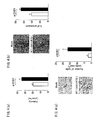
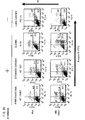
- apoptosis was induced due to the transduction of a WT1 17AA(-) isoform-specific vector WRI-17AA(-).
- apoptosis was not induced in the WT1-nonexpressing cell line PC-14 although the WRI-17AA(-) was transduced ( Fig. 10 ).
- Example 7 Suppression of solid tumor formation in vivo by suppressing expression of WT1 17AA(-) isoform
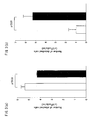
- Fig. 11 shows sizes of tumors, formed by injected HT-1080 cells, in two out of a group of mice administered with WT1-shRNA (WRI) targeting at WT1 17AA(-) isoform and in two out of a group of mice administered with a control shRNA vector (mock).
- WRI WT1-shRNA
- a tumor growth was suppressed in vivo by suppressing an expression of the WT1 17AA(-) isoform. Note that averages of the sizes in each group were shown in Fig. 11 .
- siRNA that specifically suppresses an expression of WT1 17AA(-) isoform to a solid tumor cell in which WT1 17AA(-)/KTS(-) isoform fulfills an oncogene-like function, a cell death that occurs specifically in the tumor cell can be induced. That is, an anticancer function can be attained.
- the present invention is highly useful in fields of medicine and pharmacy as a fundamental technology for developing a molecular-targeted therapy specific to the cancer cell.
Landscapes
- Health & Medical Sciences (AREA)
- Life Sciences & Earth Sciences (AREA)
- Engineering & Computer Science (AREA)
- Genetics & Genomics (AREA)
- Organic Chemistry (AREA)
- Chemical & Material Sciences (AREA)
- Biomedical Technology (AREA)
- Bioinformatics & Cheminformatics (AREA)
- General Engineering & Computer Science (AREA)
- Biotechnology (AREA)
- Wood Science & Technology (AREA)
- Molecular Biology (AREA)
- General Health & Medical Sciences (AREA)
- Zoology (AREA)
- Nuclear Medicine, Radiotherapy & Molecular Imaging (AREA)
- Pharmacology & Pharmacy (AREA)
- Veterinary Medicine (AREA)
- Public Health (AREA)
- Animal Behavior & Ethology (AREA)
- Physics & Mathematics (AREA)
- Biophysics (AREA)
- Oncology (AREA)
- Medicinal Chemistry (AREA)
- Plant Pathology (AREA)
- Microbiology (AREA)
- General Chemical & Material Sciences (AREA)
- Chemical Kinetics & Catalysis (AREA)
- Biochemistry (AREA)
- Pharmaceuticals Containing Other Organic And Inorganic Compounds (AREA)
- Medicines That Contain Protein Lipid Enzymes And Other Medicines (AREA)
Applications Claiming Priority (2)
| Application Number | Priority Date | Filing Date | Title |
|---|---|---|---|
| JP2006092214 | 2006-03-29 | ||
| PCT/JP2007/056667 WO2007119564A1 (ja) | 2006-03-29 | 2007-03-28 | WT1 17AA(-)アイソフォーム特異的siRNAおよびその利用 |
Publications (3)
| Publication Number | Publication Date |
|---|---|
| EP2009100A1 true EP2009100A1 (de) | 2008-12-31 |
| EP2009100A4 EP2009100A4 (de) | 2009-04-29 |
| EP2009100B1 EP2009100B1 (de) | 2012-07-11 |
Family
ID=38609341
Family Applications (1)
| Application Number | Title | Priority Date | Filing Date |
|---|---|---|---|
| EP07740105A Not-in-force EP2009100B1 (de) | 2006-03-29 | 2007-03-28 | Für die isoform wt1 17aa(-) spezifische sirna und verwendung davon |
Country Status (5)
| Country | Link |
|---|---|
| US (1) | US8288355B2 (de) |
| EP (1) | EP2009100B1 (de) |
| JP (1) | JP5231997B2 (de) |
| ES (1) | ES2387999T3 (de) |
| WO (1) | WO2007119564A1 (de) |
Families Citing this family (7)
| Publication number | Priority date | Publication date | Assignee | Title |
|---|---|---|---|---|
| EP1951281B1 (de) | 2005-10-17 | 2015-04-15 | Sloan Kettering Institute For Cancer Research | Wt1 hla klasse ii-bindungspeptide und diese umfassende zusammensetzungen und verfahren |
| WO2007120673A2 (en) | 2006-04-10 | 2007-10-25 | Sloan Kettering Institute For Cancer Research | Immunogenic wt-1 peptides and methods of use thereof |
| EP2738253A4 (de) | 2011-07-29 | 2015-04-22 | Riken | Zelle zur verwendung in der immuntherapie mit für wilms-tumorgenprodukt oder fragment davon codierendem modifiziertem nukleinsäurekonstrukt, verfahren zur herstellung dieser zelle und besagtes nukleinsäurekonstrukt |
| US10316332B2 (en) | 2011-07-29 | 2019-06-11 | Riken | Cell for immunotherapy, including modified nucleic acid construct encoding Wilms tumor gene product |
| AU2013207669C1 (en) | 2012-01-13 | 2018-05-31 | Memorial Sloan Kettering Cancer Center | Immunogenic WT-1 peptides and methods of use thereof |
| US10815273B2 (en) | 2013-01-15 | 2020-10-27 | Memorial Sloan Kettering Cancer Center | Immunogenic WT-1 peptides and methods of use thereof |
| RS61173B1 (sr) | 2013-01-15 | 2021-01-29 | Memorial Sloan Kettering Cancer Center | Imunogeni wt-1 peptidi i postupci za njihovu upotrebu |
Family Cites Families (5)
| Publication number | Priority date | Publication date | Assignee | Title |
|---|---|---|---|---|
| US20030072767A1 (en) * | 1998-09-30 | 2003-04-17 | Alexander Gaiger | Compositions and methods for WT1 specific immunotherapy |
| US20030108524A1 (en) * | 2001-10-18 | 2003-06-12 | Melissa Diagana | Vectors for expressing multiple transgenes |
| WO2005092393A1 (ja) * | 2004-03-29 | 2005-10-06 | Haruo Sugiyama | Wt1遺伝子の発現を抑制するマイクロrnaおよびその利用 |
| EP1738771A4 (de) * | 2004-03-29 | 2010-04-21 | Haruo Sugiyama | Sirna zur hemmung der expression von wt1 gen und ihre verwendung |
| US20090176724A1 (en) | 2004-06-30 | 2009-07-09 | Daiwei Shen | Methods and Compositions for the Diagnosis, Prognosis and Treatment of Cancer |
-
2007
- 2007-03-28 EP EP07740105A patent/EP2009100B1/de not_active Not-in-force
- 2007-03-28 JP JP2008510877A patent/JP5231997B2/ja not_active Expired - Fee Related
- 2007-03-28 US US12/225,745 patent/US8288355B2/en not_active Expired - Fee Related
- 2007-03-28 ES ES07740105T patent/ES2387999T3/es active Active
- 2007-03-28 WO PCT/JP2007/056667 patent/WO2007119564A1/ja not_active Ceased
Also Published As
| Publication number | Publication date |
|---|---|
| JPWO2007119564A1 (ja) | 2009-08-27 |
| ES2387999T3 (es) | 2012-10-05 |
| JP5231997B2 (ja) | 2013-07-10 |
| EP2009100B1 (de) | 2012-07-11 |
| WO2007119564A1 (ja) | 2007-10-25 |
| EP2009100A4 (de) | 2009-04-29 |
| US8288355B2 (en) | 2012-10-16 |
| US20110190384A1 (en) | 2011-08-04 |
Similar Documents
| Publication | Publication Date | Title |
|---|---|---|
| EP2009100B1 (de) | Für die isoform wt1 17aa(-) spezifische sirna und verwendung davon | |
| He et al. | MicroRNA-155 regulates inflammatory cytokine production in tumor-associated macrophages via targeting C/EBPβ | |
| EP2638159B1 (de) | Zusammensetzungen, kits und verfahren zur behandlung kardiovaskulärer, immunologischer und entzündlicher erkrankungen | |
| EP2627766B1 (de) | Verfahren und zusammensetzungen zur behandlung von insulinassoziierten erkrankungen | |
| CN113677706B (zh) | 肝毒性的治疗 | |
| Nguyen et al. | Myb expression is critical for myeloid leukemia development induced by Setbp1 activation | |
| US8716255B2 (en) | Microrna compositions and methods for the treatment of myelogenous leukemia | |
| US20110060029A1 (en) | Method of treating cancer by modulating epac | |
| CN110592222B (zh) | Triml1作为肝癌的分子标记物的应用 | |
| CN113862273B (zh) | 一种HK2低表达的乳腺癌细胞系及其使用的siRNA | |
| US20120214728A1 (en) | Ex vivo and in vivo methods and related compositions for regenerating hematopoietic stem cell populations | |
| US8603997B2 (en) | siRNA that inhibits WT1 gene expression and uses thereof | |
| US20230287427A1 (en) | Inhibition of lncExACT1 to Treat Heart Disease | |
| CN110863047B (zh) | 人ccdc154基因的用途及相关产品 | |
| KR102746011B1 (ko) | Pwar5 발현 촉진제를 유효성분으로 포함하는 c형 간염 바이러스 감염 질환 예방 또는 치료용 약학적 조성물 | |
| US8486905B2 (en) | Use of FLJ25416 gene | |
| KR102710867B1 (ko) | Oligodendrocyte transcription factor 2 억제제를 유효성분으로 포함하는 흑색종 치료 효과 증진용 약학적 조성물 | |
| CN110917206A (zh) | miR-674-5p在制备治疗胶质瘤药物中的应用 | |
| KR102943753B1 (ko) | 면역 세포의 세포용해 활성 향상을 위한 신규 표적 및 이의 활용 | |
| KR101447227B1 (ko) | BC200 RNA에 대한 siRNA를 포함하는 종양전이 억제용 약학조성물 | |
| US20150283164A1 (en) | Treatment of Myelodysplastic Syndrome by Inhibition of NR2F2 | |
| KR102095298B1 (ko) | 마이크로 RNA를 유효성분으로 함유하는 Ninj1 억제용 시약조성물 | |
| JP2018513841A (ja) | インスリン抵抗性の治療のための転写因子tsc22d4を標的とするオリゴヌクレオチド配列 | |
| Lei et al. | Effect on proliferation and erythroid differentiation of K562 Cells by IER3IP1-knockdown | |
| CN120361217A (zh) | Anxa2抑制剂在食管癌治疗中的应用 |
Legal Events
| Date | Code | Title | Description |
|---|---|---|---|
| PUAI | Public reference made under article 153(3) epc to a published international application that has entered the european phase |
Free format text: ORIGINAL CODE: 0009012 |
|
| 17P | Request for examination filed |
Effective date: 20081028 |
|
| AK | Designated contracting states |
Kind code of ref document: A1 Designated state(s): AT BE BG CH CY CZ DE DK EE ES FI FR GB GR HU IE IS IT LI LT LU LV MC MT NL PL PT RO SE SI SK TR |
|
| AX | Request for extension of the european patent |
Extension state: AL BA HR MK RS |
|
| A4 | Supplementary search report drawn up and despatched |
Effective date: 20090327 |
|
| RIC1 | Information provided on ipc code assigned before grant |
Ipc: C12N 15/11 20060101AFI20090323BHEP Ipc: A61K 31/7088 20060101ALI20090323BHEP |
|
| 17Q | First examination report despatched |
Effective date: 20090827 |
|
| REG | Reference to a national code |
Ref country code: DE Ref legal event code: R079 Ref document number: 602007023937 Country of ref document: DE Free format text: PREVIOUS MAIN CLASS: C12N0015090000 Ipc: A61K0031708800 |
|
| RIC1 | Information provided on ipc code assigned before grant |
Ipc: C12N 15/113 20100101ALN20111010BHEP Ipc: A61K 31/7088 20060101AFI20111010BHEP |
|
| GRAP | Despatch of communication of intention to grant a patent |
Free format text: ORIGINAL CODE: EPIDOSNIGR1 |
|
| DAX | Request for extension of the european patent (deleted) | ||
| GRAS | Grant fee paid |
Free format text: ORIGINAL CODE: EPIDOSNIGR3 |
|
| GRAA | (expected) grant |
Free format text: ORIGINAL CODE: 0009210 |
|
| AK | Designated contracting states |
Kind code of ref document: B1 Designated state(s): AT BE BG CH CY CZ DE DK EE ES FI FR GB GR HU IE IS IT LI LT LU LV MC MT NL PL PT RO SE SI SK TR |
|
| REG | Reference to a national code |
Ref country code: GB Ref legal event code: FG4D |
|
| REG | Reference to a national code |
Ref country code: CH Ref legal event code: EP |
|
| REG | Reference to a national code |
Ref country code: AT Ref legal event code: REF Ref document number: 565727 Country of ref document: AT Kind code of ref document: T Effective date: 20120715 |
|
| REG | Reference to a national code |
Ref country code: IE Ref legal event code: FG4D |
|
| REG | Reference to a national code |
Ref country code: DE Ref legal event code: R096 Ref document number: 602007023937 Country of ref document: DE Effective date: 20120906 |
|
| REG | Reference to a national code |
Ref country code: ES Ref legal event code: FG2A Ref document number: 2387999 Country of ref document: ES Kind code of ref document: T3 Effective date: 20121005 |
|
| REG | Reference to a national code |
Ref country code: NL Ref legal event code: VDEP Effective date: 20120711 |
|
| REG | Reference to a national code |
Ref country code: AT Ref legal event code: MK05 Ref document number: 565727 Country of ref document: AT Kind code of ref document: T Effective date: 20120711 |
|
| REG | Reference to a national code |
Ref country code: LT Ref legal event code: MG4D Effective date: 20120711 |
|
| PG25 | Lapsed in a contracting state [announced via postgrant information from national office to epo] |
Ref country code: BE Free format text: LAPSE BECAUSE OF FAILURE TO SUBMIT A TRANSLATION OF THE DESCRIPTION OR TO PAY THE FEE WITHIN THE PRESCRIBED TIME-LIMIT Effective date: 20120711 Ref country code: LT Free format text: LAPSE BECAUSE OF FAILURE TO SUBMIT A TRANSLATION OF THE DESCRIPTION OR TO PAY THE FEE WITHIN THE PRESCRIBED TIME-LIMIT Effective date: 20120711 Ref country code: CY Free format text: LAPSE BECAUSE OF FAILURE TO SUBMIT A TRANSLATION OF THE DESCRIPTION OR TO PAY THE FEE WITHIN THE PRESCRIBED TIME-LIMIT Effective date: 20120711 Ref country code: FI Free format text: LAPSE BECAUSE OF FAILURE TO SUBMIT A TRANSLATION OF THE DESCRIPTION OR TO PAY THE FEE WITHIN THE PRESCRIBED TIME-LIMIT Effective date: 20120711 Ref country code: IS Free format text: LAPSE BECAUSE OF FAILURE TO SUBMIT A TRANSLATION OF THE DESCRIPTION OR TO PAY THE FEE WITHIN THE PRESCRIBED TIME-LIMIT Effective date: 20121111 Ref country code: AT Free format text: LAPSE BECAUSE OF FAILURE TO SUBMIT A TRANSLATION OF THE DESCRIPTION OR TO PAY THE FEE WITHIN THE PRESCRIBED TIME-LIMIT Effective date: 20120711 |
|
| PG25 | Lapsed in a contracting state [announced via postgrant information from national office to epo] |
Ref country code: PT Free format text: LAPSE BECAUSE OF FAILURE TO SUBMIT A TRANSLATION OF THE DESCRIPTION OR TO PAY THE FEE WITHIN THE PRESCRIBED TIME-LIMIT Effective date: 20121112 Ref country code: LV Free format text: LAPSE BECAUSE OF FAILURE TO SUBMIT A TRANSLATION OF THE DESCRIPTION OR TO PAY THE FEE WITHIN THE PRESCRIBED TIME-LIMIT Effective date: 20120711 Ref country code: SE Free format text: LAPSE BECAUSE OF FAILURE TO SUBMIT A TRANSLATION OF THE DESCRIPTION OR TO PAY THE FEE WITHIN THE PRESCRIBED TIME-LIMIT Effective date: 20120711 Ref country code: PL Free format text: LAPSE BECAUSE OF FAILURE TO SUBMIT A TRANSLATION OF THE DESCRIPTION OR TO PAY THE FEE WITHIN THE PRESCRIBED TIME-LIMIT Effective date: 20120711 Ref country code: SI Free format text: LAPSE BECAUSE OF FAILURE TO SUBMIT A TRANSLATION OF THE DESCRIPTION OR TO PAY THE FEE WITHIN THE PRESCRIBED TIME-LIMIT Effective date: 20120711 Ref country code: GR Free format text: LAPSE BECAUSE OF FAILURE TO SUBMIT A TRANSLATION OF THE DESCRIPTION OR TO PAY THE FEE WITHIN THE PRESCRIBED TIME-LIMIT Effective date: 20121012 |
|
| PG25 | Lapsed in a contracting state [announced via postgrant information from national office to epo] |
Ref country code: NL Free format text: LAPSE BECAUSE OF FAILURE TO SUBMIT A TRANSLATION OF THE DESCRIPTION OR TO PAY THE FEE WITHIN THE PRESCRIBED TIME-LIMIT Effective date: 20120711 |
|
| PG25 | Lapsed in a contracting state [announced via postgrant information from national office to epo] |
Ref country code: DK Free format text: LAPSE BECAUSE OF FAILURE TO SUBMIT A TRANSLATION OF THE DESCRIPTION OR TO PAY THE FEE WITHIN THE PRESCRIBED TIME-LIMIT Effective date: 20120711 Ref country code: CZ Free format text: LAPSE BECAUSE OF FAILURE TO SUBMIT A TRANSLATION OF THE DESCRIPTION OR TO PAY THE FEE WITHIN THE PRESCRIBED TIME-LIMIT Effective date: 20120711 Ref country code: RO Free format text: LAPSE BECAUSE OF FAILURE TO SUBMIT A TRANSLATION OF THE DESCRIPTION OR TO PAY THE FEE WITHIN THE PRESCRIBED TIME-LIMIT Effective date: 20120711 Ref country code: EE Free format text: LAPSE BECAUSE OF FAILURE TO SUBMIT A TRANSLATION OF THE DESCRIPTION OR TO PAY THE FEE WITHIN THE PRESCRIBED TIME-LIMIT Effective date: 20120711 |
|
| PGFP | Annual fee paid to national office [announced via postgrant information from national office to epo] |
Ref country code: GB Payment date: 20130327 Year of fee payment: 7 Ref country code: DE Payment date: 20130320 Year of fee payment: 7 Ref country code: ES Payment date: 20130313 Year of fee payment: 7 Ref country code: FR Payment date: 20130325 Year of fee payment: 7 |
|
| PLBE | No opposition filed within time limit |
Free format text: ORIGINAL CODE: 0009261 |
|
| STAA | Information on the status of an ep patent application or granted ep patent |
Free format text: STATUS: NO OPPOSITION FILED WITHIN TIME LIMIT |
|
| PG25 | Lapsed in a contracting state [announced via postgrant information from national office to epo] |
Ref country code: SK Free format text: LAPSE BECAUSE OF FAILURE TO SUBMIT A TRANSLATION OF THE DESCRIPTION OR TO PAY THE FEE WITHIN THE PRESCRIBED TIME-LIMIT Effective date: 20120711 |
|
| 26N | No opposition filed |
Effective date: 20130412 |
|
| PG25 | Lapsed in a contracting state [announced via postgrant information from national office to epo] |
Ref country code: BG Free format text: LAPSE BECAUSE OF FAILURE TO SUBMIT A TRANSLATION OF THE DESCRIPTION OR TO PAY THE FEE WITHIN THE PRESCRIBED TIME-LIMIT Effective date: 20121011 |
|
| REG | Reference to a national code |
Ref country code: DE Ref legal event code: R097 Ref document number: 602007023937 Country of ref document: DE Effective date: 20130412 |
|
| PG25 | Lapsed in a contracting state [announced via postgrant information from national office to epo] |
Ref country code: MC Free format text: LAPSE BECAUSE OF NON-PAYMENT OF DUE FEES Effective date: 20130331 |
|
| REG | Reference to a national code |
Ref country code: CH Ref legal event code: PL |
|
| REG | Reference to a national code |
Ref country code: IE Ref legal event code: MM4A |
|
| PG25 | Lapsed in a contracting state [announced via postgrant information from national office to epo] |
Ref country code: LI Free format text: LAPSE BECAUSE OF NON-PAYMENT OF DUE FEES Effective date: 20130331 Ref country code: CH Free format text: LAPSE BECAUSE OF NON-PAYMENT OF DUE FEES Effective date: 20130331 Ref country code: IE Free format text: LAPSE BECAUSE OF NON-PAYMENT OF DUE FEES Effective date: 20130328 |
|
| PG25 | Lapsed in a contracting state [announced via postgrant information from national office to epo] |
Ref country code: MT Free format text: LAPSE BECAUSE OF FAILURE TO SUBMIT A TRANSLATION OF THE DESCRIPTION OR TO PAY THE FEE WITHIN THE PRESCRIBED TIME-LIMIT Effective date: 20120711 |
|
| REG | Reference to a national code |
Ref country code: DE Ref legal event code: R119 Ref document number: 602007023937 Country of ref document: DE |
|
| GBPC | Gb: european patent ceased through non-payment of renewal fee |
Effective date: 20140328 |
|
| REG | Reference to a national code |
Ref country code: FR Ref legal event code: ST Effective date: 20141128 |
|
| REG | Reference to a national code |
Ref country code: DE Ref legal event code: R119 Ref document number: 602007023937 Country of ref document: DE Effective date: 20141001 |
|
| PG25 | Lapsed in a contracting state [announced via postgrant information from national office to epo] |
Ref country code: FR Free format text: LAPSE BECAUSE OF NON-PAYMENT OF DUE FEES Effective date: 20140331 Ref country code: DE Free format text: LAPSE BECAUSE OF NON-PAYMENT OF DUE FEES Effective date: 20141001 Ref country code: GB Free format text: LAPSE BECAUSE OF NON-PAYMENT OF DUE FEES Effective date: 20140328 |
|
| PG25 | Lapsed in a contracting state [announced via postgrant information from national office to epo] |
Ref country code: IT Free format text: LAPSE BECAUSE OF NON-PAYMENT OF DUE FEES Effective date: 20140328 |
|
| PG25 | Lapsed in a contracting state [announced via postgrant information from national office to epo] |
Ref country code: TR Free format text: LAPSE BECAUSE OF FAILURE TO SUBMIT A TRANSLATION OF THE DESCRIPTION OR TO PAY THE FEE WITHIN THE PRESCRIBED TIME-LIMIT Effective date: 20120711 |
|
| PG25 | Lapsed in a contracting state [announced via postgrant information from national office to epo] |
Ref country code: LU Free format text: LAPSE BECAUSE OF NON-PAYMENT OF DUE FEES Effective date: 20130328 Ref country code: HU Free format text: LAPSE BECAUSE OF FAILURE TO SUBMIT A TRANSLATION OF THE DESCRIPTION OR TO PAY THE FEE WITHIN THE PRESCRIBED TIME-LIMIT; INVALID AB INITIO Effective date: 20070328 |
|
| PG25 | Lapsed in a contracting state [announced via postgrant information from national office to epo] |
Ref country code: ES Free format text: LAPSE BECAUSE OF NON-PAYMENT OF DUE FEES Effective date: 20140329 |