EP2009561A2 - Ausfuehren intelligenten Indexens von Inhalt, als Verfahren, Signal, Datentraeger und System - Google Patents
Ausfuehren intelligenten Indexens von Inhalt, als Verfahren, Signal, Datentraeger und System Download PDFInfo
- Publication number
- EP2009561A2 EP2009561A2 EP08159366A EP08159366A EP2009561A2 EP 2009561 A2 EP2009561 A2 EP 2009561A2 EP 08159366 A EP08159366 A EP 08159366A EP 08159366 A EP08159366 A EP 08159366A EP 2009561 A2 EP2009561 A2 EP 2009561A2
- Authority
- EP
- European Patent Office
- Prior art keywords
- client
- data
- index
- search
- engine
- Prior art date
- Legal status (The legal status is an assumption and is not a legal conclusion. Google has not performed a legal analysis and makes no representation as to the accuracy of the status listed.)
- Ceased
Links
Images


Classifications
-
- G—PHYSICS
- G06—COMPUTING OR CALCULATING; COUNTING
- G06F—ELECTRIC DIGITAL DATA PROCESSING
- G06F11/00—Error detection; Error correction; Monitoring
- G06F11/07—Responding to the occurrence of a fault, e.g. fault tolerance
- G06F11/14—Error detection or correction of the data by redundancy in operations
- G06F11/1446—Point-in-time backing up or restoration of persistent data
- G06F11/1448—Management of the data involved in backup or backup restore
-
- G—PHYSICS
- G06—COMPUTING OR CALCULATING; COUNTING
- G06F—ELECTRIC DIGITAL DATA PROCESSING
- G06F11/00—Error detection; Error correction; Monitoring
- G06F11/07—Responding to the occurrence of a fault, e.g. fault tolerance
- G06F11/14—Error detection or correction of the data by redundancy in operations
- G06F11/1446—Point-in-time backing up or restoration of persistent data
- G06F11/1458—Management of the backup or restore process
- G06F11/1464—Management of the backup or restore process for networked environments
-
- G—PHYSICS
- G06—COMPUTING OR CALCULATING; COUNTING
- G06F—ELECTRIC DIGITAL DATA PROCESSING
- G06F16/00—Information retrieval; Database structures therefor; File system structures therefor
- G06F16/90—Details of database functions independent of the retrieved data types
- G06F16/95—Retrieval from the web
- G06F16/951—Indexing; Web crawling techniques
Definitions
- the present disclosure relates generally to data storage systems and, more particularly, to techniques for performing intelligent content indexing.
- Typical enterprise computing environments consist of hundreds to thousands of client machines ("clients").
- Client machines may include desktops, laptops, servers and other computing devices.
- client machines may include desktops, laptops, servers and other computing devices.
- new compliance regulations exist which may require the maintenance of data for long periods of time. This results in an exponential growth of historical data which is protected and managed by shared protection servers.
- content indexing technology is often utilized.
- content indexing is achieved by backing up data to a shared protection server and scanning backed up data on the shared protection server to create a central content index.
- content indexing is a very processor and memory intensive operation. This operation must be carried out for every backup image received for each client. Additionally, storage space for indexes of the backed up data is significant.
- the technique may be realized as a method for performing intelligent content indexing comprising indexing by one or more processes associated with a client an initial full set of data of the client to create an index of the client data, detecting a change in the client data, and modifying (updating) the index to reflect the change in the client data (claim 1).
- the technique may be realized by a system for performing intelligent content indexing comprising an index engine associated with a client configured to index an initial full set of data of the client to create an index of the client data, detect a change in the client data, and modify the index to reflect the change in the client data (claim 17).
- Client 110 may represent a computing device containing index engine 115 and backup agent 125 and operatively connected to network 120.
- Backup agent 125 may contain change event logger 135.
- backup agent 125 may be a separate computing device.
- Backup server 140 may be operatively connected to network 120 and may manage backup operations for one or more clients on network 120.
- Backup server 140 may utilize storage 145 for backup storage.
- Storage 145 may be a storage area network, a raid array, a tape drive, a disk drive or other storage device.
- Client 110 may index live data using index engine 115.
- Live data may represent the current data of client 110.
- index engine 115 may be contained on a machine separate from client 110, such as an index server. Index engine 115 may create an initial index which may contain the data to be backed up from client 110. Index engine 115 may then increment the index for one or more changes detected in the data of client 110.
- Client 110 may contain one or more of the indexes.
- Backup images may be sent to backup server 140 by backup agent 125.
- the backup images may contain the one or more indexes which may correspond to data of client 110.
- Backup server 140 may store one or more images containing the backed up data on storage 145.
- Change event logger 135 may detect changes in client data of client 110 and may record changes to a log file or other storage.
- Index engine 115 may index incremental changes in data after an initial full index is produced independently of a backup strategy.
- index engine 115 may index only changes in data of a client even if a client backup strategy requires a full backup. Index engine 115 may index only incremental changes to client data and it may do so by maintaining single index or multiple copies of a single index and may thus maintain a complete index of the client 110's data.
- An index contained on client 110 may contain historical data.
- an index on client 110 may contain metadata about a file that may have been previously deleted.
- index engine 115 may index backup image data and may use records of changes to produce one or more indexes. These one or more indexes may be maintained by modifying the one or more indexes to indicate only changes in live data of a client since the previous backup image data was indexed.
- Index engine 115 may reduce the storage size of indexes and increase the efficiency of indexing. Instead of indexing a entire backup image every time an image is received, index engine 115 may generate a single index that represents the live or current data of the client as well as historical entries.
- index engine 115 may clearly differentiate the delta or change in the data and may avoid indexing an entire set of client data. By creating an initial full index and incrementing the index each time a change to client data occurs, index engine 115 may maintain a chronological record of data changes.
- a resulting index may contain metadata about files which may be useful to a search request and may enable a file no longer in live data of a client to be located in backup data for the client.
- Index engine 115 with its capability of indexing live data and its ability to be located on a client machine may significantly reduce load on a centralized backup server.
- Client 210 may represent a client, operatively connected to network 215, that is seeking data from within the intelligent content indexing system 200.
- Client 210 may contain search engine 225 and data retrieval module 230 and may be connected to network 215.
- search engine 225 and/or data retrieval module 230 may be located on a separate machine from client 210. In one or more embodiments, search engine 225 and/or data retrieval module 230 may be located on an index server.
- Client 210 may send a query utilizing search engine 225.
- Search engine 225 may search one or more indexes and may locate data corresponding to the search request. Search engine 225 may return the results to client 210.
- Client 210 may request data indicated by one or more search results from data retrieval module 230.
- Data retrieval module 230 may retrieve data from a local machine (i.e., storage of client 210). Data retrieval module 230 may also send a request to backup server 235 for data from one or more backups. Data retrieval module 230 may receive data from one or more backups which may be on storage 240.
- Data retrieval module 230 may return the requested data to client 210.
- the intelligent content indexing system 300 may permit distributed searching of one or more indexes of one or more clients.
- client 325 may send a search request utilizing search engine 330.
- Search engine 330 may represent a federated search engine and may send a request to search engines contained on clients 310, 315 and 320.
- Search engine 330 may also search a local index which may index data of client 325. Data may be received from search engines searching indexes of client 310, 315 and 325. However, search engine 330 may detect that no data has been received from client 320.
- a search request to client 320 may time out because client 320 may be down, offline or inaccessible for other reasons.
- Search engine 330 may then send a query to backup server 340 for an image from storage 345 which may represent the last backup of client 320.
- Backup server 340 may resolve the location of the last known image of client 320. The resolving process may utilize determining a time of a backup, whether a backup has been archived, moved, copied or other factors.
- Backup server 340 may obtain the backup image from storage 345 and may mount the appropriate backup image for client 320.
- Backup server 340 may start a search engine process on the backup server which may search an index contained in the backup image for the requested data.
- Search engine 330 may receive the results of the searches for clients 310, 315 and 325. Search engine 330 may also receive the search results from client 320 from backup server 340. Data retrieval module 335 may retrieve data which may be subsequently requested by client 325. Data retrieval module 335 may retrieve live data from one or more clients and may retrieve data from one or more backups. Clients 310, 315, 320, 325, backup server 340 and storage 345 may be operatively connected to network 350.
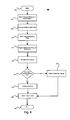
- Method 400 may start at block 410.
- the method may detect one or more changes in data of a client.
- the method may determine whether an initial full index of a client exists. If not, the method may continue at block 425 where an initial full index of the client may be generated.
- the process may generate an initial full index.
- the initial full index of the client may be generated by an index engine which may index live data on the client.
- the method may proceed from block 420 to block 430.
- the method may update (modify) one or more existing indexes to represent one or more changes in live data of the client that have occurred since the last index update or modification.
- the method may end.
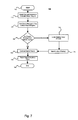
- Method 500 may start at block 510.
- the method may detect whether any images stored for backup have expired. For example, a backup image may be required by policy, law or procedure to be stored for a certain period of time. Images stored beyond this time period may be detected by the method at block 520.
- expired images may be deleted.
- one or more indexes referring to a deleted stored image may be pruned and/or updated. This may remove one or more index records referring to the deleted images.
- the method may end. This method 500 may reduce the size of stored backup images and stored indexes. Furthermore, this method 500 may increase the efficiency and accuracy of indexes using the images.
- Method 600 may begin at block 610.
- a search request may be received at a search engine.
- the search request may be processed against an index for the client being searched.
- search results may be returned to searching client.
- a request for data indicated by the search results may be received from a searching client.
- the location of the data may be resolved. In some embodiments, the location of the data may be resolved using metadata obtained from the index which may provide a filename, file size, one or more timestamps, file locations and other attributes.
- the method may determine whether data is required from a backup.
- the method may continue at block 645.
- the data may be retrieved from a backup. If at block 640 it is determined that backup data is not needed, the method may continue at block 650.
- the method may retrieve live data of one or more clients being searched.
- the data may be returned to the searching client.
- the method may end.
- Method 700 may begin at block 710.
- a search request may be received at a search engine capable of federating or distributing searches to one or more additional search engines.
- the one or more search engines may be located on one or more clients and may search indexes associated with data of the one or more respective clients.
- the one or more search engines may be located on index servers or backup servers and may search backup images of clients.
- the federated search engine(s) may send the search request to one or more search engines at block 720.
- the method may determine whether results have been received from one or more search engines. If one or more search engines have not returned results, the method may continue at block 730. If one or more search engines have returned results, the method may continue at block 740.
- a backup image may be located for one or more clients associated with search engines for which results have not been returned.
- the index of the backup image may be searched. The index of a backup image may be searched by a backup server or other device mounting a retrieved backup image corresponding to the desired client and running a search process against that mounted image.
- the search results from one or more search engines may be combined by the federated search engine.
- the search results may be returned to the client.
- the method may end.
- intelligent content indexing in accordance with the present disclosure as described above typically involves the processing of input data and the generation of output data to some extent.
- This input data processing and output data generation may be implemented in hardware or software.
- specific electronic components may be employed in an intelligent content indexing system or similar or related circuitry for implementing the functions associated with intelligent content indexing in accordance with the present disclosure as described above.
- one or more processors operating in accordance with stored instructions may implement the functions associated with intelligent content indexing in accordance with the present disclosure as described above. If such is the case, it is within the scope of the present disclosure that such instructions may be stored on one or more processor readable carriers (e.g., a magnetic disk or other storage medium), or transmitted to one or more processors via one or more signals.
- processor readable carriers e.g., a magnetic disk or other storage medium
Landscapes
- Engineering & Computer Science (AREA)
- Theoretical Computer Science (AREA)
- Physics & Mathematics (AREA)
- General Engineering & Computer Science (AREA)
- General Physics & Mathematics (AREA)
- Quality & Reliability (AREA)
- Databases & Information Systems (AREA)
- Data Mining & Analysis (AREA)
- Information Retrieval, Db Structures And Fs Structures Therefor (AREA)
- Communication Control (AREA)
Applications Claiming Priority (1)
| Application Number | Priority Date | Filing Date | Title |
|---|---|---|---|
| US11/771,507 US10133820B2 (en) | 2007-06-29 | 2007-06-29 | Techniques for performing intelligent content indexing |
Publications (2)
| Publication Number | Publication Date |
|---|---|
| EP2009561A2 true EP2009561A2 (de) | 2008-12-31 |
| EP2009561A3 EP2009561A3 (de) | 2009-01-14 |
Family
ID=39865162
Family Applications (1)
| Application Number | Title | Priority Date | Filing Date |
|---|---|---|---|
| EP08159366A Ceased EP2009561A3 (de) | 2007-06-29 | 2008-06-30 | Ausfuehren intelligenten Indexens von Inhalt, als Verfahren, Signal, Datentraeger und System |
Country Status (3)
| Country | Link |
|---|---|
| US (1) | US10133820B2 (de) |
| EP (1) | EP2009561A3 (de) |
| CN (1) | CN101334791B (de) |
Families Citing this family (8)
| Publication number | Priority date | Publication date | Assignee | Title |
|---|---|---|---|---|
| US8091118B2 (en) * | 2007-12-21 | 2012-01-03 | At & T Intellectual Property I, Lp | Method and system to optimize efficiency when managing lists of untrusted network sites |
| US8762340B2 (en) | 2010-05-14 | 2014-06-24 | Salesforce.Com, Inc. | Methods and systems for backing up a search index in a multi-tenant database environment |
| US20150112996A1 (en) | 2013-10-23 | 2015-04-23 | Microsoft Corporation | Pervasive search architecture |
| CN103942698A (zh) * | 2014-04-22 | 2014-07-23 | 北京联时空网络通信设备有限公司 | 一种产品信息对比方法及装置 |
| DE102015220485A1 (de) * | 2015-10-21 | 2017-04-27 | Robert Bosch Gmbh | Verfahren zum Schreiben und Lesen eines Datensatzes |
| CN105760236A (zh) * | 2016-05-13 | 2016-07-13 | 中国工商银行股份有限公司 | 一种分布式计算机集群下的数据采集方法及系统 |
| US10924502B2 (en) * | 2016-12-29 | 2021-02-16 | Noblis, Inc. | Network security using inflated files for anomaly detection |
| US12423264B2 (en) * | 2022-09-30 | 2025-09-23 | Dell Products L.P. | Attribute based asset discovery for intelligent protection |
Citations (1)
| Publication number | Priority date | Publication date | Assignee | Title |
|---|---|---|---|---|
| US20060235878A1 (en) * | 2005-04-14 | 2006-10-19 | Microsoft Corporation | Client side indexing of offline address book files |
Family Cites Families (16)
| Publication number | Priority date | Publication date | Assignee | Title |
|---|---|---|---|---|
| CA2349177A1 (en) * | 1998-11-03 | 2000-05-11 | British Telecommunications Public Limited Company | Apparatus for processing communications |
| US6615224B1 (en) * | 1999-02-23 | 2003-09-02 | Lewis B. Davis | High-performance UNIX file undelete |
| EP1217542A1 (de) | 2000-12-21 | 2002-06-26 | Motorola, Inc. | Kommunikationssystem, Kommunikationseinheit und Verfahren zum Personalisieren von Kommunikationsdiensten |
| EP1217543A1 (de) | 2000-12-22 | 2002-06-26 | Hewlett-Packard Company, A Delaware Corporation | Verfahren und Vorrichtung zum automatischen Indexieren von Dokumenten einer Rechnergruppe in einem Netzwerk |
| US7478096B2 (en) * | 2003-02-26 | 2009-01-13 | Burnside Acquisition, Llc | History preservation in a computer storage system |
| JP2005141319A (ja) | 2003-11-04 | 2005-06-02 | Mitsubishi Electric Corp | 異常行動検出装置 |
| ATE457493T1 (de) | 2004-01-09 | 2010-02-15 | T W Storage Inc | Verfahren und vorrichtung zum durchsuchen von backup-daten auf der basis von inhalt und attributen |
| US7330997B1 (en) * | 2004-06-03 | 2008-02-12 | Gary Odom | Selective reciprocal backup |
| US7587398B1 (en) * | 2004-06-30 | 2009-09-08 | Google Inc. | System and method of accessing a document efficiently through multi-tier web caching |
| US9026512B2 (en) * | 2005-08-18 | 2015-05-05 | Emc Corporation | Data object search and retrieval |
| ATE504878T1 (de) * | 2005-10-12 | 2011-04-15 | Datacastle Corp | Verfahren und system zur datensicherung |
| JP4825504B2 (ja) | 2005-12-05 | 2011-11-30 | 株式会社東芝 | データ登録・検索システムおよびデータ登録・検索方法 |
| US8271452B2 (en) * | 2006-06-12 | 2012-09-18 | Rainstor Limited | Method, system, and database archive for enhancing database archiving |
| US8726242B2 (en) * | 2006-07-27 | 2014-05-13 | Commvault Systems, Inc. | Systems and methods for continuous data replication |
| US7640345B2 (en) * | 2006-09-18 | 2009-12-29 | Emc Corporation | Information management |
| US9141627B2 (en) | 2006-09-26 | 2015-09-22 | Sony Corporation | Providing a user access to data files distributed in a plurality of different types of user devices |
-
2007
- 2007-06-29 US US11/771,507 patent/US10133820B2/en active Active
-
2008
- 2008-06-18 CN CN200810110230.8A patent/CN101334791B/zh active Active
- 2008-06-30 EP EP08159366A patent/EP2009561A3/de not_active Ceased
Patent Citations (1)
| Publication number | Priority date | Publication date | Assignee | Title |
|---|---|---|---|---|
| US20060235878A1 (en) * | 2005-04-14 | 2006-10-19 | Microsoft Corporation | Client side indexing of offline address book files |
Also Published As
| Publication number | Publication date |
|---|---|
| US10133820B2 (en) | 2018-11-20 |
| EP2009561A3 (de) | 2009-01-14 |
| CN101334791B (zh) | 2014-04-09 |
| CN101334791A (zh) | 2008-12-31 |
| US20090006535A1 (en) | 2009-01-01 |
Similar Documents
| Publication | Publication Date | Title |
|---|---|---|
| US8346731B1 (en) | Techniques for global single instance indexing for backup data | |
| US10133820B2 (en) | Techniques for performing intelligent content indexing | |
| US8682859B2 (en) | Transferring records between tables using a change transaction log | |
| US6772177B2 (en) | System and method for parallelizing file archival and retrieval | |
| EP2395439B1 (de) | Inhabertrennung in einer Datenbankinstanz | |
| US11663209B2 (en) | Distributed computer system for delivering data | |
| EP2324440B1 (de) | Bereitstellen von datenstrukturen zur bestimmung, ob schlüssel eines index in einem speichersystem vorliegen | |
| US8239348B1 (en) | Method and apparatus for automatically archiving data items from backup storage | |
| US11513911B2 (en) | Global snapshot backups of a distributed name space | |
| US20050216534A1 (en) | Wide area distributed storage system for checking erasion of worm file | |
| US9594794B2 (en) | Restoring records using a change transaction log | |
| WO2007068600B1 (en) | Generating backup sets to a specific point in time | |
| US11550485B2 (en) | Paging and disk storage for document store | |
| EP2454689A1 (de) | Abruf von digitalen beständen | |
| US11294877B2 (en) | Efficient file renames using B-tree based persistence for file system name spaces | |
| US9418154B2 (en) | Push-model based index updating | |
| US12314226B2 (en) | Continuous namespace verification for single-node filesystems | |
| US9594784B2 (en) | Push-model based index deletion | |
| US12019583B2 (en) | System and method for efficient multi-stage querying of archived data | |
| US12061575B2 (en) | Adaptive namespace verification for cluster filesystems | |
| US11550760B1 (en) | Time-based partitioning to avoid in-place updates for data set copies | |
| US20160179866A1 (en) | Method and system to search logs that contain a massive number of entries | |
| US9990254B1 (en) | Techniques for data restoration | |
| US12153546B2 (en) | Adaptive namespace verification for single-node filesystems | |
| CN114817192A (zh) | 日志处理方法、装置、设备及存储介质 |
Legal Events
| Date | Code | Title | Description |
|---|---|---|---|
| PUAI | Public reference made under article 153(3) epc to a published international application that has entered the european phase |
Free format text: ORIGINAL CODE: 0009012 |
|
| PUAL | Search report despatched |
Free format text: ORIGINAL CODE: 0009013 |
|
| AK | Designated contracting states |
Kind code of ref document: A2 Designated state(s): AT BE BG CH CY CZ DE DK EE ES FI FR GB GR HR HU IE IS IT LI LT LU LV MC MT NL NO PL PT RO SE SI SK TR |
|
| AX | Request for extension of the european patent |
Extension state: AL BA MK RS |
|
| AK | Designated contracting states |
Kind code of ref document: A3 Designated state(s): AT BE BG CH CY CZ DE DK EE ES FI FR GB GR HR HU IE IS IT LI LT LU LV MC MT NL NO PL PT RO SE SI SK TR |
|
| AX | Request for extension of the european patent |
Extension state: AL BA MK RS |
|
| 17P | Request for examination filed |
Effective date: 20090618 |
|
| 17Q | First examination report despatched |
Effective date: 20090717 |
|
| AKX | Designation fees paid |
Designated state(s): AT BE BG CH CY CZ DE DK EE ES FI FR GB GR HR HU IE IS IT LI LT LU LV MC MT NL NO PL PT RO SE SI SK TR |
|
| STAA | Information on the status of an ep patent application or granted ep patent |
Free format text: STATUS: EXAMINATION IS IN PROGRESS |
|
| STAA | Information on the status of an ep patent application or granted ep patent |
Free format text: STATUS: THE APPLICATION HAS BEEN REFUSED |
|
| 18R | Application refused |
Effective date: 20181213 |