EP2009936B1 - VERFAHREN, SYSTEM UND GERÄT ZUR VERWIRKLICHUNG VON GROUP-TALK-QoE - Google Patents
VERFAHREN, SYSTEM UND GERÄT ZUR VERWIRKLICHUNG VON GROUP-TALK-QoE Download PDFInfo
- Publication number
- EP2009936B1 EP2009936B1 EP20060840680 EP06840680A EP2009936B1 EP 2009936 B1 EP2009936 B1 EP 2009936B1 EP 20060840680 EP20060840680 EP 20060840680 EP 06840680 A EP06840680 A EP 06840680A EP 2009936 B1 EP2009936 B1 EP 2009936B1
- Authority
- EP
- European Patent Office
- Prior art keywords
- group
- qoe
- session
- qoe type
- server
- Prior art date
- Legal status (The legal status is an assumption and is not a legal conclusion. Google has not performed a legal analysis and makes no representation as to the accuracy of the status listed.)
- Not-in-force
Links
Images


Classifications
-
- H—ELECTRICITY
- H04—ELECTRIC COMMUNICATION TECHNIQUE
- H04W—WIRELESS COMMUNICATION NETWORKS
- H04W4/00—Services specially adapted for wireless communication networks; Facilities therefor
- H04W4/06—Selective distribution of broadcast services, e.g. multimedia broadcast multicast service [MBMS]; Services to user groups; One-way selective calling services
- H04W4/08—User group management
-
- H—ELECTRICITY
- H04—ELECTRIC COMMUNICATION TECHNIQUE
- H04L—TRANSMISSION OF DIGITAL INFORMATION, e.g. TELEGRAPHIC COMMUNICATION
- H04L65/00—Network arrangements, protocols or services for supporting real-time applications in data packet communication
- H04L65/40—Support for services or applications
- H04L65/4061—Push-to services, e.g. push-to-talk or push-to-video
-
- H—ELECTRICITY
- H04—ELECTRIC COMMUNICATION TECHNIQUE
- H04L—TRANSMISSION OF DIGITAL INFORMATION, e.g. TELEGRAPHIC COMMUNICATION
- H04L65/00—Network arrangements, protocols or services for supporting real-time applications in data packet communication
- H04L65/40—Support for services or applications
- H04L65/403—Arrangements for multi-party communication, e.g. for conferences
- H04L65/4038—Arrangements for multi-party communication, e.g. for conferences with floor control
-
- H—ELECTRICITY
- H04—ELECTRIC COMMUNICATION TECHNIQUE
- H04W—WIRELESS COMMUNICATION NETWORKS
- H04W4/00—Services specially adapted for wireless communication networks; Facilities therefor
- H04W4/06—Selective distribution of broadcast services, e.g. multimedia broadcast multicast service [MBMS]; Services to user groups; One-way selective calling services
- H04W4/10—Push-to-Talk [PTT] or Push-On-Call services
-
- H—ELECTRICITY
- H04—ELECTRIC COMMUNICATION TECHNIQUE
- H04W—WIRELESS COMMUNICATION NETWORKS
- H04W76/00—Connection management
- H04W76/40—Connection management for selective distribution or broadcast
- H04W76/45—Connection management for selective distribution or broadcast for Push-to-Talk [PTT] or Push-to-Talk over cellular [PoC] services
-
- H—ELECTRICITY
- H04—ELECTRIC COMMUNICATION TECHNIQUE
- H04L—TRANSMISSION OF DIGITAL INFORMATION, e.g. TELEGRAPHIC COMMUNICATION
- H04L65/00—Network arrangements, protocols or services for supporting real-time applications in data packet communication
- H04L65/80—Responding to QoS
Definitions
- the present invention relates to the field of communication technologies and in particular to a method, system and device for implementing Quality of Experience of a group session.
- QoE Quality of Experience
- the Quality of experience refers to a degree to which a service satisfies the expectation of a user, and it primarily evaluates service performance from the point of view of a user.
- User's Quality of Experience of a service involves various aspects, such as Quality of Service (QoS) and priorities.
- QoS Quality of Service
- the Quality of Experience may be a single user's Quality of Experience, or may be a group's Quality of Experience, in which a group is consisted of a plurality of users.
- a group's QoE may be understood as requirements for quality of group service that are related to respective user members in the group, and different QoEs of the group represent different requirements of the group for service experience.
- the Push to Talk over Cellular introduces point-to-point and point-to-multipoint voice communication services in a cellular network. It enables a user to enjoy popular bidirectional wireless talk-back services with the use of a mobile phone, and thereby facilitates mobile services and provides a new business opportunity in the voice communication field.
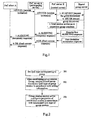
- FIG.1 A typical flow of a PoC group session in the prior art is as illustrated in Fig.1 .
- a PoC client A initiates a group session request
- a PoC server A sends the group session request to a PoC server X;
- the PoC server X requests a shared group server for a group document of the group
- the shared group XML Document Management (XDM) server returns the group document in a response message
- the PoC server X sends session invitation messages to respective members
- the PoC server X upon receipt of a first ALERTING response, returns a response message ALERTING to the PoC server A;
- the PoC server A sends the response message ALERTING to the PoC client A;
- the PoC server X upon receipt of a first invitation acceptance response message, returns an invitation acceptance response message to the PoC server A;
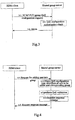
- Fig.4 is a flow chart of a method in which a user is added into a group through an XDM client according to one embodiment of the invention
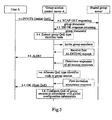
- Fig. 5 is a flow chart of a user initiating a group session request in a method according to one embodiment of the invention; notifications for this package.
- the conference package allows users to subscribe to a conference URI. Notifications are sent about changes in the membership of this conference and optionally about changes in the state of additional conference components.
- the patent application WO 2004/075581 A discloses a Multimedia system and a method in a Multimedia system where a first user with user equipment uses a Push to talk service (PTT) to communicate with at least one second subscriber's user equipment using said Push to talk service (PTT), wherein a PTT-server providing the PTT-service interacts with said first and second subscriber's user equipment, and exchanges information concerning relevant parameter values for each user equipment, and each user equipment adapting its application settings during the operation of said PTT-service, whereby degradation of the perceived quality is prevented.
- PTT Push to talk service
- PTT Push to talk service
- PTT-server providing the PTT-service interacts with said first and second subscriber's user equipment, and exchanges information concerning relevant parameter values for each user equipment, and each user equipment adapting its application settings during the operation of said PTT-service, whereby degradation of the perceived quality is prevented.
- a primary object of the invention is to provide a method and system for implementing Quality of Experience of a group session, to achieve differentiated services for different groups.
- Another object of the invention is to provide a group session control server to implement differentiated group session services.
- a method for implementing Quality of Experience of a group session includes the steps of:
- a system for implementing Quality of Experience of a group session includes:
- a user device adapted to initiate a request message for a group session, wherein the request message includes an initial QoE type code;
- S2 shared group server
- group information including lists of group members and QoE type information corresponding to the group
- a group session control server (S3), adapted to determine a final QoE type of the group session in accordance with the QoE type information corresponding to the group stored in the shared group server and the initial QoE type code, when the group session is established; to configure properties of the established group session in accordance with the final QoE type corresponding to the group; and to send a group session invitation message including the final QoE type of the group session to invited users.
- the invention sets a group QoE type in group information and thus can configure properties of an established group session in accordance with the QoE type corresponding to the group when the session is established.
- the group session service property is controlled in accordance with the QoE property so as to implement differentiated group session services effectively.
- Fig.1 is a typical flow chart of a PoC group session in the prior art
- Fig.2 is a flow chart of a method for implementing Quality of Experience of a group session according to one embodiment of the invention
- Fig.3 is a flow chart of a method in which a group QoE type is configured through an XDM client according to one embodiment of the invention
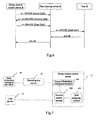
- Fig.6 is a flow chart of a receiver accepting a group session invitation in a method according to one embodiment of the invention.
- Fig.7 is a principle diagram of a system for implementing Quality of Experience of a group session according to one embodiment of the invention.
- Fig.8 is a principle diagram of a group session control server according to one embodiment of the invention.
- Fig.9 is a flow chart of adding a user into a group during a PoC group session application according to one embodiment of the invention.
- Fig.10 is a flow chart of a user initiating a PoC group session during a PoC group session application according to one embodiment of the invention.
- Fig.11 is a flow chart of a user initiating an IM group session during an IM group session application according to one embodiment of the invention.
- FIG.2 it illustrates a flow chart of a method for implementing Quality of Experience of a group session according to one embodiment of the invention.
- the method includes the following steps:
- Step 201 set QoE types corresponding to groups.
- QoE type identifiers corresponding to respective groups can be configured directly in a shared group server or by a group administrator through an XML Document Management (XDM) client.
- QoE type identification information corresponding to the respective groups is added in the group information stored in a shared group server.
- the QoE type identification information to be configured for the respective groups may also been stored in a group session control server, and when requesting establishment of a group session, a user may conveniently obtain the QoE type identifier corresponding to the group and thereby determine properties of the group session to be established.
- an element of ⁇ qoe-profile-group> is added into the shared group server to indicate a configured QoE type, the value of which is defined as follows:
- Step 202 When establishing a group session, the group session control server determines a QoE type of the group session according to configured information.
- Step 203 The group session control server configures properties of the established session in accordance with the determined QoE type of the group session.
- QoE mapping information may be configured on the group session control server in advance, and the QoE mapping information includes QoE type identifier and session property parameters corresponding to the QoE type identifier, and the session property parameters include parameters such as network quality of service and session priorities.
- the group session control server may inquire about the QoE mapping information in accordance with the QoE type identifier of the group and obtain the session property parameters corresponding to the QoE type identifier.
- the group session control server may configure property of the session to be established in accordance with corresponding session property parameters such as network quality of service and session priorities.
- Fig.3 is a flow chart of a process in which a group QoE type is configured through an XDM client according to an embodiment of the invention.
- a group administrator sends, through the XDM client, to a shared group server a request message XCAP PUT requesting to set group QoE configuration information, and the XCAP PUT message carries configuration information including a group identifier, a QoE type identifier corresponding to the group identifier, and etc.
- the shared group server upon receipt of the XCAP PUT message, extracts an identifier of a message requester from the XCAP PUT message and performs authorization check on the QoE configuration, that is, to check whether the requester is authorized to configure a group QoE type.
- the configuration information carried in the above CAP PUT request message requesting to set group QoE configuration information may also carry a member QoE mandatory flag that indicates whether it is required to validate a QoE type of a user, that is, indicating whether there is a minimum requirement for a QoE of a group member, or in other words, whether it is required that the level of QoE type identifier of a group member is not lower than that of the group QoE type identifier.
- the shared group server may validate the QoE type of the user to be added into the group in accordance with the member QoE mandatory flag; or when the user initiates a group session, the group session control server may validate the QoE types of respective members in the group in accordance with the member QoE mandatory flag.
- the member QoE mandatory flag may not be included, and the shared group server or the group session control server acquiesces in the validation of the QoE types of respective members in the group.
- the XDM client sends to the shared group server a request message for adding a member into a group.
- the shared group server upon receipt of the request message for adding a member into a group, exacts a user identifier and a group identifier in the message and obtains QoE type identifiers of the user and the group in accordance with the user identifier and the group identifier.
- the shared group server can obtain the QoE type identifier of the user directly and locally, i.e., a QoE type identifier to which the user subscribes.
- the shared group server can obtain the QoE type identifier of the user through accessing the user QoE configuration information in a domain where the user is located, or can directly set the minimum level identifier as the QoE type identifier of the user.
- the shared group server may obtain QoE type configuration information of the user in the following two methods:
- the shared group server may obtain the QoE type identifier of the user to be added through accessing QoE type identifier configuration information of the user in the domain B; or if not, the QoE type identifier of the user is acquiesced to be Basic, and thus the shared group server in the domain A may consider the QoE type identifier of the user that belongs to the domain B as Basic.
- the QoE type identifier of the user is stored in an XDM server dedicated for storage of user personal information, and thus when the shared group XDM server needs to obtain the QoE type identifier of the user who does not belong to the present domain, the shared group XDM server may access the XDM server in the domain where the user is located so as to obtain the QoE type identifier of the user, in which the XDM server stores user personal information.
- the shared group server validates the above QoE configuration type identifier, i.e., compares and determines whether a level of the QoE type of the user is not lower than that of the QoE type of the group.
- the user While the level of the QoE type of the user is higher than or equal to that of the QoE type of the group, the user is added into the group;
- the user While the level of the QoE type of the user is lower than that of the QoE type of the group, the user is rejected to be added into the group.
- the process of validating the QoE types of the group members may also be performed when the group session is initiated, in which the group session control server validates the QoEs of the respective members in the group, a specific procedure of which will be detailed below.
- the shared group XDM server generates a response message in accordance with a validation result.
- a failure response message is generated with failure reason included in the message body, and the message includes the QoE configuration type identifier of the group.
- the corresponding response message is sent to the XDM client in accordance with the validation result.
- the group session control server also validates the QoE types of the group members when the group session is initiated, in the following procedure:
- the group session control server After obtaining group information, the group session control server firstly obtains the QoE type identifier of each member in the group (i.e., the QoE type identifier to which the group member user subscribes).
- the group session control server checks whether the QoE type identifier of each member satisfies QoE type requirement of the group (that is, the level of the QoE type of the member is not lower than that of the QoE type of the group), the group members who do not satisfy the requirement are deleted from the group, and a notification message is sent to the deleted group members.
- the group session control server needs to obtain the QoE type identifier information of the group, and inquire about the QoE mapping information in accordance with the QoE type identifier, to obtain the session property parameters corresponding to the QoE type identifier and configure properties of the session to be established using these parameters.
- the group session control server may read directly the shared group server, obtain the stored QoE type of the group and use it as the QoE type of the group for which the session is established, or may determine the QoE type of the group session through a QoE negotiation procedure.
- the QoE negotiation procedure through which the QoE type identifier information of the group session is determined, is as follows:
- the user initiates, through a client, a request message for a group session to the group session control server.
- the request message carries initial QoE type information and/or session QoE type mandatory information.
- the group session control server sends an invitation message respectively to respective members in the group.
- the group session control server determines a QoE type of the group session in accordance with QoE type levels in the received response messages from the respective members.
- the group session control server may, after determining the QoE type of the group session, check whether the level of the determined QoE type of the group session is lower than that of the initial QoE type in the session request message, and if yes, the establishment of the present session is determined to be failed; or if not, a normal session flow is established.
- FIG.5 it illustrates a flow of a user initiating a group session request according to an embodiment of the present invention.
- a user A initiates a request message INVITE for a group session to a group session control server A, and the message may include an initial QoE type code designated by the user A, and a session QoE type mandatory flag indicating whether a QoE type code allocated to the group session should satisfy the initial QoE type code in the message, so that a session receiver can decide whether to accept the invitation in accordance with the flag.
- the value of this field of the QoE type mandatory flag may indicate whether the condition to be satisfied is Mandatory or Optional.
- the group session control server A upon receipt of the request message from the user A, may determine the initial QoE type code as an invitation QoE type code if the request message carries the initial QoE type code, or may send to the shared group server an XCAP GET requesting QoE type information of the group if the request message carries no initial QoE type code.
- the shared group server returns the QoE type information of the group to the group session control server A in a 200 OK message.
- the group session control server A extracts the QoE type identifier of the group and determines it as the invitation QoE type code.
- the group session control server A invites respective members in the group sequentially using an invitation message including the determined invitation QoE type code, and returns an ALERT message to the user A after receiving a first ALERTING request message.
- the group session control server A after receiving responses from all of the session receivers, allocates a QOE type code, for example, the lowest one of the QoE type levels included in all responses, to the group, in accordance with the responses from the respective receivers. If the level of the initial QoE type code designated by the user A is lower than the lowest one of the QoE type levels included in all the responses, the initial QoE type code may also be selected as the QoE type code of the group session. If the determined group QoE type level does not satisfy the initial QoE type level designated by the user A, an error message may be returned to the user A.
- a QOE type code for example, the lowest one of the QoE type levels included in all responses
- the QoE type Crisis may be directly allocated to the group session, regardless of the responses from the respective session receivers.
- the QoE type code may not be included in the invitation message sent by the group session control server A to the respective members in the group, but be allocated to the group, i.e., the QoE type code of the present session may be determined, in accordance with responses from the respective receivers, upon receipt of the responses from the session receivers.
- the group session control server A after receiving the first invitation acceptance response message, returns to the user A a final response message (OK) including the QoE type code allocated to the session by the group session control server A.
- the group session control server A configures session property, e.g., a priority of the session, QoS parameters of the session, etc., in accordance with the QOE mapping information.
- FIG.6 it illustrates a flow of a receiver accepting a group session invitation according to an embodiment of the invention.
- the participating server B determines a response QoE type code, puts the response QoE type code into an ALERTING message and returns the message to the group session control server B, where the response QoE type code is determined in accordance with QoE subscription information of a user B at the receiving side.
- the participating server B may also determine whether to accept the present session invitation in accordance with QoE type configuration information of the user B and the invitation QoE type information, and if the present session invitation is accepted, the server returns the QoE type identifier of the user B in an ALERTING request message to the group session control server of the session initiator; or if the present session invitation is not accepted, the server may send an invitation rejection message to the group session control server of the session initiator.
- the group session control server at the transmitting side determines a final QoE type code to be allocated to the group session and sends it in a PRACK message to respective participating servers including the participating server B.
- the participating server B sends to the user B a group session INVITE message including the final QoE type code.
- the user B sends a session acceptance response message OK.
- the participating server B forwards the response message to the group session control server B.
- the QoE type of the group session can be determined not only through the shared group server but also through the QoE negotiation procedure, thereby further improving the flexibility of applications of the invention.
- the invention can be applied to numerous different group session procedures.
- FIG.7 it illustrates a principle diagram of a system according to a preferred embodiment of the invention.
- the embodiment of the system includes: a user device S1, a shared group server S2, and a group session control server S3 connected respectively with the user device S1 and the shared group server S2.
- the user device S1 is adapted to initiate a group session
- the shared group server S2 is adapted to store group information including lists of group members and group QoE type identifiers
- the group session control server S3 is adapted to control the group session requested by the user device S1 in accordance with the group information stored in the shared group server S2, and to configure properties of the established group session in accordance with the QoE type of the group.
- the QoE type identifiers corresponding to respective groups can be configured directly in the shared group server S2 and a user is added into a group stored in the shared group server.
- the QoE type identifiers corresponding to respective groups can be configured in the shared group server by a group administrator through an XML document management client S4 and a user is added into a group stored in the shared group server.
- the shared group server may also validate a QoE type of the user to be added into the group. The specific procedure thereof could be obtained with reference to the previous description of the method of the present invention.
- the user device S1 may initiate a group session request through a group session client and stores the QoE type identifier of the user in the group session client, so as to select the QoE type when the session is initiated.
- the group session control server S3 includes a group information obtainment module S31 and a session control module S32, and also includes a QoE mapping module S33 for storage of QoE mapping information.
- the QoE mapping information includes QoE type identifiers and session property parameters corresponding to the QoE type identifiers.
- the group information obtainment module S31 obtains the QoE type identifiers of the user and the group from the shared group server S2 in accordance with the group session request message received from the user device and sends the obtained QoE type identifiers to the session control module S32.
- the session control module S32 obtains corresponding QoE mapping information from the QoE mapping module in accordance with the QoE type identifier of the group, and configures properties of the group session to be established in accordance with the corresponding QoE mapping information.
- Fig.8 illustrates a principle diagram of the group session control server according to another embodiment of the invention.
- the group session control server includes: a group information obtainment module S31, a session control module S32, a QoE mapping module S33 and a group information storage module S34.
- the group information obtainment module S31 is adapted to obtain QoE types of a group and users in accordance with a group session request message received from a user device;
- the QoE mapping module S32 is adapted to store QoE mapping information including QoE types and session characteristics parameters corresponding to the QoE types;
- the session control module S33 is adapted to obtain the QoE mapping information from the QoE mapping module in accordance with the group QoE type, and to configure properties of a group session to be established in accordance with the QoE mapping information;
- the group information storage module S34 is adapted to store group information including lists of group members and group QoE types.
- the group information obtainment module S31 obtains QoE type identifiers of users and groups from the group information storage module S34 in accordance with the group session request message received from the user device, and sends the obtained QoE type identifiers to the session control module S32.
- the session control module S32 obtains corresponding QoE mapping information from the QoE mapping module in accordance with the QoE type identifier of the group and configures, in accordance with the information, properties of the group session to be established.
- the invention may be applied to numerous different group session procedures, and applications of the invention in different contexts will be further described below by way of examples of a PoC group session and an Instant Messaging (IM) group session.
- IM Instant Messaging
- Example 1 Taking a PoC group session as an example, it is assumed that PoC client A is an owner of a group G, the QoE type identifier of the group G is Professional and the member QoE mandatory flag is Mandatory".
- User A firstly adds users U and V into the group G, and calls clients of the users U and V, i.e., PoC client U and PoC client V, through the PoC client A. It is assumed that QoE configuration of the user U is Professional, QoE configuration of the user V is Official Government Use. There is additionally a group H with a QoE type identifier Basic and a member QoE mandatory flag Mandatory.
- a procedure in which the user A adds the user U into the group G is as illustrated in Fig.9 .
- the user A sends through its XDM client A to an aggregation proxy a request for adding the user U into the group G.
- the aggregation proxy forwards the request for adding the user U into the group G.
- the share group server obtains a QoE type identifier of the user U in the request message and a QoE type identifier in the QoE configuration of the group G.
- the shared group server validates the QoEs; and because the QoE type identifier of the user U is Professional and the QoE type identifier of the group is also Professional, the verification is passed.
- the shared group server generates a success response message in accordance with the validation result.
- the shared group server returns a success response to the aggregation proxy.
- the aggregation proxy forwards the response to the XDM client A, and the user A adds the user U into the group G successfully.
- the procedure in which the user A adds the user V into the group G is similar to the above procedure.
- the PoC client A sends a group session invitation message.
- the group session invitation message includes an identifier of the group, an initial QoE type identifier and a session QoE mandatory flag, in which the initial QoE type identifier is set as Professional and the session mandatory flag is set as Mandatory.
- the message mainly includes the following contents:
- Initiator identifier a Session-Initiation-Protocol Uniform Resource Identifier (SIP URI) of client A;
- SIP URI Session-Initiation-Protocol Uniform Resource Identifier
- Group identifier a service Uniform Resource Identifier (URI) of the group G;
- URI Uniform Resource Identifier
- a PoC participating server A forwards the message to a PoC control server X.
- the PoC control server X extracts the identifier of the group G in the message and sends to the shared group server a request for obtaining a group document corresponding to the above group.
- the shared group server returns the requested group document.
- the PoC control server X extracts the OoE type identifier of the group, obtains its value Professional and determines the QoE type identifier of the session as Professional.
- the level of QoE type of a group session that can be initiated by the user may be restricted not to exceed the level of a QoE type designated in the definition of the group, and if the QoE type level in the group session request message is higher than that of the QoE type designated in the group definition, the value of the QoE type identifier of the session should be the QoE type identifier in the definition of the group.
- the PoC control server X sends to a PoC participating server C a session invitation message, and the QoE type identifier of the session is included in the session invitation message.
- the PoC participating server B returns to the PoC control server X an ALERTING message, and the QoE type identifier Professional of the user B is included in the ALERTING message.
- the PoC control server X sends to the PoC participating server C a session invitation message, and the QoE type identifier of the session is in the session invitation message.
- a PoC participating server C returns to the PoC control server X an ALERTING message, and a QoE type identifier "Official Government Use" of the user C is included in the ALERTING message.
- the PoC control server X determines a final QoE type identifier allocated to the group session as Professional, in accordance with the QoE type identifiers in the response messages in the previous four steps, and performs QoE configuration of the group session in accordance with the QoE type identifier. Practically, the PoC control server X may also perform QoE configuration of the group session after receiving invitation acceptance response messages from all members. -
- the session QoE mandatory flag in the group session request message is Mandatory, that is, it is required that the group session satisfies the designated QoE type identifier, if a QoE type level that is lower than the designated QoE type level is returned in either of the steps 9-7 and 9-9, the session fails.
- the above steps 9-6 to 9-10 are a procedure of negotiating about the QoE type of the session.
- the PoC control server X receives QoE type parameters in the group session invitation message and sends the session invitation to respective session members.
- the participating server of each session member after receiving the invitation, issues a QoE type response to the PoC control server X in accordance the QoE configuration information of the member, and the PoC control server X designates the QoE type of the entire session in accordance with the QoE type responses of the respective members and thereafter configures the session in accordance with the QoE type of the session.
- the PoC control server X sends to the PoC participating server B a PRACK message, and the final QoE type identifier is included in the PRACK message.
- the PoC participating server B sends to the PoC client B a group session invitation message, and the final QoE type identifier is included in the group session invitation message.
- the PoC client B returns an ALERTING message to the PoC participating server B.
- the PoC participating server B sends the ALERTING message to the PoC control server X.
- the PoC control server X sends the ALERTING message to the PoC participating server A.
- the PoC control server X sends to the PoC participating server C a PRACK message including a final QoE type identifier.
- the PoC participating server C sends to the PoC client C a group session invitation message INVITE including the final QoE type identifier.
- the PoC client C returns an ALERTING message to the PoC participating server C.
- the PoC participating server C returns the ALERTING message to the PoC control server.
- the PoC client B sends a final response message to the PoC participating server B.
- the PoC participating server B sends the final response message to the PoC control server X.
- the PoC control server X sends the final response message to the PoC participating server A.
- the PoC participating server A returns the final response message to the PoC client.
- the PoC client C returns the final response message to the PoC participating server C.
- the PoC participating server C returns the final response message to the PoC control server X.
- a procedure of establishing a group session of group H is similar to that of establishing a group session of group G and is particularly as follows.
- the initiator initiates a session request including an initial group session QoE type identifier Basic and a member QoE mandatory flag Mandatory; the group server sends to respective members a session invitation message carrying the QoE type identifier Basic; the participating server corresponding to each member returns an ALERTING response message carrying the QoE type identifier "Basic"; the group server sends to the respective participating servers a PRACK message carrying a final QoE type identifier Basic; the respective participating servers send to the respective members a session invitation message carrying the QoE type identifier Basic; and finally, a group session is established, with a corresponding QoE type identifier Basic.
- IP network performance parameters are defined as follows:
- IPTD IP Packet Transmission Delay. It defines a time period for an IP packet to pass a basic segment or a set of network segments, regardless whether the packet is transmitted successfully.
- IPER IP Packet Error Ratio. It refers to a ratio of the number of error IP packets to a sum of the number of successful IP packets and the number of error IP packets.
- IPLR IP packet loss ratio. An IP packet throughout in bytes at an egress node is equal to the number of all bytes in successful IP packets that are observed at this node during a specific interval of time divided by this interval of time.
- Session service QoS levels and corresponding network performance parameter indexes are defined in Table 1 below: Table 1: QoS Class IPTD IPDV IPLR IPER Class 0 100 ms 50 ms 5 x 10⁻⁴ 5 x 10⁻⁵ Class 1 180 ms 55 ms 5 x 10⁻⁴ 5 x 10⁻⁵ Class 2 240 ms 60 ms 5 x 10⁻⁴ 5 x 10⁻⁵ Class 3 300 ms 70 ms 5 x 10⁻⁴ 5 x 10⁻⁵
- a QoE type identifier may be mapped to a session priority parameter and the above QoS level, as shown in Table 2 below: Table 2: QoE Type Identifier QoS Level Session Priority Basic Class 3 0.1 Professional Class 2 0.2 Crisis Class 1 0.3 Official Government Use Class 0 0.4
- Respective parameters of QoS of the group H are set as respective parameter values in Table 4 below:
- Table 4 QoS Class IPTD IPDV IPLR IPER IPDR Class 1 180 ms 55 ms 5 x 10⁻⁴ 5 x 10⁻⁵ 5 x 10⁻⁴
- the requirement of the group G is satisfied preferentially and more network bandwidth is allocated to the group G in accordance with the magnitude of priority.
- Priority processing can be carried out in a multi-queuing method.
- the group session control server can put request messages in respective active group sessions, which are not processed temporarily, into a plurality of queues.
- queue A is one with session type Basic
- queues B, C and D are ones respectively with session types Professional, Crisis and Official Government Use.
- a ratio of processing speeds of the four queues is 1:2:3:4, and a queue with a higher priority is picked up first, so that a request with a higher priority can be processed firstly, and considerations also are given to a session request with a lower priority.
- Example 2 taking an IM group session as an example, the QoE negotiation principle in an IM group session procedure is consistent with that in the PoC group session procedure and their flows are substantially the same.
- an IM client A initiates a group session of the group G, with a configured QoE type code Professional.
- a message flow is as illustrated in Fig.11 .
- the IM client A sends a group session request to an IM participating server A.
- the IM participating server A sends a request to an IM control server X.
- the IM control server X obtains group information from the request message and sends to the shared group server an XCAP GET message requesting a group document.
- the shared group server returns the group information to the IM control server X.
- the IM control server X obtains the QoE type identifier Professional of the group from the group information and sends to respective group member a session invitation message including the obtained QoE type identifier information.
- the IM control server X after receiving the temporary response messages returned from the group members (the messages including response QoE type identifiers), sends the temporary response messages to the IM participating server A.
- the IM participating server A sends a temporal response message to the IM client A.
- the IM control server X determines a final group QoE type in accordance with the respective response messages and configures the OoE of the group session in accordance with the group QoE type.
- the IM control server X after receiving the first final response message, sends a final response message with a final QoE to the IM participating server A.
- the IM participating server sends to the IM client A the final response message including a finally selected group session QoE type identifier Professional.
Landscapes
- Engineering & Computer Science (AREA)
- Multimedia (AREA)
- Computer Networks & Wireless Communication (AREA)
- Signal Processing (AREA)
- Telephonic Communication Services (AREA)
- Mobile Radio Communication Systems (AREA)
- Data Exchanges In Wide-Area Networks (AREA)
- Computer And Data Communications (AREA)
- Cable Transmission Systems, Equalization Of Radio And Reduction Of Echo (AREA)
- Interconnected Communication Systems, Intercoms, And Interphones (AREA)
Claims (13)
- Verfahren zum Implementieren einer Qualität der Erfahrung (Quality of Experience - QoE) einer Gruppensitzung, das die folgenden Schritte umfasst:Empfangen (5-1), durch einen Gruppensitzungs-Steuer-Server, einer Anforderungsnachricht für eine Gruppensitzung, die durch einen einladenden Benutzer eingeleitet wird, wobei die Anforderungsnachricht einen anfänglichen QoE-Typ-Code enthält;Bestimmen (5-6), durch den Gruppensitzungs-Steuer-Server, eines endgültigen QoE-Typs der Gruppensitzung in Übereinstimmung mit vorgegebenen QoE-Typ-Informationen, die der Gruppe und dem anfänglichen QoE-Typ-Code entsprechen, wenn die Gruppensitzung hergestellt wird;Konfigurieren (5-8), durch den Gruppensitzungs-Steuer-Server, der Eigenschaften der hergestellten Sitzung in Übereinstimmung mit dem endgültigen QoE-Typ der Gruppensitzung; undSenden (6-4), durch den Gruppensitzungs-Steuer-Server, einer Gruppensitzungs-Einladungsnachricht, die den endgültigen QoE-Typ der Gruppensitzung enthält, an eingeladene Benutzer.
- Verfahren nach Anspruch 1, das Folgendes umfasst:Setzen (3-1) der QoE-Typen, die den jeweiligen Gruppen entsprechen, in einem gemeinsam benutzten Gruppen-Server durch einen XML-Dokumenten-Management-Client.
- Verfahren nach Anspruch 2, wobei der Schritt des Setzens der QoE-Typen, die den jeweiligen Gruppen entsprechen, in einem gemeinsam benutzten Gruppen-Server durch einen XML-Dokumenten-Management-Client Folgendes umfasst:Senden (3-1), durch den XML-Dokumenten-Management-Client, einer Gruppen-QoE-Konfigurations-Anforderungsnachricht, die Konfigurationsinformationen trägt, an den gemeinsam benutzten Gruppen-Server; undSpeichern (3-3), durch den gemeinsam benutzten Gruppen-Server, der Konfigurationsinformationen.
- Verfahren nach Anspruch 3, wobei der Schritt des Setzens der QoE-Typen, die den jeweiligen Gruppen entsprechen, in dem gemeinsam benutzten Gruppen-Server durch den XML-Dokumenten-Management-Client Folgendes umfasst:Ausführen (3-2), durch den gemeinsam benutzten Gruppen-Server, nach dem Empfangen der Gruppen-QoE-Konfigurations-Anforderungsnachricht einer Berechtigungsüberprüfung der QoE-Konfiguration in Übereinstimmung mit einer Anforderer-ID in der Anforderungsnachricht.
- Verfahren nach Anspruch 3, wobei die Konfigurationsinformationen Folgendes umfassen: einen Gruppenidentifizierer und einen QoE-Typ, der dem Gruppenidentifizierer entspricht.
- Verfahren nach Anspruch 5, wobei:die Konfigurationsinformationen ferner Folgendes umfassen: einen obligatorischen Mitglied-QoE-Merker, der angibt, ob ein QoE-Typ eines Benutzers zu validieren ist; unddas Verfahren ferner Folgendes umfasst: Validieren (4-3), durch den gemeinsam benutzten Gruppen-Server, eines QoE-Typs eines Benutzers, der zu einer Gruppe hinzuzufügen ist, die in dem gemeinsam benutzten Gruppen-Server gespeichert ist, wenn der Benutzer durch den XML-Dokumenten-Management-Client zu der Gruppe hinzugefügt wird.
- Verfahren nach Anspruch 6, wobei der Schritt des Validierens durch den gemeinsam benutzten Gruppen-Server des QoE-Typs des Benutzers, der zu der Gruppe hinzuzufügen ist, Folgendes umfasst:Vergleichen eines Niveaus des QoE-Typs des Benutzers mit dem des QoE-Typs der Gruppe; undHinzufügen des Benutzers zu der Gruppe, falls das Niveau des QoE-Typs des Benutzers größer als der oder gleich dem des QoE-Typs der Gruppe ist; oderAblehnen des Hinzufügens des Benutzers zu der Gruppe, falls das Niveau des QoE-Typs des Benutzers kleiner als das des QoE-Typs der Gruppe ist.
- Verfahren nach Anspruch 7, wobei:wenn sich der zu der Gruppe hinzuzufügende Benutzer in derselben Domain wie der gemeinsam benutzte Gruppen-Server befindet, lokales Erhalten, durch den gemeinsam benutzten Gruppen-Server, des QoE-Typs des Benutzers;wenn sich der zu der Gruppe hinzuzufügende Benutzer nicht in derselben Domain wie der gemeinsam benutzte Gruppen-Server befindet, Zugreifen, durch den gemeinsam benutzten Gruppen-Server, auf die Benutzer-QoE-Konfigurationsinformationen in einer Domain, in der sich der Benutzer befindet, um den QoE-Typ des Benutzers zu erhalten, oder direktes Setzen des QoE-Typs des Benutzers auf ein minimales Niveau.
- Verfahren nach Anspruch 1, wobei der Gruppensitzungs-Steuer-Server, der den endgültigen QoE-Typ der Gruppensitzung in Übereinstimmung mit vorgegebenen QoE-Typ-Informationen, die der Gruppe und dem anfänglichen QoE-Typ-Code entsprechen, bestimmt, Folgendes umfasst:Senden (9-6, 9-8), durch den Gruppensitzungs-Steuer-Server, einer Einladungsnachricht, die einen Einladungs-QoE-Typ-Code enthält, sequenziell an jeweilige eingeladene Mitglieder in der Gruppe, wobei der Einladungs-QoE-Typ-Code der anfängliche QoE-Typ-Code ist; undBestimmen (9-10), durch den Gruppensitzungs-Steuer-Server, des endgültigen QoE-Typs der Gruppensitzung in Übereinstimmung mit den QoE-Typ-Niveaus in von den jeweiligen eingeladenen Mitgliedern empfangenen Antwortnachrichten.
- Verfahren nach Anspruch 1, wobei der Gruppensitzungs-Steuer-Server, der den endgültigen QoE-Typ der Gruppensitzung in Übereinstimmung mit den vorgegebenen QoE-Typ-Informationen, die der Gruppe und dem anfänglichen QoE-Typ-Code entsprechen, bestimmt, Folgendes umfasst:nach dem Empfangen der Anforderungsnachricht der Gruppensitzung, durch den Gruppensitzungs-Steuer-Server, Bestimmen eines Einladungs-QoE-Typs und Setzen (9-5) der bestimmten Einladungs-QoE-Typ-Informationen und der obligatorischen Sitzungs-QoE-Typ-Informationen in eine Einladungsnachricht;nach dem Empfangen der Einladung von dem Gruppensitzungs-Steuer-Server, Bestimmen, durch die jeweiligen eingeladenen Mitglieder in der Gruppe, ob die Sitzungseinladung in Übereinstimmung mit ihren eigenen QoE-Typ-Konfigurationsinformationen und den Einladungs-QoE-Typ-Informationen anzunehmen ist; undwenn die Sitzungseinladung angenommen wird, Zurückschicken (9-7, 9-9) ihrer eigenen QoE-Typ-Informationen an den Gruppensitzungs-Steuer-Server in Antwortnachrichten.
- Verfahren nach Anspruch 1, das ferner Folgendes umfasst:Konfigurieren der QoE-Abbildungsinformationen in dem Gruppensitzungs-Steuer-Server im Voraus, wobei die QoE-Abbildungsinformationen einen QoE-Typ und Sitzungseigenschaftsparameter, die dem QoE-Typ entsprechen, umfassen;Abfragen der QoE-Abbildungsinformationen in Übereinstimmung mit dem QoE-Typ der Gruppensitzung und Erhalten der Sitzungseigenschaftsparameter, wobei die Sitzungseigenschaftsparameter Netzdienstqualität und Sitzungseigenschaften umfassen; undKonfigurieren (9-10) der Eigenschaften der hergestellten Sitzung in Übereinstimmung mit den Sitzungseigenschaftsparametern.
- Verfahren nach Anspruch 11, wobei der Schritt des Konfigurierens der Eigenschaften der hergestellten Sitzung in Übereinstimmung mit den Sitzungseigenschaftsparametern Folgendes umfasst:Bestimmen eines Niveaus der Dienstqualität der hergestellten Sitzung in Übereinstimmung mit den Netzdienstqualitätsparametern; undvorzugsweise Verarbeiten einer Sitzungsanforderung mit einer höheren Priorität in Übereinstimmung mit Sitzungsprioritätsparametern.
- System zum Implementieren einer Qualität der Erfahrung einer Gruppensitzung, das Folgendes umfasst:eine Benutzervorrichtung (S 1), die beschaffen ist, um eine Anforderungsnachricht für eine Gruppensitzung einzuleiten, wobei die Anforderungsnachricht einen anfänglichen QoE-Typ-Code enthält;einen gemeinsam benutzten Gruppen-Server (S2), der beschaffen ist, um Gruppeninformationen zu speichern, wobei die Gruppeninformationen Listen der Gruppenmitglieder und QoE-Typ-Informationen, die der Gruppe entsprechen, umfassen; undeinen Gruppensitzungs-Steuer-Server (S3), der beschaffen ist, um einen endgültigen QoE-Typ der Gruppensitzung in Übereinstimmung mit den QoE-Typ-Informationen, die der Gruppe, die in dem gemeinsam benutzten Gruppen-Server gespeichert ist, und dem anfänglichen QoE-Typ-Code entsprechen, zu bestimmen, wenn die Gruppensitzung hergestellt wird; die Eigenschaften der hergestellten Gruppensitzung in Übereinstimmung mit dem endgültigen QoE-Typ, der der Gruppe entspricht, zu konfigurieren; und eine Gruppensitzungs-Einladungsnachricht, die den endgültigen QoE-Typ der Gruppensitzung enthält, an eingeladene Benutzer zu senden.
Applications Claiming Priority (2)
| Application Number | Priority Date | Filing Date | Title |
|---|---|---|---|
| CN200610081659A CN100589398C (zh) | 2006-05-19 | 2006-05-19 | 对群组会话体验质量进行区分的方法及系统 |
| PCT/CN2006/003638 WO2007134502A1 (en) | 2006-05-19 | 2006-12-28 | METHOD, SYSTEM AND DEVICE FOR REALIZING GROUP TALK QoE |
Publications (3)
| Publication Number | Publication Date |
|---|---|
| EP2009936A1 EP2009936A1 (de) | 2008-12-31 |
| EP2009936A4 EP2009936A4 (de) | 2009-10-21 |
| EP2009936B1 true EP2009936B1 (de) | 2012-03-21 |
Family
ID=38722940
Family Applications (1)
| Application Number | Title | Priority Date | Filing Date |
|---|---|---|---|
| EP20060840680 Not-in-force EP2009936B1 (de) | 2006-05-19 | 2006-12-28 | VERFAHREN, SYSTEM UND GERÄT ZUR VERWIRKLICHUNG VON GROUP-TALK-QoE |
Country Status (7)
| Country | Link |
|---|---|
| US (1) | US20090070417A1 (de) |
| EP (1) | EP2009936B1 (de) |
| JP (1) | JP5010677B2 (de) |
| KR (1) | KR101035042B1 (de) |
| CN (1) | CN100589398C (de) |
| AT (1) | ATE550907T1 (de) |
| WO (1) | WO2007134502A1 (de) |
Families Citing this family (16)
| Publication number | Priority date | Publication date | Assignee | Title |
|---|---|---|---|---|
| CN101860804B (zh) * | 2009-04-10 | 2015-04-01 | 中兴通讯股份有限公司 | 预定义加入群组会话的加入实现方法和系统 |
| US20110202593A1 (en) * | 2010-02-17 | 2011-08-18 | Peter Vaderna | Focused sampling of terminal reports in a wireless communication network |
| US8886244B2 (en) | 2011-11-04 | 2014-11-11 | Motorola Solutions, Inc. | Method and apparatus for ensuring critical resource allocation for group calls made in a push-to-talk communication environment |
| US9232001B1 (en) * | 2011-11-14 | 2016-01-05 | Google Inc. | Client-server communication using a set identifier |
| JP5942503B2 (ja) * | 2012-03-15 | 2016-06-29 | 富士通株式会社 | サービス要求装置、サービス要求方法およびサービス要求プログラム |
| US9554389B2 (en) * | 2012-08-31 | 2017-01-24 | Qualcomm Incorporated | Selectively allocating quality of service to support multiple concurrent sessions for a client device |
| US9083690B2 (en) | 2013-01-30 | 2015-07-14 | Oracle International Corporation | Communication session termination rankings and protocols |
| CN103428007B (zh) * | 2013-08-22 | 2016-08-10 | 北京优佳荣科技有限公司 | 一种建立通讯群组的方法及装置 |
| WO2015190940A1 (en) * | 2014-06-12 | 2015-12-17 | Motorola Solutions, Inc. | Methods and systems for automatic creation of talkgroups based on received signal strength indicator (rssi) |
| KR102029849B1 (ko) * | 2015-01-27 | 2019-10-08 | 노키아 솔루션스 앤드 네트웍스 오와이 | 트래픽 흐름 모니터링 |
| CN106357594B (zh) * | 2015-07-17 | 2022-05-10 | 中兴通讯股份有限公司 | 一种群组业务的控制方法及装置 |
| CN107689968B (zh) * | 2016-08-03 | 2021-06-04 | 阿里巴巴集团控股有限公司 | 任务的处理系统、方法及装置 |
| US10237758B2 (en) * | 2017-01-19 | 2019-03-19 | Verizon Patent And Licensing Inc. | System and method for a usage category specific self-organizing network |
| CN107634899B (zh) * | 2017-09-01 | 2021-05-04 | 百度在线网络技术(北京)有限公司 | 基于聊天群组的排队方法、装置、服务器及存储介质 |
| EP4066535B1 (de) | 2020-08-07 | 2025-10-29 | ZTE Corporation | Systeme und verfahren zum adaptiven sammeln von erfahrungsqualitätsmessungen (qoe) |
| CN116347470B (zh) * | 2021-12-24 | 2026-03-06 | 大唐移动通信设备有限公司 | 一种QoE配置释放方法、设备及计算机可读存储介质 |
Family Cites Families (12)
| Publication number | Priority date | Publication date | Assignee | Title |
|---|---|---|---|---|
| FI107772B (fi) * | 1998-12-16 | 2001-09-28 | Nokia Networks Oy | Menetelmä ja järjestelmä tiedonsiirron palvelunlaadun rajoittamiseksi |
| JP2001045097A (ja) * | 1999-07-30 | 2001-02-16 | Kyocera Corp | 通信端末または通信システム |
| DE10141813A1 (de) * | 2001-08-27 | 2003-05-08 | Siemens Ag | Datenübermittlung an Gruppen von Empfängern |
| SE0300555D0 (sv) * | 2003-02-24 | 2003-02-24 | Ericsson Telefon Ab L M | Improvements in or relating to push-to-talk services |
| BRPI0413812A (pt) * | 2003-08-21 | 2006-10-17 | Vidiator Entpr Inc | dispositivo e método de qualidade de experiência (qoe) para rede de comunicação celular |
| US7761515B2 (en) * | 2003-09-18 | 2010-07-20 | Intel Corporation | Group intercom, delayed playback, and ad-hoc based communications system and method |
| JP4228886B2 (ja) * | 2003-11-18 | 2009-02-25 | 日本電気株式会社 | 通信システムおよび通信方法 |
| FI20045138A0 (fi) * | 2004-04-16 | 2004-04-16 | Nokia Corp | Ryhmätiedon hallinta |
| KR100652646B1 (ko) * | 2004-07-24 | 2006-12-06 | 엘지전자 주식회사 | 사용자 서비스 품질 향상을 위한 피티티 서비스 시스템 및방법 |
| US20080098446A1 (en) * | 2004-08-11 | 2008-04-24 | Vidiator Enterprises Inc, | Multicast and Broadcast Streaming Method and System |
| JP2006060364A (ja) * | 2004-08-18 | 2006-03-02 | Fujitsu Ltd | 会議システム及び会議制御方法 |
| FI20050092A0 (fi) * | 2004-09-08 | 2005-01-28 | Nokia Corp | Ryhmäpalveluiden ryhmätiedot |
-
2006
- 2006-05-19 CN CN200610081659A patent/CN100589398C/zh not_active Expired - Fee Related
- 2006-12-28 WO PCT/CN2006/003638 patent/WO2007134502A1/zh not_active Ceased
- 2006-12-28 KR KR20087028195A patent/KR101035042B1/ko active Active
- 2006-12-28 JP JP2009510258A patent/JP5010677B2/ja not_active Expired - Fee Related
- 2006-12-28 EP EP20060840680 patent/EP2009936B1/de not_active Not-in-force
- 2006-12-28 AT AT06840680T patent/ATE550907T1/de active
-
2008
- 2008-11-12 US US12/269,295 patent/US20090070417A1/en not_active Abandoned
Also Published As
| Publication number | Publication date |
|---|---|
| CN101075890A (zh) | 2007-11-21 |
| ATE550907T1 (de) | 2012-04-15 |
| JP5010677B2 (ja) | 2012-08-29 |
| KR20090006206A (ko) | 2009-01-14 |
| EP2009936A1 (de) | 2008-12-31 |
| CN100589398C (zh) | 2010-02-10 |
| JP2009538004A (ja) | 2009-10-29 |
| KR101035042B1 (ko) | 2011-05-19 |
| WO2007134502A1 (en) | 2007-11-29 |
| US20090070417A1 (en) | 2009-03-12 |
| EP2009936A4 (de) | 2009-10-21 |
Similar Documents
| Publication | Publication Date | Title |
|---|---|---|
| US20090070417A1 (en) | Method, system and device for implementing quality of experience of group session | |
| JP4391423B2 (ja) | エンド・ポイント間のセッションを制御および管理すること | |
| JP5318243B2 (ja) | PoCシステムにおけるマルチメディア通信サービスのための発言権管理システム及びその方法並びに端末装置 | |
| CN101548556B (zh) | 建立和管理用于执行多媒体呼叫业务的多媒体基于蜂窝网络的即按即说会话的系统及其方法和用户设备 | |
| US20090286516A1 (en) | Method, user equipment and software product for media stream transfer between devices | |
| JP2006512855A (ja) | エンド・ポイントをグループに加入させ、加入したエンド・ポイントに対して共通の通信性能を決定する方法 | |
| US9264467B2 (en) | Method, user equipment, and system for opening an ad-hoc PoC session in a PoC system | |
| CN101138201B (zh) | 在无线一键通网络中识别响应客户机的方法和系统 | |
| CN101156476A (zh) | 在无线一键通网络中执行媒体存储服务的方法和系统 | |
| US9681275B2 (en) | Method and system for providing media stored in a PoC box in a PoC system | |
| Alliance | Push to talk over Cellular (PoC)-Architecture | |
| US8064943B2 (en) | Method and apparatus for controlling user's participation into a session in the PoC service | |
| JP4856185B2 (ja) | プッシュツートーク型サービスのための方法および装置 | |
| EP1973293A1 (de) | Ein verarbeitungsverfahren basierend auf einen medientyp und ein netzelement | |
| US20180227342A1 (en) | Media stream management system | |
| KR101289978B1 (ko) | 세션에서 그룹 정보 전달과 적용을 위한 방법 | |
| US20130335510A1 (en) | System for exchanging ptt messages for brief multi video conferences | |
| WO2006116944A1 (en) | A method and system for transmitting the media data of the multiparty communication service | |
| CN101305623A (zh) | 用于确定具有控制功能的pt服务器的方法和装置 | |
| Khan et al. | An extended push to multimedia service for IP multimedia subsystem | |
| KR101277860B1 (ko) | PoC 시스템에서의 멀티 미디어 통화 서비스를 수행하기위한 발언권 관리 시스템과 그 방법 및 단말장치 | |
| Alliance | Push to Communicate for Public Safety Requirements | |
| EP1729475A1 (de) | SIP-basierte Verfahren von Steuerung der Worterteilung zur Drücken-zum-Sprechen über zellulare Dienste | |
| CN101310456A (zh) | 在PoC系统中管理多媒体通信服务的通话权的系统、方法和用户装置 | |
| KR20070108325A (ko) | PoC 시스템에서의 멀티 미디어 통화 서비스를 수행하기위한 발언권 관리 시스템과 그 방법 및 단말장치 |
Legal Events
| Date | Code | Title | Description |
|---|---|---|---|
| PUAI | Public reference made under article 153(3) epc to a published international application that has entered the european phase |
Free format text: ORIGINAL CODE: 0009012 |
|
| 17P | Request for examination filed |
Effective date: 20081117 |
|
| AK | Designated contracting states |
Kind code of ref document: A1 Designated state(s): AT BE BG CH CY CZ DE DK EE ES FI FR GB GR HU IE IS IT LI LT LU LV MC NL PL PT RO SE SI SK TR |
|
| AX | Request for extension of the european patent |
Extension state: AL BA HR MK RS |
|
| RIC1 | Information provided on ipc code assigned before grant |
Ipc: H04W 84/08 20090101AFI20090323BHEP |
|
| A4 | Supplementary search report drawn up and despatched |
Effective date: 20090923 |
|
| RIC1 | Information provided on ipc code assigned before grant |
Ipc: H04L 29/08 20060101ALN20090917BHEP Ipc: H04L 29/06 20060101ALI20090917BHEP Ipc: H04W 84/08 20090101AFI20090323BHEP |
|
| 17Q | First examination report despatched |
Effective date: 20091216 |
|
| GRAP | Despatch of communication of intention to grant a patent |
Free format text: ORIGINAL CODE: EPIDOSNIGR1 |
|
| GRAS | Grant fee paid |
Free format text: ORIGINAL CODE: EPIDOSNIGR3 |
|
| GRAL | Information related to payment of fee for publishing/printing deleted |
Free format text: ORIGINAL CODE: EPIDOSDIGR3 |
|
| GRAS | Grant fee paid |
Free format text: ORIGINAL CODE: EPIDOSNIGR3 |
|
| DAX | Request for extension of the european patent (deleted) | ||
| GRAA | (expected) grant |
Free format text: ORIGINAL CODE: 0009210 |
|
| AK | Designated contracting states |
Kind code of ref document: B1 Designated state(s): AT BE BG CH CY CZ DE DK EE ES FI FR GB GR HU IE IS IT LI LT LU LV MC NL PL PT RO SE SI SK TR |
|
| REG | Reference to a national code |
Ref country code: GB Ref legal event code: FG4D |
|
| REG | Reference to a national code |
Ref country code: CH Ref legal event code: EP |
|
| REG | Reference to a national code |
Ref country code: IE Ref legal event code: FG4D |
|
| REG | Reference to a national code |
Ref country code: AT Ref legal event code: REF Ref document number: 550907 Country of ref document: AT Kind code of ref document: T Effective date: 20120415 |
|
| REG | Reference to a national code |
Ref country code: DE Ref legal event code: R096 Ref document number: 602006028382 Country of ref document: DE Effective date: 20120516 |
|
| REG | Reference to a national code |
Ref country code: SE Ref legal event code: TRGR |
|
| REG | Reference to a national code |
Ref country code: NL Ref legal event code: VDEP Effective date: 20120321 |
|
| PG25 | Lapsed in a contracting state [announced via postgrant information from national office to epo] |
Ref country code: LT Free format text: LAPSE BECAUSE OF FAILURE TO SUBMIT A TRANSLATION OF THE DESCRIPTION OR TO PAY THE FEE WITHIN THE PRESCRIBED TIME-LIMIT Effective date: 20120321 |
|
| LTIE | Lt: invalidation of european patent or patent extension |
Effective date: 20120321 |
|
| PG25 | Lapsed in a contracting state [announced via postgrant information from national office to epo] |
Ref country code: LV Free format text: LAPSE BECAUSE OF FAILURE TO SUBMIT A TRANSLATION OF THE DESCRIPTION OR TO PAY THE FEE WITHIN THE PRESCRIBED TIME-LIMIT Effective date: 20120321 Ref country code: GR Free format text: LAPSE BECAUSE OF FAILURE TO SUBMIT A TRANSLATION OF THE DESCRIPTION OR TO PAY THE FEE WITHIN THE PRESCRIBED TIME-LIMIT Effective date: 20120622 |
|
| REG | Reference to a national code |
Ref country code: AT Ref legal event code: MK05 Ref document number: 550907 Country of ref document: AT Kind code of ref document: T Effective date: 20120321 |
|
| PG25 | Lapsed in a contracting state [announced via postgrant information from national office to epo] |
Ref country code: CY Free format text: LAPSE BECAUSE OF FAILURE TO SUBMIT A TRANSLATION OF THE DESCRIPTION OR TO PAY THE FEE WITHIN THE PRESCRIBED TIME-LIMIT Effective date: 20120321 |
|
| PG25 | Lapsed in a contracting state [announced via postgrant information from national office to epo] |
Ref country code: EE Free format text: LAPSE BECAUSE OF FAILURE TO SUBMIT A TRANSLATION OF THE DESCRIPTION OR TO PAY THE FEE WITHIN THE PRESCRIBED TIME-LIMIT Effective date: 20120321 Ref country code: SI Free format text: LAPSE BECAUSE OF FAILURE TO SUBMIT A TRANSLATION OF THE DESCRIPTION OR TO PAY THE FEE WITHIN THE PRESCRIBED TIME-LIMIT Effective date: 20120321 Ref country code: IS Free format text: LAPSE BECAUSE OF FAILURE TO SUBMIT A TRANSLATION OF THE DESCRIPTION OR TO PAY THE FEE WITHIN THE PRESCRIBED TIME-LIMIT Effective date: 20120721 Ref country code: RO Free format text: LAPSE BECAUSE OF FAILURE TO SUBMIT A TRANSLATION OF THE DESCRIPTION OR TO PAY THE FEE WITHIN THE PRESCRIBED TIME-LIMIT Effective date: 20120321 Ref country code: BE Free format text: LAPSE BECAUSE OF FAILURE TO SUBMIT A TRANSLATION OF THE DESCRIPTION OR TO PAY THE FEE WITHIN THE PRESCRIBED TIME-LIMIT Effective date: 20120321 Ref country code: PL Free format text: LAPSE BECAUSE OF FAILURE TO SUBMIT A TRANSLATION OF THE DESCRIPTION OR TO PAY THE FEE WITHIN THE PRESCRIBED TIME-LIMIT Effective date: 20120321 Ref country code: CZ Free format text: LAPSE BECAUSE OF FAILURE TO SUBMIT A TRANSLATION OF THE DESCRIPTION OR TO PAY THE FEE WITHIN THE PRESCRIBED TIME-LIMIT Effective date: 20120321 |
|
| PG25 | Lapsed in a contracting state [announced via postgrant information from national office to epo] |
Ref country code: PT Free format text: LAPSE BECAUSE OF FAILURE TO SUBMIT A TRANSLATION OF THE DESCRIPTION OR TO PAY THE FEE WITHIN THE PRESCRIBED TIME-LIMIT Effective date: 20120723 Ref country code: SK Free format text: LAPSE BECAUSE OF FAILURE TO SUBMIT A TRANSLATION OF THE DESCRIPTION OR TO PAY THE FEE WITHIN THE PRESCRIBED TIME-LIMIT Effective date: 20120321 |
|
| PLBE | No opposition filed within time limit |
Free format text: ORIGINAL CODE: 0009261 |
|
| STAA | Information on the status of an ep patent application or granted ep patent |
Free format text: STATUS: NO OPPOSITION FILED WITHIN TIME LIMIT |
|
| PG25 | Lapsed in a contracting state [announced via postgrant information from national office to epo] |
Ref country code: NL Free format text: LAPSE BECAUSE OF FAILURE TO SUBMIT A TRANSLATION OF THE DESCRIPTION OR TO PAY THE FEE WITHIN THE PRESCRIBED TIME-LIMIT Effective date: 20120321 Ref country code: DK Free format text: LAPSE BECAUSE OF FAILURE TO SUBMIT A TRANSLATION OF THE DESCRIPTION OR TO PAY THE FEE WITHIN THE PRESCRIBED TIME-LIMIT Effective date: 20120321 Ref country code: AT Free format text: LAPSE BECAUSE OF FAILURE TO SUBMIT A TRANSLATION OF THE DESCRIPTION OR TO PAY THE FEE WITHIN THE PRESCRIBED TIME-LIMIT Effective date: 20120321 |
|
| 26N | No opposition filed |
Effective date: 20130102 |
|
| PG25 | Lapsed in a contracting state [announced via postgrant information from national office to epo] |
Ref country code: IT Free format text: LAPSE BECAUSE OF FAILURE TO SUBMIT A TRANSLATION OF THE DESCRIPTION OR TO PAY THE FEE WITHIN THE PRESCRIBED TIME-LIMIT Effective date: 20120321 |
|
| REG | Reference to a national code |
Ref country code: DE Ref legal event code: R097 Ref document number: 602006028382 Country of ref document: DE Effective date: 20130102 |
|
| PG25 | Lapsed in a contracting state [announced via postgrant information from national office to epo] |
Ref country code: ES Free format text: LAPSE BECAUSE OF FAILURE TO SUBMIT A TRANSLATION OF THE DESCRIPTION OR TO PAY THE FEE WITHIN THE PRESCRIBED TIME-LIMIT Effective date: 20120702 |
|
| PG25 | Lapsed in a contracting state [announced via postgrant information from national office to epo] |
Ref country code: MC Free format text: LAPSE BECAUSE OF NON-PAYMENT OF DUE FEES Effective date: 20121231 Ref country code: BG Free format text: LAPSE BECAUSE OF FAILURE TO SUBMIT A TRANSLATION OF THE DESCRIPTION OR TO PAY THE FEE WITHIN THE PRESCRIBED TIME-LIMIT Effective date: 20120621 |
|
| REG | Reference to a national code |
Ref country code: CH Ref legal event code: PL |
|
| REG | Reference to a national code |
Ref country code: IE Ref legal event code: MM4A |
|
| PG25 | Lapsed in a contracting state [announced via postgrant information from national office to epo] |
Ref country code: CH Free format text: LAPSE BECAUSE OF NON-PAYMENT OF DUE FEES Effective date: 20121231 Ref country code: LI Free format text: LAPSE BECAUSE OF NON-PAYMENT OF DUE FEES Effective date: 20121231 Ref country code: IE Free format text: LAPSE BECAUSE OF NON-PAYMENT OF DUE FEES Effective date: 20121228 |
|
| PG25 | Lapsed in a contracting state [announced via postgrant information from national office to epo] |
Ref country code: TR Free format text: LAPSE BECAUSE OF FAILURE TO SUBMIT A TRANSLATION OF THE DESCRIPTION OR TO PAY THE FEE WITHIN THE PRESCRIBED TIME-LIMIT Effective date: 20120321 |
|
| PG25 | Lapsed in a contracting state [announced via postgrant information from national office to epo] |
Ref country code: LU Free format text: LAPSE BECAUSE OF NON-PAYMENT OF DUE FEES Effective date: 20121228 |
|
| PG25 | Lapsed in a contracting state [announced via postgrant information from national office to epo] |
Ref country code: HU Free format text: LAPSE BECAUSE OF FAILURE TO SUBMIT A TRANSLATION OF THE DESCRIPTION OR TO PAY THE FEE WITHIN THE PRESCRIBED TIME-LIMIT Effective date: 20061228 |
|
| REG | Reference to a national code |
Ref country code: FR Ref legal event code: PLFP Year of fee payment: 10 |
|
| REG | Reference to a national code |
Ref country code: FR Ref legal event code: PLFP Year of fee payment: 11 |
|
| REG | Reference to a national code |
Ref country code: FR Ref legal event code: PLFP Year of fee payment: 12 |
|
| PGFP | Annual fee paid to national office [announced via postgrant information from national office to epo] |
Ref country code: GB Payment date: 20231109 Year of fee payment: 18 |
|
| PGFP | Annual fee paid to national office [announced via postgrant information from national office to epo] |
Ref country code: SE Payment date: 20231110 Year of fee payment: 18 Ref country code: FR Payment date: 20231108 Year of fee payment: 18 Ref country code: FI Payment date: 20231218 Year of fee payment: 18 Ref country code: DE Payment date: 20231031 Year of fee payment: 18 |
|
| REG | Reference to a national code |
Ref country code: DE Ref legal event code: R119 Ref document number: 602006028382 Country of ref document: DE |
|
| PG25 | Lapsed in a contracting state [announced via postgrant information from national office to epo] |
Ref country code: FI Free format text: LAPSE BECAUSE OF NON-PAYMENT OF DUE FEES Effective date: 20241228 |
|
| REG | Reference to a national code |
Ref country code: SE Ref legal event code: EUG |
|
| GBPC | Gb: european patent ceased through non-payment of renewal fee |
Effective date: 20241228 |
|
| PG25 | Lapsed in a contracting state [announced via postgrant information from national office to epo] |
Ref country code: DE Free format text: LAPSE BECAUSE OF NON-PAYMENT OF DUE FEES Effective date: 20250701 |
|
| PG25 | Lapsed in a contracting state [announced via postgrant information from national office to epo] |
Ref country code: GB Free format text: LAPSE BECAUSE OF NON-PAYMENT OF DUE FEES Effective date: 20241228 |
|
| PG25 | Lapsed in a contracting state [announced via postgrant information from national office to epo] |
Ref country code: FR Free format text: LAPSE BECAUSE OF NON-PAYMENT OF DUE FEES Effective date: 20241231 |