EP2010471B1 - Procede d'elimination d'hydroxyacetone du phenol - Google Patents
Procede d'elimination d'hydroxyacetone du phenol Download PDFInfo
- Publication number
- EP2010471B1 EP2010471B1 EP07723911A EP07723911A EP2010471B1 EP 2010471 B1 EP2010471 B1 EP 2010471B1 EP 07723911 A EP07723911 A EP 07723911A EP 07723911 A EP07723911 A EP 07723911A EP 2010471 B1 EP2010471 B1 EP 2010471B1
- Authority
- EP
- European Patent Office
- Prior art keywords
- phenol
- hydroxyacetone
- reactor
- cleavage product
- temperature
- Prior art date
- Legal status (The legal status is an assumption and is not a legal conclusion. Google has not performed a legal analysis and makes no representation as to the accuracy of the status listed.)
- Active
Links
Images
Classifications
-
- C—CHEMISTRY; METALLURGY
- C07—ORGANIC CHEMISTRY
- C07C—ACYCLIC OR CARBOCYCLIC COMPOUNDS
- C07C409/00—Peroxy compounds
- C07C409/02—Peroxy compounds the —O—O— group being bound between a carbon atom, not further substituted by oxygen atoms, and hydrogen, i.e. hydroperoxides
- C07C409/04—Peroxy compounds the —O—O— group being bound between a carbon atom, not further substituted by oxygen atoms, and hydrogen, i.e. hydroperoxides the carbon atom being acyclic
- C07C409/08—Compounds containing six-membered aromatic rings
- C07C409/10—Cumene hydroperoxide
-
- C—CHEMISTRY; METALLURGY
- C07—ORGANIC CHEMISTRY
- C07C—ACYCLIC OR CARBOCYCLIC COMPOUNDS
- C07C37/00—Preparation of compounds having hydroxy or O-metal groups bound to a carbon atom of a six-membered aromatic ring
- C07C37/08—Preparation of compounds having hydroxy or O-metal groups bound to a carbon atom of a six-membered aromatic ring by decomposition of hydroperoxides, e.g. cumene hydroperoxide
-
- C—CHEMISTRY; METALLURGY
- C07—ORGANIC CHEMISTRY
- C07C—ACYCLIC OR CARBOCYCLIC COMPOUNDS
- C07C37/00—Preparation of compounds having hydroxy or O-metal groups bound to a carbon atom of a six-membered aromatic ring
- C07C37/68—Purification; separation; Use of additives, e.g. for stabilisation
-
- C—CHEMISTRY; METALLURGY
- C07—ORGANIC CHEMISTRY
- C07C—ACYCLIC OR CARBOCYCLIC COMPOUNDS
- C07C37/00—Preparation of compounds having hydroxy or O-metal groups bound to a carbon atom of a six-membered aromatic ring
- C07C37/68—Purification; separation; Use of additives, e.g. for stabilisation
- C07C37/685—Processes comprising at least two steps in series
-
- C—CHEMISTRY; METALLURGY
- C07—ORGANIC CHEMISTRY
- C07C—ACYCLIC OR CARBOCYCLIC COMPOUNDS
- C07C37/00—Preparation of compounds having hydroxy or O-metal groups bound to a carbon atom of a six-membered aromatic ring
- C07C37/68—Purification; separation; Use of additives, e.g. for stabilisation
- C07C37/70—Purification; separation; Use of additives, e.g. for stabilisation by physical treatment
- C07C37/72—Purification; separation; Use of additives, e.g. for stabilisation by physical treatment by liquid-liquid treatment
-
- C—CHEMISTRY; METALLURGY
- C07—ORGANIC CHEMISTRY
- C07C—ACYCLIC OR CARBOCYCLIC COMPOUNDS
- C07C37/00—Preparation of compounds having hydroxy or O-metal groups bound to a carbon atom of a six-membered aromatic ring
- C07C37/68—Purification; separation; Use of additives, e.g. for stabilisation
- C07C37/70—Purification; separation; Use of additives, e.g. for stabilisation by physical treatment
- C07C37/74—Purification; separation; Use of additives, e.g. for stabilisation by physical treatment by distillation
-
- C—CHEMISTRY; METALLURGY
- C07—ORGANIC CHEMISTRY
- C07C—ACYCLIC OR CARBOCYCLIC COMPOUNDS
- C07C37/00—Preparation of compounds having hydroxy or O-metal groups bound to a carbon atom of a six-membered aromatic ring
- C07C37/68—Purification; separation; Use of additives, e.g. for stabilisation
- C07C37/86—Purification; separation; Use of additives, e.g. for stabilisation by treatment giving rise to a chemical modification
-
- C—CHEMISTRY; METALLURGY
- C07—ORGANIC CHEMISTRY
- C07C—ACYCLIC OR CARBOCYCLIC COMPOUNDS
- C07C39/00—Compounds having at least one hydroxy or O-metal group bound to a carbon atom of a six-membered aromatic ring
- C07C39/02—Compounds having at least one hydroxy or O-metal group bound to a carbon atom of a six-membered aromatic ring monocyclic with no unsaturation outside the aromatic ring
- C07C39/04—Phenol
-
- C—CHEMISTRY; METALLURGY
- C07—ORGANIC CHEMISTRY
- C07C—ACYCLIC OR CARBOCYCLIC COMPOUNDS
- C07C407/00—Preparation of peroxy compounds
-
- C—CHEMISTRY; METALLURGY
- C07—ORGANIC CHEMISTRY
- C07C—ACYCLIC OR CARBOCYCLIC COMPOUNDS
- C07C45/00—Preparation of compounds having >C = O groups bound only to carbon or hydrogen atoms; Preparation of chelates of such compounds
- C07C45/51—Preparation of compounds having >C = O groups bound only to carbon or hydrogen atoms; Preparation of chelates of such compounds by pyrolysis, rearrangement or decomposition
- C07C45/53—Preparation of compounds having >C = O groups bound only to carbon or hydrogen atoms; Preparation of chelates of such compounds by pyrolysis, rearrangement or decomposition of hydroperoxides
Definitions
- the present invention relates to a method for producing phenol, particularly to a method wherein the product obtained from the acid catalyzed cleavage of cumene hydroperoxide is separated by distillation into at least a phenol-containing fraction and an aqueous fraction comprising hydroxyacetone whereby said aqueous fraction is treated with an oxidizing agent in presence of a base to obtain a basic aqueous medium reduced in hydroxyacetone.
- cumene is at first oxidized by air oxygen to cumene hydroperoxide. This process step is typically called oxidation.
- the so-called cleavage the cumene hydroperoxide is cleaved to phenol and acetone using a strong mineral acid as catalyst, for example sulfuric acid.
- the product from this second reaction step is then fractionated by distillation.
- Dimethylbenzyl alcohol is dehydrated in the cleavage step to alpha-methylstyrene which partially forms high-boiling dimers and cumylphenols in the acid catalyst cleavage step.
- the high-boilers are separated from phenol in the distillation step.
- the unreacted alpha-methylstyrene is separated and hydrogenated in order to form cumene that is recycled into the process.
- alpha-methylstyrene can also be further purified and sold as value product.
- one focus in the prior art is how to operate the oxidation step as well as the cleavage step in order to reduce the formation of these high-boilers which can be considered as direct cumene losses.
- these methods are described in US-A-4,358,618 , US-A-5,254,751 , WO98/27039 and US-6,555,719 .
- hydroxyacetone is the most critical component as it is nearly impossible to separate it from phenol by simple distillation. Hydroxyacetone is typically also the micro-impurity with the highest concentration in the product obtained from the cleavage step.
- concentration of hydroxyacetone in the cleavage product may vary between 200 and 3.000 wppm (weight parts per million).
- the cleavage product Prior to distillation, the cleavage product is neutralized with a basic aqueous solution such as sodium phenate or caustic soda. The cleavage product which is saturated with water is then worked up by distillation. A well known method is to separate most of the hydroxyacetone with an aqueous phase which is separated in the first distillation column while a crude phenol together with the high-boilers is taken as the bottom product, as described in US 3,405,038 or in US 6,657,087 .
- US patent 4,283,568 discloses a process for the recovery of phenol from a reaction mixture resulting from the acid cleavage of cumene hydroperoxide. Neutralization of the acidic reaction mixture is effected with sodium phenate - a product derived from the subsequent recovery of phenol and recycled to the neutralization process.
- most of the hydroxyacetone present in the cleavage product obtained from the acid catalyzed cleavage of cumene hydroperoxide is removed with an aqueous fraction obtained by separating the neutralized cleavage product by at least one distillation step.
- the aqueous phase comprising the hydroxyacetone removed from the cleavage product is treated with an oxidizing agent in presence of a base.
- hydroxyacetone is converted into neutralized oxidation products, for example salts of the corresponding carboxyl-functional material, resulting in a basic aqueous medium having a reduced hydroxyacetone content. At least a portion of said basic aqueous medium is used for neutralizing the cleavage product.
- the aqueous fraction treated with an oxidizing agent in presence of a base is completely recycled to the step of neutralizing and washing the cleavage product. Thereby any additional waste water stream obtained when separating the neutralized cleavage product by distillation is avoided.
- the mixture of cleavage product and aqueous medium is heterogeneous and after the neutralizing washing step c) and prior to the separation step d) the heterogeneous mixture is phase separated into an aqueous phase containing at least a part of the neutralized oxidation products of hydroxyacetone and any additional salts from the neutralization of the cleavage product and a water-saturated organic phase that is fed to the separation step d).
- any salt material including the neutralized oxidation products from hydroxyacetone is discharged from the system in a single waste water stream after neutralization of the cleavage product.
- the base is added to the aqueous fraction obtained from the work-up of the neutralized cleavage product prior to the oxidizing treatment.
- the base is added in an amount to adjust the pH to be greater than 8, preferably to be between 10 and 12.
- Any water-soluble base can be used according to the present invention, but is preferred if the base is selected from aqueous NaOH and aqueous phenoxide solutions. It is particularly preferred to use an aqueous sodium phenate solution whereby the concentration of sodium phenate of the sodium phenate solution is preferably 5 to 50, more preferred 30 to 45 and most preferred 40 to 45 percent by weight.
- Such sodium phenate solutions are generally obtained as process stream in a standard phenol plant as result of one or a plurality of subsequent work-up steps.
- the use of a process stream anyway obtained in a phenol plant has the advantage that neither fresh water nor fresh caustic has to be introduced into the process step of the present invention.
- phenol lost as sodium phenate in the work-up steps of a phenol plant is thereby recycled into the process so that loss of valuable material is minimized.
- the oxidizing agent to be used according to the process of the present invention can be any suitable oxidizing agent that is capable of converting hydroperoxide into oxidation products.
- the oxidizing agent is selected from hydrogen peroxide, oxygen, air or any mixture of oxygen and nitrogen, whereby air is most preferred.
- the oxygen-containing gas for example air, may be either dissolved in the aqueous fraction obtained from the separating step d), as explained above, by keeping the system under a sufficiently high pressure, or the oxygen-containing gas is dispersed in the liquid in a gas liquid reactor. Both alternatives of reacting an aqueous phase with a gaseous oxidizing agent are well-known in the prior art.
- the temperature for treating said aqueous fraction with an oxidizing agent may vary between 20 and 150°C, preferably between 80 and 120°C, and more preferred between 90 and 110°C.
- the temperature and residence time in the treating step is adjusted in order to convert at least 90 percent of the hydroxyacetone present in the aqueous phase obtained from the separation step into neutralized oxidation products of hydroxyacetone.
- the aqueous phase obtained from the separation step d) of the present invention may contain residual amounts of acetone and phenol, but it was surprisingly found that none of these components react during the oxidation of hydroxyacetone resulting in undesired side products. Due to the recycle of the aqueous phase in to the phenol process, any unwanted loss of valuable products, like acetone and phenol, is avoided despite the oxidation step.
- the acetone content is less than 0.1 wt.-% , preferably in the wppm range. This can be achieved by sufficiently high separation efficiency in the separating step d) or by treating the aqueous phase prior to oxidation in an acetone stripper.
- Another important advantage of the present invention is that compared to the methods described in US 6,066,767 , US 6,630,608 , US 6,576,798 and US 6875,898 only a relatively small volume flow of an aqueous phase must be treated, thus keeping the reactor volume necessary for the treating step e) small resulting in low investment costs.
- the crude phenol obtained from the separation step d) of the present invention contains between 50 and 400 wppm hydroxyacetone. It is preferred to further treat the crude phenol stream obtained from the separation step d) to further reduce the content of hydroxyacetone and other impurities.
- a crude phenol stream comprising methylbenzofuran and hydroxyacetone is treated in a continuous method by passing the crude phenol stream through at least two reactors connected in series the reactors containing an acidic ion exchange resin, whereby the temperature in successive reactors decreases in flow direction of the phenol stream so that the temperature in the first reactor in flow direction of the phenol stream is between 100°C and 200°C and the temperature in the last reactor in flow direction of the phenol stream is between 50°C and 90°C without a thermal separation step between any of two successive reactors.
- the present inventors have realized that by using a plurality of reactors containing the acidic ion exchange resin in series and importantly adjusting a temperature profile throughout the series of reactors as defined above a crude phenol stream can be purified to a low content of hydroxyacetone as well as methylbenzofuran without initially removing hydroxyacetone prior to contact with the acidic ion exchange resin and without an energy-consuming distillation step between two reactors comprising the acidic ion exchange resin.
- the overall weight hourly space velocity of the process according to the this preferred embodiment is considerably higher than for the one-step process described in US 2005/0137429 with the effect that the total reactor volume required according to the present invention is even lower than for the one-step process, as disclosed in US 2005/0137429 .
- the process for treating a crude phenol stream can be easily integrated into the process of the resent invention.
- the crude phenol that can be effectively purified by the treating step of the preferred embodiment of the present invention contains as impurities predominantly hydroxyacetone as well as methylbenzofuran.
- the concentration of hydroxyacetone can be up to 1,000 wppm and the concentration of methylbenzofuran can be up to 200 ppm.
- One advantage of the present invention is that hydroxyacetone as well as methylbenzofuran can be effectively removed even if the hydroxyacetone concentration is more than 260 wppm.
- a crude phenol stream comprising up to 1,000 wppm, preferably more than 260 wppm to 1,000 wppm hydroxyacetone and up to 200 wppm, preferably 50 to 200 wppm methylbenzofuran can be successfully purified.
- concentration ranges cover the relevant concentrations of these components in crude phenol which is separated from acetone, cumene and alpha-methylstyrene, water and high-boilers by distillation prior to the purification on an ion exchange resin.
- the phenol may have final traces of unsaturated hydrocarbons, like alpha-methylstyrene and phenolbutenes which are undesirable components in purified phenol.
- unsaturated hydrocarbons like alpha-methylstyrene and phenolbutenes which are undesirable components in purified phenol.
- the unsaturated hydrocarbons form high-boilers with phenol when in contact with acidic ion exchange resins. It was found that, even if these other impurities are present in impure phenol, the conversion of hydroxyacetone and methylbenzofuran is not adversely effected. Furthermore, the conversion of these additional impurity components to high-boilers is always completed when the conversion of hydroxyacetone and methylbenzofuran is completed.
- the process of the present invention allows for the conversion of all the undesired impurities in crude phenol to high-boilers that can be easily removed from the purified phenol in a final distillation step after the crude phenol has been contacted with the acidic ion exchange resin according to the process according to the present invention.
- the process according to the present invention is well suited to prepare high purity phenol.
- the number of reactors containing the acidic ion exchange resin connected in series and, thus, the number of different temperature levels according to the present invention is not particularly restricted, but taking into account economic considerations in terms of investment costs and variable costs, a number of two to four reactors connected in series is preferred whereby two reactors connected in series are most preferred.
- the process is conducted at two distinguished temperature levels.
- the degree of utilization is defined as the total amount of treated phenol which was contacted with the ion exchange resin during a certain period of time. For a continuous plug flow reactor this is the total amount of treated phenol per cross-sectional area of the reactor.
- the activity of the catalyst is only some percent of that of the fresh catalyst.
- the temperature that is necessary to compensate the deactivation at a constant weight hourly space velocity (WHSV), increases proportional to the degree of utilization. From practical considerations the maximal temperature is 200°C in order to avoid any thermal degradation of commercial ion exchange resins.
- One advantage of having a plurality of distinct temperature levels for the contact of crude phenol with the acidic ion exchange resin is that used or partly used acidic ion exchange resin can be contacted at relatively high temperatures that for example favor the conversion of hydroxyacetone, but not the conversion of methylbenzofuran , with the result that even with a used or partly used catalyst due to the high temperatures a high activity of the already spent catalyst can be maintained.
- fresh or only partly used catalyst can be employed at low temperatures favoring the conversion of methylbenzofuran and since the catalyst is still relatively fresh, high catalyst activity can be obtained even at low temperatures.
- a further advantage of the preferred embodiment of the present invention is that if several reactors are connected in series, including at least one spare reactor, in a continuous process completely spent catalyst can be easily removed from the process line.
- the reactor with the most spent catalyst which is at the highest temperature level and, thus, at the upstream end can be disconnected from the line, and the reactor with fresh catalyst will enter the line at the lowest temperature level, thus at the downstream end of the line.
- the spent catalyst will be either substituted by fresh catalyst or regenerated in a separate process step in order to retain the initial activity of the fresh catalyst.
- This reactivated reactor can then enter the line at the lowest temperature level as soon as the reactor at the highest temperature level, wherein the catalyst has been deactivated to an undesirable level, is removed from the line. This allows for a continuous process wherein the efficiency of the purification is approximately constant over the time resulting in a product of almost constant specification which is extremely important for a high volume product as phenol.
- reactors of the same size are preferred.
- the WHSV for a certain phenol stream is the same and does not change while changing the positions of the reactors in the line.
- the necessary temperatures in the reactors with ion exchange resins of different activities can easily be determined.
- a plurality of reactors connected in parallel can be used for every temperature level.
- reactors of the same size and the same number of reactors at each temperature level are preferred.
- the phenol stream can be passed through a heat exchanger between a first reactor and a successive second reactor using a colder phenol effluent from a reactor located downstream from the first reactor as coolant in the heat exchanger.
- This embodiment allows to cooling down the phenol stream between two successive reactors whereas at the same time the phenol stream leaving the last reactor at the lowest temperature level, when used as a coolant in the heat exchanger, is heated up so that the energy consumption in the subsequent distillation step to remove the high-boilers is reduced.
- additional heat exchangers can be used between two successive reactors employing conventional coolants like cooling water to adjust the temperature of the phenol stream to the desired level.
- elongated vessels are used as reactors whereby the vessels are preferably arranged in a vertical orientation whereby the phenol flows from the top to the bottom of the reactor. But it is also possible to use an upstream flow in vertical vessels or to use horizontal vessels.
- the reactors contain the acidic ion exchange resin in a fixed bed.
- the superficial liquid velocity in the fixed bed of the ion exchange resin is 0.5 to 5 mm/sec, preferable 1.0 to 3.0 mm/sec and more preferred 1.5 to 2 mm/sec.
- any acidic ion exchange resin can be used as the catalyst according to the present invention.
- the term "acidic ion exchange resin” refers to a cation exchange resin in the hydrogen form wherein the hydrogen ions are bound to the active sides which can be removed either by dissociation in solution or by replacement with other positive ions.
- the active sides of the resins have different attractive strengths for different ions and this selective attraction serves as means for ion exchange.
- Non-limiting examples of suitable acidic ion exchange resins include the series of sulfonated divinylbenzene crosslinked styrene copolymers, such as for example Amberlyst 16, commercially available from Rohm & Haas, K2431, commercially available from Lanxess, CT-151, commercially available from Purolite.
- the temperature in the first reactor in flow direction of the phenol stream is at least 100°C and temperature of the last reactor in flow direction of the phenol stream is less than 90 °C, preferably less than 70°C.
- the temperature in the first reactor in flow direction of the phenol stream is 200°C at most, preferably 150°C at most, and most preferred 120°C at most.
- the temperature in the last reactor in flow direction of the phenol stream is at least 50°C.
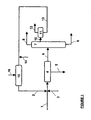
- the cleavage product obtained from the acid catalyzed cleavage of cumene hydroperoxide is fed via line 1 to a settler drum 4.
- the cleavage product Prior to entry of the cleavage product into the settler drum the cleavage product is mixed with an aqueous phase containing the salts from the oxidation products from hydroxyacetone and excess base, preferably sodium phenate, which is fed to the system via line 2.
- sulfuric acid may be added via line 3 in order to adjust the pH typically to a range between 4 to 8.
- the resulting mixture is heterogeneous and is separated in the settler drum 4 into an aqueous phase 5 containing salts from the oxidation products of hydroxyacetone as well as sodium sulfate, sodium formiate and salts from other organic acids, and into an organic phase saturated with water.
- the aqueous phase comprising in addition to the above-mentioned salts small amounts of hydroxyacetone, is withdrawn for further treatment via line 5.
- the water-saturated organic phase is fed to distillation column 7 via line 6.
- distillation column 7 the organic phase is separated into a crude phenol fraction removed from the bottom of the distillation column 7 via line 9, a crude acetone fraction removed from the head of the column 7 via line 8, and a fraction comprising water, cumene, alpha-methylstyrene and most of the hydroxyacetone removed from the distillation column at a side take-off.
- Said aqueous phase is fed via line 10 to a settler drum 11 whereby the fraction is separated into an aqueous phase comprising hydroxyacetone and an organic phase comprising cumene and alpha-methylstyrene.
- the organic phase is fed via line 12 to subsequent work-up steps.
- the aqueous phase comprises, besides hydroxyacetone, small amounts of acetone, preferably less than 0.1 wt.-%, some phenol as well as some organic acids like formic acid or acetic acid and is mixed with a base introduced via line 14 in order to increase the pH to be above 8, preferably between 10 and 12.
- a base introduced via line 14 preferably between 10 and 12.
- an aqueous sodium phenate solution within the concentration ranges discussed above is used.
- the mixing ratio of aqueous phase obtained from the distillation column 7 and the aqueous sodium phenate solution is in the range of 1:0.05 to 1:1, preferably between 1:0.1 to 1:0.3. Thereby a homogeneous mixture of aqueous phase and sodium phenate solution is obtained that is fed to the reactor 15.
- An oxidizing agent preferably air
- temperature and residence time in the reactor are adjusted in order to convert at least 90 percent of the hydroxyacetone into the corresponding neutralized oxidation products.
- the hydroxyacetone content in the aqueous phase obtained from the distillation step is typically between 0.5 and 2 wt.-% .
- the effluent from the reactor 15 containing the salts from the oxidation products from hydroxyacetone, excess sodium phenate and residual amounts of hydroxyacetone is then, as discussed above, used to neutralize the cleavage product.
- a cleavage product contains 42 wt.-% phenol, 26 wt.-% acetone, 25 wt.-% cumene, 3.1 wt.-% alpha-methylstyrene, 200 wppm dissolved sulfuric acid and 1500 wppm hydroxyacetone besides other organic components. All concentrations are related to the total amount of organic components (water-free). In addition, 1 wt.-% dissolved water is present. 10 wt.-% additional fresh water, related to the total amount of cleavage product, must be added to the cleavage product to saturate the cleavage product with water and to form an aqueous phase containing salts.
- the salts are coming from neutralization by adding a sufficient amount of sodium sulphate to adjust the pH in the aqueous phase to around 6.
- water is taken as a side draw containing 90 % of the hydroxyacetone resulting in a concentration of about 1.23 wt.-% of hydroxyacetone in the water.
- the crude phenol as the bottom product contains 340 wppm of hydroxyacetone.
- the water is withdrawn from the process and sent to further treatment, amongst others towards biological treatment.
- the cleavage product of the comparative example is mixed with water from the oxidation reactor of hydroxyacetone.
- the water contains 0.1 wt.-% of residual hydroxyacetone and sodium phenate.
- the resulting concentration of hydroxyacetone in the cleavage product is around 1590 wppm.
- Some sulfuric acid is added to adjust the pH to around 6.
- water is taken as a side draw containing 90 % of the hydroxyacetone resulting in a concentration of about 1.30 wt.-% of hydroxyacetone in the water.
- the crude phenol as the bottom product contains 360 wppm of hydroxyacetone.
- the water is mixed with a 40 wt.-% aqueous sodium phenate solution in a weight ratio of 1:0.1 and contacted with pure oxygen at 95°C.
- the conversion rate of hydroxyacetone is 92 % thus resulting in a residual concentration of hydroxyacetone of 0.1 wt.-%.
- the water is completely recycled to the neutralization of the cleavage product.
Landscapes
- Chemical & Material Sciences (AREA)
- Organic Chemistry (AREA)
- Chemical Kinetics & Catalysis (AREA)
- General Chemical & Material Sciences (AREA)
- Organic Low-Molecular-Weight Compounds And Preparation Thereof (AREA)
Claims (15)
- Procédé de production de phénol comprenant les étapes suivantes :a) l'oxydation de cumène pour former un produit d'oxydation contenant de l'hydroperoxyde de cumène ;b) le clivage dudit produit d'oxydation en utilisant un catalyseur acide de manière à former un produit de clivage contenant du phénol, de l'acétone et des impuretés ;c) la neutralisation et le lavage dudit produit de clivage avec un milieu basique aqueux pour obtenir un produit de clivage neutralisé ;d) la séparation dudit produit de clivage neutralisé via au moins une étape de distillation pour obtenir au moins une fraction contenant du phénol et une fraction aqueuse comprenant de l'hydroxyacétone ;e) le traitement de ladite fraction aqueuse avec un agent oxydant en présence d'une base de manière à obtenir un milieu basique aqueux à moindre teneur en hydroxyacétone ;f) le recyclage d'au moins une partie dudit milieu basique aqueux à l'étape de neutralisation et de lavage c) ; etg) la récupération de phénol de ladite fraction contenant du phénol obtenue à l'étape d).
- Procédé selon la revendication 1, dans lequel, à l'étape e), ladite base est ajoutée à la fraction aqueuse avant le traitement oxydant.
- Procédé selon la revendication 2, dans lequel la base est ajoutée en quantité permettant d'ajuster le pH à une valeur supérieure à 8, de préférence, à une valeur comprise entre 10 et 12.
- Procédé selon l'une quelconque des revendications précédentes, dans lequel, à l'étape e), ladite base est une solution aqueuse de phénate de sodium.
- Procédé selon la revendication 4, dans lequel la concentration du phénate de sodium dans la solution de phénate de sodium est de 5 à 50, de préférence de 30 à 45, mieux encore, de 40 à 45 pour cent en poids.
- Procédé selon la revendication 1, dans lequel, à l'étape de traitement e), l'hydroxyacétone est convertie en produits d'oxydation neutralisés, de préférence au moins 90 % de l'hydroxyacétone sont convertis en produits d'oxydation neutralisés, en ajustant la température et le temps de séjour.
- Procédé selon l'une quelconque des revendications précédentes, dans lequel la teneur en acétone de ladite fraction aqueuse est inférieure à 0,1 pour cent en poids.
- Procédé selon l'une quelconque des revendications précédentes, dans lequel la température à l'étape de traitement e) se situe dans la plage de 20 à 150 °C, de préférence de 80 à 120 °C, mieux encore de 90 à 110 °C.
- Procédé selon l'une quelconque des revendications précédentes, dans lequel, à l'étape de neutralisation et de lavage c), le mélange du produit de clivage et du milieu aqueux est hétérogène et, après l'étape de neutralisation et de lavage c) et avant l'étape de séparation d), le mélange hétérogène est soumis à une partition de phases pour donner une phase aqueuse contenant au moins une partie des produits d'oxydation neutralisés de l'hydroxyacétone et une phase organique saturée en eau qui est délivrée à l'étape de séparation d).
- Procédé selon l'une quelconque des revendications précédentes, dans lequel ladite fraction aqueuse obtenue à l'étape de séparation d) comprend plus que 90 % de l'hydroxyacétone présente dans le produit de clivage neutralisé délivré à l'étape de séparation d).
- Procédé selon l'une quelconque des revendications précédentes, dans lequel le phénol brut obtenu à l'étape de séparation d) comprend du méthylbenzofuranne et de l'hydroxyacétone et est traité en faisant passer le courant de phénol brut à travers au moins deux réacteurs raccordés en série, les réacteurs contenant une résine d'échange ionique acide, moyennant quoi la température dans les réacteurs successifs diminue dans le sens de l'écoulement du courant de phénol de sorte que la température dans le premier réacteur dans le sens d'écoulement du courant de phénol se situe entre 100 °C et 200 °C et que la température dans le dernier réacteur dans le sens de l'écoulement du courant de phénol se situe entre 50 °C et 90 °C en l'absence d'une étape de séparation thermique entre deux réacteurs successifs quelconques.
- Procédé selon la revendication 11, dans lequel on utilise 2 à 4 réacteurs raccordés en série.
- Procédé selon l'une quelconque des revendications 11 ou 12, dans lequel la température dans le premier réacteur dans le sens d'écoulement du courant de phénol se situe entre 100 °C et 150 °C, de préférence entre 100 °C et 120 °C, et la température dans le dernier réacteur dans le sens d'écoulement du courant de phénol se situe entre 50 °C et 70 °C.
- Procédé selon l'une quelconque des revendications 11 à 13, dans lequel les réacteurs contiennent la résine d'échange ionique acide selon un aménagement en lit fixe.
- Procédé selon l'une quelconque des revendications 11 à 14, dans lequel on fait passer le courant de phénol à travers un échangeur de chaleur entre un premier réacteur et un second réacteur successif en utilisant un effluent de phénol plus froid provenant d'un réacteur situé en aval du premier réacteur comme réfrigérant dans l'échangeur de chaleur.
Priority Applications (1)
| Application Number | Priority Date | Filing Date | Title |
|---|---|---|---|
| EP07723911A EP2010471B1 (fr) | 2006-04-18 | 2007-04-03 | Procede d'elimination d'hydroxyacetone du phenol |
Applications Claiming Priority (3)
| Application Number | Priority Date | Filing Date | Title |
|---|---|---|---|
| EP06007957A EP1847522A1 (fr) | 2006-04-18 | 2006-04-18 | Procédé pour l'élimination de l'hydroxyacétone contenu dans le phénol |
| EP07723911A EP2010471B1 (fr) | 2006-04-18 | 2007-04-03 | Procede d'elimination d'hydroxyacetone du phenol |
| PCT/EP2007/002970 WO2007118601A1 (fr) | 2006-04-18 | 2007-04-03 | Procédé d'élimination d'hydroxyacétone à partir de phénol |
Publications (2)
| Publication Number | Publication Date |
|---|---|
| EP2010471A1 EP2010471A1 (fr) | 2009-01-07 |
| EP2010471B1 true EP2010471B1 (fr) | 2011-10-12 |
Family
ID=36809068
Family Applications (2)
| Application Number | Title | Priority Date | Filing Date |
|---|---|---|---|
| EP06007957A Withdrawn EP1847522A1 (fr) | 2006-04-18 | 2006-04-18 | Procédé pour l'élimination de l'hydroxyacétone contenu dans le phénol |
| EP07723911A Active EP2010471B1 (fr) | 2006-04-18 | 2007-04-03 | Procede d'elimination d'hydroxyacetone du phenol |
Family Applications Before (1)
| Application Number | Title | Priority Date | Filing Date |
|---|---|---|---|
| EP06007957A Withdrawn EP1847522A1 (fr) | 2006-04-18 | 2006-04-18 | Procédé pour l'élimination de l'hydroxyacétone contenu dans le phénol |
Country Status (9)
| Country | Link |
|---|---|
| EP (2) | EP1847522A1 (fr) |
| JP (1) | JP5137944B2 (fr) |
| KR (1) | KR101314029B1 (fr) |
| CN (1) | CN101421212B (fr) |
| AT (1) | ATE528275T1 (fr) |
| ES (1) | ES2375157T3 (fr) |
| RU (1) | RU2430082C2 (fr) |
| TW (1) | TWI393701B (fr) |
| WO (1) | WO2007118601A1 (fr) |
Families Citing this family (6)
| Publication number | Priority date | Publication date | Assignee | Title |
|---|---|---|---|---|
| FR2953830B1 (fr) * | 2009-12-14 | 2012-01-20 | Arkema France | Procede de fabrication d'acroleine et/ou d'acide acrylique a partir de glycerol |
| KR101378274B1 (ko) * | 2010-06-08 | 2014-04-01 | 주식회사 엘지화학 | 페놀 불순물 제거 방법 |
| KR102441602B1 (ko) | 2018-12-20 | 2022-09-06 | 주식회사 엘지화학 | 페놀계 부산물 분해 방법 |
| KR102846331B1 (ko) * | 2020-06-16 | 2025-08-14 | 주식회사 엘지화학 | 페놀계 부산물 분해방법 |
| KR102860381B1 (ko) * | 2020-07-10 | 2025-09-15 | 주식회사 엘지화학 | 페놀계 부산물 분해방법 |
| CN114874077B (zh) * | 2022-05-24 | 2024-02-23 | 安徽海华科技集团有限公司 | 一种焦化苯酚的除臭方法 |
Family Cites Families (14)
| Publication number | Priority date | Publication date | Assignee | Title |
|---|---|---|---|---|
| DD73326A (fr) * | ||||
| US2971893A (en) * | 1958-05-29 | 1961-02-14 | Hercules Powder Co Ltd | Phenol purification |
| US3029294A (en) * | 1959-02-27 | 1962-04-10 | Hercules Powder Co Ltd | Purification of phenol |
| US4283568A (en) * | 1979-12-31 | 1981-08-11 | Uop Inc. | Process for the recovery of phenol from a reaction mixture resulting from the acid cleavage of cumene hydroperoxide |
| US5414154A (en) * | 1994-06-06 | 1995-05-09 | Alliedsignal Inc. | Phenol with low levels of methylbenzofuran |
| US5510543A (en) * | 1994-12-09 | 1996-04-23 | General Electric Company | Removal and neutralization of acid catalyst from products of cumene hydroperoxide cleavage |
| DE19903414A1 (de) * | 1999-01-29 | 2000-10-05 | Phenolchemie Gmbh & Co Kg | Verfahren zum Entfernen von Hydroxyaceton aus hydroxyacetonhaltigem Phenol |
| US6340777B1 (en) * | 1999-10-22 | 2002-01-22 | General Electric Company | Method for purifying acetone |
| DE10060503A1 (de) * | 2000-12-06 | 2002-06-20 | Phenolchemie Gmbh & Co Kg | Verfahren und Vorrichtung zur destillativen Aufarbeitung von Spaltproduktgemischen, welche bei der Spaltung von Alkylarylhydroperoxiden anfallen |
| US6573408B1 (en) * | 2001-11-29 | 2003-06-03 | General Electric Company | System and method for purifying cumene hydroperoxide cleavage products |
| US6576798B1 (en) * | 2001-11-29 | 2003-06-10 | General Electric Company | Method and system for purifying cumene hydroperoxide cleavage products |
| US6875898B2 (en) * | 2002-04-04 | 2005-04-05 | Ineos Phenol Gmbh & Co. Kg | Process for preparing phenols |
| ATE386007T1 (de) * | 2003-07-04 | 2008-03-15 | Ineos Phenol Gmbh & Co Kg | Verfahren zur darstellung von phenolen und zur abtrennung von phenol von spaltproduktgemischen, sowie vorrichtung dafür |
| JP4996861B2 (ja) * | 2006-02-23 | 2012-08-08 | 三井化学株式会社 | 回収フェノール類の精製方法 |
-
2006
- 2006-04-18 EP EP06007957A patent/EP1847522A1/fr not_active Withdrawn
-
2007
- 2007-04-03 KR KR1020087022825A patent/KR101314029B1/ko active Active
- 2007-04-03 AT AT07723911T patent/ATE528275T1/de not_active IP Right Cessation
- 2007-04-03 WO PCT/EP2007/002970 patent/WO2007118601A1/fr not_active Ceased
- 2007-04-03 RU RU2008145110/04A patent/RU2430082C2/ru active
- 2007-04-03 EP EP07723911A patent/EP2010471B1/fr active Active
- 2007-04-03 JP JP2009505741A patent/JP5137944B2/ja active Active
- 2007-04-03 ES ES07723911T patent/ES2375157T3/es active Active
- 2007-04-03 CN CN2007800135596A patent/CN101421212B/zh active Active
- 2007-04-14 TW TW096113168A patent/TWI393701B/zh active
Also Published As
| Publication number | Publication date |
|---|---|
| RU2008145110A (ru) | 2010-05-27 |
| TWI393701B (zh) | 2013-04-21 |
| TW200800873A (en) | 2008-01-01 |
| CN101421212A (zh) | 2009-04-29 |
| KR20080109764A (ko) | 2008-12-17 |
| WO2007118601A1 (fr) | 2007-10-25 |
| CN101421212B (zh) | 2012-10-31 |
| ES2375157T3 (es) | 2012-02-27 |
| JP2009534326A (ja) | 2009-09-24 |
| RU2430082C2 (ru) | 2011-09-27 |
| EP1847522A1 (fr) | 2007-10-24 |
| ATE528275T1 (de) | 2011-10-15 |
| EP2010471A1 (fr) | 2009-01-07 |
| JP5137944B2 (ja) | 2013-02-06 |
| KR101314029B1 (ko) | 2013-10-01 |
Similar Documents
| Publication | Publication Date | Title |
|---|---|---|
| EP2010471A1 (fr) | Procede d'elimination d'hydroxyacetone a partir de phenol | |
| EP2010472B1 (fr) | Methode de traitement du phenol | |
| US4262150A (en) | Process for the recovery of phenol from a reaction mixture resulting from the acid cleavage of cumene hydroperoxide | |
| JP3775832B2 (ja) | ビスフェノールaの製造方法 | |
| WO2002102751A2 (fr) | Procede de reduction des niveaux de methylbenzofurane dans le phenol a grande purete | |
| US4283568A (en) | Process for the recovery of phenol from a reaction mixture resulting from the acid cleavage of cumene hydroperoxide | |
| US4339615A (en) | Process for producing resorcinol | |
| KR101431121B1 (ko) | 아세톤의 정제방법 | |
| US20070244346A1 (en) | Process for removal of hydroxyacetone from phenol | |
| US7544845B2 (en) | Process for treating phenol | |
| US20050137429A1 (en) | Methods for purification of phenol | |
| JP6694519B2 (ja) | フェノールの精製方法 | |
| US6875898B2 (en) | Process for preparing phenols | |
| EP1494984B1 (fr) | Procede de preparation de phenols | |
| KR20000053418A (ko) | 아르알킬 하이드로퍼옥사이드의 개열 생성물 상으로부터유기산 및 무기산을 제거하는 방법 | |
| US7763755B2 (en) | Method for producing dialkylhydroperoxybenzenes | |
| US3923909A (en) | Oxidation of diethylbenzenes |
Legal Events
| Date | Code | Title | Description |
|---|---|---|---|
| PUAI | Public reference made under article 153(3) epc to a published international application that has entered the european phase |
Free format text: ORIGINAL CODE: 0009012 |
|
| 17P | Request for examination filed |
Effective date: 20081002 |
|
| AK | Designated contracting states |
Kind code of ref document: A1 Designated state(s): AT BE BG CH CY CZ DE DK EE ES FI FR GB GR HU IE IS IT LI LT LU LV MC MT NL PL PT RO SE SI SK TR |
|
| AX | Request for extension of the european patent |
Extension state: AL BA HR MK RS |
|
| 17Q | First examination report despatched |
Effective date: 20100707 |
|
| GRAP | Despatch of communication of intention to grant a patent |
Free format text: ORIGINAL CODE: EPIDOSNIGR1 |
|
| DAX | Request for extension of the european patent (deleted) | ||
| RTI1 | Title (correction) |
Free format text: PROCESS FOR REMOVAL OF HYDROXYACETONE FROM PHENOL |
|
| GRAS | Grant fee paid |
Free format text: ORIGINAL CODE: EPIDOSNIGR3 |
|
| GRAA | (expected) grant |
Free format text: ORIGINAL CODE: 0009210 |
|
| AK | Designated contracting states |
Kind code of ref document: B1 Designated state(s): AT BE BG CH CY CZ DE DK EE ES FI FR GB GR HU IE IS IT LI LT LU LV MC MT NL PL PT RO SE SI SK TR |
|
| REG | Reference to a national code |
Ref country code: GB Ref legal event code: FG4D |
|
| REG | Reference to a national code |
Ref country code: CH Ref legal event code: EP |
|
| REG | Reference to a national code |
Ref country code: IE Ref legal event code: FG4D |
|
| REG | Reference to a national code |
Ref country code: DE Ref legal event code: R096 Ref document number: 602007017776 Country of ref document: DE Effective date: 20111215 |
|
| REG | Reference to a national code |
Ref country code: NL Ref legal event code: T3 |
|
| REG | Reference to a national code |
Ref country code: ES Ref legal event code: FG2A Ref document number: 2375157 Country of ref document: ES Kind code of ref document: T3 Effective date: 20120227 |
|
| LTIE | Lt: invalidation of european patent or patent extension |
Effective date: 20111012 |
|
| REG | Reference to a national code |
Ref country code: AT Ref legal event code: MK05 Ref document number: 528275 Country of ref document: AT Kind code of ref document: T Effective date: 20111012 |
|
| PG25 | Lapsed in a contracting state [announced via postgrant information from national office to epo] |
Ref country code: IS Free format text: LAPSE BECAUSE OF FAILURE TO SUBMIT A TRANSLATION OF THE DESCRIPTION OR TO PAY THE FEE WITHIN THE PRESCRIBED TIME-LIMIT Effective date: 20120212 Ref country code: LT Free format text: LAPSE BECAUSE OF FAILURE TO SUBMIT A TRANSLATION OF THE DESCRIPTION OR TO PAY THE FEE WITHIN THE PRESCRIBED TIME-LIMIT Effective date: 20111012 |
|
| PG25 | Lapsed in a contracting state [announced via postgrant information from national office to epo] |
Ref country code: LV Free format text: LAPSE BECAUSE OF FAILURE TO SUBMIT A TRANSLATION OF THE DESCRIPTION OR TO PAY THE FEE WITHIN THE PRESCRIBED TIME-LIMIT Effective date: 20111012 Ref country code: PT Free format text: LAPSE BECAUSE OF FAILURE TO SUBMIT A TRANSLATION OF THE DESCRIPTION OR TO PAY THE FEE WITHIN THE PRESCRIBED TIME-LIMIT Effective date: 20120213 Ref country code: SI Free format text: LAPSE BECAUSE OF FAILURE TO SUBMIT A TRANSLATION OF THE DESCRIPTION OR TO PAY THE FEE WITHIN THE PRESCRIBED TIME-LIMIT Effective date: 20111012 Ref country code: GR Free format text: LAPSE BECAUSE OF FAILURE TO SUBMIT A TRANSLATION OF THE DESCRIPTION OR TO PAY THE FEE WITHIN THE PRESCRIBED TIME-LIMIT Effective date: 20120113 Ref country code: SE Free format text: LAPSE BECAUSE OF FAILURE TO SUBMIT A TRANSLATION OF THE DESCRIPTION OR TO PAY THE FEE WITHIN THE PRESCRIBED TIME-LIMIT Effective date: 20111012 |
|
| PG25 | Lapsed in a contracting state [announced via postgrant information from national office to epo] |
Ref country code: CY Free format text: LAPSE BECAUSE OF FAILURE TO SUBMIT A TRANSLATION OF THE DESCRIPTION OR TO PAY THE FEE WITHIN THE PRESCRIBED TIME-LIMIT Effective date: 20111012 |
|
| PG25 | Lapsed in a contracting state [announced via postgrant information from national office to epo] |
Ref country code: CZ Free format text: LAPSE BECAUSE OF FAILURE TO SUBMIT A TRANSLATION OF THE DESCRIPTION OR TO PAY THE FEE WITHIN THE PRESCRIBED TIME-LIMIT Effective date: 20111012 Ref country code: EE Free format text: LAPSE BECAUSE OF FAILURE TO SUBMIT A TRANSLATION OF THE DESCRIPTION OR TO PAY THE FEE WITHIN THE PRESCRIBED TIME-LIMIT Effective date: 20111012 Ref country code: BG Free format text: LAPSE BECAUSE OF FAILURE TO SUBMIT A TRANSLATION OF THE DESCRIPTION OR TO PAY THE FEE WITHIN THE PRESCRIBED TIME-LIMIT Effective date: 20120112 Ref country code: SK Free format text: LAPSE BECAUSE OF FAILURE TO SUBMIT A TRANSLATION OF THE DESCRIPTION OR TO PAY THE FEE WITHIN THE PRESCRIBED TIME-LIMIT Effective date: 20111012 Ref country code: DK Free format text: LAPSE BECAUSE OF FAILURE TO SUBMIT A TRANSLATION OF THE DESCRIPTION OR TO PAY THE FEE WITHIN THE PRESCRIBED TIME-LIMIT Effective date: 20111012 |
|
| PLBE | No opposition filed within time limit |
Free format text: ORIGINAL CODE: 0009261 |
|
| STAA | Information on the status of an ep patent application or granted ep patent |
Free format text: STATUS: NO OPPOSITION FILED WITHIN TIME LIMIT |
|
| PG25 | Lapsed in a contracting state [announced via postgrant information from national office to epo] |
Ref country code: PL Free format text: LAPSE BECAUSE OF FAILURE TO SUBMIT A TRANSLATION OF THE DESCRIPTION OR TO PAY THE FEE WITHIN THE PRESCRIBED TIME-LIMIT Effective date: 20111012 Ref country code: RO Free format text: LAPSE BECAUSE OF FAILURE TO SUBMIT A TRANSLATION OF THE DESCRIPTION OR TO PAY THE FEE WITHIN THE PRESCRIBED TIME-LIMIT Effective date: 20111012 |
|
| 26N | No opposition filed |
Effective date: 20120713 |
|
| REG | Reference to a national code |
Ref country code: DE Ref legal event code: R097 Ref document number: 602007017776 Country of ref document: DE Effective date: 20120713 |
|
| PG25 | Lapsed in a contracting state [announced via postgrant information from national office to epo] |
Ref country code: MC Free format text: LAPSE BECAUSE OF NON-PAYMENT OF DUE FEES Effective date: 20120430 |
|
| REG | Reference to a national code |
Ref country code: CH Ref legal event code: PL |
|
| GBPC | Gb: european patent ceased through non-payment of renewal fee |
Effective date: 20120403 |
|
| REG | Reference to a national code |
Ref country code: IE Ref legal event code: MM4A |
|
| PG25 | Lapsed in a contracting state [announced via postgrant information from national office to epo] |
Ref country code: AT Free format text: LAPSE BECAUSE OF FAILURE TO SUBMIT A TRANSLATION OF THE DESCRIPTION OR TO PAY THE FEE WITHIN THE PRESCRIBED TIME-LIMIT Effective date: 20111012 Ref country code: IE Free format text: LAPSE BECAUSE OF NON-PAYMENT OF DUE FEES Effective date: 20120403 Ref country code: GB Free format text: LAPSE BECAUSE OF NON-PAYMENT OF DUE FEES Effective date: 20120403 Ref country code: CH Free format text: LAPSE BECAUSE OF NON-PAYMENT OF DUE FEES Effective date: 20120430 Ref country code: LI Free format text: LAPSE BECAUSE OF NON-PAYMENT OF DUE FEES Effective date: 20120430 |
|
| PG25 | Lapsed in a contracting state [announced via postgrant information from national office to epo] |
Ref country code: MT Free format text: LAPSE BECAUSE OF FAILURE TO SUBMIT A TRANSLATION OF THE DESCRIPTION OR TO PAY THE FEE WITHIN THE PRESCRIBED TIME-LIMIT Effective date: 20111012 |
|
| REG | Reference to a national code |
Ref country code: DE Ref legal event code: R082 Ref document number: 602007017776 Country of ref document: DE Representative=s name: FLEISCHER, ENGELS & PARTNER MBB, PATENTANWAELT, DE |
|
| PG25 | Lapsed in a contracting state [announced via postgrant information from national office to epo] |
Ref country code: TR Free format text: LAPSE BECAUSE OF FAILURE TO SUBMIT A TRANSLATION OF THE DESCRIPTION OR TO PAY THE FEE WITHIN THE PRESCRIBED TIME-LIMIT Effective date: 20111012 |
|
| PG25 | Lapsed in a contracting state [announced via postgrant information from national office to epo] |
Ref country code: LU Free format text: LAPSE BECAUSE OF NON-PAYMENT OF DUE FEES Effective date: 20120403 |
|
| PG25 | Lapsed in a contracting state [announced via postgrant information from national office to epo] |
Ref country code: HU Free format text: LAPSE BECAUSE OF FAILURE TO SUBMIT A TRANSLATION OF THE DESCRIPTION OR TO PAY THE FEE WITHIN THE PRESCRIBED TIME-LIMIT Effective date: 20070403 |
|
| REG | Reference to a national code |
Ref country code: FR Ref legal event code: PLFP Year of fee payment: 10 |
|
| REG | Reference to a national code |
Ref country code: FR Ref legal event code: PLFP Year of fee payment: 11 |
|
| REG | Reference to a national code |
Ref country code: FR Ref legal event code: PLFP Year of fee payment: 12 |
|
| PGFP | Annual fee paid to national office [announced via postgrant information from national office to epo] |
Ref country code: NL Payment date: 20260420 Year of fee payment: 20 |
|
| PGFP | Annual fee paid to national office [announced via postgrant information from national office to epo] |
Ref country code: ES Payment date: 20260529 Year of fee payment: 20 |
|
| PGFP | Annual fee paid to national office [announced via postgrant information from national office to epo] |
Ref country code: IT Payment date: 20260427 Year of fee payment: 20 |
|
| PGFP | Annual fee paid to national office [announced via postgrant information from national office to epo] |
Ref country code: DE Payment date: 20260413 Year of fee payment: 20 |
|
| PGFP | Annual fee paid to national office [announced via postgrant information from national office to epo] |
Ref country code: FI Payment date: 20260430 Year of fee payment: 20 |
|
| PGFP | Annual fee paid to national office [announced via postgrant information from national office to epo] |
Ref country code: BE Payment date: 20260420 Year of fee payment: 20 |
|
| PGFP | Annual fee paid to national office [announced via postgrant information from national office to epo] |
Ref country code: FR Payment date: 20260420 Year of fee payment: 20 |