EP2011299B1 - Verfahren und vorrichtungen zur sicherung der kommunikation zwischen einem benutzerendgerät und einem sip-proxy mit ipsec-sicherheitsassoziation - Google Patents
Verfahren und vorrichtungen zur sicherung der kommunikation zwischen einem benutzerendgerät und einem sip-proxy mit ipsec-sicherheitsassoziation Download PDFInfo
- Publication number
- EP2011299B1 EP2011299B1 EP06754842.0A EP06754842A EP2011299B1 EP 2011299 B1 EP2011299 B1 EP 2011299B1 EP 06754842 A EP06754842 A EP 06754842A EP 2011299 B1 EP2011299 B1 EP 2011299B1
- Authority
- EP
- European Patent Office
- Prior art keywords
- sip proxy
- user terminal
- security association
- sip
- ipsec security
- Prior art date
- Legal status (The legal status is an assumption and is not a legal conclusion. Google has not performed a legal analysis and makes no representation as to the accuracy of the status listed.)
- Expired - Lifetime
Links
Images


Classifications
-
- H—ELECTRICITY
- H04—ELECTRIC COMMUNICATION TECHNIQUE
- H04L—TRANSMISSION OF DIGITAL INFORMATION, e.g. TELEGRAPHIC COMMUNICATION
- H04L63/00—Network architectures or network communication protocols for network security
- H04L63/16—Implementing security features at a particular protocol layer
- H04L63/164—Implementing security features at a particular protocol layer at the network layer
-
- H—ELECTRICITY
- H04—ELECTRIC COMMUNICATION TECHNIQUE
- H04L—TRANSMISSION OF DIGITAL INFORMATION, e.g. TELEGRAPHIC COMMUNICATION
- H04L63/00—Network architectures or network communication protocols for network security
- H04L63/04—Network architectures or network communication protocols for network security for providing a confidential data exchange among entities communicating through data packet networks
- H04L63/0428—Network architectures or network communication protocols for network security for providing a confidential data exchange among entities communicating through data packet networks wherein the data content is protected, e.g. by encrypting or encapsulating the payload
-
- H—ELECTRICITY
- H04—ELECTRIC COMMUNICATION TECHNIQUE
- H04L—TRANSMISSION OF DIGITAL INFORMATION, e.g. TELEGRAPHIC COMMUNICATION
- H04L63/00—Network architectures or network communication protocols for network security
- H04L63/08—Network architectures or network communication protocols for network security for authentication of entities
-
- H—ELECTRICITY
- H04—ELECTRIC COMMUNICATION TECHNIQUE
- H04L—TRANSMISSION OF DIGITAL INFORMATION, e.g. TELEGRAPHIC COMMUNICATION
- H04L63/00—Network architectures or network communication protocols for network security
- H04L63/08—Network architectures or network communication protocols for network security for authentication of entities
- H04L63/0884—Network architectures or network communication protocols for network security for authentication of entities by delegation of authentication, e.g. a proxy authenticates an entity to be authenticated on behalf of this entity vis-à-vis an authentication entity
Definitions
- the present invention relates to IP Multimedia Subsystem security and more particularly to a method and apparatus for securing communications between user terminals and SIP proxies.
- IP Multimedia services provide a dynamic combination of voice, video, messaging, data etc. within the same session.
- the number of services offered to the end users will grow, and the inter-personal communication experience will be enriched. This will lead to a new generation of personalised, rich multimedia communication services, including so-called "combinational IP Multimedia" services which are considered in more detail below.
- IP Multimedia Subsystem is the technology defined by the Third Generation Partnership Project (3GPP) to provide IP Multimedia services over mobile communication networks (3GPP TS 22.228, TS 23.218, TS 23.228, TS 24.228, TS 24.229, TS 29.228, TS 29.229, TS 29.328 and TS 29.329 Releases 5 to 7.
- IMS provides key features to enrich the end-user person-to-person communication experience through the use of standardised IMS Service Enablers, which facilitate new rich person-to-person (client-to-client) communication services as well as person-to-content (client-to-server) services over IP-based networks.
- the IMS makes use of the Session Initiation Protocol (SIP) to set up and control calls or sessions between user terminals (or user terminals and application servers).
- SIP Session Initiation Protocol
- SDP Session Description Protocol
- SIP was created as a user-to-user protocol
- IMS allows operators and service providers to control user access to services and to charge users accordingly.
- FIG. 1 illustrates schematically how the IMS fits into the mobile network architecture in the case of a GPRS/PS access network.
- Call/Session Control Functions operate as SIP proxies within the IMS.
- the 3GPP architecture defines three types of CSCFs: the Proxy CSCF (P-CSCF) which is the first point of contact within the IMS for a SIP terminal; the Serving CSCF (S-CSCF) which provides services to the user that the user is subscribed to; and the Interrogating CSCF (I-CSCF) whose role is to identify the correct S-CSCF and to forward to that S-CSCF a request received from a SIP terminal via a P-CSCF.
- P-CSCF Proxy CSCF
- S-CSCF Serving CSCF
- I-CSCF Interrogating CSCF
- a user registers with the IMS using the specified SIP REGISTER method. This is a mechanism for attaching to the IMS and announcing to the IMS the address at which a SIP user identity can be reached. The user receives a unique URI from the S-CSCF that it shall use when it initiates a dialog.
- the IMS authenticates the user, and allocates a S-CSCF to that user from the set of available S-CSCFs. Whilst the criteria for allocating S-CSCFs is not specified by 3GPP, these may include load sharing and service requirements. It is noted that the allocation of an S-CSCF is key to controlling (and charging for) user access to IMS-based services. Operators may provide a mechanism for preventing direct user-to-user SIP sessions which would otherwise bypass the S-CSCF.
- the I-CSCF receives the required S-CSCF capabilities from the home network's Home Subscriber Server (HSS), and selects an appropriate S-CSCF based on the received capabilities.
- HSS Home Subscriber Server
- S-CSCF allocation is also carried out for a user by the I-CSCF in the case where the user is called by another party, and the user is not currently allocated an S-CSCF.
- the request will include the P-CSCF and S-CSCF URIs so that the P-CSCF is able to forward the request to the selected S-CSCF. This applies both on the originating and terminating sides (of the IMS). [For the terminating call the request will include the P-CSCF address and the UE address.]
- the first point of contact between the User Equipment (UE) and the SIP "world” may be a Session Controller (SC), including P-CSCF functionality.
- SC Session Controller
- the SC may have additional functionality to the P-CSCF, but will handle the policing of access for the UE to the visited network.
- IPSec Security Associations IPSec Security Associations
- AKA Authentication and Key Agreement
- An IPSec SA is tied to the IP addresses of both ends of the communication (i.e. the UE and the SIP proxy).
- the ETSI TS 33.203, V7.0.0 (2005-12 ) sets out a procedure for establishing Security Associations in the context of the IMS.
- a re-registration attempt by a user requires an AKA authentication of the user by the user's home network.
- Associated signalling is protected between the user terminal and the P-CSCF using any pre-existing Security Association.
- IP address of one of these nodes may change, for example, as a result of loss of client state information at a Network Address Translator (NAT) or because the UE is a mobile node (using a 3G access network).
- NAT Network Address Translator
- the IP address of that node may change, for example, as a result of the UE migrating to a new SIP proxy.
- Renegotiation of IPSec SAs requires an exchange of messages between the SIP proxy and the home network of the UE, as well as between the SIP proxy and the UE. This will inevitably introduce a significant interruption to the communication path, as well as adding to the volume of signalling traffic within the network and processing load on the home network servers (HSS, AAA and HLR).
- a method of securing communications between a user terminal and a SIP proxy comprising:
- the full authentication procedure between the user terminal and a first SIP proxy may be the IMS AKA procedure.
- the first and second SIP proxies may be for example Session Controllers (SCs), or Proxy Call Session Control Functions (P-CSCFs) of an IP Multimedia Subsystem (IMS).
- SCs Session Controllers
- P-CSCFs Proxy Call Session Control Functions
- IMS IP Multimedia Subsystem
- the location of a user terminal is defined by an IP address and, optionally, a port number.
- the new Security Association may he established hy reassigning the security parameters of the pre-existing Security Association to the new IP address of the user terminal.
- the new IP address of the terminal is sent to the SIP proxy by way of SIP level signalling.
- the new Security Association may be established by reassigning the security parameters of the pre-existing Security Association to the IP address of the second SIP proxy.
- the pre-existing Security Association is obtained by the second SIP proxy from the first SIP proxy. This may require that the second SIP proxy send to the first SIP proxy a request for the pre-existing Security Association.
- the second SIP proxy may obtain the identity of the first SIP proxy from the user terminal via SIP level signalling. Alternatively, the second SIP proxy may obtain this identity from a central node. In another embodiment, a central node may instruct the first SIP proxy to send the pre-existing Security Association to the second SIP proxy.
- the second SIP proxy When the second SIP proxy receives a registration request from the user terminal, this may trigger the second SIP proxy to initiate a challenge and response authentication procedure with the user terminal based upon keying information of the pre-existing Security Association. Only if the user terminal is authenticated is a new Security Association established and used.
- apparatus for providing a SIP proxy comprising means for establishing at least one Security Association to secure communications between the SIP proxy and a user terminal during a full authentication procedure between the SIP proxy and the user terminal in order to generate the at least one IPSec Security Association, wherein means for performing, in response to a handover of the user terminal from a first SIP proxy to the SIP proxy, a local reauthentication of the user terminal using keying information associated with the at least one IPSec Security Association , the means for performing the local reauthentication is configured to: generate a challenge at the second SIP proxy and sending this to the user terminal, receive a response from the user terminal, wherein the response is generated at the user terminal using said challenge and said keying information, and authenticate the response at the SIP proxy using said at least one IPSec Security Association received at the SIP proxy from the first SIP proxy.
- the apparatus comprises means for reauthenticating the user terminal to the SIP proxy on the basis of a challenge and response process between the user terminal and the SIP proxy using keying information of the pre-existing Security Association. This avoids the need for a full reauthentication procedure involving the home network of the user terminal.
- a user terminal arranged in use to communicate with a SIP proxy and comprising:
- Figure 1 illustrates the IP Multimedia Subsystem (IMS) on top of a 3G access network.
- Figure 2 illustrates a generalised architecture for providing SIP-based services on top of an access network.
- Clients or UEs attach at the SIP level to a first-hop SIP proxy which may be, for example, a P-CSCF or a Session Controller (SC) in the case of IMS.
- a first-hop SIP proxy which may be, for example, a P-CSCF or a Session Controller (SC) in the case of IMS.
- SC Session Controller
- This means involves an exchange of signalling between the UE and the SIP proxy at the SIP level, i.e. using SIP messages.
- Actual changes in IP addresses are transferred from the lower IP layers to the application layers by an appropriate Application Programming Interface (API).
- API Application Programming Interface
- An added advantage of making the IP address changes visible to the application layer is that these changes can be subject to application policies. It also becomes easier to signal details of changes between network nodes.
- the general solution consists of the following steps:
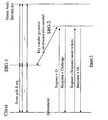
- Figure 3 illustrates signalling associated with one particular implementation of this general solution, for the case where the user terminal moves from a first SC (SC-1) to a second SC (SC-2).
- SC-1 first SC
- SC-2 SC
- the user terminal Upon first attachment to the IMS, the user terminal conducts a standard authentication and registration process with the first SC. This involves running the IMS AKA process with the terminal's home network.
- IPSec SAs are established at both the first SC and the user terminal. These SAs are used to secure subsequent communications between the user terminal and the first SC.
- the user terminal When the user terminal determines that it must transfer to a new SC due (typically as a result of signalling sent to it by the network), the user terminal sends a SIP REGISTER message to the new SC (in this case SC-2). This message contains an identity of the user terminal.
- the second SC Upon receipt of this message, the second SC will generate a challenge and send this to the user terminal. The challenge may be for example a random number.
- the user terminal generates a further response using the challenge and keying information associated with the pre-exisiting SA (used with SC-1), and sends this to the second SC.
- the second SC has received the pre-exisiting SA from the first SC, and it uses this information to authenticate the response.
- the second SC returns an OK message to the user terminal, and thereafter communications between the UE and the second SC are secured using the pre-exisiting SA.
- This process can be based on HTTP Digest MD5.
- the new SIP proxy may also cause a re-invite to be sent to the peer user terminal(s).
- the re-invite will notify the peer terminal(s) of the identity of the new SIP proxy.
- the SIP proxy may modify the media information in the message so that media traffic is rerouted through the new SC.
- a number of additional enhancements to this approach can be introduced, in particular in order to address a possible Denial of Service (DoS) attack where attackers simply choose an SPI at random and send SIP messages containing this SPI to a SIP proxy hoping to create excessive system traffic.
- DoS Denial of Service
- the SPIs are created using some encryption function, e.g. by encrypting a cookie with an operator key (OP_KEY) shared between the different SIP proxies, by decrypting a received SPI, any SIP proxy will be able to authenticate the SIP proxy identity. For example, consider the case where the SIP proxy is a SC:
- NAT/SIP keep alive messages It could well be that it is a NAT/SIP keepalive message that (a) discovers that the user terminal is in a new location or causes messages to be received from a new client, (b) initiates the fast re-auth or c) itself performs (initiates) the re-authentication process.
Landscapes
- Engineering & Computer Science (AREA)
- Computer Security & Cryptography (AREA)
- Computer Hardware Design (AREA)
- Computing Systems (AREA)
- General Engineering & Computer Science (AREA)
- Computer Networks & Wireless Communication (AREA)
- Signal Processing (AREA)
- Mobile Radio Communication Systems (AREA)
- Telephonic Communication Services (AREA)
Claims (12)
- Verfahren zum Absichern von Kommunikation zwischen einem Benutzerendgerät und einem SIP-Proxy, wobei das Verfahren umfasst:Durchführen einer kompletten Authentifizierungsprozedur zwischen dem Benutzerendgerät und einem ersten SIP-Proxy, um mindestens eine IPSec-Sicherheitsverknüpfung zwischen dem Benutzerendgerät und dem ersten SIP-Proxy zu erzeugen, wobei diese Prozedur mit einem Signalisierungsaustausch zwischen dem Benutzerendgerät und einem Heimatnetzwerk des Benutzerendgeräts einhergeht;gekennzeichnet durch:als Antwort auf eine Verbindungsübergabe des Benutzerendgeräts vom ersten SIP-Proxy zu einem zweiten SIP-Proxy erfolgendes Durchführen einer lokalen Neuauthentifizierung des Benutzerendgeräts beim zweiten SIP-Proxy unter Verwendung von Schlüsselinformation, die mit der mindestens einen IPSec-Sicherheitsverknüpfung verknüpft ist, wobei die lokale Neuauthentifizierung umfasst:Erzeugen einer Aufgabe im zweiten SIP-Proxy und Senden derselben an das Benutzerendgerät;Erzeugen einer Antwort im Benutzerendgerät unter Verwendung der Aufgabe und der Schlüsselinformation, die mit der mindestens einen IPSec-Sicherheitsverknüpfung verknüpft ist, und Senden der Antwort an den zweiten SIP-Proxy, undAuthentifizieren der Antwort im zweiten SIP-Proxy unter Verwendung der mindestens einen IPSec-Sicherheitsverknüpfung, die im zweiten SIP-Proxy vom ersten SIP-Proxy empfangen wurde.
- Verfahren nach Anspruch 1, worin die komplette Authentifizierungsprozedur eine IMS-AKA-Prozedur ist.
- Verfahren nach Anspruch 1 oder 2, worin der erste und der zweite SIP-Proxy Sitzungssteuerungseinrichtungen oder Proxy-Gesprächssitzungssteuerungsfunktionen eines IP-Multimediasubsystems sind.
- Verfahren nach einem der Ansprüche 1 bis 3, worin eine neue Sicherheitsverknüpfung durch Neuzuweisung der Sicherheitsparameter der mindestens einen IPSec-Sicherheitsverknüpfung zur IP-Adresse des zweiten SIP-Proxys eingerichtet wird.
- Verfahren nach Anspruch 4, worin die mindestens eine IPSec-Sicherheitsverknüpfung durch den zweiten SIP-Proxy vom ersten SIP-Proxy erlangt wird.
- Verfahren nach Anspruch 5, wobei der zweite SIP-Proxy an den ersten SIP-Proxy eine Anfrage nach der mindestens einen IPSec-Sicherheitsverknüpfung sendet.
- Verfahren nach einem der Ansprüche 1 bis 6, worin der zweite SIP-Proxy die Identität des ersten SIP-Proxys vom Benutzerendgerät mittels Signalisierung auf SIP-Ebene erlangt.
- Verfahren nach einem der Ansprüche 1 bis 6, worin der zweite SIP-Proxy die Identität des ersten SIP-Proxys von einem zentralen Knoten erlangt.
- Verfahren nach Anspruch 5, worin ein zentraler Knoten den ersten SIP-Proxy anweist, die mindestens eine IPSec-Sicherheitsverknüpfung an den zweiten SIP-Proxy zu senden.
- Verfahren nach einem der vorhergehenden Ansprüche, worin, wenn der zweite SIP-Proxy eine Registrierungsanfrage vom Benutzerendgerät empfängt, dies den zweiten SIP-Proxy veranlasst, eine Aufgabe-Antwort-Authentifizierungsprozedur mit dem Benutzerendgerät auszulösen, die auf Schlüsselinformation der mindestens einen IPSec-Sicherheitsverknüpfung beruht, und nur wenn das Benutzerendgerät authentifiziert wird, wird eine neue Sicherheitsverknüpfung eingerichtet und verwendet.
- Vorrichtung zum Implementieren eines SIP-Proxys und umfassend Mittel zum Einrichten mindestens einer IPSec-Sicherheitsverknüpfung, um Kommunikation zwischen dem SIP-Proxy und einem Benutzerendgerät während einer kompletten Authentifizierungsprozedur zwischen dem SIP-Proxy und dem Benutzerendgerät abzusichern, um die mindestens eine IPSec-Sicherheitsverknüpfung zu erzeugen,
gekennzeichnet durch:Mittel zum als Antwort auf eine Verbindungsübergabe des Benutzerendgeräts von einem ersten SIP-Proxy zu dem SIP-Proxy erfolgenden Durchführen einer lokalen Neuauthentifizierung des Benutzerendgeräts unter Verwendung von Schlüsselinformation, die mit der mindestens einen IPSec-Sicherheitsverknüpfung verknüpft ist, wobei die Mittel zum Durchführen der lokalen Neuauthentifizierung dafür konfiguriert sind:eine Aufgabe im SIP-Proxy zu erzeugen und dieselbe an das Benutzerendgerät zu senden;eine Antwort vom Benutzerendgerät zu empfangen, worin die Antwort im Benutzerendgerät unter Verwendung der Aufgabe und der Schlüsselinformation erzeugt wird; unddie Antwort im SIP-Proxy unter Verwendung der mindestens einen IPSec-Sicherheitsverknüpfung, die im SIP-Proxy vom ersten SIP-Proxy empfangen wurde, zu authentifizieren. - Benutzerendgerät, dafür eingerichtet, in Gebrauch mit einem zweiten SIP-Proxy zu kommunizieren, und umfassend:Mittel zum Durchführen einer kompletten Authentifizierungsprozedur mit einem ersten SIP-Proxy, um mindestens eine IPSec-Sicherheitsverknüpfung zwischen dem Benutzerendgerät und dem ersten SIP-Proxy zu erzeugen, wobei diese Prozedur mit einem Signalisierungsaustausch zwischen dem Benutzerendgerät und einem Heimatnetzwerk des Benutzerendgeräts einhergeht;gekennzeichnet durch:Mittel zum Einrichten der mindestens einen IPSec-Sicherheitsverknüpfung mit einem zweiten SIP-Proxy unter Verwendung von Schlüsselinformation, die mit der mindestens einen IPSec-Sicherheitsverknüpfung verknüpft ist, und zwar als Antwort auf eine Verbindungsübergabe des Benutzerendgeräts vom ersten SIP-Proxy zum zweiten SIP-Proxy, wobei die Mittel zum Einrichten ferner umfassen:Mittel zum Erzeugen einer Antwort im Benutzerendgerät unter Verwendung einer Aufgabe, die im zweiten SIP-Proxy erzeugt wurde und die vom zweiten SIP-Proxy an das Benutzerendgerät gesendet worden ist, und der Schlüsselinformation, die mit der mindestens einen IPSec-Sicherheitsverknüpfung verknüpft ist; undMittel zum Senden der Antwort an den zweiten SIP-Proxy zur Verwendung beim Authentifizieren der Antwort im zweiten SIP-Proxy und Kommunizieren mit dem zweiten SIP-Proxy unter Verwendung der mindestens einen IPSec-Sicherheitsverknüpfung.
Applications Claiming Priority (1)
| Application Number | Priority Date | Filing Date | Title |
|---|---|---|---|
| PCT/EP2006/061818 WO2007121786A1 (en) | 2006-04-25 | 2006-04-25 | Method and apparatuses for securing communications between a user terminal and a sip proxy using ipsec security association |
Publications (3)
| Publication Number | Publication Date |
|---|---|
| EP2011299A1 EP2011299A1 (de) | 2009-01-07 |
| EP2011299B1 true EP2011299B1 (de) | 2013-04-24 |
| EP2011299B8 EP2011299B8 (de) | 2013-06-19 |
Family
ID=37596307
Family Applications (1)
| Application Number | Title | Priority Date | Filing Date |
|---|---|---|---|
| EP06754842.0A Expired - Lifetime EP2011299B8 (de) | 2006-04-25 | 2006-04-25 | Verfahren und vorrichtungen zur sicherung der kommunikation zwischen einem benutzerendgerät und einem sip-proxy mit ipsec-sicherheitsassoziation |
Country Status (3)
| Country | Link |
|---|---|
| US (1) | US20090327721A1 (de) |
| EP (1) | EP2011299B8 (de) |
| WO (1) | WO2007121786A1 (de) |
Families Citing this family (7)
| Publication number | Priority date | Publication date | Assignee | Title |
|---|---|---|---|---|
| KR100858975B1 (ko) * | 2006-10-30 | 2008-09-17 | 한국전자통신연구원 | 전자감시 방법 및 그 시스템 |
| KR100964350B1 (ko) * | 2007-09-14 | 2010-06-17 | 성균관대학교산학협력단 | IPv6 환경에서의 SEND와 IPSec 협업 기법 및시스템 |
| US8116735B2 (en) * | 2008-02-28 | 2012-02-14 | Simo Holdings Inc. | System and method for mobile telephone roaming |
| US9729588B2 (en) * | 2014-10-31 | 2017-08-08 | T-Mobile Usa, Inc. | SPI handling between UE and P-CSCF in an IMS network |
| EP4026299A4 (de) * | 2019-10-10 | 2022-10-26 | Huawei Technologies Co., Ltd. | Methoden und systeme zur optimierung der wiederauthentifizierung beim internet-schlüsselaustausch |
| US11419167B2 (en) * | 2020-07-20 | 2022-08-16 | T-Mobile Usa, Inc. | Session initiated protocol (SIP) session establishment with a home subscriber server (HSS) outage |
| US11166327B1 (en) | 2020-07-20 | 2021-11-02 | T-Mobile Usa, Inc. | Session initiated protocol (SIP) session establishment with a home subscriber server (HSS) outage |
Family Cites Families (1)
| Publication number | Priority date | Publication date | Assignee | Title |
|---|---|---|---|---|
| US7461248B2 (en) * | 2004-01-23 | 2008-12-02 | Nokia Corporation | Authentication and authorization in heterogeneous networks |
-
2006
- 2006-04-25 US US12/298,165 patent/US20090327721A1/en not_active Abandoned
- 2006-04-25 EP EP06754842.0A patent/EP2011299B8/de not_active Expired - Lifetime
- 2006-04-25 WO PCT/EP2006/061818 patent/WO2007121786A1/en not_active Ceased
Also Published As
| Publication number | Publication date |
|---|---|
| WO2007121786A1 (en) | 2007-11-01 |
| EP2011299A1 (de) | 2009-01-07 |
| US20090327721A1 (en) | 2009-12-31 |
| EP2011299B8 (de) | 2013-06-19 |
Similar Documents
| Publication | Publication Date | Title |
|---|---|---|
| US7574735B2 (en) | Method and network element for providing secure access to a packet data network | |
| US6788676B2 (en) | User equipment device enabled for SIP signalling to provide multimedia services with QoS | |
| JP4960341B2 (ja) | Imsベースの通信を開始するための方法 | |
| WO2007062689A1 (en) | Method and apparatus for distributing keying information | |
| EP3210355A1 (de) | Authentifizierung von browserbasierten diensten über das betreibernetzwerk | |
| KR100928247B1 (ko) | 통신 네트워크들 간의 보안 통신을 제공하기 위한 방법 및시스템 | |
| US9420018B2 (en) | End-to-end address transfer | |
| KR20150058534A (ko) | 인증 정보 전송 | |
| EP1994707B1 (de) | Zugangskontrolle in einem kommunikationsnetz | |
| US11089561B2 (en) | Signal plane protection within a communications network | |
| EP2011299B1 (de) | Verfahren und vorrichtungen zur sicherung der kommunikation zwischen einem benutzerendgerät und einem sip-proxy mit ipsec-sicherheitsassoziation | |
| US11218515B2 (en) | Media protection within the core network of an IMS network | |
| CN1697368A (zh) | 一种基于tls的ip多媒体子系统接入安全保护方法 | |
| EP2119178B1 (de) | Verfahren und vorrichtungen zur bereitstellung von netzwerkdiensten, die durch einen satz von servern in einem ims-netz angeboten werden | |
| US8683034B2 (en) | Systems, methods and computer program products for coordinated session termination in an IMS network | |
| WO2008020015A1 (en) | Secure transport of messages in the ip multimedia subsystem | |
| WO2025094204A1 (en) | System and method for authenticating a user equipment | |
| Radier et al. | A vehicle gateway to manage IP multimedia subsystem autonomous mobility | |
| Traynor et al. | Vulnerabilities in Voice over IP |
Legal Events
| Date | Code | Title | Description |
|---|---|---|---|
| PUAI | Public reference made under article 153(3) epc to a published international application that has entered the european phase |
Free format text: ORIGINAL CODE: 0009012 |
|
| 17P | Request for examination filed |
Effective date: 20080827 |
|
| AK | Designated contracting states |
Kind code of ref document: A1 Designated state(s): AT BE BG CH CY CZ DE DK EE ES FI FR GB GR HU IE IS IT LI LT LU LV MC NL PL PT RO SE SI SK TR |
|
| AX | Request for extension of the european patent |
Extension state: AL BA HR MK YU |
|
| 17Q | First examination report despatched |
Effective date: 20090304 |
|
| DAX | Request for extension of the european patent (deleted) | ||
| GRAP | Despatch of communication of intention to grant a patent |
Free format text: ORIGINAL CODE: EPIDOSNIGR1 |
|
| RIC1 | Information provided on ipc code assigned before grant |
Ipc: H04L 29/06 20060101AFI20120726BHEP |
|
| GRAP | Despatch of communication of intention to grant a patent |
Free format text: ORIGINAL CODE: EPIDOSNIGR1 |
|
| GRAS | Grant fee paid |
Free format text: ORIGINAL CODE: EPIDOSNIGR3 |
|
| GRAA | (expected) grant |
Free format text: ORIGINAL CODE: 0009210 |
|
| AK | Designated contracting states |
Kind code of ref document: B1 Designated state(s): AT BE BG CH CY CZ DE DK EE ES FI FR GB GR HU IE IS IT LI LT LU LV MC NL PL PT RO SE SI SK TR |
|
| REG | Reference to a national code |
Ref country code: GB Ref legal event code: FG4D |
|
| REG | Reference to a national code |
Ref country code: CH Ref legal event code: EP |
|
| REG | Reference to a national code |
Ref country code: AT Ref legal event code: REF Ref document number: 609185 Country of ref document: AT Kind code of ref document: T Effective date: 20130515 |
|
| RAP2 | Party data changed (patent owner data changed or rights of a patent transferred) |
Owner name: TELEFONAKTIEBOLAGET L M ERICSSON (PUBL) |
|
| REG | Reference to a national code |
Ref country code: IE Ref legal event code: FG4D |
|
| REG | Reference to a national code |
Ref country code: DE Ref legal event code: R096 Ref document number: 602006035907 Country of ref document: DE Effective date: 20130620 |
|
| REG | Reference to a national code |
Ref country code: AT Ref legal event code: MK05 Ref document number: 609185 Country of ref document: AT Kind code of ref document: T Effective date: 20130424 |
|
| REG | Reference to a national code |
Ref country code: LT Ref legal event code: MG4D |
|
| REG | Reference to a national code |
Ref country code: NL Ref legal event code: VDEP Effective date: 20130424 |
|
| PG25 | Lapsed in a contracting state [announced via postgrant information from national office to epo] |
Ref country code: ES Free format text: LAPSE BECAUSE OF FAILURE TO SUBMIT A TRANSLATION OF THE DESCRIPTION OR TO PAY THE FEE WITHIN THE PRESCRIBED TIME-LIMIT Effective date: 20130804 Ref country code: GR Free format text: LAPSE BECAUSE OF FAILURE TO SUBMIT A TRANSLATION OF THE DESCRIPTION OR TO PAY THE FEE WITHIN THE PRESCRIBED TIME-LIMIT Effective date: 20130725 Ref country code: IS Free format text: LAPSE BECAUSE OF FAILURE TO SUBMIT A TRANSLATION OF THE DESCRIPTION OR TO PAY THE FEE WITHIN THE PRESCRIBED TIME-LIMIT Effective date: 20130824 Ref country code: FI Free format text: LAPSE BECAUSE OF FAILURE TO SUBMIT A TRANSLATION OF THE DESCRIPTION OR TO PAY THE FEE WITHIN THE PRESCRIBED TIME-LIMIT Effective date: 20130424 Ref country code: SI Free format text: LAPSE BECAUSE OF FAILURE TO SUBMIT A TRANSLATION OF THE DESCRIPTION OR TO PAY THE FEE WITHIN THE PRESCRIBED TIME-LIMIT Effective date: 20130424 Ref country code: SE Free format text: LAPSE BECAUSE OF FAILURE TO SUBMIT A TRANSLATION OF THE DESCRIPTION OR TO PAY THE FEE WITHIN THE PRESCRIBED TIME-LIMIT Effective date: 20130424 Ref country code: AT Free format text: LAPSE BECAUSE OF FAILURE TO SUBMIT A TRANSLATION OF THE DESCRIPTION OR TO PAY THE FEE WITHIN THE PRESCRIBED TIME-LIMIT Effective date: 20130424 Ref country code: BE Free format text: LAPSE BECAUSE OF FAILURE TO SUBMIT A TRANSLATION OF THE DESCRIPTION OR TO PAY THE FEE WITHIN THE PRESCRIBED TIME-LIMIT Effective date: 20130424 Ref country code: PT Free format text: LAPSE BECAUSE OF FAILURE TO SUBMIT A TRANSLATION OF THE DESCRIPTION OR TO PAY THE FEE WITHIN THE PRESCRIBED TIME-LIMIT Effective date: 20130826 Ref country code: LT Free format text: LAPSE BECAUSE OF FAILURE TO SUBMIT A TRANSLATION OF THE DESCRIPTION OR TO PAY THE FEE WITHIN THE PRESCRIBED TIME-LIMIT Effective date: 20130424 |
|
| PG25 | Lapsed in a contracting state [announced via postgrant information from national office to epo] |
Ref country code: BG Free format text: LAPSE BECAUSE OF FAILURE TO SUBMIT A TRANSLATION OF THE DESCRIPTION OR TO PAY THE FEE WITHIN THE PRESCRIBED TIME-LIMIT Effective date: 20130724 Ref country code: PL Free format text: LAPSE BECAUSE OF FAILURE TO SUBMIT A TRANSLATION OF THE DESCRIPTION OR TO PAY THE FEE WITHIN THE PRESCRIBED TIME-LIMIT Effective date: 20130424 Ref country code: LV Free format text: LAPSE BECAUSE OF FAILURE TO SUBMIT A TRANSLATION OF THE DESCRIPTION OR TO PAY THE FEE WITHIN THE PRESCRIBED TIME-LIMIT Effective date: 20130424 Ref country code: CY Free format text: LAPSE BECAUSE OF FAILURE TO SUBMIT A TRANSLATION OF THE DESCRIPTION OR TO PAY THE FEE WITHIN THE PRESCRIBED TIME-LIMIT Effective date: 20130424 |
|
| REG | Reference to a national code |
Ref country code: CH Ref legal event code: PL |
|
| REG | Reference to a national code |
Ref country code: IE Ref legal event code: MM4A |
|
| PG25 | Lapsed in a contracting state [announced via postgrant information from national office to epo] |
Ref country code: DK Free format text: LAPSE BECAUSE OF FAILURE TO SUBMIT A TRANSLATION OF THE DESCRIPTION OR TO PAY THE FEE WITHIN THE PRESCRIBED TIME-LIMIT Effective date: 20130424 Ref country code: CH Free format text: LAPSE BECAUSE OF NON-PAYMENT OF DUE FEES Effective date: 20130430 Ref country code: DE Free format text: LAPSE BECAUSE OF NON-PAYMENT OF DUE FEES Effective date: 20131101 Ref country code: LI Free format text: LAPSE BECAUSE OF NON-PAYMENT OF DUE FEES Effective date: 20130430 Ref country code: SK Free format text: LAPSE BECAUSE OF FAILURE TO SUBMIT A TRANSLATION OF THE DESCRIPTION OR TO PAY THE FEE WITHIN THE PRESCRIBED TIME-LIMIT Effective date: 20130424 Ref country code: EE Free format text: LAPSE BECAUSE OF FAILURE TO SUBMIT A TRANSLATION OF THE DESCRIPTION OR TO PAY THE FEE WITHIN THE PRESCRIBED TIME-LIMIT Effective date: 20130424 Ref country code: MC Free format text: LAPSE BECAUSE OF FAILURE TO SUBMIT A TRANSLATION OF THE DESCRIPTION OR TO PAY THE FEE WITHIN THE PRESCRIBED TIME-LIMIT Effective date: 20130424 Ref country code: CZ Free format text: LAPSE BECAUSE OF FAILURE TO SUBMIT A TRANSLATION OF THE DESCRIPTION OR TO PAY THE FEE WITHIN THE PRESCRIBED TIME-LIMIT Effective date: 20130424 |
|
| REG | Reference to a national code |
Ref country code: DE Ref legal event code: R119 Ref document number: 602006035907 Country of ref document: DE Effective date: 20131101 |
|
| PG25 | Lapsed in a contracting state [announced via postgrant information from national office to epo] |
Ref country code: RO Free format text: LAPSE BECAUSE OF FAILURE TO SUBMIT A TRANSLATION OF THE DESCRIPTION OR TO PAY THE FEE WITHIN THE PRESCRIBED TIME-LIMIT Effective date: 20130424 Ref country code: IT Free format text: LAPSE BECAUSE OF FAILURE TO SUBMIT A TRANSLATION OF THE DESCRIPTION OR TO PAY THE FEE WITHIN THE PRESCRIBED TIME-LIMIT Effective date: 20130424 Ref country code: NL Free format text: LAPSE BECAUSE OF FAILURE TO SUBMIT A TRANSLATION OF THE DESCRIPTION OR TO PAY THE FEE WITHIN THE PRESCRIBED TIME-LIMIT Effective date: 20130424 |
|
| PLBE | No opposition filed within time limit |
Free format text: ORIGINAL CODE: 0009261 |
|
| STAA | Information on the status of an ep patent application or granted ep patent |
Free format text: STATUS: NO OPPOSITION FILED WITHIN TIME LIMIT |
|
| 26N | No opposition filed |
Effective date: 20140127 |
|
| REG | Reference to a national code |
Ref country code: FR Ref legal event code: ST Effective date: 20140228 |
|
| PG25 | Lapsed in a contracting state [announced via postgrant information from national office to epo] |
Ref country code: IE Free format text: LAPSE BECAUSE OF NON-PAYMENT OF DUE FEES Effective date: 20130425 |
|
| PG25 | Lapsed in a contracting state [announced via postgrant information from national office to epo] |
Ref country code: FR Free format text: LAPSE BECAUSE OF NON-PAYMENT OF DUE FEES Effective date: 20130624 |
|
| PG25 | Lapsed in a contracting state [announced via postgrant information from national office to epo] |
Ref country code: TR Free format text: LAPSE BECAUSE OF FAILURE TO SUBMIT A TRANSLATION OF THE DESCRIPTION OR TO PAY THE FEE WITHIN THE PRESCRIBED TIME-LIMIT Effective date: 20130424 |
|
| PG25 | Lapsed in a contracting state [announced via postgrant information from national office to epo] |
Ref country code: LU Free format text: LAPSE BECAUSE OF NON-PAYMENT OF DUE FEES Effective date: 20130425 Ref country code: HU Free format text: LAPSE BECAUSE OF FAILURE TO SUBMIT A TRANSLATION OF THE DESCRIPTION OR TO PAY THE FEE WITHIN THE PRESCRIBED TIME-LIMIT; INVALID AB INITIO Effective date: 20060425 |
|
| PGFP | Annual fee paid to national office [announced via postgrant information from national office to epo] |
Ref country code: GB Payment date: 20210427 Year of fee payment: 16 |
|
| GBPC | Gb: european patent ceased through non-payment of renewal fee |
Effective date: 20220425 |
|
| PG25 | Lapsed in a contracting state [announced via postgrant information from national office to epo] |
Ref country code: GB Free format text: LAPSE BECAUSE OF NON-PAYMENT OF DUE FEES Effective date: 20220425 |