EP2012200B1 - Machinenleistungsmodell - Google Patents
Machinenleistungsmodell Download PDFInfo
- Publication number
- EP2012200B1 EP2012200B1 EP08005946A EP08005946A EP2012200B1 EP 2012200 B1 EP2012200 B1 EP 2012200B1 EP 08005946 A EP08005946 A EP 08005946A EP 08005946 A EP08005946 A EP 08005946A EP 2012200 B1 EP2012200 B1 EP 2012200B1
- Authority
- EP
- European Patent Office
- Prior art keywords
- engine
- variables
- engine performance
- performance model
- linear
- Prior art date
- Legal status (The legal status is an assumption and is not a legal conclusion. Google has not performed a legal analysis and makes no representation as to the accuracy of the status listed.)
- Not-in-force
Links
- 230000036961 partial effect Effects 0.000 claims description 156
- 238000000034 method Methods 0.000 claims description 47
- 239000011159 matrix material Substances 0.000 claims description 20
- 238000004364 calculation method Methods 0.000 claims description 17
- 239000013598 vector Substances 0.000 claims description 16
- 238000004590 computer program Methods 0.000 claims description 12
- 239000000446 fuel Substances 0.000 claims description 5
- 238000012886 linear function Methods 0.000 claims description 5
- 230000014509 gene expression Effects 0.000 claims description 3
- 230000001419 dependent effect Effects 0.000 claims 3
- 239000011449 brick Substances 0.000 description 8
- 238000004458 analytical method Methods 0.000 description 7
- 230000007613 environmental effect Effects 0.000 description 7
- 230000001052 transient effect Effects 0.000 description 5
- 238000013459 approach Methods 0.000 description 4
- 238000012360 testing method Methods 0.000 description 4
- 238000012937 correction Methods 0.000 description 3
- 238000013461 design Methods 0.000 description 3
- 238000011161 development Methods 0.000 description 3
- 238000013213 extrapolation Methods 0.000 description 3
- 230000003287 optical effect Effects 0.000 description 3
- 238000012546 transfer Methods 0.000 description 3
- 238000010586 diagram Methods 0.000 description 2
- 239000012530 fluid Substances 0.000 description 2
- 230000003094 perturbing effect Effects 0.000 description 2
- 230000008901 benefit Effects 0.000 description 1
- 230000008859 change Effects 0.000 description 1
- 238000011217 control strategy Methods 0.000 description 1
- 238000013500 data storage Methods 0.000 description 1
- 238000012217 deletion Methods 0.000 description 1
- 230000037430 deletion Effects 0.000 description 1
- 238000004870 electrical engineering Methods 0.000 description 1
- 238000009499 grossing Methods 0.000 description 1
- 230000036541 health Effects 0.000 description 1
- 238000000126 in silico method Methods 0.000 description 1
- 239000002184 metal Substances 0.000 description 1
- 238000012986 modification Methods 0.000 description 1
- 230000004048 modification Effects 0.000 description 1
- 238000012545 processing Methods 0.000 description 1
- 230000009467 reduction Effects 0.000 description 1
- 238000004088 simulation Methods 0.000 description 1
- 230000003068 static effect Effects 0.000 description 1
- 230000009897 systematic effect Effects 0.000 description 1
- 230000007704 transition Effects 0.000 description 1
- 238000013024 troubleshooting Methods 0.000 description 1
- 238000010200 validation analysis Methods 0.000 description 1
Images


Classifications
-
- G—PHYSICS
- G05—CONTROLLING; REGULATING
- G05B—CONTROL OR REGULATING SYSTEMS IN GENERAL; FUNCTIONAL ELEMENTS OF SUCH SYSTEMS; MONITORING OR TESTING ARRANGEMENTS FOR SUCH SYSTEMS OR ELEMENTS
- G05B17/00—Systems involving the use of models or simulators of said systems
- G05B17/02—Systems involving the use of models or simulators of said systems electric
Definitions
- the present invention relates to engine performance models.
- Modern gas turbine engines such as high bypass ratio civil aeroengines, are highly complex machines. Because of the need for realistic development times and the need to reduce costs, components and systems of a new engine have to be developed simultaneously and often without access to an actual prototype engine.
- thermodynamic simulators are thus of crucial importance for engine development.
- they are functional models of the engine in which a plurality of linked modules or "bricks" model different components of the engine.
- the bricks have inputs and outputs connecting them to other bricks and each brick can be a complex model of the respective component in its own right.
- Such performance models are, therefore, highly non-linear and can require large numbers of iterative calculations in order to arrive at a solution for a given operating condition.
- Even with present day computing resources, such models are often not practically useable on the occasions when it is necessary to explore or obtain results for a range of operating conditions.
- One approach is to simulate the non-linear model with a piecewise linear engine performance model.
- US 2007/073525 discloses a method for constructing a linear engine performance model.
- ⁇ is a vector corresponding to the time derivatives of the engine state variables x
- A, B, C and D are matrices of partial derivatives of the variables.
- An aim of the present invention is improve the accuracy of piecewise linear engine performance models.
- a first aspect of the invention provides a method of constructing a piecewise linear engine performance model, comprising the steps of:
- steady state we mean a condition at which the time derivatives of the engine state variables x are zero.
- steady state values of variables are the values adopted by the variables at such a condition.
- the piecewise linearised model can calculate steady state values of the engine performance variables y with high fidelity.
- Step (c) typically involves integrating one or more of the partial derivatives ⁇ y in order to determine the values of the partial derivatives ⁇ y that reduce or eliminate the error between the steady state values for the engine performance variables y calculated by the two models.
- the method may include the further step of storing, displaying or conveying the piecewise linearised engine performance model constructed in step (d).
- step (c) there may be three or more partial derivatives ⁇ y for each engine performance variable y, and, in step (c), the partial derivatives ⁇ y may be determined for each engine performance variable y by the sub-steps of:
- the method may further comprise, between steps (c) and (d), the step (c-ii) of:
- the piecewise linearised model can calculate steady state values of the engine state variables x with high fidelity, which in turn improves the fidelity of the steady state values of the engine performance variables y calculated by the model.
- Step (c-ii) typically involves integrating one or more of the partial derivatives ⁇ x in order to determine the values of the partial derivatives ⁇ x that reduce or eliminate the error between the steady state values for the engine state variables x calculated by the two models.
- step (c-ii) there are two partial derivatives ⁇ x for each engine state variable x, and, in step (c-ii), the partial derivatives ⁇ x may be determined for each engine state variable x by the sub-steps of:
- step (c-ii) there are three or more partial derivatives ⁇ x for each engine state variable x, and, in step (c-ii), the partial derivatives ⁇ x may be determined for each engine state variable x by the sub-steps of:
- the engine power conditions define one or more power curves.
- partial derivatives ⁇ y of the engine performance variables y with respect to the engine control variables u may be components of matrix D
- the partial derivatives ⁇ y of the engine performance variables y with respect to the engine state variables x may be components of matrix C
- the partial derivatives ⁇ x of the engine state variables x with respect to the engine control variables u may be components of matrix G.
- Partial derivatives of the time derivatives of the engine state variables x with respect to the engine state variables x may be components of matrix A.
- step (c) In contrast to the A, B, C, D model of Henrion et al. (ibid.), adopting a model architecture in which the steady state and transient characteristics are partitioned between different matrices (G, C and D for steady state, and A for transients) simplifies the "steady state tuning" of step (c) (and optional step (c-ii)) of the method.
- the engine is a gas turbine engine.
- the engine state variables x may include one or more engine shaft speeds.
- the engine control variables u may include either or both of the combustor inlet fuel flow rate, and an engine inlet variable stator vane angle.
- the engine performance variables y may include any one or more of an engine compressor delivery pressure, an engine turbine exhaust gas temperature, and an engine pressure ratio. Where the engine power conditions define one or more power curves, the or each power curve may have a respective Mach number.
- Second and third aspects of the invention respectively provide (A) a computer system arranged to construct a piecewise linear engine performance model, and (B) a computer program product carrying a computer program for constructing a piecewise linear engine performance model, each by performing the steps of:
- the computer system and computer program product of the second and third aspects correspond to the method of first aspect. Consequently, optional features of the method of the first aspect may be applied separately or in any combination to the computer system of the second aspect and/or the computer program product of the third aspect.
- a fourth aspect of the invention provides a piecewise linear engine performance model constructed according to the first aspect.
- the piecewise linear engine performance model and the non-linear engine performance model provide substantially identical calculations for the engine performance variables y along the or each power curve from 10% to 100% speed, and preferably from 0% to 100% speed.
- Fifth, sixth and seventh aspects of the invention respectively provide the use of the piecewise linear engine performance model of the fourth aspect for (A) developing an electronic engine control system, (B) constructing a flight simulator, and (C) diagnosing engine events.
- Eighth and ninth aspects of the invention respectively provide a computer program product carrying the piecewise linear engine performance model of the fourth aspect, and a computer system programmed to run the piecewise linear engine performance model of the fourth aspect.
- a tenth aspect of the invention provides a method of constructing a piecewise linear engine performance model, comprising the steps of:
- the method may include the further step of storing, displaying or conveying the piecewise linearised engine performance model constructed in step (e).
- steps (a) to (e) involve:
- the method may further comprise, between steps (c) and (d), the step (c-ii) of:
- steps (a) to (c) and (e) and optional step (c-ii) of such embodiments of the method of the tenth aspect may be respectively replaced by steps (a) to (d) and optional step (c-ii) of the method of first aspect, and step (d) of such embodiments of the method of the tenth aspect may be performed after step (c) (and optionally after step (c-ii)) but before step (d) of the method of first aspect.
- Eleventh and twelfth aspects of the invention corresponding to the method of the tenth aspect, respectively provide (A) a computer system arranged to construct a piecewise linear engine performance model, and (B) a computer program product carrying a computer program for constructing a piecewise linear engine performance model, each by performing the steps of:
- Optional features of the method of the tenth aspect may be applied separately or in any combination to the computer system of the eleventh aspect and/or the computer program product of the twelfth aspect. Further, the computer system of the tenth aspect may also be the computer system of the second aspect, and the computer program product of the twelfth aspect may be the computer program product of the third aspect.
- a typical computer system of the present invention includes a central processing unit (CPU), input means, output means and data storage means (such as RAM).
- CPU central processing unit
- input means input means
- output means output means
- data storage means such as RAM
- display such as a monitor, may be provided for display purposes.
- a computer system may include a processor adapted to determine partial derivatives and to construct a piecewise linearised engine performance model.
- Computer program product includes any computer readable medium or media which can be read and accessed directly by a computer.
- Typical media include, but are not limited to: magnetic storage media such as floppy discs, hard disc storage medium and magnetic tape; optical storage media such as optical discs or CD-ROM; electrical storage media such as RAM and ROM; and hybrids of these categories such as magnetic/optical storage media.
- Figure 1 shows a schematic diagram of the structure for a Rolls-Royce thermodynamic engine simulator. Each brick of the simulator is represented by a respective circled descriptor.
- Figure 2 shows detail of the combustor (Comb) brick for the simulator of Figure 1 .
- the numbered features in Figure 2 are calculation planes through the engine model where the working gas path fluid properties are calculated. Model bricks transfer the fluid properties from one plane to the next using non-linear thermodynamics.
- thermodynamic engine simulator shown schematically in Figure 1 is an aero-thermal engine performance program capable of modelling steady state and transient operations throughout the flight envelope of an engine between engine idle speed and design speed.
- the simulator is complex and highly non-linear, a typical solution time for one operating condition being at least about 25ms.
- a set of linearised models for the simulator are derived, the linearised models combining to provide a piecewise linear engine performance model.
- Figure 3 is a graphical representation of the state space.
- Table 1 lists typical u, x and y variables for a Rolls-Royce Trent 900 engine.
- Table 1 Control variables u State variables x Performance variables y WF - fuel flow (pound per hour)
- N1 - Fan speed (rpm) P30 - HP compressor delivery pressure (psia)
- N2 - IP compressor speed (rpm) T44 - Exhaust gas turbine temperature (Kelvin)
- a " ⁇ N ⁇ 1 ⁇ dot / ⁇ N ⁇ 1 ⁇ N ⁇ 1 ⁇ dot / ⁇ N ⁇ 2 ⁇ N ⁇ 1 ⁇ dot / ⁇ N ⁇ 3 ⁇ N ⁇ 2 ⁇ dot / ⁇ N ⁇ 1 ⁇ N ⁇ 2 ⁇ dot / ⁇ N ⁇ 2 ⁇ dot / ⁇ N ⁇ 3 ⁇ N ⁇ 3 ⁇ dot / ⁇ N ⁇ 1 ⁇ N ⁇ 3 ⁇ dot / ⁇ N ⁇ 2 ⁇ N ⁇ 3 ⁇ dot / ⁇ N ⁇ 3
- G " ⁇ N ⁇ 1 / ⁇ WF ⁇ N ⁇ 1 / ⁇ VSV ⁇ N ⁇ 1 / ⁇ IP ⁇ 8 ⁇ N ⁇ 1 / ⁇ HP ⁇ 3 ⁇ N ⁇ 1 / ⁇ HP ⁇ 3 ⁇ N ⁇ 1 / ⁇ HP
- the partial derivatives are derived at a plurality of power conditions (typically defined by an N3 value) and a plurality of flight conditions (defined by the Mach number, Mn), the power conditions at a given Mach number defining an engine power curve.
- the flight conditions do not require an altitude variable, as they can be referred back to sea level static (SLS) pressure by using empirical correction factors (explained below).
- SLS sea level static
- the partial derivatives for the A, G, C and D matrices are obtained for the respective power and flight condition by modelling the non-linear engine performance model as a linear system.
- tools and techniques known to the skilled person for performing such linearisation For example, Matlab linearisation as used in Henrion et al. (ibid), perturbation linearisation, or steady state error reduction can be used.
- these techniques involve running the non-linear model to find the steady state condition (i.e. the condition at which the time derivatives of the state variables are zero) for respective power and flight conditions, and then perturbing or adjusting the control and state variables in a systematic way at the steady state condition to provoke corresponding changes in the other variables.
- steady state condition i.e. the condition at which the time derivatives of the state variables are zero
- perturbing or adjusting the control and state variables in a systematic way at the steady state condition to provoke corresponding changes in the other variables.
- a more detailed explanation of such linearisation techniques can be found e.g. in Endurth, Linearisation and
- the perturbations at steady state provide the partial derivatives for the A, G, C and D matrices, noting that in order to provide the components of the A matrix, the non-linear model must be capable of determining the rate of change with time of the state variables on perturbation of those variables.
- An aim of steady state tuning is to set the values of the partial derivatives for the G, C and D matrices so that on integrating the partial derivatives, the error between steady state values for the performance variables y and state variables x calculated by the non-linear engine performance model, and values for y and x calculated from the integrated partial derivatives, is reduced or eliminated.
- any error in the piecewise linearised model representation can be focused in the dynamic part of the model represented by the A matrix. This is advantageous because the piecewise linearised model will often be used to analyse steady state conditions, and adopting a model architecture in which the steady state and transient characteristics are partitioned between different matrices (G, C and D for steady state, and A for transients) allows steady state conditions to be modelled with high fidelity.
- the steady state tuning takes the form of error sharing.
- the G matrix components are: ⁇ N1/ ⁇ WF ⁇ N2/ ⁇ WF ⁇ N3/ ⁇ WF ⁇ N1/ ⁇ VSV ⁇ N2/ ⁇ VSV ⁇ N3/ ⁇ VSV and each of the ⁇ N1, ⁇ N2 and ⁇ N3 terms can be tuned as follows (taking the N1 partials as the example). Firstly, the ⁇ N1/ ⁇ VSV values are obtained from the linearisation analysis for each power condition (i.e. N3) at different environmental conditions (Mn).
- the steady state solutions previously obtained from the non-linear engine performance model then allow the ⁇ N1/ ⁇ VSV values to be determined as a function of VSV, rather than N3, for each Mn.
- Each function of ⁇ N1/ ⁇ VSV against VSV for a respective Mn can be integrated to provide ⁇ ( ⁇ N1/ ⁇ VSV).dVSV as a function of VSV. This integral can then be re-expressed as a function of N3.
- steady state N1 ⁇ ( ⁇ N1/ ⁇ VSV).dVSV + ⁇ ( ⁇ N1/ ⁇ WF) .dWF.
- the ⁇ N2/ ⁇ WF and ⁇ N3/ ⁇ WF terms can be tuned in a similar manner.
- the bleed partials are taken as is from the linearisation analysis by perturbing the bleed flow at the corresponding bleed port.
- the resulting partial derivative is not integrated but becomes a pure gain on the corresponding bleed flow in the piecewise linear model.
- these bleed flow partials become a function of engine power (N3) and flight condition (Mach number) and are corrected for altitude condition (see below).
- Figure 4 shows graphically the procedure for tuning the partial derivatives for the G matrix.
- the steady state solutions previously obtained from the non-linear engine performance model allow the ⁇ P30/ ⁇ VSV, ⁇ P30/ ⁇ WF, ⁇ P30/ ⁇ N1 and ⁇ P30/ ⁇ N2 values to be respectively determined as functions of VSV, WF, N1 and N2 (i.e. their respective changing variables) rather than N3, for each Mn.
- the ⁇ P30/ ⁇ N3 values are already available as a function of their changing variable N3.
- Each function can then be integrated, and in the case of the integrals for ⁇ P30/ ⁇ VSV, ⁇ P30/ ⁇ NF, ⁇ P30/ ⁇ N1 and ⁇ P30/ ⁇ N2 re-expressed in relation to N3, to provide each of ⁇ ( ⁇ P30/ ⁇ VSV).dVSV, ⁇ ( ⁇ P30/ ⁇ WF).dWF, ⁇ ( ⁇ P30/ ⁇ N1).dN1, ⁇ ( ⁇ P30/ ⁇ N2).dN2 and ⁇ ( ⁇ P30/ ⁇ N3).dN3 as a function of N3.
- steady state P ⁇ 30 ⁇ ⁇ EPR / ⁇ VSV ⁇ dVSV + ⁇ ⁇ P ⁇ 30 / ⁇ WF ⁇ dWF + ⁇ ⁇ P ⁇ 30 / ⁇ N ⁇ 1 ⁇ dN ⁇ 1 + ⁇ ⁇ P ⁇ 30 / ⁇ N ⁇ 2 ⁇ dN ⁇ 2 + ⁇ ⁇ P ⁇ 30 / ⁇ N ⁇ 3 ⁇ dN ⁇ 3 and this is preferably achieved by determining the value for steady state P30 - ⁇ ( ⁇ P30/ ⁇ VSV).dVSV, and adjusting the values of ⁇ ( ⁇ P30/ ⁇ WF).dWF, ⁇ ( ⁇ P30/ ⁇ N1).dN1, ⁇ ( ⁇ P30/ ⁇ N2).dN2 and ⁇ ( ⁇ P30/ ⁇ N3).dN3, and hence the values of their corresponding partial derivatives, to meet the steady state tuning condition.
- Figure 5 shows graphically the procedure for tuning the partial derivatives for the C and D matrices. Again, the bleed partials are not tuned, but taken as is from the linearisation analysis.
- the non-linear engine performance model is perturbed at the following ISA (International Standard Atmosphere) day environmental conditions: Altitude (ft) 0 0 10k 20k 30k 35k Mn 0 0.2 0.4 0.6 0.8 0.95 which are representative of a typical flight profile.
- ISA International Standard Atmosphere
- the ambient temperature, T amb , and ambient pressure, P amb are defined in ISA day tables as a function of altitude.
- Figures 6a and b show plots from the linearised model for N3 against WF in (a) altitude-uncorrected and (b) altitude-corrected forms over a range of altitude conditions. It can be seen that the corrected form ( Figure 6b ) shows practically no variation with altitude condition.
- the partial derivative data obtained from the linearisation and tuning may have occasional outlier values, or may require extrapolation or smoothing.
- a data editor can be used to perform these tasks.
- such an editor has a simultaneous gradient display in which, in a first plot values for a particular partial derivative against engine power condition (e.g. N3) are displayed, and in a second plot (which is adjacent the first plot) the gradient of the first plot against engine power condition is displayed.
- Figures 7a and b show respective such plots for the A matrix partial ⁇ N1dot/ ⁇ N1. The partial varies smoothly with N3, except for two outliers, which are particularly evident in the gradient plot of Figure 7b .
- the data editor also allows selected points to be deleted, or additional points to be added at further power conditions.
- each partial derivative matrix component is a function of its respective changing variable (i.e. N2 in ⁇ T44/ ⁇ N2) and the Mn.
- the piecewise linearised model contains first order transfer functions (i.e. the components of the A, G, C, D matrices), which are locally representative of highly non-linear engine dynamics. Because the transfer functions usually vary strongly within a 3D flight envelope (defined by N3, Mn and altitude), a significant number of linear models must generally be obtained. Nonetheless, the piecewise linearised model, once constructed, can converge significantly more quickly on a solution than the non-linear model which it emulates, a typical solution time for the piecewise linearised model being less than 5ms (representing at least a factor of five increase in speed relative to the non-linear model). Further this speed does not have to come at the cost of significant errors.
- first order transfer functions i.e. the components of the A, G, C, D matrices
- the plots show that at steady state the models provide effectively identical calculations for P30 along the power curve (although near idle, i.e. at less than 10% N3, tuning can be very sensitive to small errors due to the relationship between N3 and WF). Similar correspondence between the models is also found for the other engine performance variables y.
- Each transient was obtained by stepping WF the requisite amount at each increment and simultaneously scheduling the VSV to obtain 200 rpm N3 steps appropriately, all bleeds off.
- the match between the respective plots is less exact than at steady state, as should be expected since tuning was only performed at steady state.
- the plot for the non-linear model has slightly more pronounced "steps" at low N3, which distinguishes it from the plot for the piecewise linearised model. However, the match is still sufficiently good for the piecewise linearised model to be used in place of the non-linear model for analysing transient events.
- EECs electronic engine controls
- FADEC full authority digital engine control
Landscapes
- Physics & Mathematics (AREA)
- General Physics & Mathematics (AREA)
- Engineering & Computer Science (AREA)
- Automation & Control Theory (AREA)
- Combined Controls Of Internal Combustion Engines (AREA)
Claims (27)
- Verfahren zur Erstellung eines stückweise linearen Triebwerksleistungsmodells, das folgende Schritte umfasst:(a) das Bereitstellen eines nicht-linearen Triebwerksleistungsmodells, das Triebwerksleistungsvariablen y ausgehend von einer Vielzahl an Submodellen iterativ berechnet, wobei jedes Submodell für die Leistungsfähigkeit eines Triebwerksbauteils steht;(b) das Definieren einer Vielzahl an Triebwerksleistungsbedingungen, wobei jede Triebwerksleistungsbedingung durch eine oder mehrere Triebwerksstatusvariablen x definiert ist;
und durch folgende Schritte gekennzeichnet ist:(c) die Anwendung des nicht-linearen Triebwerksleistungsmodells zur Bestimmung von partiellen Ableitungen δy der Triebwerksleistungsvariablen y in Bezug auf Triebwerksregelvariablen u und die Triebwerksstatusvariablen x für jede der Triebwerksleistungsbedingungen, wobei die Werte der partiellen Ableitungen δy so bestimmt werden, dass bei Integration der partiellen Ableitungen δy die Abweichung zwischen stationären Werten für die Triebwerksleistungsvariablen y, die durch das nicht-lineare Triebwerksleistungsmodell berechnet werden, und stationären Werten für die Triebwerksleistungsvariablen y, die anhand der integrierten partiellen Ableitungen δy berechnet werden, reduziert oder eliminiert wird; und(d) das Erstellen eines stückweise linearisierten Triebwerksleistungsmodells, in dem die Berechnung der Triebwerksleistungsvariablen y das Kombinieren der Triebwerksregelvariablen u und der Triebwerksstatusvariablen x mit der entsprechenden partiellen Ableitung δy umfasst. - Verfahren zur Erstellung eines stückweise linearen Triebwerksleistungsmodells nach Anspruch 1, worin es für jede Triebwerksleistungsvariable y drei oder mehrere partielle Ableitungen δy gibt und in Schritt (c) die partiellen Ableitungen δy für jede Triebwerksleistungsvariable y durch folgende Unterschritte bestimmt werden:(i) das Berechnen von Werten für die partiellen Ableitungen δy anhand des nicht-linearen Triebwerksleistungsmodells, wobei das Modell in stationärem Zustand ist;(ii) das Integrieren der partiellen Ableitungen δy;(iii) das Berechnen eines stationären Werts für die jeweilige Triebwerksleistungsvariable y anhand des nicht-linearen Triebwerksleistungsmodells;(iv) das Berechnen der Differenz zwischen einer der integrierten partiellen Ableitungen δy und dem berechneten stationären Wert für die entsprechende Triebwerksleistungsvariable y; und(v) das Einstellen der Werte der anderen integrierten partiellen Ableitungen δy, sodass die Summe der angepassten Werte gleich der Differenz ist.
- Verfahren zur Erstellung eines stückweise linearen Triebwerksleistungsmodells nach Anspruch 2, worin die Größe der Anpassungen gemäß den Werten der integrierten partiellen Ableitungen δy gewichtet werden.
- Verfahren zur Erstellung eines stückweise linearen Triebwerksleistungsmodells nach einem der Ansprüche 1 bis 3, das ferner zwischen den Schritten (c) und (d) folgenden Schritt (c-ii) umfasst:die Anwendung des nicht-linearen Triebwerksleistungsmodells zur Bestimmung von partiellen Ableitungen δx der Triebwerksstatusvariablen x in Bezug auf die Triebwerksregelvariablen u für jede der Triebwerksleistungsbedingungen, wobei die Werte der partiellen Ableitungen δx so bestimmt werden, dass bei Integration der partiellen Ableitungen δx die Abweichung zwischen den stationären Werten für die Triebwerksleistungsvariablen x, die durch das nicht-lineare Triebwerksleistungsmodell berechnet werden, und den stationären Werten für die Triebwerksleistungsvariablen x, die anhand der integrierten partiellen Ableitungen δx berechnet werden, reduziert oder eliminiert wird; undworin in Schritt (d) das stückweise linearisierte Triebwerksleistungsmodell so erstellt wird, dass die Berechnung der Triebwerksstatusvariablen x das Kombinieren jeder der Triebwerksregelvariablen u mit der entsprechenden partiellen Ableitung δx umfasst.
- Verfahren zur Erstellung eines stückweise linearen Triebwerksleistungsmodells nach Anspruch 4, worin es für jede Triebwerksstatusvariable x zwei partielle Ableitungen δx gibt und in Schritt (c-ii) die partiellen Ableitungen δx für jede Triebwerksstatusvariable x durch folgende Unterschritte bestimmt werden:(i) das Berechnen eines Werts für eine erste der partiellen Ableitungen δx anhand des nicht-linearen Triebwerksleistungsmodells, wobei das Modell in stationärem Zustand ist;(ii) das Integrieren der ersten partiellen Ableitungen δx;(iii) das Berechnen eines stationären Werts für die jeweilige Triebwerksleistungsvariable x anhand des nicht-linearen Triebwerksleistungsmodells;(iv) das Berechnen der Differenz zwischen den integrierten ersten partiellen Ableitungen δx und dem berechneten stationären Wert für die entsprechende Triebwerksstatusvariable x; und(v) das Einstellen des Werts der zweiten integrierten partiellen Ableitung δx, sodass die integrierte zweite partielle Ableitung δx gleich der Differenz ist.
- Verfahren zur Erstellung eines stückweise linearen Triebwerksleistungsmodells nach Anspruch 4, worin es für jede Triebwerksstatusvariable x drei oder mehrere partielle Ableitungen δx gibt und in Schritt (c-ii) die partiellen Ableitungen δx für jede Triebwerksstatusvariable x durch folgende Unterschritte bestimmt werden:(i) das Berechnen von Werten für die partiellen Ableitungen δx anhand des nicht-linearen Triebwerksleistungsmodells, wobei das Modell in stationärem Zustand ist;(ii) das Integrieren der partiellen Ableitungen δx;(iii) das Berechnen eines stationären Werts für die jeweilige Triebwerksstatusvariable x anhand des nicht-linearen Triebwerksleistungsmodells;(iv) das Berechnen der Differenz zwischen einer der integrierten partiellen Ableitungen δx und dem berechneten stationären Wert für die entsprechende Triebwerksstatusvariable x; und(v) das Einstellen der Werte der anderen integrierten partiellen Ableitungen δx, sodass die Summe der angepassten Werte gleich der Differenz ist.
- Verfahren zur Erstellung eines stückweise linearen Triebwerksleistungsmodells nach Anspruch 6, worin die Größenordnung der entsprechenden Anpassungen gemäß den Werten der integrierten partiellen Ableitungen δx gewichtet werden.
- Verfahren zur Erstellung eines stückweise linearen Triebwerksleistungsmodells nach einem der vorangegangenen Ansprüche, worin in Schritt (b) die Triebwerksleistungsbedingungen eine oder mehrere Leistungskurven definieren.
- Verfahren zur Erstellung eines stückweise linearen Triebwerksleistungsmodells nach einem der vorangegangenen Ansprüche, worin das stückweise linearisierte Triebwerksleistungsmodell durch die Ausdrücke:

und
dargestellt wird, worin u, x und y Vektoren sind, die jeweils den Triebwerksregelvariablen u, den Triebwerksstatusvariablen x und den Triebwerksleistungsvariablen y entsprechen, wobei ẋ ein Vektor ist, der den zeitlichen Ableitungen der Triebwerksstatusvariablen x entspricht und A, G, C und D Matrizen von partiellen Ableitungen sind. - Verfahren zur Erstellung eines stückweise linearen Triebwerksleistungsmodells nach Anspruch 9, worin die partiellen Ableitungen δy der Triebwerksleistungsvariablen y in Bezug auf die Triebwerksregelvariablen u Komponenten der Matrix D sind und die partiellen Ableitungen δy der Triebwerksleistungsvariablen y in Bezug auf die Triebwerksstatusvariablen x Komponenten der Matrix C sind.
- Verfahren zur Erstellung eines stückweise linearen Triebwerksleistungsmodells nach Anspruch 9 oder 10 in Abhängigkeit von einem der Ansprüche 4 bis 7, worin die partiellen Ableitungen δx der Triebwerksstatusvariablen x in Bezug auf die Triebwerksregelvariablen u Komponenten der Matrix G sind.
- Verfahren zur Erstellung eines stückweise linearen Triebwerksleistungsmodells nach einem der Ansprüche 9 bis 11, worin die partiellen Ableitungen der zeitlichen Ableitungen der Triebwerksstatusvariablen x in Bezug auf die Triebwerksstatusvariablen x Komponenten der Matrix A sind.
- Verfahren zur Erstellung eines stückweise linearen Triebwerksleistungsmodells nach einem der vorangegangenen Ansprüche, worin das Triebwerk ein Gasturbinentriebwerk ist.
- Verfahren zur Erstellung eines stückweise linearen Triebwerksleistungsmodells nach Anspruch 13, worin die Triebwerksstatusvariablen x eine oder mehrere Triebwerkswellengeschwindigkeiten einschließen.
- Verfahren zur Erstellung eines stückweise linearen Triebwerksleistungsmodells nach Anspruch 13 oder 14, worin die Triebwerksregelvariablen u die Verbrennereinlassbrennstoffdurchflussrate oder einen variablen Triebwerkseinlassleitschaufelwinkel oder beides einschließen.
- Verfahren zur Erstellung eines stückweise linearen Triebwerksleistungsmodells nach einem der Ansprüche 13 bis 15, worin die Triebwerksleistungsvariablen y einen oder mehrere Werte aus Triebwerkskompressorzufuhrdruck, Triebwerksturbinenabgastemperatur und Triebwerksdruckverhältnis umfassen.
- Verfahren zur Erstellung eines stückweise linearen Triebwerksleistungsmodells nach einem der Ansprüche 13 bis 16, in Abhängigkeit von Anspruch 8, worin die Leistungskurve oder jede Leistungskurve eine entsprechende Machzahl aufweist.
- Stückweise lineares Triebwerksleistungsmodell, das nach einem der vorangegangenen Ansprüche erstellt wird.
- Stückweise lineares Triebwerksleistungsmodell nach Anspruch 18 in Abhängigkeit von Anspruch 8, worin das stückweise lineare Triebwerksleistungsmodell und das nicht-lineare Triebwerksleistungsmodell in stationärem Zustand im Wesentlichen idente Berechnungen der Triebwerksleistungsvariablen y entlang der oder jeder Leistungskurve von 10 bis 100 % Geschwindigkeit bereitstellen.
- Verwendung eines stückweise linearen Triebwerksleistungsmodells nach Anspruch 18 oder 19 zur Entwicklung eines elektronischen Triebwerkssteuersystems.
- Verwendung eines stückweise linearen Triebwerksleistungsmodells nach Anspruch 18 oder 19 zur Erstellung eines Flugsimulators.
- Verwendung eines stückweise linearen Triebwerksleistungsmodells nach Anspruch 18 oder 19 zur Diagnose von Vorfällen im Triebwerks.
- Computerprogramm, das das stückweise lineare Triebwerksleistungsmodell nach Anspruch 18 oder 19 umfasst.
- Computerprogramm zur Ausführung eines stückweise linearen Triebwerksleistungsmodells nach Anspruch 18 oder 19.
- Verfahren zur Erstellung eines stückweise linearen Triebwerksleistungsmodells, das folgende Schritte umfasst:(a) das Bereitstellen eines nicht-linearen Triebwerksleistungsmodells, das die Triebwerksleistungsvariablen y ausgehend von einer Vielzahl an Submodellen iterativ berechnet, wobei jedes Submodell für die Leistung eines Triebwerksbauteils steht;(b) das Definieren einer Vielzahl an Triebwerksleistungsbedingungen, wobei jede Triebwerksleistungsbedingung durch eine oder mehrere Triebwerksstatusvariablen x definiert ist; gekennzeichnet durch die folgenden Schritte:(c) das Darstellen des nicht-linearen Triebwerksleistungsmodells durch folgende Zustandsraumgleichungen:

und
worin f und h nicht-lineare Funktionen sind, t für die Zeit steht, u, x und y Vektoren sind, die jeweils den Triebwerksregelvariablen u, den Triebwerksstatusvariablen x und den Triebwerksleistungsvariablen y entsprechen, und ẋ ein Vektor ist, der den zeitlichen Ableitungen der Triebwerksstatusvariablen x entspricht, und die Anwendung des nicht-linearen Triebwerksleistungsmodells zur Bestimmung der jeweiligen partiellen Ableitungen für eine oder mehrere der Triebwerksstatusvariablen x, der Triebwerksleistungsvariablen y und der zeitlichen Ableitungen für die Triebwerksstatusvariablen x für jede der Triebwerksleistungsbedingungen;(d) das Durchführen der folgenden Unterschritte für zumindest eine der in Schritt (c) ermittelten partiellen Ableitungen:(i) das Darstellen von Werten für die partielle Ableitung als Funktion des Triebwerksleistungszustands in einem ersten Diagramm;(ii) das Darstellen des Gradienten des ersten Diagramms als Funktion des Triebwerksleistungszustands in einem zweiten Diagramm und(iii) die Verwendung der Diagramme zur Anpassung eines oder mehrerer Werte für die partielle Ableitung, zum Streichen eines oder mehrerer Werte für die partielle Ableitung und/oder zum Hinzufügen eines oder mehrerer Werte für die partielle Ableitung in weiteren Triebswerksleistungszuständen und(e) das Erstellen eines stückweise linearisierten Triebwerksleistungsmodells, in dem die Berechnung der Triebwerksleistungsvariablen y das Kombinieren der Triebwerksregelvariablen u und der Triebwerksstatusvariablen x mit den entsprechenden partiellen Ableitungen umfasst. - Verfahren zur Erstellung eines stückweise linearen Triebwerksleistungsmodells nach Anspruch 25, worin das erste und das zweite Diagramm nebeneinander angezeigt werden.
- Computersystem, das eingerichtet ist, um ein stückweise lineares Triebwerksleistungsmodell durch das Durchführen folgender Schritte zu erstellen:(a) das Bereitstellen einer Schnittstelle mit einem nicht-linearen Triebwerksleistungsmodell, das die Triebwerksleistungsvariablen y ausgehend von einer Vielzahl an Submodellen iterativ berechnet, wobei jedes Submodell für die Leistungsfähigkeit eines Triebwerksbauteils steht;(b) das Empfangen einer Vielzahl an Triebwerksleistungsbedingungen, wobei jede Triebwerksleistungsbedingung durch eine oder mehrere Triebwerksstatusvariablen x definiert ist; gekennzeichnet durch die folgenden Schritte:(c) das Darstellen des nicht-linearen Triebwerksleistungsmodells durch folgende Zustandsraumgleichungen:

und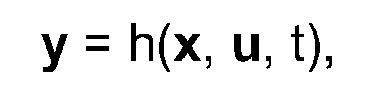
worin f und h nicht-lineare Funktionen sind, t für die Zeit steht, u, x und y Vektoren sind, die jeweils den Triebwerksregelvariablen u, den Triebwerksstatusvariablen x und den Triebwerksleistungsvariablen y entsprechen, und ẋ ein Vektor ist, der den zeitlichen Ableitungen der Triebwerksstatusvariablen x entspricht, und die Anwendung des nicht-linearen Triebwerksleistungsmodells zur Bestimmung der jeweiligen partiellen Ableitungen für eine oder mehrere der Triebwerksstatusvariablen x, der Triebwerksleistungsvariablen y und der zeitlichen Ableitungen für die Triebwerksstatusvariablen x für jede der Triebwerksleistungsbedingungen;(d) das Durchführen der folgenden Unterschritte für zumindest eine der in Schritt (c) ermittelten partiellen Ableitungen:(i) das Darstellen von Werten für die partielle Ableitung als Funktion des Triebwerksleistungszustands in einem ersten Diagramm;(ii) das Darstellen des Gradienten des ersten Diagramms als Funktion des Triebwerksleistungszustands in einem zweiten Diagramm und(iii) die Verwendung der Diagramme zur Anpassung eines oder mehrerer Werte für die partielle Ableitung, zum Streichen eines oder mehrerer Werte für die partielle Ableitung und/oder zum Hinzufügen eines oder mehrerer Werte für die partielle Ableitung in weiteren Triebswerksleistungszuständen und(e) das Erstellen eines stückweise linearisierten Triebwerksleistungsmodells, in dem die Berechnung der Triebwerksleistungsvariablen y das Kombinieren der Triebwerksregelvariablen u und der Triebwerksstatusvariablen x mit den entsprechenden partiellen Ableitungen umfasst.
Applications Claiming Priority (1)
| Application Number | Priority Date | Filing Date | Title |
|---|---|---|---|
| GBGB0712980.2A GB0712980D0 (en) | 2007-07-04 | 2007-07-04 | Engine performance model |
Publications (2)
| Publication Number | Publication Date |
|---|---|
| EP2012200A1 EP2012200A1 (de) | 2009-01-07 |
| EP2012200B1 true EP2012200B1 (de) | 2011-07-27 |
Family
ID=38440388
Family Applications (1)
| Application Number | Title | Priority Date | Filing Date |
|---|---|---|---|
| EP08005946A Not-in-force EP2012200B1 (de) | 2007-07-04 | 2008-03-28 | Machinenleistungsmodell |
Country Status (3)
| Country | Link |
|---|---|
| US (1) | US8117017B2 (de) |
| EP (1) | EP2012200B1 (de) |
| GB (1) | GB0712980D0 (de) |
Families Citing this family (12)
| Publication number | Priority date | Publication date | Assignee | Title |
|---|---|---|---|---|
| US9618919B2 (en) * | 2009-05-28 | 2017-04-11 | General Electric Company | Real-time scheduling of linear models for control and estimation |
| US8290683B2 (en) * | 2010-02-16 | 2012-10-16 | Telectro-Mek, Inc. | Apparatus and method for reducing aircraft fuel consumption |
| US10316833B2 (en) | 2011-01-26 | 2019-06-11 | Avista Corporation | Hydroelectric power optimization |
| US9026257B2 (en) * | 2011-10-06 | 2015-05-05 | Avista Corporation | Real-time optimization of hydropower generation facilities |
| US8849542B2 (en) | 2012-06-29 | 2014-09-30 | United Technologies Corporation | Real time linearization of a component-level gas turbine engine model for model-based control |
| JP6604939B2 (ja) | 2013-03-15 | 2019-11-13 | ユナイテッド テクノロジーズ コーポレイション | 制御システム、制御する方法及びガスタービンエンジン |
| US20170328567A1 (en) * | 2016-05-11 | 2017-11-16 | United Technologies Corporation | Multivariable fuel control and estimator (mfce) for preventing combustor blowout |
| US10227932B2 (en) | 2016-11-30 | 2019-03-12 | General Electric Company | Emissions modeling for gas turbine engines for selecting an actual fuel split |
| CN107025335B (zh) * | 2017-03-13 | 2019-12-10 | 清华大学 | 基于状态变量离散化的仿真计算方法和仿真系统 |
| US10378455B2 (en) * | 2017-08-28 | 2019-08-13 | United Technologies Corporation | Method for selection of optimal engine operating conditions for generating linearized models for on-board control and estimation |
| US10982608B2 (en) | 2019-04-18 | 2021-04-20 | Caterpillar Inc. | System and method for estimating engine performance |
| US12392255B2 (en) * | 2022-08-22 | 2025-08-19 | Pratt & Whitney Canada Corp. | Systems and methods for determining gas turbine engine operating margins |
Family Cites Families (25)
| Publication number | Priority date | Publication date | Assignee | Title |
|---|---|---|---|---|
| US4189939A (en) * | 1977-12-12 | 1980-02-26 | General Electric Company | Compact multimission aircraft propulsion simulator |
| US4215412A (en) * | 1978-07-13 | 1980-07-29 | The Boeing Company | Real time performance monitoring of gas turbine engines |
| US5394689A (en) * | 1993-09-22 | 1995-03-07 | General Electric Company | Gas turbine engine control system having integral flight Mach number synthesis method |
| US5551227A (en) * | 1994-12-22 | 1996-09-03 | General Electric Company | System and method of detecting partial flame out in a gas turbine engine combustor |
| GB0126298D0 (en) * | 2001-11-01 | 2002-01-02 | Rolls Royce Plc | Fault diagnosis |
| GB2399187B (en) | 2002-07-24 | 2005-06-15 | Rolls Royce Plc | Method of generating a multifidelity model of a system |
| US6823675B2 (en) * | 2002-11-13 | 2004-11-30 | General Electric Company | Adaptive model-based control systems and methods for controlling a gas turbine |
| US7020793B1 (en) * | 2003-01-31 | 2006-03-28 | Lsi Logic Corporation | Circuit for aligning signal with reference signal |
| US6935119B2 (en) * | 2003-03-14 | 2005-08-30 | General Electric Company | Methods for operating gas turbine engines |
| US20050193739A1 (en) * | 2004-03-02 | 2005-09-08 | General Electric Company | Model-based control systems and methods for gas turbine engines |
| US7277838B2 (en) * | 2004-08-26 | 2007-10-02 | United Technologies Corporation | Bootstrap data methodology for sequential hybrid model building |
| US7415328B2 (en) * | 2004-10-04 | 2008-08-19 | United Technologies Corporation | Hybrid model based fault detection and isolation system |
| US20060282177A1 (en) * | 2005-06-10 | 2006-12-14 | United Technologies Corporation | System and method of applying interior point method for online model predictive control of gas turbine engines |
| US20070061629A1 (en) * | 2005-08-15 | 2007-03-15 | Thums Eric E | Drop and drag logic analyzer trigger |
| US20070059838A1 (en) * | 2005-09-13 | 2007-03-15 | Pavilion Technologies, Inc. | Dynamic constrained optimization of chemical manufacturing |
| US7974826B2 (en) * | 2005-09-23 | 2011-07-05 | General Electric Company | Energy system modeling apparatus and methods |
| US7742904B2 (en) * | 2005-09-27 | 2010-06-22 | General Electric Company | Method and system for gas turbine engine simulation using adaptive Kalman filter |
| TWI282926B (en) * | 2005-10-06 | 2007-06-21 | Fashionow Co Ltd | Template-based multimedia editor and editing method thereof |
| US7515972B2 (en) * | 2005-10-28 | 2009-04-07 | Honeywell International Inc. | System and method for dynamically creating and editing function block types in a process control environment |
| US20080071395A1 (en) * | 2006-08-18 | 2008-03-20 | Honeywell International Inc. | Model predictive control with stochastic output limit handling |
| US8010320B2 (en) * | 2006-11-17 | 2011-08-30 | United Technologies Corporation | Reducing gas turbine performance tracking estimation non-repeatability |
| US7441448B2 (en) * | 2007-01-24 | 2008-10-28 | United Technologies Corporation | Process for adapting measurement suite configuration for gas turbine performance diagnostics |
| US7853392B2 (en) * | 2007-01-26 | 2010-12-14 | General Electric Company | Systems and methods for initializing dynamic model states using a Kalman filter |
| US7881825B2 (en) * | 2007-03-28 | 2011-02-01 | Praxair Technology, Inc. | Production control utilizing real time optimization |
| US7630820B2 (en) * | 2007-04-24 | 2009-12-08 | Honeywell International Inc. | Feedback control system and method that selectively utilizes observer estimates |
-
2007
- 2007-07-04 GB GBGB0712980.2A patent/GB0712980D0/en not_active Ceased
-
2008
- 2008-03-28 EP EP08005946A patent/EP2012200B1/de not_active Not-in-force
- 2008-04-03 US US12/078,711 patent/US8117017B2/en not_active Expired - Fee Related
Also Published As
| Publication number | Publication date |
|---|---|
| GB0712980D0 (en) | 2007-08-15 |
| EP2012200A1 (de) | 2009-01-07 |
| US20090012762A1 (en) | 2009-01-08 |
| US8117017B2 (en) | 2012-02-14 |
Similar Documents
| Publication | Publication Date | Title |
|---|---|---|
| EP2012200B1 (de) | Machinenleistungsmodell | |
| EP2149824B1 (de) | Verfahren und Systeme zur Schätzung der Betriebsparameter eines Motors | |
| EP0858017B1 (de) | Mittel und Methode zur Überwachung der Leistung eines Systems | |
| Chapman et al. | Propulsion system simulation using the toolbox for the modeling and analysis of thermodynamic systems (t mats) | |
| JP5046104B2 (ja) | ガスタービンエンジンの性能推定方法およびシステム | |
| US8849542B2 (en) | Real time linearization of a component-level gas turbine engine model for model-based control | |
| Zinnecker et al. | Development of a twin-spool turbofan engine simulation using the toolbox for modeling and analysis of thermodynamic systems (T-MATS) | |
| Bala et al. | PROOSIS—a collaborative venture for gas turbine performance simulation using an object oriented programming schema | |
| WO2016133578A2 (en) | Estimating dynamic thrust or shaft power of an engine | |
| Montazeri-Gh et al. | Analyzing different numerical linearization methods for the dynamic model of a turbofan engine | |
| JP5845705B2 (ja) | ガスタービン性能推定装置 | |
| Pawsey et al. | Characterisation of turbine behaviour for an engine overspeed prediction model | |
| Armstrong et al. | Constructing an efficient self-tuning aircraft engine model for control and health management applications | |
| Sugiyama | System identification of jet engines | |
| Sanghi et al. | Aerothermal model for real-time digital simulation of a mixed-flow turbofan engine | |
| Saleh et al. | Modeling and simulation of a double spool turbofan engine using simulink® | |
| Visser et al. | TERTS: A generic real-time gas turbine simulation environment | |
| Yazar et al. | Simulation-based steady-state aero-thermal model for small-scale turboprop engine | |
| Turevskiy et al. | A model-based controller for commercial aero gas turbines | |
| Bardela et al. | Identification and validation of the Cessna citation X Turbofan modelling with flight tests | |
| Gorinevsky et al. | Model-based diagnostics for small-scale turbomachines | |
| Stenfelt et al. | Handling of model uncertainties for underdetermined gas path analysis | |
| Palmer et al. | Thrust measurement model-based correction system for turbine engine test cell dynamic data | |
| Monaco et al. | Automated Methods to Calibrate a High-Fidelity Thrust Deck to Aid Aeropropulsion Test and Evaluation | |
| Aretskin-Hariton et al. | Benchmarking model variants in development of a hardware-in-the-loop simulation system |
Legal Events
| Date | Code | Title | Description |
|---|---|---|---|
| PUAI | Public reference made under article 153(3) epc to a published international application that has entered the european phase |
Free format text: ORIGINAL CODE: 0009012 |
|
| 17P | Request for examination filed |
Effective date: 20080328 |
|
| AK | Designated contracting states |
Kind code of ref document: A1 Designated state(s): AT BE BG CH CY CZ DE DK EE ES FI FR GB GR HR HU IE IS IT LI LT LU LV MC MT NL NO PL PT RO SE SI SK TR |
|
| AX | Request for extension of the european patent |
Extension state: AL BA MK RS |
|
| 17Q | First examination report despatched |
Effective date: 20090311 |
|
| AKX | Designation fees paid |
Designated state(s): DE FR GB |
|
| GRAP | Despatch of communication of intention to grant a patent |
Free format text: ORIGINAL CODE: EPIDOSNIGR1 |
|
| GRAS | Grant fee paid |
Free format text: ORIGINAL CODE: EPIDOSNIGR3 |
|
| GRAA | (expected) grant |
Free format text: ORIGINAL CODE: 0009210 |
|
| AK | Designated contracting states |
Kind code of ref document: B1 Designated state(s): DE FR GB |
|
| REG | Reference to a national code |
Ref country code: GB Ref legal event code: FG4D |
|
| REG | Reference to a national code |
Ref country code: DE Ref legal event code: R096 Ref document number: 602008008460 Country of ref document: DE Effective date: 20110915 |
|
| PLBE | No opposition filed within time limit |
Free format text: ORIGINAL CODE: 0009261 |
|
| STAA | Information on the status of an ep patent application or granted ep patent |
Free format text: STATUS: NO OPPOSITION FILED WITHIN TIME LIMIT |
|
| 26N | No opposition filed |
Effective date: 20120502 |
|
| REG | Reference to a national code |
Ref country code: DE Ref legal event code: R097 Ref document number: 602008008460 Country of ref document: DE Effective date: 20120502 |
|
| PGFP | Annual fee paid to national office [announced via postgrant information from national office to epo] |
Ref country code: FR Payment date: 20140317 Year of fee payment: 7 |
|
| PGFP | Annual fee paid to national office [announced via postgrant information from national office to epo] |
Ref country code: GB Payment date: 20140327 Year of fee payment: 7 |
|
| PGFP | Annual fee paid to national office [announced via postgrant information from national office to epo] |
Ref country code: DE Payment date: 20140327 Year of fee payment: 7 |
|
| REG | Reference to a national code |
Ref country code: DE Ref legal event code: R119 Ref document number: 602008008460 Country of ref document: DE |
|
| GBPC | Gb: european patent ceased through non-payment of renewal fee |
Effective date: 20150328 |
|
| REG | Reference to a national code |
Ref country code: FR Ref legal event code: ST Effective date: 20151130 |
|
| PG25 | Lapsed in a contracting state [announced via postgrant information from national office to epo] |
Ref country code: GB Free format text: LAPSE BECAUSE OF NON-PAYMENT OF DUE FEES Effective date: 20150328 Ref country code: DE Free format text: LAPSE BECAUSE OF NON-PAYMENT OF DUE FEES Effective date: 20151001 |
|
| PG25 | Lapsed in a contracting state [announced via postgrant information from national office to epo] |
Ref country code: FR Free format text: LAPSE BECAUSE OF NON-PAYMENT OF DUE FEES Effective date: 20150331 |