EP2012445A2 - Appareil et procédé de communication pour commander une réception en diversité - Google Patents
Appareil et procédé de communication pour commander une réception en diversité Download PDFInfo
- Publication number
- EP2012445A2 EP2012445A2 EP08153612A EP08153612A EP2012445A2 EP 2012445 A2 EP2012445 A2 EP 2012445A2 EP 08153612 A EP08153612 A EP 08153612A EP 08153612 A EP08153612 A EP 08153612A EP 2012445 A2 EP2012445 A2 EP 2012445A2
- Authority
- EP
- European Patent Office
- Prior art keywords
- state
- value
- measurement
- switching
- measured
- Prior art date
- Legal status (The legal status is an assumption and is not a legal conclusion. Google has not performed a legal analysis and makes no representation as to the accuracy of the status listed.)
- Withdrawn
Links
Images




Classifications
-
- H—ELECTRICITY
- H04—ELECTRIC COMMUNICATION TECHNIQUE
- H04B—TRANSMISSION
- H04B7/00—Radio transmission systems, i.e. using radiation field
- H04B7/02—Diversity systems; Multi-antenna system, i.e. transmission or reception using multiple antennas
- H04B7/04—Diversity systems; Multi-antenna system, i.e. transmission or reception using multiple antennas using two or more spaced independent antennas
- H04B7/08—Diversity systems; Multi-antenna system, i.e. transmission or reception using multiple antennas using two or more spaced independent antennas at the receiving station
- H04B7/0802—Diversity systems; Multi-antenna system, i.e. transmission or reception using multiple antennas using two or more spaced independent antennas at the receiving station using antenna selection
- H04B7/0817—Diversity systems; Multi-antenna system, i.e. transmission or reception using multiple antennas using two or more spaced independent antennas at the receiving station using antenna selection with multiple receivers and antenna path selection
-
- H—ELECTRICITY
- H04—ELECTRIC COMMUNICATION TECHNIQUE
- H04B—TRANSMISSION
- H04B7/00—Radio transmission systems, i.e. using radiation field
- H04B7/02—Diversity systems; Multi-antenna system, i.e. transmission or reception using multiple antennas
- H04B7/04—Diversity systems; Multi-antenna system, i.e. transmission or reception using multiple antennas using two or more spaced independent antennas
- H04B7/08—Diversity systems; Multi-antenna system, i.e. transmission or reception using multiple antennas using two or more spaced independent antennas at the receiving station
- H04B7/0868—Hybrid systems, i.e. switching and combining
- H04B7/0874—Hybrid systems, i.e. switching and combining using subgroups of receive antennas
- H04B7/0877—Hybrid systems, i.e. switching and combining using subgroups of receive antennas switching off a diversity branch, e.g. to save power
-
- H—ELECTRICITY
- H04—ELECTRIC COMMUNICATION TECHNIQUE
- H04B—TRANSMISSION
- H04B7/00—Radio transmission systems, i.e. using radiation field
- H04B7/02—Diversity systems; Multi-antenna system, i.e. transmission or reception using multiple antennas
- H04B7/04—Diversity systems; Multi-antenna system, i.e. transmission or reception using multiple antennas using two or more spaced independent antennas
- H04B7/08—Diversity systems; Multi-antenna system, i.e. transmission or reception using multiple antennas using two or more spaced independent antennas at the receiving station
- H04B7/0802—Diversity systems; Multi-antenna system, i.e. transmission or reception using multiple antennas using two or more spaced independent antennas at the receiving station using antenna selection
- H04B7/0825—Diversity systems; Multi-antenna system, i.e. transmission or reception using multiple antennas using two or more spaced independent antennas at the receiving station using antenna selection with main and with auxiliary or diversity antennas
-
- H—ELECTRICITY
- H04—ELECTRIC COMMUNICATION TECHNIQUE
- H04W—WIRELESS COMMUNICATION NETWORKS
- H04W52/00—Power management, e.g. Transmission Power Control [TPC] or power classes
- H04W52/02—Power saving arrangements
- H04W52/0209—Power saving arrangements in terminal devices
- H04W52/0212—Power saving arrangements in terminal devices managed by the network, e.g. network or access point is leader and terminal is follower
- H04W52/0216—Power saving arrangements in terminal devices managed by the network, e.g. network or access point is leader and terminal is follower using a pre-established activity schedule, e.g. traffic indication frame
-
- Y—GENERAL TAGGING OF NEW TECHNOLOGICAL DEVELOPMENTS; GENERAL TAGGING OF CROSS-SECTIONAL TECHNOLOGIES SPANNING OVER SEVERAL SECTIONS OF THE IPC; TECHNICAL SUBJECTS COVERED BY FORMER USPC CROSS-REFERENCE ART COLLECTIONS [XRACs] AND DIGESTS
- Y02—TECHNOLOGIES OR APPLICATIONS FOR MITIGATION OR ADAPTATION AGAINST CLIMATE CHANGE
- Y02D—CLIMATE CHANGE MITIGATION TECHNOLOGIES IN INFORMATION AND COMMUNICATION TECHNOLOGIES [ICT], I.E. INFORMATION AND COMMUNICATION TECHNOLOGIES AIMING AT THE REDUCTION OF THEIR OWN ENERGY USE
- Y02D30/00—Reducing energy consumption in communication networks
- Y02D30/70—Reducing energy consumption in communication networks in wireless communication networks
Definitions
- the present invention relates to control of diversity reception in a wireless communication system such as W-CDMA (Wideband Code Division Multiple Access).
- W-CDMA Wideband Code Division Multiple Access
- Diversity reception is a technique for improving communication quality and for expanding network capacity.
- a plurality of reception systems are provided in a receiver to appropriately process signals after demodulation, thereby improving the S/N (signal-to-noise) ratio of received signals.
- Fig. 1A shows an outline of conventional HSDPA (High Speed Downlink Packet Access) communication.
- HSDPA High Speed Downlink Packet Access
- the three additional channels include:
- HS-PDSCH Highspeed-Physical Downlink Shared Channel
- HS-PDSCH 14 is a channel for mapping downlink user data transmitted from base station 11 to mobile terminal 12.
- the base station 11 adaptively changes the number of transmission bits, modulation method, encoding ratio, number of multiplexed codes, etc. of the channel, in accordance with CQI (Channel Quality Indicator) that indicates the reception quality of the mobile terminal 12.
- CQI Channel Quality Indicator
- HS-SCCH 13 is a downlink channel to which control information, for modulating HS-PDSCH is mapped.
- HS-DPCCH 15 is an uplink channel for mapping information such as the result of demodulation and reception quality in the mobile terminal 1.2, the information including ACK (Acknowledgement), NACK (Negative Acknowledgement), DTX (Discontinuous Transmission), and CQI.
- Patent document 1 specified below relates to a mobile station for generating CQI information that reflects changing direction of reception quality in HSDPA communications.
- Patent Document 1 Japanese Patent Application Publication No. 2006-157133
- the conventional HSDPA communication described above has the following problems.
- HSDPA communication uses a CQI table corresponding to the category of mobile terminals, to perform adaptive control of HS-PDSCH in accordance with the CQI.
- Fig. 1B and Fig. 1C show CQI tables used for mobile terminals in categories 5 and 10, specified by 3GPP (Third Generation Partnership Project) TS25.214.
- the CQI tables define the number of transmission bits (transport block size), number of multiplexed codes (number of HS-PDSCHs), modulation method, transmission power offset, etc. for CQI values 1-30.
- N IR and X RV are parameters related to data redundancy.
- the mobile terminal continuously measures the communication quality (CQI) using CPICH (Common Pilot Channel), to perform control in which the block error rate (BLER) of HS-PDSCH is kept constant.
- CQI communication quality
- CPICH Common Pilot Channel
- BLER block error rate
- the error rate increases due to rapid gain depression, causing more retransmission and putting a huge load on the network. A certain period of time is required before the error rate becomes normal for the state in which the diversity reception is OFF.
- the communication quality becomes excessive for a certain period due to the gain increase, causing the following problems.
- a communication apparatus disclosed herein is equipped with a diversity reception function using a plurality of reception systems for receiving information corresponding to the reception quality from a transmission apparatus.
- the communication apparatus comprises a switching device, a measurement device, and a transmission device.
- the switching device performs switching between a first state where the diversity reception is active and a second state where the diversity reception is inactive.
- the measurement device measures the reception quality before the switching, and changes the measured value in accordance with the state after the switching.
- the transmission device transmits the changed measured value to the transmission apparatus as the reported value of the reception quality.
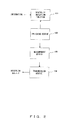
- Fig. 2 is a diagram showing a principle of a communication apparatus embodying the present invention.
- the communication apparatus in Fig. 2 is equipped with a diversity reception function 101 using a plurality of reception systems for receiving, from a transmission apparatus, information corresponding to the reception quality.
- the communication apparatus comprises a switching device 102, a measurement device 103, and a transmission device 104.
- the switching device 102 performs switching between a first state in which the diversity reception function 101 is active (ON) and a second state in which the diversity reception function 101 is inactive (OFF).
- the measurement device 103 performs, before the switching, measurement of the reception quality, and changes the measured value in accordance with the state after the switching.
- the transmission device 104 transmits the changed measured value to the transmission apparatus as the reported value of the reception quality.
- the measurement device 103 changes the measured value, before the switching from the first state to the second state, for example, to a value smaller than the measured value; and chances the measured value, before the switching from the second state to the first state, for example, to a value larger than the measured value.
- the measured value (CQI value) of the reception quality to be reported to the transmission apparatus is changed, before the switching of the diversity reception function 101, to a value reflecting the state after the switching. Accordingly, appropriate information from the transmission apparatus can be received, even immediately after a rapid change of the state, in accordance with the rapid change of the reception gain.
- the communication apparatus in Fig. 2 corresponds to, for example, a mobile terminal in Fig. 3A described later; and the transmission apparatus corresponds to a base station in Fig. 3B described later.
- the switching device 102 corresponds to, for example, a demodulation control unit 210; the measurement device 103 corresponds to, for example, a CQI measurement unit 212; and the transmission device 104 corresponds to, for example, an antenna unit 201-1, in Fig. 3A .
- the CQI value can be lowered in advance when switching the diversity reception from ON to OFF, so as to keep the error rate appropriate after the decrease of the reception gain.
- the CQI value can be increased in advance when switching the diversity reception from OFF to ON, so as to keep the error rate appropriate after the increase of the reception gain.
- the transmission power from the base station can be lowered to the required level to save the network resources, or, a user can benefit from an improved reception throughput.
- the control to keep the error rate at an appropriate value is continuously performed by offsetting the CQI value in advance, thereby maintaining a constant reception quality.
- the control of the diversity reception is specifically performed as descried below.
- the mobile terminal lowers the CQI value measured in advance by a predetermined value before switching the diversity reception from ON to OFF, and reports the lowered value to the base station.
- the base station determines the format of HS-PDSCH on the basis of the CQI value reported from the mobile terminal, and transmits user data in the determined format.
- the reception gain of the mobile terminal is decreasing due to the switch-off of the diversity reception.
- the appropriate error rate can be maintained to avoid the degradation of the communication quality, since the HS-PDSCH has been formatted in anticipation of the state which diversity reception is switched off.
- the mobile terminal increases the CQI value measured in advance by a predetermined value before switching the diversity reception from OFF to ON, and reports the increased value to the base station.
- the base station determines the format of HS-PDSCH on the basis of the CQI value reported from the mobile terminal, and transmits user data in the determined format.
- the reception gain of the mobile terminal is increasing due to the switch-on of the diversity reception.
- the appropriate error rate can be maintained to avoid excessive communication quality, since the HS-PDSCH has been formatted in anticipation of the state in which the diversity reception is switched on.
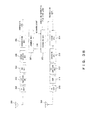
- Fig. 3A shows an example of configuration of a wireless unit in a mobile terminal in such a wireless communication system as described above.
- the solid lines indicate data paths and the dotted lines indicate control paths.
- the wireless unit comprises antennas 202-1 and 201-2, RF (Radio Frequency) units 202-1, 202-2, 214, A/D (Analog/Digital) conversion units 203-1 and 203-2, AGC (Automatic Gain Control) units 204-1 and 204-2, cell detection units 205-1 and 205-2, path detection units 206-1 and 206-2, an inverse-spreading units 207-1 and 207-2, synchronous detection units 208-1 and 208-2, a circulator 209, a demodulation control unit 210, a rake combiner unit 211, a CQI measurement unit 212, a decoding unit 213, an amplification unit (AMP) 215, a D/A (Digital/Analog) conversion unit 216, a spreading unit 217, and a coding unit 218.
- RF Radio Frequency
- AGC Automatic Gain Control
- the antenna 201-1, RF unit 202-1, A/D conversion unit 203-1, AGC unit 204-1, the cell detection unit 205-1, path detection unit 206-1, inverse-spreading unit 207-1, and synchronous detection unit 208-1 constitute a first reception system; and the antenna 201-2, RF unit 202-2, A/D conversion unit 203-2, AGC unit 204-2, the cell detection 205-2, path detection unit 206-2, inverse-spreading unit 207-2, and synchronous detection unit 208-2 constitute a second reception system.
- the antenna 201-1, RF unit 214, amplification unit 215, D/A conversion unit 216, spreading unit 217 and coding unit 218 constitute a transmission system.
- the RF unit 202-i demodulates an RF signal received by the antenna 201-i, and the A/D conversion unit 203-i converts the demodulated signal into a digital signal.
- the AGC unit 204-i performs an automatic gain control; the inverse-spreading unit 207-i performs an inverse-spreading process; and the synchronous detection unit 208-i performs a synchronous detection.
- the cell detection unit 205-i performs a cell search to detect the scramble code of the base station, and the path detection unit 206-i detects the timing of the inverse-spreading for the multi-path environment.
- the rake combiner unit 211 performs a rake combination of multi-path signals received by the first and second reception systems; and the demodulation unit 213 performs error detection using CRC (Cyclic Redundancy Check) and outputs the result of the demodulation of the received data (ACK or NACK) to the coding unit 218.
- the CQI measurement unit 212 measures the CQI from the signal after the rake combination, and outputs the measured value to the coding unit 218.
- the demodulation control unit 210 performs control to switch ON/OFF the diversity reception.
- the power of the first and second reception systems are turned on and the rake combination is performed for the received signals in the two reception systems, according to the control.
- the power of the second reception system is turned off, and the rake combination is performed only for the received signals in the first reception system.
- the demodulation control unit 210 also instructs, before the switching of the diversity reception, the CQI measurement unit 212 to start the offset of CQI.
- the CQI measurement unit 212 increases or decreases the measured value of the CQI by a predetermined value, and outputs it to the coding unit 218.
- the timing to start the offset of CQI is calculated backward from the time on which the diversity reception is to be switched, on the basis of the time required for the CQI received by the base station to be reflected to HS-PDSCH.
- the HS-DPCCH transmits the result of the demodulation of the received data and the CQI to the base station.
- the coding unit 218 codes the result of the demodulation of the received data and the CQI
- the spreading unit 217 performs a spreading process.
- the D/A conversion unit 216 converts the spread signal into an analog signal; the amplification unit 215 amplifies the transmission signal; and the RF unit 214 modulates the transmission signal.
- the obtained RF signal is transmitted from the antenna 201-1 via the circulator 209.
- Fig. 3B shows an example of configuration of the wireless unit of a base station.
- the wireless unit comprises antennas 301 and 309, RF units 302 and 310, an A/D conversion unit 303, an AGC unit 304, an inverse-spreading unit 305, a demodulation unit 306, a judgment unit 307, a scheduling unit 308, an amplification unit (AMP) 311, a D/A conversion unit 312, a spreading unit 313, and a coding unit 314.
- AMP amplification unit
- the antenna 301, RF unit 302, A/D conversion unit 303, AGC unit 304, inverse-spreading unit 305, and demodulation unit 306 constitutes a reception system.
- the antenna 309, RF unit 310, amplification unit 311, D/A conversion unit 312, spreading unit 313, and coding unit 314 constitutes a transmission system.
- the RF unit 302 demodulates an RF signal received by the antenna 301, and the A/D conversion unit 303 converts the demodulated signal into a digital signal.
- the AGC unit 304 performs automatic gain control; the inverse-spreading unit 305 performs an inverse-spreading process; and the demodulation unit 306 demodulates the signal after the inverse-spreading.
- the judgment unit 307 extracts information i.e., CQI, and ACK/NACK from the demodulated signal, and outputs the CQI to the scheduling unit 308.
- the judgment unit 307 further judges whether or not a retransmission is required, on the basis of the information (ACK/NACK), and outputs the judgment result to the scheduling unit 308.
- the scheduling unit 308 has a CQI table, and determines the format of transmission data on the basis of the CQI received from the judgment unit 307 and scheduling information specified by an upper layer.
- the coding unit 314 codes the transmission data, and the spreading unit 313 performs a spreading process.
- the D/A conversion unit 312 converts the spread signal into an analog signal; the amplification unit 311 amplifies the transmission signal; and the RF unit 310 demodulates the transmission signal. The obtained RF signal is transmitted from the antenna 309.
- Fig. 4 is a timing chart showing the relationship between the respective channels (HS-SCCH, HS-PDSCH, HS-DPCCH) in HSDPA.
- a mobile terminal receives control information included in TBn (an n-th transport block in the HS-SCCH) in #Time Slots 0-2, and receives and demodulates corresponding data in the HS-PDSCH in #Time Slots 2-4.
- T2 about 7.5 slots after #Time Slot 4
- the result of the demodulation (ACK/NACKn) and CQIm are transmitted from the HS-DPCCH to the base station.
- the value of the CQIm is the one measured in the time period T1 (immediately before T2).
- the CQI transmitted from the HS-DPCCH is reflected to control information in the downlink HS-SCCH within about 2.5 slots, and the demodulation of the data in the HS-PDSCH starts 2 slots later after the reflection, in accordance with the control information.
- the CQIm transmitted from the HS-DPCCH is reflected to TBn+6 in the HS-SCCH in #Time Slots 18-20, and further reflected to the data in the HS-PDSCH in #Time Slots 20-22. Therefore, the time T3 from when the measurement of the CQIm is started until when the CQIm is reflected to the HS-PDSCH is about 10.5 slots.
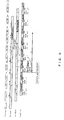
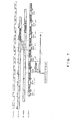
- Fig. 5 is a timing chart during which the diversity reception is switched from ON to OFF.
- the diversity reception is switched from ON to OFF at the same time as the start of the measurement of the CQIm in #Time Slot 9
- about 7 slots are required for the measured CQIm to be reflected the HS-PDSCH in accordance with the decreasing gain.
- imbalance between the CQI reflected to the HS-PDSCH and the demodulation capability of the mobile terminal occurs in the time period T3, causing BLER of the HS-PDSCH to deteriorate due to the increase of demodulation errors.
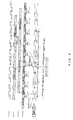
- Fig. 6 shows an example of CQI offset performed in the timing chart in Fig. 5 .
- the mobile terminal lowers the measured valve of CQI by a predetermined value (for example, 3dB) and reports it to the base station, from when the measurement of the CQI starts at 9 slots before the time on which the diversity reception is to be switched from ON to OFF until when the diversity reception is actually switched from ON to OFF. Therefore, when the value of CQlm-4 measured in the period T11 is 20 dB, 17 dB (lowered by 3dB from the measured value) is transmitted to the base station as the reported value in the period T12.
- a predetermined value for example, 3dB
- the CQlm-4 is reflected to TBn+2 in the HS-SCCH and reflected further to data in the HS-PDSCH in #Time Slots 8-10. Therefore, even if the diversity reception is switched off in #Time Slot 9 and the measured value of CQI decreases to 17dB, appropriate communication quality can be maintained since the demodulation process reflecting the decrease of the CQI has been performed.
- the reported value that is smaller than the measured value by 3dB is transmitted to the base station.
- the reported value equivalent to the measured value is reported to the base station.
- the number of demodulation errors does not increase in the period T3 after the switching of the diversity reception, because the CQI reflected to the HS-PDSCH and the demodulation capability of the mobile terminal are balanced.
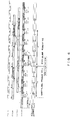
- Fig. 7 is a timing chart during which the diversity reception is switched from OFF to ON.
- the diversity reception is switched from OFF to ON at the same time as the start of the measurement of CQIm in #Time Slot 9, it takes about 7 slots for the measured CQIm to be reflected to the HS-PDSCH in accordance with the gain increase. For this reason, without the CQI offset, imbalance between the CQI reflected to the HS-PDSCH and the demodulation capability of the mobile terminal occurs in the time period T3, resulting in excessive communication quality.
- Fig. 8 shows an example of CQI offset performed in the timing chart in Fig. 7 .
- the mobile terminal increases the measured valve of CQI by a predetermined value (for example, 3dB) and reports it to the base station, from when the measurement of the CQI starts at 9 slots before the time on which the diversity reception is to be switched from OFF to ON until when the diversity reception is actually switched from OFF to ON. Therefore, when the value of CQIm-4 measured in the period T11 is 20 dB, 23 dB (increased by 3dB from the measured value) is transmitted to the base station as the reported value in the time period T12.
- a predetermined value for example, 3dB
- the CQIm-4 is reflected to TBn+2 in the HS-SCCH and reflected further to data of the HS-PDSCH in #Time Slots 8-10. Therefore, even if the diversity reception is switched on in #Time Slot 9 and the measured value of CQI Increases to 22dB, appropriate communication quality can be maintained, since the demodulation process reflecting the increase of the CQI has been performed.
- the reported value that is larger than the measured value by 3dB is transmitted to the base station.
- the reported value equivalent to the measured value is reported to the base station.
- the communication quality is not excessive in the period T3 after the switching of the diversity reception, because the CQI reflected to the HS-PDSCH and the demodulation capability of the mobile terminal are balanced.
- the value used by the mobile terminal for the CQI offset is determined, for example, by using one of the following methods 1) -4).
- reception diversity control in a mobile terminal having two reception systems
- similar control can be applied to mobile terminals having three or more reception systems.
- the similar control can be performed not only in a mobile terminal but also in other types of communication apparatuses equipped with reception diversity function.
- the invention also provides a computer program or a computer program product for carrying out any of the methods described herein, and a computer readable medium having stored thereon a program for carrying out any of the methods described herein.
- a computer program embodying the invention may be stored on a computer-readable medium, or it could, for example, be in the form of a signal such as a downloadable data signal provided from an Internet website, or it could be in any other form.
Landscapes
- Engineering & Computer Science (AREA)
- Computer Networks & Wireless Communication (AREA)
- Signal Processing (AREA)
- Mobile Radio Communication Systems (AREA)
- Radio Transmission System (AREA)
Applications Claiming Priority (1)
| Application Number | Priority Date | Filing Date | Title |
|---|---|---|---|
| JP2007177806A JP5138293B2 (ja) | 2007-07-05 | 2007-07-05 | 受信ダイバーシチを制御する通信装置および方法 |
Publications (2)
| Publication Number | Publication Date |
|---|---|
| EP2012445A2 true EP2012445A2 (fr) | 2009-01-07 |
| EP2012445A3 EP2012445A3 (fr) | 2013-12-11 |
Family
ID=39807828
Family Applications (1)
| Application Number | Title | Priority Date | Filing Date |
|---|---|---|---|
| EP08153612.0A Withdrawn EP2012445A3 (fr) | 2007-07-05 | 2008-03-28 | Appareil et procédé de communication pour commander une réception en diversité |
Country Status (3)
| Country | Link |
|---|---|
| US (1) | US20090011714A1 (fr) |
| EP (1) | EP2012445A3 (fr) |
| JP (1) | JP5138293B2 (fr) |
Cited By (3)
| Publication number | Priority date | Publication date | Assignee | Title |
|---|---|---|---|---|
| WO2010145938A1 (fr) * | 2009-06-17 | 2010-12-23 | Telefonaktiebolaget Lm Ericsson (Publ) | Programmation de transmissions entre un terminal mobile et une station de base dans un réseau de communication sans fil |
| EP2490347A1 (fr) * | 2011-02-18 | 2012-08-22 | HTC Corporation | Procédé de contrôle de diversité de réception pour l'amélioration de la durée de vie de batterie et dispositif de communication associé |
| WO2013167188A1 (fr) * | 2012-05-10 | 2013-11-14 | Nokia Siemens Networks Oy | Procédé et appareil de réception de diversité |
Families Citing this family (11)
| Publication number | Priority date | Publication date | Assignee | Title |
|---|---|---|---|---|
| US8755849B2 (en) * | 2008-05-07 | 2014-06-17 | Broadcom Corporation | Method and system for power management in a beamforming system |
| US8300757B2 (en) | 2008-08-08 | 2012-10-30 | Motorola Mobility Llc | Methods for detection of failure and recovery in a radio link |
| US8130667B2 (en) * | 2008-09-19 | 2012-03-06 | Texas Instruments Incorporated | Preamble group selection in random access of wireless networks |
| JP4636162B2 (ja) * | 2008-10-10 | 2011-02-23 | ソニー株式会社 | 無線通信装置及び無線通信方法 |
| US8457112B2 (en) | 2008-11-07 | 2013-06-04 | Motorola Mobility Llc | Radio link performance prediction in wireless communication terminal |
| US8442021B2 (en) | 2008-11-07 | 2013-05-14 | Motorola Mobility Llc | Radio link performance prediction in wireless communication terminal |
| TW201318371A (zh) | 2011-08-12 | 2013-05-01 | Interdigital Patent Holdings | 遠端無線電前端(rrh)部署及多天線下鏈mimo頻道評估及導頻接收方法 |
| JP5872875B2 (ja) * | 2011-12-13 | 2016-03-01 | 京セラ株式会社 | 移動端末、無線通信システム、および無線通信方法 |
| US20150072719A1 (en) * | 2011-12-13 | 2015-03-12 | Kyocera Corporation | Mobile terminal, wireless communication system and wireless communication method |
| JP6084768B2 (ja) * | 2011-12-13 | 2017-02-22 | 京セラ株式会社 | 移動端末、無線通信システム、および無線通信方法 |
| JPWO2023127460A1 (fr) * | 2021-12-28 | 2023-07-06 |
Citations (1)
| Publication number | Priority date | Publication date | Assignee | Title |
|---|---|---|---|---|
| JP2006157133A (ja) | 2004-11-25 | 2006-06-15 | Fujitsu Ltd | 無線通信装置、移動局 |
Family Cites Families (4)
| Publication number | Priority date | Publication date | Assignee | Title |
|---|---|---|---|---|
| US7929921B2 (en) * | 2003-06-10 | 2011-04-19 | Motorola Mobility, Inc. | Diversity control in wireless communications devices and methods |
| US7925302B2 (en) * | 2004-03-05 | 2011-04-12 | Qualcomm Incorporated | Method and apparatus for receive diversity control in wireless communications |
| JP4482026B2 (ja) * | 2004-03-05 | 2010-06-16 | クゥアルコム・インコーポレイテッド | 無線通信におけるマルチアンテナ受信ダイバーシティ制御 |
| WO2006065181A1 (fr) * | 2004-12-17 | 2006-06-22 | Telefonaktiebolaget L M Ericsson (Publ) | Appareil et procede mis en oeuvre dans un reseau cellulaire |
-
2007
- 2007-07-05 JP JP2007177806A patent/JP5138293B2/ja not_active Expired - Fee Related
-
2008
- 2008-03-25 US US12/076,898 patent/US20090011714A1/en not_active Abandoned
- 2008-03-28 EP EP08153612.0A patent/EP2012445A3/fr not_active Withdrawn
Patent Citations (1)
| Publication number | Priority date | Publication date | Assignee | Title |
|---|---|---|---|---|
| JP2006157133A (ja) | 2004-11-25 | 2006-06-15 | Fujitsu Ltd | 無線通信装置、移動局 |
Cited By (7)
| Publication number | Priority date | Publication date | Assignee | Title |
|---|---|---|---|---|
| WO2010145938A1 (fr) * | 2009-06-17 | 2010-12-23 | Telefonaktiebolaget Lm Ericsson (Publ) | Programmation de transmissions entre un terminal mobile et une station de base dans un réseau de communication sans fil |
| CN102804898A (zh) * | 2009-06-17 | 2012-11-28 | 瑞典爱立信有限公司 | 调度无线通信网络中的移动终端和基站之间的数据传输 |
| US8750227B2 (en) | 2009-06-17 | 2014-06-10 | Telefonaktiebolaget L M Ericsson (Publ) | Scheduling data transmissions between a mobile terminal and a base station in a wireless communications network |
| US8958376B2 (en) | 2009-06-17 | 2015-02-17 | Telefonaktiebolaget L M Ericsson (Publ) | Scheduling data transmissions between a mobile terminal and a base station in a wireless communications network |
| CN102804898B (zh) * | 2009-06-17 | 2015-07-15 | 瑞典爱立信有限公司 | 调度无线通信网络中的移动终端和基站之间的数据传输 |
| EP2490347A1 (fr) * | 2011-02-18 | 2012-08-22 | HTC Corporation | Procédé de contrôle de diversité de réception pour l'amélioration de la durée de vie de batterie et dispositif de communication associé |
| WO2013167188A1 (fr) * | 2012-05-10 | 2013-11-14 | Nokia Siemens Networks Oy | Procédé et appareil de réception de diversité |
Also Published As
| Publication number | Publication date |
|---|---|
| EP2012445A3 (fr) | 2013-12-11 |
| JP5138293B2 (ja) | 2013-02-06 |
| JP2009017316A (ja) | 2009-01-22 |
| US20090011714A1 (en) | 2009-01-08 |
Similar Documents
| Publication | Publication Date | Title |
|---|---|---|
| EP2012445A2 (fr) | Appareil et procédé de communication pour commander une réception en diversité | |
| EP1207644B1 (fr) | Procédé d'adaptation de liaison aveugle utilisant des messages d'accusé de réception dans des systèmes ARQ | |
| AU772717C (en) | Apparatus and method for power control of downlink shared channel in mobile communication system | |
| AU740612B2 (en) | Method and system for changing forward traffic channel power allocation during soft handoff | |
| KR101513503B1 (ko) | Dual-cell HSDPA 를 지원하는 이동통신 시스템에서 CQI전송 오버헤드를 감소시키는 방법 및 장치 | |
| KR101089527B1 (ko) | 역방향 링크 송신 빔형성을 위한 방법 및 장치 | |
| US7072628B2 (en) | Method and apparatus for determining receive diversity in mobile station | |
| US7328019B2 (en) | Communication environment measurement method for mobile station and the mobile station | |
| EP1632096A2 (fr) | Controle de diversite dans des dispositifs de communications sans fil et procedes | |
| US20030002461A1 (en) | Method and apparatus for controlling gain level of a supplemental channel in a CDMA communication system | |
| WO2012050507A1 (fr) | Commande de puissance de liaison montante | |
| US20100202332A1 (en) | Mobile communication system, base station, and transmission power control method used for them | |
| EP1104127A1 (fr) | §ispositif de communication | |
| EP1638222A1 (fr) | Appareil de station mobile et methode de controle de valeur de rapport de qualite de ligne | |
| US7613432B2 (en) | Method of controlling mobile communication system, control device, and mobile communication system | |
| US8204534B2 (en) | Transmit power control system, transmit power control method, and terminal device | |
| KR20030077888A (ko) | 코드 분할 다중 접속 통신 시스템에서 시공간 송신다이버시티 방식으로 인코딩된 채널 신호 수신 장치 및 방법 | |
| EP1653637A1 (fr) | Appareil de station mobile et methode de reception | |
| KR19990062644A (ko) | 이동통신 시스템의 핸드오프 수행장치 및 방법 | |
| JP3915055B2 (ja) | セルラー無線通信システム及び携帯無線端末装置 | |
| HK1067814B (en) | Method and apparatus for controlling gain level of a supplemental channel in a cdma communication system | |
| HK1030505B (en) | Method and system for changing forward traffic channel power allocation during soft handoff | |
| HK1078722A (en) | Method and apparatus for determining how often a message is transmitted on a paging channel to a mobile station |
Legal Events
| Date | Code | Title | Description |
|---|---|---|---|
| PUAI | Public reference made under article 153(3) epc to a published international application that has entered the european phase |
Free format text: ORIGINAL CODE: 0009012 |
|
| AK | Designated contracting states |
Kind code of ref document: A2 Designated state(s): AT BE BG CH CY CZ DE DK EE ES FI FR GB GR HR HU IE IS IT LI LT LU LV MC MT NL NO PL PT RO SE SI SK TR |
|
| AX | Request for extension of the european patent |
Extension state: AL BA MK RS |
|
| PUAL | Search report despatched |
Free format text: ORIGINAL CODE: 0009013 |
|
| AK | Designated contracting states |
Kind code of ref document: A3 Designated state(s): AT BE BG CH CY CZ DE DK EE ES FI FR GB GR HR HU IE IS IT LI LT LU LV MC MT NL NO PL PT RO SE SI SK TR |
|
| AX | Request for extension of the european patent |
Extension state: AL BA MK RS |
|
| RIC1 | Information provided on ipc code assigned before grant |
Ipc: H04B 7/08 20060101AFI20131107BHEP |
|
| AKY | No designation fees paid | ||
| REG | Reference to a national code |
Ref country code: DE Ref legal event code: R108 |
|
| REG | Reference to a national code |
Ref country code: DE Ref legal event code: R108 Effective date: 20140820 |
|
| STAA | Information on the status of an ep patent application or granted ep patent |
Free format text: STATUS: THE APPLICATION IS DEEMED TO BE WITHDRAWN |
|
| 18D | Application deemed to be withdrawn |
Effective date: 20140612 |