EP2012542A2 - Procédé et appareil pour fournir un contenu par un réseau de communication bidirectionnel - Google Patents
Procédé et appareil pour fournir un contenu par un réseau de communication bidirectionnel Download PDFInfo
- Publication number
- EP2012542A2 EP2012542A2 EP08153636A EP08153636A EP2012542A2 EP 2012542 A2 EP2012542 A2 EP 2012542A2 EP 08153636 A EP08153636 A EP 08153636A EP 08153636 A EP08153636 A EP 08153636A EP 2012542 A2 EP2012542 A2 EP 2012542A2
- Authority
- EP
- European Patent Office
- Prior art keywords
- content
- information
- server
- acquisition information
- content acquisition
- Prior art date
- Legal status (The legal status is an assumption and is not a legal conclusion. Google has not performed a legal analysis and makes no representation as to the accuracy of the status listed.)
- Ceased
Links
Images





Classifications
-
- H—ELECTRICITY
- H04—ELECTRIC COMMUNICATION TECHNIQUE
- H04N—PICTORIAL COMMUNICATION, e.g. TELEVISION
- H04N21/00—Selective content distribution, e.g. interactive television or video on demand [VOD]
- H04N21/20—Servers specifically adapted for the distribution of content, e.g. VOD servers; Operations thereof
- H04N21/23—Processing of content or additional data; Elementary server operations; Server middleware
- H04N21/234—Processing of video elementary streams, e.g. splicing of video streams or manipulating encoded video stream scene graphs
- H04N21/2343—Processing of video elementary streams, e.g. splicing of video streams or manipulating encoded video stream scene graphs involving reformatting operations of video signals for distribution or compliance with end-user requests or end-user device requirements
-
- H—ELECTRICITY
- H04—ELECTRIC COMMUNICATION TECHNIQUE
- H04N—PICTORIAL COMMUNICATION, e.g. TELEVISION
- H04N7/00—Television systems
- H04N7/16—Analogue secrecy systems; Analogue subscription systems
- H04N7/173—Analogue secrecy systems; Analogue subscription systems with two-way working, e.g. subscriber sending a programme selection signal
- H04N7/17309—Transmission or handling of upstream communications
- H04N7/17318—Direct or substantially direct transmission and handling of requests
-
- H—ELECTRICITY
- H04—ELECTRIC COMMUNICATION TECHNIQUE
- H04L—TRANSMISSION OF DIGITAL INFORMATION, e.g. TELEGRAPHIC COMMUNICATION
- H04L67/00—Network arrangements or protocols for supporting network services or applications
- H04L67/01—Protocols
- H04L67/06—Protocols specially adapted for file transfer, e.g. file transfer protocol [FTP]
-
- H—ELECTRICITY
- H04—ELECTRIC COMMUNICATION TECHNIQUE
- H04L—TRANSMISSION OF DIGITAL INFORMATION, e.g. TELEGRAPHIC COMMUNICATION
- H04L67/00—Network arrangements or protocols for supporting network services or applications
- H04L67/34—Network arrangements or protocols for supporting network services or applications involving the movement of software or configuration parameters
-
- H—ELECTRICITY
- H04—ELECTRIC COMMUNICATION TECHNIQUE
- H04N—PICTORIAL COMMUNICATION, e.g. TELEVISION
- H04N21/00—Selective content distribution, e.g. interactive television or video on demand [VOD]
- H04N21/20—Servers specifically adapted for the distribution of content, e.g. VOD servers; Operations thereof
- H04N21/25—Management operations performed by the server for facilitating the content distribution or administrating data related to end-users or client devices, e.g. end-user or client device authentication, learning user preferences for recommending movies
- H04N21/258—Client or end-user data management, e.g. managing client capabilities, user preferences or demographics, processing of multiple end-users preferences to derive collaborative data
- H04N21/25866—Management of end-user data
- H04N21/25875—Management of end-user data involving end-user authentication
-
- H—ELECTRICITY
- H04—ELECTRIC COMMUNICATION TECHNIQUE
- H04N—PICTORIAL COMMUNICATION, e.g. TELEVISION
- H04N21/00—Selective content distribution, e.g. interactive television or video on demand [VOD]
- H04N21/40—Client devices specifically adapted for the reception of or interaction with content, e.g. set-top-box [STB]; Operations thereof
- H04N21/43—Processing of content or additional data, e.g. demultiplexing additional data from a digital video stream; Elementary client operations, e.g. monitoring of home network or synchronising decoder's clock; Client middleware
- H04N21/433—Content storage operation, e.g. storage operation in response to a pause request, caching operations
- H04N21/4331—Caching operations, e.g. of an advertisement for later insertion during playback
-
- H—ELECTRICITY
- H04—ELECTRIC COMMUNICATION TECHNIQUE
- H04N—PICTORIAL COMMUNICATION, e.g. TELEVISION
- H04N21/00—Selective content distribution, e.g. interactive television or video on demand [VOD]
- H04N21/40—Client devices specifically adapted for the reception of or interaction with content, e.g. set-top-box [STB]; Operations thereof
- H04N21/43—Processing of content or additional data, e.g. demultiplexing additional data from a digital video stream; Elementary client operations, e.g. monitoring of home network or synchronising decoder's clock; Client middleware
- H04N21/443—OS processes, e.g. booting an STB, implementing a Java virtual machine in an STB or power management in an STB
- H04N21/4438—Window management, e.g. event handling following interaction with the user interface
-
- H—ELECTRICITY
- H04—ELECTRIC COMMUNICATION TECHNIQUE
- H04N—PICTORIAL COMMUNICATION, e.g. TELEVISION
- H04N21/00—Selective content distribution, e.g. interactive television or video on demand [VOD]
- H04N21/40—Client devices specifically adapted for the reception of or interaction with content, e.g. set-top-box [STB]; Operations thereof
- H04N21/47—End-user applications
-
- H—ELECTRICITY
- H04—ELECTRIC COMMUNICATION TECHNIQUE
- H04N—PICTORIAL COMMUNICATION, e.g. TELEVISION
- H04N21/00—Selective content distribution, e.g. interactive television or video on demand [VOD]
- H04N21/40—Client devices specifically adapted for the reception of or interaction with content, e.g. set-top-box [STB]; Operations thereof
- H04N21/47—End-user applications
- H04N21/472—End-user interface for requesting content, additional data or services; End-user interface for interacting with content, e.g. for content reservation or setting reminders, for requesting event notification, for manipulating displayed content
- H04N21/47202—End-user interface for requesting content, additional data or services; End-user interface for interacting with content, e.g. for content reservation or setting reminders, for requesting event notification, for manipulating displayed content for requesting content on demand, e.g. video on demand
-
- H—ELECTRICITY
- H04—ELECTRIC COMMUNICATION TECHNIQUE
- H04N—PICTORIAL COMMUNICATION, e.g. TELEVISION
- H04N21/00—Selective content distribution, e.g. interactive television or video on demand [VOD]
- H04N21/40—Client devices specifically adapted for the reception of or interaction with content, e.g. set-top-box [STB]; Operations thereof
- H04N21/47—End-user applications
- H04N21/472—End-user interface for requesting content, additional data or services; End-user interface for interacting with content, e.g. for content reservation or setting reminders, for requesting event notification, for manipulating displayed content
- H04N21/47211—End-user interface for requesting content, additional data or services; End-user interface for interacting with content, e.g. for content reservation or setting reminders, for requesting event notification, for manipulating displayed content for requesting pay-per-view content
-
- H—ELECTRICITY
- H04—ELECTRIC COMMUNICATION TECHNIQUE
- H04N—PICTORIAL COMMUNICATION, e.g. TELEVISION
- H04N21/00—Selective content distribution, e.g. interactive television or video on demand [VOD]
- H04N21/40—Client devices specifically adapted for the reception of or interaction with content, e.g. set-top-box [STB]; Operations thereof
- H04N21/47—End-user applications
- H04N21/472—End-user interface for requesting content, additional data or services; End-user interface for interacting with content, e.g. for content reservation or setting reminders, for requesting event notification, for manipulating displayed content
- H04N21/47214—End-user interface for requesting content, additional data or services; End-user interface for interacting with content, e.g. for content reservation or setting reminders, for requesting event notification, for manipulating displayed content for content reservation or setting reminders; for requesting event notification, e.g. of sport results or stock market
-
- H—ELECTRICITY
- H04—ELECTRIC COMMUNICATION TECHNIQUE
- H04N—PICTORIAL COMMUNICATION, e.g. TELEVISION
- H04N21/00—Selective content distribution, e.g. interactive television or video on demand [VOD]
- H04N21/40—Client devices specifically adapted for the reception of or interaction with content, e.g. set-top-box [STB]; Operations thereof
- H04N21/47—End-user applications
- H04N21/482—End-user interface for programme selection
-
- H—ELECTRICITY
- H04—ELECTRIC COMMUNICATION TECHNIQUE
- H04N—PICTORIAL COMMUNICATION, e.g. TELEVISION
- H04N21/00—Selective content distribution, e.g. interactive television or video on demand [VOD]
- H04N21/40—Client devices specifically adapted for the reception of or interaction with content, e.g. set-top-box [STB]; Operations thereof
- H04N21/47—End-user applications
- H04N21/482—End-user interface for programme selection
- H04N21/4828—End-user interface for programme selection for searching programme descriptors
-
- H—ELECTRICITY
- H04—ELECTRIC COMMUNICATION TECHNIQUE
- H04N—PICTORIAL COMMUNICATION, e.g. TELEVISION
- H04N21/00—Selective content distribution, e.g. interactive television or video on demand [VOD]
- H04N21/60—Network structure or processes for video distribution between server and client or between remote clients; Control signalling between clients, server and network components; Transmission of management data between server and client, e.g. sending from server to client commands for recording incoming content stream; Communication details between server and client
- H04N21/63—Control signaling related to video distribution between client, server and network components; Network processes for video distribution between server and clients or between remote clients, e.g. transmitting basic layer and enhancement layers over different transmission paths, setting up a peer-to-peer communication via Internet between remote STB's; Communication protocols; Addressing
- H04N21/643—Communication protocols
- H04N21/64322—IP
-
- H—ELECTRICITY
- H04—ELECTRIC COMMUNICATION TECHNIQUE
- H04N—PICTORIAL COMMUNICATION, e.g. TELEVISION
- H04N21/00—Selective content distribution, e.g. interactive television or video on demand [VOD]
- H04N21/60—Network structure or processes for video distribution between server and client or between remote clients; Control signalling between clients, server and network components; Transmission of management data between server and client, e.g. sending from server to client commands for recording incoming content stream; Communication details between server and client
- H04N21/65—Transmission of management data between client and server
- H04N21/658—Transmission by the client directed to the server
- H04N21/6581—Reference data, e.g. a movie identifier for ordering a movie or a product identifier in a home shopping application
-
- H—ELECTRICITY
- H04—ELECTRIC COMMUNICATION TECHNIQUE
- H04N—PICTORIAL COMMUNICATION, e.g. TELEVISION
- H04N21/00—Selective content distribution, e.g. interactive television or video on demand [VOD]
- H04N21/80—Generation or processing of content or additional data by content creator independently of the distribution process; Content per se
- H04N21/81—Monomedia components thereof
- H04N21/8166—Monomedia components thereof involving executable data, e.g. software
- H04N21/8173—End-user applications, e.g. Web browser, game
Definitions
- aspects of the present invention relate to methods and apparatus to provide content.
- IPTV Internet protocol television
- a bidirectional broadcast receiver is connected to the Internet in order to provide various services via bidirectional communication. Users are familiar with a conventional user interface operation, such as selecting/changing a broadcast channel. However, the user may not be familiar with a new user interface to acquire a service through a bidirectional communication network.
- Preferred embodiments of the present invention aim to provide a method and apparatus to provide content that enable a user to easily access and use content acquired through a bidirectional communication network.
- a method of providing content includes allocating reduction information to content acquisition information that is identified by a content identifier for content acquired through a bidirectional communication network and necessary to acquire content by communication with a server that provides the content; searching for the content acquisition information corresponding to the inputted reduction information when reduction information of the content is input; and acquiring the content from the server using the content acquisition information.
- an apparatus to provide content includes a content acquisition information storage unit to store content acquisition information that is identified by a content identifier for content acquired through a bidirectional communication network and necessary to acquire the content by communication with a server that provides the content; a controller to allocate reduction information to the content acquisition information, and to search for the content acquisition information corresponding to the inputted reduction information when the reduction information of the content is input; and a communicator to acquire the content from the using the content acquisition information.
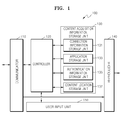
- FIG. 1 is a block diagram of an apparatus 100 to provide content according to an embodiment of the present invention.
- the apparatus 100 includes a communicator 110, a controller 120, a content acquisition information storage unit 130, a reproducer (or reproduction unit) 140, and a user input unit 150.
- the apparatus 100 may include additional and/or different units. Similarly, the functionality of two or more of the above units may be combined into a single unit.
- the apparatus 100 may be a set-top box, a desktop computer, a laptop computer, a mobile Internet protocol television (IPTV) receiver, a personal digital assistant (PDA), a mobile phone, a personal entertainment device, or any device that can receive and provide content through a bidirectional communication network.
- IPTV Internet protocol television
- PDA personal digital assistant
- Content refers to data acquired through a bidirectional communication network and provided to a user. Examples of such content include broadcast content that can be received through an Internet broadcast, a video on demand (VOD) service about various multimedia, audio, a user creative content (UCC) service, or the like, but is not limited in type or form.
- the network may be any type of network accessible over any type of wireless or wired medium, such as cable, fiber optic, Ethernet, or Wi-Fi.
- the communicator 110 acquires content through a bidirectional communication network by communicating with at least one server that provides content (not shown).
- a server refers to any type of content source.
- the server may be managed by a broadcasting station or a service provider that collects and serves content.
- the controller 120 forms and manages content acquisition information.
- the content acquisition information is identified by a content identifier for the content and is required to acquire the content.
- the content acquisition information may be required to acquire content through a bidirectional communication network, such as the Internet.
- the content acquisition information may vary in form or range.
- the content identifier may be obtained from an electronic program guide (EPG) or location information showing an actual location of Internet content in the server, or from another source.
- EPG electronic program guide
- a content identifier may be 'jumong' and included in EPG information or obtained from location information of the content, e.g., http://www/imbc.com/broad/tv/drama/ jumong/vod/ index.html.
- the content acquisition information may be obtained via a communication between a user and the server, and stored in the content acquisition information storage unit 130.
- the controller 120 allocates reduction information to the content acquisition information and manages the reduction information. If the content is a serial drama, reduction information may be allocated to content acquisition information about content of one series. The reduction information is given so as to ensure easy access to content acquired through the bidirectional communication network.
- the reduction information can be allocated according to a user input signal or a predetermined rule. For example, a channel, such as a conventional broadcast channel, can be allocated to the content acquisition information about Internet content as the reduction information.
- the controller searches for content acquisition information corresponding to the inputted reduction information.
- the content acquisition information storage unit 130 stores the content acquisition information.
- the content acquisition information storage unit 130 includes a connection information storage unit 131, an application storage unit 133, an authentication information storage unit 135, and a content location storage unit 137, as shown in FIG. 1 , although the units shown are not required in all aspects of the invention.
- the connection information storage unit 131 stores network connection information that may be required to connect to at least one server.
- the connection information may be an IP address or other live locator information.
- the application storage unit 133 stores a predetermined application in order to execute the content.
- the application may include an application to secure the content and/or an application to reproduce the content.
- the authentication information storage unit 135 stores authentication information that provides authentication to the server, when the server requests authentication to provide the content.
- the content location storage unit 137 stores the location information identifying an actual location of the content in the server.
- the content acquisition information storage unit 130 may further include a storage block (not shown) that stores other information that may be included in the content acquisition information. For example, when payment should be made to acquire Internet content, the content acquisition information storage unit 130 may further store information required to perform a payment process as the content acquisition information.
- the controller 120 may include a management module (not shown) to manage the connection information storage unit 131, the application storage unit 133, the authentication information storage unit 135, and the content location storage unit 137.
- a management module (not shown) to manage the connection information storage unit 131, the application storage unit 133, the authentication information storage unit 135, and the content location storage unit 137.
- the controller 120 may manage table information that identifies a location of information forming the content acquisition information in the content acquisition information storage unit 130, in order to search for the content acquisition information corresponding to the reduction information selected according to the user input signal.
- the table information may include, for example, the reduction information, the content identifier, information identifying a location of the connection information in the connection information storage unit 131, information identifying a location of the application in the application storage unit 133, information identifying a location of the authentication information in the authentication information storage unit 135, and information identifying a location of the content in the server.
- the controller 120 may process a request from the server without additional user input, using the information included in the content acquisition information. Accordingly, the user may access the content right before the content is reproduced, through the bidirectional communication network, by inputting only the reduction information.
- the communicator 110 acquires content located in the server using the content acquisition information obtained according to the control of the controller 120.
- the communicator 110 accesses the server using the connection information through a bidirectional communication network, such as the Internet, and accesses the content using the content location information.
- the controller 120 updates the application using the latest information provided from the server through the communicator 110.
- the user input unit 150 receives and transmits the user input signal to the controller 120, and the controller 120 controls the apparatus 100 based on the user input signal.
- the user input unit 150 may be a keyboard, a mouse, a touchpad, a microphone, a touchscreen, or other device capable of receiving input from the user.
- the reproducer 140 processes and outputs data, such as audio or video forming the content received through the Internet.
- data such as audio or video forming the content received through the Internet.
- the reproducer 140 processes and outputs the Internet content received from the communicator 110 according to the control of the controller 120.
- the output data may be displayed on a screen for a display.
- the display may be included in the apparatus 100 or connected thereto.
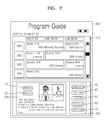
- FIG. 2 shows a screen 200 to provide a service in the apparatus 100 according to an embodiment of the present invention.
- FIG. 2 shown the screen 200, in which an application that provides an Internet broadcast program guide is being executed in the apparatus 100.
- the screen 200 includes Internet broadcast program information 210, a window 220 to provide detailed information about an Internet broadcast program selected according to a user input signal from among the Internet broadcast program information 210, and a window 230 to provide an icon list including icons for executing operations related to Internet broadcast content according to a user input.
- the screen 200 may include additional and/or different windows (or other elements), and the windows (or other elements) may be arranged on the screen 200 in any fashion.
- the window 220 provides a watch icon 10 and a record icon 20 with detailed information about a broadcast program.
- the user may acquire and view a broadcast program, which is provided on the window 220, through a communication network using the watch icon 10.
- the user may record or reserve recording the broadcast program by using the record icon 20.
- the window 230 may be provided on the same or a separate screen.
- the window 230 includes a search icon 30, a channel list (CH-List) icon 40, a favorite icon 50, a VOD list icon 60, and a UCC list icon 70, and may include additional or different icons as well.
- CH-List channel list
- the search icon 30 is an icon to execute a program search function in the Internet broadcast. As shown in FIG. 2 , the user may search for the Internet broadcast program using the search icon 30.
- the apparatus 100 provides a user interface (Ul) that enables the user to set a search condition. When the search icon 30 is selected, the apparatus 100 executes the program search function according to the set search condition, and provides a list generated as the result of the search.
- Ul user interface
- the channel list icon 40 provides a list including Internet broadcast channels.
- the favorite icon 50 provides a Favorite list.
- the VOD list icon 60 is an icon to provide a VOD list stored in the apparatus 100 to the user.
- the UCC list icon 70 is an icon to provide a UCC list stored in the apparatus 100 or that is frequently watched, to the user.
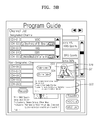
- FIGs. 3A and 3B show a screen providing a channel list according to an embodiment of the present invention.
- FIG. 3A shows a channel list window 310 provided on the screen 200 of FIG. 2 , when the channel list icon 40 is selected.
- the channel list window 310 includes a designated channel list 311 designated by a user and a non-designated channel list 312 that is not being used.
- the designated channel list 311 and the non-designated channel list 312 may be separated and shown in separate screens.
- the designated channel list 311 may include a channel set by an actual broadcast and a channel list designated by the user. Though not required in all aspects, if a channel cannot be currently connected even though the channel is being designated and used, the channel may be shown in a different color or otherwise indicated as not being connected.
- Channels 314 and 316 which are designated by the user, are not Internet broadcasts or downloaded and viewed. Instead, the user may easily access desired Internet content using connect icons 315 and 317, in which a process for viewing a VOD, UCC, or the like, which is viewed after an authentication, is programmed.
- a button which indicates a connection with an Internet broadcast service of the corresponding channel, may indicate the connection by changing color. For example, when the connection is completed, the color of the button may be purple and when the connection is not completed, the color of the button may change to blue. Other colors may be used as well.
- FIG. 3B shows a screen provided when a channel is selected from the designated channel list 311 shown in FIG. 3A .
- a window 320 providing detailed information is displayed.
- the window 320 includes a part 321, which provides an image or a moving image about the selected broadcast service, and detailed text information 322.
- the window 320 further includes an auto-connect icon 323 and a channel delete icon 324.
- the auto-connect icon 323 is a button to receive corresponding content through an Internet broadcast service, a UCC service, a VOD service, or the like.
- the apparatus 100 is automatically connected to a server, which is managed by a corresponding service provider, when the apparatus 100 is turned on. If a fee is to be paid whenever the apparatus 100 is connected to the server, a manual connect icon (not shown) can be additionally prepared so that the connection may be selectively performed by the user.
- the channel delete icon 324 is a button to delete a channel designated by the user. If the user selects the channel delete icon 324, all content related to an Internet broadcast service allocated to the selected channel may be deleted from the apparatus 100.
- FIGs. 4A and 4B show a screen providing a channel search list according to an embodiment of the present invention.
- FIG. 4A shows a screen provided when a search icon 30 is selected in the window 230 as shown in FIG. 2 . If the search icon 30 is selected, a search window 410 is provided.
- the search window 410 is a search screen provided for a direct search by the user.
- the search window 410 may be formed so as to enable the user to set the range of the search.
- a search result list 411 provides the search results in the form of a list.
- a channel set icon 412 may show Internet broadcast program items in different colors based on when a channel is allocated to an Internet broadcast service and when a channel is not allocated to the Internet broadcast service. For example, when a channel set is completed, the color of an Internet broadcast item may be purple; when a channel is not set, the color may be blue; and when a channel cannot be set, the color may be gray. Other colors may be used as well.
- a keyword block 415 is a block to allow the user to input a search word.
- a keyboard block 416 is a block in the form of a keyboard for the user to input a search word including a character, number, symbol, etc.
- the keyboard block 416 may be used if the user does not have access to a keyboard, and may be omitted in some aspects of the invention (such as where the user has access to a keyboard.)
- the search result obtained using the search word inputted by the user via the keyword block 415 and/or the keyboard block 416 may be provided in the search result list 411.
- FIG. 4B shows the window 420 providing detailed information when the user selects one item from among the search result list 411 shown in FIG. 4A .
- the user may view broadcast content shown on the window 420 using a watch icon 421 or store the broadcast content using a record icon 422.
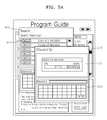
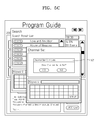
- FIGs. 5A through 5C show a screen in which a channel setting operation is being performed, in the apparatus 100.
- FIG. 5A shows that a channel set window 510 is provided when a channel set icon 412 is selected for one channel item from the search result list 410.
- the channel set window 510 includes a channel set process block 511, which shows a state of connection to a server (not shown) that provides Internet broadcast content of the selected channel, and a block 512 for a channel search.
- a channel designation block 521 is provided on the channel set window 510, as shown in FIG. 5B .
- a list of non-designated channels shown in the channel designation block 521 is provided.
- a channel set complete window 531 is provided, as shown in FIG. 5C .
- the user selects a YES icon in the channel set complete window 531 the channel set is completed and when the user selects a NO icon, the channel set process is canceled.
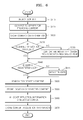
- FIG. 6 is a flowchart illustrating a process of storing content acquisition information about content and allocating reduction information to the content acquisition information according to an embodiment of the present invention. The process will be described with reference to FIG. 1 and FIG. 6 .
- the user searches for and selects desired content from the apparatus 100 via the user input unit 150.
- the user may search for and select desired broadcast content using an EPG, as shown in FIG. 2 .
- the apparatus 100 When the content is selected, the apparatus 100 is connected to a server that provides the content.
- the server provides the selected content in operation S620.
- the apparatus 100 may pre-store connection information to the server or may be connected to the server by the user inputting the connection information, such as a uniform resource locator (URL).
- URL uniform resource locator
- the apparatus 100 determines whether a required application to provide the content is installed, in operation S630.
- the application may include a media player, such as Gomplay 7.0, or a security program, such as in an imbc.secure1.0.exe form. If the application is not installed, the apparatus 100 installs the application in operation S635.
- the application may be downloaded from the server. Operation S630 may be performed after another operation according to the operation of the server, for example, after the user logs in to the server.
- the server may determine whether the user using the apparatus 100 is a registered user in operation S640.
- the server may determine whether the user is a registered user using the authentication information. If the user is not a registered user, the user may register with the server in operation S645 through a process, such as a member registration process.
- the authentication information input by the user may be stored in the apparatus 100.
- the user moves to a desired content providing location and searches for the desired content by searching for a web site that is provided by the server, using the apparatus 100.
- the apparatus 100 stores the content providing location of the searched content.
- the content providing location may be http://www/imbc.com/broad/tv/drama/jumong/vod/ index.html.
- the content is a serial drama
- a plurality of content location information, showing all installments of the serial drama is stored in the apparatus 100.
- the content includes a total of 40 installments, all broadcast program location information related to the 40 installments may be stored in a database of the apparatus 100. Accordingly, when the apparatus 100 reproduces the serial drama and one installment is completed, the apparatus can continuously reproduce the next installment using the location information corresponding to the next installment.
- information input by the user is included as content acquisition information. For example, whenever the user views the content, the user may input information about whether the fees will be paid in a flat rate every month or every year.
- reduction information is allocated to the content searched by the user. For example, when the reduction information is based upon a channel, the screen shown in FIG. 5B may be displayed, and thus the user may allocate a previously non-designated channel to the content acquisition information.
- network connection information of the server about the content selected by the user, the application the authentication information, and the content location information are stored, and the content acquisition information, required for acquiring the content, is allocated to the reduction information, and finally stored in the apparatus 100.
- the controller 120 temporarily stores the network connection information, the application, the authentication information, and the content location information of the content selected by the user through operation S61 0 through S660 in a buffer (not shown) of the apparatus 100, allocates the reduction information to the content acquisition information, and stores the reduction information allocated to the content acquisition information in the content acquisition information storage unit 130 in order to manage the content acquisition information.
- FIG. 7 is a flowchart illustrating a process of providing content through a bidirectional communication network according to an embodiment of the present invention.
- reduction information is allocated to content acquisition information, which is identified by a content identifier for content obtained via the bidirectional communication network and may be required to acquire content via communication with a server that provides the content.
- the content acquisition information may be obtained via communication with the server and may be pre-stored in the apparatus 100.
- the content acquisition information may include connection information required to connect to the server and location information showing an actual location of the content in the server.
- the apparatus 100 accesses the server using the connection information and accesses the content using the location information.
- the content acquisition information may further include authentication information for providing authentication to the server if the server requests authentication to provide the content.
- the content acquisition information may further include an application when a predetermined application is required to execute the content.
- the application may include an application to secure the content and/or a reproduction application to reproduce the content.
- the content acquisition information may further include information required in performing a payment process, when a payment should be made to acquire the content.
- the controller 120 searches for the content acquisition information required in order to acquire the content corresponding to the inputted reduction information in the content acquisition information storage unit 130.
- the controller 120 acquires the content, located in a predetermined server that provides the content, from the server using the content acquisition information via the communicator 110.
- the controller 120 accesses the server using the connection information included in the content acquisition information and may request the server to provide the content by transmitting the location information to the server.
- the controller 120 performs communication including providing information included in the content acquisition information to the server, so that the process requested by the server can proceed without additional user input.
- the apparatus 100 may update the application using the latest information received from the server.
- the present invention can also be embodied as computer readable codes on a computer readable recording medium.
- the computer readable recording medium is any data storage device that can store data which can be thereafter read by a computer system. Examples of the computer readable recording medium also include read-only memory (ROM), random-access memory (RAM), DVDs, CDs, magnetic tapes, floppy disks, optical data storage devices, and carrier waves (such as data transmission through the Internet).
- ROM read-only memory
- RAM random-access memory
- DVDs CDs
- CDs compact discs
- magnetic tapes magnetic tapes
- floppy disks optical data storage devices
- carrier waves such as data transmission through the Internet
- carrier waves such as data transmission through the Internet
- the computer readable recording medium can also be distributed over network coupled computer systems so that the computer readable code is stored and executed in a distributed fashion.
- functional programs, codes, and code segments for accomplishing the present invention can be easily construed by programmers skilled in the art to which the present invention pertains.
- the apparatus stores the content acquisition information, and thus the location information is not required to be inputted in order for the user to access the content and predetermined information is not required to be inputted in order to perform operations such as log in or authentication requested by the apparatus. Also, according to embodiments of the present invention, by allocating the reduction information to the content acquisition information and managing the reduction information, the user can access and acquire the desired content by only inputting the reduction information.
Landscapes
- Engineering & Computer Science (AREA)
- Signal Processing (AREA)
- Multimedia (AREA)
- Human Computer Interaction (AREA)
- Databases & Information Systems (AREA)
- Computer Networks & Wireless Communication (AREA)
- Software Systems (AREA)
- Finance (AREA)
- Strategic Management (AREA)
- General Engineering & Computer Science (AREA)
- Business, Economics & Management (AREA)
- Computer Security & Cryptography (AREA)
- Computer Graphics (AREA)
- Information Transfer Between Computers (AREA)
- Telephonic Communication Services (AREA)
Applications Claiming Priority (1)
| Application Number | Priority Date | Filing Date | Title |
|---|---|---|---|
| KR1020070045100A KR20080099497A (ko) | 2007-05-09 | 2007-05-09 | 양방향 통신망을 통해 콘텐츠를 제공하는 장치 및 방법 |
Publications (2)
| Publication Number | Publication Date |
|---|---|
| EP2012542A2 true EP2012542A2 (fr) | 2009-01-07 |
| EP2012542A3 EP2012542A3 (fr) | 2009-03-04 |
Family
ID=39970742
Family Applications (1)
| Application Number | Title | Priority Date | Filing Date |
|---|---|---|---|
| EP08153636A Ceased EP2012542A3 (fr) | 2007-05-09 | 2008-03-28 | Procédé et appareil pour fournir un contenu par un réseau de communication bidirectionnel |
Country Status (5)
| Country | Link |
|---|---|
| US (1) | US20080282309A1 (fr) |
| EP (1) | EP2012542A3 (fr) |
| KR (1) | KR20080099497A (fr) |
| CN (1) | CN101304354A (fr) |
| MX (1) | MX2008004881A (fr) |
Families Citing this family (12)
| Publication number | Priority date | Publication date | Assignee | Title |
|---|---|---|---|---|
| KR101612442B1 (ko) * | 2008-05-13 | 2016-04-15 | 삼성전자주식회사 | 컨텐츠 시청 제한 정보의 제공 및 이용을 위한 방법 및장치 |
| WO2010062000A1 (fr) * | 2008-11-27 | 2010-06-03 | Darkhorse Co., Ltd. | Procédé et système de fourniture de contenus créés par l'utilisateur destinés à une étude, et unité portable pour étude de contenus créés par l'utilisateur et destinés à l'étude |
| KR20100127162A (ko) | 2009-05-25 | 2010-12-03 | 엘지전자 주식회사 | 단말 내에서 브로드캐스트 서비스를 통해 관련된 콘텐츠를 검색하고 주문하는 방법 및 장치 |
| KR101047350B1 (ko) * | 2009-06-24 | 2011-07-07 | (주)엠케스트비젼 | Pdr 미들웨어의 pdr 기능 지원 및 pdr 서비스 제공 방법 및 이를 수행하기 위한 프로그램이 기록된 기록매체 |
| KR101129892B1 (ko) * | 2010-04-20 | 2012-03-23 | 한국과학기술원 | Iptv 서비스에 대한 단축 정보 제공 시스템 및 방법 |
| TW201315232A (zh) * | 2011-09-27 | 2013-04-01 | Hannstar Display Corp | 頻道搜尋之多工應用方法及與運用此多工應用方法之電視 |
| CN104160713B (zh) | 2012-03-05 | 2018-06-05 | Lg电子株式会社 | 视频显示设备及其操作方法 |
| US20140078067A1 (en) * | 2012-09-14 | 2014-03-20 | General Electric Company | Medical image display and data transfer |
| EP3496371B1 (fr) | 2013-01-31 | 2020-08-19 | Samsung Electronics Co., Ltd. | Procédé et dispositif de fourniture d'un service |
| US8959562B2 (en) * | 2013-02-26 | 2015-02-17 | Roku, Inc. | Method and apparatus for automatic second screen engagement |
| US9585106B2 (en) * | 2014-03-27 | 2017-02-28 | Taiwan Semiconductor Manufacturing Company, Ltd. | Network-assisted channel selection and power control for mobile devices |
| EP3891593B1 (fr) * | 2018-12-04 | 2025-04-23 | Google LLC | Clavier virtuel rotatif sur écran pour une utilisation efficace pendant une saisie de caractères |
Family Cites Families (11)
| Publication number | Priority date | Publication date | Assignee | Title |
|---|---|---|---|---|
| US5940074A (en) * | 1996-06-03 | 1999-08-17 | Webtv Networks, Inc. | Remote upgrade of software over a network |
| US6792616B1 (en) * | 1998-05-01 | 2004-09-14 | Scientific-Atlanta, Inc. | System and method for providing a plurality of programming services in a television system |
| JP4501243B2 (ja) * | 2000-07-24 | 2010-07-14 | ソニー株式会社 | テレビジョン受像機およびプログラム実行方法 |
| KR100357154B1 (ko) * | 2000-11-27 | 2002-10-19 | 엘지전자 주식회사 | 인터넷 기능을 갖는 영상기기의 인터넷 사이트 검색화면디스플레이방법 |
| US6981273B1 (en) * | 2001-02-21 | 2005-12-27 | Sonic Solutions | System, method and channel line-up processor for localizing an electronic program guide schedule |
| US20020144289A1 (en) * | 2001-03-30 | 2002-10-03 | Yuichi Taguchi | Global multi media service method and apparatus |
| GB2410145A (en) * | 2004-01-16 | 2005-07-20 | Amino Comm Ltd | Method of accessing additional service via a television decoder |
| US20060218608A1 (en) * | 2004-03-01 | 2006-09-28 | Shin Miura | Reception device |
| US20060037037A1 (en) * | 2004-06-14 | 2006-02-16 | Tony Miranz | System and method for providing virtual video on demand |
| US8095954B2 (en) * | 2005-09-13 | 2012-01-10 | At&T Intellectual Property, L.P. | System and method for providing custom channel arrangements in a programming guide |
| US8255981B2 (en) * | 2005-12-21 | 2012-08-28 | At&T Intellectual Property I, L.P. | System and method of authentication |
-
2007
- 2007-05-09 KR KR1020070045100A patent/KR20080099497A/ko not_active Ceased
-
2008
- 2008-03-18 US US12/050,226 patent/US20080282309A1/en not_active Abandoned
- 2008-03-28 EP EP08153636A patent/EP2012542A3/fr not_active Ceased
- 2008-04-14 MX MX2008004881A patent/MX2008004881A/es not_active Application Discontinuation
- 2008-04-14 CN CNA2008100916915A patent/CN101304354A/zh active Pending
Also Published As
| Publication number | Publication date |
|---|---|
| EP2012542A3 (fr) | 2009-03-04 |
| US20080282309A1 (en) | 2008-11-13 |
| MX2008004881A (es) | 2009-03-02 |
| KR20080099497A (ko) | 2008-11-13 |
| CN101304354A (zh) | 2008-11-12 |
Similar Documents
| Publication | Publication Date | Title |
|---|---|---|
| EP2012542A2 (fr) | Procédé et appareil pour fournir un contenu par un réseau de communication bidirectionnel | |
| KR101550074B1 (ko) | 대화형 미디어 안내 애플리케이션에의 원격 액세스를 제공하는 시스템 및 방법 | |
| US9143735B2 (en) | Systems and methods for providing a personal channel via television | |
| US8763034B2 (en) | Method and apparatus for reproducing network content | |
| JP2021103890A (ja) | コンテンツ送信先を割り当てるユーザ定義規則 | |
| US8302125B2 (en) | Apparatus and method for providing EPG, and terminal and method for displaying EPG | |
| US7584483B2 (en) | Content-exhibition control apparatus and method | |
| US20080271101A1 (en) | System and method for broadband digital video recording | |
| US8839305B2 (en) | Content notification method and apparatus, content processing method and apparatus, and storage medium storing program for executing the method | |
| EP3024247B1 (fr) | Récepteur de radiodiffusion numérique et procédé de commande de récepteur de radiodiffusion numérique | |
| EP2256968A2 (fr) | Récepteur de radiodiffusion ip et procédé de fourniture de service dans un récepteur de radiodiffusion ip | |
| US20050278745A1 (en) | Broadcast program providing system, broadcast reception terminal, browsing terminal, operation terminal, computer program and computer program product | |
| KR100816953B1 (ko) | Url을 이용한 dtv응용 프로그램의 업데이트 방법 | |
| KR101856852B1 (ko) | 채널 기반 콘텐츠 제공 시스템에서의 유튜브 채널 실행 방법 및 장치 | |
| CN104427396A (zh) | 信息处理装置、信息处理方法和程序 | |
| AU2010100616A4 (en) | Remote Content Download | |
| KR101442746B1 (ko) | 하나의 동영상 재생안내용 앱을 다수의 콘텐츠 제공업체들이 이용할 수 있게 관리하는 이동통신 기반의 관리시스템 및 방법 | |
| CN118870132B (zh) | 显示设备和节目信息更新方法 | |
| KR100975515B1 (ko) | Iptv 서비스에서 선호채널 서비스 제공 시스템 및 방법 | |
| KR20100001219A (ko) | 인터넷 프로토콜 티브이의 선호 콘텐츠 자동 녹화 제어대행 시스템 및 방법 | |
| AU2014101162A4 (en) | Remote content download | |
| AU2013101518B4 (en) | Remote content download | |
| AU2015100803A4 (en) | Remote content download | |
| KR20170039885A (ko) | 채널 기반 콘텐츠 제공 시스템에서의 콘텐츠 실행 장치 및 방법 |
Legal Events
| Date | Code | Title | Description |
|---|---|---|---|
| PUAI | Public reference made under article 153(3) epc to a published international application that has entered the european phase |
Free format text: ORIGINAL CODE: 0009012 |
|
| AK | Designated contracting states |
Kind code of ref document: A2 Designated state(s): AT BE BG CH CY CZ DE DK EE ES FI FR GB GR HR HU IE IS IT LI LT LU LV MC MT NL NO PL PT RO SE SI SK TR |
|
| AX | Request for extension of the european patent |
Extension state: AL BA MK RS |
|
| PUAL | Search report despatched |
Free format text: ORIGINAL CODE: 0009013 |
|
| AK | Designated contracting states |
Kind code of ref document: A3 Designated state(s): AT BE BG CH CY CZ DE DK EE ES FI FR GB GR HR HU IE IS IT LI LT LU LV MC MT NL NO PL PT RO SE SI SK TR |
|
| AX | Request for extension of the european patent |
Extension state: AL BA MK RS |
|
| RIC1 | Information provided on ipc code assigned before grant |
Ipc: H04N 5/00 20060101ALI20090123BHEP Ipc: H04N 7/173 20060101AFI20081203BHEP |
|
| 17Q | First examination report despatched |
Effective date: 20090925 |
|
| 17P | Request for examination filed |
Effective date: 20090904 |
|
| AKX | Designation fees paid |
Designated state(s): DE FR GB IT NL |
|
| STAA | Information on the status of an ep patent application or granted ep patent |
Free format text: STATUS: THE APPLICATION HAS BEEN REFUSED |
|
| 18R | Application refused |
Effective date: 20120403 |