EP2013811B1 - Procédé et dispositif pour pseudonymiser des données numériques - Google Patents
Procédé et dispositif pour pseudonymiser des données numériques Download PDFInfo
- Publication number
- EP2013811B1 EP2013811B1 EP07722025.9A EP07722025A EP2013811B1 EP 2013811 B1 EP2013811 B1 EP 2013811B1 EP 07722025 A EP07722025 A EP 07722025A EP 2013811 B1 EP2013811 B1 EP 2013811B1
- Authority
- EP
- European Patent Office
- Prior art keywords
- data
- pseudonym
- source
- master
- ppi
- Prior art date
- Legal status (The legal status is an assumption and is not a legal conclusion. Google has not performed a legal analysis and makes no representation as to the accuracy of the status listed.)
- Active
Links
Images




Classifications
-
- G—PHYSICS
- G06—COMPUTING OR CALCULATING; COUNTING
- G06F—ELECTRIC DIGITAL DATA PROCESSING
- G06F21/00—Security arrangements for protecting computers, components thereof, programs or data against unauthorised activity
- G06F21/60—Protecting data
- G06F21/62—Protecting access to data via a platform, e.g. using keys or access control rules
- G06F21/6218—Protecting access to data via a platform, e.g. using keys or access control rules to a system of files or objects, e.g. local or distributed file system or database
- G06F21/6245—Protecting personal data, e.g. for financial or medical purposes
- G06F21/6254—Protecting personal data, e.g. for financial or medical purposes by anonymising data, e.g. decorrelating personal data from the owner's identification
Definitions
- the present invention relates to a method and a device for the pseudonymization of digital data, in particular in order to enable the statistical evaluation of personal data records from different source systems by code numbers.
- the invention should also allow a reidentification under controlled conditions.
- Pseudonymisation is the modification of personal data records by an assignment rule in such a way that the individual details of personal or factual circumstances without knowledge or use of the assignment rule can no longer be assigned to a natural person.
- the identification data are converted by a mapping rule into an arbitrarily selected identifier (the pseudonym).
- the aim of such a procedure is to be able to restore the personal reference only when necessary and in compliance with previously defined framework conditions.
- Pseudonymisited data are personal data according to ⁇ 3 Abs. 6a BDSG, because by definition an assignment between the pseudonym and the name of the person should be possible in principle. Conversely, the pseudonymization should practically exclude or at least complicate a random re-identification according to S 3 para. 6 a BDSG. Apart from the existence of a mapping function, the pseudonymization must therefore reach the quality of factually anonymised data for third parties. For this purpose, appropriate mathematical methods should be used, including the filling of data sets in order to effectively prevent their re-identification.
- the re-identification can sometimes be reserved exclusively for the person concerned.
- WO 01 18 631 shows a method for pseudonymizing, wherein patient data are pseudonymized in a database.
- the company-wide evaluation of personal data is conceivable.
- the legal problem of this constellation is that the employment relationships usually only exist with the respective legal entity, but not with the entire enterprise. In the absence of a contractual legal basis, the transmission of personal data to other employers is therefore only permitted with the consent of the persons concerned.
- a first search for persons with a required qualification profile would initially only be carried out via the pseudonymized data records, then a re-identification would only be necessary for the ascertained employee group in order to be able to address it directly. In this case, the legal requirements for re-identification must be observed.
- a second application example is the management of billing data of the users of a TK or online service.
- the billing data should be administered pseudonymised and re-identified only for the collection of the invoice amount or the sending of the invoice to the customer.
- Another example is the outsourcing of the processing of personal data records to a data processor domiciled abroad, in particular in a third country without a level of protection comparable to the European Union.
- the pseudonymisation or re-identification would take place exclusively in the hands of the client in Germany, while the processor's processing would be limited to the processing of pseudonymous data.
- the invention could be used to allow processing of personal records with currently available computational capacities of different locations.
- the object of the invention is a solution that allows qualitative statements about records from different systems, but at the same time in the sense of a possible legislation data save the legitimate interests of those concerned.
- Using the pseudonymization model it is possible to make evaluations that would be inadmissible with individual personal data in terms of data protection law.
- the invention also makes it possible to re-identify the data records, but under controlled and thus predetermined conditions.
- the invention is intended to make a contribution to the observance of data protection by being protected against unauthorized use by the pseudonymization.
- data protection management is assigned a central role, because it secures customer or personal data against inadmissible access and processing and thus makes an important condition for the acceptance of processing by those affected.
- the pre-pseudonymization takes place under the responsibility of the source system by a pseudonymization box or pseudonymization system (T-IP client) provided by the T-IP.
- T-IP client is preferably in the area of responsibility of the entity responsible for the source system.
- the strong pseudonymization then takes place in the T-IP master.
- the principle of knowledge distributed across different roles should enable effective pseudonymisation and prevent uncontrolled re-identification.
- both for the pseudonymization and for the Re-identification required knowledge distributed across different roles.
- the flow of information between these roles is technically supported in order to prevent illegal re-identification.
- the security of the procedure can be increased by allowing individual roles to be assigned to third parties outside the area responsible for the T-IP.
- the T-IP preferably performs the following tasks: the pseudonymizing, the recognition of incorrect data, the encrypted transmission of the data to a recipient under the condition of secure authentication, the provision of pseudonymized data for evaluation purposes, the statistical analysis of pseudonymized data, generating, Manage and delete pseudonymization, reidentification, and reidentification information.
- the T-IP consists of the following components: the T-IP client, the T-IP master, the T-IP Trusted Database (T-DB) and the trust center.
- T-DB T-IP Trusted Database
- the T-IP client is the responsibility of the source system, so that neither the operator of the T-IP master nor the T-DB nor the target system has access to the pre-pseudonymization carried out in the T-IP client.
- the technical functionality of the T-IP client is part of the T-IP service.
- the processing of the pseudonymized data records takes place, but not the administration of the pseudonyms.
- the T-DB manages the pseudonyms and their identifiers in cooperation with the trust center. However, records are not processed by T-DB except for the source ID of the records.
- the pseudonymization process proceeds according to the following scheme.
- the T-IP client receives personal records from a source system provided with a source ID. He uses name, date of birth, and other unique identifiers to create a pre-pseudonym (PI) using a proprietary hash function and returns the PI to the source system. Furthermore, possible identifiers such as date of birth or postal code can be reduced to classes necessary for the evaluation, such as year of birth or postal code area.
- PI pre-pseudonym
- the thus-edited record is provided with a source ID that refers to the source file in the source system, and preferably a check value, to ensure the integrity of the data.
- T-IP master transmits the personal data received from the source system.
- the T-IP client is the responsibility of the source system. He will be provided by the T-IP responsible for the source system solely for the purpose of pseudonymization. The pseudonymization takes place in a kind of black box.
- the source system After completion of the pseudonymization, the source system has the source data, the source ID and the PI, while in the T-IP client after the transmission of the pre-pseudonymized data all data has been deleted.
- the T-IP master gets from the source system, with the support of the T-IP client, the PI pre-pseudonymized record and the source ID that points to the database of the source system.
- the T-IP master receives the pre-pseudonymized records generated by the T-IP client for this request.
- PPI pseudonym
- PI pre-pseudonym
- SD critical personal data statistical classes
- the target system can indeed assign the PPI in cooperation with the T-DB to the pre-pseudonym PI, but the latter can PI over Reidentify the source ID only in conjunction with the source system.
- a re-identification can not be done by an interaction between the target system and T-IP master, because the latter has no data stored after completion of the pseudonymization.
- a re-identification is therefore only possible with the help of the information from the respective source system.
- the latter bears the responsibility towards the data subject if it reveals the pseudonym and thereby triggers a transfer of personal data records to the target system that requires justification.
- the in the Fig. 1 and 2 illustrated T-IP client processes personal data from source databases (source lists).
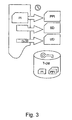
- the task of the T-IP client is to prepare personal data of the source system, to pseudonymize it, in a preferred embodiment to encrypt and transfer it to the T-IP master, which is detailed in the Fig. 3 and 4 will be shown.
- the pre-pseudonymization takes place in a P-box of the T-IP client, which is provided to the source system by the T-IP system, but works under the responsibility of the person responsible for the source system.
- Each source system has a P-box.
- the legal responsibility for the pseudonymization and the transmission of the pre-pseudonymised data sets (PI) lies with the responsible for the source system body.
- Pre-pseudonymization in the P-Box occurs with a sophisticated procedure to prevent re-identification within the T-IP or attacks on the transmission link from the T-IP client to the T-IP master.
- the forwarding of the pre-pseudonymized data records to the T-IP master should preferably be encrypted. It should be ensured that the data records are actually received by the addressed T-IP master and no third party (authentication with certificate).
- pre-pseudonym As a pre-pseudonym, the name in conjunction with other identification features such as the date of birth, place of birth and other unique identifiers (personnel number, customer number, etc.) are used. These identifiers are modified in the P1 box of the T-IP client by an algorithm so that the resulting string for an attacker (without knowledge of a record) makes no sense results. The character string is then transferred by a hash function into the pre-pseudonym PI.
- pre-pseudonymisation personal data should already be transferred into data classes (eg date of birth -> year of birth, zip code -> zip code area, etc. see Fig. 2 ).
- the transfer into data classes takes place during the installation of the system (customizing) taking into account the requirements for the evaluation. In this way, a re-identification of the pre-pseudonymized data sets is to be made more difficult.
- the procedure is used only for (pre-) pseudonymizing the data records from the source systems before they are transmitted to the T-IP master (see Fig. 1 and Fig. 6 ). However, the quality of the pseudonymization achieved with this is possibly not yet sufficient to be able to transfer the data records to the target system.
- the pre-pseudonymized data record Prior to transmission to the T-IP master, the pre-pseudonymized data record is provided with a source ID and a check value.
- the source ID provides the T-DB with the information from which source system a data record requested for re-identification originates.
- the test value guarantees the integrity of the transmitted data set to the T-IP master.
- the included source systems should have a uniformly maintained database. Problems occur, for example, when the source systems, for example, represent dates or personnel numbers differently. Only when such formatting-related inequalities are eliminated can a double match be made over the pre-pseudonyms (PI) from the source systems.
- PI pre-pseudonyms
- the goal of this measure is to be able to assign data records of a person to these as feature carriers as well.
- the respective data records must be in the pre-pseudonymized state in the T-IP master be cached. Since in the T-IP master the source ID is used to form the pseudonym (PPI), different pseudonyms PPI are generated from identical PI.
- PPI pseudonym
- data from the T-IP master is delivered to a target system without the associated pseudonyms.
- the target system only receives anonymised data. This data can not be re-identified in the T-IP master because these pseudonyms are not kept in stock.
- PPI pseudonyms
- T-DB Trusted Database
- the target system must not be able to return the PPI to a person and thus re-identify it.
- SD statistical data
- the number of data transferred must not be too large. Control over the type and number of transmitted records is in a preferred embodiment, a privacy console.
- the data on the target system must be deleted after a defined deadline.
- All data transfers between the roles or systems preferably take place in encrypted form.
- the communicating systems preferably have to authenticate themselves via a certificate.
- the T-IP master Upon request of a target system, the T-IP master requests data from the T-IP clients of the respective source systems for the purpose of evaluation.
- the T-IP client must make sure that the request comes from the T-IP master.
- the T-IP client may transmit only pre-pseudonymised data and this only to the T-IP master.
- a target system requests data for evaluation from the T-IP master.
- the T-IP master should only respond to this request if it comes from an authorized target system.
- the T-IP master transmits only anonymized or pseudonymized data and this only to the requesting target system.
- a person in charge of a target system requests the re-identification of selected PPIs for a specific evaluation from the Trusted Database (T-DB), giving reasons for doing so ( Fig. 6 ).
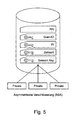
- T-DB itself is unable to re-identify the PPI. It only has encrypted information ( Fig. 5 ), in which source system the respective data sets are to be re-identified. Re-identification is preferably only possible with the help of the trust center. It is therefore the task of the trust office to examine the admissibility of the re-identification and to release it.
- the private key of the trust center can be formed in the T-DB to decrypt the session key. Only this session key allows the decryption of the assignment data (PPI - PI - source ID).
- the T-DB send the PI belonging to the PPI to the source system identified using the source ID. Only the source system is able to identify the person belonging to PI, because it has either saved the PI or recalculated the PI of the relevant records via the T-IP client and compared with the requested PI. The source system checks and decides whether it can reveal the identity of the person to the PI in question against the target system.
- the T-IP master should have an overview of which target system requests which evaluations and how many data records have already been delivered to the relevant target system. It should be a graphical representation of Control figures are carried out so that even a technical layman can recognize and evaluate the quantity and quality of the data flows. All requirements for a re-identification are logged.
- a periodically recurring, i. Daily, weekly and also monthly email notification about type and number of requests and submissions is distributed.
- the logs of the data sent from there are evaluated in order to be able to trace the error-free functioning of the T-IP clients.
- the T-DB stores the assignment data (PPI, source ID, time value, PI) transmitted to it by the T-IP master, with the last three fields being encrypted symmetrically (with a session key).
- the T-DB encrypts the session key asymmetrically with the trusted public key and then stores it in the database. It divides the private key of the trust center into several parts (multi-eye principle) during its generation, delivers the subkeys to the appropriate number of trusted entities and deletes them in its own system.
- the T-DB can only assign the PPI to the corresponding PI and its source ID. Subsequently, the T-DB has to direct the request for a re-identification of the PI to the source system, which needed to assign the PPI to the PI the T-IP client. However, the re-identification can only be initiated if the trust center provides all parts of the key in order to decrypt the assignment of the PPI to the PI in the T-DB. An assignment of the PPI to the PI is only possible via the source system. The target system can only initiate a re-identification if the T-DB, the trust center and the source system work together.
- the trust office ( Fig. 6 ) secures the assignment of PPI to PI and source ID, because only with their private key the record with the assignment can be decrypted.
- the trust center protects against unauthorized interaction by distributing the private key from the T-DB to typically three instances of trust (eg works council, management and data protection officer), so that a decryption of the assignment of PPI to PI and source ID is only possible when these trust instances merge their subkeys.
- the trust point releases the assignment of PPI to PI and source ID from the T-DB by decrypting the assignment record.
Landscapes
- Engineering & Computer Science (AREA)
- Health & Medical Sciences (AREA)
- Bioethics (AREA)
- General Health & Medical Sciences (AREA)
- Theoretical Computer Science (AREA)
- Computer Hardware Design (AREA)
- Databases & Information Systems (AREA)
- Computer Security & Cryptography (AREA)
- Software Systems (AREA)
- Physics & Mathematics (AREA)
- General Engineering & Computer Science (AREA)
- General Physics & Mathematics (AREA)
- Medical Informatics (AREA)
- Storage Device Security (AREA)
Claims (18)
- Une méthode pour pseudonymiser des enregistrement de données numériques d'un système source destinés à un système cible, avec un Protecteur d'identité T, T-IP, dans laquelle la pseudonymisation réalisée ou révoquée sur le principe d'une connaissance distribuée de différents rôles, incluant un système client T-IP et un système maître T-IP, comportant les étapes :- le client T-IP reçoit les enregistrements de données comportant des identifiants et des données personnelles associées émanant d'un système source fournis avec un identifiant ID source, dans laquelle l'identifiant ID source renvoie à un fichier source au sein du système source,- le client T-IP pré-pseudonymise les enregistrements de données par une première pseudonymisation des identifiants en vue d'un pré-pseudonyme, PI, et marque le pré-pseudonyme , PI, avec l'identifiant iD source, dans laquelle seule le système source dispose d'un accès au pré-pseudonyme réalisé ;- le pré-pseudonyme PI est transmis vers le maître T-IP et effacé postérieurement à la soumission des enregistrements au client T-IP ;- le Maître T-IP crée un pseudonyme pour chaque enregistrement de données, PPI, qui est généré à partir du pré-pseudonyme, PI, et de l'identifiant ID de source, et d'autres valeurs ;- dans le but d'une ré-identification ultérieure, l'information des champs pseudonyme, PPI, identifiant ID source, pré-pseudonyme, PI, et d'autres valeurs sont transmises à une base de données de confiance, T-DB ;- le pseudonyme , PPI, est transmis au système cible et puis la donnée sera effacée du Maître T-IP.
- La méthode selon la revendication précédente, dans laquelle le Maître T-IP forme des classes statistique extraites des enregistrements de données personnelles critiques (SD), et modifie les champs de données, en combinaison avec d'autres informations, permet une ré-identification, et fait suivre les données non critiques (US) vers le système cible.
- La méthode selon l'une ou plusieurs des revendications précédentes, dans laquelle à la suite de la pseudonymisation, le système source dispose d'un accès à l'identifiant ID source et au pré-pseudonyme, PI,.
- La méthode selon l'une ou plusieurs des revendications précédentes, dans laquelle toutes les données pré-pseudonymisées sont effacées du Client T-IP et/ou du Maître T-IP, postérieurement à la transmission.
- La méthode selon l'une ou plusieurs des revendications précédentes, dans laquelle les enregistrements de données avec le pseudonyme (PPI) sont transférés vers le système cible, dans laquelle, pour permettre une ré-identification, une information émanant des champs pseudonyme (PPI), identifiant ID source, pré-pseudonyme (PI), et la valeur temps sont transmises à la base de données de confiance (T-DB).
- La méthode selon l'une ou plusieurs des revendications précédentes, dans laquelle la transmission vers le Maître T-IP des enregistrements de données pré-pseudonymisés est effectuée de manière chiffrée, de préférence via une authentification par certificat.
- La méthode selon l'une ou plusieurs des revendications précédentes, dans laquelle le pré-pseudonyme (PI) est basé sur le nom, de préférence en relation avec des identifiants supplémentaires, tel que la date de naissance, le lieu de naissance, et d'autres identifiants uniques tel que le numéro d'employé, le numéro de client, et ces identifiants sont modifiés dans les clients T-IP de telle manière que la chaîne de caractère générée ne signifie plus rien pour un intrus, dans laquelle la chaîne de caractère est ensuite transférée au sein du pré-pseudonyme, de préférence au moyen d'une fonction de hache (PI).
- La méthode selon l'une ou plusieurs des revendications précédentes, dans laquelle les enregistrements de données personnelle sont déjà transmises en temps que classes de données de la pré-pseudonymisation.
- La méthode selon l'une ou plusieurs des revendications précédentes, dans laquelle le client T-IP assigne une valeur de vérification au pré-pseudonyme (PI).
- La méthode selon l'une ou plusieurs des revendications précédentes, dans laquelle la donnée pré-pseudonymisée est fournie avec un identifiant source et/ou une valeur de test avant la transmission vers le Maître T-IP, dans laquelle l'identifiant ID source du DB-T fournit l'information à partir de laquelle le système source génère un jeu de données requise pour une ré-identification, et dans laquelle la valeur de test garantit le Maître T-IP de l'intégrité du jeu de données transmises.
- La méthode selon l'une ou plusieurs des revendications précédentes, dans laquelle le pseudonyme (PPI) est généré à partir du pré-pseudonyme (PI) en permutation avec une données temporelle, une valeur de hachage et/ou l'identifiant ID source, et une fonction de hachage.
- La méthode selon l'une ou plusieurs des revendications précédentes, dans laquelle, en vue d'une ré-identifcation ultérieure, l'allocation du pseudonyme (PPI) à l'identifiant ID source correspondant ainsi que le pré-pseudonyme PI sont stockés dans une base de données de confiance (DB-T).
- La méthode selon l'une ou plusieurs des revendications précédentes, dans laquelle la clé privée peut être générée au sein du T-DB des instances de confiance, pour le déchiffrage de la clé de session uniquement postérieurement à la communication des fragments de clé par plusieurs instances de confiance, puisque seule cette clé de session permet le déchiffrage des données allouées.
- La méthode selon l'une ou plusieurs des revendications précédentes, dans laquelle le T-DB protège les données transmises du Maître T-IP (PPI, identifiant ID source, valeur temporelle, PI), dans laquelle, de préférence, les trois derniers champs mentionnés sont chiffrées de manière symétrique, de préférence à l'aide d'une clé de session, la clé de session étant chiffrée de manière asymétrique au moyen de la clé publique du tiers de confiance, et est ensuite stocké dans la base de données, dans laquelle la clé privée (principe des quatre yeux) est fournée aux instances de confiance en plusieurs parties, et les parties de clés sont livrées à un nombre approprié d'instances de confiance.
- La méthode selon l'une ou plusieurs des revendications précédentes, dans laquelle la distribution de données est telle que seul le système source est capable d'identifier la personne associée au pré-pseudonyme (PI), en raison du fait qu'il a soit stocké le pré-pseudonyme (PI) ou qu'il recalcule le PI avec le client T-IP et le vérifie avec le pré-pseudonyme (PI) requis.
- La méthode selon l'une ou plusieurs des revendications précédentes, dans laquelle le maître T-IP dispose d'une vue d'ensemble sur les requêtes du système cible, sur les évaluations et le nombre d'enregistrements qui ont été délivrés aux système cible pertinent.
- Appareil caractérisé en ce qu'il comporte des moyens et une configuration permettant l'exécution de la méthode définie dans l'une des revendications précédentes.
- Support de données caractérisé par une structure susceptible d'exécuter, une fois chargée au sein d'un ordinateur, ou au sein de multiples ordinateurs, une méthode suivant une ou plusieurs des revendications de méthodes précédentes.
Applications Claiming Priority (2)
| Application Number | Priority Date | Filing Date | Title |
|---|---|---|---|
| DE102006012311A DE102006012311A1 (de) | 2006-03-17 | 2006-03-17 | Verfahren und Vorrichtung zur Pseudonymisierung von digitalen Daten |
| PCT/DE2007/000452 WO2007110035A1 (fr) | 2006-03-17 | 2007-03-14 | Procédé et dispositif pour pseudonymiser des données numériques |
Publications (2)
| Publication Number | Publication Date |
|---|---|
| EP2013811A1 EP2013811A1 (fr) | 2009-01-14 |
| EP2013811B1 true EP2013811B1 (fr) | 2014-05-14 |
Family
ID=38308627
Family Applications (1)
| Application Number | Title | Priority Date | Filing Date |
|---|---|---|---|
| EP07722025.9A Active EP2013811B1 (fr) | 2006-03-17 | 2007-03-14 | Procédé et dispositif pour pseudonymiser des données numériques |
Country Status (4)
| Country | Link |
|---|---|
| US (1) | US10372940B2 (fr) |
| EP (1) | EP2013811B1 (fr) |
| DE (1) | DE102006012311A1 (fr) |
| WO (1) | WO2007110035A1 (fr) |
Families Citing this family (22)
| Publication number | Priority date | Publication date | Assignee | Title |
|---|---|---|---|---|
| US8621234B2 (en) * | 2007-12-28 | 2013-12-31 | Koninklijke Philips N.V. | Information interchange system and apparatus |
| EP2199907A1 (fr) * | 2008-12-22 | 2010-06-23 | Koninklijke Philips Electronics N.V. | Procédé d'échange de données |
| EP2510713B1 (fr) * | 2009-12-07 | 2018-06-13 | Nokia Technologies Oy | Préservation de la confidentialité de données d'utilisateur dans un réseau |
| US8819437B2 (en) * | 2010-09-30 | 2014-08-26 | Microsoft Corporation | Cryptographic device that binds an additional authentication factor to multiple identities |
| WO2014075836A1 (fr) * | 2012-11-16 | 2014-05-22 | Deutsches Krebsforschungszentrum Stiftung des öffentlichen Rechts | Pseudonymisation et ré-identification d'identifiants |
| DE102014101710A1 (de) * | 2014-02-12 | 2015-08-13 | Uniscon Universal Identity Control Gmbh | Verfahren und System zum Sichern von Datenbankrelationen vor unberechtigtem Zugriff |
| US10657286B2 (en) | 2015-01-14 | 2020-05-19 | Hewlett Packard Enterprise Development Lp | System, apparatus and method for anonymizing data prior to threat detection analysis |
| US9680646B2 (en) * | 2015-02-05 | 2017-06-13 | Apple Inc. | Relay service for communication between controllers and accessories |
| CA2999104A1 (fr) * | 2015-10-16 | 2017-04-20 | Deutsche Telekom Ag | Procede et systeme de protection de donnees electroniques confidentielles |
| EP3156932A1 (fr) * | 2015-10-16 | 2017-04-19 | Deutsche Telekom AG | Procede et systeme de protection de donnees electroniques confidentielles |
| WO2017114613A1 (fr) * | 2015-12-30 | 2017-07-06 | Deutsche Telekom Ag | Procédé et dispositifs de protection de données électroniques confidentielles |
| EP3188070A1 (fr) * | 2015-12-30 | 2017-07-05 | Deutsche Telekom AG | Procede et dispositifs de protection de donnees electroniques confidentielles |
| KR102000266B1 (ko) | 2016-01-15 | 2019-07-15 | 구글 엘엘씨 | 애플리케이션 인스턴스들에 걸친 식별자들 |
| US9817648B2 (en) | 2016-01-15 | 2017-11-14 | Google Inc. | Application containers with dynamic sub-package loading |
| US10999296B2 (en) * | 2017-05-15 | 2021-05-04 | Forcepoint, LLC | Generating adaptive trust profiles using information derived from similarly situated organizations |
| US11115216B2 (en) | 2018-03-20 | 2021-09-07 | Micro Focus Llc | Perturbation-based order preserving pseudonymization of data |
| US11106821B2 (en) | 2018-03-20 | 2021-08-31 | Micro Focus Llc | Determining pseudonym values using tweak-based encryption |
| US11562134B2 (en) * | 2019-04-02 | 2023-01-24 | Genpact Luxembourg S.à r.l. II | Method and system for advanced document redaction |
| US20220386067A1 (en) * | 2021-05-28 | 2022-12-01 | Intuizi, Inc. | Privacy compliant insights platform incorporating data signals from various sources |
| US12323397B2 (en) * | 2021-12-06 | 2025-06-03 | Here Global B.V. | Method and apparatus for managing user requests related to pseudonymous or anonymous data |
| US12105848B2 (en) * | 2022-08-19 | 2024-10-01 | Telesign Corporation | User data deidentification system |
| US20240187258A1 (en) * | 2022-12-02 | 2024-06-06 | Bastionzero, Inc. | Multi-party split-key authentication |
Family Cites Families (26)
| Publication number | Priority date | Publication date | Assignee | Title |
|---|---|---|---|---|
| US4999766A (en) * | 1988-06-13 | 1991-03-12 | International Business Machines Corporation | Managing host to workstation file transfer |
| NZ329891A (en) * | 1994-01-13 | 2000-01-28 | Certco Llc | Method of upgrading firmware of trusted device using embedded key |
| US6484182B1 (en) * | 1998-06-12 | 2002-11-19 | International Business Machines Corporation | Method and apparatus for publishing part datasheets |
| US6430608B1 (en) * | 1999-02-09 | 2002-08-06 | Marimba, Inc. | Method and apparatus for accepting and rejecting files according to a manifest |
| GB9920644D0 (en) * | 1999-09-02 | 1999-11-03 | Medical Data Service Gmbh | Novel method |
| US6396382B1 (en) | 1999-09-10 | 2002-05-28 | Levingard Technologies, Inc. | Thermally actuated control device |
| US7107462B2 (en) * | 2000-06-16 | 2006-09-12 | Irdeto Access B.V. | Method and system to store and distribute encryption keys |
| US6961858B2 (en) * | 2000-06-16 | 2005-11-01 | Entriq, Inc. | Method and system to secure content for distribution via a network |
| US20020073138A1 (en) * | 2000-12-08 | 2002-06-13 | Gilbert Eric S. | De-identification and linkage of data records |
| US7150045B2 (en) * | 2000-12-14 | 2006-12-12 | Widevine Technologies, Inc. | Method and apparatus for protection of electronic media |
| AU2002254564A1 (en) * | 2001-04-10 | 2002-10-28 | Latanya Sweeney | Systems and methods for deidentifying entries in a data source |
| US20040199781A1 (en) * | 2001-08-30 | 2004-10-07 | Erickson Lars Carl | Data source privacy screening systems and methods |
| US7080049B2 (en) * | 2001-09-21 | 2006-07-18 | Paymentone Corporation | Method and system for processing a transaction |
| WO2003034294A2 (fr) * | 2001-10-11 | 2003-04-24 | Symbasis Gmbh | Systeme de traitement de donnees de patients |
| US7020635B2 (en) * | 2001-11-21 | 2006-03-28 | Line 6, Inc | System and method of secure electronic commerce transactions including tracking and recording the distribution and usage of assets |
| US7844717B2 (en) * | 2003-07-18 | 2010-11-30 | Herz Frederick S M | Use of proxy servers and pseudonymous transactions to maintain individual's privacy in the competitive business of maintaining personal history databases |
| US20040078587A1 (en) | 2002-10-22 | 2004-04-22 | Cameron Brackett | Method, system, computer product and encoding format for creating anonymity in collecting patient data |
| US7543149B2 (en) * | 2003-04-22 | 2009-06-02 | Ge Medical Systems Information Technologies Inc. | Method, system and computer product for securing patient identity |
| DE10327291B4 (de) * | 2003-06-17 | 2005-03-24 | Siemens Ag | System zur Wahrung der Vertraulichkeit von elektronischen Daten in einem Netzwerk |
| US7090128B2 (en) * | 2003-09-08 | 2006-08-15 | Systems And Software Enterprises, Inc. | Mobile electronic newsstand |
| US7814119B2 (en) * | 2004-03-19 | 2010-10-12 | Hitachi, Ltd. | Control of data linkability |
| CA2564344C (fr) | 2004-05-05 | 2016-04-12 | Ims Health Incorporated | Procede de chiffrage de donnees du niveau-patient, longitudinales, multi-source |
| DE102004038038A1 (de) * | 2004-05-27 | 2005-12-29 | Quasi-Niere Ggmbh | Datenverarbeitungssystem zur Verwaltung von sensiblen, anonymisierten und/oder pseudonymisierten Patientendaten und Verfahren zu seiner Anwendung |
| US20090193249A1 (en) * | 2004-05-28 | 2009-07-30 | Koninklijke Philips Electronics, N.V. | Privacy-preserving information distribution system |
| US7711586B2 (en) * | 2005-02-24 | 2010-05-04 | Rearden Corporation | Method and system for unused ticket management |
| US7587502B2 (en) * | 2005-05-13 | 2009-09-08 | Yahoo! Inc. | Enabling rent/buy redirection in invitation to an online service |
-
2006
- 2006-03-17 DE DE102006012311A patent/DE102006012311A1/de not_active Withdrawn
-
2007
- 2007-03-14 WO PCT/DE2007/000452 patent/WO2007110035A1/fr not_active Ceased
- 2007-03-14 US US12/293,203 patent/US10372940B2/en active Active
- 2007-03-14 EP EP07722025.9A patent/EP2013811B1/fr active Active
Also Published As
| Publication number | Publication date |
|---|---|
| EP2013811A1 (fr) | 2009-01-14 |
| WO2007110035A1 (fr) | 2007-10-04 |
| DE102006012311A1 (de) | 2007-09-20 |
| US20090265788A1 (en) | 2009-10-22 |
| US10372940B2 (en) | 2019-08-06 |
Similar Documents
| Publication | Publication Date | Title |
|---|---|---|
| EP2013811B1 (fr) | Procédé et dispositif pour pseudonymiser des données numériques | |
| EP3447667B1 (fr) | Sécurité cryptographique pour un stockage de données réparti | |
| EP1290530B1 (fr) | Chiffrement de donnees a memoriser d'un systeme iv | |
| DE60029722T2 (de) | Verfahren und vorrichtungen zur sicheren verteilung von öffentlichen und privaten schlüsselpaaren | |
| DE19960978B4 (de) | Verfahren zum Steuern des Zugriffs auf in einem Datenarchivsystem gespeicherte elektronische Datendateien | |
| EP3649768B1 (fr) | Procédé de remplacement sécurisé d'un premier certificat de fabricant déjà introduit dans un appareil | |
| DE102021004548A1 (de) | Verfahren und transaktionssystem zum übertragen von token in einem elektronischen transaktionssystems | |
| DE102018102608A1 (de) | Verfahren zur Benutzerverwaltung eines Feldgeräts | |
| EP3452941A1 (fr) | Procédé de documentation électronique d'informations de licence | |
| EP4270863B1 (fr) | Reconstruction sécurisée de clés privées | |
| EP3629516A1 (fr) | Solution décentralisée de gestion d'identité | |
| DE69925923T2 (de) | Sicheres datenübertragungssystem | |
| WO2015074745A1 (fr) | Procédé, dispositifs et système de sauvegarde de données en ligne | |
| DE112012000780T5 (de) | Verarbeiten von Berechtigungsprüfungsdaten | |
| EP2491513B1 (fr) | Procédé et système de fourniture d'objets de données à protection erdm | |
| DE102019109341A1 (de) | Verfahren zum sicheren Austausch von verschlüsselten Nachrichten | |
| DE102021118721B3 (de) | Verfahren und Vorrichtung zum Bereitstellen eines einem geschützten Datenobjekt zugeordneten digitalen Nutzergeheimnisses | |
| EP3909217A1 (fr) | Procédé et système de transmission d'informations | |
| EP3471011B1 (fr) | Système et procédé de gestion de données à caractère personnel | |
| WO2011147693A1 (fr) | Procédé permettant de fournir des objets de données protégés par edrm (enterprise digital rights management = gestion des droits numériques en entreprise) | |
| DE102007054649A1 (de) | Validierung elektronischer Objekte durch öffentliche vertrauenswürdige Filter | |
| WO2002033886A2 (fr) | Transmission securisee et archivage de donnees | |
| DE102015001817B4 (de) | Verfahren, Vorrichtungen und System zur Online-Datensicherung | |
| DE10061102B4 (de) | System zur Statusabfrage von digitalen Zertifikaten | |
| DE102021118591A1 (de) | Verfahren, system und computerprogramm zur verschlüsselung, verarbeitung, übertragung, speicherung und nachvollziehbarkeit der verschlüsselung von personenbezogenen daten |
Legal Events
| Date | Code | Title | Description |
|---|---|---|---|
| PUAI | Public reference made under article 153(3) epc to a published international application that has entered the european phase |
Free format text: ORIGINAL CODE: 0009012 |
|
| 17P | Request for examination filed |
Effective date: 20081017 |
|
| AK | Designated contracting states |
Kind code of ref document: A1 Designated state(s): AT BE BG CH CY CZ DE DK EE ES FI FR GB GR HU IE IS IT LI LT LU LV MC MT NL PL PT RO SE SI SK TR |
|
| AX | Request for extension of the european patent |
Extension state: AL BA HR MK RS |
|
| 17Q | First examination report despatched |
Effective date: 20090226 |
|
| DAX | Request for extension of the european patent (deleted) | ||
| REG | Reference to a national code |
Ref country code: DE Ref legal event code: R079 Ref document number: 502007013118 Country of ref document: DE Free format text: PREVIOUS MAIN CLASS: G06F0021240000 Ipc: G06F0021620000 |
|
| GRAP | Despatch of communication of intention to grant a patent |
Free format text: ORIGINAL CODE: EPIDOSNIGR1 |
|
| RIC1 | Information provided on ipc code assigned before grant |
Ipc: G06F 21/62 20130101AFI20130326BHEP |
|
| INTG | Intention to grant announced |
Effective date: 20130422 |
|
| GRAP | Despatch of communication of intention to grant a patent |
Free format text: ORIGINAL CODE: EPIDOSNIGR1 |
|
| INTG | Intention to grant announced |
Effective date: 20131105 |
|
| GRAS | Grant fee paid |
Free format text: ORIGINAL CODE: EPIDOSNIGR3 |
|
| GRAA | (expected) grant |
Free format text: ORIGINAL CODE: 0009210 |
|
| AK | Designated contracting states |
Kind code of ref document: B1 Designated state(s): AT BE BG CH CY CZ DE DK EE ES FI FR GB GR HU IE IS IT LI LT LU LV MC MT NL PL PT RO SE SI SK TR |
|
| REG | Reference to a national code |
Ref country code: GB Ref legal event code: FG4D Free format text: NOT ENGLISH |
|
| REG | Reference to a national code |
Ref country code: AT Ref legal event code: REF Ref document number: 668770 Country of ref document: AT Kind code of ref document: T Effective date: 20140615 |
|
| REG | Reference to a national code |
Ref country code: IE Ref legal event code: FG4D Free format text: LANGUAGE OF EP DOCUMENT: GERMAN |
|
| REG | Reference to a national code |
Ref country code: DE Ref legal event code: R096 Ref document number: 502007013118 Country of ref document: DE Effective date: 20140626 |
|
| REG | Reference to a national code |
Ref country code: NL Ref legal event code: VDEP Effective date: 20140514 |
|
| REG | Reference to a national code |
Ref country code: LT Ref legal event code: MG4D |
|
| PG25 | Lapsed in a contracting state [announced via postgrant information from national office to epo] |
Ref country code: IS Free format text: LAPSE BECAUSE OF FAILURE TO SUBMIT A TRANSLATION OF THE DESCRIPTION OR TO PAY THE FEE WITHIN THE PRESCRIBED TIME-LIMIT Effective date: 20140914 Ref country code: FI Free format text: LAPSE BECAUSE OF FAILURE TO SUBMIT A TRANSLATION OF THE DESCRIPTION OR TO PAY THE FEE WITHIN THE PRESCRIBED TIME-LIMIT Effective date: 20140514 Ref country code: GR Free format text: LAPSE BECAUSE OF FAILURE TO SUBMIT A TRANSLATION OF THE DESCRIPTION OR TO PAY THE FEE WITHIN THE PRESCRIBED TIME-LIMIT Effective date: 20140815 Ref country code: LT Free format text: LAPSE BECAUSE OF FAILURE TO SUBMIT A TRANSLATION OF THE DESCRIPTION OR TO PAY THE FEE WITHIN THE PRESCRIBED TIME-LIMIT Effective date: 20140514 Ref country code: CY Free format text: LAPSE BECAUSE OF FAILURE TO SUBMIT A TRANSLATION OF THE DESCRIPTION OR TO PAY THE FEE WITHIN THE PRESCRIBED TIME-LIMIT Effective date: 20140514 |
|
| PG25 | Lapsed in a contracting state [announced via postgrant information from national office to epo] |
Ref country code: PL Free format text: LAPSE BECAUSE OF FAILURE TO SUBMIT A TRANSLATION OF THE DESCRIPTION OR TO PAY THE FEE WITHIN THE PRESCRIBED TIME-LIMIT Effective date: 20140514 Ref country code: SE Free format text: LAPSE BECAUSE OF FAILURE TO SUBMIT A TRANSLATION OF THE DESCRIPTION OR TO PAY THE FEE WITHIN THE PRESCRIBED TIME-LIMIT Effective date: 20140514 Ref country code: LV Free format text: LAPSE BECAUSE OF FAILURE TO SUBMIT A TRANSLATION OF THE DESCRIPTION OR TO PAY THE FEE WITHIN THE PRESCRIBED TIME-LIMIT Effective date: 20140514 Ref country code: ES Free format text: LAPSE BECAUSE OF FAILURE TO SUBMIT A TRANSLATION OF THE DESCRIPTION OR TO PAY THE FEE WITHIN THE PRESCRIBED TIME-LIMIT Effective date: 20140514 |
|
| PG25 | Lapsed in a contracting state [announced via postgrant information from national office to epo] |
Ref country code: PT Free format text: LAPSE BECAUSE OF FAILURE TO SUBMIT A TRANSLATION OF THE DESCRIPTION OR TO PAY THE FEE WITHIN THE PRESCRIBED TIME-LIMIT Effective date: 20140915 |
|
| PG25 | Lapsed in a contracting state [announced via postgrant information from national office to epo] |
Ref country code: SK Free format text: LAPSE BECAUSE OF FAILURE TO SUBMIT A TRANSLATION OF THE DESCRIPTION OR TO PAY THE FEE WITHIN THE PRESCRIBED TIME-LIMIT Effective date: 20140514 Ref country code: DK Free format text: LAPSE BECAUSE OF FAILURE TO SUBMIT A TRANSLATION OF THE DESCRIPTION OR TO PAY THE FEE WITHIN THE PRESCRIBED TIME-LIMIT Effective date: 20140514 Ref country code: RO Free format text: LAPSE BECAUSE OF FAILURE TO SUBMIT A TRANSLATION OF THE DESCRIPTION OR TO PAY THE FEE WITHIN THE PRESCRIBED TIME-LIMIT Effective date: 20140514 Ref country code: CZ Free format text: LAPSE BECAUSE OF FAILURE TO SUBMIT A TRANSLATION OF THE DESCRIPTION OR TO PAY THE FEE WITHIN THE PRESCRIBED TIME-LIMIT Effective date: 20140514 Ref country code: EE Free format text: LAPSE BECAUSE OF FAILURE TO SUBMIT A TRANSLATION OF THE DESCRIPTION OR TO PAY THE FEE WITHIN THE PRESCRIBED TIME-LIMIT Effective date: 20140514 |
|
| REG | Reference to a national code |
Ref country code: DE Ref legal event code: R097 Ref document number: 502007013118 Country of ref document: DE |
|
| PG25 | Lapsed in a contracting state [announced via postgrant information from national office to epo] |
Ref country code: NL Free format text: LAPSE BECAUSE OF FAILURE TO SUBMIT A TRANSLATION OF THE DESCRIPTION OR TO PAY THE FEE WITHIN THE PRESCRIBED TIME-LIMIT Effective date: 20140514 |
|
| PLBE | No opposition filed within time limit |
Free format text: ORIGINAL CODE: 0009261 |
|
| STAA | Information on the status of an ep patent application or granted ep patent |
Free format text: STATUS: NO OPPOSITION FILED WITHIN TIME LIMIT |
|
| 26N | No opposition filed |
Effective date: 20150217 |
|
| PG25 | Lapsed in a contracting state [announced via postgrant information from national office to epo] |
Ref country code: IT Free format text: LAPSE BECAUSE OF FAILURE TO SUBMIT A TRANSLATION OF THE DESCRIPTION OR TO PAY THE FEE WITHIN THE PRESCRIBED TIME-LIMIT Effective date: 20140514 |
|
| REG | Reference to a national code |
Ref country code: DE Ref legal event code: R097 Ref document number: 502007013118 Country of ref document: DE Effective date: 20150217 |
|
| PG25 | Lapsed in a contracting state [announced via postgrant information from national office to epo] |
Ref country code: SI Free format text: LAPSE BECAUSE OF FAILURE TO SUBMIT A TRANSLATION OF THE DESCRIPTION OR TO PAY THE FEE WITHIN THE PRESCRIBED TIME-LIMIT Effective date: 20140514 |
|
| PG25 | Lapsed in a contracting state [announced via postgrant information from national office to epo] |
Ref country code: MC Free format text: LAPSE BECAUSE OF FAILURE TO SUBMIT A TRANSLATION OF THE DESCRIPTION OR TO PAY THE FEE WITHIN THE PRESCRIBED TIME-LIMIT Effective date: 20140514 Ref country code: LU Free format text: LAPSE BECAUSE OF FAILURE TO SUBMIT A TRANSLATION OF THE DESCRIPTION OR TO PAY THE FEE WITHIN THE PRESCRIBED TIME-LIMIT Effective date: 20150314 |
|
| REG | Reference to a national code |
Ref country code: CH Ref legal event code: PL |
|
| REG | Reference to a national code |
Ref country code: IE Ref legal event code: MM4A |
|
| PG25 | Lapsed in a contracting state [announced via postgrant information from national office to epo] |
Ref country code: IE Free format text: LAPSE BECAUSE OF NON-PAYMENT OF DUE FEES Effective date: 20150314 Ref country code: LI Free format text: LAPSE BECAUSE OF NON-PAYMENT OF DUE FEES Effective date: 20150331 Ref country code: CH Free format text: LAPSE BECAUSE OF NON-PAYMENT OF DUE FEES Effective date: 20150331 |
|
| REG | Reference to a national code |
Ref country code: FR Ref legal event code: PLFP Year of fee payment: 10 |
|
| REG | Reference to a national code |
Ref country code: AT Ref legal event code: MM01 Ref document number: 668770 Country of ref document: AT Kind code of ref document: T Effective date: 20150314 |
|
| PG25 | Lapsed in a contracting state [announced via postgrant information from national office to epo] |
Ref country code: AT Free format text: LAPSE BECAUSE OF NON-PAYMENT OF DUE FEES Effective date: 20150314 |
|
| PG25 | Lapsed in a contracting state [announced via postgrant information from national office to epo] |
Ref country code: MT Free format text: LAPSE BECAUSE OF FAILURE TO SUBMIT A TRANSLATION OF THE DESCRIPTION OR TO PAY THE FEE WITHIN THE PRESCRIBED TIME-LIMIT Effective date: 20140514 |
|
| REG | Reference to a national code |
Ref country code: FR Ref legal event code: PLFP Year of fee payment: 11 |
|
| PG25 | Lapsed in a contracting state [announced via postgrant information from national office to epo] |
Ref country code: HU Free format text: LAPSE BECAUSE OF FAILURE TO SUBMIT A TRANSLATION OF THE DESCRIPTION OR TO PAY THE FEE WITHIN THE PRESCRIBED TIME-LIMIT; INVALID AB INITIO Effective date: 20070314 Ref country code: BG Free format text: LAPSE BECAUSE OF FAILURE TO SUBMIT A TRANSLATION OF THE DESCRIPTION OR TO PAY THE FEE WITHIN THE PRESCRIBED TIME-LIMIT Effective date: 20140514 |
|
| PG25 | Lapsed in a contracting state [announced via postgrant information from national office to epo] |
Ref country code: BE Free format text: LAPSE BECAUSE OF NON-PAYMENT OF DUE FEES Effective date: 20150331 |
|
| PG25 | Lapsed in a contracting state [announced via postgrant information from national office to epo] |
Ref country code: TR Free format text: LAPSE BECAUSE OF FAILURE TO SUBMIT A TRANSLATION OF THE DESCRIPTION OR TO PAY THE FEE WITHIN THE PRESCRIBED TIME-LIMIT Effective date: 20140514 |
|
| REG | Reference to a national code |
Ref country code: FR Ref legal event code: PLFP Year of fee payment: 12 |
|
| PGFP | Annual fee paid to national office [announced via postgrant information from national office to epo] |
Ref country code: GB Payment date: 20260317 Year of fee payment: 20 |
|
| PGFP | Annual fee paid to national office [announced via postgrant information from national office to epo] |
Ref country code: DE Payment date: 20260320 Year of fee payment: 20 |
|
| PGFP | Annual fee paid to national office [announced via postgrant information from national office to epo] |
Ref country code: FR Payment date: 20260325 Year of fee payment: 20 |