EP2015241A1 - Portefeuille virtuel polyvalent pour des paiements interactifs simples - Google Patents
Portefeuille virtuel polyvalent pour des paiements interactifs simples Download PDFInfo
- Publication number
- EP2015241A1 EP2015241A1 EP07013154A EP07013154A EP2015241A1 EP 2015241 A1 EP2015241 A1 EP 2015241A1 EP 07013154 A EP07013154 A EP 07013154A EP 07013154 A EP07013154 A EP 07013154A EP 2015241 A1 EP2015241 A1 EP 2015241A1
- Authority
- EP
- European Patent Office
- Prior art keywords
- user
- account
- duit
- mobile service
- transaction
- Prior art date
- Legal status (The legal status is an assumption and is not a legal conclusion. Google has not performed a legal analysis and makes no representation as to the accuracy of the status listed.)
- Withdrawn
Links
Images




Classifications
-
- G—PHYSICS
- G06—COMPUTING OR CALCULATING; COUNTING
- G06Q—INFORMATION AND COMMUNICATION TECHNOLOGY [ICT] SPECIALLY ADAPTED FOR ADMINISTRATIVE, COMMERCIAL, FINANCIAL, MANAGERIAL OR SUPERVISORY PURPOSES; SYSTEMS OR METHODS SPECIALLY ADAPTED FOR ADMINISTRATIVE, COMMERCIAL, FINANCIAL, MANAGERIAL OR SUPERVISORY PURPOSES, NOT OTHERWISE PROVIDED FOR
- G06Q20/00—Payment architectures, schemes or protocols
- G06Q20/22—Payment schemes or models
- G06Q20/223—Payment schemes or models based on the use of peer-to-peer networks
-
- G—PHYSICS
- G06—COMPUTING OR CALCULATING; COUNTING
- G06Q—INFORMATION AND COMMUNICATION TECHNOLOGY [ICT] SPECIALLY ADAPTED FOR ADMINISTRATIVE, COMMERCIAL, FINANCIAL, MANAGERIAL OR SUPERVISORY PURPOSES; SYSTEMS OR METHODS SPECIALLY ADAPTED FOR ADMINISTRATIVE, COMMERCIAL, FINANCIAL, MANAGERIAL OR SUPERVISORY PURPOSES, NOT OTHERWISE PROVIDED FOR
- G06Q20/00—Payment architectures, schemes or protocols
- G06Q20/08—Payment architectures
- G06Q20/10—Payment architectures specially adapted for electronic funds transfer [EFT] systems; specially adapted for home banking systems
-
- G—PHYSICS
- G06—COMPUTING OR CALCULATING; COUNTING
- G06Q—INFORMATION AND COMMUNICATION TECHNOLOGY [ICT] SPECIALLY ADAPTED FOR ADMINISTRATIVE, COMMERCIAL, FINANCIAL, MANAGERIAL OR SUPERVISORY PURPOSES; SYSTEMS OR METHODS SPECIALLY ADAPTED FOR ADMINISTRATIVE, COMMERCIAL, FINANCIAL, MANAGERIAL OR SUPERVISORY PURPOSES, NOT OTHERWISE PROVIDED FOR
- G06Q20/00—Payment architectures, schemes or protocols
- G06Q20/08—Payment architectures
- G06Q20/16—Payments settled via telecommunication systems
-
- G—PHYSICS
- G06—COMPUTING OR CALCULATING; COUNTING
- G06Q—INFORMATION AND COMMUNICATION TECHNOLOGY [ICT] SPECIALLY ADAPTED FOR ADMINISTRATIVE, COMMERCIAL, FINANCIAL, MANAGERIAL OR SUPERVISORY PURPOSES; SYSTEMS OR METHODS SPECIALLY ADAPTED FOR ADMINISTRATIVE, COMMERCIAL, FINANCIAL, MANAGERIAL OR SUPERVISORY PURPOSES, NOT OTHERWISE PROVIDED FOR
- G06Q20/00—Payment architectures, schemes or protocols
- G06Q20/30—Payment architectures, schemes or protocols characterised by the use of specific devices or networks
- G06Q20/32—Payment architectures, schemes or protocols characterised by the use of specific devices or networks using wireless devices
- G06Q20/322—Aspects of commerce using mobile devices [M-devices]
-
- G—PHYSICS
- G06—COMPUTING OR CALCULATING; COUNTING
- G06Q—INFORMATION AND COMMUNICATION TECHNOLOGY [ICT] SPECIALLY ADAPTED FOR ADMINISTRATIVE, COMMERCIAL, FINANCIAL, MANAGERIAL OR SUPERVISORY PURPOSES; SYSTEMS OR METHODS SPECIALLY ADAPTED FOR ADMINISTRATIVE, COMMERCIAL, FINANCIAL, MANAGERIAL OR SUPERVISORY PURPOSES, NOT OTHERWISE PROVIDED FOR
- G06Q20/00—Payment architectures, schemes or protocols
- G06Q20/30—Payment architectures, schemes or protocols characterised by the use of specific devices or networks
- G06Q20/32—Payment architectures, schemes or protocols characterised by the use of specific devices or networks using wireless devices
- G06Q20/322—Aspects of commerce using mobile devices [M-devices]
- G06Q20/3223—Realising banking transactions through M-devices
Definitions
- the present invention relates to a payment method that transfers financial value based on telephone communication from one account to another, using money or monetary value already represented by the status of their telephone account.
- the conventional telephone payment-systems are based on proprietary servers that allow clients of the system to transfer financial values via this server between accounts that arc opened in this server.
- the disadvantages are :
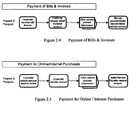
- Figure 2.1 to Figure 2.5 show the diagrams which represent the principal idea of this invention which caters for the convenience of making money transfer and payments via the mobile
- the sender initiates the transfer process for credit limit or monetary value to be moved from his/her own mobile phone to the receiver's mobile phone.
- credit limit or monetary value For prepaid mobile users, he/she will need to purchase a top up card or a special card to top up the account before starting the transfer.
- postpaid mobile users can instantaneously initiate the transfer provided there is sufficient credit limit in his/her mobile account.
- Local money transfer does not involve any currency conversion process as money will be dealt in local currency.
- the initiation point comes from the sender who wants to transfer money to another mobile user in another currency or uses a cross country mobile phone.
- the main difference here is that currency conversion process is involved if the sender chooses to convert the money from local currency to the foreign currency when it reaches the receiver.
- Mobile users can purchase any kind of goods and services from sellers or service providers, locally (face-to-face) or remotely (online/Internet) with the presence of one or both parties.
- sellers or service providers locally (face-to-face) or remotely (online/Internet) with the presence of one or both parties.
- mobile user who is the customer will make payment via i-Duit to the seller or servile provider.
- Payments for any type of bills and invoices for purchased goods or services can be made via i-Duit.
- mobile user who is the customer will make payment via i-Duit to the seller or service provider.
- Any purchase made online or through the Internet can be paid through i-Duit.
- mobile user who is the customer can use i-Duit as a payment mode to transfer money to the seller or service provider.
- the present new payment method and process uses the Mobile Service Provider's (MSP), post-paid or prepaid-card, accounting system to transfer monetary value from one user to the other.
- MSP Mobile Service Provider's
- the transfer can be between accounts within the same mobile service provider or between accounts held with different mobile service providers.
- the i-Duit solution includes the option to limit the transfer amount by its respective mobile service provider.
- the SIM card or the telephone number identifies the i-Duit account but there is also an i-Duit account identification number for users who do not wish to divulge their telephone number during transactions,
- the advantages are:
- the method and the derived processes arc more user-friendly and attracts user to frequently use the process especially for small and medium payments as they regularly arc made by cash.
- Cash conversion ratio is a method to calculate the virtual permissible amount that can be used by the user to be spent in i-Duit. Please refer to examples below for prepaid and postpaid accounts:
- i-Duit will check whether the virtual permissible amount is sufficient for this transaction. Then, i-Duit will request MSP to check whether there is enough mobile credit for the transaction (air time value). If both values are sufficient, then this transaction will be processed and below shall be the balance:
- this user only has the remaining of ⁇ 29.60 for future i-Duit transactions or ⁇ 59.60 worth of mobile credit.
- the new balance will be:
- the user still has a maximum of ⁇ 29.60 to be used for i-Duit transactions provided that the mobile credit is sufficient for the transaction. For example, the user attempts to make a transaction worth of ⁇ 25 via i-Duit. Although the virtual permissible amount is enough for the transaction, however, as the mobile credit is insufficient, therefore the transaction is not allowed. In order to make this transaction, the required balance should be:
- the credit limit allowed is ⁇ 500.
- this postpaid user uses ⁇ 150 for phone calls.
- the user activates i-Duit to utilize the facilities.
- the user is only allowed a certain percentage of the value (e.g. 20%) to be spent on online transactions through i-Duit.
- i-Duit will check whether the virtual permissible amount is sufficient for this transaction. Then, i-Duit will request MSP to check whether there is enough mobile credit for the transaction (air time value). If both values are sufficient, then this transaction will be processed and below shall be the balance:
- the user still has a maximum of ⁇ 19.50 for i-Duit transactions provided that the mobile credit is sufficient for the transaction. For example, the user attempts to make a transaction worth of ⁇ 25 via i-Duit. Although the credit limit is enough for the transaction, however, as the virtual permissible amount is insufficient, therefore the transaction is not allowed. In order to make this transaction, the required balance should be:
- the current billing amount on user's monthly bill is ⁇ 300.50. Therefore, when user makes a payment of ⁇ 100 at the end of the month, the virtual permissible amount and credit limit will he recalculated.
- the new balance for this mobile account will be:
- the maximum credit limit and virtual permissible amount remains at ⁇ 500 and ⁇ 100 respectively. For example, if the user pays another ⁇ 200, the calculation is shown below;
- the purpose of introducing the cash conversion ratio is to ensure that the maximum amount to be spent via i-Duit will be less than the actual amount collected by the MSI' that implements this method for prepaid account. As for postpaid accounts, it acts as a control mechanism to minimize the risks involved in i-Duit usage. By using this method, the historical expenditure via i-Duit could easily be tracked.
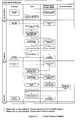
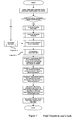
- This figure shows the transaction process when a mobile user (sender) initiates a payment to another mobile user (receiver).
- the receiver can choose to give his/her mobile number or i-Duit account identification number to the sender for the transaction.
- system will check whether sender's i-Duit account has been activated. If his/her account has yet been activated, system will prompt the sender for account activation. Otherwise, sender will be authenticated by his/her pin number (preset during account activation). If sender fails to provide the correct pin number for a pre-defined number of attempts, the account will automatically be locked for security reason.
- the mobile status will be checked and system will request for a confirmation from sender before proceeding.
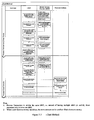
- This figure shows the activate user (sender/receiver) process when a user accesses i-Duit or i-Duit approaches a user and the account has yet been activated.
- the user's identity will be verified by requesting him/her to provide the answers for some security questions (e.g. identity card no.).
- identity card no. Upon successful user identity verification, user will be requested to provide a new pin number (numeric) and confirmation on the new pin number. Otherwise, the account will be locked for security reasons. Following that, user will be asked whether to set up the bank account information (optional). If the user chooses to setup the bank account, system will verify the bank information with the respective bank and save the information. Following that, system will activate the account and user can then continue with the requested transaction.
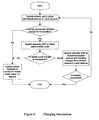
- This figure shows the charging mechanism for any transaction process.
- system Upon sender confirmation on transaction process, system will check whether sender's virtual permissible amount in i-Duit account is sufficient for this transaction, If the amount is insufficient, system will send a message to the sender on his/her mobile credit status (i.e. balance available for transaction). Otherwise, system will then request MSP to check whether sender's mobile credit is sufficient for this transaction. In case of insufficient credit, a similar message will be sent to the sender on his/her mobile credit status. If both are sufficient for the transaction, system will request MSP to debit the transaction amount from sender's mobile account and debit the handling charges from either sender or receiver's mobile credit balance.
- This figure shows the fund transfer process to a financial institute when a user (sender) initiates a fund transfer to a bank account.
- system will check whether sender's i-Duit account has been activated. If account has yet been activated, system will prompt sender for account activation. Otherwise, sender will be authenticated by his/her pin number (preset during account activation). If sender fails to provide the correct pin number for a pre-defined number of attempts, the account will automatically be locked for security reason. Upon successful authentication, the mobile status will be checked and system will request for a confirmation from sender before proceeding.
- system When the sender confirms, system will request MSP to debit the fund transfer amount as well as the handling charges from the sender's mobile account and credit the transfer amount into i-Duit's mobile account with MSP. Following that, system will request the respective bank to debit the transfer amount from i-Duit's bank account and credit it into the sender's bank account. When all processes completed successfully, system will deduct the transferred amount from sender's virtual permissible amount in i-Duit account. Finally, a notification message will be sent to the sender on the fund transfer details.
- This figure shows the simplified version of the processes involved when a user (sender) initiates a transaction with a user (receiver) from another MSP.
- the processes for exchanges between users are the same as the transaction processes shown in Figure 4 .
- the differences are the charging mechanism and payment process, where the debit and credit processes are further explained in details here for cross MSP transaction.
- system will request MSP A to debit the transaction amount from sender's account and either MSP A or B to debit handling charges from sender or receiver's mobile account respectively.
- MSP A will then be requested to credit the transaction amount to i-Duit's mobile account with MSP A.
- system Upon successful updates, the system will deduct this amount from sender's virtual permissible amount in i-Duit account. Following that, system will request MSP 13 to debit the transaction amount from i-Duit's mobile account with MSP B and credit it to the receiver's account. Finally, system will add this amount to the receiver's virtual permissible amount in i-Duit account. Other processes are similar as shown in Figure 4 .
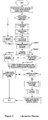
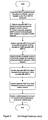
- This figure shows the foreign currency conversion checking when a sender initiates a transaction.
- system will check wether the transaction between sender and receiver is a cross-country transaction. In case where no cross-country transaction is involved, the rest of the checkings will not be necessary. If cross-country transaction is detected, the system will check whether the base currency for both MSP is the same. In case of different base currency, system will check whether foreign exchange is allowed by sender's MSP as well as receiver's MSP. If both MSP allow foreign exchange for transaction, system will request the sender to select from two choices of currency i.e. sender's MSP's base currency & receiver's MSP's base currency. Upon selecting a currency, the system will perform currency conversion before the charging mechanism takes place. Otherwise, if no foreign exchange is involved, then the charging mechanism will directly be executed using the sender's MSI"s base currency.
Landscapes
- Business, Economics & Management (AREA)
- Accounting & Taxation (AREA)
- Engineering & Computer Science (AREA)
- General Business, Economics & Management (AREA)
- Strategic Management (AREA)
- Physics & Mathematics (AREA)
- General Physics & Mathematics (AREA)
- Theoretical Computer Science (AREA)
- Finance (AREA)
- Computer Networks & Wireless Communication (AREA)
- Development Economics (AREA)
- Economics (AREA)
- Financial Or Insurance-Related Operations Such As Payment And Settlement (AREA)
Priority Applications (1)
| Application Number | Priority Date | Filing Date | Title |
|---|---|---|---|
| EP07013154A EP2015241A1 (fr) | 2007-07-05 | 2007-07-05 | Portefeuille virtuel polyvalent pour des paiements interactifs simples |
Applications Claiming Priority (1)
| Application Number | Priority Date | Filing Date | Title |
|---|---|---|---|
| EP07013154A EP2015241A1 (fr) | 2007-07-05 | 2007-07-05 | Portefeuille virtuel polyvalent pour des paiements interactifs simples |
Publications (1)
| Publication Number | Publication Date |
|---|---|
| EP2015241A1 true EP2015241A1 (fr) | 2009-01-14 |
Family
ID=39831968
Family Applications (1)
| Application Number | Title | Priority Date | Filing Date |
|---|---|---|---|
| EP07013154A Withdrawn EP2015241A1 (fr) | 2007-07-05 | 2007-07-05 | Portefeuille virtuel polyvalent pour des paiements interactifs simples |
Country Status (1)
| Country | Link |
|---|---|
| EP (1) | EP2015241A1 (fr) |
Cited By (1)
| Publication number | Priority date | Publication date | Assignee | Title |
|---|---|---|---|---|
| US12299683B2 (en) | 2018-09-05 | 2025-05-13 | Visa International Service Association | Global remittance system and method |
-
2007
- 2007-07-05 EP EP07013154A patent/EP2015241A1/fr not_active Withdrawn
Non-Patent Citations (1)
| Title |
|---|
| The technical aspects identified in the present application (Art. 92 EPC) are considered part of common general knowledge. Due to their notoriety no documentary evidence is found to be required. For further details see the accompanying Opinion and the reference below. * |
Cited By (1)
| Publication number | Priority date | Publication date | Assignee | Title |
|---|---|---|---|---|
| US12299683B2 (en) | 2018-09-05 | 2025-05-13 | Visa International Service Association | Global remittance system and method |
Similar Documents
| Publication | Publication Date | Title |
|---|---|---|
| US11531977B2 (en) | System and method for paying a merchant by a registered user using a cellular telephone account | |
| US7533058B2 (en) | Method of accounting and effecting electronic transactions | |
| US7319855B1 (en) | Method for charging internet services via a mobile telephone | |
| US7461010B2 (en) | Computer network method for conducting payment over a network by debiting and crediting telecommunication accounts | |
| US20100293065A1 (en) | System and method for paying a merchant using a cellular telephone account | |
| US20100211491A1 (en) | Universal mobile electronic commerce | |
| CN103400294B (zh) | 信用额度提供系统和方法 | |
| WO2002017181A1 (fr) | Procedes de paiement electronique | |
| ZA200305241B (en) | System and method of using wireless communication devices to conduct financial transactions. | |
| KR20160119129A (ko) | 송금 시스템 및 방법 | |
| KR100675758B1 (ko) | 선불 단말을 이용한 결제 시스템 및 결제 방법 | |
| EP2015241A1 (fr) | Portefeuille virtuel polyvalent pour des paiements interactifs simples | |
| WO2011062641A2 (fr) | Système et procédé de paiement d'un vendeur au moyen d'un compte de téléphone cellulaire | |
| ZA200505192B (en) | Method of accounting electronic transactions and method of effecting electronic transactions via phone | |
| JP2006514384A (ja) | 電子商取引勘定方法及び電話を通じた電子商取引実行方法 | |
| HK40035917A (en) | Pre-paid virtual card and method for its creation and its utilization | |
| HK1191432A (en) | Credit provision system and method | |
| HK1191432B (en) | Credit provision system and method | |
| HK1161405A (en) | Credit provision system and method | |
| PH12013000171A1 (en) | CREDIT FACILITY SYSTEM and METHOD |
Legal Events
| Date | Code | Title | Description |
|---|---|---|---|
| PUAI | Public reference made under article 153(3) epc to a published international application that has entered the european phase |
Free format text: ORIGINAL CODE: 0009012 |
|
| AK | Designated contracting states |
Kind code of ref document: A1 Designated state(s): AT BE BG CH CY CZ DE DK EE ES FI FR GB GR HU IE IS IT LI LT LU LV MC MT NL PL PT RO SE SI SK TR |
|
| AX | Request for extension of the european patent |
Extension state: AL BA HR MK RS |
|
| AKX | Designation fees paid | ||
| REG | Reference to a national code |
Ref country code: DE Ref legal event code: 8566 |
|
| STAA | Information on the status of an ep patent application or granted ep patent |
Free format text: STATUS: THE APPLICATION IS DEEMED TO BE WITHDRAWN |
|
| 18D | Application deemed to be withdrawn |
Effective date: 20090715 |