EP2015498B1 - Relaisstationen und Verfahren zur Datenrückübertragung in einem drahtlosen Multihop-Relais-Kommunikationssystem - Google Patents
Relaisstationen und Verfahren zur Datenrückübertragung in einem drahtlosen Multihop-Relais-Kommunikationssystem Download PDFInfo
- Publication number
- EP2015498B1 EP2015498B1 EP08006819.0A EP08006819A EP2015498B1 EP 2015498 B1 EP2015498 B1 EP 2015498B1 EP 08006819 A EP08006819 A EP 08006819A EP 2015498 B1 EP2015498 B1 EP 2015498B1
- Authority
- EP
- European Patent Office
- Prior art keywords
- data
- ack
- information
- resource region
- lower node
- Prior art date
- Legal status (The legal status is an assumption and is not a legal conclusion. Google has not performed a legal analysis and makes no representation as to the accuracy of the status listed.)
- Ceased
Links
Images




Classifications
-
- H—ELECTRICITY
- H04—ELECTRIC COMMUNICATION TECHNIQUE
- H04L—TRANSMISSION OF DIGITAL INFORMATION, e.g. TELEGRAPHIC COMMUNICATION
- H04L1/00—Arrangements for detecting or preventing errors in the information received
- H04L1/12—Arrangements for detecting or preventing errors in the information received by using return channel
- H04L1/16—Arrangements for detecting or preventing errors in the information received by using return channel in which the return channel carries supervisory signals, e.g. repetition request signals
- H04L1/18—Automatic repetition systems, e.g. Van Duuren systems
- H04L1/1829—Arrangements specially adapted for the receiver end
- H04L1/1854—Scheduling and prioritising arrangements
-
- H—ELECTRICITY
- H04—ELECTRIC COMMUNICATION TECHNIQUE
- H04B—TRANSMISSION
- H04B7/00—Radio transmission systems, i.e. using radiation field
- H04B7/14—Relay systems
- H04B7/15—Active relay systems
- H04B7/155—Ground-based stations
- H04B7/15528—Control of operation parameters of a relay station to exploit the physical medium
-
- H—ELECTRICITY
- H04—ELECTRIC COMMUNICATION TECHNIQUE
- H04L—TRANSMISSION OF DIGITAL INFORMATION, e.g. TELEGRAPHIC COMMUNICATION
- H04L1/00—Arrangements for detecting or preventing errors in the information received
- H04L1/0078—Avoidance of errors by organising the transmitted data in a format specifically designed to deal with errors, e.g. location
- H04L1/0079—Formats for control data
- H04L1/0081—Formats specially adapted to avoid errors in the feedback channel
-
- H—ELECTRICITY
- H04—ELECTRIC COMMUNICATION TECHNIQUE
- H04L—TRANSMISSION OF DIGITAL INFORMATION, e.g. TELEGRAPHIC COMMUNICATION
- H04L1/00—Arrangements for detecting or preventing errors in the information received
- H04L1/12—Arrangements for detecting or preventing errors in the information received by using return channel
- H04L1/16—Arrangements for detecting or preventing errors in the information received by using return channel in which the return channel carries supervisory signals, e.g. repetition request signals
- H04L1/18—Automatic repetition systems, e.g. Van Duuren systems
- H04L1/1812—Hybrid protocols; Hybrid automatic repeat request [HARQ]
-
- H—ELECTRICITY
- H04—ELECTRIC COMMUNICATION TECHNIQUE
- H04L—TRANSMISSION OF DIGITAL INFORMATION, e.g. TELEGRAPHIC COMMUNICATION
- H04L5/00—Arrangements affording multiple use of the transmission path
- H04L5/003—Arrangements for allocating sub-channels of the transmission path
- H04L5/0053—Allocation of signalling, i.e. of overhead other than pilot signals
- H04L5/0055—Physical resource allocation for ACK/NACK
-
- H—ELECTRICITY
- H04—ELECTRIC COMMUNICATION TECHNIQUE
- H04L—TRANSMISSION OF DIGITAL INFORMATION, e.g. TELEGRAPHIC COMMUNICATION
- H04L1/00—Arrangements for detecting or preventing errors in the information received
- H04L2001/0092—Error control systems characterised by the topology of the transmission link
- H04L2001/0097—Relays
Definitions
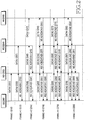
- the BS 100 transmits the data destined for the MS 130 to the first RS 110.
- the second RS 120 sends a NACK message of the data to the first RS 110.
- the second RS 120 checks whether an ACK/NACK message is received from the MS 130 in a previous frame. When receiving the ACK/NACK message from the MS 130, the second RS 120 sends the ACK/NACK message of the data to the first RS 110 together with the ACK/NACK message from the MS 130.
- the first RS 202 sends an ACK/NACK message for data 1 to the BS 200 over the (i+1)-th frame 212.
- the BS 200 transmits data 5 to the first RS 202 in step 263.
- the first RS 202 checks for errors in data 5 received from the BS 200.
- the first RS 202 when data 4 is corrupted, the first RS 202 sends the NACK message for data 4 to the BS 200. Together with the NACK message for data 4, the first RS 202 forwards the ACK/NACK message received from the second RS 204 in the (i+3)-th frame 214, to the BS 200.
- the second RS 204 sends the ACK message for data 3 to the first RS 202 in step 271. Together with the ACK message for data 3, the second RS 204 forwards the ACK/NACK message received from the MS 206 over the (i+3)-th frame 216, to the first RS 202 in step 273.
- the second RS 204 when data 4 is corrupted, the second RS 204 sends the NACK message for data 4 to the first RS 202.
- the second RS 204 sends the ACK/NACK message received from the MS 206 over the (i+4)-th frame 218, to the first RS 202 together with the NACK message for data 4.
- FIGs. 3A and 3B are diagrams illustrating frame structures for carrying ACK/NACK scheduling information for the DL data in the multihop relay wireless communication system according to an embodiment of the present invention.
- the frame structure of the Institute of Electrical and Electronics Engineers (IEEE) 802.16 system is explained in FIGs. 3A and 3B by way of example.
- the BS allocates the control channels for sending the ACK/NACK messages according to the unique IDs of the first RS, the second RS, and the MS to the first RS through the UL-MAP.
- the BS defines a separate message or a separate IE so that the first RS can surely acquire the functions of the unique IDs of the second RS and the MS included in the UL-MAP, and informs the first RS of the usage of the unique ID of the second RS and the MS.
- the BS allocates the multi-channel for the ACK/NACK messages to the first RS using the UL-MAP of the DL subframe 320.
- the first RS can send the ACK/NACK message of the data received from the BS and the ACK/NACK message from the second RS or the MS, to the BS using the multi-channel at a time.
- the BS constitutes the UL-MAP including the IE for the ACK/NACK message of the RS so that the first RS can send the multi-ACK/NACK message.
- the IE for the ACK/NACK message of the RS includes information relating to the start point and the end point of the multi-ACK/NACK message.
- the BS can use the HARQ ACK region allocation IE of the IEEE 802.16 system as the IE for the ACK/NACK message.
- the start point and the end point of the ACK/NACK message are represented by the subchannel in the frequency domain and by the OFDM symbol in the time domain.
- the first RS transmits the ACK/NACK messages of the first RS, the second RS, and the MS to the BS through the multi-control channel allocated from the BS. In doing so, the BS and the first RS should agree on which data the ACK/NAC message sent through the multi-control channel pertains to.
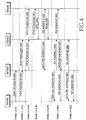
- the wireless communication system transmits the ACK/NACK message for the UL data as shown in FIG. 4 .
- the first RS 402 Over the (i+5)-th frame 420, the first RS 402 sends an ACK/NACK message according to the error detection of data 1 received from the second RS 404. For instance, when data 1 is corrupted, the first RS 402 sends the NACK message for data 1 to the BS 400 and the second RS 402.
- the first RS 404 also sends the ACK/NACK message for data 1, which is received from the second RS 404 over the (i+4)-th frame 418, to the BS 400 in step 453.
- the first RS 402 transmits data 1 and the ACK message of data 1 to the BS 400 in step 451.
- the second RS 404 transmits data 2 and the ACK message of data 2 to the first RS 402 in step 457.
- the first RS 402 checks for errors in data 2 received from the second RS 404.
- the first RS 402 also sends the ACK/NACK message for data 2, which is received from the second RS 404 over the (i+5)-th frame 420, to the BS 400 in step 463.
- the IE indicates the start point and the end point of the region for the ACK/NACK message for each unique ID by the subchannel in the frequency domain and by the OFDM symbol in the time domain.
- the BS allocates the control channels for sending the ACK/NACK message based on the unique IDs of the first RS and the second RS, to the first RS through the UL-MAP.
- the BS defines a separate message so that the first RS can surely acquire the function of the unique ID of the second RS and the MS in the UL-MAP, and informs the first RS of the usage of the CID of the second RS and the MS.
- the BS constitutes an IE including the start point and the end point of the multi-ACK/NACK message and includes the IE to the UL-MAP so that the first RS can send the multiple ACK/NACK messages.
- the BS constitutes the IE for the ACK/NACK message using the HARQ region allocation IE of the IEEE 802.16 system.
- the start point and the end point of the ACK/NACK message in the UL frame are represented by the subchannel in the frequency domain and by the OFDM symbol in the time domain.
- step 601 the RS checks whether data is received. For instance, in the DL, the RS checks whether data is received from the upper node. In the UL, the RS checks whether data is received from the lower node.
- the RS When receiving no error occurrence information from the lower node, the RS transmits the error occurrence information of the received data to the upper node through the control channel provided from the upper node in step 611.
- the BS transmits the information of the determined nodes to the next-hop RS. For instance, the BS transmits the information of the determined nodes to the next-hop RS using the broadcasting information or the separate control channel.
- the fundamental unit of the data transmission in the wireless communication system is a frame. It is assumed that the frame is defined as a physical frame determined by taking into account the DL burst processing delay of the RS, the ACK feedback delay of the MS, and the ACK forwarding delay of the RS.
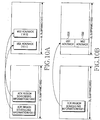
- the upper node allocates the control channel for the multi-ACK/NACK message to the lower node so that the lower node can send the multi-ACK/NACK message as shown in FIGs. 10A and 10B .
- the BS allocates the control channel for the multi-ACK/NACK message to the first RS, which is explained.
- the upper node of the multihop relay wireless communication system transmits the multi-control channel to the lower node for the control message for the data retransmission. Therefore, the RS can transmit the control messages for the ARQ provided from the lower nodes and the control messages for the ARQ of the RS, to the upper node at the same time.
Landscapes
- Engineering & Computer Science (AREA)
- Signal Processing (AREA)
- Computer Networks & Wireless Communication (AREA)
- Mobile Radio Communication Systems (AREA)
- Detection And Prevention Of Errors In Transmission (AREA)
- Communication Control (AREA)
Claims (32)
- Ein Verfahren zum Betreiben einer Relaisstation, RS, in einem drahtlosen Relais-Kommunikationssystem, das Verfahren umfassend:Empfangen (263) von Daten von einem oberen Knoten;Empfangen (271), von einem ersten unteren Knoten, von ersten Informationen, die eine Bestätigung, ACK, oder eine negative Bestätigung, NACK, umfassen, für Daten, die von dem ersten unteren Knoten empfangen werden; undEmpfangen (273), von einem zweiten unteren Knoten über den ersten unteren Knoten, von zweiten Informationen, die ACK oder NACK umfassen, für Daten, die vom zweiten unteren Knoten empfangen werden;gekennzeichnet durchÜbertragen (281, 283, 285), an den oberen Knoten, der ersten Informationen durch einen ersten Ressourcenbereich (313) in einem Frame (310), der zweiten Informationen durch einen zweiten Ressourcenbereich (315) in dem Frame (310) und dritter Informationen, die ACK oder NACK umfassen, für die Daten, die von der RS über einen dritten Ressourcenbereich (311) in dem Frame (310) empfangen werden,wobei der erste Ressourcenbereich (313), der zweite Ressourcenbereich (315) und der dritte Ressourcenbereich (311) durch Planungsinformationen (301, 303, 305) angezeigt werden, die vom oberen Knoten empfangen werden, undwobei der erste Ressourcenbereich (313), der zweite Ressourcenbereich (315) und der dritte Ressourcenbereich (311) durch die RS aus den Planungsinformationen (301, 303, 305) basierend auf einer Kennung des ersten unteren Knotens, einer Kennung des zweiten unteren Knotens und einer Kennung der RS identifiziert werden.
- Das Verfahren nach Anspruch 1, wobei der obere Knoten eine Basisstation, BS (200), oder eine obere RS (202) umfasst.
- Das Verfahren nach Anspruch 1, wobei der erste untere Knoten eine RS (204) und der zweite untere Knoten eine Mobilstation, MS (206), oder eine untere RS umfasst.
- Das Verfahren nach Anspruch 1, wobei der erste Ressourcenbereich (313) der Kennung des ersten unteren Knotens (204) und der zweite Ressourcenbereich (315) der Kennung des zweiten unteren Knotens (206) entspricht.
- Das Verfahren nach Anspruch 1, wobei das Übertragen der ersten Informationen, der zweiten Informationen und der dritten Informationen umfasst:
sequentielles Zuweisen der ersten Informationen, der zweiten Informationen und der dritten Informationen als Antwort auf einen Datenempfang entsprechender Daten zu Regionen, die durch die Planungsinformationen angegeben sind, basierend auf einer Übertragungsreihenfolge der entsprechenden Daten. - Das Verfahren nach Anspruch 1, wobei die Planungsinformationen MAP-Informationen umfassen.
- Das Verfahren nach Anspruch 1, ferner umfassend:
Erzeugen der dritten Informationen als Antwort auf einen Datenempfang der vom oberen Knoten (200, 202) empfangenen Daten nach Überprüfung auf Fehler. - Ein Verfahren zum Betreiben einer Relaisstation, RS, in einem drahtlosen Relais-Kommunikationssystem, das Verfahren umfassend:Empfangen (457), von einem ersten unteren Knoten, von ersten Informationen, die eine Bestätigung, ACK, oder eine negative Bestätigung, NACK, umfassen, für Daten, die von dem ersten unteren Knoten empfangen werden; undEmpfangen (457) von Daten von einem zweiten unteren Knoten über den ersten unteren Knoten;gekennzeichnet durchÜbertragen (461, 463), an einen oberen Knoten, der ersten Informationen durch einen ersten Ressourcenbereich (511) in einem Frame (510) und der zweiten Informationen, die ACK oder NACK umfassen, für die Daten, die von der RS über einen zweiten Ressourcenbereich (513) im Rahmen (510) empfangen werden,wobei der erste Ressourcenbereich (511) und der zweite Ressourcenbereich (513) durch Planungsinformationen (501, 503) angezeigt werden, die vom oberen Knoten empfangen werden, undwobei der erste Ressourcenbereich (511) und der zweite Ressourcenbereich (513) von der RS aus den Planungsinformationen (501, 503) basierend auf einer Kennung des ersten unteren Knotens und einer Kennung der RS identifiziert werden.
- Das Verfahren nach Anspruch 8, wobei der erste untere Knoten eine RS (404) umfasst und der zweite untere Knoten eine untere RS oder eine Mobilstation, MS (406), umfasst.
- Das Verfahren nach Anspruch 8, wobei der obere Knoten eine Basisstation, BS (400), oder eine obere RS (402) umfasst.
- Das Verfahren nach Anspruch 8, wobei der erste Ressourcenbereich (511) der Kennung des ersten unteren Knotens entspricht und der zweite Ressourcenbereich (513) der Kennung des RS entspricht.
- Das Verfahren nach Anspruch 8, wobei die Planungsinformationen MAP-Informationen umfassen.
- Das Verfahren nach Anspruch 8, ferner umfassend:
Erzeugen der zweiten Informationen als Antwort auf einen Datenempfang der vom zweiten unteren Knoten (406) empfangenen Daten nach Überprüfung auf Fehler. - Ein Verfahren zum Betreiben eines oberen Knotens in einem drahtlosen Relais-Kommunikationssystem, das Verfahren umfassend:Senden von Planungsinformationen (301, 303; 501, 503) an eine Relaisstation, RS, die einen ersten Ressourcenbereich (311; 511) in einem Frame (310; 510) und einen zweiten Ressourcenbereich (313; 513) in dem Frame (310; 510) anzeigen; undEmpfangen (281, 283, 461, 463), von der RS, der ersten Informationen durch den ersten Ressourcenbereich (311; 511) und der zweiten Informationen durch den zweiten Ressourcenbereich (313; 513);wobei die ersten Informationen die Bestätigung, ACK, oder die negative Bestätigung, NACK, für Daten umfassen, die von mindestens einem unteren Knoten empfangen werden;wobei die zweiten Informationen ACK oder NACKfür Daten umfassen, die von der RS empfangen werden, undwobei der erste Ressourcenbereich (311; 511) und der zweite Ressourcenbereich (313; 513) durch die RS aus den Planungsinformationen (301, 303; 501, 503) basierend auf einer Kennung des mindestens einen unteren Knotens und einer Kennung der RS identifiziert werden.
- Das Verfahren nach Anspruch 14, wobei der obere Knoten eine Basisstation, BS (200; 400), oder eine obere RS (202; 402) umfasst.
- Das Verfahren nach Anspruch 14, wobei der mindestens eine untere Knoten eine untere RS (204; 404) oder eine Mobilstation, MS (206; 406), umfasst.
- Das Verfahren nach Anspruch 14, ferner umfassend:Identifizieren der Kennung des mindestens einen unteren Knotens und der Kennung der RS; undZuweisen des ersten Ressourcenbereichs (311; 511) und des zweiten Ressourcenbereichs (313; 513) basierend auf der Kennung des mindestens einen unteren Knotens und der Kennung der RS.
- Das Verfahren nach Anspruch 14, wobei der erste Ressourcenbereich (311; 511) der Kennung des mindestens einen unteren Knotens entspricht und der zweite Ressourcenbereich (313; 513) der Kennung der RS entspricht.
- Das Verfahren nach Anspruch 17, wobei das Zuweisen des ersten Ressourcenbereichs (311; 511) und des zweiten Ressourcenbereichs (313; 513) umfasst:
Bestimmen von Startpunktinformationen und Endpunktinformationen von mindestens einem der ersten Ressourcenbereiche (311; 511) und des zweiten Ressourcenbereichs (313; 513). - Eine Relaisstation, RS, in einem drahtlosen Relais-Kommunikationssystem, die RS umfassend:mindestens einen Prozessor (840); undeinen Transceiver (800, 820) konfiguriert zum:Empfangen (263) von Daten von einem oberen Knoten,Empfangen (271), von einem ersten unteren Knoten, von ersten Informationen, die eine Bestätigung, ACK, oder eine negative Bestätigung, NACK, umfassen, für Daten, die von dem ersten unteren Knoten empfangen werden, undEmpfangen (273), von einem zweiten unteren Knoten über den ersten unteren Knoten, von zweiten Informationen, umfassend ACK oder NACK für Daten, die vom zweiten unteren Knoten empfangen werden,dadurch gekennzeichnet, dassder Transceiver (800, 820) ferner konfiguriert ist, um, an den oberen Knoten, die ersten Informationen über einen ersten Ressourcenbereich (313) in einem Frame (310) und die zweiten Informationen über einen zweiten Ressourcenbereich (315) in dem Frame (310) und die dritten Informationen, die ACK oder NACK für die Daten umfassen, die von der RS über einen dritten Ressourcenbereich (311) in dem Frame (310) empfangen werden, zu übermitteln (281, 283, 285);wobei der erste Ressourcenbereich (313), der zweite Ressourcenbereich (315) und der dritte Ressourcenbereich (311) durch Planungsinformationen (301, 303, 305) angezeigt werden, die vom oberen Knoten empfangen werden, undwobei der erste Ressourcenbereich (313), der zweite Ressourcenbereich (315) und der dritte Ressourcenbereich (311) durch die RS aus den Planungsinformationen (301, 303, 305) basierend auf einer Kennung des ersten unteren Knotens, einer Kennung des zweiten unteren Knotens und einer Kennung der RS identifiziert werden.
- Die RS nach Anspruch 20, wobei der obere Knoten eine Basisstation, BS (200), oder eine obere RS (202) umfasst.
- Die RS nach Anspruch 20, wobei der erste untere Knoten eine RS (204) umfasst und der zweite untere Knoten eine untere RS oder eine Mobilstation, MS (206), umfasst.
- Die RS nach Anspruch 20, wobei der erste Ressourcenbereich (313) der Kennung des ersten unteren Knotens (204) entspricht, der zweite Ressourcenbereich (315) einer Kennung des zweiten unteren Knotens (206) entspricht und der dritte Ressourcenbereich (311) der Kennung der RS entspricht.
- Die RS nach Anspruch 20, wobei der mindestens eine Prozessor (840) ferner konfiguriert ist, zum:
sequentiellen Zuweisen der ersten Informationen, der zweiten Informationen und der dritten Informationen als Antwort auf einen Datenempfang entsprechender Daten zu Regionen, die durch die Planungsinformationen angegeben sind, basierend auf einer Übertragungsreihenfolge der entsprechenden Daten. - Die RS nach Anspruch 20, wobei die Planungsinformationen MAP-Informationen umfassen.
- Die RS nach Anspruch 20, wobei der mindestens eine Prozessor (840) ferner konfiguriert ist, zum:
Erzeugen der dritten Informationen als Antwort auf einen Datenempfang der vom oberen Knoten (200, 202) empfangenen Daten nach Überprüfung auf Fehler. - Eine Relaisstation, RS, in einem drahtlosen Relais-Kommunikationssystem, die RS umfassend:mindestens einen Prozessor (840); undeinen Transceiver (800, 820) konfiguriert zum:Empfangen (457), von einem ersten unteren Knoten, von ersten Informationen, die eine Bestätigung, ACK, oder eine negative Bestätigung, NACK, umfassen, für Daten, die von dem ersten unteren Knoten empfangen werden; undEmpfangen (457) von Daten von einem zweiten unteren Knoten über den ersten unteren Knoten,dadurch gekennzeichnet, dassder Transceiver (800, 820) ferner konfiguriert ist, um die ersten Informationen über einen ersten Ressourcenbereich (511) in einem Frame (510) und die zweiten Informationen, die ACK oder NACK für die Daten umfassen, die an einem oberen Knoten von der RS über einen zweiten Ressourcenbereich (513) im Frame (510) empfangen werden, zu senden (461, 463),wobei der erste Ressourcenbereich (511) und der zweite Ressourcenbereich (513) durch Planungsinformationen (510, 503) angezeigt werden, die vom oberen Knoten empfangen werden, undwobei der erste Ressourcenbereich (511) und der zweite Ressourcenbereich (513) von der RS aus den Planungsinformationen (501, 503) basierend auf einer Kennung des ersten unteren Knotens und einer Kennung der RS identifiziert werden.
- Die RS nach Anspruch 27, wobei der erste untere Knoten eine RS (404) und der zweite untere Knoten eine untere RS oder eine Mobilstation, MS (406), umfasst.
- Die RS nach Anspruch 27, wobei der obere Knoten eine Basisstation, BS (400), oder eine obere RS (402) umfasst.
- Die RS nach Anspruch 27, wobei der erste Ressourcenbereich (511) der Kennung des ersten unteren Knotens (404) und der zweite Ressourcenbereich (513) der Kennung der RS entspricht.
- Die RS nach Anspruch 27, wobei die Planungsinformationen MAP-Informationen umfassen.
- Die RS nach Anspruch 27, wobei der mindestens eine Prozessor (840) ferner konfiguriert ist, zum:
Erzeugen der zweiten Informationen als Antwort auf einen Datenempfang der vom zweiten unteren Knoten (406) empfangenen Daten nach Überprüfung auf Fehler.
Applications Claiming Priority (2)
| Application Number | Priority Date | Filing Date | Title |
|---|---|---|---|
| KR20070032983 | 2007-04-03 | ||
| KR1020070091258A KR101408940B1 (ko) | 2007-04-03 | 2007-09-08 | 다중 홉 중계방식을 사용하는 무선통신시스템에서 데이터재전송 장치 및 방법 |
Publications (3)
| Publication Number | Publication Date |
|---|---|
| EP2015498A2 EP2015498A2 (de) | 2009-01-14 |
| EP2015498A3 EP2015498A3 (de) | 2014-01-22 |
| EP2015498B1 true EP2015498B1 (de) | 2021-03-10 |
Family
ID=39434345
Family Applications (1)
| Application Number | Title | Priority Date | Filing Date |
|---|---|---|---|
| EP08006819.0A Ceased EP2015498B1 (de) | 2007-04-03 | 2008-04-03 | Relaisstationen und Verfahren zur Datenrückübertragung in einem drahtlosen Multihop-Relais-Kommunikationssystem |
Country Status (3)
| Country | Link |
|---|---|
| US (1) | US8483116B2 (de) |
| EP (1) | EP2015498B1 (de) |
| WO (1) | WO2008120958A1 (de) |
Families Citing this family (30)
| Publication number | Priority date | Publication date | Assignee | Title |
|---|---|---|---|---|
| US8462690B2 (en) * | 2007-03-30 | 2013-06-11 | Samsung Electronics Co., Ltd | Apparatus and method for asynchronous control message transmission for data retransmission in wireless relay communication system |
| KR101204302B1 (ko) | 2008-01-02 | 2012-11-26 | 인터디지탈 테크날러지 코포레이션 | 협력적 무선 통신을 위한 방법 및 장치 |
| US8301956B2 (en) * | 2008-04-07 | 2012-10-30 | Samsung Electronics Co., Ltd. | Methods and apparatus to improve communication in a relay channel |
| US8634763B2 (en) * | 2008-04-22 | 2014-01-21 | Intel Corporation | Cooperative communications techniques |
| JPWO2009150853A1 (ja) * | 2008-06-13 | 2011-11-10 | パナソニック株式会社 | 中継局装置、無線通信装置、バッファクリア方法および信号中継方法 |
| AR072700A1 (es) * | 2008-07-07 | 2010-09-15 | Interdigital Patent Holdings | Metodo y aparato para retransmision cooperativa en comunicaciones inalambricas |
| WO2010048748A1 (zh) * | 2008-10-31 | 2010-05-06 | 上海贝尔阿尔卡特股份有限公司 | 多跳中继网络中基于重叠编码调制的分布式重传方法 |
| KR101457708B1 (ko) | 2008-11-03 | 2014-11-04 | 엘지전자 주식회사 | 중계기를 포함하는 무선통신 시스템에서 ack/nack 전송 방법 |
| KR101584814B1 (ko) * | 2008-12-23 | 2016-01-13 | 엘지전자 주식회사 | 무선통신 시스템에서 스케줄링 요청 전송방법 및 장치 |
| KR101607333B1 (ko) * | 2009-03-05 | 2016-03-30 | 엘지전자 주식회사 | 중계국의 제어신호 전송 방법 및 장치 |
| CN104660382B (zh) | 2009-03-11 | 2019-02-19 | 三星电子株式会社 | 通信系统中确认信号的传输 |
| KR101729134B1 (ko) * | 2009-03-27 | 2017-04-25 | 삼성전자주식회사 | 무선통신시스템에서 자동 재전송 요청 피드백을 요청하기 위한 장치 및 방법 |
| US8289895B2 (en) | 2009-04-24 | 2012-10-16 | Research In Motion Limited | Relay link HARQ operation |
| CN101925110B (zh) * | 2009-06-16 | 2013-08-07 | 中兴通讯股份有限公司 | 中继链路上行反馈信息的传输方法、中继站及基站 |
| US8792411B2 (en) * | 2009-07-29 | 2014-07-29 | Lg Electronics Inc. | Method and apparatus for transmitting control signal of relay station in wireless communication system |
| EP2564658B1 (de) * | 2010-04-26 | 2015-03-11 | Nokia Solutions and Networks Oy | Verbindungsanordnung bei weitergeleiteter drahtloser kommunikation |
| KR20110120808A (ko) | 2010-04-29 | 2011-11-04 | 엘지전자 주식회사 | 하향링크 ack/nack 신호 전송방법 및 기지국과, 하향링크 ack/nack 신호 수신방법 및 사용자기기 |
| US9307545B2 (en) * | 2010-07-23 | 2016-04-05 | Lg Electronics Inc. | Method and apparatus for transceiving control information and/or data to/from a base station via an anchor terminal in a wireless access system supporting machine-type communication |
| US9137642B2 (en) * | 2013-03-20 | 2015-09-15 | Google Inc. | Multi-cast optimized medium access method for wireless network |
| US9648514B2 (en) * | 2013-08-09 | 2017-05-09 | Blackberry Limited | Method and system for protocol layer enhancements in data offload over small cells |
| KR20150130628A (ko) * | 2014-05-13 | 2015-11-24 | 한국전자통신연구원 | 저전력 무선 네트워크에서 패킷 전송 방법 |
| US10402113B2 (en) | 2014-07-31 | 2019-09-03 | Hewlett Packard Enterprise Development Lp | Live migration of data |
| WO2016036347A1 (en) | 2014-09-02 | 2016-03-10 | Hewlett Packard Enterprise Development Lp | Serializing access to fault tolerant memory |
| US10594442B2 (en) * | 2014-10-24 | 2020-03-17 | Hewlett Packard Enterprise Development Lp | End-to-end negative acknowledgment |
| WO2016122642A1 (en) | 2015-01-30 | 2016-08-04 | Hewlett Packard Enterprise Development Lp | Determine failed components in fault-tolerant memory |
| WO2016122610A1 (en) | 2015-01-30 | 2016-08-04 | Hewlett Packard Enterprise Development Lp | Preventing data corruption and single point of failure in a fault-tolerant memory |
| US10409681B2 (en) | 2015-01-30 | 2019-09-10 | Hewlett Packard Enterprise Development Lp | Non-idempotent primitives in fault-tolerant memory |
| US10402261B2 (en) | 2015-03-31 | 2019-09-03 | Hewlett Packard Enterprise Development Lp | Preventing data corruption and single point of failure in fault-tolerant memory fabrics |
| US10389342B2 (en) | 2017-06-28 | 2019-08-20 | Hewlett Packard Enterprise Development Lp | Comparator |
| WO2019218280A1 (zh) * | 2018-05-16 | 2019-11-21 | 华为技术有限公司 | 数据传输方法及装置 |
Family Cites Families (13)
| Publication number | Priority date | Publication date | Assignee | Title |
|---|---|---|---|---|
| US6990098B1 (en) * | 2000-09-11 | 2006-01-24 | Sun Microsystems, Inc. | Reliable multicast using merged acknowledgements |
| KR100876765B1 (ko) | 2002-05-10 | 2009-01-07 | 삼성전자주식회사 | 이동 통신 시스템에서 데이터 재전송 장치 및 방법 |
| WO2004002082A1 (de) * | 2002-06-21 | 2003-12-31 | Siemens Aktiengesellschaft | Verfahren und kommunikationsstation zum übertragen von daten |
| WO2006024320A1 (en) * | 2004-08-31 | 2006-03-09 | Telefonaktiebolaget Lm Ericsson (Publ) | Data unit sender and data unit relay device |
| GB2417862B (en) * | 2004-09-01 | 2009-09-09 | Samsung Electronics Co Ltd | Adaptive ARQ system |
| CA2590858C (en) | 2004-12-27 | 2014-08-19 | Lg Electronics Inc. | Supporting hybrid automatic retransmission request in orthogonal frequency division multiplexing access radio access system |
| JP2006196985A (ja) | 2005-01-11 | 2006-07-27 | Kddi Corp | 無線システムにおけるメディアアクセス制御方法及び中継局のメディアアクセス制御プログラム |
| US7929988B2 (en) * | 2005-02-22 | 2011-04-19 | Panasonic Corporation | Radio reception apparatus and radio reception method |
| CN1941734A (zh) | 2005-09-26 | 2007-04-04 | 华为技术有限公司 | 基于中转站实现差错控制的方法和系统 |
| US8155016B2 (en) * | 2005-11-12 | 2012-04-10 | Rockstar Bidco, LP | System and method for unbalanced relay-based wireless communications |
| EP1801995A1 (de) * | 2005-12-21 | 2007-06-27 | Fujitsu Limited | Signalisierung in Mehrsprungkommunikationssystemen |
| KR20060098413A (ko) | 2006-08-28 | 2006-09-18 | (주) 평창정공 | 파일지의 포리싱 가공기의 힛팅 실린더 장치 |
| CN101166055B (zh) | 2006-10-18 | 2011-06-01 | 华为技术有限公司 | 多跳中继方法和多跳中继系统 |
-
2008
- 2008-04-03 WO PCT/KR2008/001884 patent/WO2008120958A1/en not_active Ceased
- 2008-04-03 EP EP08006819.0A patent/EP2015498B1/de not_active Ceased
- 2008-04-03 US US12/062,137 patent/US8483116B2/en not_active Expired - Fee Related
Non-Patent Citations (1)
| Title |
|---|
| None * |
Also Published As
| Publication number | Publication date |
|---|---|
| EP2015498A2 (de) | 2009-01-14 |
| WO2008120958A1 (en) | 2008-10-09 |
| EP2015498A3 (de) | 2014-01-22 |
| US20080248793A1 (en) | 2008-10-09 |
| US8483116B2 (en) | 2013-07-09 |
Similar Documents
| Publication | Publication Date | Title |
|---|---|---|
| US8483116B2 (en) | Apparatus and method for transmitting control message in multihop relay wireless communication system | |
| US8462690B2 (en) | Apparatus and method for asynchronous control message transmission for data retransmission in wireless relay communication system | |
| US8201044B2 (en) | Apparatus and method for transmitting control message in a wireless communication system using relaying | |
| US8533552B2 (en) | Apparatus and method for retransmitting request in wireless relay communication system | |
| EP2088814B1 (de) | Funkrelaisstation und Funkendgerät | |
| US8332704B2 (en) | Apparatus and method for supporting automatic retransmission request (ARQ) in a wireless relay communication system | |
| US8514822B2 (en) | Efficient acknowledgement messaging in wireless communications | |
| CN102237989B (zh) | 一种数据传输的方法及系统 | |
| US8248987B2 (en) | Apparatus and method for ACK channel transmission in wireless relay communication system | |
| KR101075777B1 (ko) | 무선 통신 시스템에서 자원 할당 정보 송수신 시스템 및방법 | |
| KR20080079567A (ko) | 중계방식을 사용하는 무선통신시스템에서 제어메시지 전송장치 및 방법 | |
| US20110007684A1 (en) | Method for relaying and forwarding the feedback information in harq scenario | |
| AU2008219947B2 (en) | Apparatus and method for retransmitting request in wireless relay communication system | |
| CN101796763B (zh) | 用于在多跳中继无线通信系统中确定对重发的响应时间的装置和方法 | |
| JP5643852B2 (ja) | 多重ホップ中継方式を使用する無線通信システムにおけるデータ再送信装置及び方法 | |
| EP2412122B1 (de) | Vorrichtung und verfahren für arq-feedback-anfragen in einem drahtlosen kommunikationssystem | |
| KR20080089118A (ko) | 중계방식을 사용하는 무선통신시스템에서 데이터 재전송을위한 비동기식 제어 메시지 전송 장치 및 방법 | |
| JP5304852B2 (ja) | 無線基地局、中継局、無線通信システム、制御方法、中継方法 | |
| US20190052375A1 (en) | Providing user equipment feedback via signal forwarding device |
Legal Events
| Date | Code | Title | Description |
|---|---|---|---|
| PUAI | Public reference made under article 153(3) epc to a published international application that has entered the european phase |
Free format text: ORIGINAL CODE: 0009012 |
|
| 17P | Request for examination filed |
Effective date: 20080403 |
|
| AK | Designated contracting states |
Kind code of ref document: A2 Designated state(s): AT BE BG CH CY CZ DE DK EE ES FI FR GB GR HR HU IE IS IT LI LT LU LV MC MT NL NO PL PT RO SE SI SK TR |
|
| AX | Request for extension of the european patent |
Extension state: AL BA MK RS |
|
| RAP1 | Party data changed (applicant data changed or rights of an application transferred) |
Owner name: SAMSUNG ELECTRONICS CO., LTD. |
|
| RIC1 | Information provided on ipc code assigned before grant |
Ipc: H04L 1/16 20060101AFI20130813BHEP Ipc: H04L 5/00 20060101ALI20130813BHEP |
|
| PUAL | Search report despatched |
Free format text: ORIGINAL CODE: 0009013 |
|
| AK | Designated contracting states |
Kind code of ref document: A3 Designated state(s): AT BE BG CH CY CZ DE DK EE ES FI FR GB GR HR HU IE IS IT LI LT LU LV MC MT NL NO PL PT RO SE SI SK TR |
|
| AX | Request for extension of the european patent |
Extension state: AL BA MK RS |
|
| RIC1 | Information provided on ipc code assigned before grant |
Ipc: H04L 1/18 20060101ALI20131213BHEP Ipc: H04L 1/00 20060101ALI20131213BHEP Ipc: H04L 5/00 20060101ALI20131213BHEP Ipc: H04L 1/16 20060101AFI20131213BHEP |
|
| AKX | Designation fees paid |
Designated state(s): DE FR GB IT NL |
|
| STAA | Information on the status of an ep patent application or granted ep patent |
Free format text: STATUS: EXAMINATION IS IN PROGRESS |
|
| 17Q | First examination report despatched |
Effective date: 20180226 |
|
| GRAP | Despatch of communication of intention to grant a patent |
Free format text: ORIGINAL CODE: EPIDOSNIGR1 |
|
| STAA | Information on the status of an ep patent application or granted ep patent |
Free format text: STATUS: GRANT OF PATENT IS INTENDED |
|
| INTG | Intention to grant announced |
Effective date: 20201013 |
|
| GRAS | Grant fee paid |
Free format text: ORIGINAL CODE: EPIDOSNIGR3 |
|
| GRAA | (expected) grant |
Free format text: ORIGINAL CODE: 0009210 |
|
| STAA | Information on the status of an ep patent application or granted ep patent |
Free format text: STATUS: THE PATENT HAS BEEN GRANTED |
|
| AK | Designated contracting states |
Kind code of ref document: B1 Designated state(s): DE FR GB IT NL |
|
| REG | Reference to a national code |
Ref country code: GB Ref legal event code: FG4D |
|
| REG | Reference to a national code |
Ref country code: DE Ref legal event code: R096 Ref document number: 602008063760 Country of ref document: DE |
|
| REG | Reference to a national code |
Ref country code: NL Ref legal event code: FP |
|
| REG | Reference to a national code |
Ref country code: DE Ref legal event code: R097 Ref document number: 602008063760 Country of ref document: DE |
|
| PLBE | No opposition filed within time limit |
Free format text: ORIGINAL CODE: 0009261 |
|
| STAA | Information on the status of an ep patent application or granted ep patent |
Free format text: STATUS: NO OPPOSITION FILED WITHIN TIME LIMIT |
|
| 26N | No opposition filed |
Effective date: 20211213 |
|
| PG25 | Lapsed in a contracting state [announced via postgrant information from national office to epo] |
Ref country code: IT Free format text: LAPSE BECAUSE OF FAILURE TO SUBMIT A TRANSLATION OF THE DESCRIPTION OR TO PAY THE FEE WITHIN THE PRESCRIBED TIME-LIMIT Effective date: 20210310 |
|
| PGFP | Annual fee paid to national office [announced via postgrant information from national office to epo] |
Ref country code: GB Payment date: 20220321 Year of fee payment: 15 |
|
| PG25 | Lapsed in a contracting state [announced via postgrant information from national office to epo] |
Ref country code: FR Free format text: LAPSE BECAUSE OF NON-PAYMENT OF DUE FEES Effective date: 20210510 |
|
| PGFP | Annual fee paid to national office [announced via postgrant information from national office to epo] |
Ref country code: NL Payment date: 20220322 Year of fee payment: 15 |
|
| PGFP | Annual fee paid to national office [announced via postgrant information from national office to epo] |
Ref country code: DE Payment date: 20220321 Year of fee payment: 15 |
|
| REG | Reference to a national code |
Ref country code: DE Ref legal event code: R119 Ref document number: 602008063760 Country of ref document: DE |
|
| REG | Reference to a national code |
Ref country code: NL Ref legal event code: MM Effective date: 20230501 |
|
| GBPC | Gb: european patent ceased through non-payment of renewal fee |
Effective date: 20230403 |
|
| PG25 | Lapsed in a contracting state [announced via postgrant information from national office to epo] |
Ref country code: GB Free format text: LAPSE BECAUSE OF NON-PAYMENT OF DUE FEES Effective date: 20230403 |
|
| PG25 | Lapsed in a contracting state [announced via postgrant information from national office to epo] |
Ref country code: NL Free format text: LAPSE BECAUSE OF NON-PAYMENT OF DUE FEES Effective date: 20230501 Ref country code: GB Free format text: LAPSE BECAUSE OF NON-PAYMENT OF DUE FEES Effective date: 20230403 Ref country code: DE Free format text: LAPSE BECAUSE OF NON-PAYMENT OF DUE FEES Effective date: 20231103 |